Page navigation – To jump to a section, click on one of the below section titles. Then, click on an accordion tab to expand and click on images to enlarge. A downloadable version of this guide is available in the first section. Happy learning!
Overall/general resources • Tracking down the genetic causes of a condition • Investigating how mutations cause disease • Drug/therapeutic discovery and development • Clinical trials • Gaining regulatory approval • Naming • Generics and biosimilars, me-too drugs, etc. • Patents, market exclusivity, etc • Small molecule therapeutics • Nucleic acid therapeutics • Protein therapeutics • Gene editing • Cell therapies • Cancer immunotherapy • Other
Overall/general resources
Downloadable PDF version
Glossaries
Associated posts & YouTube playlist
Graphics
Books
Textbooks covering many aspects of drug discovery and development, with an emphasis on biologics, emerging strategies, etc.
- Zanders, E. D. Twenty-First Century Drug Discovery: An Expanding Landscape; Springer Nature Switzerland: Cham, 2025. https://doi.org/10.1007/978-3-031-93949-5.
- Biotherapeutics: From Small to Large Molecules and Cells; Calzada, V., Cerecetto, H., Tosar, J. P., Eds.; Topics in Medicinal Chemistry; Springer Nature Switzerland: Cham, 2024; Vol. 42. https://doi.org/10.1007/978-3-031-81025-1.
Less textbook-y books covering many aspects
- Breakthrough: The Quest for Life-Changing Medicines by William Pao, 2024Tells the backstories of the development of 8 life-changing therapeutics of many types (conventional small molecules, gene therapies, etc.). Each therapy is given its own chapter so you can read in parts if you want.
- Risdiplam (Evrysdi): small-molecule splicing modifier for Spinal Muscular Atrophy (SMA)
- Osimertinib (Tagrisso): irreversible inhibitor of mutated EGFR for certain cancers
- Paracetamol/acetaminophen (Tylenol, etc.): pain-reliever with a wild back-story
- Emicizumab (Hemlibra): bi-specific antibody that binds to clotting factors IX & X, bridging and thus activating them to make up for lack of factor VIIIa in hemophilia
- Alpelisib (Piqray and Vijoice): isoform-specific inhibitor of PIK3C (inhibits PIK3Ca)(a kinase involved in cell growth, etc. that’s mutated in some cancers)
- Nirmatrelvir (the antiviral part of Paxlovid): inhibitor of SARS-CoV-2 main protease, building on previously-abandoned work from SARS, the original
- CTX001 (Casgevy): CRISPR-based gene therapy that targets a transcription factor called BCL11A to turn on production of fetal hemoglobin in people with sickle cell disease and β-thalassemia
- Lenacapavir (Sunlenca, Yeztugo): long-acting antiviral therapy for HIV that targets the viral capsid to interfere with delivery of viral contents into cells
- More here: https://youtube.com/shorts/oyrKsixwJa0
- Cordes, E. H. Hallelujah Moments: Tales of Drug Discovery; Oxford University Press, 2020. https://doi.org/10.1093/oso/9780190080457.001.0001.
More recommended reading:
Webpages
- The NIH has some great free infographics summarizing the drug development process on their “Translational Science Resources” page https://ncats.nih.gov/about/about-translational-science/resources
Articles on the state of the field
- Mullard, A. 2025 FDA Approvals. Nat Rev Drug Discov2026, 25 (2), 81–87. https://doi.org/10.1038/d41573-026-00001-z.
- Mullard, A. 2025’s FDA Approvals by Regulatory Designations. Nature Reviews Drug Discovery 2026, 25 (3), 163–163. https://doi.org/10.1038/d41573-026-00026-4.
- Verdin, P. Top Companies and Drugs by Sales in 2025. Nature Reviews Drug Discovery 2026. https://doi.org/10.1038/d41573-026-00041-5.
- Miller et al. Drugs and Biologics Receiving FDA Orphan Drug Designation: An Analysis of the Most Frequently Designated Products and Their Repositioning Strategies. Expert Opin Orphan Drugs2022, 9 (11–12), 265–272. https://doi.org/10.1080/21678707.2021.2047021.
- Aronson and Green. Me‐too Pharmaceutical Products: History, Definitions, Examples, and Relevance to Drug Shortages and Essential Medicines Lists. Brit J Clinical Pharma 2020, 86 (11), 2114–2122. https://doi.org/10.1111/bcp.14327
- Liu et al. New Approach Methodologies for Drug Discovery. Cell 2026, 189 (7), 1877–1903. https://doi.org/10.1016/j.cell.2026.02.012.
Tracking down the genetic causes of a condition
Outline
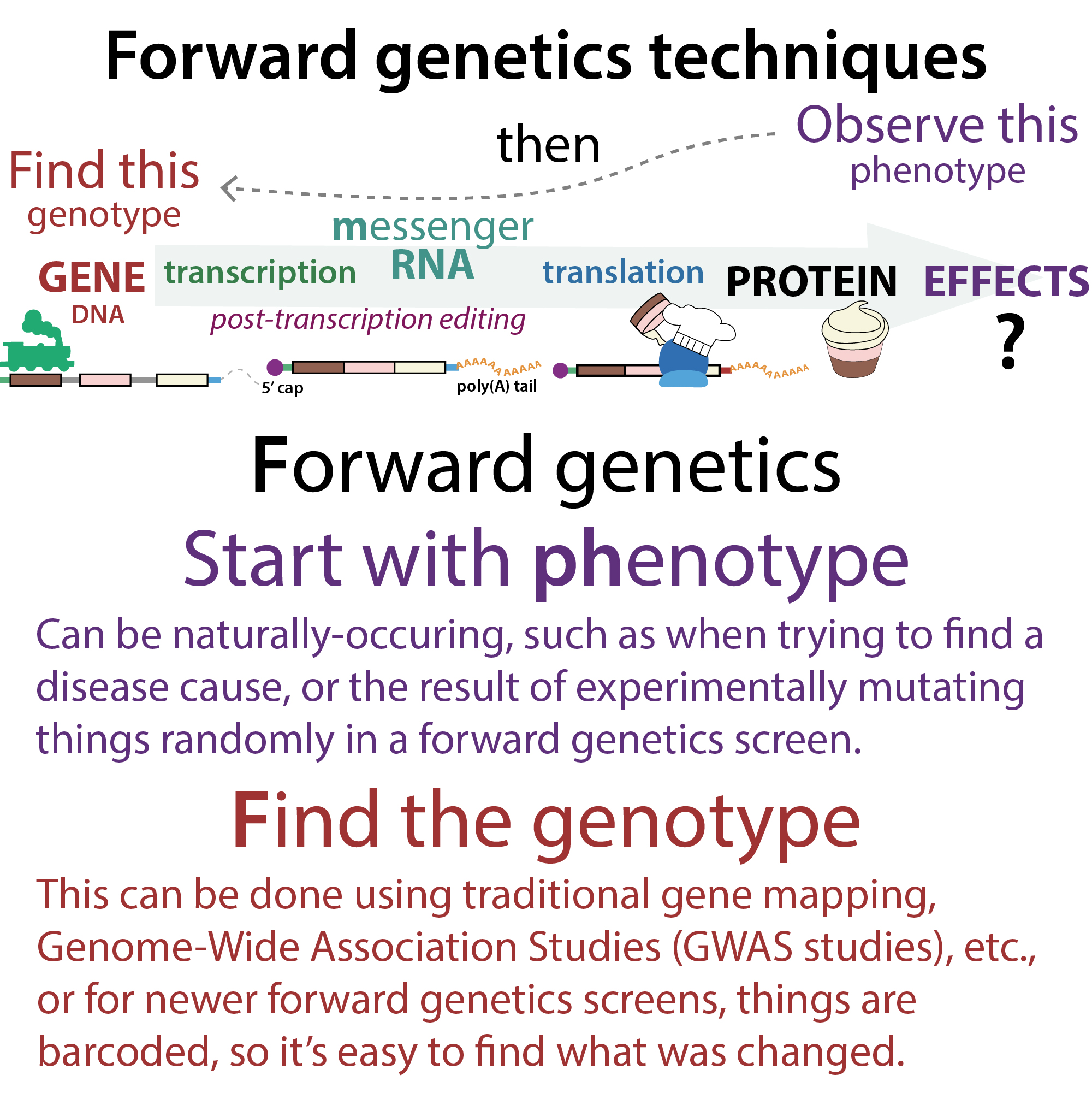
This is sometimes referred to as forward genetics–start with the phenotype and track down the genotype
Classical and early molecular genetics
- Approaches used:
- Genealogies and pedigrees to analyze inheritance patterns at the phenotypic (observable) level
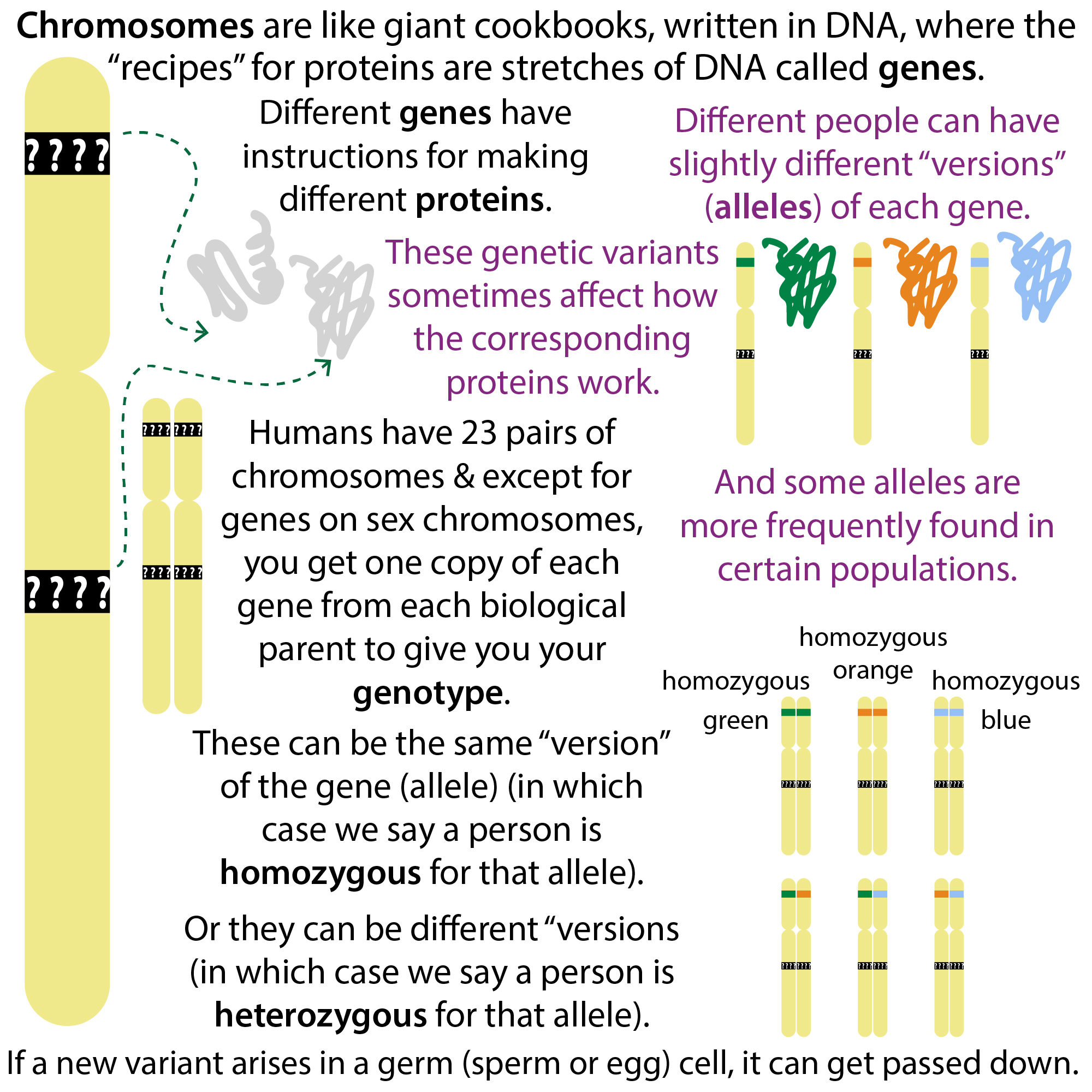
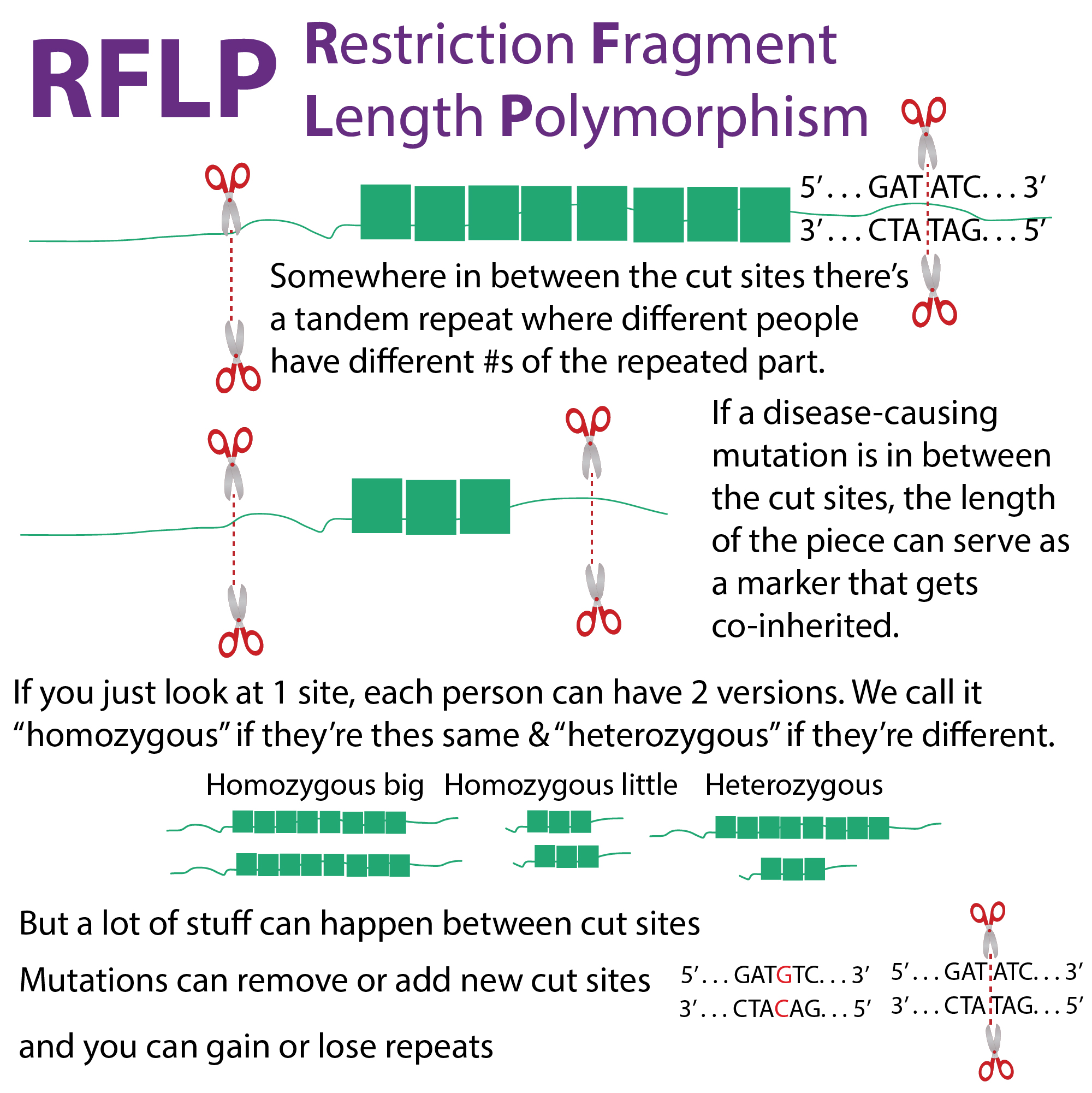
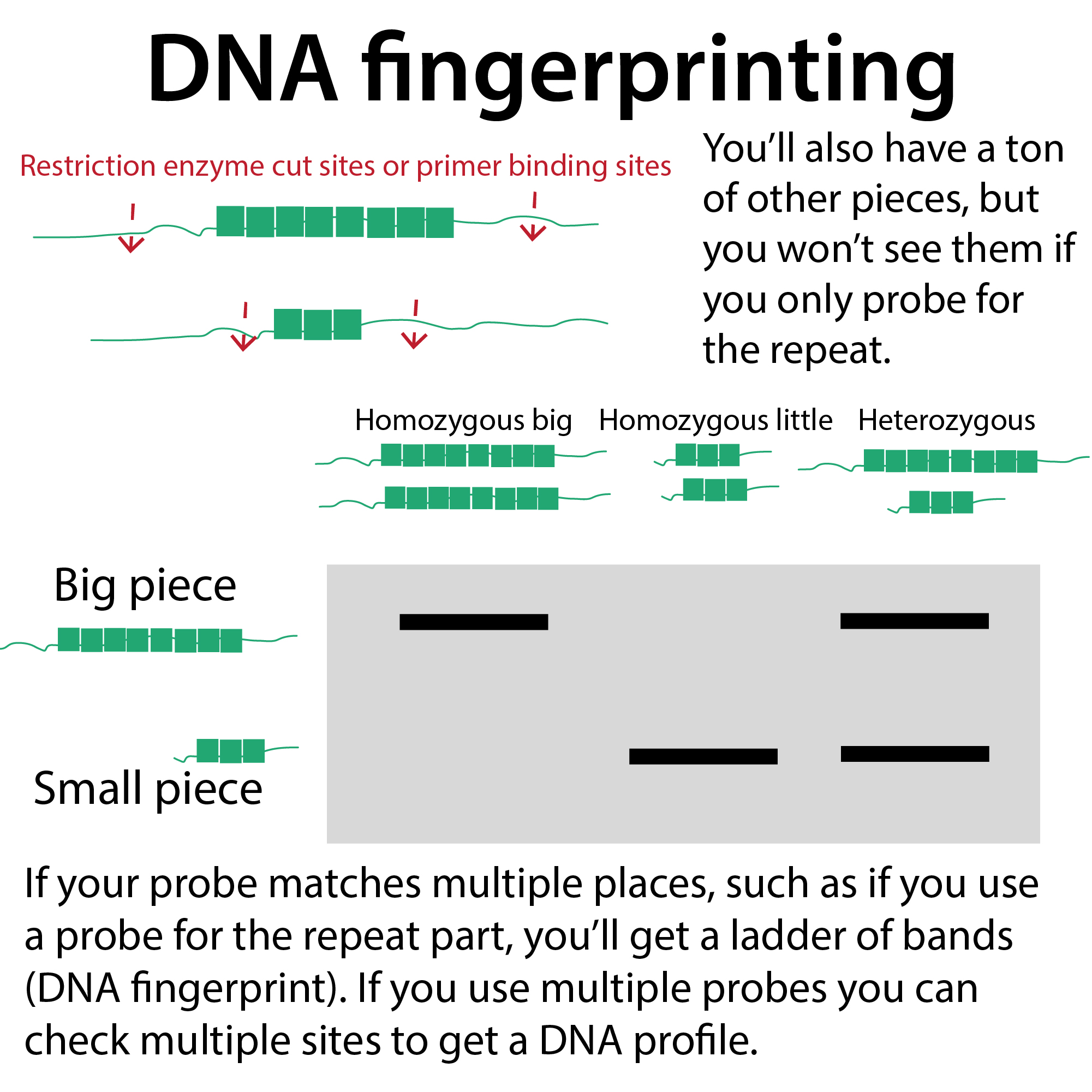
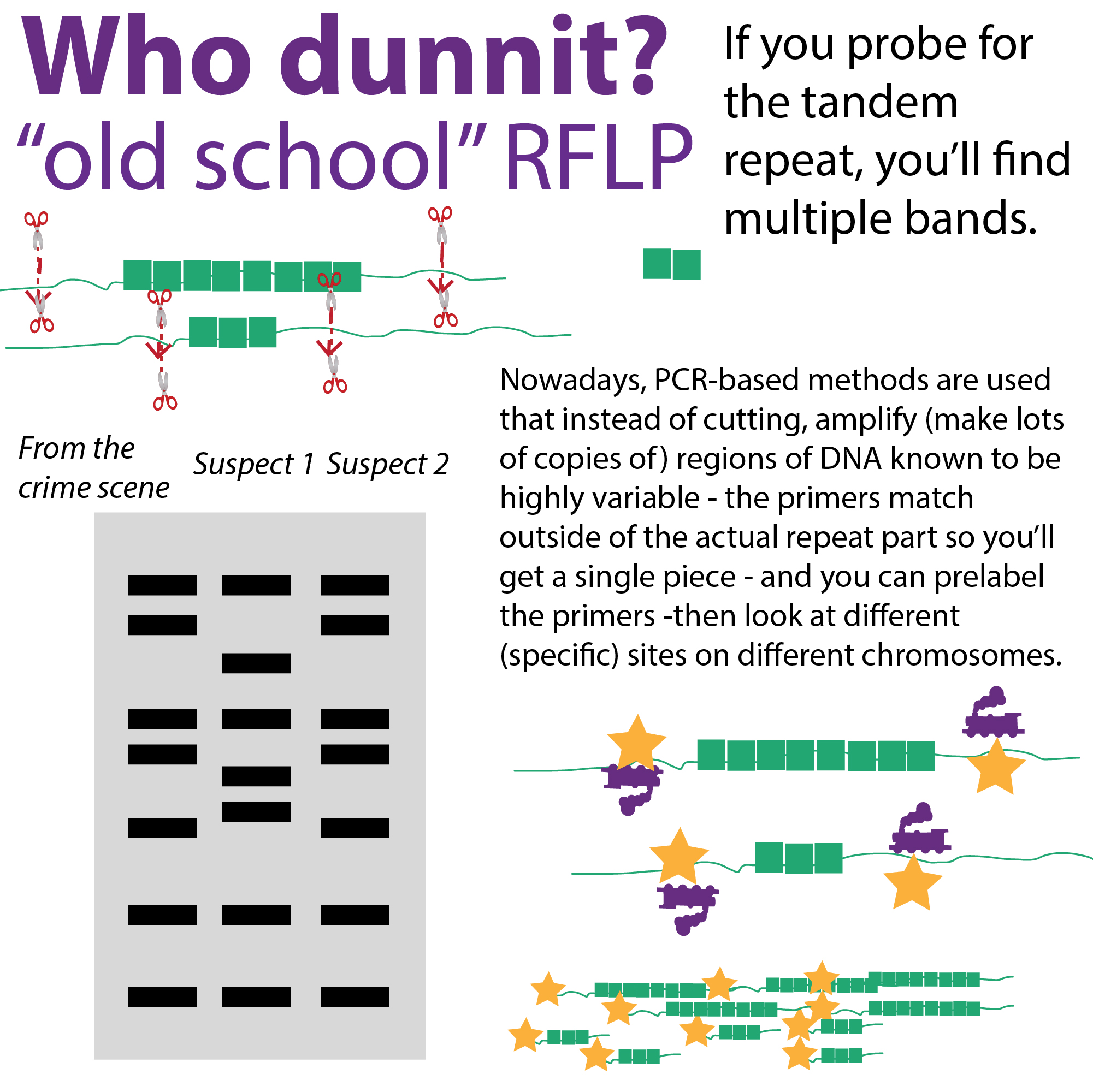
- Linkage analysis looking at inheritance patterns at the genotypic level–what versions (alleles) of genes do affected and unaffected people have. Typically, scientists used techniques such as RFLP (restriction fragment length polymorphism) and/or PCR-based methods taking advantage of copy number variation to see what genetic “markers” (easily observable, but typically non-consequential genetic differences in regions that tend to vary between people) were co-inherited with a causal mutation, and then they homed in to find the causal mutation.
- These markers don’t directly tell you what gene might be involved, but, since near-together genes are more likely to be inherited together, the markers serve as a “proxy” for nearby genes. So, if scientists find a “hit,” a shared marker, they can then look to the actual sequences to see if there are genes in the region which might help explain things, then investigate those genes more closely and look for mutations in those genes in affected people.
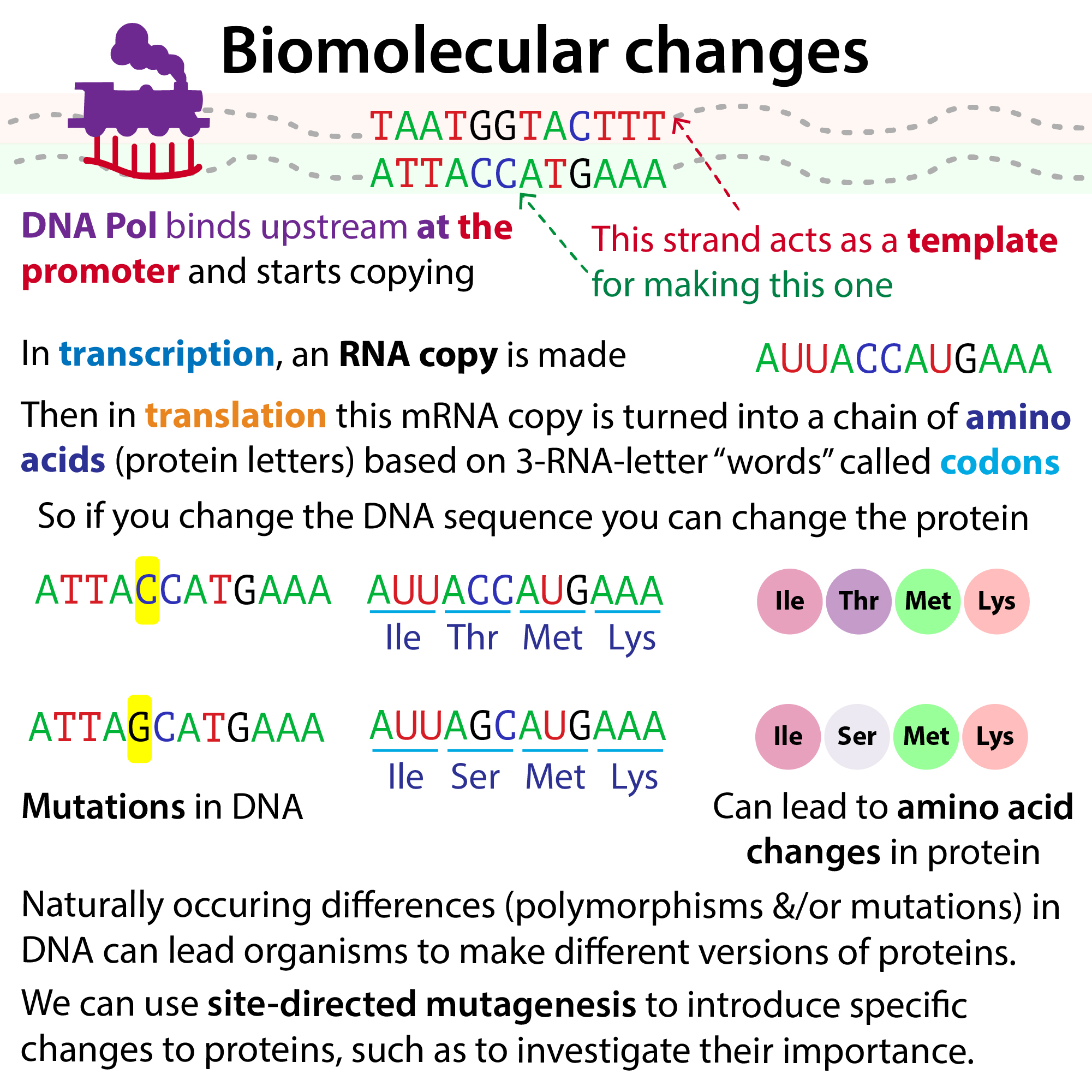
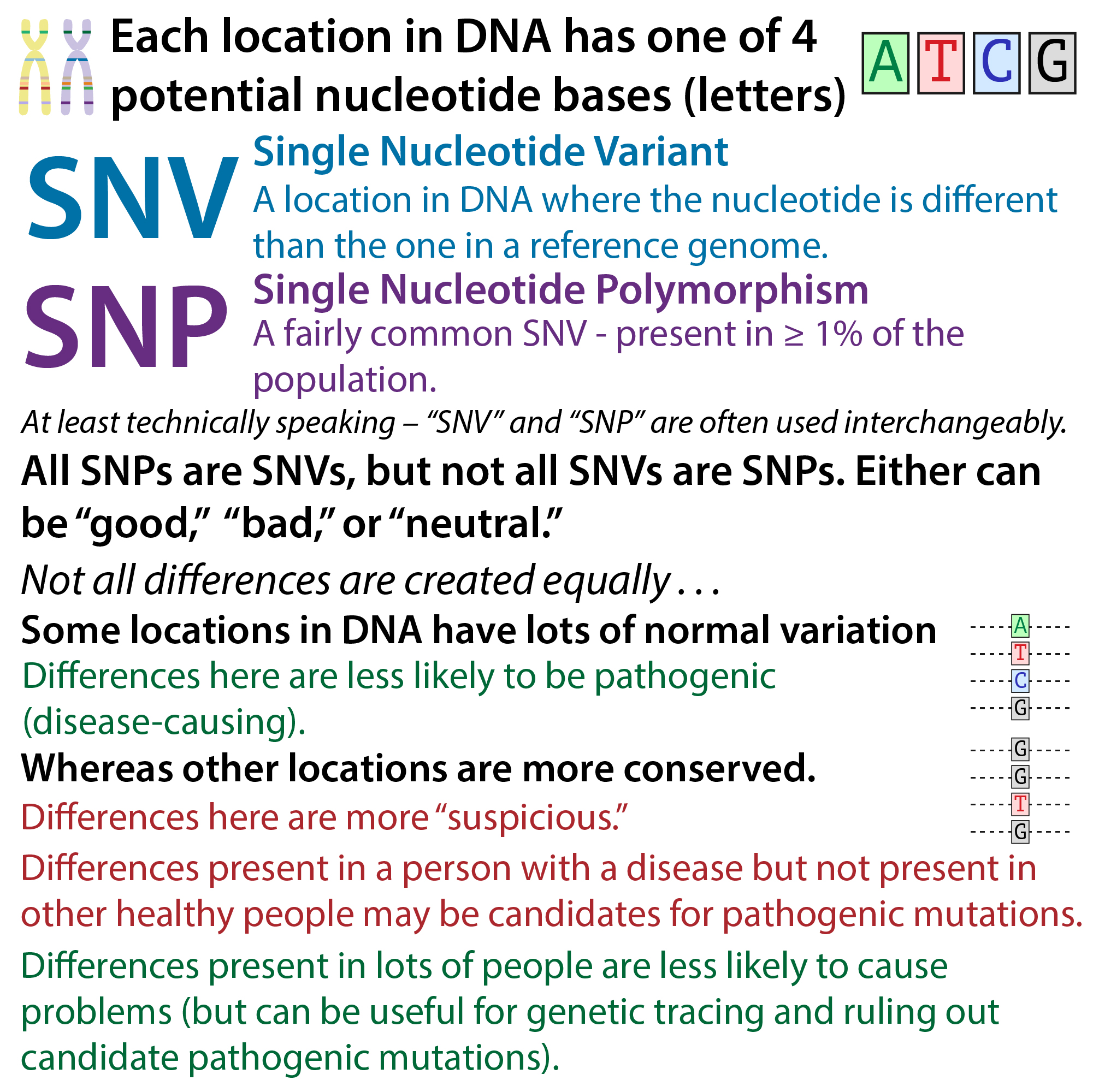
- Today, as markers, scientists often use SNPs (Single Nucleotide Polymorphisms) and/or SNVs (Single Nucleotide Variants) – locations in the DNA where a single base pair is different from a reference. These can be determined through the use of “SNP chips” which are DNA sequencing tools that use special sequencing adapters bound to a chip to determine, at the same time (in parallel), the variant in a person’s DNA at each of LOTS of sites that tend to vary amongst people.
- Examples (with resources linked below):
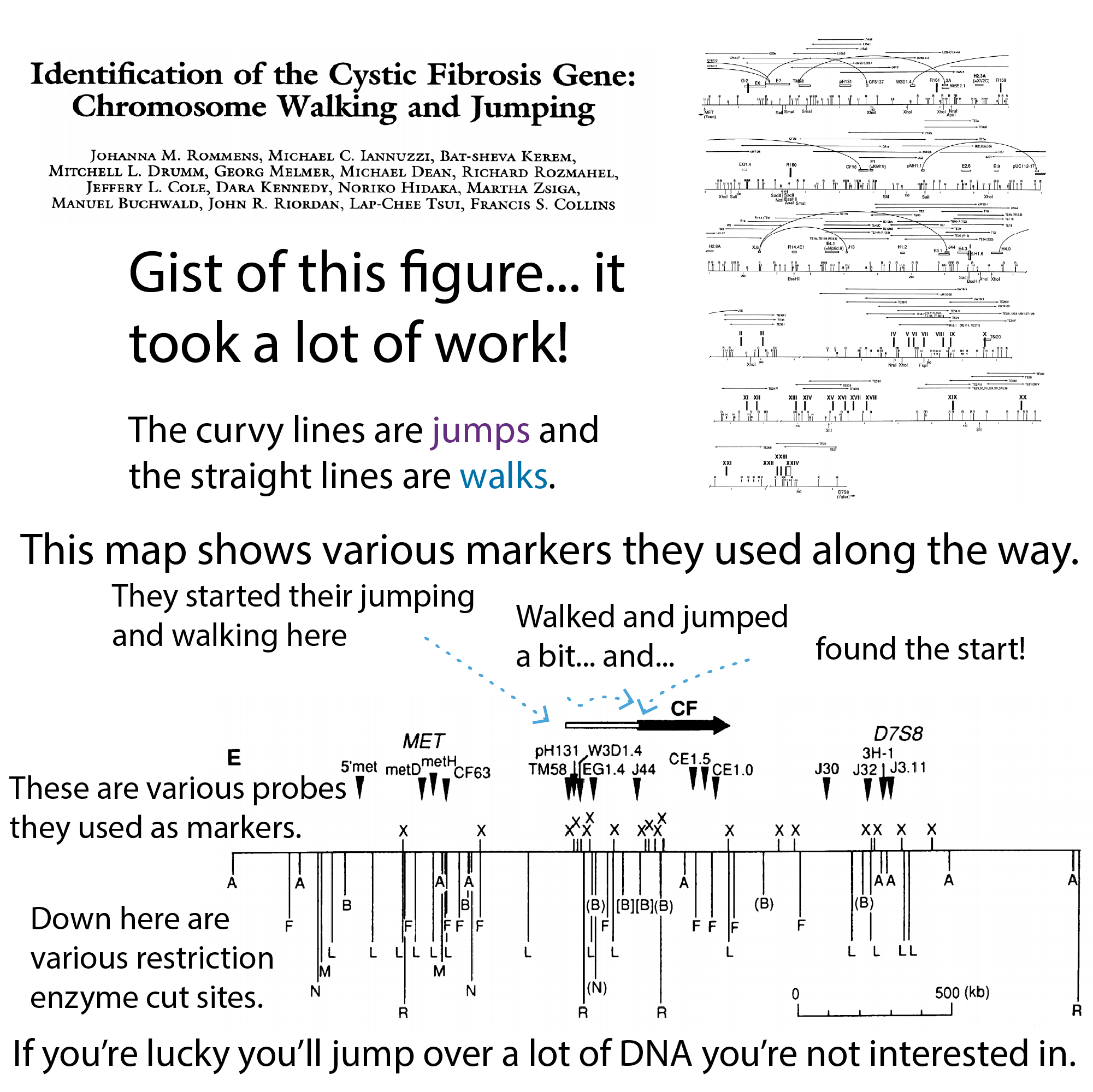
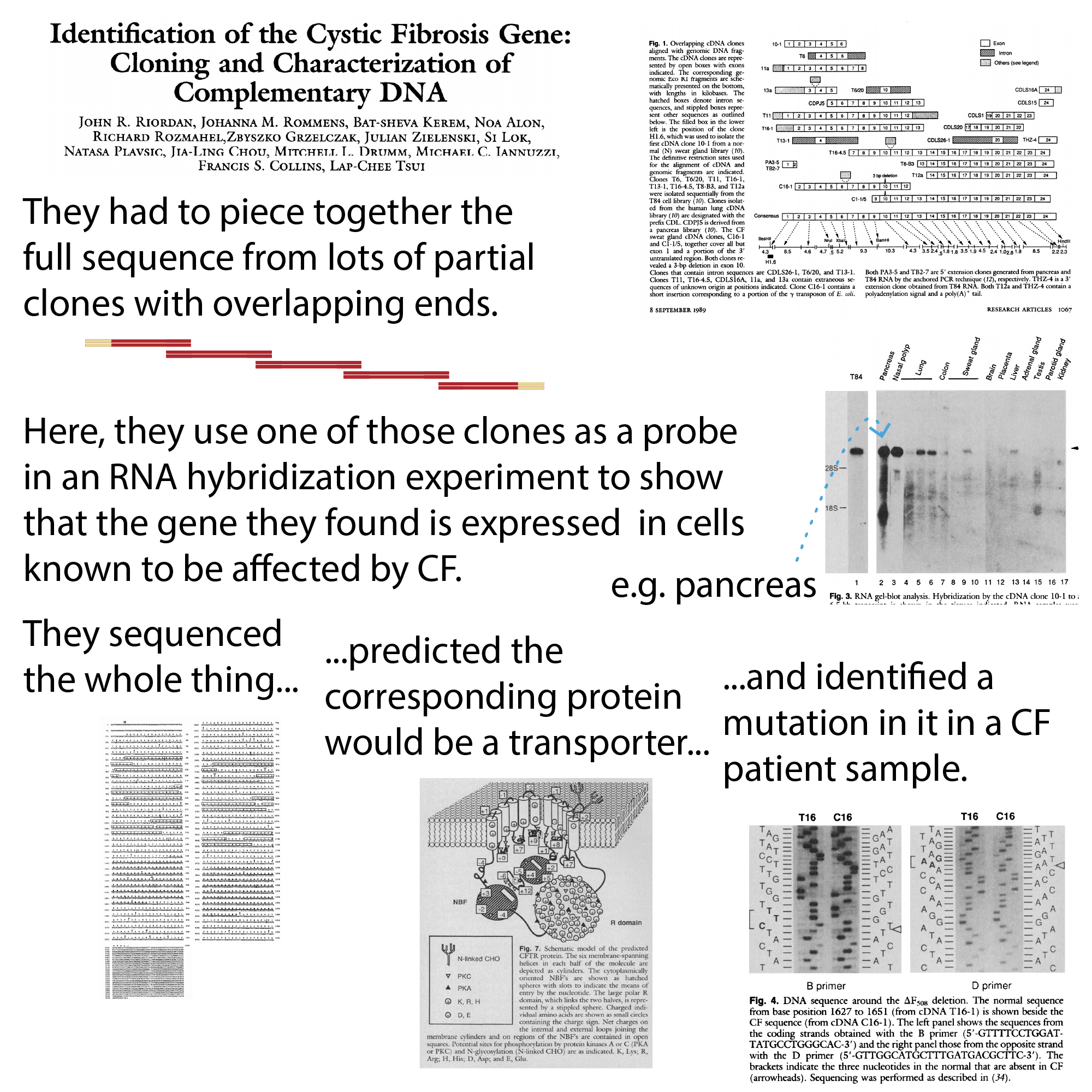
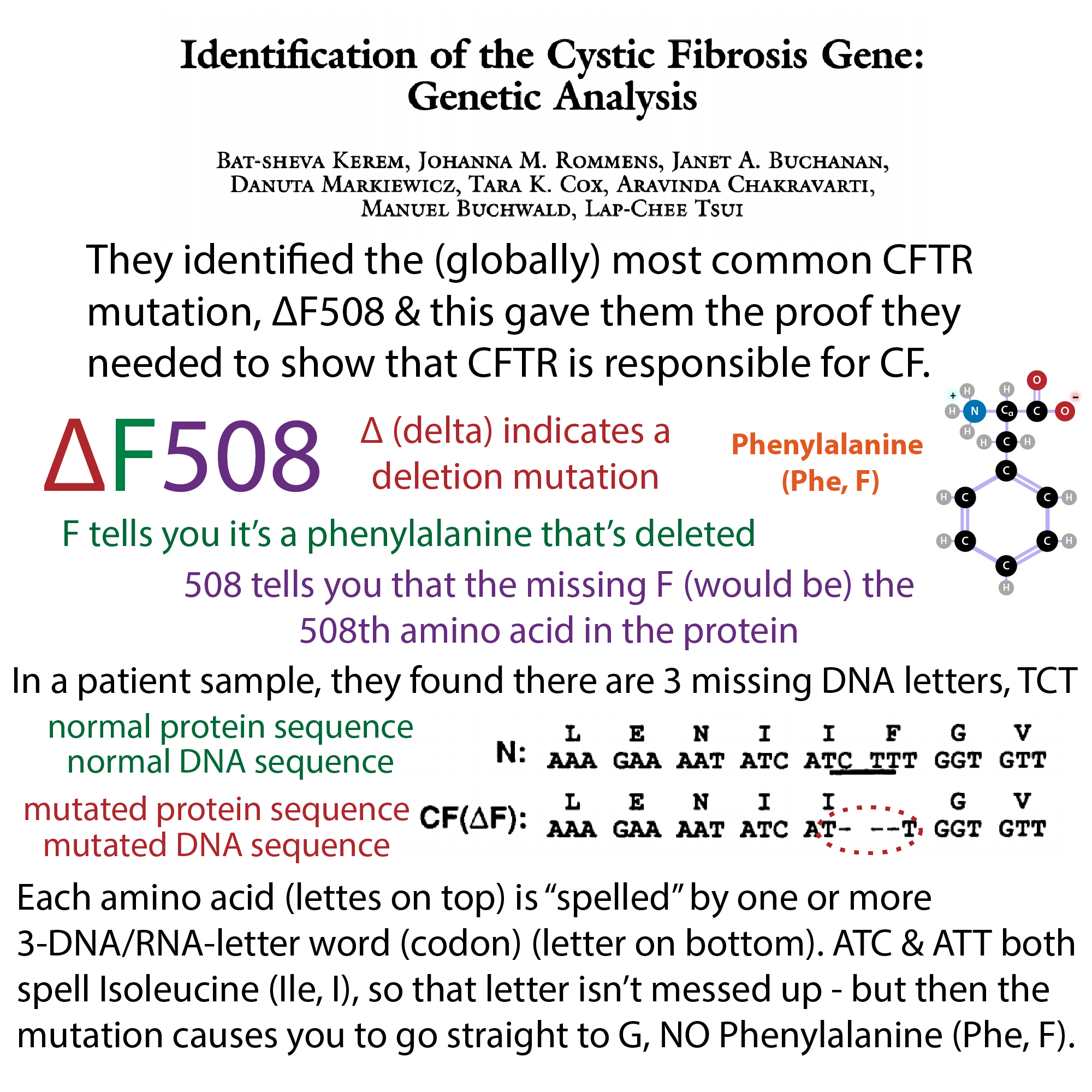
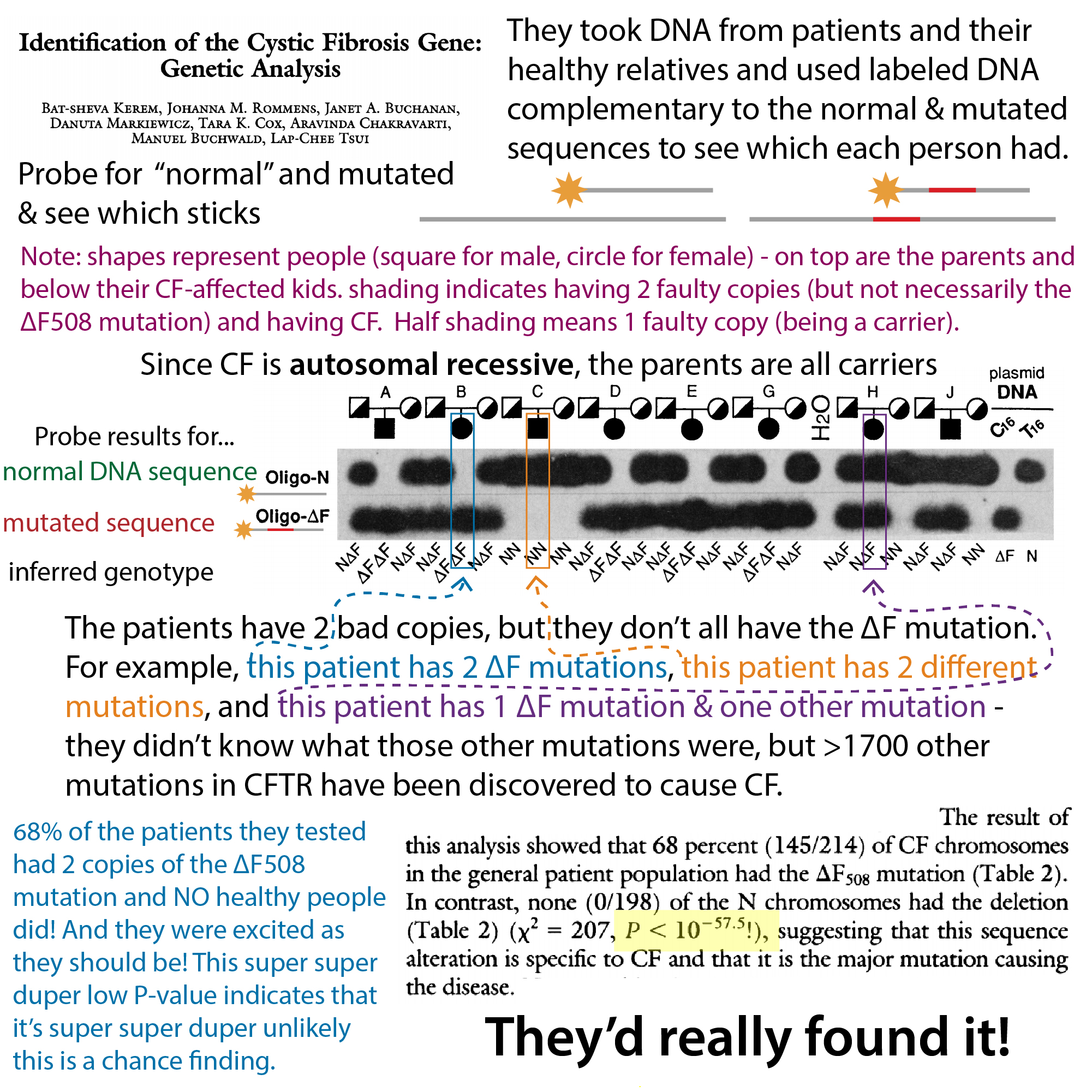
- Cystic Fibrosis
- Huntington’s Disease
More modern approaches use techniques including whole genome sequencing (WGS) or whole exon sequencing (WES) and/or GWAS (Genome-Wide Association Studies)
- WES only sequences the parts of DNA with protein instructions (coding regions called exons) – basically, it sequences DNA versions of messenger RNA. WGS sequences “everything” – those protein-coding regions (exons) as well as regulatory regions called introns that are interspersed with those exons and intergenic (between gene) regions.
- For a good example of one of the first uses of WES to track down the genetic cause of a rare disease, I recommend the book One in a Billion: The Story of Nic Volker and the Dawn of Genomic Medicine by Mark Johnson and Kathleen Gallagher, 2016.
- GWAS studies are similar to linkage analysis, but they are typically done on a much larger scale, using modern genetic sequencing techniques and look at lots of sites of variation (including potential causative sites), rather than just sparsely covering the genome to try to find nearby markers. They have the potential to locate causative variants associated with a trait or a disorder (but, as elaborated on below, a GWAS cannot prove causation, merely association).
- The variants are often in the form of SNPs (Single Nucleotide Polymorphisms) and/or SNVs (Single Nucleotide Variants) – locations in the DNA where a single base pair is different from a reference.
- Note: SNP and SNV are often used interchangeably, but SNP technically refers to more common variants, ones that are present in > 1% of a population, whereas SNV is a broader term referring to any difference from a reference.
- As described above, these can be determined using targeted SNP chips. Alternatively, whole genome sequencing (WGS) or whole exome sequencing (WES) can be used.
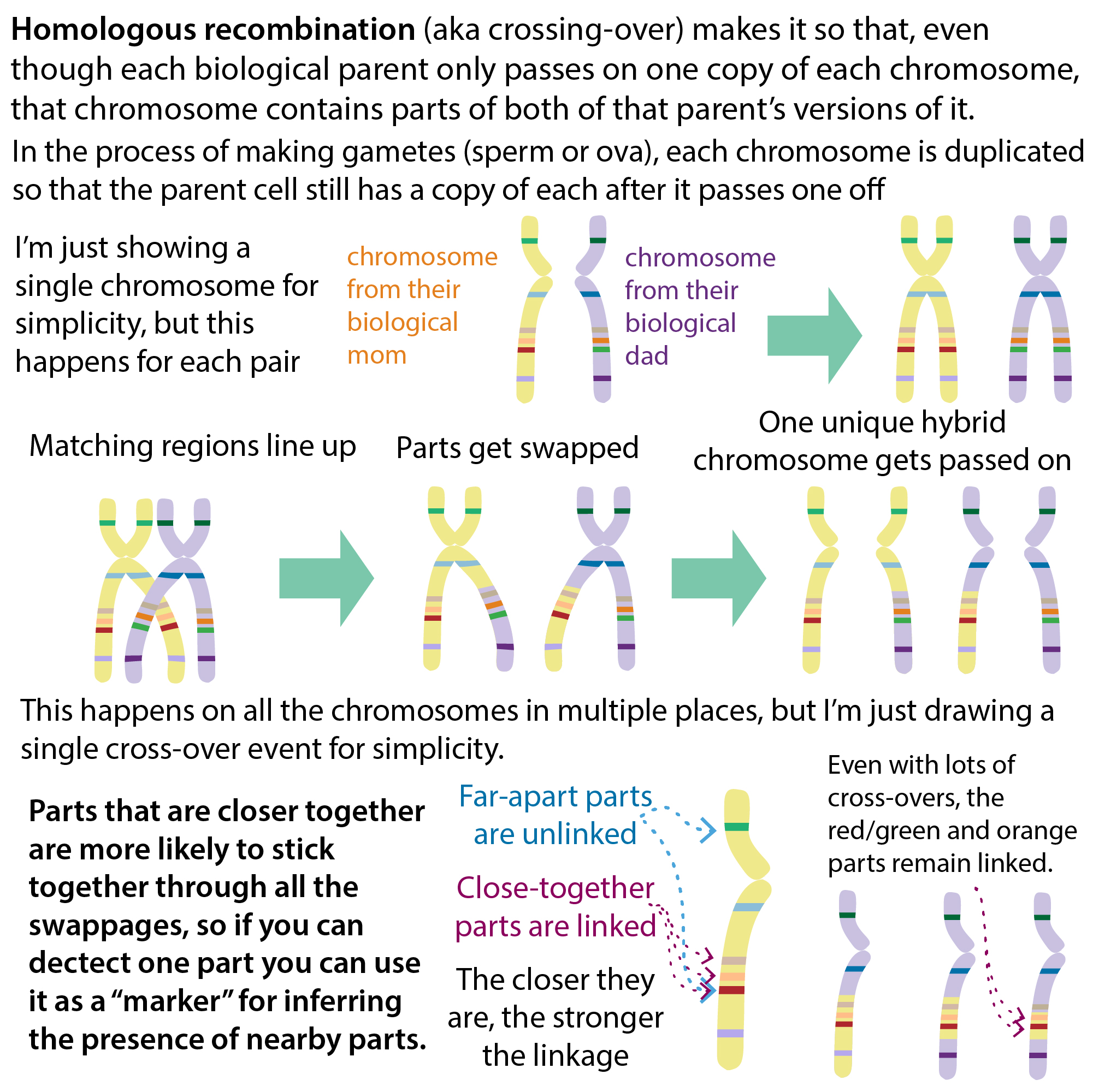
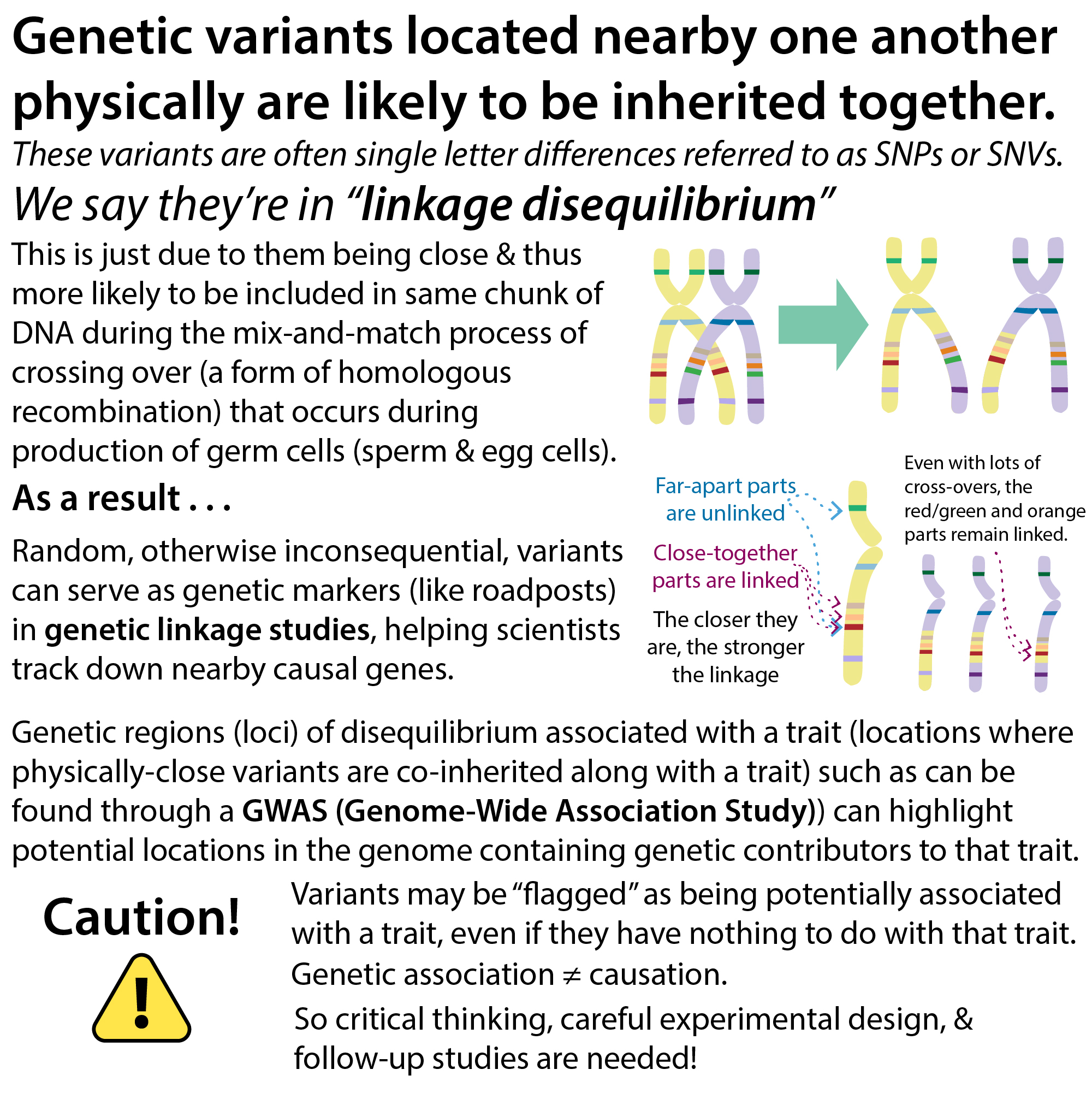
- When looking at traits, scientists (at least initially) often look for regions of the genome where physically-close variants are co-inherited along with a trait, rather than looking for specific variants. Such regions are called loci of disequilibrium and they occur because genetic variants located nearby one another physically are likely to be inherited together due to the mechanics of germ cell production (i.e. they are in linkage disequilibrium).
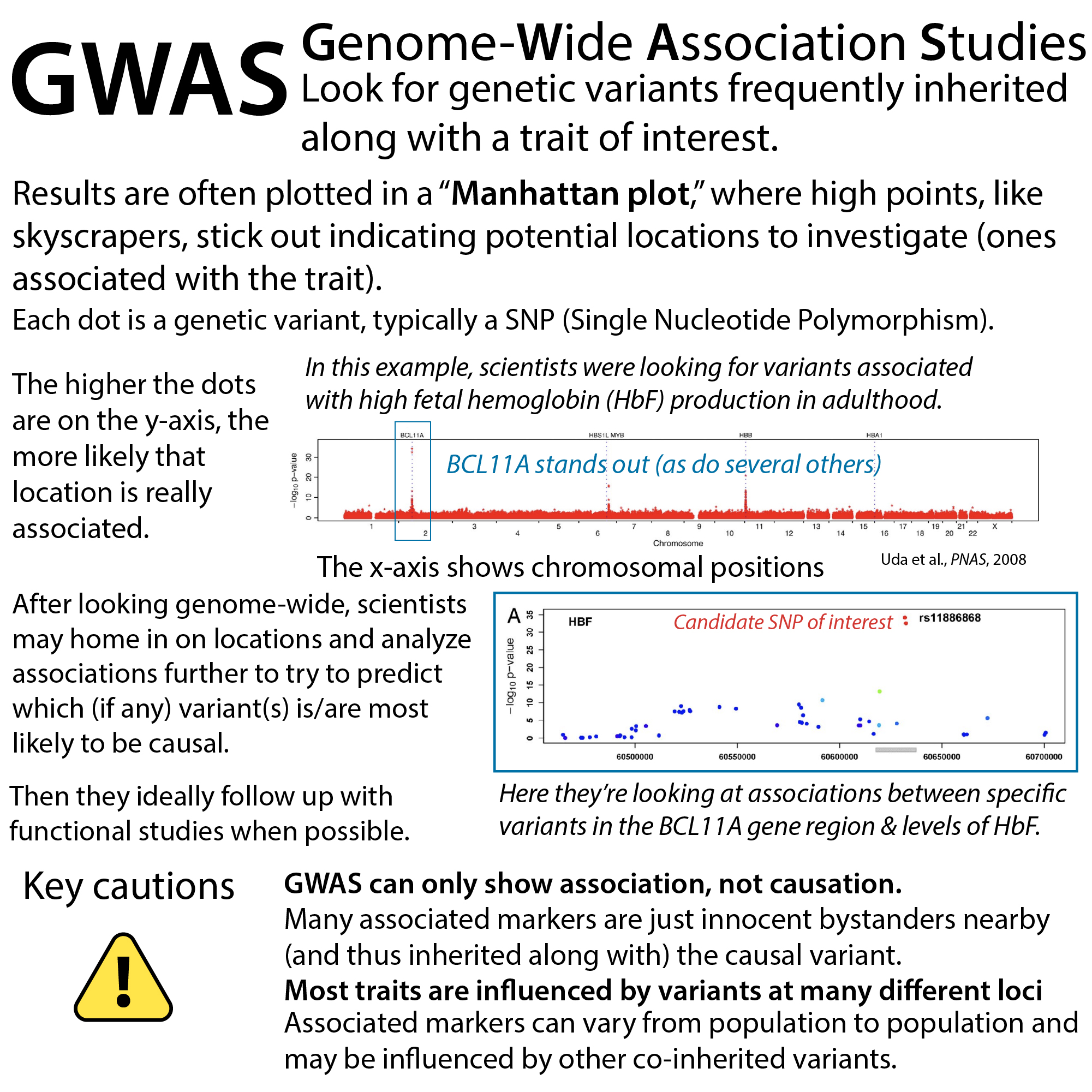
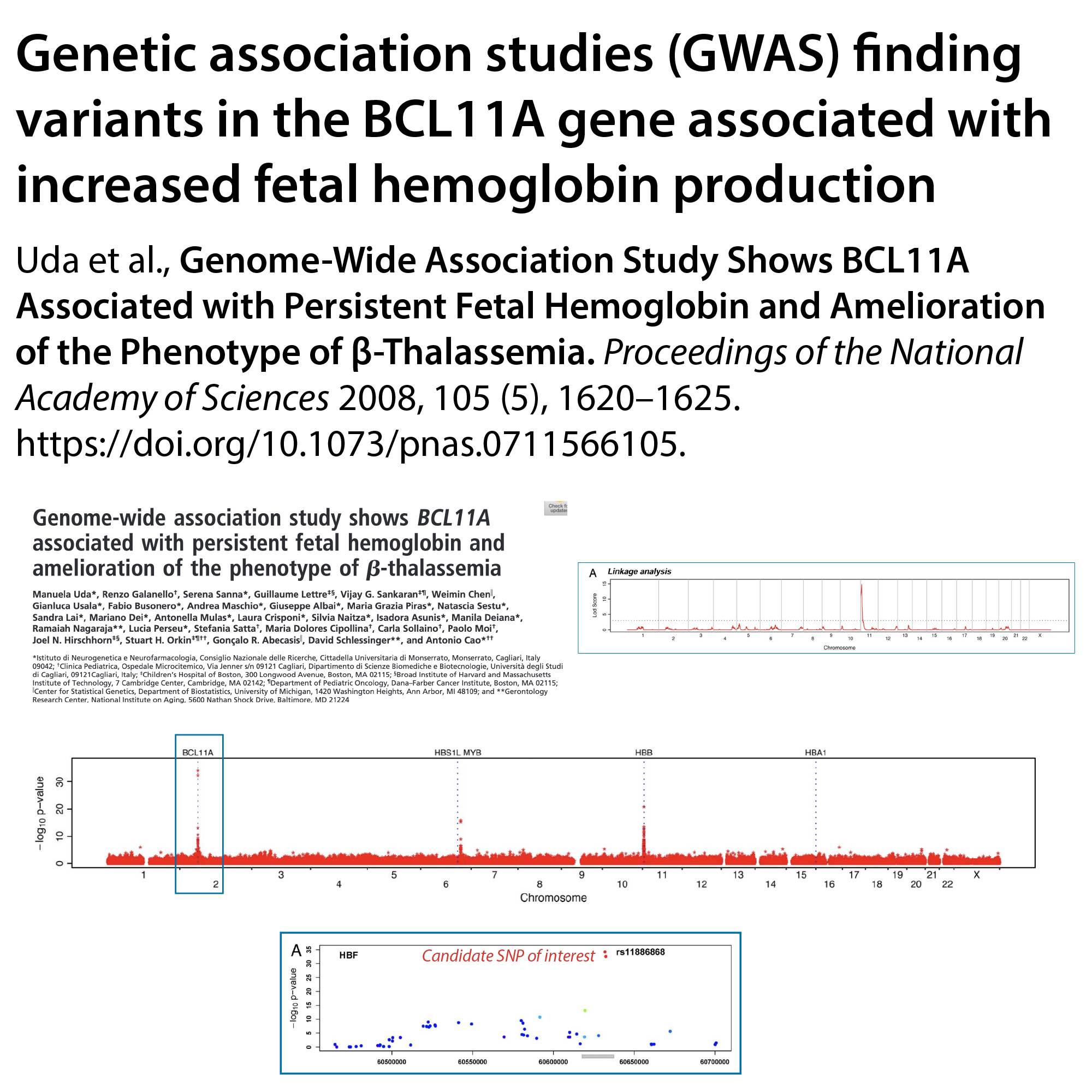
- Results are often plotted in a “Manhattan plot,” where high points, like skyscrapers, stick out indicating potential locations to investigate (ones associated with the trait). Each dot is a genetic variant, typically a SNP (Single Nucleotide Polymorphism). The x-axis is chromosomal location and the higher the dots are on the y-axis, the more likely that location is really associated with the trait.
- Much caution must be used when interpreting the results of GWAS studies.
- GWAS can only show association, not causation.
- Many associated markers are just innocent bystanders nearby (and thus inherited along with) the causal variant.
- Most traits are influenced by variants at many different loci
- Associated markers can vary from population to population and may be influenced by other co-inherited variants.
- Critical thinking, careful experimental design, & follow-up studies are needed!
- Example (with resources linked below): tracking down variants causing increased fetal hemoglobin production in adults (a condition called hereditary persistence of HbF (HPHF))
- The variants are often in the form of SNPs (Single Nucleotide Polymorphisms) and/or SNVs (Single Nucleotide Variants) – locations in the DNA where a single base pair is different from a reference.
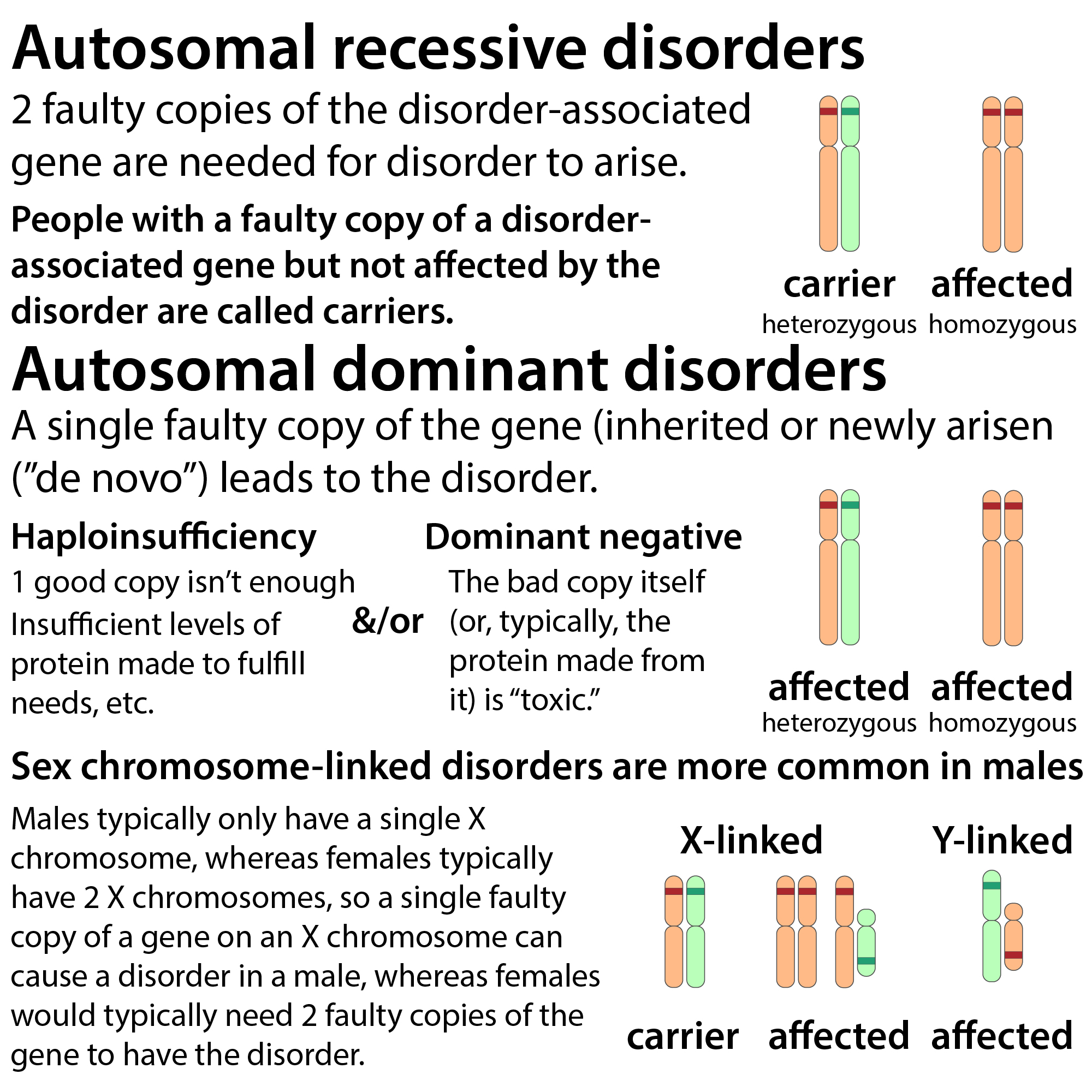
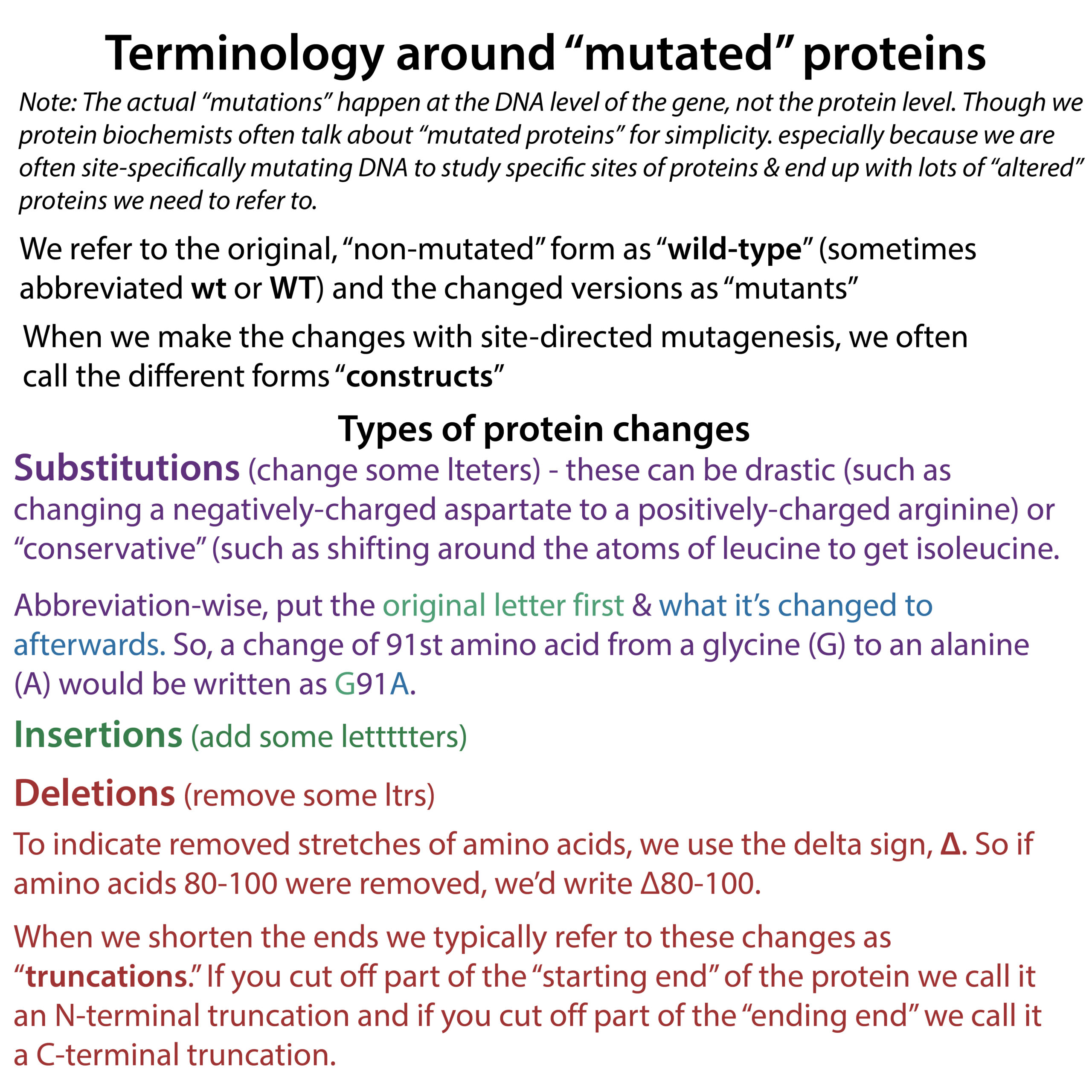
Graphics
Click on an image to enlarge.




Associated posts
- Forward vs. reverse genetics: Forward vs reverse genetics, phenotype & genotype
- Types of genetic mutations: Mutation mumbo-jumbo: terminology, types, & potential effects
- DNA sequencing: How do you read DNA? DNA sequencing methods
- Types of “genome” sequencing – whole genome, whole exome, SNP chip, etc.: https://youtube.com/shorts/OYWP-UCwdmw
- Books about genetic sleuthing: Book recommendations related to genetic/genomic mapping and/or testing
- RFLP analysis: DNA fingerprinting, analytical restriction digest, Restriction Fragment Length Polymorphism (RFLP) analysis, etc.
Case studies
Cystic fibrosis (CF)
- Blog post: Cystic fibrosis science: history, present, & future
- Books:
- Breath from Salt: A Deadly Genetic Disease, a New Era in Science, and the Patients and Families Who Changed Medicine Forever by Bijal P. Trivedi, 2020
- Breakthrough: The Race to Find the Breast Cancer Gene by Kevin Davies and Michael White, 1996
- Although CF isn’t the main focus of the book, genetic mapping techniques developed for finding CF-causing mutations were crucial to “all” genetic mapping, so they’re described (quite well and thoroughly) in this book too.
- Articles:
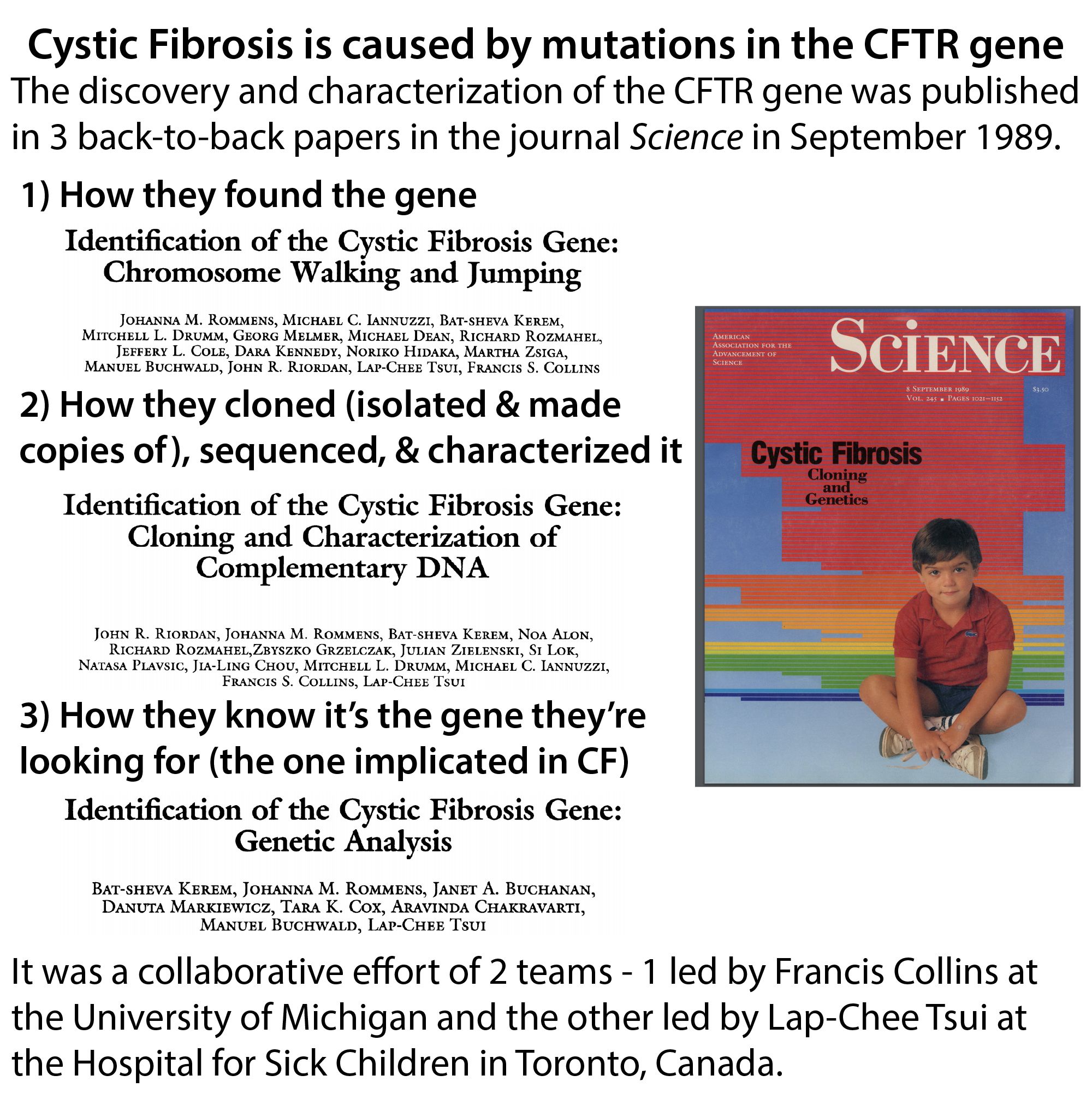
- Primary literature describing the discovery in 1989
- Riordan et al. Identification of the Cystic Fibrosis Gene: Cloning and Characterization of Complementary DNA. Science 1989, 245 (4922), 1066–1073. https://doi.org/10.1126/science.2475911.
- Kerem et al. Identification of the Cystic Fibrosis Gene: Genetic Analysis. Science 1989, 245 (4922), 1073–1080. https://doi.org/10.1126/science.2570460.
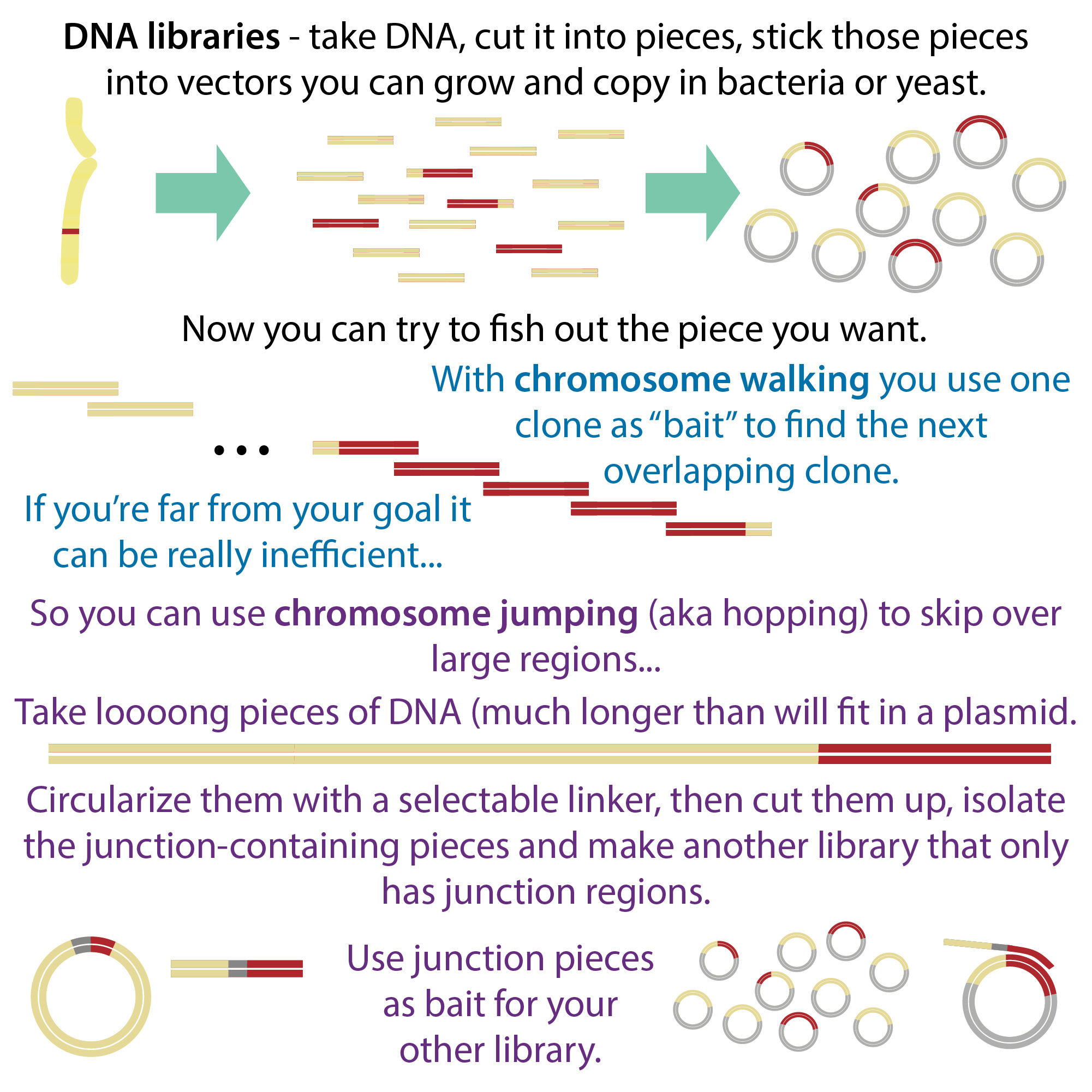
- Rommens et al. Identification of the Cystic Fibrosis Gene: Chromosome Walking and Jumping. Science 1989, 245 (4922), 1059–1065. https://doi.org/10.1126/science.2772657.
- Primary literature describing the discovery in 1989
- Review articles:
- Trouvé, Saint Pierre, and Férec, Cystic Fibrosis: A Journey through Time and Hope. International Journal of Molecular Sciences 2024, 25 (17), 9599. https://doi.org/10.3390/ijms25179599.
- Welsh, M. J. The Arc of Discovery, from the Description of Cystic Fibrosis to Effective Treatments. J Clin Invest 2024, 134 (19). https://doi.org/10.1172/JCI186231.
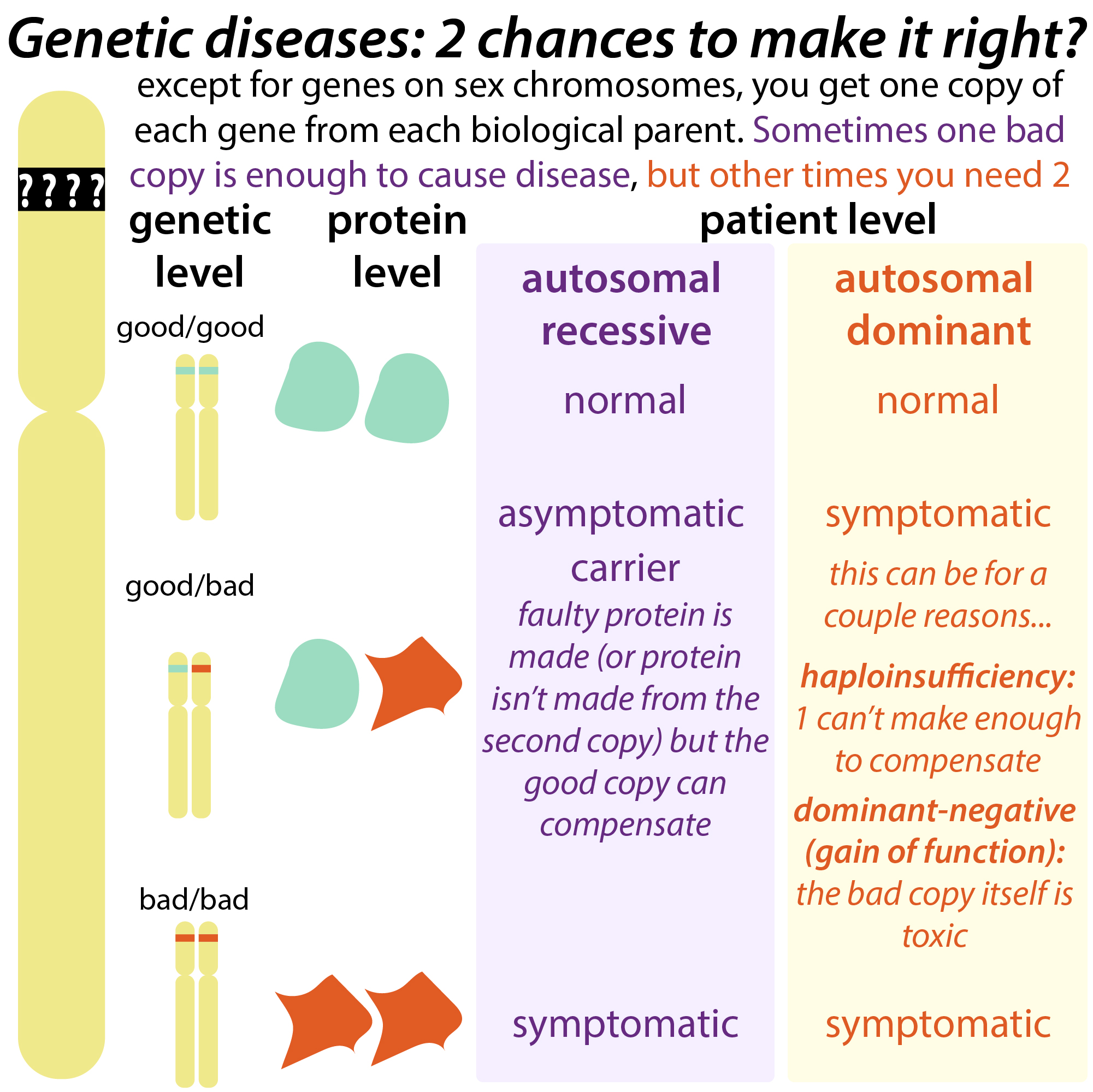
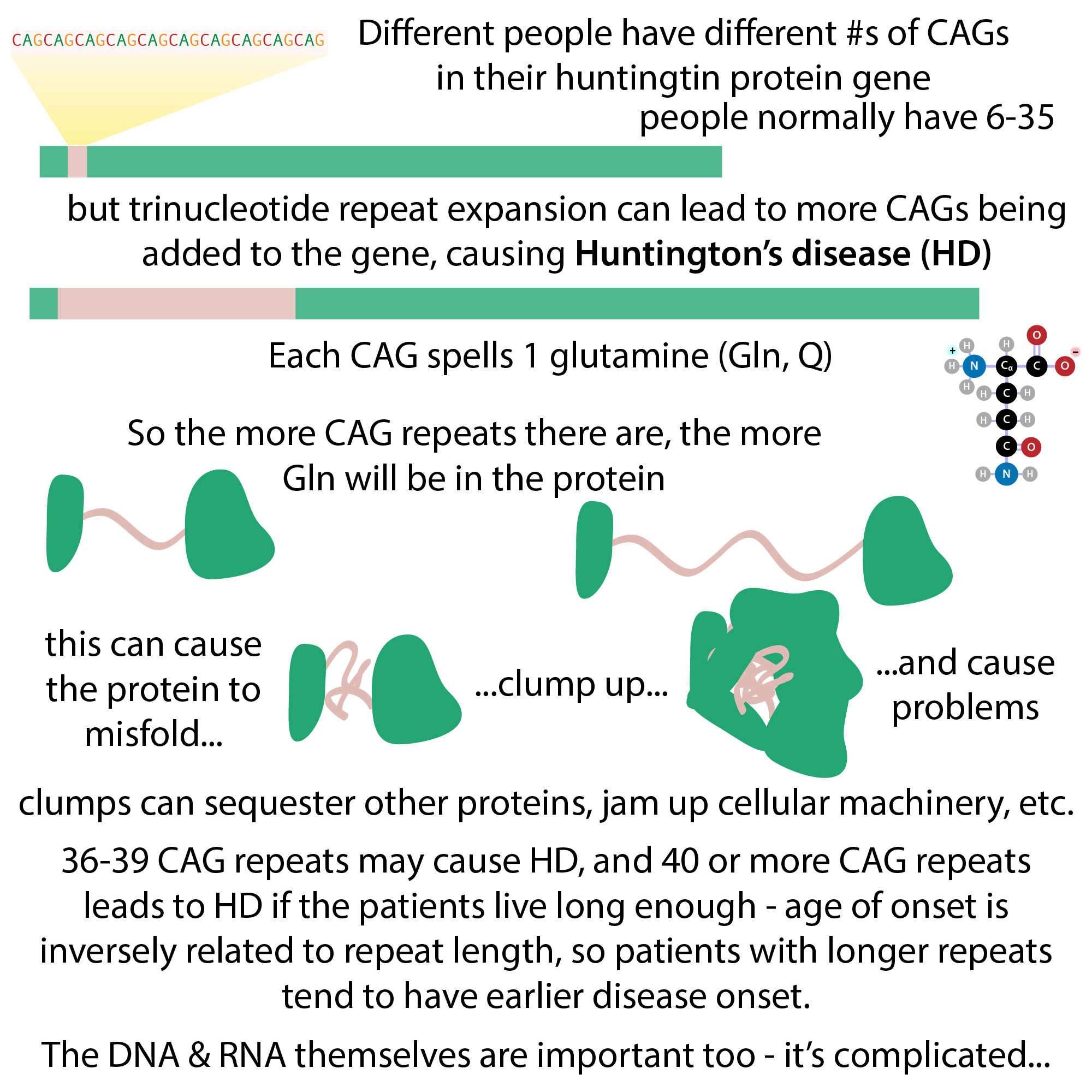
Huntington’s disease (HD)
- Blog post: Glutamine, Huntington’s disease, genetic diseases & mutation types
- Books:
- Mapping Fate: a memoir of family, risk, and genetic research, by Alice Wexler, 1995
- My life, my science: Pursuing a Cure for Huntington’s Disease by Nancy Sabin Wexler (in collaboration with Mark Hampton and Alice R. Wexler), 2026
- Review article:
- Gusella, Lee, and MacDonald. Huntington’s Disease: Nearly Four Decades of Human Molecular Genetics. Hum Mol Genet 2021, 30 (R2), R254–R263. https://doi.org/10.1093/hmg/ddab170.
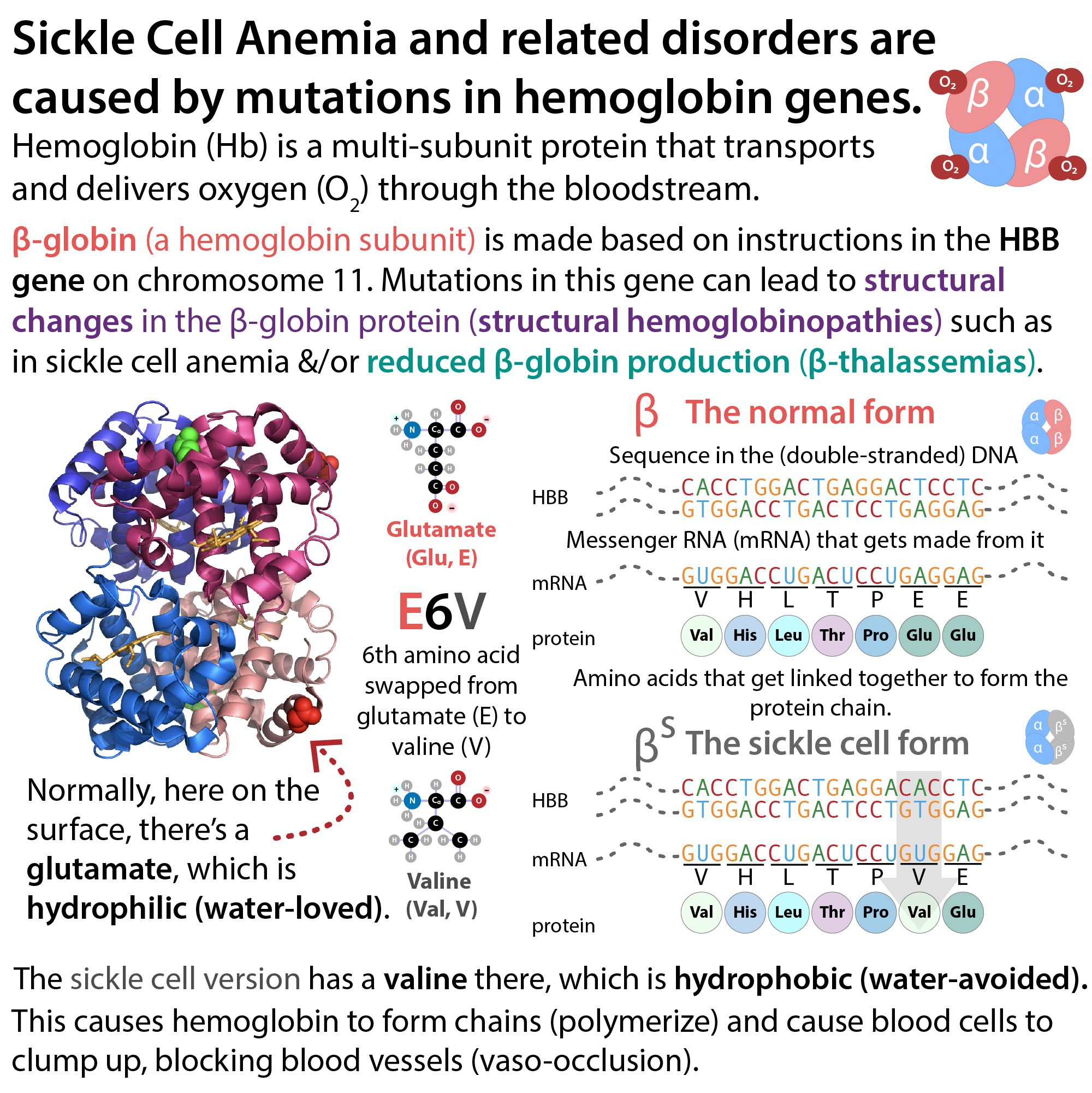
Sickle cell disease, β-thalassemia, and related disorders
- Blog posts:
- Biochemistry and genetics of β-globinopathies: Sickle cell anemia, beta thalassemia & other inherited hemoglobin diseases
- Research paving the path for gene therapy for β-globinopathies: Some articles relating to gene therapy and gene editing for sickle cell disease and related disorders
- Articles:
- Uda et al. Genome-Wide Association Study Shows BCL11A Associated with Persistent Fetal Hemoglobin and Amelioration of the Phenotype of β-Thalassemia. Proceedings of the National Academy of Sciences 2008, 105 (5), 1620–1625. https://doi.org/10.1073/pnas.0711566105.
- Hardison and Blobel, G. A. GWAS to Therapy by Genome Edits? Science 2013, 342 (6155), 206–207. https://doi.org/10.1126/science.1245813.
Review articles and primers
- Collins and McKusick. Implications of the Human Genome Project for Medical Science. JAMA2001, 285 (5), 540–544. https://doi.org/10.1001/jama.285.5.540.
- Uffelmann et al. Genome-Wide Association Studies. Nat Rev Methods Primers 2021, 1 (1), 59. https://doi.org/10.1038/s43586-021-00056-9.
- It’s paywalled at Nature, but there’s a free version here: https://research.vu.nl/ws/portalfiles/portal/155815846/Genome_wide_association_studies.pdf
- Southam and Zeggini, Twenty Years of Genome-Wide Association Studies. Nature 2025, 641 (8061), 47–49. https://doi.org/10.1038/d41586-025-01128-6.
Webpages
- Manhattan Plots in GWAS: A Visual Guide” https://metricgate.com/blogs/gwas-manhattan-plots-explained/
Books
- Breakthrough: The Race to Find the Breast Cancer Gene by Kevin Davies and Michael White, 1996
- This discusses classic genetic linkage mapping
- One in a Billion: The Story of Nic Volker and the Dawn of Genomic Medicine by Mark Johnson and Kathleen Gallagher, 2016
- This does a nice job discussing some of the challenges with sifting through tons of genomic data to try to decipher what variants may actually be consequential vs just being natural variation.
- The Genome Odyssey: Medical Mysteries and the Incredible Quest to Solve Them by Euan Angus Ashley, 2021
Investigating how mutations cause disease
Outline
- This is sometimes referred to as reverse genetics–start with the genotype and track down the phenotype
- Scientists must choose from a variety of experimental systems to investigate how a genotype causes a phenotype. Each system has pros and cons.
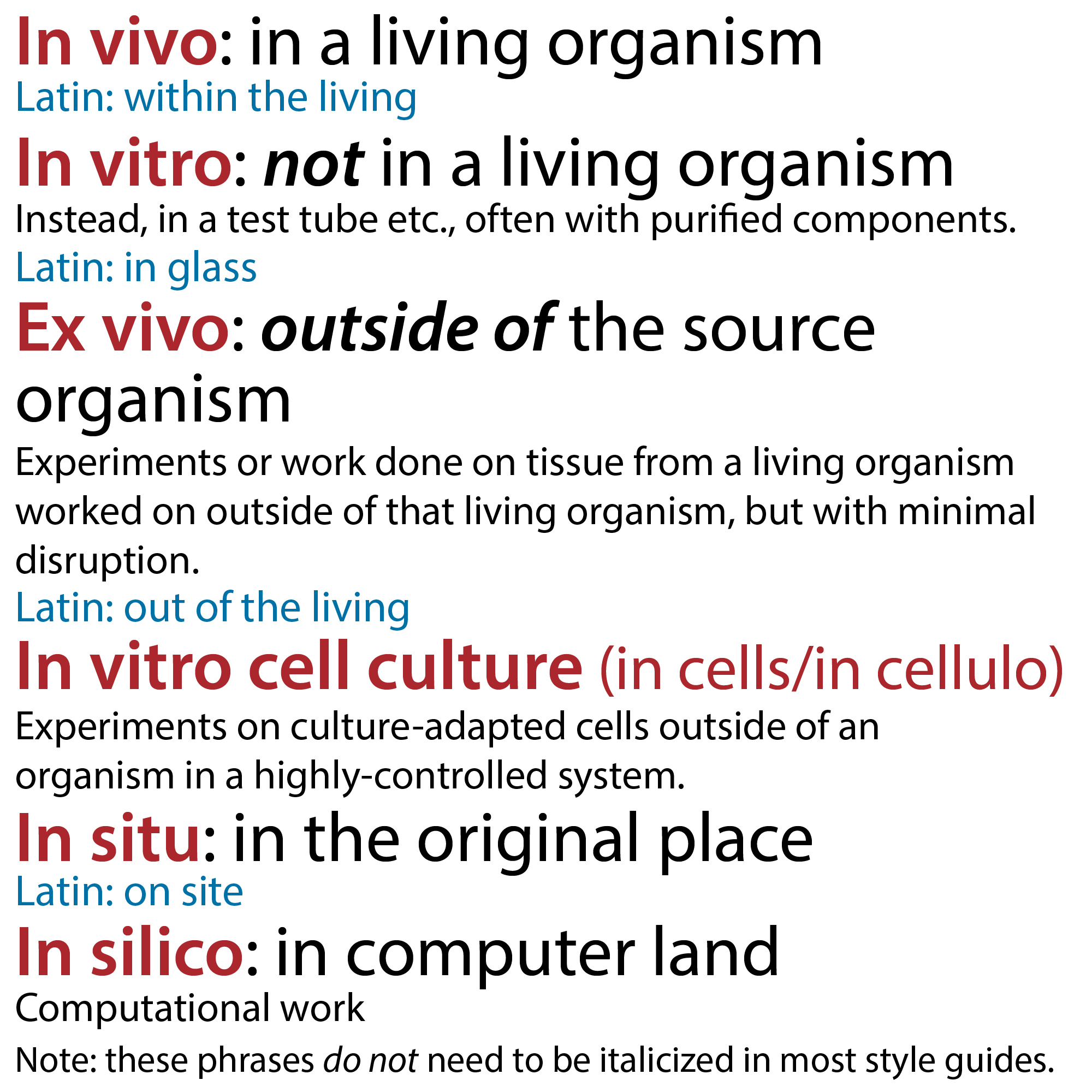
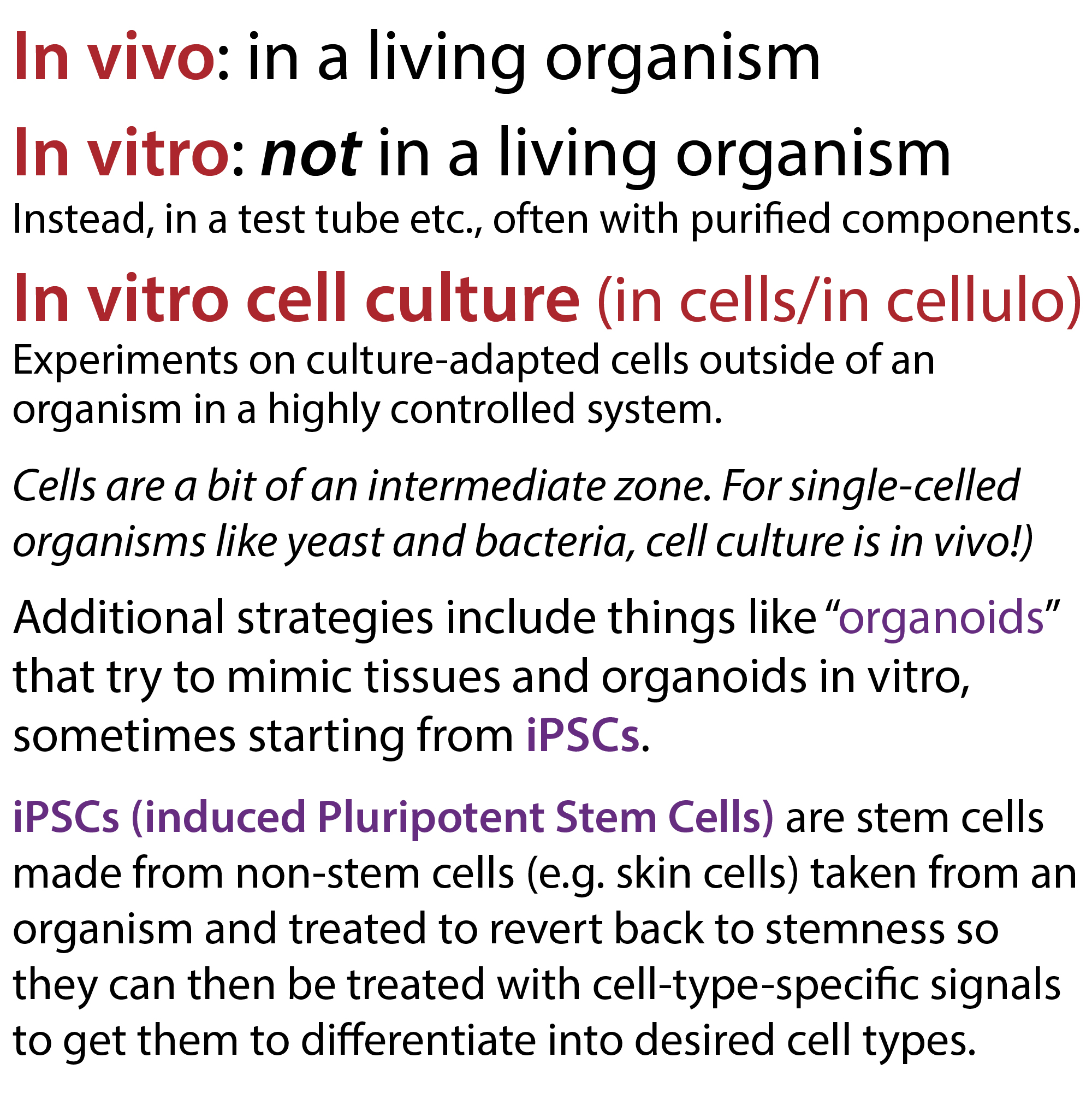
- In vitro – outside of cells, “in a test tube*” – most experimental control but least realistic – best for dissecting mechanisms – how do things work?
- *doesn’t have to literally be in a tube, just outside of a cellular and organismal context
- Often involves using purified components, sometimes uses cellular lysates (the content of broken open cells), or in cell culture (work with cells adapted to grow in the lab).
- In vitro cell culture (in cells/in cellulo)* – medium level of control & realism, more variability
- Such experiments are typically done on culture-adapted cells outside of an organism in a highly controlled system.
- *Sometimes people refer to cell culture as “in vivo” but, if you’re working with single cells, it’s only really in vivo if you’re working with a unicellular organism like bacteria or yeast – but some people don’t even consider that “in vivo” if you’re doing it in the lab..
- In vivo – inside of organisms – least experimental control but most realistic*
- * at least for the organism studied – but are the findings directly transferable to the system you care about? (i.e. a mouse isn’t a human)
Other systems:
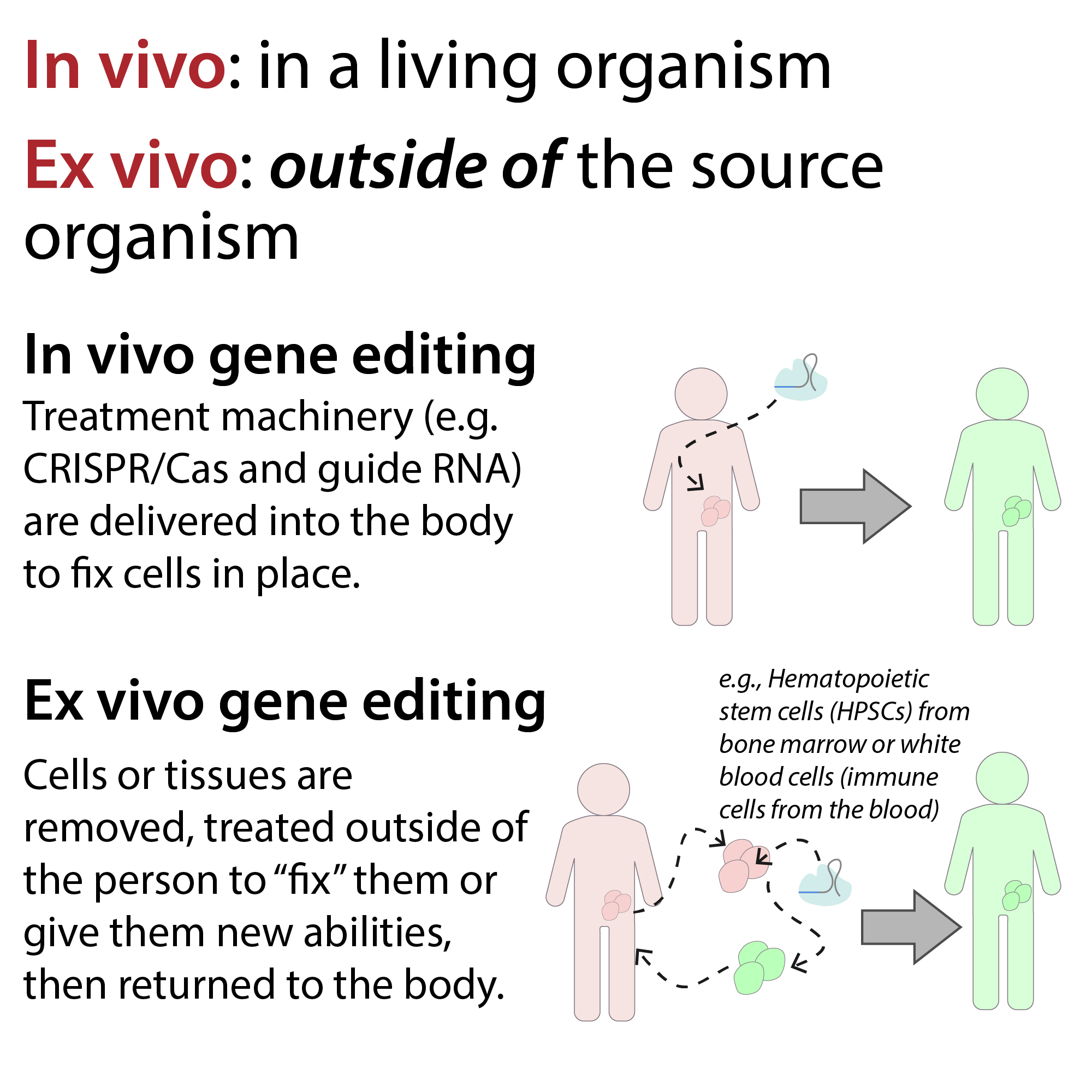
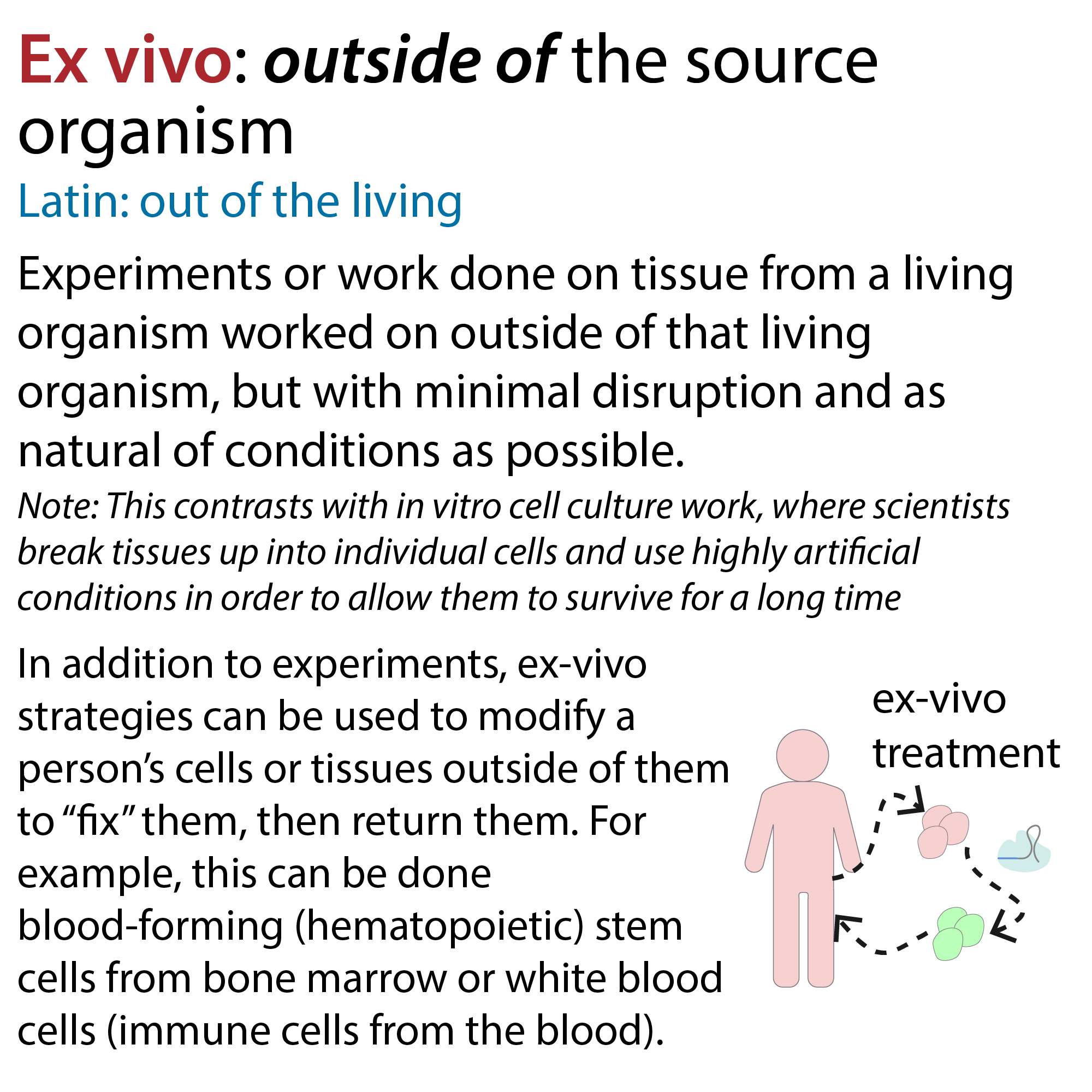
- Ex vivo: outside of the source organism
- Experiments or work done on tissue from a living organism worked on outside of that living organism, but with minimal disruption and as natural of conditions as possible.
- Note: This contrasts with in vitro cell culture work, where scientists break tissues up into individual cells and use highly artificial conditions in order to allow them to survive for a long time
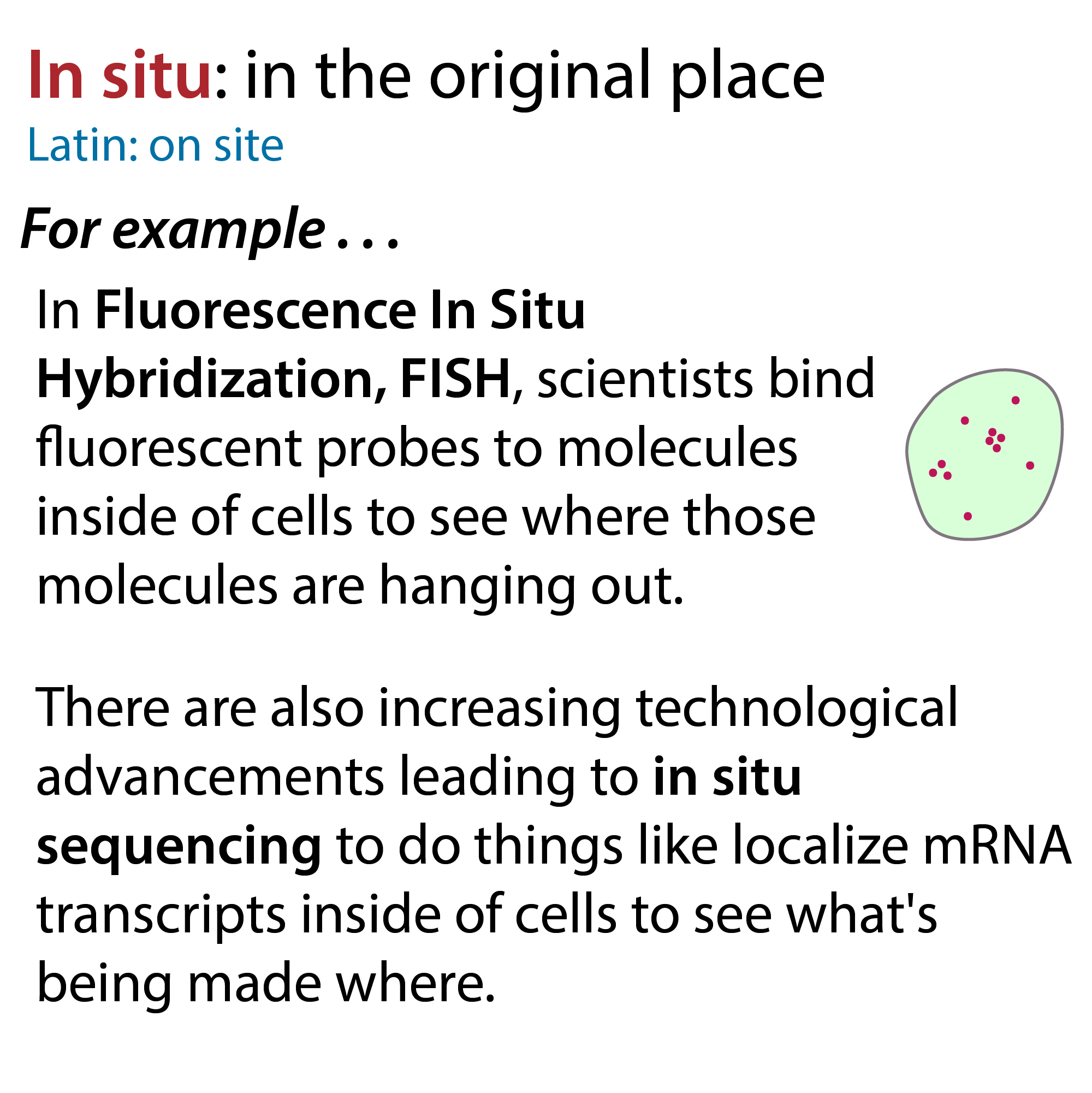
- In situ: in the original place
- For example:
- In Fluorescence In Situ Hybridization, FISH, scientists bind fluorescent probes to molecules inside of cells to see where those molecules are hanging out.
- There are also increasing technological advancements leading to in situ sequencing to do things like localize mRNA transcripts inside of cells to see what’s being made where.
- For example:
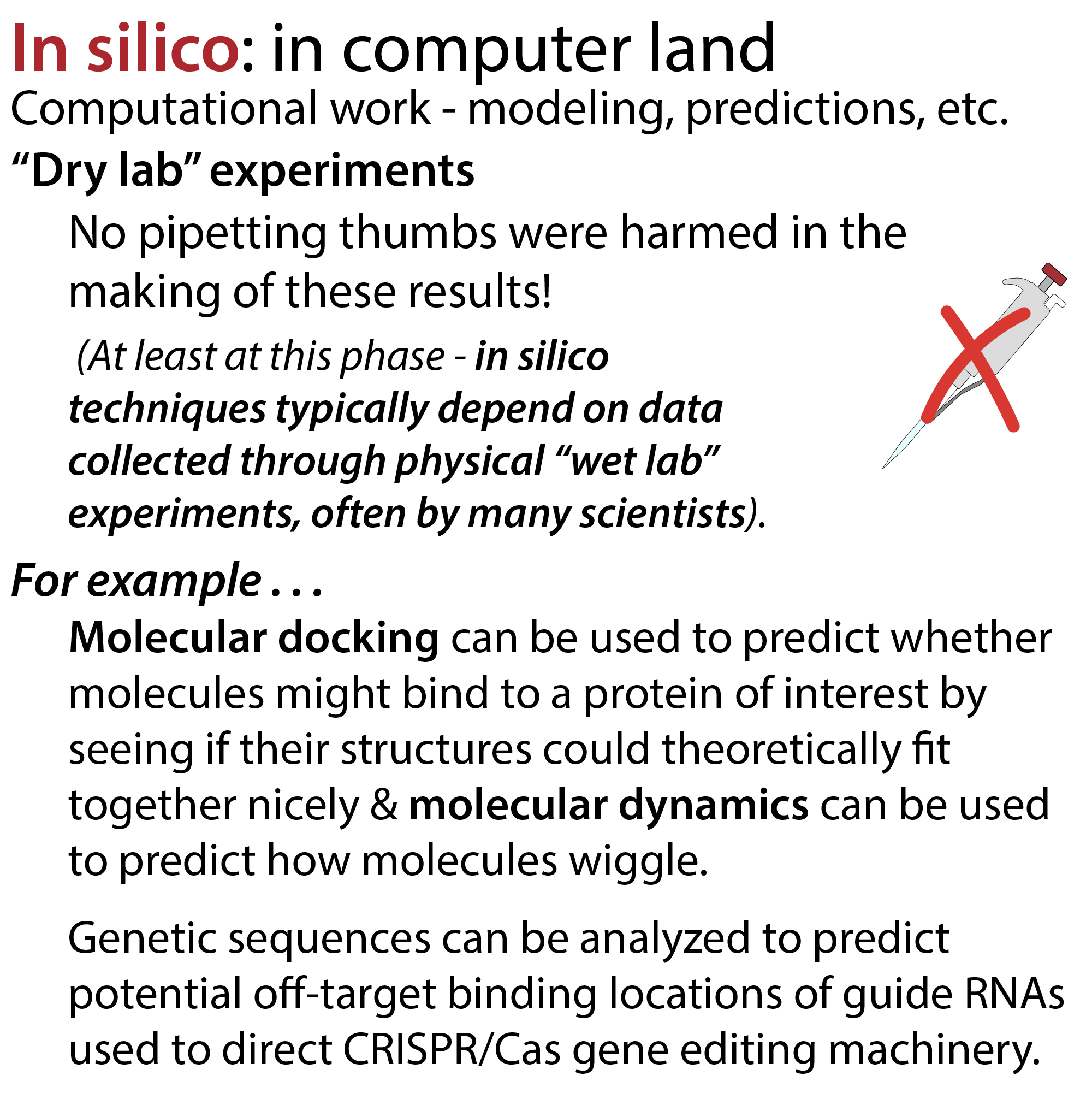
- In silico: in computer land
- “Dry work” techniques that typically depend on data collected through physical “wet lab” experiments, often by many scientists.
- For example:
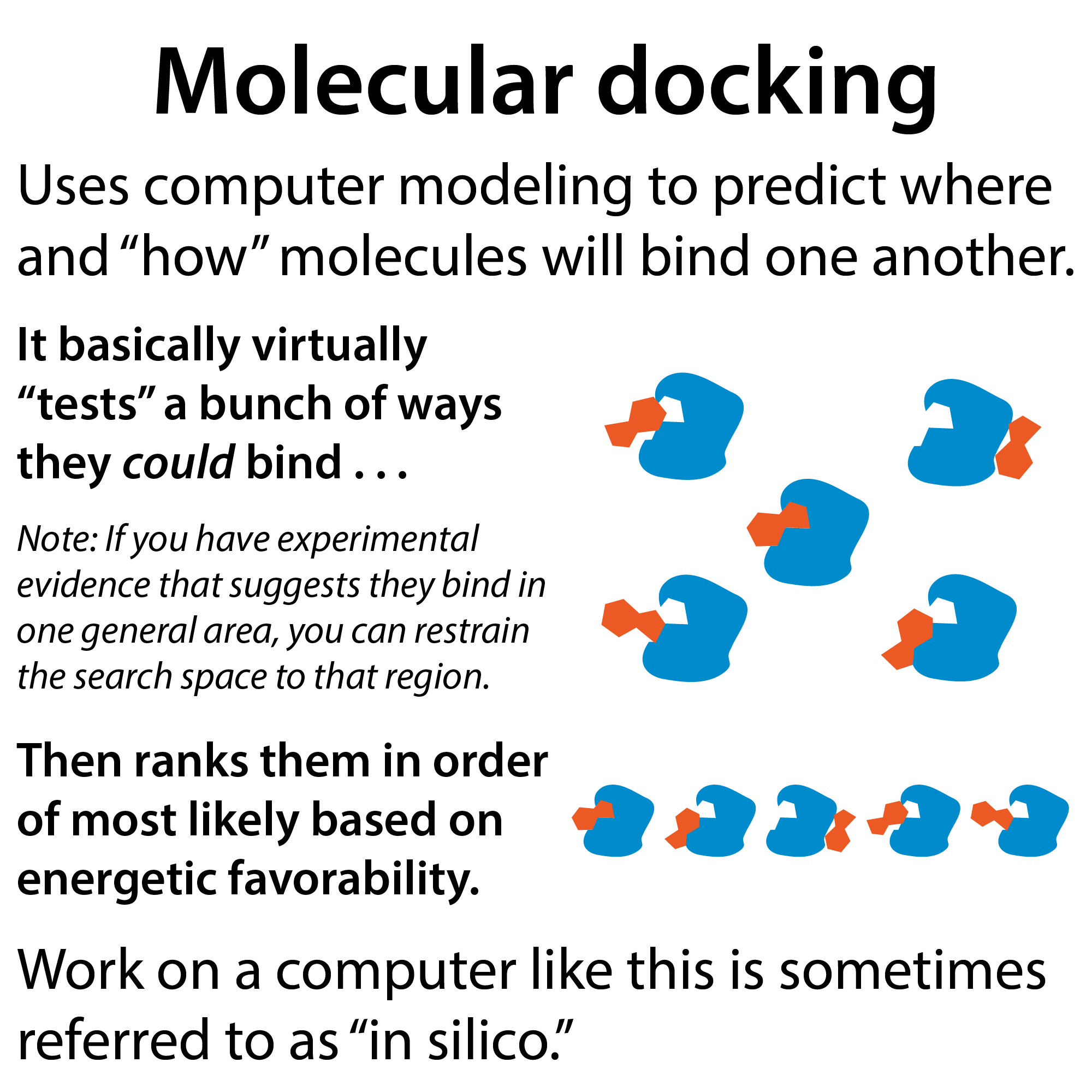
- Molecular docking can be used to predict whether molecules might bind to a protein of interest by seeing if their structures could theoretically fit together nicely & molecular dynamics can be used to predict how molecules wiggle.
- Genetic sequences can be analyzed to predict potential off-target binding locations of guide RNAs used to direct CRISPR/Cas gene editing machinery.
Note: the above phrases (in vivo, etc.) do not need to be italicized in most style guides.
- Additional strategies include things like “organoids” that try to mimic tissues and organs in vitro, sometimes starting from iPSCs (induced Pluripotent Stem Cells).
- iPSCs are stem cells made from non-stem cells (e.g. skin cells) taken from an organism and treated to revert back to stemness so they can then be treated with cell-type-specific signals to get them to differentiate into desired cell types.
Graphics




Associated posts
- Forward vs. reverse genetics: Forward vs reverse genetics, phenotype & genotype
- Experimental systems: Choosing an experimental system – in vitro, in cell culture, in vivo, etc.
- Orthogonal techniques: Orthogonal methods/techniques
Drug/therapeutic discovery and development
Outline
- Screening methods test large collections (libraries) of molecules to find “hits” (molecules that give a desired response in the screen) that might be worth investigating further
- Phenotypic screens test compounds against cells from patients with the condition and/or models of the condition to see which if any of the molecules reduce signals associated with the condition (e.g. cell death). They are target-agnostic, caring only about readout at this stage, not what cellular molecule(s) the test compound may bind.
- Target-based screens test compounds against (often purified versions of) proteins or other molecules associated with a condition. Rather than amelioration of disease signals, they often look for signs like reduction or increase in enzyme activity.
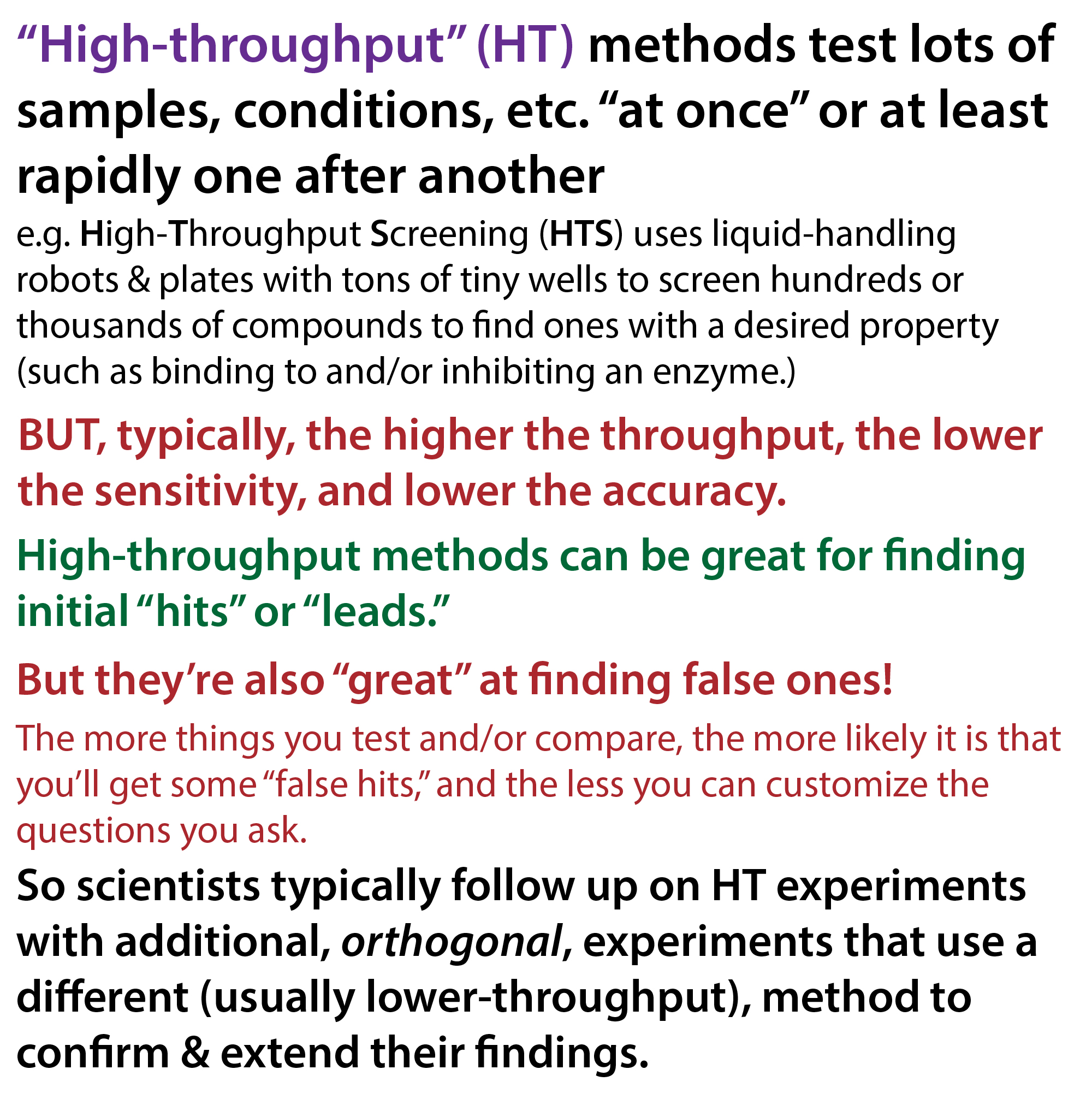
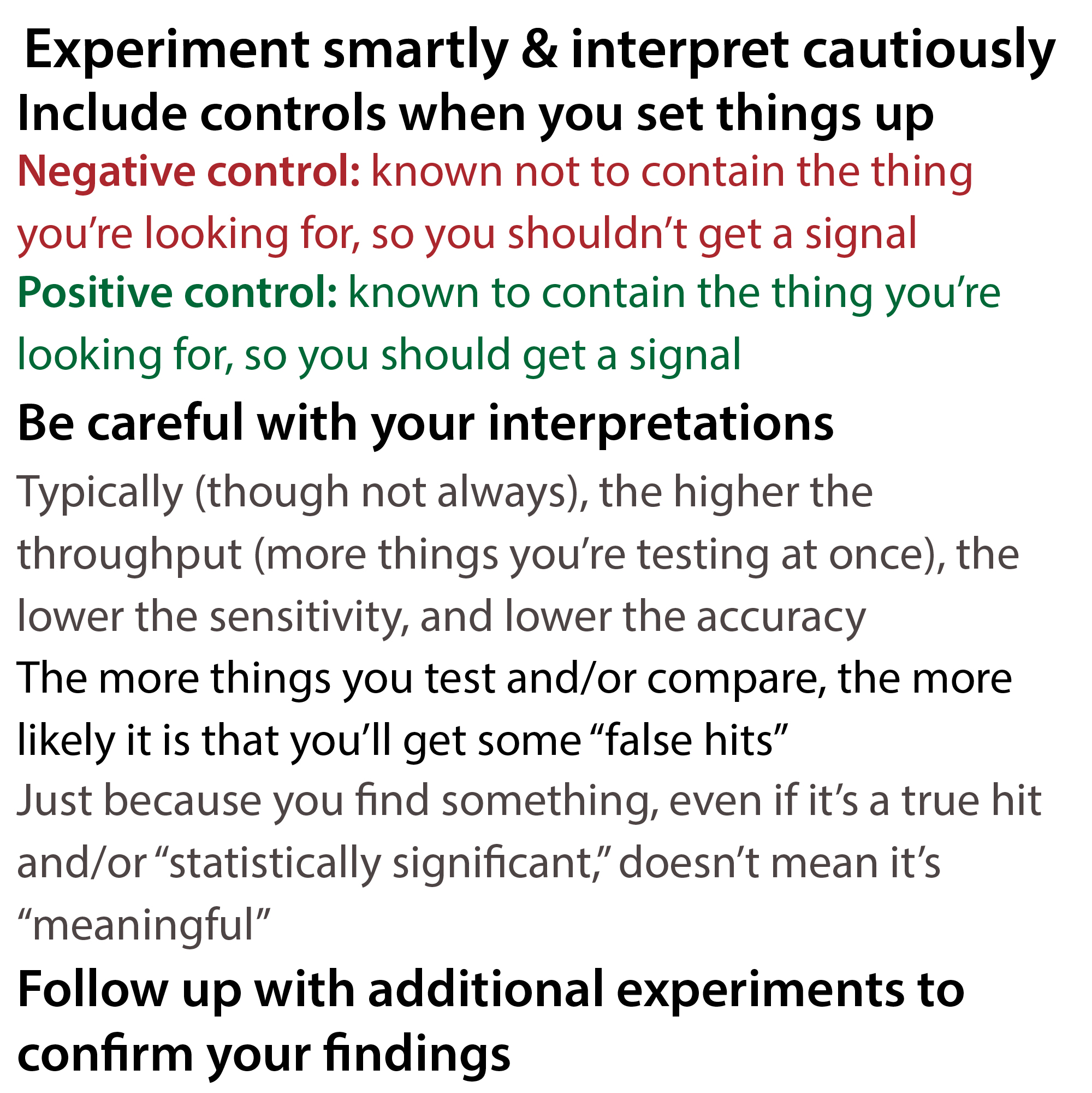
- Often, LOTS of molecules are screened at once in “High Throughput Screening” (HTS) – special caution must be used in HTS methods, because the more things you test the more “false” hits you’re likely to find. Statistical analyses of HTS data must take this into account to apply stricter standards for deeming a hit “statistically significant” and the hits (as in smaller screens) must be validated with additional studies.
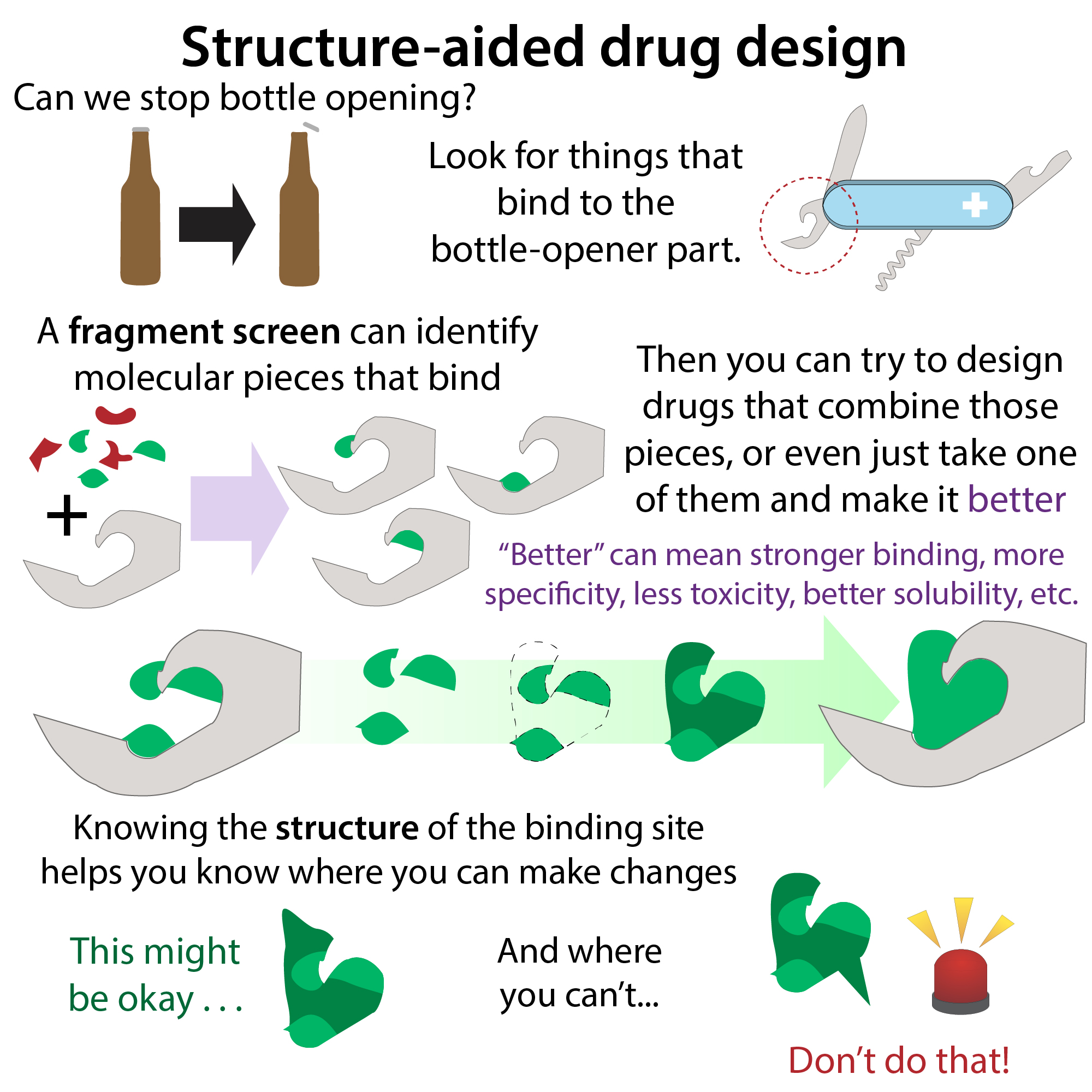
- Structure-aided design uses 3D structures of targets to design compounds to “fit” binding sites and/or bind more strongly, less strongly, and/or more specifically.
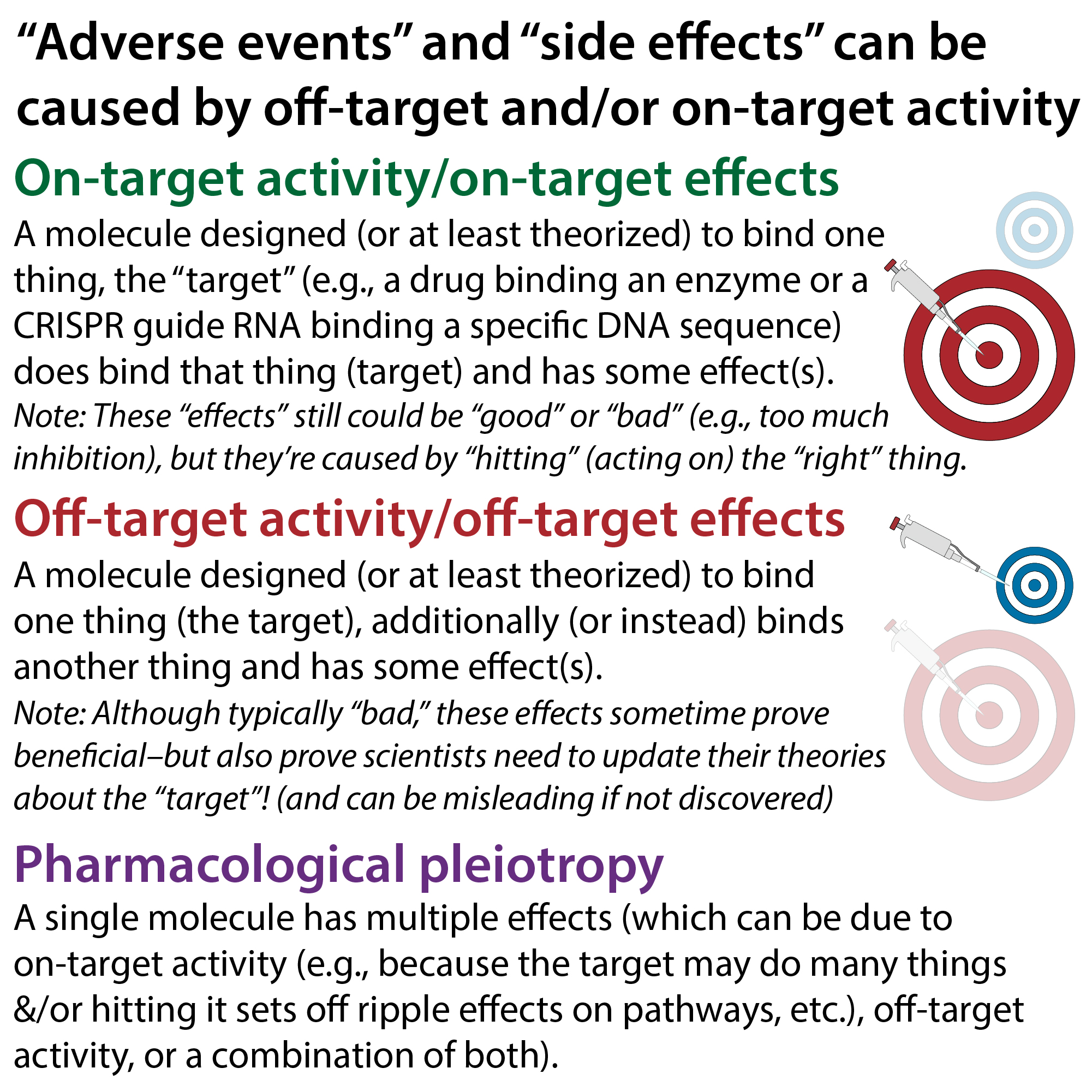
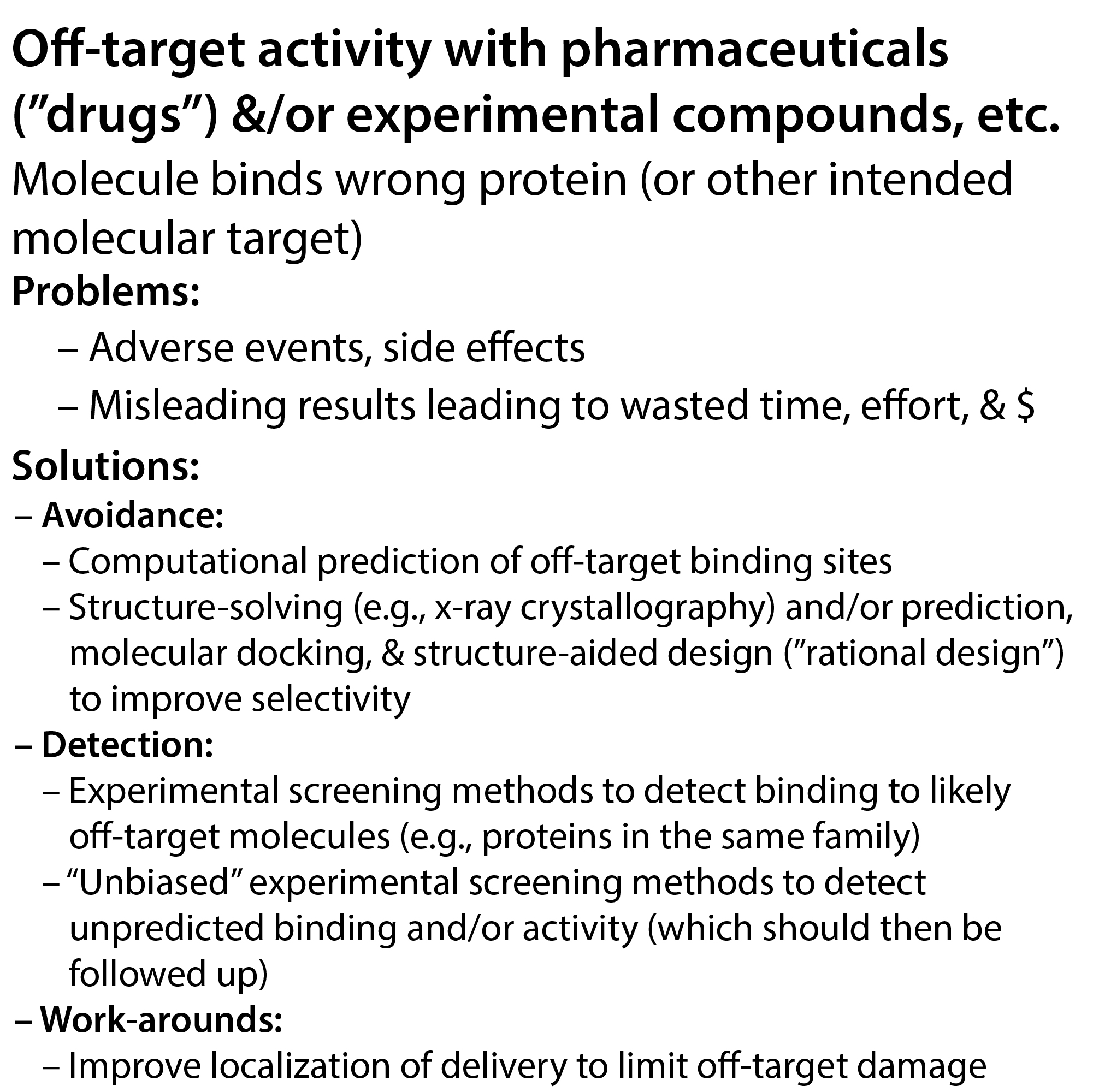
- It’s not enough to have desired actions (on-target activity), a therapeutic must also avoid unwanted activity (off-target activity) that can lead to side effects and complications.
- On-target activity/on-target effects: A molecule designed (or at least theorized) to bind one thing, the “target” (e.g., a drug binding an enzyme or a CRISPR guide RNA binding a specific DNA sequence) does bind that thing (target) and has some effect(s).
- Note: These “effects” still could be “good” or “bad” (e.g., too much inhibition), but they’re caused by “hitting” (acting on) the “right” thing.
- Off-target activity/off-target effects: A molecule designed (or at least theorized) to bind one thing (the target), additionally (or instead) binds another thing and has some effect(s).
- Note: Although typically “bad,” these effects sometime prove beneficial-but also prove scientists need to update their theories about the “target”! (and can be misleading if not discovered)
- Pharmacological pleiotropy: A single molecule has multiple effects (which can be due to on-target activity (e.g., because the target may do many things &/or hitting it sets off ripple effects on pathways, etc.), off-target activity, or a combination of both).
- Strategies to avoid off-target activity/effects include:
- Avoidance
- Computational prediction of off-target binding sites
- Structure-solving (e.g., x-ray crystallography) and/or prediction, molecular docking, & structure-aided design to improve selectivity
- Detection:
- Experimental screening methods to detect binding to likely off-target molecules (e.g., proteins in the same family)”Unbiased” experimental screening methods to detect unpredicted binding and/or activity (which should then be followed up)
- Workarounds:
- Improve localization of delivery to limit off-target damage
- Avoidance
- On-target activity/on-target effects: A molecule designed (or at least theorized) to bind one thing, the “target” (e.g., a drug binding an enzyme or a CRISPR guide RNA binding a specific DNA sequence) does bind that thing (target) and has some effect(s).
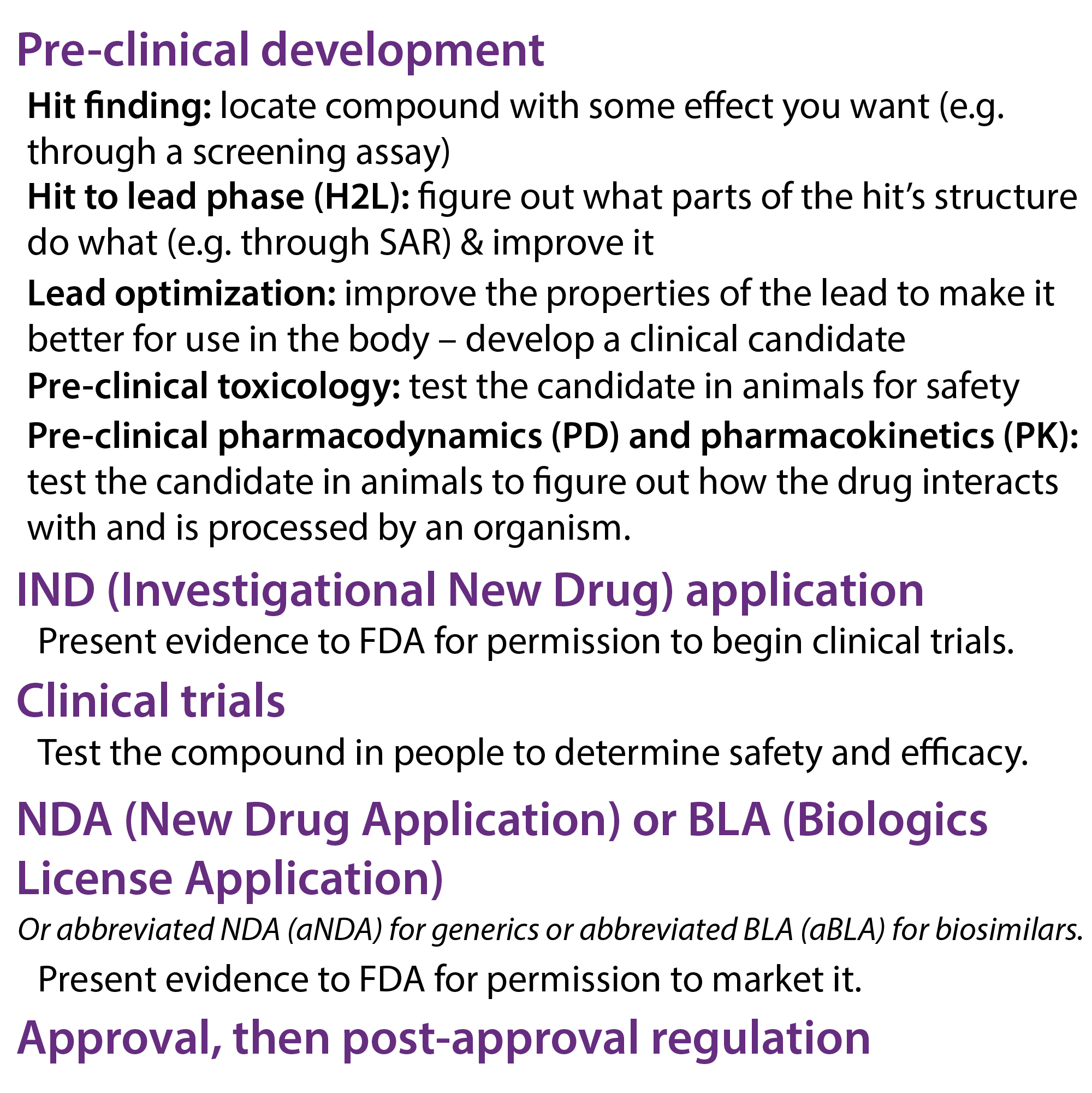
- “Hits” from screens, once validated in confirmatory studies, can be further developed into “lead compounds” that can be further optimized into “drug candidates.”
- This is necessary because although the hits themselves may have given a desired response in a screen, they likely also have undesired properties (including ones not identified in the screen) and even if they don’t, they typically need further development to be optimized for use as a drug.
- You might see the acronym “H2L” for Hit to Lead
- This often involves SAR (structure-activity relationship) studies that try to determine what core part of the hit is responsible for desired effects and how making various additions to that core part affects the activity
- Optimization can include things like improved potency (less of it is needed for a desired effect), increased half-life (it sticks around in the body), better selectivity (it has less off-target activity), and/or better bioavailability (it’s more soluble, can survive the digestive system, etc.).
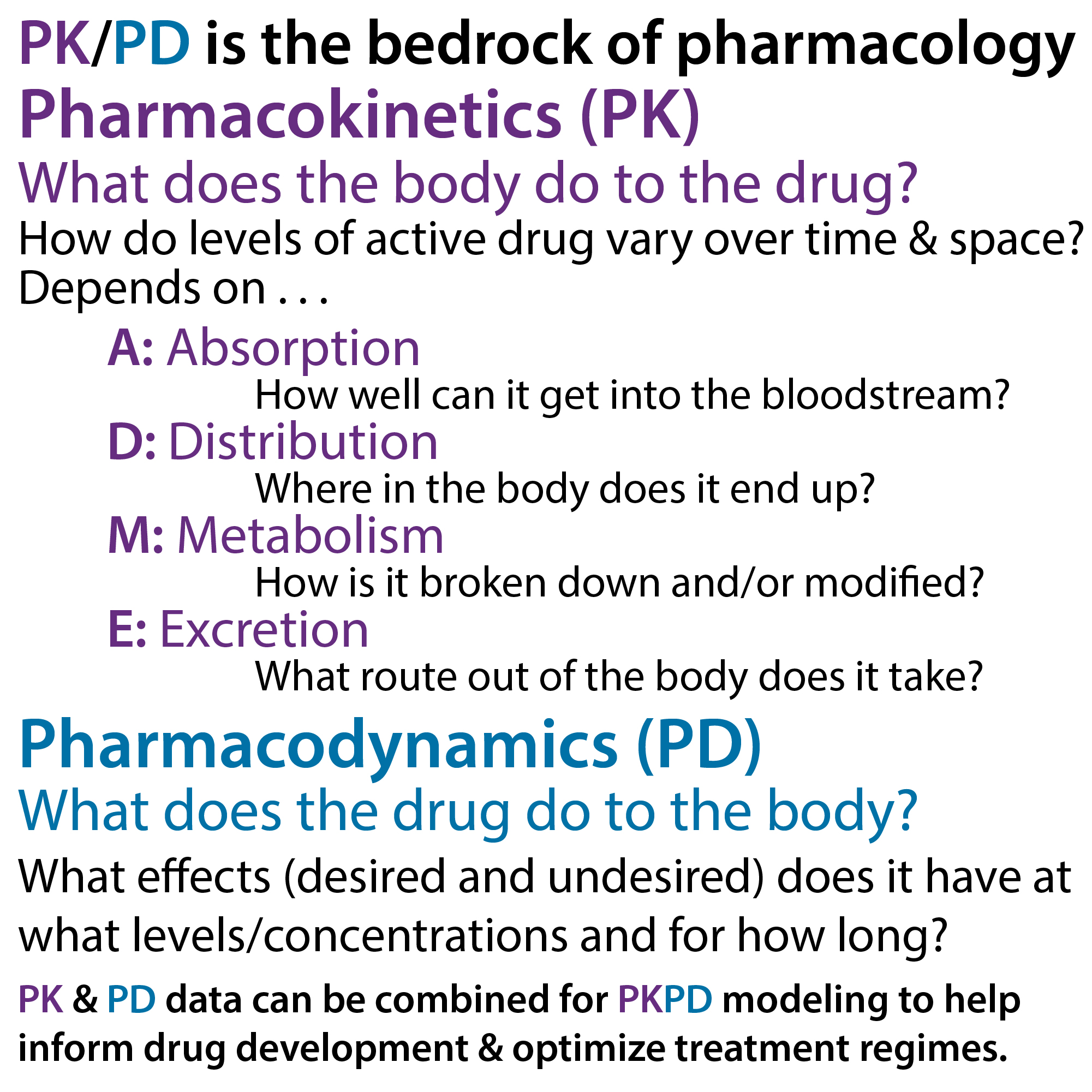
- Pharmacodynamics (PD) refers to what the drug does to the body
- Pharmacokinetics (PK) refers to what the body does to the drug
- The acronym ADME is often used, which stands for Absorption, Distribution, Metabolism and Excretion
Graphics
Click on an image to enlarge.


Associated posts
- Molecular libraries: What’s a molecular library? sequencing libraries, screening libraries, and more
- CRISPR-based screening: CRISPR/Cas Science – Gene editing & beyond! (but not without challenges)
- Structure-aided design: Structure-aided drug design
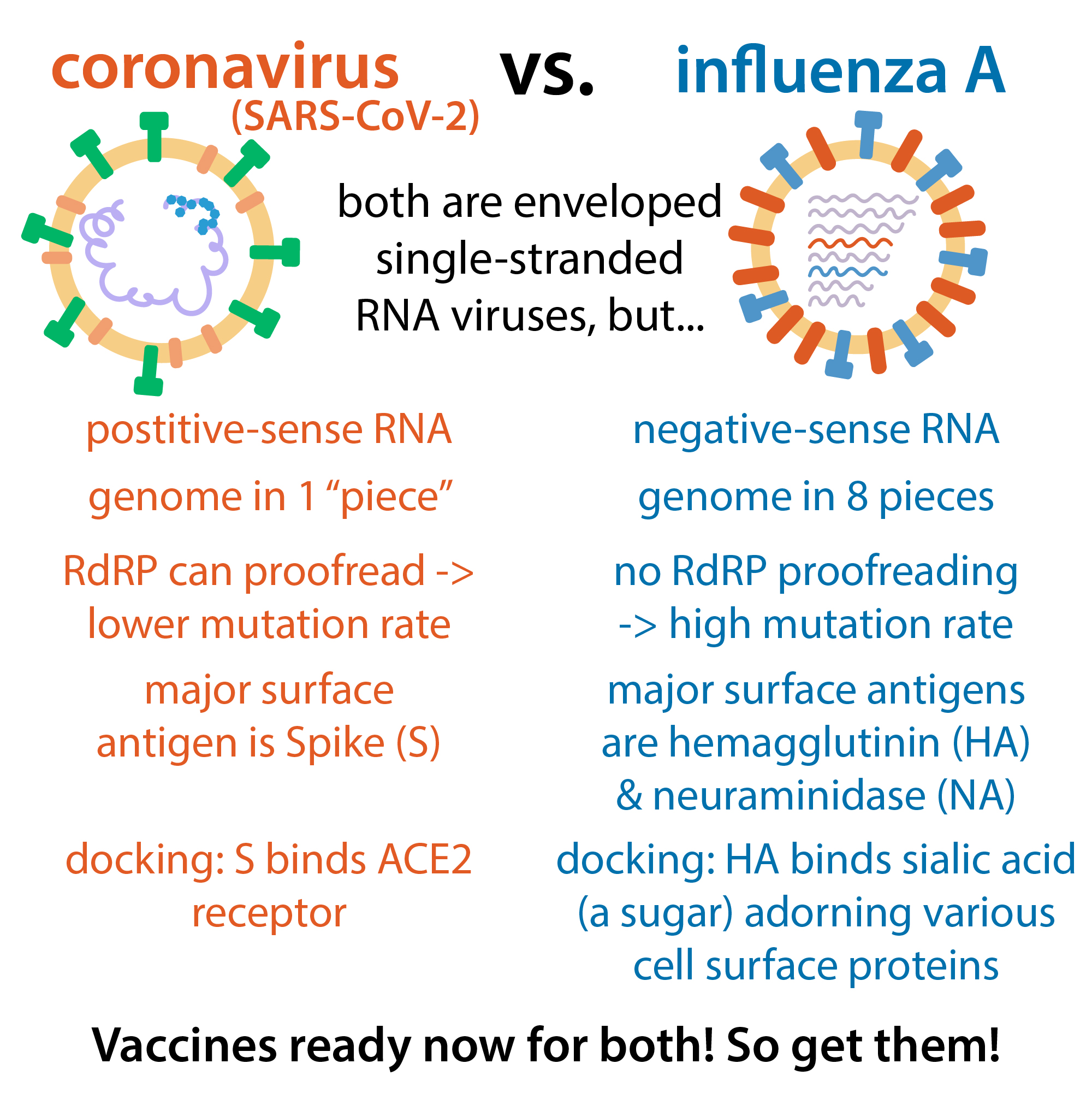
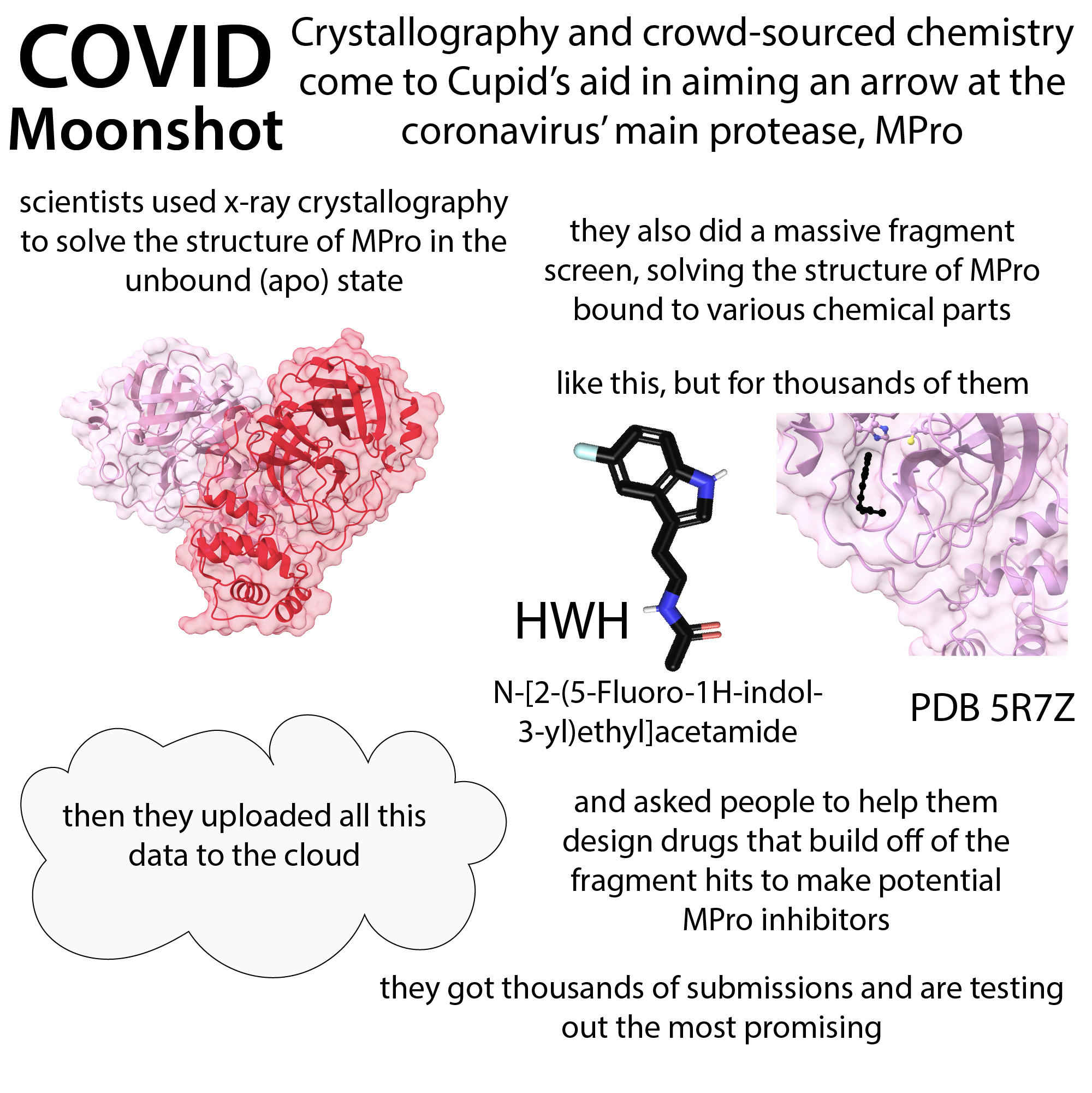
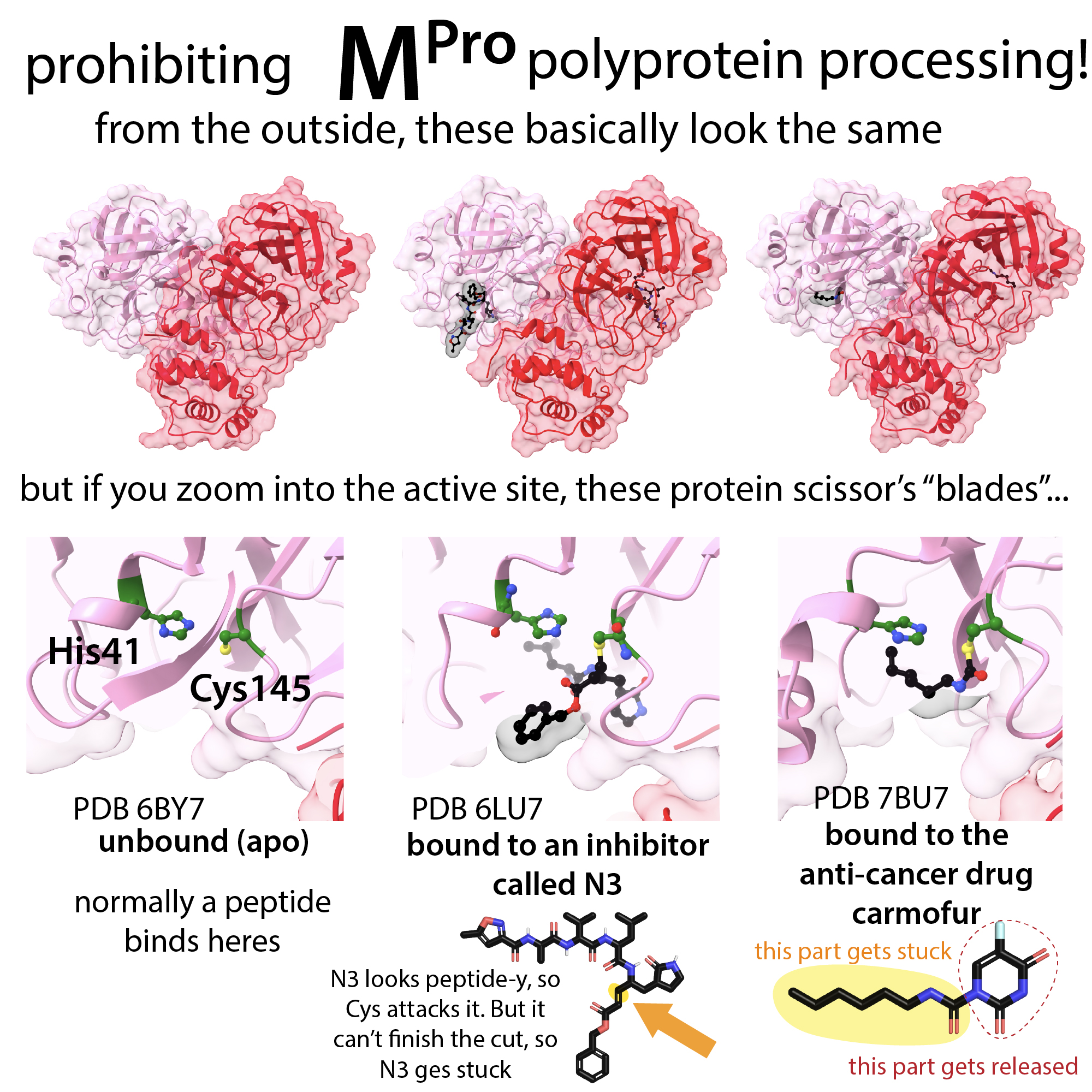
- Fragment screening example – MPro inhibitors: Coronavirus protease inhibitors and the importance of structural biology
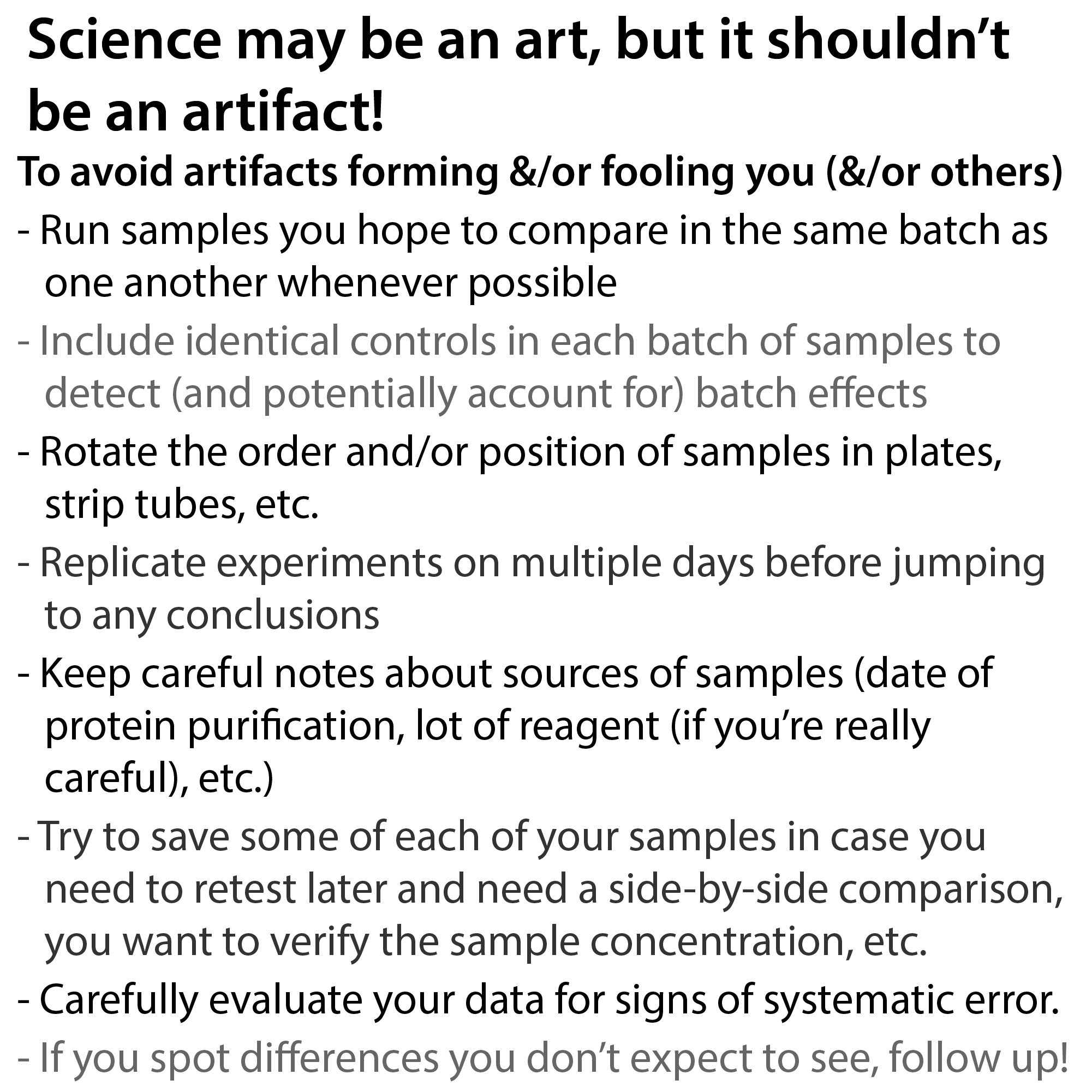
- High-throughput screening (HTS) etc.: Experimenting thoughtfully – good practices for getting the most out of each experiment
- Off-target activity: Off-target and on-target activity & effects
Review articles and book chapters
- Overall discovery & development
- Hughes et al. Principles of Early Drug Discovery. Br J Pharmacol 2011, 162 (6), 1239–1249. https://doi.org/10.1111/j.1476-5381.2010.01127.x.
- Does a nice job of describing the hit-to-lead (H2L) process, etc.
- Hartung, T. The (Misleading) Role of Animal Models in Drug Development. Front. Drug Discov. 2024, 4. https://doi.org/10.3389/fddsv.2024.1355044.
- Liu et al. New Approach Methodologies for Drug Discovery. Cell 2026, 189 (7), 1877–1903. https://doi.org/10.1016/j.cell.2026.02.012.
- Filipova et al. Need for NAMs: A Systematic Evidence Synthesis Revealing over Half a Century of Drug Development Failure. NAM Journal 2026, 100119. https://doi.org/10.1016/j.namjnl.2026.100119.
- Van Vleet et al. Screening Strategies and Methods for Better Off-Target Liability Prediction and Identification of Small-Molecule Pharmaceuticals. SLAS Discovery 2019, 24 (1), 1–24. https://doi.org/10.1177/2472555218799713.
- Rácz et al. The Changing Landscape of Medicinal Chemistry Optimization. Nat Rev Drug Discov 2025, 24 (11), 870–887. https://doi.org/10.1038/s41573-025-01225-1
- Brown, D. G. What Do Oral Drugs Really Look Like? Dose Regimen, Pharmacokinetics, and Safety of Recently Approved Small-Molecule Oral Drugs. J. Med. Chem. 2025, 68 (22), 23751–23780. https://doi.org/10.1021/acs.jmedchem.5c02863
- Ueda et al. The Expanding Role of Formulations to Enable Oral Delivery of Poorly Water-Soluble Drugs. Nat Rev Drug Discov 2026. https://doi.org/10.1038/s41573-026-01407-5.
- Zhang and Tang. Drug Metabolism in Drug Discovery and Development. Acta Pharmaceutica Sinica B 2018, 8 (5), 721–732. https://doi.org/10.1016/j.apsb.2018.04.003.
- Ernstmeyer, K.; Christman, E. Chapter 1 Pharmacokinetics & Pharmacodynamics. In Nursing Pharmacology [Internet]. 2nd edition; Chippewa Valley Technical College, 2023. https://www.ncbi.nlm.nih.gov/books/NBK595006/Structure-aided design
- Simon et al. Mechanism of Action, Potency and Efficacy: Considerations for Cell Therapies. J Transl Med 2024, 22 (1), 416. https://doi.org/10.1186/s12967-024-05179-7.
- Hughes et al. Principles of Early Drug Discovery. Br J Pharmacol 2011, 162 (6), 1239–1249. https://doi.org/10.1111/j.1476-5381.2010.01127.x.
- Structure-aided design
- Blundell, T. L. Protein Crystallography and Drug Discovery: Recollections of Knowledge Exchange between Academia and Industry. IUCrJ 2017, 4 (4), 308–321. https://doi.org/10.1107/S2052252517009241
- Chilingaryan, Yin, and Oakley. Fragment-Based Screening by Protein Crystallography: Successes and Pitfalls. International Journal of Molecular Sciences 2012, 13 (10), 12857–12879. https://doi.org/10.3390/ijms131012857
- Klebe, G. Protein Modeling and Structure-Based Drug Design. In Drug Design; Springer, Berlin, Heidelberg, 2013; pp 429–448. https://doi.org/10.1007/978-3-642-17907-5_20.
- Xu and Zou. Docking-Based Virtual Screening: Past, Present, and Future. Biophysical Journal 2026, S0006349526002778. https://doi.org/10.1016/j.bpj.2026.04.011.
- Off-target activity, etc.
- Lin et al. Off-Target Toxicity Is a Common Mechanism of Action of Cancer Drugs Undergoing Clinical Trials. Sci Transl Med 2019, 11 (509), eaaw8412. https://doi.org/10.1126/scitranslmed.aaw8412.
- Ryszkiewicz, Malinowska, and Schlicker. Polypharmacology: Promises and New Drugs in 2022. Pharmacol Rep 2023, 75 (4), 755–770. https://doi.org/10.1007/s43440-023-00501-4.
- Statistical analysis & caution
- Lang, T. Twenty Statistical Errors Even You Can Find in Biomedical Research Articles. Croat Med J 2004, 45 (4), 361–370. https://www.cmj.hr/2004/45/4/15311405.pdf
- Hartung, T. Food for Thought Look Back in Anger – What Clinical Studies Tell Us About Preclinical Work. ALTEX 2013, 30 (3), 275–291. https://doi.org/10.14573/altex.2013.3.275
Webpages
- PhD, Y. W. The power of structure-based drug design. Drug Discovery News. https://www.drugdiscoverynews.com/structure-based-drug-design-15997
- Labs, B. Hit to Lead Assays: Accelerating Early Drug Discovery. BellBrook Labs. https://bellbrooklabs.com/hit-to-lead-assays/
Books
- Zanders, E. D. Twenty-First Century Drug Discovery: An Expanding Landscape; Springer Nature Switzerland: Cham, 2025. https://doi.org/10.1007/978-3-031-93949-5.
- Biotherapeutics: From Small to Large Molecules and Cells; Calzada, V., Cerecetto, H., Tosar, J. P., Eds.; Topics in Medicinal Chemistry; Springer Nature Switzerland: Cham, 2024; Vol. 42. https://doi.org/10.1007/978-3-031-81025-1.
- The Billion Dollar Molecule: One Company’s Quest for the Perfect Drug, by Barry Werth, 1995
- Discusses early work on structure-aided design.
Clinical trials
Outline
Clinical trials vary but the basic idea with most is that clinicians and scientists monitor patients with and without some new treatment to figure out: whether a treatment is safe; whether it works (has efficacy); whether it works better than the current “standard of care”; and/or what if any side effects it causes.
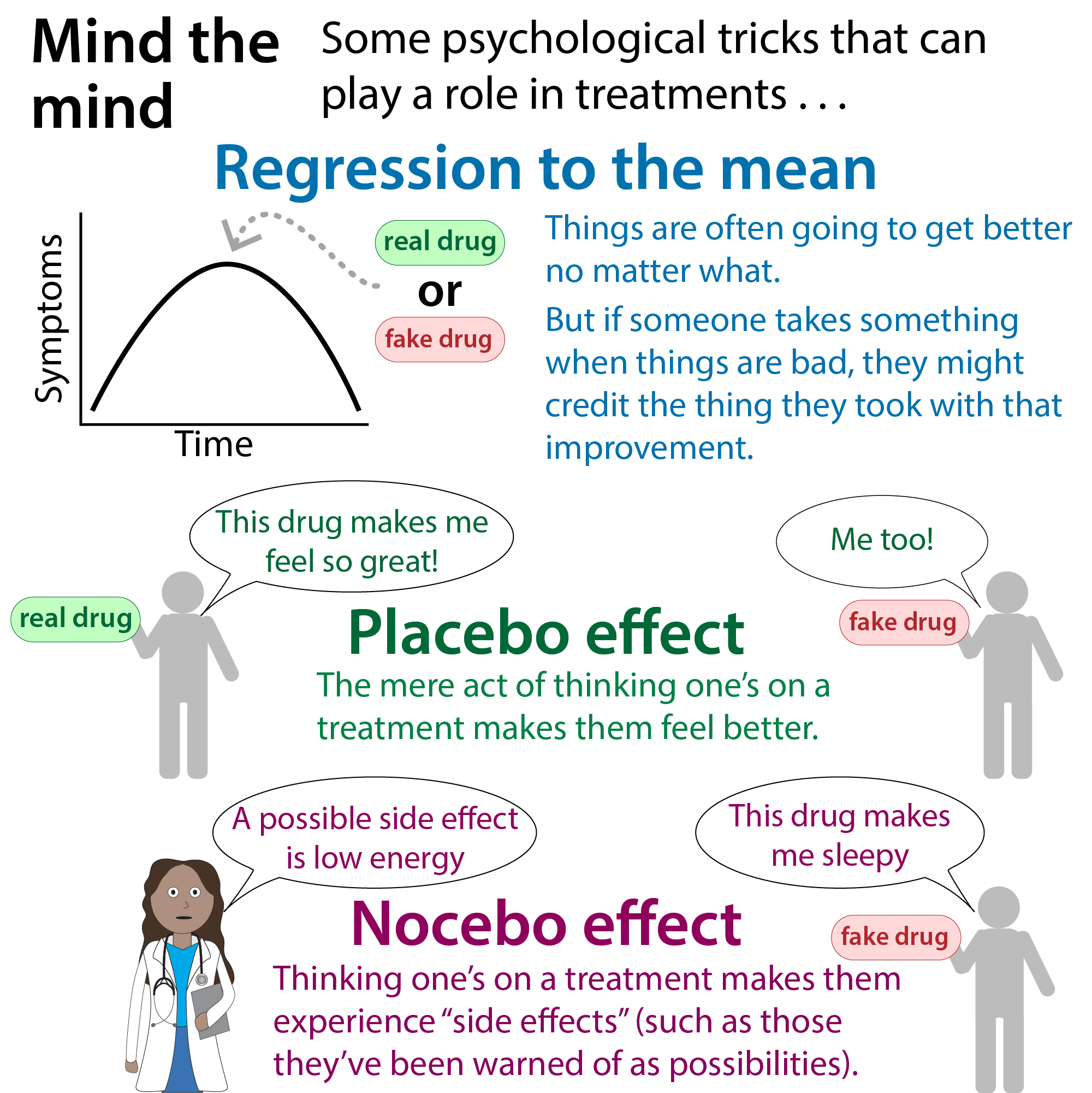
- One of the key reasons they’re needed is to account for psychological variables and fallacies making anecdotes unreliable:
- Regression to the mean: Things are often going to get better no matter what. But if someone takes something when things are bad (as is typical), they might credit the thing they took with that improvement.
- Placebo effect: patients will often get hope just knowing they’re on a drug and this positive attitude can make them feel better (placebo effect).
- Nocebo effect: if a patient has an “adverse event” like a seizure during the trial, and they think they’re on a drug, even if they aren’t, they might blame the drug, especially if they’re told the drug could cause seizures.
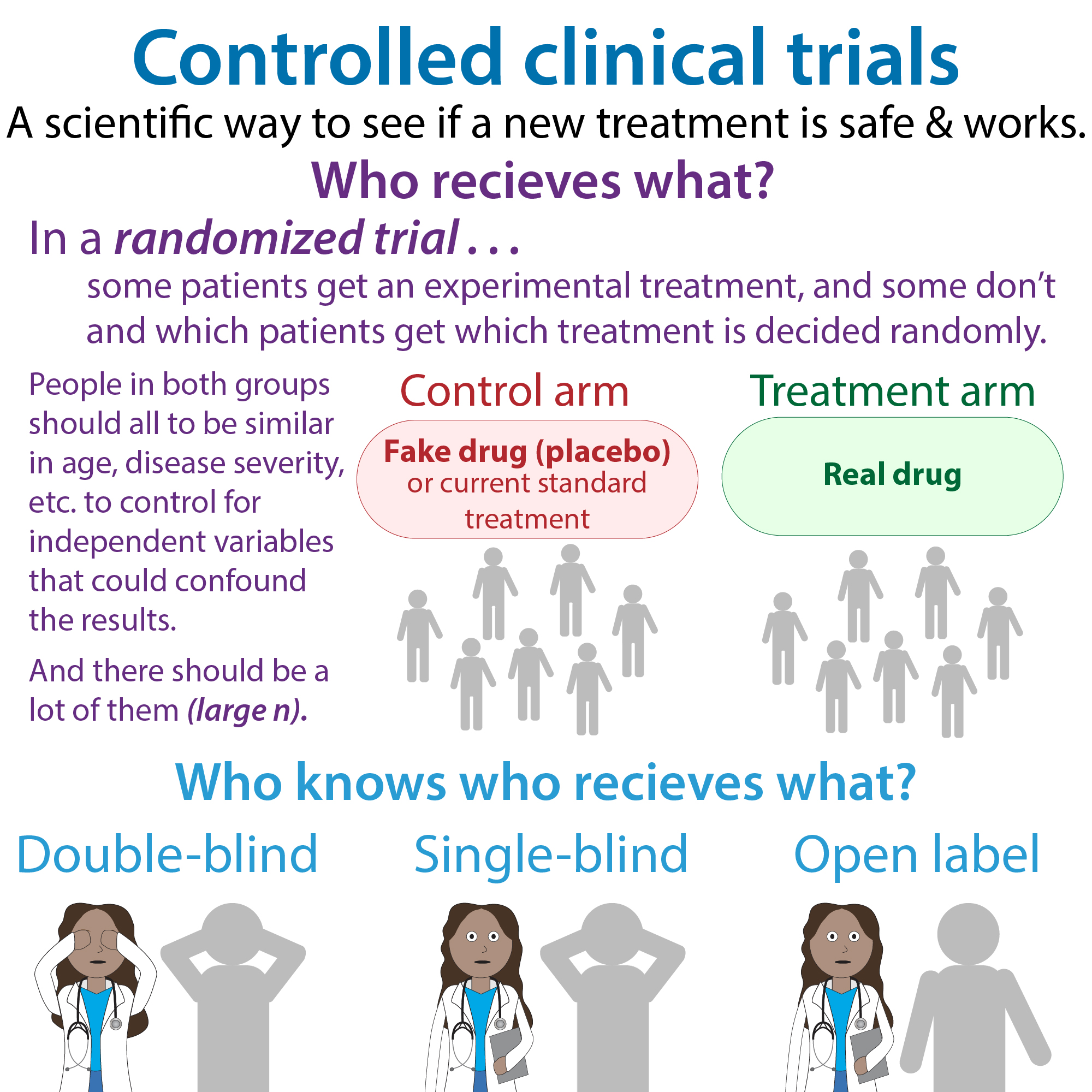
- Arm-ed you glad you asked? The groups of patients receiving different treatments are sometimes referred to as “arms” – e.g. a group of patients receiving the drug is referred to as a “therapeutic arm” and they’re compared to a “control arm” where patients don’t get the treatment, get a fake (sham) treatment, or get the common “standard of care” (whatever would typically be given to a patient were they not in the trial).
- Some trials have multiple therapeutic arms, so they can compare multiple treatment strategies (different drugs, different doses, etc.).
- It’d be great to have a lot of arms, but it’s difficult in part because you need to keep the study size high – you need a large “n” (number of patients) in each group in order for any result to be statistically significant.
- Some trials have multiple therapeutic arms, so they can compare multiple treatment strategies (different drugs, different doses, etc.).
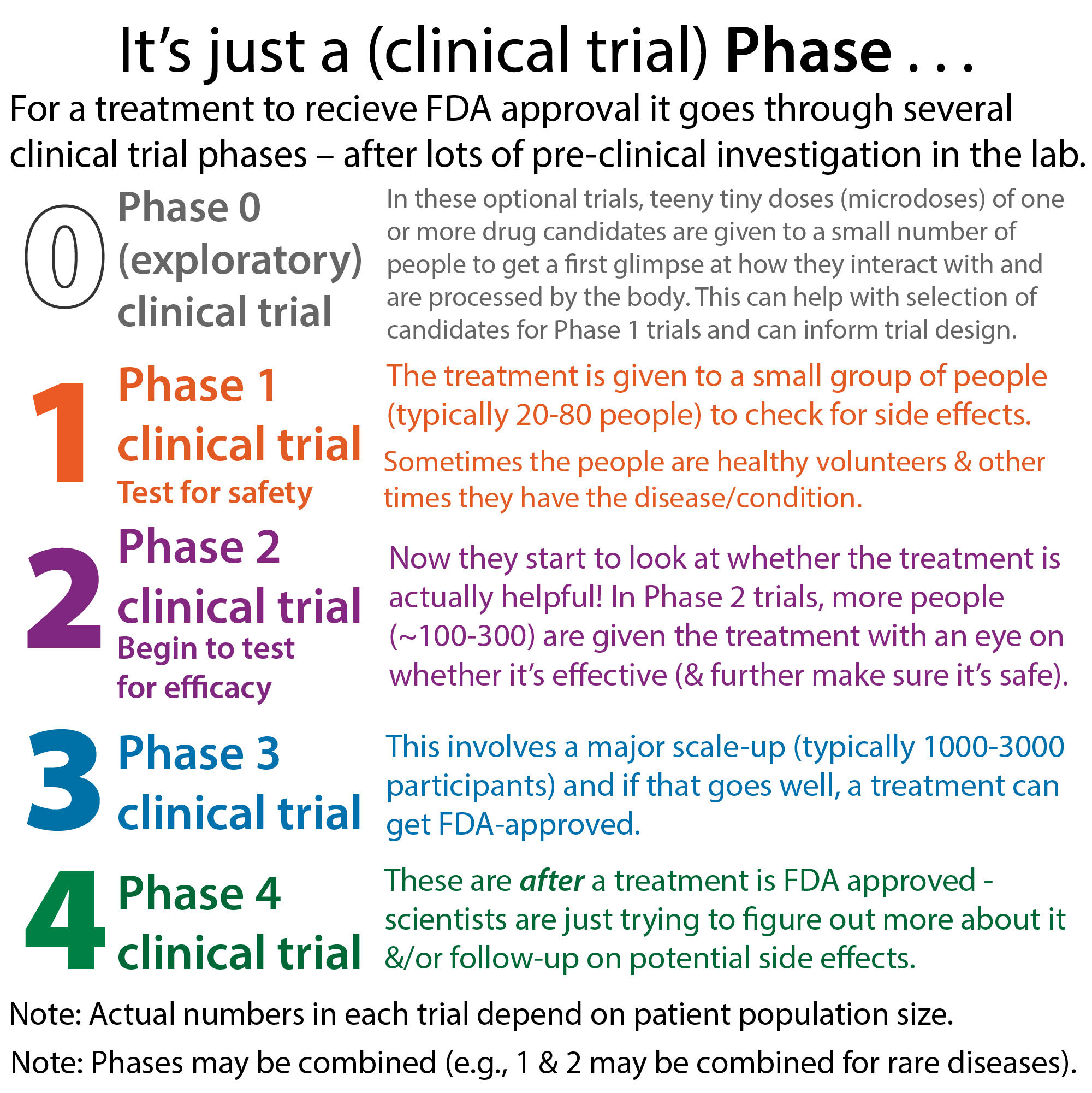
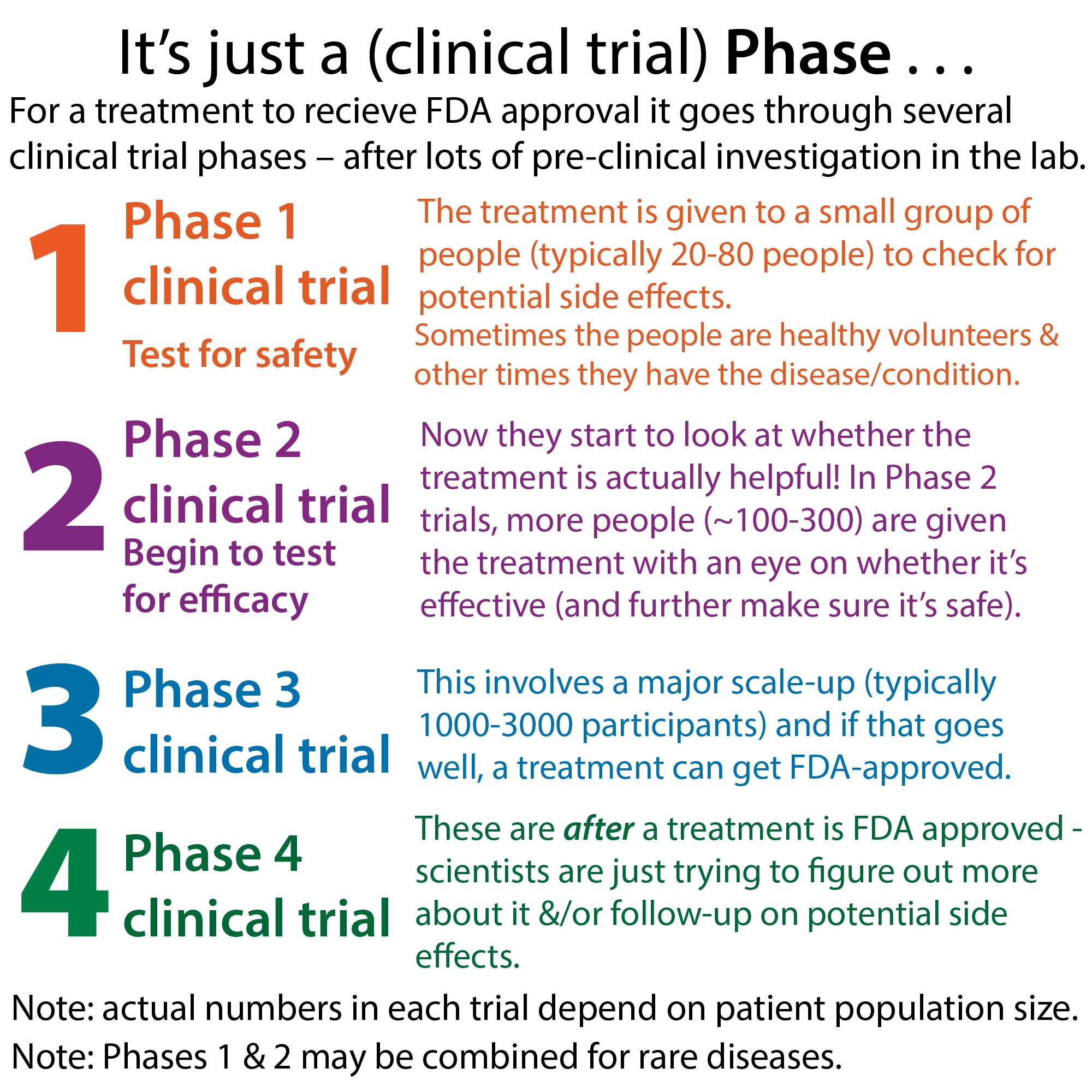
- Phases of clinical trials: There are different types of trials and, in order to become FDA-approved, a treatment goes through a series of clinical trial phases. There’s some variability (especially regarding numbers treated and control arms) depending on the nature of the condition, the treatments currently available, etc. but the basic phases are:
- Phase 1 trials test for safety – the treatment’s given to a small group of people (typically 20-80 people) to check for potential side effects. Sometimes the people are healthy volunteers and other times they have the disease.
- Phase 2 trials – now they start to look at whether the treatment is actually helpful (i.e., they look for efficacy)! In Phase 2 trials, more people (~100-300) are given the treatment with an eye on whether it’s effective (and further make sure it’s safe). They also may test to see what dose might be ideal (enough to improve the condition but not so much that it causes intolerable side effects).
- If that all goes well, it’s on to Phase 3 trials – this involves a major scale-up (typically 1000-3000 participants) and if that goes well, a drug can get FDA-approved.
- Sometimes the trials designed to get the needed evidence for approval are called “pivotal trials.”
- Phase 4 trials – these are *after* a treatment is FDA approved – scientists are just trying to figure out some more about it and/or follow up on potential side effects
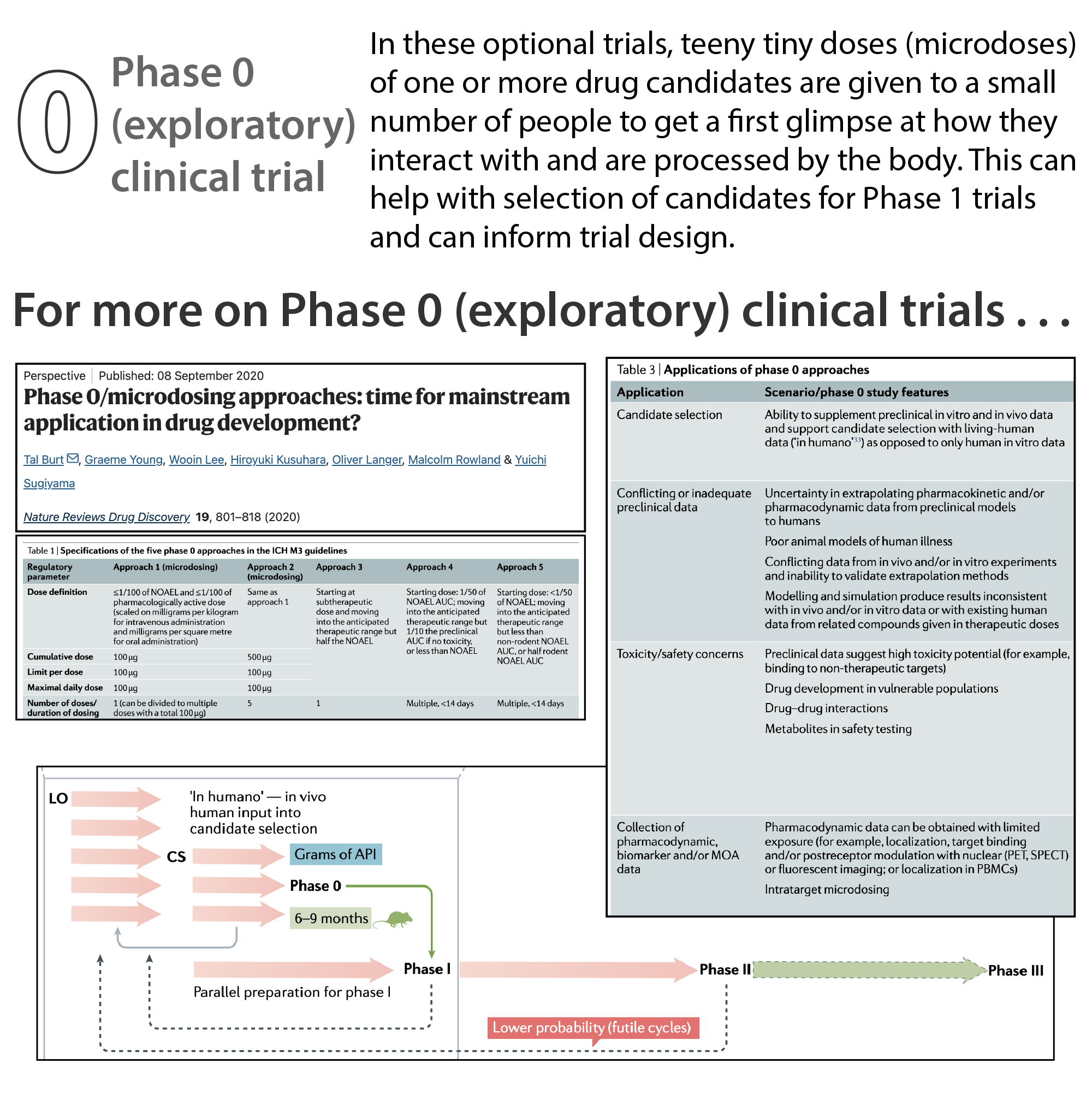
- There are also sometimes “Phase 0” trials (sometimes called exploratory clinical trials) where really small amounts of a treatment are given to people to scout out how the body processes them (pharmacokinetics) and how they affect the body (pharmacodynamics), test a few different compounds, etc.
- They involve limited human exposure for short time frame (e.g. 1 wk), with no intent to treat or diagnose but rather to investigate feasibility for further development (per the FDA’s 2006 guidelines.
- One may be performed to help choose among multiple candidate compounds to take into Phase 1 studies and/or to allow compounds to fail early, saving money and time.
- Unlike typical clinical trials, where drugs are first tested in healthy volunteers, Phase 0 trials can test them in patients due to the low levels given.
- Parameters measured may include pharmacodynamics, pharmacokinetics, and/or target engagement (e.g. binding to target molecules in the body) and may involve using radiolabeled compounds for tracking.
- The format of Phase 0 trials can vary and may include a single microdose of a single compound, a series of microdoses of the same quantity of a single compound, a series of escalating doses or a single compound, or simultaneous administration of microdoses of multiple compounds (cassette microdosing).
- Some Phase 0 trials involve intratarget microdosing (ITM) which delivers a tiny dose, but into the target, momentarily generating a potential therapeutic dose at the site of interest, as well as microdoses throughout the body, which can provide valuable information.
- Exploratory Investigational New Drug (eIND) applications are required before testing, but the requirements for eINDs are more flexible than typical IND requirements due to the low levels given and thus limited human exposure.
- Trial phases may be combined (e.g. Phase I/II) especially in trials for orphan diseases and/or complicated, risky, and/or customized treatments.
- How does one determine if a trial is “successful”? When setting up a trial, scientists set out particular “endpoints,” which are the things that they measure in order to see if they meet the “objectives” the study sets out. For example, you might measure the endpoint of days of required hospitalization to see if you meet an objective of a 50% reduction in hospitalization time in the treatment group compared to the control group.
- Primary endpoints are the main things measured, but “secondary endpoints” are monitored as well. For example, they might initially (e.g. in Phase 1 studies) look only to safety as a primary endpoint, but also add secondary endpoint(s) to see if it’s actually having a therapeutic effect. They might also have secondary endpoints in later phases for various reasons, but these shouldn’t be allowed to substitute for the primary ones.
- “Accelerated approval:” In some cases, such as cases where disease symptoms progress over years, or if there’s a pressing need for a treatment, it can be hard to know in a reasonable amount of time if a treatment actually has clinical efficacy (does it actually help people). In such cases, and with regulatory okay, scientists may instead look to “surrogate markers” or “surrogate endpoints” which are (typically molecular) indications, sometimes in the form of “biomarkers” that are believed to correlate with clinical efficacy (e.g., lowering of levels of a misfolded protein or increase in levels of a wanted protein).
- The companies are then supposed to continue following patients and/or do additional studies to confirm the treatment actually is effective, but these are not always completed.
- Avoiding bias: Both conscious and unconscious factors can influence the findings and/or the analysis of trial results, so there are a number of measures taken to avoid it.
- The “gold standard” for bias prevention is double-blinded, randomized, and placebo (or current standard of care)-controlled. You might see the acronym “RCT” for “Randomized Control Trial.”
- Blinding (aka masking) refers to who knows what arm of a trial a patient is in (i.e. are they receiving placebo, treatment (if so, what dose), etc.)
- Double-blinded (double-masked): neither doctor nor patient knows who’s getting what (of course, someone knows, but not the people who could potentially affect the results)
- Single-blinded (single-masked): doctors, but not patients, know who’s getting what
- Open-label: doctors and patients both know who’s getting what
- Randomized: patients are randomly placed into one arm (e.g. it’s random whether or not they are selected to receive the treatment or a placebo).
- Placebo (or current standard of care)-controlled: Placebos, which can be a “sugar pill” or some other “harmless” fake treatment are really the best way to truly know what effects a treatment might have. But, it doesn’t answer if it’s as good as and/or better than what’s already available. And, critically, giving a patient a placebo when there are treatments actually available (even if only somewhat effective) is not “harmless.” It would be unethical to give patients a sugar pill when there’s something that is already known to be helpful. So, instead of receiving a fake drug, the control group patients receive whatever the currently used “standard of care” treatment is. ⠀
- Blinding (aka masking) refers to who knows what arm of a trial a patient is in (i.e. are they receiving placebo, treatment (if so, what dose), etc.)
- The “gold standard” for bias prevention is double-blinded, randomized, and placebo (or current standard of care)-controlled. You might see the acronym “RCT” for “Randomized Control Trial.”
Interim analysis: Even in blinded/masked studies, an “independent” Data Monitoring Committee (DMC), aka a Data Safety and Monitoring Board (DSMB), in addition to monitoring patient safety throughout the trial, looks at the data midway through to see if it would be unethical to proceed either because the treatment is causing severe side effects or because the treatment is super effective so it’s unfair not to give it to more people.
“Positive” results tend to get published much more than “negative” results, and “confirmatory” or “replication” findings less than “novel” findings. This makes the published literature biased. To prevent some of this bias, the FDA introduced laws that require the pre-registration of clinical trials, including the trial design (including endpoints and statistical methods to be used). They must then report their findings to be posted on ClinicalTrials.gov. They have to report their results within 1 year of study completion, but they rarely do and the evidence to date implies the threat of a hefty fine isn’t enough to make them given that the government rarely inflicts it (see Narayan et al., 2026)
- On a related note, outside of the official review process, results from multiple trials and/or individual case reports/studies may be analyzed to assess effects of treatments in the real world, non-regulated treatments, etc.. These grouped analyses can be in the form of systematic reviews and meta-analyses.
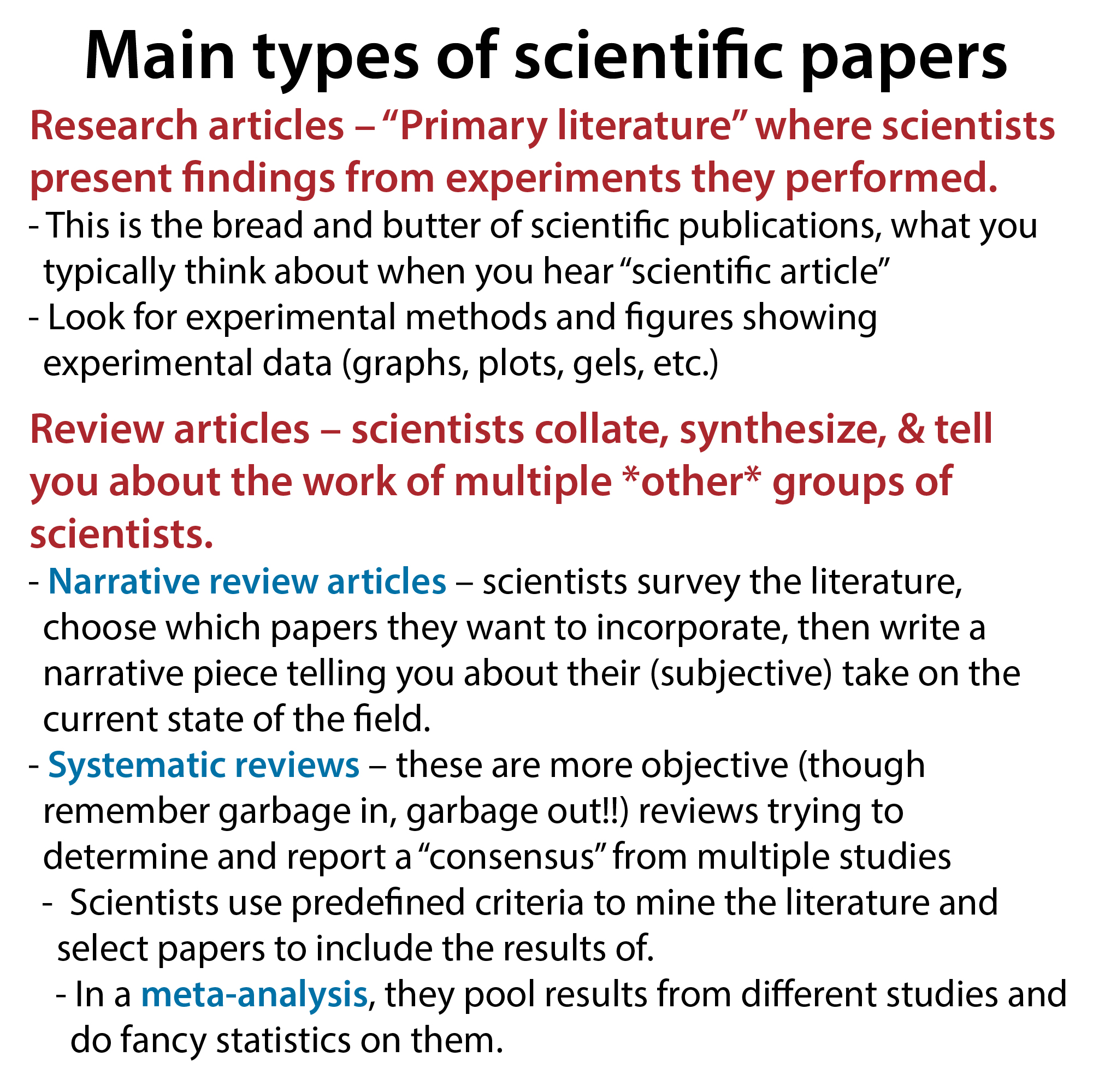
- In general, review articles are scientific papers where authors collate, synthesize, & tell you about the work of multiple *other* groups of scientists.
- Narrative review articles – scientists survey the literature, choose which papers they want to incorporate, then write a narrative piece telling you about their (subjective) take on the current state of the field.
- Systematic reviews – these are more objective (though remember garbage in, garbage out!!) reviews trying to determine and report a “consensus” from multiple studies – scientists use predefined criteria to mine the literature and select papers to include the results of.
- In a meta-analysis, they pool results from different studies and do fancy statistics on them.
- In general, review articles are scientific papers where authors collate, synthesize, & tell you about the work of multiple *other* groups of scientists.
- You might also see individual cases or collections of cases reported in the form of case reports/case studies and/or case series.
- Case reports – doctors present “odd” or “unusual” findings or report on the treatment of a single patient using a non-conventional strategy.
- Case series – doctors present findings from multiple similar case reports of. These may provide impetus for larger, more official, studies
Graphics
Click on an image to enlarge.
Associated posts
- Clinical trial fundamentals: Clinical trials
- Fundamentals of clinical trials and the path to regulatory approval of a therapeutic: Fundamentals of clinical trials and the path to regulatory approval of a therapeutic
- Types of scientific articles: Types of scientific papers: What’s what and how to know
- Systematic reviews, meta-analyses, biases, etc.: Critically evaluating supplements, etc.: systematic reviews, meta-analyses, biases, evidence, etc.
- Clinical trial phases: Phase 0 (exploratory), Phase 1 (safety), 2-3 (efficacy), 4 (post-marketing follow-up): https://youtu.be/JtUQhIMx6mI
Articles & book chapters
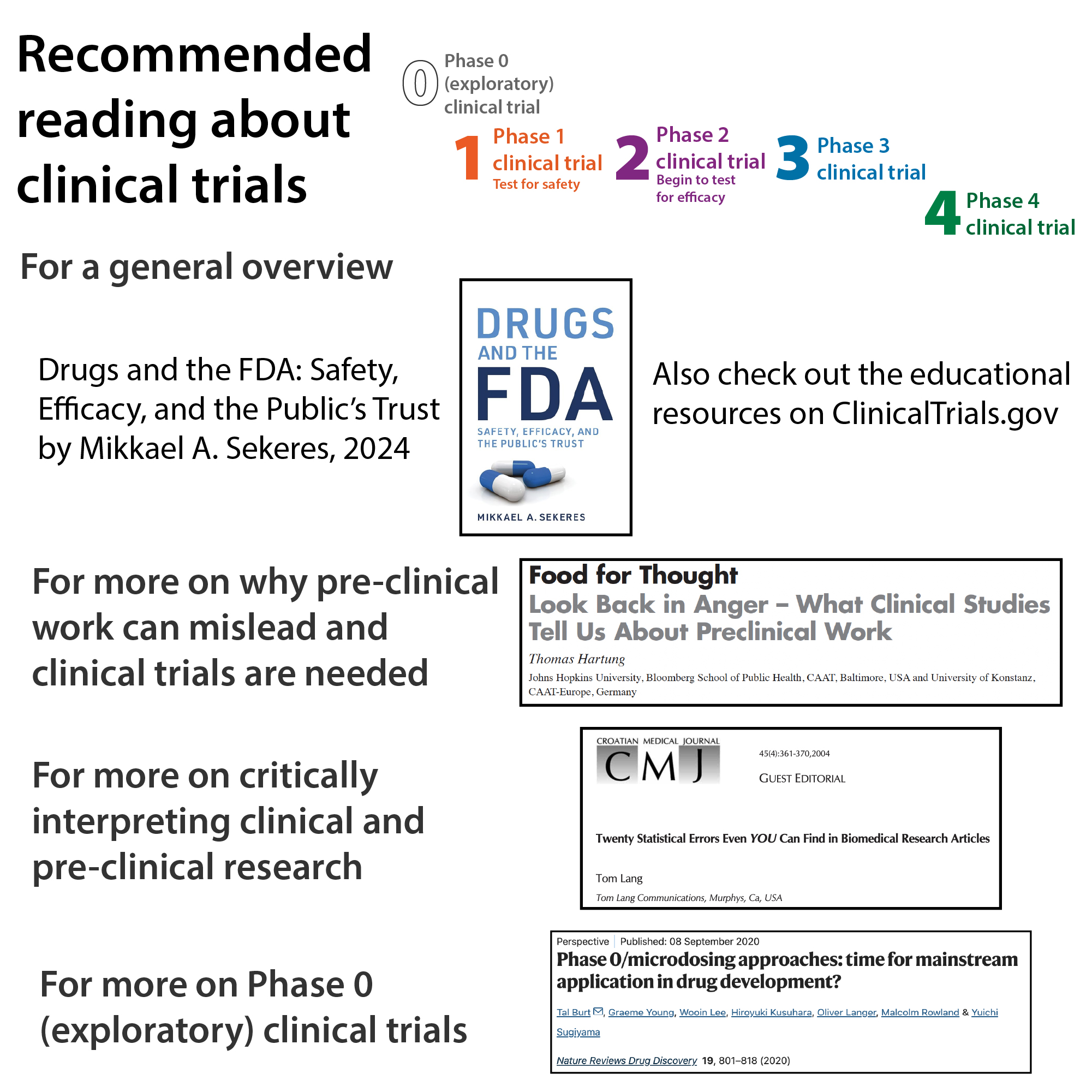
- Hartung, T. Food for Thought Look Back in Anger – What Clinical Studies Tell Us About Preclinical Work. ALTEX 2013, 30 (3), 275–291. https://doi.org/10.14573/altex.2013.3.275.
- This article was really helpful.
- Lang, T. Twenty Statistical Errors Even You Can Find in Biomedical Research Articles. Croat Med J 2004, 45 (4), 361–370. https://www.cmj.hr/2004/45/4/15311405.pdf
- Ciolino, J. D.; Kaizer, A. M.; Bonner, L. B. Guidance on Interim Analysis Methods in Clinical Trials. J Clin Transl Sci 7 (1), e124. https://doi.org/10.1017/cts.2023.552.
- Burt, T.; Young, G.; Lee, W.; Kusuhara, H.; Langer, O.; Rowland, M.; Sugiyama, Y. Phase 0/Microdosing Approaches: Time for Mainstream Application in Drug Development? Nat Rev Drug Discov 2020, 19 (11), 801–818. https://doi.org/10.1038/s41573-020-0080-x.
- Guidance for Industry, Investigators, and Reviewers: Exploratory IND Studies. Biotechnology Law Report 2006, 25 (2), 167–174. https://doi.org/10.1089/blr.2006.25.167.
- Filipova et al. Need for NAMs: A Systematic Evidence Synthesis Revealing over Half a Century of Drug Development Failure. NAM Journal 2026, 100119. https://doi.org/10.1016/j.namjnl.2026.100119.
- Narayan, A.; Irvin, V. L.; Koong, A. J.; Song, S.; Kaplan, R. M. Changes in Evidence Used for FDA Novel Drug Approvals: 2016-2024. PLOS ONE 2026, 21 (8), e0342878. https://doi.org/10.1371/journal.pone.0342878
- Ernstmeyer and Christman. Chapter 1 Pharmacokinetics & Pharmacodynamics. In Nursing Pharmacology [Internet]. 2nd edition; Chippewa Valley Technical College, 2023. https://www.ncbi.nlm.nih.gov/books/NBK595006/
- Barnard, Willett, and Ding EL. The Misuse of Meta-analysis in Nutrition Research. JAMA. 2017;318(15):1435–1436. doi:10.1001/jama.2017.12083 https://jamanetwork.com/journals/jama/fullarticle/2654401
Webpages
- The Drug Development Process. FDA. https://www.fda.gov/patients/learn-about-drug-and-device-approvals/drug-development-process
- Fast Track, Breakthrough Therapy, Accelerated Approval, Priority Review. FDA. https://www.fda.gov/patients/learn-about-drug-and-device-approvals/fast-track-breakthrough-therapy-accelerated-approval-priority-review
- FAQs on Pivotal Clinical Trials, Quanticate https://www.quanticate.com/blog/pivotal-clinical-trials
- Glossary Terms | ClinicalTrials.gov. https://clinicaltrials.gov/study-basics/glossary
- How to Read Study Results | ClinicalTrials.gov. https://clinicaltrials.gov/study-basics/how-to-read-study-results (accessed 2026-08-12).
- How to Read a Study Record | ClinicalTrials.gov. https://clinicaltrials.gov/study-basics/how-to-read-study-record
- National University library guide to Systematic Reviews & Meta-Analyses: https://resources.nu.edu/researchprocess/systematicreviews
- Himmelfarm Health Sciences Library, Study Design 101: https://guides.himmelfarb.gwu.edu/studydesign101/?fbclid=IwAR11tACR8mhECeFUGgKg3YTftI0ieq1nl_HTp4tW6Ukg4HcUoFpJfzh48X8_aem_Ae2DV2wPPs5jCI5zHXsz9HdJ7ozyxcIP0gWnskqUaD1fisBBuCUH9SWtRe5VkyiqRLkbqQxP-wxrsVJTOo4tbf5z
- Rutgers University Libraries guide to Systematic Reviews in the Health Sciences: https://libguides.rutgers.edu/c.php?g=337288&p=3728472#:~:text=P%3D%20pending%20verification.,-Column%206%3A%20Quality&text=A%20numerical%20score%20between%200,weakest%20and%205%20being%20strongest)
- Trip database for finding reliable data: https://www.tripdatabase.com/About
Books
- Drugs and the FDA: Safety, Efficacy, and the Public’s Trust by Mikkael A. Sekeres, 2024
- And the Band Played On: Politics, People, and the AIDS Epidemic by Randy Shilts, 1987
- The Cutter Incident: How America’s First Polio Vaccine Led to a Growing Vaccine Crisis by Paul Offit, 2005
- Doctored : fraud, arrogance, and tragedy in the quest to cure Alzheimer’s by Charles Piller, 2025
- Drugs and the FDA: Safety, Efficacy, and the Public’s Trust by Mikkael A. Sekeres, 2024
- Frances Oldham Kelsey, the FDA, and the Battle against Thalidomide by Cheryl Krasnick Warsh, 2024
- Inside the Orphan Drug Revolution: The Promise of Patient-Centered Biotechnology by James Geraghty, 2022
- On Call: A Doctor’s Journey in Public Service by Anthony Fauci, 2024
- Pharma: Greed, Lies, and the Poisoning of America by Gerald Posner, 2020
- Rethinking Medications: Truth, Power, and the Drugs You Take by Jerry Avorn, 2025
Gaining regulatory approval
Outline
The FDA regulates drugs and biologics in the US, with regulatory oversight broken up into different departments.
- Center for Drug Evaluation and Research (CDER) – oversees conventional small molecule drugs as well as most biologics including recombinant proteins and nucleic acids
- Center for Biologics Evaluation and Research (CBER) – oversees most vaccines, blood products, and cell-based products
The overall process to regulatory approval in the US is:
- For conventional drugs, as well as oligonucleotides and peptides (≤ 40 amino acids):
- Pre-clinical investigation → IND (Investigational New Drug) application → clinical trials → NDA (New Drug Application) or ANDA (Abbreviated New Drug Application (for generics) → approval → approved NME (New Molecular Entity) (for conventional drugs and small biologics)
- For biologics:
- Pre-clinical investigation → IND (Investigational New Drug) application → clinical trials → BLA (Biologics License Application) or abbreviated BLA (aBLA) (for biosimilars) → approval → Licensed Biologic or Biosimilar
- 351(a) is the approval pathway for a biologic in the US. It involves: Clinical safety and efficacy studies for each indication; clinical pharmacology; and animal/nonclinical studies; product quality studies.
- 351(k) is the approval pathway for a biosimilar in the US. It’s abbreviated compared to the 351(a) required for the original biologic. It does not require clinical safety and efficacy studies for each indication (with the assumption proof of biosimilarity to the reference product will ensure the results would be similar to those from the reference product), but it may require additional clinical studies, clinical pharmacology studies, comparative analytical assessment (CAA), and product quality studies.
Note: More on biologics, generics, and biosimilars below.
If a drug manufacturer wants to gain approval for a different indication than it initially gained approval for (such as for a different condition or different patient population), it can submit a supplemental NDA (sNDA) or supplemental BLA (sBLA). sNDA/sBLA approval allows for “label expansion” that enables the company to market the drug for those additional indications.
There are several (non-exclusive) mechanisms for therapeutics to get speedier reviews by the FDA (definitions taken from FDA website):
- Fast track: “A process designed to facilitate the development, and expedite the review of drugs to treat serious conditions and fill an unmet medical need.”
- Through this pathway, companies can submit completed components of their required application materials on a rolling basis along the way, rather than having to wait until it’s all finished to submit for review.
- Breakthrough therapy: “A process designed to expedite the development and review of drugs which may demonstrate substantial improvement over available therapy.”
- Drug applications getting this distinction get fast track benefits as well as more access to meetings with and guidance from the FDA throughout the development and approval process.
- Accelerated Approval: “These regulations allowed drugs for serious conditions that filled an unmet medical need to be approved based on a surrogate endpoint.”
- This makes it so that things like blood levels of molecules thought to be correlated with disease status (biomarkers) can be used instead of measures of actual clinical benefit to patients. This can be appropriate in some cases, such as cases where disease symptoms progress over years, or if there’s a pressing need for a treatment and can be hard to know in a reasonable amount of time if a treatment actually has clinical efficacy (does it actually help people). But it can also be misleading. Thus, the companies are then supposed to continue following patients and/or do additional studies to confirm the treatment actually is effective, but these are not always completed.
- Priority Review: “Priority Review designation means FDA’s goal is to take action on an application within 6 months.”
- Note: companies may be granted priority review vouchers for doing things like developing treatments for orphan diseases. They are then able to apply those vouchers to speed up approval of other medications or sell them to other companies. This is explained well in Rethinking Medications by Jerry Avorn.
- Additionally, the FDA recently (2025) launched a new (controversial) program called the FDA Commissioner’s National Priority Voucher (CNPV) pilot program that grants super-speedy (1-2 month) reviews of drugs in line with national government priorities.
Things were further speedy-ified with the passage of the 21st-century Cures Act in 2016. Among other things, it gave the FDA more flexibility in approving drugs based on less evidence, such as fewer large trials (e.g., 1 instead of 2 Phase III trials). It also allows for greater reliance on “real-world evidence” (RWE) (e.g., studies from databases of health records, registries, and/or insurance claims) as opposed to clinical trial evidence. While this data is important, it is susceptible to many sources of potential bias. See Narayan et al for more on this.
Sometimes, such as in the case of controversial and/or truly novel therapeutics, the FDA may solicit advice from an independent FDA advisory committee before making a decision. These advisory boards are made up of scientific experts as well as a consumer representative, an industry representative, and a patient representative. The recommendations of the advisory board are often, but not always, followed. Note: in addition to meeting to provide guidance on whether a drug should be approved, these committees may be called upon to make recommendations on other matters, such as whether to revoke and/or limit approval of an already-approved drug.
The Prescription Drug User Fee Act (PDUFA), first passed in 1992 and re-upped several times since, requires drug manufacturers to pay fees for applications they submit, etc. and those fees are used in part to fund application reviewers. It’s also fun to say, as it’s (seriously) pronounced “pa-doo-fah.”
Articles & book chapters
- Domachowske, J. B. Understanding the Regulatory Pathways Used to Develop, Evaluate, Authorize, and Approve New Drugs and Vaccines in the United States. J Pediatric Infect Dis Soc2024, 13 (Supplement_2), S93–S102. https://doi.org/10.1093/jpids/piae036.
- This article was really helpful.
- Filipova et al. Need for NAMs: A Systematic Evidence Synthesis Revealing over Half a Century of Drug Development Failure. NAM Journal 2026, 100119. https://doi.org/10.1016/j.namjnl.2026.100119.
- Jonker et al. on behalf of The N-of-1 Task Force of the International Rare Diseases Research Consortium (IRDiRC). The State-of-the-Art of N-of-1 Therapies and the IRDiRC N-of-1 Development Roadmap. Nat Rev Drug Discov 2025, 24 (1), 40–56. https://doi.org/10.1038/s41573-024-01059-3.
- Narayan, A.; Irvin, V. L.; Koong, A. J.; Song, S.; Kaplan, R. M. Changes in Evidence Used for FDA Novel Drug Approvals: 2016-2024. PLOS ONE 2026, 21 (8), e0342878. https://doi.org/10.1371/journal.pone.0342878
- This looks at some potential consequences of the 2016 Cures Act.
Webpages
- Overall process of drug review and approval:
- The FDA’s Drug Review Process: Ensuring Drugs Are Safe and Effective. FDA. https://www.fda.gov/drugs/information-consumers-and-patients-drugs/fdas-drug-review-process-ensuring-drugs-are-safe-and-effective
- This article/page, the second page in particular, is a great overview of the process and also has PDF infographics.
- The Drug Development Process. FDA. https://www.fda.gov/patients/learn-about-drug-and-device-approvals/drug-development-process
- The NIH has some great free infographics summarizing the drug development process on their “Translational Science Resources” page https://ncats.nih.gov/about/about-translational-science/resources
- Milestones in U.S. Food and Drug Law. FDA https://www.fda.gov/about-fda/fda-history/milestones-us-food-and-drug-law
- The FDA’s Drug Review Process: Ensuring Drugs Are Safe and Effective. FDA. https://www.fda.gov/drugs/information-consumers-and-patients-drugs/fdas-drug-review-process-ensuring-drugs-are-safe-and-effective
- Expedited review pathways:
- Fast Track, Breakthrough Therapy, Accelerated Approval, Priority Review. FDA. https://www.fda.gov/patients/learn-about-drug-and-device-approvals/fast-track-breakthrough-therapy-accelerated-approval-priority-review
- Commissioner’s National Priority Voucher (CNPV) Pilot Program. FDA. https://www.fda.gov/industry/commissioners-national-priority-voucher-cnpv-pilot-program
- Lawrence, L. FDA voucher program has led to political interference in drug review decisions, staffers say. STAT. https://archive.is/tnBSE
- FDA advisory committees:
- Learn About FDA Advisory Committees. FDA. https://www.fda.gov/patients/learn-about-fda-advisory-committees
- NCHR Report on FDA Advisory Committees: Does Approval Mean Safety? – National Center for Health Research. https://www.center4research.org/report-fda-advisory-committees/
Books
- Drugs and the FDA: Safety, Efficacy, and the Public’s Trust by Mikkael A. Sekeres, 2024
- This gives an inside look into FDA advisory committees.
- And the Band Played On: Politics, People, and the AIDS Epidemic by Randy Shilts, 1987
- The Cutter Incident: How America’s First Polio Vaccine Led to a Growing Vaccine Crisis by Paul Offit, 2005
- Doctored : fraud, arrogance, and tragedy in the quest to cure Alzheimer’s by Charles Piller, 2025
- Frances Oldham Kelsey, the FDA, and the Battle against Thalidomide by Cheryl Krasnick Warsh, 2024
- Inside the Orphan Drug Revolution: The Promise of Patient-Centered Biotechnology by James Geraghty, 2022
- On Call: A Doctor’s Journey in Public Service by Anthony Fauci, 2024
- Pharma: Greed, Lies, and the Poisoning of America by Gerald Posner, 2020
- Rethinking Medications: Truth, Power, and the Drugs You Take by Jerry Avorn, 2025
Naming
Outline
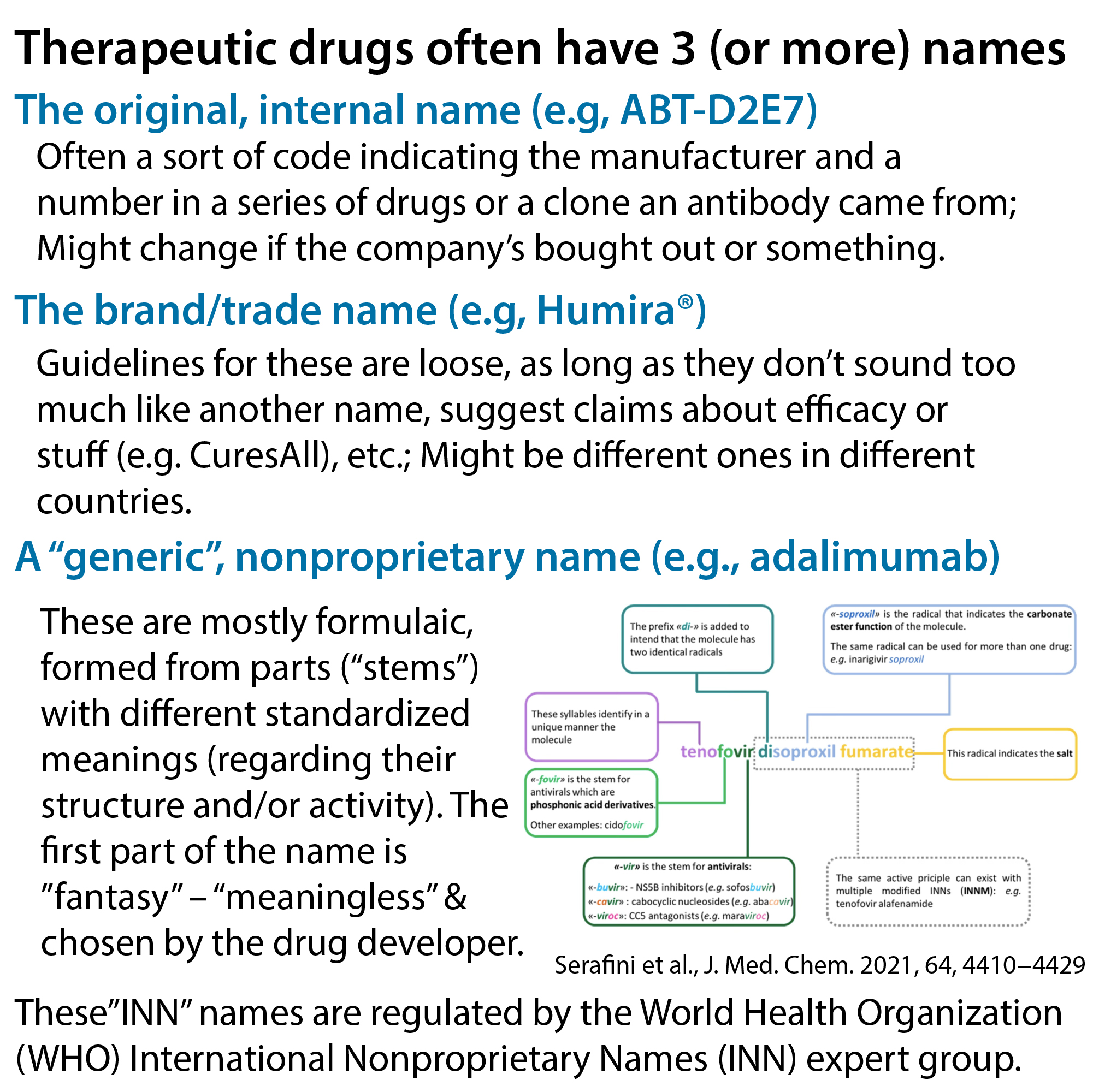
Therapeutics are given both brand/trade names and “generic” (nonproprietary) names. The nonproprietary names may seem really random and opaque, but they’re actually highly formulaic (except for the first part of them, which is chosen for “any” reason)! The generic names are composed by piecing together a bunch of international nonproprietary names (INN) “stems” defined by the World Health Organization (WHO).
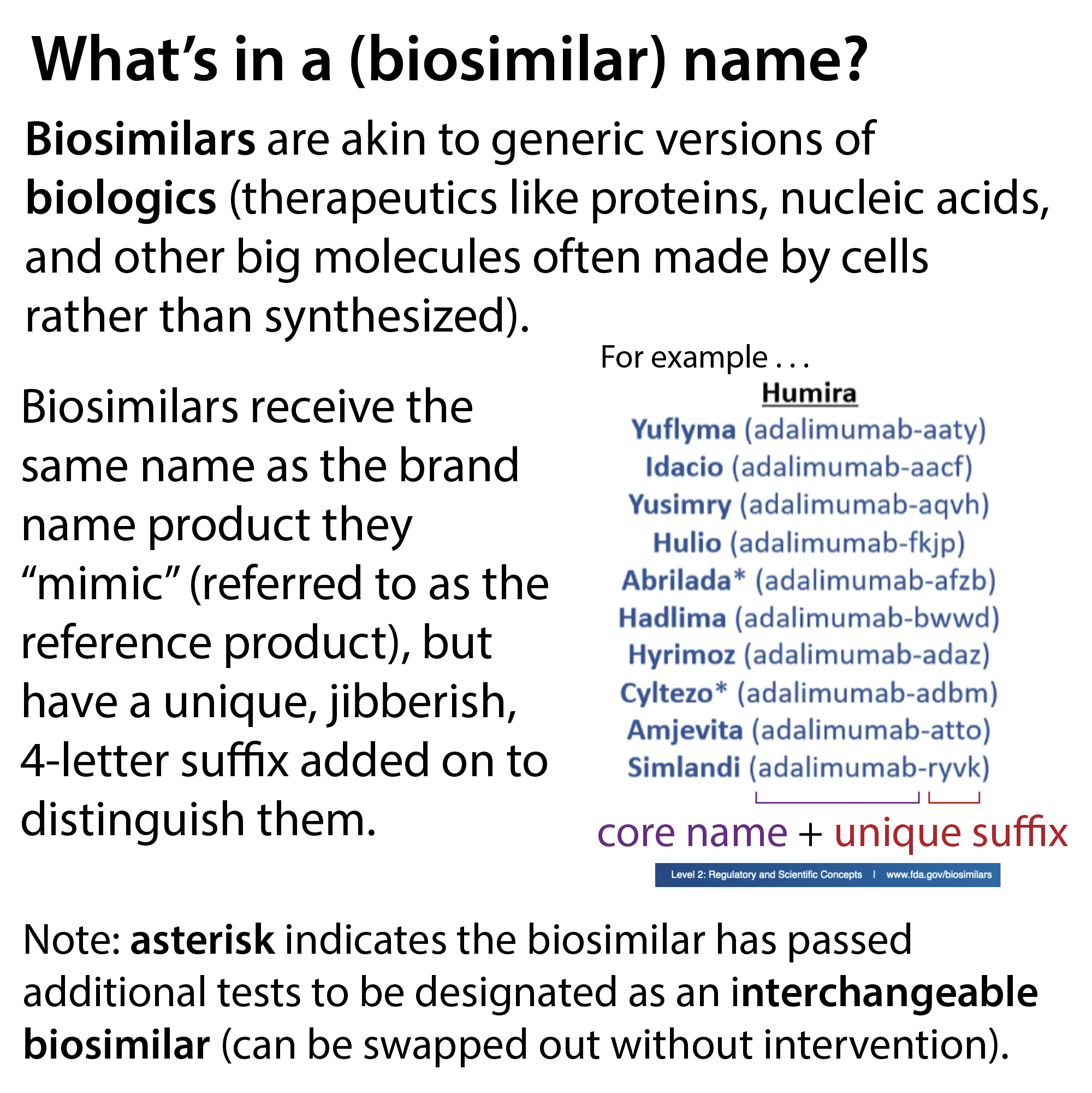
Biosimilars are given the same core name as their reference biologic product, but unique 4-letter suffixes are added to the end to distinguish them. For example, adalimumab-ryvk (Simlandi) and adalimumab-adbm (Cyltezo) are 2 biosimilar forms of the reference product adalimumab (Humira)
Drugs often have 3 (or more) names:
- The original, internal name(s) (e.g, ABT-D2E7)
- Often a sort of code indicating the manufacturer and a number in a series of drugs or a clone an antibody came from; Might change if the company’s bought out or something.
- The brand/trade name (e.g, Humira®)
- Guidelines for these are loose, as long as they don’t sound too much like another name, suggest claims about efficacy or stuff (e.g. CuresAll), etc.; Might be different ones in different countries.
- A “generic”, nonproprietary name (e.g., adalimumab)
- The nonproprietary names may seem really random and opaque, but they’re actually highly formulaic (except for the first part of them, commonly referred to as a “fantasy prefix,” which is chosen by the developer for “any” reason)! The generic names are composed by piecing together a bunch of international nonproprietary names (INN) “stems” defined by the World Health Organization (WHO).
- These stems have different standardized meanings regarding their structure and/or activity
- The nonproprietary names may seem really random and opaque, but they’re actually highly formulaic (except for the first part of them, commonly referred to as a “fantasy prefix,” which is chosen by the developer for “any” reason)! The generic names are composed by piecing together a bunch of international nonproprietary names (INN) “stems” defined by the World Health Organization (WHO).
- Biosimilars are given the same core name as their reference biologic product, but unique 4-letter suffixes are added to the end to distinguish them.
- For example, adalimumab-ryvk (Simlandi) and adalimumab-adbm (Cyltezo) are 2 biosimilar forms of the reference product adalimumab (Humira)
- For gene therapies: gene component word + vector component word if applicable (no second word if LNP or other no-vector strategy is used)
- Word 1: gene component
- Fantasy prefix + infix denoting the gene involved (or some feature of that gene or its corresponding protein) + a vowel if needed + -gene
- Word 2: vector component (if applicable)
- Word 1: gene component
- For cell therapies:
- For cell therapies not involving genetic modification:
- Fantasy prefix + infix denoting cell type + -cel
- For cell therapies involving genetic modification:
- Word 1: gene component
- Fantasy prefix + infix denoting the gene involved (or some feature of that gene or its corresponding protein) + a vowel if needed + -gene
- Word 2: cell component
- Prefix (if autologous -auto, if allogenic, random) + infix denoting cell type + -cel
- Word 1: gene component
- For cell therapies not involving genetic modification:
- Example: Casgevy (exagamglogene autotemcel), a gene-edited cell therapy treatment for sickle cell anemia and related diseases.
- Like other therapeutic names, it starts with a “fantasy”, “meaningless” unique identifier chosen by the developer
- exagamglogene autotemcel
- -gene: indicates a gene therapy. It’s preceded by an infix identifying what gene is expressed or otherwise targeted.
- exagamglogene indicates a gene therapy targeting γ-globin
- -cel: indicates a cell therapy. It may be preceded by “auto” (i.e., -autocel) if the cells are autologous (coming from that patient themselves), and contain an infix telling you about the type of cell (e.g. -tem- for stem cells)
- exagamglogene autotemcel
- Like other therapeutic names, it starts with a “fantasy”, “meaningless” unique identifier chosen by the developer
- Naming of antibody(immunoglobulin)-based therapeutics
- It used to be that you could tell something was a monoclonal antibody (MAb) because it had the ending “-mab.” For example, the INN name of the anti-TNF MAb Humira is adalimumab.
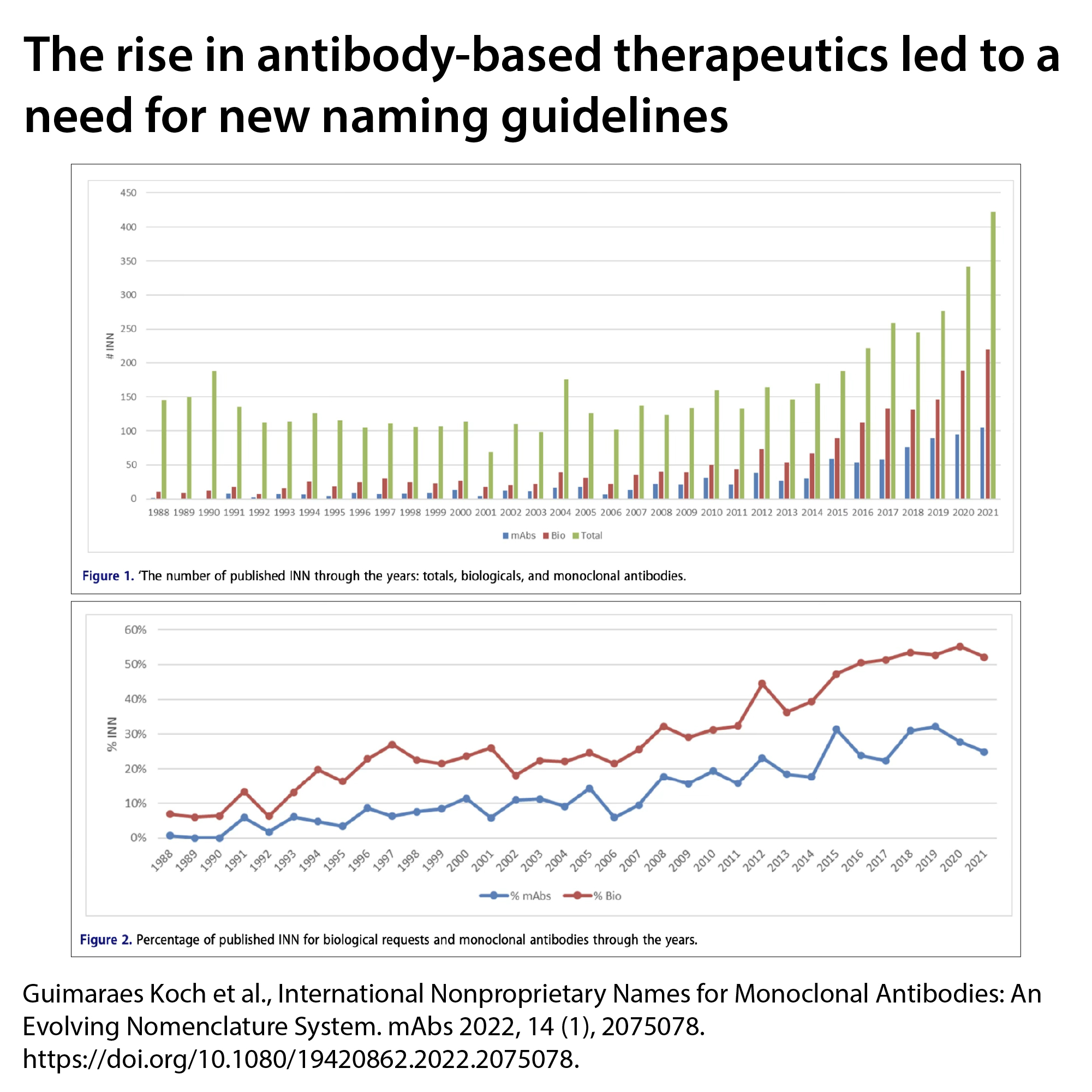
- But then, the use of MAbs and other antibody-based therapeutics skyrocketed. There are almost 900 INNs ending in “-mab” . . . Additional distinguishers were needed so all the names didn’t sound too alike and so that people could tell more about differences in the types of therapeutics from their names.
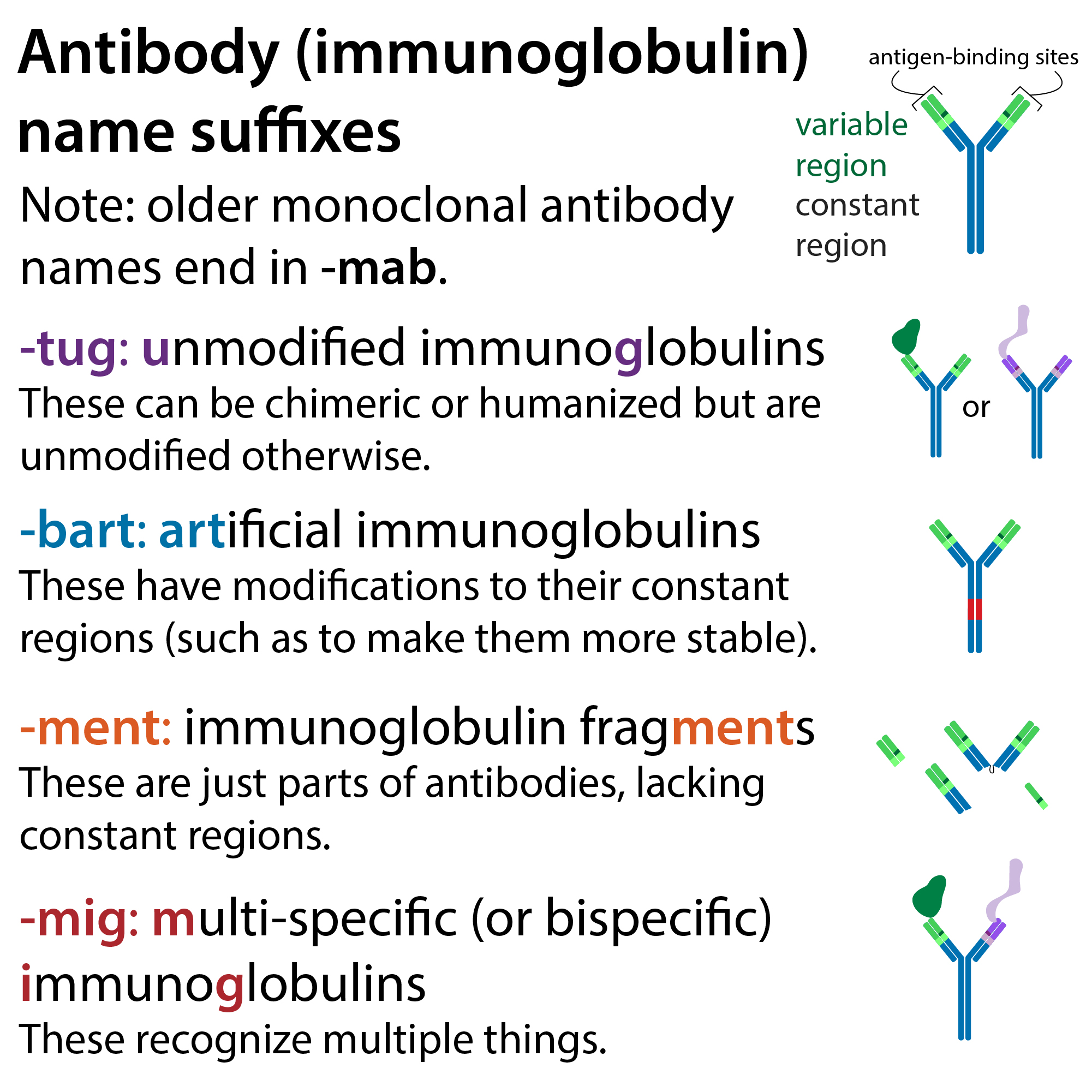
- The nomenclature system for antibody (immunoglobulin)-based therapeutics has changed several times since the first MAb was approved in 1987. There are a lot of small, technical, things, but the fundamental change is the replacement of “-mab” with 4 new suffixes (in 2021).
- -tug: unmodified immunoglobulins
- These can be chimeric or humanized but are unmodified otherwise.
- -bart: artificial immunoglobulins
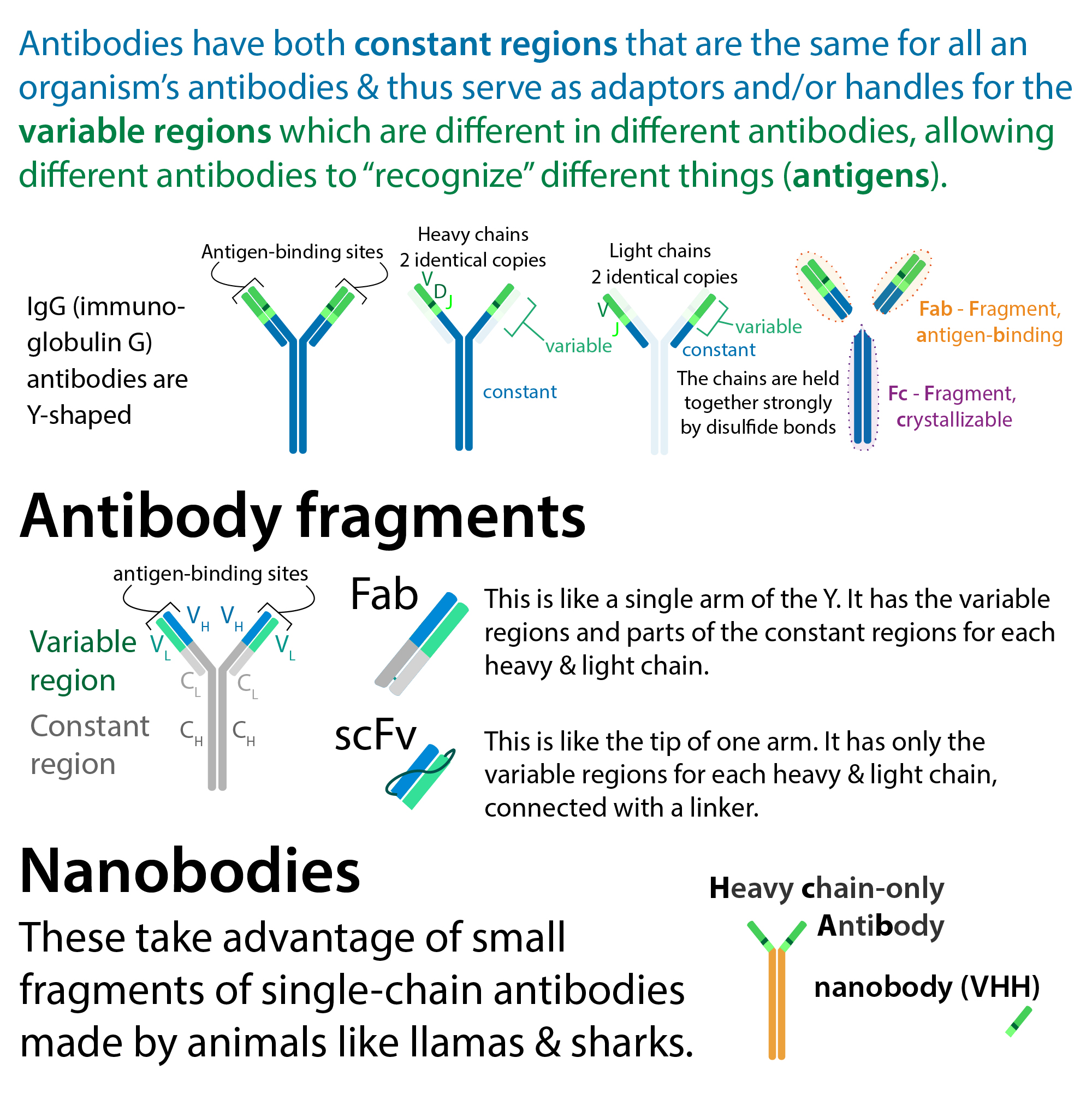
- These have modifications to their constant regions, such as to make them more stable.
- -ment: immunoglobulin fragments
- These are just parts of antibodies, lacking constant regions.
- -mig: multi-specific (or bispecific) immunoglobulins
- These recognize multiple things.
- -tug: unmodified immunoglobulins
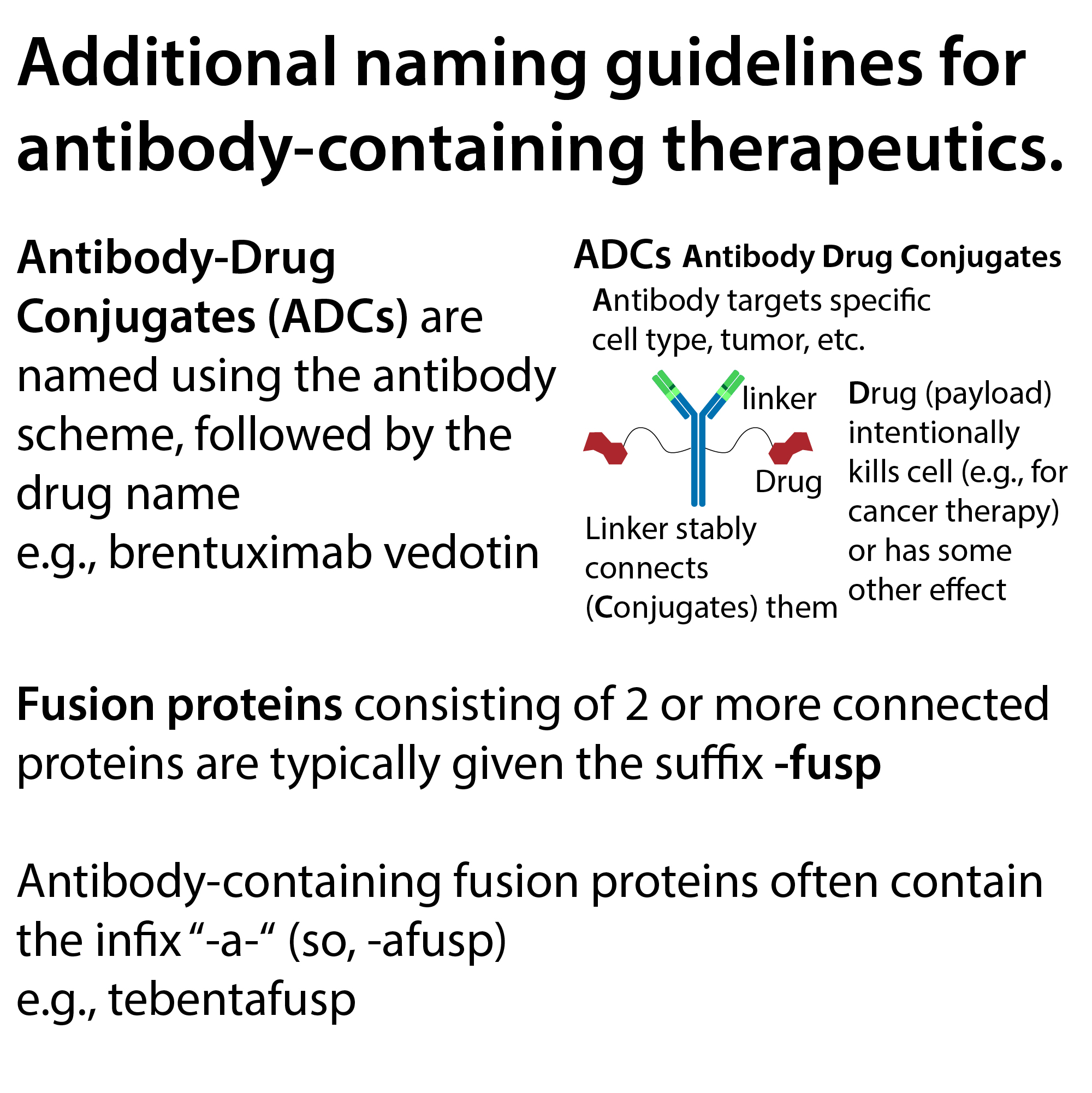
- Antibody-Drug Conjugates (ADCs) are named using the antibody scheme, followed by the drug namee.g., brentuximab vedotin
- Fusion proteins consisting of 2 or more connected proteins are typically given the suffix -fusp. Antibody-containing fusion proteins often contain the infix “-a-“ (so, -afusp)
- e.g., tebentafusp
Video
Articles
- Serafini et al. What’s in a Name? Drug Nomenclature and Medicinal Chemistry Trends Using INN Publications. J. Med. Chem.2021, 64 (8), 4410–4429. https://doi.org/10.1021/acs.jmedchem.1c00181.
- Guimaraes Koch et al. International Nonproprietary Names for Monoclonal Antibodies: An Evolving Nomenclature System. mAbs 2022, 14 (1), 2075078. https://doi.org/10.1080/19420862.2022.2075078.
- Robertson et al. The INN Global Nomenclature of Biological Medicines: A Continuous Challenge. Biologicals 2019, 60, 15–23. https://doi.org/10.1016/j.biologicals.2019.05.006.
- Loizides et al. The Harmonization of World Health Organization International Nonproprietary Names Definitions for Cell and Cell-Based Gene Therapy Substances: When a Name Is Not Enough. Cytotherapy 2021, 23 (5), 357–366. https://doi.org/10.1016/j.jcyt.2021.02.114.
Graphics
Click on an image to enlarge.
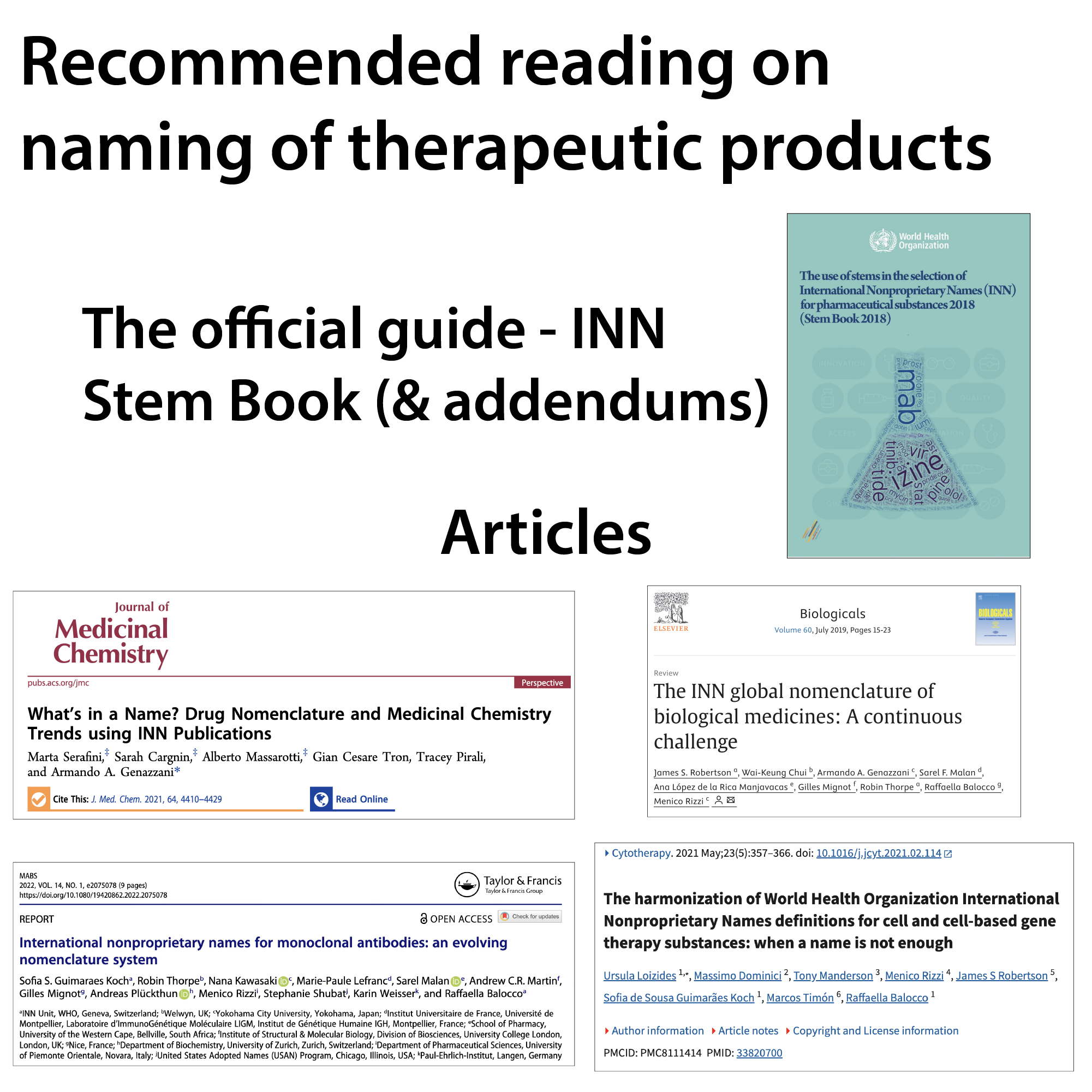
Official INN guide
- INN Stem Book 2018. https://www.who.int/publications/i/item/who-emp-rht-tsn-2018-1
- INN Stem Book Addendum 202203-2018. https://www.who.int/publications/i/item/inn-22-538
Webpages
- Overview of Generic Medications and Medication Naming – Medications. Merck Manual Consumer Version. https://www.merckmanuals.com/home/drugs/brand-name-and-generic-medications/overview-of-generic-medications-and-medication-naming
Generics and biosimilars, me-too drugs, etc.
Outline
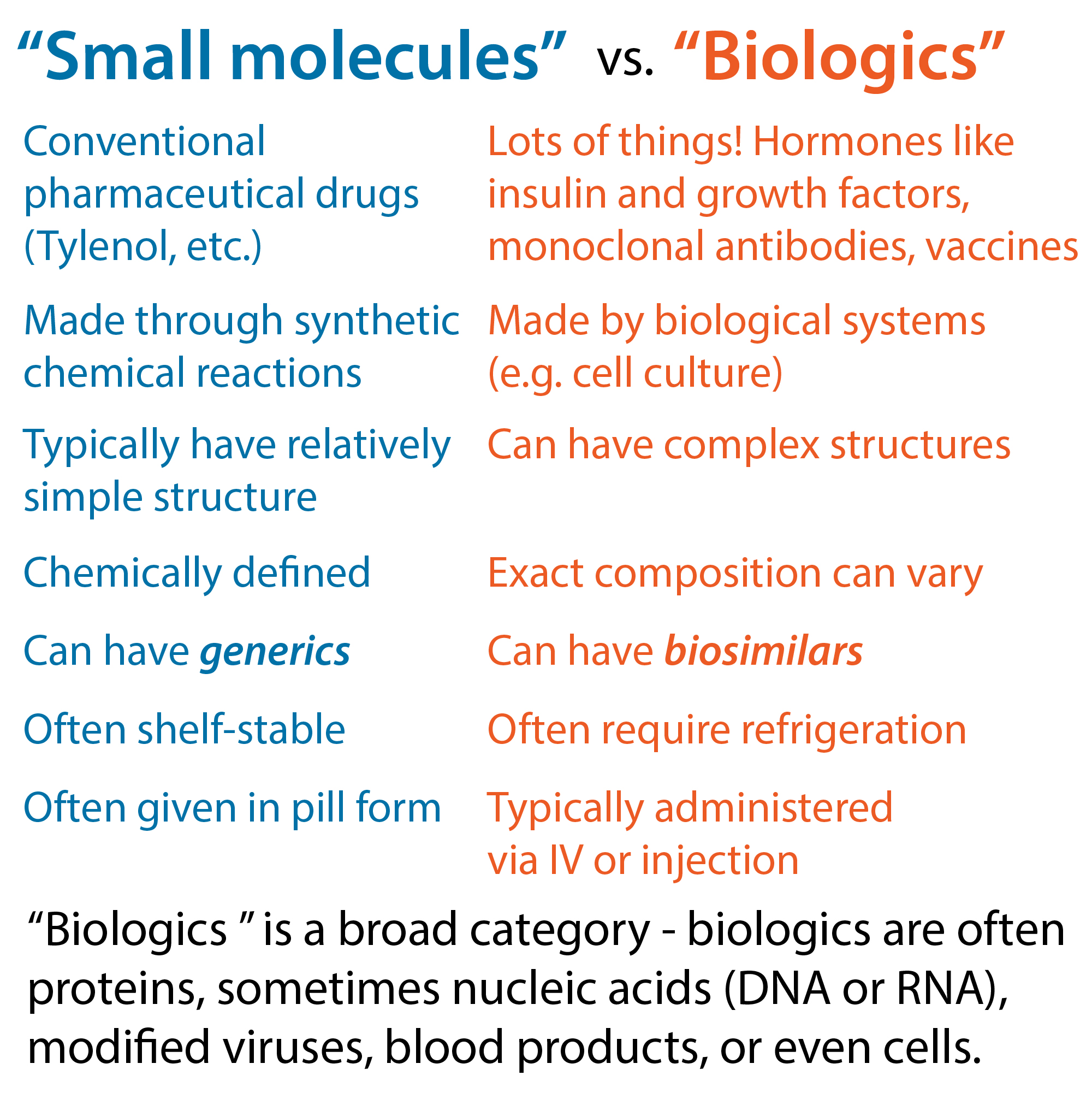
Unlike small molecules, which can be synthesized and purified to make a chemically-defined, “identical” product (a generic), biologics are typically produced in cells and may vary in their exact composition (post-translational modifications like glycosylation (sugar-chain-addition), etc.). Even the copies of the molecules within a batch, will vary a bit and the drug is never “identical.” It would be impossible to truly “copy” the product, so there can’t be “generics” of them (drugs which have the exact same formula and structure as drugs that are already on the market, but are (typically) marketed by different companies than the company that first introduced them and may differ in their manufacturing, formulation, and excipients (helper compounds)). But there can be the equivalent – biologics that are super similar in composition to the original and function at least as well (are non-inferior). These super similar products are called biosimilars and they are often cheaper than the original “brand name” stuff.
Some biosimilars gain the distinction of being interchangeable biosimilars – an interchangeable biosimilar is a biosimilar that has passed additional tests to allow it to be substituted for a brand name product by the pharmacist (such as switching studies in which patients switch between the reference product and the biosimilar) – all interchangeable biosimilars are biosimilars but not all biosimilars are interchangeable biologics. You can find what if any biosimilars and interchangeable biosimilars are approved for a biologic by searching the FDA Purple Book.
The path to regulatory approval for these is easier than for the original product, because the generics and/or biosimilars makers only have to show that their product contains the “same” active ingredient at indicated levels and is as effective as the original product (demonstrate bioequivalence in the case of a generic or show that there are no clinically meaningful differences in the case of a biosimilar (i.e. demonstrate biosimilarity)). They submit an abbreviated new drug application (aNDA) instead of an NDA or, for biosimilars, an abbreviated Biologics License Application BLA (aBLA) instead of a BLA (aBLA).
- For a generic drug to gain approval, it must show that: It’s “pharmaceutically equivalent” to the brand name drug (same form (tablet, injectable, etc.) and release mechanism); It has the same active ingredient as the brand; The right amount of the active ingredient gets to the right place in the body; Any inactive ingredients are safe; The manufacturer is capable of making it correctly and consistently; The drug does not break down over time; The drug is in an appropriate container with an appropriate label; It doesn’t break any laws (no active patents and/or exclusivities, etc.)
- For a biosimilar to gain approval, it must show that it is highly similar to the brand name product (the “reference product”) in safety, purity, and potency and has no clinically meaningful differences from it. More specifically, per the FDA, “Biosimilars are made from the same types of sources, are administered the same way, and have the same strength, dosage, potential treatment effects, and potential side effects as the reference product.” And the biosimilar developer must conduct experiments to show this, but the exact experiments that are required to do this can vary from case to case. They may include: analytical studies (are the products structurally and functionally similar?); animal studies (toxicology and/or pharmacology information); clinical study or studies (e.g., PD/PK studies, immunogenicity studies, etc.)
- As mentioned above, 351(k) is the approval pathway for a biosimilar in the US. It’s abbreviated compared to the 351(a) required for the original biologic. It does not require clinical safety and efficacy studies for each indication (with the assumption proof of biosimilarity to the reference product will ensure the results would be similar to those from the reference product), but it may require additional clinical studies, clinical pharmacology studies, comparative analytical assessment (CAA), and product quality studies.
Graphics
Click on an image to enlarge.
Associated posts
- Biologics and biosimilars: Biologics, biosimilars, and “small molecules”
Webpages
- Overview of Generic Medications and Medication Naming – Medications. Merck Manual Consumer Version. https://www.merckmanuals.com/home/drugs/brand-name-and-generic-medications/overview-of-generic-medications-and-medication-naming
- Bioequivalence and Interchangeability of Generic Medications – Medications. Merck Manual Consumer Version. https://www.merckmanuals.com/home/drugs/brand-name-and-generic-medications/bioequivalence-and-interchangeability-of-generic-medications
- Generic Drugs: Questions & Answers. FDA2026. https://www.fda.gov/drugs/generic-drugs/generic-drugs-questions-answers
- What Is the Approval Process for Generic Drugs? FDA 2026. https://www.fda.gov/drugs/generic-drugs/what-approval-process-generic-drugs
- Biosimilars Review and Approval. FDA 2022 https://www.fda.gov/drugs/biosimilars/review-and-approval
- Curriculum Materials for Health Care Degree Programs | Biosimilars. FDA 2024. https://www.fda.gov/drugs/biosimilars/curriculum-materials-health-care-degree-programs-biosimilars
- This hidden gem has lecture slides, videos, handouts, etc.
- FDA Purple Book: https://purplebooksearch.fda.gov/
Articles
- Aronson and Green. Me‐too Pharmaceutical Products: History, Definitions, Examples, and Relevance to Drug Shortages and Essential Medicines Lists. Brit J Clinical Pharma 2020, 86 (11), 2114–2122. https://doi.org/10.1111/bcp.14327
Books
- Patenting Life: Tales from the Front Lines of Intellectual Property and the New Biology by Jorge A. Goldstein, 2025
- Pharma: Greed, Lies, and the Poisoning of America by Gerald Posner, 2020
Patents, market exclusivity, etc.
Outline
Patents and market exclusivity rights are 2 separate avenues that protect the innovations of inventors and therapeutic developers. They aim to promote and incentivize innovation, while also providing an avenue for eventual competition and thus potentially lower-cost generics, biosimilars, etc. Once a treatment’s patent(s) and/or exclusivity period expires, competitors may market generics (in the case of small molecules) or biosimilars (in the case of biologics).
To avoid losing market share, companies may engage in practices such as making minor alterations to the treatment (with little or no added value) to seek new patents for the new version. To gain longer exclusivity times, companies may do things like apply for approval of the same treatment for additional conditions, in additional dosages, etc. And/or, they might seek approval for treating a rare/orphan disease, which provides longer exclusivity.
Patents are legal mechanisms to protect inventions (in exchange for disclosure of how to recreate the invention) and promote innovation
- Patents can be obtained (from the United States Patent and Trademark Office (USPTO)) for both formulations and processes at any phase of the therapeutic development process.
- Patents prevent competitors from using an invention without paying the patent-holder
- Patents typically expire 20 years after the date of filing (not the date of therapeutic approval!); however, patent term extensions (PTEs) of up to 5 years may be granted to make up for time spent in the approval process (this is a key component of the 1984 Drug Price Competition and Patent Restoration Act (more commonly referred to as the Hatch-Waxman Act).
Market exclusivity is a set number of years in which companies have the exclusive right to manufacture and sell a treatment they developed once approved. The length of this period depends on the type of approval.
- New Chemical Entity Exclusivity (NCE) – 5 years
- This is what you get for your typical new drug approval.
- Reference Product Exclusivity (RPE) – 12 years, including 4 years data in which competitors can’t even file an aNDA for a biosimilar.
- This is the exclusivity period for a new biologic.
- Biologics get a longer exclusivity period with the rationale they’re more complicated and pricy to develop.
- This is dictated by the Biologics Price Competition and Innovation Act (BPCIA).
- Orphan Drug Exclusivity (ODE) – 7 years
- This longer exclusivity period is meant to incentivize development of therapeutics for indications (diseases/disorders) with a small treatable population that might not otherwise be an “attractive” target for development
- Generating Antibiotic Incentives Now (GAIN) Exclusivity – 5 years added
- This longer exclusivity period is meant to incentivize development of much-needed antibiotics. Antibiotic development is urgently needed, but generally not very lucrative.
- New Clinical Investigation Exclusivity – 3 years
- You get a shorter exclusivity period if the drug isn’t new, but you’ve now gotten it approved for an additional indication.
- Pediatric Exclusivity (PED) – 6 months added
- This is to incentivize development of therapeutics for pediatrics, which can be seen as “riskier” and thus incentive-needing.
- Competitive Generic Therapy (CGT) – 180 days
- The first generic version of a product that’s approved gets a short market exclusivity period in which other generics can’t be sold (but the brand name still can)
- Patent Challenge (PC) – 180 days
- If the brand name manufacturer has infringed on patents or something along that lines, the first company wanting to market a generic that sues the brand name manufacturer gains some exclusivity.
The “Orange Book” has patent and exclusivity information for small molecule therapeutics and some small biologics (e.g. ASOs), whereas the “Purple Book” has information for larger and/or more complex biologics (gene therapy, cell therapy, protein therapeutics, etc.). Unfortunately, the Purple Book isn’t as informative – It has patent and exclusivity information for some entries but not others. It does, however include some useful information including allowing you to see what, if any biosimilars and interchangeable biologics are available.
Articles
- Miller et al. Drugs and Biologics Receiving FDA Orphan Drug Designation: An Analysis of the Most Frequently Designated Products and Their Repositioning Strategies. Expert Opin Orphan Drugs 2022, 9 (11–12), 265–272. https://doi.org/10.1080/21678707.2021.2047021.
Webpages
- Patent Basics. https://www.uspto.gov/patents/basics
- FDA Frequently Asked Questions on Patents and Exclusivity. https://www.fda.gov/drugs/development-approval-process-drugs/frequently-asked-questions-patents-and-exclusivity
- FDA Orange Book: https://www.accessdata.fda.gov/scripts/cder/ob/index.cfm
- FDA Purple Book: https://purplebooksearch.fda.gov/
- DrugPatentWatch. Orange Book vs. Purple Book: Strategic Differences for Small Molecule vs. Biologics Competition. https://www.drugpatentwatch.com/blog/orange-book-vs-purple-book-strategic-differences-for-small-molecule-vs-biologics-competition/
- This page was very informative about differences between the Orange and Purple Books and why the Orange Book has so much more information often! (Long story short, there are more proactive measures for reporting patents, etc. for small molecules than biologics, where patent disclosure is more reactionary.)
- Google Patents: https://patents.google.com/
- USPTO Patent search: https://ppubs.uspto.gov/basic/
- How Drugmakers Use the Patent Process to Keep Prices High. https://doi.org/10.26099/7j2b-xv30.
- DrugPatentWatch. The Patent Playbook: 7 Key Strategies Pharma Uses to Extend Market Exclusivity. DrugPatentWatch – Transform Data into Market Domination. https://www.drugpatentwatch.com/blog/the-patent-playbook-7-key-strategies-pharma-uses-to-extend-market-exclusivity/
- Fast Track, Breakthrough Therapy, Accelerated Approval, Priority Review. FDA. https://www.fda.gov/patients/learn-about-drug-and-device-approvals/fast-track-breakthrough-therapy-accelerated-approval-priority-review
Books
- Patenting Life: Tales from the Front Lines of Intellectual Property and the New Biology by Jorge A. Goldstein, 2025
- This one especially!
- Pharma: Greed, Lies, and the Poisoning of America by Gerald Posner, 2020
- A Prescription for Change: The Looming Crisis in Drug Development by Michael Kinch, 2016
- Empire of Pain: The Secret History of the Sackler Dynasty by Patrick Radden Keefe, 2022
- The Genome Defense: Inside the Epic Legal Battle to Determine Who Owns Your DNA by Jorge L. Contreras, 2021
- Insulin: A Hundred-Year History by Stuart Bradwel, 2023
- No More Tears: The Dark Secrets of Johnson & Johnsonby Gardiner Harris, 2025
Small molecule therapeutics
Outline
- These involve your conventional pharmaceutical drugs and may be “natural products” purified from sources such as plants or bacteria or synthetic compounds made fully in the lab – or a mixed approach with enzymes and/or cells doing part of the work.
- When discovered through phenotypic screening and/or anecdotal findings, scientists might not know how or why they work, and they often may be pleiotropic (affect multiple things).
- They can also be rationally designed to specifically target molecule(s).
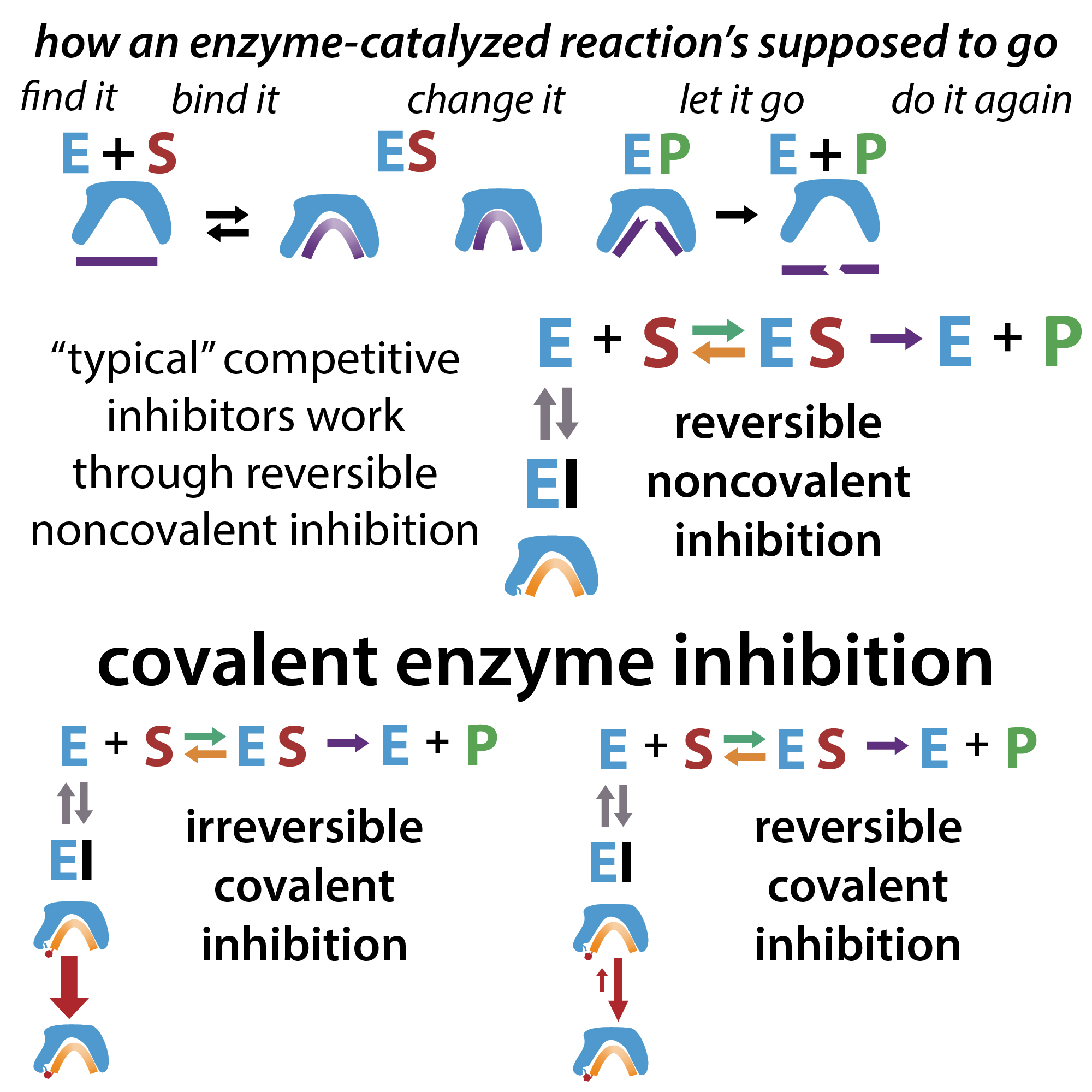
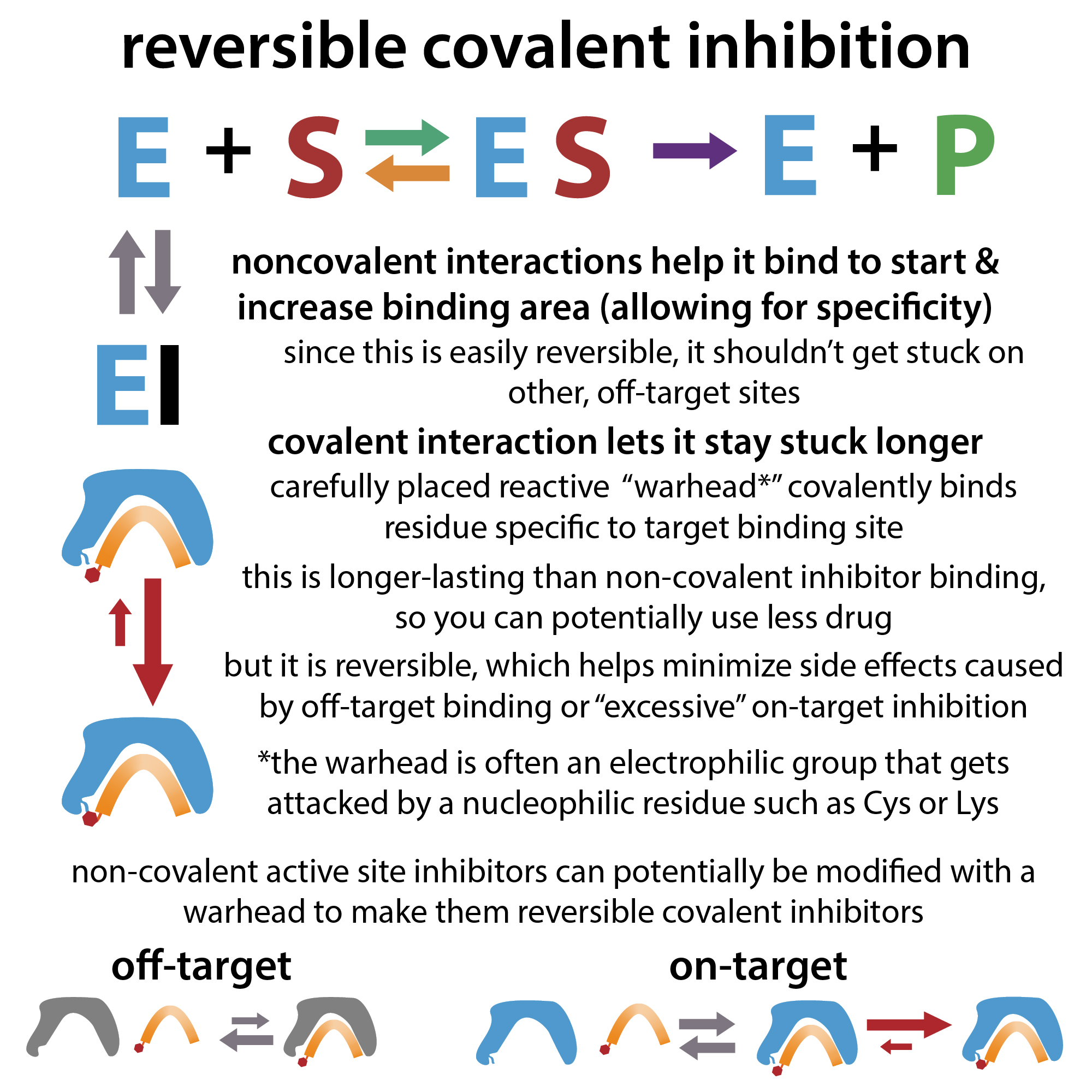
- They include things like compounds that inhibit enzymes (either by acting orthosterically to block the enzyme’s active site or allosterically by binding elsewhere on the enzyme and modifying the enzyme’s shape), activate enzymes allosterically, etc.
- Some target cellular receptors, either to activate them by mimicking the natural ligand (binding partner) – we call such compounds receptor agonists OR to inactivate them – we call such compounds receptor antagonists.
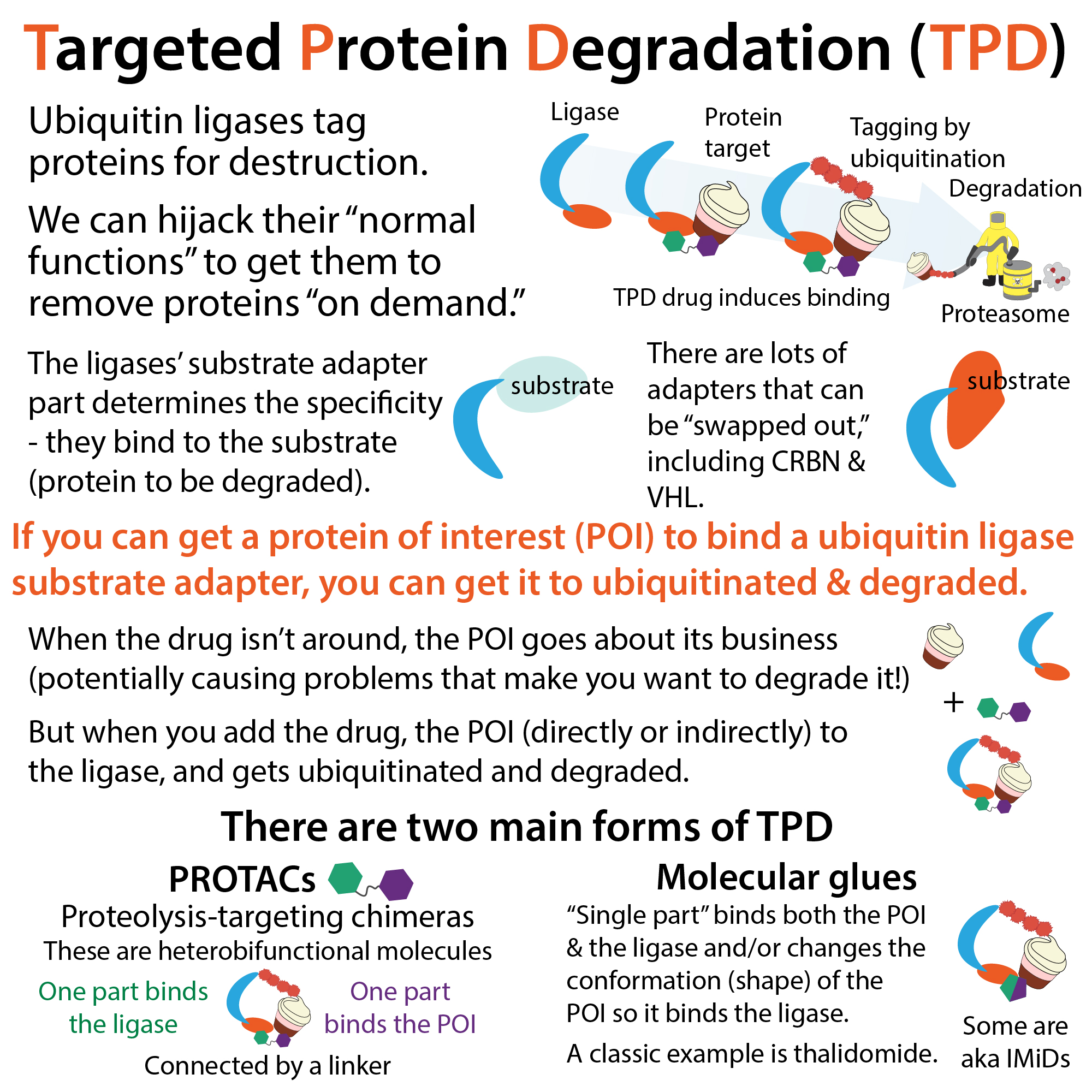
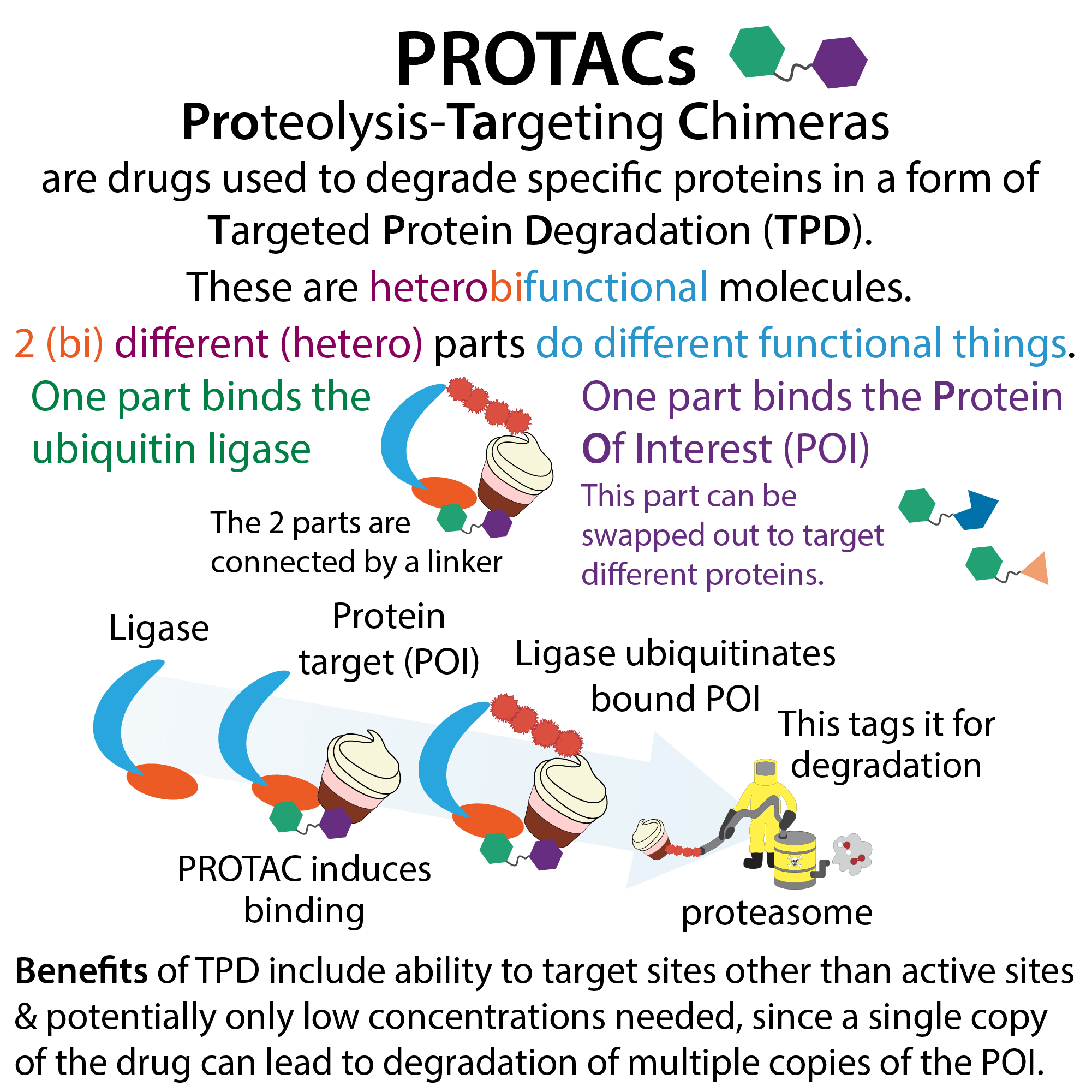
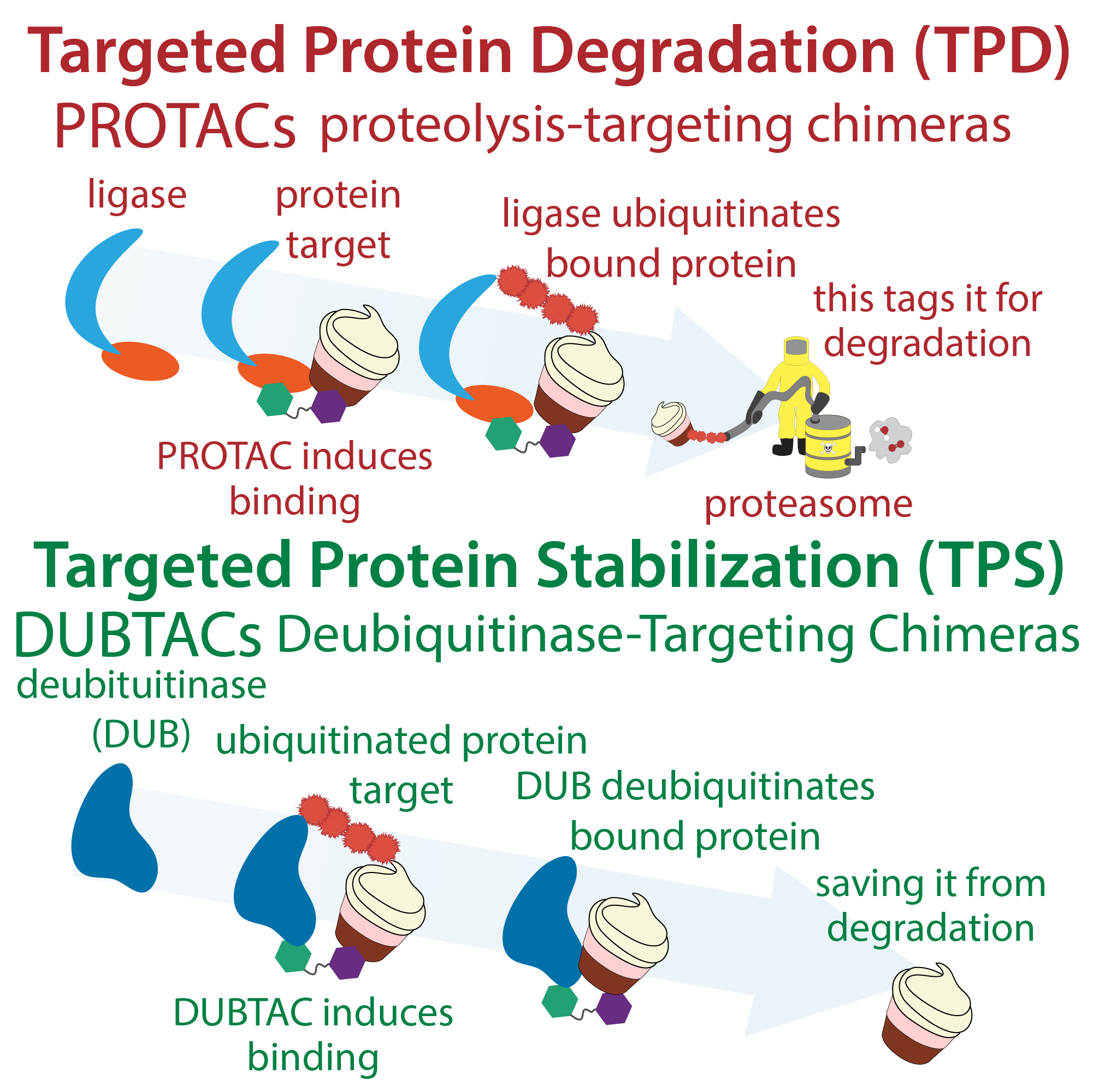
- Some compounds act as PROTACs (Proteolysis-Targeting Chimeras) or as “molecular glues” that lead to proteins sticking to ubiquitinylation-related proteins, causing the molecules to be “flagged” by the addition of ubiquitin and then subject to proteosomal degradation (protein chewing up). This is a form of Targeted Protein Degradation (TPD)
Graphics
Click on an image to enlarge.


Associated posts
- Enzyme inhibitors:
- Overview of types: Enzyme inhibitors and the evidence they leave
- Covalent inhibitors: Targeted covalent inhibitors with an emphasis on reversible covalent inhibition
- Protease inhibitors – Paxlovid example: The basics & biochemistry of Paxlovid (Pfizer’s covid pill, which is an MPro inhibitor)
- RdRP (RNA-dependent RNA Polymerase) inhibitors – remdesivir example: Remdesivir (apparently brand-named Veklury)
- HIV inhibitors: HIV/AIDS research led by women
- Kinase inhibitors – Gleevec example: Kinases & protein phosphorylation
- Receptor agonists and antagonists: Agonists, antagonists, inverse agonists, and constitutive receptor activity
- PROTACs and molecular glues: Targeted protein degradation (via PROTACs, molecular glues, etc.) and stabilization (via DUBTACs)
- Other examples
Articles
- Rácz et al. The Changing Landscape of Medicinal Chemistry Optimization. Nat Rev Drug Discov2025, 24 (11), 870–887. https://doi.org/10.1038/s41573-025-01225-1
- Brown, D. G. What Do Oral Drugs Really Look Like? Dose Regimen, Pharmacokinetics, and Safety of Recently Approved Small-Molecule Oral Drugs. J. Med. Chem. 2025, 68 (22), 23751–23780. https://doi.org/10.1021/acs.jmedchem.5c02863
- Ueda et al. The Expanding Role of Formulations to Enable Oral Delivery of Poorly Water-Soluble Drugs. Nat Rev Drug Discov 2026. https://doi.org/10.1038/s41573-026-01407-5.
- Peng et al. New PROTAC Designs for Targeted Protein Degradation in 2021–2025: Novel E3 Ligases and Pre-PROTACs. J. Med. Chem.2026. https://doi.org/10.1021/acs.jmedchem.5c03330.
- First PROTAC gains FDA approval, bolstering targeted protein degradation and induced proximity ambitions. https://www.nature.com/articles/d41573-026-00078-6
- Xu and Zou. Docking-Based Virtual Screening: Past, Present, and Future. Biophysical Journal 2026, S0006349526002778. https://doi.org/10.1016/j.bpj.2026.04.011.
- Van Vleet et al. Screening Strategies and Methods for Better Off-Target Liability Prediction and Identification of Small-Molecule Pharmaceuticals. SLAS Discovery 2019, 24 (1), 1–24. https://doi.org/10.1177/2472555218799713.
- Zhang and Tang. Drug Metabolism in Drug Discovery and Development. Acta Pharmaceutica Sinica B 2018, 8 (5), 721–732. https://doi.org/10.1016/j.apsb.2018.04.003.
Books
- Zanders, E. D. Twenty-First Century Drug Discovery: An Expanding Landscape; Springer Nature Switzerland: Cham, 2025. https://doi.org/10.1007/978-3-031-93949-5.
- Biotherapeutics: From Small to Large Molecules and Cells; Calzada, V., Cerecetto, H., Tosar, J. P., Eds.; Topics in Medicinal Chemistry; Springer Nature Switzerland: Cham, 2024; Vol. 42. https://doi.org/10.1007/978-3-031-81025-1.
- Biography of Resistance: The Epic Battle Between People and Pathogens by Muhammad Zama, 2020
- Breakthrough: The Quest for Life-Changing Medicines by William Pao, 2024
- Cordes, E. H. Hallelujah Moments: Tales of Drug Discovery; Oxford University Press, 2020. https://doi.org/10.1093/oso/9780190080457.001.0001.
- Dangerous Miracle: The Astonishing Rise and Looming Disaster of Antibiotics by Liam Shaw, 2025
- Miracle Cure: The Creation of Antibiotics and the Birth of Modern Medicine by William Rosen, 2017
- The Philadelphia Chromosome: A Mutant Gene and the Quest to Cure Cancer at the Genetic Level by Jessica Wapner, 2013
- Ten Drugs: How Plants, Powders, and Pills Have Shaped the History of Medicine by Thomas Hager, 2019
- Li, J. J. Triumph of the Heart: The Story of Statins; Oxford University Press, 2009. https://doi.org/10.1093/oso/9780195323573.001.0001.
Nucleic acid therapeutics
Outline
Challenges for nucleic acid therapeutics largely surround delivery–getting to all the cells you want, but only the cells you want, without getting degraded and/or setting off the immune system; getting into those cells; getting into the nucleus (for DNA and some oligonucleotides) or the cytoplasm (for RNA); etc.
- Gene addition (DNA)
- Genes can be delivered to cells to allow the cells to make specific proteins to compensate for faulty ones, boost levels, or equip the cells with new functions.
- Can also be used for vaccines–get cells to make foreign proteins (e.g. ones from a virus) to learn to recognize as foreign (make antibodies against, etc.).
- Genes can be added to provide cells with genome editing tools (e.g. CRISPR/Cas). The editing itself will be discussed in a later section, but the delivery considerations are similar to thus described below.
- Depending on the delivery mechanism, the genes may integrate into the genome, for permanent expression of the corresponding protein in all cells derived from that cell, or the gene may stay “extrachromosomal,” which has less risks of causing unwanted mutations in the DNA, but offers only temporary expression.
- mRNA (messenger RNA)
- mRNAs can be delivered to cells to allow the cells to make specific proteins to compensate for faulty ones, boost levels, or equip the cells with new functions.
- Can also be used for vaccines–get cells to make foreign proteins (e.g. ones from a virus) to learn to recognize as foreign (make antibodies against, etc.).
- Unlike some DNA therapeutics, mRNAs don’t integrate and thus expression is transitory (which may or may not be ideal, depending on intended use), but there isn’t risk of mutation from integration.
- Small nucleic acid therapies
- Small nucleic acid therapeutics/tools (sometimes referred to as oligonucleotide therapeutics) include aptamers; RNAi-acting small RNAs – microRNA (miRNA) and small interfering RNA (siRNA); and ASOs (antisense oligonucleotides). These all consist of shortish (oligo-) strands of nucleotides (typically chemically modified ones), but they work in different ways and on different types of molecules.
- miRNAs & siRNAs are short (~20 nucleotide-long) strands of RNA (potentially coming from shRNAs) that act through the RNA interference (RNAi) pathway – they bind to a protein called Argonaute (Ago), directing Ago to bind to specific mRNAs (based on sequence complementarity), bind, & shut down translation (e.g. by cutting (slicing) the mRNA).
- shRNAs (short hairpin RNAs) are precursors to miRNAs & siRNAs that can be genetically encoded (e.g. delivered through gene therapy) to allow cells to make specific miRNAs & siRNAs in-cell to allow for longer-lasting effects. The name comes from the hairpin shape of the folded RNA that provides a double-stranded RNA substrate for processing into miRNAs & siRNAs.
- ASOs (antisense oligonucleotides) are short strands of modified DNA that bind directly and sequence-specifically to mRNA to block translation and/or cause cleavage by RNAse H or to pre-mRNA to direct splicing.
- Aptamers: Aptamers are like antibodies, but made of nucleic acids not proteins. Aptamers are (typically chemically-modified) single strands of RNA, DNA, or XNA (other unnatural nucleic acids) that fold up into unique structures that allow them to bind specifically to other things.
- Unlike most other nucleic acid-based tools & therapeutics (siRNAs, ASOs, etc.), they bind based on shape, not sequence complementarity. This allows them to bind to a larger number of types of things, while maintaining ease of synthesis.
- Unlike those others as well, they can act outside the cell.
Delivery mechanisms
Efficient and targeted delivery remains one of the biggest obstacles for nucleic acid therapeutics.
- Due to these challenges, most nucleic acid-based therapeutics to date target one of the below tissues:
- The liver, because it’s where these biologics tend to go “naturally” and/or are easiest to direct to
- Thankfully, the liver is the site of a lot of metabolic activity and also makes a lot of proteins for the bloodstream, so targeting the liver can have wider effects than just influencing the liver itself.
- Blood cells – often because blood cells can be removed, treated ex vivo, and returned to a patient
- “Isolated” organs (eyes, ears, brain, etc.) that can be injected into (local administration) and are protected from immune attack
- The liver, because it’s where these biologics tend to go “naturally” and/or are easiest to direct to
Depending on the size of the nucleic acid cargo, the target cells, and whether delivery is occurring in vivo or ex vivo, there are a few main strategies for delivery.
- Viral vectors – these involve the use of harmless viruses stripped down to their bare necessities (e.g. genes needed to produce proteins to allow the viruses to inject genetic instructions into cells) and filled with desired cargo. They take advantage of virus’ natural ability to infect cells and deliver nucleic acids (a process called transduction) and are typically used for delivery of genes (but that could include a gene for making a miRNA or shRNA!).
- Limitations of viral vectors include:
- Pre-existing immunity to the viruses causing immunogenicity (i.e. the vector itself sets of an immune response in the recipient that can be harmful on its own and/or can prevent the cargo delivery)
- Developed immunity to the viruses after the first administration can prevent subsequent re-administration.
- Limited payload capacity – may not be able to hold all the genetic info needed.
- Too limited or too broad of tropism (tropism refers to what cells a virus can infect).
- 3 main classes: lentiviruses (e.g. HIV-based retroviruses); adenoviruses; and adeno-associated viruses (AAVs)(type of parvoviruses)
- Lentiviruses: these RNA-based viruses include a reverse transcriptase that, once inside cells, makes a DNA copy of its RNA and integrates it into the host DNA.
- Because they integrate in the genome, they offer long-term expression, which may be desired, but also risk causing problems if they insert into a bad location (such as the middle of a gene).
- Integrase-deficient versions are being developed and tested for use in applications not requiring long-term expression (e.g., vaccines)
- Can infect non-dividing and slowly-dividing cells
- Can deliver up to ~ 9 kb (kilobase pairs) of DNA
- Often HIV-based, with key modifications to make them safer
- Frequently used in ex-vivo gene therapy and gene editing
- Because they integrate in the genome, they offer long-term expression, which may be desired, but also risk causing problems if they insert into a bad location (such as the middle of a gene).
- Adenoviruses (Ad): a type of double-stranded DNA virus
- They typically remain episomal (don’t integrate with the genome) and when they do integrate, it tends to be at okay places
- They can deliver large genetic payloads (>30 kb)
- They can transduce dividing & non-dividing cells but are typically made replication-deficient so they’ll get diluted out as the cells divide
- They are highly immunogenic – can be good for vaccines and cancer treatments, but bad for most gene therapies
- Adeno-associated viruses (AAVs): single-stranded DNA viruses of the parvovirus family with “nothing” to do with adenoviruses other than they were first discovered as a contaminant of Ad culture!
- Low immunogenicity
- Low likelihood of integration – they typically remain episomal (don’t integrate with the genome) and when they do integrate, it tends to be at okay places
- They can transduce dividing & non-dividing cells, but will get diluted out as cells divide
- You might see the term “rAAV” which stands for recombinant AAV, which is a version of AAV genetically engineered to be optimized for therapeutic purposes
- A large disadvantage is its small size. It can only deliver up to ~4.7 kb of DNA, but strategies to overcome this include use of helper viruses that allow additional genes to be removed from the viral vectors and the corresponding proteins provided by other viruses cultured alongside them during lab production.
- Lipid NanoParticles (LNPs): these are greasy “bubbles” that encapsulate the nucleic acid (or other molecular) cargo and help them get into cells.
- Their main components are typically:
- Cationic (positively-charged) or ionizable (chargeable) lipid
- Helper lipid (typically a glycerophospholipid)
- PEG (polyethylene glycol)-lipid
- Cholesterol
- The exact components and their amounts can be optimized for different applications, and a lot of work is underway to try to optimize LNPs to target specific tissues and/or cell types
- LNPs often go mainly to the liver due to the binding of LNPs to a blood protein called apolipoprotein E (apoE), which binds to a low-density lipoprotein (LDL) receptor on liver cells, prompting their internalization into the liver cell through endocytosis.
- Endocytosis is a process whereby a cell basically pinches off a part of its membrane (and whatever it’s attached to) and “swallows” it, bringing the membrane-bound contents into the cell, at first trapped in an endosome bubble that they can then escape from (but this escape from the endosome can itself be a large delivery hurdle to overcome!).
- Their main components are typically:
- GalNAc conjugation: GalNAc (N-acetylgalactosamine) is a type of sugar molecule that can be attached (conjugated) to nucleic acid therapeutics (especially small ones) to target them to the liver (specifically to hepatocytes). They bind to the liver cells’ asialoglycoprotein receptors (ASGPR) and then get internalized by endocytosis. Inside the cells, the GalNAc gets cleaved off.
- Virus-Like Particles (VLPS): These don’t contain any viral DNA, just the viral shell
- Electroporation: This strategy, almost always performed ex vivo or in vitro, involves the use of electric pulses to take advantage of nucleic acids’ negative charges to coax them into cells.
- There are many technologies in development, some of which involve the use of cell-type-specific antibodies that target the therapeutics to specific cell types based on “recognizing” molecules on the target cells’ surfaces.
Graphics
Overview/shared
Click on an image to enlarge.
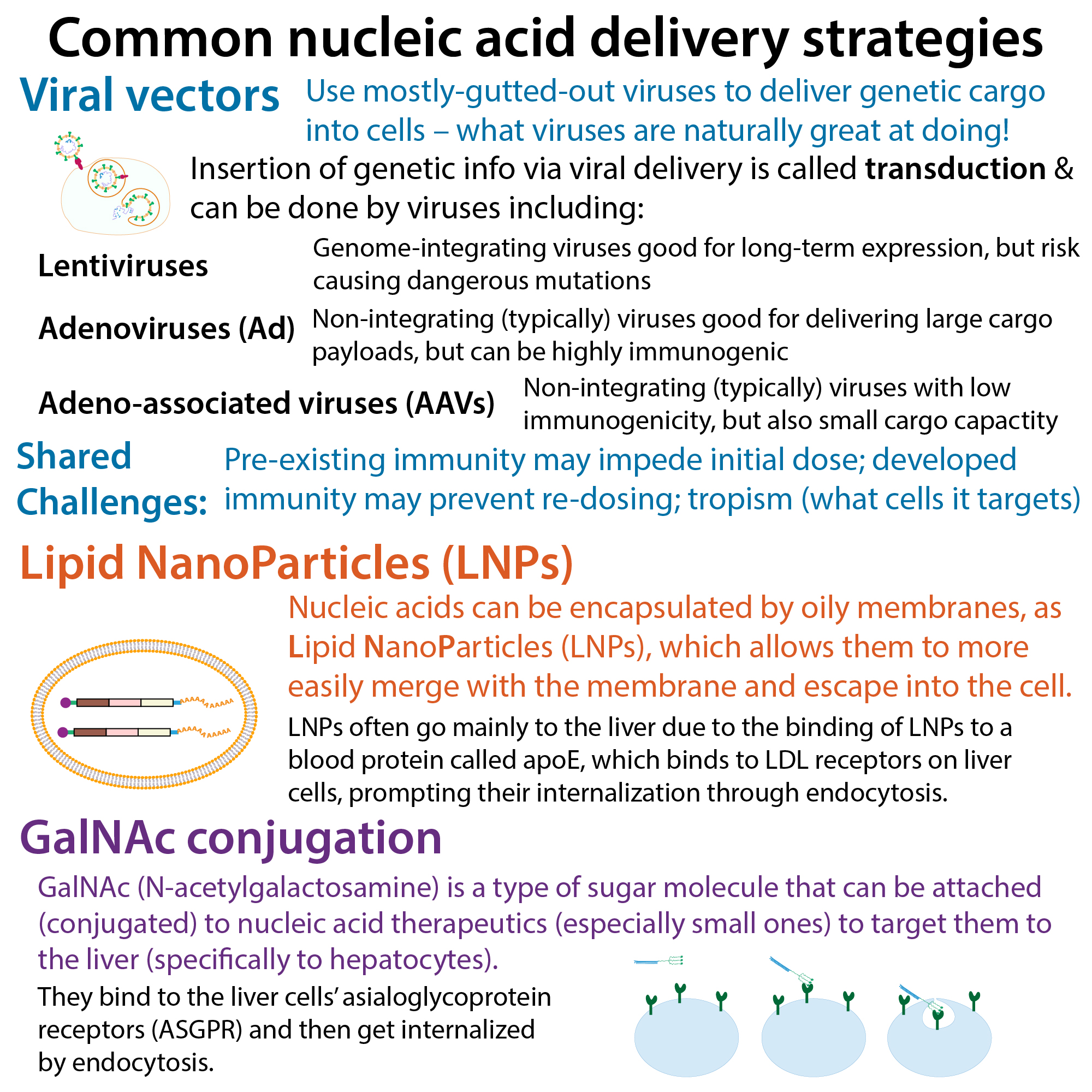
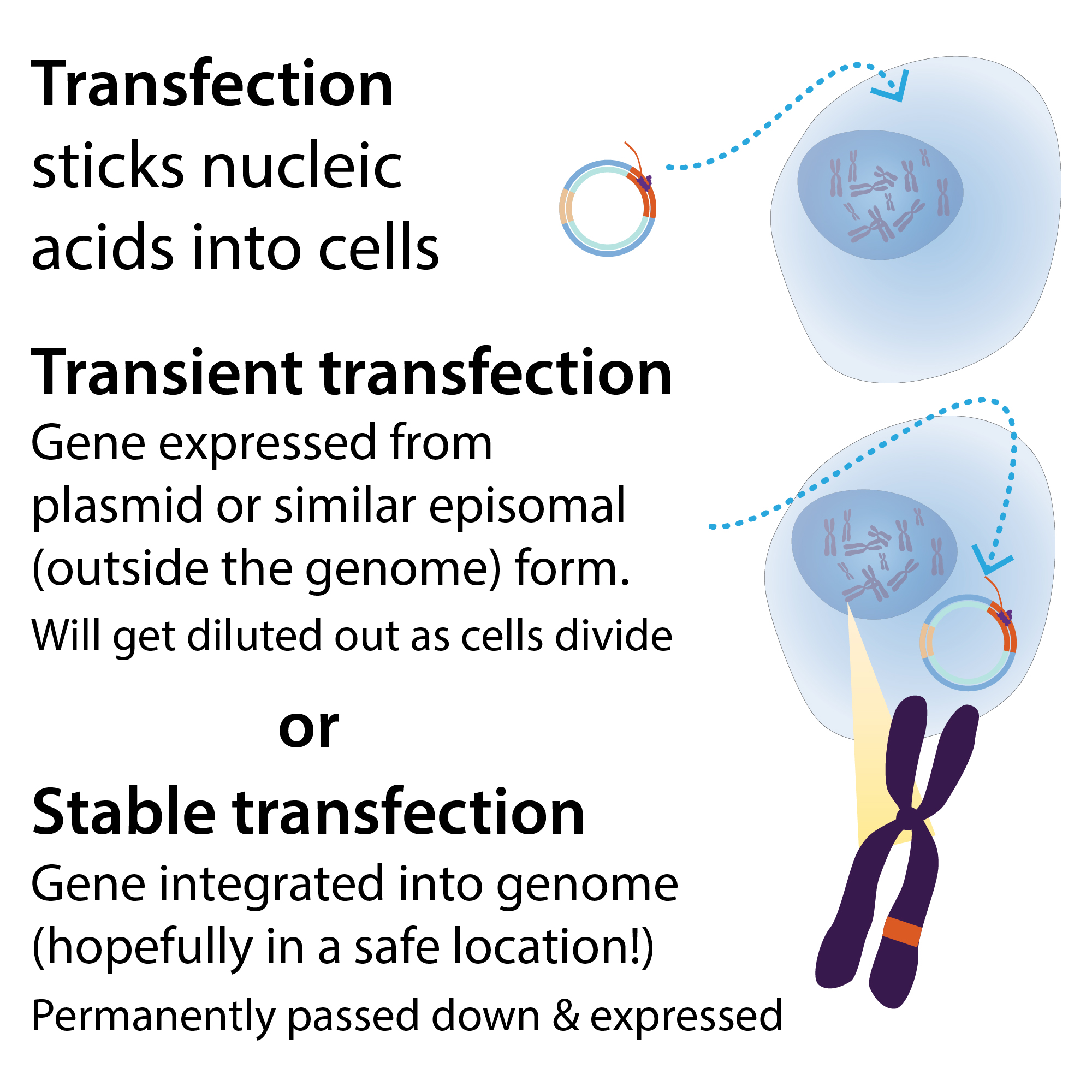


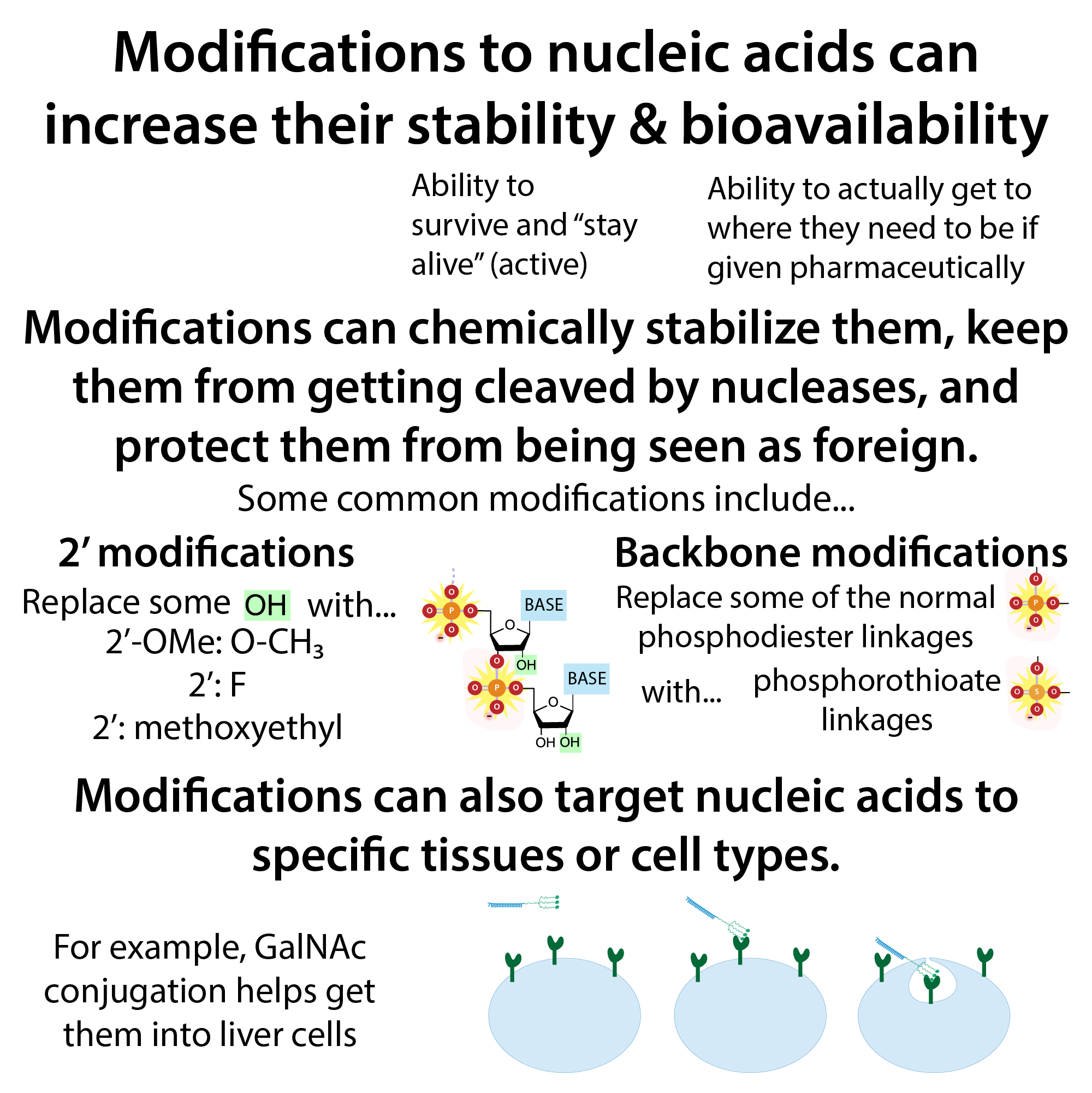
Gene addition
Click on an image to enlarge.

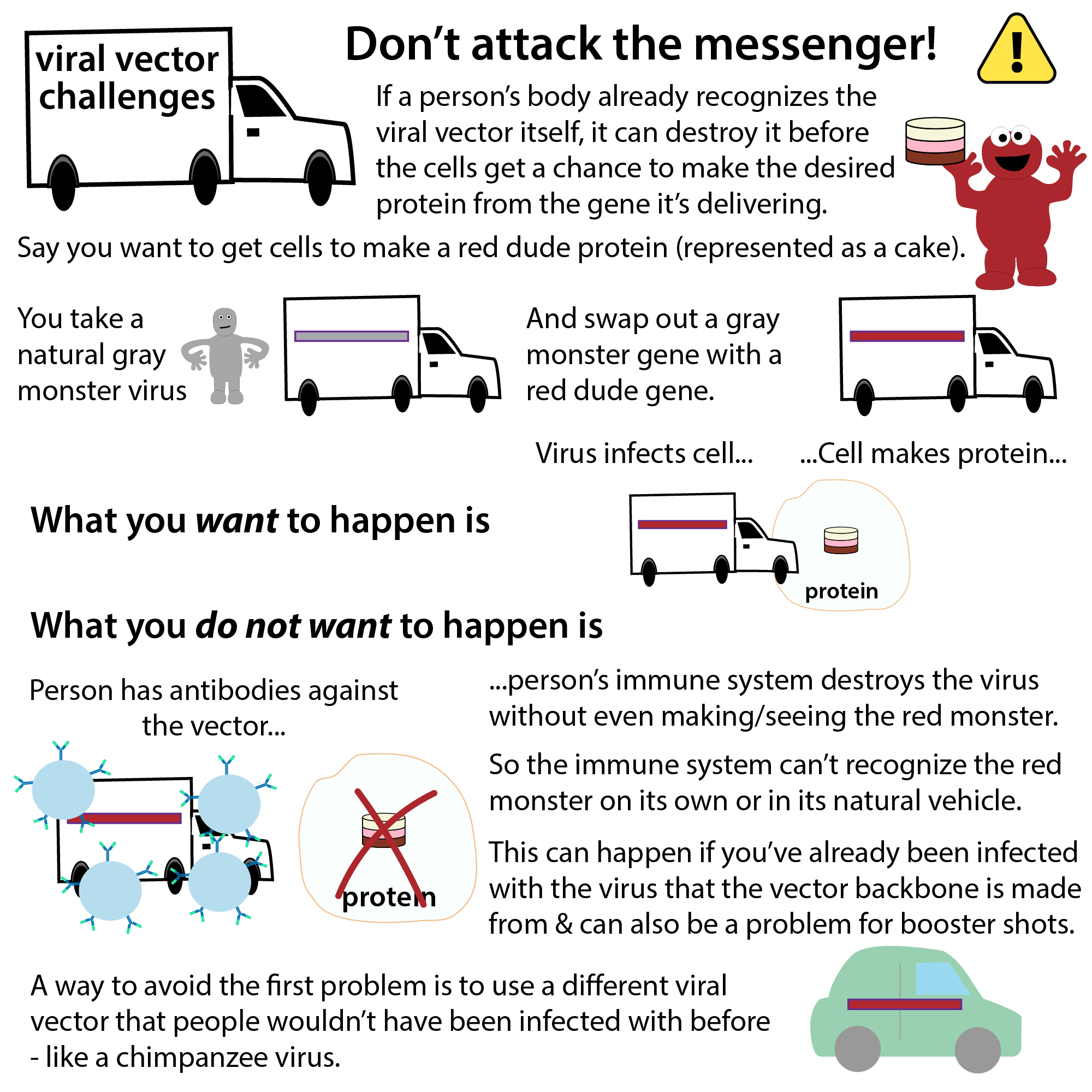
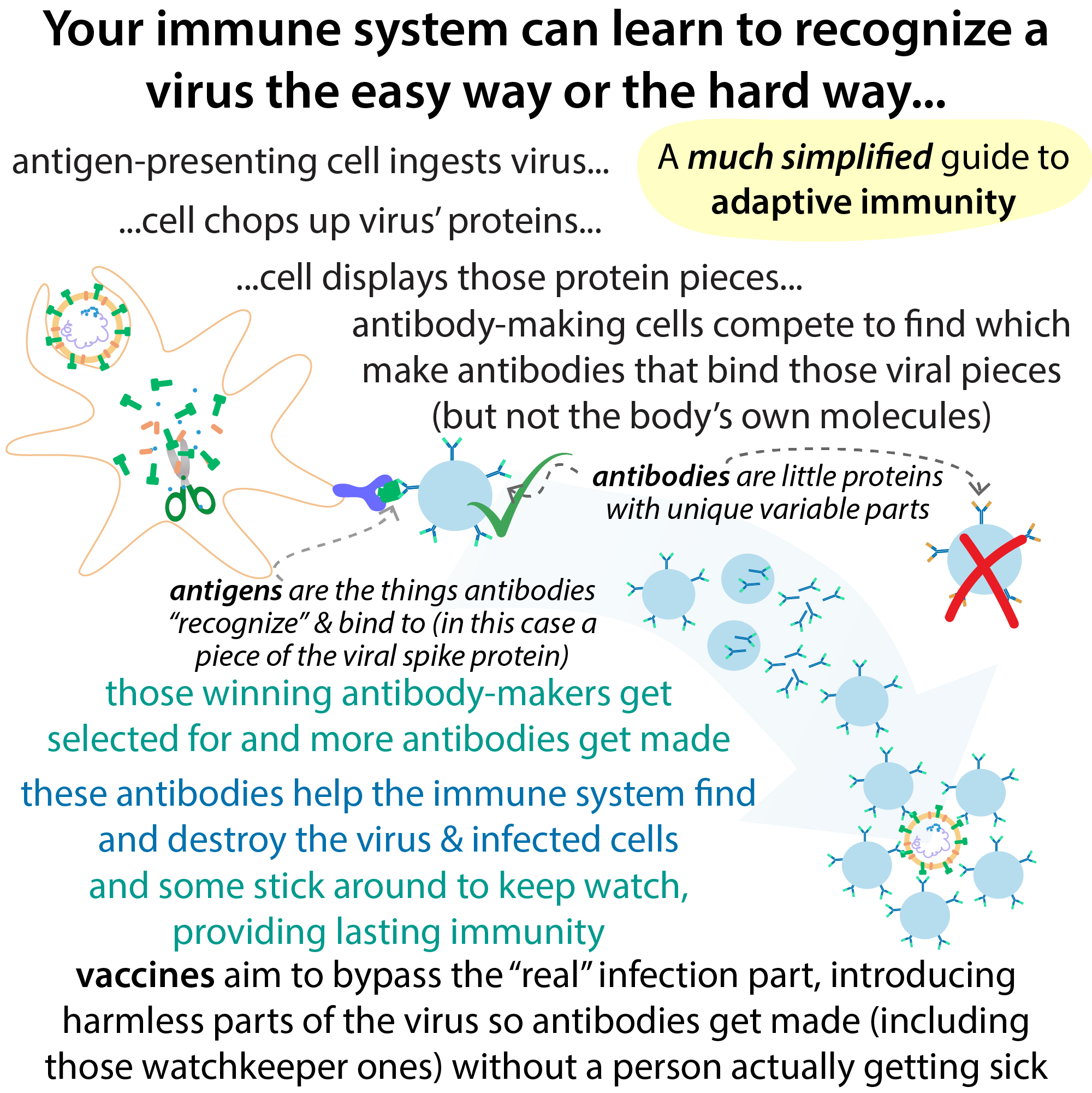
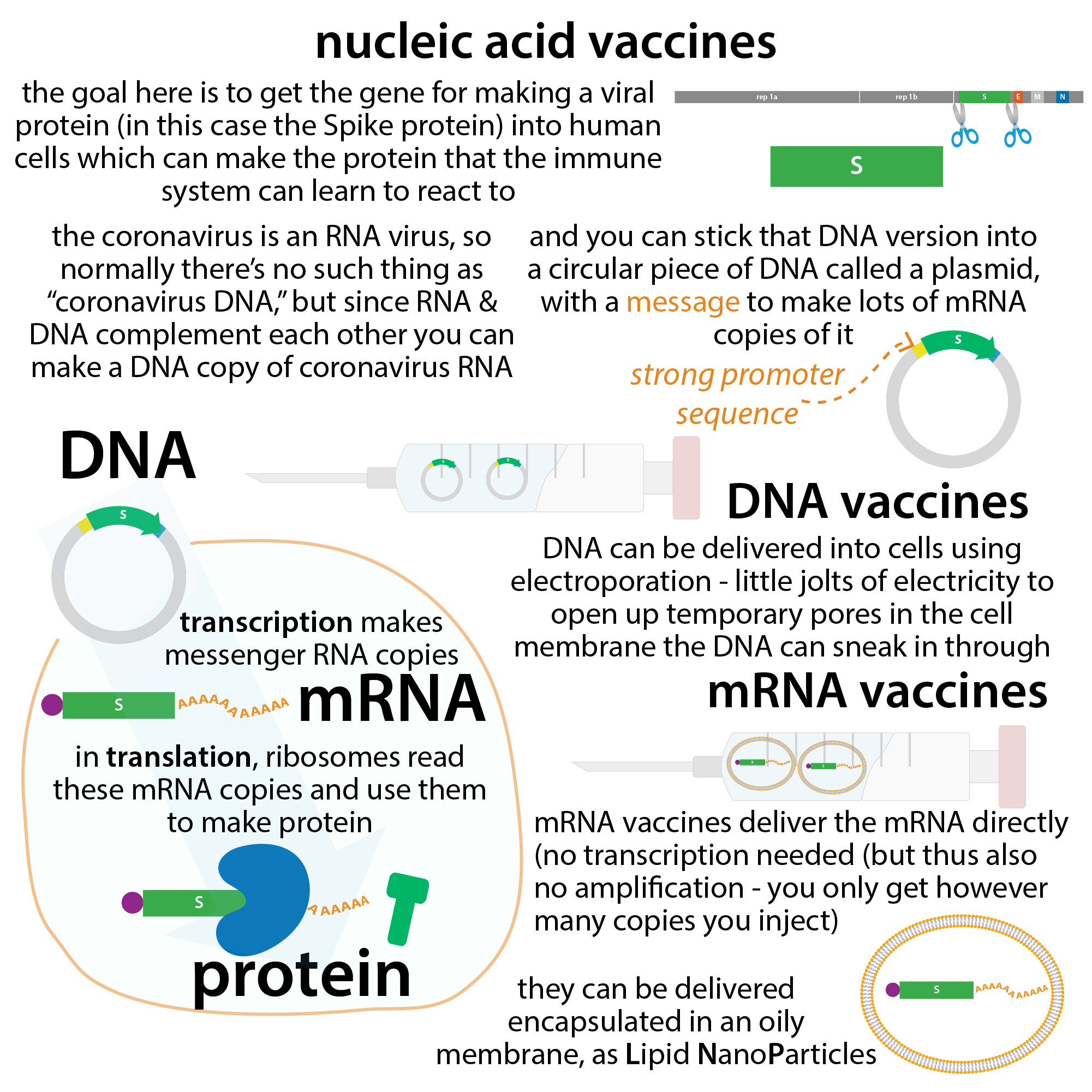
mRNA
Click on an image to enlarge.


Small nucleic acid
Click on an image to enlarge.
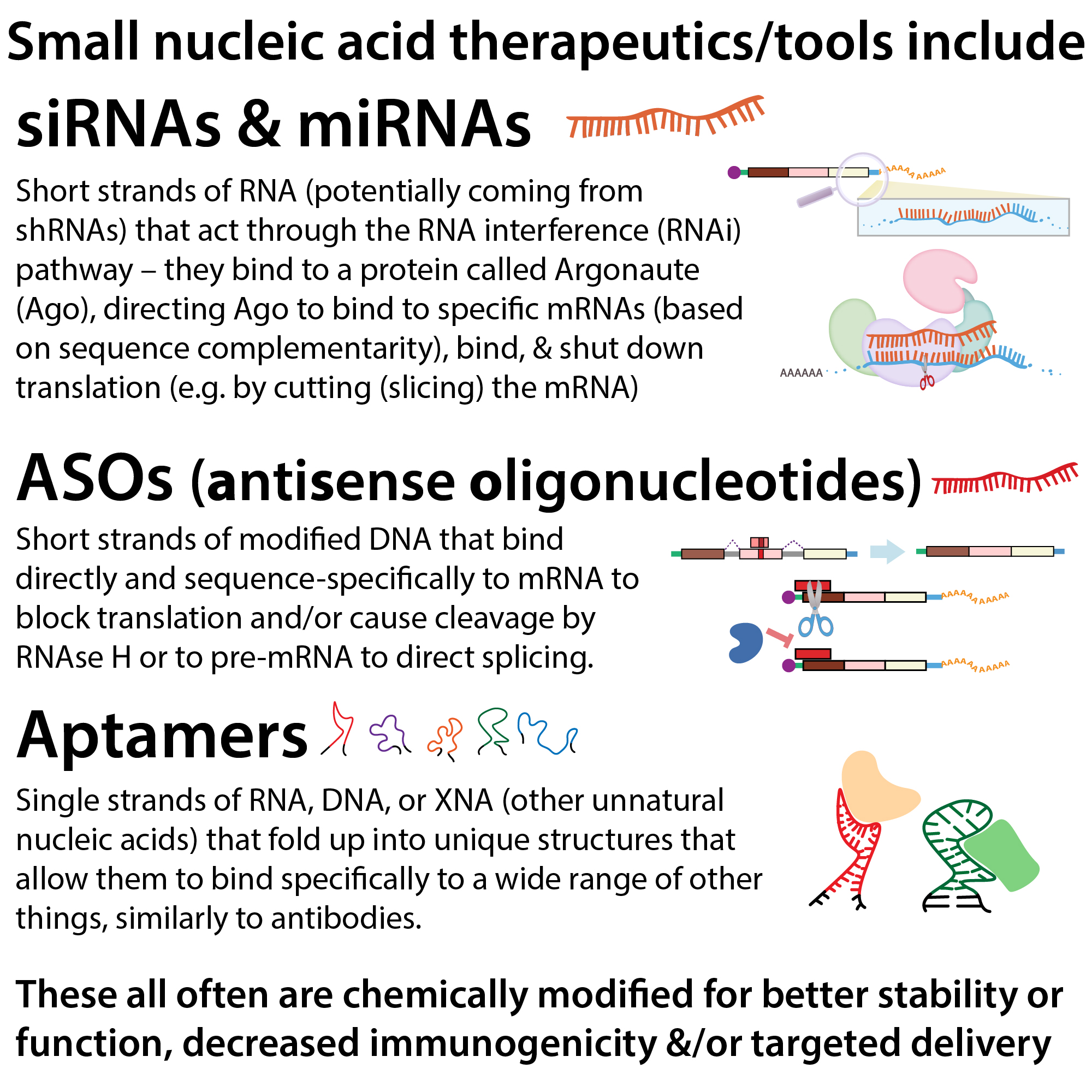
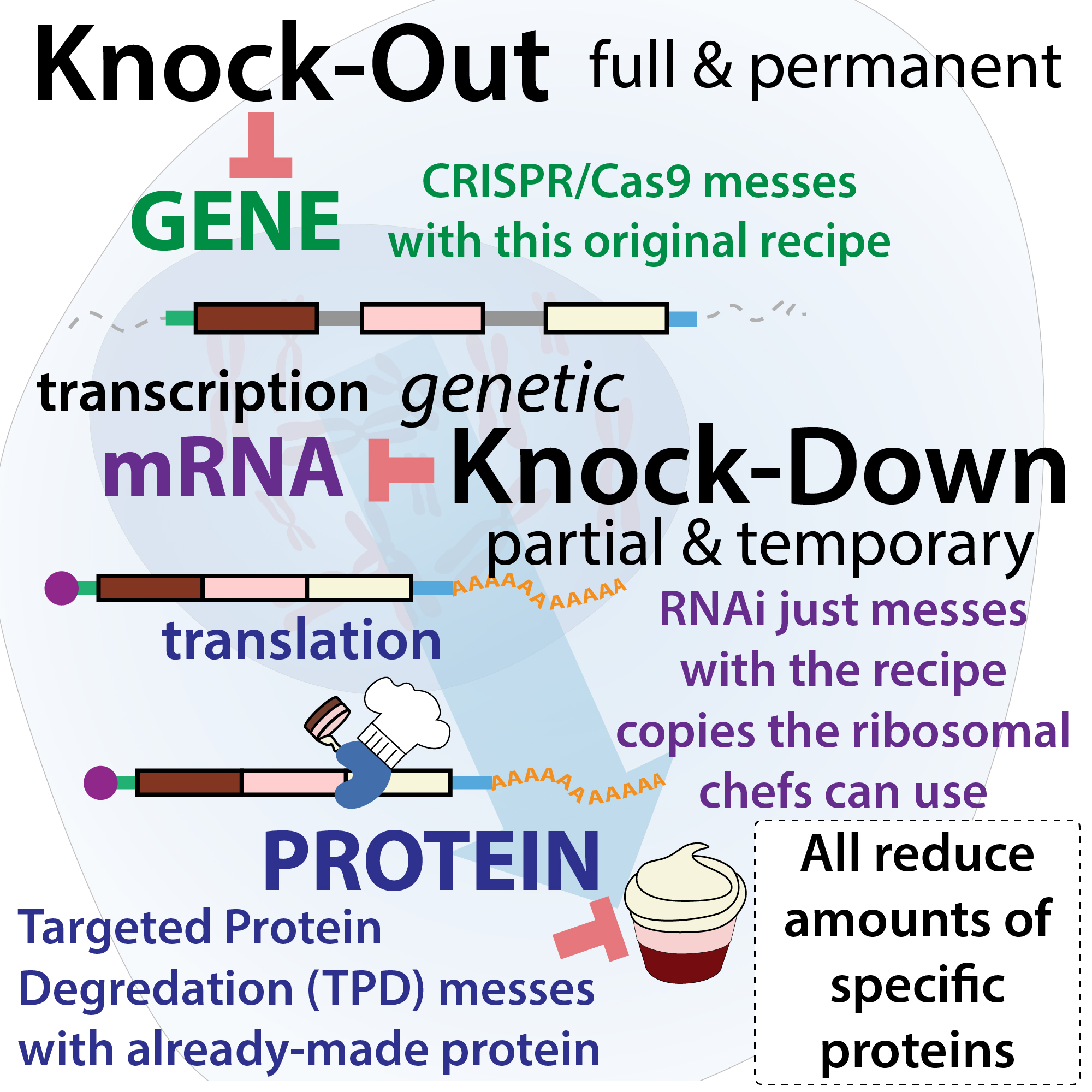
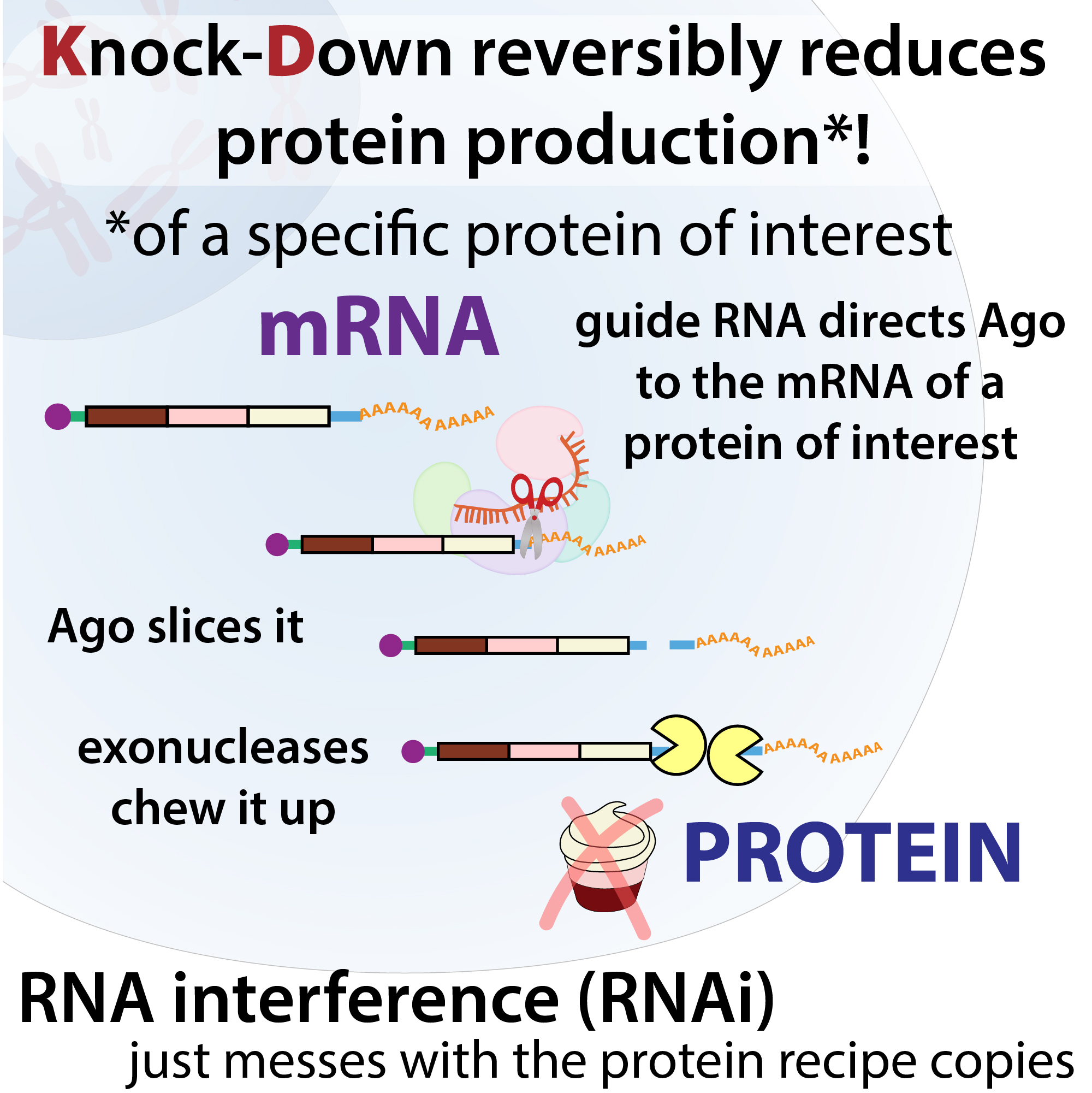
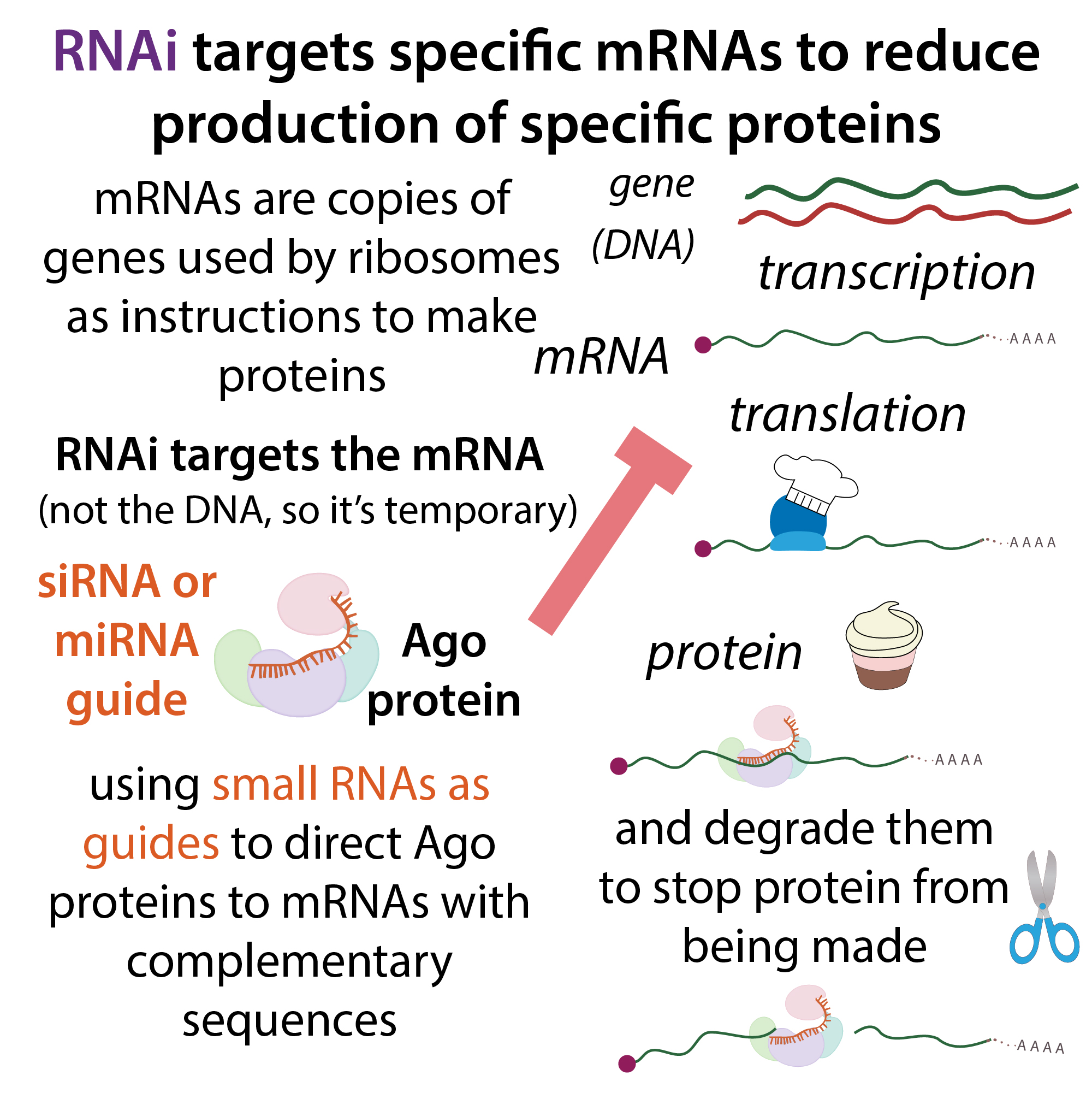
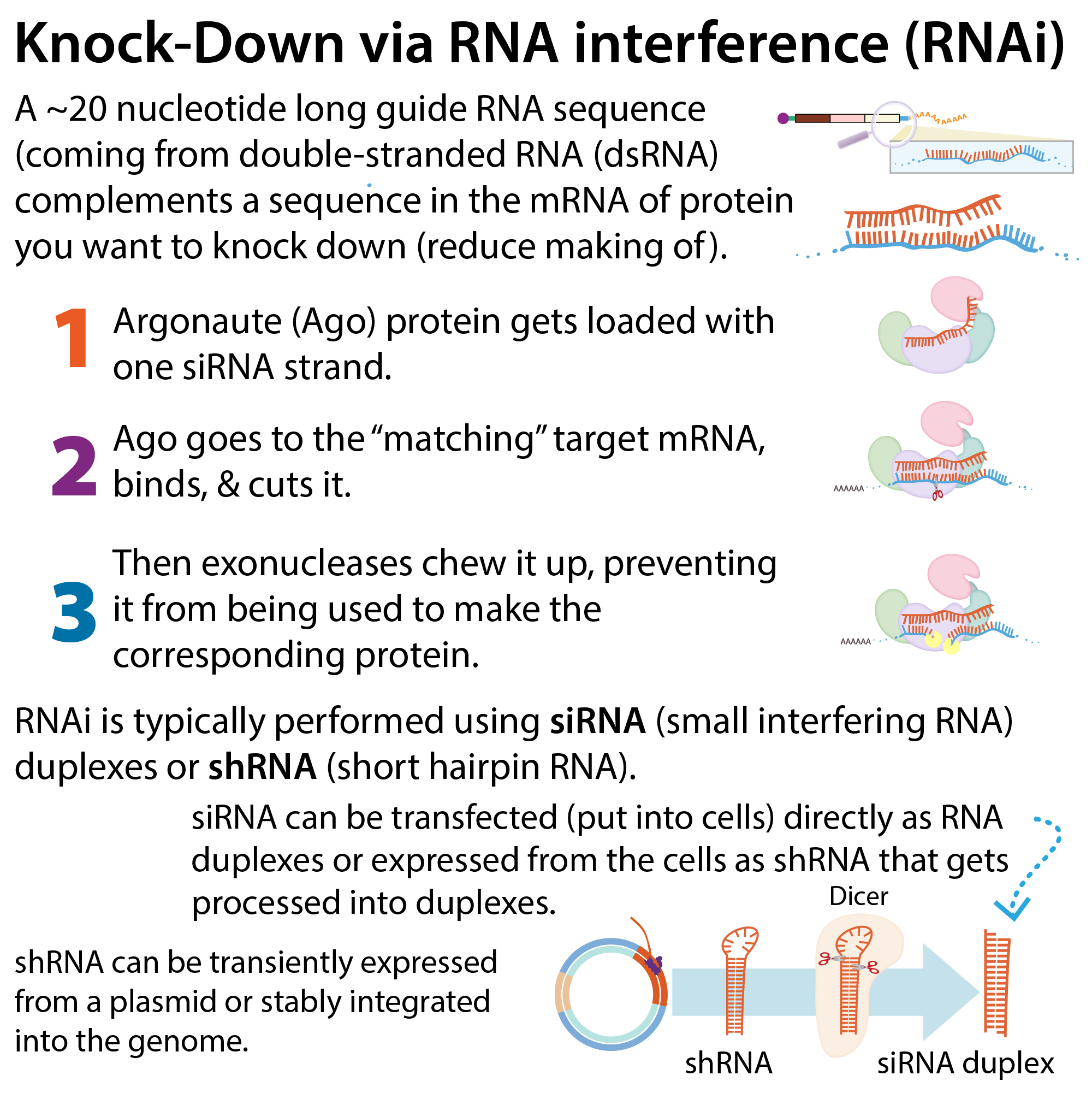
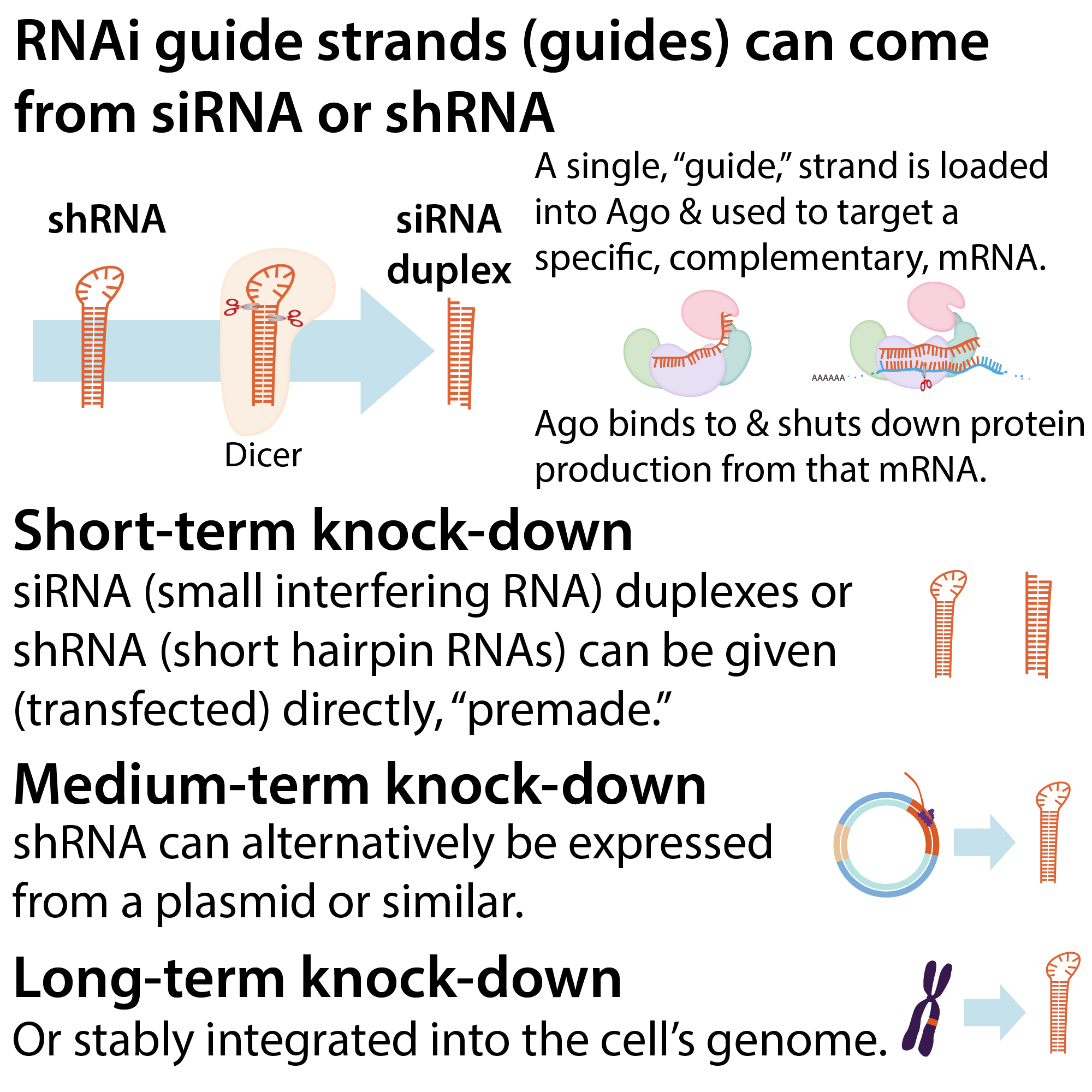
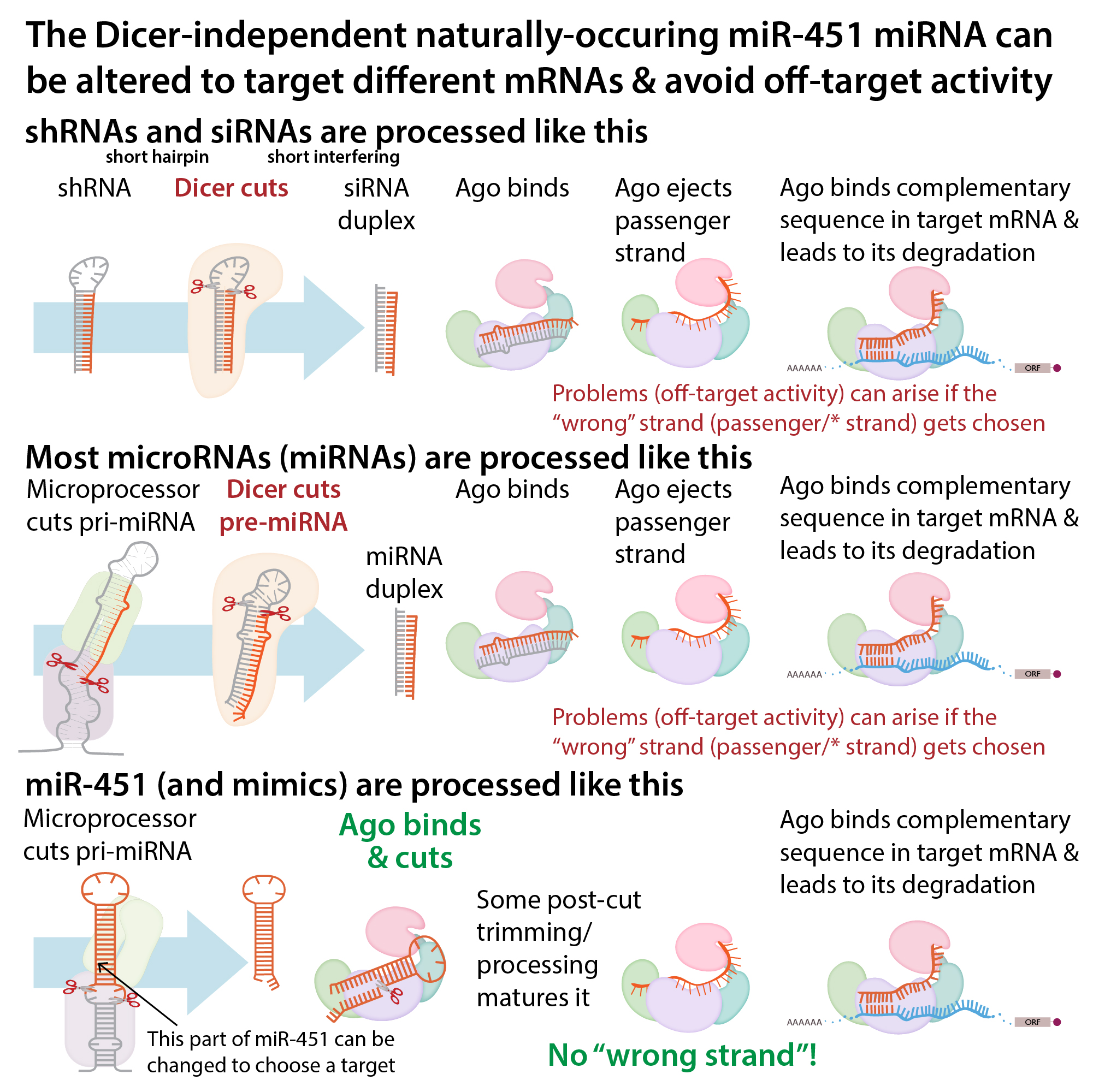
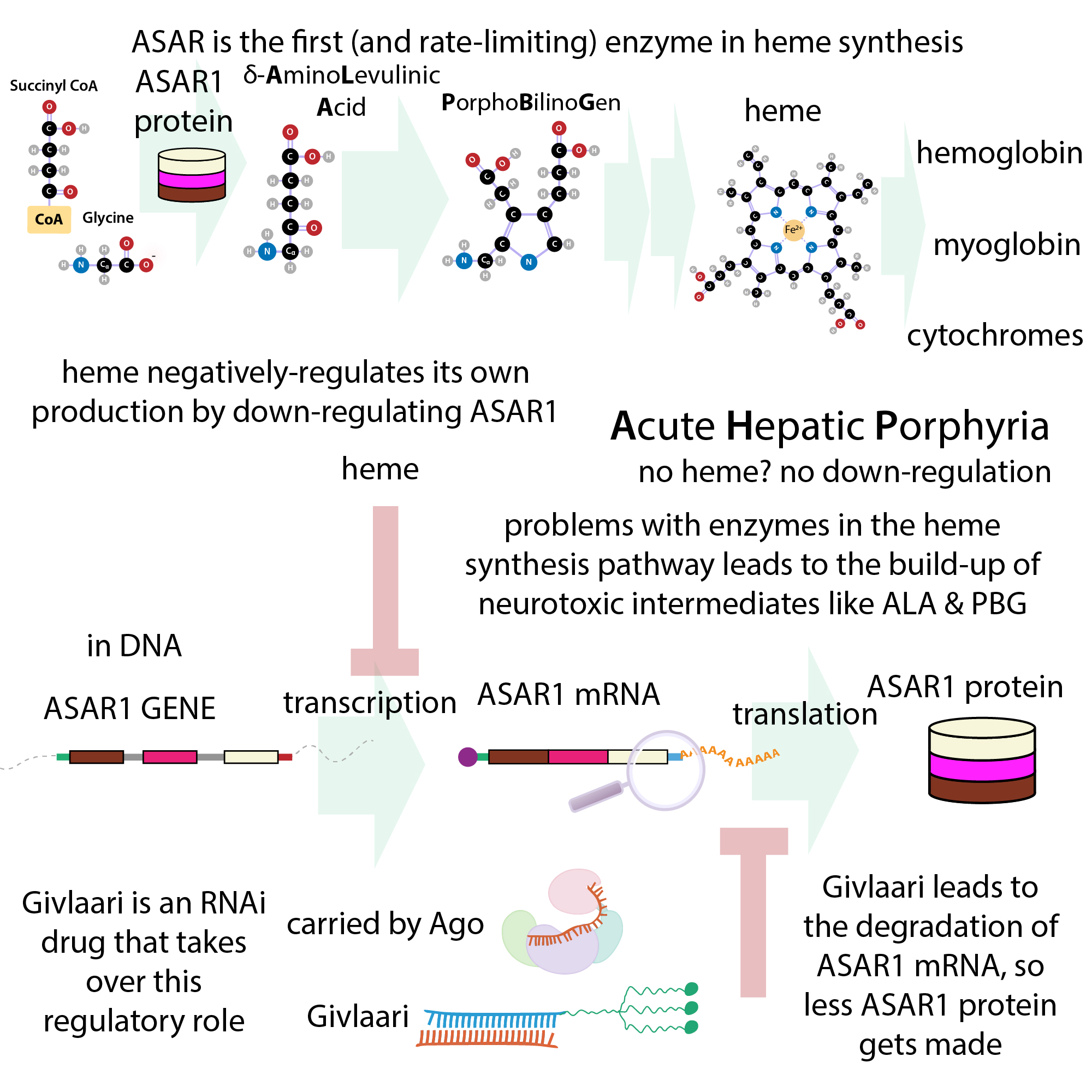
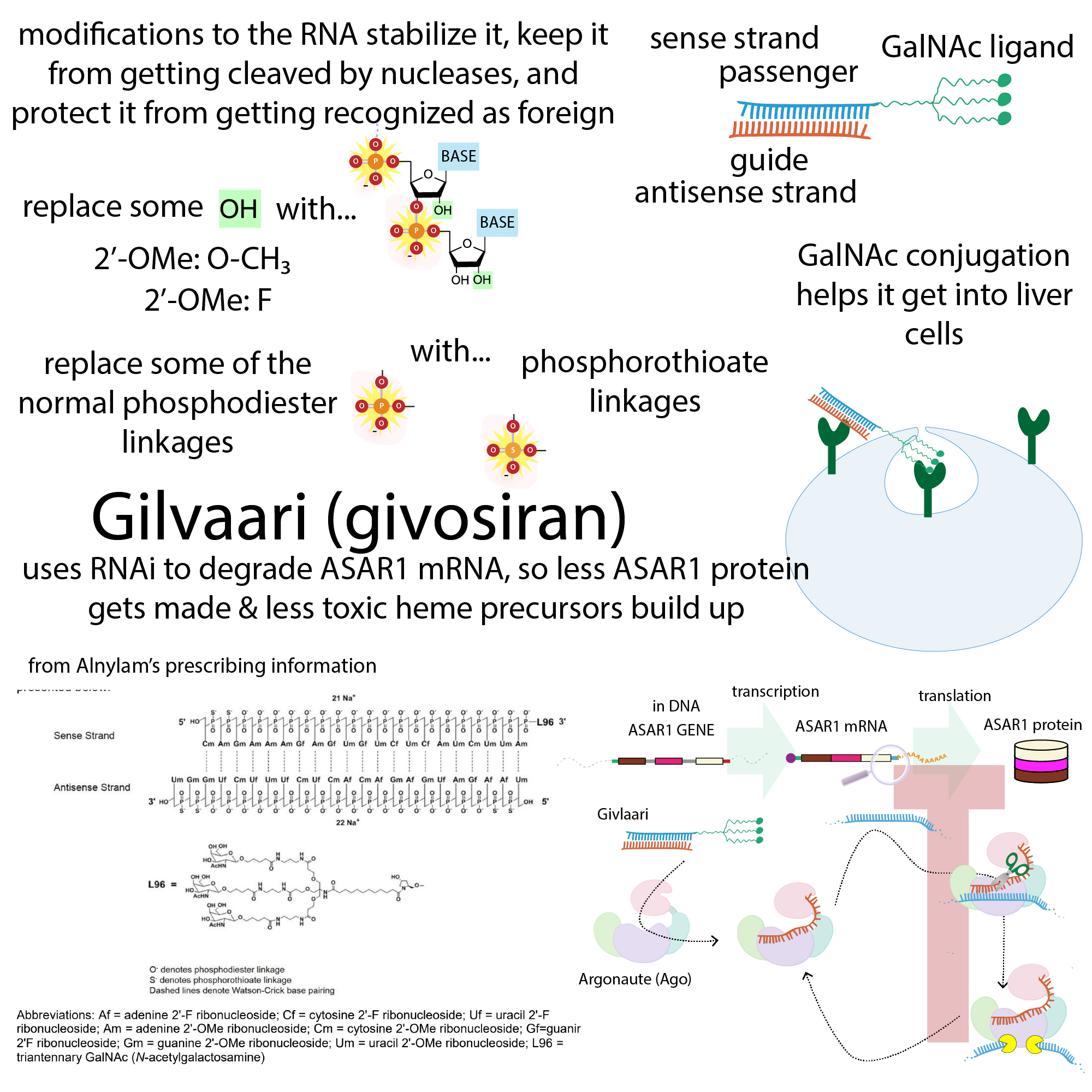
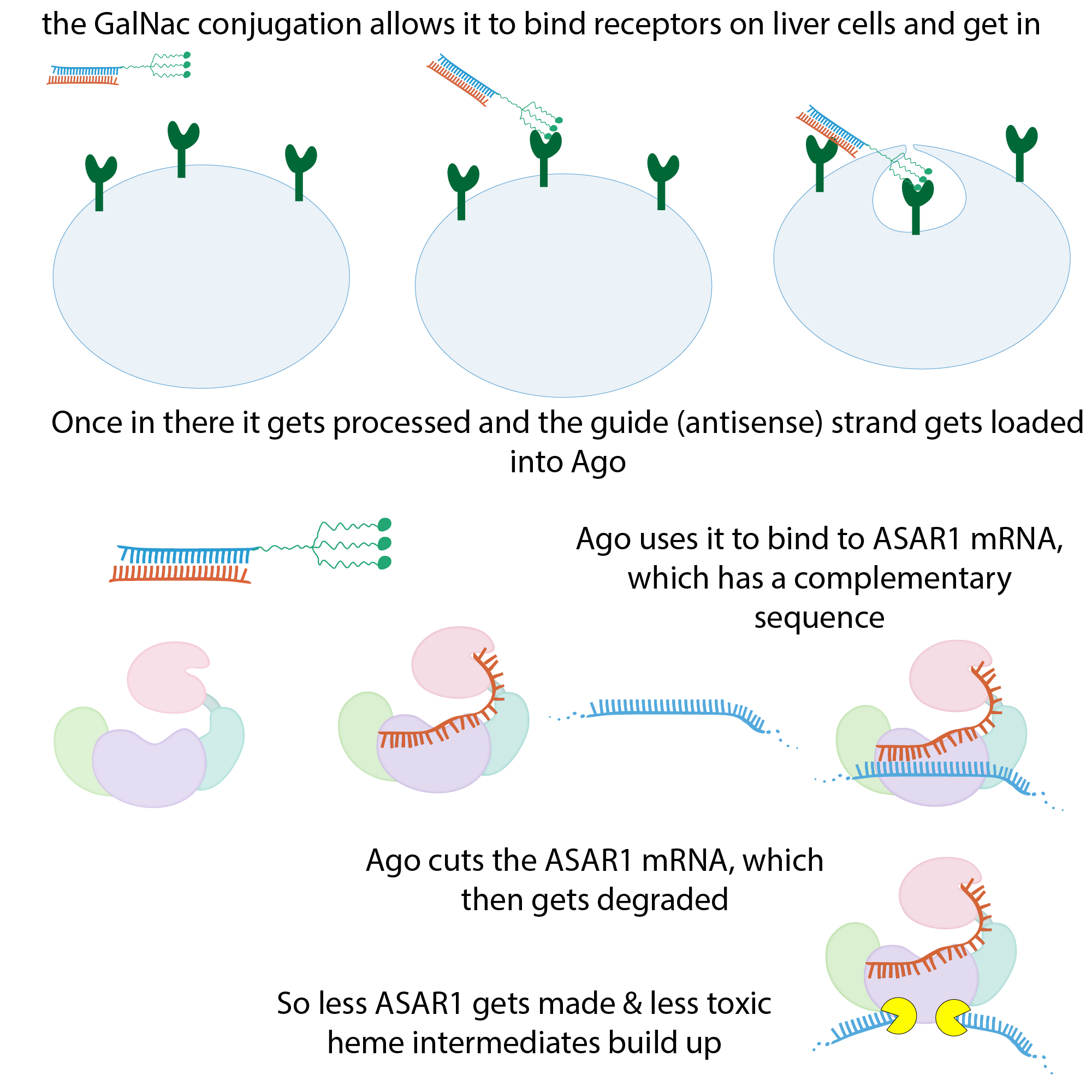
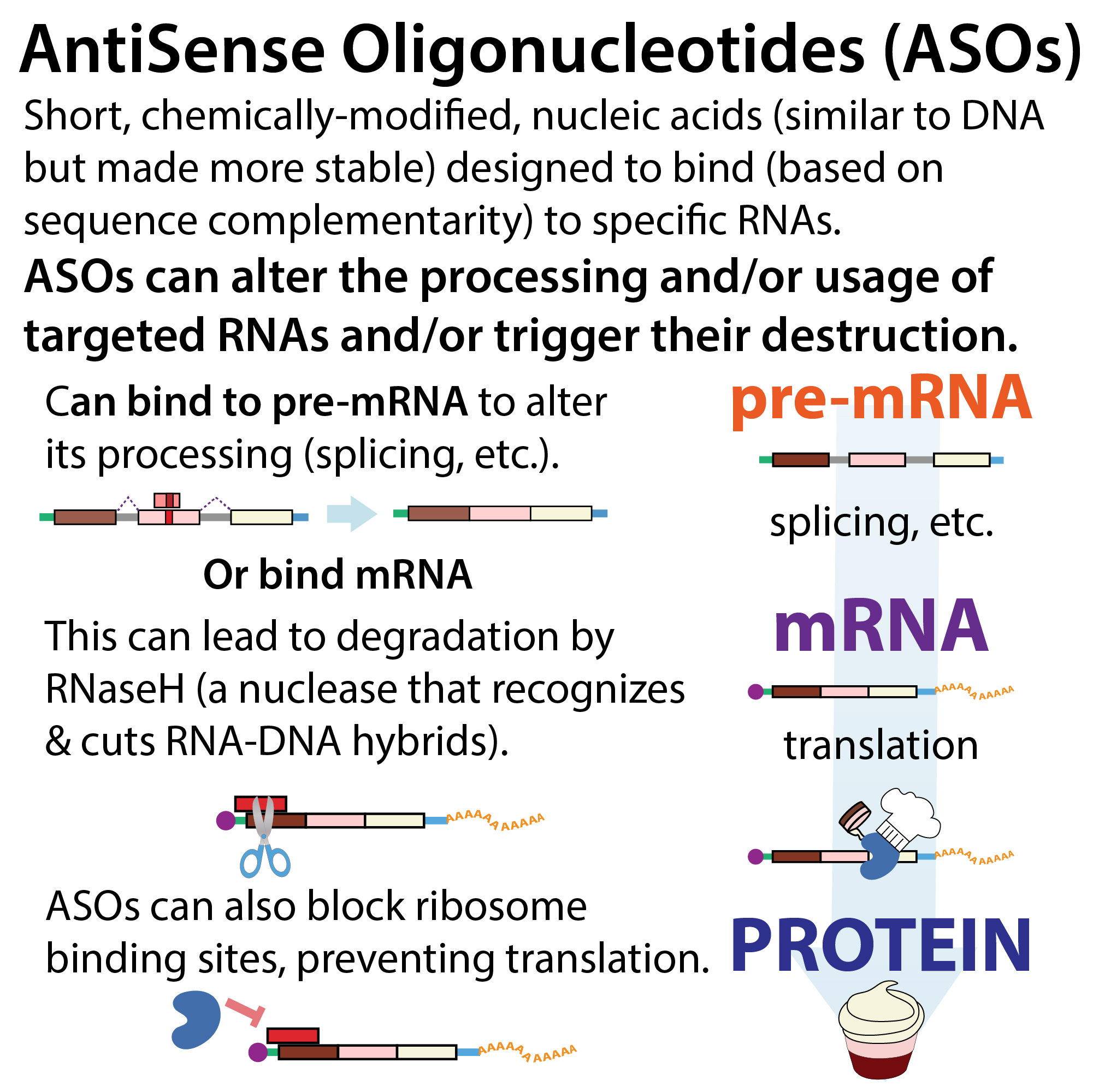
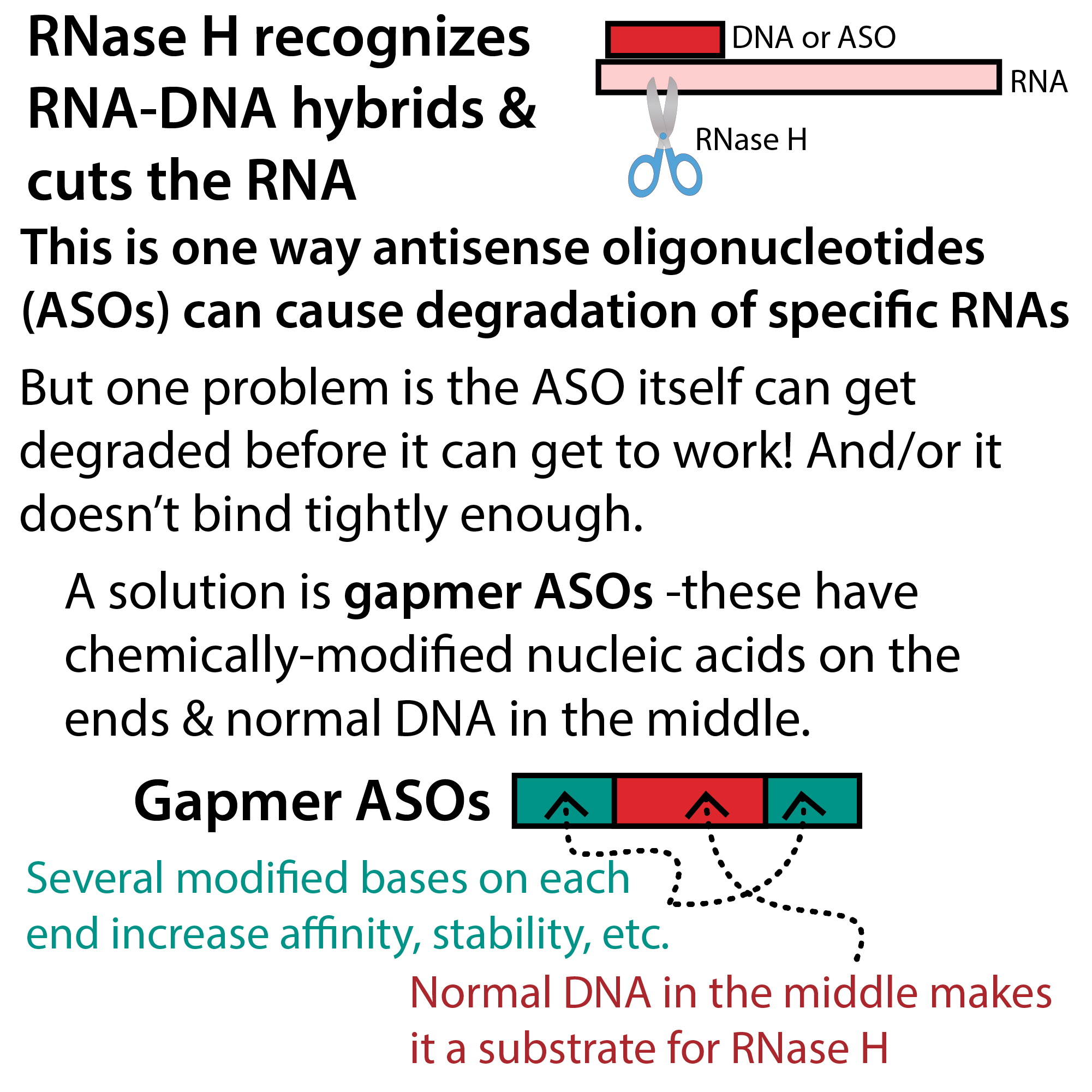

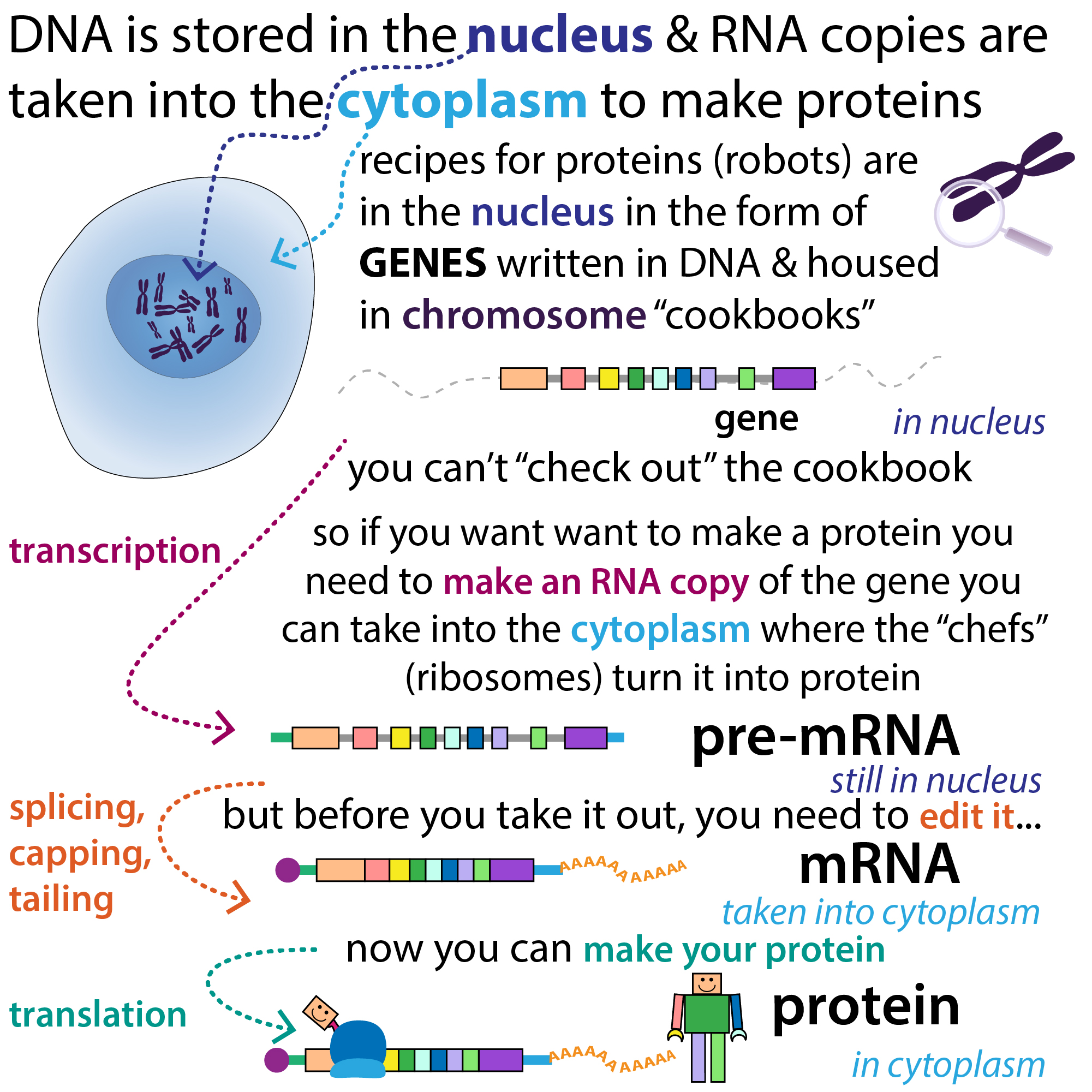


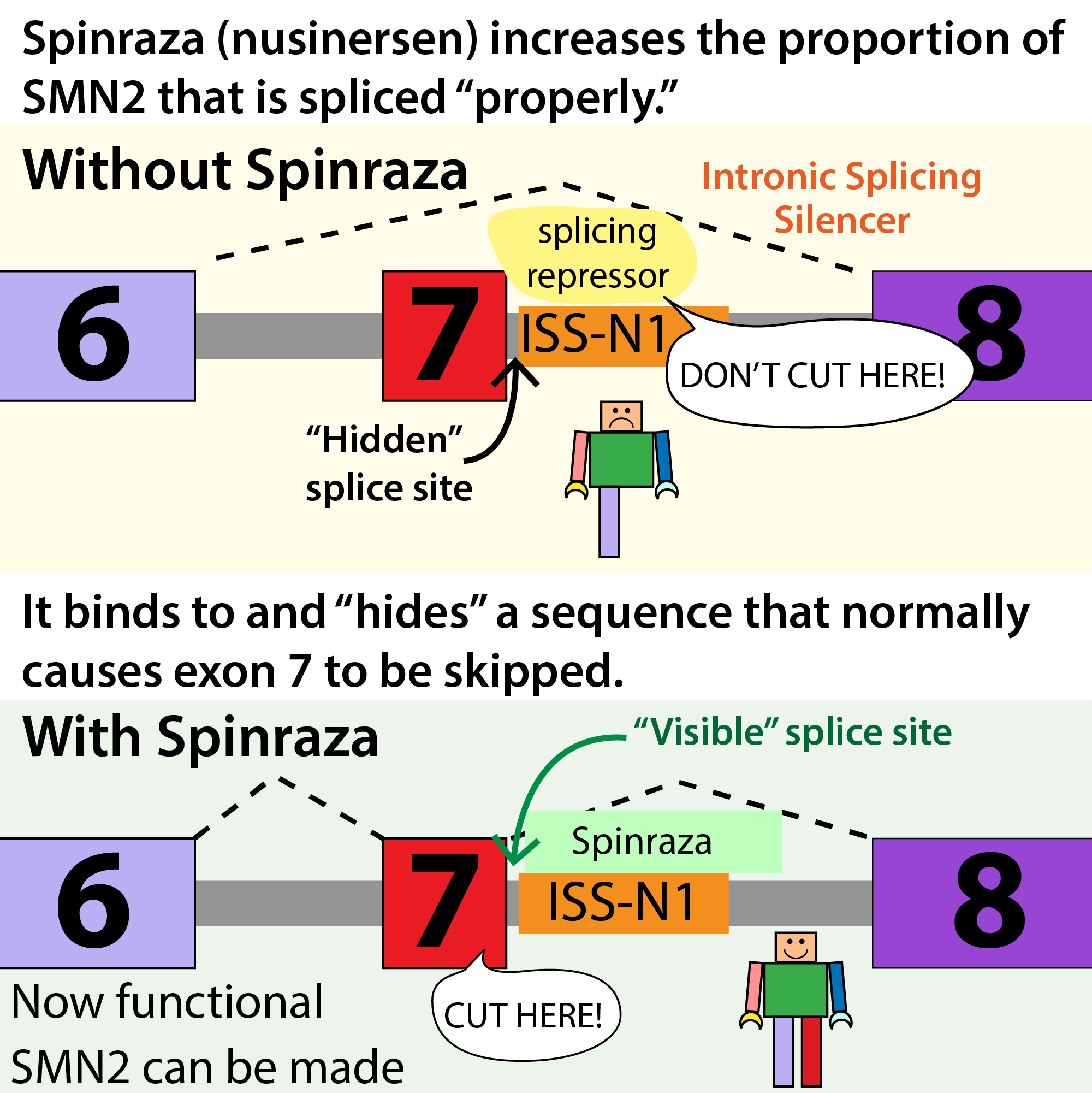

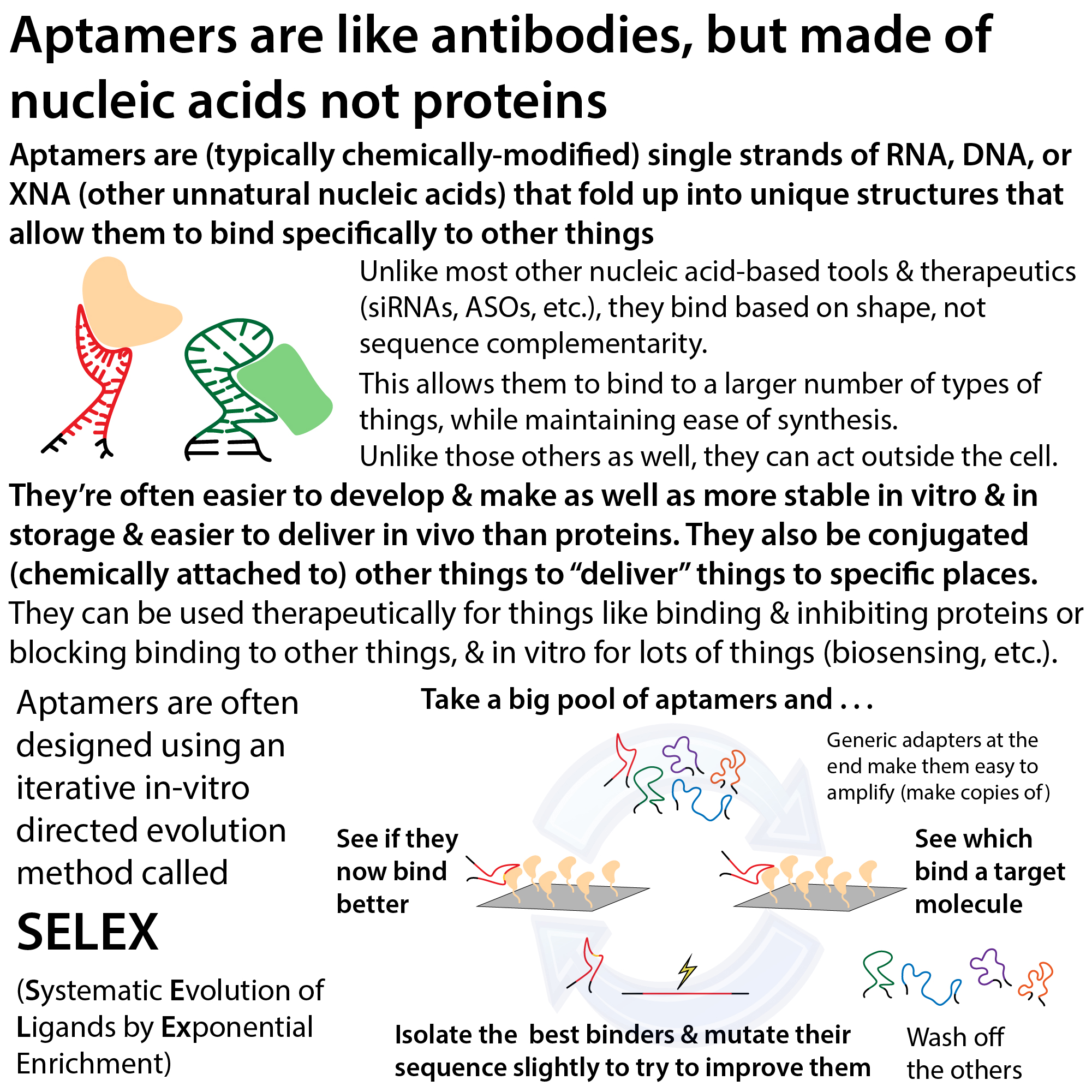
Associated posts
- Delivery: Transfection methods
- Gene addition: Adenoviral vectors – vaccines, gene therapy, & more
- mRNA: Katalin Karikó – “solver” and “saver” of synthetic mRNA (like that in some vaccines)
- mRNA vaccines: mRNA vaccine biochemistry
- Viral vector vaccines: Viral vector vaccines (such as J&J’s and Oxford/AstraZeneca’s coronavirus vaccines)
- microRNA (miRNA) & siRNA: Genetic knock-down versus knock-out and a few different ways to bring it about
- miRNA case studies:
- Givlaari (givosiran) for porphyria: Heme synthesis, porphyria, and the new RNAi therapeutic Givlaari (givosiran)
- Treatment for Huntington’s disease: Glutamine, Huntington’s disease, genetic diseases & mutation types
- miRNA case studies:
- ASOs
- ASO case study – Spinraza/nusinersen for treatment of spinal muscular atrophy (SMA): Spinraza switches splicing to save patients with Spinal Muscular Atrophy (SMA)… some cool science to know about this ASO! (and other SMA treatments)
- Aptamers: Aptamers and a quick comparison of small nucleic acid tools/therapeutics
Review articles
- State of field:
- Belgrad, J.; Fakih, H. H.; Khvorova, A. Nucleic Acid Therapeutics: Successes, Milestones, and Upcoming Innovation. Nucleic Acid Ther 2024, 34 (2), 52–72. https://doi.org/10.1089/nat.2023.0068.
- Chien, Foo, and Witman. Towards mRNA Therapeutics 2.0. Nat Rev Drug Discov 2026. https://doi.org/10.1038/s41573-026-01459-7.Liu et al. Landscape of Small Nucleic Acid Therapeutics: Moving from the Bench to the Clinic as next-Generation Medicines. Sig Transduct Target Ther 2025, 10 (1), 73. https://doi.org/10.1038/s41392-024-02112-8.
- Song, Y. Challenges and Opportunities in RNA-Centered Therapeutics. Nat Chem Biol 2026, 22 (6), 847–854. https://doi.org/10.1038/s41589-026-02227-9.
- Delivery:
- Geng et al. Viral and Non-Viral Vectors in Gene Therapy: Current State and Clinical Perspectives. eBioMedicine 2025, 118. https://doi.org/10.1016/j.ebiom.2025.105834.
- This one especially
- Barillas and Parsey, An Introduction to Lipid Nanoparticle Formulation: Basic Concepts & Preparation Procedures. https://www.caymanchem.com/news/intro-to-lipid-nanoparticle-formulation.
- Hosseini-Kharat, Bremmell, and Prestidge. Why Do Lipid Nanoparticles Target the Liver? Understanding of Biodistribution and Liver-Specific Tropism. Molecular Therapy Methods & Clinical Development 2025, 33 (1). https://doi.org/10.1016/j.omtm.2025.101436.
- Debacker et al. Delivery of Oligonucleotides to the Liver with GalNAc: From Research to Registered Therapeutic Drug. Molecular Therapy 2020, 28 (8), 1759–1771. https://doi.org/10.1016/j.ymthe.2020.06.015.
- Bian, et al. Emerging Delivery Systems for Enabling Precision Nucleic Acid Therapeutics. ACS Nano 2025, 19 (4), 4039–4083. https://doi.org/10.1021/acsnano.4c11858.
- Geng et al. Viral and Non-Viral Vectors in Gene Therapy: Current State and Clinical Perspectives. eBioMedicine 2025, 118. https://doi.org/10.1016/j.ebiom.2025.105834.
- Aptamers:
- Bege et al. The 20th Anniversary of Pegaptanib (MacugenTM), the First Approved Aptamer Medicine: History, Recent Advances and Future Prospects of Aptamers in Therapy. Pharmaceutics 2025, 17 (3). https://doi.org/10.3390/pharmaceutics17030394.
- Cesarini et al. The Recent Blooming of Therapeutic Aptamers. Molecular Aspects of Medicine 2025, 102, 101350. https://doi.org/10.1016/j.mam.2025.101350.
- F. Yang et al. Aptamers 101: Aptamer Discovery and in Vitro Applications in Biosensors and Separations. 2023. https://doi.org/10.1039/D3SC00439B.
- Other
- Butterfield et al. Gene Regulation Technologies for Gene and Cell Therapy. Molecular Therapy 2025, 33 (5), 2104–2122. https://doi.org/10.1016/j.ymthe.2025.04.004.
- Warne et al. Delivering 3 Billion Doses of Comirnaty in 2021. Nat Biotechnol 2023, 41 (2), 183–188. https://doi.org/10.1038/s41587-022-01643-1.
Books
- Zanders, E. D. Twenty-First Century Drug Discovery: An Expanding Landscape; Springer Nature Switzerland: Cham, 2025. https://doi.org/10.1007/978-3-031-93949-5.
- The Forever Fix: Gene Therapy & the Boy Who Saved It by Ricki Lewis, 2012
Protein therapeutics
Outline
- Here, purified protein is given to a person “pre-made” as opposed to giving the person the instructions for making the protein.
- Challenges include delivery and stability, as well as high manufacturing costs.
- Some protein therapeutics are designed to replace or supplement faulty proteins, such as in enzyme replacement therapy (ERT).
- Many protein therapeutics are some sort of antibody-based molecule. Antibodies are small proteins that can bind specifically to specific molecular targets. Different antibodies bind different molecules (called antigens) at sites called epitopes. There is increasing interest in using antibody-based “biologics” as therapies thanks to the ability of antibodies to target specific molecules, including cell-type-specific molecules
- monoclonal antibodies (mAbs): One antibody binds one specific thing at one specific place. These can be used to block unwanted binding between molecules (e.g., preventing a signaling molecule from binding to a receptor)
- bispecific antibodies (bsAbs): One antibody binds two specific things at two specific places (or one specific thing at two specific places). These can be used to increase specificity, bridge 2 molecules (e.g., a tumor cell and an immune cell), target a rouge cell from 2 angles to reduce resistance, etc.antibody fragments: Fabs, nanobodies, and other small antibody pieces that have some advantages such as smaller size allowing them to access smaller places and potentially be stabler
- Antibody-Drug Conjugates (ADCs): These consist of an antibody that targets a specific cell type, tumor, etc. stably connected (conjugated) through a linker to a drug (often referred to as a payload) that kills the cell (e.g., for cancer therapy) or has some other effect.
- Has the potential to minimize side effects while delivering potent medicines where they’re needed
- Dual-payload ADCs have one antibody bound to 2 different drugs (either through a single linker or different linkers)
- So far, most uses have been for cancer, but there’s increasing work on using them for other indications
Graphics
Click on an image to enlarge.
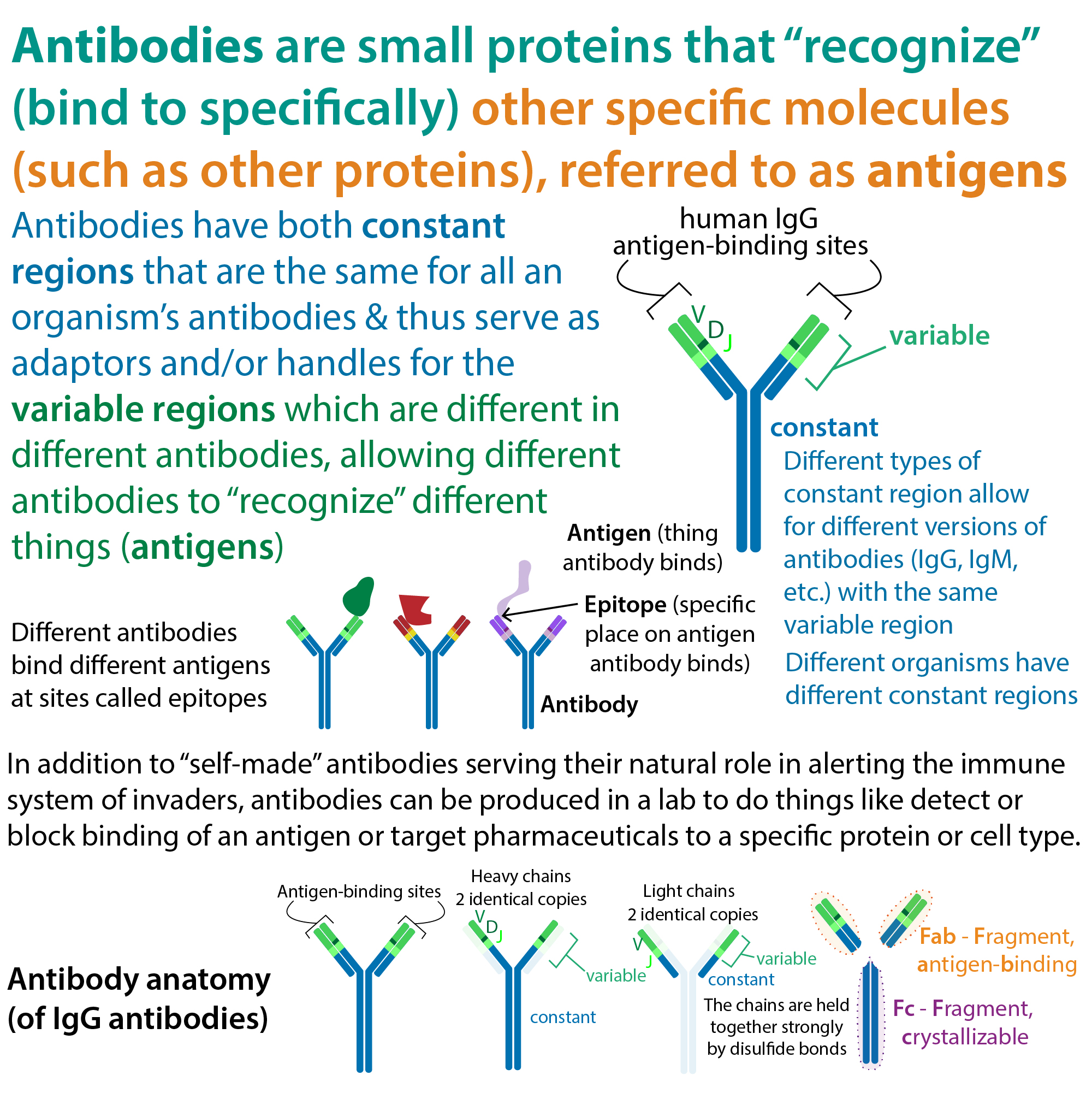
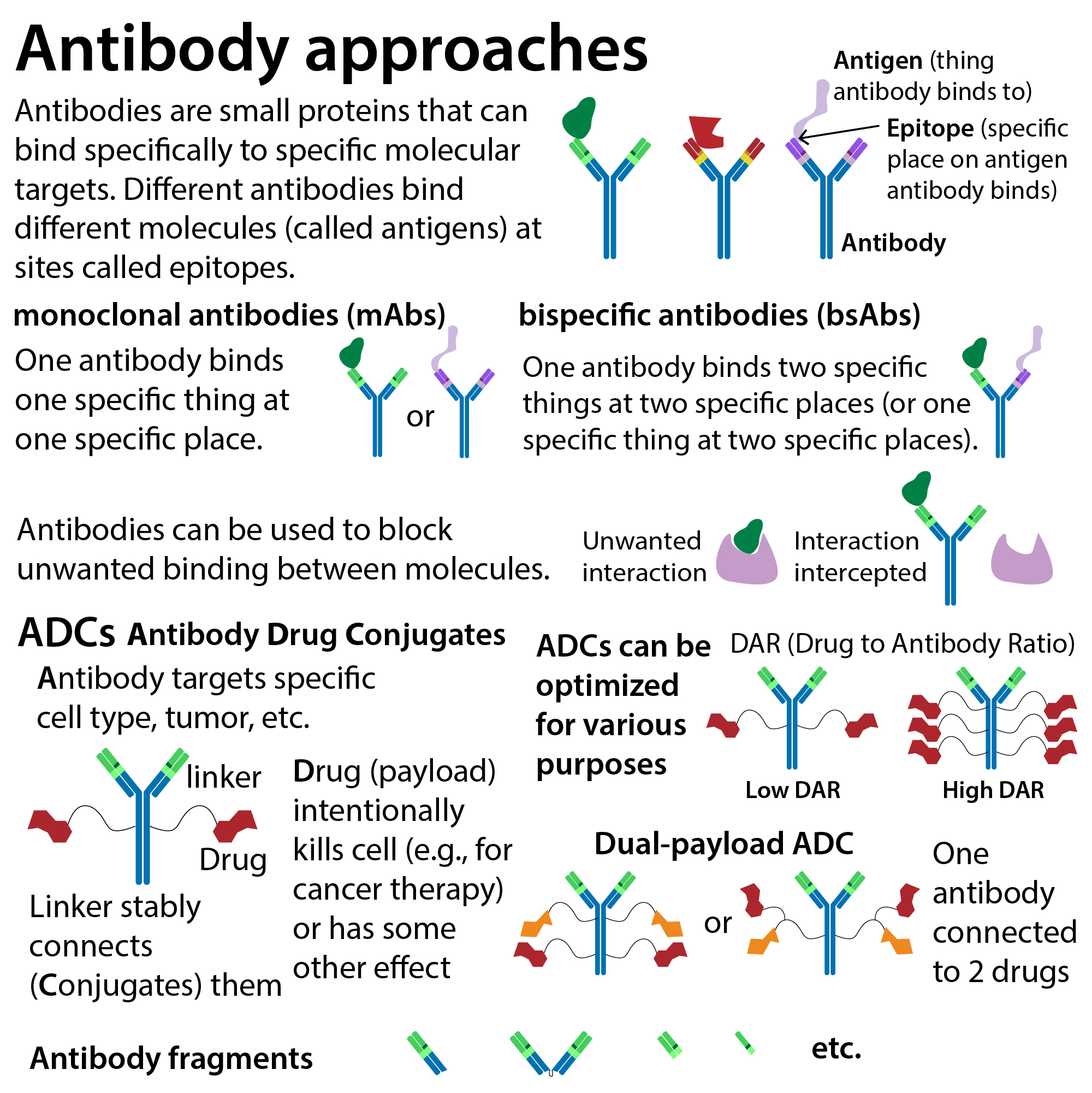
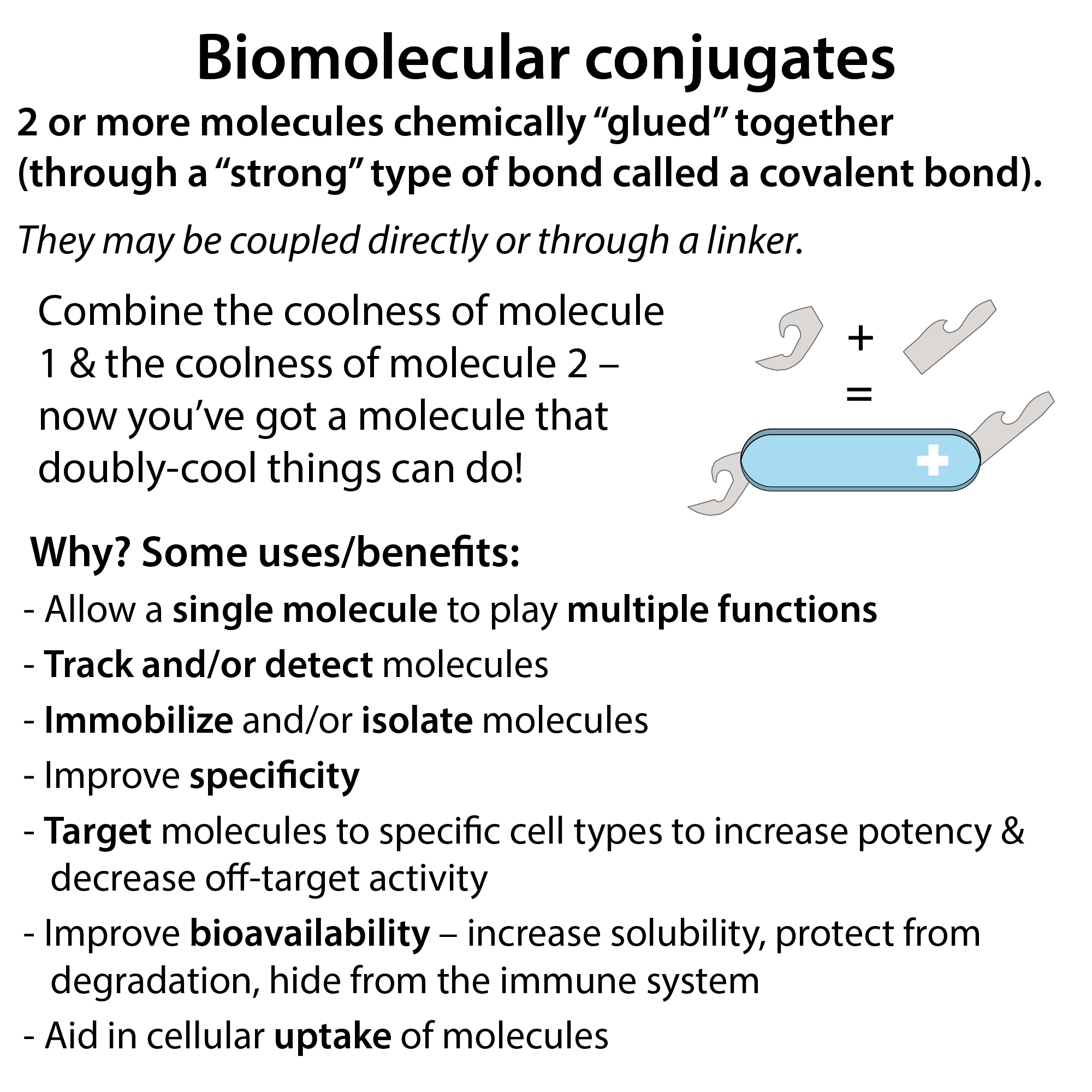
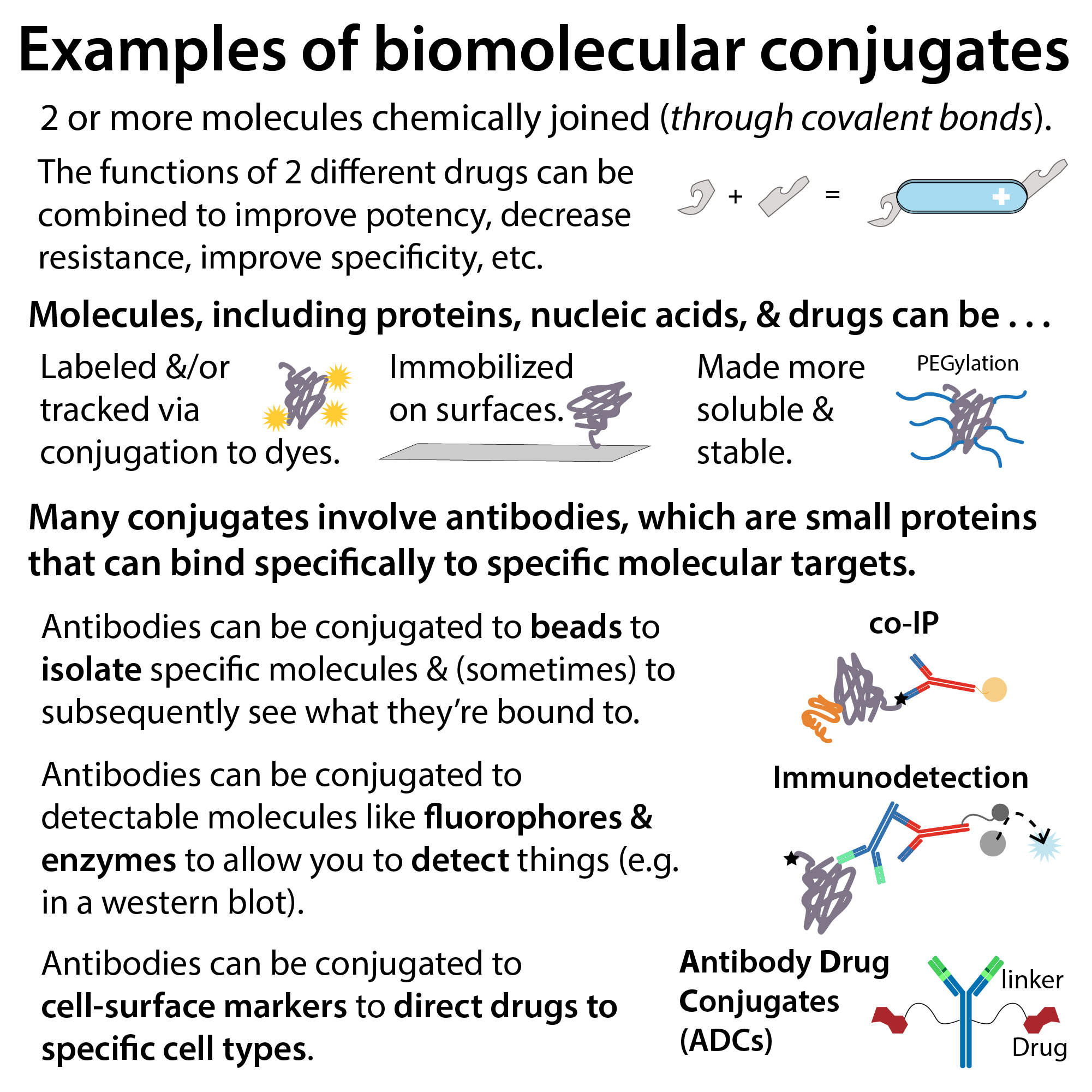

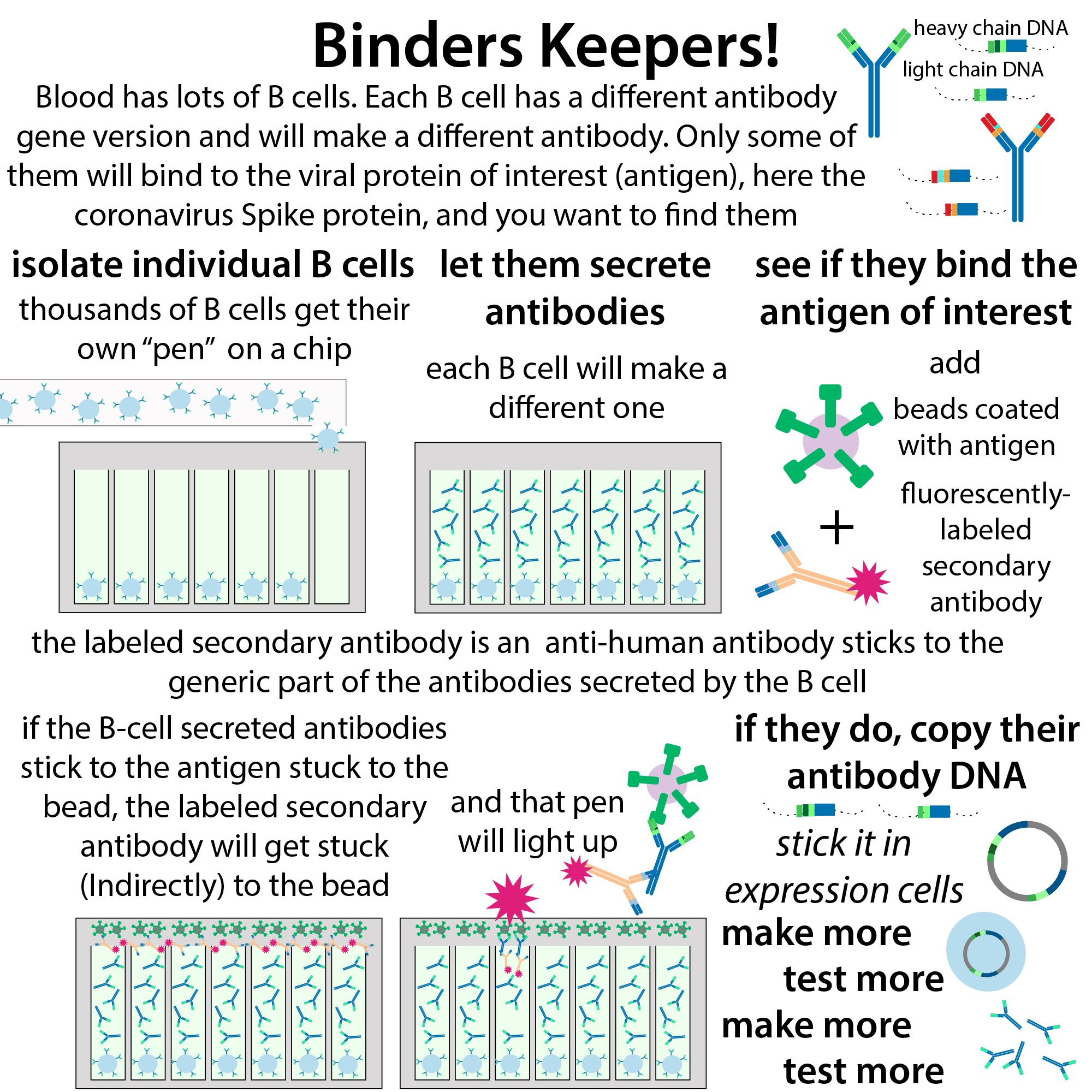

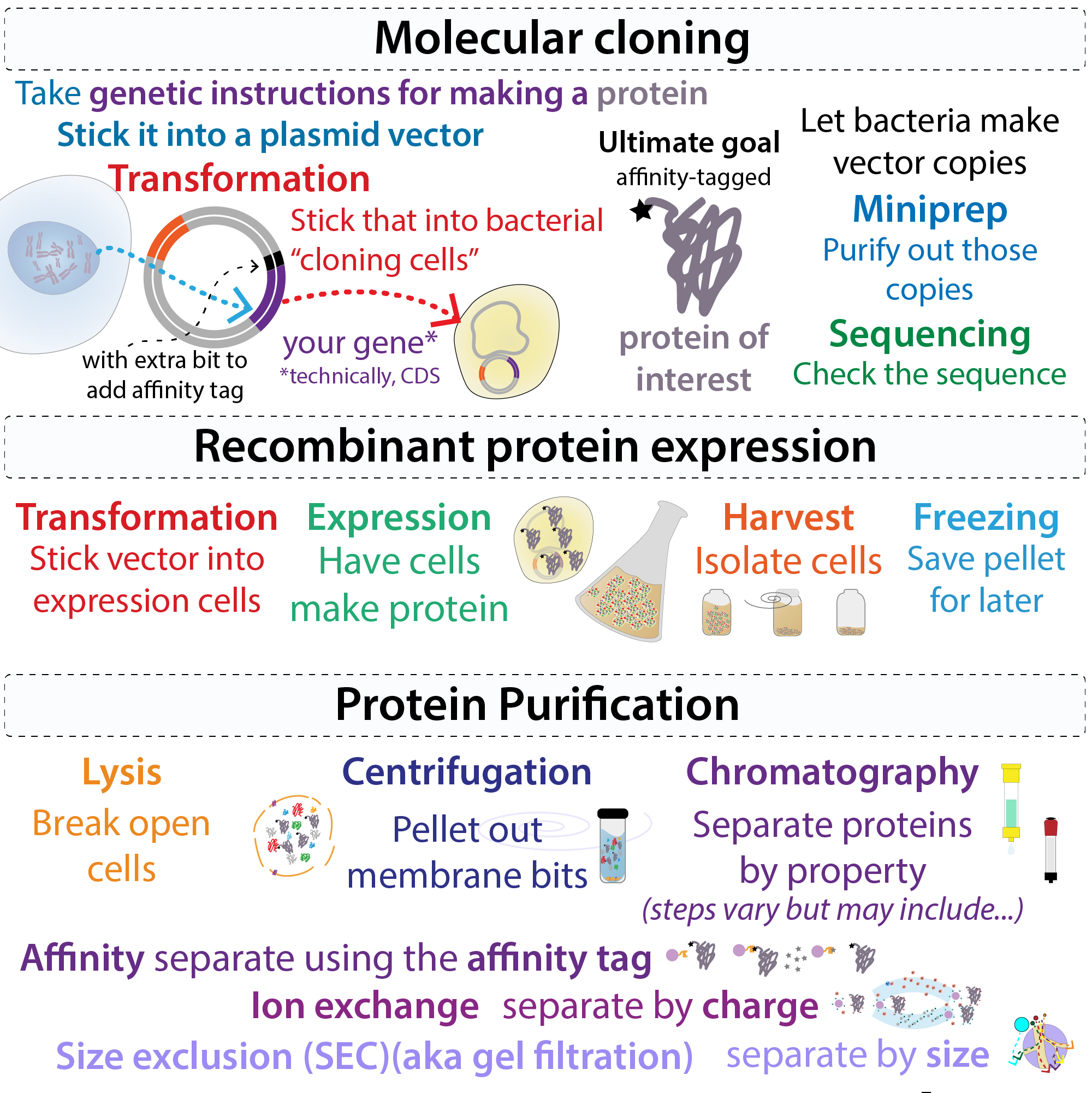
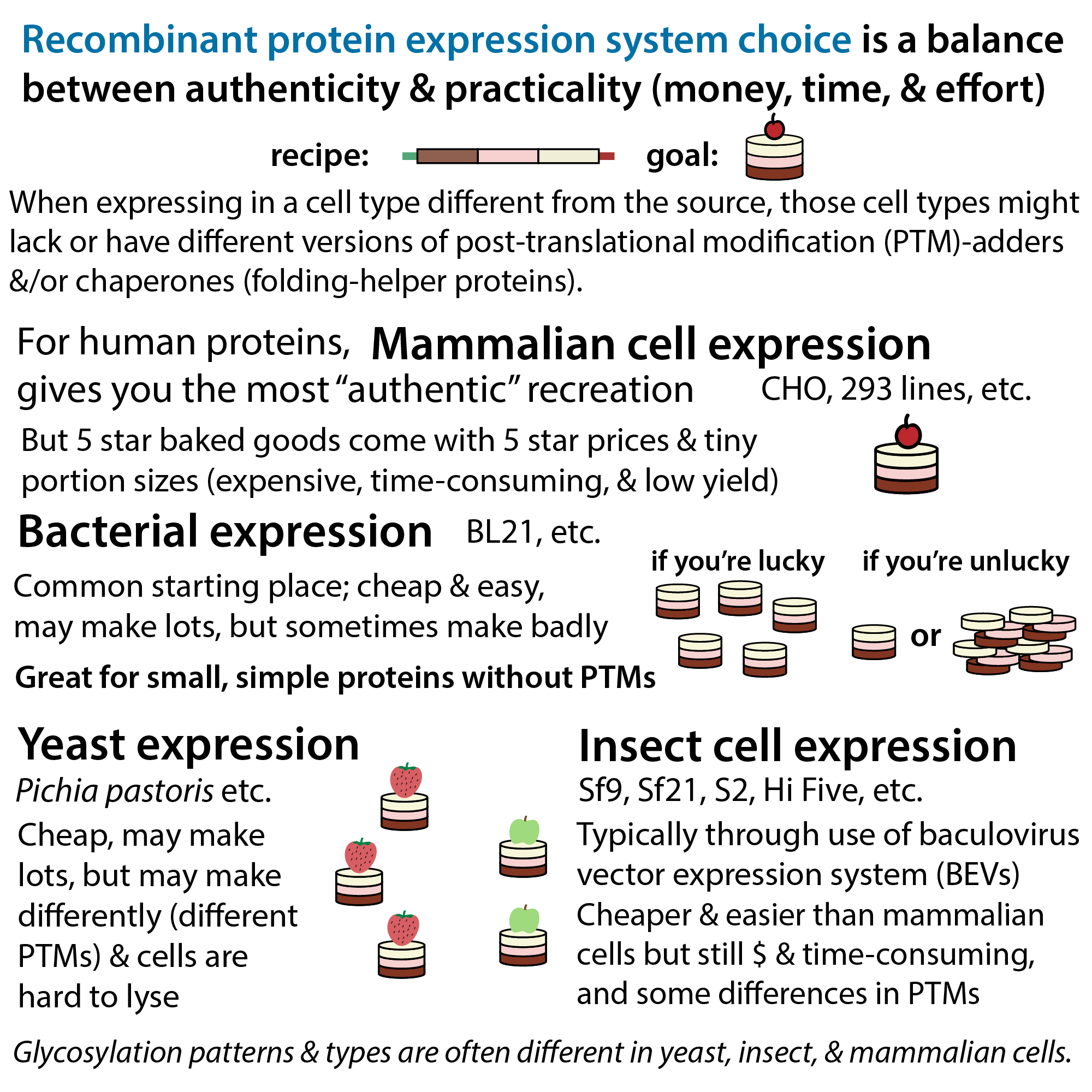


Associated posts
- Biologics and biosimilars: Biologics, biosimilars, and “small molecules”
- Protein subunit vaccines – Novavax example: Novavax coronavirus vaccine biochemistry
Review articles and book chapters
- Antibody-Drug Conjugates: Methods and Protocols; Tumey, L. N., Ed.; Methods in Molecular Biology; Springer US: New York, NY, 2020; Vol. 2078. https://doi.org/10.1007/978-1-4939-9929-3.
- Wu et al. Antibody-Drug Conjugates in Cancer Therapy: Current Advances and Prospects for Breakthroughs. Front. Cell Dev. Biol. 2025, 13. https://doi.org/10.3389/fcell.2025.1669592.
Webpages
- Manufacturing Challenges of Therapeutic Antibody–Drug Conjugates. BioProcess International. https://www.bioprocessintl.com/emerging-therapeutics-manufacturing/manufacturing-challenges-of-therapeutic-antibody-drug-conjugates
- CHF, L. S. at. The Race to Clone Factor VIII. LSF Magazine. https://medium.com/lsf-magazine/the-race-to-clone-factor-viii-ac354581d51b
- This is a great read about one of the first recombinant protein therapeutics
Books
- Zanders, E. D. Twenty-First Century Drug Discovery: An Expanding Landscape; Springer Nature Switzerland: Cham, 2025. https://doi.org/10.1007/978-3-031-93949-5.
- Biotherapeutics: From Small to Large Molecules and Cells; Calzada, V., Cerecetto, H., Tosar, J. P., Eds.; Topics in Medicinal Chemistry; Springer Nature Switzerland: Cham, 2024; Vol. 42. https://doi.org/10.1007/978-3-031-81025-1.
- The Breakthrough: Immunotherapy and the race to cure cancer by Charles Graeber, 2018
- An Elegant Defense: The Extraordinary New Science of the Immune System: A Tale in Four Lives by Matt Richtel, 2019
- Good Blood: A Doctor, a Donor, and the Incredible Breakthrough That Saved Millions of Babies by Julian Guthrie, 2020
Gene editing
Outline
- CRISPR/Cas is a powerful gene editing tool along with other things, it uses a guide RNA that binds to a CAS protein, directs that CAS protein to a DNA, and then the CAS protein takes over. You can use different CAS proteins to have different effects.
- Conventional CRISPR/Case uses Cas9 or Cas12a, which cuts both strands of the DNA and leaves the cell to fix things. If you don’t provide an alternative, the gene typically gets “knocked out” – the gene is basically inactivated due to sloppy repair through non-homologous end joining (NHEJ). If you give it an alternative, you can have something called homology directed repair (HDR) that allows for gene editing. However, both these strategies have issues and they’re not very efficient.
- More recent strategies use nickase Cas9 (nCas) proteins, where they basically make a cut to a single strand and then are associated with an enzyme that makes a modification to the DNA.
- In base editing (BE), you’re changing a single nucleotide to make a point change, typically with a deaminase. With prime editing (PE), you use reverse transcriptase and to provide a template to make larger changes. Unlike in the case of your conventional like gene editing through homology to repair. However, this template is coming from the guide RNA itself, not from an external piece of DNA.
- If you want non-permanent changes, you can also use catalytically-dead (dCas) proteins attached to things like transcription factors or chromatin modifiers that allow you to temporarily change expression. You want to change what sequence is targeted, you change the guide RNA, and if you want to change what happens, you change the CAS protein. In addition to gene editing, you can also do transcriptional regulation.
- You can also target RNA with specific Cases, and you can do things like use Crispr as a diagnostic tool.
- There are, however, challenges. These include trying to make edits that are accurate and efficient, targeting to every sequence that we want.
- CRISPR genome editing challenges include:
- Editing accurately and efficiently
- Targeting desired sequences (e.g. overcoming PAM limitations)
- Expanding the range of edits (e.g. single base changes vs large insertions)
- Preventing off-target activity (unwanted edits)
- Delivering the machineryTargeting specific cell types
- Evading the immune system
- Solutions include:
- Using nickase Cas proteins instead of fully-active ones to minimize off-target damage and cellular responses
- Changing the Cas to ones that are more efficient, higher fidelity, smaller, less immunogenic, and/or have more desirable PAMs“
- Mining” bacterial genomes to find new naturally-occurring Cas proteins
- Altering existing Cas proteins (through targeted mutations and/or directed evolution)
- Modifying the guide RNAs to decrease off-target binding
- Working to improve delivery systems (e.g. different LNP formulations, cell-specific targeting factors
- CRISPR genome editing challenges include:
Graphics
Click on an image to enlarge.
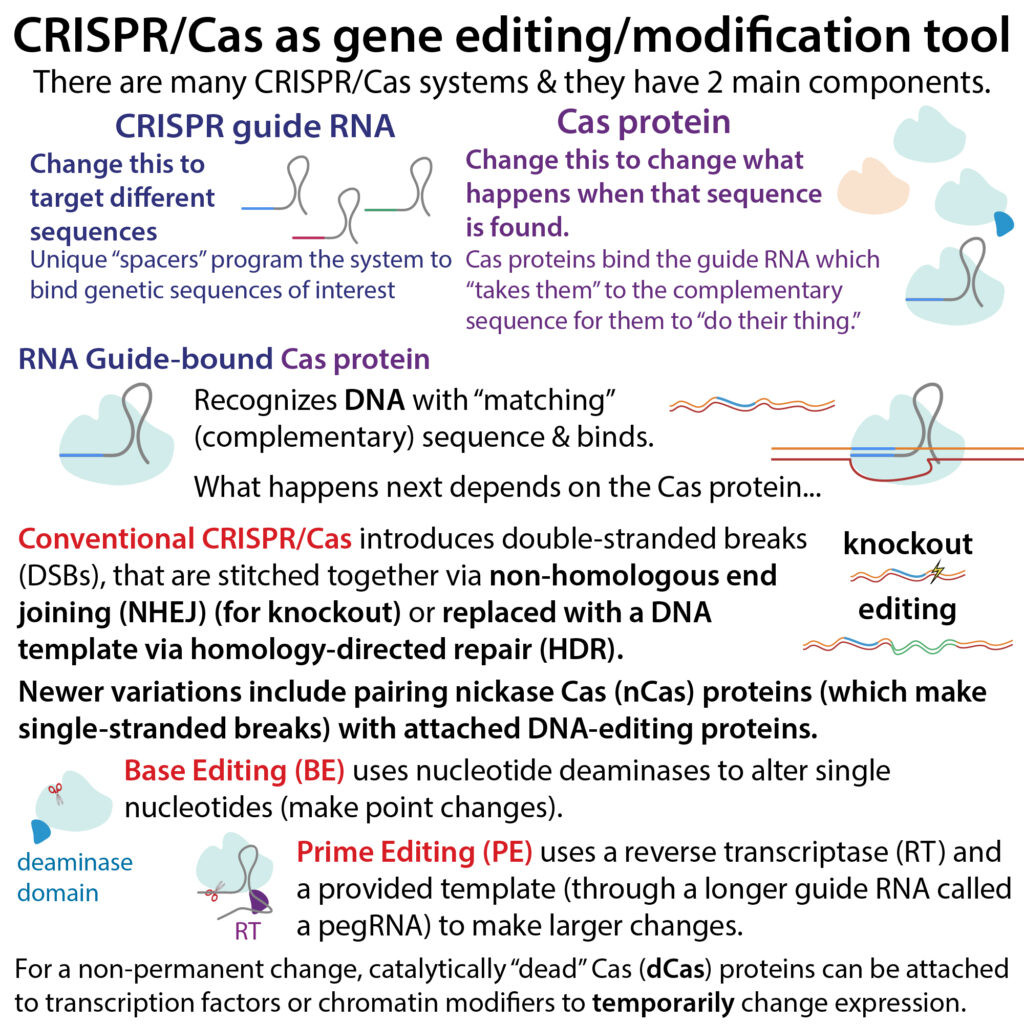
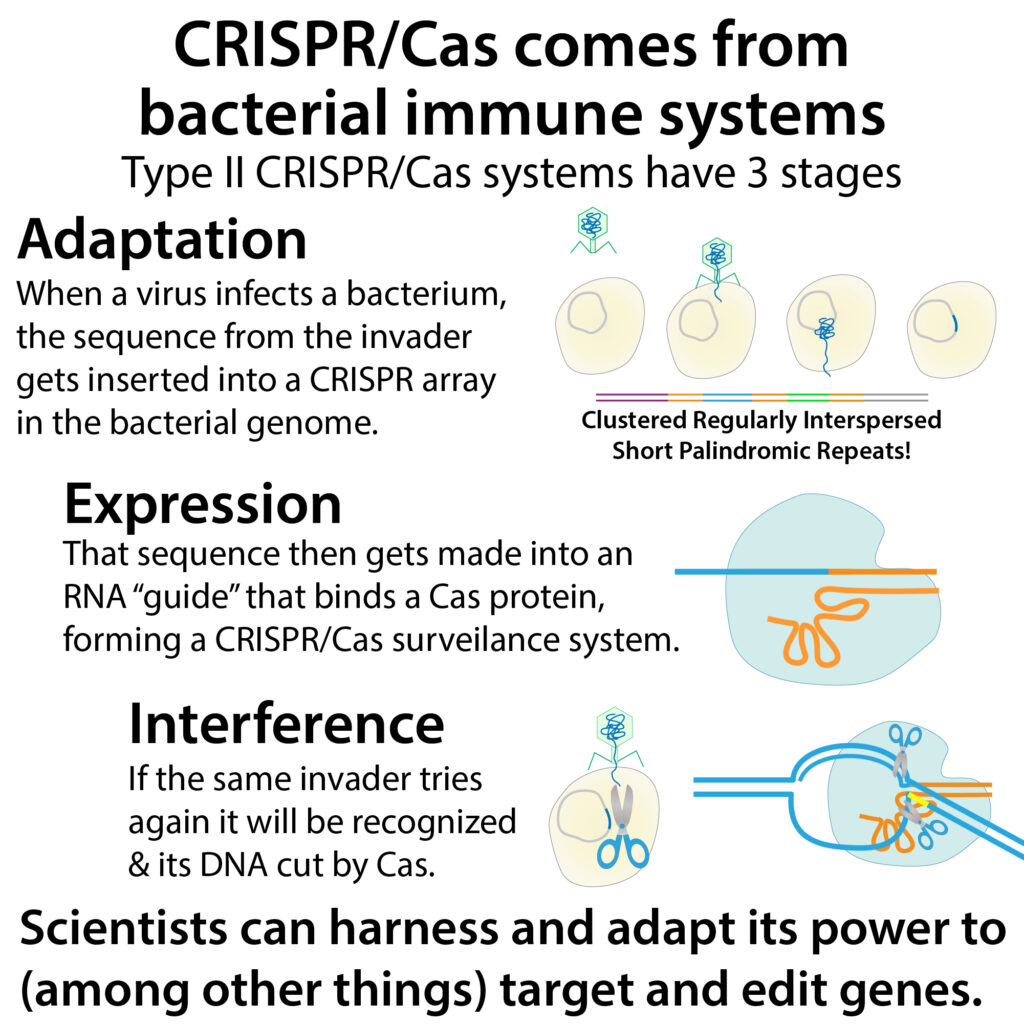
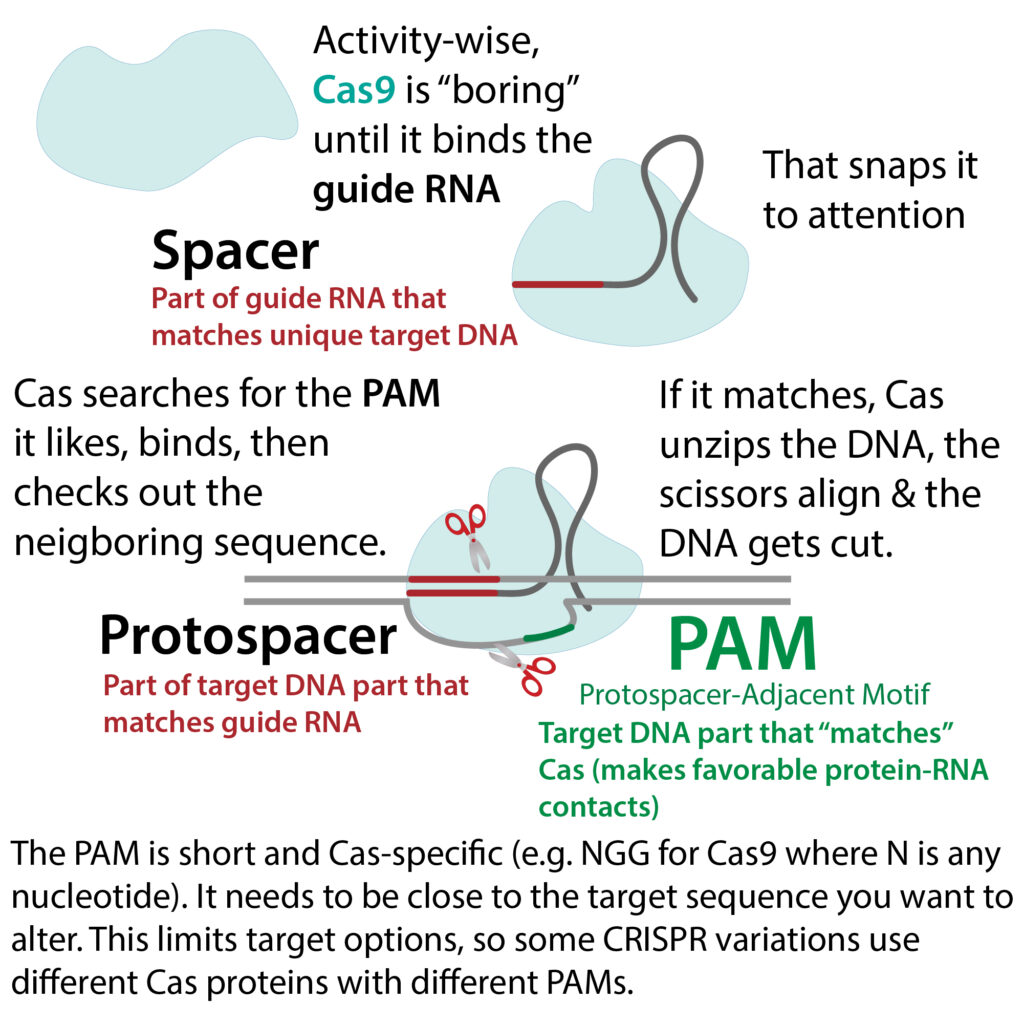
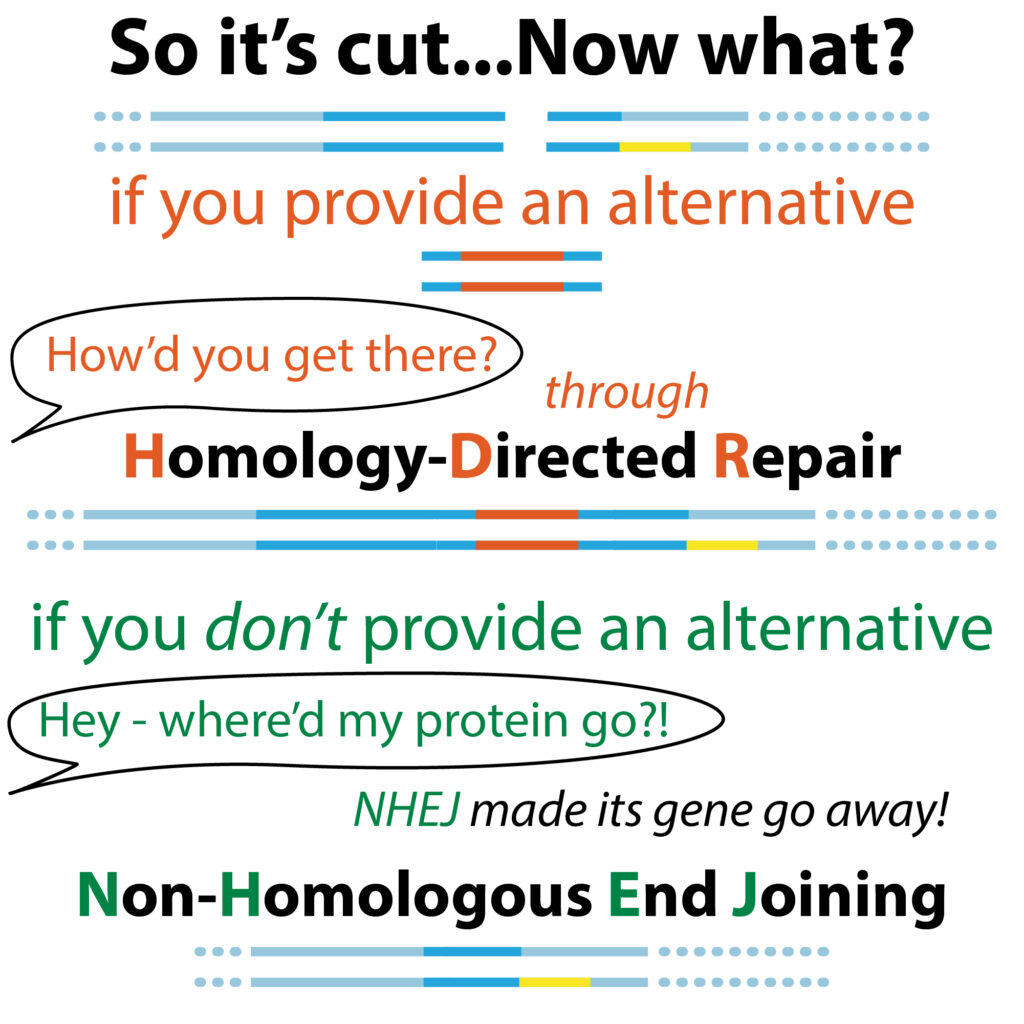
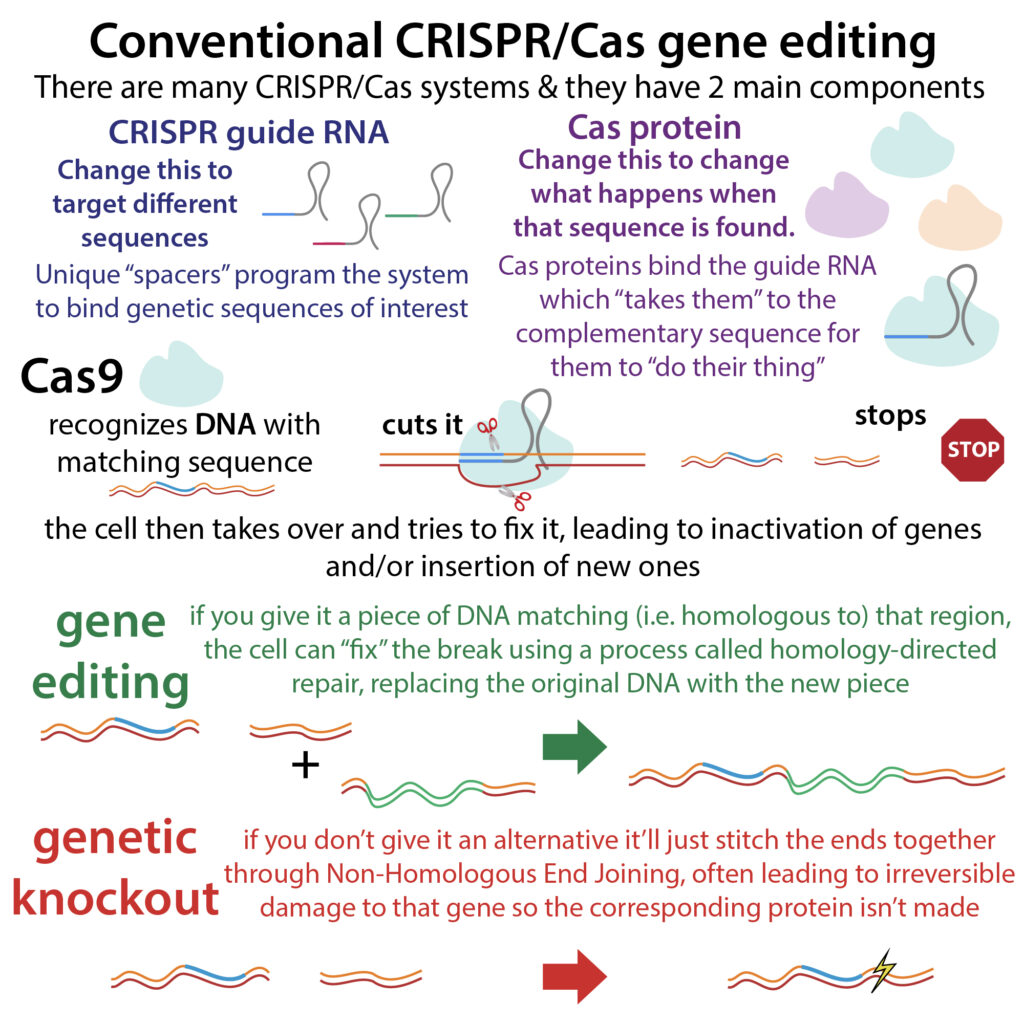
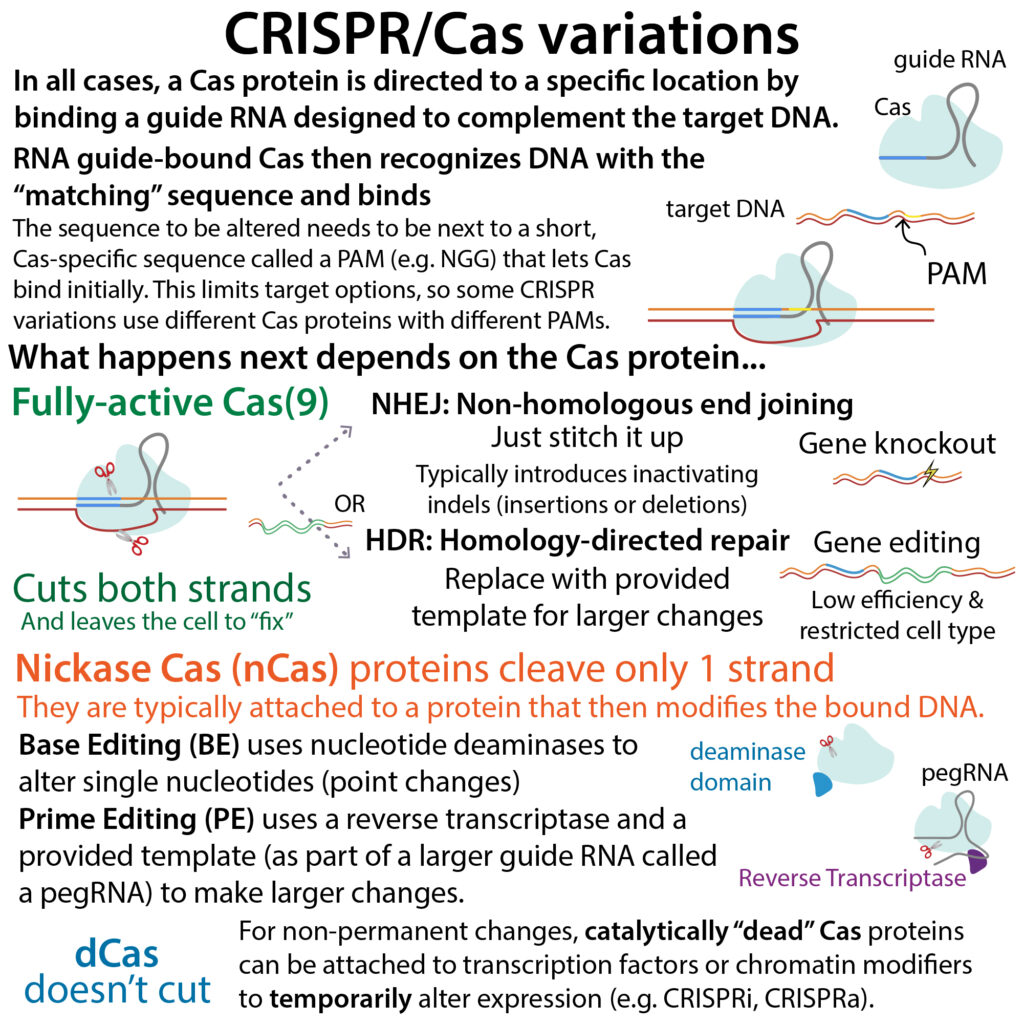
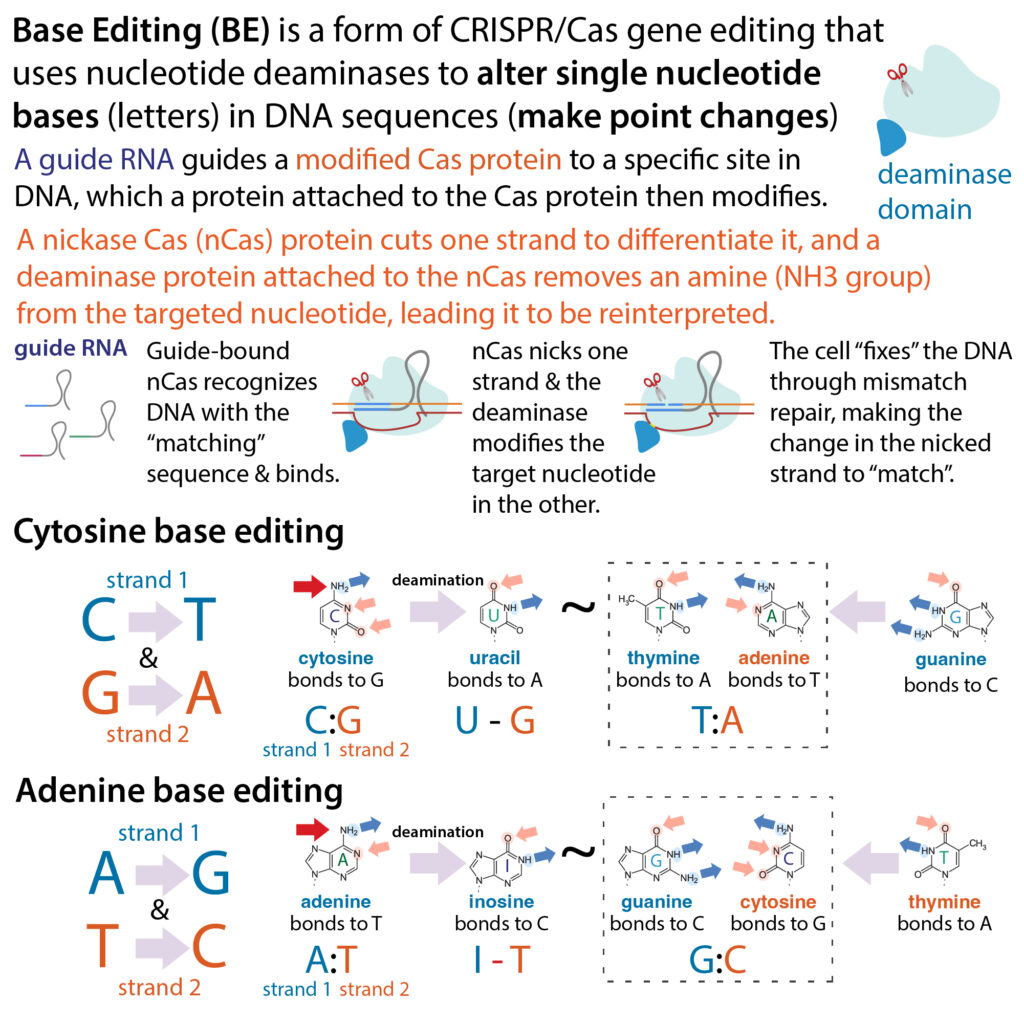
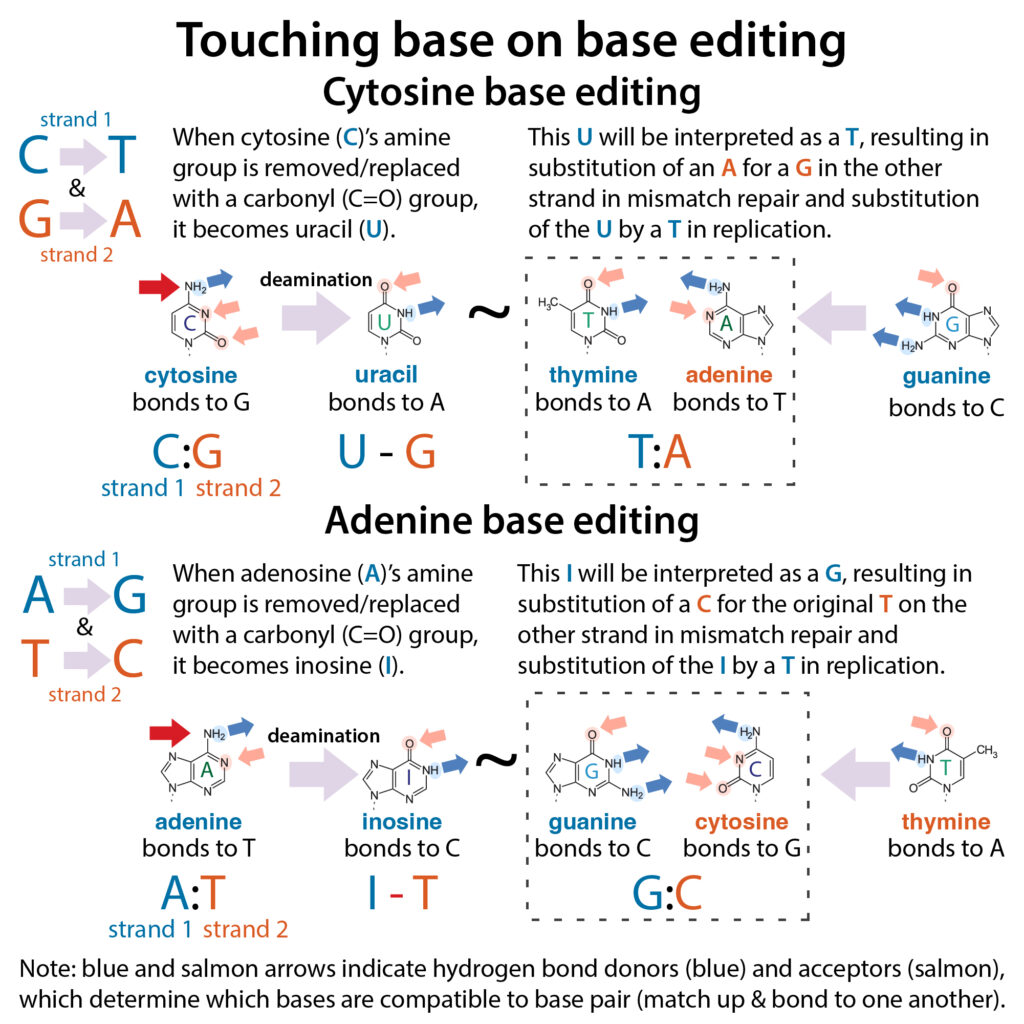
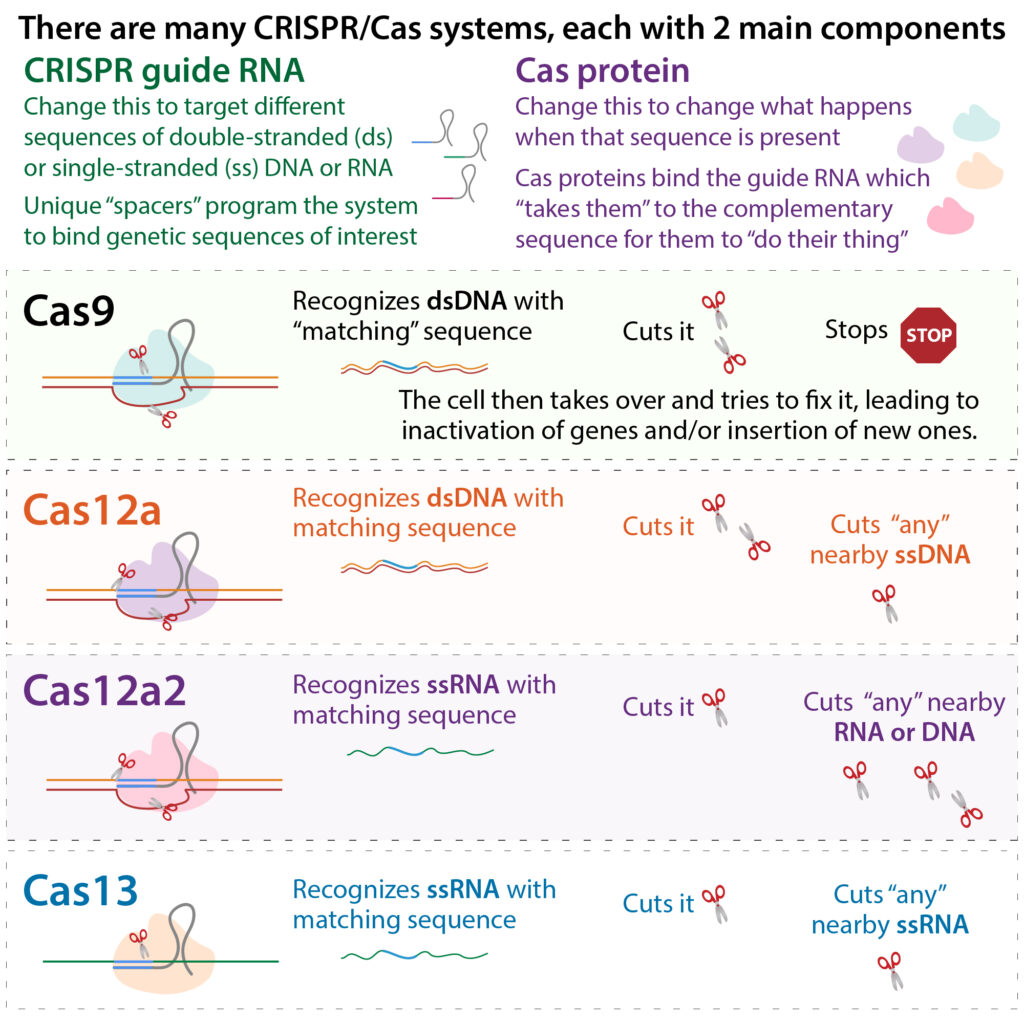
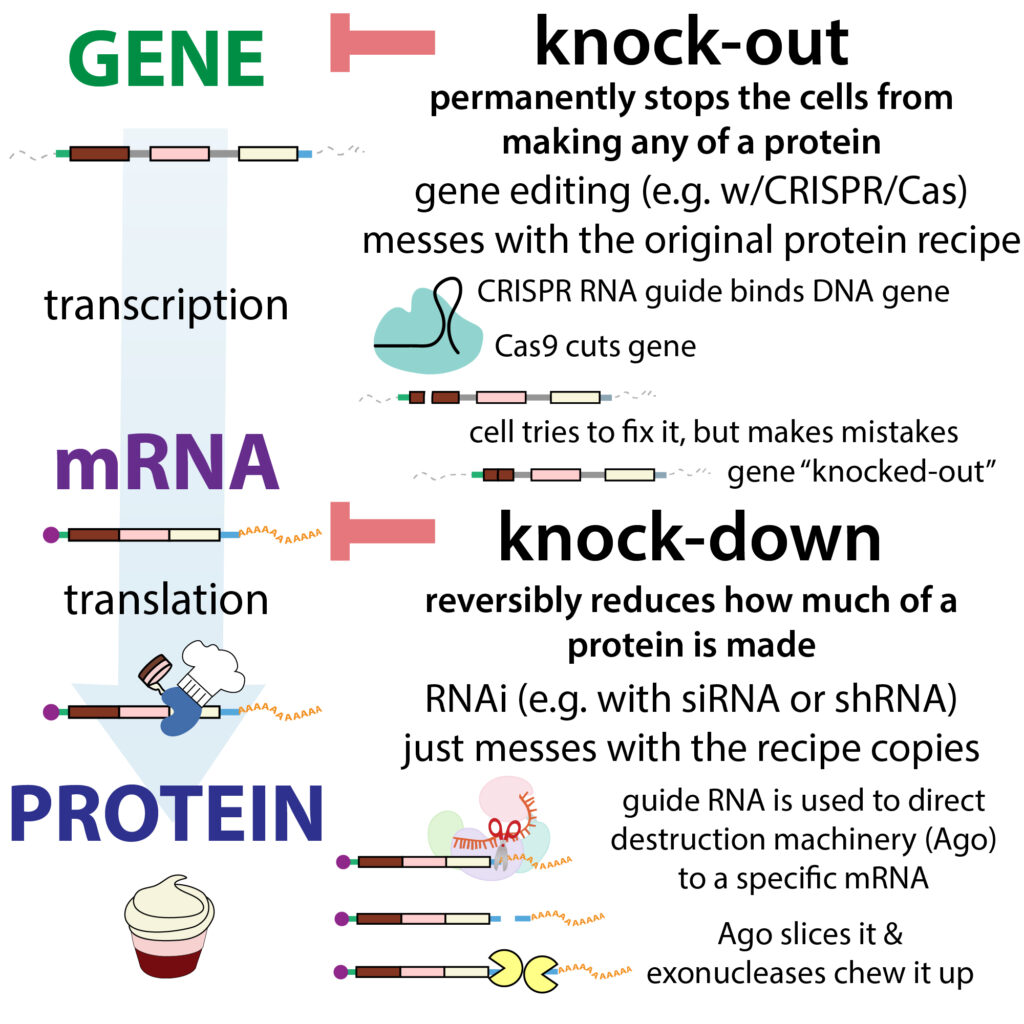
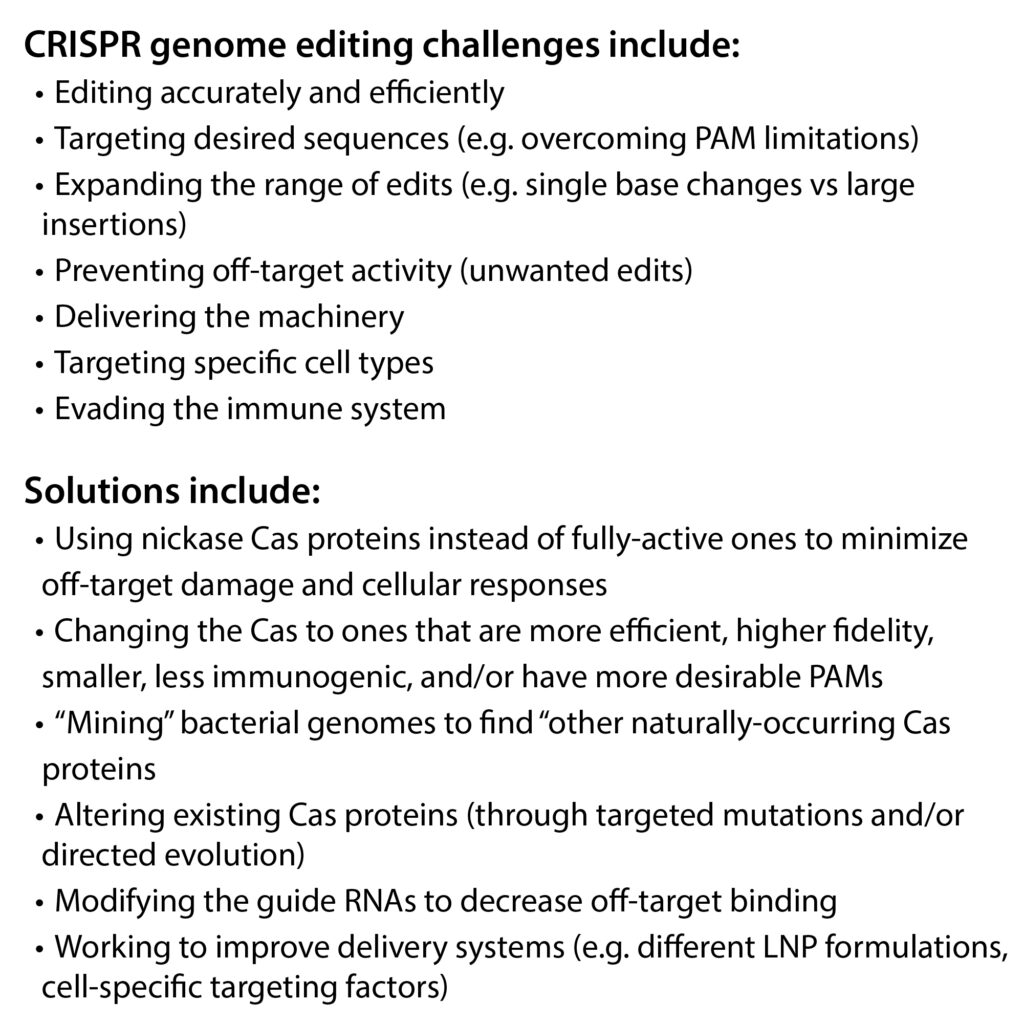
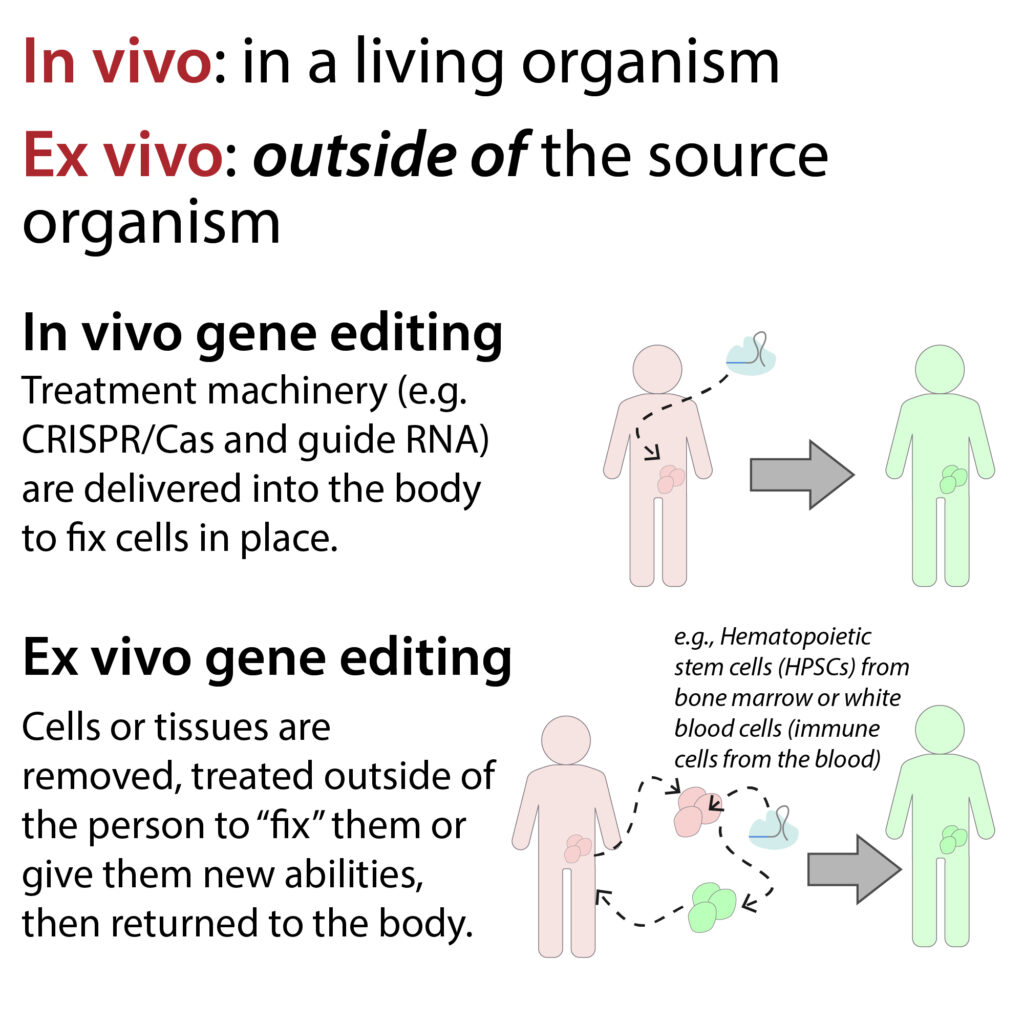
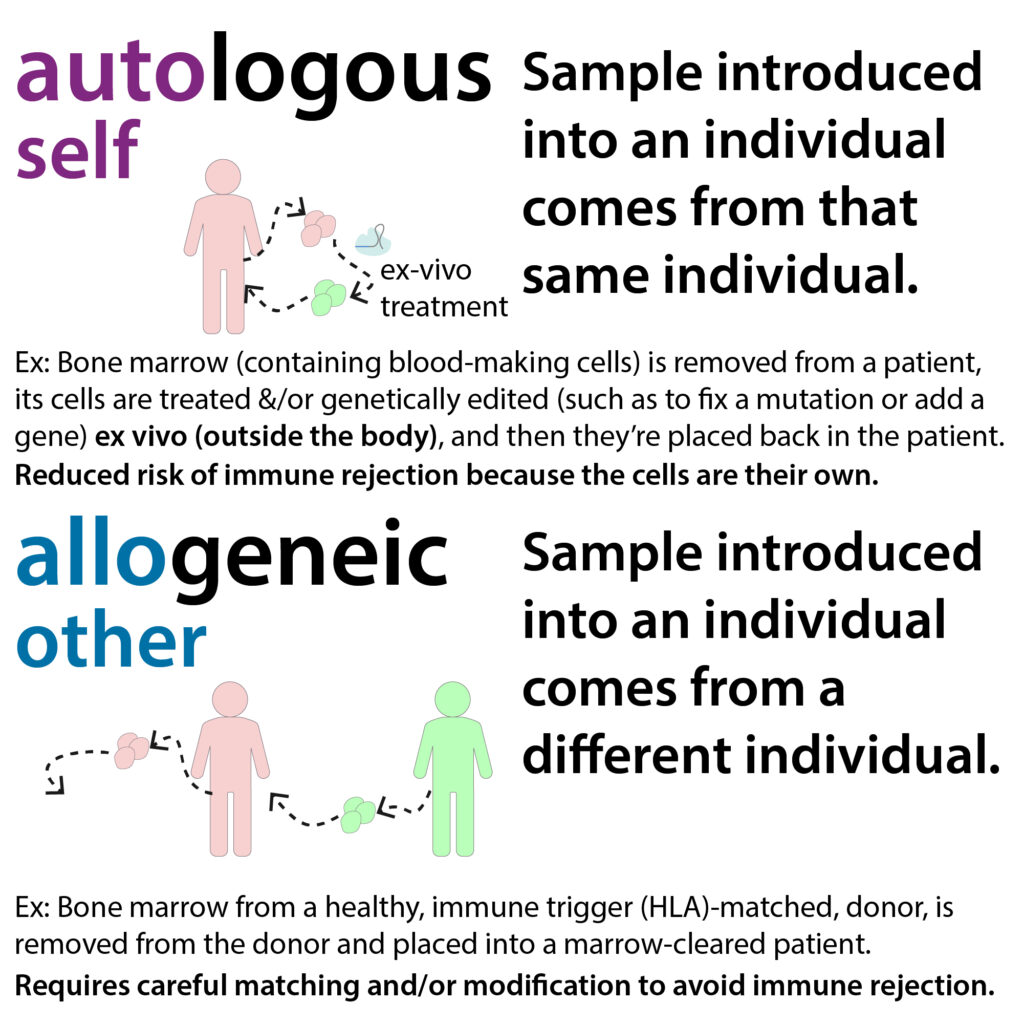
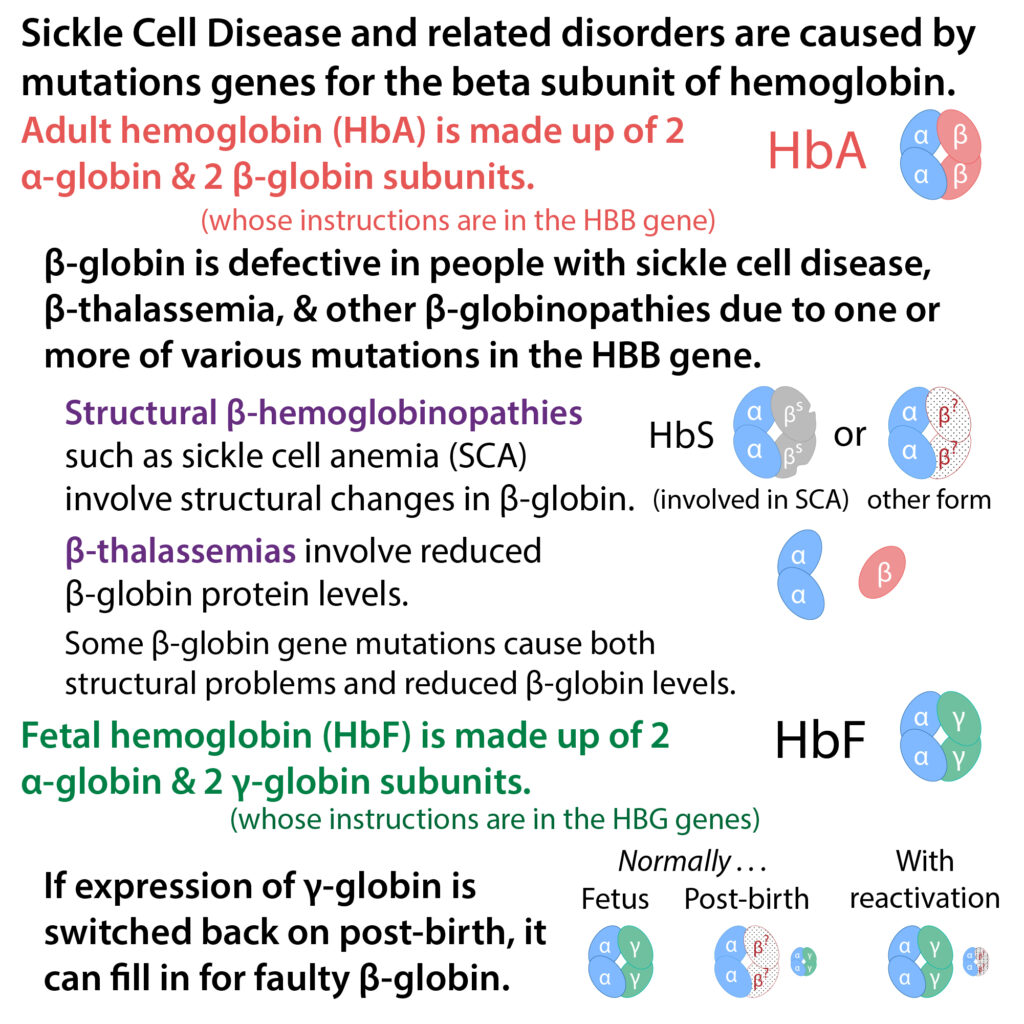
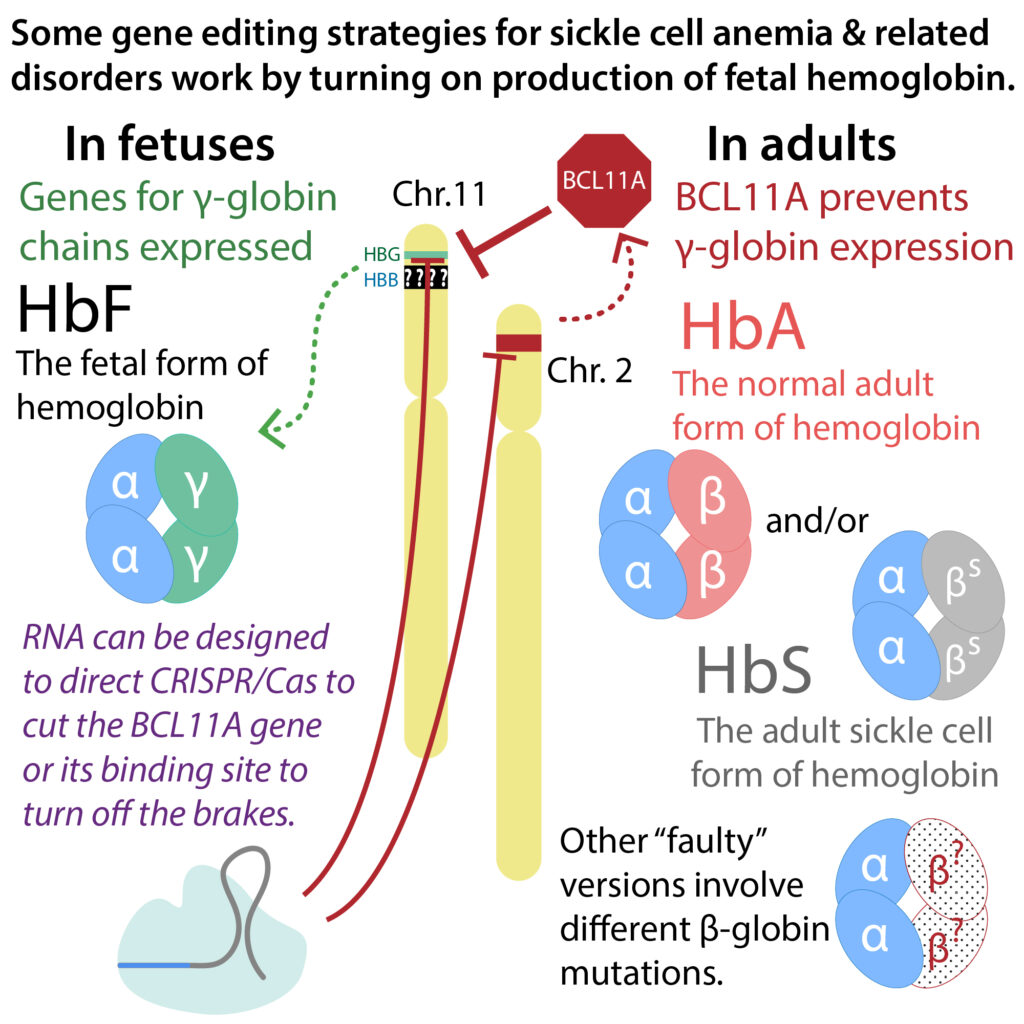
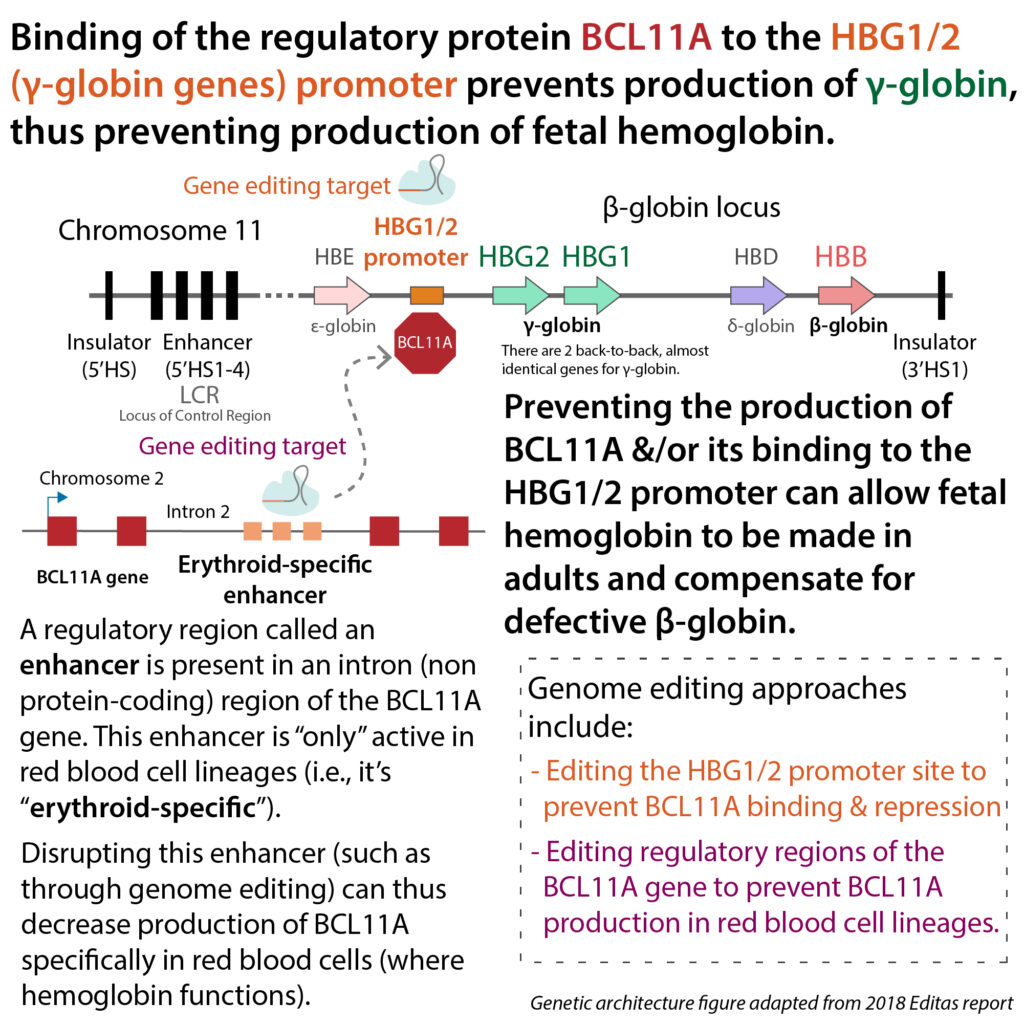
Associated posts
Articles
- Some key CRISPR/Cas research papers:
- Classical CRISPR
- Jínek et al. A programmable dual-RNA–guided DNA endonuclease in adaptive bacterial immunity. Science 2012, 337(6096), 816-821. https://doi.org/10.1126/science.1225829
- Mali et al. RNA-Guided Human Genome Engineering via Cas9. Science 2013, 339 (6121), 823–826. https://doi.org/10.1126/science.1232033.
- Cong et al. Multiplex Genome Engineering Using CRISPR/Cas Systems. Science 2013, 339 (6121), 819–823. https://doi.org/10.1126/science.1231143
- Jinek, M.; East, A.; Cheng, A.; Lin, S.; Ma, E.; Doudna, J. RNA-Programmed Genome Editing in Human Cells. eLife 2013, 2, e00471. https://doi.org/10.7554/eLife.00471.
- Base editing
- Komor et al. Programmable Editing of a Target Base in Genomic DNA without Double-Stranded DNA Cleavage. Nature 2016, 533 (7603), 420–424. https://doi.org/10.1038/nature17946.
- Gaudelli et al. Programmable Base Editing of A•T to G•C in Genomic DNA without DNA Cleavage. Nature 2017, 551 (7681), 464–471. https://doi.org/10.1038/nature24644.
- Prime editing
- Anzalone, A. V.; Randolph, P. B.; Davis, J. R.; Sousa, A. A.; Koblan, L. W.; Levy, J. M.; Chen, P. J.; Wilson, C.; Newby, G. A.; Raguram, A.; Liu, D. R. Search-and-Replace Genome Editing without Double-Strand Breaks or Donor DNA. Nature 2019, 576 (7785), 149–157. https://doi.org/10.1038/s41586-019-1711-4.
- Classical CRISPR
- Need to take genetic diversity into account:
- Cancellieri et al., Human Genetic Diversity Alters Off-Target Outcomes of Therapeutic Gene Editing. Nat Genet 2023, 55 (1), 34–43. https://doi.org/10.1038/s41588-022-01257-y.
- Saha, K. Accounting for Diversity in the Design of CRISPR-Based Therapeutic Genome Editing. Nat Genet 2023, 55 (1), 6–7. https://doi.org/10.1038/s41588-022-01272-z.
- Perspective articles & reviews:
- Pacesa, M.; Pelea, O.; Jinek, M. Past, Present, and Future of CRISPR Genome Editing Technologies. Cell 2024, 187 (5), 1076–1100. https://doi.org/10.1016/j.cell.2024.01.042.
- Chehelgerdi et al. Comprehensive Review of CRISPR-Based Gene Editing: Mechanisms, Challenges, and Applications in Cancer Therapy. Molecular Cancer 2024, 23 (1), 9. https://doi.org/10.1186/s12943-023-01925-5.
- Macarrón et al. Revolutionizing in Vivo Therapy with CRISPR/Cas Genome Editing: Breakthroughs, Opportunities and Challenges. Front. Genome Ed. 2024, 6. https://doi.org/10.3389/fgeed.2024.1342193.
- Mawson et al. Precision Genome Editing with DNA Base Editors. Nat Rev Methods Primers 2026, 6 (1), 23. https://doi.org/10.1038/s43586-026-00478-3.
- Zhao et al. Prime Editing: Advances and Therapeutic Applications. Trends in Biotechnology 2023, 41 (8), 1000–1012. https://doi.org/10.1016/j.tibtech.2023.03.004.
- Murray, Harrison, and Scholefield. Prime Editing: Therapeutic Advances and Mechanistic Insights. Gene Ther 2025, 32 (2), 83–92. https://doi.org/10.1038/s41434-024-00499-1.
- Ahrens-Nicklas and Musunuru. How to Create Personalized Gene Editing Platforms: Next Steps toward Interventional Genetics. The American Journal of Human Genetics 2025, 112 (12), 2826–2829. https://doi.org/10.1016/j.ajhg.2025.10.006.
- Tardif, M.; Saby, M.; Forté, S.; Pincez, T. The Journey of Gene Therapy in Sickle Cell Disease: How Molecular Advances Meet Clinical Care. Cells 2026, 15 (10), 939. https://doi.org/10.3390/cells15100939.
- Levesque, S.; Bauer, D. E. CRISPR-Based Therapeutic Genome Editing for Inherited Blood Disorders. Nat Rev Drug Discov 2025, 24 (12), 907–925. https://doi.org/10.1038/s41573-025-01236-y.
- Tragic cautionary tale:
- Exclusive: Death of girl in Chinese gene-editing trial was never made public. https://www.science.org/content/article/exclusive-death-girl-chinese-gene-editing-trial-was-never-made-public
- We Only Know Her as Mei. https://www.science.org/content/blog-post/we-only-know-her-mei
Webpage
- addgene CRISPR guide: https://www.addgene.org/guides/crispr/
Books
- As Gods: A Moral History of the Genetic Age by Matthew Cobb, 2018
- Editing Humanity: The CRISPR Revolution and the New Era of Genome Editing by Kevin Davies, 2020
- CRISPR People: The Science and Ethics of Editing Humans by Henry Greely, 2021
- A Crack in Creation: Gene Editing and the Unthinkable Power to Control Evolution by Jennifer Doudna and Samuel H. Sternberg, 2017
- The Codebreaker: Jenifer Doudna, Gene Editing, and the Future of the Human Race by Walter Isaacson, 2021
Cell therapies
Outline
- Cell therapies may be autologous (patient is given “back” cells taken from their body either to store or to modify ex vivo) or allogeneic (patient is given cells from another person).
- A central challenge to allogeneic therapies is rejection from the immune system. Scientists are working to reduce immune system triggers to make more “generic” cell sources to make cell therapies more widely accessible.
- Stem cells are cells with the potential to develop (differentiate) into multiple types of cells.
- Totipotent stem cells can develop into “any” cell type.
- Pluripotent stem cells can develop into many, but not all, cell types.
- Multipotent stem cells can develop into several cell types within a specific cell family.
- iPSCs (induced Pluripotent Stem Cells) are stem cells made from non-stem cells (typically skin cells) taken from a patient and treated (via introduction of genes for regulatory proteins called transcription factors or by exposure to various chemicals) to get them to revert back to stemness so they can then be treated with cell-type-specific signals to get them to differentiate into desired cell types.
- A common cell therapy these days is CAR-T cell therapy. CAR-T stands for Chimeric Antigen Receptor-T cell, and it refers to a type of immune cell that has been genetically altered to bind to cancer cell-specific molecules to get the immune system to attack cancer cells. In CAR-T cell therapy, T cells are removed from a patient’s blood in a process called leukapheresis, genetically modified ex vivo (outside the body), then returned.
Graphics
Click on an image to enlarge.
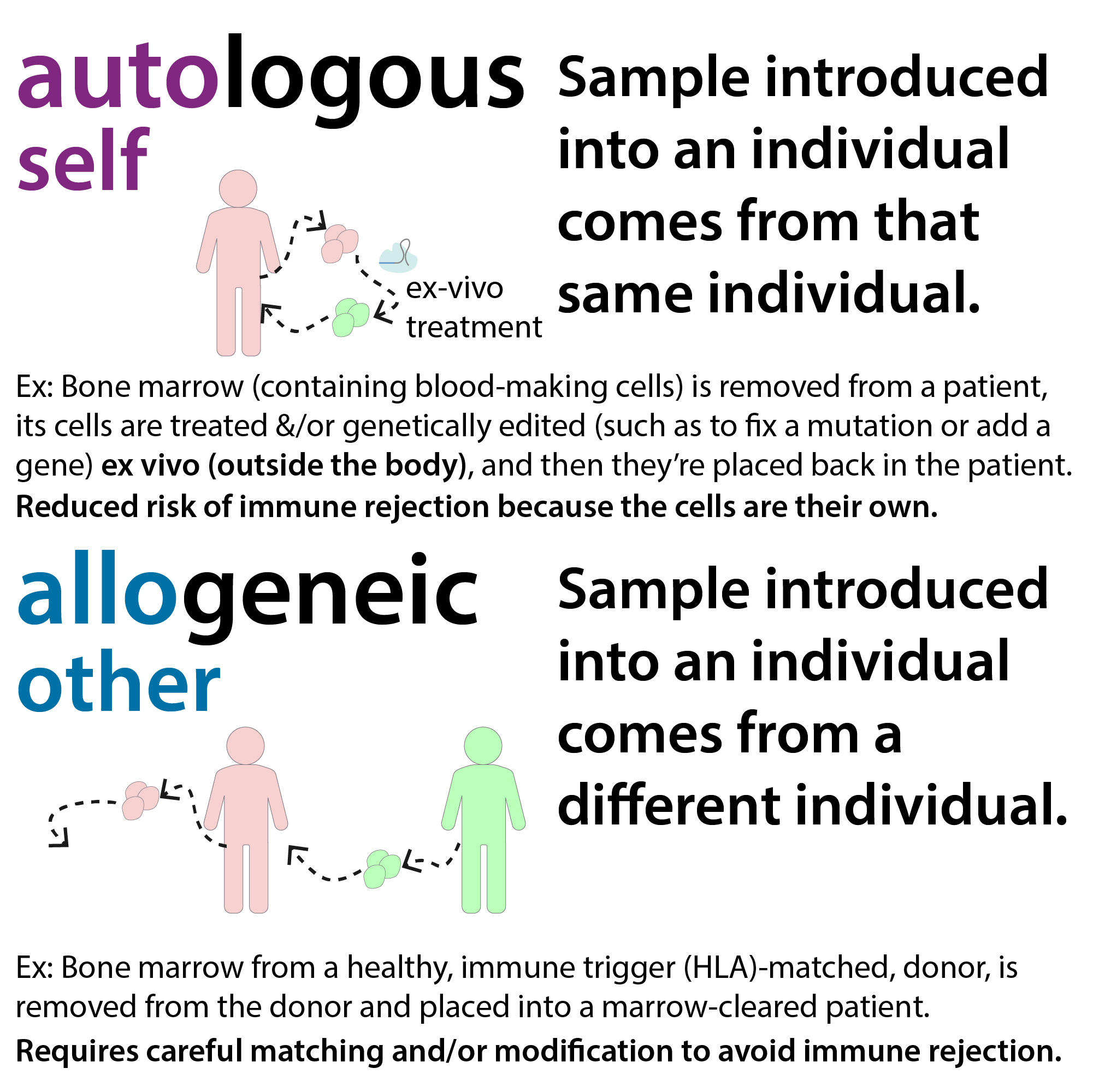
Articles
- Deuse and Schrepfer. Progress and Challenges in Developing Allogeneic Cell Therapies. Cell Stem Cell2025, 32 (4), 513–528. https://doi.org/10.1016/j.stem.2025.03.004.
- Butterfield et al. Gene Regulation Technologies for Gene and Cell Therapy. Molecular Therapy 2025, 33 (5), 2104–2122. https://doi.org/10.1016/j.ymthe.2025.04.004.
- Jones et al. Is Allogeneic Transplantation for Sickle Cell Disease Still Relevant in the Era of Gene Therapy? Blood Adv 2025, 9 (4), 877–883. https://doi.org/10.1182/bloodadvances.2024013693.
- Casirati et al.Epitope Editing Enables Targeted Immunotherapy of Acute Myeloid Leukaemia. Nature 2023, 621 (7978), 404–414. https://doi.org/10.1038/s41586-023-06496-5.
- CAR-T cell therapy:
- Bot et al. In Vivo Chimeric Antigen Receptor (CAR)-T Cell Therapy. Nat Rev Drug Discov 2026, 25 (2), 116–137. https://doi.org/10.1038/s41573-025-01291-5.
- Li et al. Emerging Trends in Clinical Allogeneic CAR Cell Therapy. Med 2025, 6 (8). https://doi.org/10.1016/j.medj.2025.100677.
- Li et al. Managing Allorejection in Off-the-Shelf CAR-Engineered Cell Therapies. Molecular Therapy 2025, 33 (6), 2368–2390. https://doi.org/10.1016/j.ymthe.2024.11.035.
- Patel et al. Concept to Cure: The Evolution of CAR-T Cell Therapy. Molecular Therapy 2025, 33 (5), 2123–2140. https://doi.org/10.1016/j.ymthe.2025.03.005.
- Zugasti et al. CAR-T Cell Therapy for Cancer: Current Challenges and Future Directions. Sig Transduct Target Ther 2025, 10 (1), 210. https://doi.org/10.1038/s41392-025-02269-w.
Documentary
- Of Medicine and Miracles, 2022
- Tells the story of the development of CAR-T cell therapy and how it cured Emily Whitehead of leukemia.
- Note: more on Emily Whitehead’s story here: The Incredible Story of Emily Whitehead & CAR T-Cell Therapy : Oncology Times. Ovid. https://doi.org/10.1097/01.COT.0000824668.24475.b0
- Tells the story of the development of CAR-T cell therapy and how it cured Emily Whitehead of leukemia.
Books
- Zanders, E. D. Twenty-First Century Drug Discovery: An Expanding Landscape; Springer Nature Switzerland: Cham, 2025. https://doi.org/10.1007/978-3-031-93949-5.
- The Breakthrough: Immunotherapy and the race to cure cancer by Charles Graeber, 2018
- From One Cell: A journey into life’s origins and the future of medicine by Ben Stanger, 2023
- Good Blood: A Doctor, a Donor, and the Incredible Breakthrough That Saved Millions of Babies by Julian Guthrie, 2020
- Living Medicine: Don Thomas, Marrow Transplantation, and the Cell Therapy Revolution by Fred Appelbaum, 2023
- Nine Pints: A Journey Through the Money, Medicine, and Mysteries of Blood by Rose George, 2018
- The Song of the Cell: An Exploration of Medicine & the New Human by Siddhartha Mukherjee, 2024
Cancer immunotherapy – combines many modalities
Outline
- This overlaps with multiple therapeutic modalities, so I thought I’d give it its own section . . .
- The immune system is really complicated, and I’m way oversimplifying things, but the basic idea of cancer immunotherapy (aka immune-oncology) is to get a person’s immune system to attack their cancer cells. This is challenging because cancer cells are “just” “corrupted” versions of normal self cells. And peoples’ immune systems have multiple safeguards (checkpoints) to prevent their immune systems from attacking normal self cells. That’s super important for preventing autoimmune diseases. But cancer cells can take advantage of these checkpoints to convince the immune system to back off and not attack them. Even if the cancer cells are presenting/displaying signs on their surfaces indicating they’ve gone rogue (such as “neoantigens” – pieces of proteins that healthy cells don’t make but cancer cells make because of the accumulation of lots of mutations).
- Cancer immunotherapy often seeks to:
- Prevent the immune system from getting the “don’t attack” signals from cancer cells (often through the use of checkpoint inhibitors) and/or
- Get the immune system to receive and/or recognize “attack” signals from cancer cells (such as through the use of personalized tumor vaccines or CAR-T cells)
- A common cell therapy these days is CAR-T cell therapy. CAR-T stands for Chimeric Antigen Receptor-T cell, and it refers to a type of immune cell that has been genetically altered to bind to cancer cell-specific molecules to get the immune system to attack cancer cells. In CAR-T cell therapy, T cells are removed from a patient’s blood in a process called leukapheresis, genetically modified ex vivo (outside the body), then returned.
Checkpoint inhibition
- Immune checkpoints are safeguards that tell the immune system to back off and not attack a cell. Typically, a type of immune cell receptor sticking off an immune cell surface will bind to a “matching” partner (ligand) displayed on the surface of a normal cell. Kinda like a lock (receptor) and key (ligand) but not quite so simplistic, because the molecules typically change shape a bit when they bind (induced fit).
- A couple of the main immune checkpoints are:
- PD-1 (Programmed Cell Death Protein 1) on T cells binding to PD-L1/PD-L2 on other cells
- CTLA-4 (Cytotoxic T-Lymphocyte-Associated Protein 4) on dendritic cells (another type of immune cell) binding to CD80/CD86 on other cells
- A couple of the main immune checkpoints are:
- Immune Checkpoint Inhibitors (ICIs) prevent the above interactions, thereby preventing the immune system from getting the “hey, back off dude!” signal. They’re often in the form of monoclonal antibodies that bind to the receptor or ligand, although alternative blocking molecules and other strategies are being pursued to get around some of the challenges with use of monoclonal antibodies.
- A few prominent examples of monoclonal antibody-based ICIs:
- Anti-PD-1 antibodies (antibodies that bind to PD-1 on T cells): pembrolizumab (Keytruda), nivolumab, and cemiplimab
- Anti-CTLA-4 antibodies (antibodies that bind to CTLA-4 on dendritic cells): atezolizumab, avelumab, and durvalumab
- A few prominent examples of monoclonal antibody-based ICIs:
Cancer vaccines
- Cancer vaccines typically aim to train a person’s immune system to recognize cancer cells as foreign and thus attack it, either as treatment, or to prevent cancer recurrence. Sometimes this is done by taking advantage of the fact that cancer cells often display different molecules on their surfaces than do healthy cells. These “new” molecules are called neoantigens and they can arise due to DNA mutations causing amino acid substitutions, mis-spliced RNA, etc. The mutations in a cancer cell vary from patient to patient, and thus so do their neoantigens.
- Note: There are often early, “driver” mutations that are shared by many cancers, but those mutations often turn off brakes and cell safety nets to allow for the subsequent below-the-radar accumulation of tons of random mutations that can lead to lots of neoantigens being made, but different ones in different people.
- Personalized cancer vaccines train a person’s immune system to recognize the neoantigens associated with their tumor. They may be used in conjunction with a checkpoint inhibitor so that the immune cells, once alerted, don’t get the signal to back off.
- One example is the mRNA vaccine intismeran autogene, in development by moderna and Merck for use in combination with the checkpoint inhibitor Keytruda (pembrolizumab), a monoclonal antibody that binds to PD-1, thereby blocking PD-1’s binding to PD-L1 and thus preventing T cells from getting the “hey back off dude” message.
- In this strategy, a patient’s tumor cells are analyzed to figure out what neoantigens they make. Then, mRNAs with the instructions for (i.e. encoding) multiple of those neoantigens are synthesized (made in the lab), wrapped up (encapsulated) in a nice oily bubble (a lipid nanoparticle, LNP) and delivered to the patient, along with the checkpoint inhibitor.
- One example is the mRNA vaccine intismeran autogene, in development by moderna and Merck for use in combination with the checkpoint inhibitor Keytruda (pembrolizumab), a monoclonal antibody that binds to PD-1, thereby blocking PD-1’s binding to PD-L1 and thus preventing T cells from getting the “hey back off dude” message.
CAR-T cell therapy
- CAR-T stands for Chimeric Antigen Receptor – T cells and they’re a type of immune cell called a T cell (T lymphocyte) that has been genetically edited to have receptor molecules optimized for binding to molecules characteristic of some types of cancer cells and subsequently setting off powerful immune responses.
- Basically, CAR-T cell therapy genetically equips T cells with the ability to recognize and attack specific types of cells (e.g. certain cancer cells or hyperactive immune cells) without needing co-stimulatory signals, and typically recognizing in-tact surface proteins (via an antibody part of the CAR) rather than presented peptides.
- Chimeric Antigen Receptors combine the crucial parts of multiple signaling molecules into a single one, with specificity for a cell marker of interest. The genetic instructions for making them CAR are delivered to T cells (typically ex vivo (outside the body – more on this below.)).
- Rather than take advantage of neoantigens, which are patient-specific, these therapies typically equip patient’s cells with more “generic” CARs that target the T cells to molecules that are shared by many types of cancer cells and/or cells of the specific type that the cancer has taken root in. These molecules are often also shared by healthy cells, but the key is that these molecules are either overexpressed (too much is made) in cancer cells, or the body will still be able to repopulate the normal cells.
- For example, he first approved CAR-T therapy (Novartis’ Kymriah, approved in 2017) targets the B-cell marker CD19 to treat B-cell cancers. Because it spares stem cells, the patients can make new, healthy, B cells.
- Basically, CAR-T cell therapy genetically equips T cells with the ability to recognize and attack specific types of cells (e.g. certain cancer cells or hyperactive immune cells) without needing co-stimulatory signals, and typically recognizing in-tact surface proteins (via an antibody part of the CAR) rather than presented peptides.
- At present, CAR-T cell therapy is performed ex vivo – T cells are removed from a patient’s blood in a process called leukapheresis, genetically modified ex vivo (outside the body), then returned. In this way, the therapies are “personalized” in the sense that each person’s cells have to be genetically engineered separately. However, “any” patient’s cells can be genetically engineered in the same way (the same CAR-encoding genetic instructions can be delivered) as opposed to personalized vaccines that have to be re-designed for each patient.
- There is a lot of research underway to make CAR-T therapies more widely, rapidly, and cheaply accessible. A couple strategies include:
- Adapting CAR-T therapy for in-vivo administration (e.g., by using a viral vector or LNP to deliver the genetic instructions for making the CAR in the T cells in the body)
- Making “generic”, “off-the-shelf” CAR-T cells that lack signals that would lead to a person’s immune system seeing the CAR-T cells themselves as foreign and attacking them, even if those CAR-T cells were designed from cells from another person (allogeneic).
Graphics
Click on an image to enlarge.
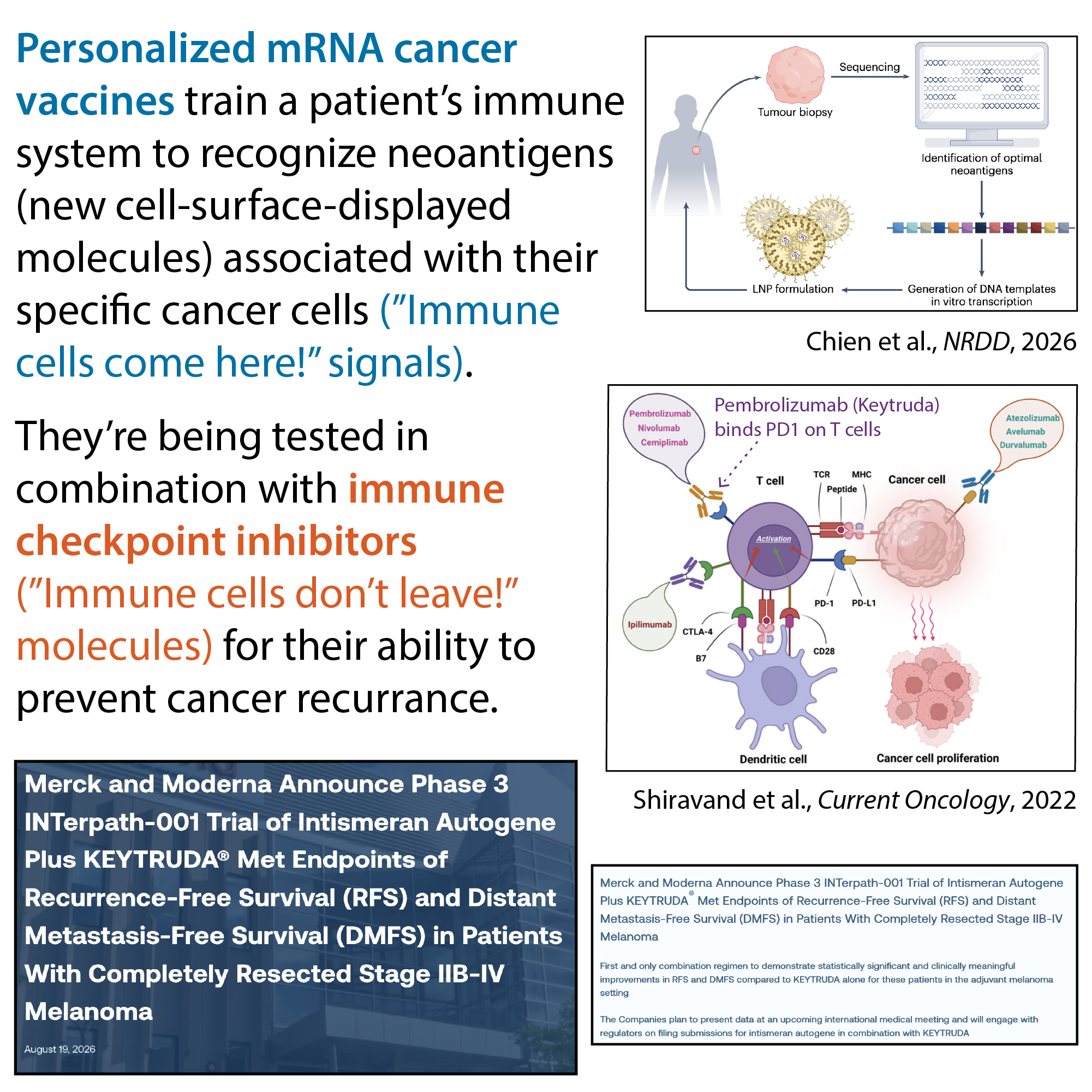
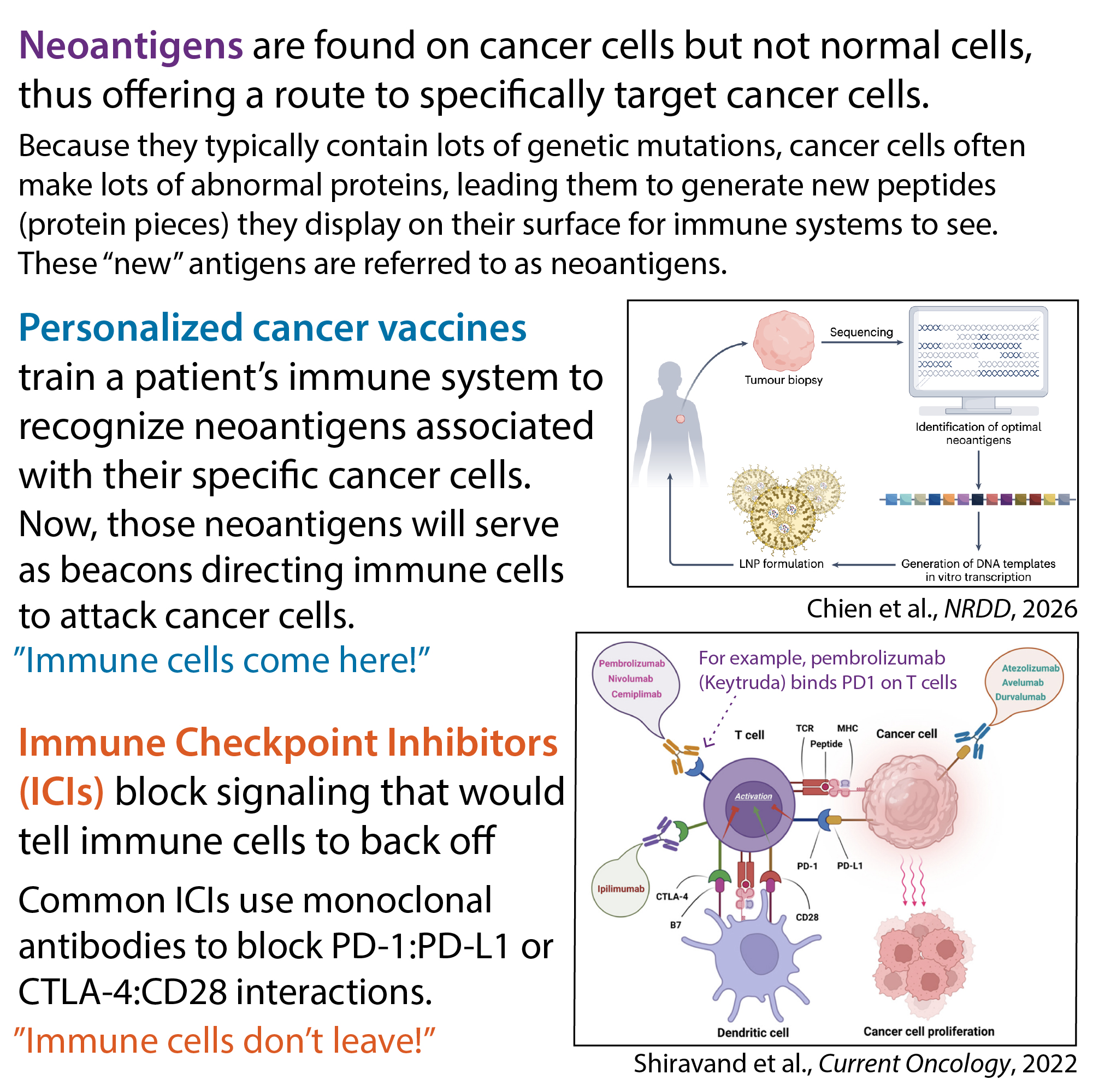
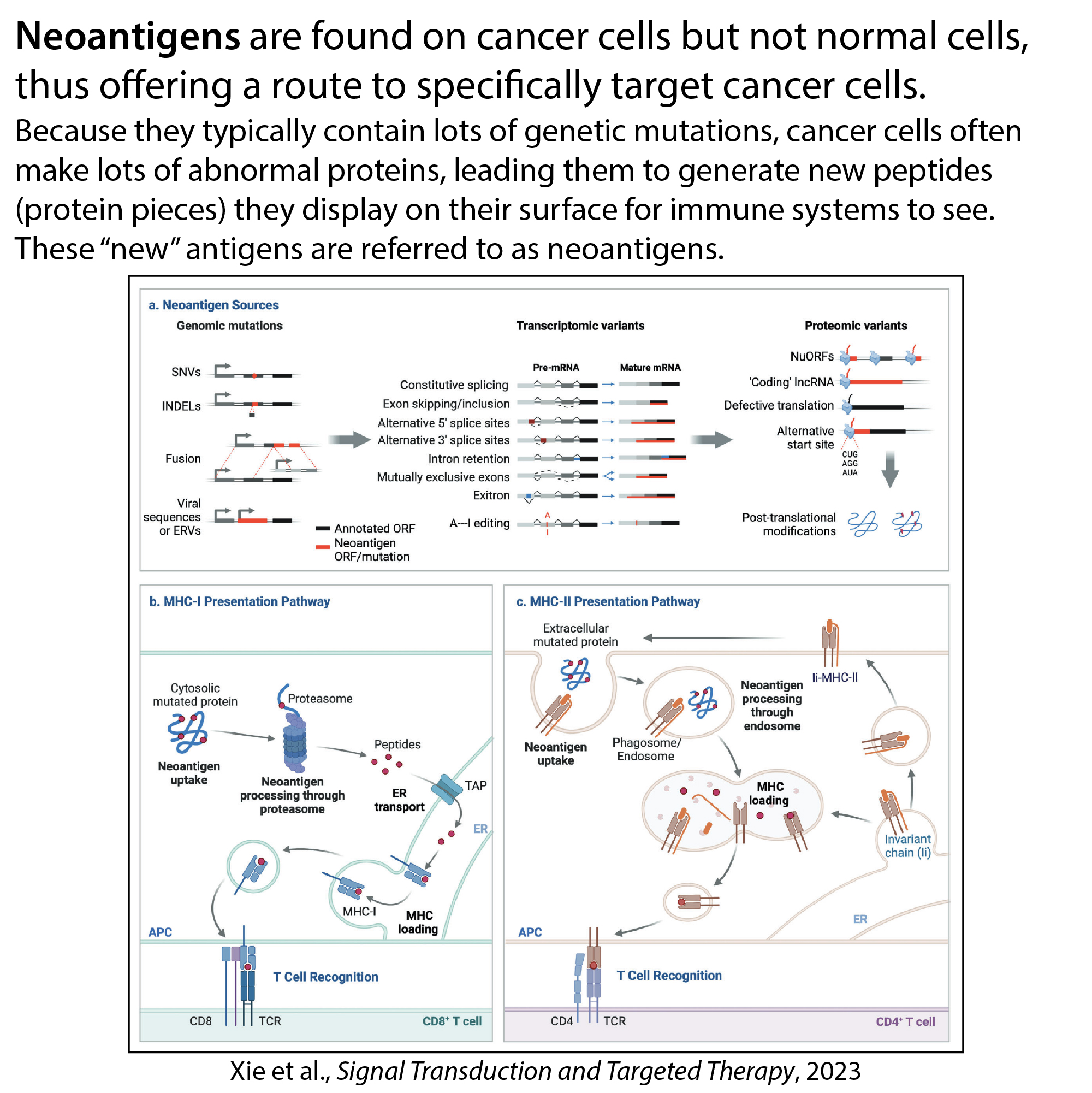
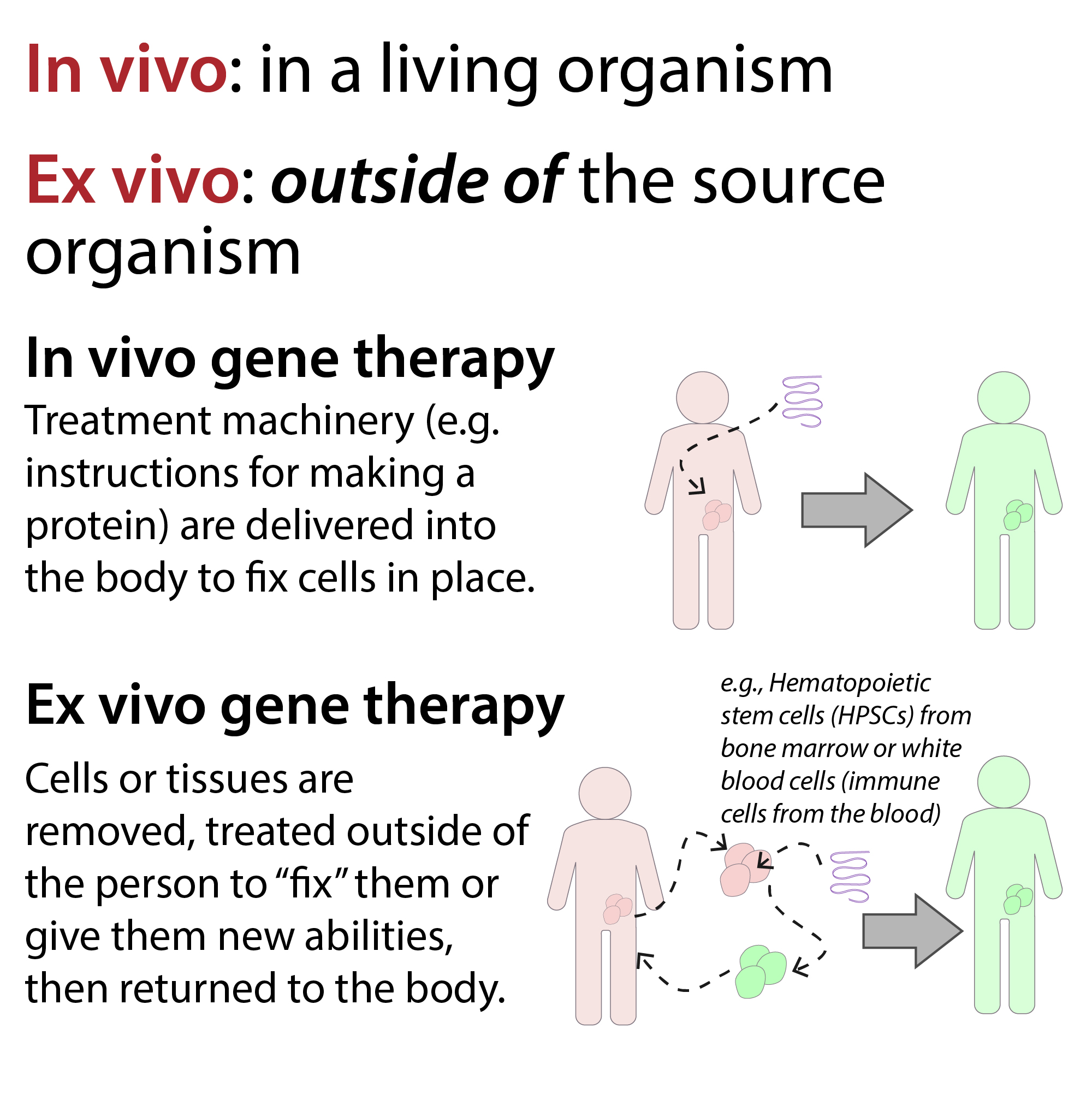
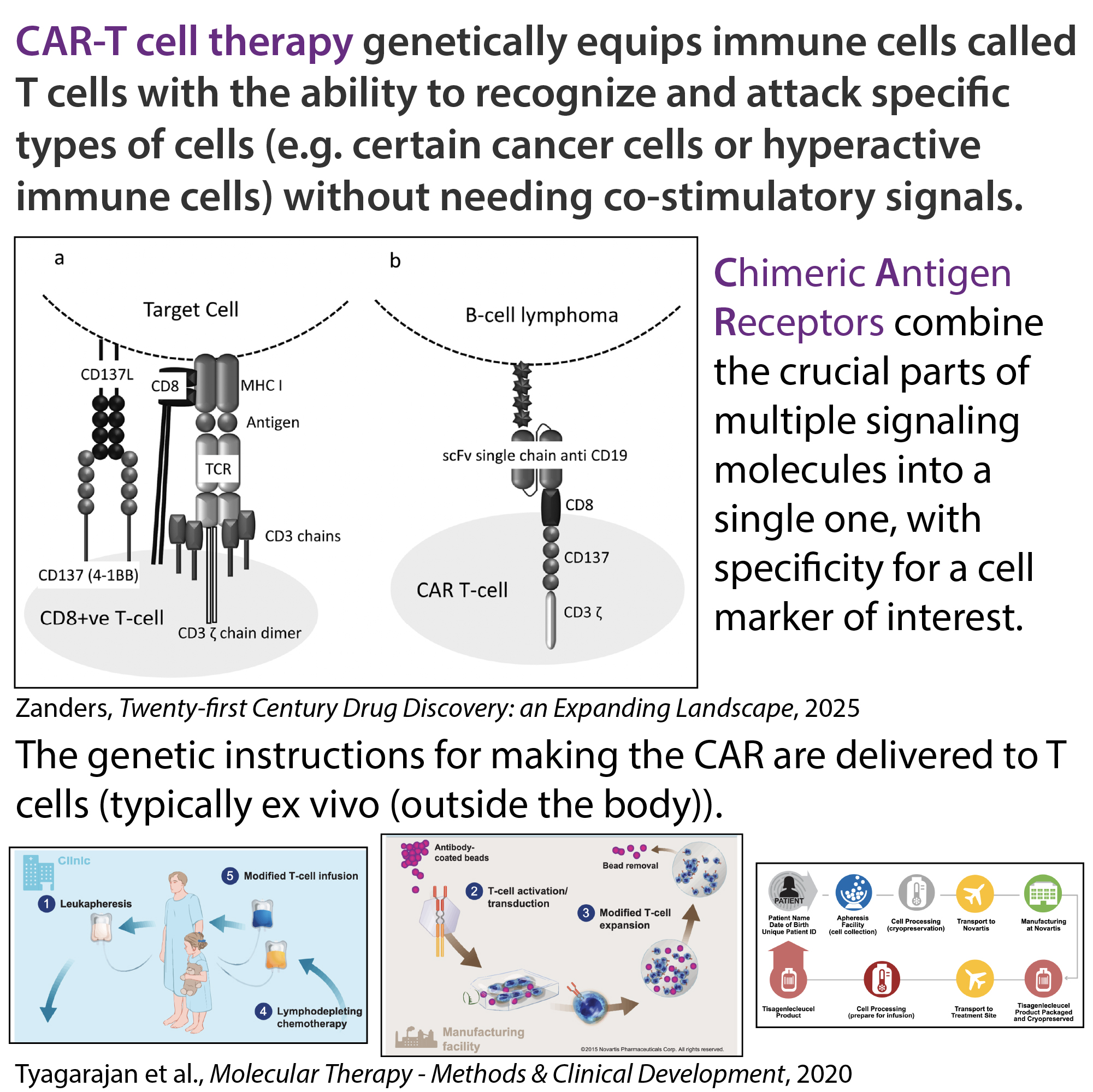
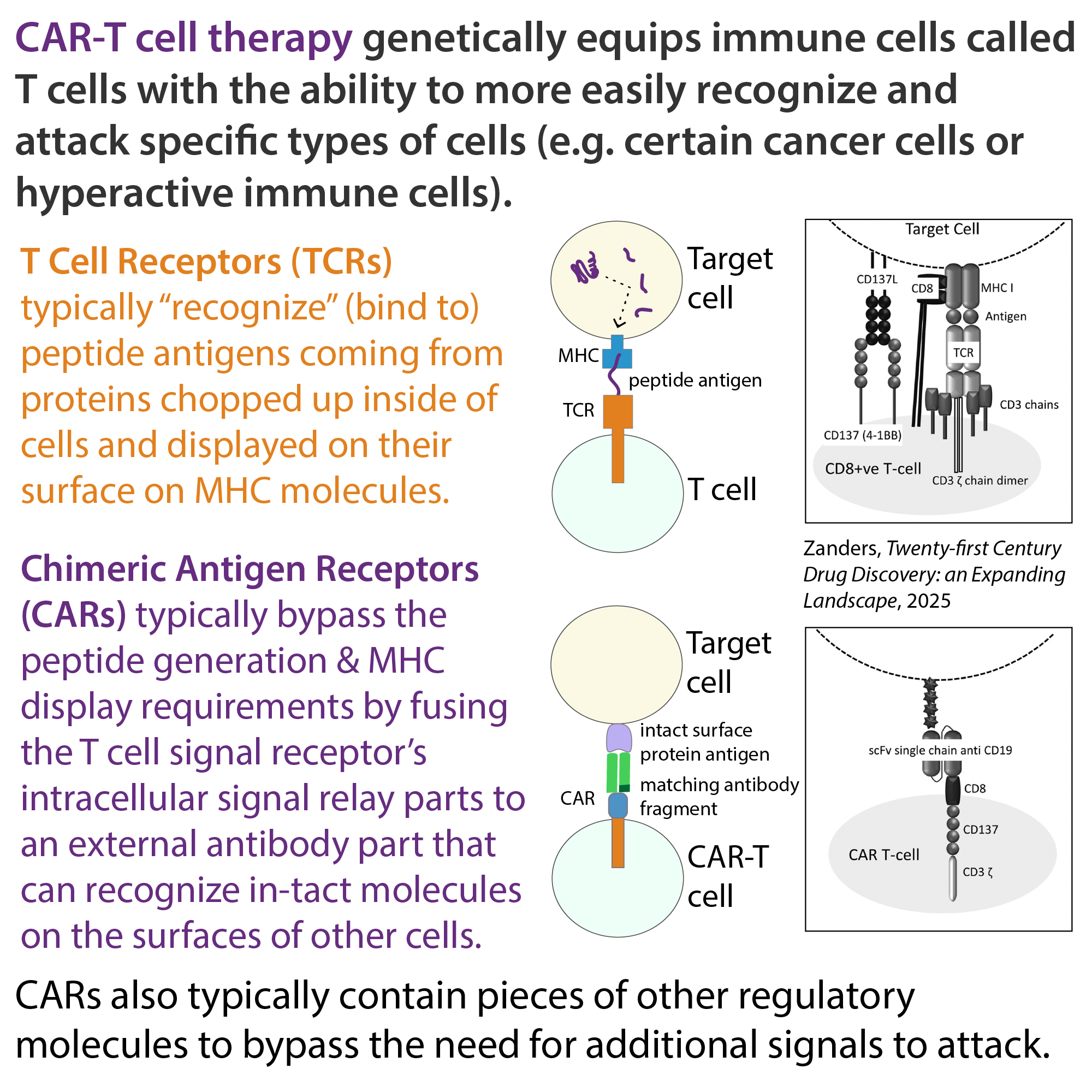
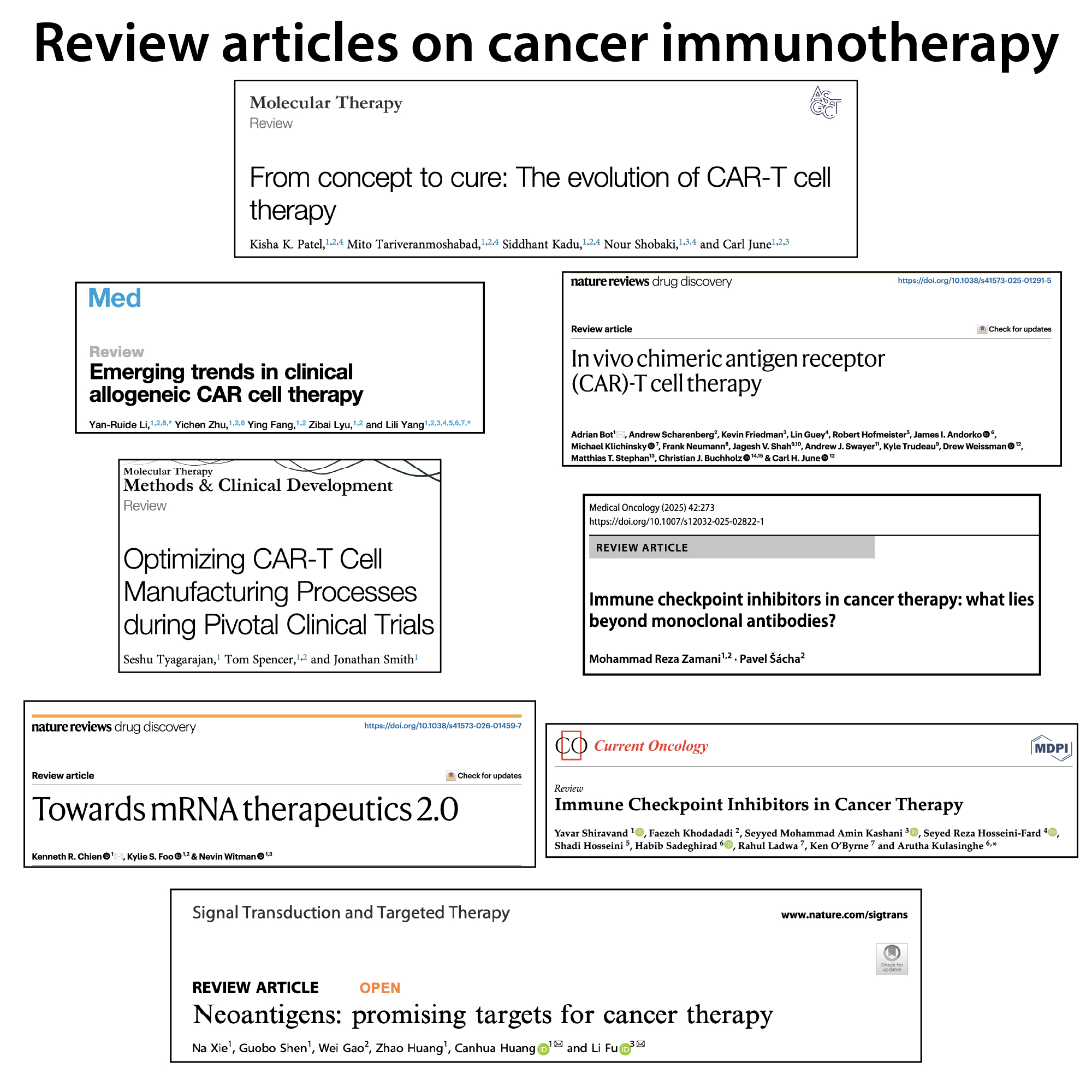
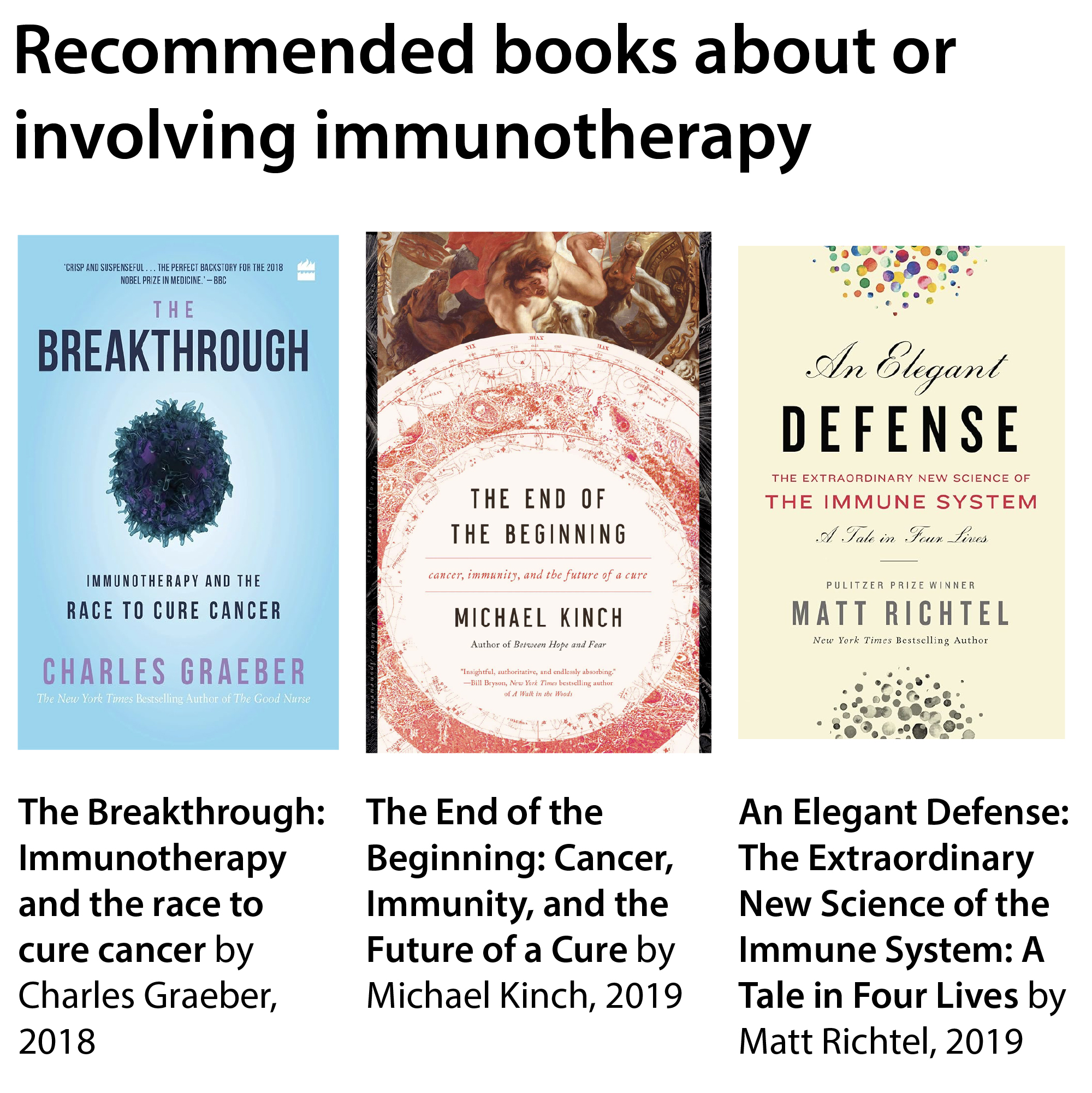
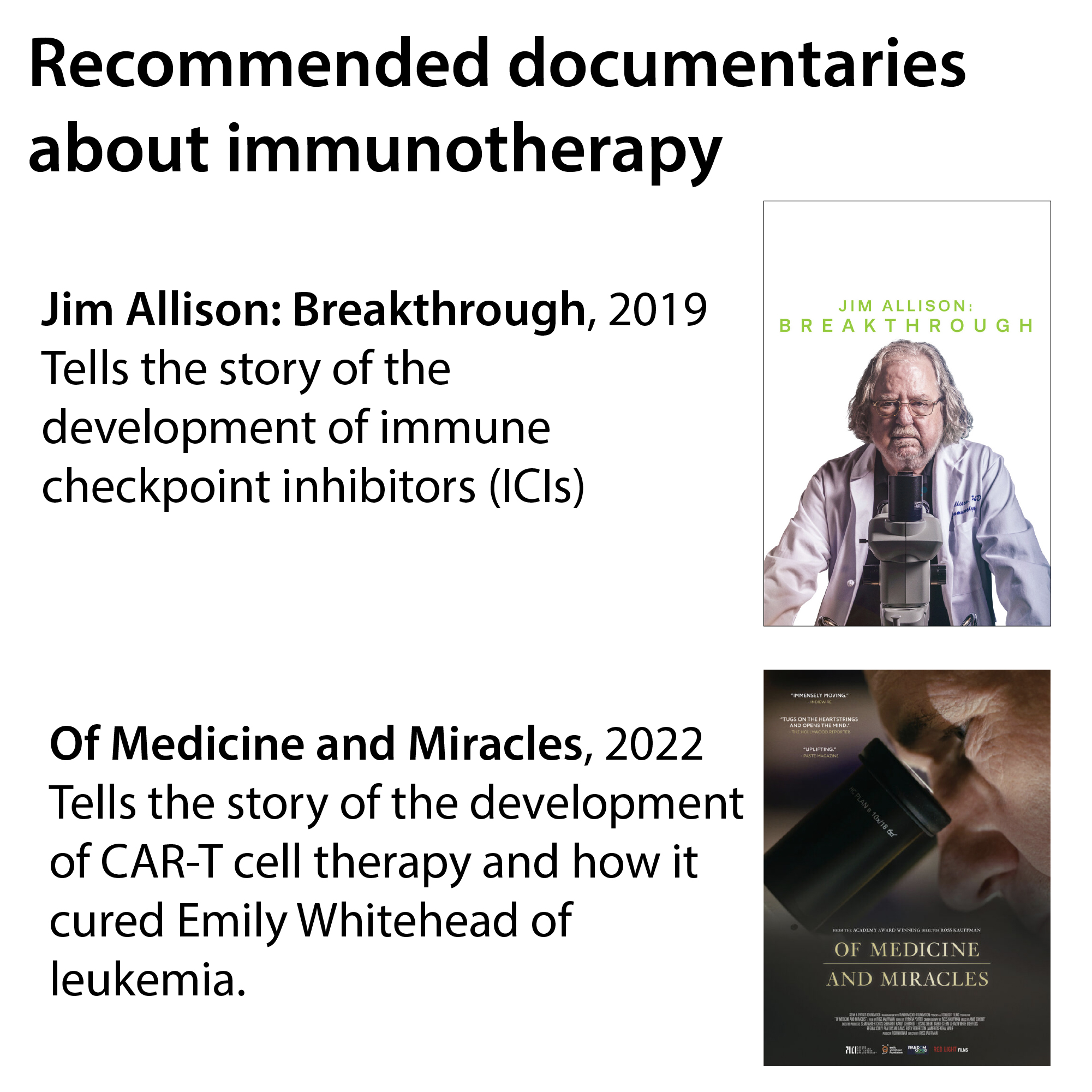
Posts and videos
- Personalized cancer vaccines & the basics of cancer immunotherapy – science behind the headlines https://youtu.be/ZADb0A0-jdw
- mRNA vaccines
Articles
- Immune Checkpoint Inhibitors (ICIs)
- Zamani and Šácha. Immune Checkpoint Inhibitors in Cancer Therapy: What Lies beyond Monoclonal Antibodies? Med Oncol 2025, 42 (7), 273. https://doi.org/10.1007/s12032-025-02822-1.
- Shiravand et al. Immune Checkpoint Inhibitors in Cancer Therapy. Curr Oncol 2022, 29 (5), 3044–3060. https://doi.org/10.3390/curroncol29050247.
- Neoantigens and personalized cancer vaccines:
- Xie et al. Neoantigens: Promising Targets for Cancer Therapy. Sig Transduct Target Ther 2023, 8 (1), 9. https://doi.org/10.1038/s41392-022-01270-x.
- Dolgin, E. How Personalized Cancer Vaccines Could Keep Tumours from Coming Back. Nature 2024, 630 (8016), 290–292. https://doi.org/10.1038/d41586-024-01717-x.
- Chien, Foo, and Witman. Towards mRNA Therapeutics 2.0. Nat Rev Drug Discov 2026. https://doi.org/10.1038/s41573-026-01459-7.
- CAR-T cell therapy:
- Patel et al. Concept to Cure: The Evolution of CAR-T Cell Therapy. Molecular Therapy 2025, 33 (5), 2123–2140. https://doi.org/10.1016/j.ymthe.2025.03.005.
- Tyagarajan, Spencer, and Smith. Optimizing CAR-T Cell Manufacturing Processes during Pivotal Clinical Trials. Molecular Therapy – Methods & Clinical Development 2020, 16, 136–144. https://doi.org/10.1016/j.omtm.2019.11.018.
- Bot et al. In Vivo Chimeric Antigen Receptor (CAR)-T Cell Therapy. Nat Rev Drug Discov 2026, 25 (2), 116–137. https://doi.org/10.1038/s41573-025-01291-5.
- Li et al. Emerging Trends in Clinical Allogeneic CAR Cell Therapy. Med 2025, 6 (8). https://doi.org/10.1016/j.medj.2025.100677.
- Zugasti et al. CAR-T Cell Therapy for Cancer: Current Challenges and Future Directions. Sig Transduct Target Ther 2025, 10 (1), 210. https://doi.org/10.1038/s41392-025-02269-w.
- Li et al. Emerging Trends in Clinical Allogeneic CAR Cell Therapy. Med 2025, 6 (8). https://doi.org/10.1016/j.medj.2025.100677.
Documentaries
- Of Medicine and Miracles, 2022
- Tells the story of the development of CAR-T cell therapy and how it cured Emily Whitehead of leukemia.
- Note: more on Emily Whitehead’s story here: The Incredible Story of Emily Whitehead & CAR T-Cell Therapy: Oncology Times. Ovid. https://doi.org/10.1097/01.COT.0000824668.24475.b0
- Tells the story of the development of CAR-T cell therapy and how it cured Emily Whitehead of leukemia.
- Jim Allison: Breakthrough, 2019
- Tells the story of the development of checkpoint inhibitors.
Books
- Zanders, E. D. Twenty-First Century Drug Discovery: An Expanding Landscape; Springer Nature Switzerland: Cham, 2025. https://doi.org/10.1007/978-3-031-93949-5.
- Biotherapeutics: From Small to Large Molecules and Cells; Calzada, V., Cerecetto, H., Tosar, J. P., Eds.; Topics in Medicinal Chemistry; Springer Nature Switzerland: Cham, 2024; Vol. 42. https://doi.org/10.1007/978-3-031-81025-1.
- The Breakthrough: Immunotherapy and the race to cure cancer by Charles Graeber, 2018
- The End of the Beginning: Cancer, Immunity, and the Future of a Cure by Michael Kinch, 2019
- An Elegant Defense: The Extraordinary New Science of the Immune System: A Tale in Four Lives by Matt Richtel, 2019
Other
Phage therapy
Bacteria are becoming resistant to conventional antibiotics at an alarming rate. Bacteriophages (phages), viruses that infect bacteria, have bacterial-killing defenses our pharmaceutical shelves don’t. And they can adapt to counter bacterial counterattacks. Because phages have their own genomes, unlike drugs, phages can adapt in an evolutionary wars race with the bacteria (endless genetic diversity and adaptivity!!!!). Phage therapy (treating patients with tricky bacterial infections with phages that can attack those bacteria) can be used to combat bacteria resistant to conventional antibiotics. The use of phage therapy declined with the advent of antibiotics, but as bacteria develop resistance to those, phage therapy is coming back in style. (And it’s been continuously used in some countries)
- Posts
- Phage therapy: Phage therapy
- Antimicrobial resistance (AMR):
- Webpages
- WHO (World Health Organization) Bacteriophages and their use in combating antimicrobial resistance, 17 February 2025 https://www.who.int/europe/news-room/fact-sheets/item/bacteriophages-and-their-use-in-combating-antimicrobial-resistance
- STAT: Phage therapy: Researchers sharpen another arrow in the quiver against antibiotic resistance, By Deborah Balthazar Feb. 20, 2024 https://www.statnews.com/2024/02/20/phage-therapy-research-antibiotic-resistance/
- Review article:
- Subramanian, A. Emerging Roles of Bacteriophage-Based Therapeutics in Combating Antibiotic Resistance. Front. Microbiol. 2024, 15. https://doi.org/10.3389/fmicb.2024.1384164.
- Books:
- The Good Virus: The Amazing Story and Forgotten Promise of the Phage by Tom Ireland, 2023
- The Perfect Predator: A Scientist’s Race to Save Her Husband from a Deadly Superbug: A Memoir by Steffanie Strathdee and Thomas Patterson, 2019
Graphics – click on an image to enlarge.
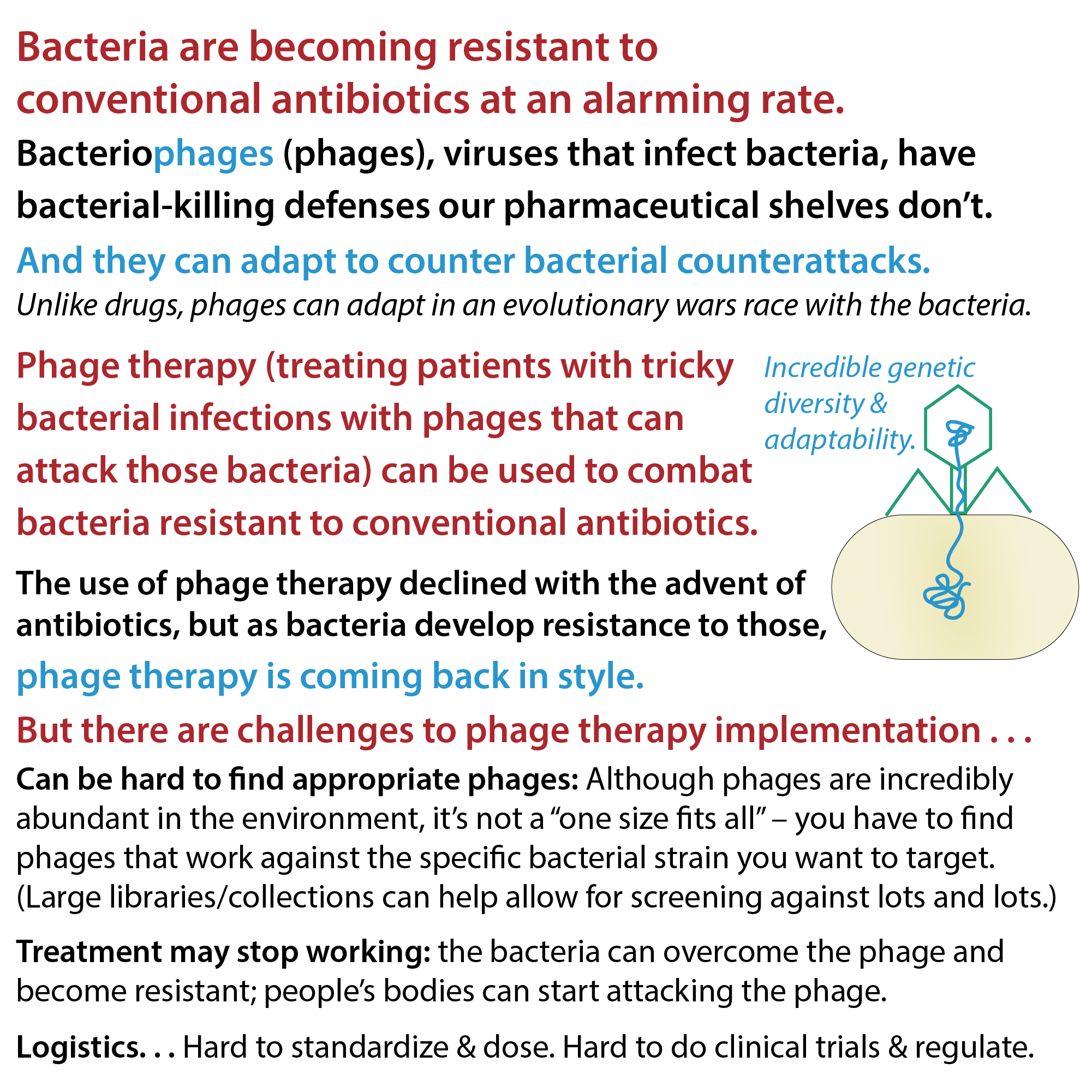
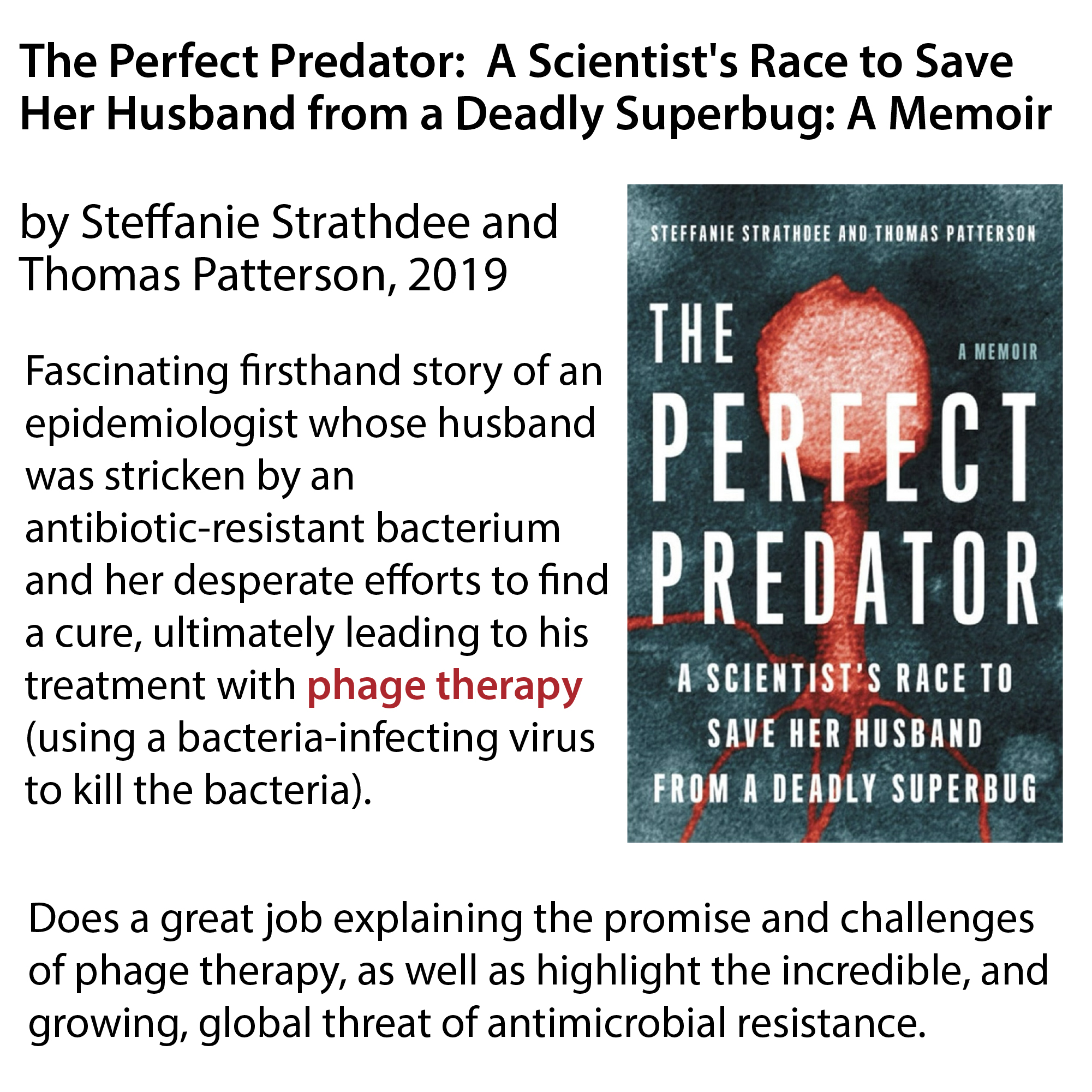
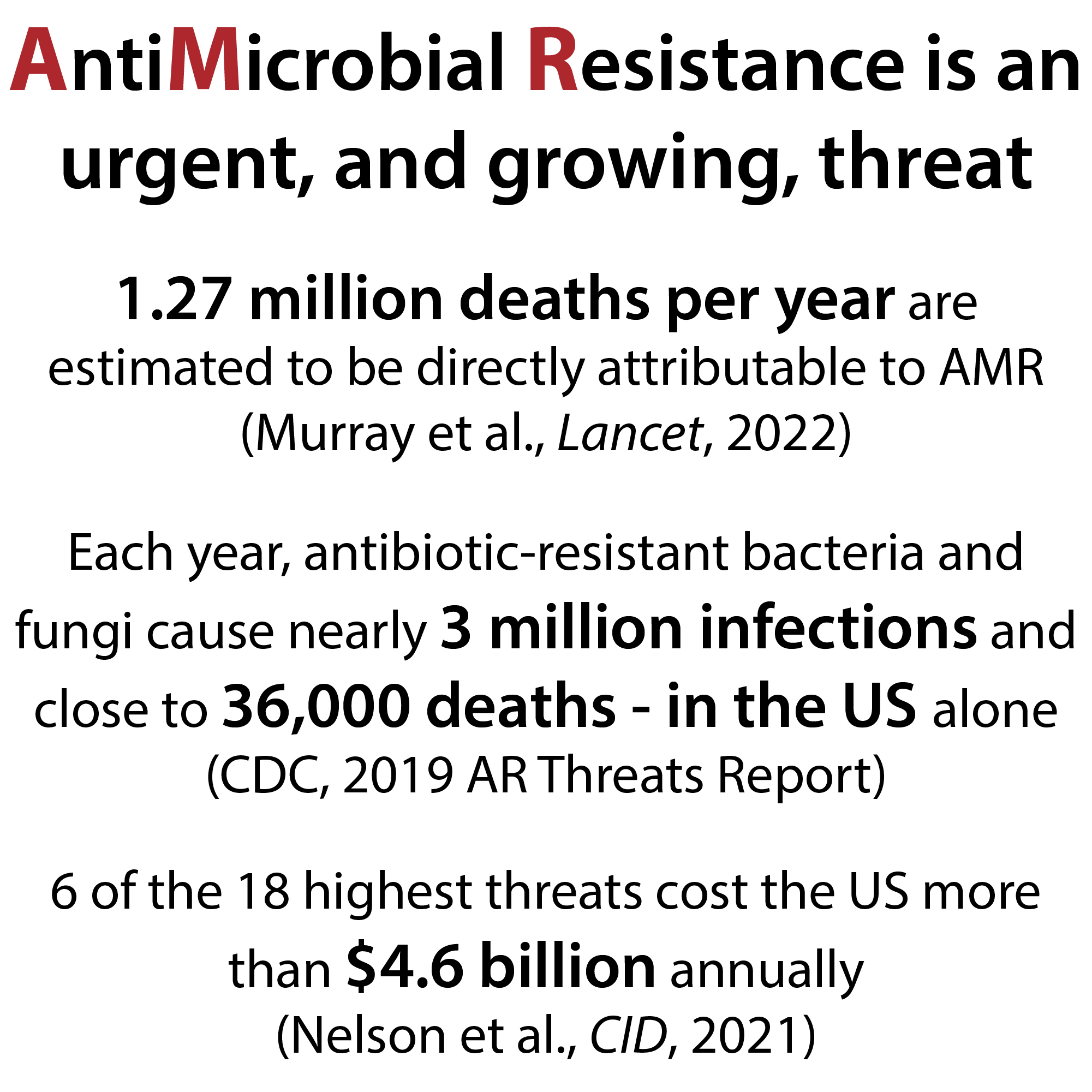
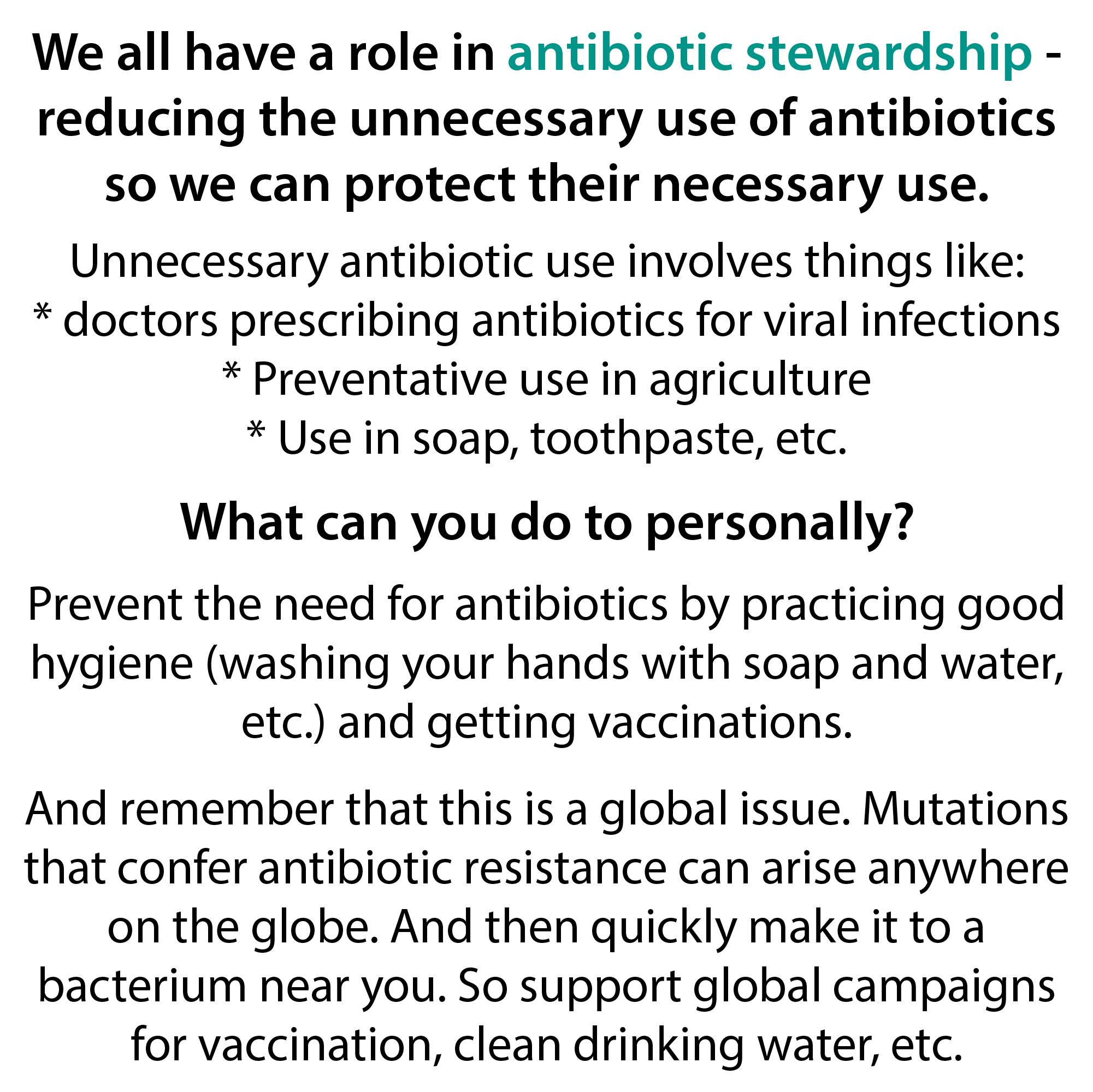
Vaccines
- Blog posts:
- Covid vaccines: COVID-19 vaccine biochemistry, with a focus on mRNA vaccines
- mRNA vaccines: mRNA vaccine biochemistry
- Viral vector vaccines: Viral vector vaccines (such as J&J’s and Oxford/AstraZeneca’s coronavirus vaccines)
- Protein subunit vaccines – Novavax example: Novavax coronavirus vaccine biochemistry
- Flu vaccines: https://thebumblingbiochemist.com/365-days-of-science/the-science-of-flu-shots/
- Books:
- A Shot to Save the World: The Inside Story of the Life-or-Death Race for a COVID-19 Vaccine by Gregory Zuckerman, 2021
- Polio: An American Story by David M. Oshinsky, 2005
- The Cutter Incident: How America’s First Polio Vaccine Led to a Growing Vaccine Crisis by Paul Offit, 2005
- Vaccine Race: Science, Politics, and the Human Costs of Defeating Disease by Meredith Wadman, 2017
Graphics – click on an image to enlarge.