A genetic sleuthing technique that uses modern genetic sequencing techniques to look at lots of sites of variation with the potential to locate causative variants associated with a trait or a disorder (but, as elaborated on below, a GWAS cannot prove causation, merely association). The variants are often in the form of SNPs (Single Nucleotide Polymorphisms) and/or SNVs (Single Nucleotide Variants) – locations in the DNA where a single base pair is different from a reference. These can be determined through the use of “SNP chips” which are DNA sequencing tools that use special sequencing adapters bound to a chip to determine, at the same time (in parallel), the variant in a person’s DNA at each of LOTS of sites that tend to vary amongst people. Alternatively, whole genome sequencing (WGS) or whole exome sequencing (WES) can be used.
Note: SNP and SNV are often used interchangeably, but SNP technically refers to more common variants, ones that are present in > 1% of a population, whereas SNV is a broader term referring to any difference from a reference.
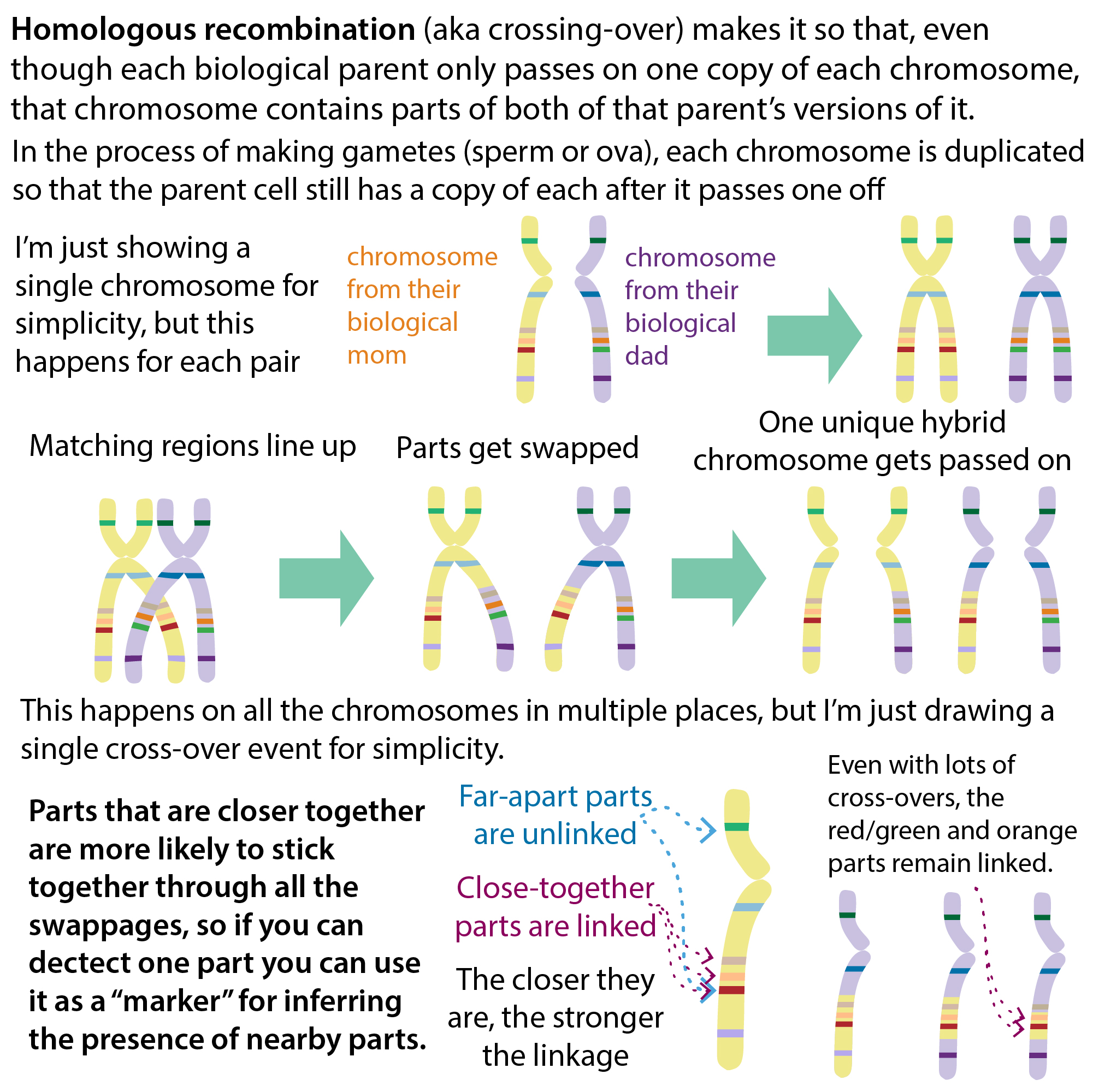
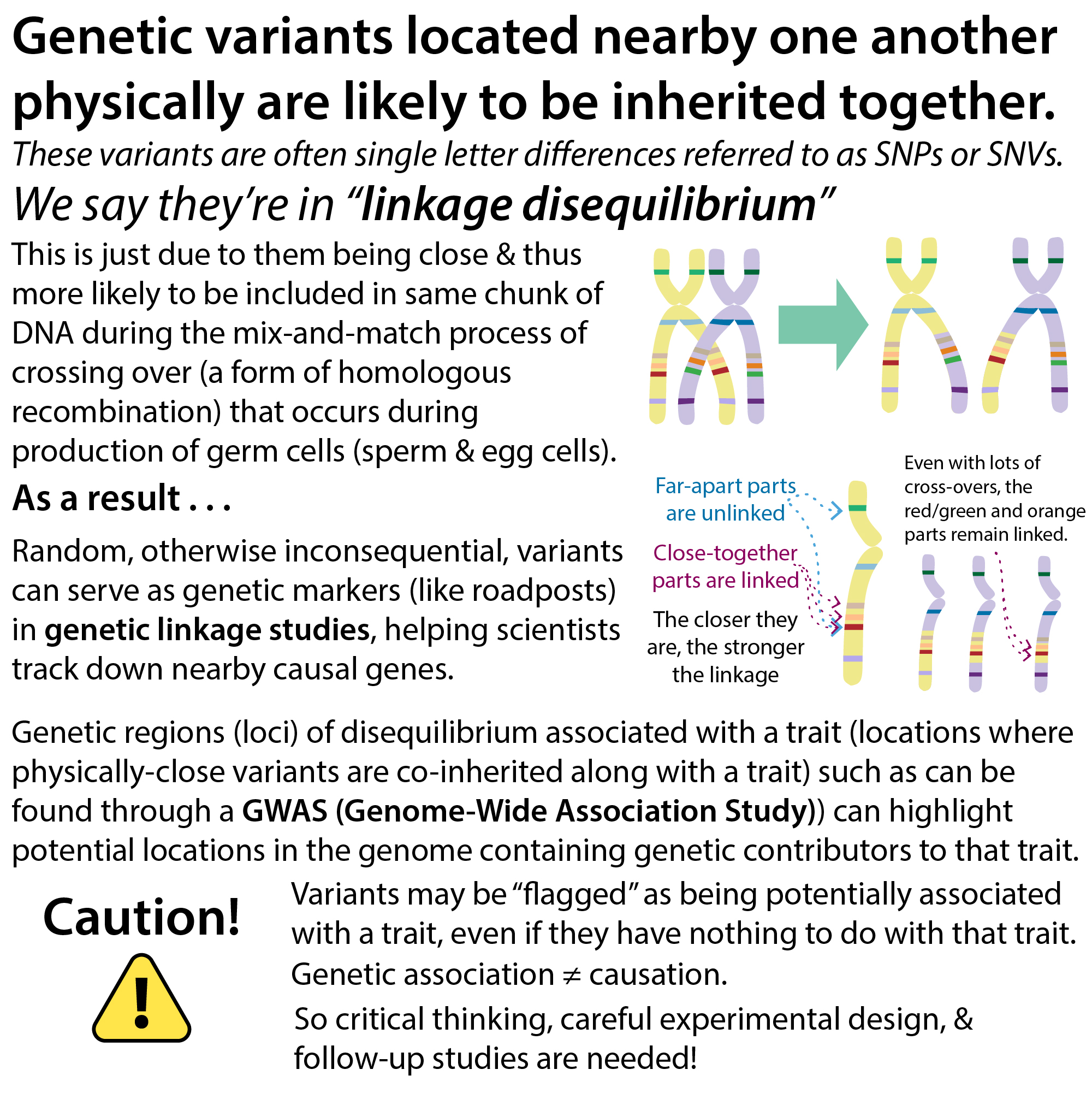
When looking at traits, scientists (at least initially) often look for regions of the genome where physically-close variants are co-inherited along with a trait, rather than looking for specific variants. Such regions are called loci of disequilibrium and they occur because genetic variants located nearby one another physically are likely to be inherited together due to the mechanics of germ cell production (i.e. they are in linkage disequilibrium). GWAS studies are similar to linkage analysis, but they are typically done on a much larger scale, using modern genetic sequencing techniques and look at lots of sites of variation (including potential causative sites), rather than just sparsely covering the genome to try to find nearby markers.
- Much caution must be used when interpreting the results of GWAS studies.
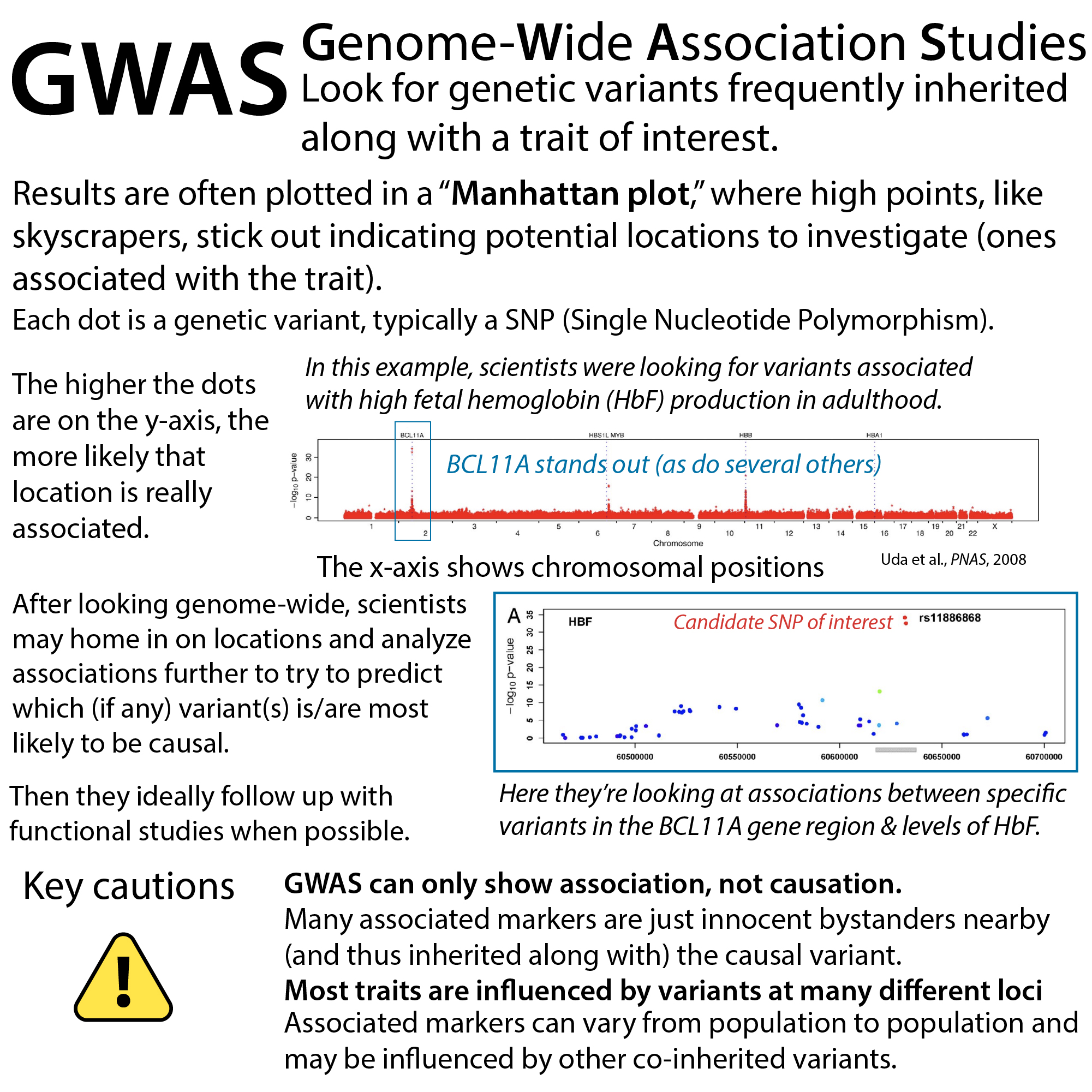
- GWAS can only show association, not causation.
- Many associated markers are just innocent bystanders nearby (and thus inherited along with) the causal variant.
- Most traits are influenced by variants at many different loci
- Associated markers can vary from population to population and may be influenced by other co-inherited variants.
- Critical thinking, careful experimental design, & follow-up studies are needed!
Results are often plotted in a “Manhattan plot,” where high points, like skyscrapers, stick out indicating potential locations to investigate (ones associated with the trait). Each dot is a genetic variant, typically a SNP (Single Nucleotide Polymorphism). The x-axis is chromosomal location and the higher the dots are on the y-axis, the more likely that location is really associated with the trait.
- Resources for interpreting GWAS study results:
- Southam and Zeggini, Twenty Years of Genome-Wide Association Studies. Nature 2025, 641 (8061), 47–49. https://doi.org/10.1038/d41586-025-01128-6.
- Manhattan Plots in GWAS: A Visual Guide” https://metricgate.com/blogs/gwas-manhattan-plots-explained/
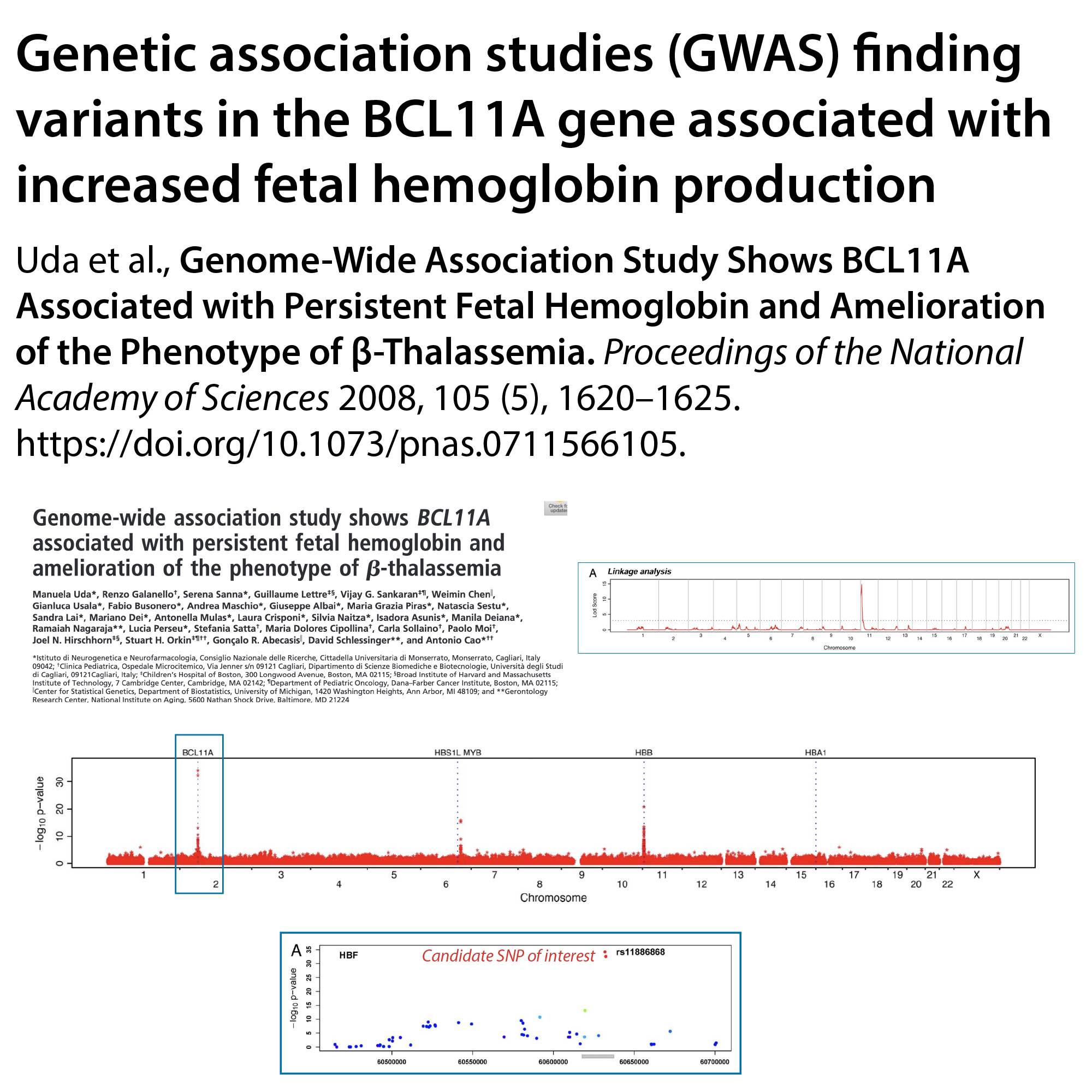
Example – tracking down variants causing increased fetal hemoglobin production in adults (a condition called hereditary persistence of HbF (HPHF): Some articles relating to gene therapy and gene editing for sickle cell disease and related disorders
Associated posts:
- Book recommendations related to genetic/genomic mapping and/or testing
- Cystic fibrosis science: history, present, & future
- Forward vs reverse genetics, phenotype & genotype
- Biopharmaceutical sciences
- Genetic linkage analysis