
Note: for a less-technical version, see: Clinical trials
Clinical trials
Clinical trials vary but the basic idea with most is that clinicians and scientists monitor patients with and without some new treatment to figure out: whether a treatment is safe; whether it works (has efficacy); whether it works better than the current “standard of care”; and/or what if any side effects it causes.
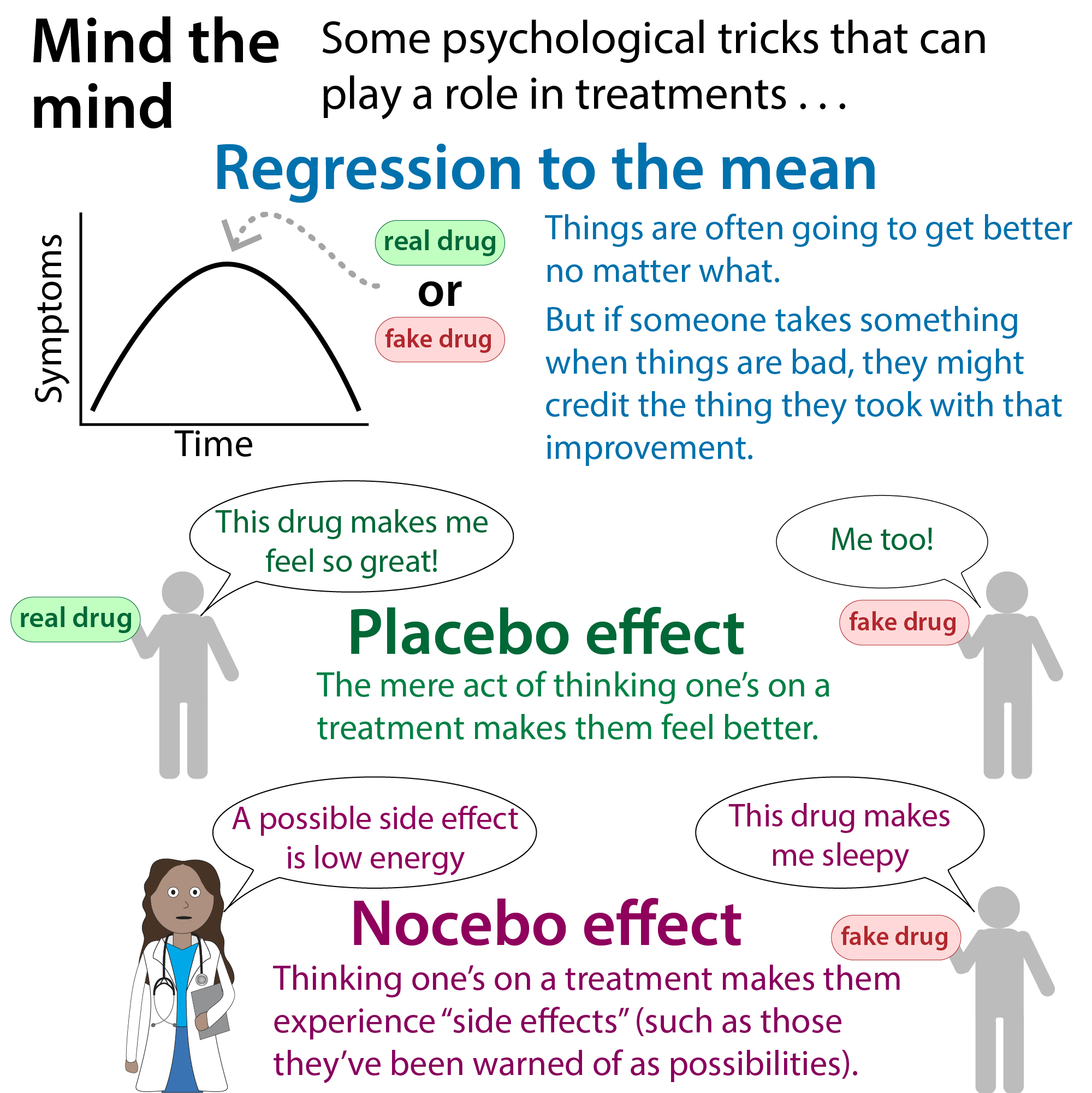
One of the key reasons they’re needed is to account for psychological variables and fallacies making anecdotes unreliable:
Regression to the mean: Things are often going to get better no matter what. But if someone takes something when things are bad (as is typical), they might credit the thing they took with that improvement.
Placebo effect: patients will often get hope just knowing they’re on a drug and this positive attitude can make them feel better (placebo effect).
Nocebo effect: if a patient has an “adverse event” like a seizure during the trial, and they think they’re on a drug, even if they aren’t, they might blame the drug, especially if they’re told the drug could cause seizures.
Trial arms
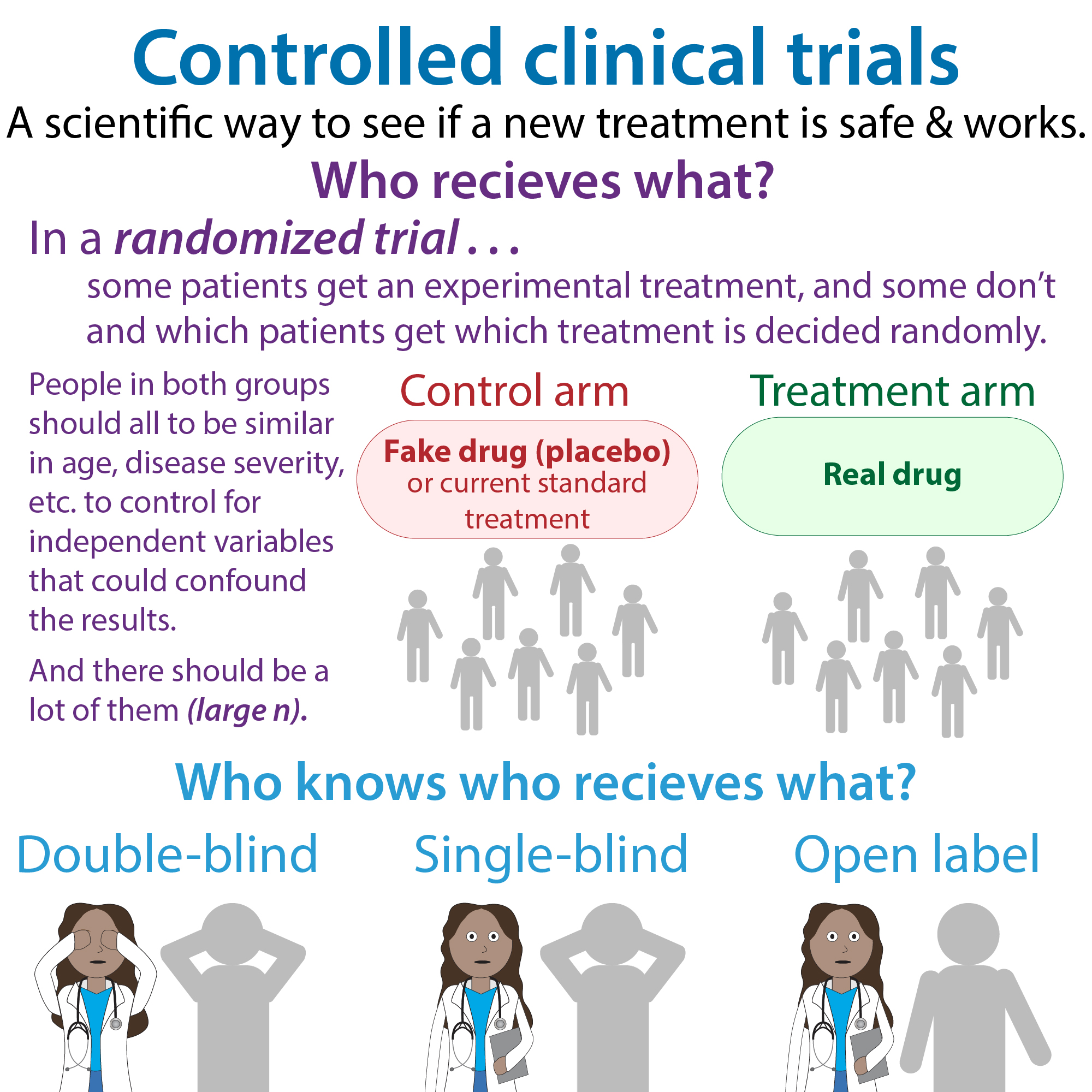
Arm-ed you glad you asked? The groups of patients receiving different treatments are sometimes referred to as “arms” – e.g. a group of patients receiving the drug is referred to as a “therapeutic arm” and they’re compared to a “control arm” where patients don’t get the treatment, get a fake (sham) treatment, or get the common “standard of care” (whatever would typically given to a patient were they not in the trial).
Some trials have multiple therapeutic arms, so they can compare multiple treatment strategies (different drugs, different doses, etc.). It’d be great to have a lot of arms, but it’s difficult in part because you need to keep the study size high – you need a large “n” (number of patients) in each group in order for any result to be statistically significant.
Trial phases
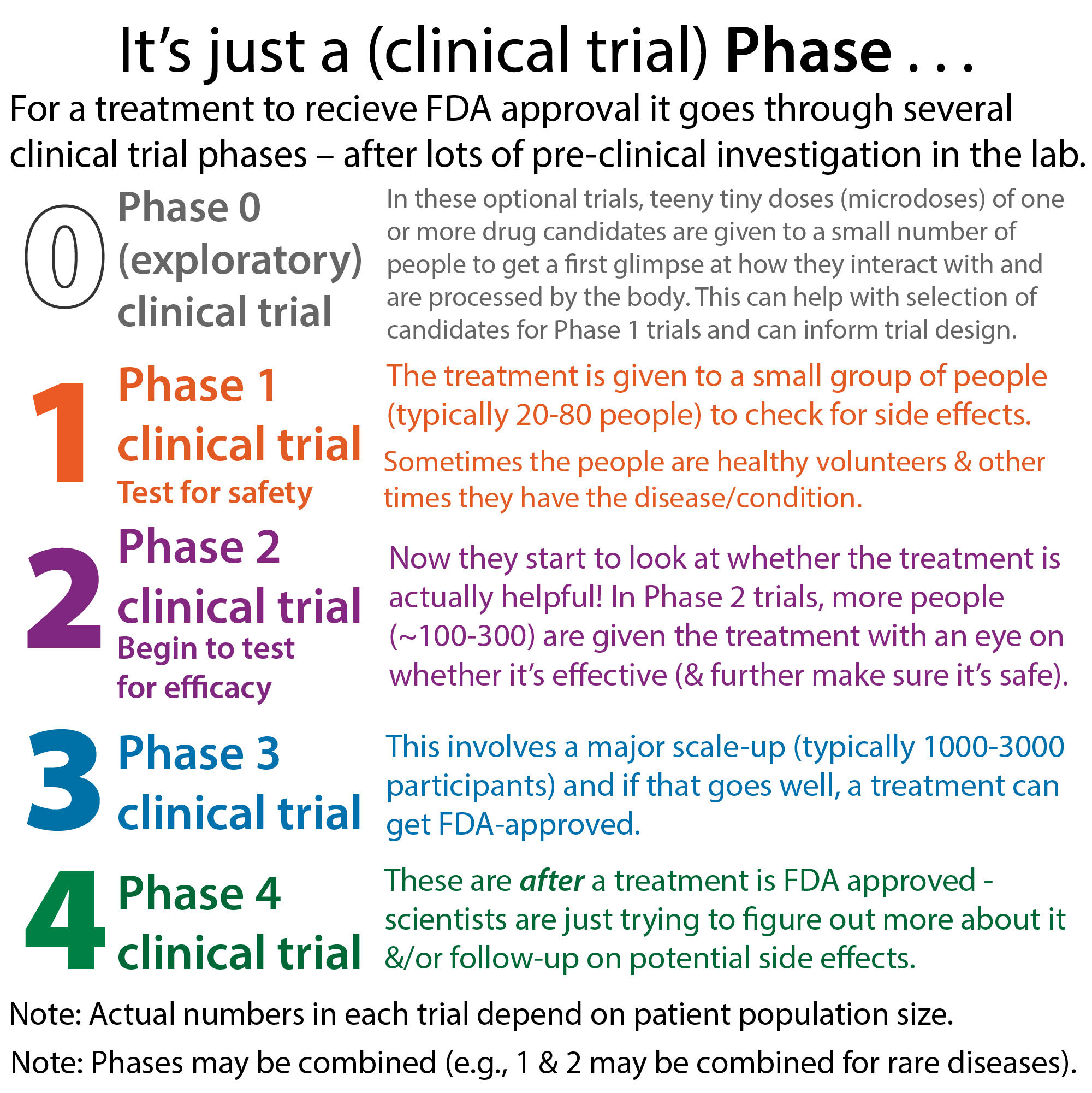
There are different types of trials and, in order to become FDA-approved, a treatment goes through a series of clinical trial phases. There’s some variability (especially regarding numbers treated and control arms) depending on the nature of the condition, the treatments currently available, etc. but the basic phases are:
- Phase 1 trials test for safety – the treatment’s given to a small group of people (typically 20-80 people) to check for potential side effects. Sometimes the people are healthy volunteers and other times they have the disease.
- Phase 2 trials – now they start to look at whether the treatment is actually helpful (i.e., they look for efficacy)! In Phase 2 trials, more people (~100-300) are given the treatment with an eye on whether it’s effective (and further make sure it’s safe). They also may test to see what dose might be ideal (enough to improve the condition but not so much that it causes intolerable side effects)
- If that all goes well, it’s on to Phase 3 trials – this involves a major scale-up (typically 1000-3000 participants) and if that goes well, a drug can get FDA-approved.
- Phase 4 trials – these are *after* a treatment is FDA approved – scientists are just trying to figure out some more about it and/or follow up on potential side effects.
- There are also sometimes “Phase 0” trials (sometimes called exploratory clinical trials) where really small amounts of a treatment are given to people to scout out how the body processes them (pharmacokinetics) and how they affect the body (pharmacodynamics), test a few different compounds, etc.
- They involve limited human exposure for short time frame (e.g. 1 wk), with no intent to treat or diagnose but rather to investigate feasibility for further development (per the FDA’s 2006 guidelines.
- One may be performed to help choose among multiple candidate compounds to take into Phase 1 studies and/or to allow compounds to fail early, saving money and time.
- Unlike typical clinical trials, where drugs are first tested in healthy volunteers, Phase 0 trials can test them in patients due to the low levels given.
- Parameters measured may include pharmacodynamics, pharmacokinetics, and/or target engagement (e.g. binding to target molecules in the body) and may involve using radiolabeled compounds for tracking.
- The format of Phase 0 trials can vary and may include a single microdose of a single compound, a series of microdoses of the same quantity of a single compound, a series of escalating doses or a single compound, or simultaneous administration of microdoses of multiple compounds (cassette microdosing).
- Some Phase 0 trials involve intratarget microdosing (ITM) which delivers a tiny dose, but into the target, momentarily generating a potential therapeutic dose at the site of interest, as well as microdoses throughout the body, which can provide valuable information.
- Exploratory Investigational New Drug (eIND) applications are required before testing, but the requirements for eINDs are more flexible than typical IND requirements due to the low levels given and thus limited human exposure.
- Trial phases may be combined (e.g. Phase I/II) especially in trials for orphan diseases and/or complicated, risky, and/or customized treatments.
Did it work? Endpoints
How does one determine if a trial is “successful”? When setting up a trial, scientists set out particular “endpoints” – which are the things that they measure in order to see if they meet the “objectives” the study sets out. For example, you might measure the endpoint of days of required hospitalization to see if you meet an objective of a 50% reduction in hospitalization time in the treatment group compared to the control group.
Primary endpoints are the main things measured, but “secondary endpoints” are monitored as well. For example, they might initially (e.g. in Phase 1 studies) look only to safety as a primary endpoint, but also add secondary endpoint(s) to see if it’s actually having a therapeutic effect. They might also have secondary endpoints in later phases for various reasons, but these shouldn’t be allowed to substitute for the primary ones.
Accelerated approval: In some cases, such as cases where disease symptoms progress over years, or if there’s a pressing need for a treatment, it can be hard to know in a reasonable amount of time if a treatment actually has clinical efficacy (does it actually help people). In such cases, and with regulatory okay, scientists may instead look to “surrogate markers” or “surrogate endpoints” which are (typically molecular) indications, sometimes in the form of “biomarkers” that are believed to correlate with clinical efficacy (e.g., lowering of levels of a misfolded protein or increase in levels of a wanted protein).
The companies are then supposed to continue following patients and/or do additional studies to confirm the treatment actually is effective, but these are not always completed (this is explained nicely in Jerry Avorn’s book, Rethinking Medications).
Avoiding bias
Both conscious and unconscious factors can influence the findings and/or the analysis of trial results, so there are a number of measures taken to avoid it.
The “gold standard” for bias prevention is double-blinded, randomized, and placebo-controlled. You might see the acronym “RCT” for “Randomized Control Trial.”
- Blinding (aka masking) refers to who knows what arm of a trial a patient is in (i.e. are they receiving placebo, treatment (if so, what dose), etc.)
- Double-blinded (double-masked): neither doctor nor patient knows who’s getting what (of course, someone knows, but not the people who could potentially affect the results)
- Single-blinded (single-masked): doctors, but not patients, know who’s getting what
- Open-label: doctors and patients both know who’s getting what
- Randomized: patients are randomly placed into one arm (e.g. it’s random whether or not they are selected to receive the treatment or a placebo).
- Placebo (or current standard of care)-controlled: Placebos, which can be a “sugar pill” or some other “harmless” fake treatment are really the best way to truly know what effects a treatment might have. But, it doesn’t answer if it’s as good as and/or better than what’s already available. And, critically, giving a patient a placebo when there are treatments actually available (even if only somewhat effective) is not “harmless.” It would be unethical to give patients a sugar pill when there’s something that is already known to be helpful. So, instead of receiving a fake drug, the control group patients receive whatever the currently used “standard of care” treatment is. ⠀
Interim analysis: Even in blinded/masked studies, an “independent” Data Monitoring Committee (DMC), aka a Data Safety and Monitoring Board (DSMB), in addition to monitoring patient safety throughout the trial, a “independent” data monitoring committee looks at the data midway through to see if it would be unethical to proceed either because the treatment is causing severe side effects or because the treatment is super effective so it’s unfair not to give it to more people.
“Positive” results tend to get published much more than “negative” results, and “confirmatory” or “replication” findings less than “novel” findings. This makes the published literature biased. To prevent some of this bias, the FDA introduced laws that require the pre-registration of clinical trials, including the trial design (including endpoints and statistical methods to be used). They must then report their findings to be posted on clinicaltrials.gov
On a related note, outside of the official review process, results from multiple trials and/or individual case reports/studies may be analyzed to assess effects of treatments in the real world, non-regulated treatments, etc.. These grouped analyses can be in the form of systematic reviews and meta-analyses. In general, review articles are scientific papers where authors collate, synthesize, & tell you about the work of multiple *other* groups of scientists.
- Narrative review articles – scientists survey the literature, choose which papers they want to incorporate, then write a narrative piece telling you about their (subjective) take on the current state of the field.
- Systematic reviews – these are more objective (though remember garbage in, garbage out!!) reviews trying to determine and report a “consensus” from multiple studies – scientists use predefined criteria to mine the literature and select papers to include the results of.
- In a meta-analysis, they pool results from different studies and do fancy statistics on them.
- You might also see individual cases or collections of cases reported in the form of case reports/case studies and/or case series.
- Case reports – doctors present “odd” or “unusual” findings or report on the treatment of a single patient using a non-conventional strategy.
- Case series – doctors present findings from multiple similar case reports of. These may provide impetus for larger, more official, studies
Resources
Associated posts
- Clinical trial basics: Clinical trials
- Types of scientific articles: Types of scientific papers: What’s what and how to know
- Systematic reviews, meta-analyses, biases, etc.: Critically evaluating supplements, etc.: systematic reviews, meta-analyses, biases, evidence, etc.
Webpages
- The Drug Development Process. FDA. https://www.fda.gov/patients/learn-about-drug-and-device-approvals/drug-development-process
- FAQs on Pivotal Clinical Trials, Quanticate https://www.quanticate.com/blog/pivotal-clinical-trials
- Glossary Terms | ClinicalTrials.gov. https://clinicaltrials.gov/study-basics/glossary
- How to Read Study Results | ClinicalTrials.gov. https://clinicaltrials.gov/study-basics/how-to-read-study-results
- How to Read a Study Record | ClinicalTrials.gov. https://clinicaltrials.gov/study-basics/how-to-read-study-record
- National University library guide to Systematic Reviews & Meta-Analyses: https://resources.nu.edu/researchprocess/systematicreviews
- Rutgers University Libraries guide to Systematic Reviews in the Health Sciences: https://libguides.rutgers.edu/c.php?g=337288&p=3728472#:~:text=P%3D%20pending%20verification.,-Column%206%3A%20Quality&text=A%20numerical%20score%20between%200,weakest%20and%205%20being%20strongest)
- Trip database for finding reliable data: https://www.tripdatabase.com/About
Articles & book chapters
- Hartung, T. Food for Thought Look Back in Anger – What Clinical Studies Tell Us About Preclinical Work. ALTEX2013, 30 (3), 275–291. https://doi.org/10.14573/altex.2013.3.275.
- Lang, T. Twenty Statistical Errors Even You Can Find in Biomedical Research Articles. Croat Med J 2004, 45 (4), 361–370. https://www.cmj.hr/2004/45/4/15311405.pdf
- Ciolino, J. D.; Kaizer, A. M.; Bonner, L. B. Guidance on Interim Analysis Methods in Clinical Trials. J Clin Transl Sci 7 (1), e124. https://doi.org/10.1017/cts.2023.552.
- Burt, T.; Young, G.; Lee, W.; Kusuhara, H.; Langer, O.; Rowland, M.; Sugiyama, Y. Phase 0/Microdosing Approaches: Time for Mainstream Application in Drug Development? Nat Rev Drug Discov 2020, 19 (11), 801–818. https://doi.org/10.1038/s41573-020-0080-x.
- Guidance for Industry, Investigators, and Reviewers: Exploratory IND Studies. Biotechnology Law Report 2006, 25 (2), 167–174. https://doi.org/10.1089/blr.2006.25.167.
- Filipova et al. Need for NAMs: A Systematic Evidence Synthesis Revealing over Half a Century of Drug Development Failure. NAM Journal 2026, 100119. https://doi.org/10.1016/j.namjnl.2026.100119.
- Ernstmeyer and Christman. Chapter 1 Pharmacokinetics & Pharmacodynamics. In Nursing Pharmacology [Internet]. 2nd edition; Chippewa Valley Technical College, 2023. https://www.ncbi.nlm.nih.gov/books/NBK595006/
- Barnard, Willett, and Ding EL. The Misuse of Meta-analysis in Nutrition Research. JAMA. 2017;318(15):1435–1436. doi:10.1001/jama.2017.12083 https://jamanetwork.com/journals/jama/fullarticle/2654401
Books
- Drugs and the FDA: Safety, Efficacy, and the Public’s Trust by Mikkael A. Sekeres, 2024
- Bad pharma: how drug companies mislead doctors and harm patients by Ben Goldacre, 2013
- Rethinking Medications: Truth, Power, and the Drugs You Take by Jerry Avorn, 2025
- Sickening: How Big Pharma Broke American Health Care and How We Can Repair It by John Abramson, 2022
Gaining regulatory approval
The FDA regulates drugs and biologics in the US, with regulatory oversight broken up into different departments.
- Center for Drug Evaluation and Research (CDER) – oversees conventional small molecule drugs as well as most biologics including recombinant proteins and nucleic acids
- Center for Biologics Evaluation and Research (CBER) – oversees most vaccines, blood products, and cell-based products
The overall process to regulatory approval in the US is:
- For conventional drugs, as well as oligonucleotides and peptides (≤ 40 amino acids):
- Pre-clinical investigation → IND (Investigational New Drug) application → clinical trials → NDA (New Drug Application) or ANDA (Abbreviated New Drug Application (for generics) → approval → NME (New Molecular Entity (for conventional drugs and small biologics)
- For biologics:
- Pre-clinical investigation → IND (Investigational New Drug) application → clinical trials → BLA (Biologics License Application) or abbreviated BLA (aBLA) (for biosimilars) → approval → Licensed Biologic or Biosimilar
- 351(a) is the approval pathway for a biologic in the US. It involves: Clinical safety and efficacy studies for each indication; clinical pharmacology; and animal/nonclinical studies; product quality studies.
- 351(k) is the approval pathway for a biosimilar in the US. It’s abbreviated compared to the 351(a) required for the original biologic. It does not require clinical safety and efficacy studies for each indication (with the assumption proof of biosimilarity to the reference product will ensure the results would be similar to those from the reference product), but it may require additional clinical studies, clinical pharmacology studies, comparative analytical assessment (CAA), and product quality studies.
Note: More on biologics, generics, and biosimilars below.
There are several (non-exclusive) mechanisms for therapeutics to get speedier reviews by the FDA (definitions taken from FDA website):
- Fast track: “A process designed to facilitate the development, and expedite the review of drugs to treat serious conditions and fill an unmet medical need.”
- Breakthrough therapy: “A process designed to expedite the development and review of drugs which may demonstrate substantial improvement over available therapy.”
- Accelerated Approval: “These regulations allowed drugs for serious conditions that filled an unmet medical need to be approved based on a surrogate endpoint.“
- Priority Review: “Priority Review designation means FDA’s goal is to take action on an application within 6 months.”
- Note: companies may be granted priority review vouchers for doing things like developing treatments for orphan diseases. They are then able to apply those vouchers to speed up approval of other medications or sell them to other companies. This is explained well in Rethinking Medications by Jerry Avorn.
Resources
Webpages
- The Drug Development Process. FDA. https://www.fda.gov/patients/learn-about-drug-and-device-approvals/drug-development-process
- Fast Track, Breakthrough Therapy, Accelerated Approval, Priority Review. FDA. https://www.fda.gov/patients/learn-about-drug-and-device-approvals/fast-track-breakthrough-therapy-accelerated-approval-priority-review
- Himmelfarm Health Sciences Library, Study Design 101: https://guides.himmelfarb.gwu.edu/studydesign101/?fbclid=IwAR11tACR8mhECeFUGgKg3YTftI0ieq1nl_HTp4tW6Ukg4HcUoFpJfzh48X8_aem_Ae2DV2wPPs5jCI5zHXsz9HdJ7ozyxcIP0gWnskqUaD1fisBBuCUH9SWtRe5VkyiqRLkbqQxP-wxrsVJTOo4tbf5z
- The NIH has some great free infographics summarizing the drug development process on their “Translational Science Resources” page https://ncats.nih.gov/about/about-translational-science/resources
- Milestones in U.S. Food and Drug Law. FDA https://www.fda.gov/about-fda/fda-history/milestones-us-food-and-drug-law
Articles & book chapters
- Domachowske, J. B. Understanding the Regulatory Pathways Used to Develop, Evaluate, Authorize, and Approve New Drugs and Vaccines in the United States. J Pediatric Infect Dis Soc2024, 13 (Supplement_2), S93–S102. https://doi.org/10.1093/jpids/piae036.
- This article was really helpful.
- Filipova et al. Need for NAMs: A Systematic Evidence Synthesis Revealing over Half a Century of Drug Development Failure. NAM Journal 2026, 100119. https://doi.org/10.1016/j.namjnl.2026.100119.
Books
- And the Band Played On: Politics, People, and the AIDS Epidemic by Randy Shilts, 1987
- The Cutter Incident: How America’s First Polio Vaccine Led to a Growing Vaccine Crisis by Paul Offit, 2005
- Doctored : fraud, arrogance, and tragedy in the quest to cure Alzheimer’s by Charles Piller, 2025
- Drugs and the FDA: Safety, Efficacy, and the Public’s Trust by Mikkael A. Sekeres, 2024
- Frances Oldham Kelsey, the FDA, and the Battle against Thalidomide by Cheryl Krasnick Warsh, 2024
- Inside the Orphan Drug Revolution: The Promise of Patient-Centered Biotechnology by James Geraghty, 2022
- On Call: A Doctor’s Journey in Public Service by Anthony Fauci, 2024
- Pharma: Greed, Lies, and the Poisoning of America by Gerald Posner, 2020
- Rethinking Medications: Truth, Power, and the Drugs You Take by Jerry Avorn, 2025
Naming – you can actually learn a lot from a generic/nonproprietary name
Therapeutics are given both brand/trade names and “generic” (nonproprietary) names. The generic names may seem really random and opaque, but they’re actually highly formulaic (except for the first part of them, which is chosen for “any” reason)! The generic names are composed by piecing together a bunch of international nonproprietary names (INN) “stems” defined by the World Health Organization (WHO).
Biosimilars are given the same core name as their reference biologic product, but unique 4-letter suffixes are added to the end to distinguish them. For example, adalimumab-ryvk (Simlandi) and adalimumab-adbm (Cyltezo) are 2 biosimilar forms of the reference product adalimumab (Humira)
Resources
Webpages
- Overview of Generic Medications and Medication Naming – Medications. Merck Manual Consumer Version. https://www.merckmanuals.com/home/drugs/brand-name-and-generic-medications/overview-of-generic-medications-and-medication-naming
Articles
- Serafini et al. What’s in a Name? Drug Nomenclature and Medicinal Chemistry Trends Using INN Publications. J. Med. Chem.2021, 64 (8), 4410–4429. https://doi.org/10.1021/acs.jmedchem.1c00181.
- The scheme for antibody-based therapies has had to evolve to keep up with the growing field!
- Guimaraes Koch et al. International Nonproprietary Names for Monoclonal Antibodies: An Evolving Nomenclature System. mAbs 2022, 14 (1), 2075078. https://doi.org/10.1080/19420862.2022.2075078.
Official INN guide
- INN Stem Book 2018. https://www.who.int/publications/i/item/who-emp-rht-tsn-2018-1
- INN Stem Book Addendum 202203-2018. https://www.who.int/publications/i/item/inn-22-538
Generics and biosimilars, me-too drugs, etc.
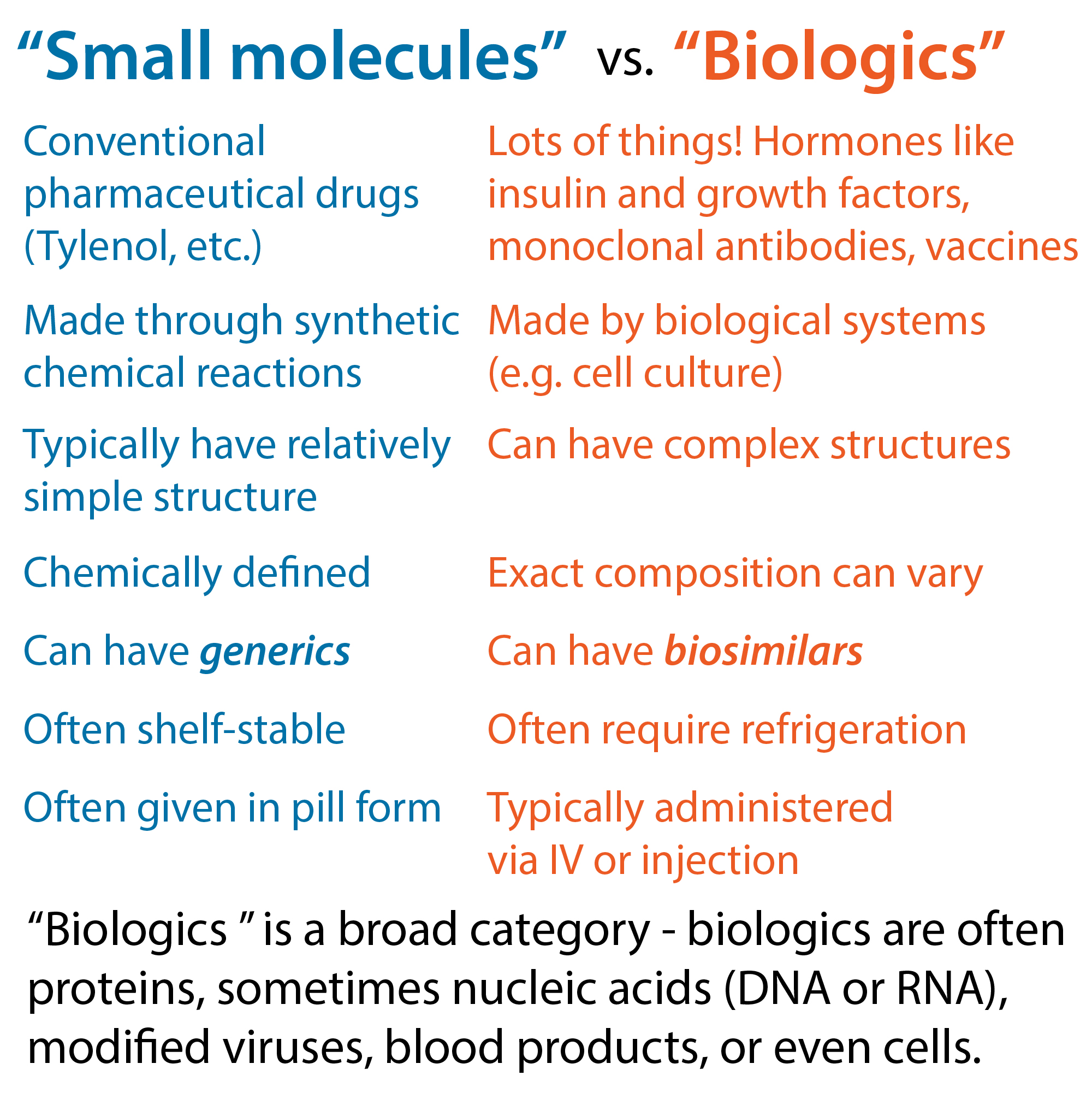
Unlike small molecules which can be synthesized and purified to make a chemically-defined, “identical” product (a generic), biologics are typically produced in cells and may vary in their exact composition (post-translational modifications like glycosylation (sugar-chain-addition), etc.). Even the copies of the molecules within a batch, will vary a bit and the drug is never “identical.” It would be impossible to truly “copy” the product, so there can’t be “generics” of them (drugs which have the exact same formula and structure but are made by different companies than the company that first introduced them). But there can be the equivalent – biologics that are super similar in composition to the original and function at least as well (are non-inferior). These super similar products are called biosimilars and they are often cheaper than the original “brand name” stuff.
Some biosimilars gain the distinction of being interchangeable biosimilars – an interchangeable biosimilar is a biosimilar that has passed additional tests to allow it to be substituted for a brand name product by the pharmacist (such as switching studies in which patients switch between the reference product and the biosimilar) – all interchangeable biosimilars are biosimilars but not all biosimilars are interchangeable biologics. You can find what if any biosimilars and interchangeable biosimilars are approved for a biologic by searching the FDA Purple Book.
The path to regulatory approval for these is easier than for the original product, because the generics and/or biosimilars makers only have to show that their product contains the “same” active ingredient at indicated levels and is as effective as the original product (demonstrate bioequivalence in the case of a generic or show that there are no clinically meaningful differences in the case of a biosimilar (i.e. demonstrate biosimilarity)). . They submit an abbreviated new drug application (aNDA) instead of an NDA or, for biosimilars, an abbreviated Biologics License Application BLA (aBLA) instead of a BLA (aBLA).
- For a generic drug to gain approval, it must show that: It’s “pharmaceutically equivalent” to the brand name drug (same form (tablet, injectable, etc.) and release mechanism); It has the same active ingredient as the brand; The right amount of the active ingredient gets to the right place in the body; Any inactive ingredients are safe; The manufacturer is capable of making it correctly and consistently; The drug does not break down over time; The drug is in an appropriate container with an appropriate label; It doesn’t break any laws (no active patents and/or exclusivities, etc.)
- For a biosimilar to gain approval, it must show that it is highly similar to the brand name product (the “reference product”) in safety, purity, and potency and has no clinically meaningful differences from it. More specifically, per the FDA, “Biosimilars are made from the same types of sources, are administered the same way, and have the same strength, dosage, potential treatment effects, and potential side effects as the reference product.” And the biosimilar developer must conduct experiments to show this, but the exact experiments that are required to do this can vary from case to case. They may include: analytical studies (are the products structurally and functionally similar?); animal studies (toxicology and/or pharmacology information); clinical study or studies (e.g., PD/PK studies, immunogenicity studies, etc.)
Resources
Associated posts
Biologics and biosimilars: Biologics, biosimilars, and “small molecules”
Webpages
- Overview of Generic Medications and Medication Naming – Medications. Merck Manual Consumer Version. https://www.merckmanuals.com/home/drugs/brand-name-and-generic-medications/overview-of-generic-medications-and-medication-naming
- Bioequivalence and Interchangeability of Generic Medications – Medications. Merck Manual Consumer Version. https://www.merckmanuals.com/home/drugs/brand-name-and-generic-medications/bioequivalence-and-interchangeability-of-generic-medications
- Generic Drugs: Questions & Answers. FDA2026. https://www.fda.gov/drugs/generic-drugs/generic-drugs-questions-answers
- What Is the Approval Process for Generic Drugs? FDA 2026. https://www.fda.gov/drugs/generic-drugs/what-approval-process-generic-drugs
- Biosimilars Review and Approval. FDA 2022 https://www.fda.gov/drugs/biosimilars/review-and-approval
- Curriculum Materials for Health Care Degree Programs | Biosimilars. FDA 2024. https://www.fda.gov/drugs/biosimilars/curriculum-materials-health-care-degree-programs-biosimilars
- This hidden gem has lecture slides, videos, handouts, etc.
- FDA Purple Book: https://purplebooksearch.fda.gov/
Articles
- Aronson and Green. Me‐too Pharmaceutical Products: History, Definitions, Examples, and Relevance to Drug Shortages and Essential Medicines Lists. Brit J Clinical Pharma 2020, 86 (11), 2114–2122. https://doi.org/10.1111/bcp.14327
Books
- Patenting Life: Tales from the Front Lines of Intellectual Property and the New Biology by Jorge A. Goldstein, 2025
- Pharma: Greed, Lies, and the Poisoning of America by Gerald Posner, 2020
Patents, market exclusivity, etc.
Patents and market exclusivity rights are 2 separate avenues that protect the innovations of inventors and therapeutic developers. They aim to promote and incentivize innovation, while also providing an avenue for eventual competition and thus potentially lower-cost generics, biosimilars, etc. Once a treatment’s patent(s) and/or exclusivity period expires, competitors may market generics (in the case of small molecules) or biosimilars (in the case of biologics).
To avoid losing market share, companies may engage in practices such as making minor alterations to the treatment (with little or no added value) to seek new patents for the new version. To gain longer exclusivity times, companies may do things like apply for approval of the same treatment for additional conditions, in additional dosages, etc. And/or, they might seek approval for treating a rare/orphan disease, which provides longer exclusivity.
Patents are legal mechanisms to protect inventions and promote innovation
- Patents can be obtained (from the United States Patent and Trademark Office (USPTO)) for both formulations and processes at any phase of the therapeutic development process.
- Patents prevent competitors from using an invention without paying the patent-holder
- Patents typically expire 20 years after the date of filing (not the date of therapeutic approval!); however, patent term extensions (PTEs) of up to 5 years may be granted to make up for time spent in the approval process (this is a key component of the 1984 Drug Price Competition and Patent Restoration Act (more commonly referred to as the Hatch-Waxman Act).
Market exclusivity is a set number of years in which companies have the exclusive right to manufacture and sell a treatment they developed once approved. The length of this period depends on the type of approval.
- New Chemical Entity Exclusivity (NCE) – 5 years
- This is what you get for your typical new drug approval.
- Reference Product Exclusivity (RPE) – 12 years, including 4 years data in which competitors can’t even file an aNDA for a biosimilar.
- This is the exclusivity period for a new biologic.
- Biologics get a longer exclusivity period with the rationale they’re more complicated and pricy to develop.
- This is dictated by the Biologics Price Competition and Innovation Act (BPCIA).
- Orphan Drug Exclusivity (ODE) – 7 years
- This longer exclusivity period is meant to incentivize development of therapeutics for indications (diseases/disorders) with a small treatable population that might not otherwise be an “attractive” target for development
- Generating Antibiotic Incentives Now (GAIN) Exclusivity – 5 years added
- This longer exclusivity period is meant to incentivize development of much-needed antibiotics. Antibiotic development is urgently needed, but generally not very lucrative.
- New Clinical Investigation Exclusivity – 3 years
- You get a shorter exclusivity period if the drug isn’t new, but you’ve now gotten it approved for an additional indication.
- Pediatric Exclusivity (PED) – 6 months added
- This is to incentivize development of therapeutics for pediatrics, which can be seen as “riskier” and thus incentive-needing.
- Competitive Generic Therapy (CGT) – 180 days
- The first generic version of a product that’s approved gets a short market exclusivity period in which other generics can’t be sold (but the brand name still can)
- Patent Challenge (PC) – 180 days
- If the brand name manufacturer has infringed on patents or something along that lines, the first company wanting to market a generic that sues the brand name manufacturer gains some exclusivity.
The “Orange Book” has patent and exclusivity information for small molecule therapeutics and some small biologics (e.g. ASOs), whereas the “Purple Book” has information for larger and/or more complex biologics (gene therapy, cell therapy, protein therapeutics, etc.). Unfortunately, the Purple Book isn’t as informative – It has patent and exclusivity information for some entries but not others. It does, however include some useful information including allowing you to see what, if any biosimilars and interchangeable biologics are available.
Resources
Webpages
- Patent Basics. https://www.uspto.gov/patents/basics
- FDA Frequently Asked Questions on Patents and Exclusivity. https://www.fda.gov/drugs/development-approval-process-drugs/frequently-asked-questions-patents-and-exclusivity
- FDA Orange Book: https://www.accessdata.fda.gov/scripts/cder/ob/index.cfm
- FDA Purple Book: https://purplebooksearch.fda.gov/
- Google Patents: https://patents.google.com/
- USPTO Patent search: https://ppubs.uspto.gov/basic/
- How Drugmakers Use the Patent Process to Keep Prices High. https://doi.org/10.26099/7j2b-xv30.
- DrugPatentWatch. The Patent Playbook: 7 Key Strategies Pharma Uses to Extend Market Exclusivity. DrugPatentWatch – Transform Data into Market Domination. https://www.drugpatentwatch.com/blog/the-patent-playbook-7-key-strategies-pharma-uses-to-extend-market-exclusivity/
- Fast Track, Breakthrough Therapy, Accelerated Approval, Priority Review. FDA. https://www.fda.gov/patients/learn-about-drug-and-device-approvals/fast-track-breakthrough-therapy-accelerated-approval-priority-review
Articles
- Miller et al. Drugs and Biologics Receiving FDA Orphan Drug Designation: An Analysis of the Most Frequently Designated Products and Their Repositioning Strategies. Expert Opin Orphan Drugs 2022, 9 (11–12), 265–272. https://doi.org/10.1080/21678707.2021.2047021.
Books
- Patenting Life: Tales from the Front Lines of Intellectual Property and the New Biology by Jorge A. Goldstein, 2025
- This one especially!
- Pharma: Greed, Lies, and the Poisoning of America by Gerald Posner, 2020
- A Prescription for Change: The Looming Crisis in Drug Development by Michael Kinch, 2016
- Empire of Pain: The Secret History of the Sackler Dynasty by Patrick Radden Keefe, 2022
- The Genome Defense: Inside the Epic Legal Battle to Determine Who Owns Your DNA by Jorge L. Contreras, 2021
- Insulin: A Hundred-Year History by Stuart Bradwel, 2023
- No More Tears: The Dark Secrets of Johnson & Johnsonby Gardiner Harris, 2025