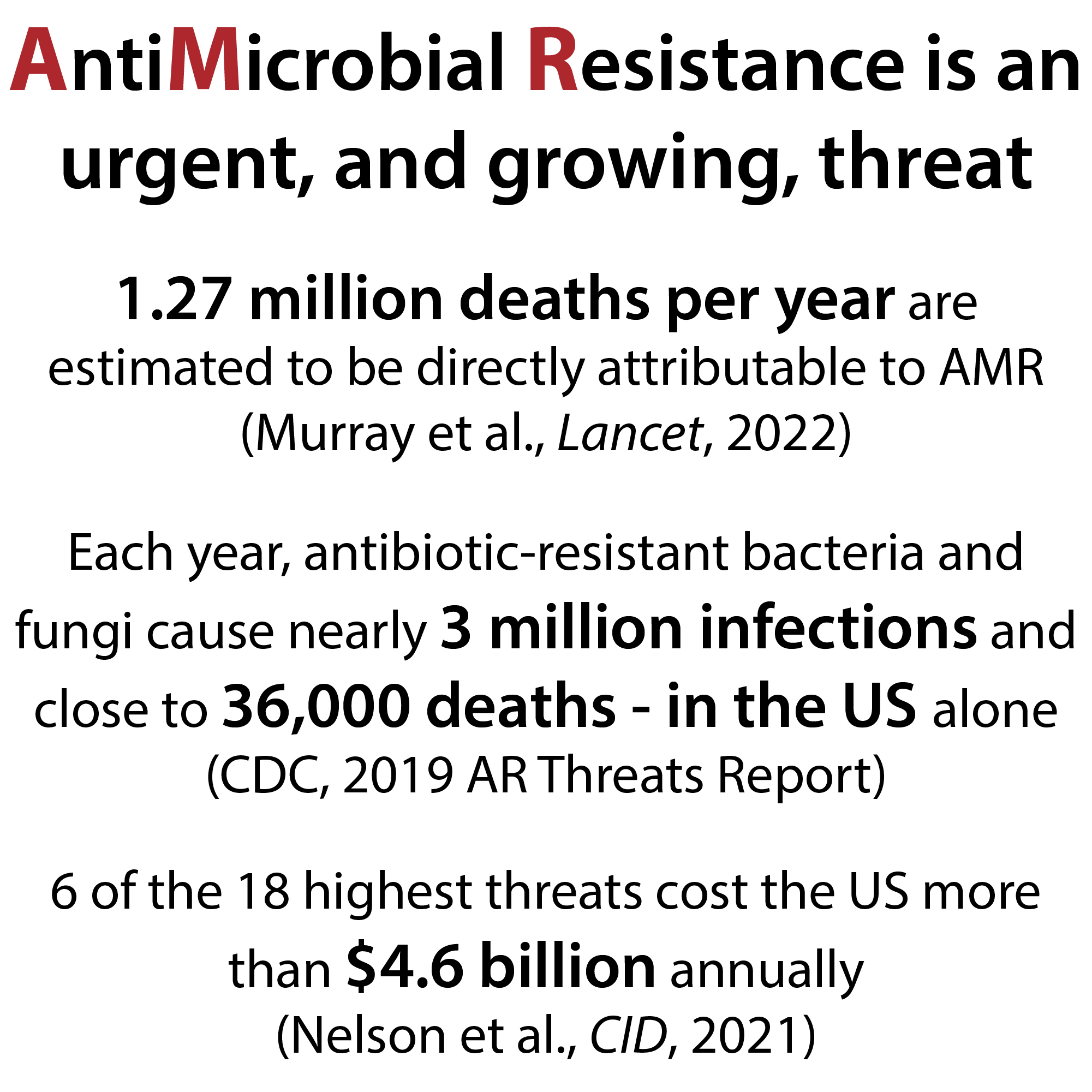
This is world antimicrobial awareness week, a time to draw attention to the growing problem of AntiMicrobial Resistance (AMR). This is the huge problem of mainstay and even second- and third-line antibiotics that we rely on to kill microbes including bacteria becoming useless against them. It shouldn’t need a special week to get our attention. But it does. Because the problem is soooo underappreciated! And it’s a growing threat.
To put some numbers on it…
- 1.27 million deaths per year are estimated to be directly attributable to AMR (Murray et al., Lancet, 2022)
- That analysis also found that there are also millions more deaths caused by resistant bacteria, but where the death wasn’t due specifically to it being resistant.
- Each year, antibiotic-resistant bacteria and fungi cause nearly 3 million infections and close to 36,000 deaths – in the US alone (CDC, 2019 AR Threats Report)
- 6 of the 18 highest threats cost the US more than $4.6 billion annually (Nelson et al., CID, 2021)
I’m working on a longer post on AMR and the biochemical mechanisms behind it, so keep an eye out for that on Friday. Today I just wanted to highlight the issue (while it’s still technically during the World Health Organization (WHO) event), give some basics, and share some resources for you to explore. Note that I’m going to focus on bacteria, but “AMR” encompasses resistance in other microbes, such as fungi, which is also a huge problem.
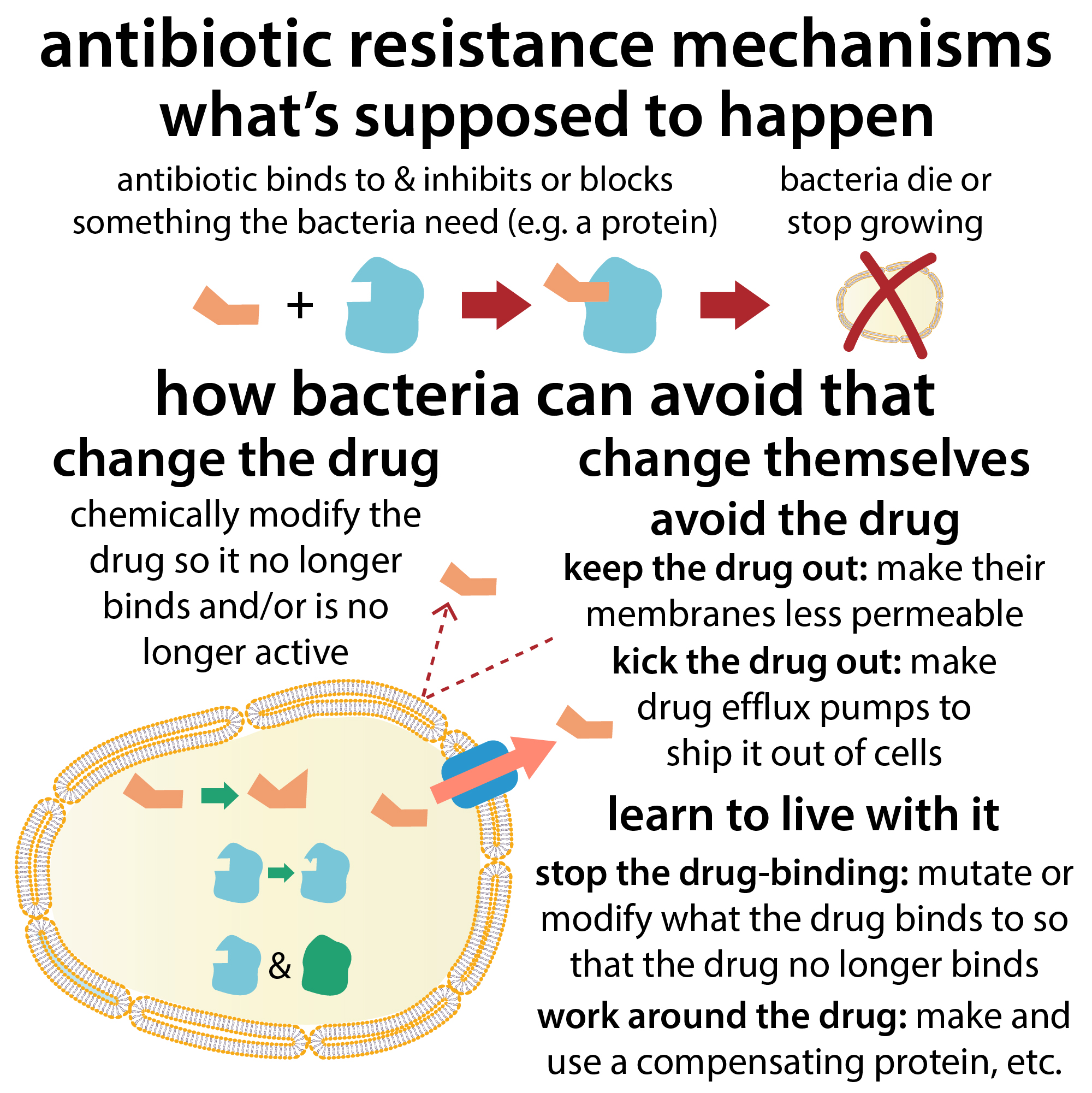
Antibiotics typically target key components of bacterial machinery, such as the proteins they need to build cell walls or copy their DNA. Or the protein/RNA complexes called ribosomes they need to make those proteins that make other things. Antibiotics can bind and inhibit these, causing the bacteria to die or at least stop growing. There are lots of different strategies bacteria can take to prevent this from happening. But the basic strategies can be broadly classified as the bacteria…
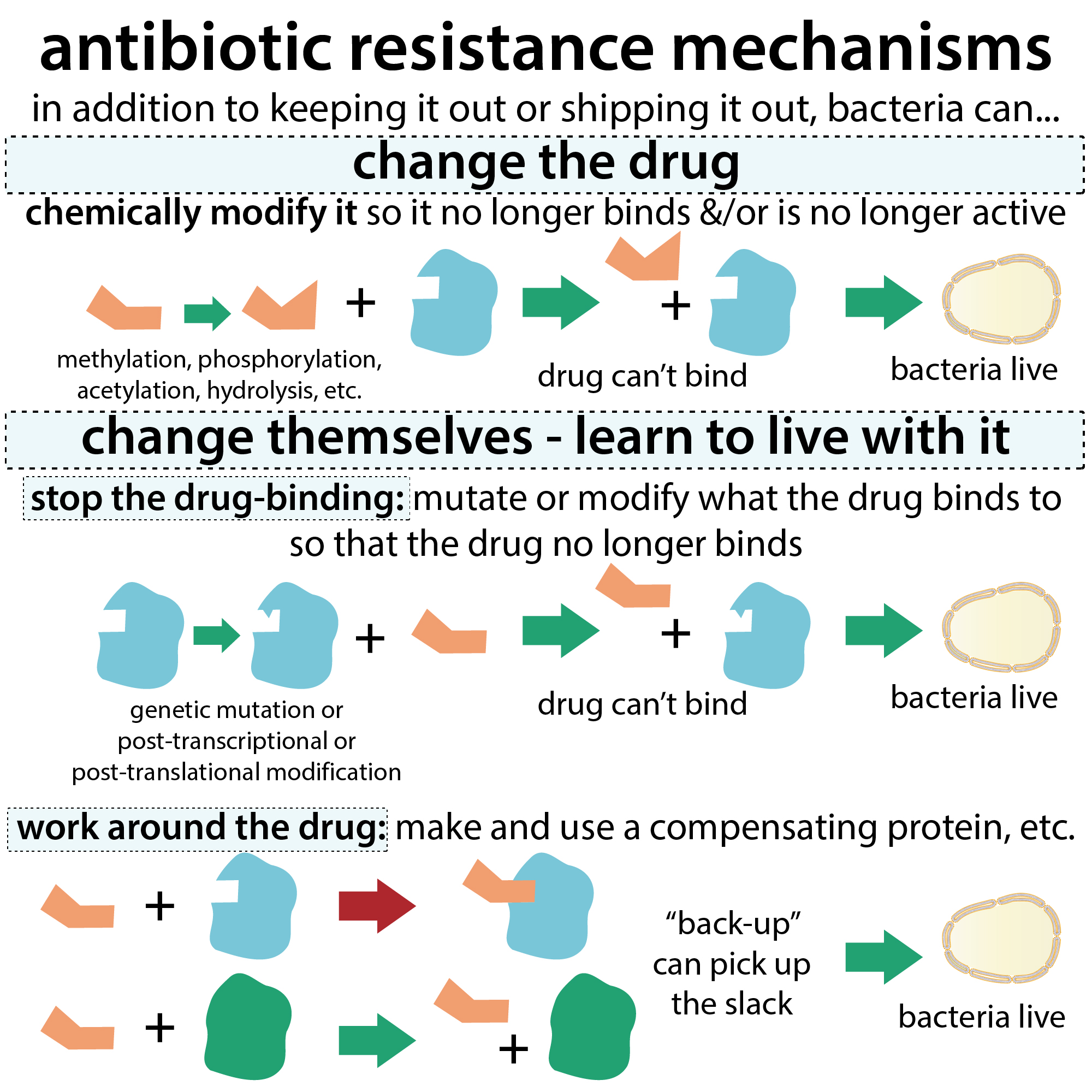
- Change the drug: chemically modify the drug so it is no longer active
- Change themselves:
- Avoid the drug:
- Keep the drug out: make their membrane less permeable (gram-negative bacteria have intrinsic resistance to many compounds because of their 2 thick membranes)
- Kick the drug out: make drug efflux pumps to actively ship it out of cells
- Learn to live with it:
- Stop the drug-binding: mutate or modify what the drug binds to so that the drug no longer binds
- Work around the drug: make and use a compensating protein, etc.
- Avoid the drug:
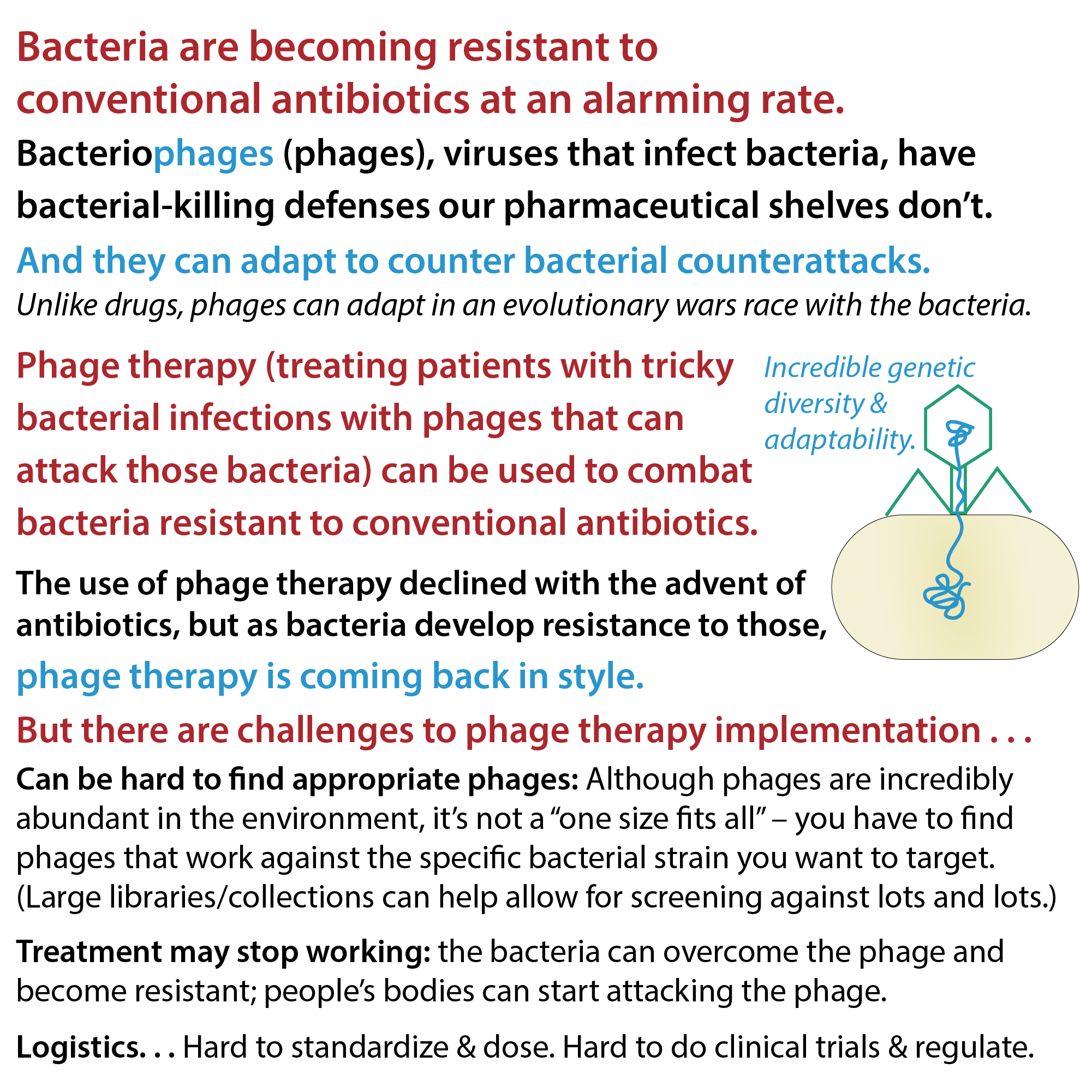
So lots of paths to resistance. And there are lots of paths to those paths. AMR can arise thanks to random mutations that happen to protect bacteria from a certain antibiotic. Random mutations happen lots and lots as bacteria rapidly multiply. So there’s plenty of opportunity for this. But there are also other ways to acquire resistance “pre-made.” For example, through horizontal gene transfer, bacteria can transfer DNA between one another. And if that DNA contained a resistance-conferring gene… Bacteria can also pick up resistance genes with the help of bacteria-infecting viruses called bacteriophages or “phages” for short.
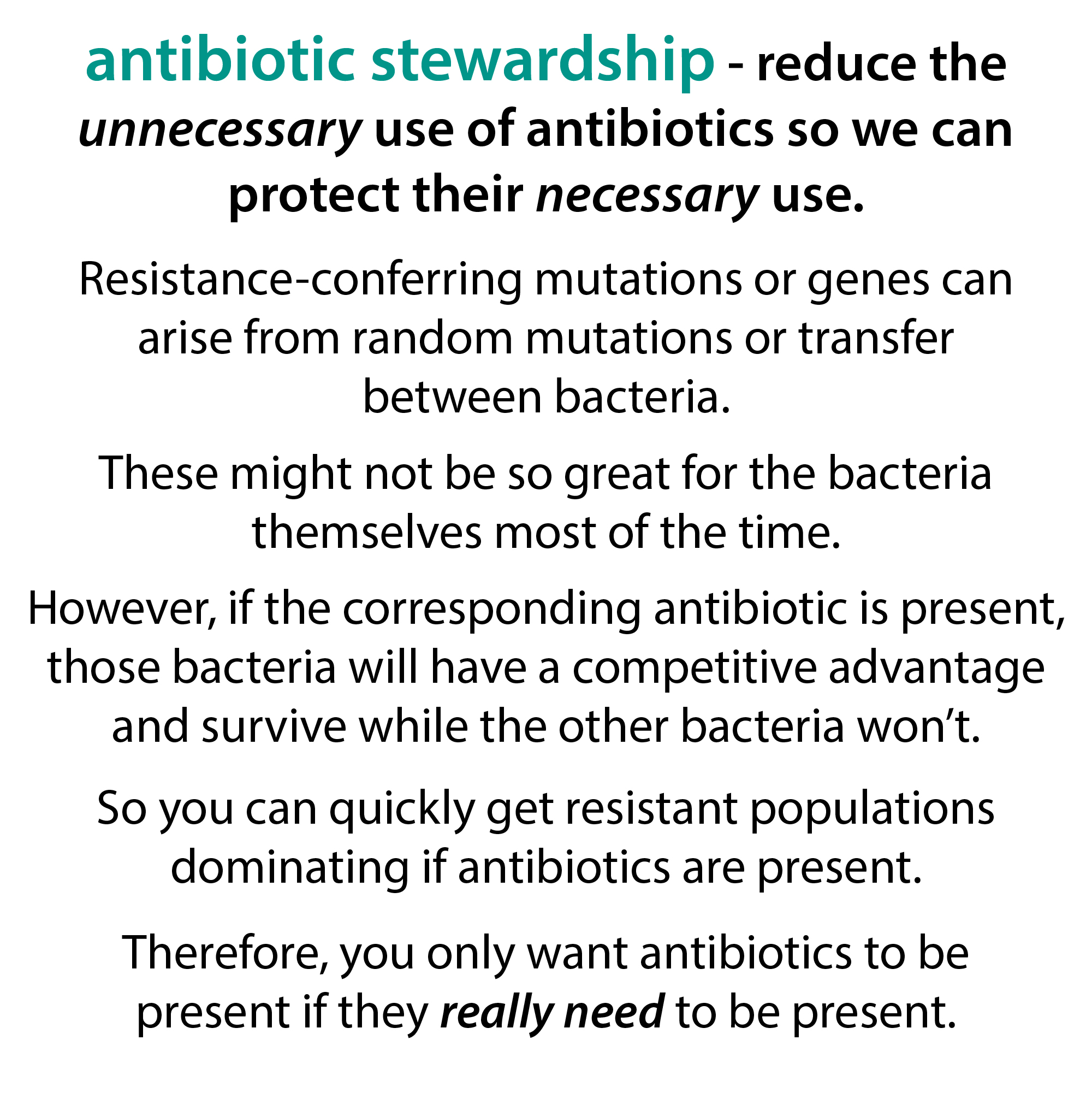
Resistance-conferring mutations or genes might not be great for the bacteria themselves most of the time, especially if they make changes in key bacterial machinery that has been finely honed over millennia. However, if the corresponding antibiotic is present (I.e. there is selective pressure), those bacteria will have a competitive advantage and survive while the other bacteria won’t. So you can quickly get resistant populations dominating if there are antibiotics present. And therefore, you only want antibiotics to be present if they really need to be present.
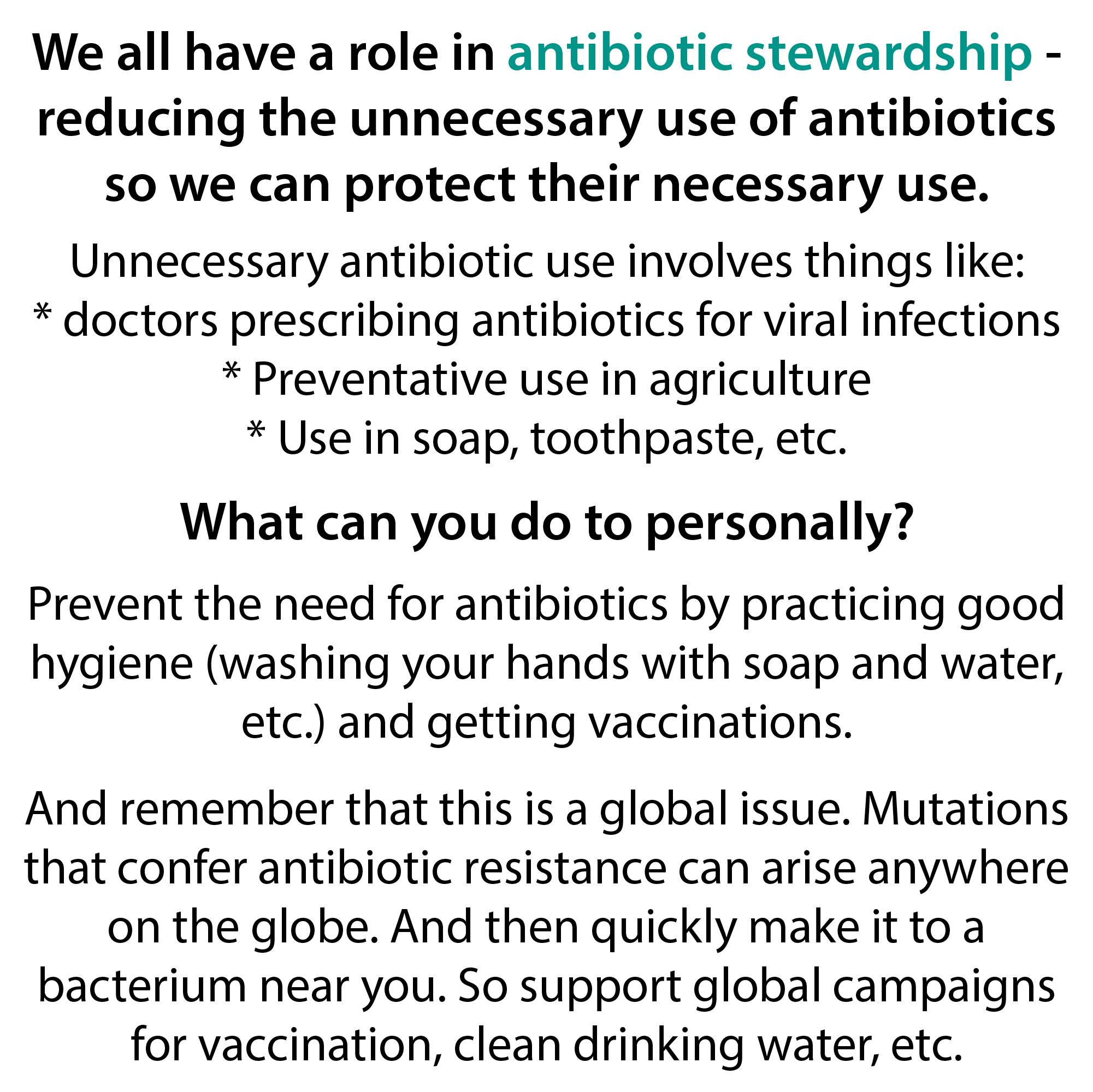
This is why it’s so important to practice good antibiotic “stewardship” – reduce the unnecessary use of antibiotics so we can protect their necessary use.
Unnecessary use involves things like:
- doctors prescribing antibiotics for viral infections
- Preventative use in agriculture
- Use in soap, toothpaste, etc.
In addition to reducing unnecessary use, we can reduce how much use is necessary. How? Prevention! And this is something everyone can do on a personal basis (as well as supporting larger sanitation efforts). Prevent the need for antibiotics by practicing good hygiene (washing your hands with soap and water, etc.) and getting vaccinations.
And remember that this is a global issue. Mutations that confer antibiotic resistance can arise anywhere on the globe. And then quickly make it to a bacterium near you. So support to lab global campaigns for vaccination, clean drinking water, etc.
Don’t know where to start? Who to turn to? You can turn to WHO!
Here’s the World Health Organization page on their WAAW campaign https://www.who.int/campaigns/world-antimicrobial-awareness-week/2022
And here’s a link to their Antimicrobial Resistance Course Series: https://openwho.org/channels/amr
As for more details, of the journal articles & official reports ilk, here are a few great ones, including the ones I cited for the stats:
- Antimicrobial Resistance Collaborators (Murray et al.) (2022). Global burden of bacterial antimicrobial resistance in 2019: a systematic analysis. Lancet (London, England), 399(10325), 629–655. https://doi.org/10.1016/S0140-6736(21)02724-0
- CDC’s Antibiotic Resistance Threats Report, 2019 – HHS.gov https://www.hhs.gov/sites/default/files/michael-craig-cdc-talk-thursday-am-508.pdf
- COVID-19: U.S. Impact on Antimicrobial Resistance, Special Report 2022 https://www.cdc.gov/drugresistance/pdf/covid19-impact-report-508.pdf
- Nelson, R. E., Hatfield, K. M., Wolford, H., Samore, M. H., Scott, R. D., Reddy, S. C., Olubajo, B., Paul, P., Jernigan, J. A., & Baggs, J. (2021). National Estimates of Healthcare Costs Associated With Multidrug-Resistant Bacterial Infections Among Hospitalized Patients in the United States. Clinical infectious diseases : an official publication of the Infectious Diseases Society of America, 72(Suppl 1), S17–S26. https://doi.org/10.1093/cid/ciaa1581
- Laxminarayan R. (2022). The overlooked pandemic of antimicrobial resistance. Lancet (London, England), 399(10325), 606–607. https://doi.org/10.1016/S0140-6736(22)00087-3
If you want more on mechanisms, this is a really comprehensive review paper: Darby, E. M., Trampari, E., Siasat, P., Gaya, M. S., Alav, I., Webber, M. A., & Blair, J. M. A. (2022). Molecular mechanisms of antibiotic resistance revisited. Nature reviews. Microbiology, 10.1038/s41579-022-00820-y. Advance online publication. https://doi.org/10.1038/s41579-022-00820-y if that link doesn’t work, try: https://rdcu.be/c0htu
more on antibiotic resistance mechanisms and how we take advantage of them in the lab to select for bacteria containing plasmids of interest: https://bit.ly/antibioticselections & https://youtu.be/YXg56OH3N3A
Related posts: