“Adverse events” and “side effects” can be caused by off-target and/or on-target activity
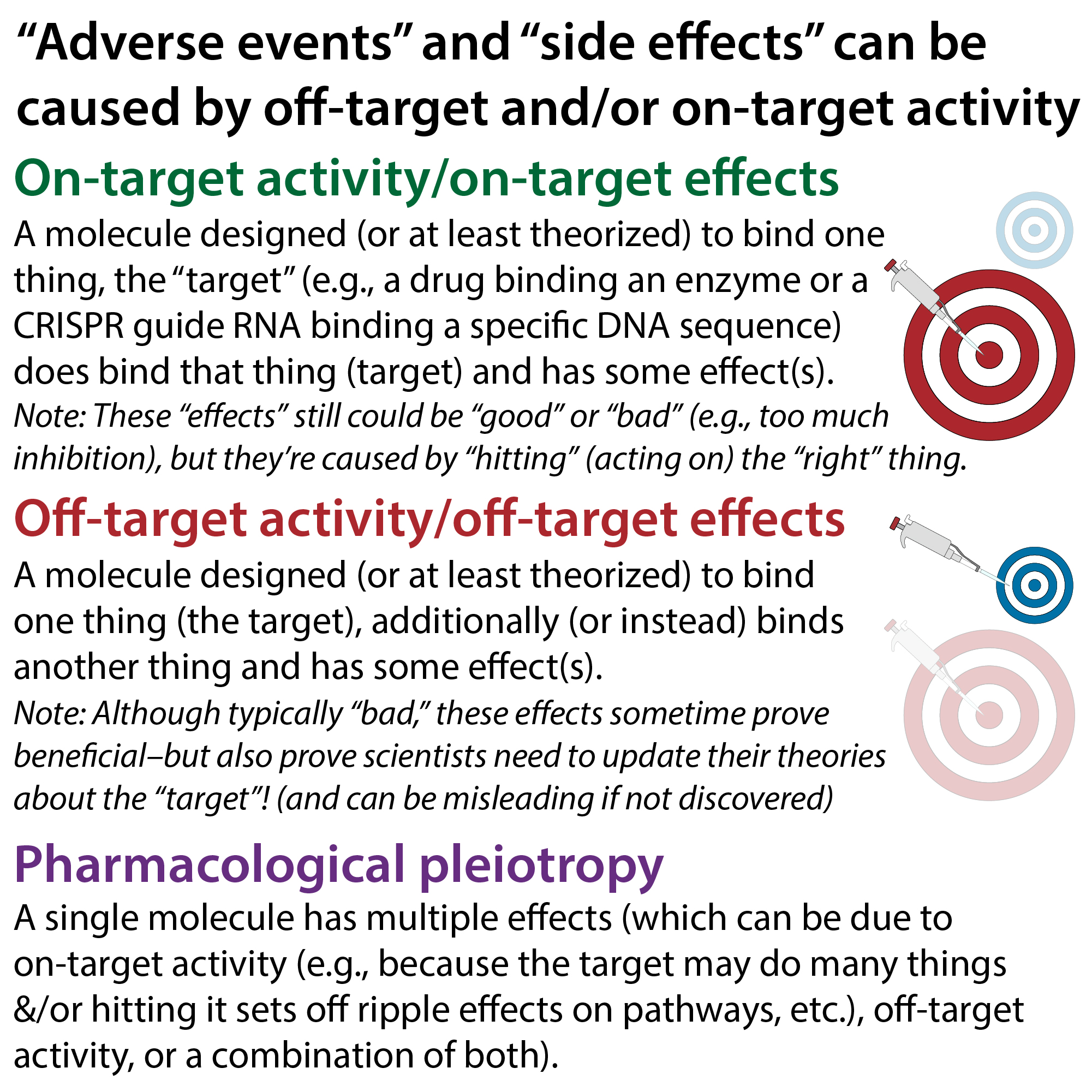
On-target activity/on-target effects: A molecule designed (or at least theorized) to bind one thing, the “target” (e.g., a drug binding an enzyme or a CRISPR guide RNA binding a specific DNA sequence) does bind that thing (target) and has some effect(s). Note: These “effects” still could be “good” or “bad” (e.g., too much inhibition), but they’re caused by “hitting” (acting on) the “right” thing.
Off-target activity/off-target effects: A molecule designed (or at least theorized) to bind one thing (the target), additionally (or instead) binds another thing and has some effect(s). Note: Although typically “bad,” these effects sometime prove beneficial-but also prove scientists need to update their theories about the “target”! (and can be misleading if not discovered)
Pharmacological pleiotropy: A single molecule has multiple effects (which can be due to on-target activity (e.g., because the target may do many things &/or hitting it sets off ripple effects on pathways, etc.), off-target activity, or a combination of both).
Off-target activity with pharmaceuticals (“drugs”) &/or experimental compounds, etc.: Molecule binds wrong protein (or other intended molecular target)
Problems:
- Adverse events, side effects
- Misleading results leading to wasted time, effort, & $
Solutions:
- Avoidance:
- Computational prediction of off-target binding sites
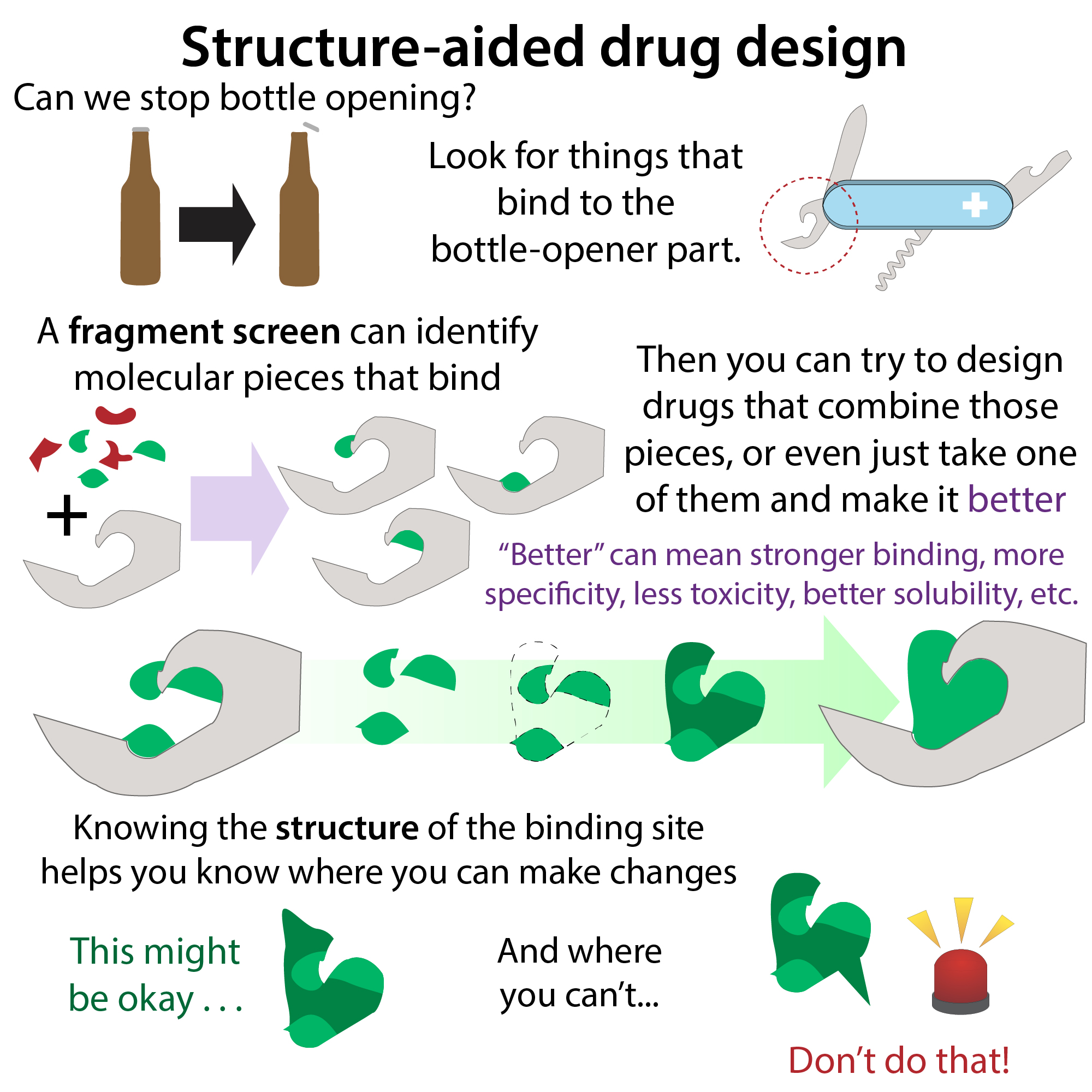
- Structure-solving (e.g., x-ray crystallography) and/or prediction, molecular docking, & structure-aided design (“rational design”) to improve selectivity
- Detection:
- Experimental screening methods to detect binding to likely off-target molecules (e.g., proteins in the same family)
- “Unbiased” experimental screening methods to detect unpredicted binding and/or activity (which should then be followed up)
- Work-arounds:
- Improve localization of delivery to limit off-target damage
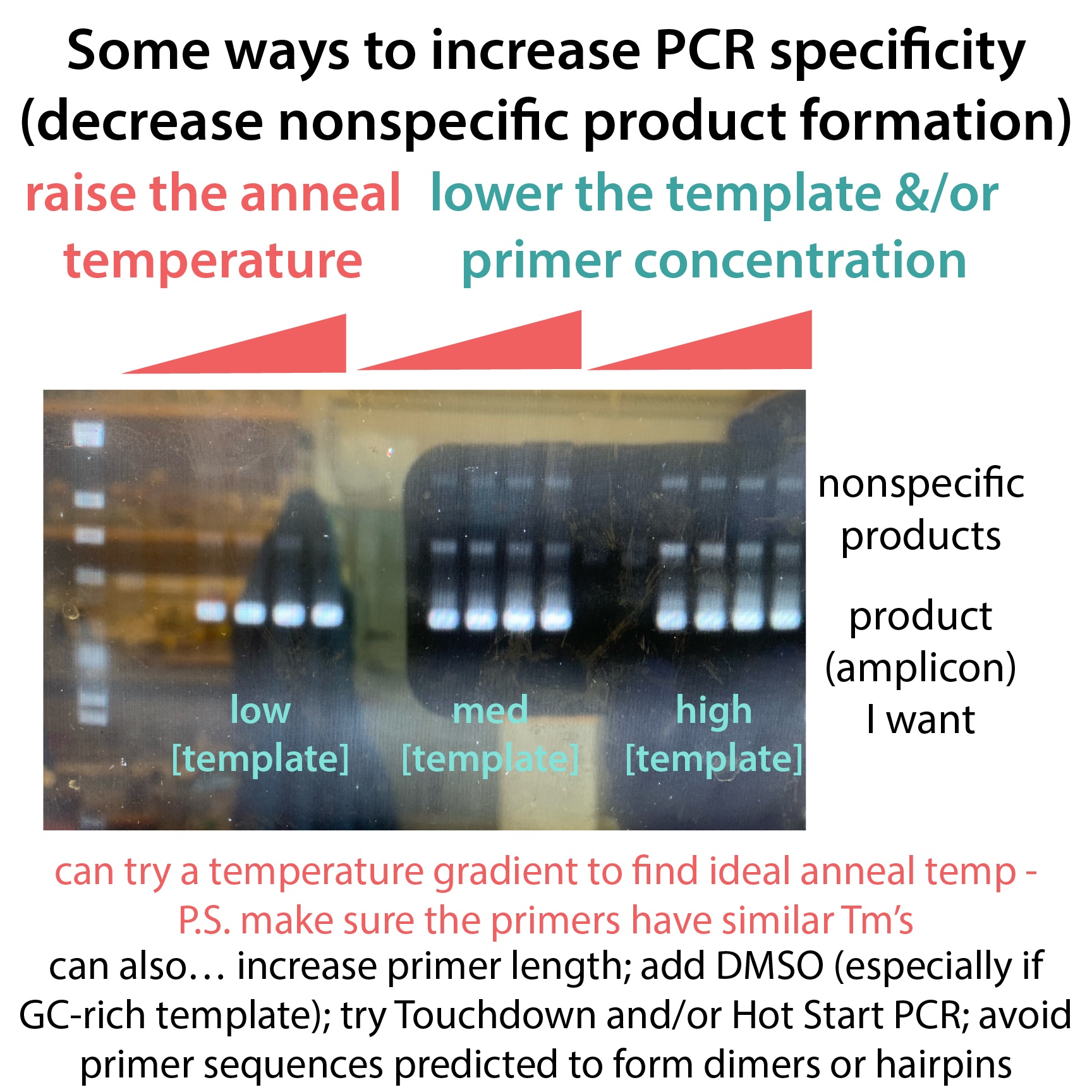
Off-target activity with PCR: Primer binds “non-specifically” to sequences similar to the intended sequence
Problems:
- Results in mix of PCR products
- Inefficient production of desired PCR product
- Potential “false positives” in qPCR
Solutions:
- Computational prediction of off-target binding sites during primer design (e.g. with NIH’s Primer BLAST tool)
- Increase length of primer to improve specificity
- Raise anneal temperature
- When doing qPCR, use sequence-specific probes (e.g., Taqman), use multiple primers, confirm via another method (e.g. RNAseq)
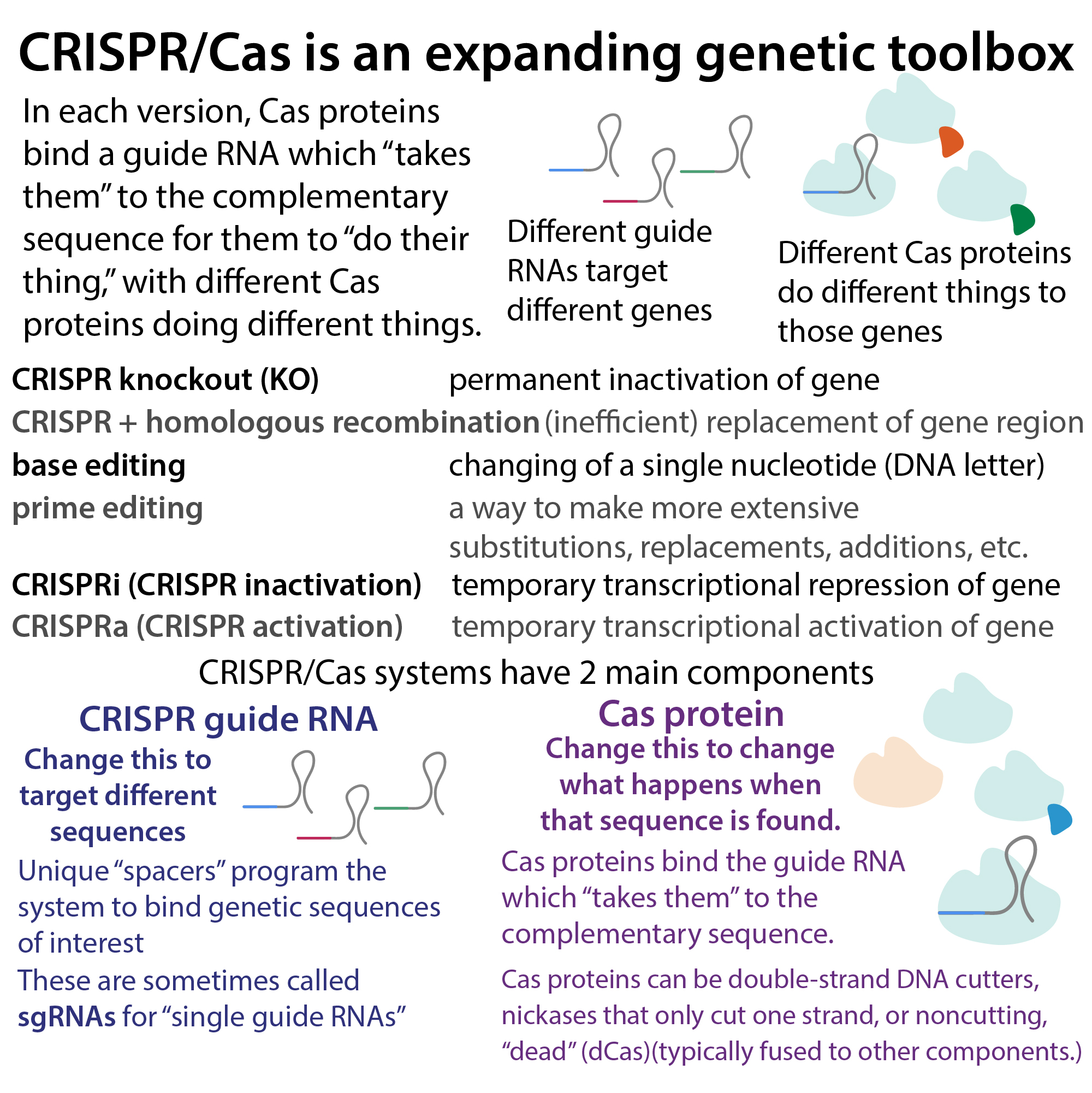
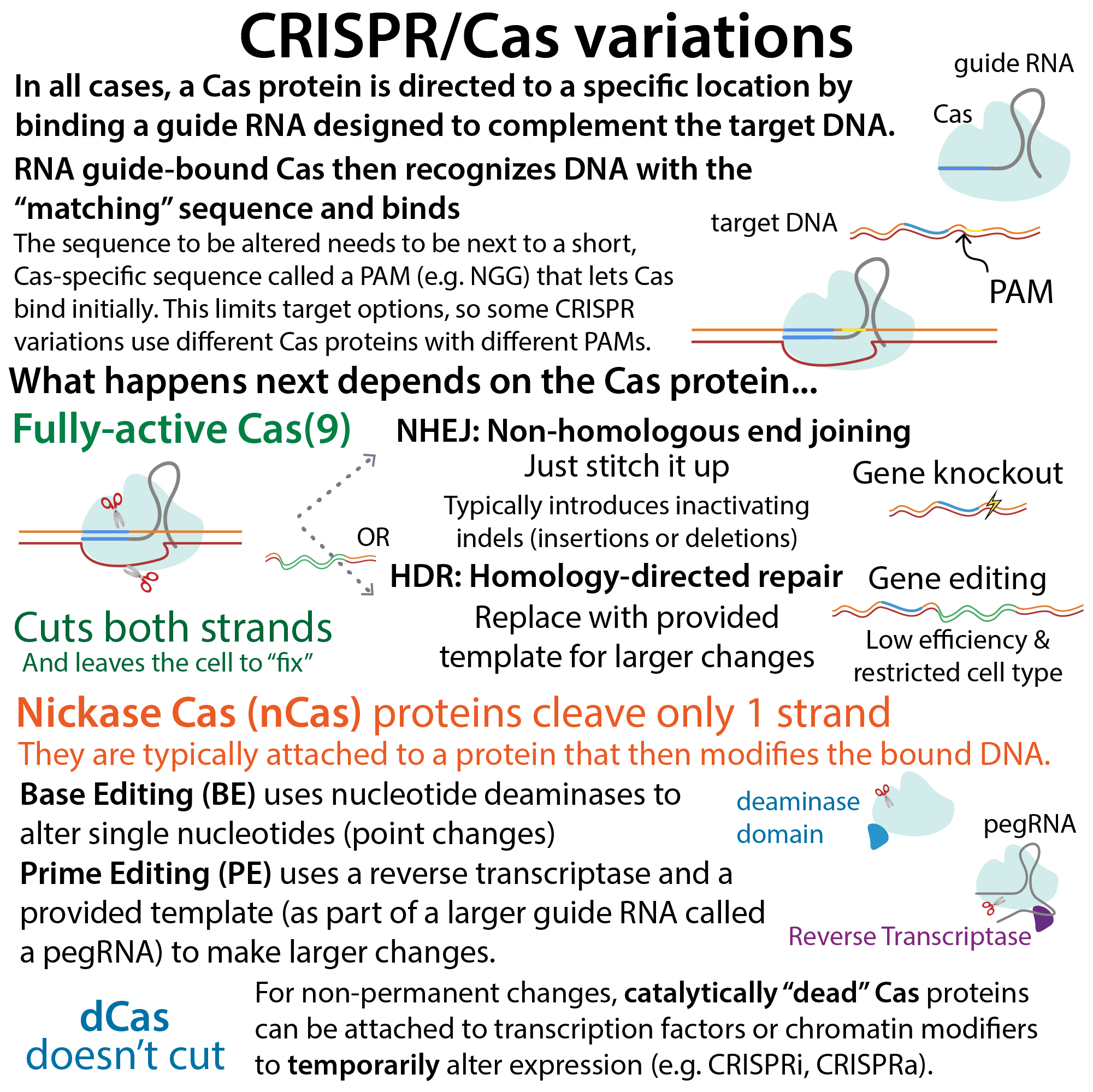
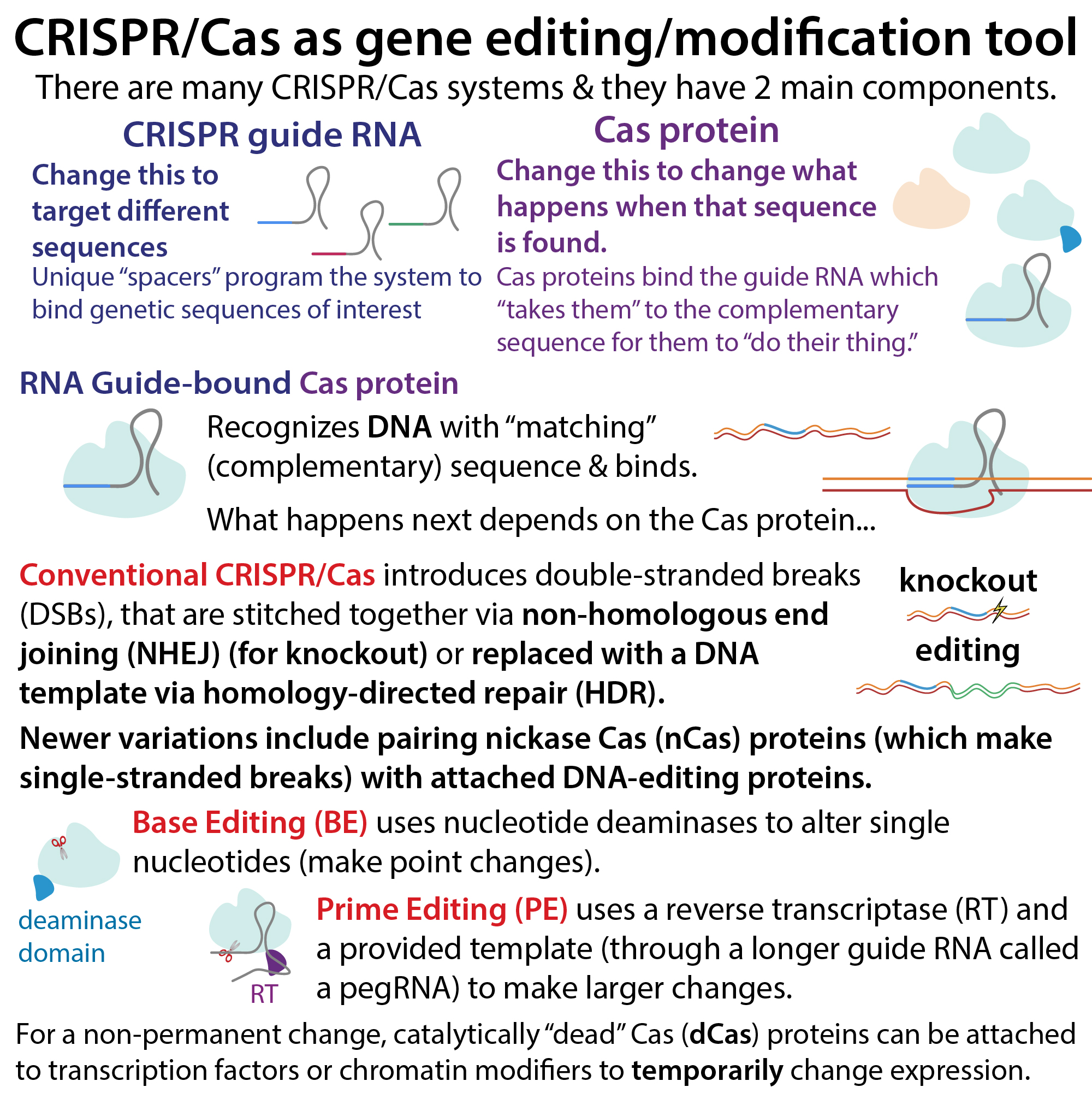
Off-target activity with gene editing: CRISPR guide binds & cuts wrong DNA sequence (often due to high sequence similarity)
- Problems (potentially permanent):
- Unintended “off-target” edits (which may be harmful)
- Inefficient “on-target” edits
- Misleading results leading to wasted time, effort, & $
- Solutions:
- Avoidance:
- Computational prediction of off-target binding sites during guide design (and subsequent avoidance)
- Early detection:
- Experimental screening methods to detect off-target binding of designed guides prior to use
- Post-editing sequencing to confirm intended edits and spot unintended ones
- Work-arounds:
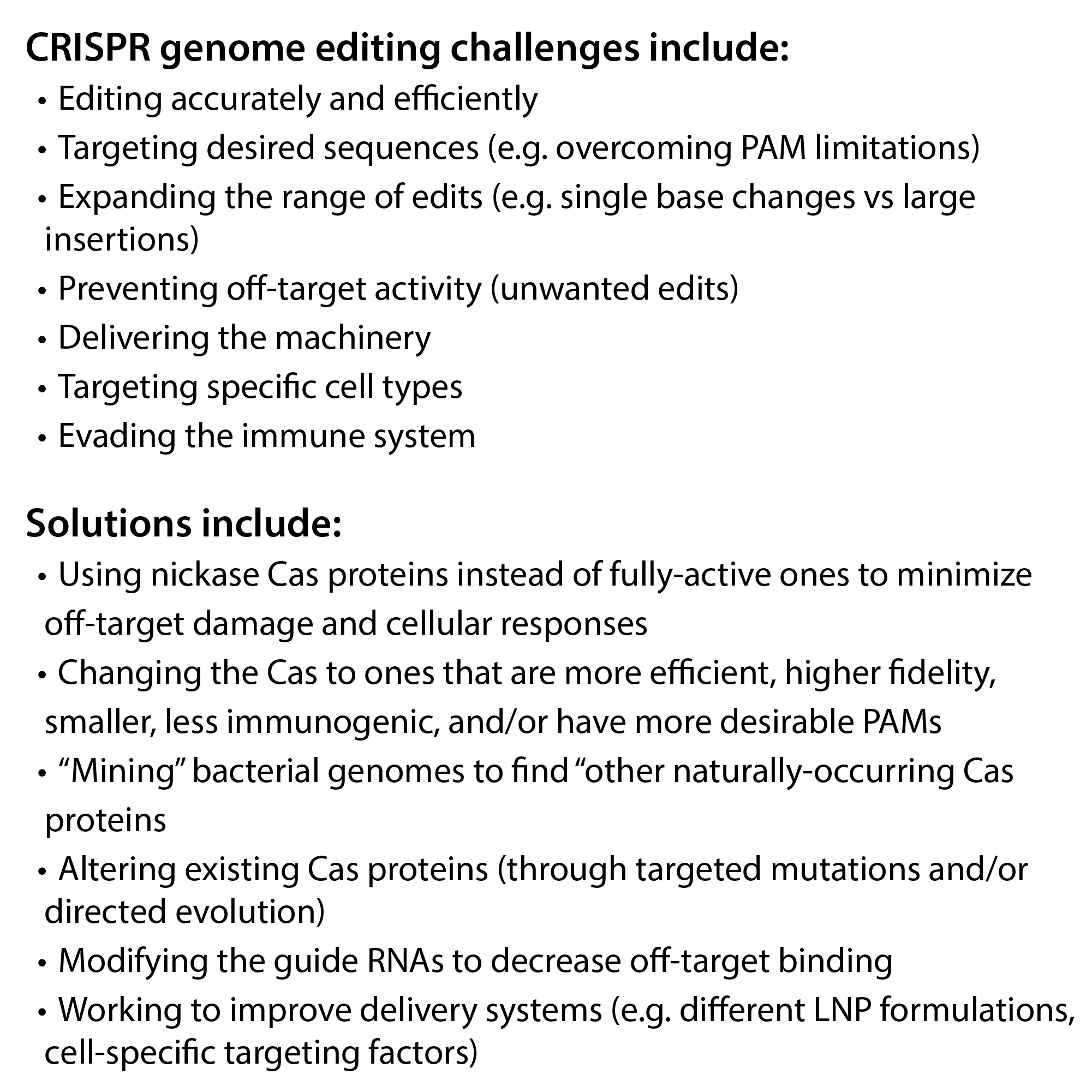
- Use of CRISPR systems with greater specificity (different Cas proteins, modified guides, etc.)
- Avoidance:
Recommended reading:
- Lipinski, C. A.; Reaume, A. G. Phenotypic Screening of Low Molecular Weight Compounds Is Rich Ground for Repurposed, on-Target Drugs. Front. Pharmacol. 2022, 13. https://doi.org/10.3389/fphar.2022.917968.
- Lin, A.; Giuliano, C. J.; Palladino, A.; John, K. M.; Abramowicz, C.; Yuan, M. L.; Sausville, E. L.; Lukow, D. A.; Liu, L.; Chait, A. R.; Galluzzo, Z. C.; Tucker, C.; Sheltzer, J. M. Off-Target Toxicity Is a Common Mechanism of Action of Cancer Drugs Undergoing Clinical Trials. Sci Transl Med 2019, 11 (509), eaaw8412. https://doi.org/10.1126/scitranslmed.aaw8412.
- Van Vleet, T. R.; Liguori, M. J.; Lynch, Iii, J. J.; Rao, M.; Warder, S. Screening Strategies and Methods for Better Off-Target Liability Prediction and Identification of Small-Molecule Pharmaceuticals. SLAS Discovery 2019, 24 (1), 1–24. https://doi.org/10.1177/2472555218799713.
- Guo, C.; Ma, X.; Gao, F.; Guo, Y. Off-Target Effects in CRISPR/Cas9 Gene Editing. Front Bioeng Biotechnol 2023, 11, 1143157. https://doi.org/10.3389/fbioe.2023.1143157.
More on gene editing: https://bit.ly/crisprcasscience & https://youtu.be/sH6525d-A4s
More on molecular libraries: blog: https://bit.ly/molecularlibraries ; YouTube: https://youtu.be/lkjCiLwzBv0