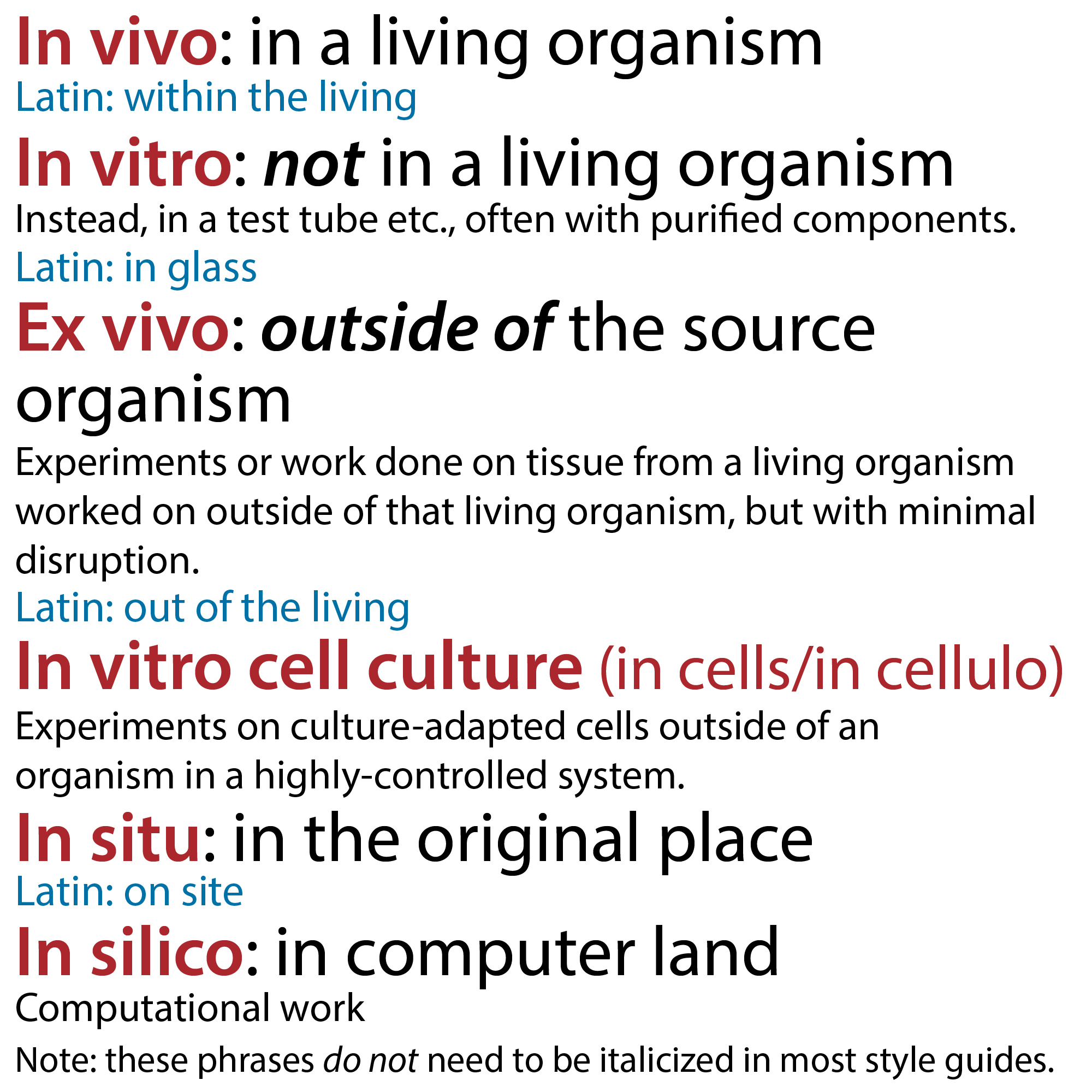
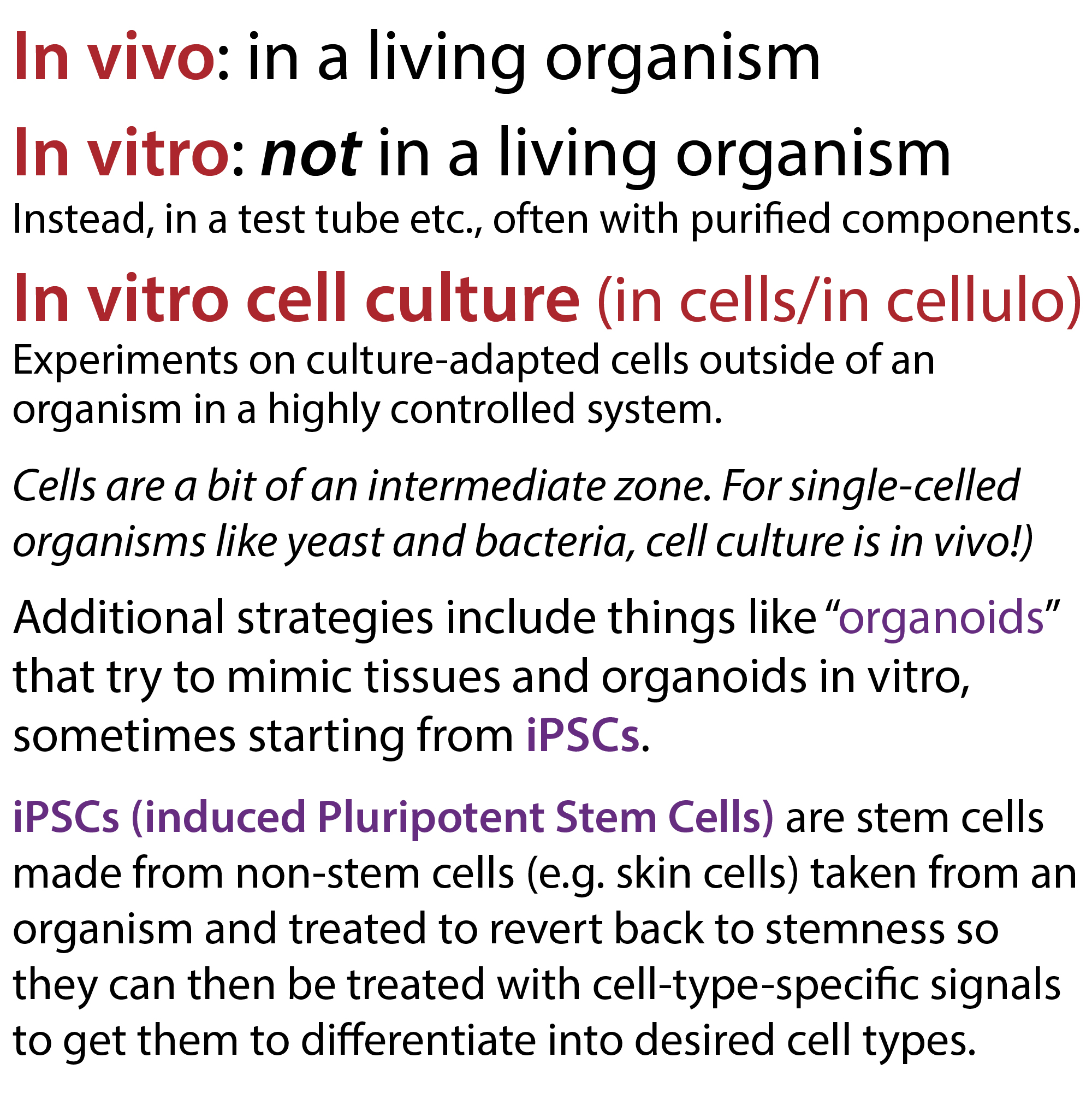
Inside of living organisms. The term comes from Latin: within the living. “In vivo” experiments provide the least experimental control but have the potential to be the most realistic (at least for the organism studied – but are the findings directly transferable to the system you care about? (i.e. a mouse isn’t a human) .
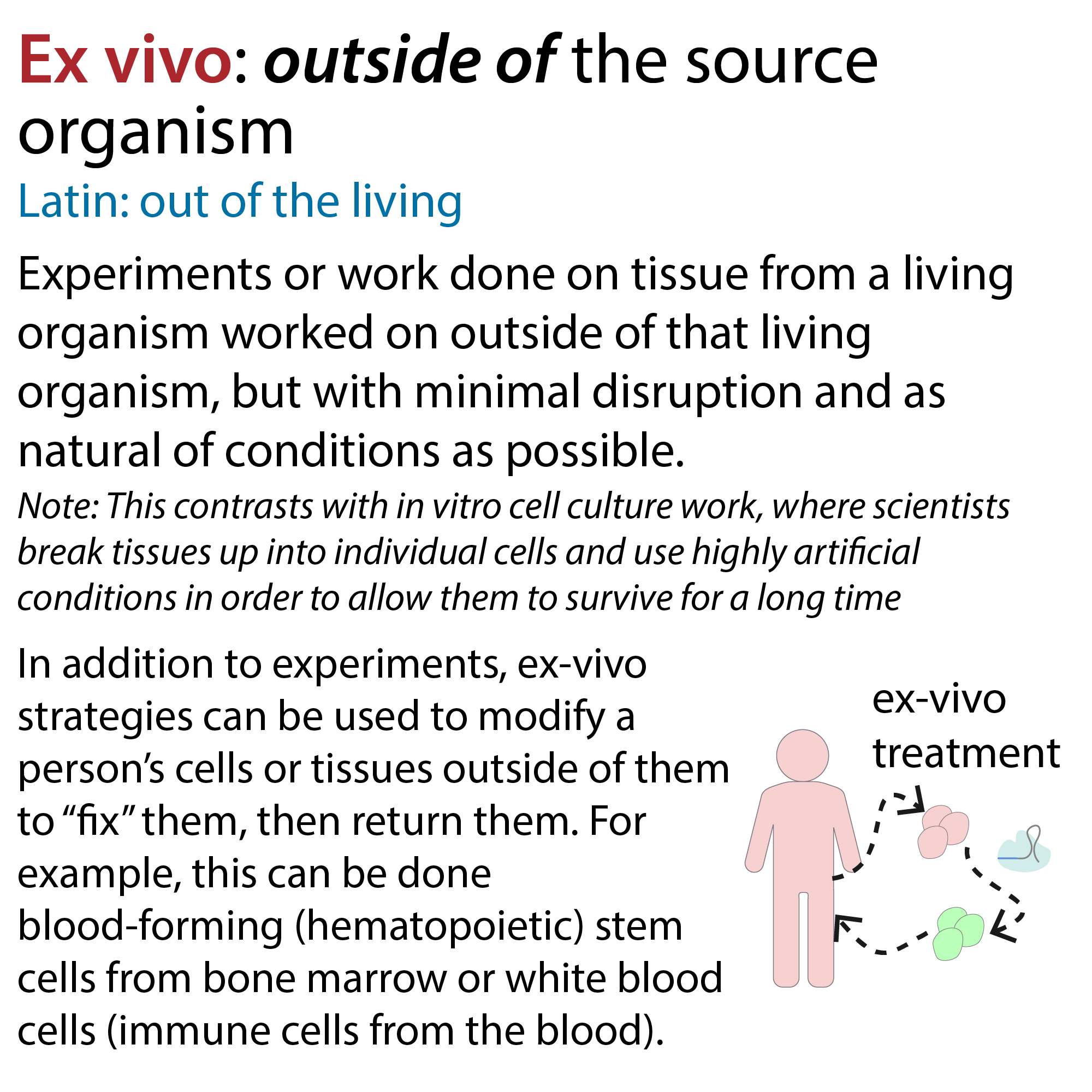
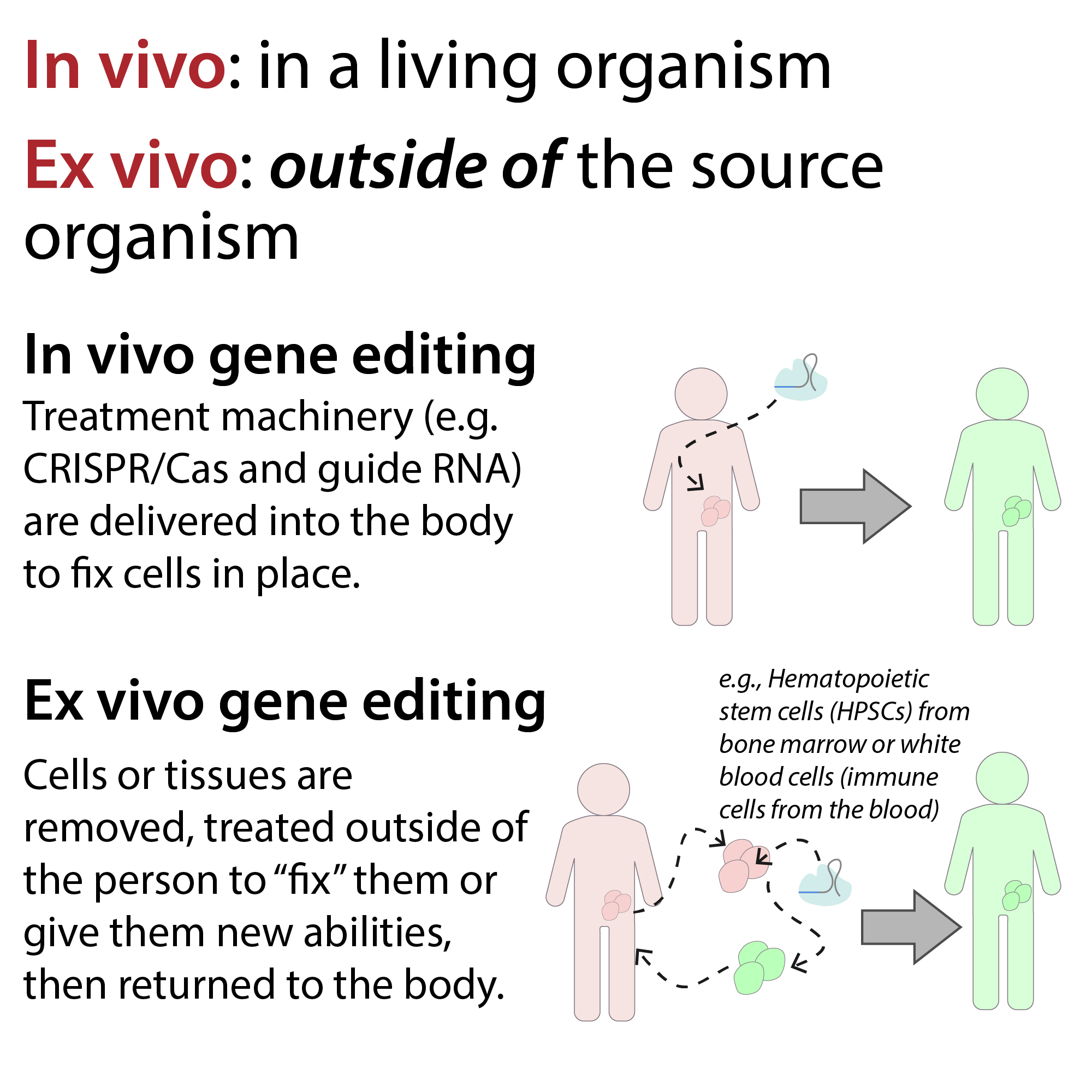
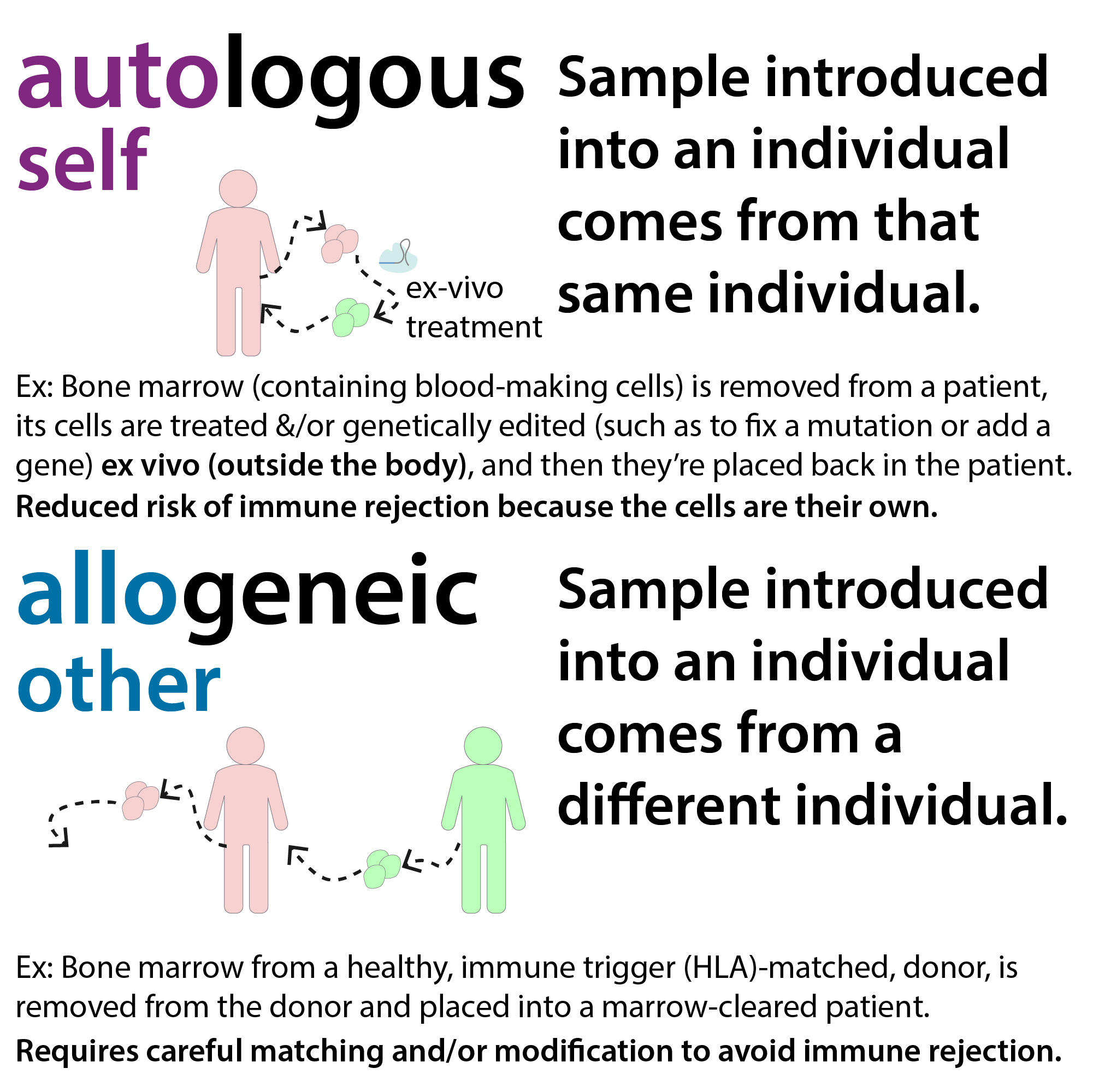
These days, “in vivo” is often used in reference to gene editing. With in vivo gene editing, the treatment machinery (e.g. CRISPR/Cas and guide RNA or the instructions for the cells to make them) are delivered into the body to fix cells in place. With ex vivo (outside the organism) editing, in contrast, cells or are removed, treated outside of the person to “fix” them or give them new abilities, then returned to the body. This is sometimes done with blood-forming, hematopoietic stem cells (HPSCs) and can be used to treat blood disorders (e.g. by editing the cells to make them produce more fetal hemoglobin to compensate for faulty adult hemoglobin). In other forms of ex-vivo editing, leukapheresis is used to remove white blood cells (immune cells) to equip cells with new abilities to do things like fight cancers (e.g. with CAR-T cells).
- Associated posts
- In where? In vitro, in vivo, ex vivo, in situ, & in silico – when it comes to what happens where, here’s what there is to know!
- Choosing an experimental system – in vitro, in cell culture, in vivo, etc.
- Some articles relating to gene therapy and gene editing for sickle cell disease and related disorders
- CRISPR/Cas Science – Gene editing & beyond! (but not without challenges)
- Biopharmaceutical sciences
- Ex vivo
- In vitro
- in silico
- In situ