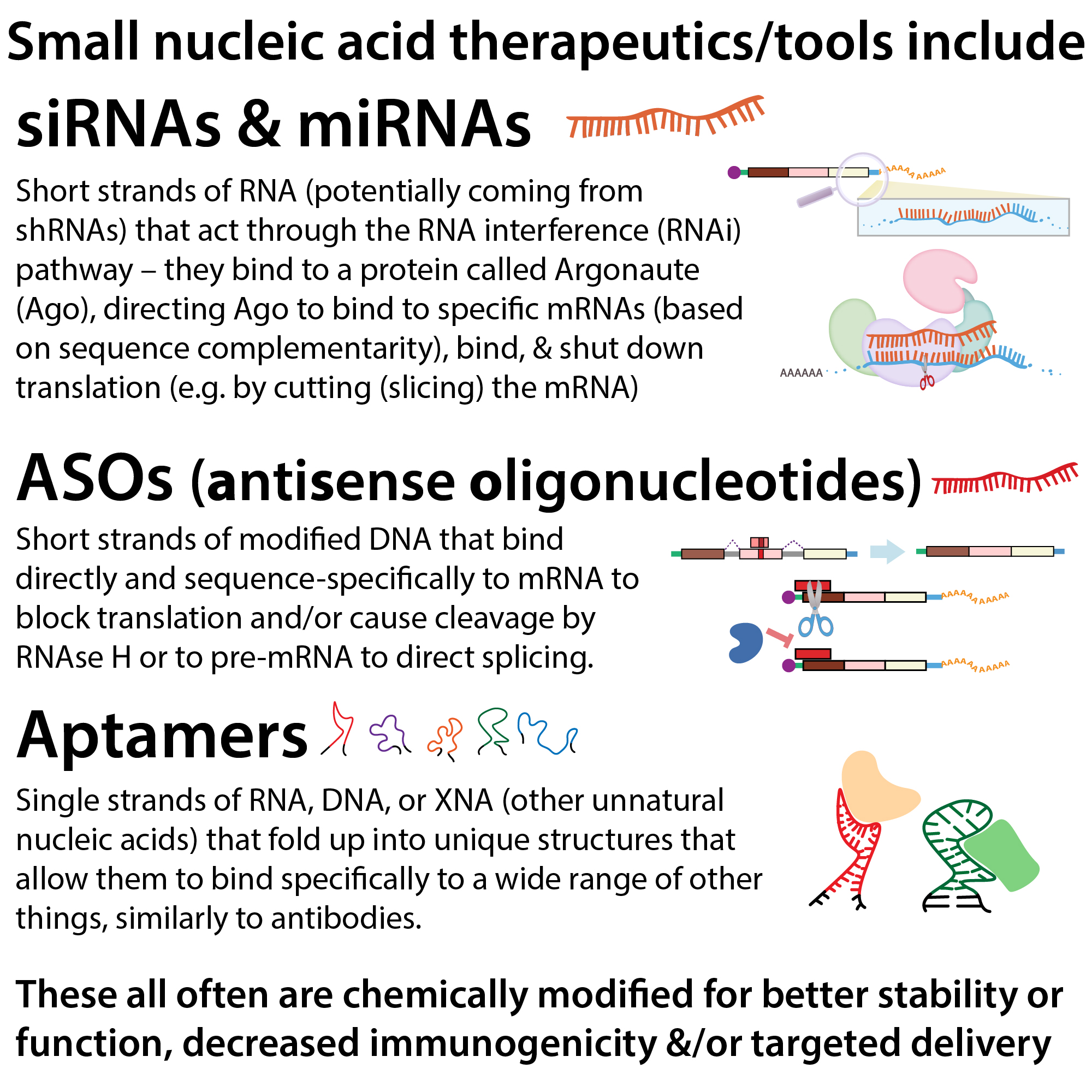
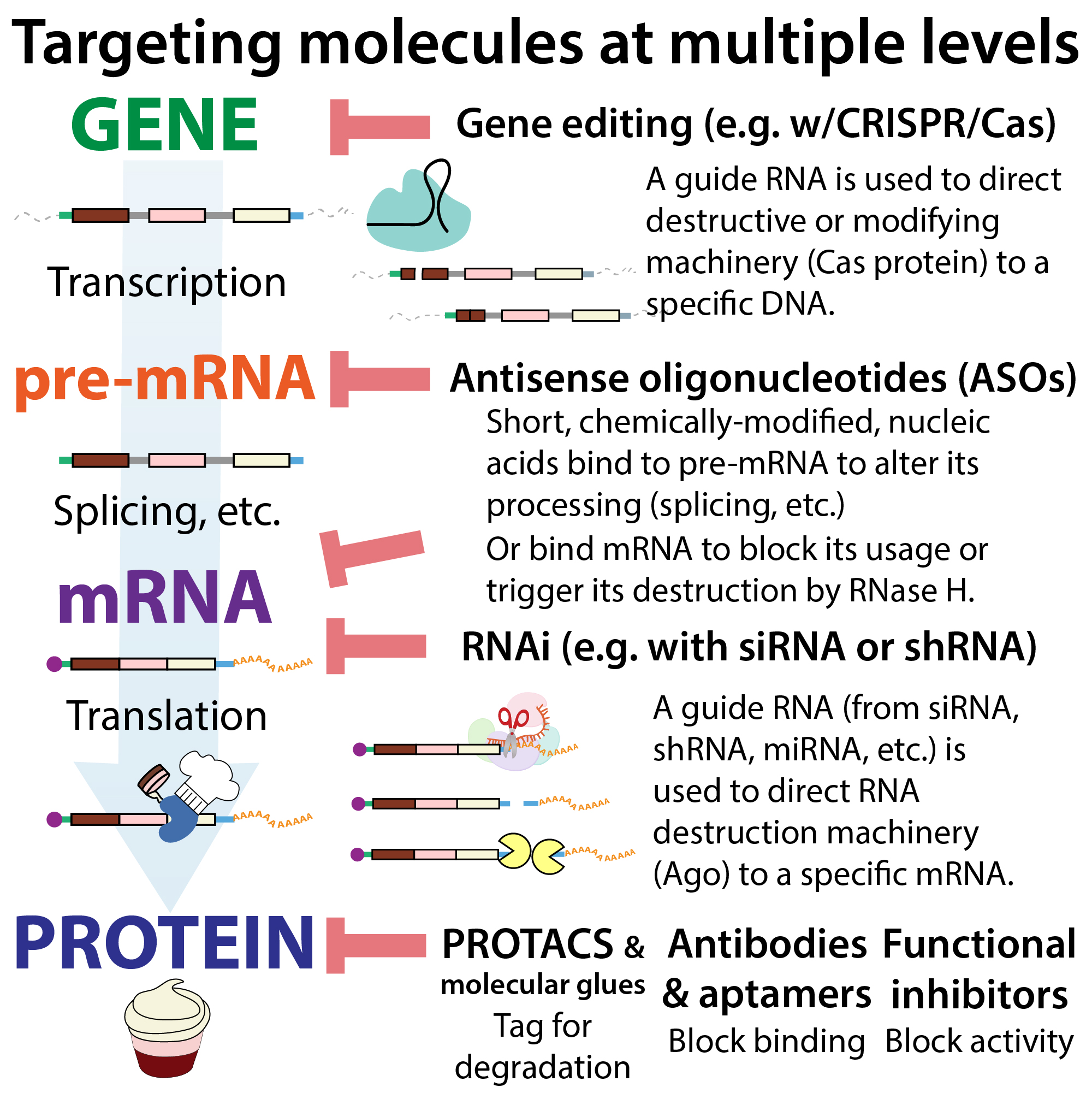
Small nucleic acid therapeutics/tools (sometimes referred to as oligonucleotide therapeutics) include aptamers; RNAi-acting small RNAs – microRNA (miRNA) and small interfering RNA (siRNA); and ASOs (antisense oligonucleotides). These all consist of shortish (oligo-) strands of nucleotides (typically chemically-modified ones), but they work in different ways and on different types of molecules. There are other nucleic acid tools and therapies that involve bigger nucleic acids doing gene therapy, etc. – like mRNAs & CRISPR, that I’m not going to include here, but I do have content on I will link to at the end.
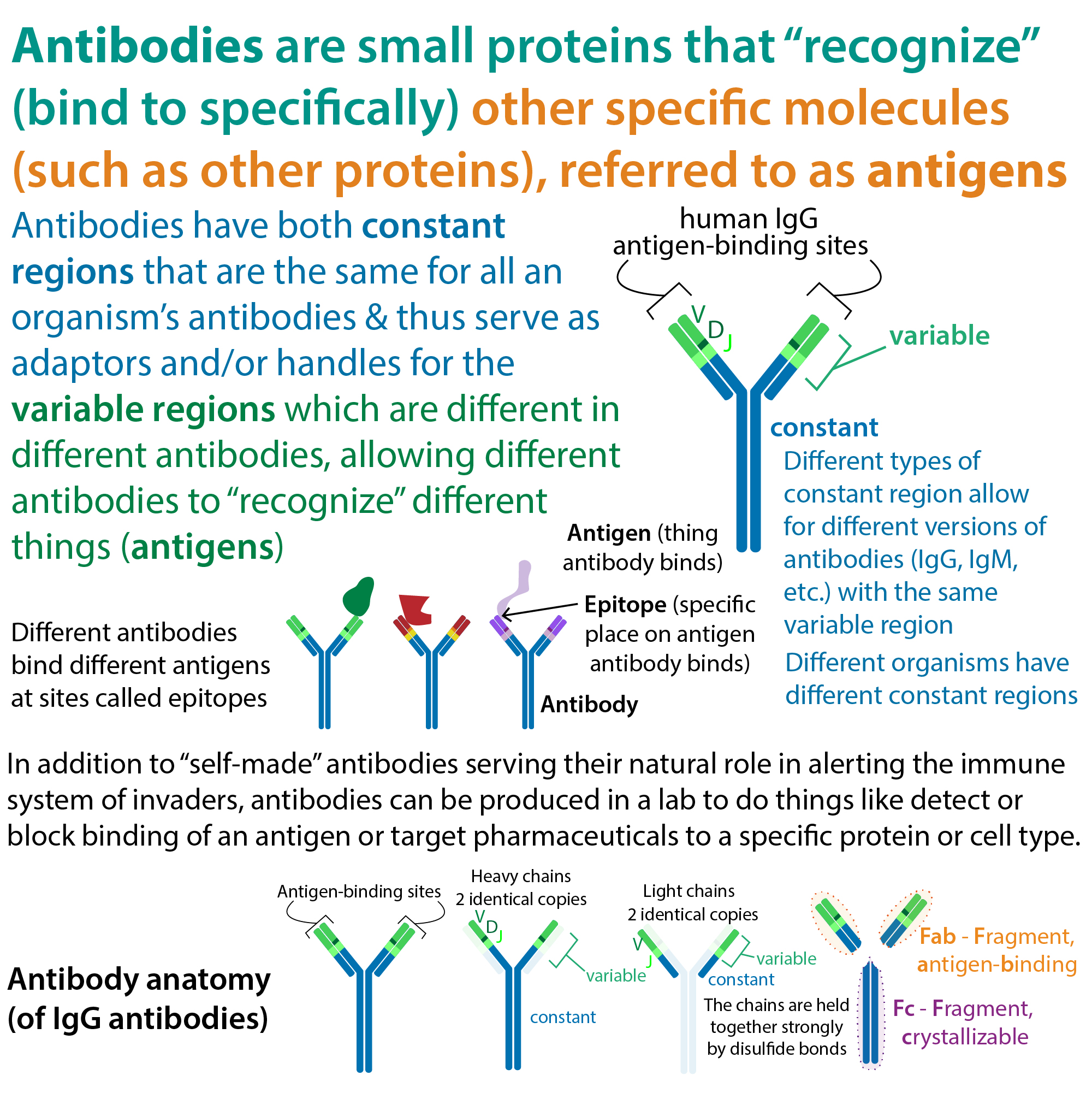
Aptamers are like antibodies, but made of nucleic acids not proteins. Aptamers are (typically chemically-modified) single strands of RNA, DNA, or XNA (other unnatural nucleic acids) that fold up into unique structures that allow them to bind specifically to other things. Unlike most other nucleic acid-based tools & therapeutics (siRNAs, ASOs, etc.), they bind based on shape, not sequence complementarity. This allows them to bind to a larger number of types of things, while maintaining ease of synthesis. Unlike those others as well, they can act outside the cell.
They’re often easier to develop & make as well as more stable & easier to deliver in vivo than proteins. Generic adapters at the end make them easy to amplify (make copies of) via PCR (with or without in vitro transcription depending on the type of nucleic acid desired.
They also be conjugated (chemically attached to) other things to “deliver” those things to specific places. They can be used therapeutically for things like binding & inhibiting proteins or blocking binding to other things, & in vitro for lots of things (biosensing, etc.).
Aptamers are often designed using an iterative in-vitro directed evolution method called SELEX (Systematic Evolution of Ligands by Exponential Enrichment). The basic idea is: Take a big pool of aptamers and …
- See which bind a target molecule
- Wash off the others
- Isolate the best binders & mutate their sequence slightly to try to improve them
- See if they now bind better
How about those others? Much more on them elsewhere (see links) but, here’s the basics:
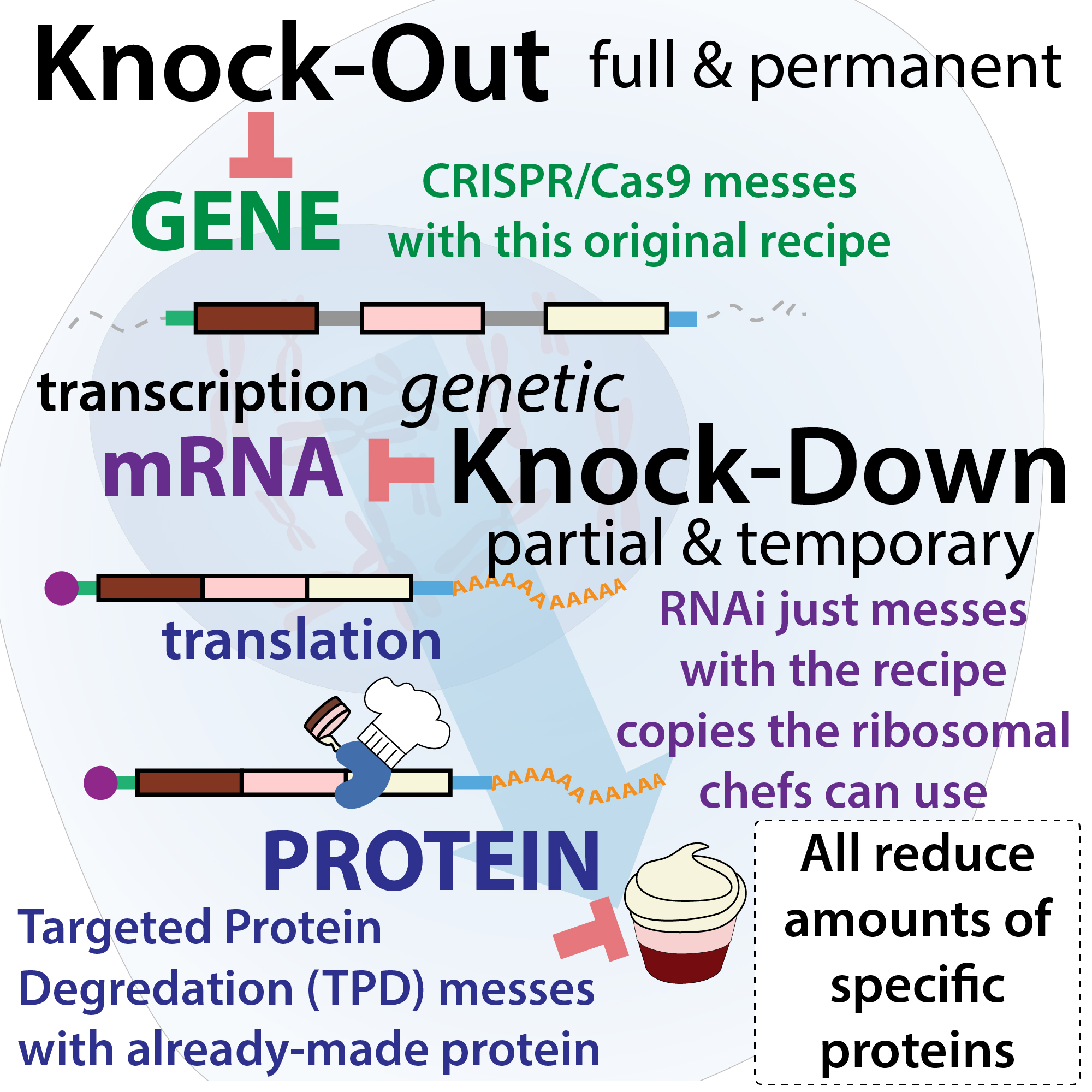
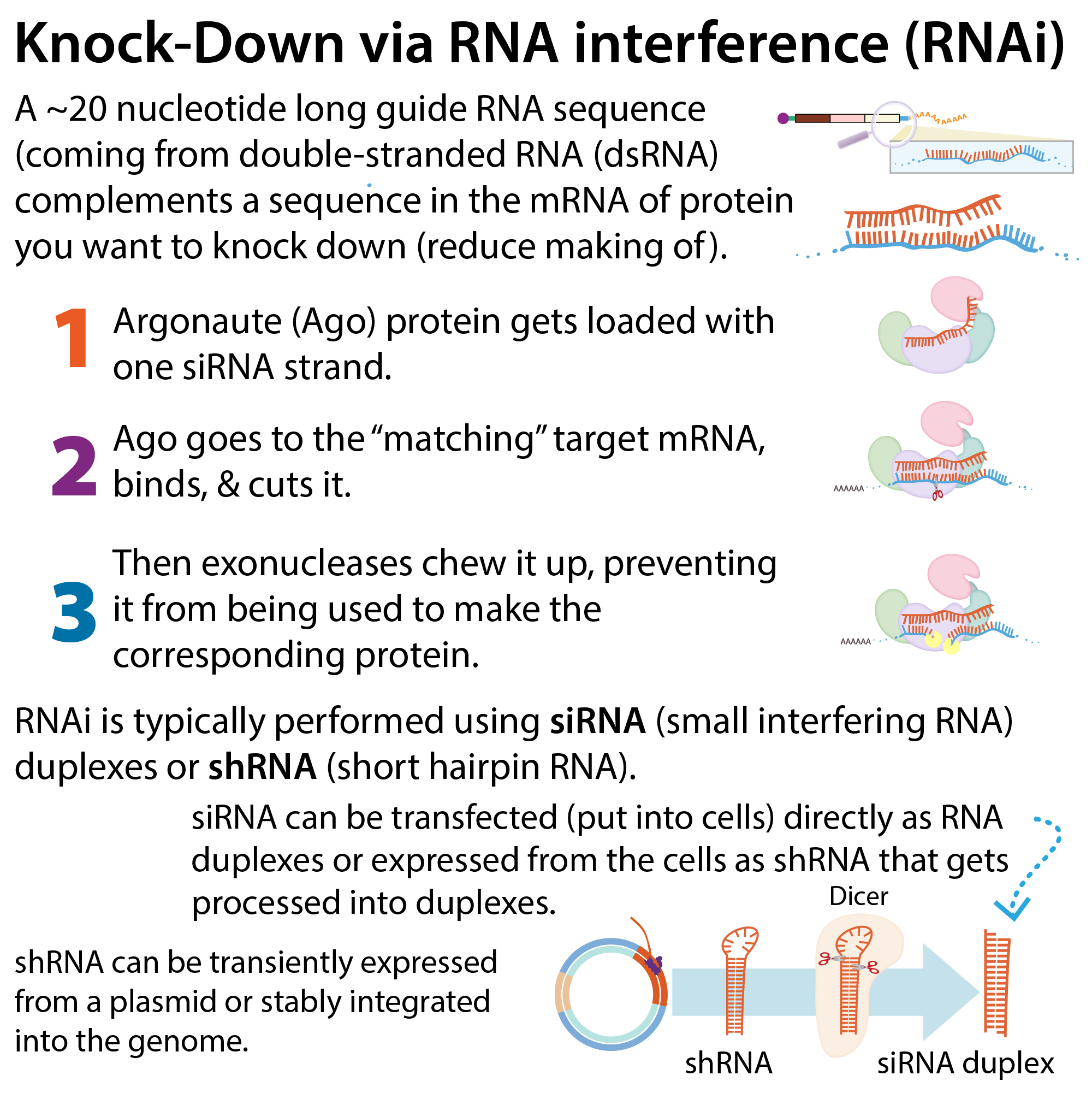
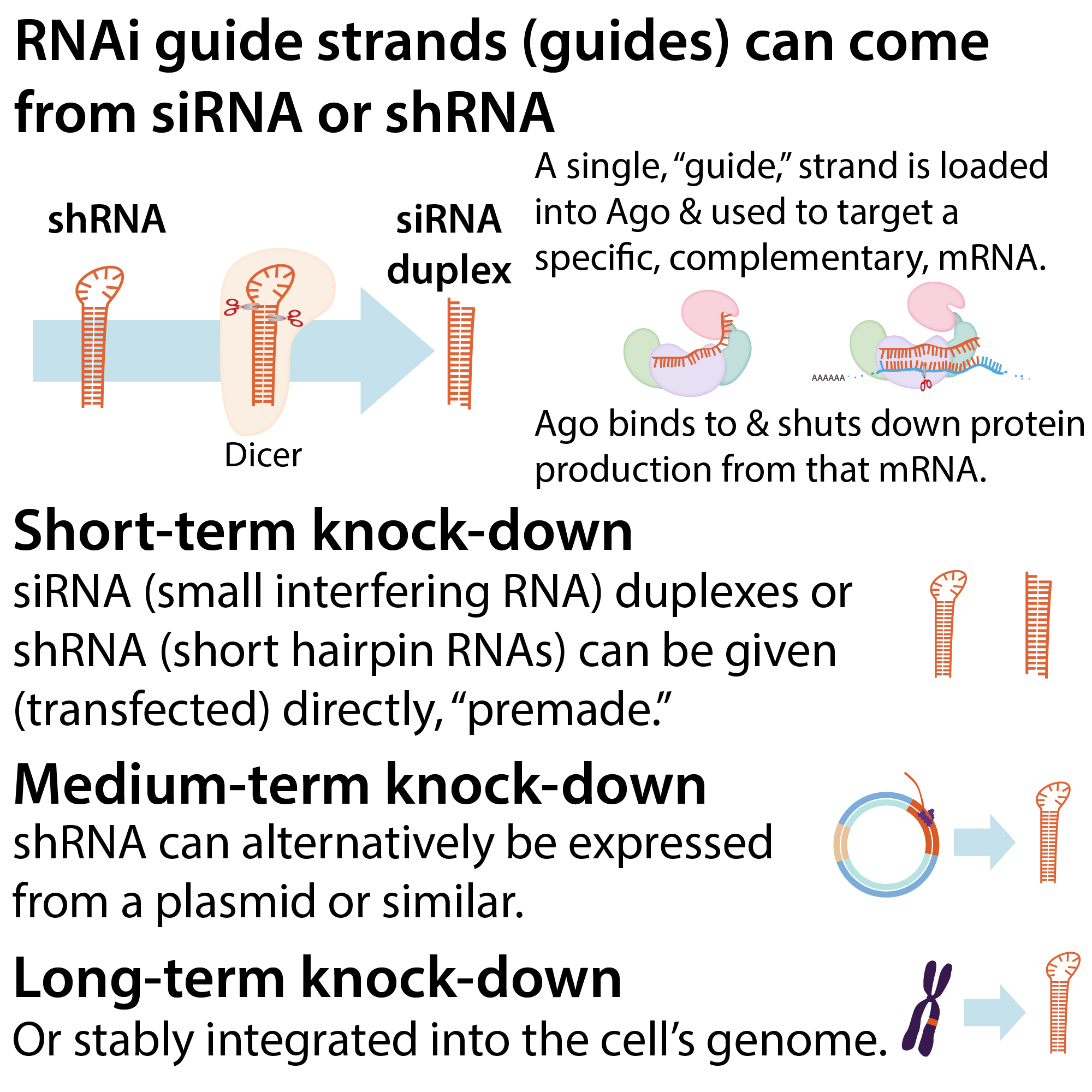
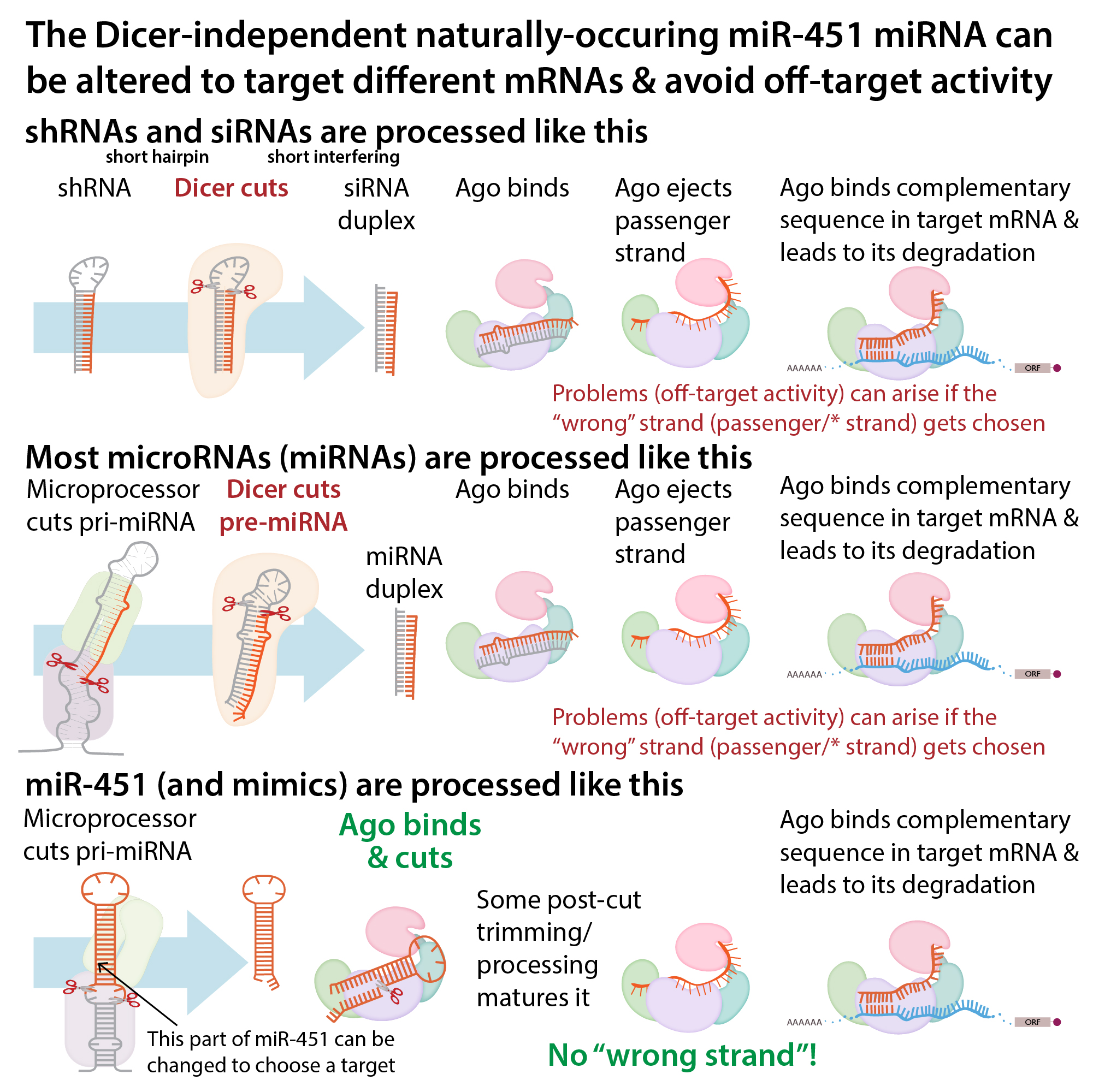
miRNAs & siRNAs are short (~20 nucleotide-long) strands of RNA (potentially coming from shRNAs) that act through the RNA interference (RNAi) pathway – they bind to a protein called Argonaute (Ago), directing Ago to bind to specific mRNAs (based on sequence complementarity), bind, & shut down translation (e.g. by cutting (slicing) the mRNA). More here: : http://bit.ly/microRNARNAi & https://bit.ly/knockdownvsknockout & https://youtu.be/7XHXF0x2uKA , https://youtu.be/RaTvoQt3ZLY & https://youtube.com/shorts/vVvHccAObyI?feature=share
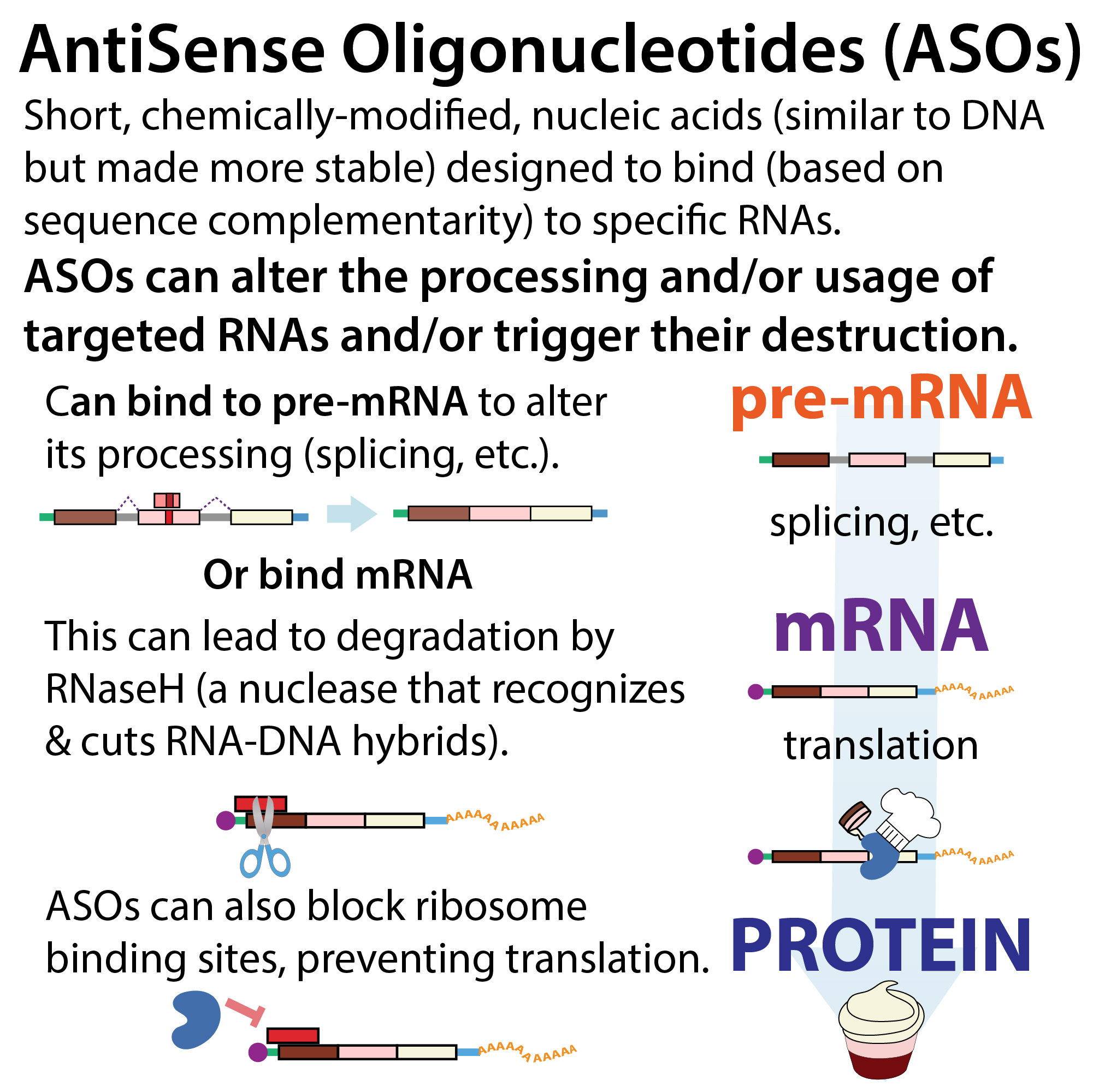
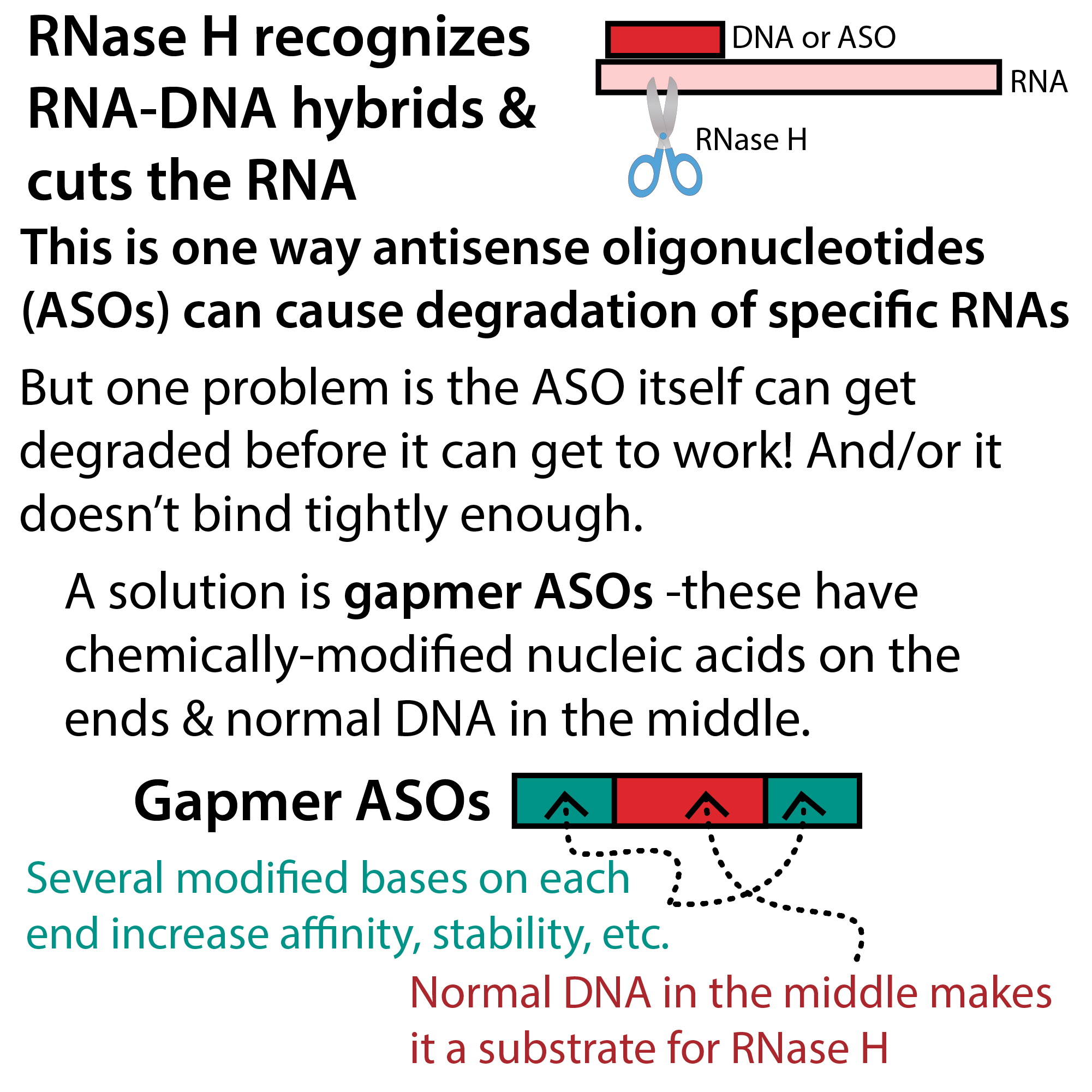
ASOs (antisense oligonucleotides) are short strands of modified DNA that bind directly and sequence-specifically to mRNA to block translation and/or cause cleavage by RNAse H or to pre-mRNA to direct splicing. More here: https://bit.ly/ASO_biochemistry & https://youtube.com/shorts/5lqY2EEUhwQ & https://youtu.be/KJGsTNmU_2M
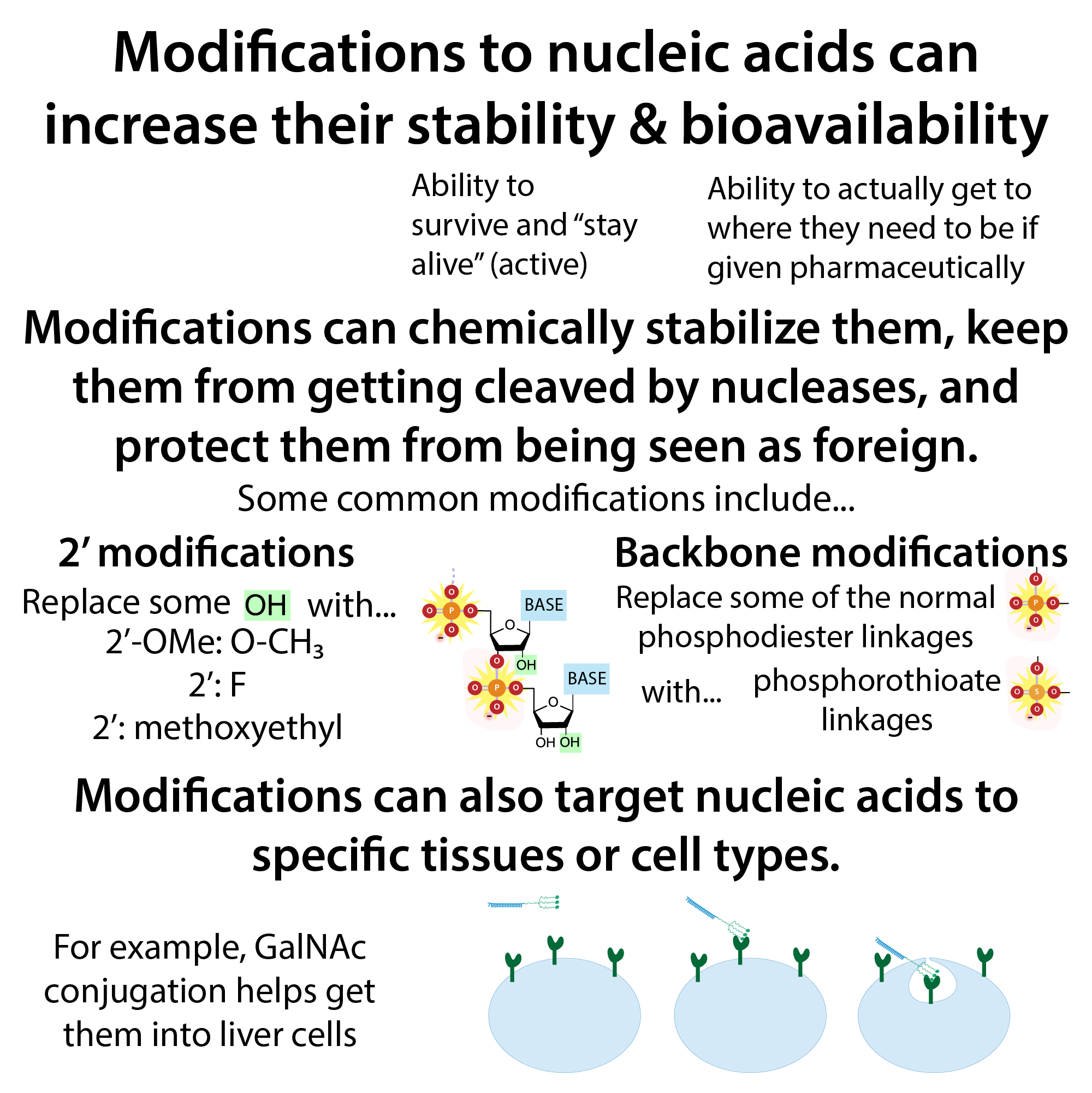
These all often are chemically modified for better stability or function, decreased immunogenicity &/or targeted delivery.
More on actual antibodies: http://bit.ly/antibodytypesanduses & https://bit.ly/biologics_etc
More on PCR: http://bit.ly/pcrtrain
More on in-vitro transcription: http://bit.ly/t7rnap
More on CRISPR: https://bit.ly/crisprcasscience
Review articles
Bege, M.; Kattoub, R. G.; Borbás, A.; Bege, M.; Kattoub, R. G.; Borbás, A. The 20th Anniversary of Pegaptanib (MacugenTM), the First Approved Aptamer Medicine: History, Recent Advances and Future Prospects of Aptamers in Therapy. Pharmaceutics 2025, 17 (3). https://doi.org/10.3390/pharmaceutics17030394.
Cesarini, V.; Appleton, S. L.; de Franciscis, V.; Catalucci, D. The Recent Blooming of Therapeutic Aptamers. Molecular Aspects of Medicine 2025, 102, 101350. https://doi.org/10.1016/j.mam.2025.101350.
F. Yang, L.; Ling, M.; Kacherovsky, N.; H. Pun, S. Aptamers 101: Aptamer Discovery and in Vitro Applications in Biosensors and Separations. 2023. https://doi.org/10.1039/D3SC00439B.