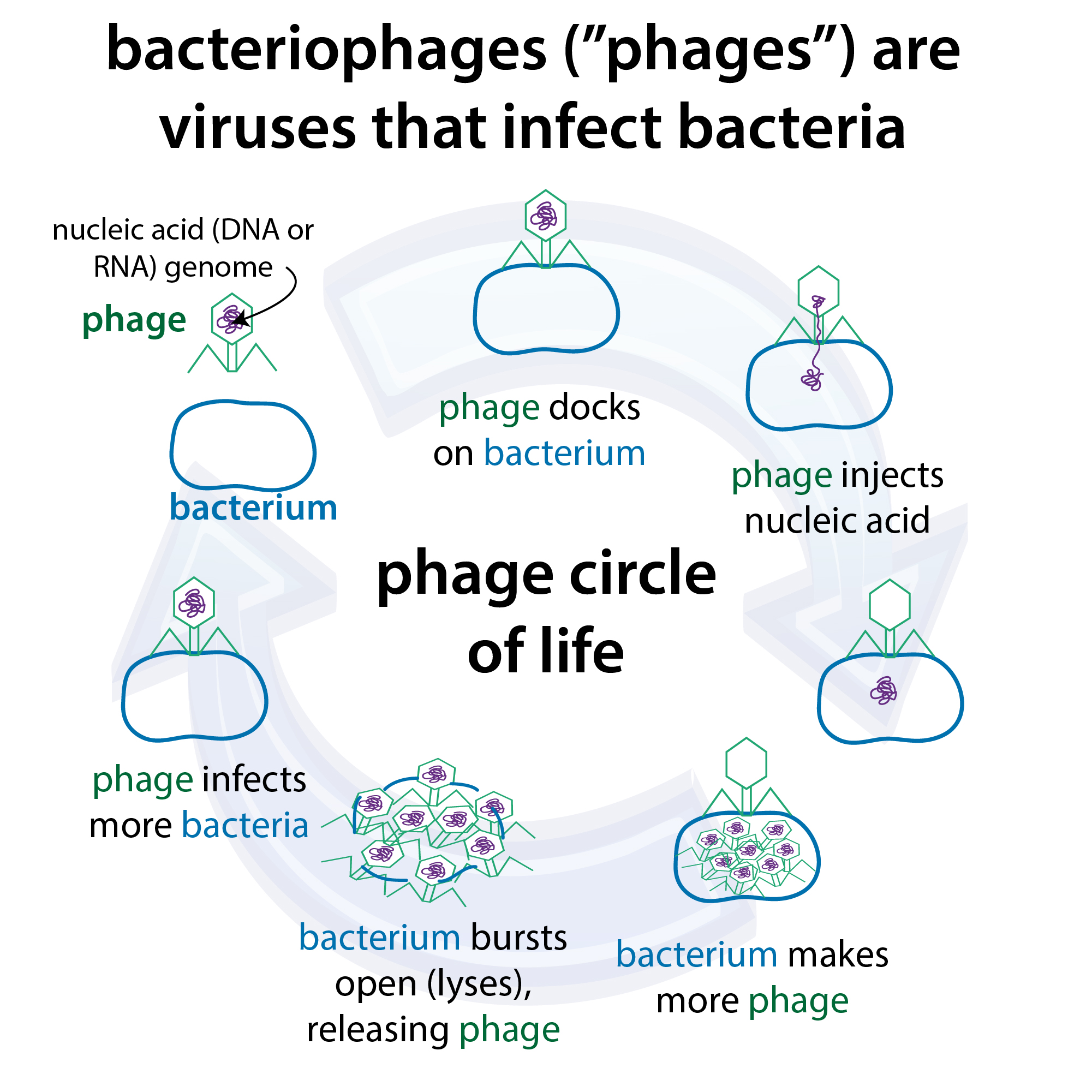
transfer of DNA between bacteria through a bacteriophage (“phage”) (bacteria-infecting virus) intermediate. Phages inject their genomes into bacteria and use that bacteria’s machinery to make more of their genome, as well as “packaging” to carry their genome to other cells. Normally a phage infects a bacteria, cuts up the bacteria’s DNA so it doesn’t try to get in the way, then uses the bacteria’s machinery to make a bunch of packaged copies of its DNA, then bursts the cell open so those packaged copies can go infect other bacteria.
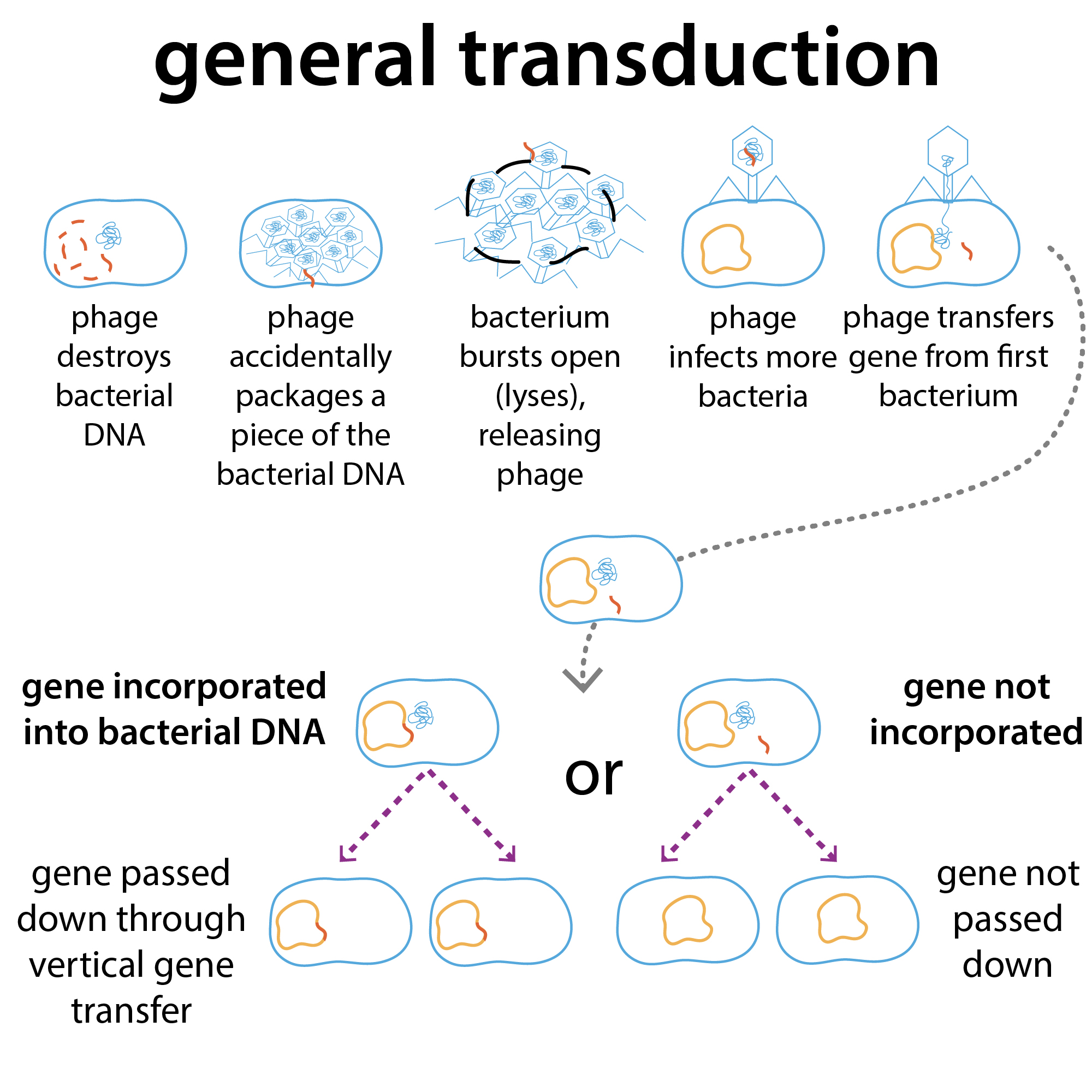
Sometimes they accidentally package some of the bacteria’s DNA and then, when they infect new cells, they inject that bacteria’s DNA into the new bacteria. This is called general transduction. If there’s a sequence in the injected DNA that is similar to something in the new bacteria’s DNA, the new bacteria can get confused & swap it out.
Unless the bacterial DNA was actually integrated into the phage genome (as opposed to bacterial DNA kinda just accidentally getting shoved into a viral particle), thus only affects the bacteria – the phage’s DNA stays the same so when new phage is made it won’t have that gene & the gene will “die off” unless the bacteria puts it in its own bacterial genome.
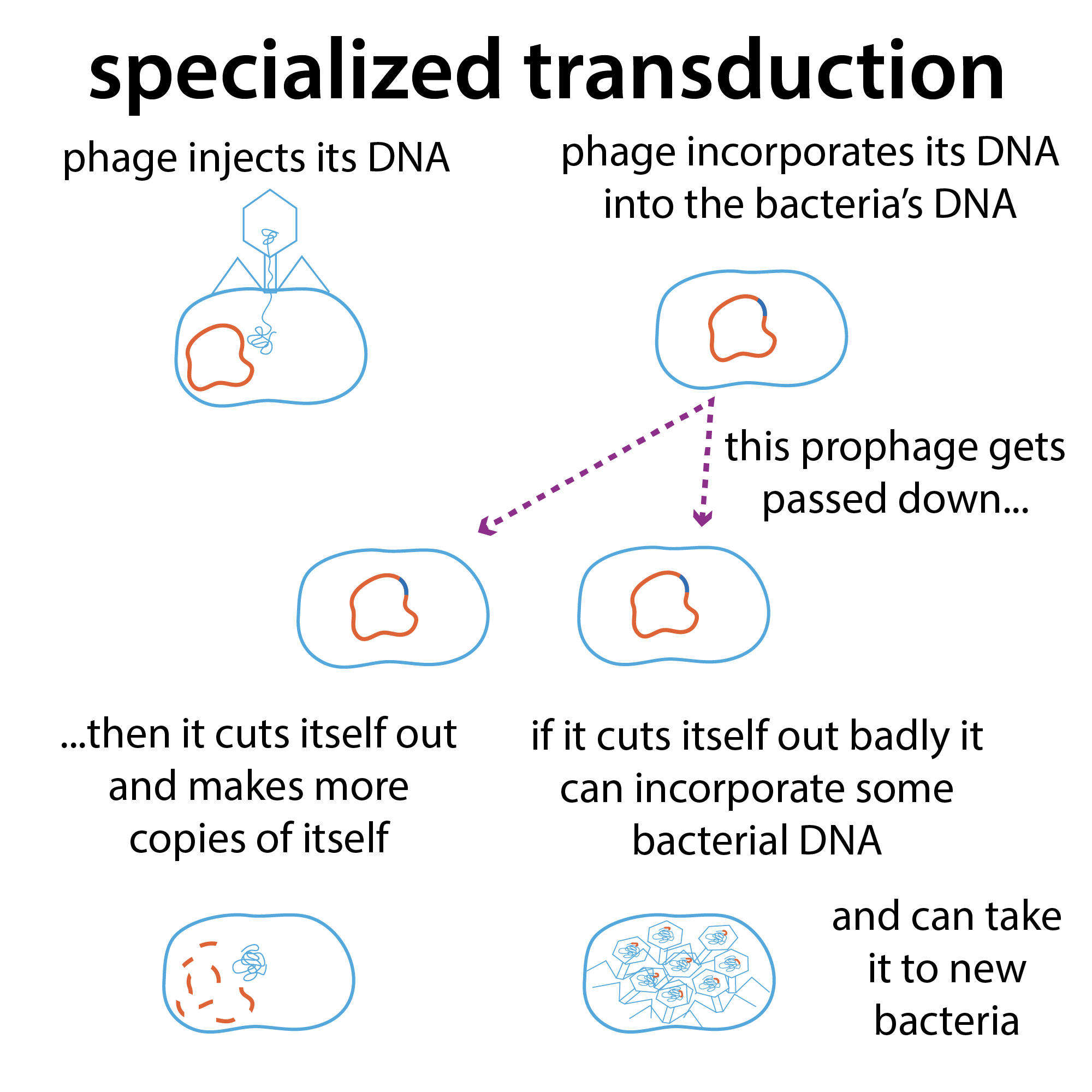
BUT sometimes, phages try to be sneaky – instead of destroying the bacterial DNA, they sneak into into, inserting themselves into the bacterial genome so that the bacteria will pass it along when the bacteria divides – this chimera is called a PROPHAGE and it lets the phage bide its time until conditions are better for making copies of itself. This is known as a lysogenic phase as opposed to the lyric phage we discussed before.
When it decides to venture out on its own, the phage has to cut itself out of the bacterial genome, & sometimes they do this badly & accidentally incorporate the bacteria’s DNA into their own genome – now, it will even copy that bacterial genome part to all the future cells it transfects – this is called specialized transduction. In addition to DNA fragments which, in order to get passed on need to be incorporated into the bacteria’s genome, they can transfer circular pieces of DNA called plasmids which exist & copy themselves independent of the bacterial genome. (yes – just like plasmids we use all the time in the lab!)