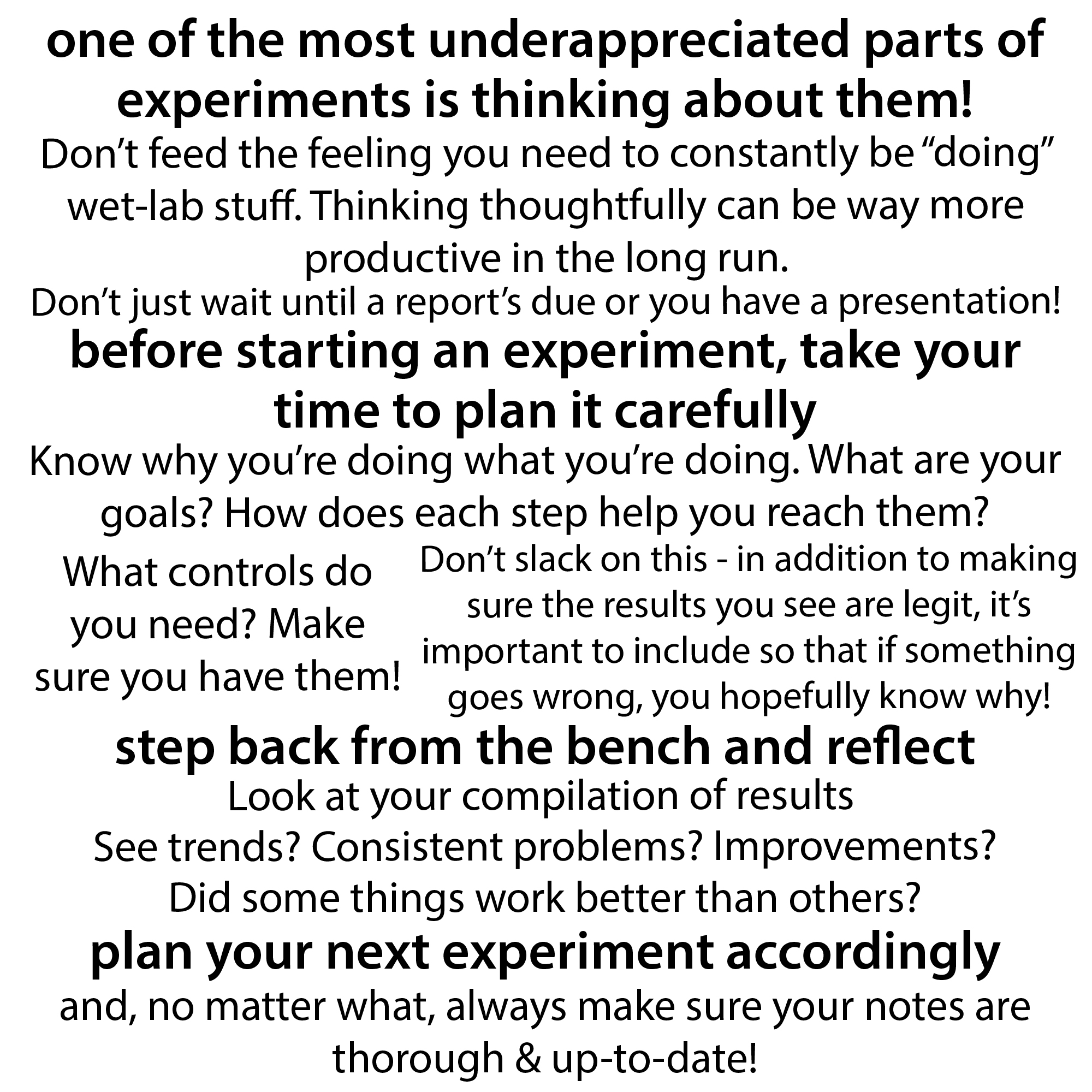
One of the most under-appreciated parts of experiments is thinking about them! Don’t feed the feeling you need to constantly be “doing”wet-lab stuff. Thinking thoughtfully can be way more productive in the long run. And don’t just wait until a report’s due or you have a presentation to do this!
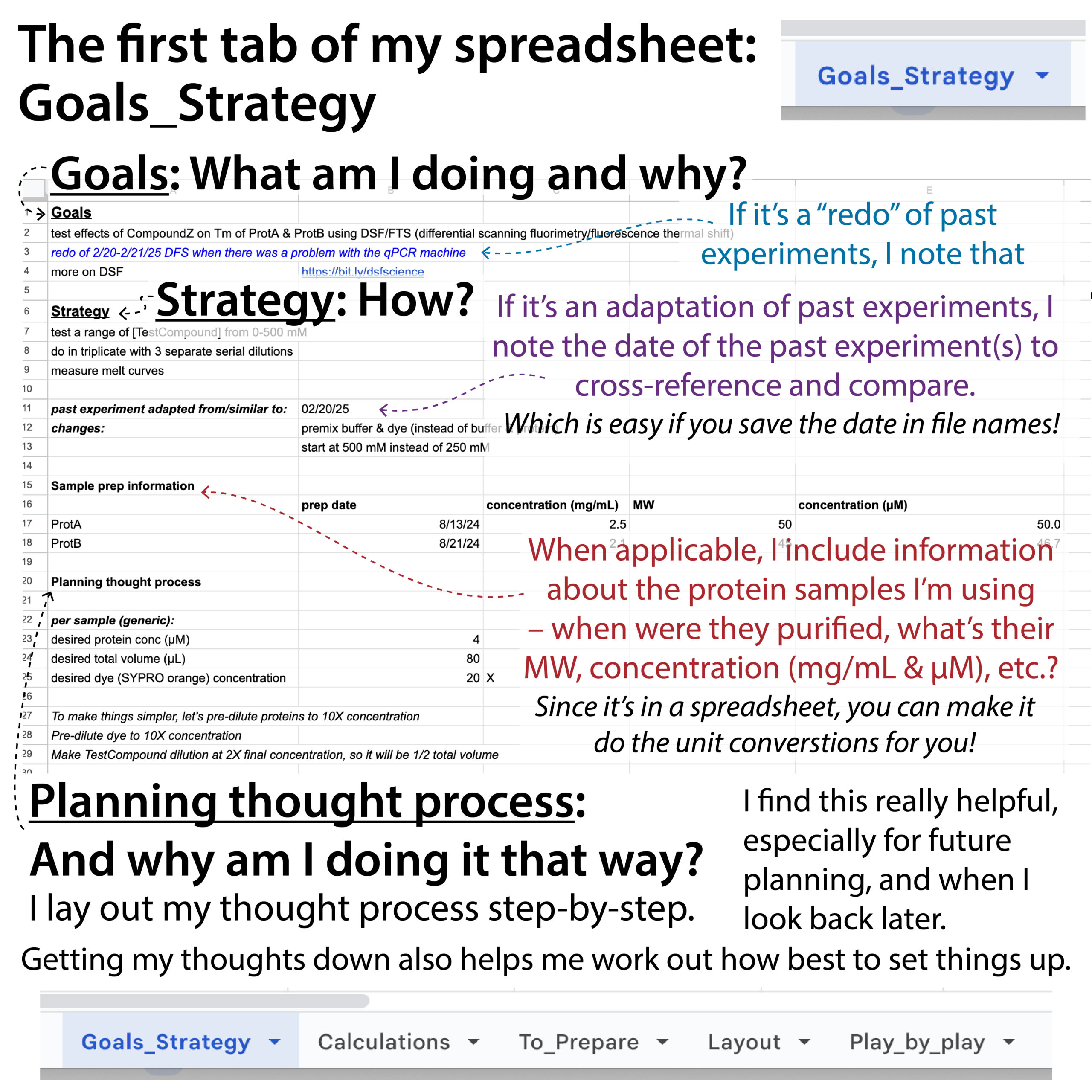
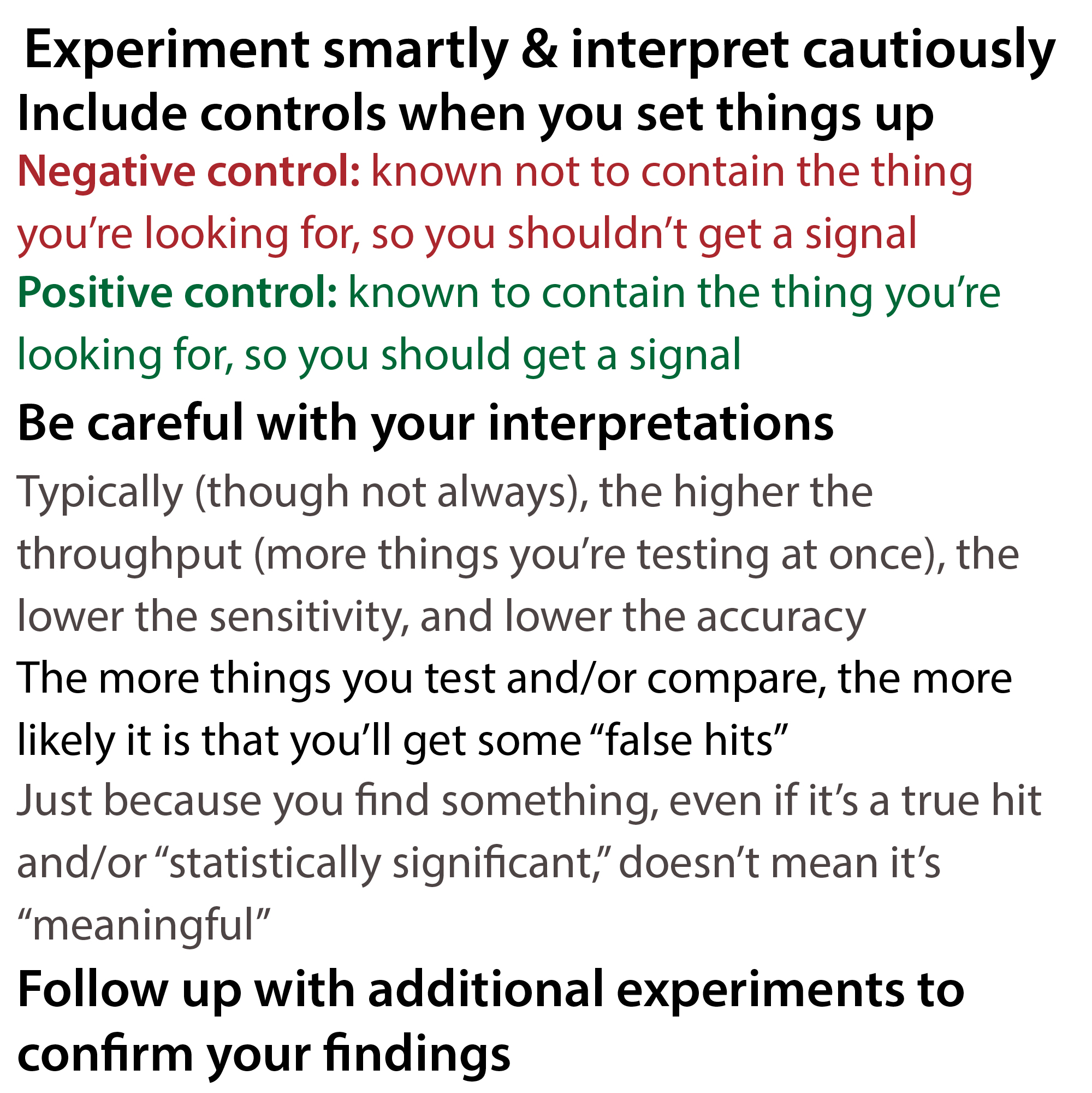
Before starting an experiment, take your time to plan it carefully. Know why you’re doing what you’re doing. What are your goals? How does each step help you reach them? What controls do you need? Make sure you have them!
Don’t slack on this – in addition to making sure the results you see are legit, it’s important to include so that if something goes wrong, you hopefully know why!
Step back from the bench and reflect. Look at your compilation of results. See trends? Consistent problems? Improvements? Did some things work better than others?
Plan your next experiment accordingly.
And, no matter what, always make sure your notes are thorough & up-to-date!
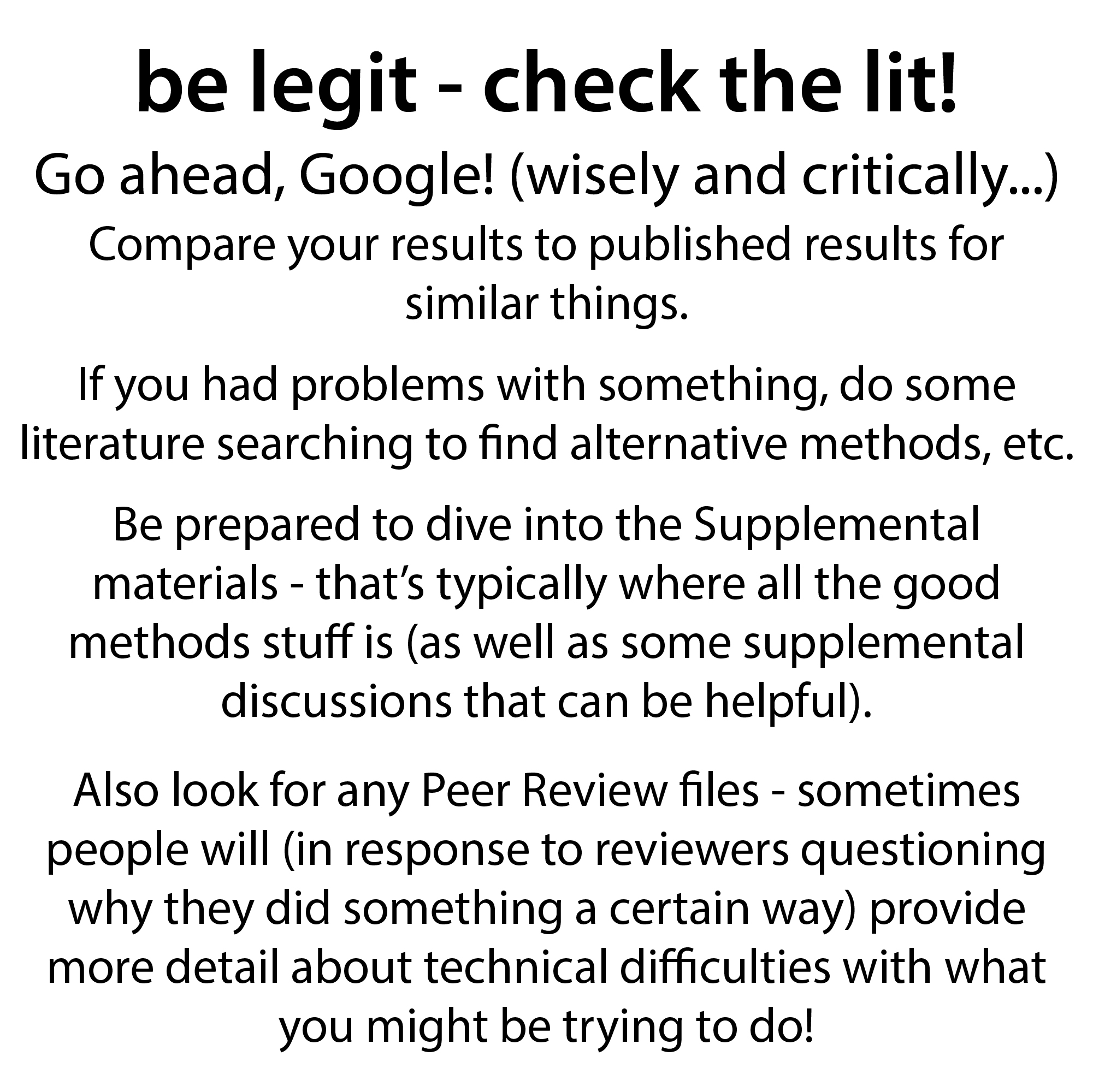
Be legit – check the lit! Go ahead, Google! (wisely and critically…)
Compare your results to published results for similar things.
If you had problems with something, do some literature searching to find alternative methods, etc. Be prepared to dive into the Supplemental materials- that’s typically where all the good methods stuff is (as well as some supplemental discussions that can be helpful).
Also look for any Peer Review files – sometimes people will (in response to reviewers questioning why they did something a certain way) provide more detail about technical difficulties with what you might be trying to do!
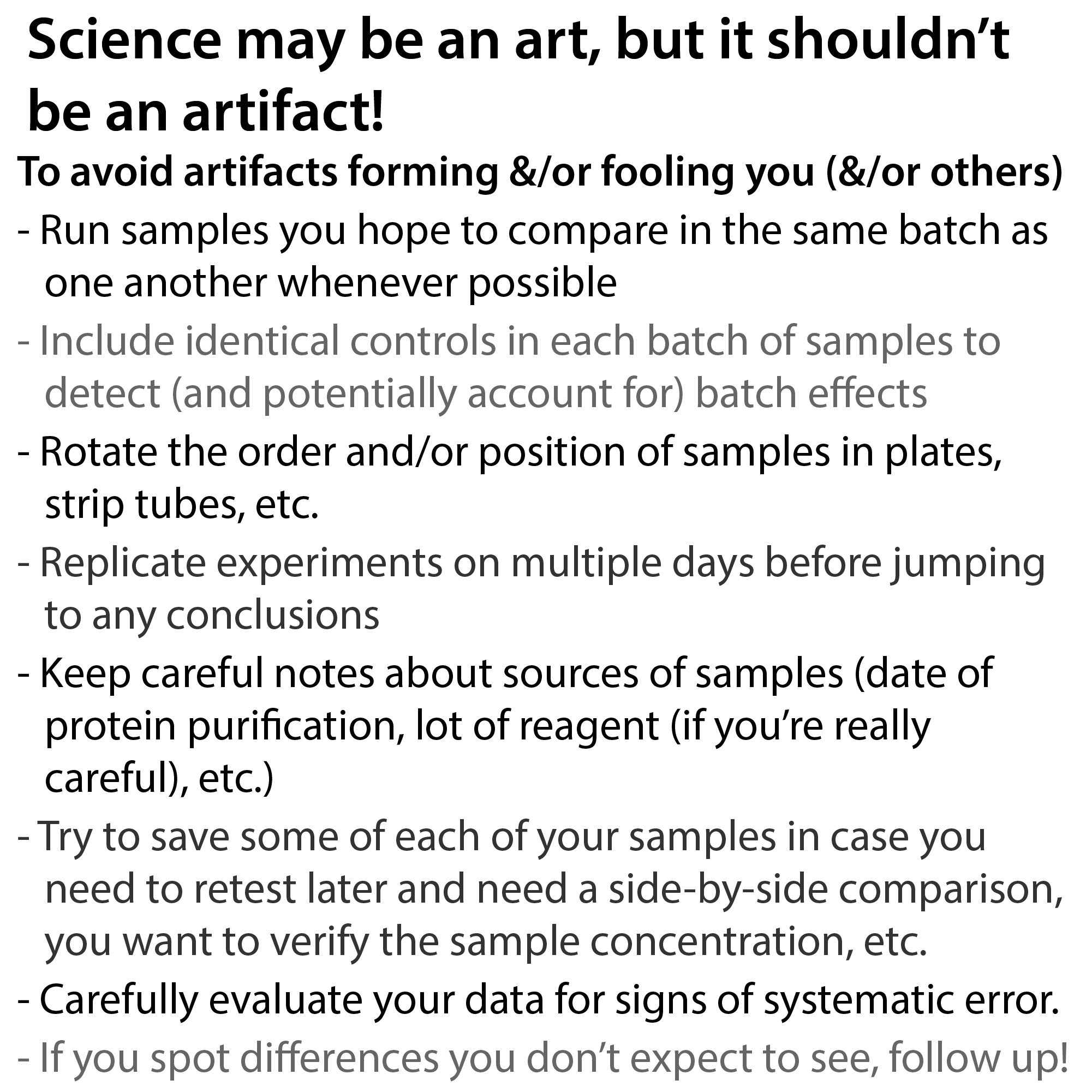
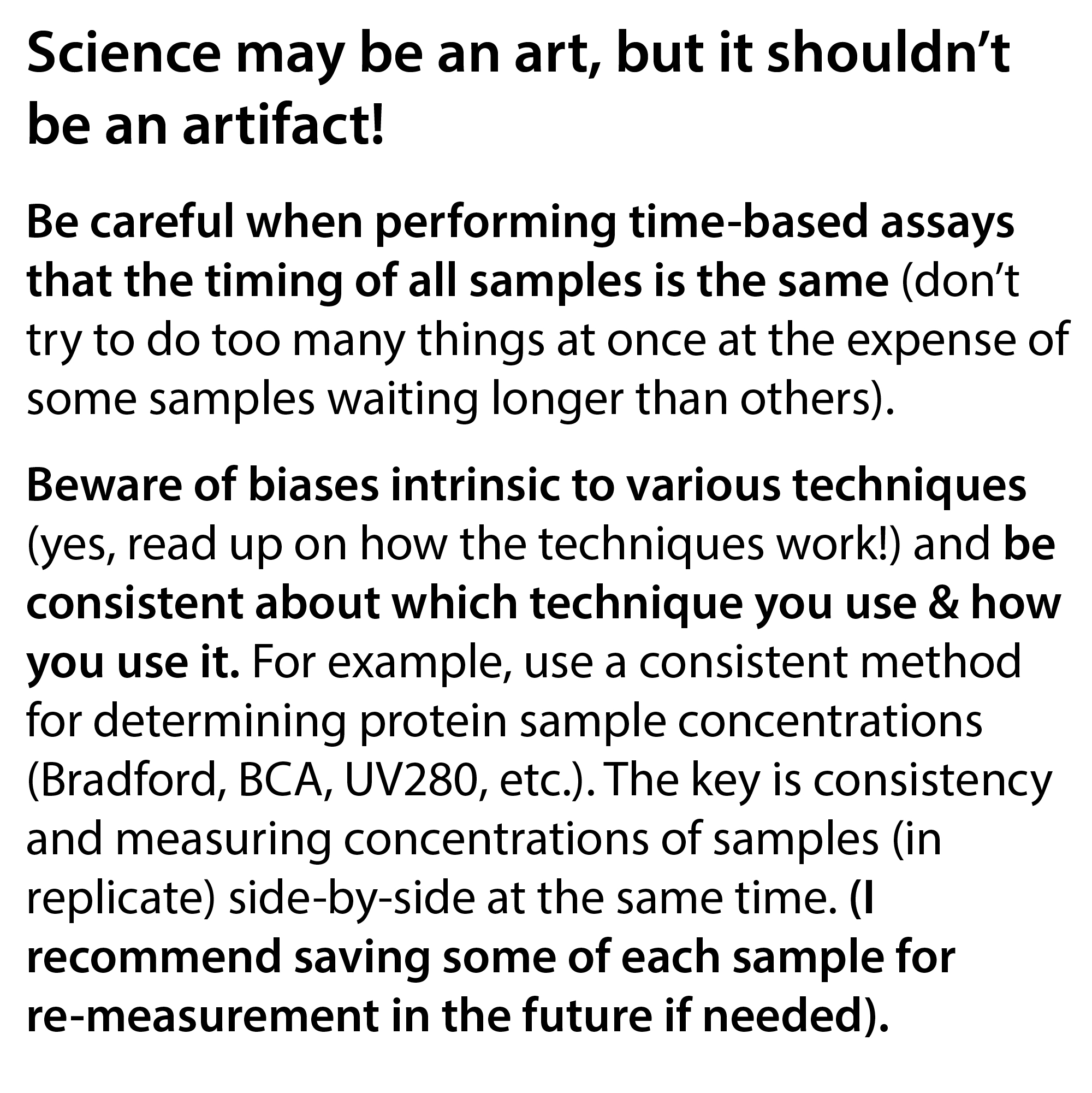
Also, beware of batch effects and other artifacts: https://thebumblingbiochemist.com/365-days-of-science/artifacts/
more on experimenting: https://bit.ly/experimentorganizing & https://youtu.be/Phk1CWDG0_w
more on keeping good lab notes: https://bit.ly/labnotesorganization & https://youtu.be/JGzSUz88S-g
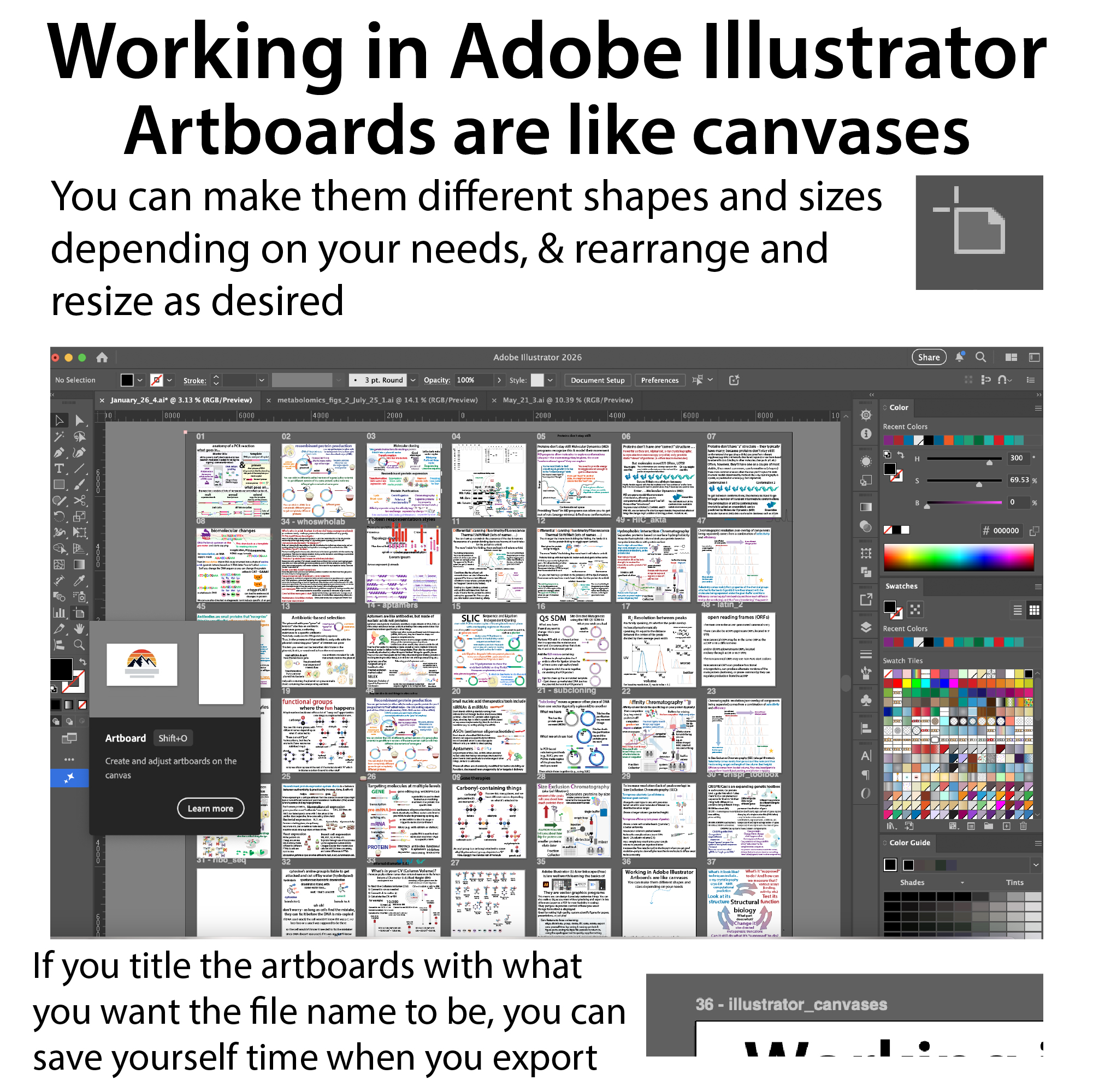
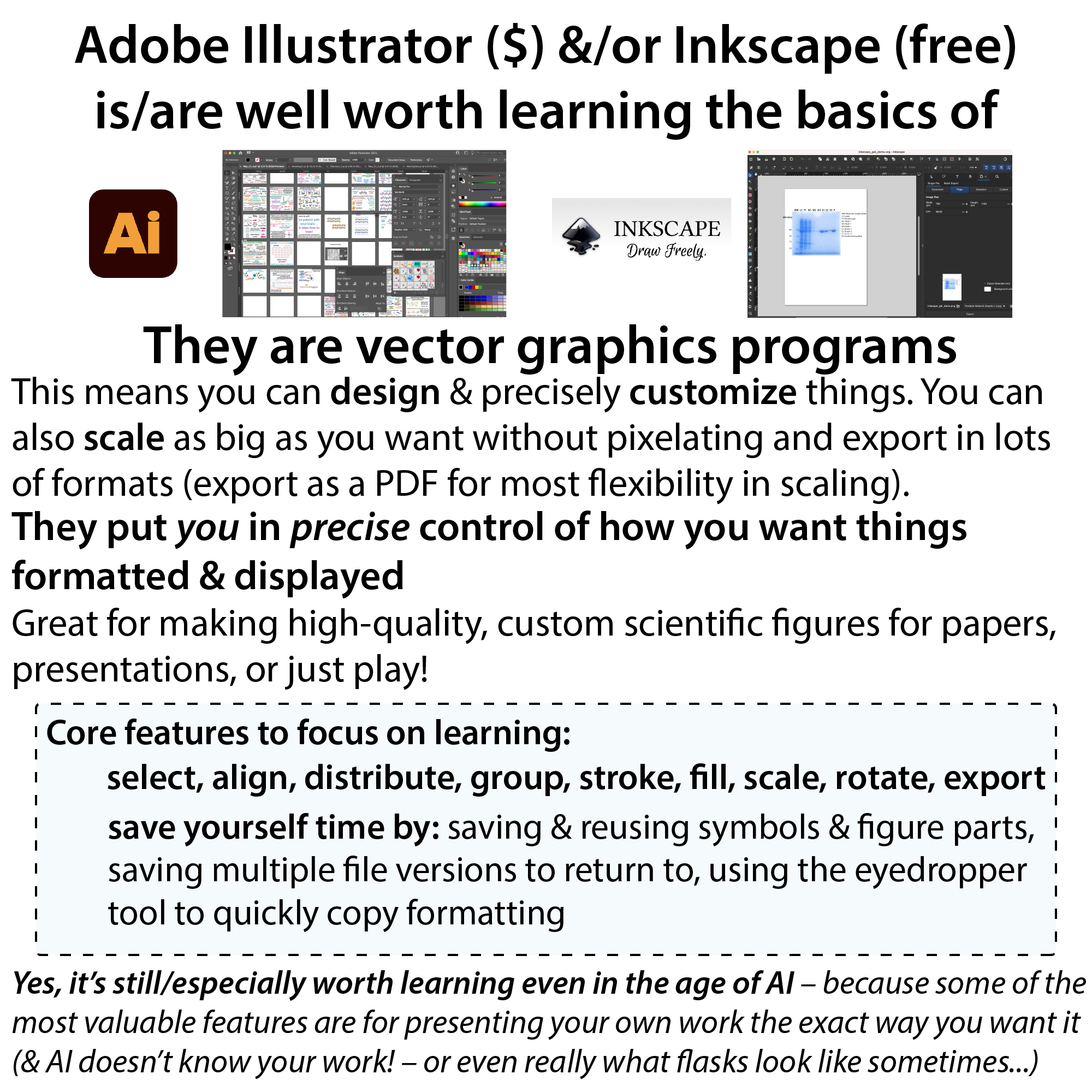
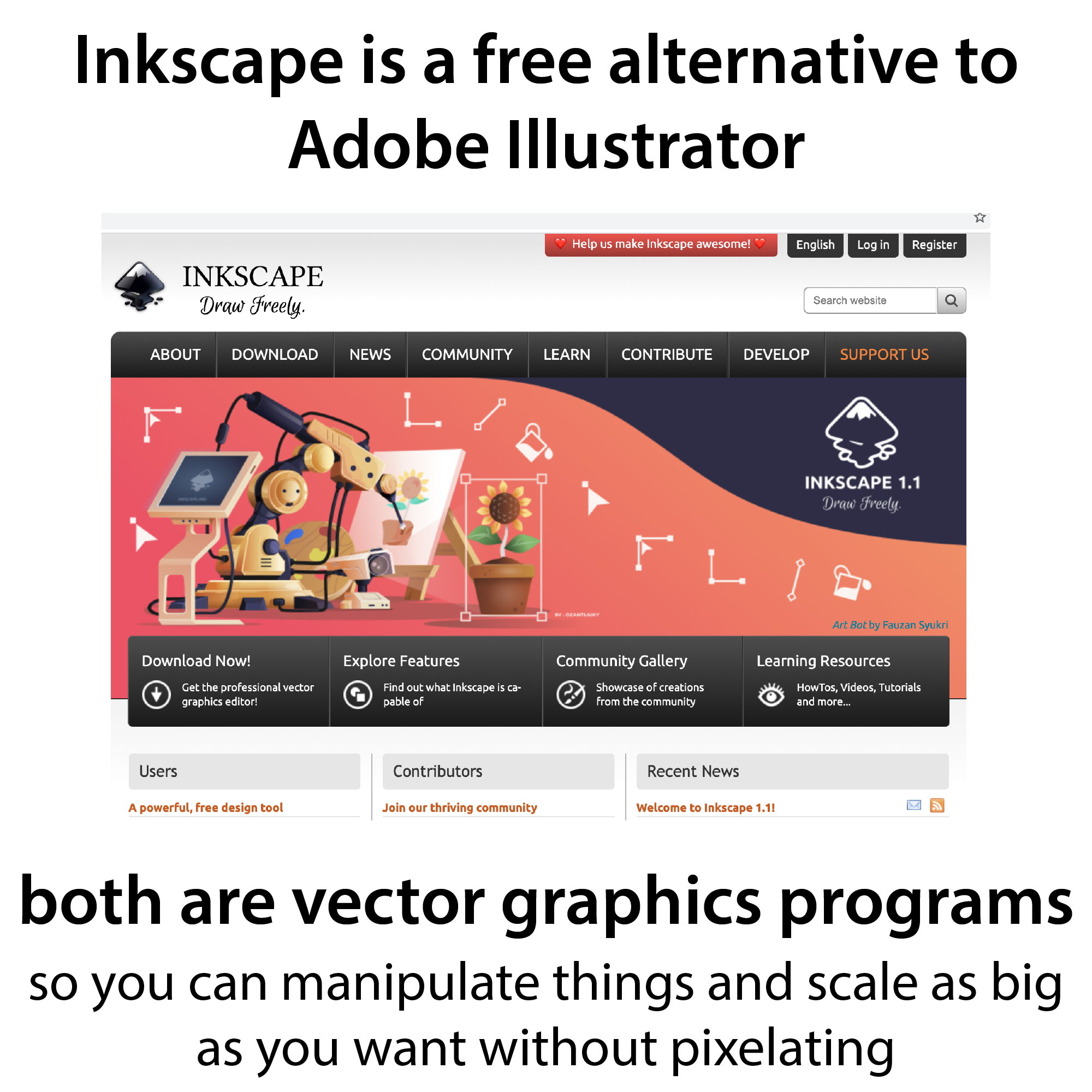
more on making experimental figures & basic Illustrator for scientists: https://bit.ly/makeexperimentfigures
more on reading scientific papers: https://bit.ly/readingsciencearticlesadvice & https://youtu.be/FaheM4hBG4E
more on reference management: https://bit.ly/referencesreference & https://youtu.be/VIds4W2nut8
grad school-y posts: https://bit.ly/gradschoolposts
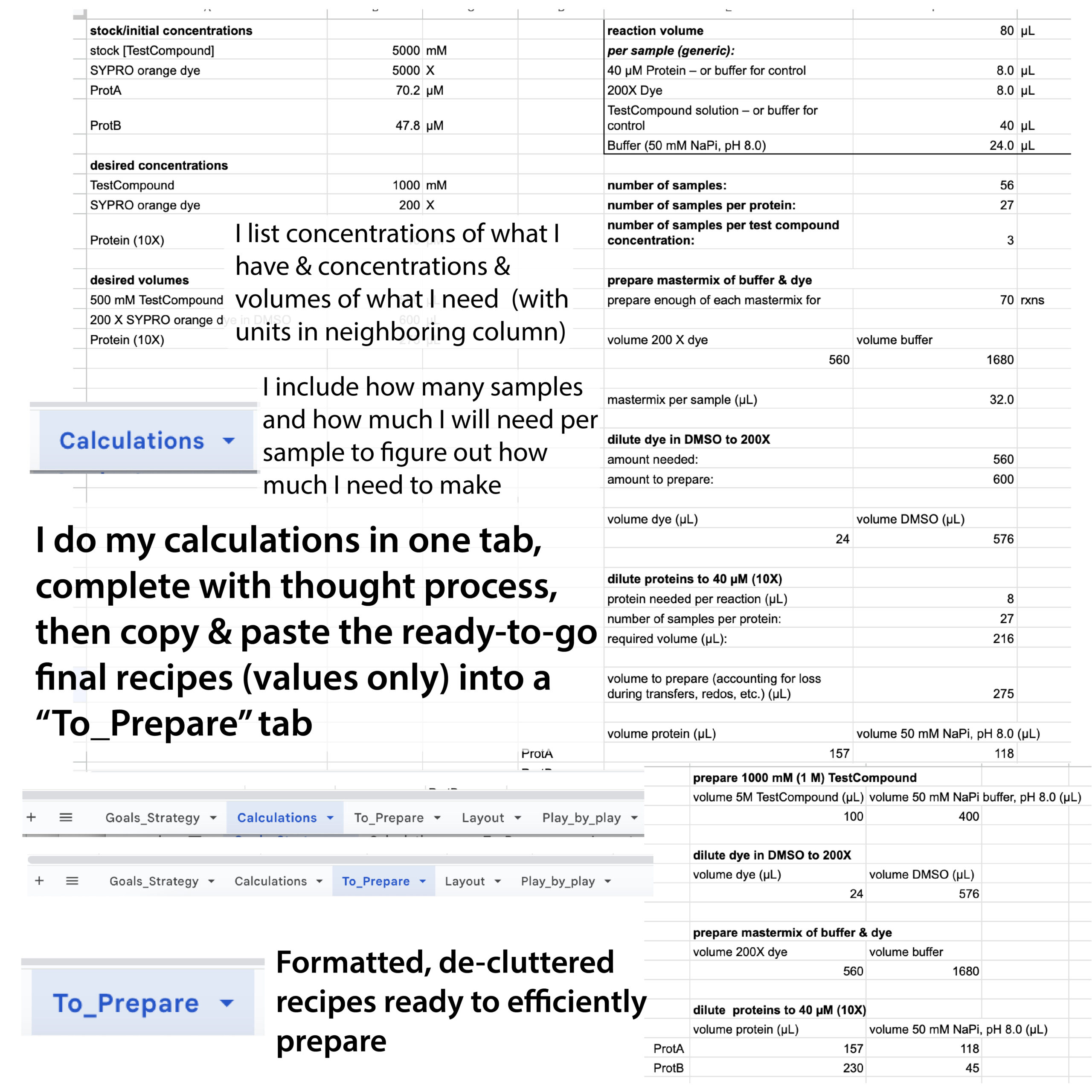
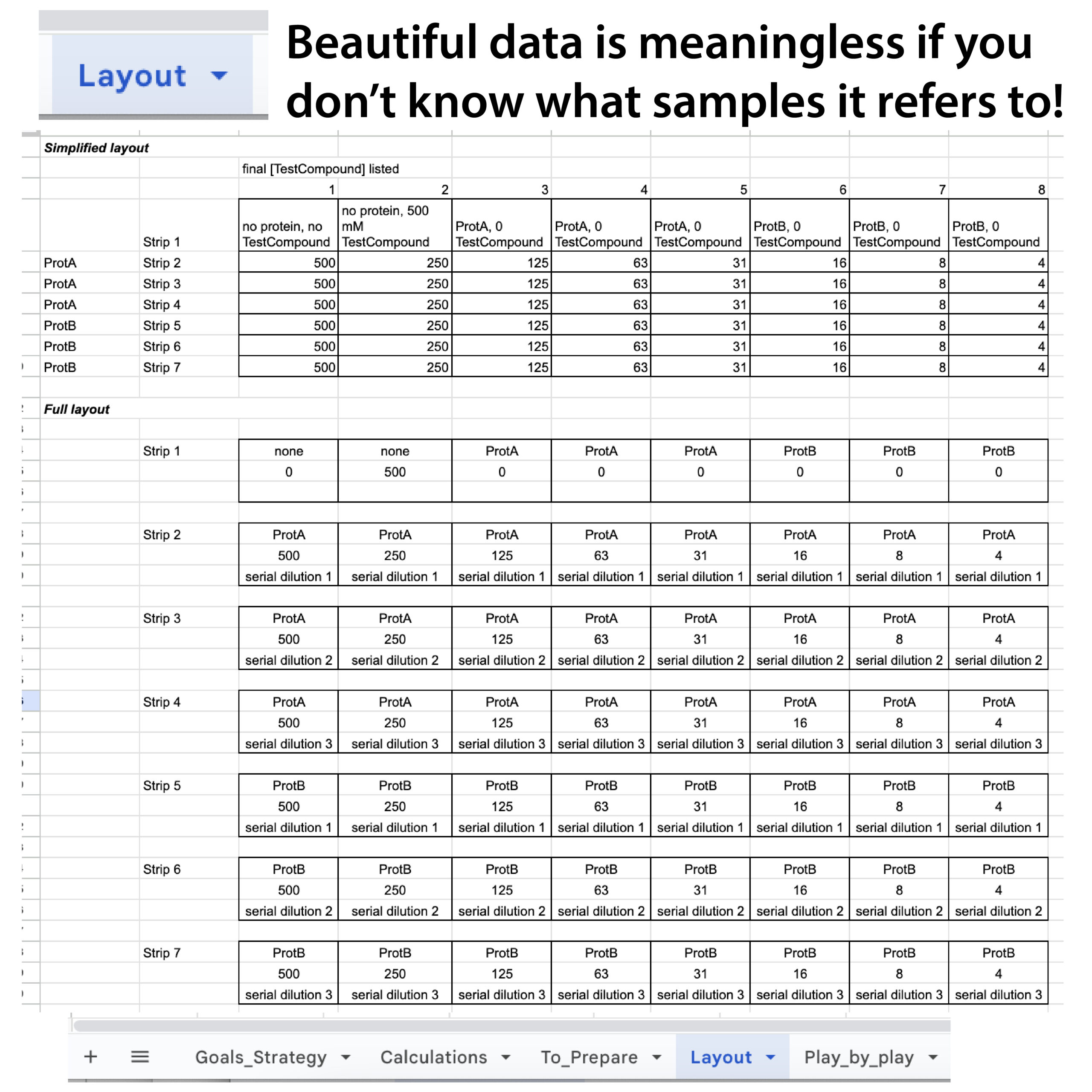
example lab calculations spreadsheet: https://bit.ly/bb_labcalcspreadsheet
walkthrough video: https://youtu.be/LsO-5VjeWsw
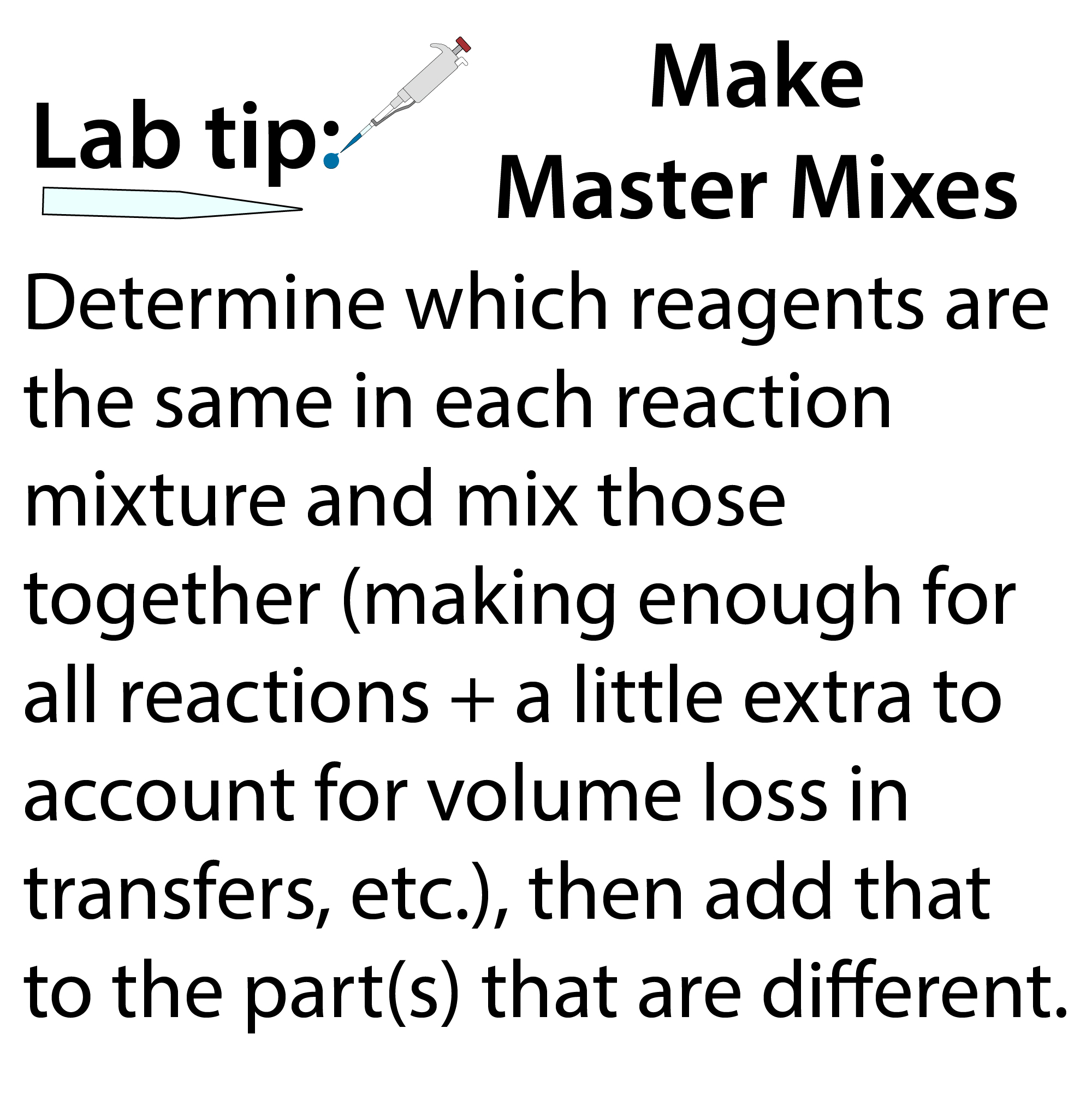
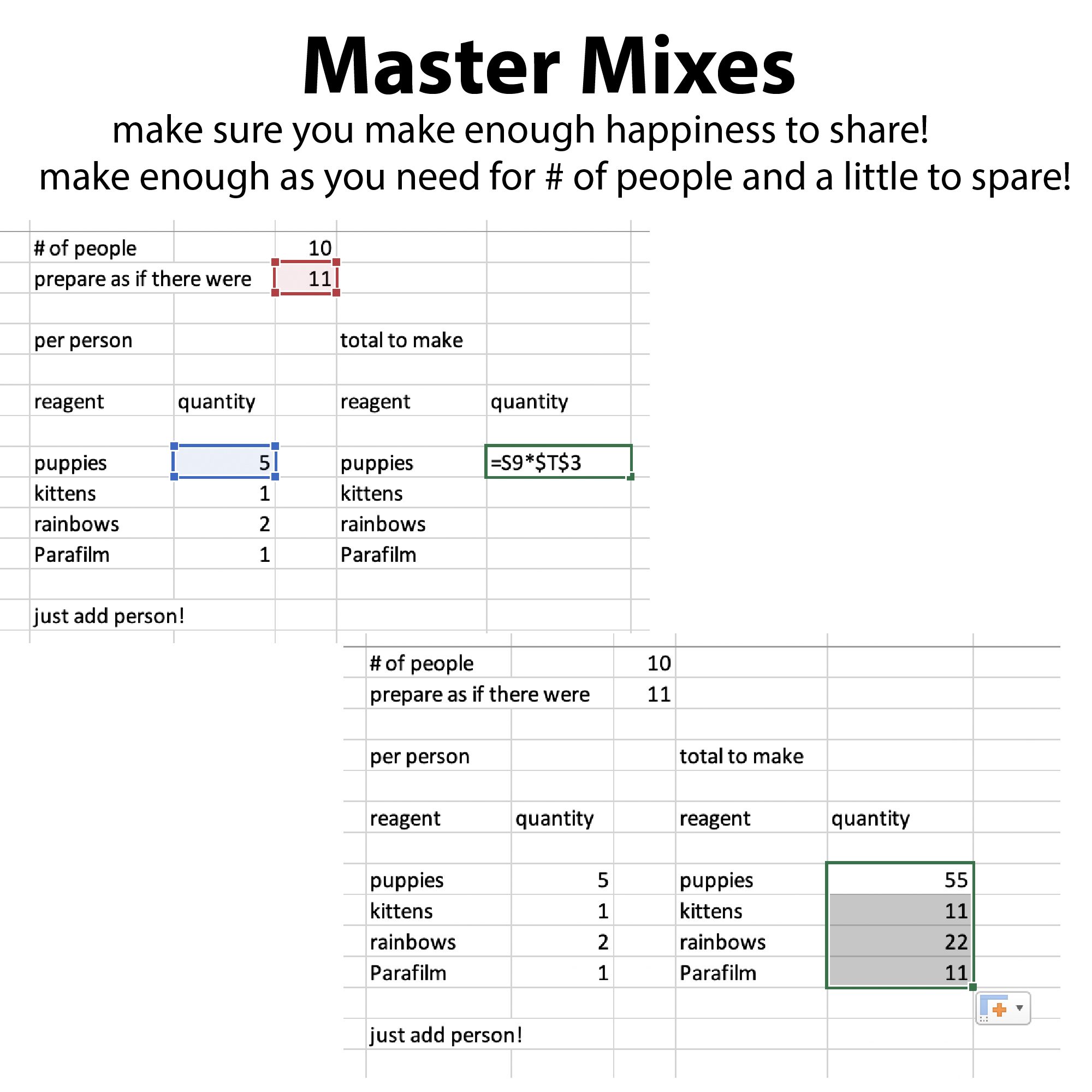
Mastermix examples: https://bit.ly/bb_labcalcspreadsheet & https://bit.ly/mastermixcalcs
And a walkthrough: https://youtu.be/LdC0kPbDLPU
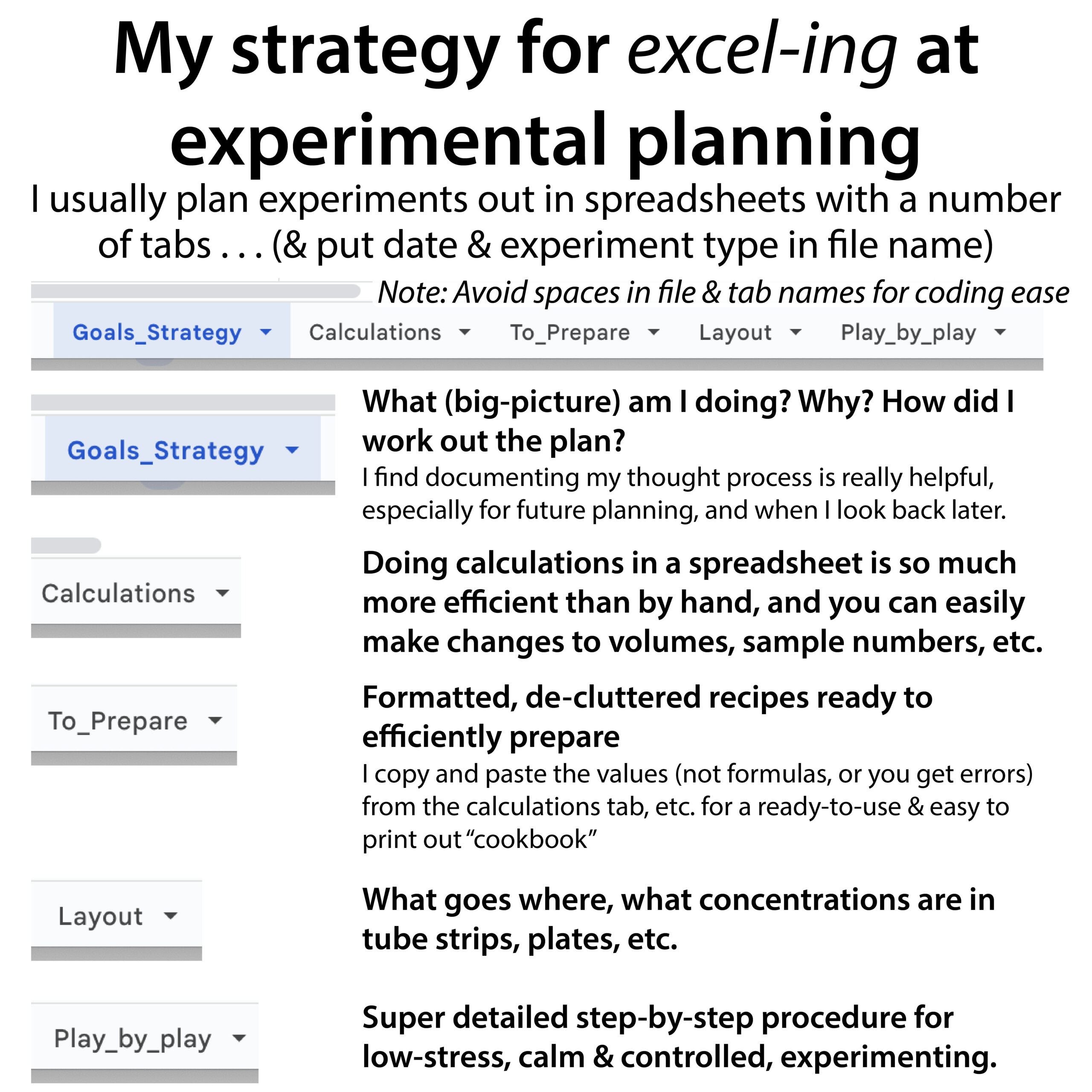
more on experimental spreadsheets: https://bit.ly/experiment_spreadsheets ; Walkthrough video: https://youtu.be/sjLcLyxF7o4
example spreadsheet: https://bit.ly/experiment_spreadsheet_example