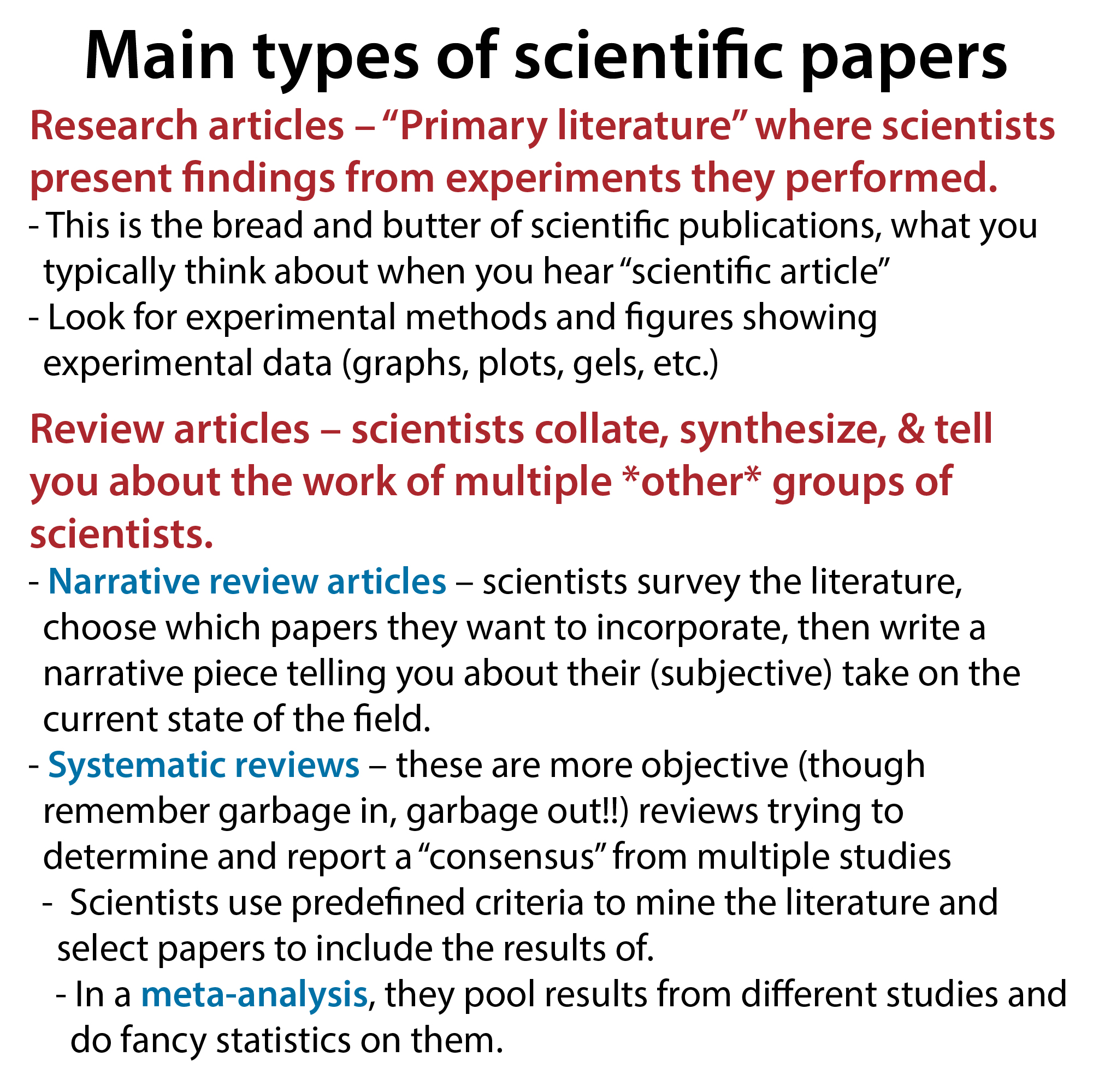
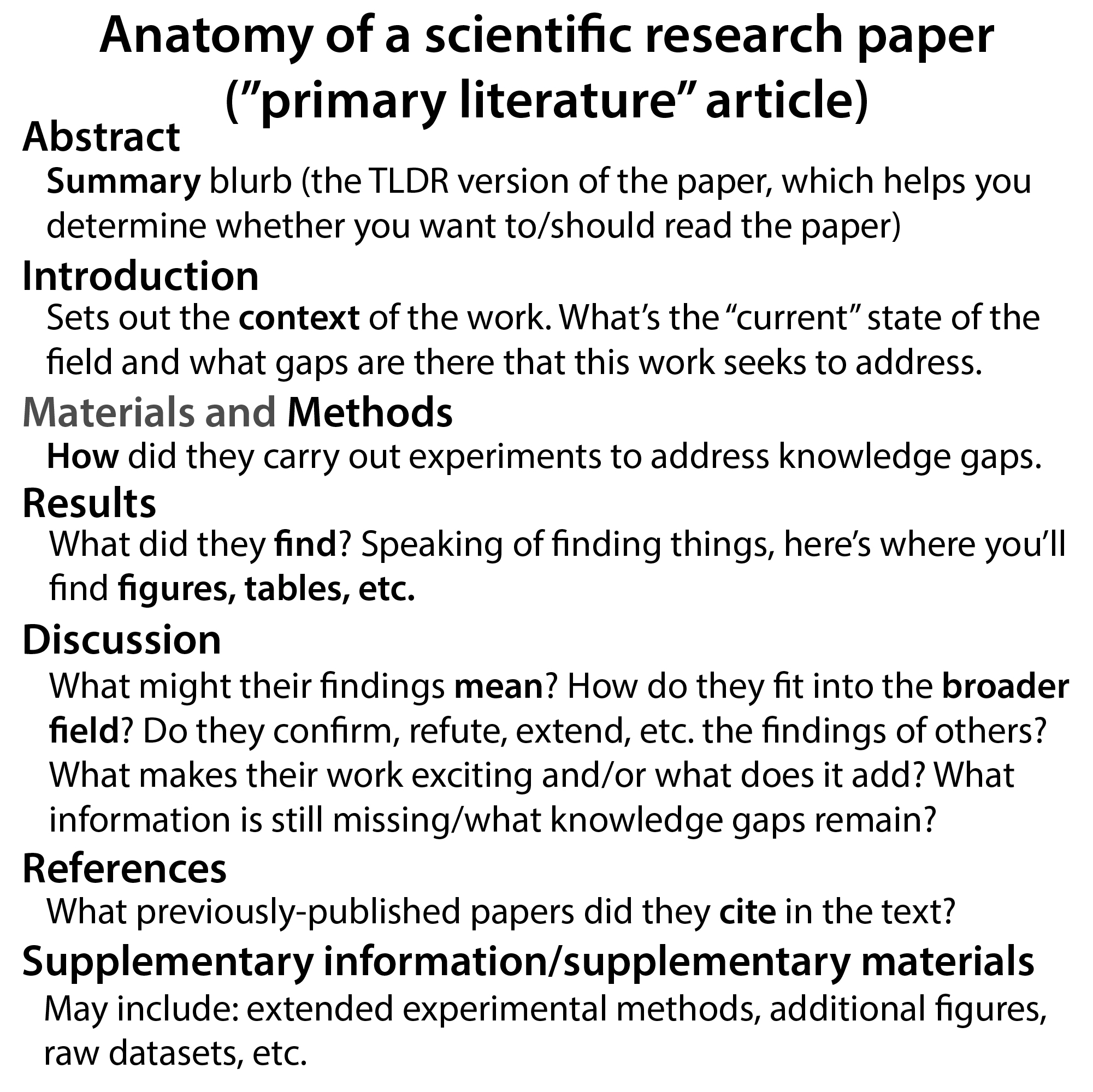
The 2 main types of scientific papers are research articles and review articles
- Research articles– “Primary literature” where scientists present findings from experiments they performed.
- This is the bread and butter of scientific publications, what you typically think about when you hear “scientific article”
- Look for experimental methods and figures showing experimental data (graphs, plots, gels, etc.)
- Review articles – scientists collate, synthesize, & tell you about the work of multiple *other* groups of scientists.
- Narrative review articles – scientists survey the literature, choose which papers they want to incorporate, then write a narrative piece telling you about their (subjective) take on the current state of the field.
- Systematic reviews – these are more objective (though remember garbage in, garbage out!!) reviews trying to determine and report a “consensus” from multiple studies – scientists use predefined criteria to mine the literature and select papers to include the results of.
- In a meta-analysis, they pool results from different studies and do fancy statistics on them.
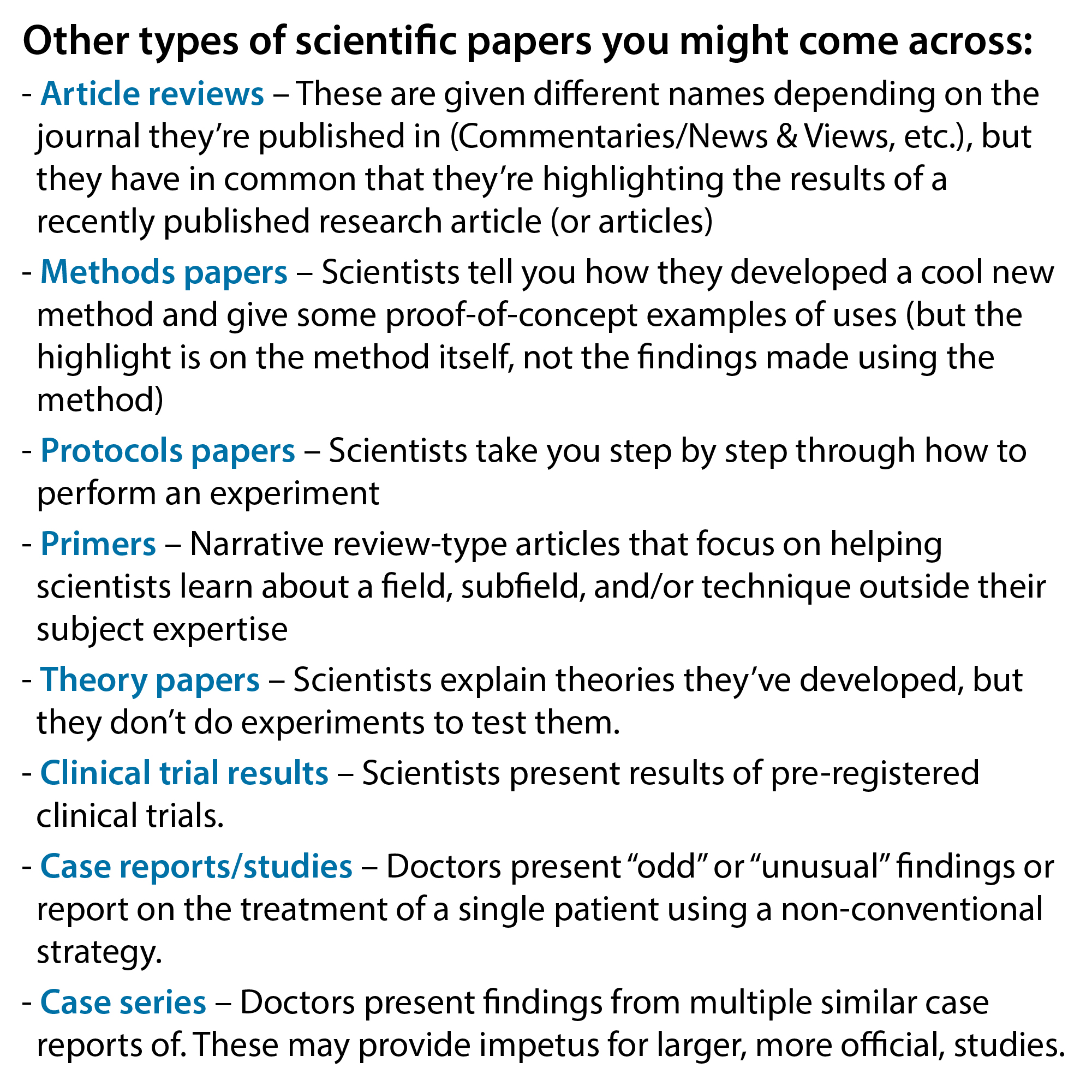
Other types of articles you might come across:
- Article reviews – These are given different names depending on the journal they’re published in (Perspectives/Commentaries/News & Views, etc.), but they have in common that they’re highlighting the results of a recently published research article (or articles).
- These can be a great place to learn about new papers as well as to help you understand the denser research article.
- These are more technical than “general audience” coverage of the articles, but a nice “in-between”
- Often put the new research critically into a broader perspective.
- Methods papers – scientists tell you how they developed a cool new method and give some proof-of-concept examples of uses (but the highlight is on the method itself, not the findings made using the method)
- Protocols papers – scientists take you step by step through how to perform an experiment
- Primers – narrative review-type articles that focus on helping scientists learn about a field, subfield, and/or technique outside their subject expertise
- Theory papers – scientists explain theories they’ve developed, but they don’t do experiments to test them.
- Clinical trial results – scientists present results of pre-registered clinical trials. “Gold standard” is typically a randomized controlled trial (RCT) in which patients are randomly given one treatment or another treatment or a placebo and then their outcomes are compared.
- Case reports/studies – doctors present “odd” or “unusual” findings or report on the treatment of a single patient using a non-conventional strategy.
- Case series – doctors present findings from multiple similar case reports of. These may provide impetus for larger, more official, studies
More on reading scientific articles: https://youtu.be/zRZtK1uB-Fc ⠀blog form: https://bit.ly/strategic_reading & http://bit.ly/readingsciencearticles ⠀
reading & writing articles, etc. playlist: https://youtube.com/playlist?list=PLUWsCDtjESrFlE1UwOdgvzqb5G1AjZ9Wc&si=YzBZyR25Nb2yXBiv
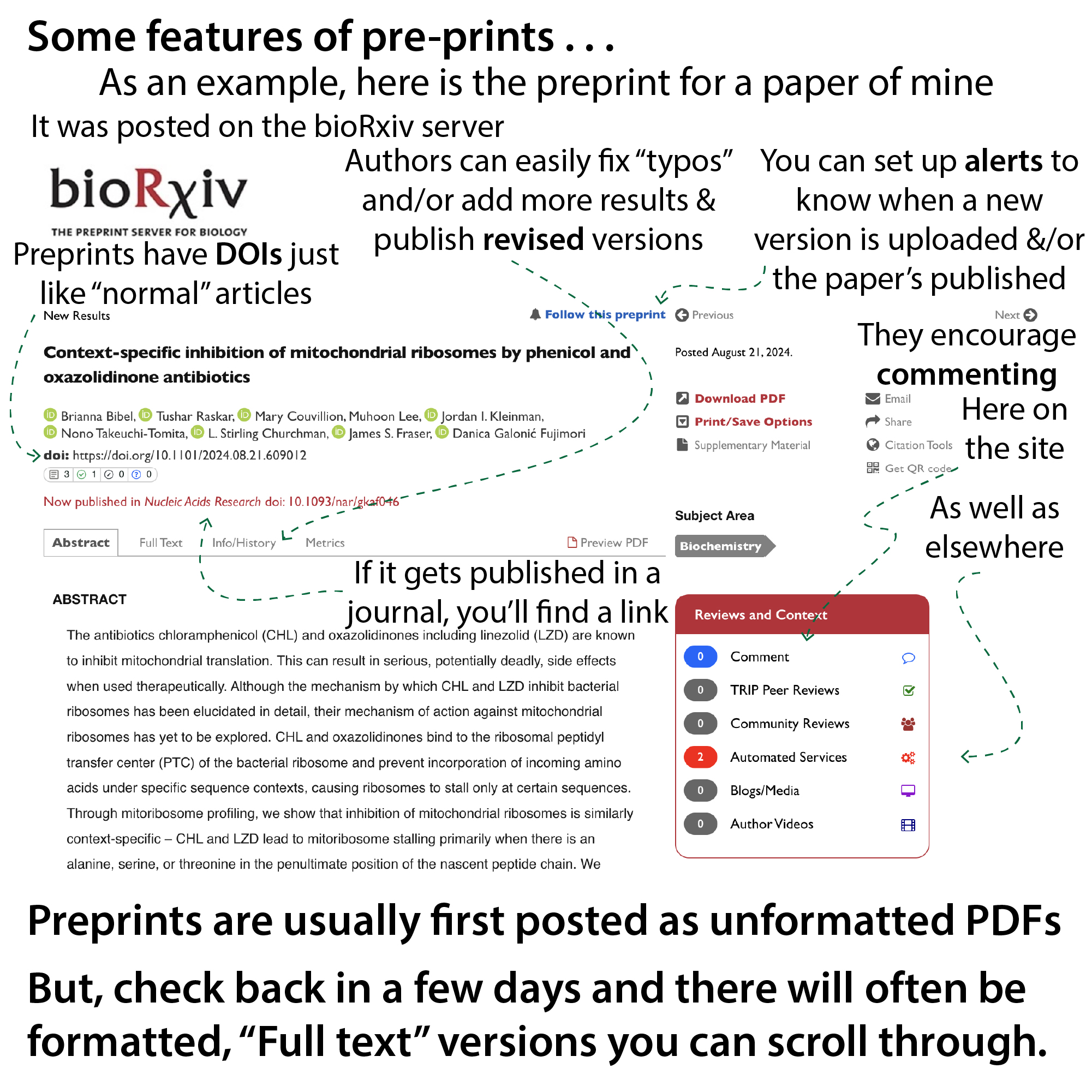
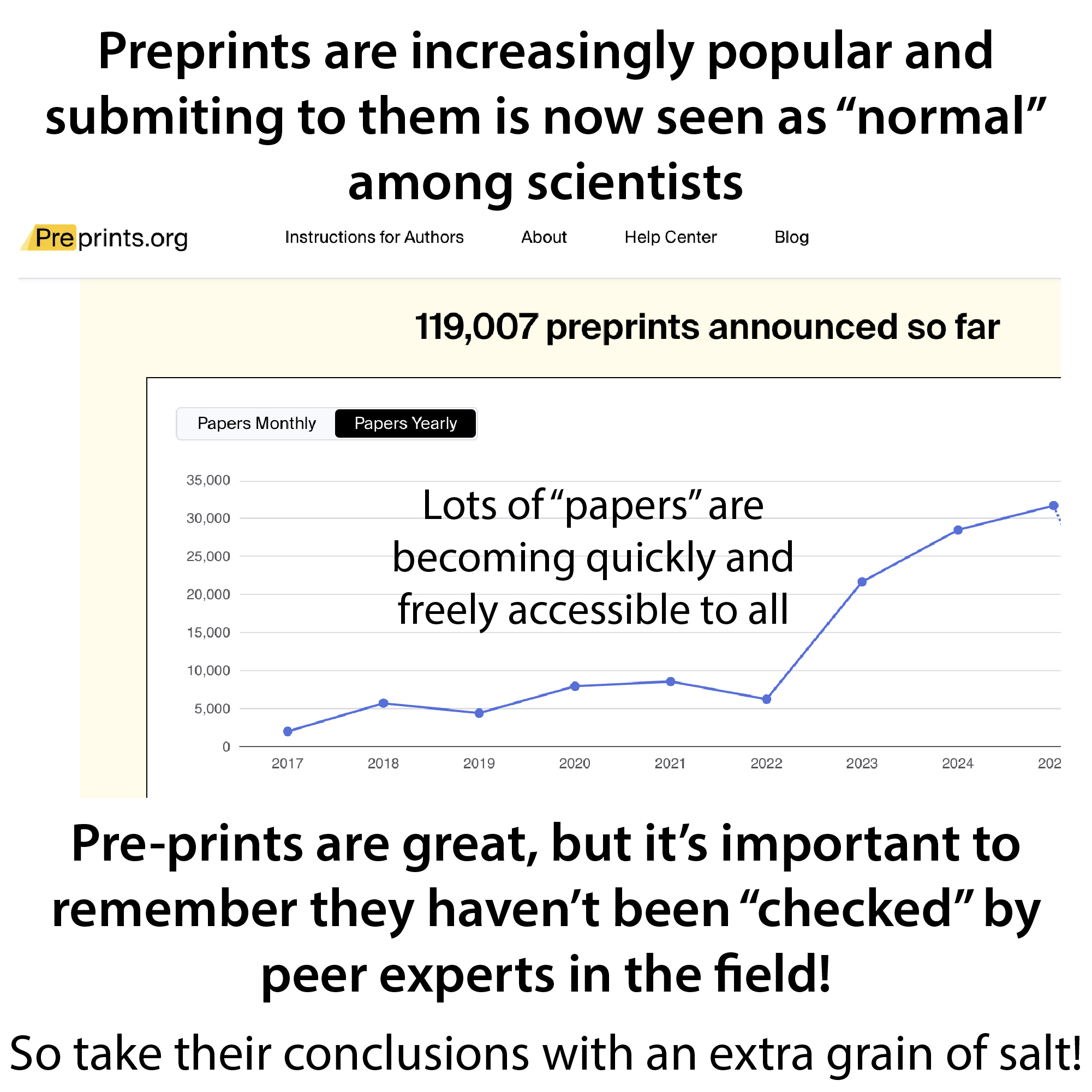
More on pre-prints: http://bit.ly/openaccesspreprints
More on the hidden curriculum of academic science: https://www.youtube.com/playlist?list=PLUWsCDtjESrH10HorjPfP_AreNCf6S4rL