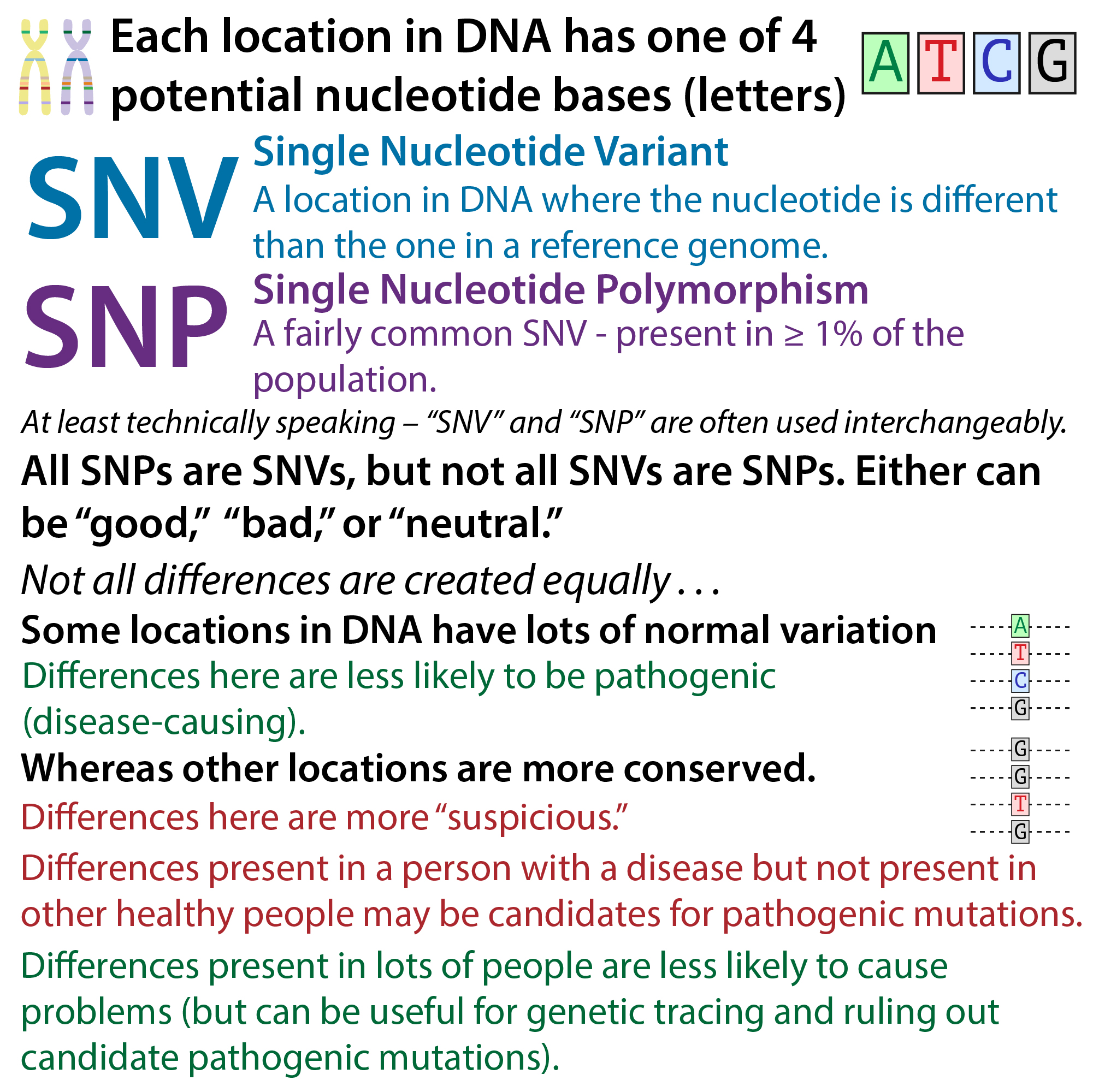
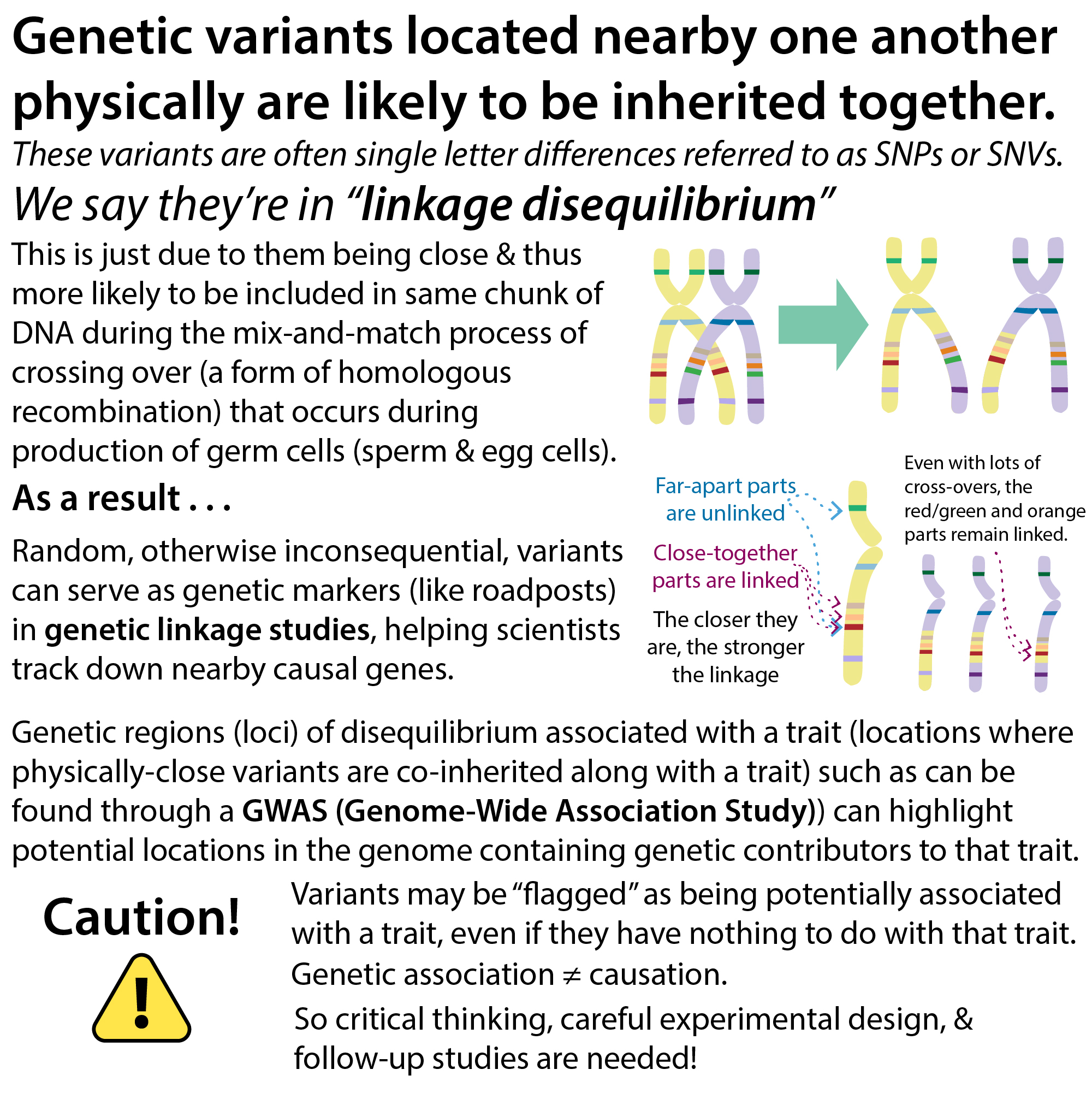
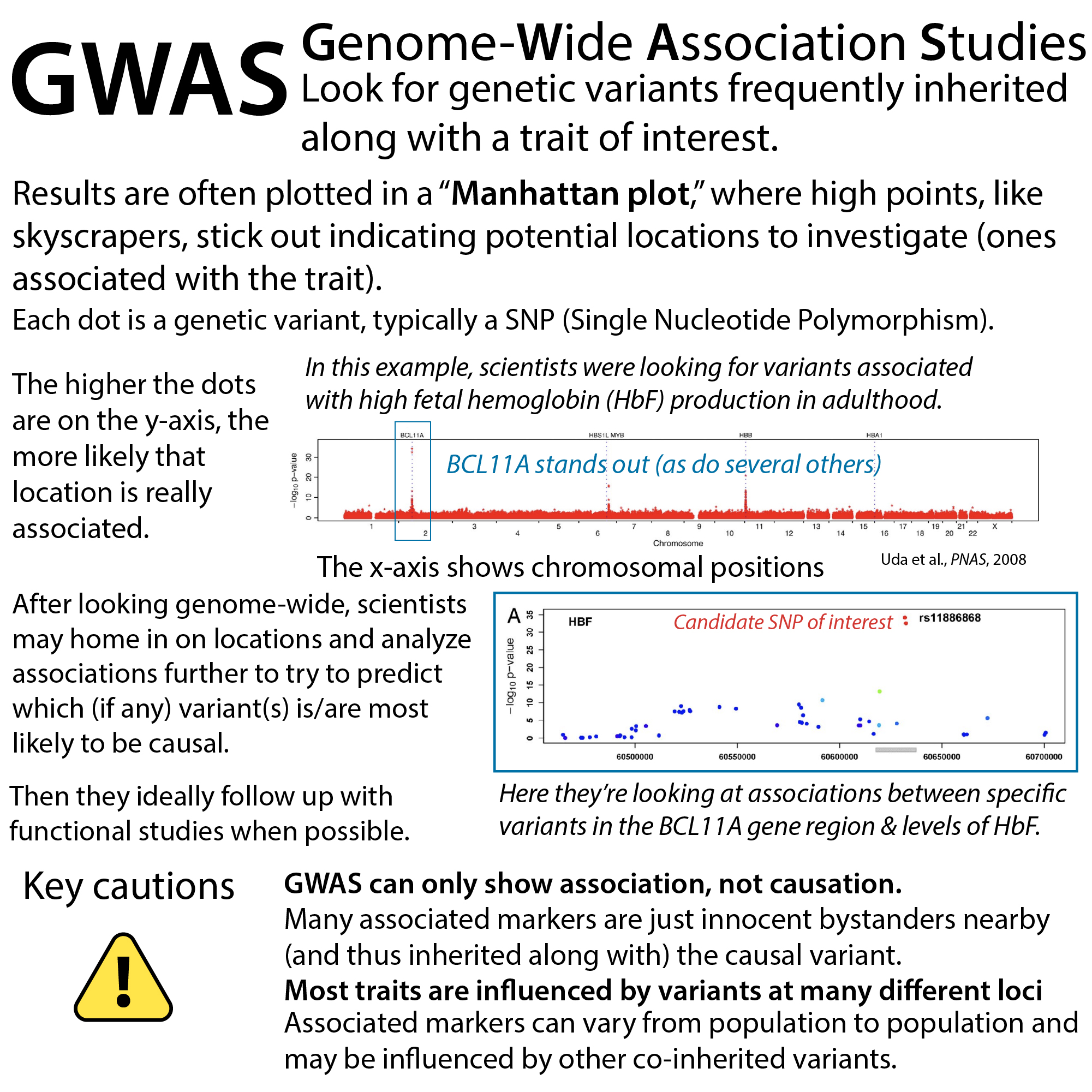
A SNP (Single Nucleotide Polymorphism) (pronounced “snip”) is a location in DNA where a single base pair is different from a reference sequence. Although often used interchangeable with “SNV” (Single Nucleotide Variant), a SNP technically refers to a more common variant, one that is present in > 1% of a population, whereas SNV is a broader term referring to any difference from a reference. SNPs are typically “inconsequential” natural variation (especially on their own), but they can be co-inherited with traits (a phenomenon called linkage disequilibrium), helping scientists track down genetic associations and home in on disease-causing mutations. SNPs can be determined through the use of “SNP chips” which are DNA sequencing tools that use special sequencing adapters bound to a chip to determine, at the same time (in parallel), the variant in a person’s DNA at each of LOTS of sites spanning the genome that tend to vary amongst people. Alternatively, whole genome sequencing (WGS) or whole exome sequencing (WES) can be used. Sometimes, SNPs are used as input for Genome-Wide Association Studies (GWAS studies).