A “library” is basically just some sort of collection of molecules. Often this is a large collection that is worked with in a high-throughout manner (think robotic liquid-handling machines and stuff). There are tons of different kinds of libraries that can be classified by what they contain and/or what they’re used for. Two of the main types are sequencing libraries, where your goal is to characterize what’s in the library; and screening libraries where the library is a tool for you to find molecules that bind a target, have a certain effect on cells, etc. (compound libraries, fragment libraries, etc .) or genes that play a role in some process (CRISPR guide libraries, siRNA libraries, etc.). Here’s some more details about what each of these entails.
YouTube: https://youtu.be/lkjCiLwzBv0 & https://youtube.com/shorts/0mB-F0qfQgs
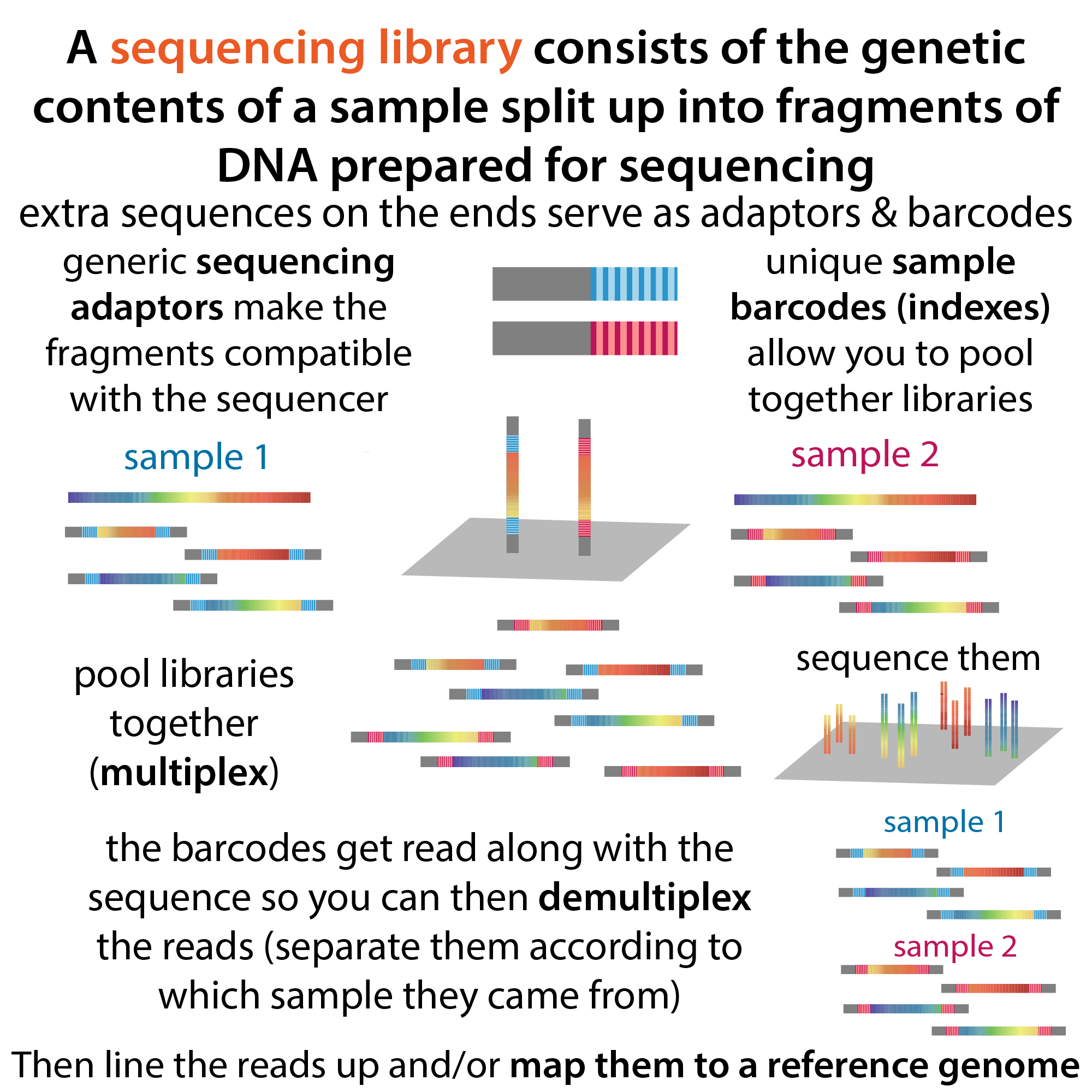
A sequencing library is a collection of short (few 100 bp) sequences, prepared with sequencing adapters added on to the ends, that together make up the “whole” genetic information present in a sample. The adapters are just extra sequences that will bind to complementary sequences on the chip of the sequencer, where lots of copies can then get made and read out.
Libraries are only helpful if you can identify what’s what. For drug screens, you usually just have to go by what well a hit corresponds to. But for sequencing libraries, we commonly use molecular barcodes (aka indexes) in the form of unique (but known and cross-referenced) sequences that we can attach to the end of the sequences we are sequencing (between the unique sequence and the generic adapter). This allows us to do things like combine (“pool”) libraries from multiple samples and sequence them all together. This “multiplexing” saves time and money. When the sequences get read, they include the barcode, so the reads can be computationally separated, thus “demultiplexing” the results so you know what came from what sample.
more about multiplexing & barcodes here: https://bit.ly/multiplexingandbarcodes
Now let’s talk about screening libraries.
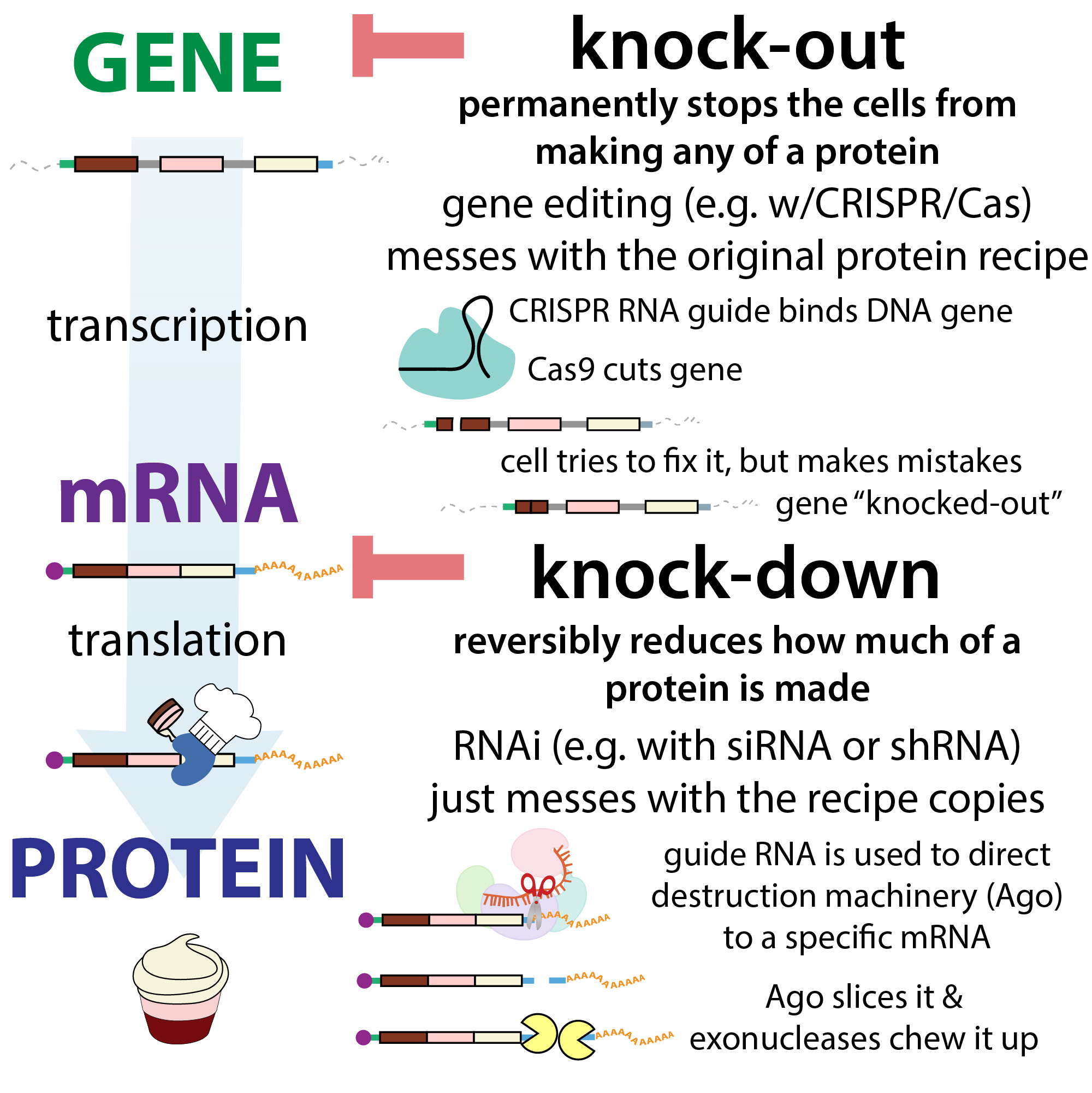
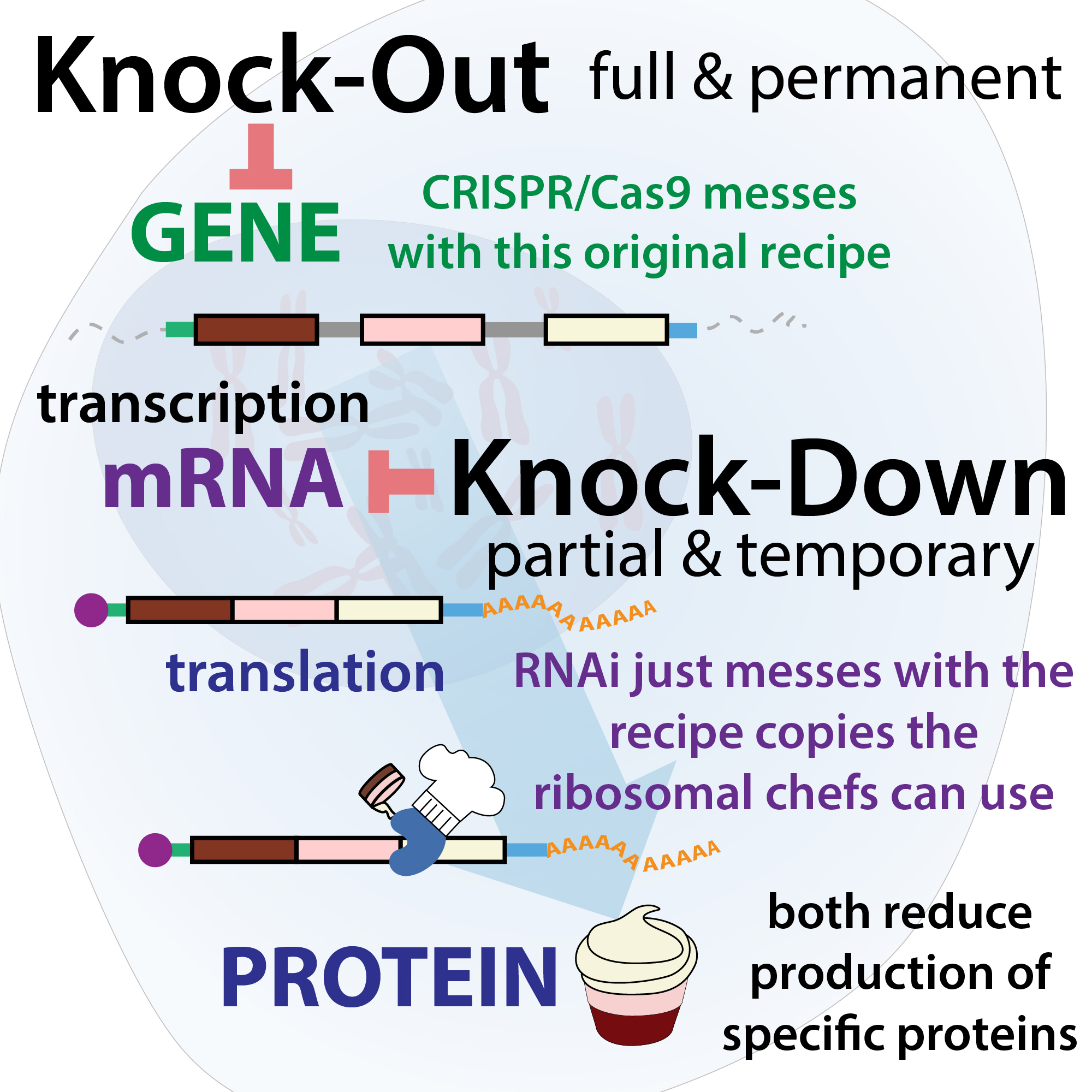
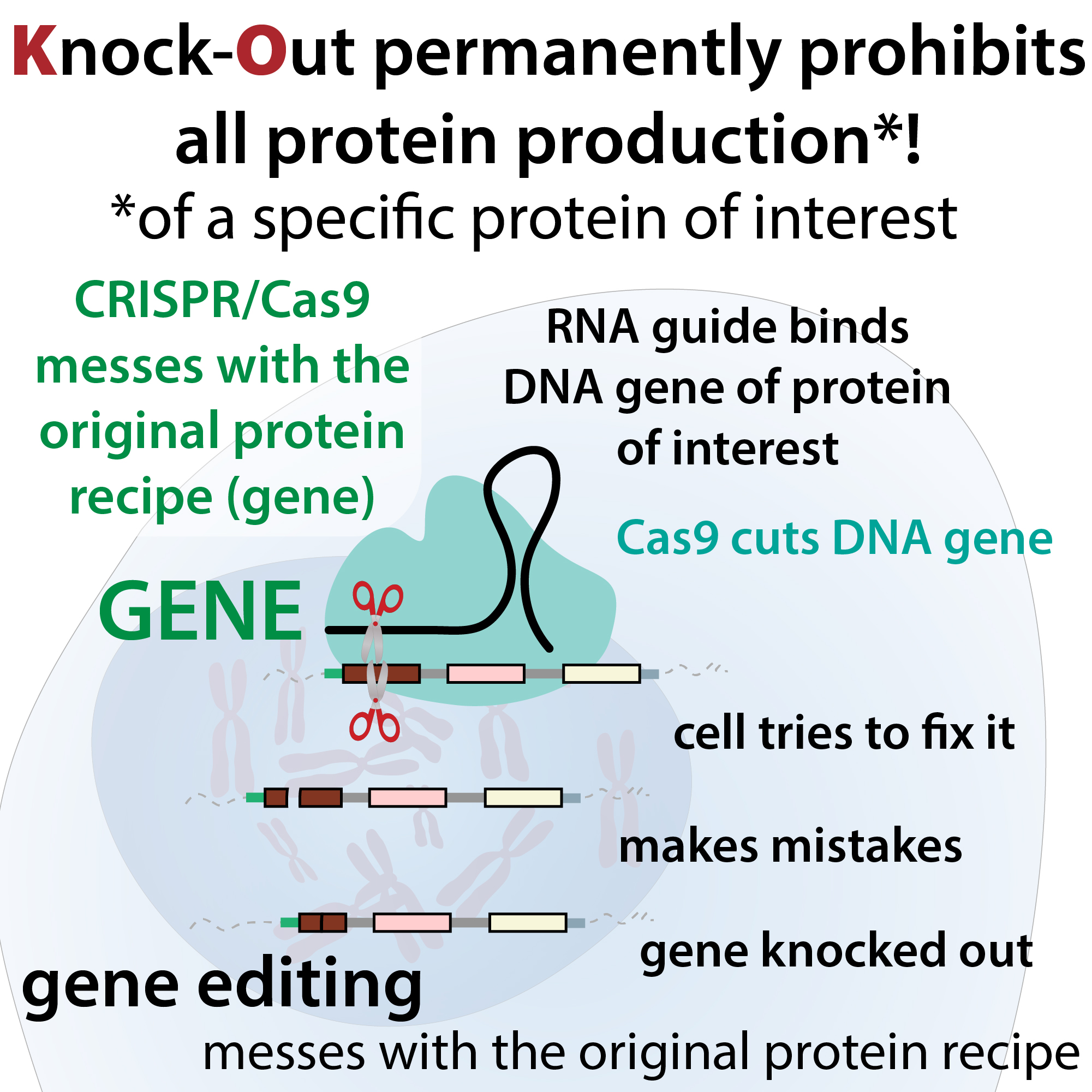
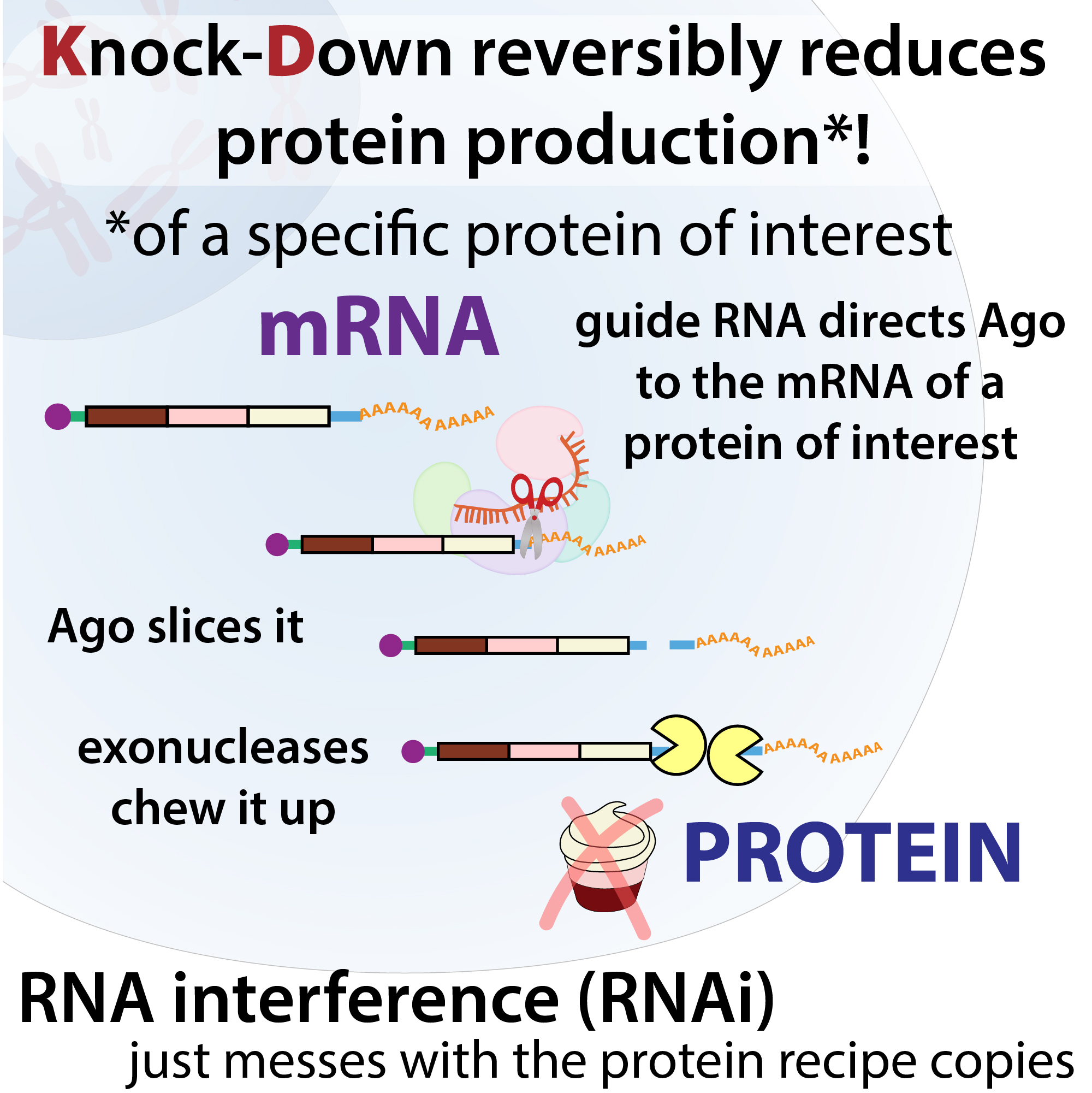
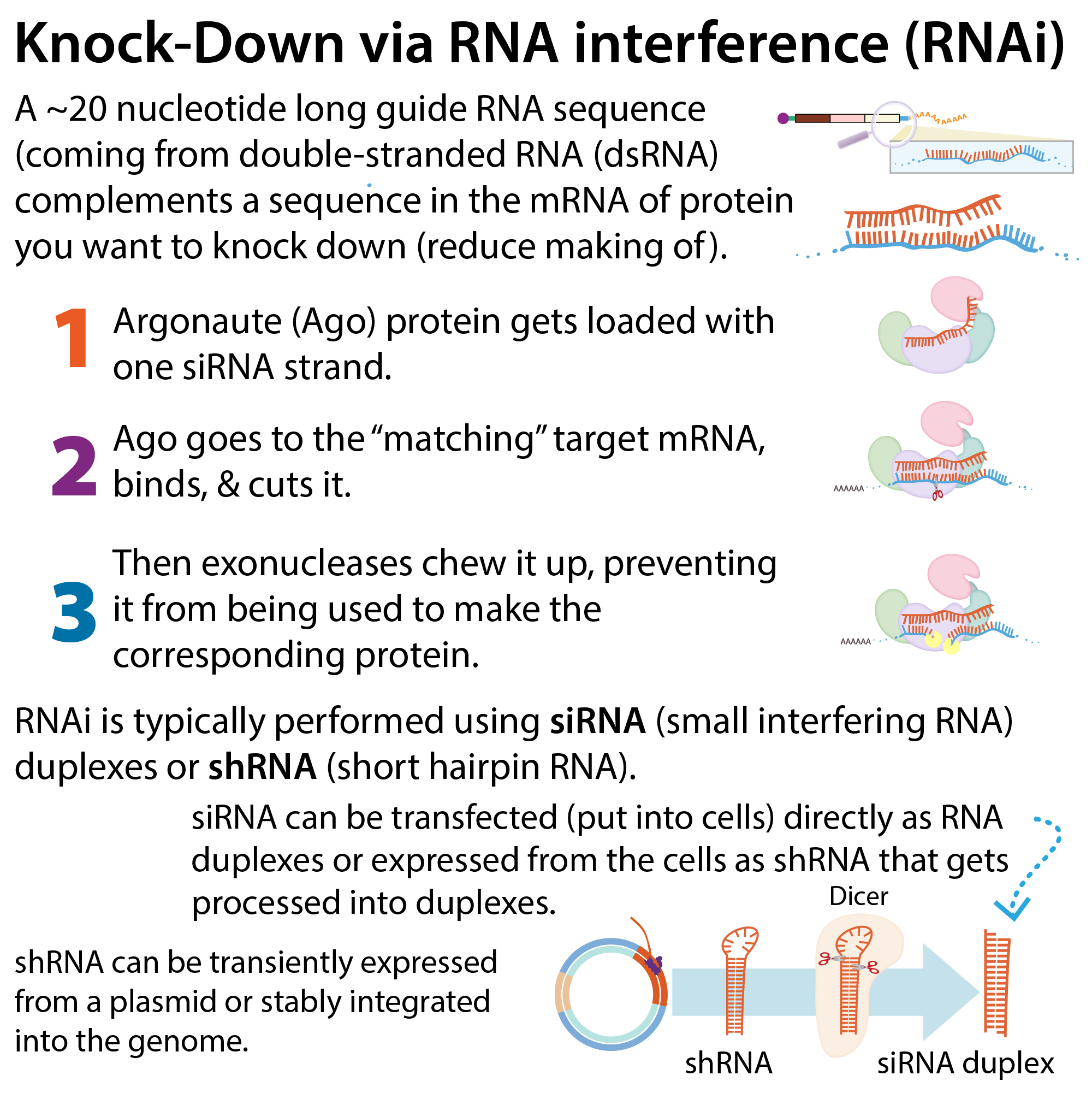
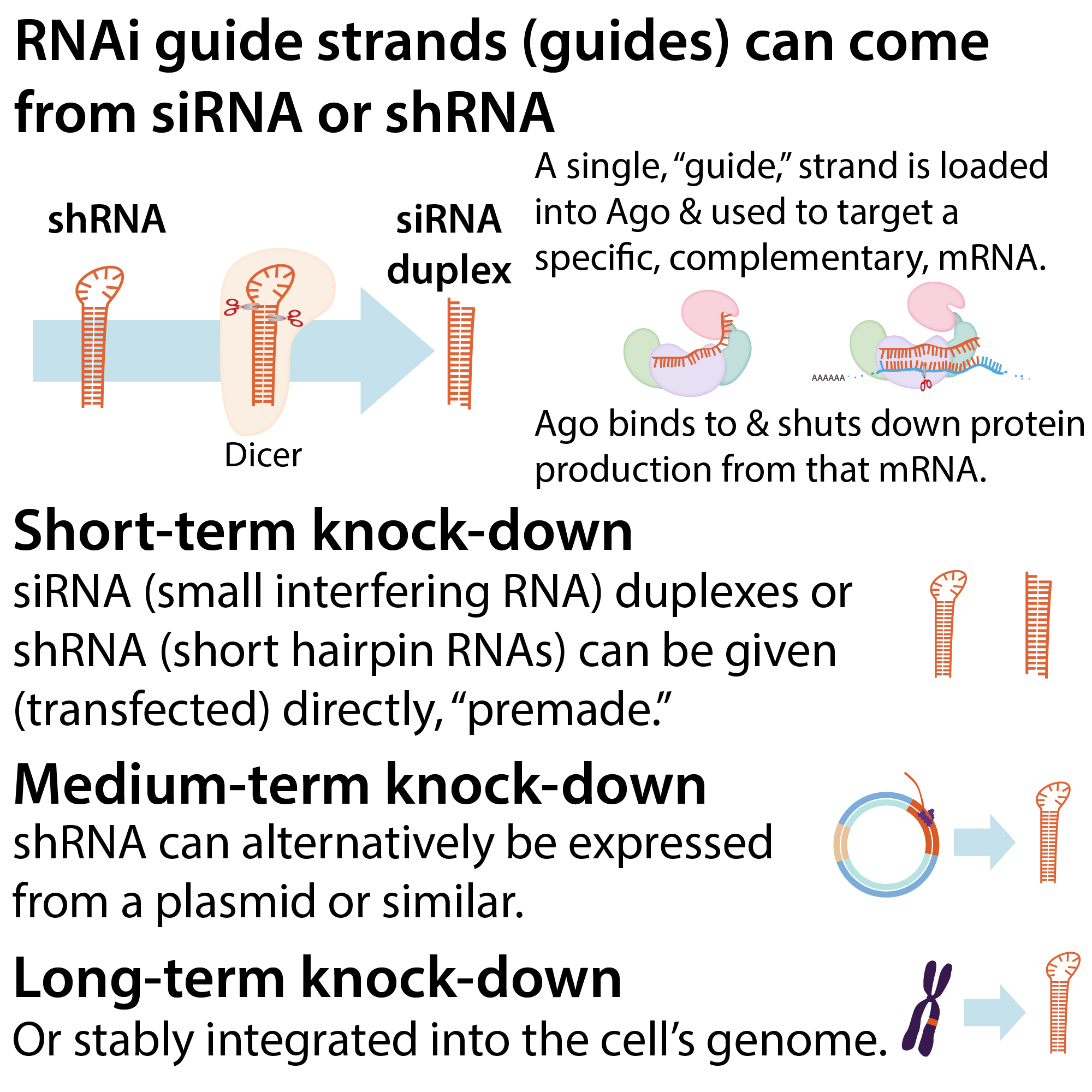
There are some screening libraries that are also made up of nucleic acids – but these serve much different purposes! They actually have a purpose rather than just being there to see. These sequence-based libraries include siRNA or shRNA libraries, which can be used for genetic knock down screens. And libraries of CRISPR guide RNAs that can be used for genetic knock-out screens. You can also make libraries of reporters, etc.
Conventional screening libraries are compound libraries – these are collections of drug-like molecules that can be (hopefully quickly) tested in some assay (experiment where to measure things) to see if they bind to and/or affect some process. There are a lot a lot a lot of compounds out there and it’s hard to predict what might have an affect, so “screens” done on libraries are often performed early on to get initial leads or “hits” that can then be followed-up on with additional tests and/or optimization.
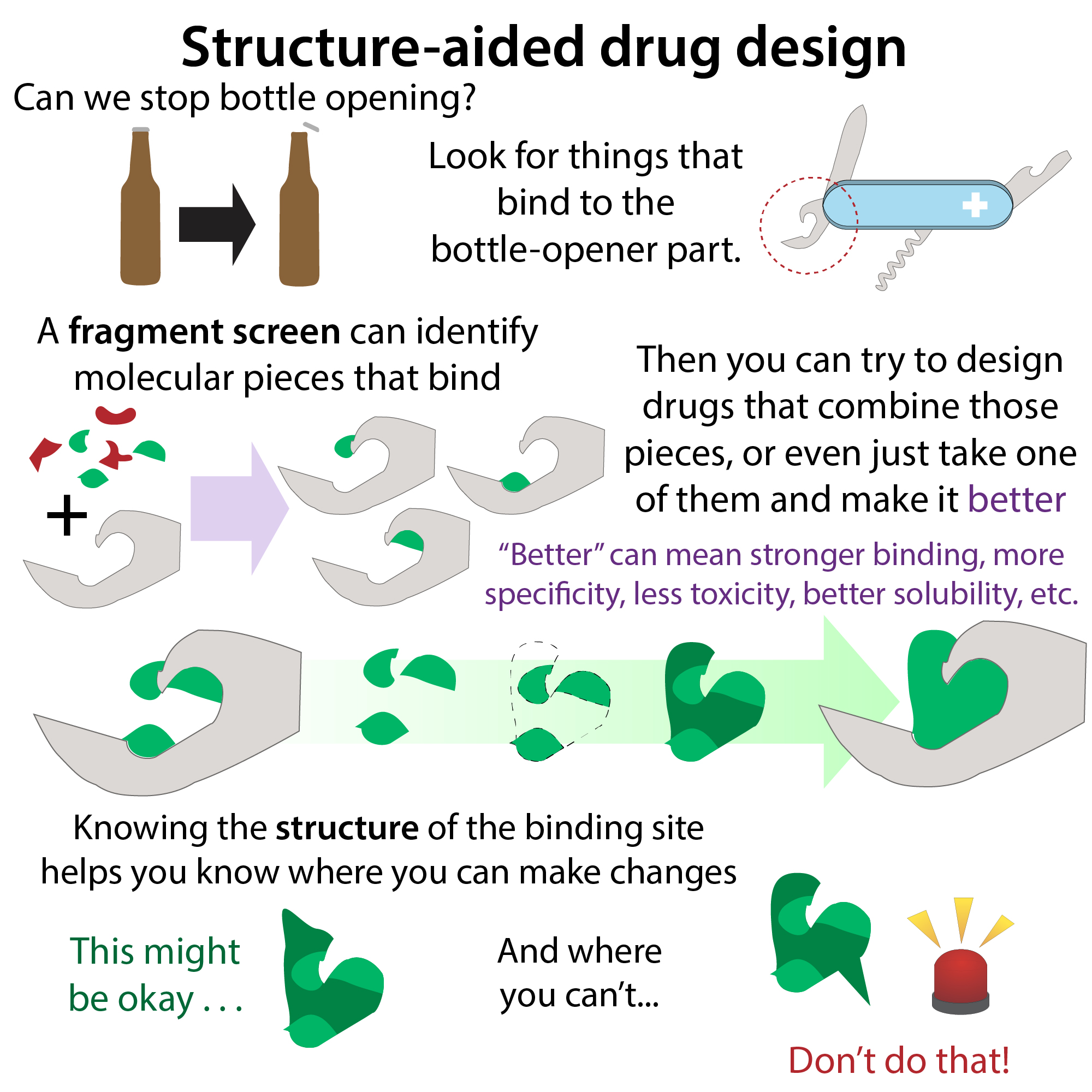
A variant of the compound library is the fragment library, used for fragment screens. Same idea except that your library consists of smaller pieces, like parts of drugs, which can then be combined and pieced together to make whole drugs.
To get libraries of proteins to test for binding can be a harder challenge. Especially since proteins won’t stay stable over time like drugs will. So one strategy that’s used is making a phage display library – create a library of bacteria-infecting viruses called phages, each of which makes a unique protein that it will display on its surface. You can then do binding, washing, and amplifying cycles to enrich for phages that make binding proteins. Then sequence the phage to see what protein it was making.
Finally, I just wanted to mention that there’s a cool new kind of library called a DNA-Encoded Chemical Library (DECL or DEL) that tags compounds with a DNA sequence and builds tons of compounds piece by piece, adding DNA sequences onto the end of that original sequence each time. So each uniquely-made compound ends up with a unique barcode so the compounds can be mixed together and mixed with a target and then the target can be isolated and the bound molecules sequenced to see what they are. So cool and definitely something to keep a watch on!
Here’s a review article about it: DNA-Encoded Chemical Libraries: A Comprehensive Review with Succesful Stories and Future Challenges. Adrián Gironda-Martínez, Etienne J. Donckele, Florent Samain, and Dario Neri. ACS Pharmacology & Translational Science 2021 4 (4), 1265-1279. DOI: 10.1021/acsptsci.1c00118 https://doi.org/10.1021/acsptsci.1c00118
more on fragment screens and structure-aided design: https://bit.ly/mproinhibitors & https://bit.ly/structural_biology_overview ; YouTube: https://youtu.be/1x_J1jBbseo
more on phage display: http://bit.ly/phagedisplay & https://youtu.be/4FfdL0_MyUU
more on genetic knock-down & knock-out: blog: https://bit.ly/knockdownvsknockout; YouTube: https://youtu.be/YgCiYfjQzxw
more about DNA sequencing methods: blog form: http://bit.ly/DNAsequencingmethods ; YouTube: https://youtu.be/QSaRUt-cUDw