
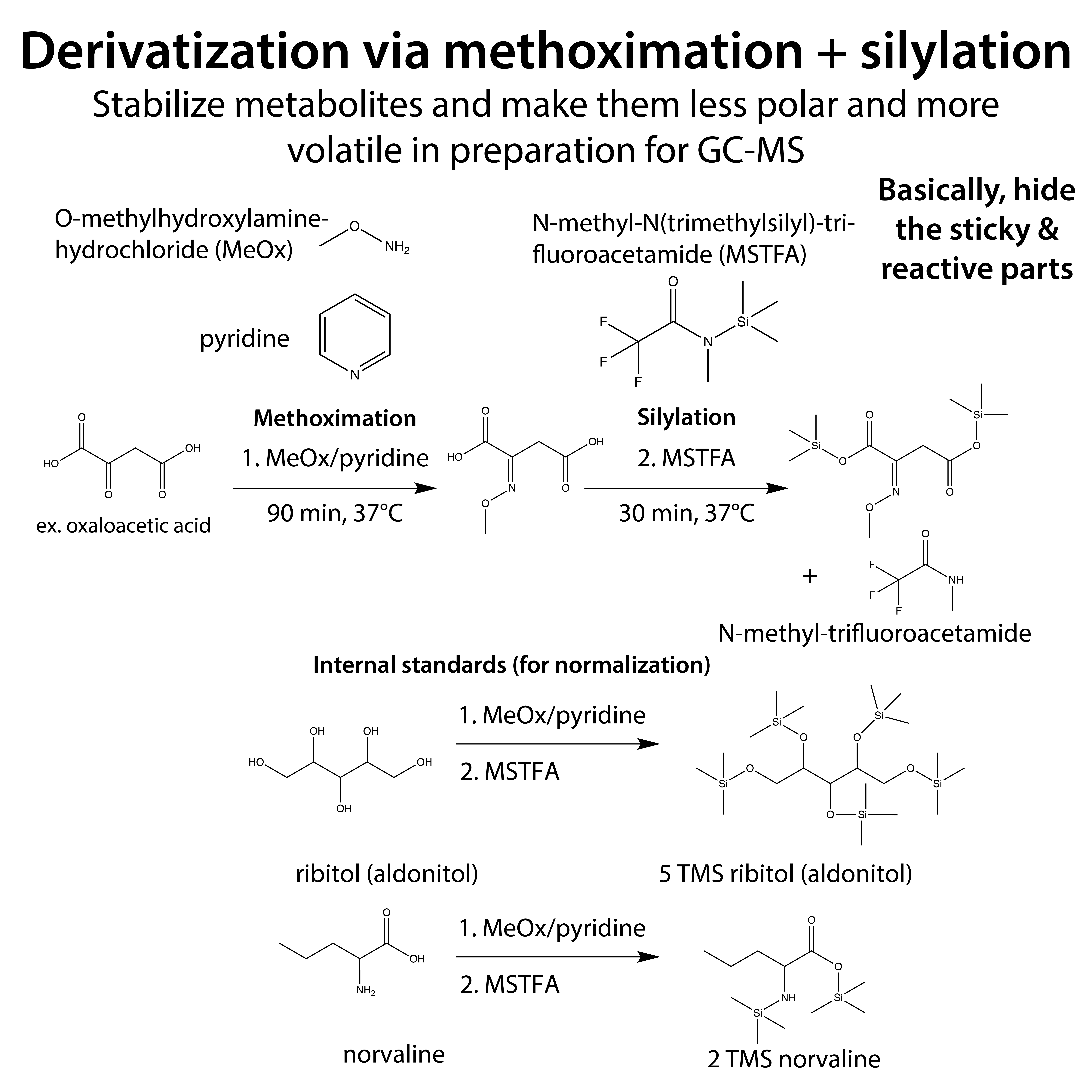
Silylation may sound silly to say, but if you want to make organic acids volatile for GC-MS, it gives you a way! And methoximation beforehand helps you ensure tautomerization doesn’t lead to a bunch of unwanted derivatives that ruin your day. Just be sure when you’re derivatizing and storing, you keep water away!
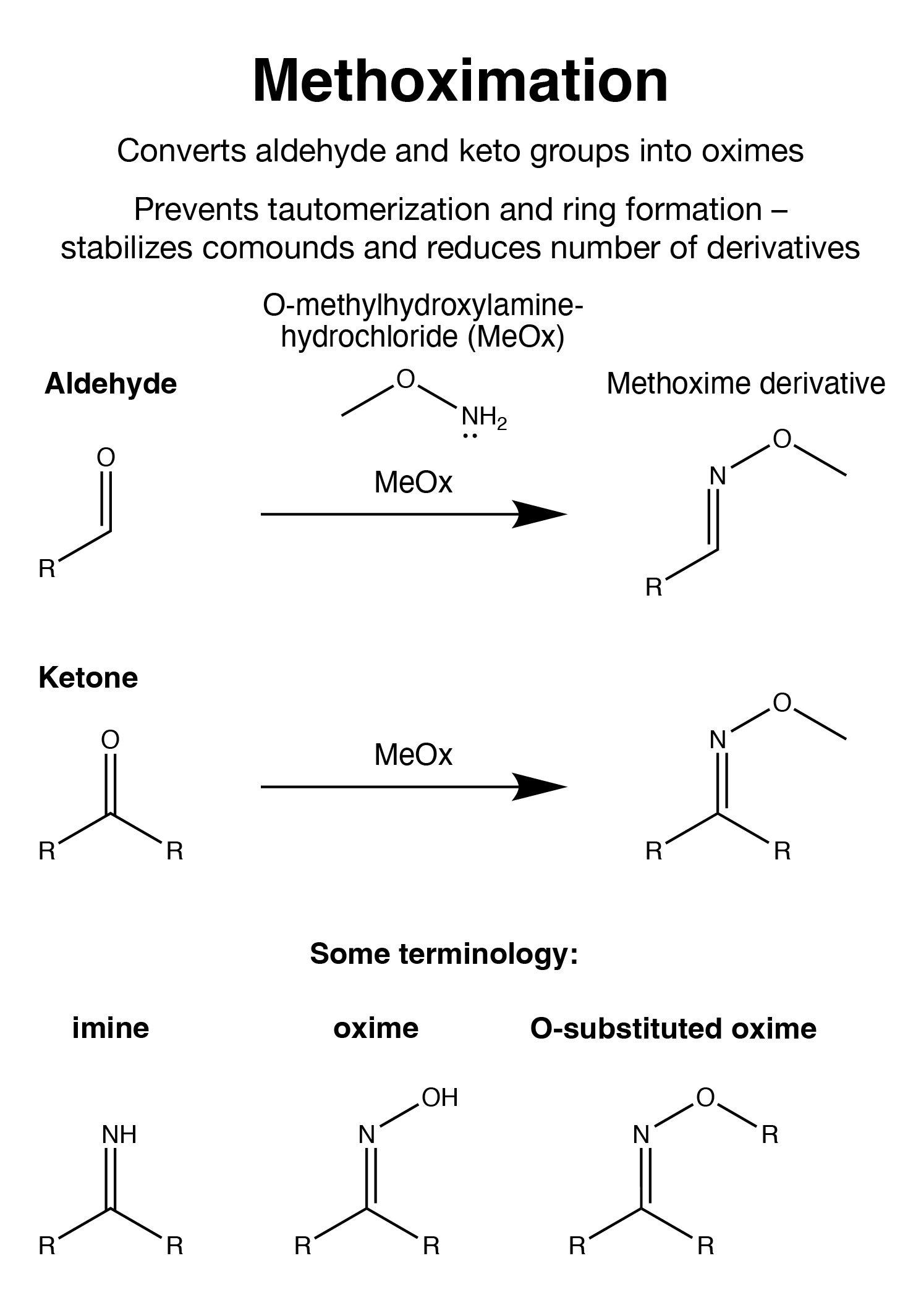
Methoximation:
- Reagent: Methoxyamine hydrochloride (MeOx)
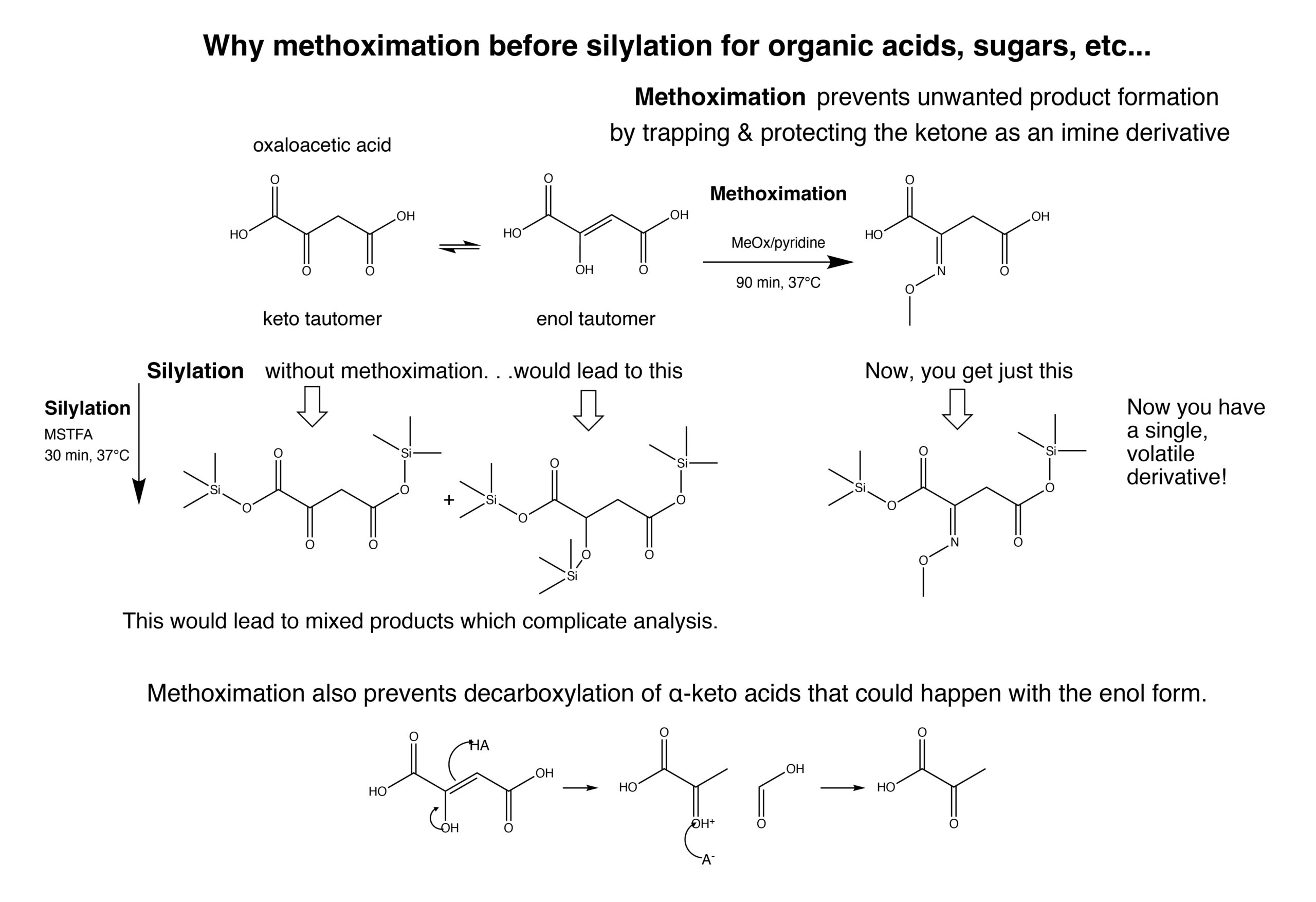
- What it does: converts aldehyde and keto groups into oximes (protects them)
- Why: Reduces isomerization & byproducts by preventing tautomerization (and subsequent multiple silylated derivatives) by limiting rotation about the C=N bond and preventing ring formation
- important for stabilizing α-keto acids – prevents decarboxylation
- locks sugars in open-chain conformation
Trimethylsilylation (TMS):
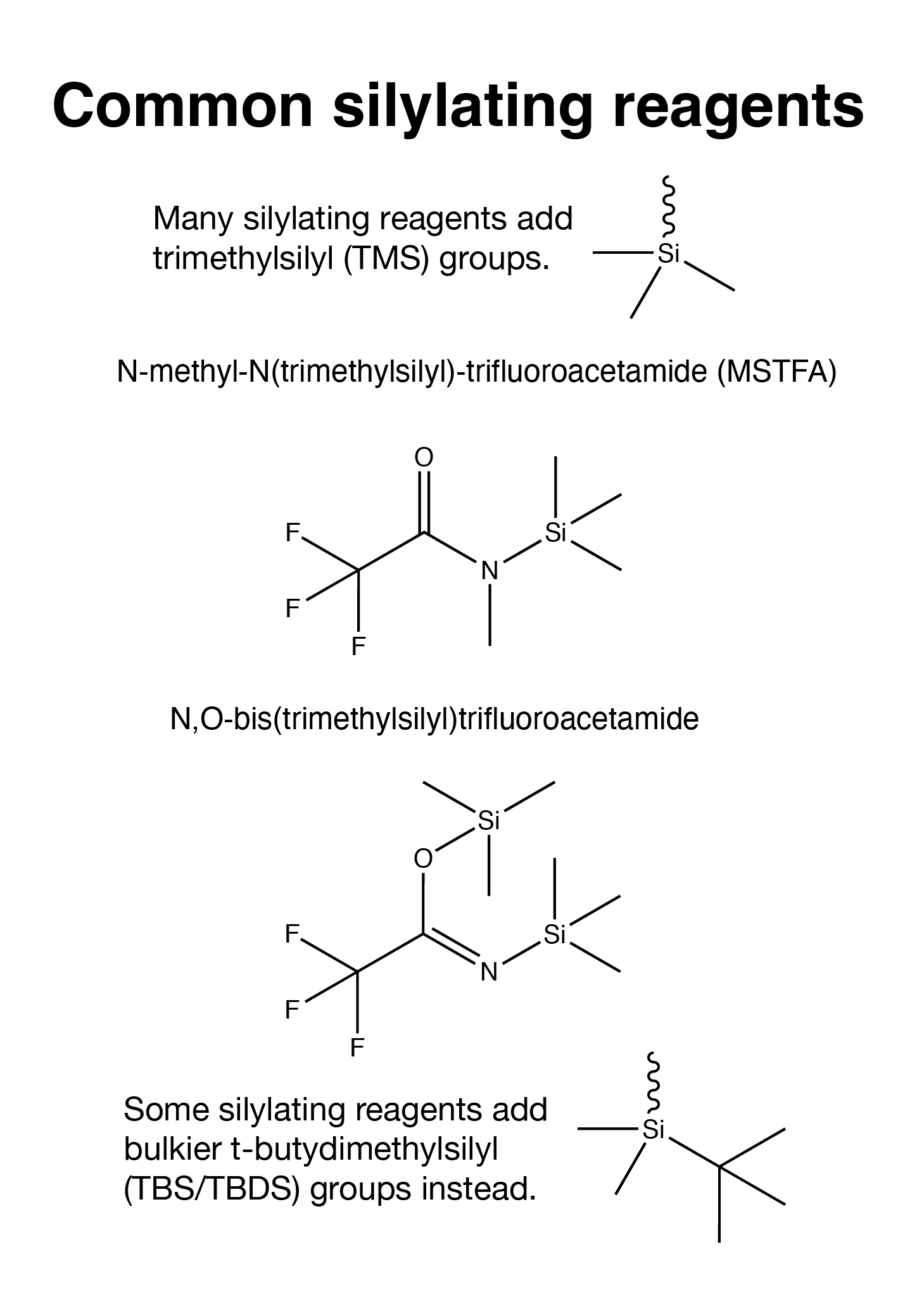
- Reagent: N-methyl-trimethylsilyltrifluoroacetamide (MSTFA)
- Many other reagents can be used but this is reported to be the most volatile of them
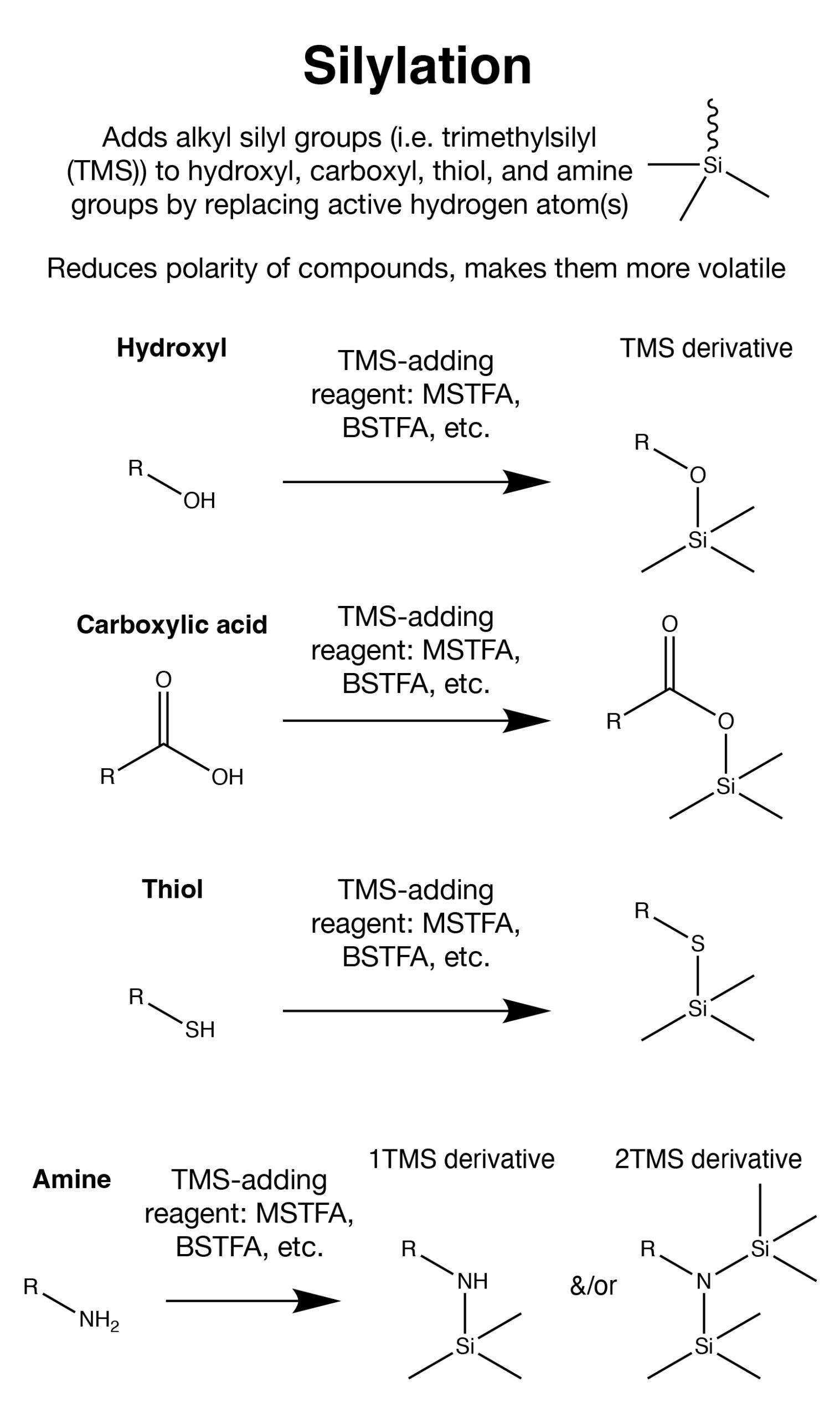
- What it does: Adds trimethylsilyl groups to hydroxyl, carboxyl, thiol, and amine groups by replacing active hydrogen atom(s)
- generates TMS ethers, TMS esters, TMS sulfides or TMS amines
- Why: Increases volatility (allowing it to vaporize for GC-MS) and reduces polarity (prevents unwanted interactions when traveling through column)
We are derivatizing bacterial lysate samples for GC-MS via MeOx/pyridine followed by MSTFA following:
Liebeke, M., Pöther, D., Nguyễn, V. D., Albrecht, D., Becher, D., Hochgräfe, F., … & Antelmann, H. (2008). Depletion of thiol‐containing proteins in response to quinones in bacillus subtilis. Molecular Microbiology, 69(6), 1513-1529. https://doi.org/10.1111/j.1365-2958.2008.06382.x
The basic derivatization protocol:
- 90 min MeOX/pyridine in thermal shaker at 37°C, 1200 rpm
- 30 min MSTFA in thermal shaker at 37°C, 1200 rpm
We’re basing our overall process on:
Meyer, H.; Weidmann, H.; Lalk, M. Methodological Approaches to Help Unravel the Intracellular Metabolome of Bacillus Subtilis. _Microbial Cell Factories_ **2013**, _12_ (1). https://doi.org/10.1186/1475-2859-12-69
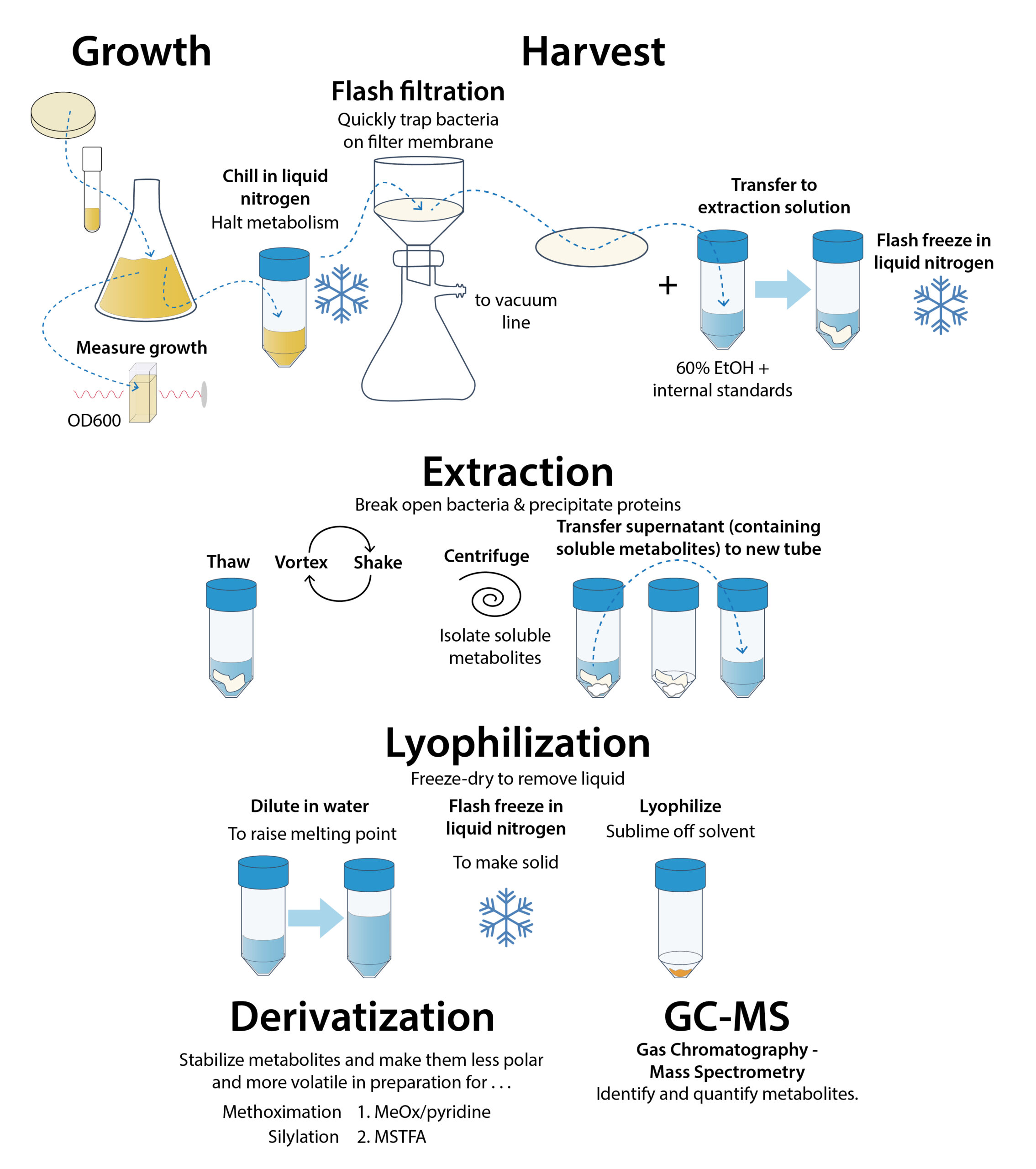
The basic idea is:
We flash filtered the bacteria, using a vacuum and filter flask to capture them on a membrane, get rid of the media (food) they were growing in, and halt their metabolism. We dunked the membranes in an extraction solution consisting of 60% ethanol (EtOH) and some internal control compounds for normalization. Then we flash froze them in liquid nitrogen (LN2). We then thawed them and shook them up to really break the buggers open and expose their insides to the ethanol to precipitate proteins (but hopefully not the metabolites). To isolate the metabolites, we spun down the tubes in the centrifuge and transferred the liquid (supernatant) to fresh tubes.
We then added water to raise the melting point so that our solid goes to a gas and not a liquid in the lyophilizer. Then it was LN2 time again, and lyophilization!!!!
- extraction (to separate our metabolites from now-denatured proteins and membrane gunk)
- lyophilization (freeze drying to get rid of the liquid)
- Derivatization (adding chemicals that will react with the metabolites to make them more stable, less attracted to stuff, and more volatile so they can become gas for. . .)
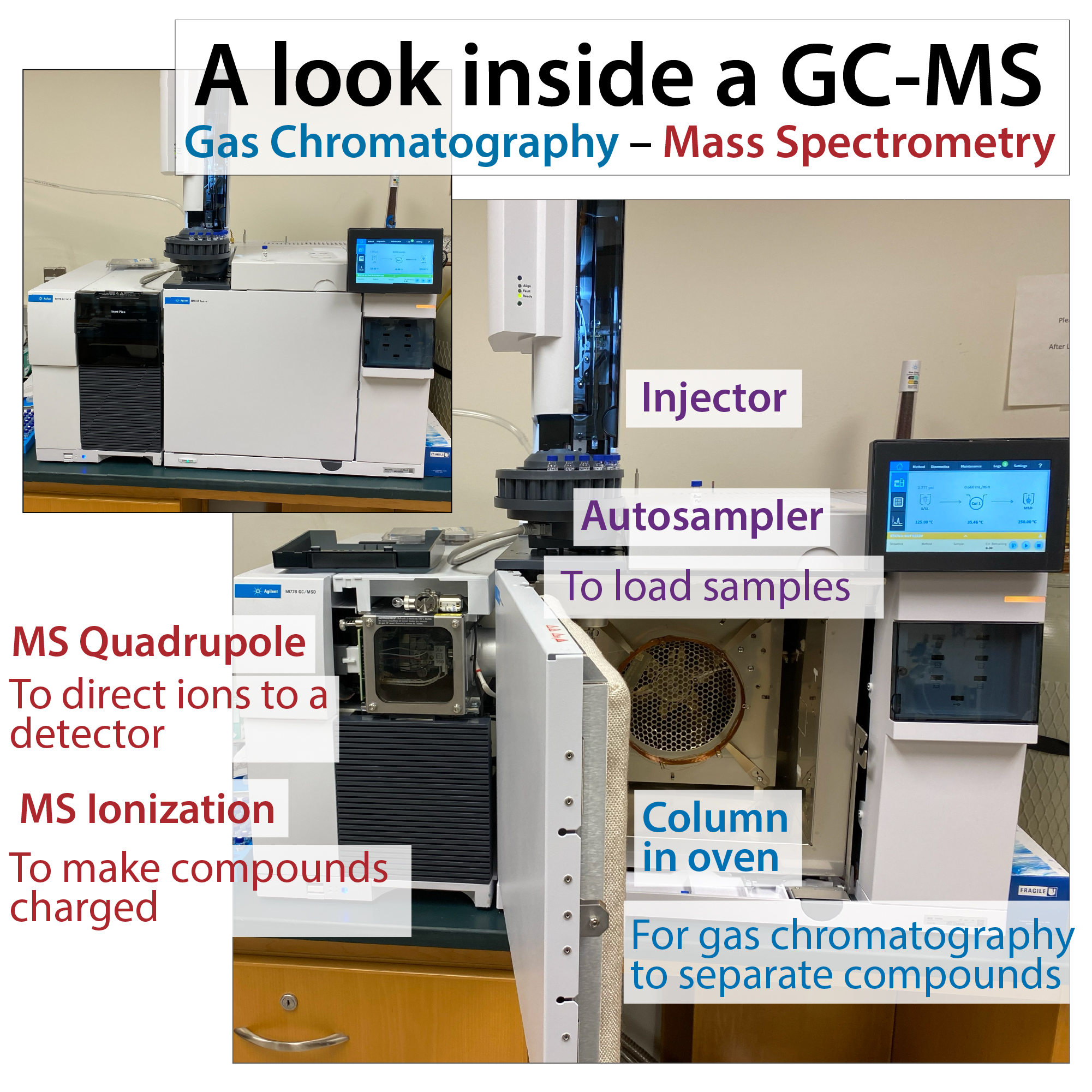
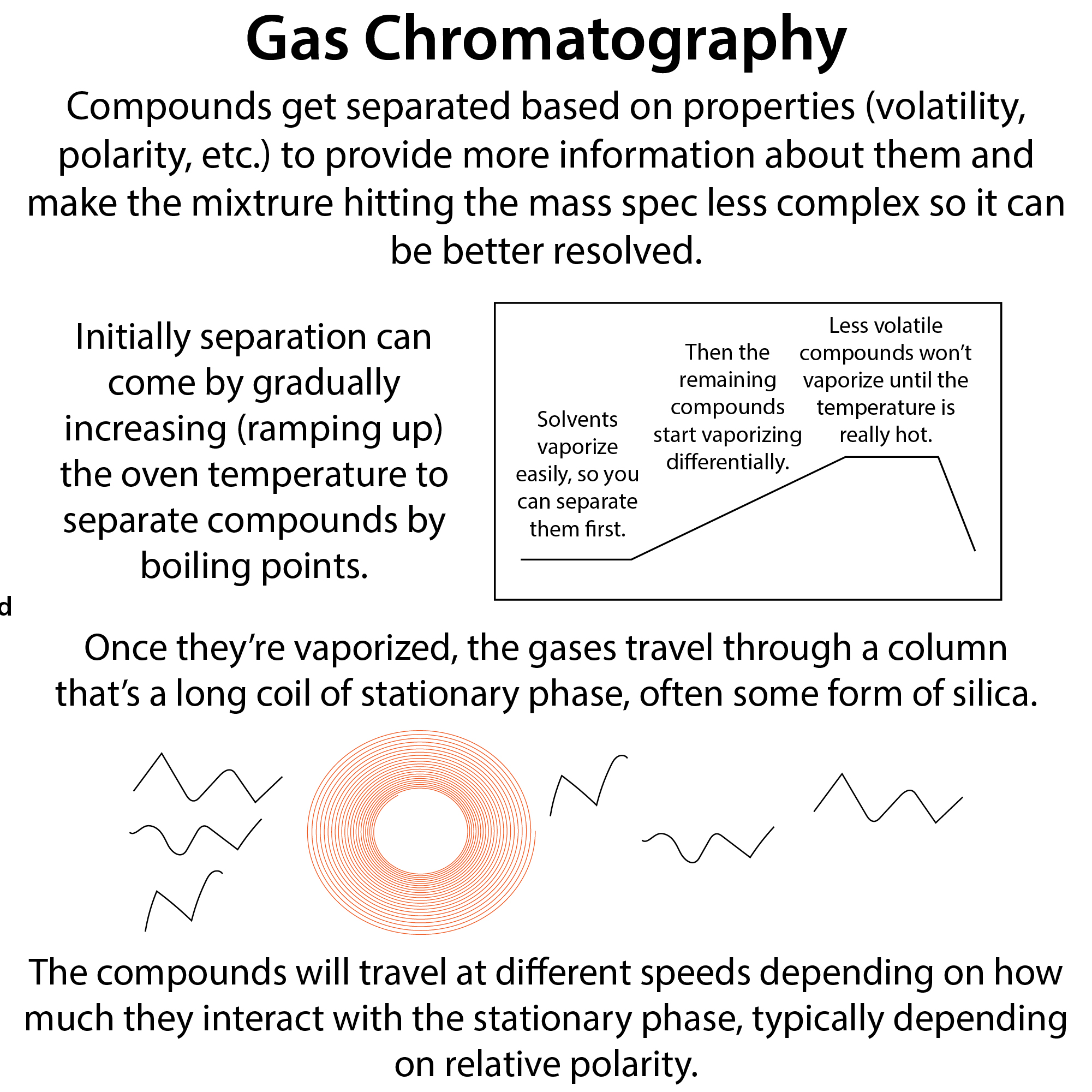
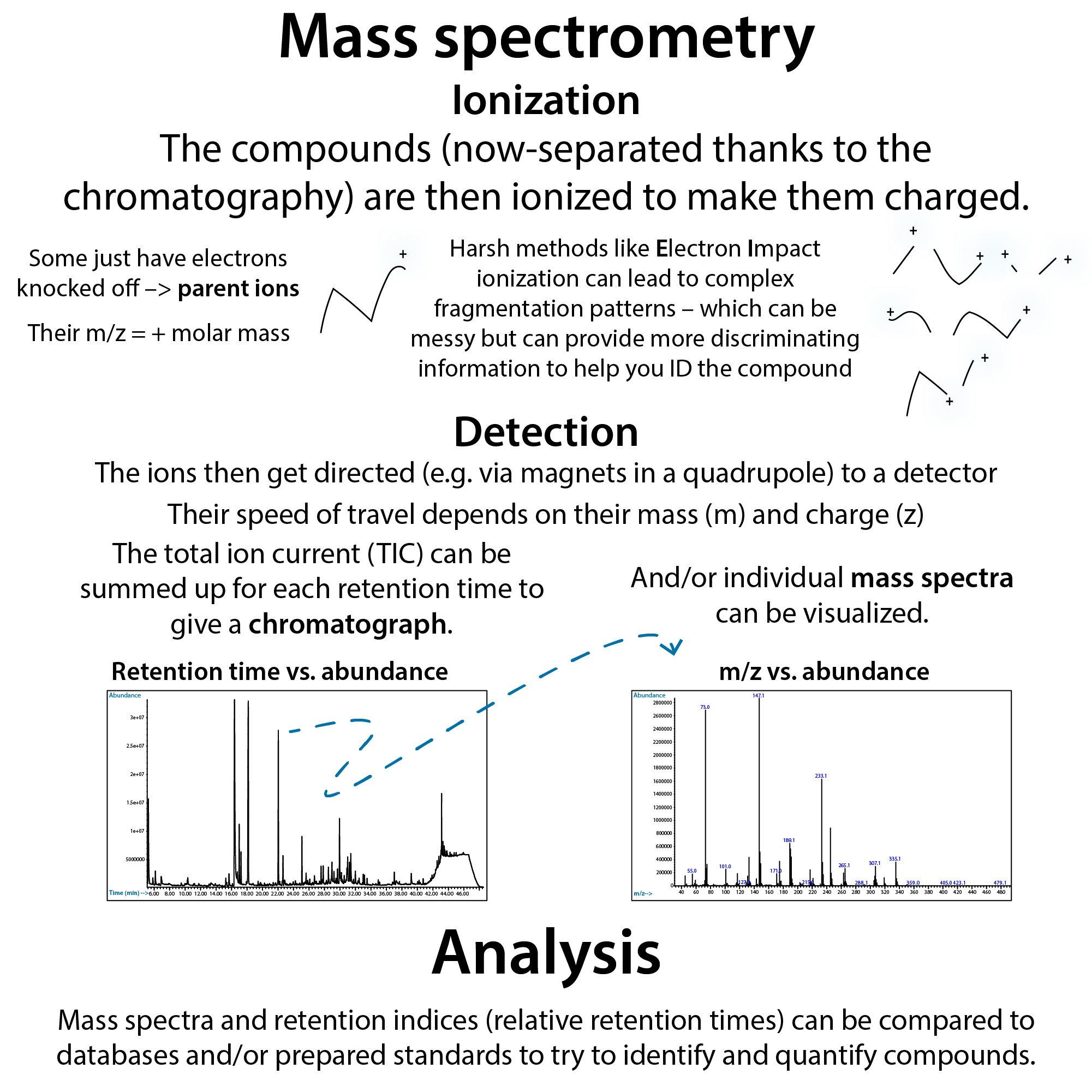
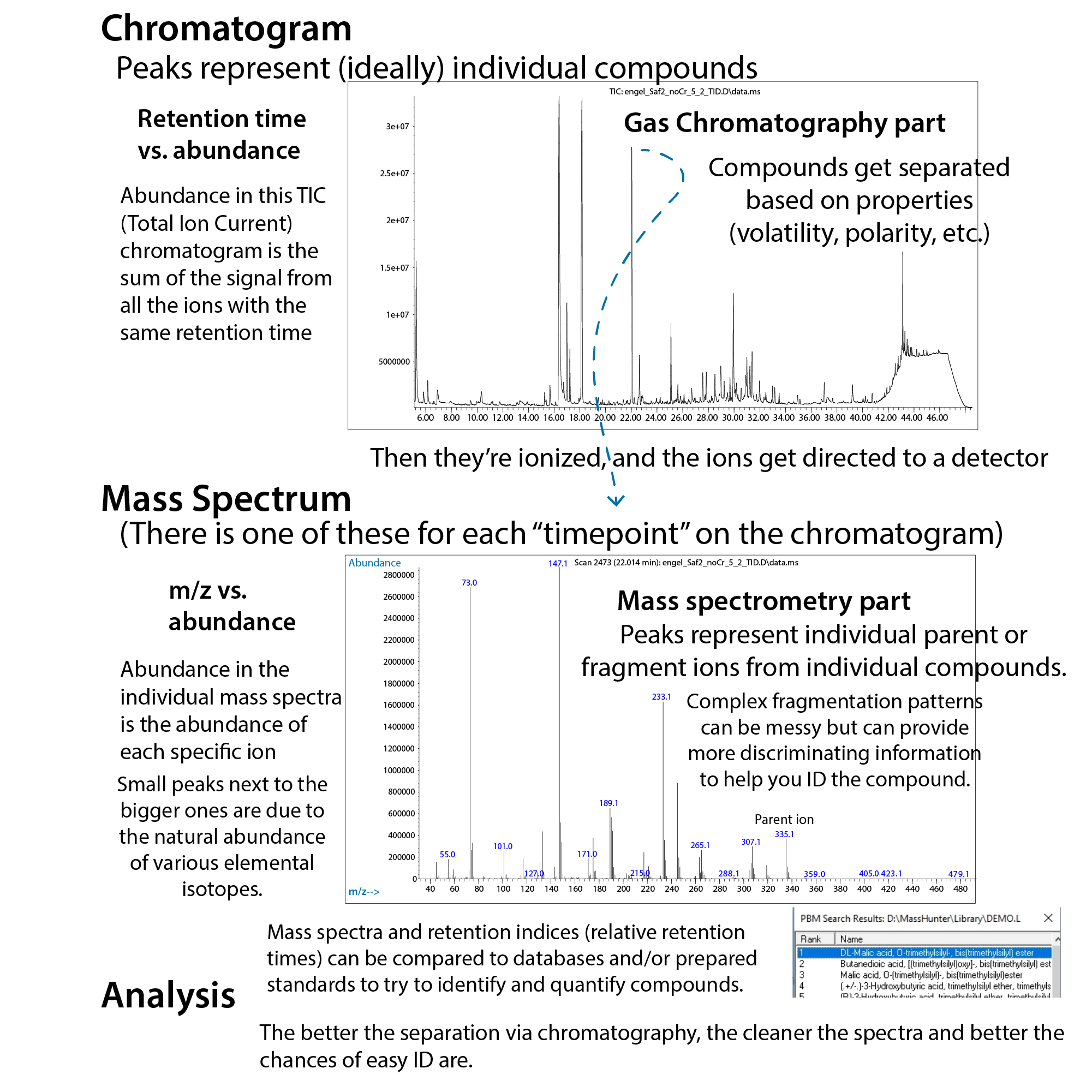
- Gas chromatography – mass spectrometry (sending the metabolites traveling as gases through a column to separate them and then ionizing them to make them charged, directing them to a detector and measuring their size to try to figure out what they are)
At this point and time we just want to see if we can work out the method and later we hope to use it to compare the bacteria’s metabolism during bioremediation.
More on the lyophilization part here: https://youtu.be/ZmvjQK1ThDQ
And the flash filtering here: https://tinyurl.com/yudkcjbp
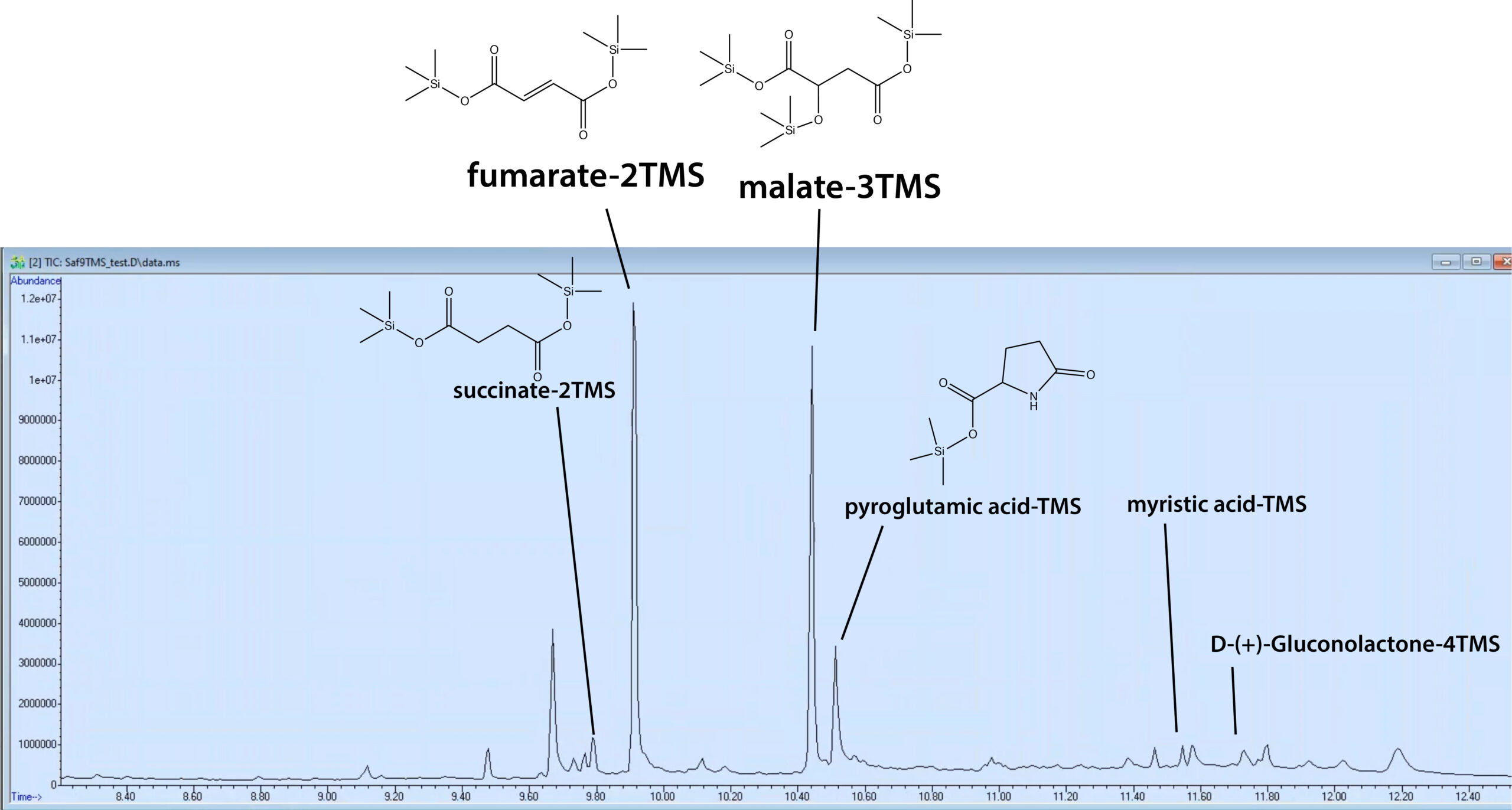
It’s just so freakin’ cool that you can actually detect these little metabolites from inside of bacteria! And that our derivitization worked. Now, we just need to optimize. And figure out software stuff. But, for now, I’m pretty psyched by this proof-of-concept that we can do this! And I’m excited to do it with my biochemistry class next week! I hope they’re as excited as I am.
Next week, we’re going to try doing a slower oven ramp for better separation (we sped up the published protocol this first time just so we could see things quickly) and perhaps injecting more sample for stronger signal. And we need to figure out how to get our standards derivatized because they didn’t cooperate this time
A cool website I’ve been exploring – in addition to PubChem and NIST Webbook – is GCMS-ID, which is cool because it predicts the retention index and spectra for compounds, taking into account derivatization https://gcms-id.ca/
Wakoli, J., Anjum, A., Sajed, T., Oler, E., Wang, F., Gautam, V., LeVatte, M., & Wishart, D. S. (2024). GCMS-ID: a webserver for identifying compounds from gas chromatography mass spectrometry experiments. Nucleic acids research, 52(W1), W381–W389. https://doi.org/10.1093/nar/gkae425
I’m hoping to try out MetaboAnalyist in the future: https://www.metaboanalyst.ca/home.xhtml
And open to any and all suggestions!
GC-MS is a bit like trying to figure out what letter noodles and how much of each are in a bowl of alphabet soup. The gas chromatography (GC) part separates the noodles and then the mass spectrometry (MS) part gives you info that helps you identify them. When you’re dealing with a messy soup of a sample, it’s good to have standards to compare to – pure solutions you prepare of one type of noodle (molecule). Then you know when to expect it to come out of the GC step (retention time). Which helps you better fish out the noodle signal you’re looking for in the spectral data the MS gives you, where the data for different noodles/molecules may look very similar (if they have similar m/z and fragment ions).
So, I made some derivatized standards and am running them now with the method I worked out for the GC to get best separation of our molecular alphabet soup!
YouTube: https://youtu.be/mTYKLc4In2w
We’re getting the most success with a variation (we had to up the volume and lower the split) on this article, which was also our go-to for derivatization strategies:
Engel, B., Suralik, P., & Marchetti‐Deschmann, M. (2020). Critical considerations for trimethylsilyl derivatives of 24 primary metabolites measured by gas chromatography–tandem mass spectrometry. Separation Science Plus, 3(9), 407-418. https://doi.org/10.1002/sscp.202000025
We have some prominent peaks that show intriguing differences between samples that I can’t currently identify, so I’m trying MassBank search which is really cool, but not helping in this case. https://massbank.eu/MassBank/Search
Other resources I’ve found helpful:
Moldoveanu, S. C. and David, V. (2019). Derivatization methods in GC and GC/MS. Gas Chromatography – Derivatization, Sample Preparation, Application. https://doi.org/10.5772/intechopen.81954
Engel, B., Suralik, P., & Marchetti‐Deschmann, M. (2020). Critical considerations for trimethylsilyl derivatives of 24 primary metabolites measured by gas chromatography–tandem mass spectrometry. Separation Science Plus, 3(9), 407-418. https://doi.org/10.1002/sscp.202000025
LibreTexts Chemistry 2.5E: GC Parameters, Lisa Nichols: https://chem.libretexts.org/Bookshelves/Organic_Chemistry/Organic_Chemistry_Lab_Techniques_(Nichols)/02%3A_Chromatography/2.05%3A_Gas_Chromatography_(GC)/2.5E%3A_GC_Parameters
LibreTexts Lab 5: Gas Chromatography/Mass Spectrometry (GC/MS) by Fawcettt et al. https://chem.libretexts.org/Courses/University_of_California_Davis/CHE_115%3A_Instrumental_Analysis_-_Lab_Manual/Lab_5%3A_Gas_Chromatography_Mass_Spectrometry_(GSMS)
Some slides I made: https://drive.google.com/file/d/1Eo196M8dilPhUPFl0TZo9gKbj0jjYkRX/view?usp=sharing
More about the Bibel lab:
- official site: https://sites.google.com/stmarys-ca.edu/the-bibel-lab-at-smc?usp=sharing
- blog: https://thebumblingbiochemist.com/updates-from-the-bibel-lab/


More about mass spec-related topics…
Tandem mass spectrometry (MS-MS), mass analyzers, etc.
MS/MS (Tandem MS) comes in many different flavors (e.g. the “triple quadrupole (QqQ), Q-orbitrap (e.g. Q-Exactive), Q-Time of Flight (Q-TOF)), […]
What is metabolomics?
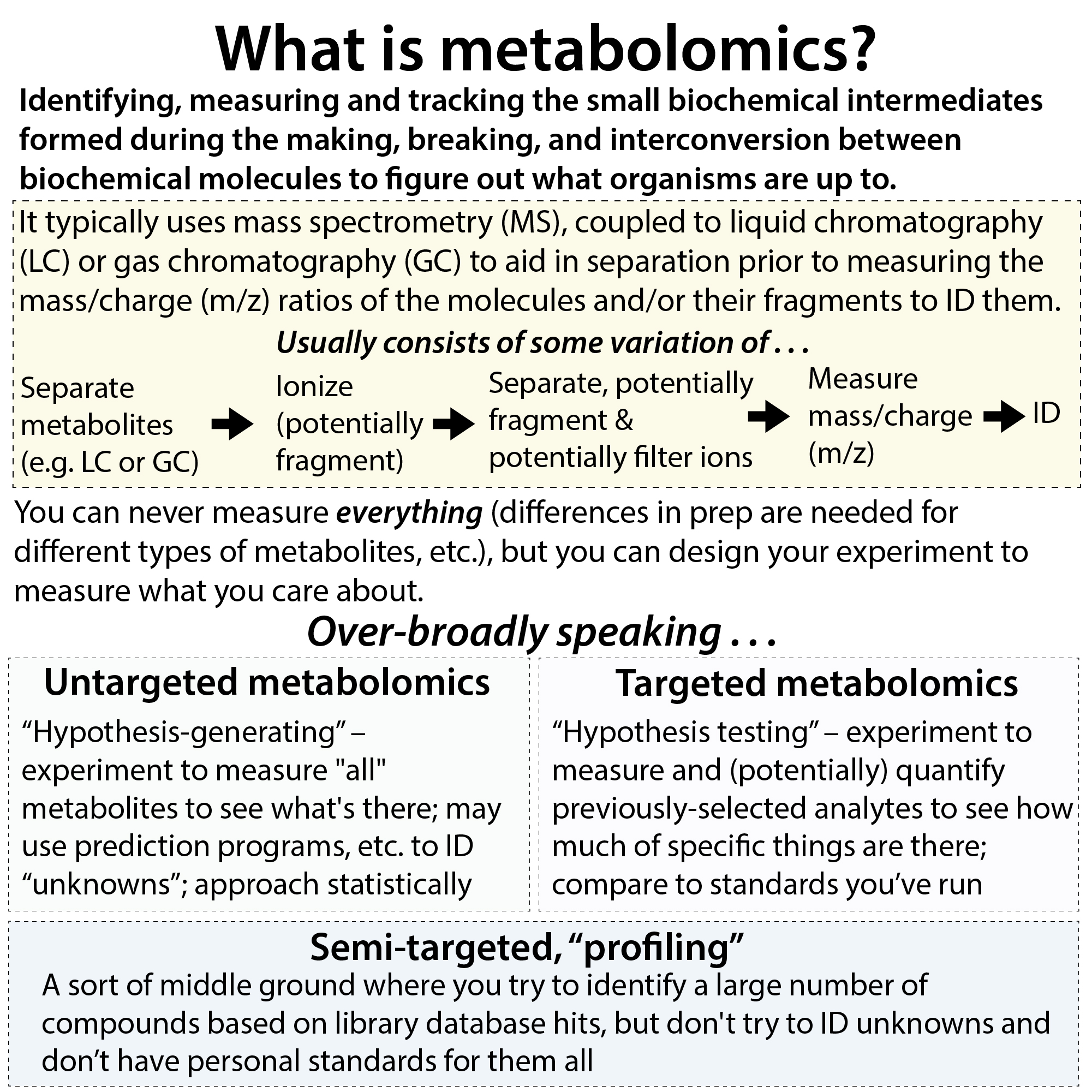
What is metabolomics? My definition: Identifying, measuring and tracking the small biochemical intermediates formed during the making, breaking, and interconversion between biochemical molecules to figure out what organisms are up to.
Mass resolution and mass accuracy in mass spectrometry
When it comes to mass spectrometry, don’t confuse high resolution and accurate mass! High resolution is basically having sharp spectral […]
Retention Indexes
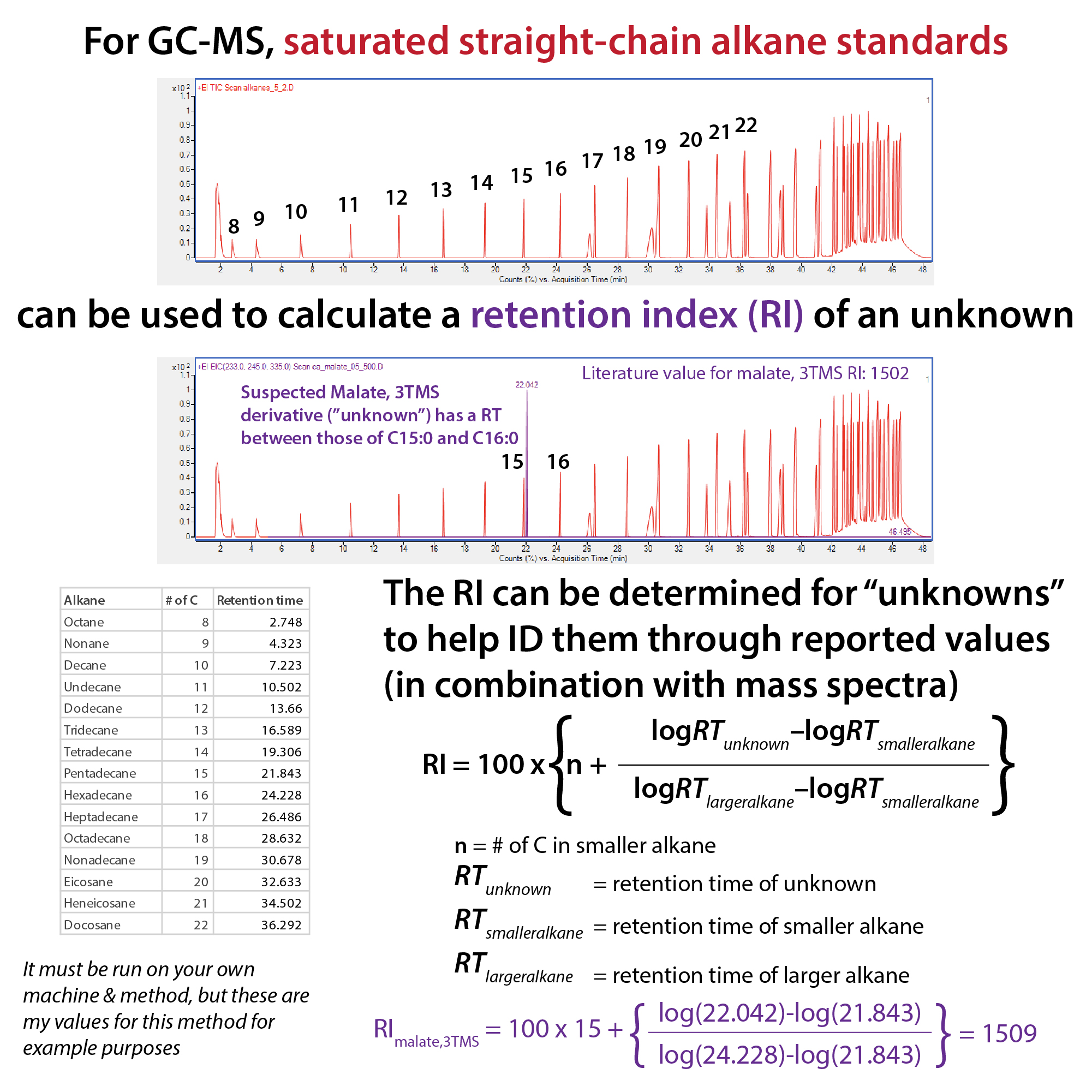
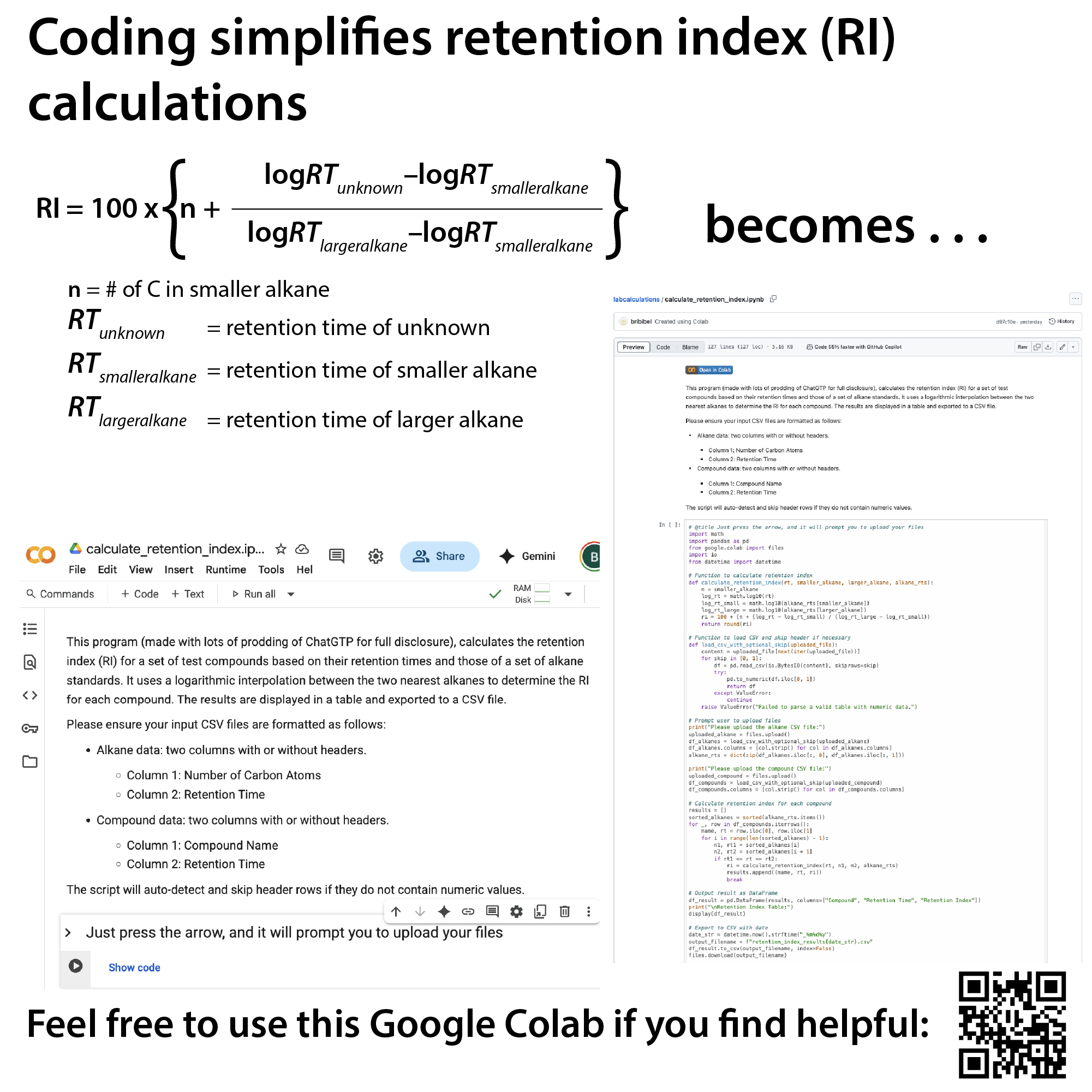
Pay attention to Retention (Time)! In GC-MS (gas chromatography-mass spectrometry) or LC-MS (liquid chromatography-mass spectrometry), chromatography has two main benefits […]
Chromatography-coupled mass spectrometry graph types, etc.
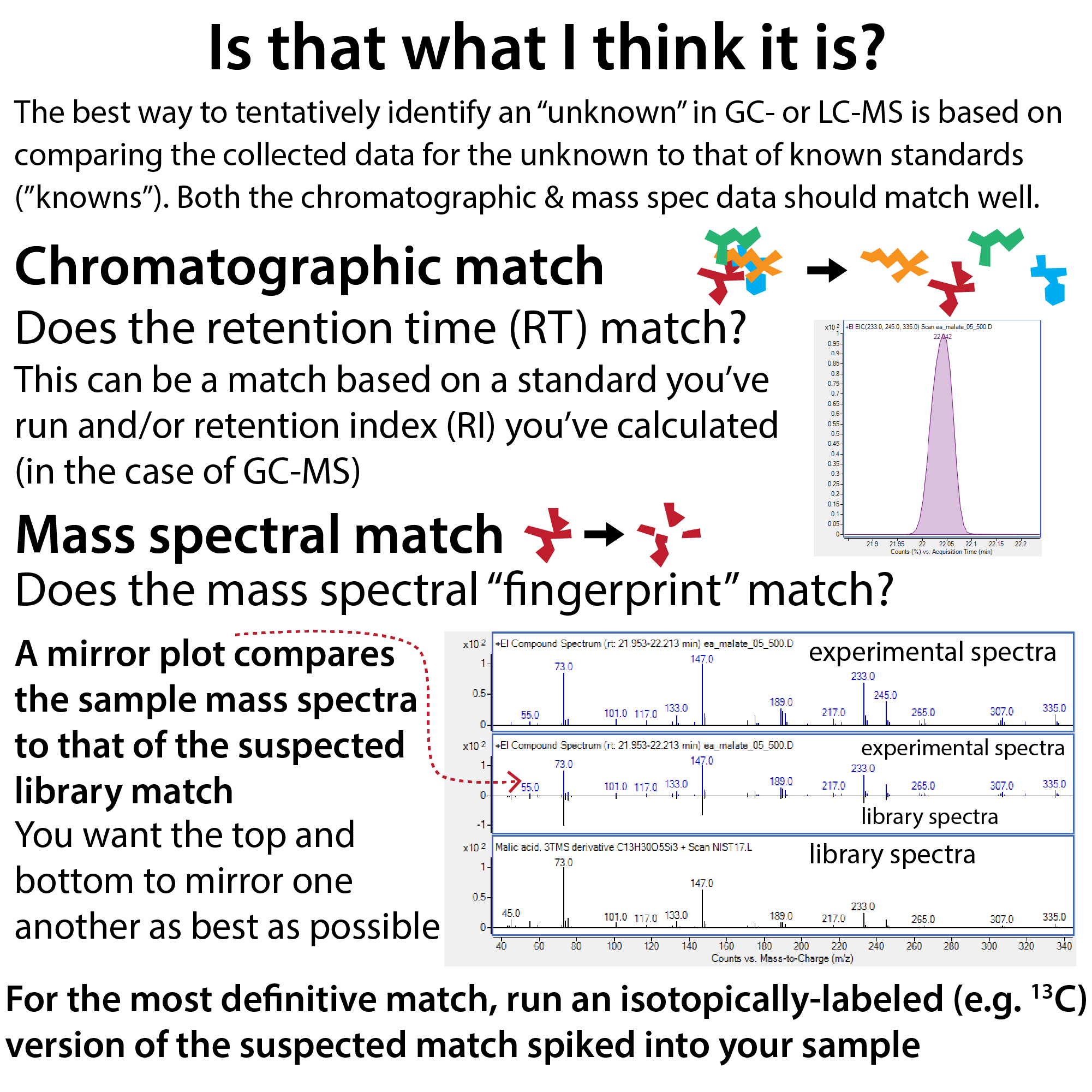
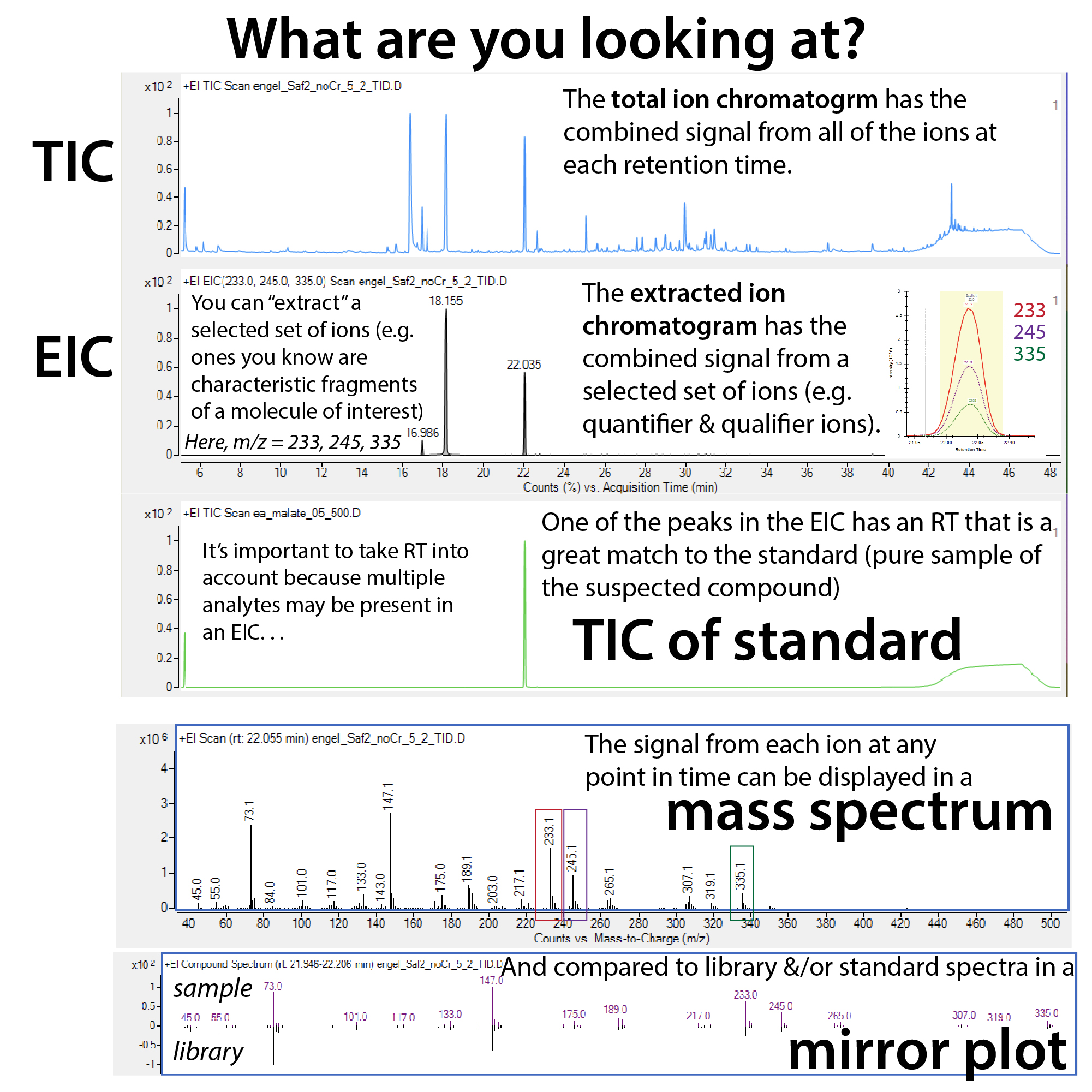
Chromatography-paired mass spectrometry typically uses mass spectrometry (MS), coupled to liquid chromatography (LC) or gas chromatography (GC) to aid in […]
Derivatization of metabolites for GC-MS via methoximation+silylation
Silylation may sound silly to say, but if you want to make organic acids volatile for GC-MS, it gives you […]
