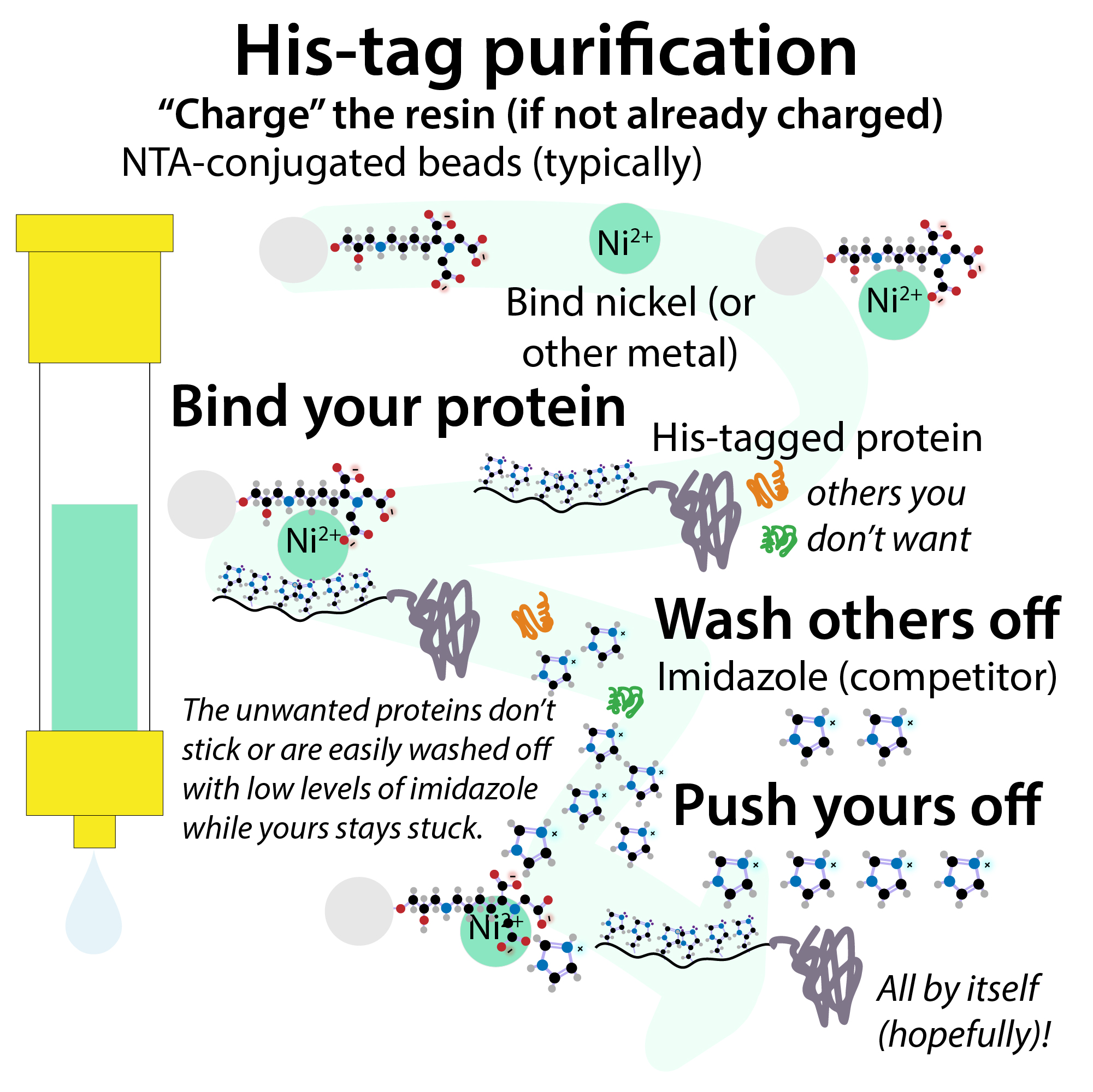
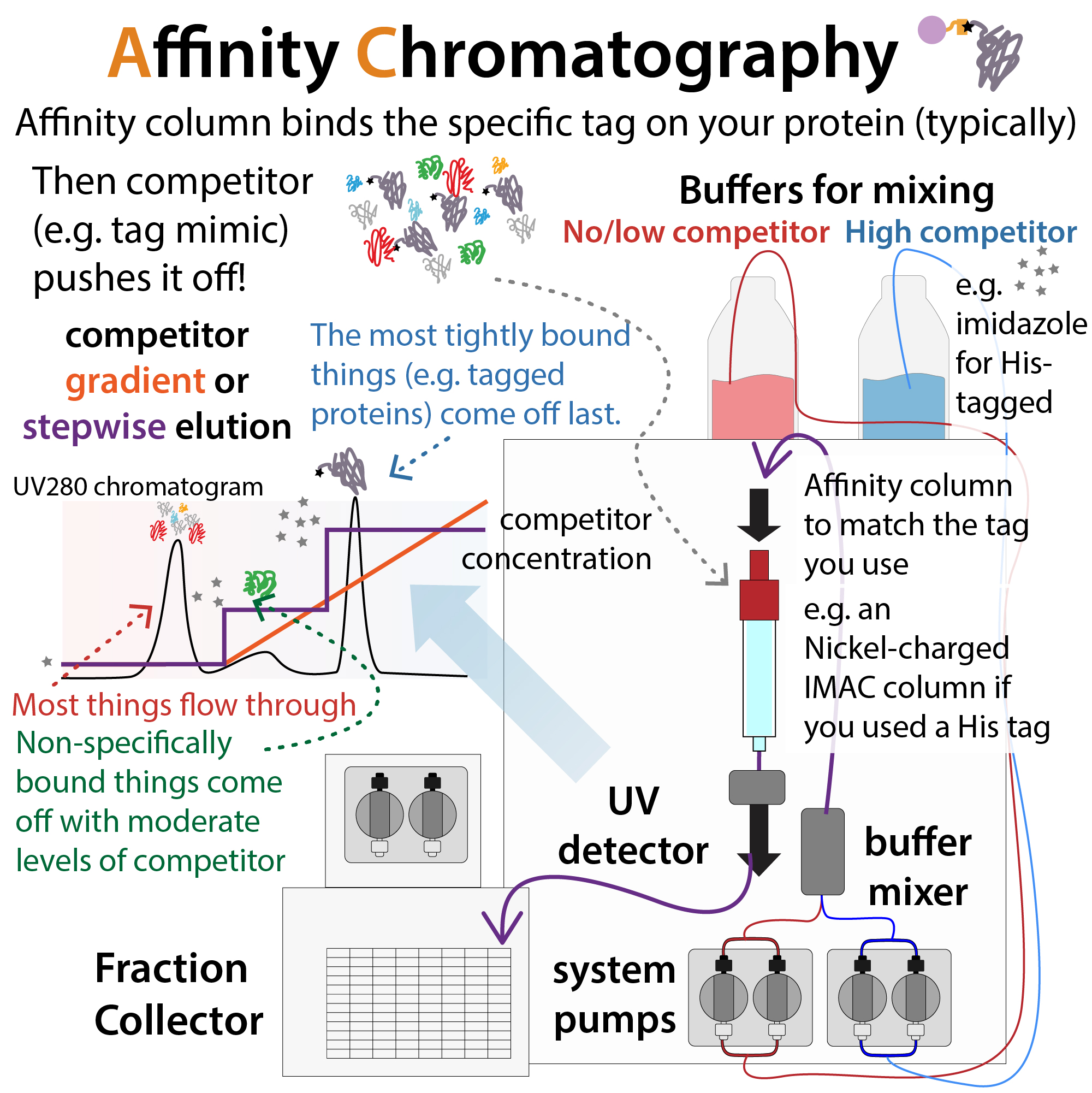
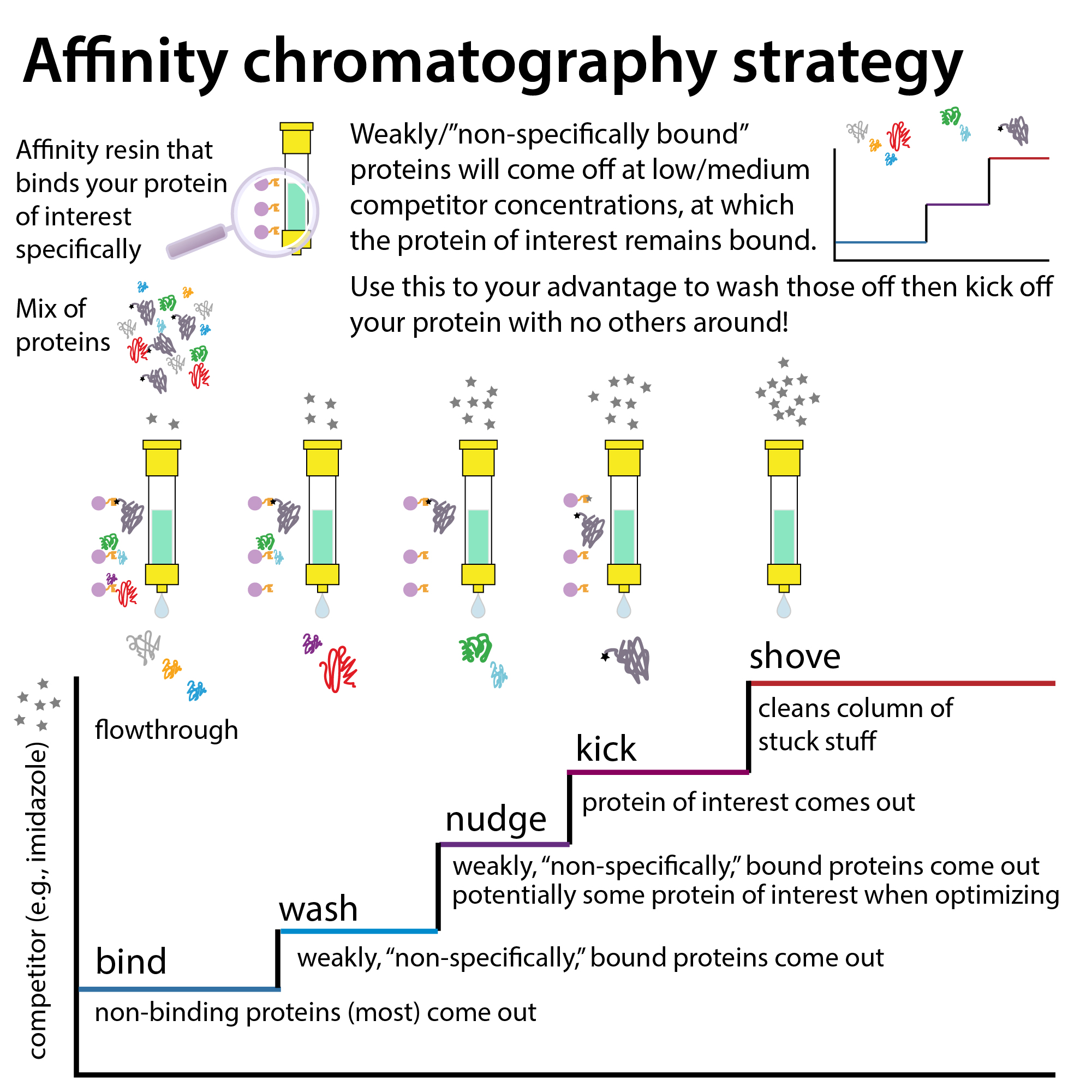
As for the unsticking, here too I like to take advantage of the gravity flow format to try to get my protein to come off in a more concentrated form (though I do want to try seeing if I can recreate something similar on the FPLC by putting in some sort of pause step). I add to CV (column volumes) worth of elution buffer with the column stoppered, let it sit for 5-10 min, and then open the stopper to let the liquid out. Most of my protein is usually in this portion, but I collect subsequent portions (without all the stopper-ing) until I stop seeing protein come out.
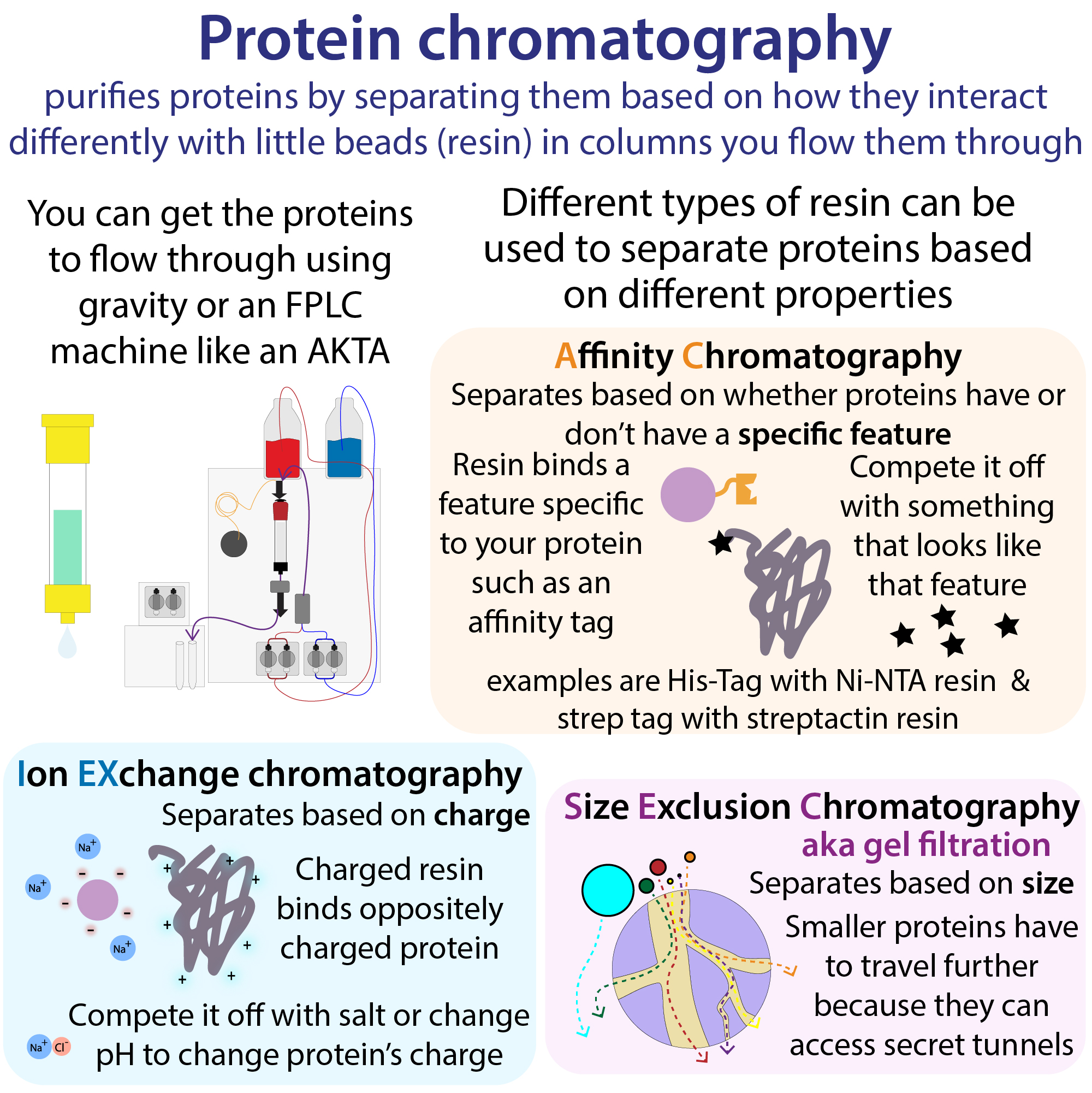
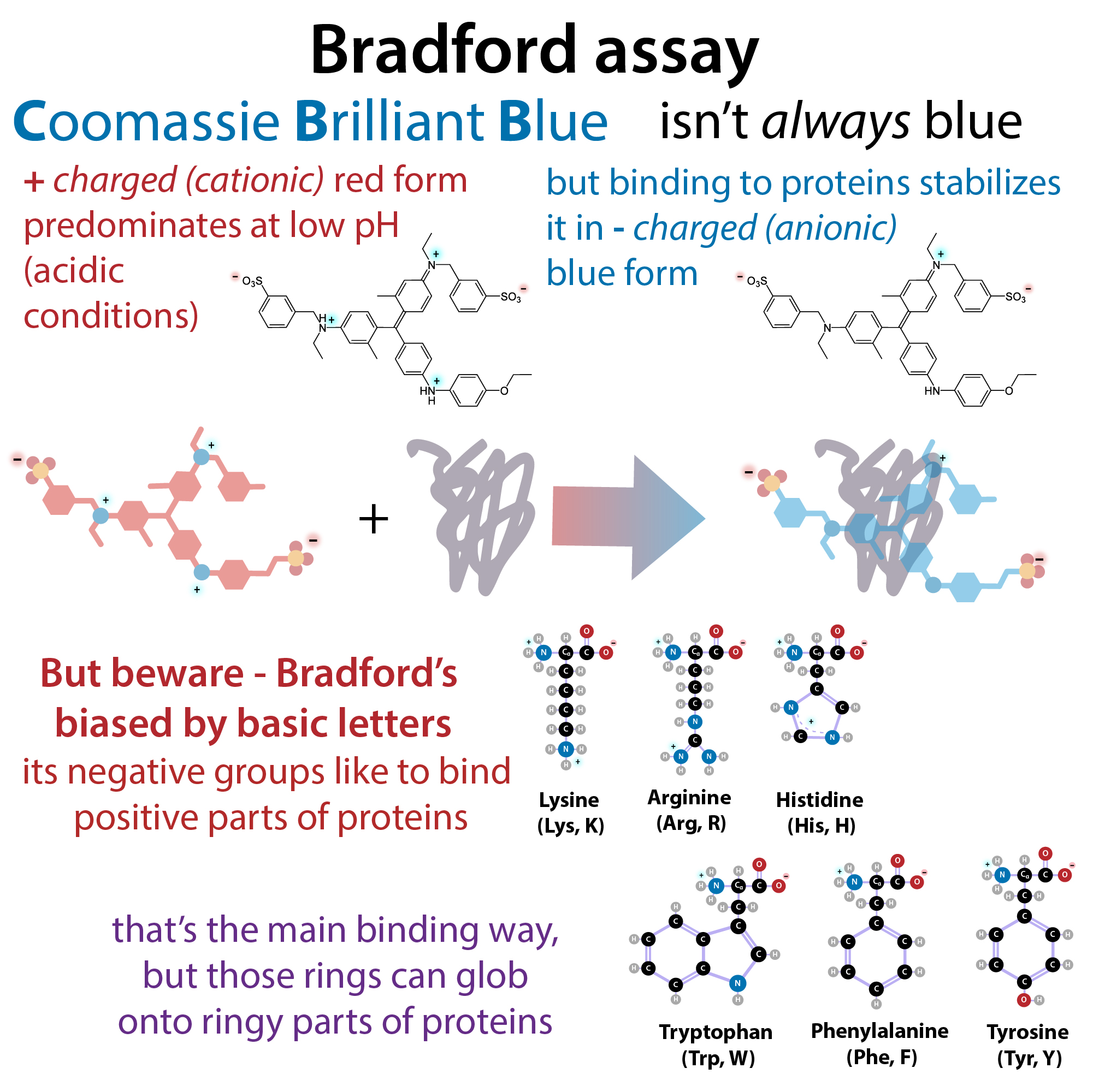
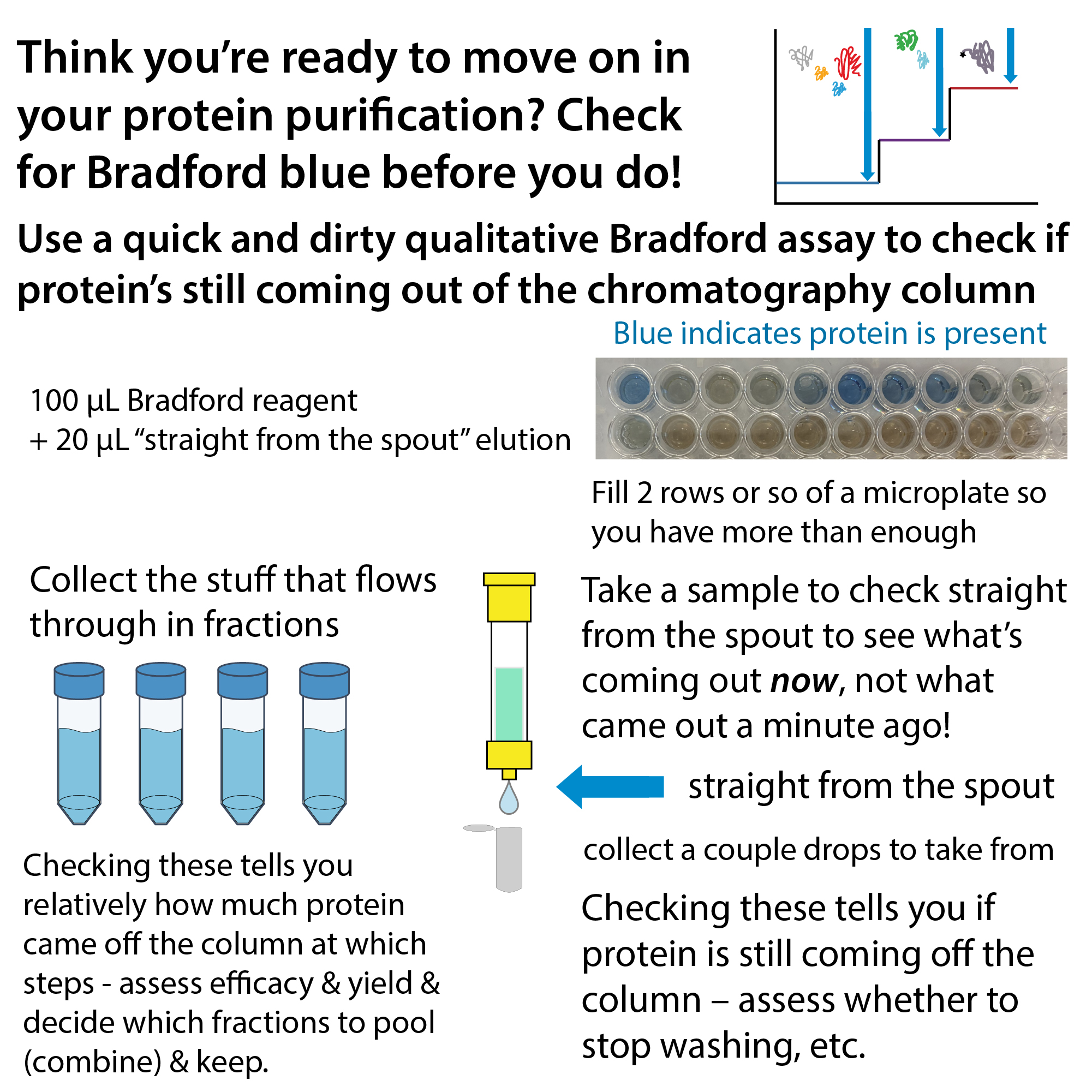
Seeing protein come out is more involved in gravity flow than with an FLPC. With an FPLC, you can monitor protein coming out of the column because the post-column liquid flows through a UV detector, which measures absorption of UV280 light (where proteins absorb most strongly). With gravity flow, I like to use a quick-and-dirty qualitative Bradford assay in which I mix Bradford reagent (an acidic solution of Coomassie Brilliant Blue) with the elusions. A color change to blue indicates proteins are present (and thus I need to keep eluting and/or washing, depending on the stage of the purification).
I do find gravity flow is often worth it however. Some things I like about it:
- More easy to customize on-the-fly
- More hands-on control
- I can easily customize the type & amount of resin I want to use
- I often get better binding – especially when there’s a large volume of solution compared to resin volume
- I often get more concentrated elutions
- Way cheaper than an FPLC!
- I don’t have to worry about clogging up an expensive column and/or my sample loading super slowly to the column because of viscosity limiting sample flow to avoid over-pressurizing the column
- I’ve found this tends to be more of a problem for insect cell lysates than for bacterial ones.
- Note: With both FPLC and gravity-flow, I like to pre-filter my lysates (a must for FPLC!) to help reduce viscosity & particulates
- I don’t need as much of each of the buffers since I don’t have to worry about washing FPLC pumps and lines
- I can run multiple samples in parallel on different columns
Some things I don’t like about gravity flow:
- Messier – fun in the moment, but not in the aftermath when you’re exhausted from running around and now have a major mess to attend to . . .
- More hands-on time required
- May need to work in a cold room
- Don’t get an instantaneous readout of protein elution
- But Bradford’s pretty pretty so . . .
lots more on protein purification: http://bit.ly/proteinpurificationtech & https://youtube.com/playlist?list=PLUWsCDtjESrEtqQkEXsQpTyRfMhywBVQ7
more practical lab tips & tricks: https://bit.ly/lab_tricks_page & https://www.youtube.com/playlist?list=PLUWsCDtjESrFEAWZCRKJL7sMc6a_KgfLU