on a mission to make biochemistry fun and accessible to all
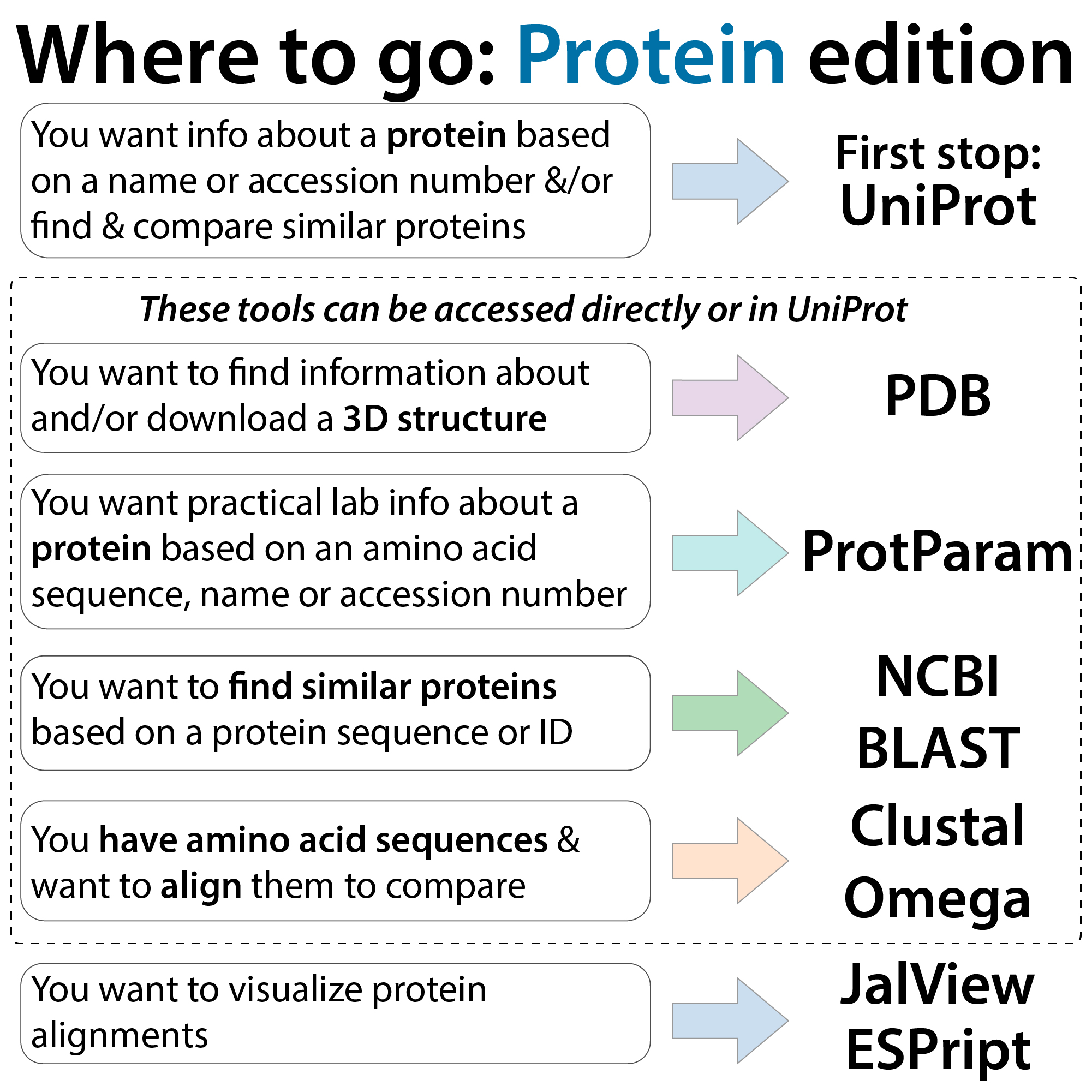
Software tools and databases for working with proteins
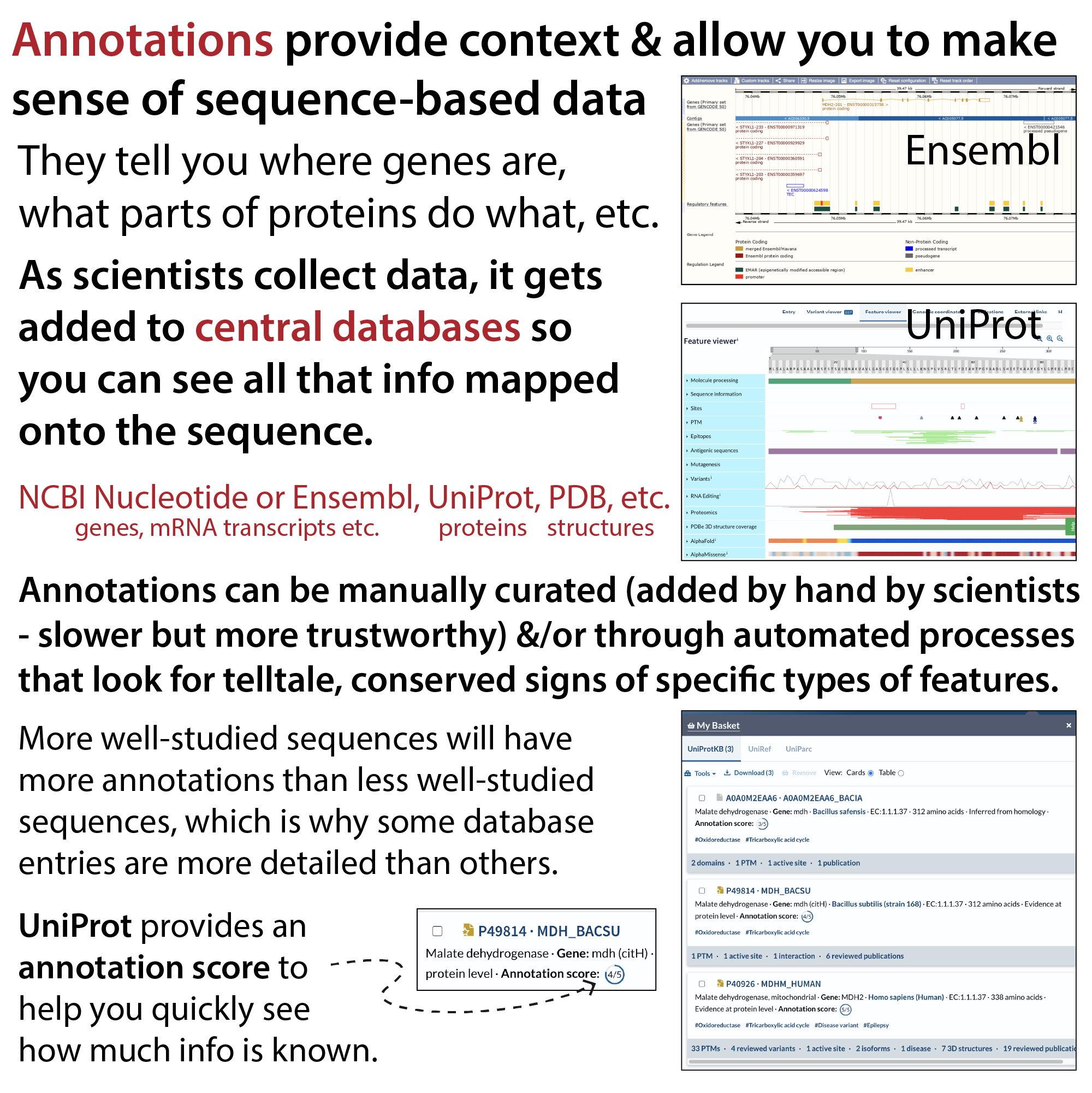
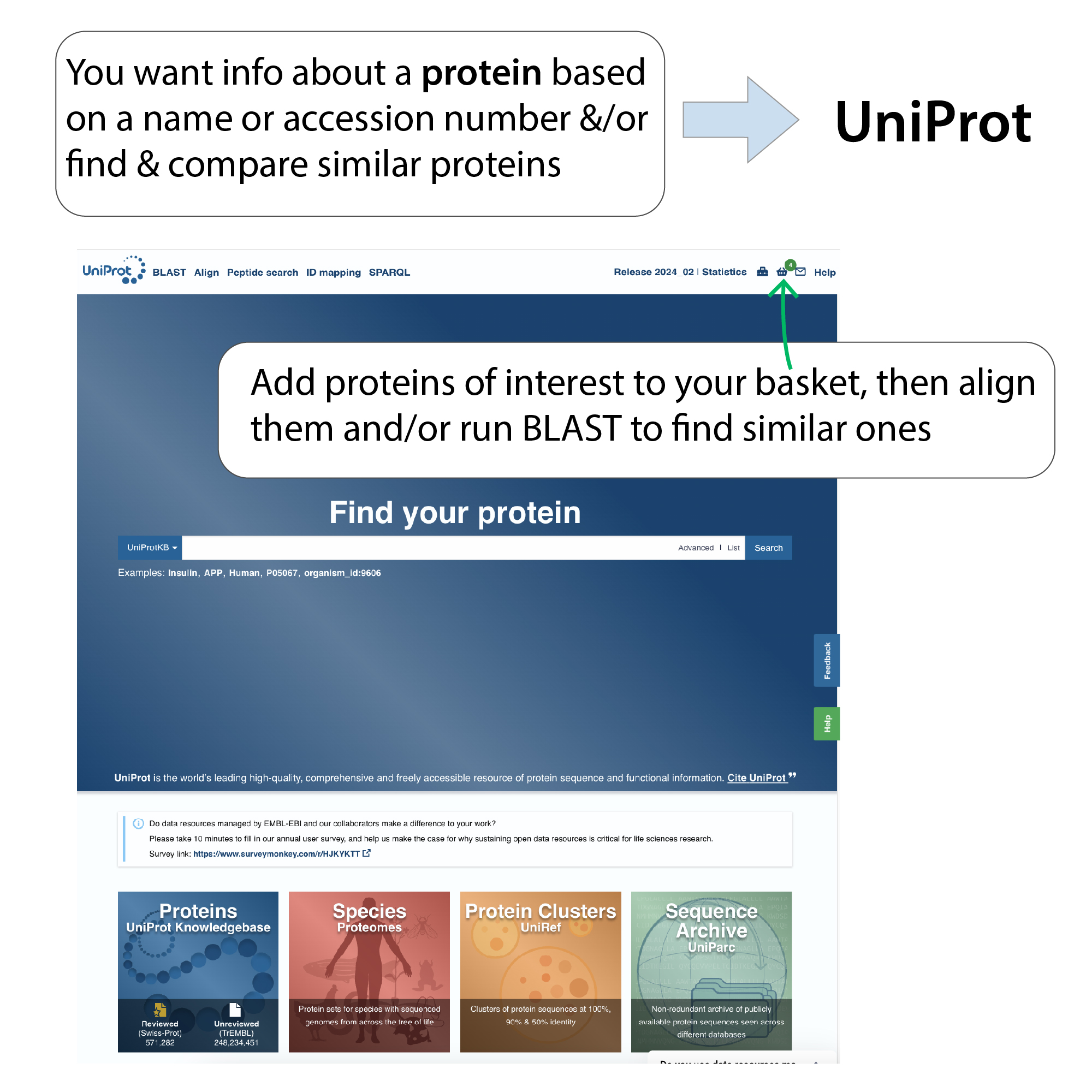
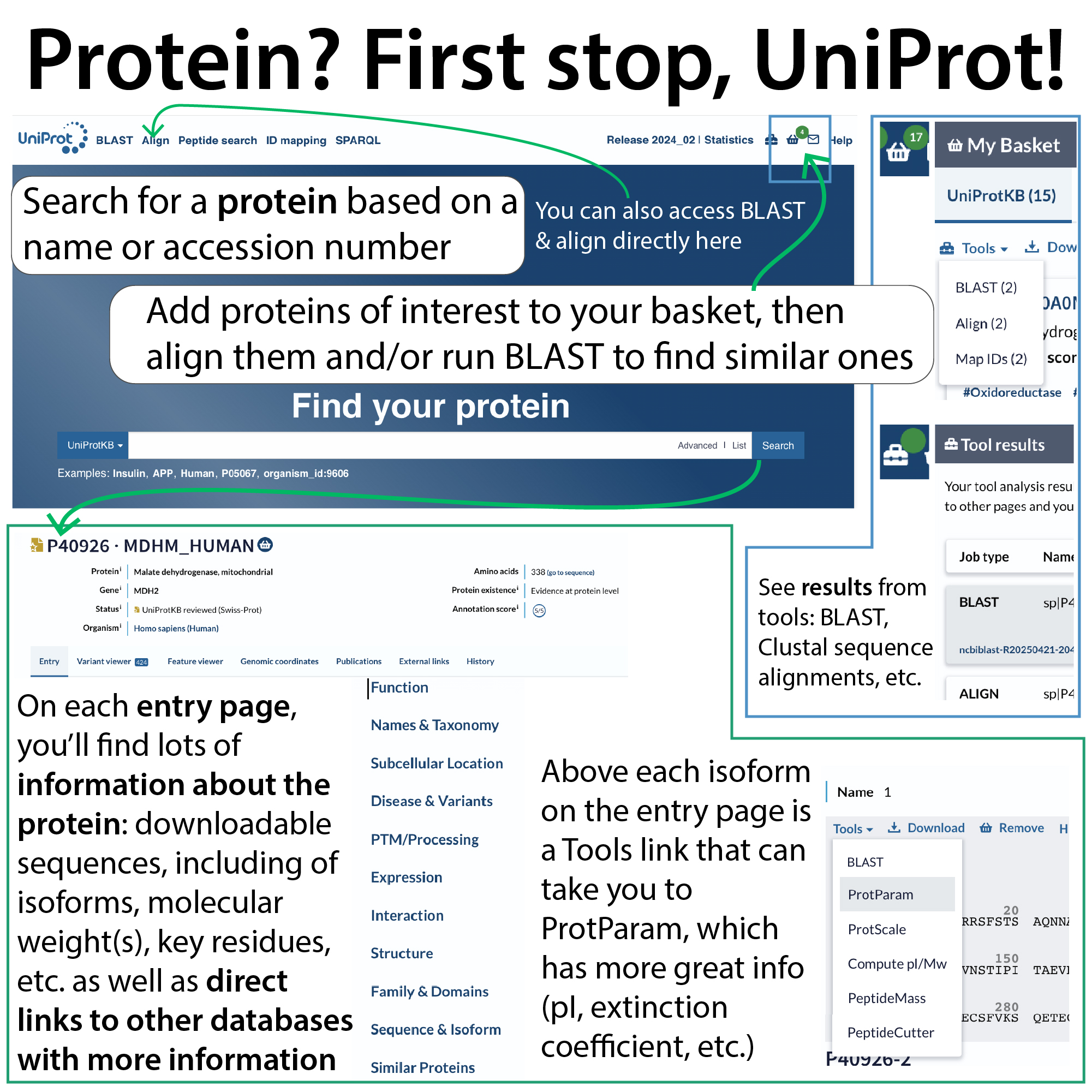
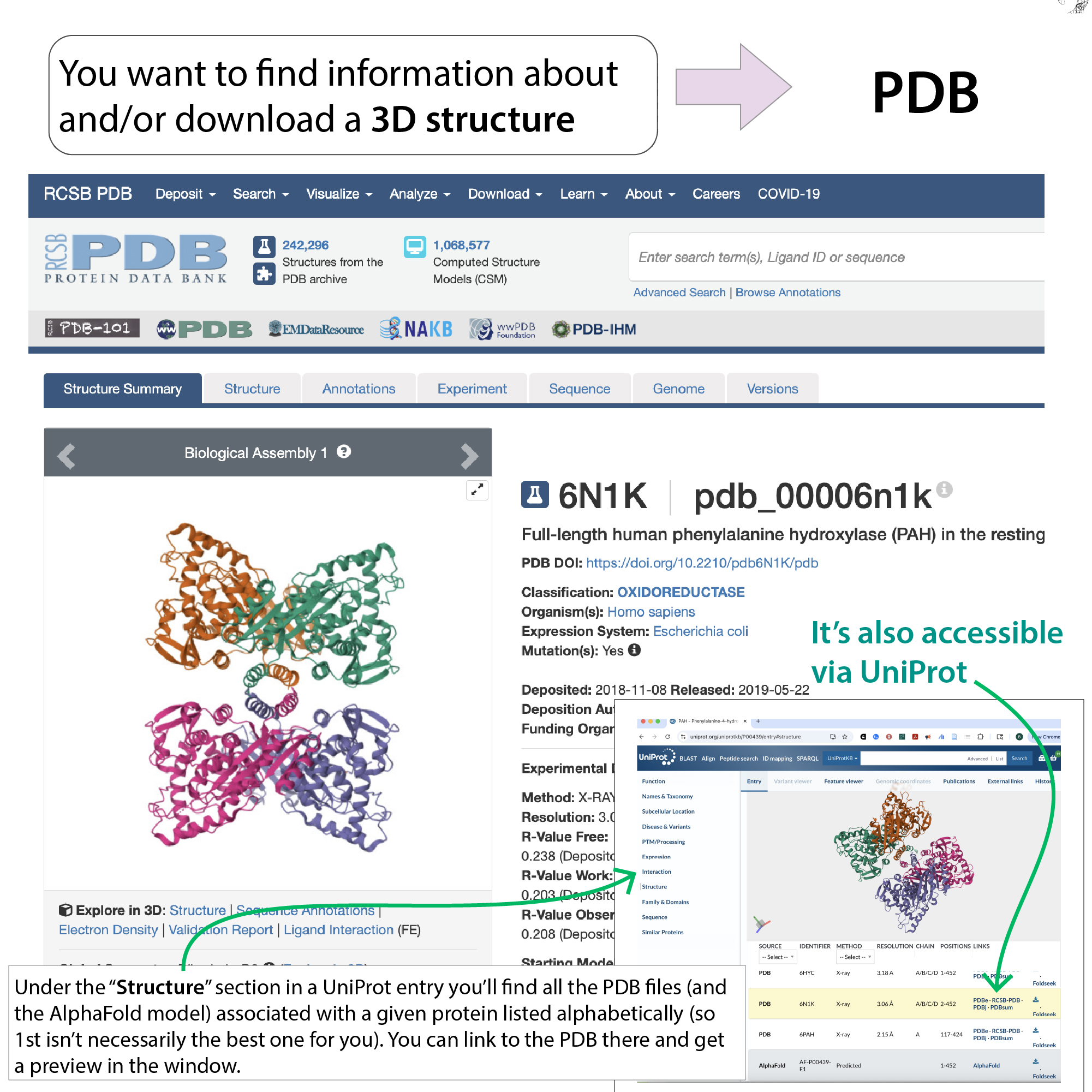
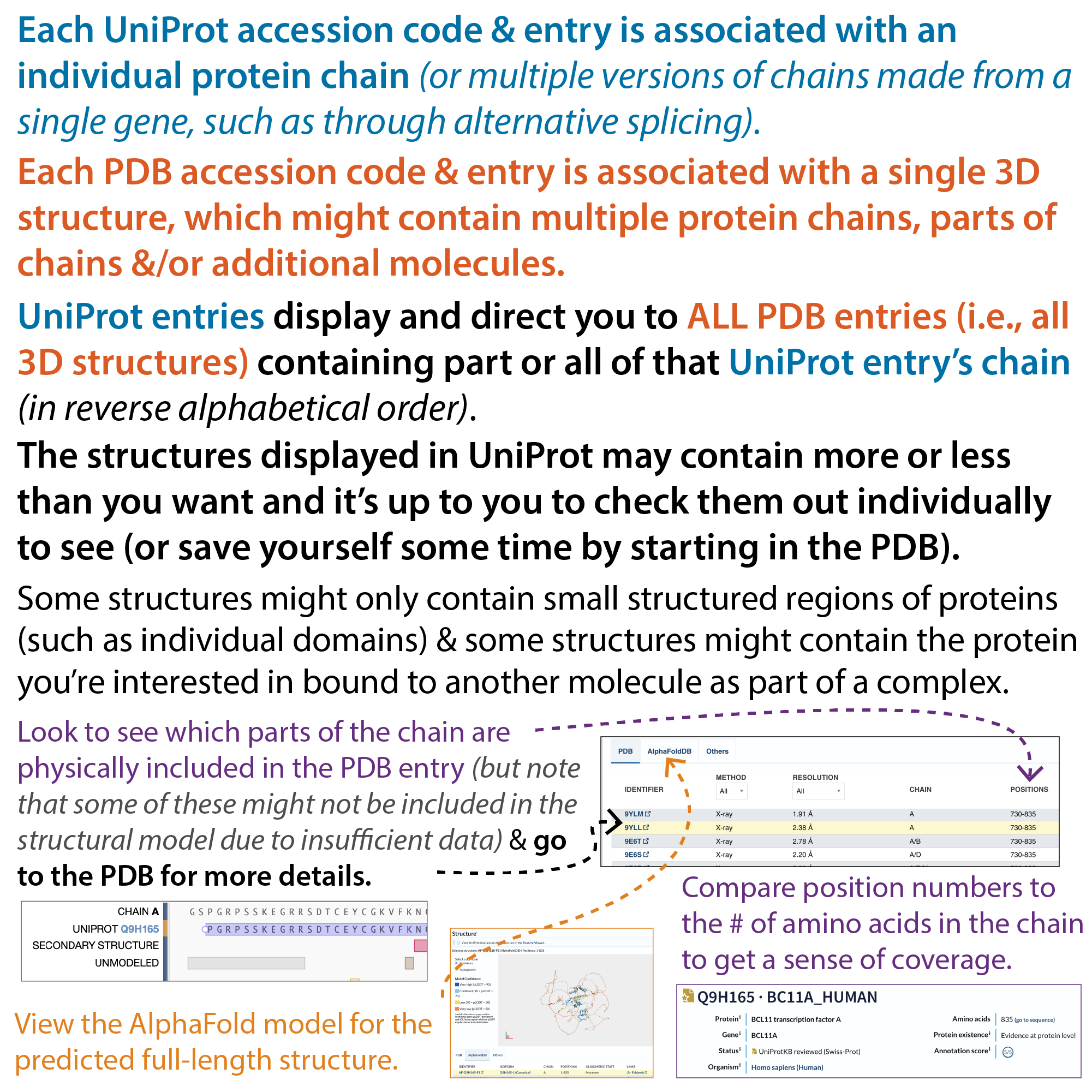
UniProt: Basics (functions, length, sequence(s), isoforms, structures, interactions, etc. – lots of links to more detailed databases for each) https://www.uniprot.org/
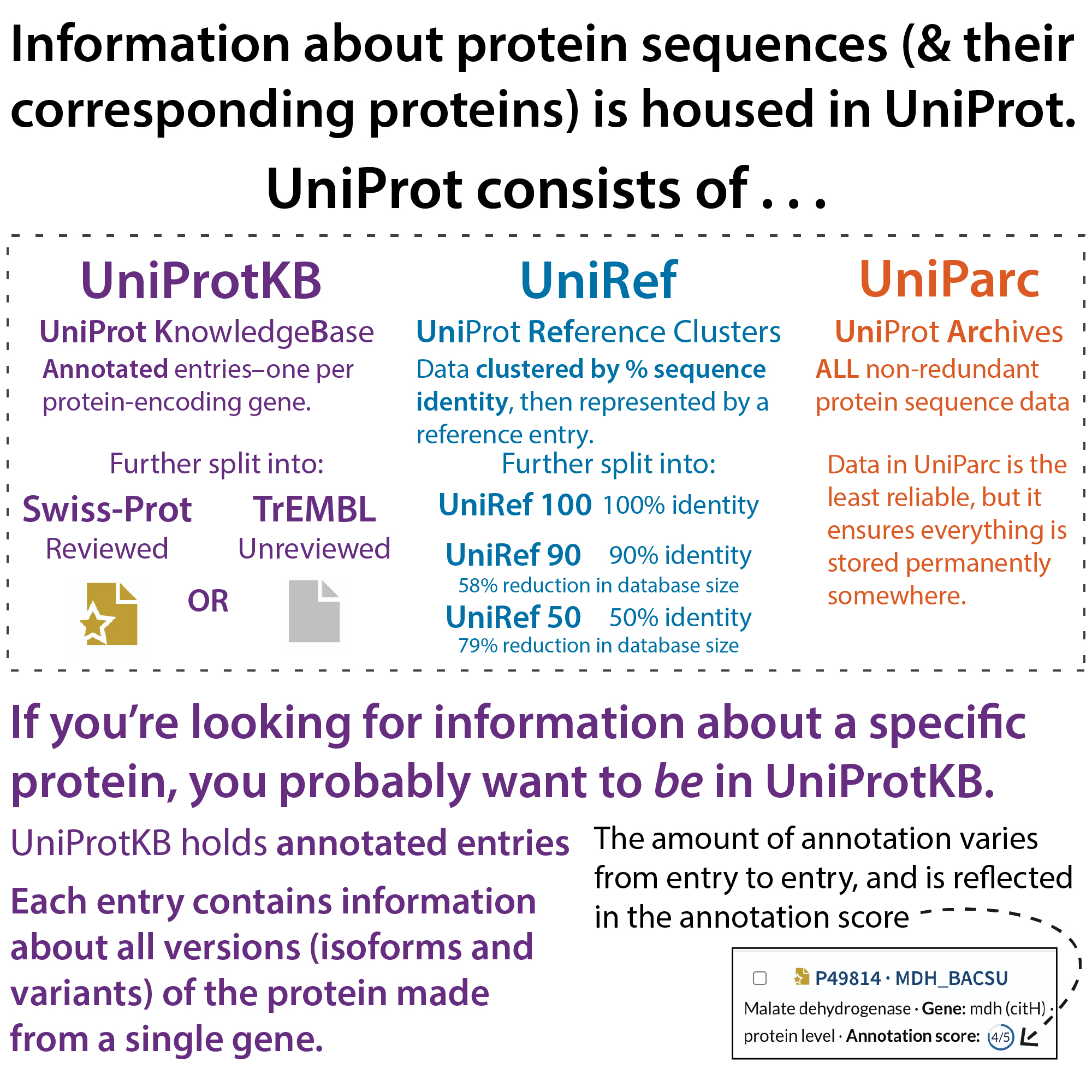
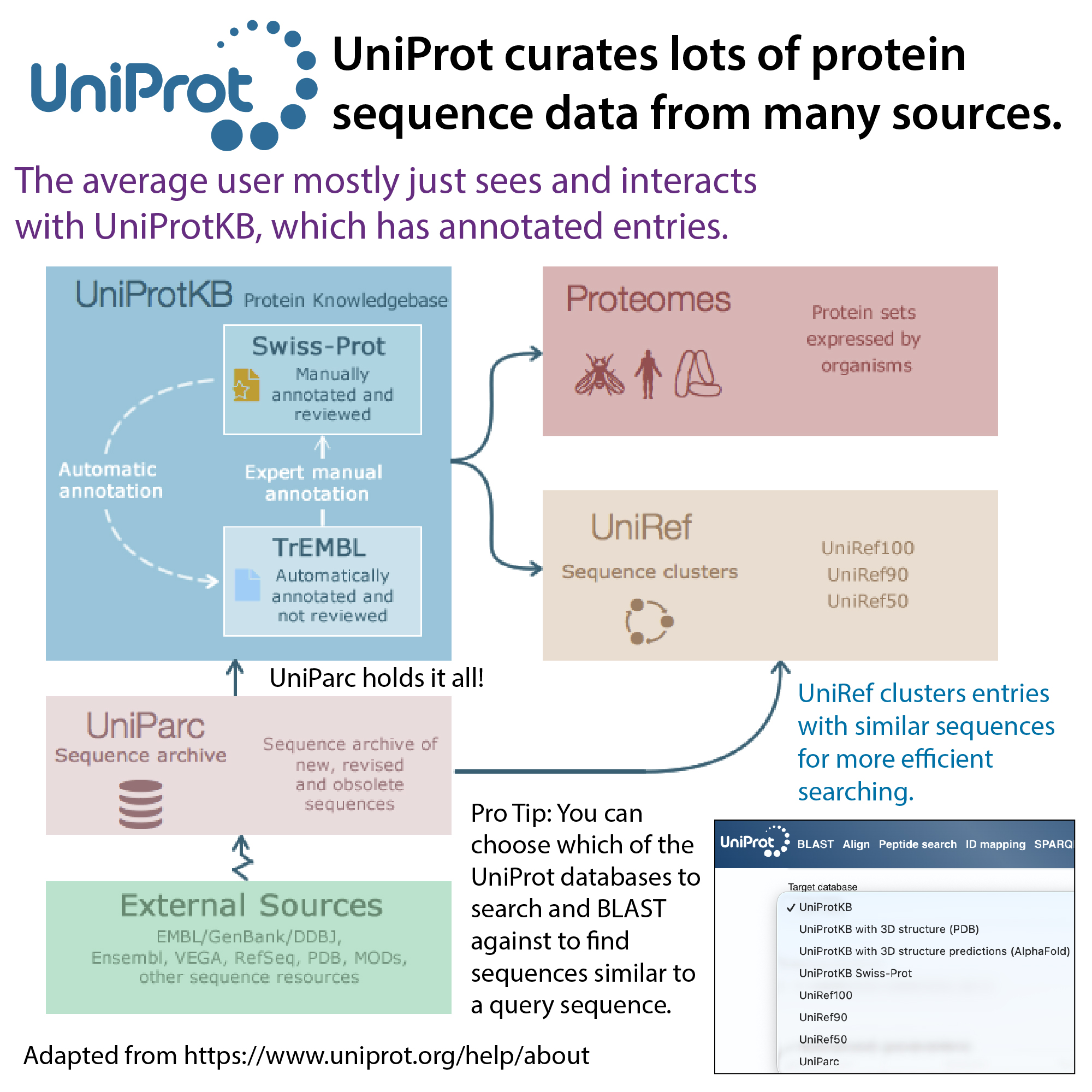
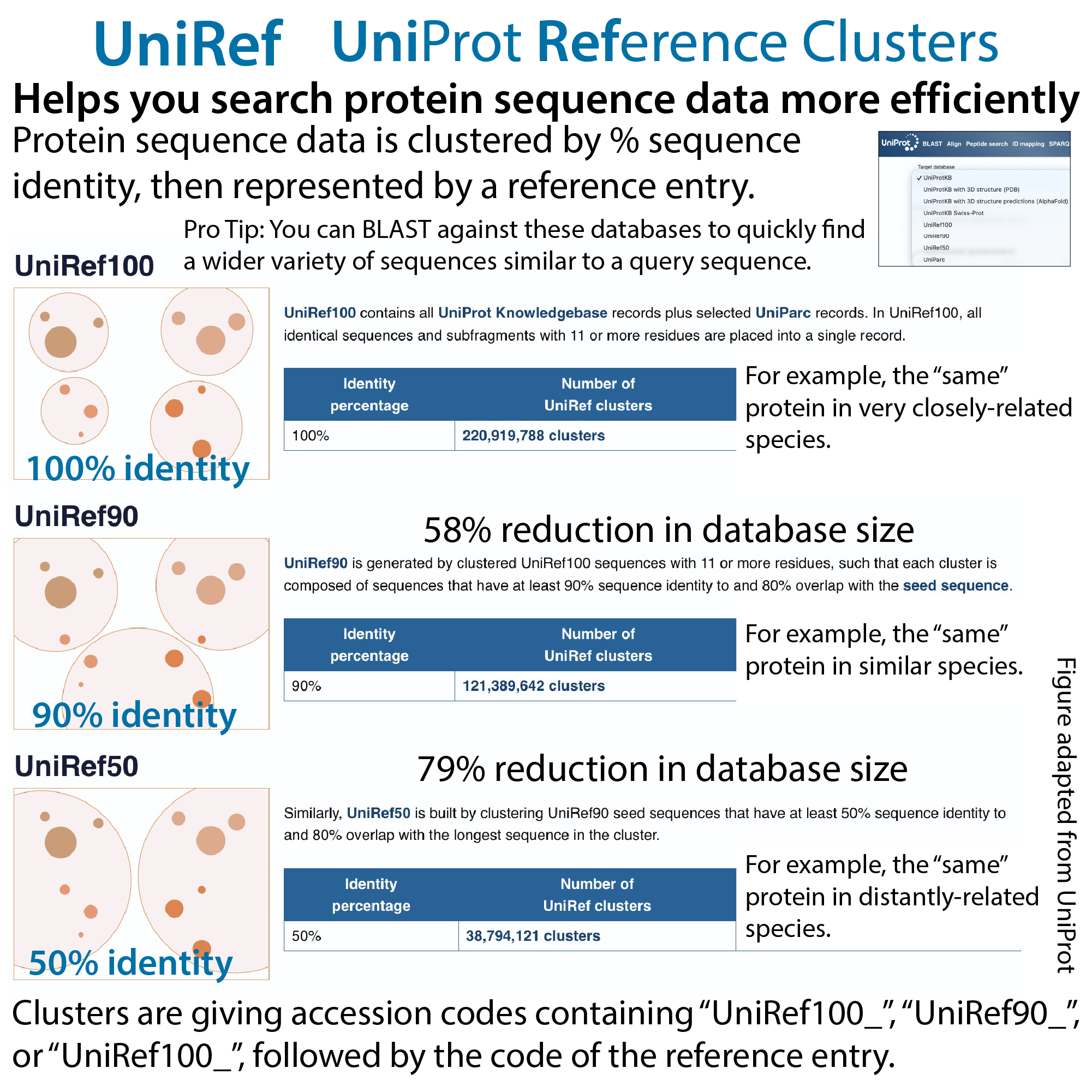
Consists of: UniProtKB (annotated entries, with reviewed entries in UniProtKB/Swiss-Prot and unreviewed entries in UniProtKB/TrEMBL); UniRef (data is clustered by % sequence identity (100, 90, or 50), then each cluster is represented by a reference entry for efficient searching, etc.); and UniParc (archives for all non-redundant protein sequence data)
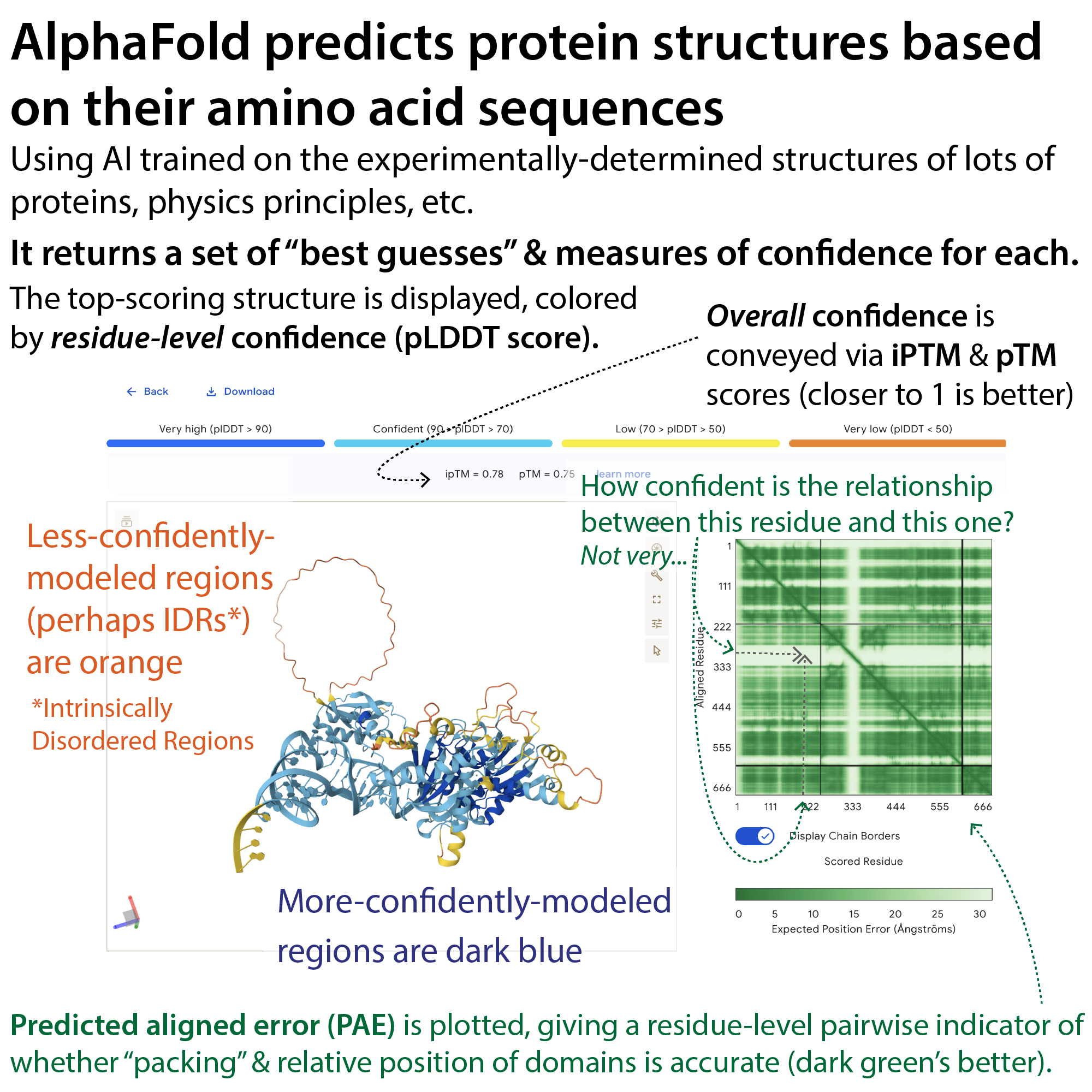
AlphaFold Protein Structure Database (AFDB): Contains pre-computed predicted structures of single chains of proteins https://alphafold.ebi.ac.uk/
AlphaFold: Predicts the structure of proteins, nucleic acids, and complexes. The server has more limited options than the stand-alone (GitHub) and ColabFold (Python notebook-based) versions, but uses the latest version of AlphaFold https://alphafoldserver.com/
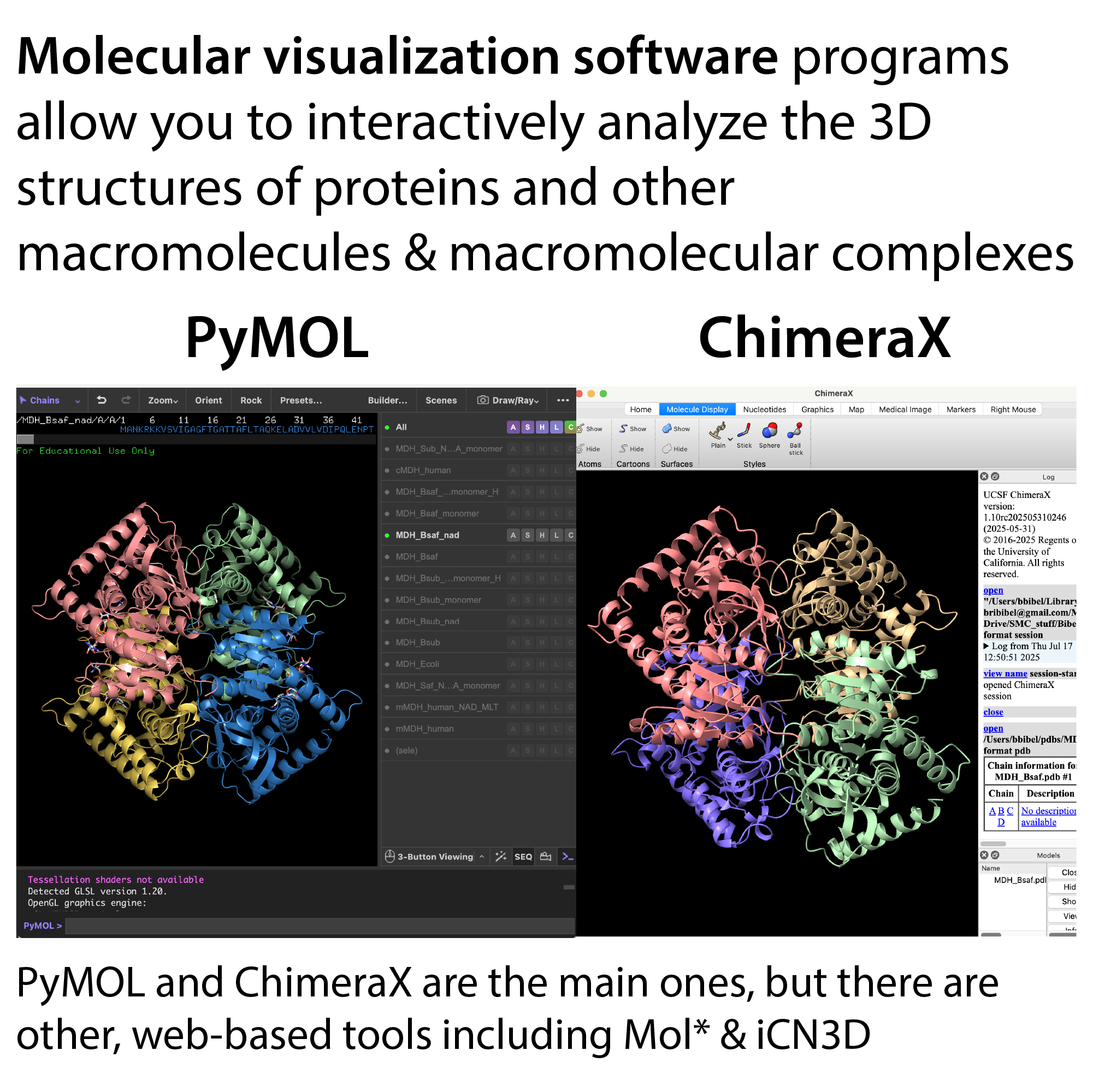
Viewing protein structures (molecular visualization software): There are 2 main tools, ChimeraX & PyMOL, as well as other, web-based, tools such as Mol* and iCN3D. ChimeraX is fully free for academic use. PyMol has a free version with slightly limited functionality and academic labs often have a license for the full thing.
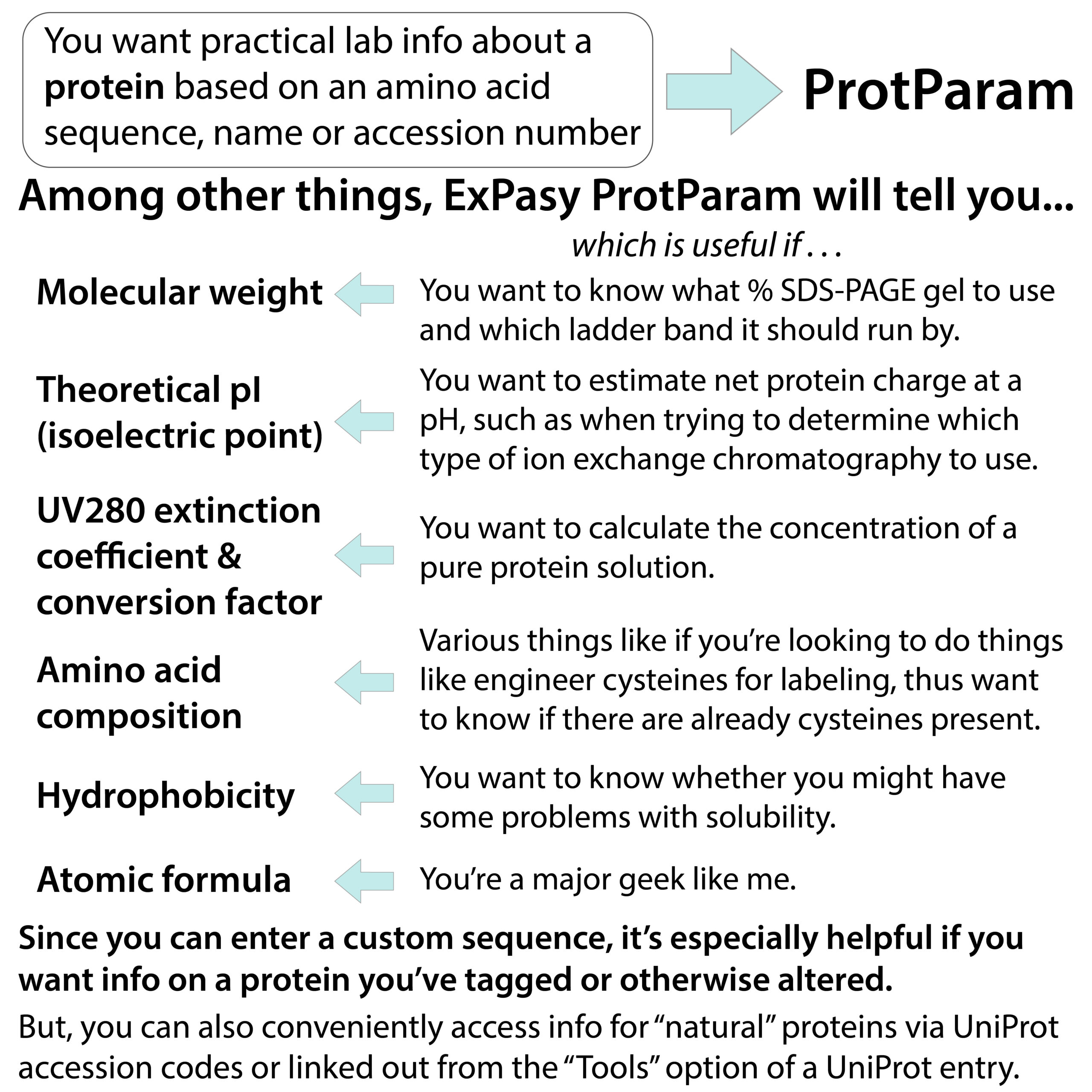
Expasy ProtParam: Protein stats (amino acid composition (e.g. # of each amino acid, isoelectric point (pI) (for predicting overall charge at different pHs), extinction coefficient (for getting concentration from UV), etc.) can also use for custom sequences you copy and paste – great for recombinant expression constructs https://web.expasy.org/protparam/
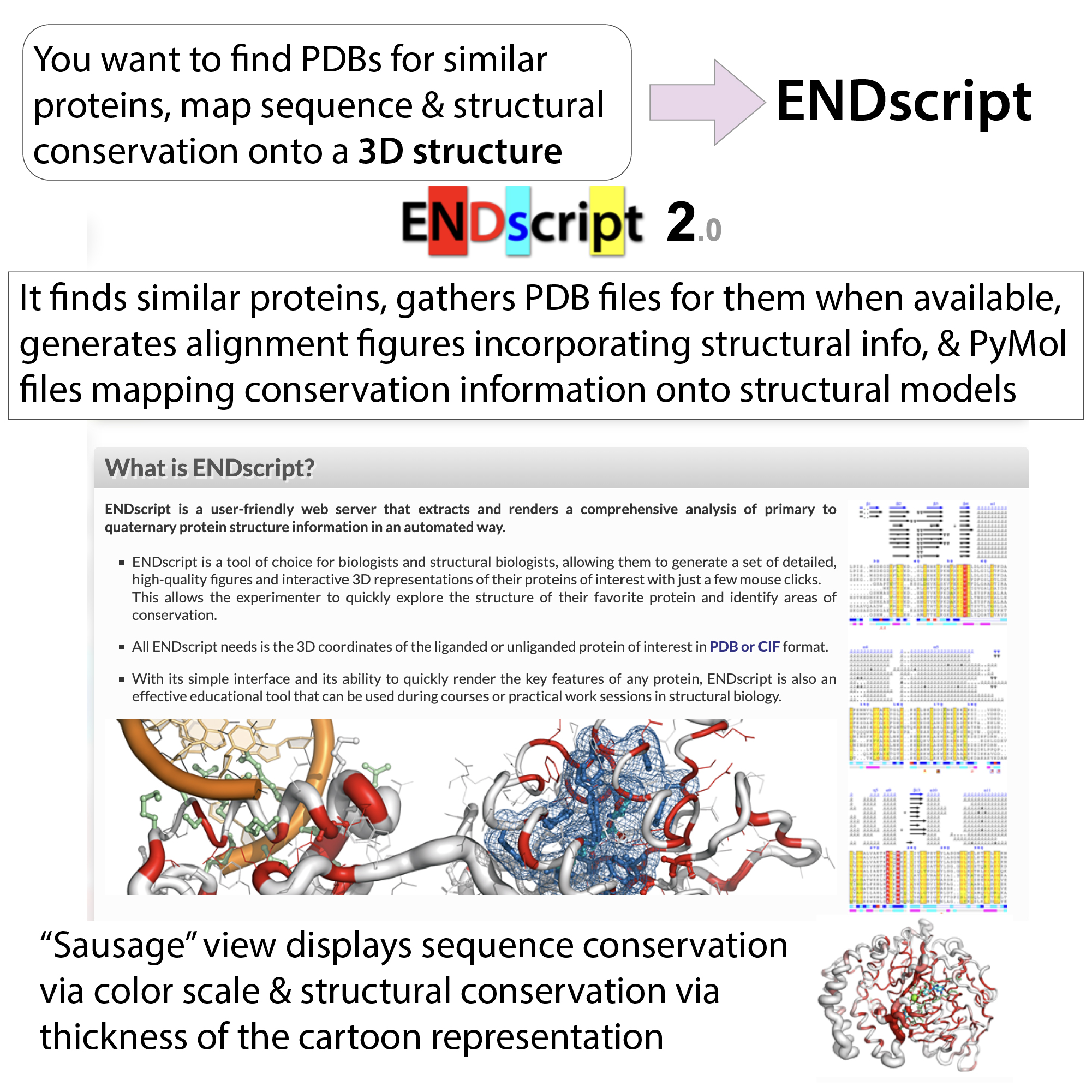
Just upload or fetch a PDB file and it’ll generate a bunch of things including: domain architecture diagram, secondary structure diagrams, topology map, diagram of and information about ligand-protein and protein-protein interactions (distances, types, etc.), information about pockets, tunnels, and channels.
Note: Their server is down as of this writing, but there’s a stand-alone version you can download from GitHub.
HawkDock: Models protein-protein interactions and analyzes strength of interactions at a residue level basis (for either predicted structures or already-prepared PDB files) https://cadd.zju.edu.cn/hawkdock/
3D bio notes: You put in the PDB code for a structure, then this site integrates a ton of information about the protein from various sources and lets you see sites of mutations, etc. in 3D. Also good for a quick overview or on the go look when you don’t want to open PyMol. http://3dbionotes.cnb.csic.es/ws
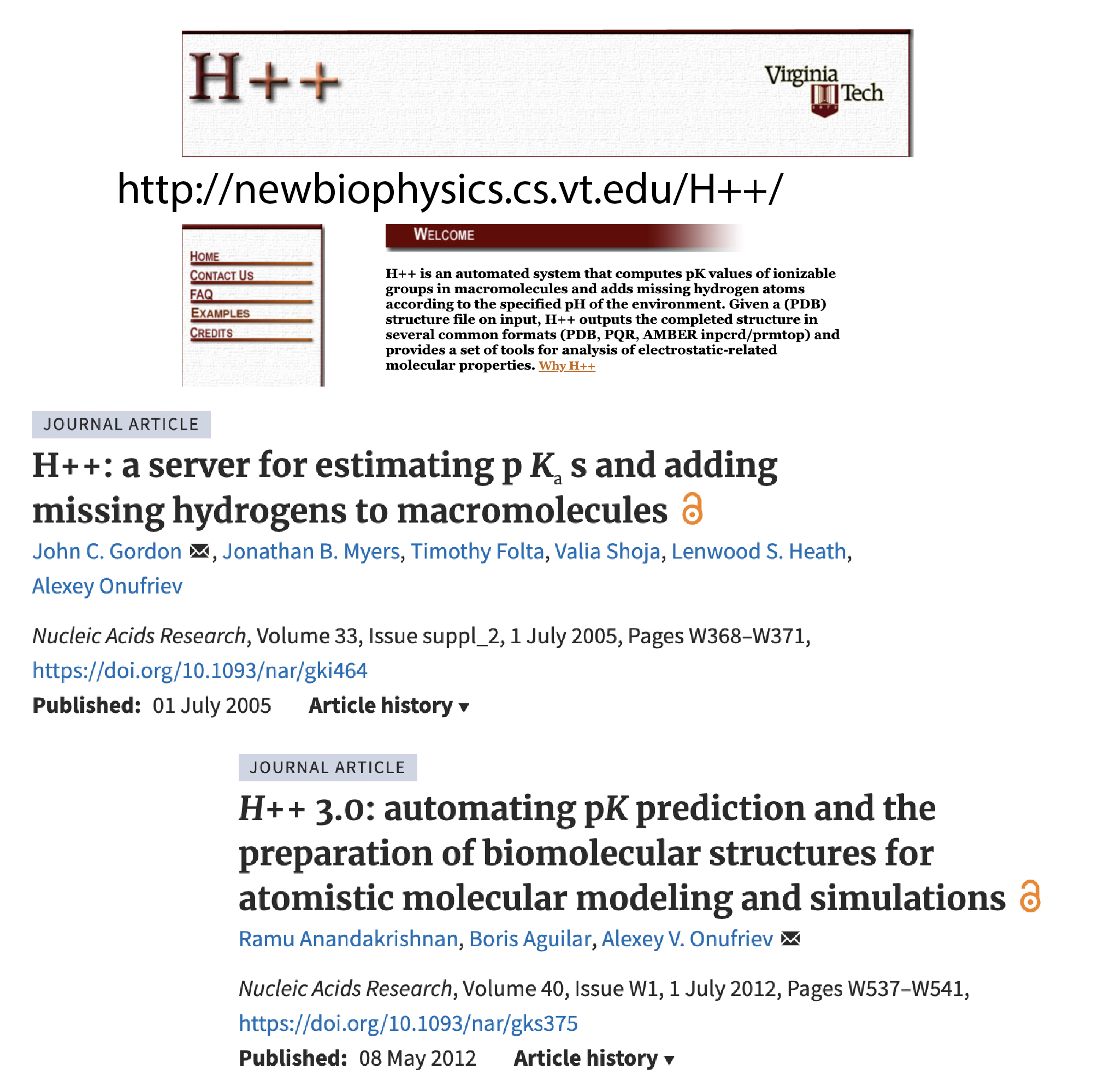
H++: Free web-based tool that takes a pdb file of a protein and predicts the protonation state of each amino acid residue at a pH of your choosing http://newbiophysics.cs.vt.edu/H++/index.php
Human Protein Atlas: Mass spec, antibody evidence, mRNA-seq, etc. showing where different proteins are expressed in humans, and even within cells https://www.proteinatlas.org/
EMBL-EBI Expression Atlas: Protein expression in multiple (but a limited number of) species https://www.ebi.ac.uk/gxa/home
Expasy Swiss Bioinformatics Resource Portal: Tons of bioinformatics tools, many of which are for proteins https://www.expasy.org/
MPI Bioinformatics Toolkit: this has lots of tools for structural prediction, homology finding, etc. https://toolkit.tuebingen.mpg.de/
If you want to find proteins that are similar:
In sequence:
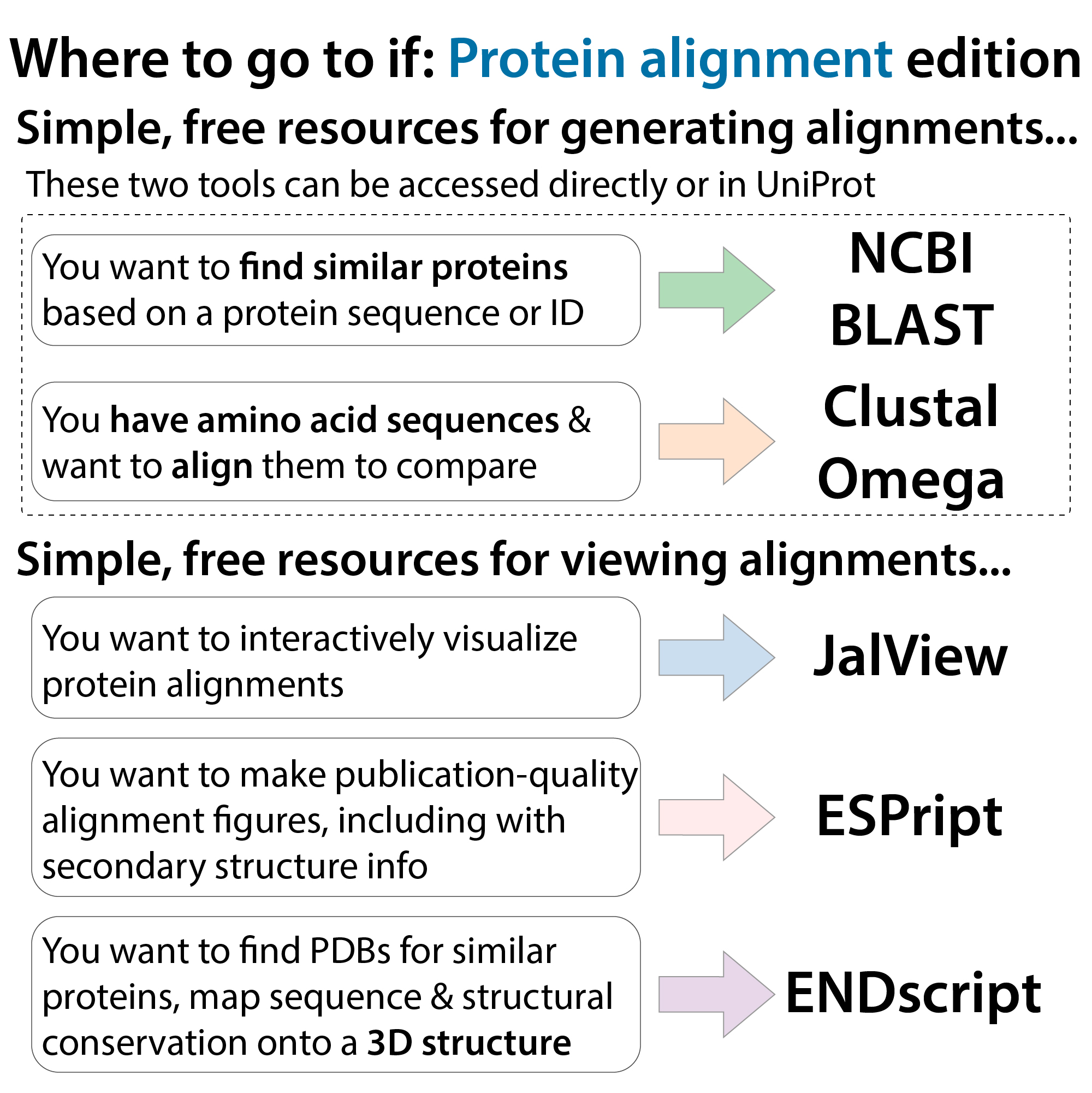
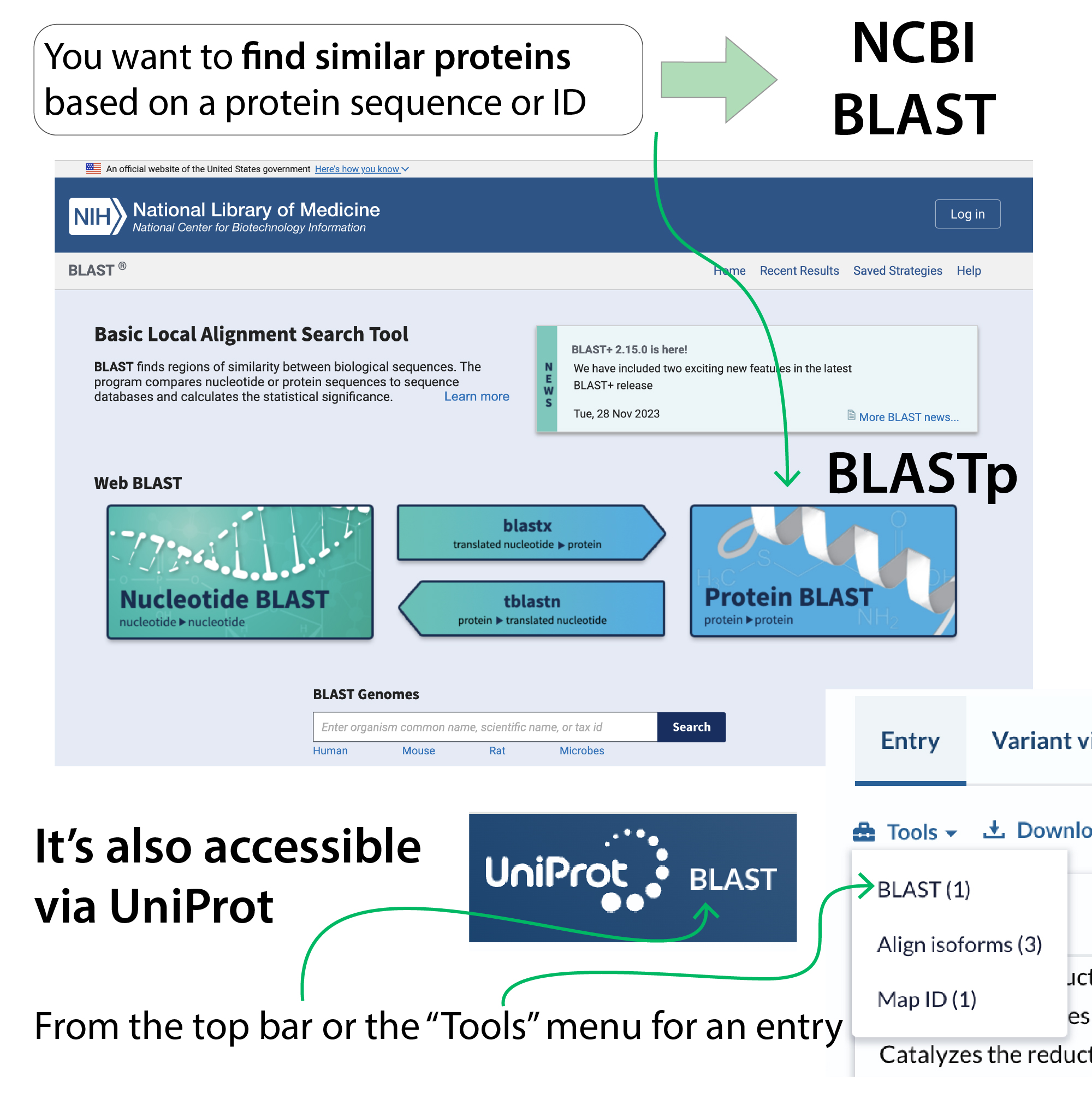
BLAST (specifically blastp): This searches protein databases for protein sequences. and takes into account both sequence identity (are the amino acids in the sequences identical at a given location) and similarity (are the amino acids in the sequences biochemically similar at a given location).
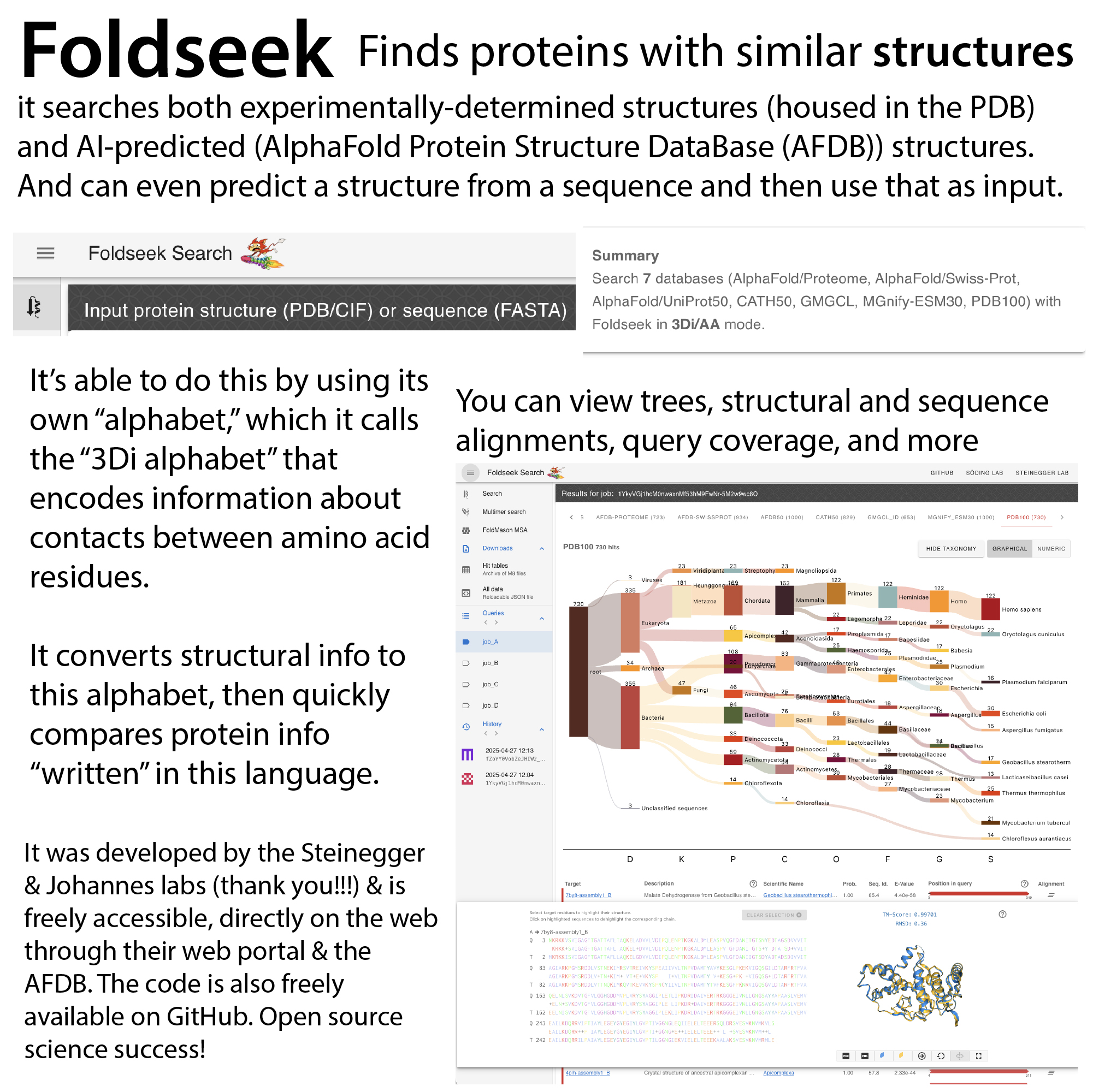
Foldseek: It compares structures against one another to find similar ones. What’s even cooler is that it searches both experimentally-determined structures (housed in the PDB) and AI-predicted (AlphaFold Protein Structure DataBase (AFDB)) structures.
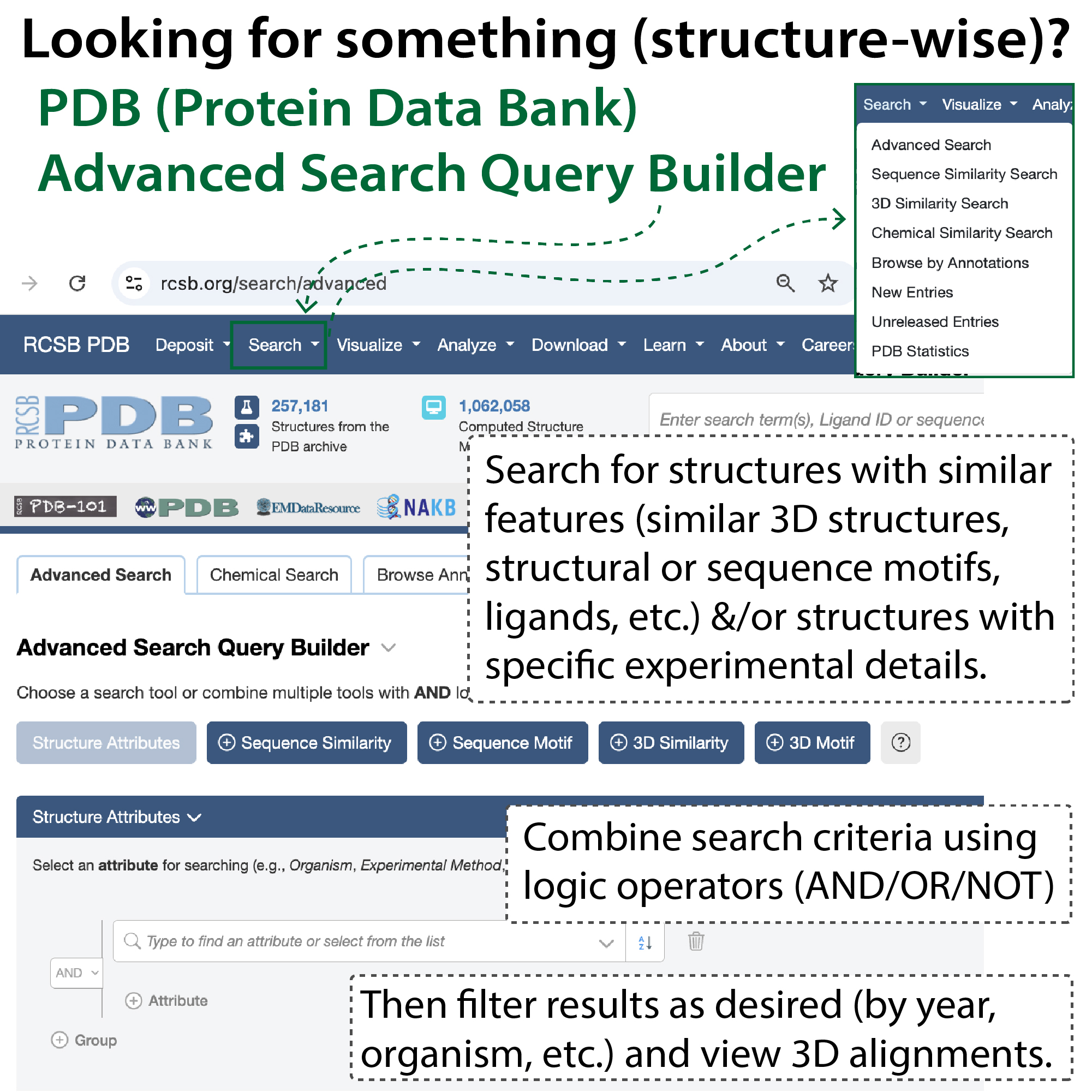
PDB Advanced Search Query Builder: You can search for structures already in the database or ones that you upload. You can also search for specific motifs and search by tons of other things like specific ligands and/or experimental details, narrowing things down using logic operators (AND/OR/NOT) etc. to find exactly what you want. https://www.rcsb.org/search/advanced
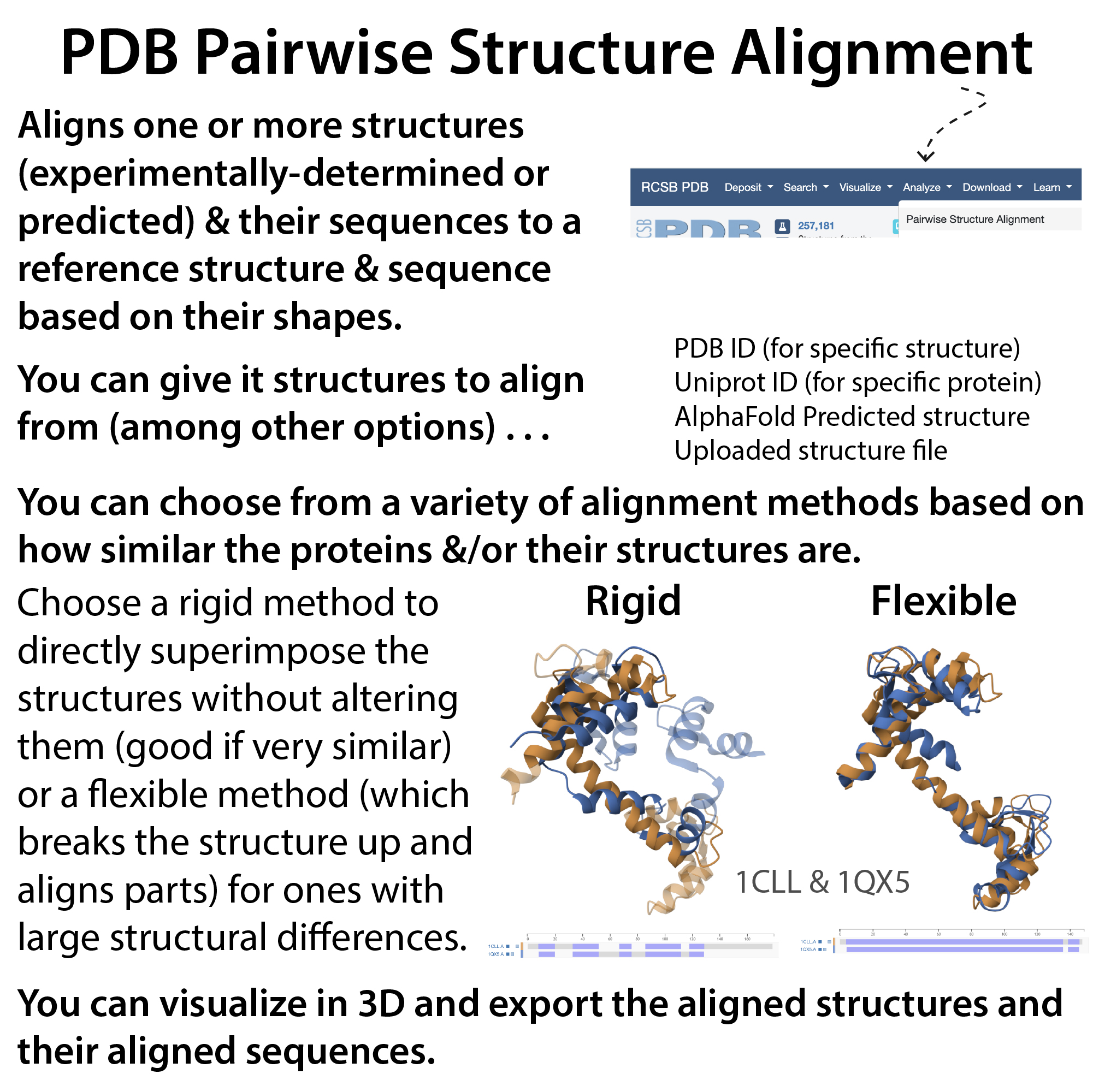
You can choose from a variety of alignment methods based on how similar the proteins &/or their structures are. Choose a rigid method to directly superimpose the structures without altering them (good if very similar) or a flexible method (which breaks the structure up and aligns parts) for ones with large structural differences.
This will also allow you to download mmCIF files of them overlaid.
FoldMason MSTA: Unlike a pairwise alignment tool, FoldMason MSTA does Multiple Structure Alignment, finding the best alignment for a group of sequences, rather than comparing each structure to the same reference structure. https://search.foldseek.com/foldmason