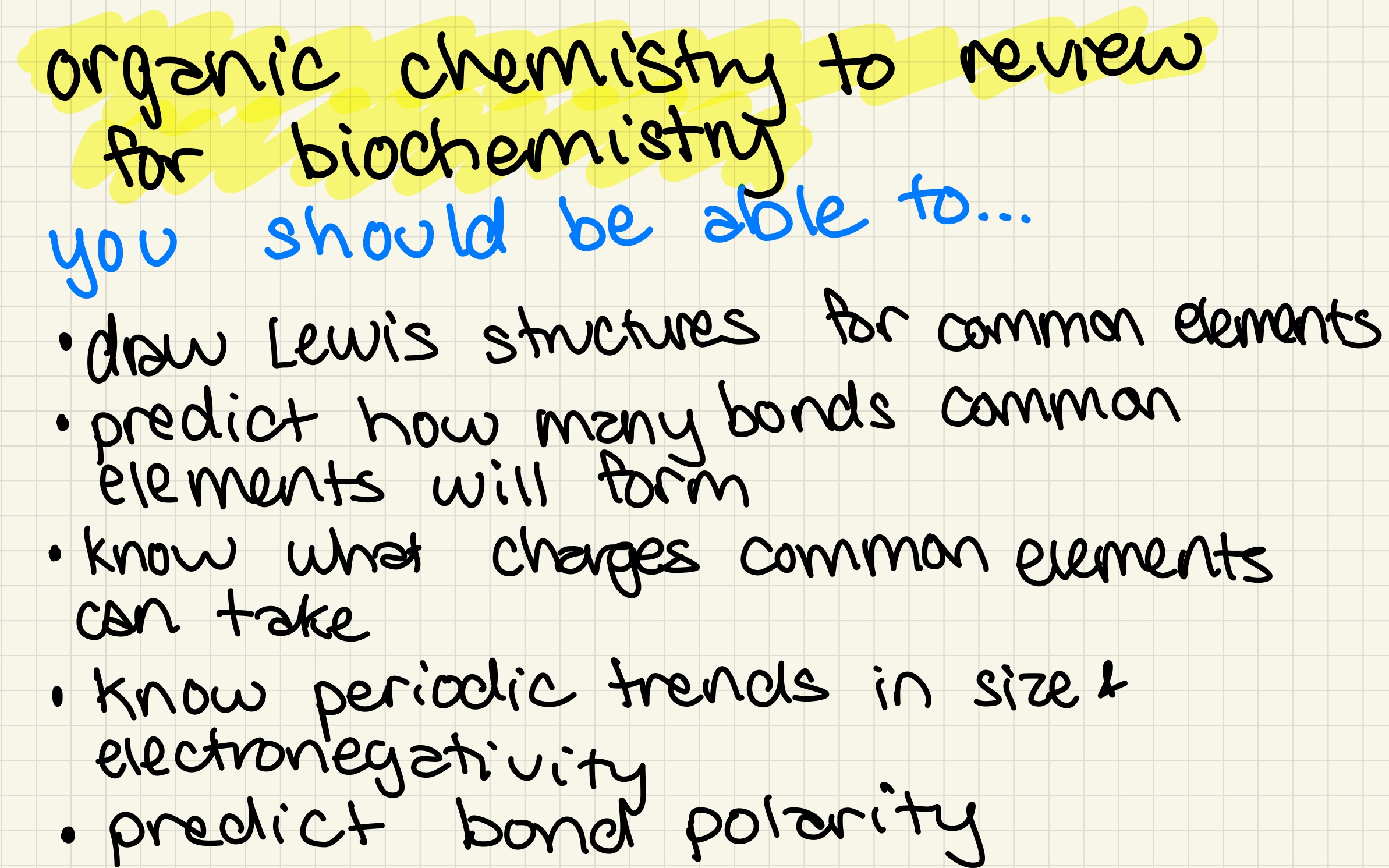
Organic chemistry to review for biochemistry… You should be able to…
https://youtu.be/X9_ppqPmfWE
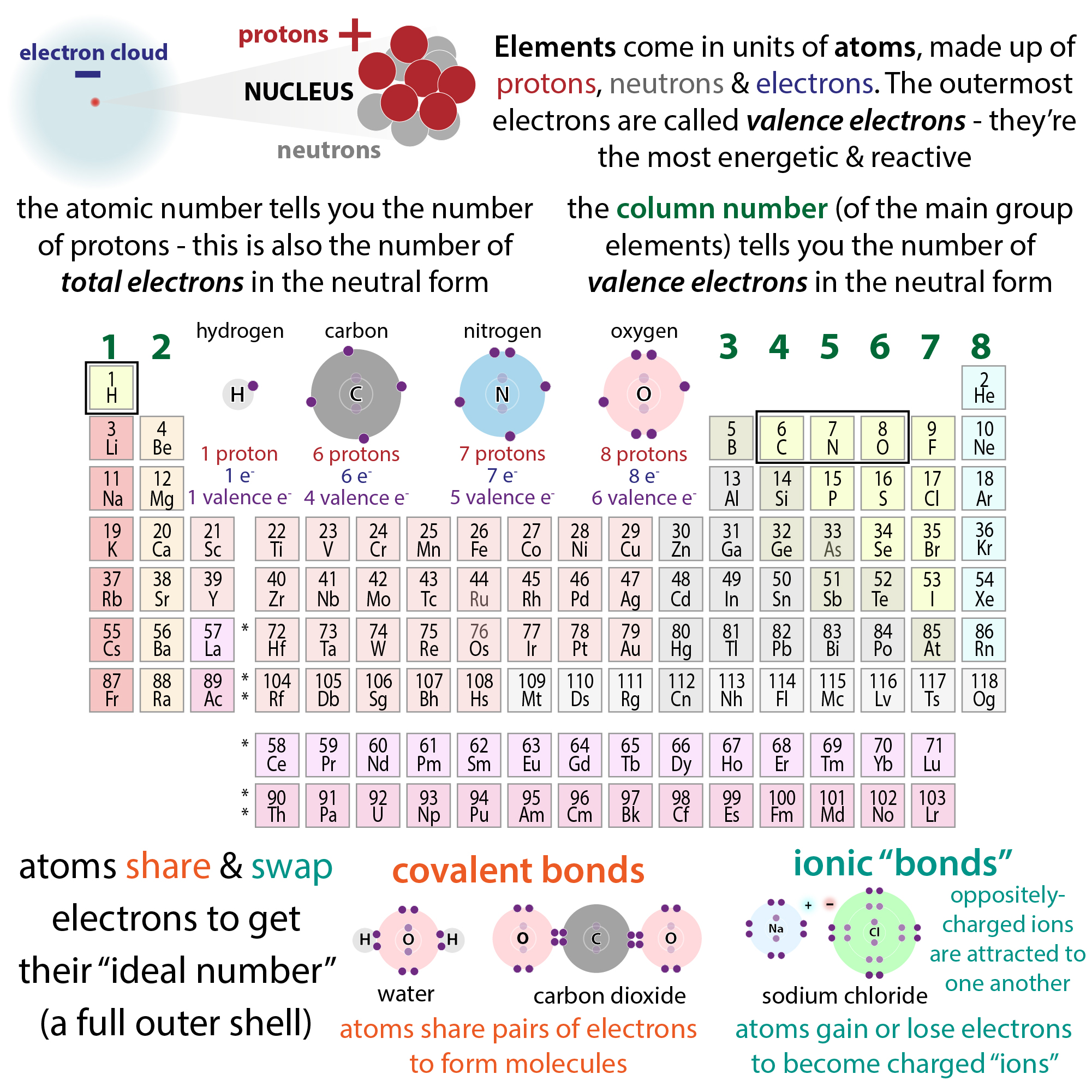
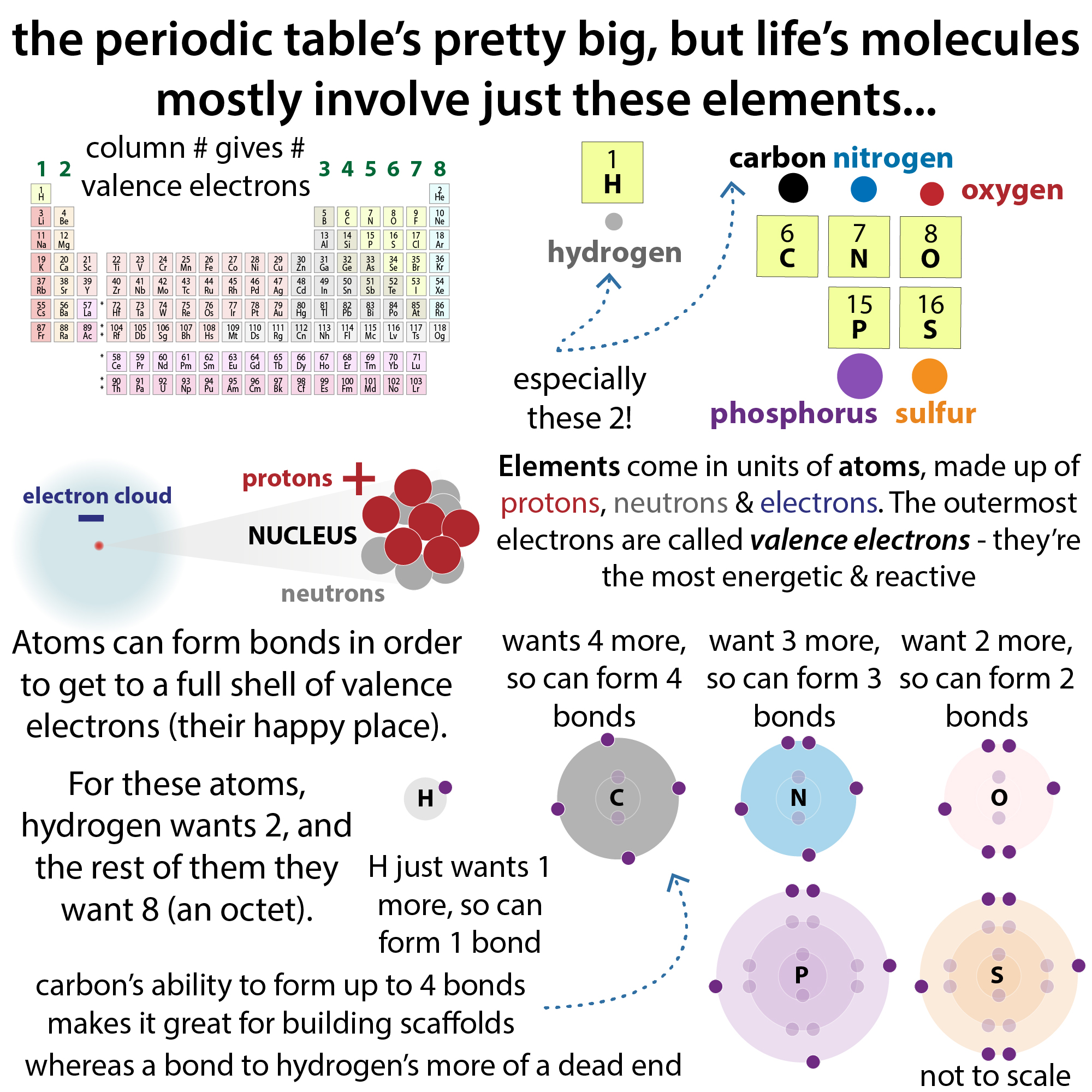
- Draw Lewis structures for common elements
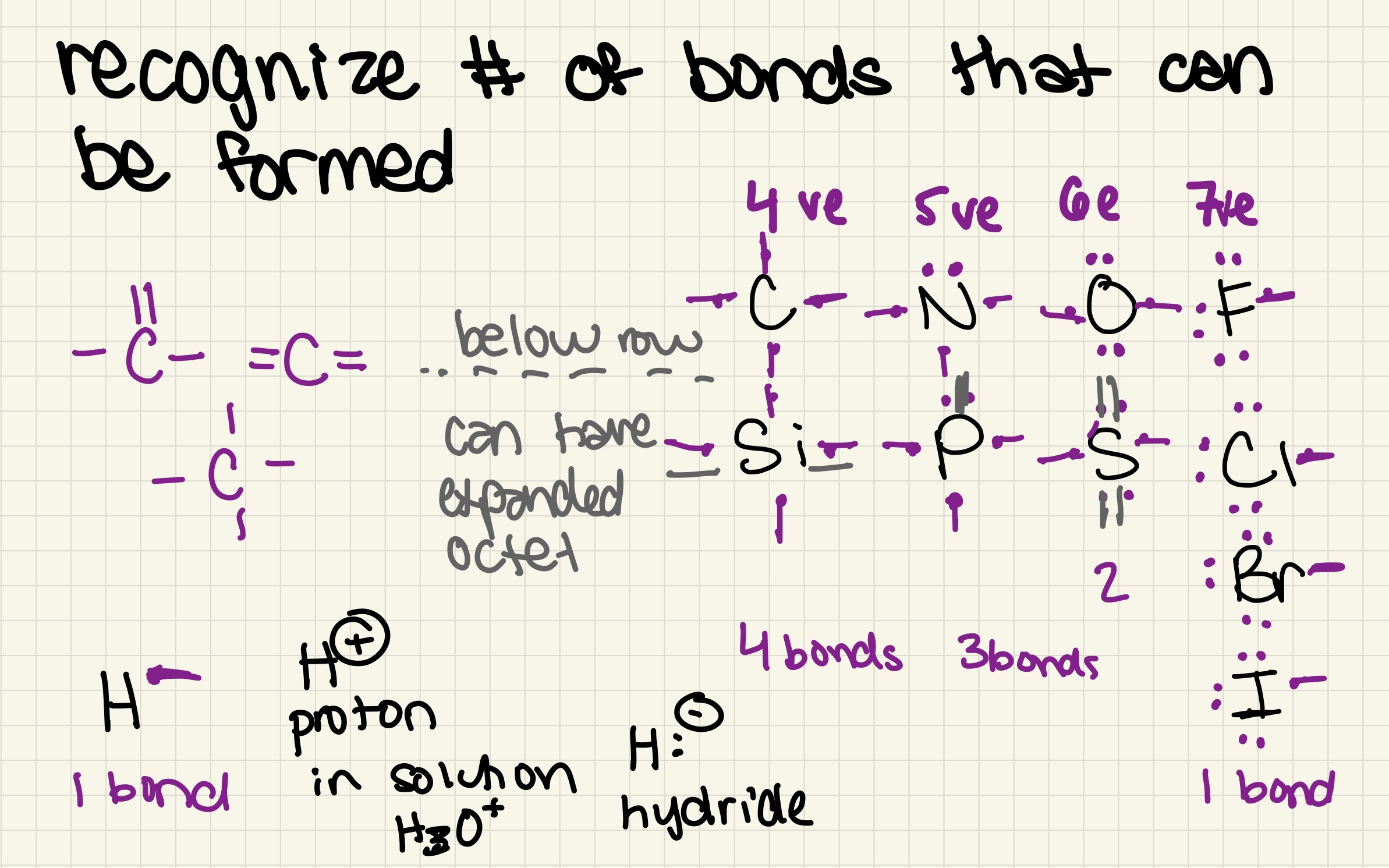
- Predict how many bonds common elements will form
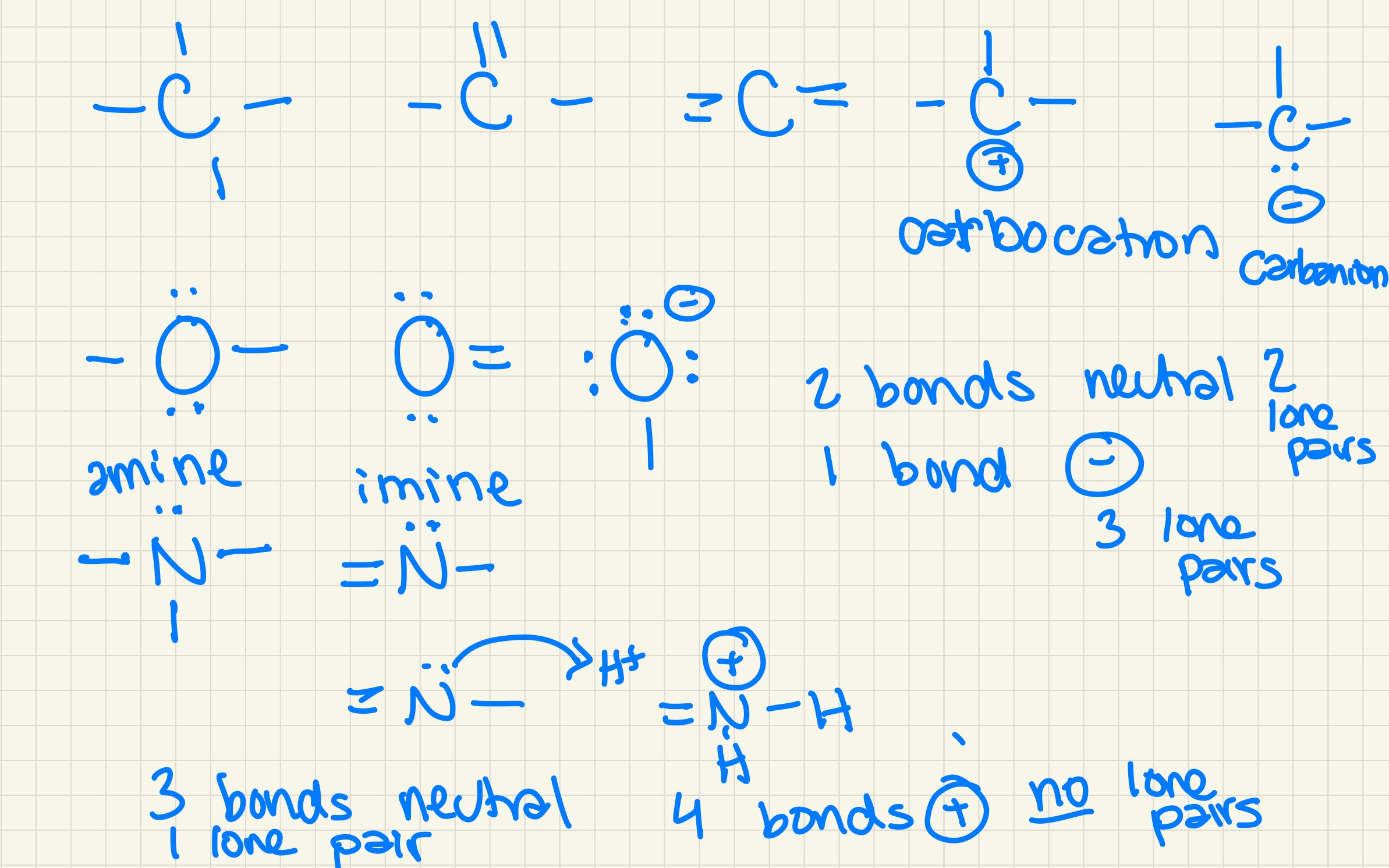
- Know what charges common elements can take
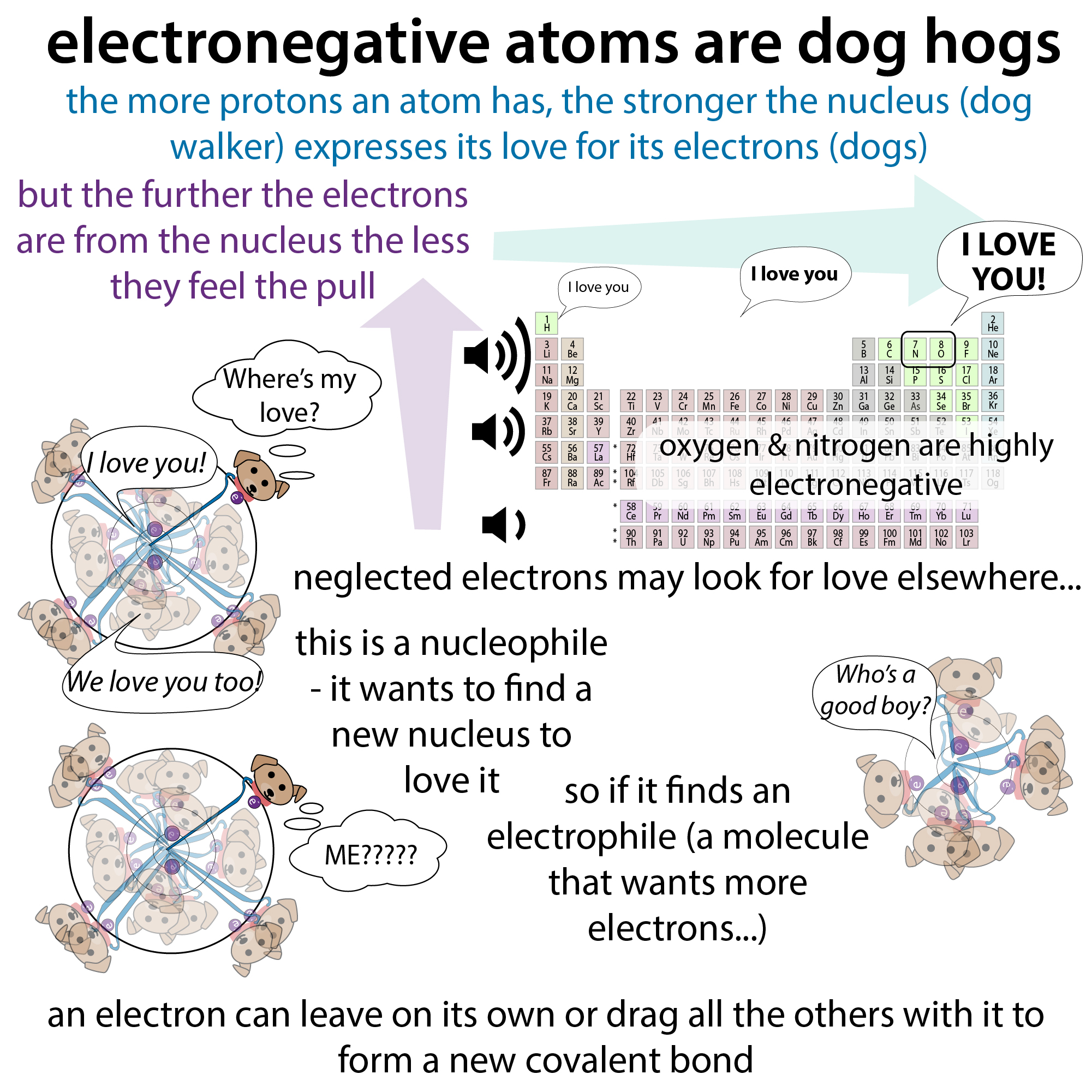
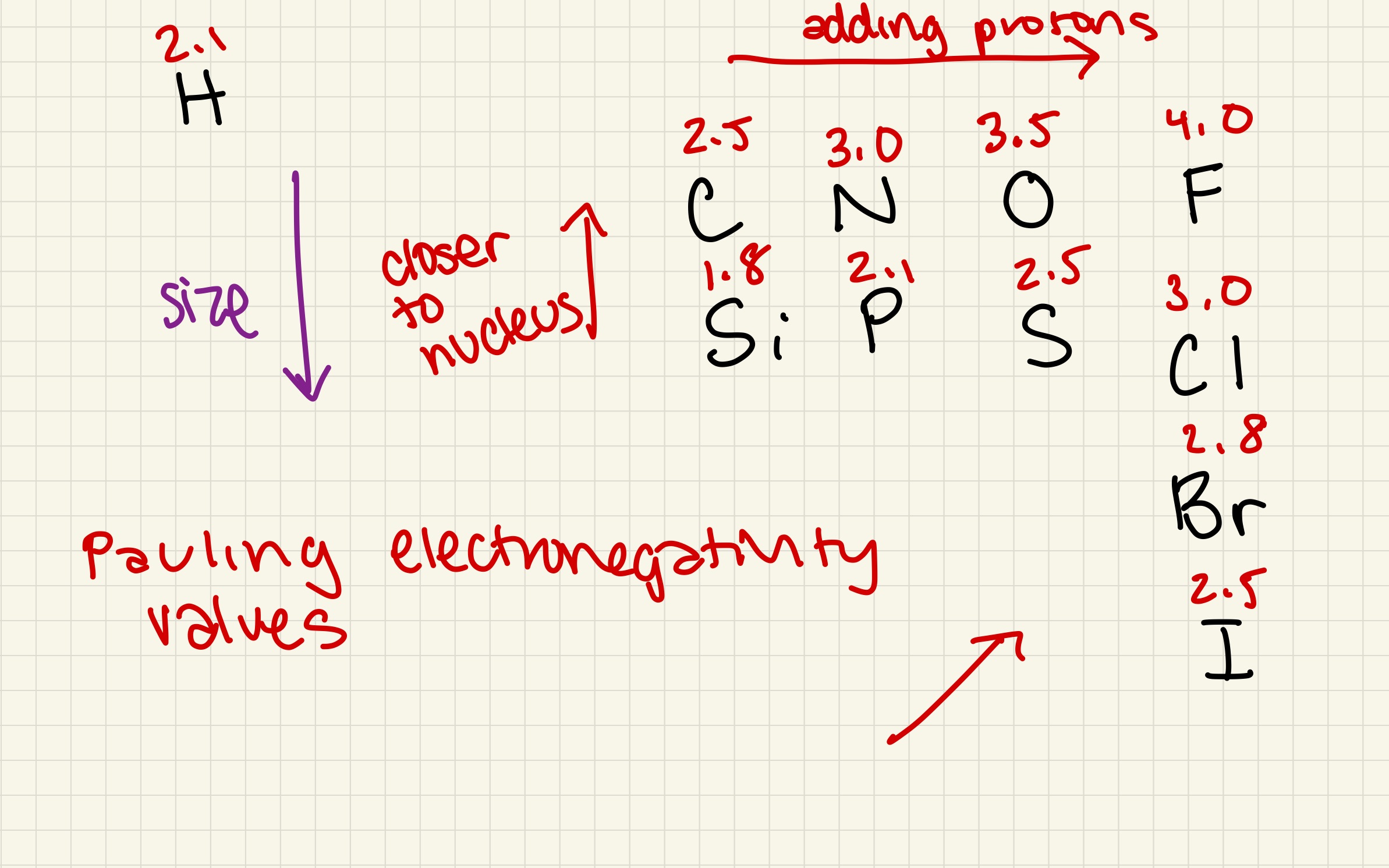
- Know periodic trends in size & electronegativity
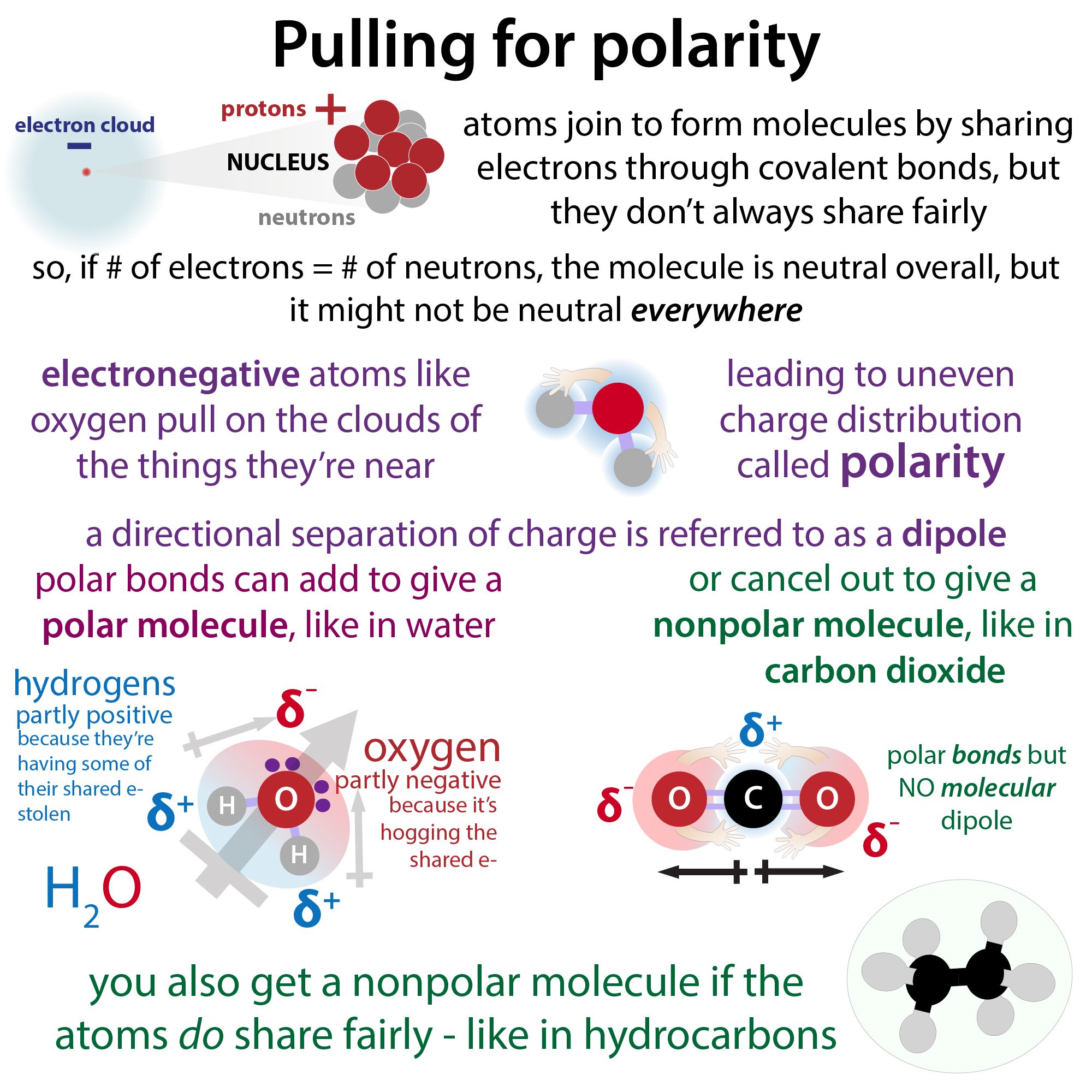
- Predict bond and molecular polarity
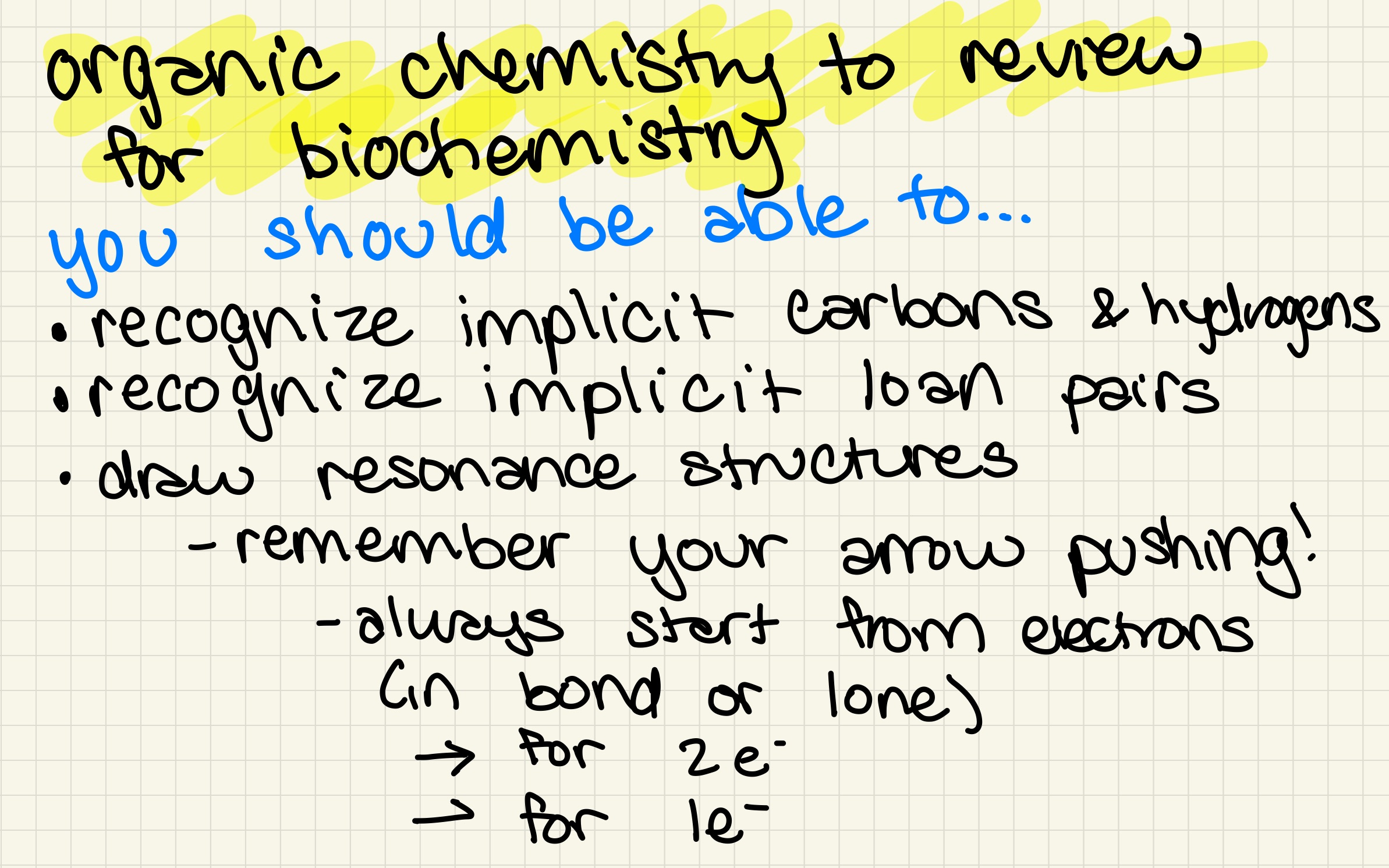
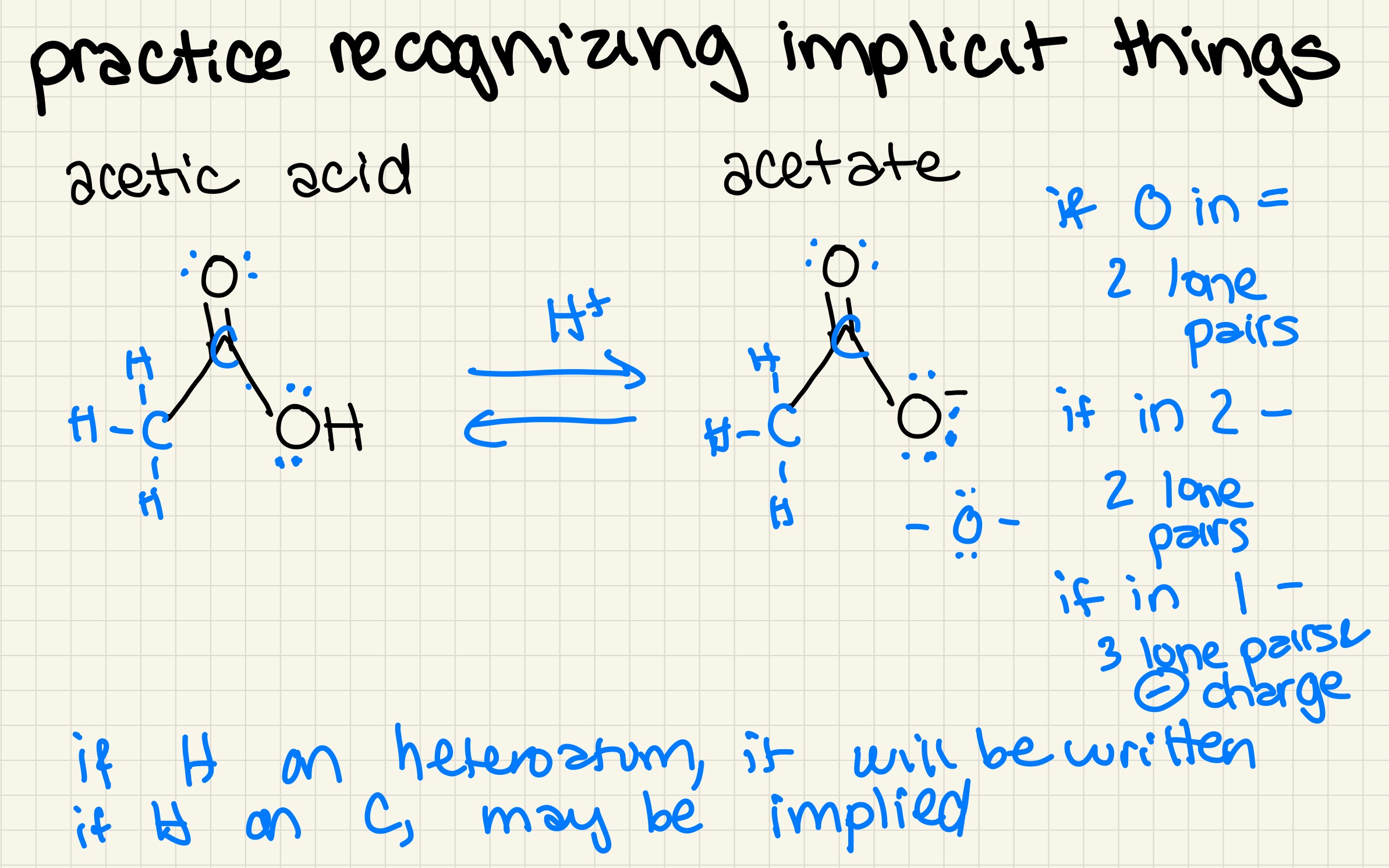
- Recognize implicit carbons & hydrogens recognize implicit loan pairs
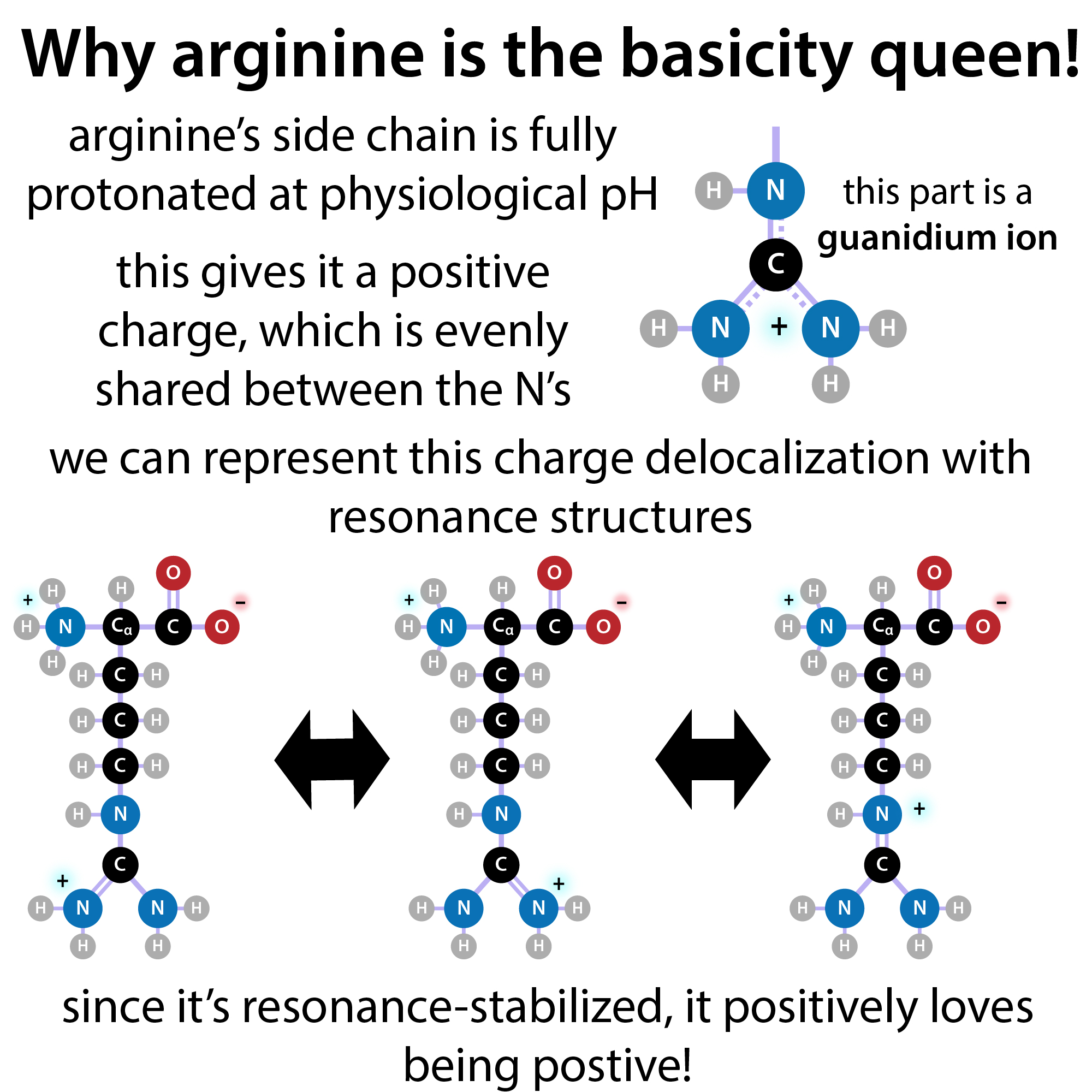
- Draw resonance structures
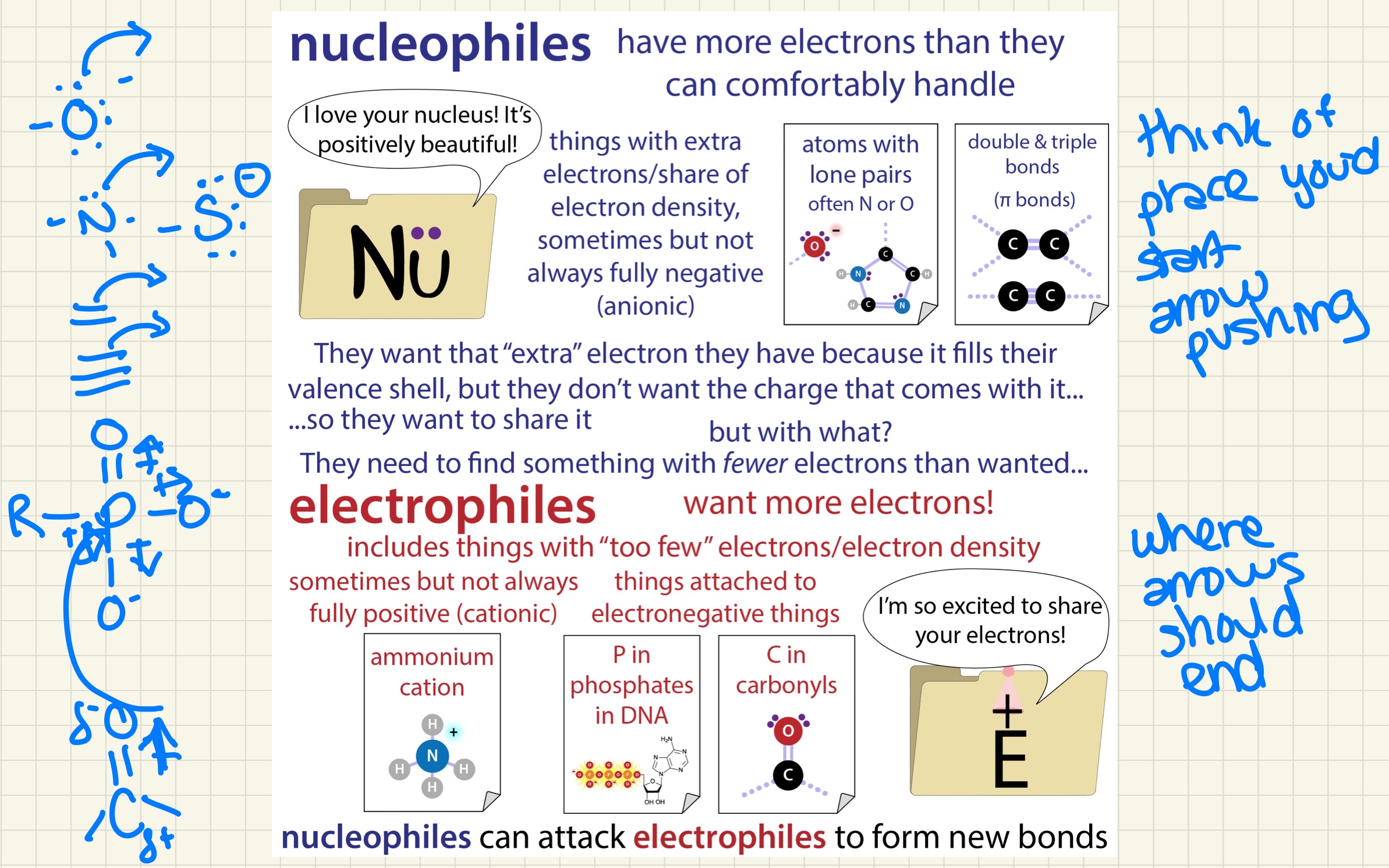
- Remember your arrow pushing! – start from electrons, a pi bond, or lone electron(s)
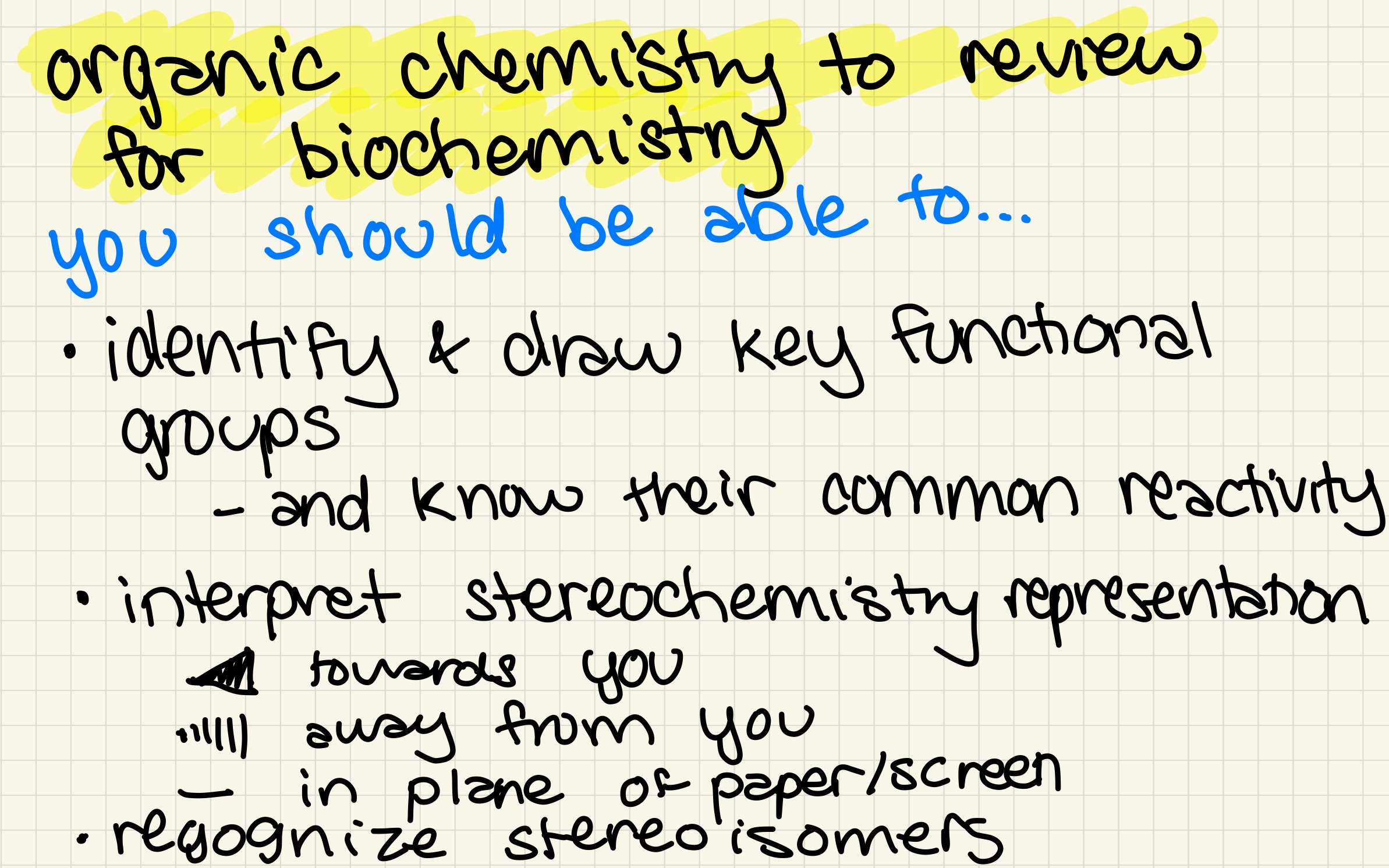
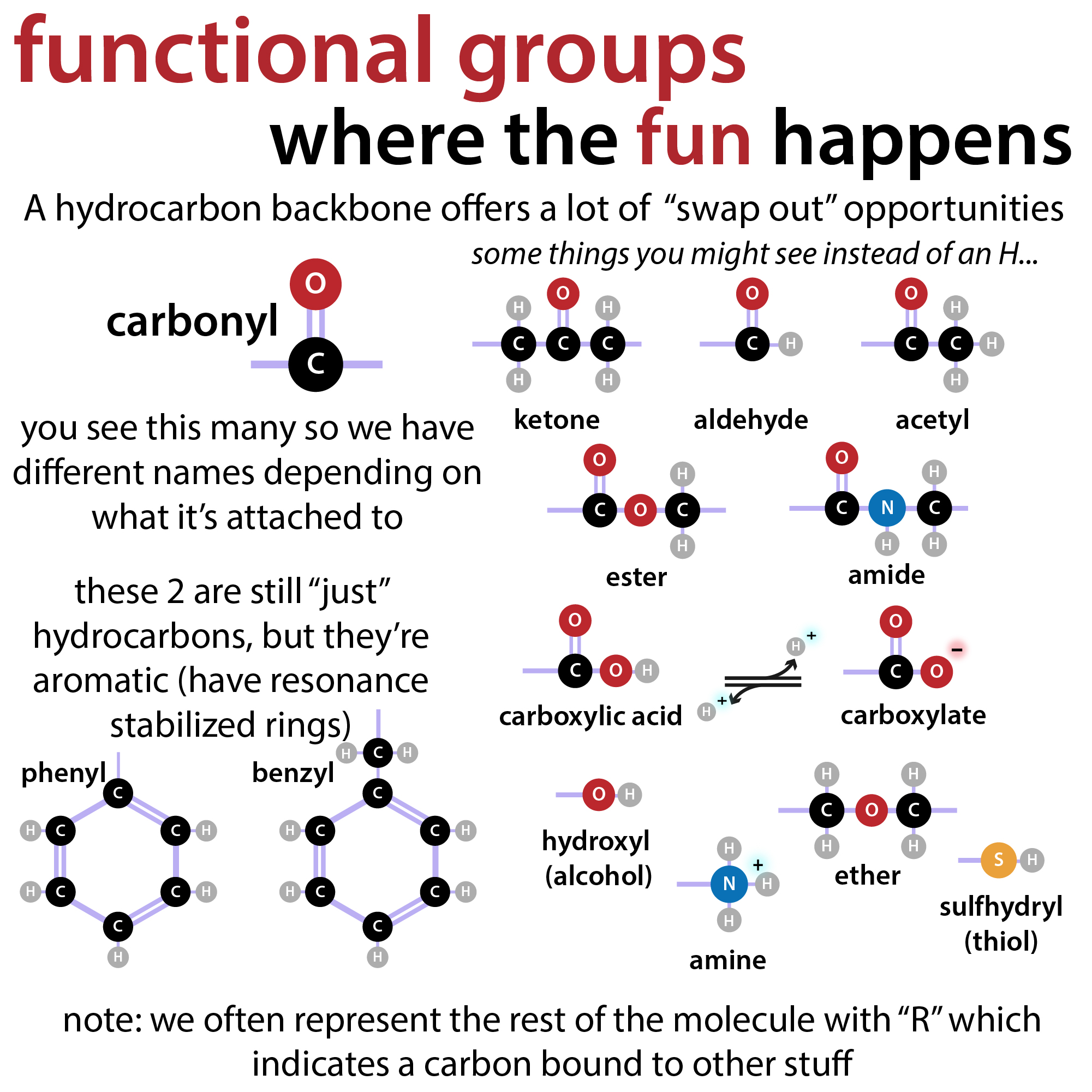
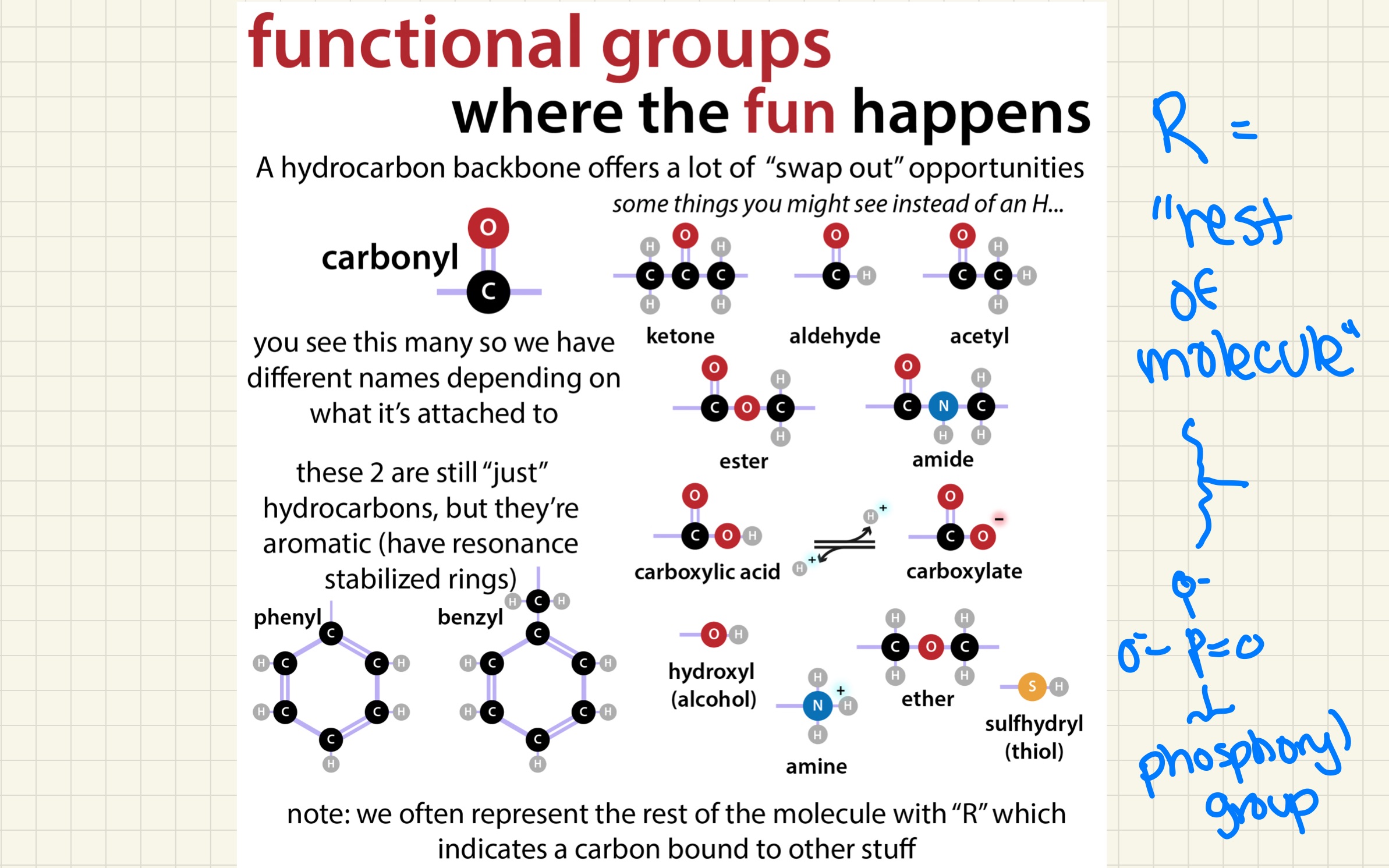
- Identify & draw key functional groups and know their common reactivity
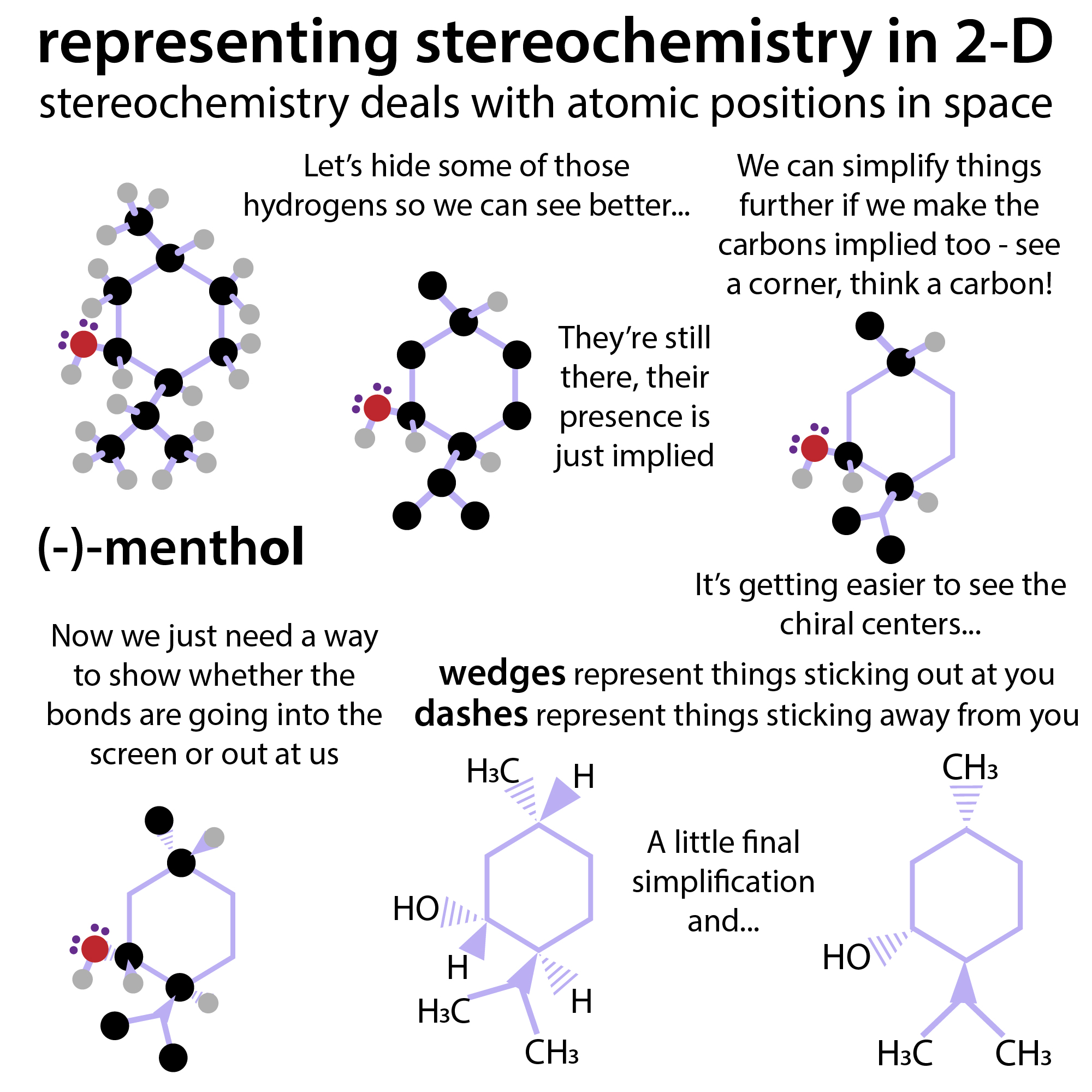
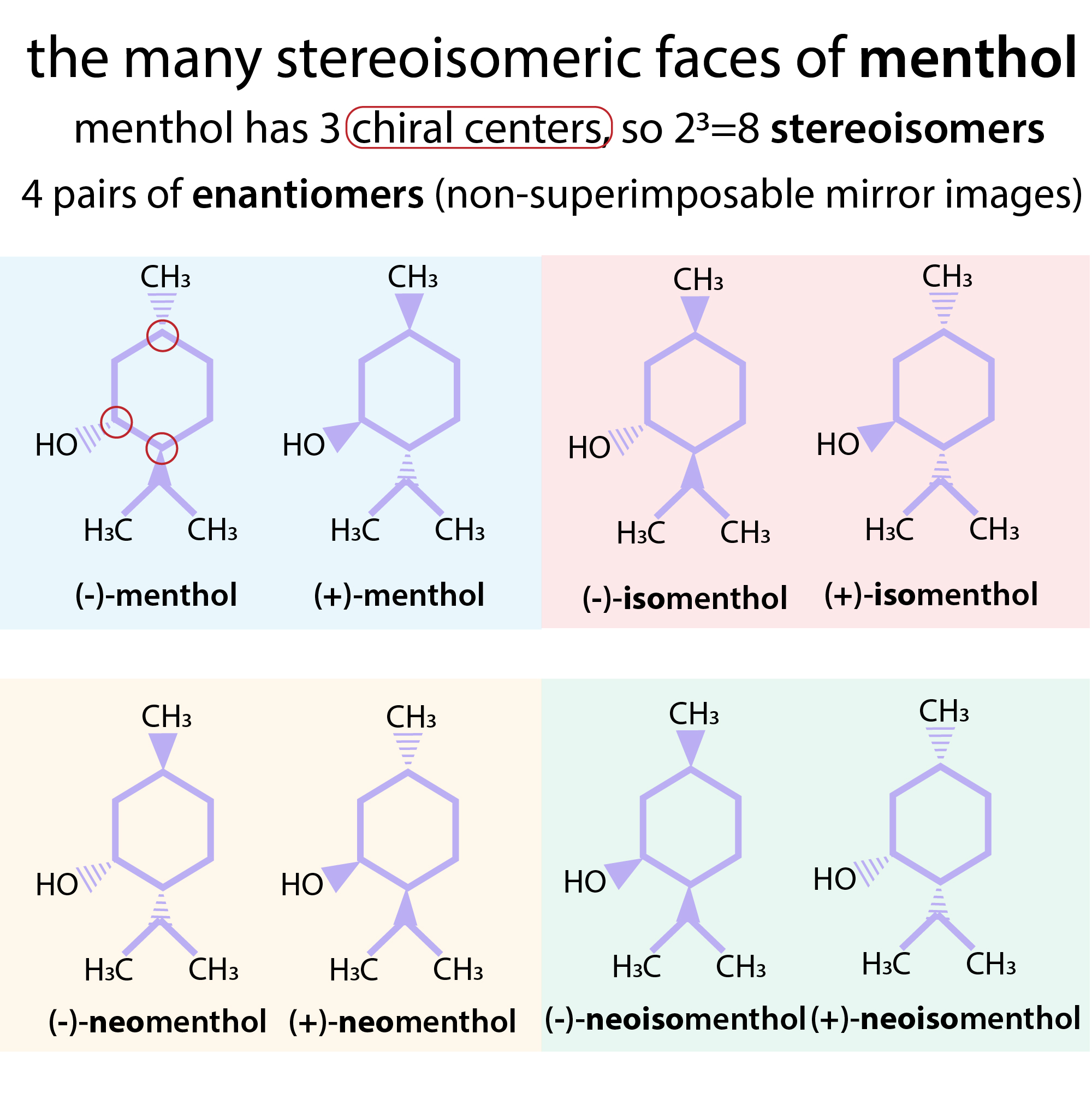
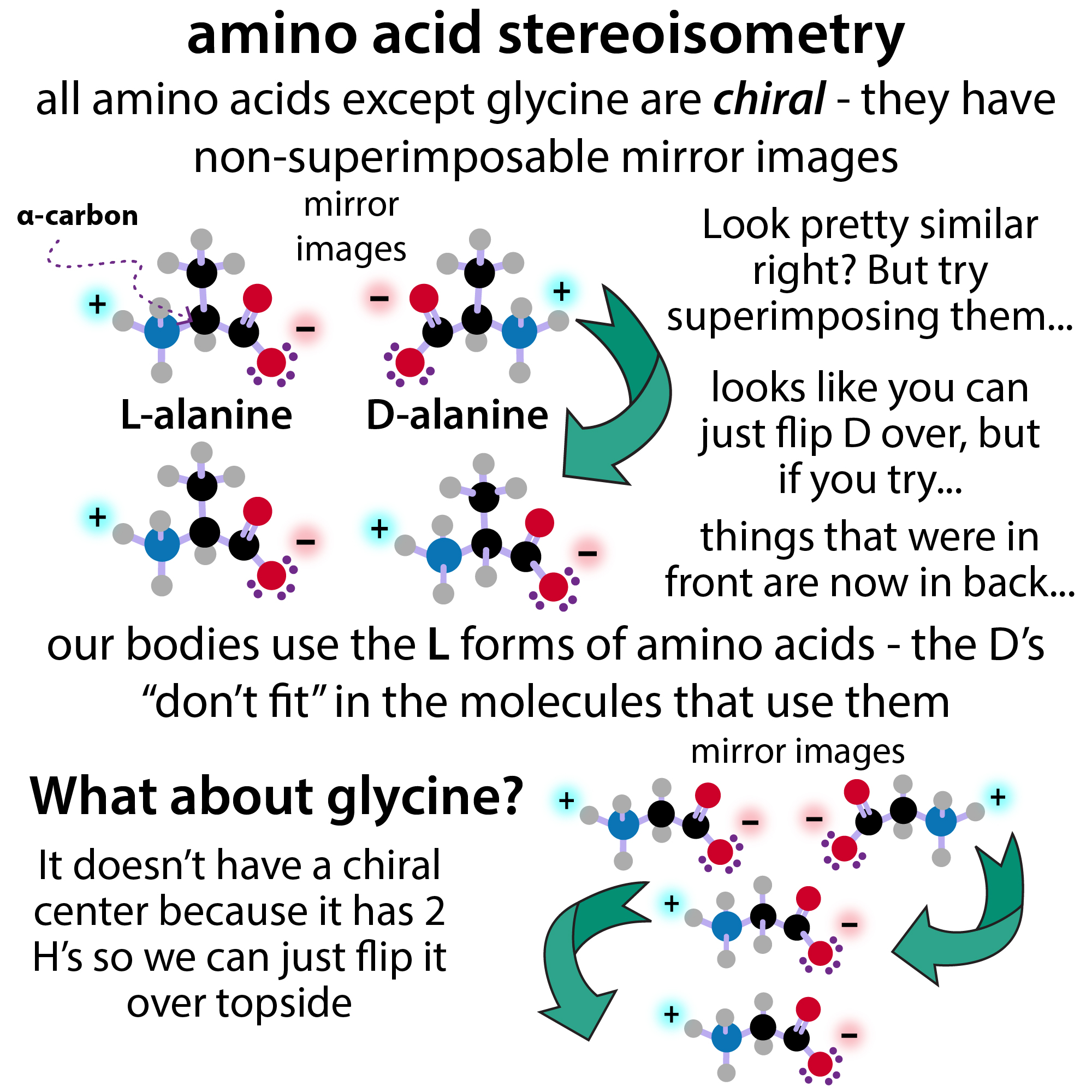
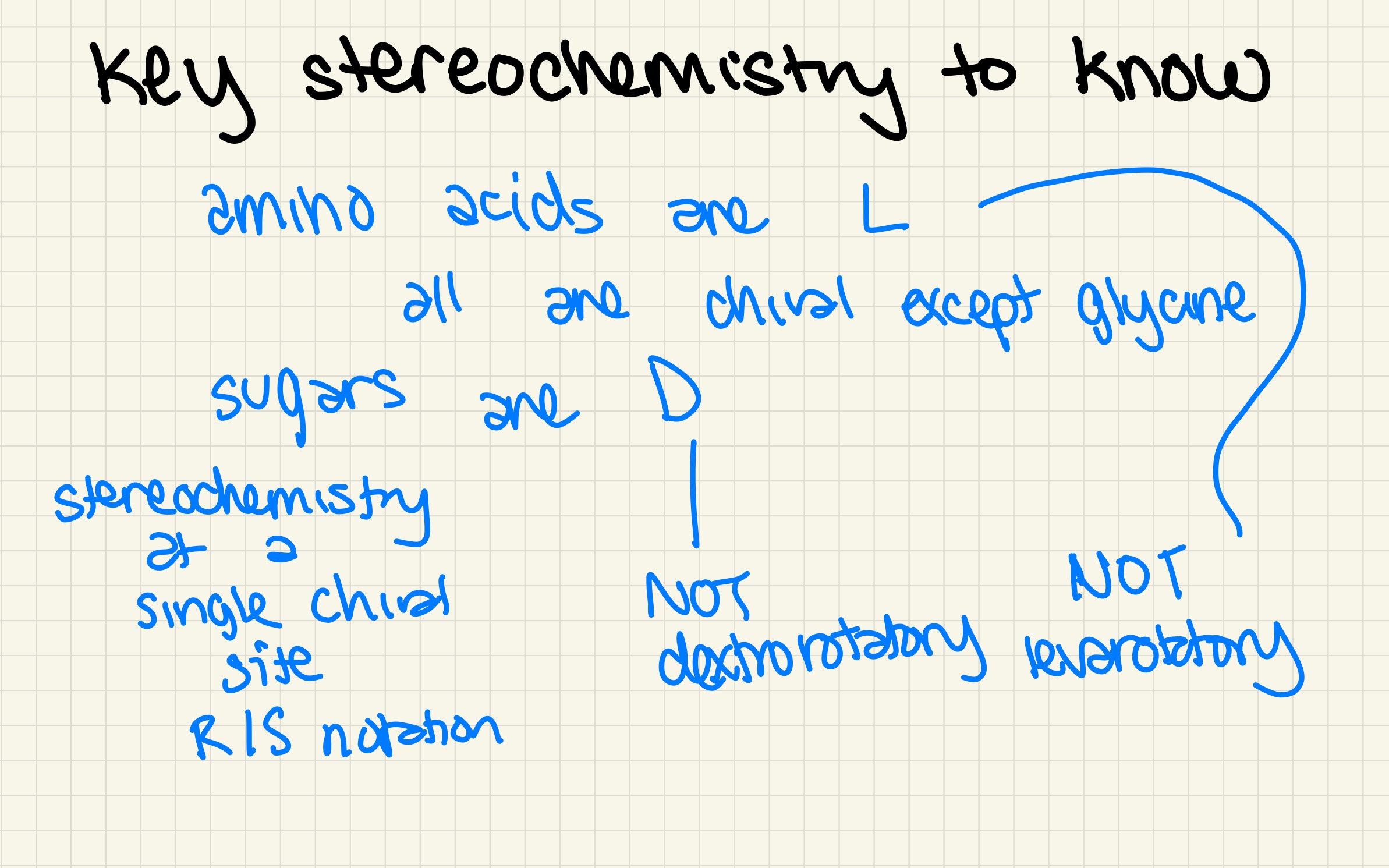
- Interpret stereochemistry representation
- Recognize stereoisomers
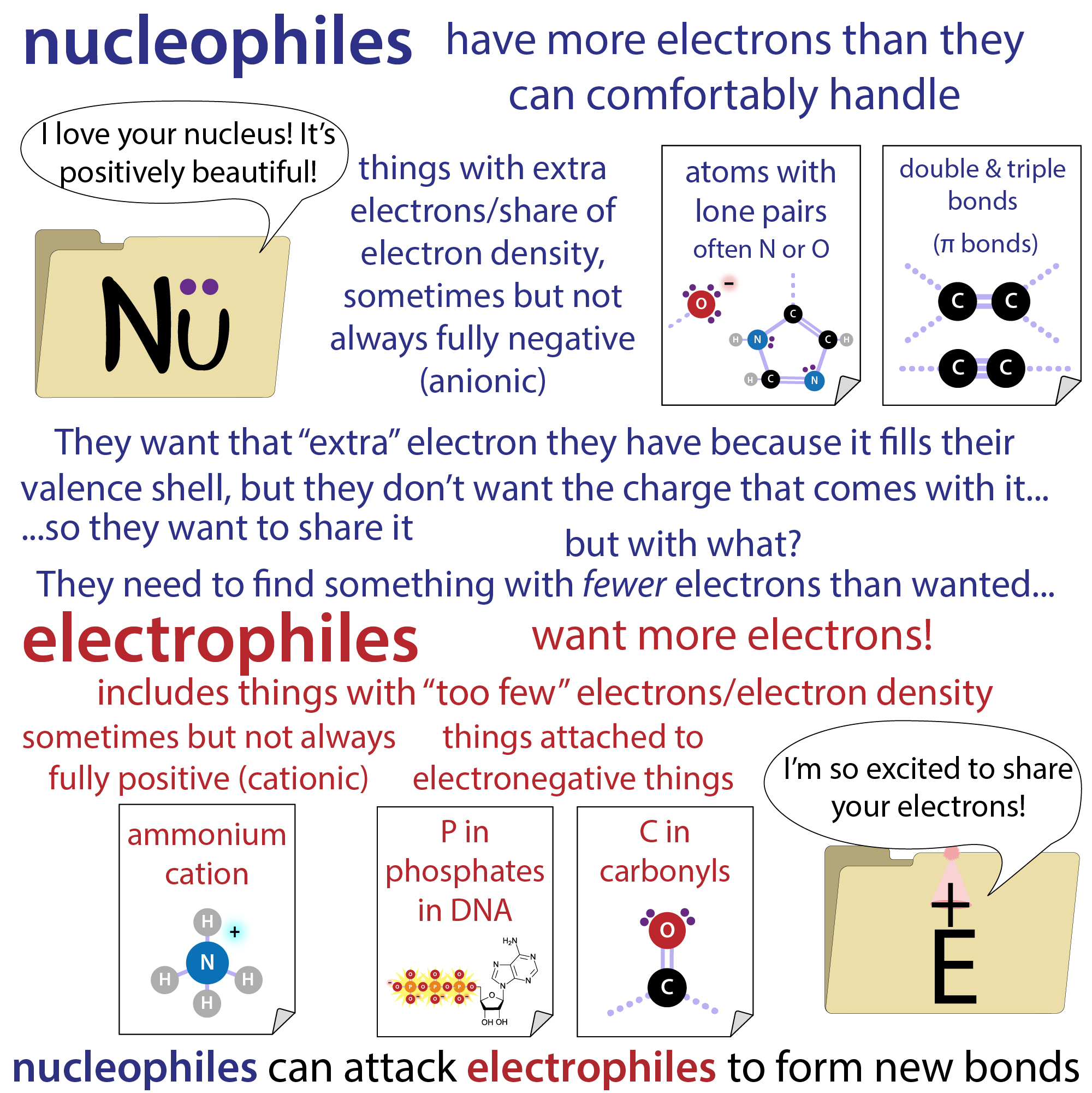
- Recognize nucleophiles & electrophiles
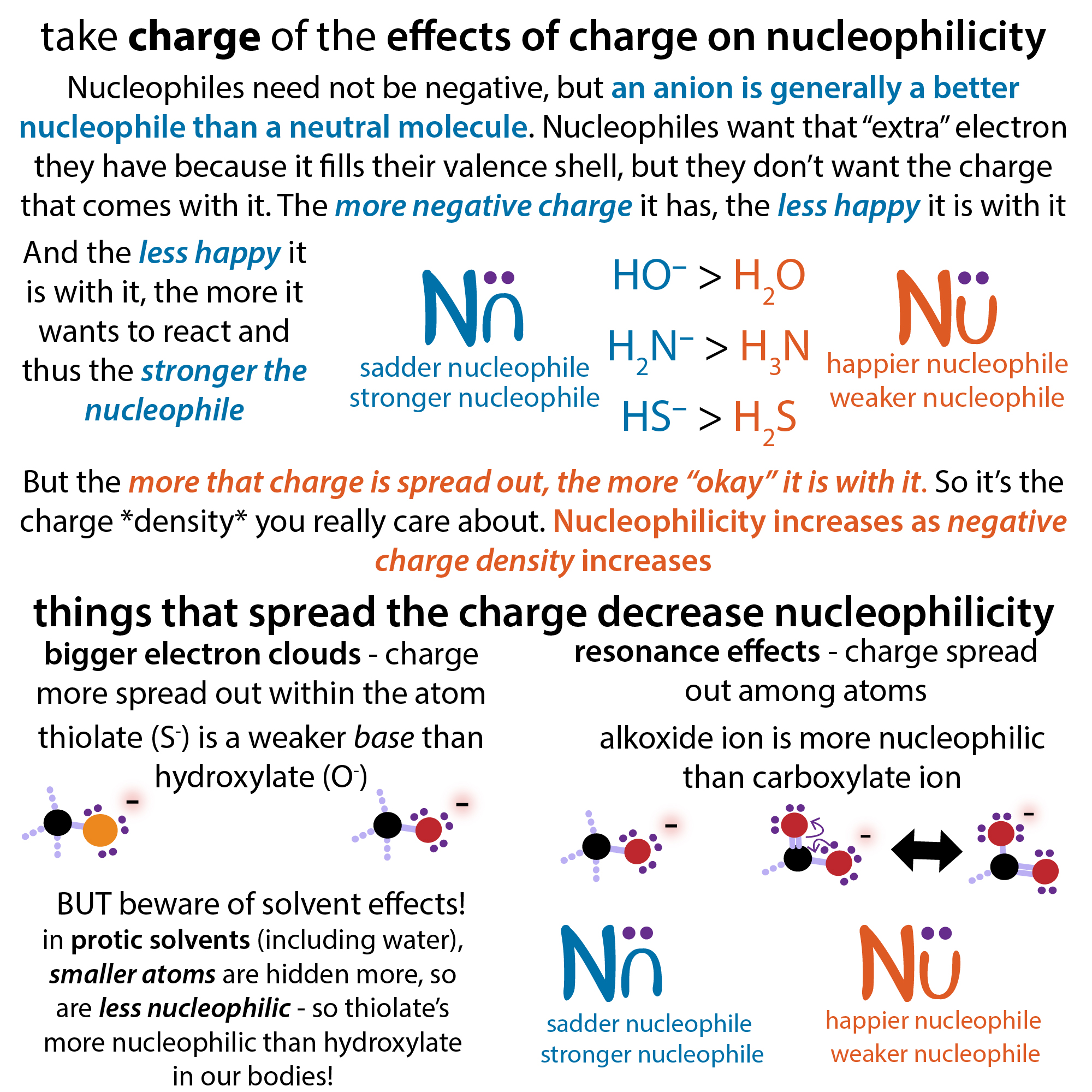
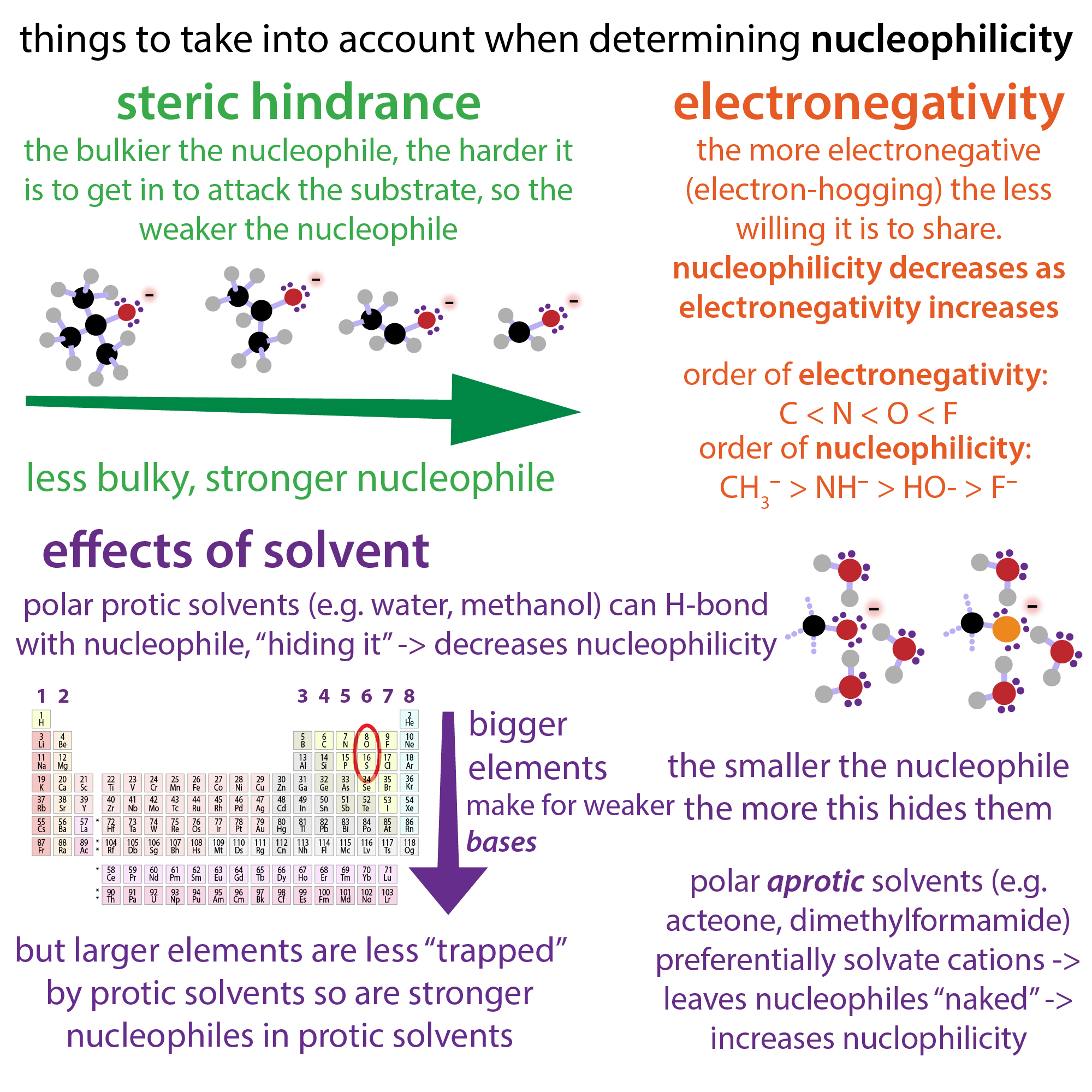
- Compare/predict strength of nucleophiles
- REMEMBER we’re in an AQUEOUS environment (protic solvent)
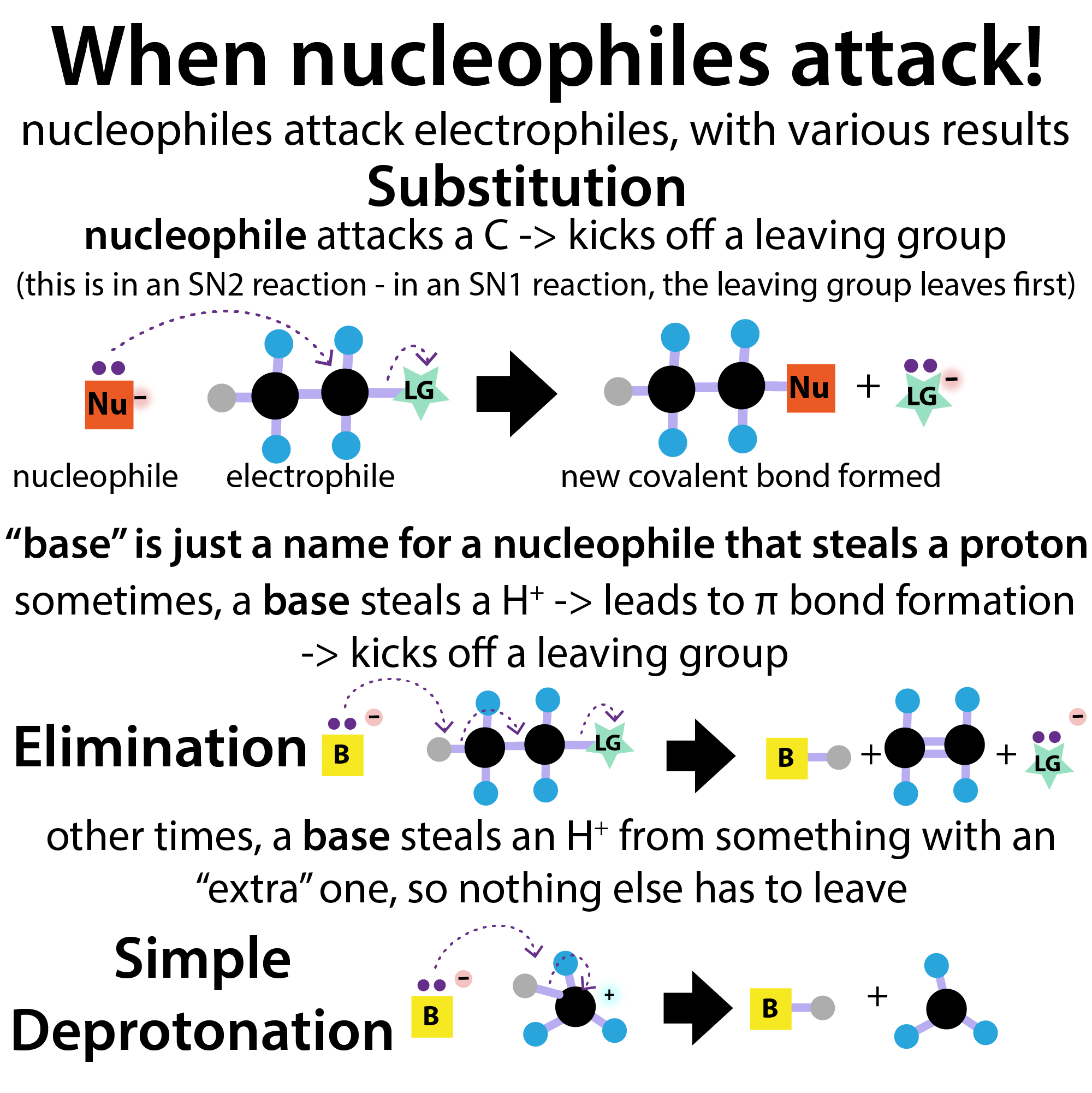
- Draw arrow pushing mechanisms for simple substitution and elimination reactions
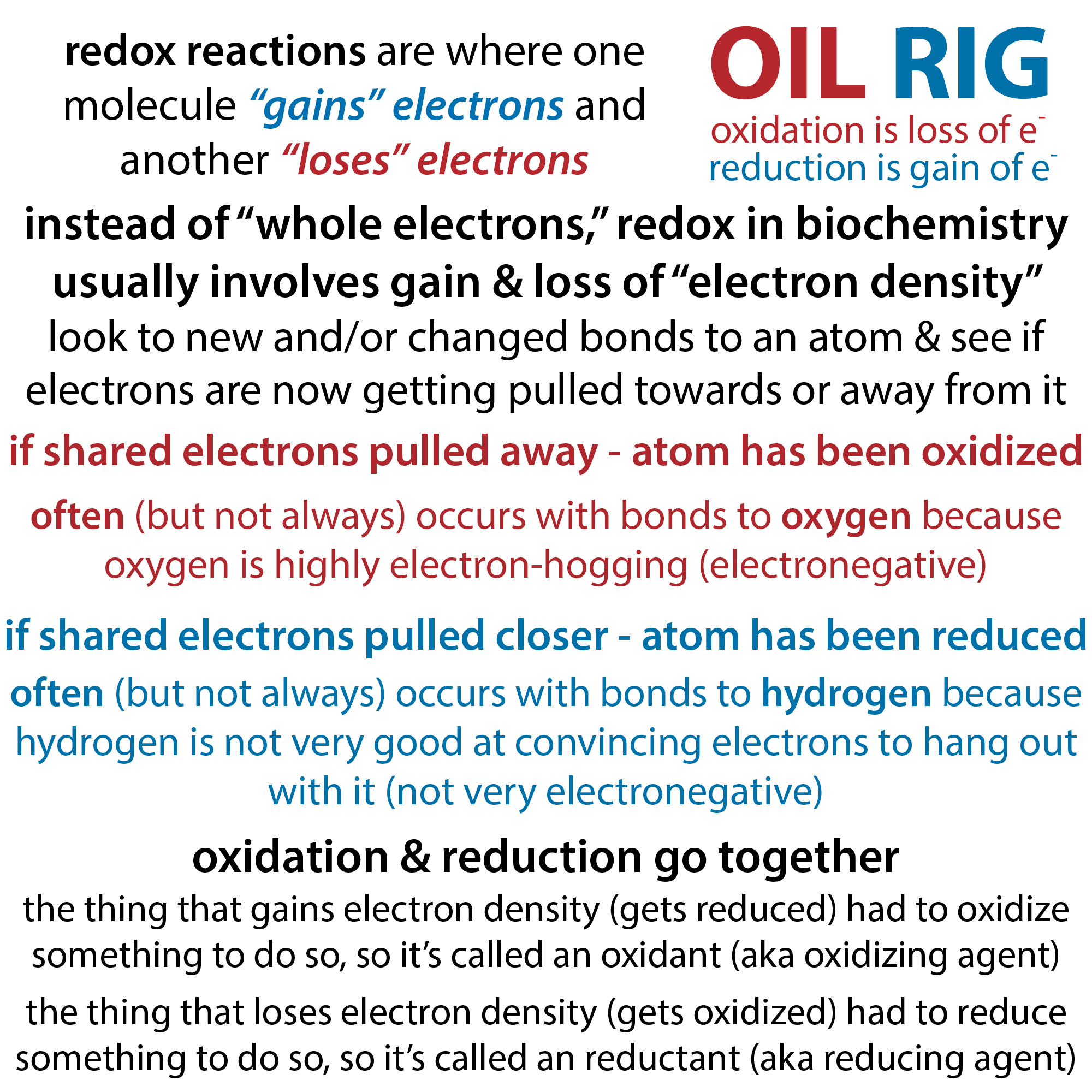
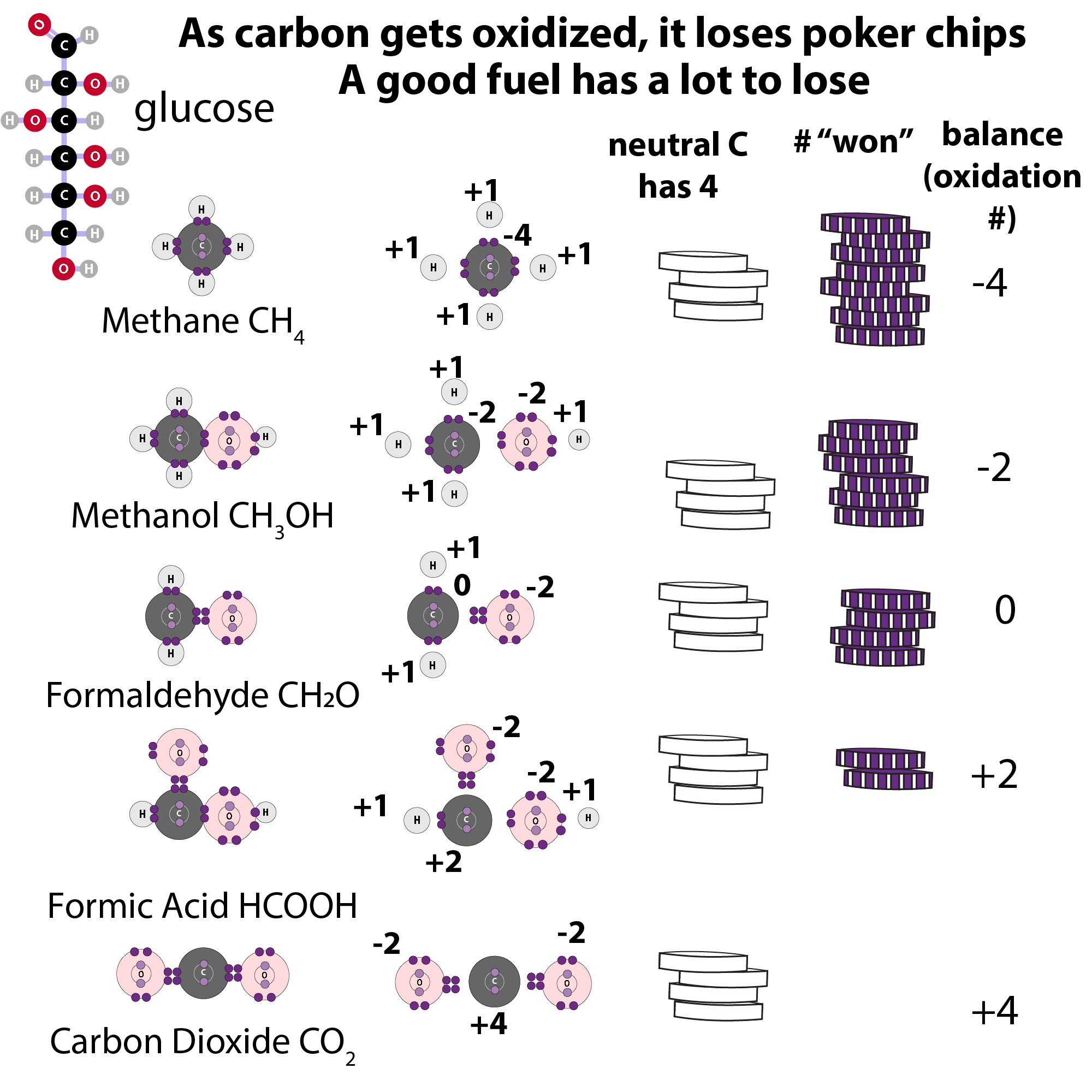
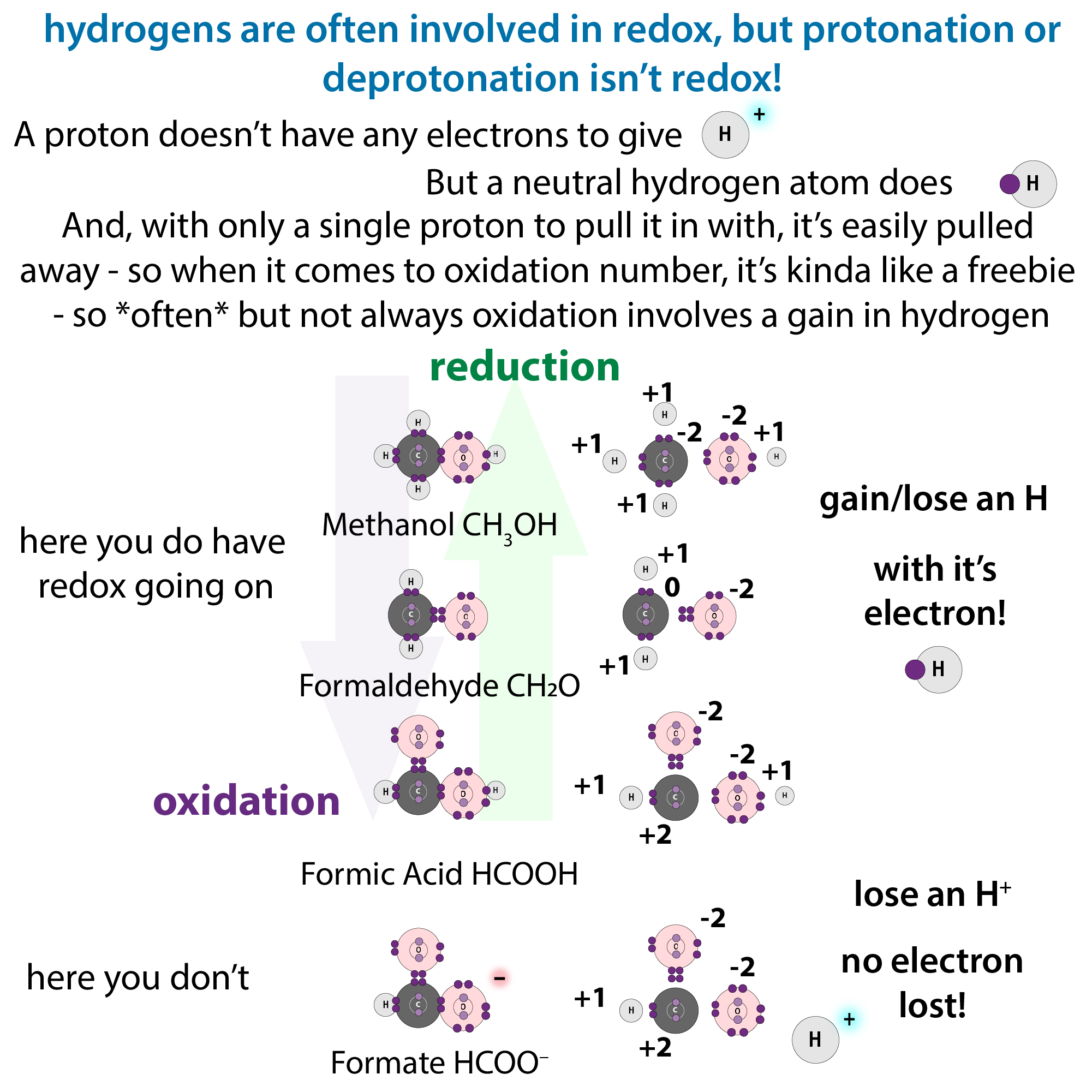
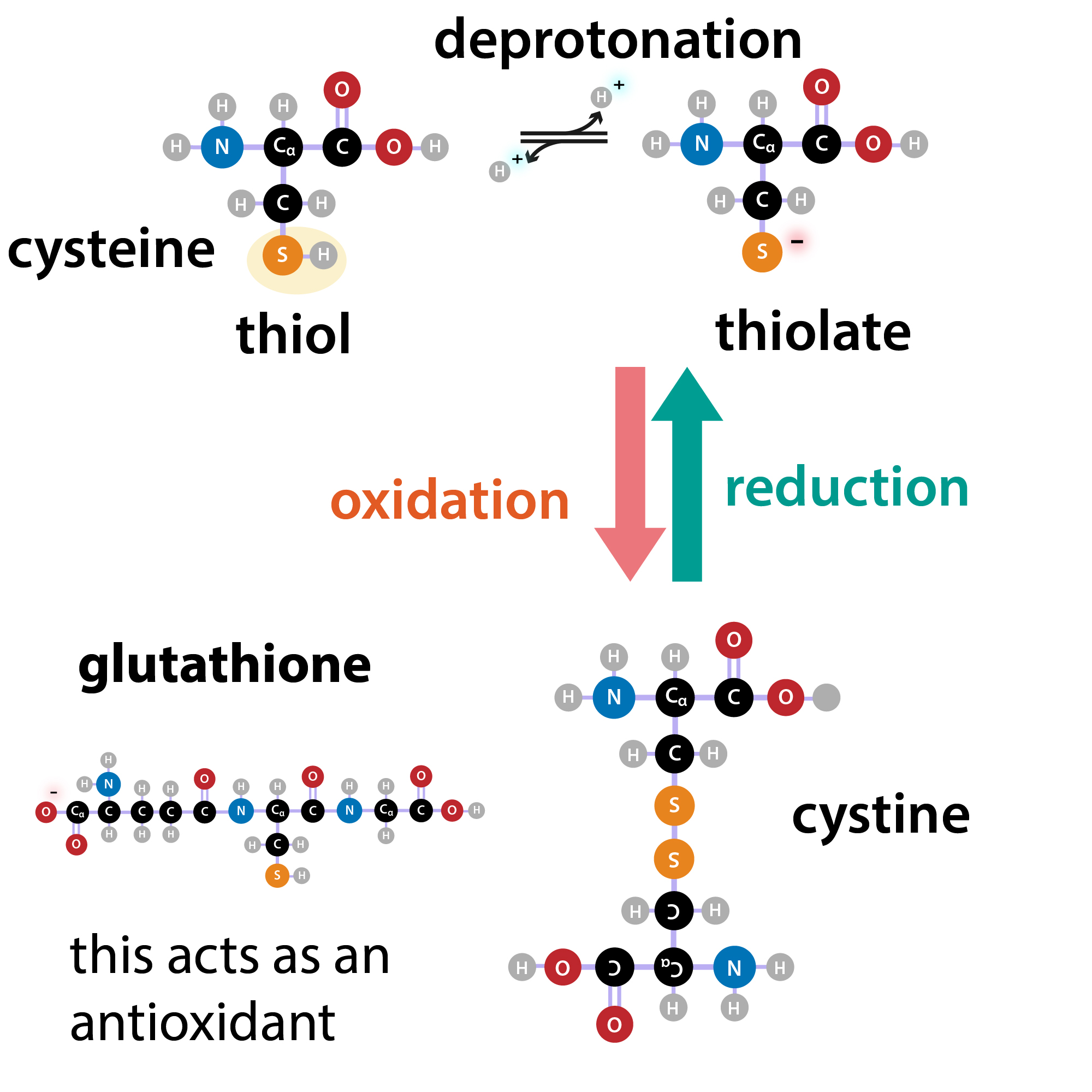
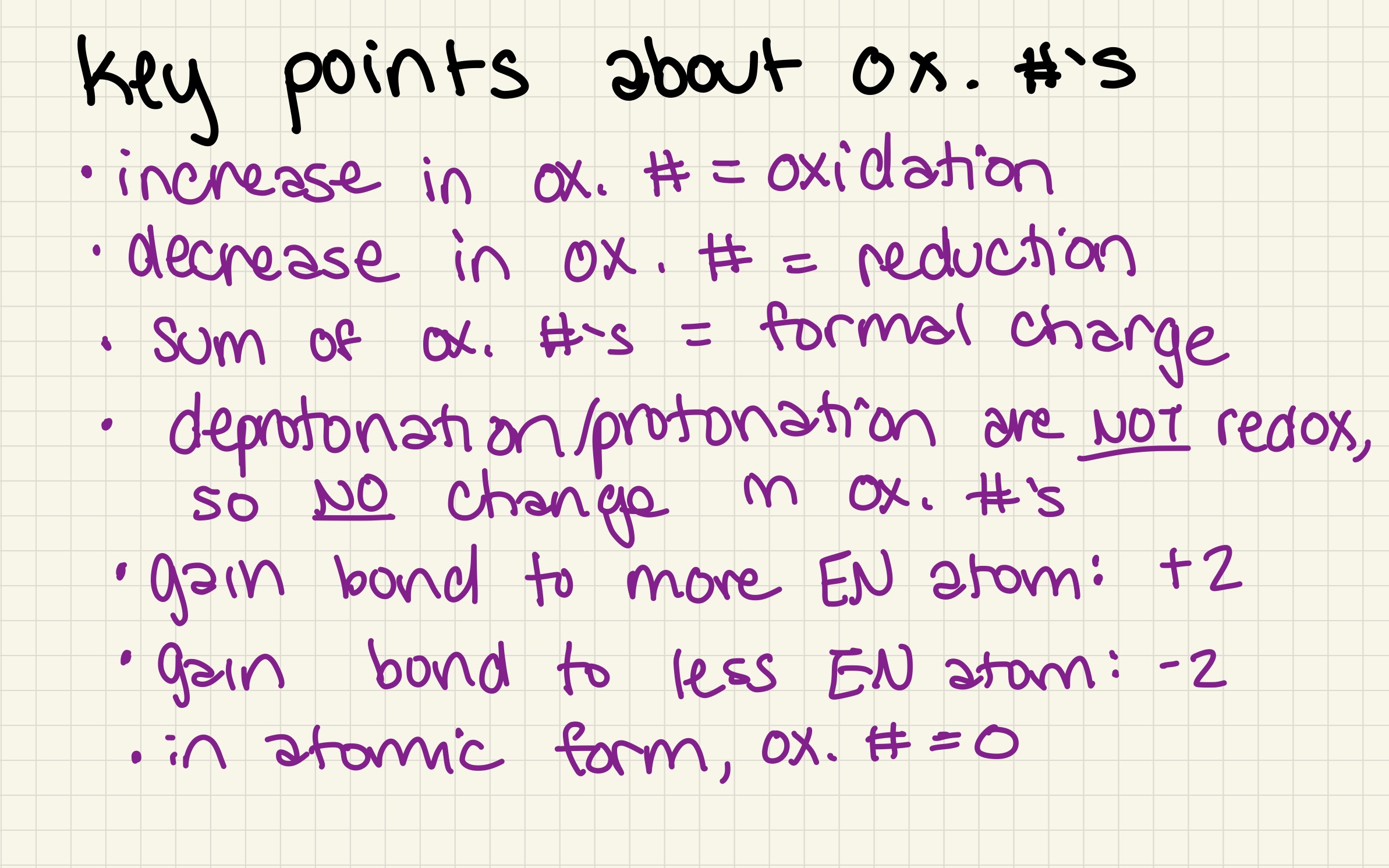
- Recognize when redox is occurring
- Identify what is being oxidized & what is being reduced
- Determine formal oxidation numbers
Lewis structures
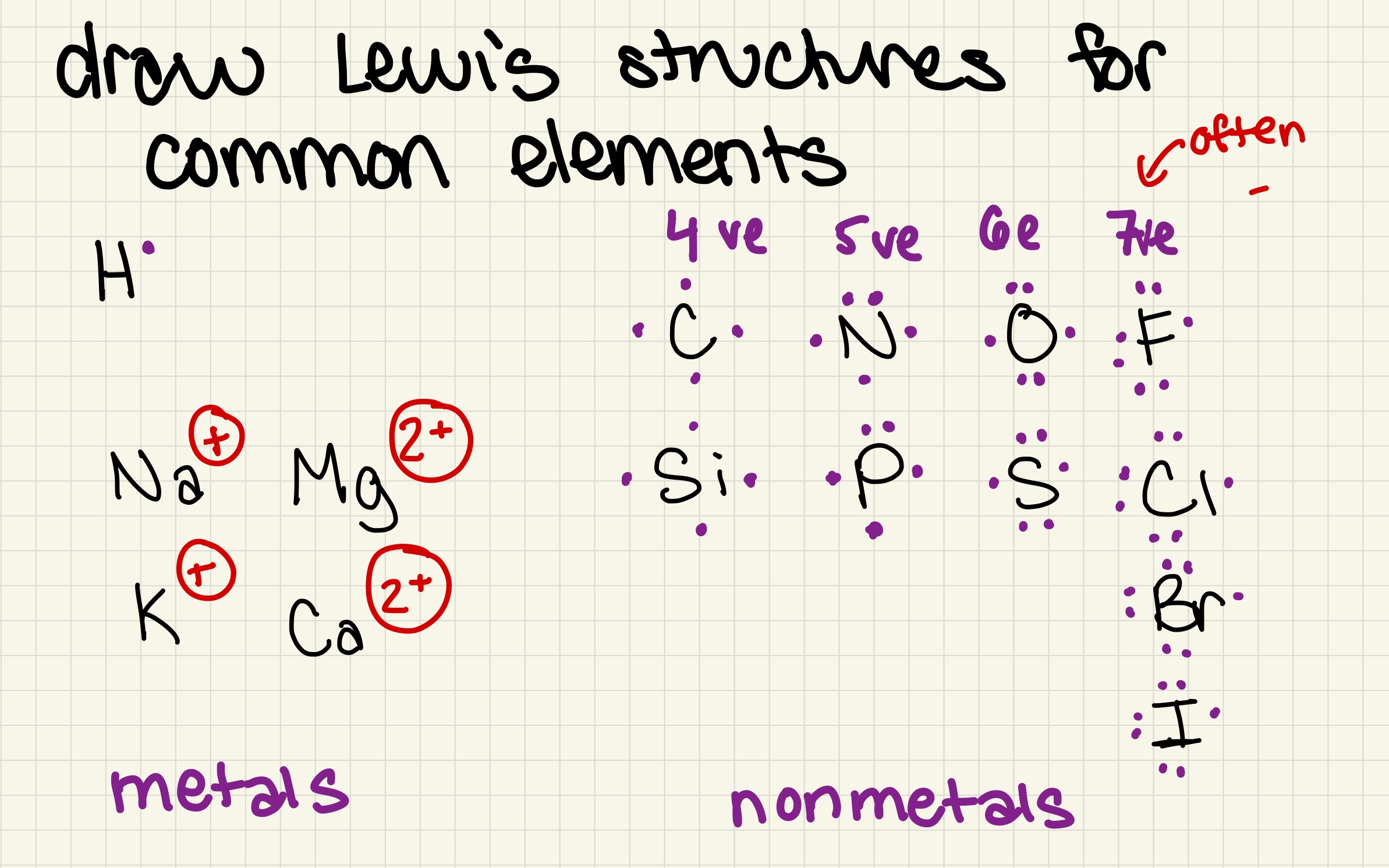
Common #’s of bonds & charges
Electronegativity & polarity
Implied C’s, H’s, & lone pairs

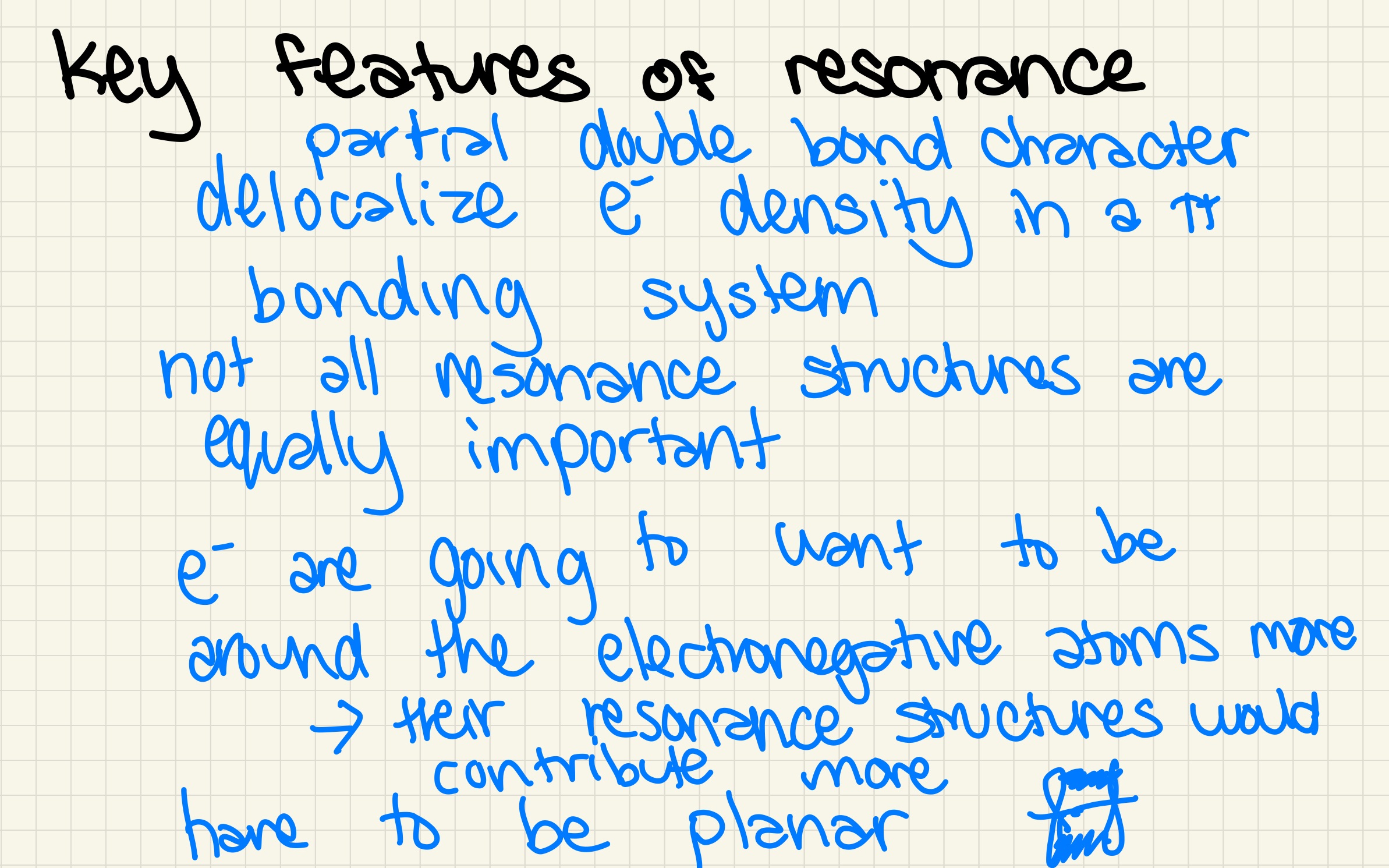
Resonance structures


Functional groups
Stereochemistry
Nucleophiles, electrophiles, & trends in nucleophilicity

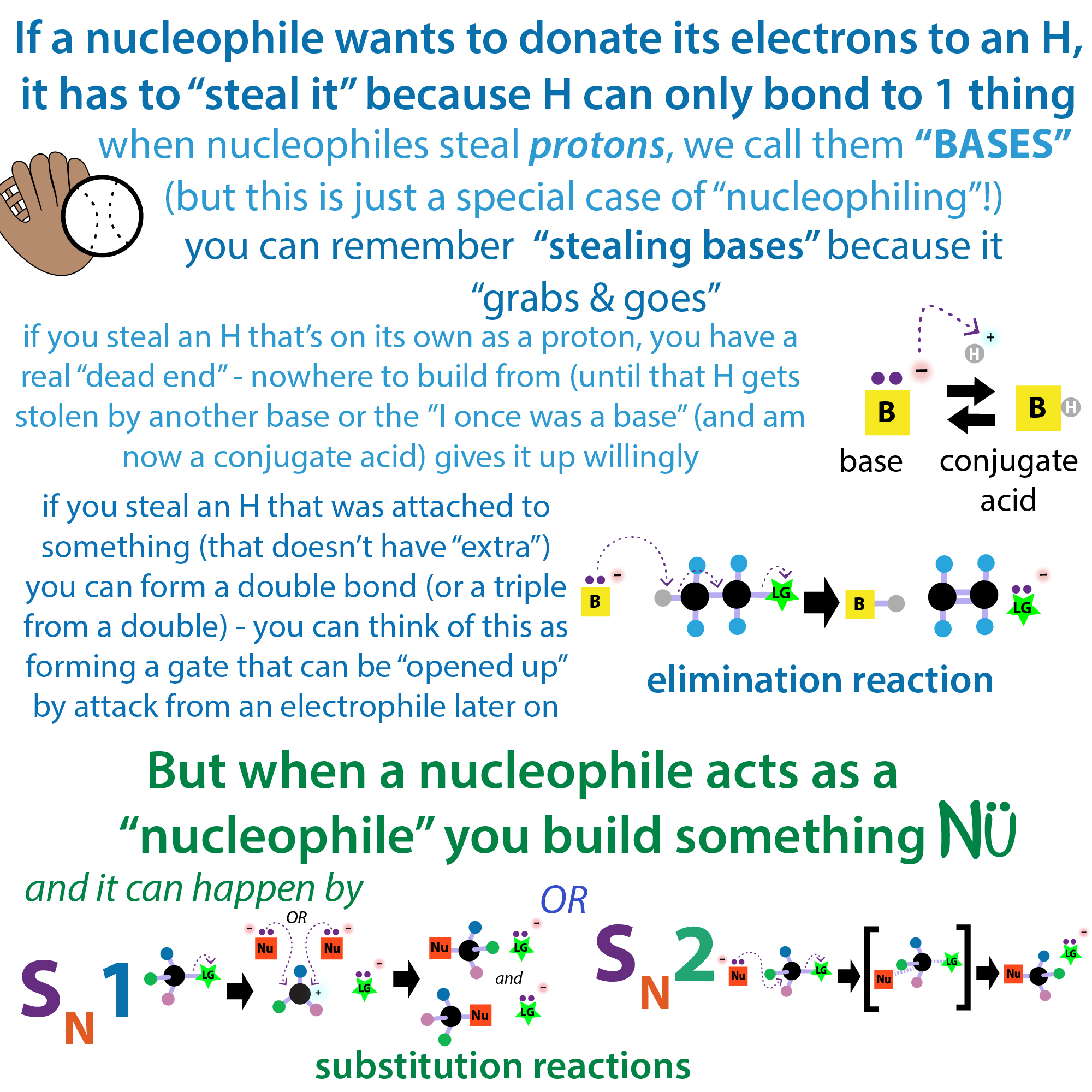
Arrow pushing mechanisms for simple substitution & elimination reactions
Redox
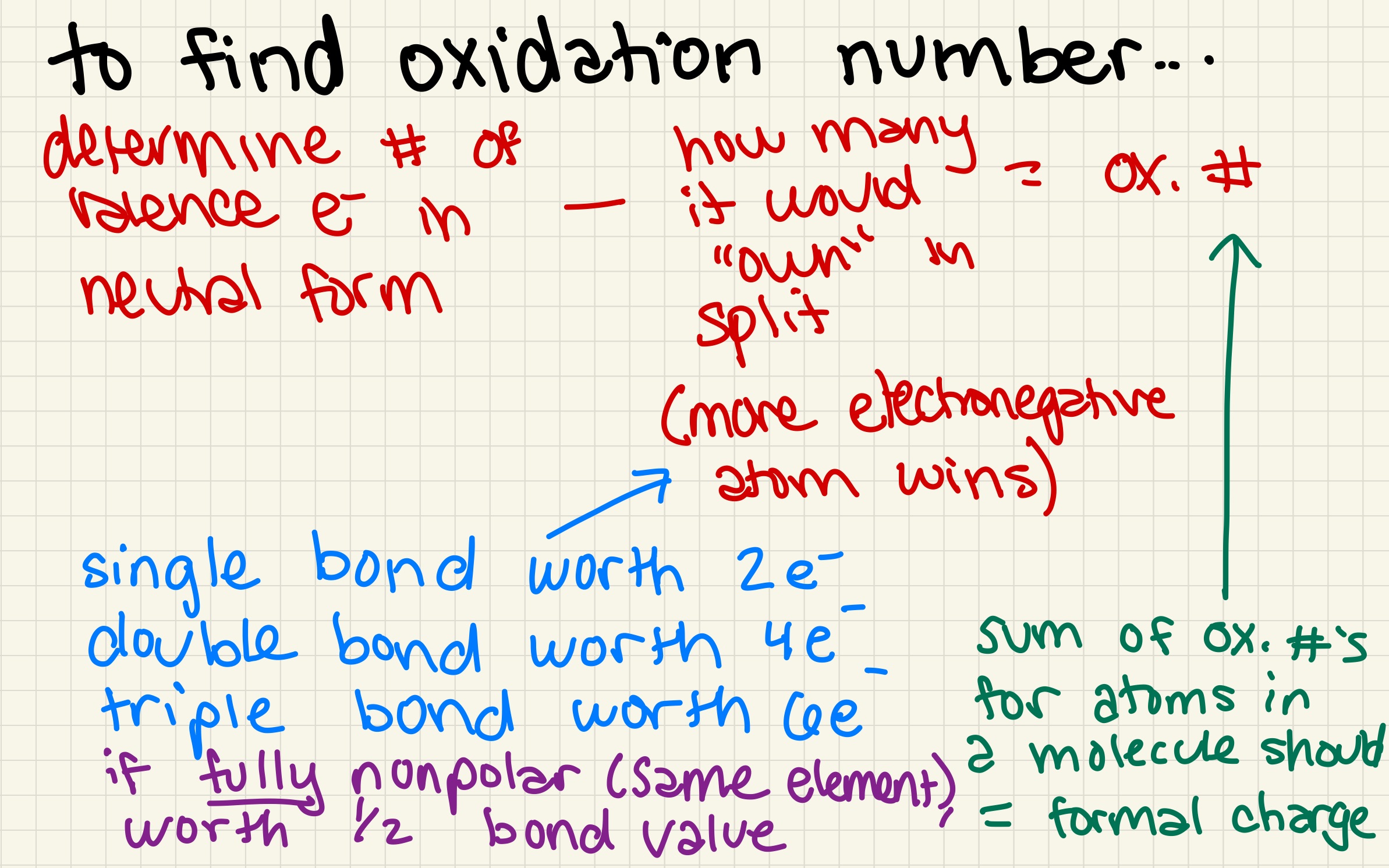
To find oxidation number of an atom:
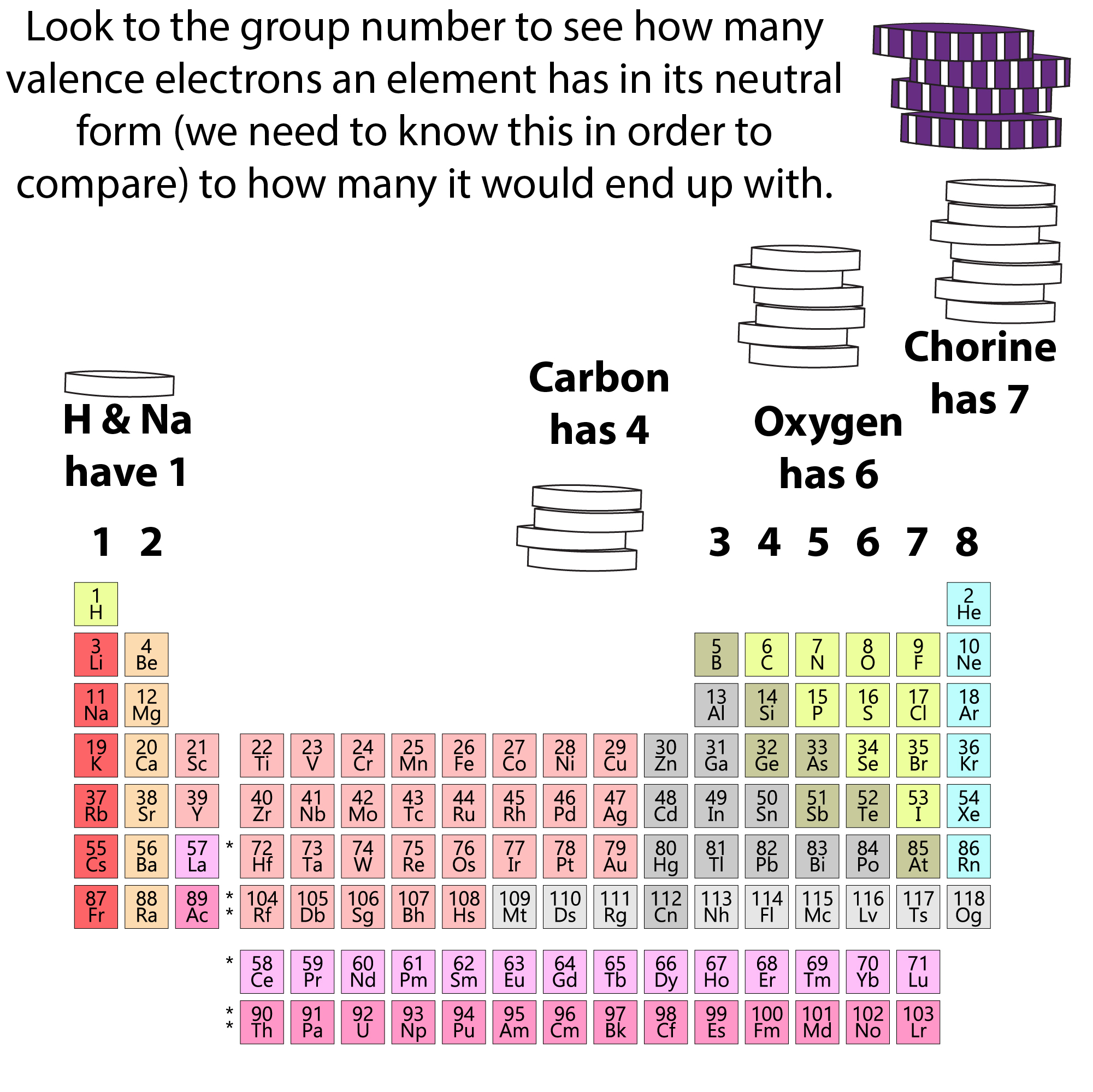
- Determine the # of valence electrons in the neutral form of an atom (look to its group # on the periodic table)
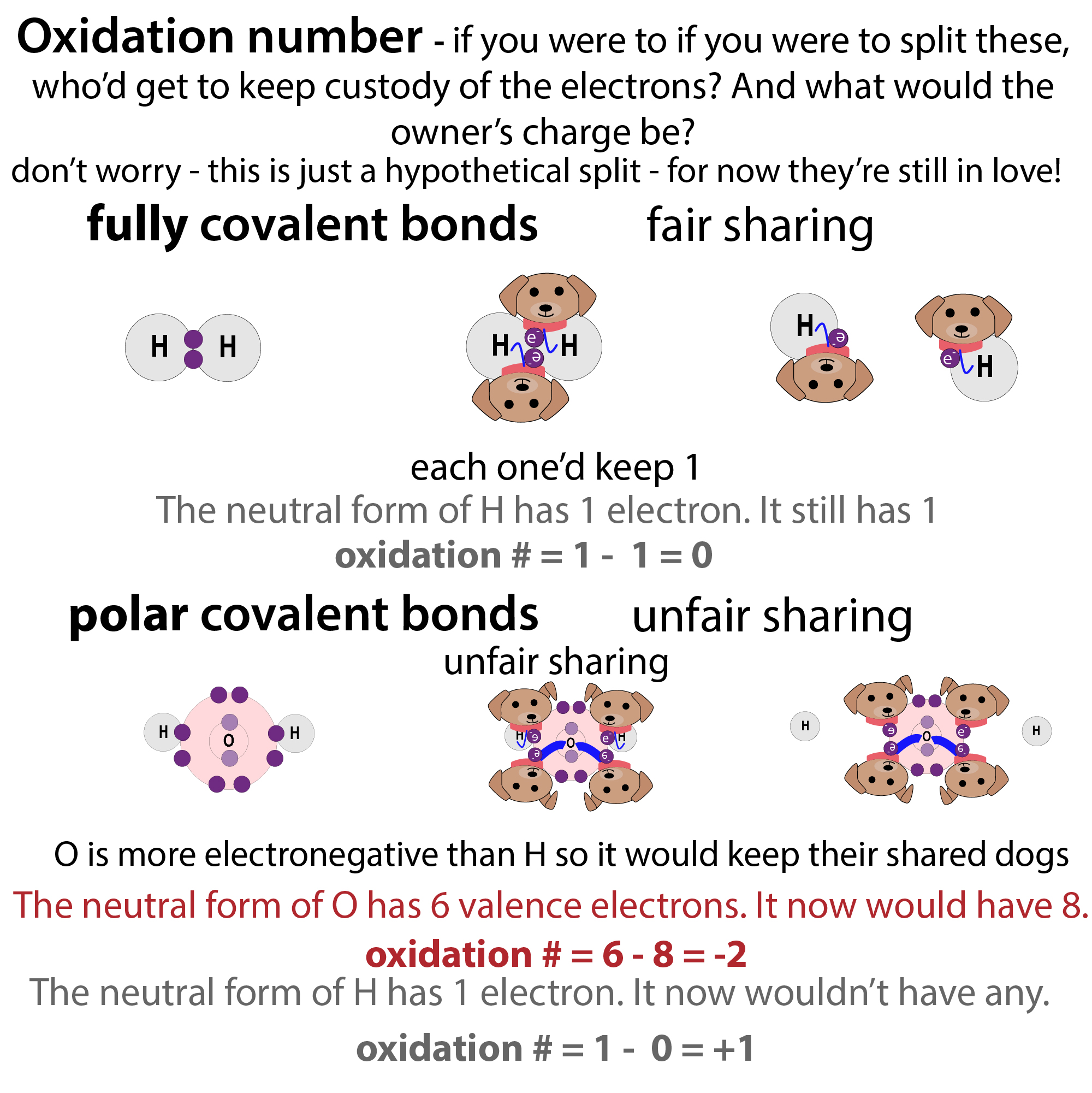
- For each bond the atom forms, determine how many electrons it would “win” (get to keep) if the bond were to split (in other words, if it were an ionic bond)
- If fully nonpolar (between atoms of same element): each gets 1 per bond
- If polar covalent (C-H is included):
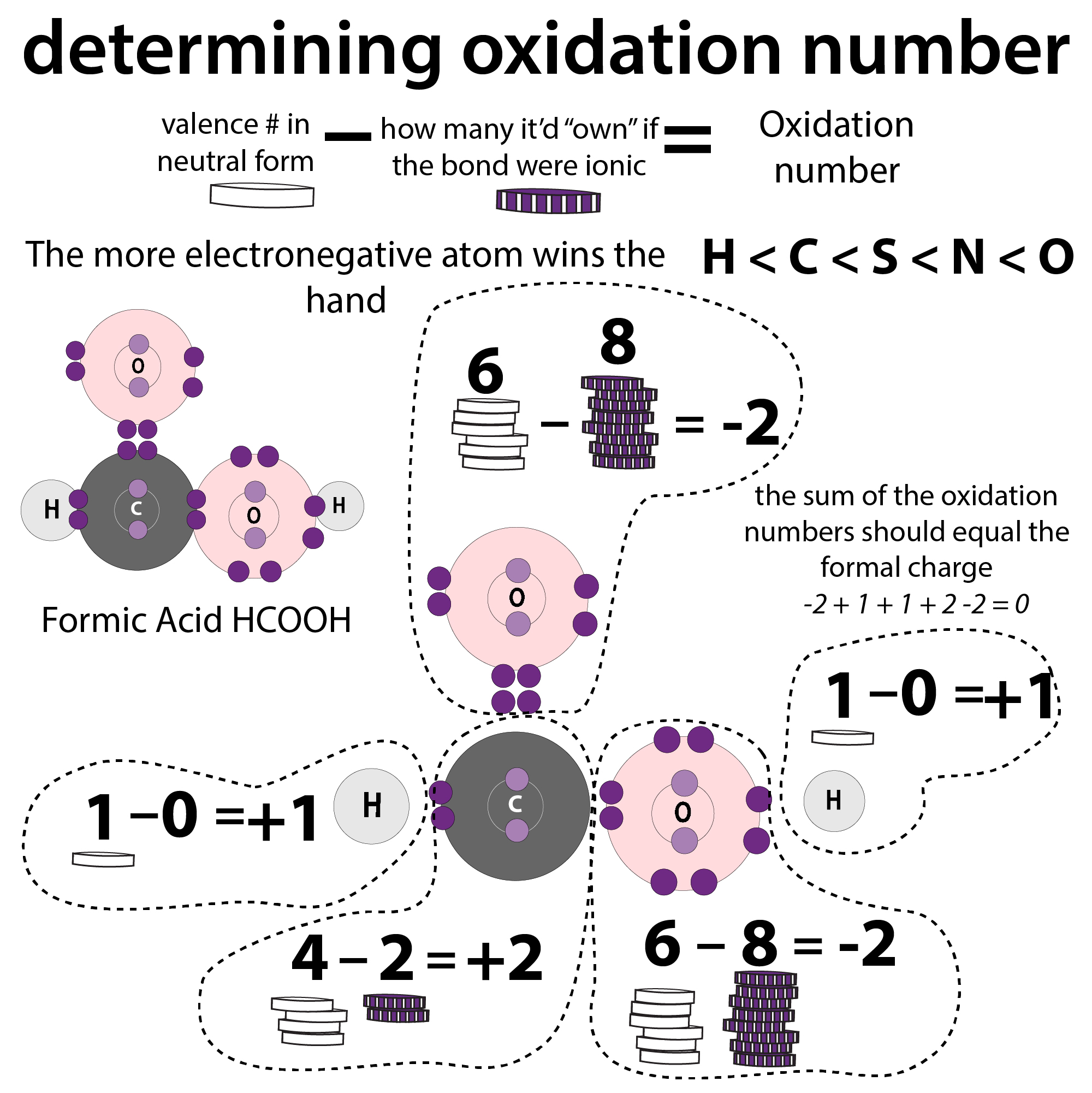
- The more electronegative atom wins: H ﹤ C ﹤ S ﹤ N ﹤O
- A single bond is “worth” 2 electrons, a double is “worth” 3, and a triple 6, since each bond represents the sharing of a pair of electrons
- Subtract the number it would own in the theoretical split from the number of valence electrons in the neutral form
Check your work – the sum of all the oxidation numbers for a molecule should equal the formal charge of the molecule