
Page navigation: Videos; Graphics; Key points; Related posts; Recommended reading
Videos
Lipid anabolism (synthesis)
Lipid catabolism (breakdown)
Integrated lipid metabolism review
Key things to know
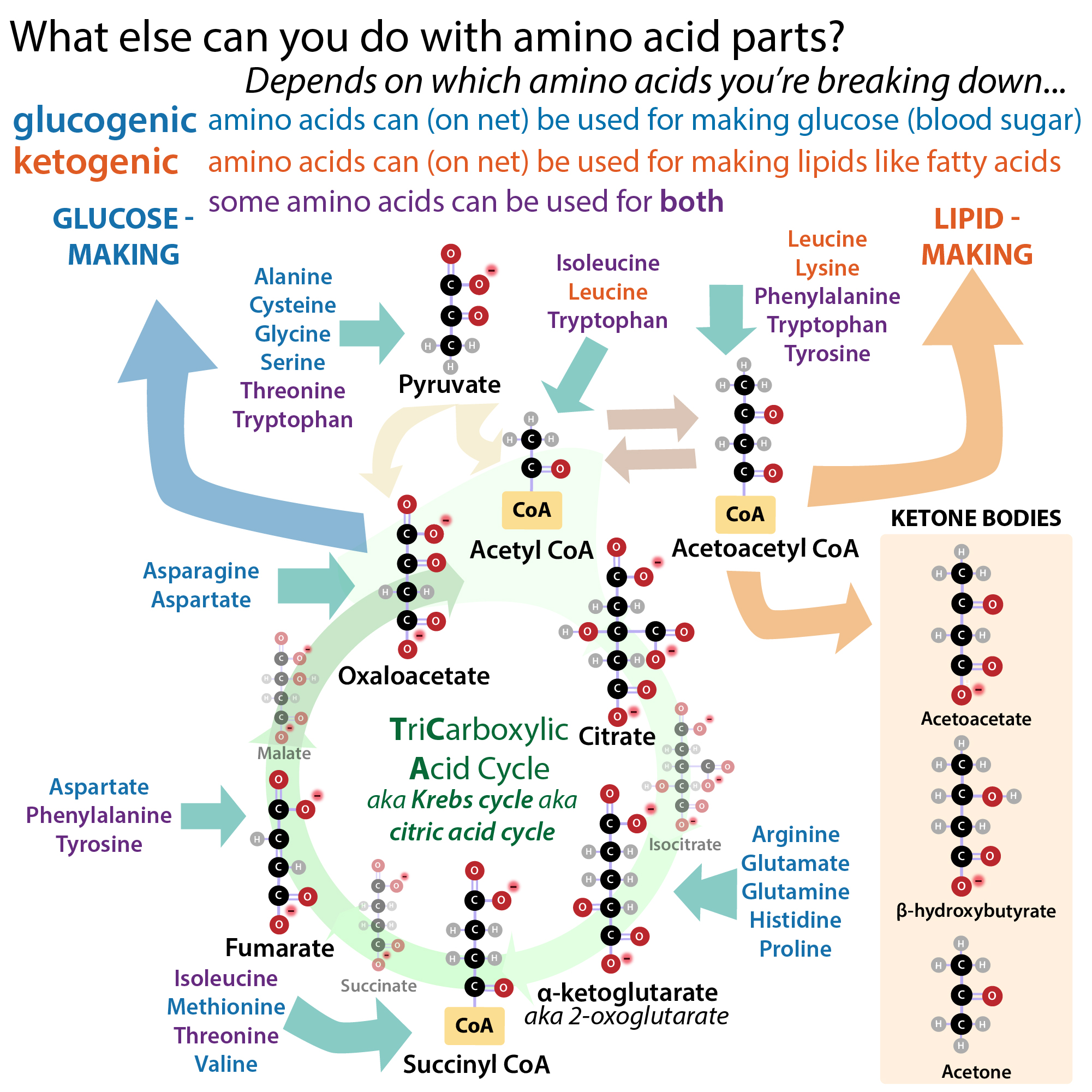
Glucogenic vs. ketogenic aa’s
https://youtu.be/Mq0dSpT2Alc
Lipid catabolism (breakdown)
Ketone body rhyme
ATP accounting problems
Worked problems: https://youtu.be/opKSv9-DiAE
Graphics


Key points about lipid metabolism:
- All tissues need fatty acids for various purposes: use as fuel, incorporation into membranes, production of steroids, etc. But “only” liver cells (hepatocytes) & fat cells (adipocytes) can make them
- The liver & adipocytes make fatty acids, store them (as triacylglycerides (TAGs)), & ship them out to other tissues in need.
- These fatty acids have to be “mobilized” from triacylglycerides (TAG) stores, as described below
- Fatty acids are made from acetyl-CoA (2 carbon (2C)) and broken down to acetyl-CoA (and one propionyl-CoA (3C) per odd-chain fatty acid)
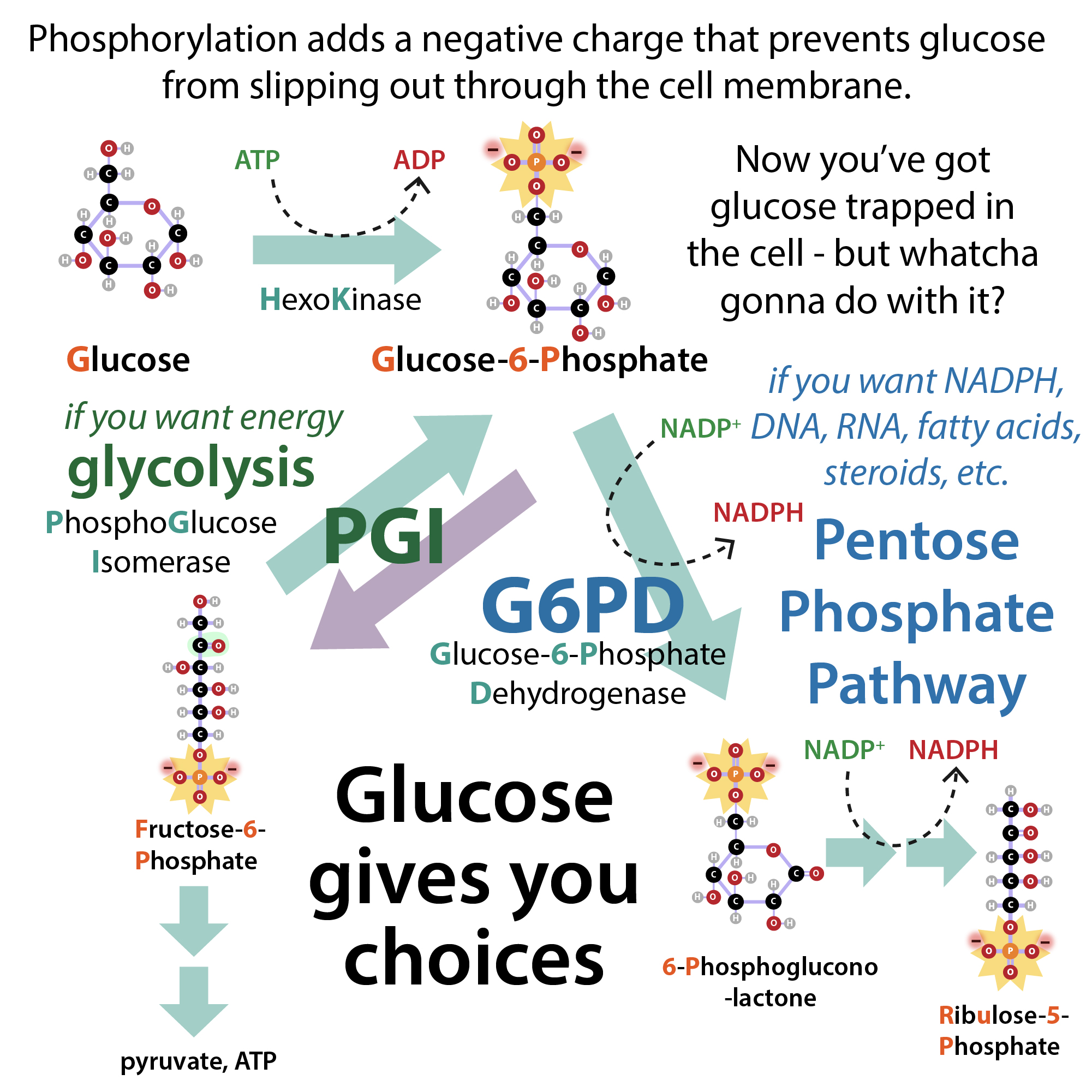
- Fatty acid synthesis occurs (mostly*) in the cytoplasm of liver & fat cells and is a key user of NADPH (which can be made through the pentose phosphate pathway (PPP)
- *some in mitochondria
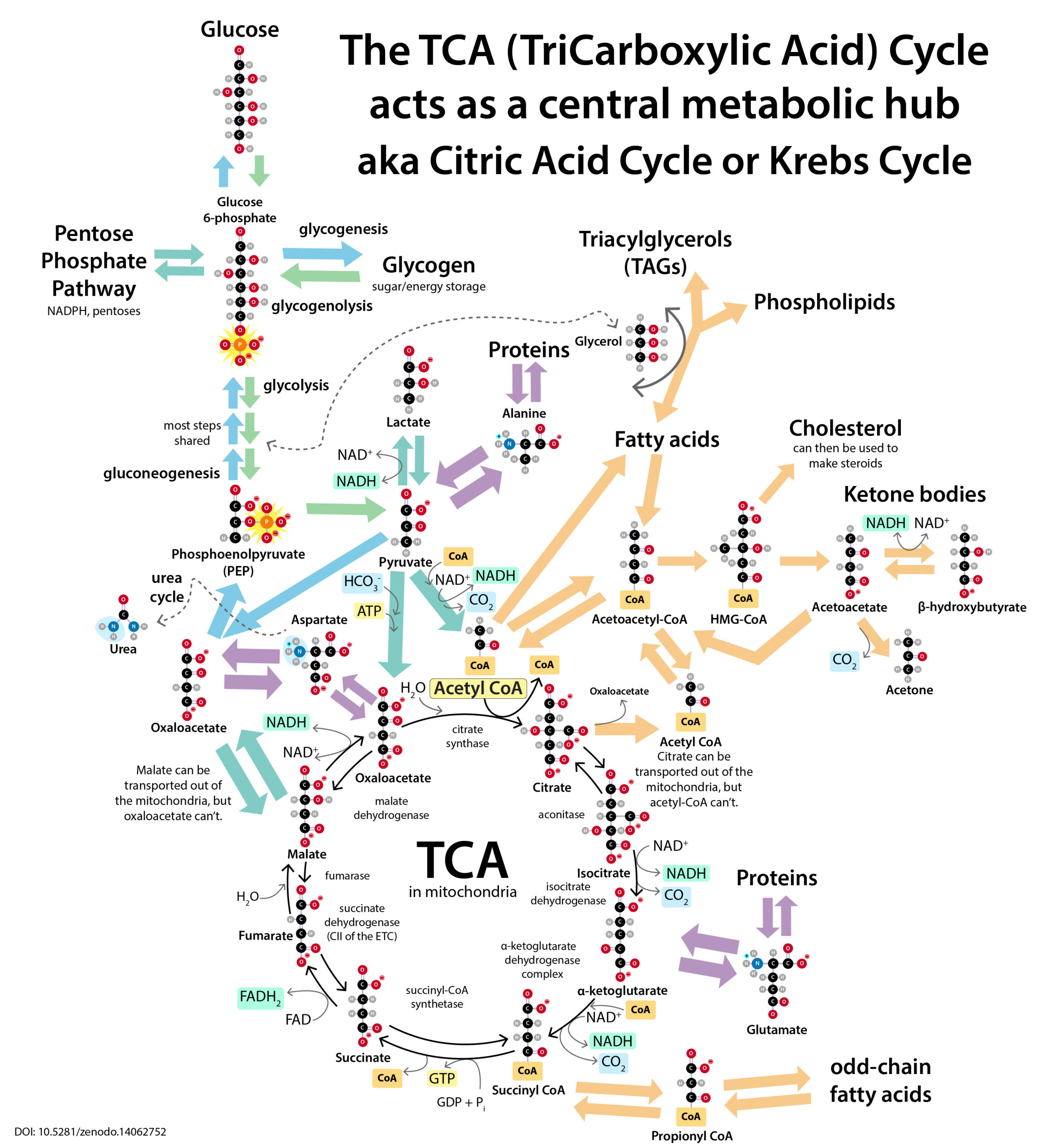
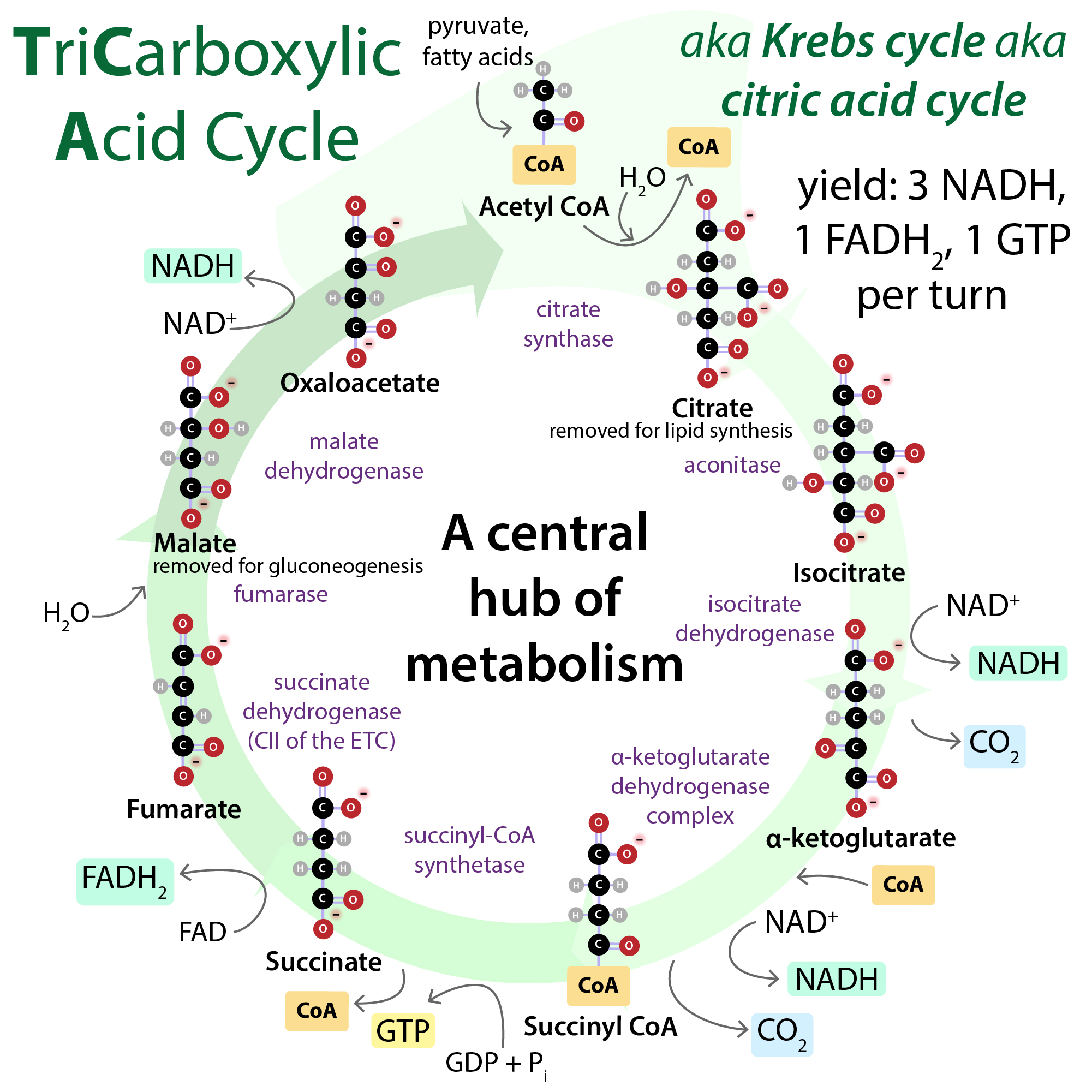
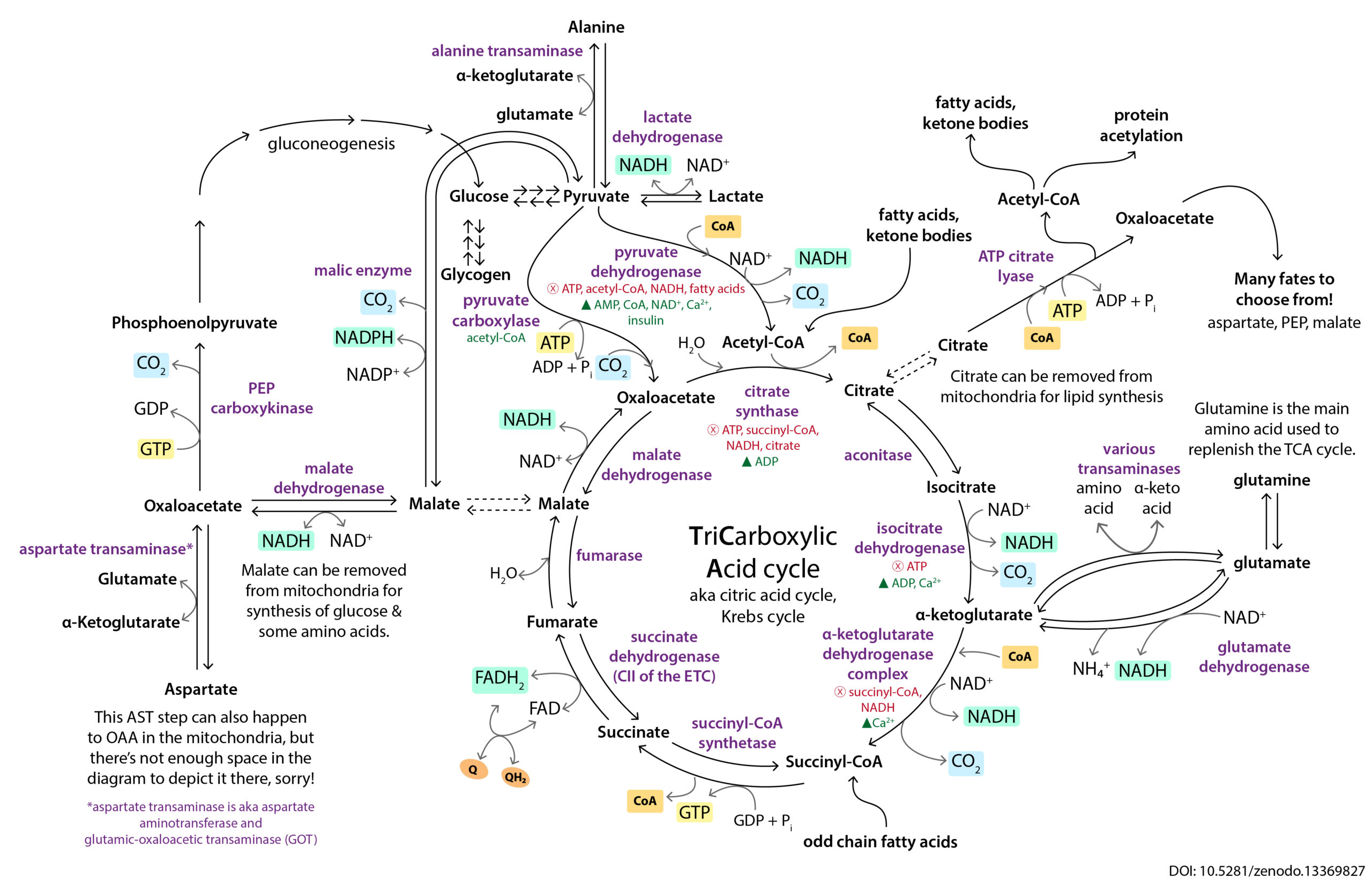
- Because acetyl-CoA can’t get through the mitochondrial membranes, citrate, not acetyl-CoA, is removed from the mitochondria to make fats – it is subsequently broken down back to acetyl-CoA by ATP-citrate lyase
- Fatty acid breakdown occurs in most tissues & takes place (mostly*) in the mitochondria in a process called β-oxidation
- *very long ones (>20C) are initially via a hydrogen-peroxide mediated process in peroxisomes
- Synthesis & breakdown are reciprocally regulated
- Key regulatory points are:
- Synthesis: acetyl-CoA carboxylase (ACC), which activates acetyl-CoA for incorporation
- Breakdown: carnitine-acyltransferase 1 (CAT-1/CPT-1), which allows fatty acids into the mitochondria for breakdown
- Might see written as CPT-1 for “carnitine palmitoyltransferase”
- Key regulatory points are:
Fat mobilization
- Cells take up fatty acids, not TAGs, for use as fuel, so fatty acids need to be cleaved off of the glycerol backbone (by lipases) for uptake & subsequent use
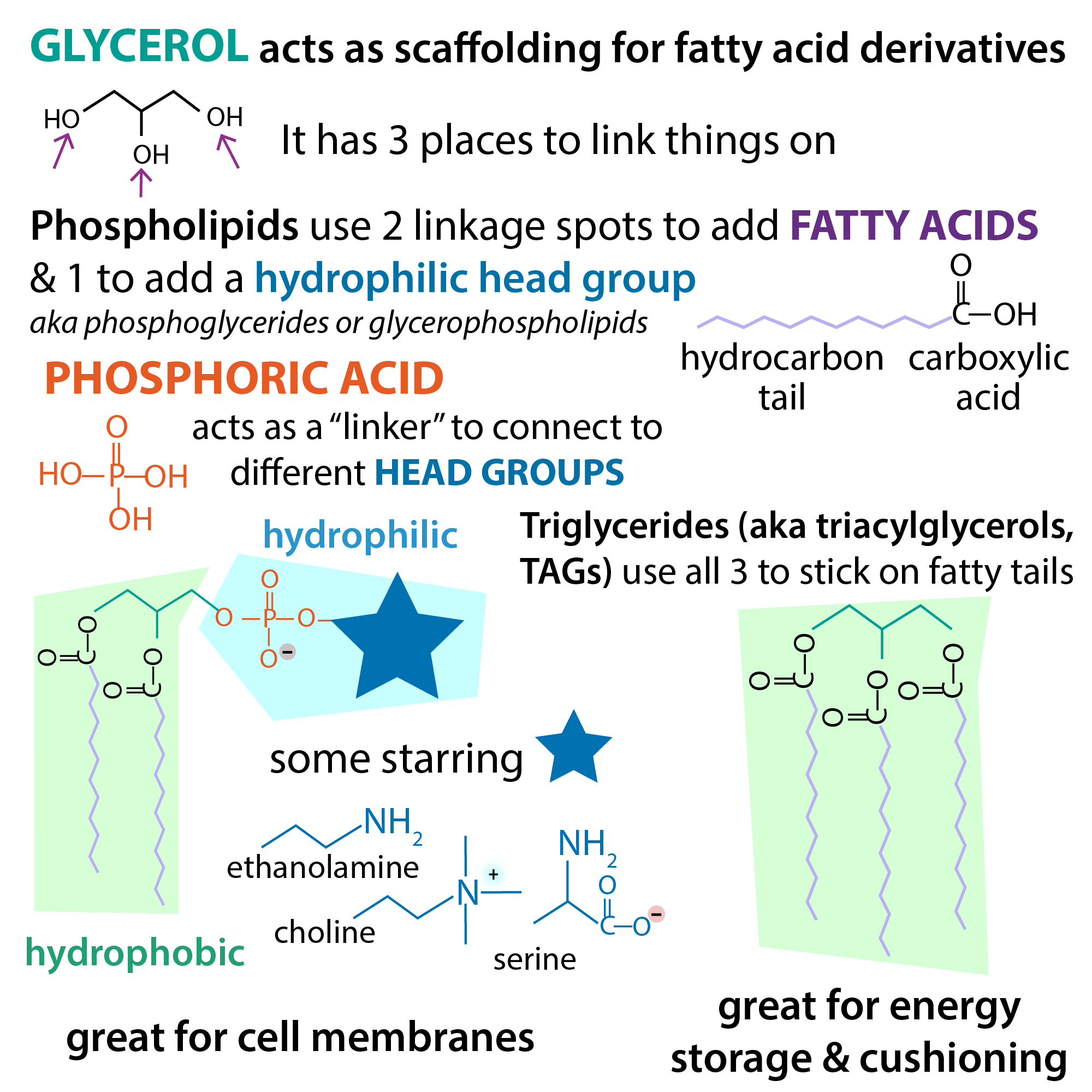
- Fatty acids are delivered from liver cells to tissues packaged as TAGs, bundled up with phospholipids, cholesterol, & other hydrophobic stuff in the interior of lipid-coated “bubbles” called lipoproteins
- The fatty acids are freed from TAGs for uptake by other tissues through the action of lipoprotein lipase on the surface of blood vessels
- Fatty acids from adipocytes are delivered as fatty acids, not in lipoproteins
- Since fatty acids are hydrophobic, these travel through the bloodstream by piggybacking on proteins like serum albumin that have hydrophobic binding patches
- Fatty acids are delivered from liver cells to tissues packaged as TAGs, bundled up with phospholipids, cholesterol, & other hydrophobic stuff in the interior of lipid-coated “bubbles” called lipoproteins
- Hormone-sensitive lipase, activated by adrenaline & glucagon (hormone signaling low blood sugar), breaks fatty acids off of TAGs inside of fat & liver cells (as opposed to lipoprotein lipase, which acts extracellularly to get fatty acids into cells)
- This helps “mobilize” fuel stores for breakdown for energy inside the cell or shipping out to other cells
Fatty acid synthesis
- Fatty acid synthesis occurs (mostly*) in the cytoplasm of liver & fat cells and is a key user of NADPH (which can be made through the pentose phosphate pathway (PPP)
- *some in mitochondria
- Because acetyl-CoA can’t get through the mitochondrial membranes, citrate, not acetyl-CoA, is removed from the mitochondria to make fats – it is subsequently broken down back to acetyl-CoA by ATP-citrate lyase
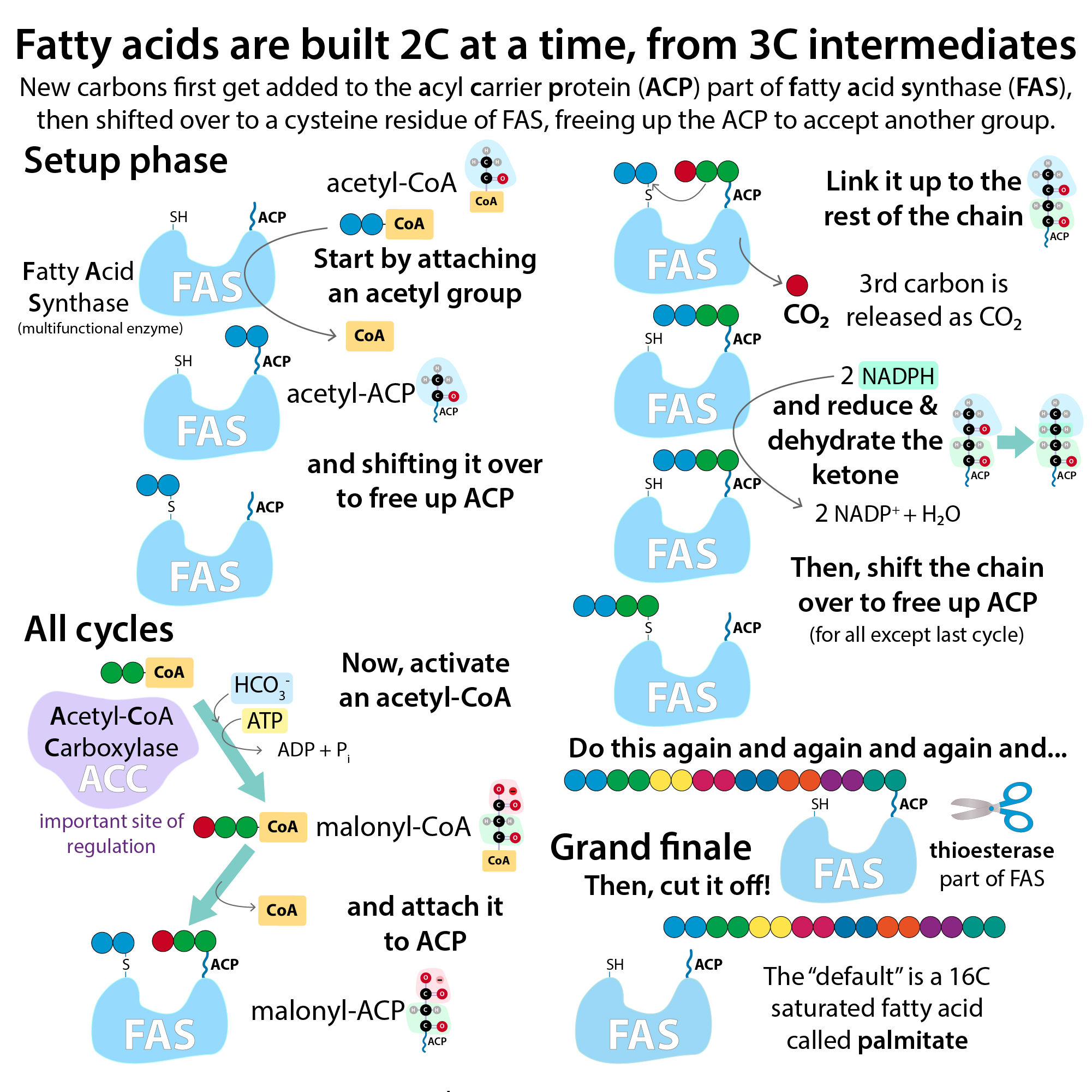
- Fatty acids are built by a multifunctional protein called fatty acid synthase (FAS), 2C at a time, from 3C intermediates (malonyl-CoA)
- See diagram for details
- Malonyl-CoA is made by carboxylation (from bicarb) of acetyl-CoA by acetyl-CoA carboxylase (ACC)
- this step activates acetyl-CoA by making a β-keto acid (energetically-favorable to subsequently decarboxylate once linked on to the chain)
- the carbon that is added
- key site of regulation
- activated by citrate (feed-forward stimulation) & insulin (via activation of a phosphatase)
- inhibited by palmitoyl-CoA (feedback inhibition) & phosphorylation via PKA (stimulated by glucagon & epinephrine) or AMPK (stimulated by high AMP levels)
- malonyl-CoA itself (a signal of lipid synthesis) is an inhibitor of CAT-1/CPT-1, the transporter that lets fatty acids into mitochondria for breakdown
- this step activates acetyl-CoA by making a β-keto acid (energetically-favorable to subsequently decarboxylate once linked on to the chain)
- It costs 1 ATP & 2 NADPH per 2C added
- The “default” fatty acid is a 16C saturated fatty acid, palmitate, which gets cleaved off of FAS by the thioesterase subunit of FAS
- Longer fatty acids & unsaturated fatty acids can be made via elongation & desaturation in the ER
Fatty acid catabolism
- Occurs in the mitochondria via β-oxidation
- Key regulatory point is carnitine-acyl transferase 1 (CPT-1/CAT-1), which lets fatty acids into mitochondria for breakdown
- inhibited by malonyl-CoA, which prevents breakdown of fatty acids as you’re making them
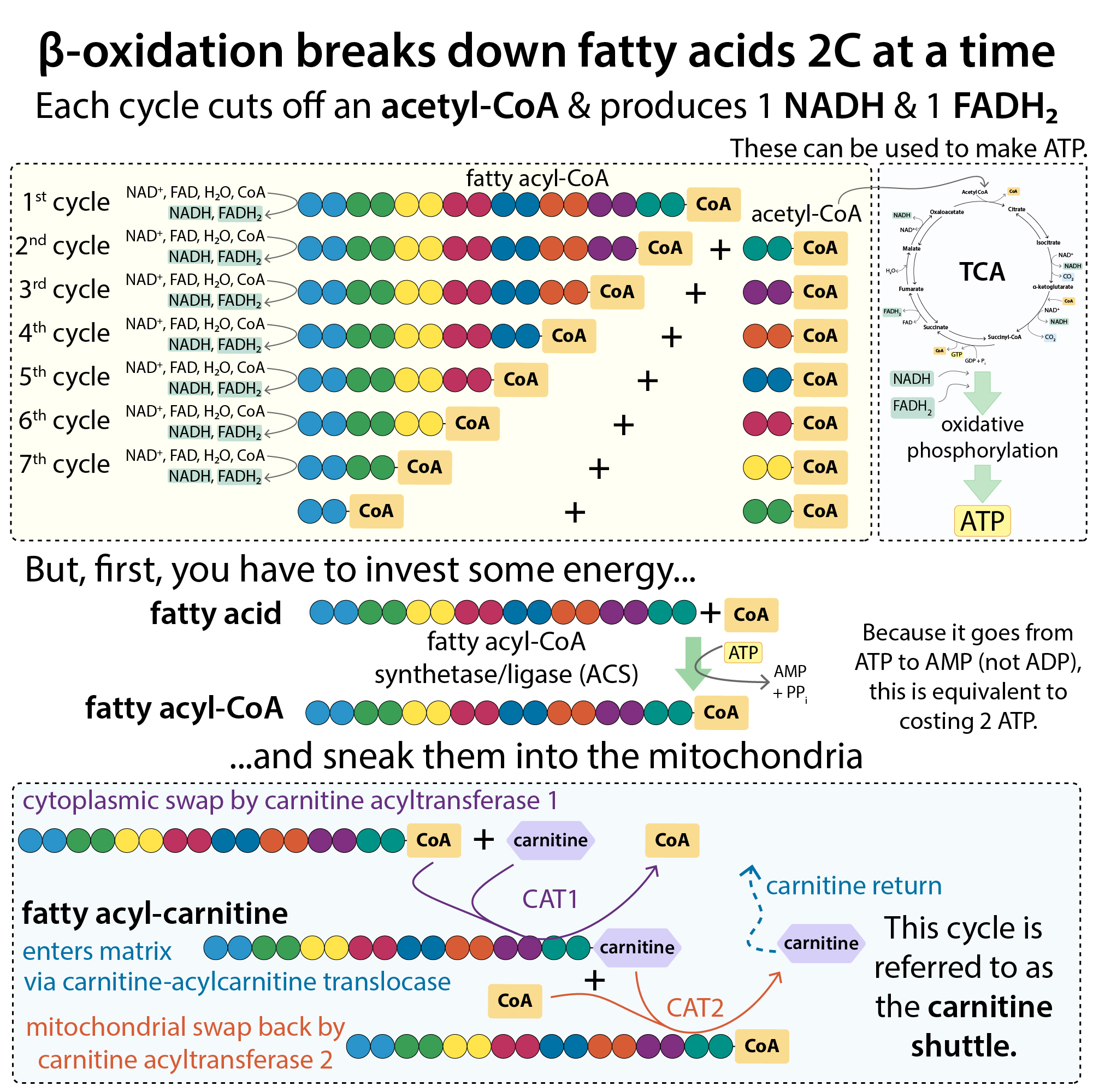
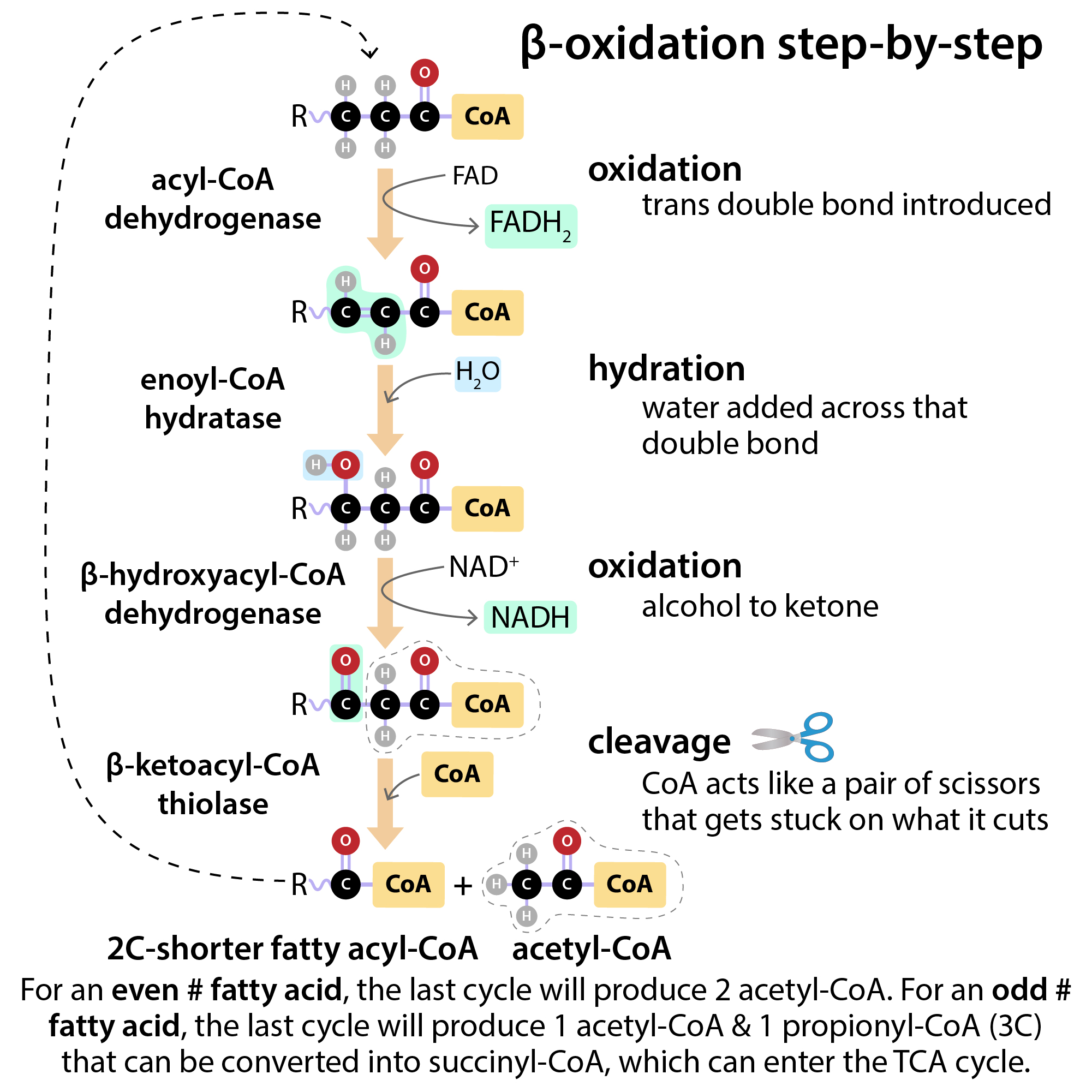
- β-oxidation breaks down fatty acids 2C at a time. Each cycle cuts off an acetyl-CoA & produces 1 NADH & 1 FADH. These can be used to make ATP.
- You get 1 NADH & 1 FADH2 per 2C you break off (as acetyl-CoA) – can be used for oxphos to make ATP
- Odd-chain fatty acids are left with a 3C propionyl-CoA which gets converted to succinyl-CoA, which can be used in the TCA
- you can make glucose sustainably from odd-chain fatty acids (they’re glucogenic), but not even-chain ones (which are only ketogenic)
- see diagrams for details
Before you can do β-oxidation, you have to invest some energy, and then you have to sneak them into the mitochondria
Activation: Fatty acyl-CoA synthetase/ligase (ACS) activates fatty acids for breakdown by attaching a CoA.
- Because it goes from ATP to AMP (not ADP), this is equivalent to costing 2 ATP.
Carnitine shuttle:
- The fatty acid, still in the cytoplasm, is then handed from CoA to carnitine by carnitine acyltransferase 1 (CAT-1/CPT-1)
- The fatty acid (now attached to carnitine) is then transported into the mitochondrial matrix by carnitine-acylcarnitine translocase (which also brings a carnitine back to the cytoplasm)
- The hand-off is reversed in the mitochondria by CAT-2
- The fatty acyl-CoA can then be broken down by β-oxidation.
Ketone bodies
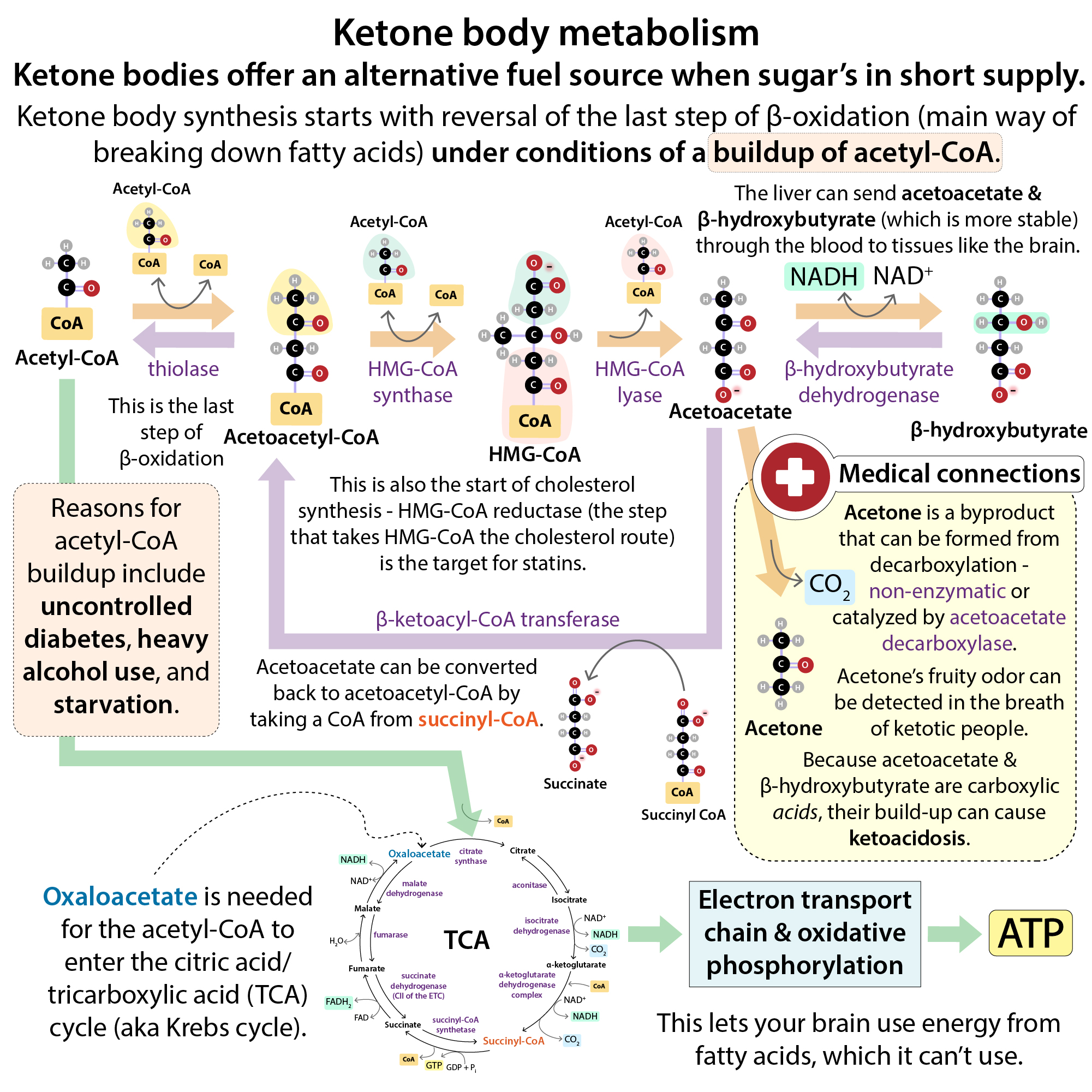
- When Co-A builds up, the last step reverses itself, followed by a couple other enzymatic steps, resulting in the formation of ketone bodies (acetoacetate, β-hydroxybutyrate, acetone) (see diagrams)
- This can happen in the case of diabetes, where there’s not enough oxaloacetate to keep the TCA running because glucose can’t get taken in & used efficiently
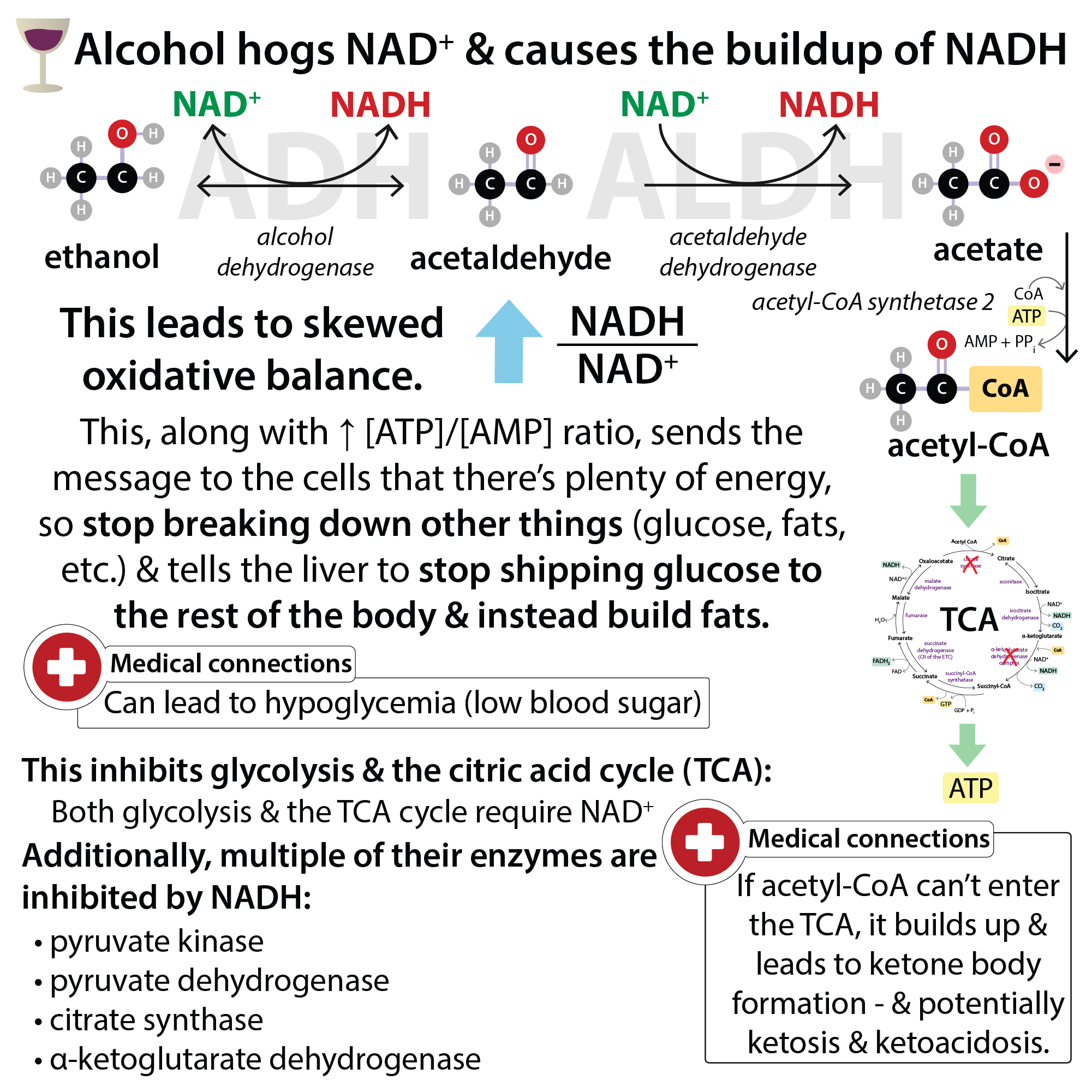
- This can happen in the case of ethanol intoxication because NADH builds up from ethanol oxidation and inhibits the TCA
- Ketone bodies, as carboxylic acids, can acidify the bloodstream – ketoacidosis
- Ketone bodies aren’t all bad though – since they’re soluble, they can provide energy to tissues like the brain (which can’t make use of fatty acids for energy thanks to the blood brain barrier, etc.)
Related posts:
- Amphiphiles: soaps, detergents, phospholipids, & more
- How alcohol affects metabolism
- Leucine, ketogenic amino acids
- More metabolism content: Let’s talk metabolism
Recommended reading:
- For more about lipid digestion & mobilization: Jakubowski & Flatt, 17.1: Digestion, Mobilization, and Transport of Fats https://bio.libretexts.org/Bookshelves/Biochemistry/Fundamentals_of_Biochemistry_(Jakubowski_and_Flatt)/02%3A_Unit_II-_Bioenergetics_and_Metabolism/17%3A_Fatty_Acid_Catabolism/17.01%3A_Digestion_Mobilization_and_Transport_of_Fats
- Chandel N. S. (2021). Lipid Metabolism. Cold Spring Harbor perspectives in biology, 13(9), a040576. https://doi.org/10.1101/cshperspect.a040576