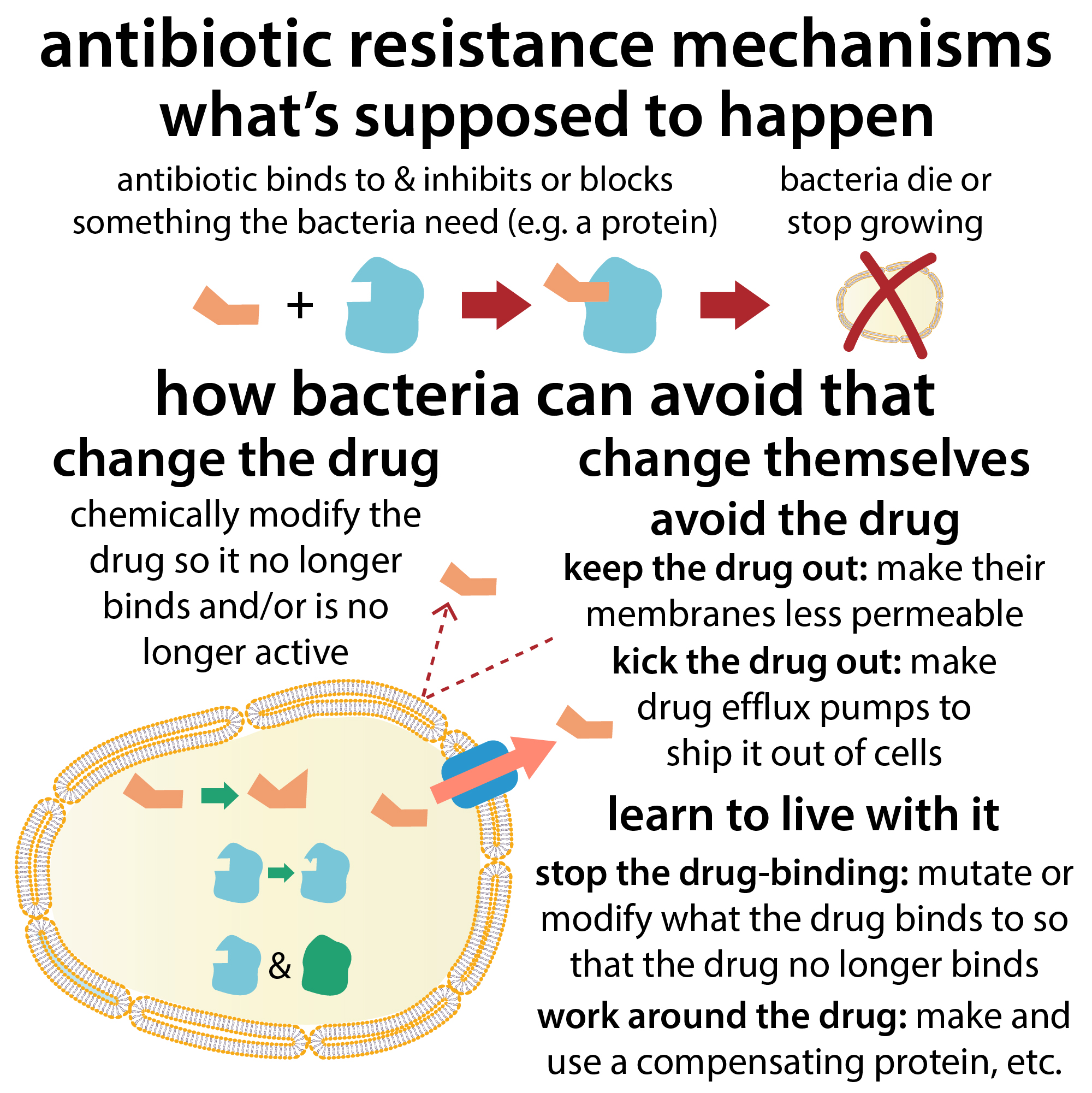
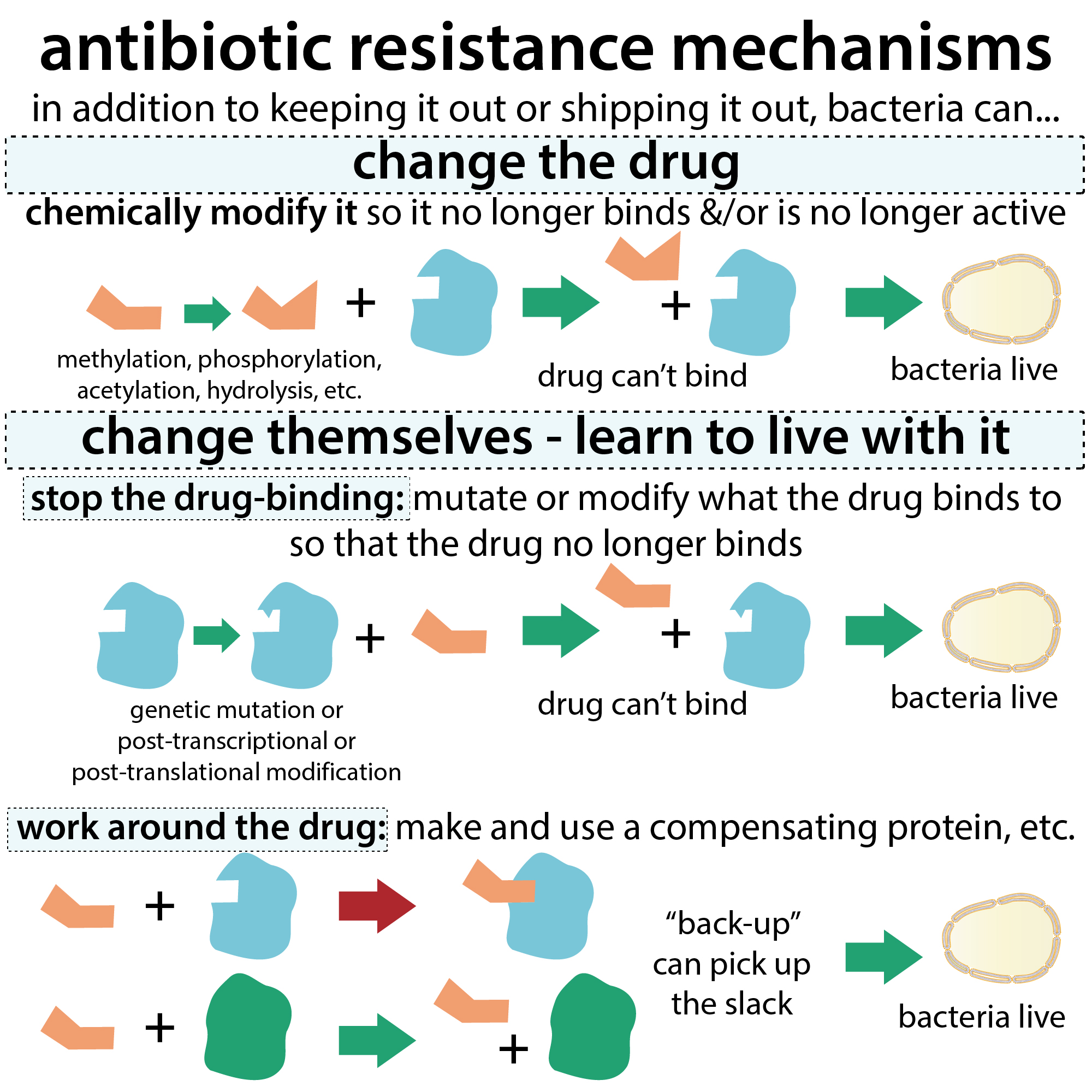
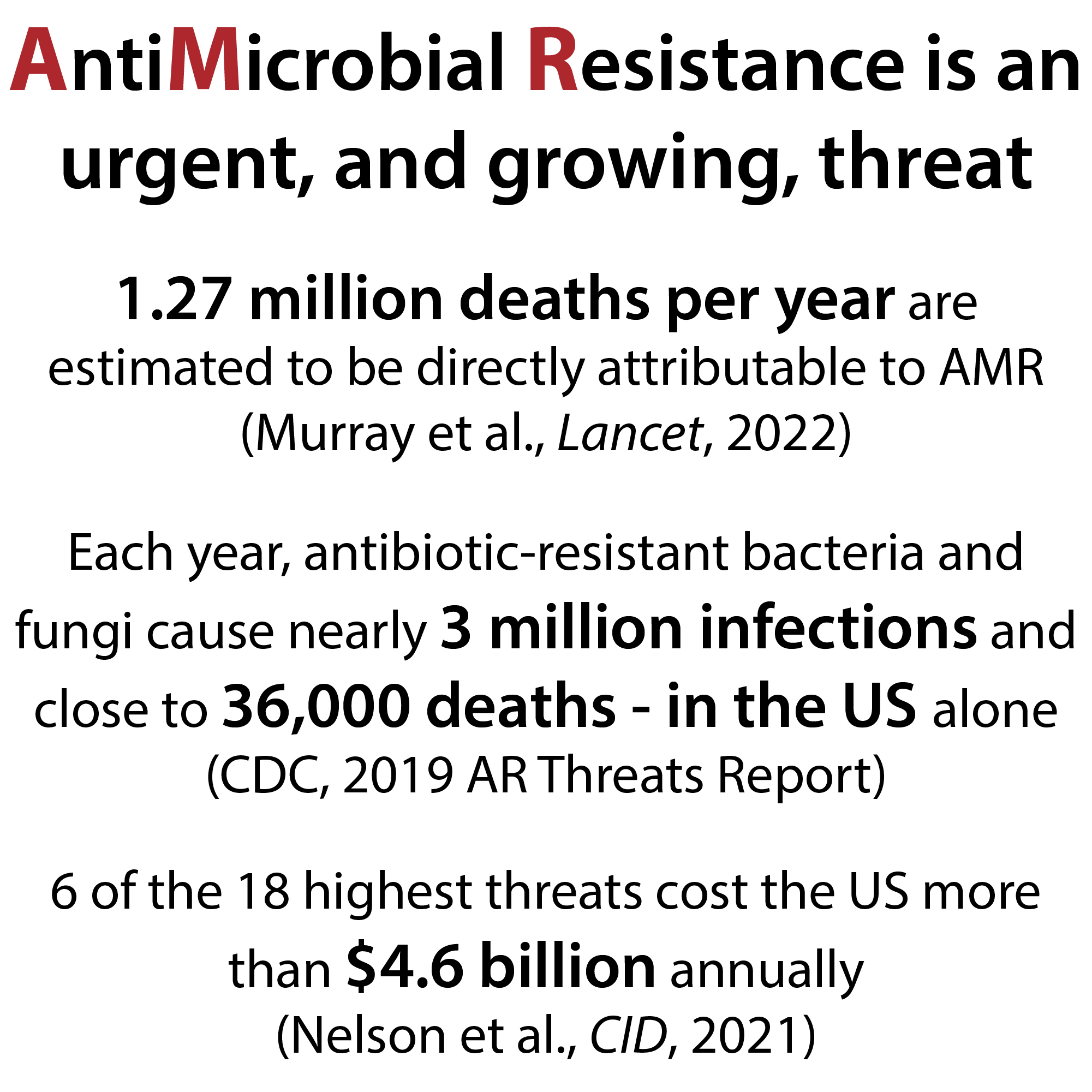
Taking a page out of another cookbook is a quick way for bacteria to acquire resistance to antibiotics – through horizontal (aka lateral) gene transfer they can acquire “pre-evolved” protective measures from other bacteria rather than having to try to build up mutations by random pointwise trial and error. The 3 main ways they can do this: conjugation, transformation, and transduction. So let’s get cooking with the explanation!
A genome is the blueprint or sort of cookbook for making an organism, where the “recipes” are genes with the instructions for making various proteins and functional RNAs. There are a couple of ways to acquire recipes. The first (analogous to vertical gene transfer) is to just inherit a copy of a whole cookbook that contains that recipe. And the second (analogous to horizontal, aka lateral, gene transfer) is to take a recipe out of another cookbook and stick it into yours.
This makes it a lot easier to acquire the ability to make something. You see, evolution can only work with what it has. Mutations can alter gene sequences and thus alter the proteins those genes code for, but they can’t just all of a sudden allow bacteria to make some protein that’s nothing like what they already have.
Just like a pig can’t just randomly acquire the ability to fly, a bacteria isn’t just randomly going to start making a protein you want to study unless you stick the gene for it in there. When we stick DNA into bacteria we call it transformation & we can do it using chemicals or electricity to open temporary holes in the cells’ membrane.
more here: http://bit.ly/transformheatshock & https://youtu.be/3C6X2a7xWVw
Now, it’s not very likely that in nature a bacteria would randomly come across and take in the gene for that protein you’re interested. But bacteria do take in DNA naturally (which can be a healthcare nightmare because it allows bacteria to “share” genes that make them resistant to antibiotics that would kill them).
This taking-in of DNA from non-parent sources is called horizontal gene transfer. And it’s in contrast to how we humans and other animals typically acquire genetic information…
We rely on vertical gene transfer, which is from parent to offspring. Bacteria use this too, because it’s how they’re able to pass on any genetic information they acquire (no matter how they acquired it originally). In bacteria, the “parent” copies its DNA, then splits in 2 to form 2 “daughter cells” (one of which was the parent) that each have a copy. And by copy, I mean it. This DNA is the same since the bacteria reproduce asexually so all the DNA is coming from 1 parent and all that parent did was make an exact copy of its DNA to give to their offspring.
So vertical gene transfer is great for carrying on that “gene-line” but not very great for adaptation because there’s no source of “variety” – you’re stuck to making “small changes.”
This is where horizontal gene transfer (HGT) (aka lateral gene transfer) comes in. This type of DNA-sharing is “between colleagues” – or even between “enemies” – HGT involves the acquisition of DNA from anything other than the cell’s parent.
And this allows for “bigger changes” because the cells can acquire entirely new genes or different versions of similar genes that have already “bypassed” the tiny mutation by tiny mutation step and gone through natural selection’s “quality control” – mutations that “don’t work well” decrease a cell’s fitness so they’ll die off, so making a “better working” version of something can take a long time with lots of “trial and error.” But if you can get an already made 2.0 version…. And then, once a gene gets horizontally transferred, it can then get vertically transferred, so that bacteria can pass the new gene onto its offspring.
Horizontal gene transfer includes transformation, transduction, & conjugation. Let’s take them one by one…
Transformation involves the acquisition of DNA from the “outside environment” meaning that the DNA being taken isn’t coming directly from another organism – and we call cells that can do this competent. In the lab the DNA is coming from scientists dumping a bunch of carefully engineered DNA on it and the competence is artificial (we force them to become competent using chemicals or electricity to poke holes in them). But some cells are “naturally competent” to take in DNA, but through special receptors.
In nature, the DNA’s coming as fragments from dead, degraded bacteria. This DNA enters live bacterium – live bacterium “confuses it for its own” and swaps it out through homologous recombination (a process whereby similar DNA sequences are swapped out). Since it has to confuse it for its own, these sequences have to be fairly similar (usually similar bacterial strains). Although not all bacteria are naturally competent, some that are are even more sophisticated and some even kill noncompetent cells to get more DNA.
note: homologous recombination is involved in way more than just transformation-mediated gene transfer. It even comes into play in our own cells all the time. In addition to allowing genomes to integrate new genetic information from the outside, it also allows cells to repair damaged DNA based on an undamaged copy (this is called homology-directed repair). It also allows for the generation of genetic diversity even in organisms that only naturally carry out vertical gene transfer – a version of it allows pieces of each biological parent’s chromosomes to mix & match during meiosis (a phase of sexual reproduction), so that offspring inherit some of each of their grandparent’s genes.
Transduction
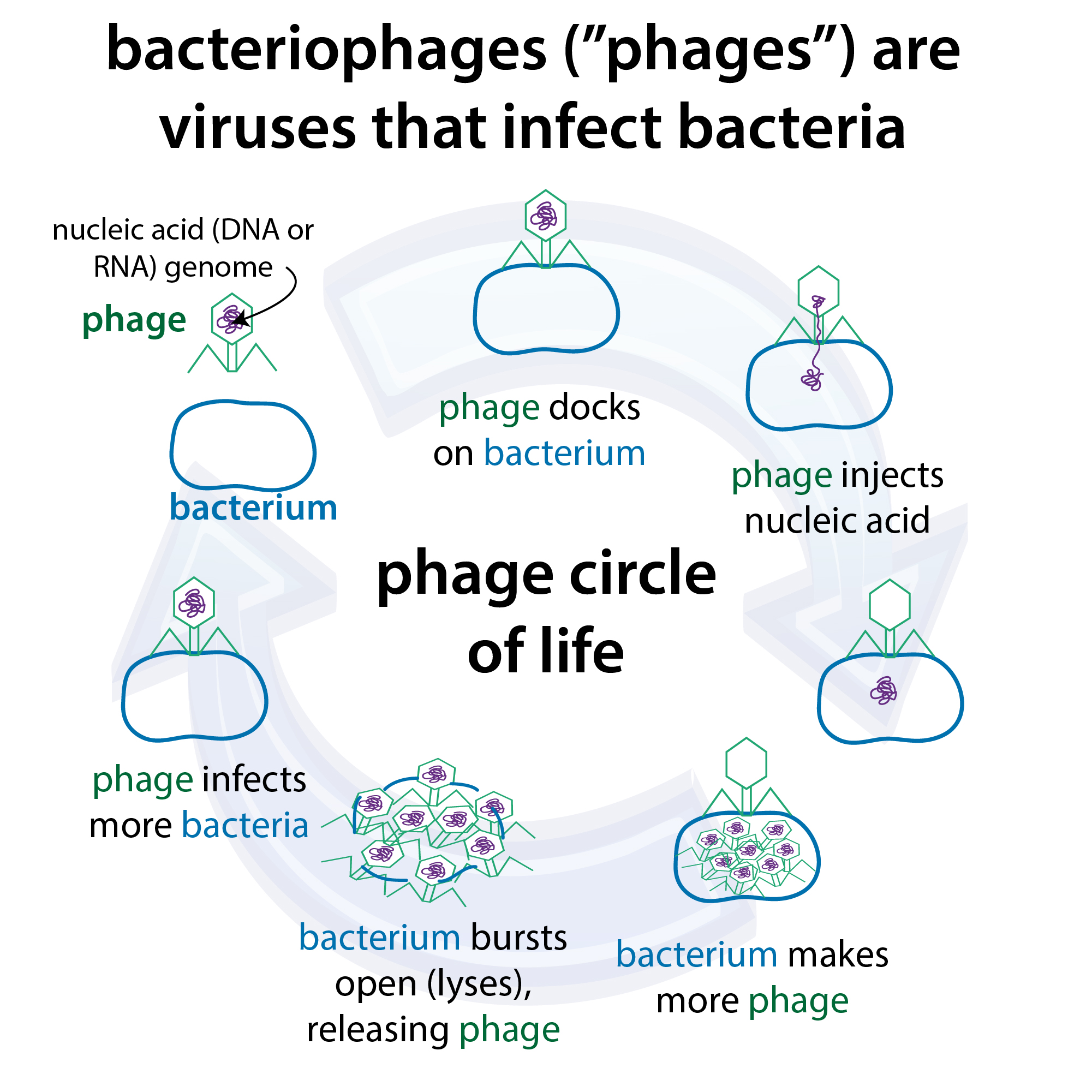
In transduction, DNA is transferred between bacteria by a bacteriophage (“phage”) (bacteria-infecting virus). Phages inject their genomes into bacteria and use that bacteria’s machinery to make more of their genome, as well as “packaging” to carry their genome to other cells. Normally a phage infects a bacteria, cuts up the bacteria’s DNA so it doesn’t try to get in the way, then uses the bacteria’s machinery to make a bunch of packaged copies of its DNA, then bursts the cell open so those packaged copies can go infect other bacteria.
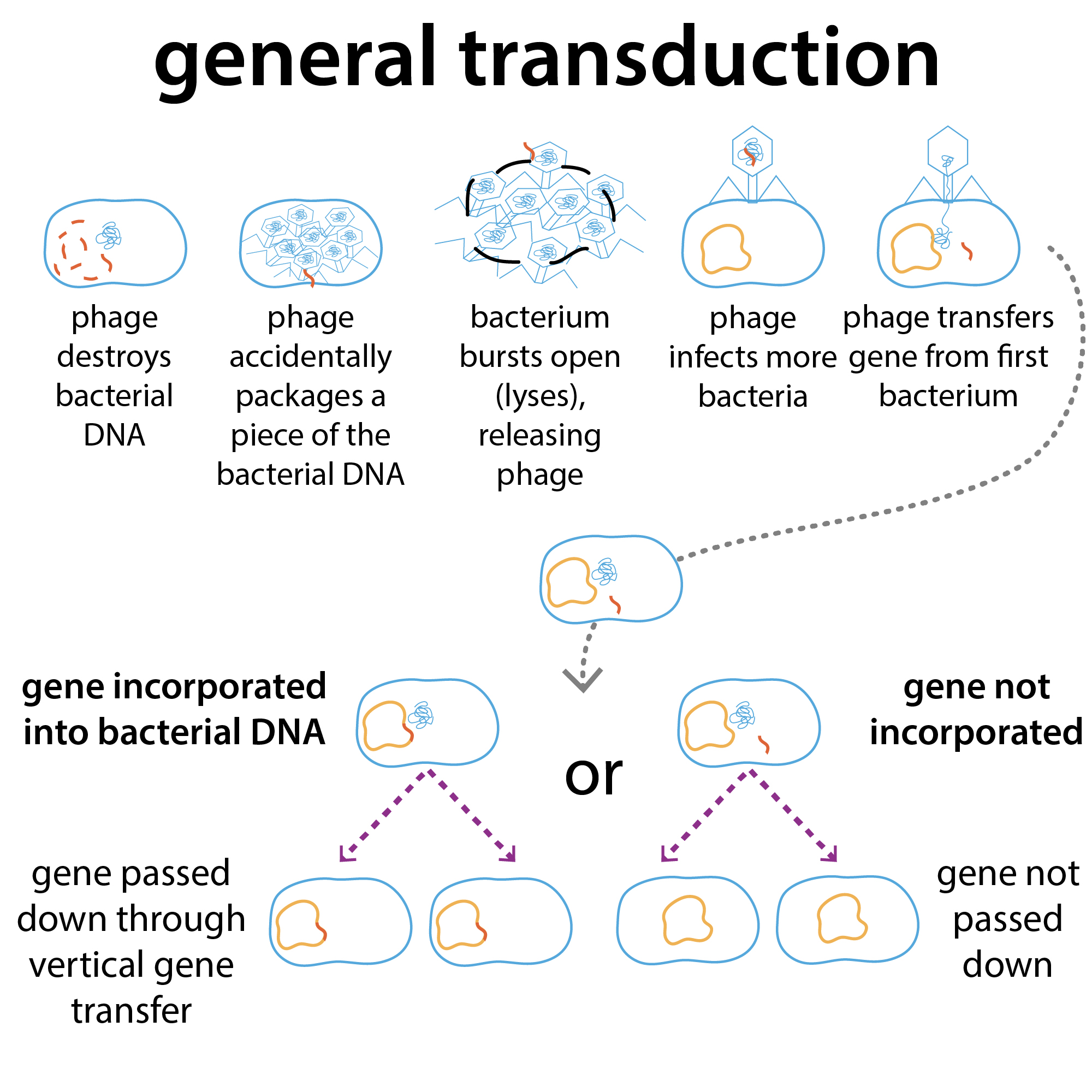
Sometimes they accidentally package some of the bacteria’s DNA and then, when they infect new cells, they inject that bacteria’s DNA into the new bacteria. This is called general transduction. If there’s a sequence in the injected DNA that is similar to something in the new bacteria’s DNA, the new bacteria can get confused & swap it out.
Unless the bacterial DNA was actually integrated into the phage genome (as opposed to bacterial DNA kinda just accidentally getting shoved into a viral particle), thus only affects the bacteria – the phage’s DNA stays the same so when new phage is made it won’t have that gene & the gene will “die off” unless the bacteria puts it in its own bacterial genome.
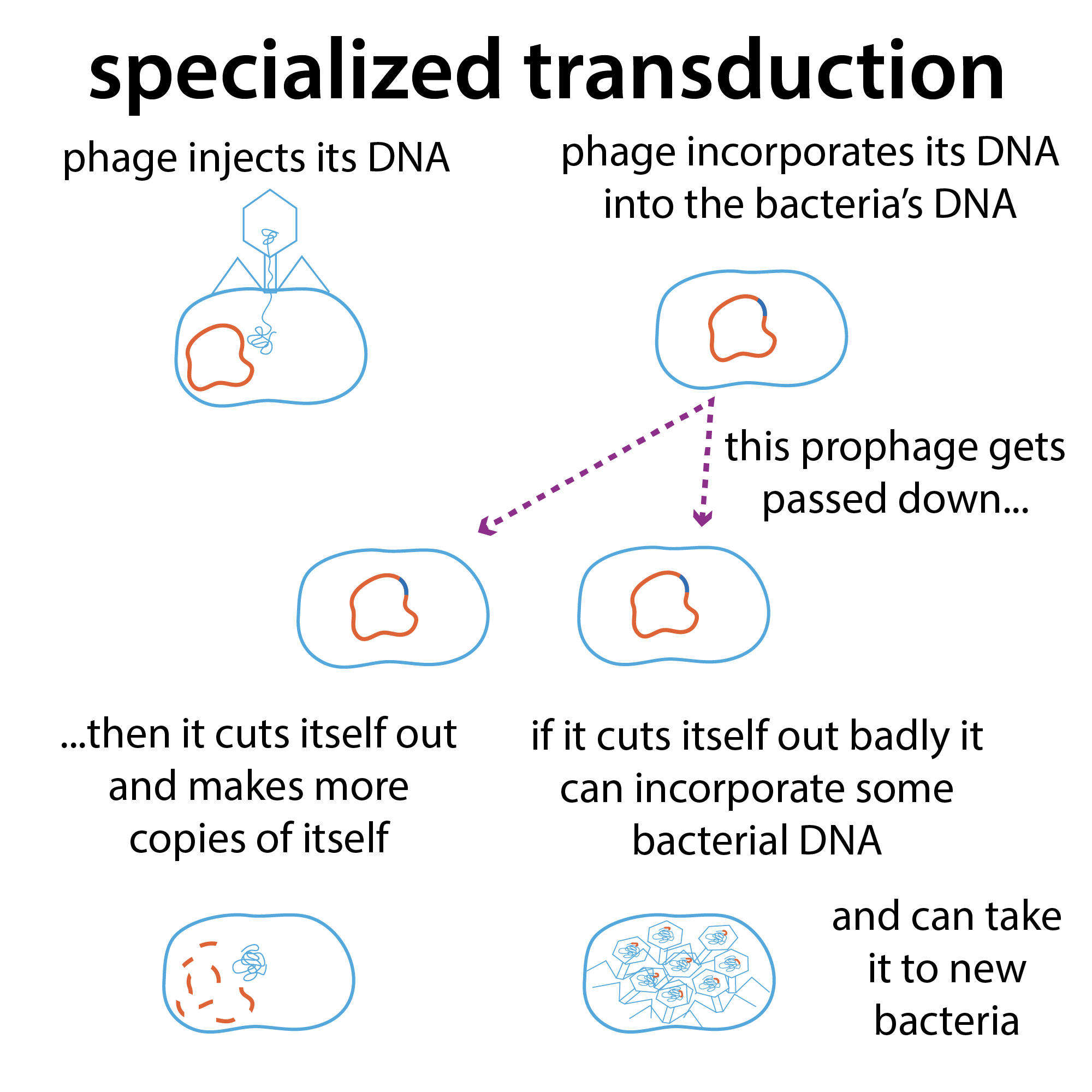
BUT sometimes, phages try to be sneaky – instead of destroying the bacterial DNA, they sneak into into, inserting themselves into the bacterial genome so that the bacteria will pass it along when the bacteria divides – this chimera is called a PROPHAGE and it lets the phage bide its time until conditions are better for making copies of itself. This is known as a lysogenic phase as opposed to the lyric phage we discussed before.
When it decides to venture out on its own, the phage has to cut itself out of the bacterial genome, & sometimes they do this badly & accidentally incorporate the bacteria’s DNA into their own genome – now, it will even copy that bacterial genome part to all the future cells it transfects – this is called specialized transduction. In addition to DNA fragments which, in order to get passed on need to be incorporated into the bacteria’s genome, they can transfer circular pieces of DNA called plasmids which exist & copy themselves independent of the bacterial genome. (yes – just like plasmids we use all the time in the lab!)
Conjugation
Conjugation involves the direct transfer of DNA from one living bacterium to another living bacterium through direct contact – it’s sometimes called bacteria “sex” but there’s no “child” being produced – just one partner adding to another. It can’t be just any 2 cells however. Instead, they’ve gotta be soul mates. Well, not quite, but they do need special gear.
The donor has a conjugation plasmid (one of those circular pieces of DNA, but this one’s special – it has instructions for making a conjugation pilus (sex pilus or F pilus)). The donor uses those instructions to make a sort of “hand” that stretches out from the cell, grabs onto another cell, then pulls it close and a “bridge” forms between them that DNA can travel through. It doesn’t want to send its “only copy” through, but thankfully, the conjugative plasmid is double stranded, so the donor sends one strand through, then both cells copy the strand they have to recreate the double-stranded form. Now the recipient bacteria has the conjugation plasmid and can serve as a donor. This is a common way in which cells can gain bacterial resistance because the conjugation plasmids also often have antibiotic resistance genes – we call such plasmids R-plasmids.
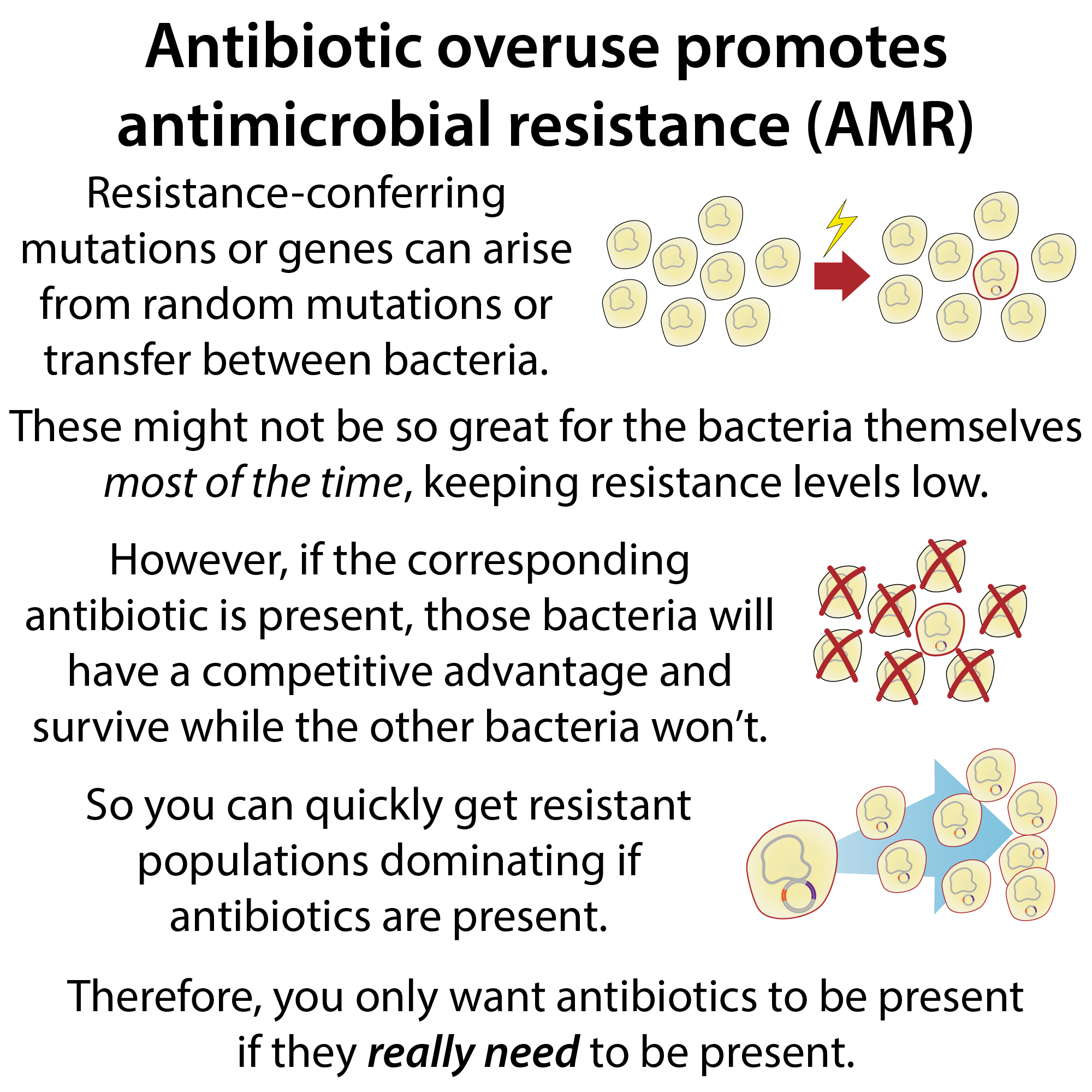
So, through multiple horizontal gene transfer mechanisms, bacteria are able to obtain new genetic information – including recipes for making things that make it harder for us to kill them! Thankfully, resistance genes can also provide a growth disadvantage – in the absence of antibiotics – so if antibiotics aren’t used as frequently, some of these acquisitions could just die out. But if antibiotics are present, they will have a competitive advantage and thrive.
Here’s more on this issue: https://bit.ly/antibiotic_resistance_mech ; YouTube: https://youtu.be/ueP_9Vj-Q0k