Much of biochemistry is carbonyl chemistry – so here’s some more about some of why this is and what to call things. . .
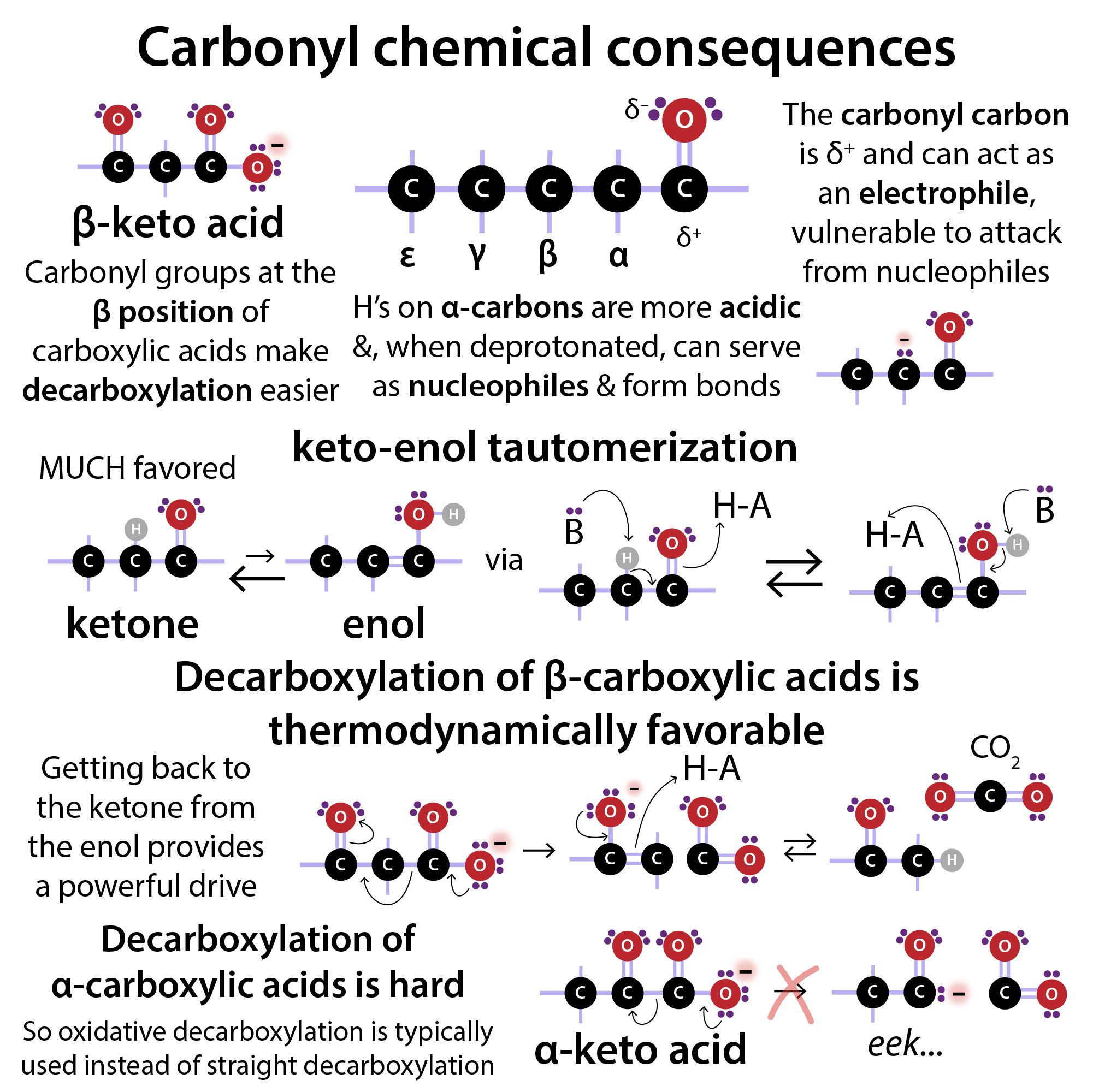
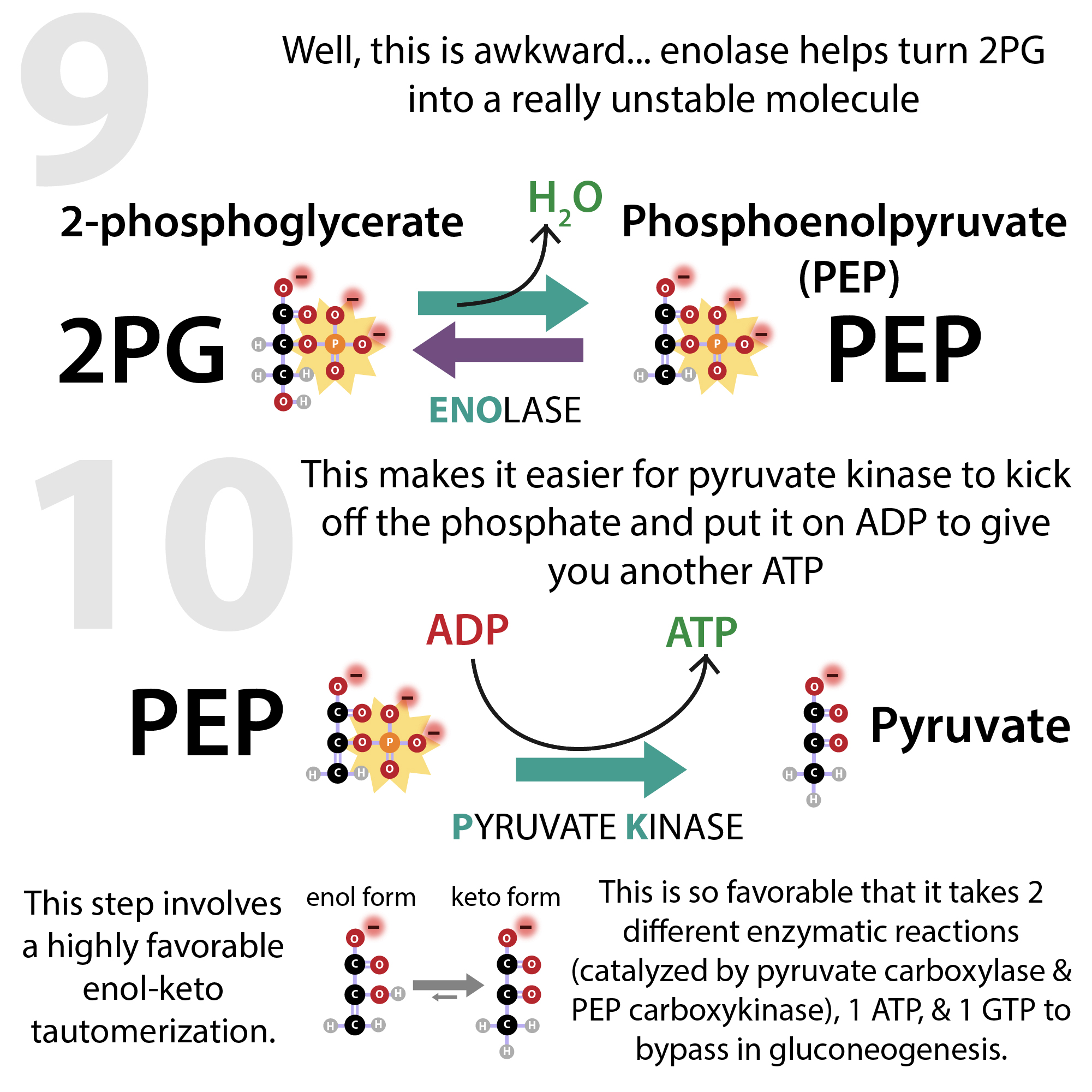
Carbonyl groups can tautomerize, going from a double bond between 2 carbons (an alkene) to a double bond between carbon and oxygen (a carbonyl). Most commonly this takes things from ketone to an enol (double bond next to an alcohol) and is referred to as keto-enol tautomerization (ketone to enol and back). The ketone form is MUCH more favorable, and return to it can serve as a powerful energetic drive (e.g. in the pyruvate kinase reaction in glycolysis and β-keto acid decarboxylations).
Some consequences of keto-enol tautomerization include facilitating dehydration, isomerization, decarboxylation, carbon-carbon bond formation. . .
A few key points:
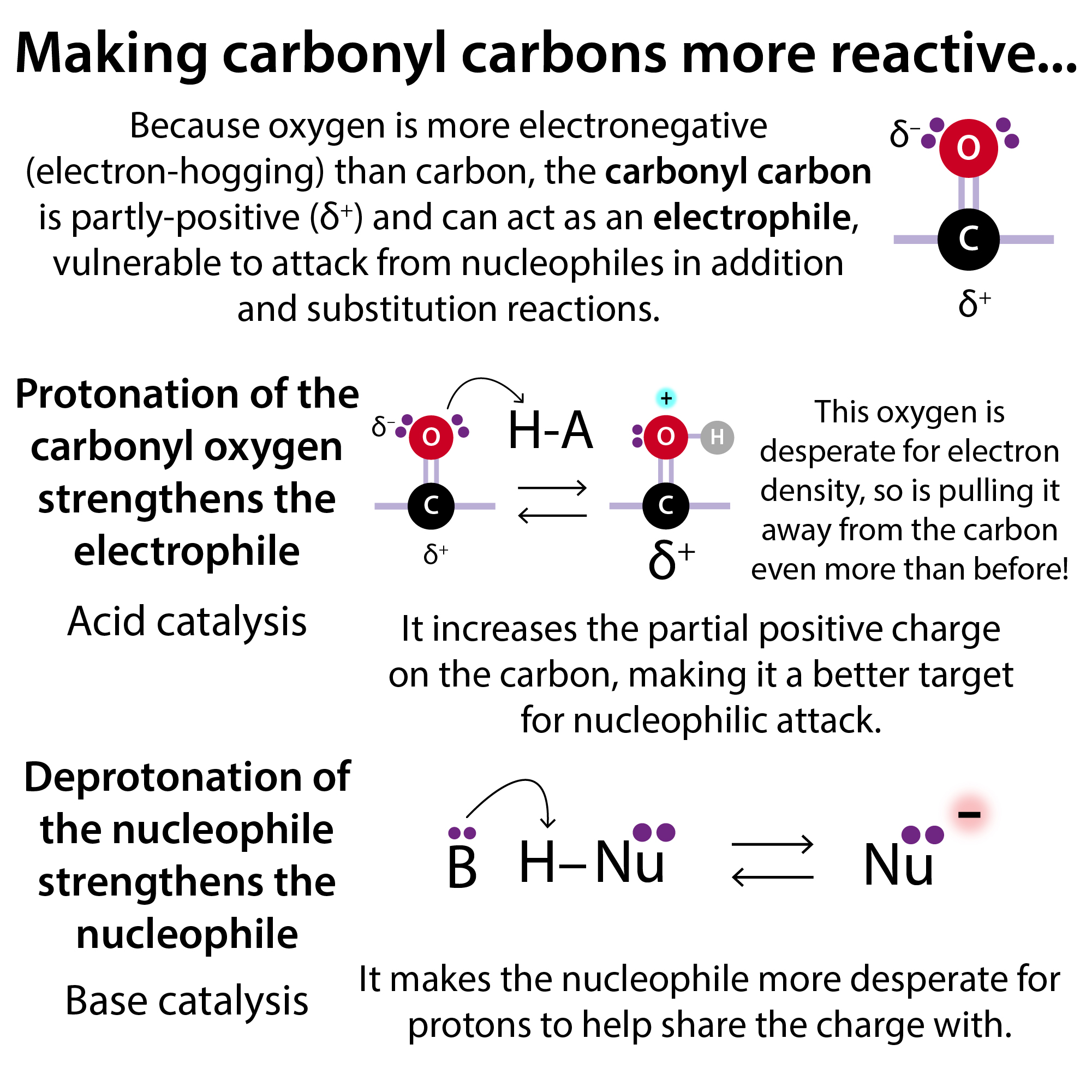
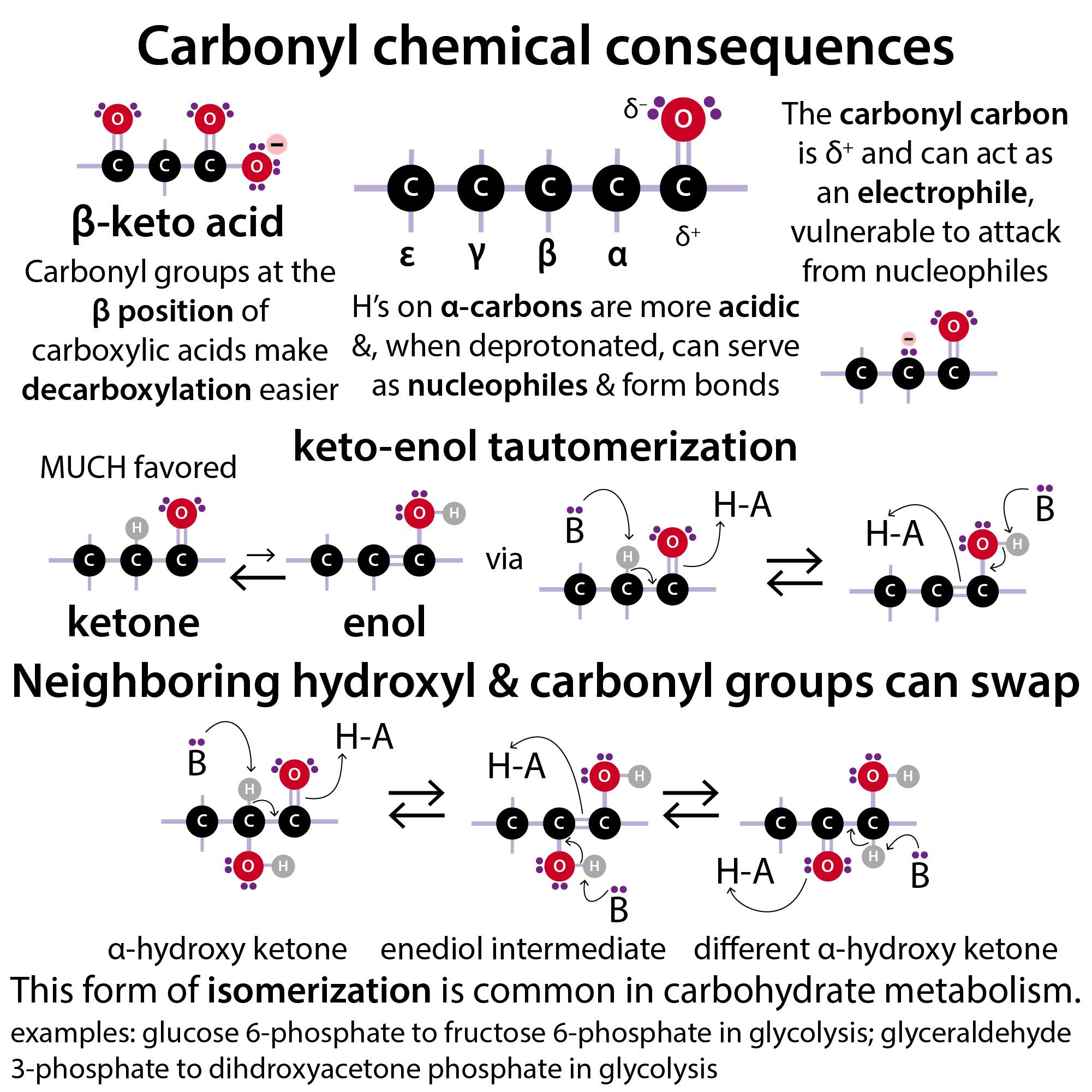
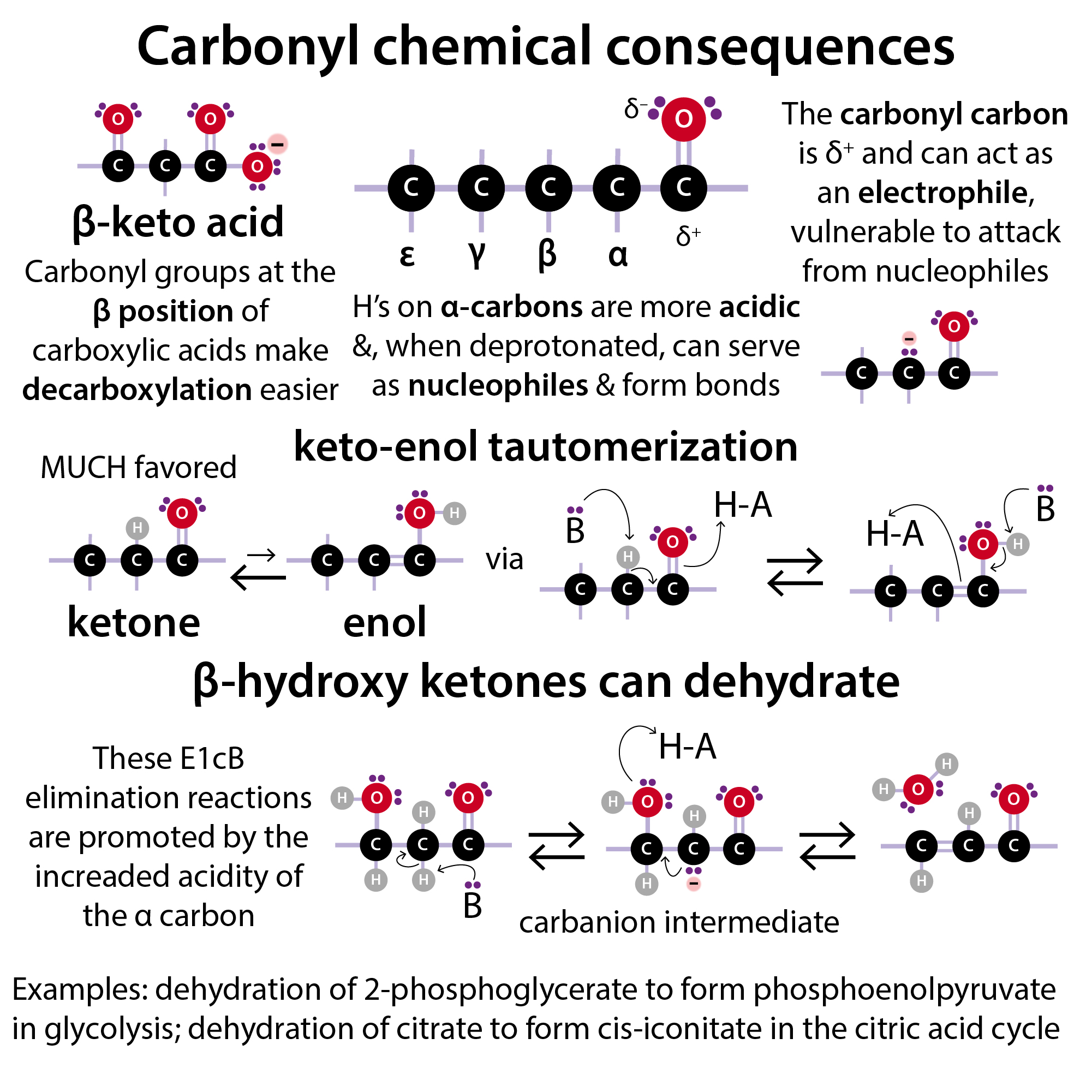
- The carbonyl carbon is δ+ and can act as an electrophile, vulnerable to attack from nucleophiles
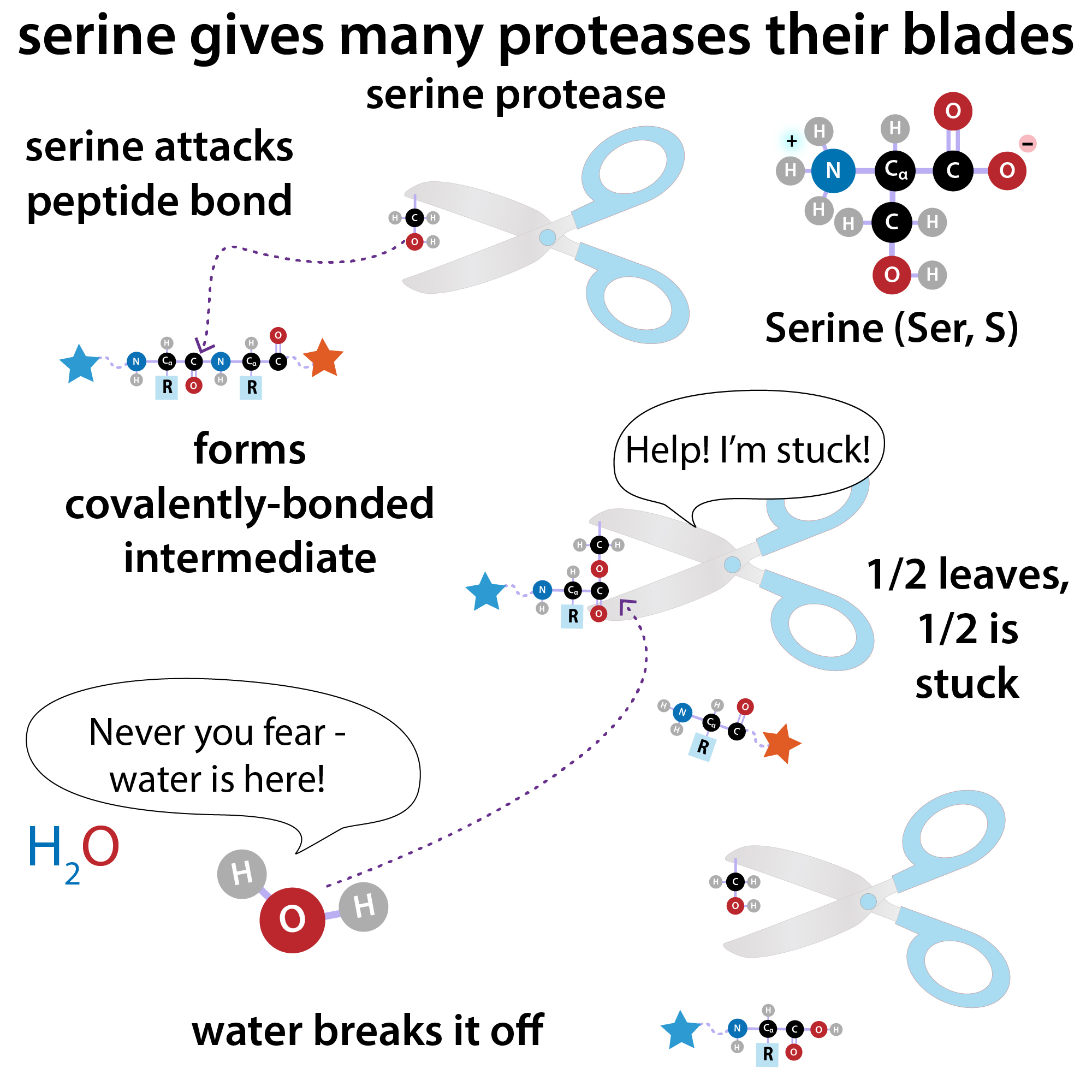
- Example: hydrolysis of peptides where water attacks the carbonyl carbon
- H’s on α-carbons are more acidic &, when deprotonated, can serve as nucleophiles & form bonds
- Increased acidity comes from stabilization of the carbanion (negatively-charged carbon) intermediate through resonance with the oxygen
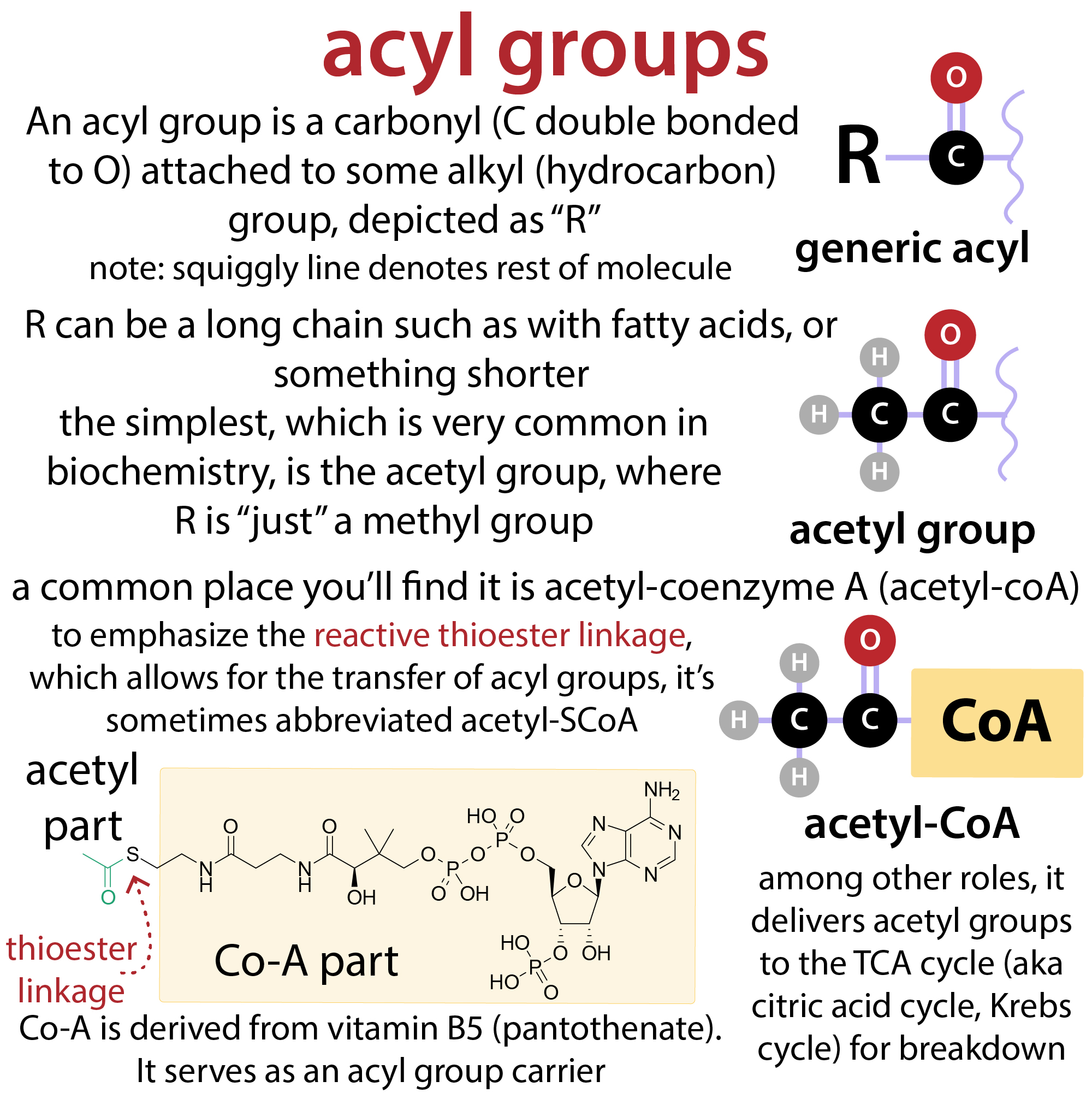
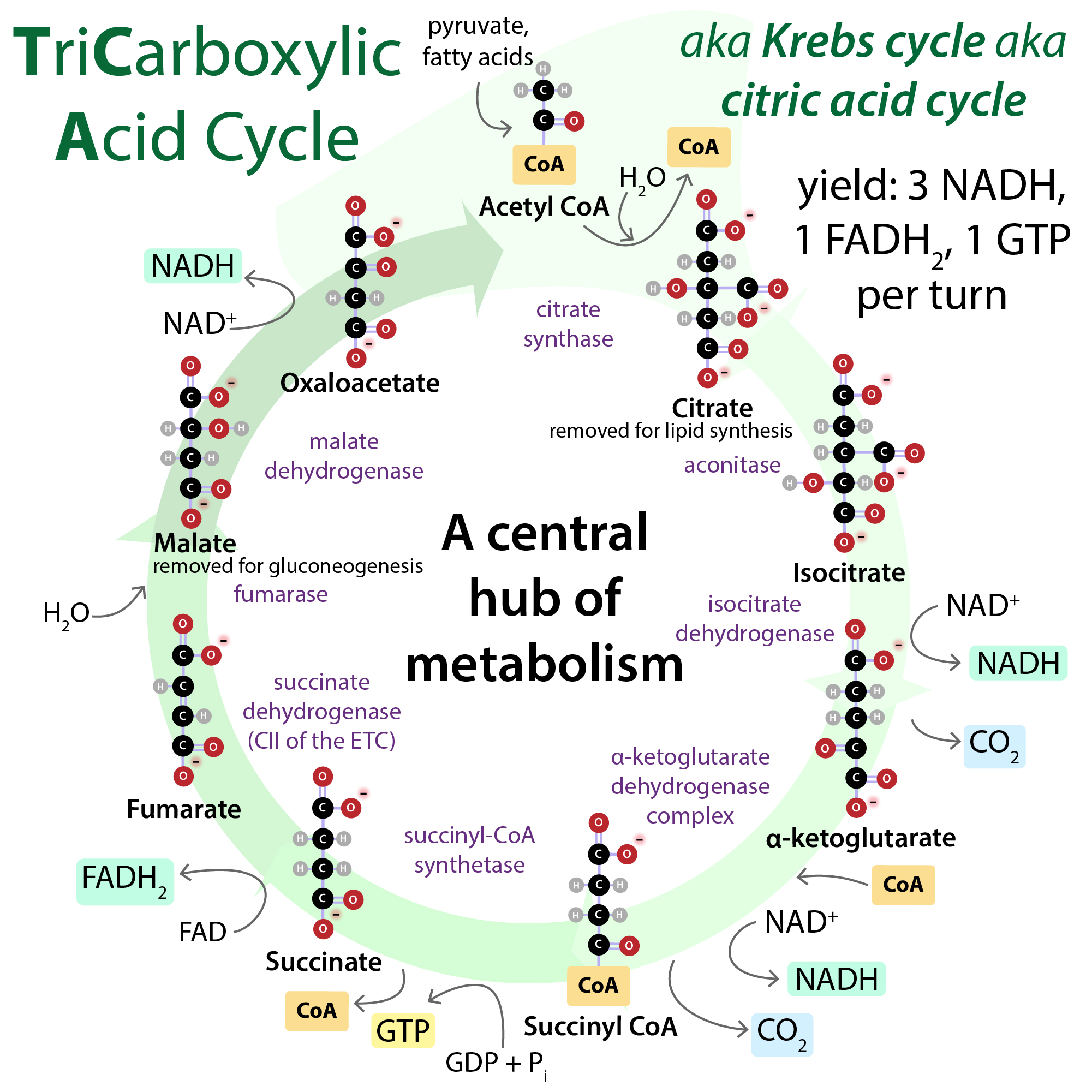
- Example: citrate synthase making citrate from oxaloacetate and acetyl-coA
- Neighboring hydroxyl & carbonyl groups can swap, sharing a common enol intermediate
- This form of isomerization is common in carbohydrate metabolism
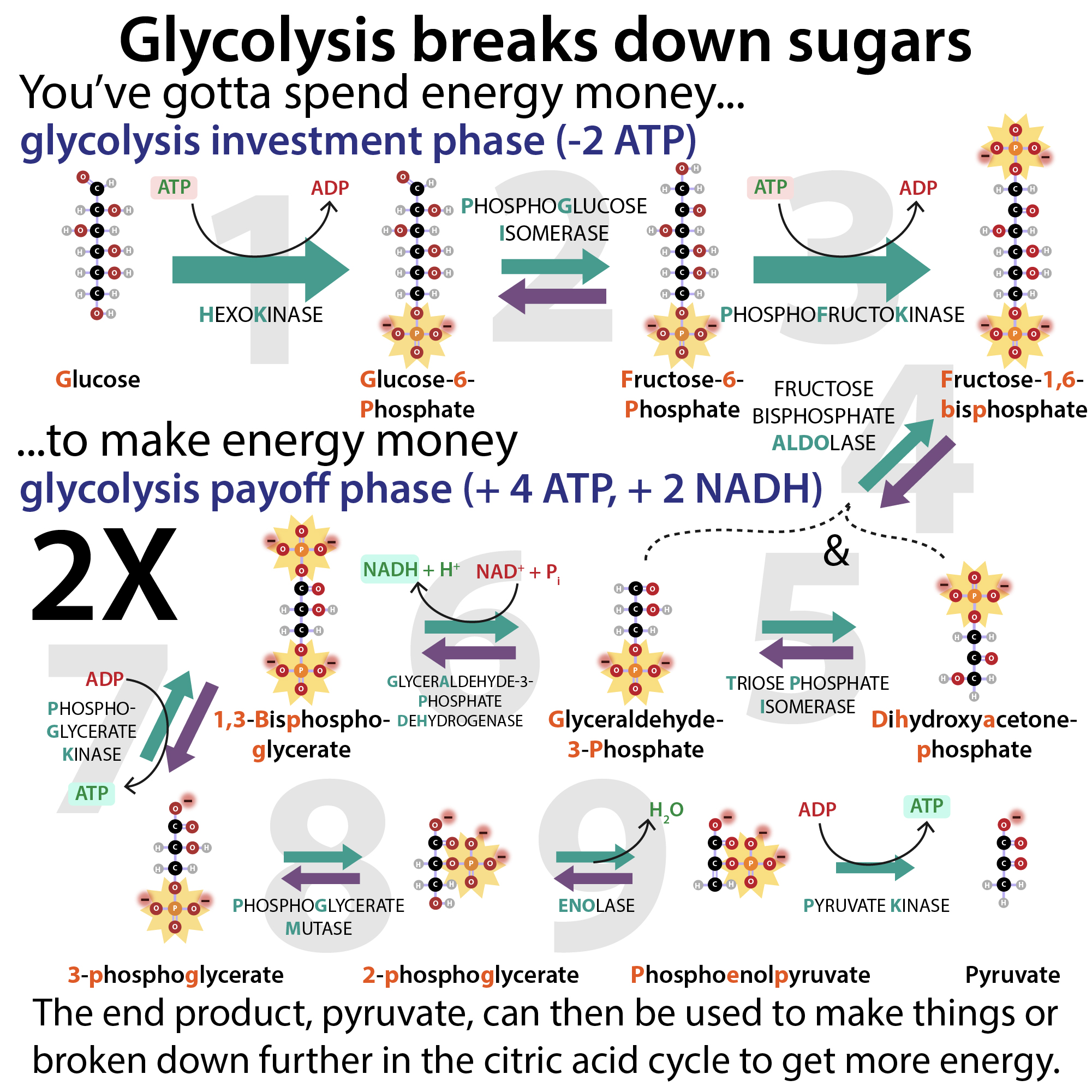
- Examples: glucose 6-phoshpate to fructose 6-phosphate in glycolysis (phosphoglucose isomerase step); glyceraldehyde 3-phosphate to dihydroxyacetone phosphate in glycolysis (triose phosphate isomerase step)
- This form of isomerization is common in carbohydrate metabolism
- Carbonyl groups at the β position of carboxylic acids make decarboxylation easier
- Example: decarboxylation of isocitrate by isocitrate dehydrogenase in citric acid cycle))
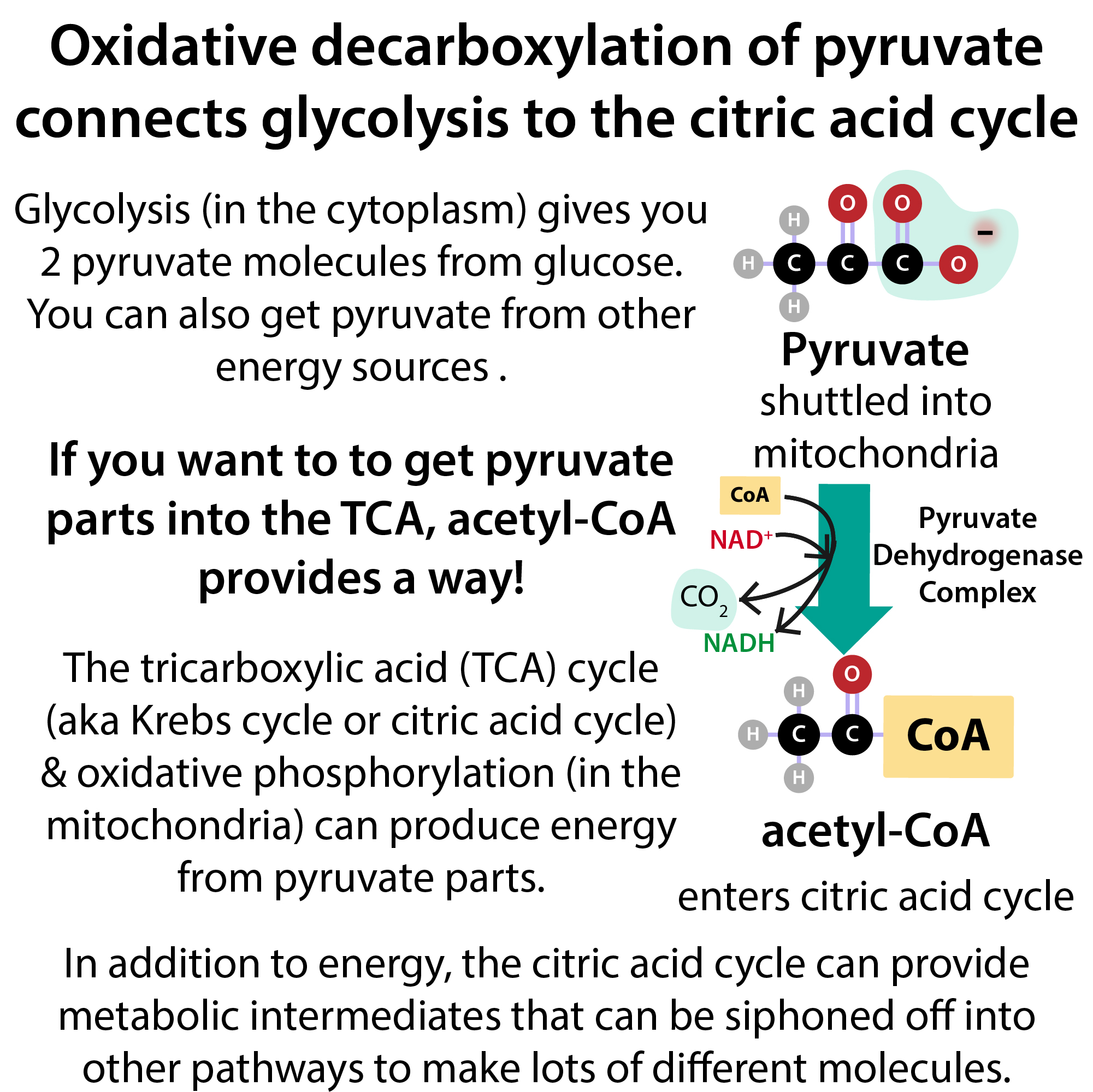
- a-carboxylic acids are much harder to decarboxylate, so oxidative decarboxylation is typically used instead of straight decarboxylation (e.g. pyruvate decarboxylase & a-ketoglutarate dehydrogenase in the citric acid cycle
- Example: decarboxylation of isocitrate by isocitrate dehydrogenase in citric acid cycle))
- β-hydroxy ketones can dehydrate, through a carbanion intermediate
- These E1cB elimination reactions are promoted by the increased acidity of the alpha carbon
- Examples: dehydration of 2-phosphoglycerate to form phosphoenolpyruvate in glycolysis (enolase step); dehydration of citrate to form cis-iconitate in the citric acid cycle (aconitase step)
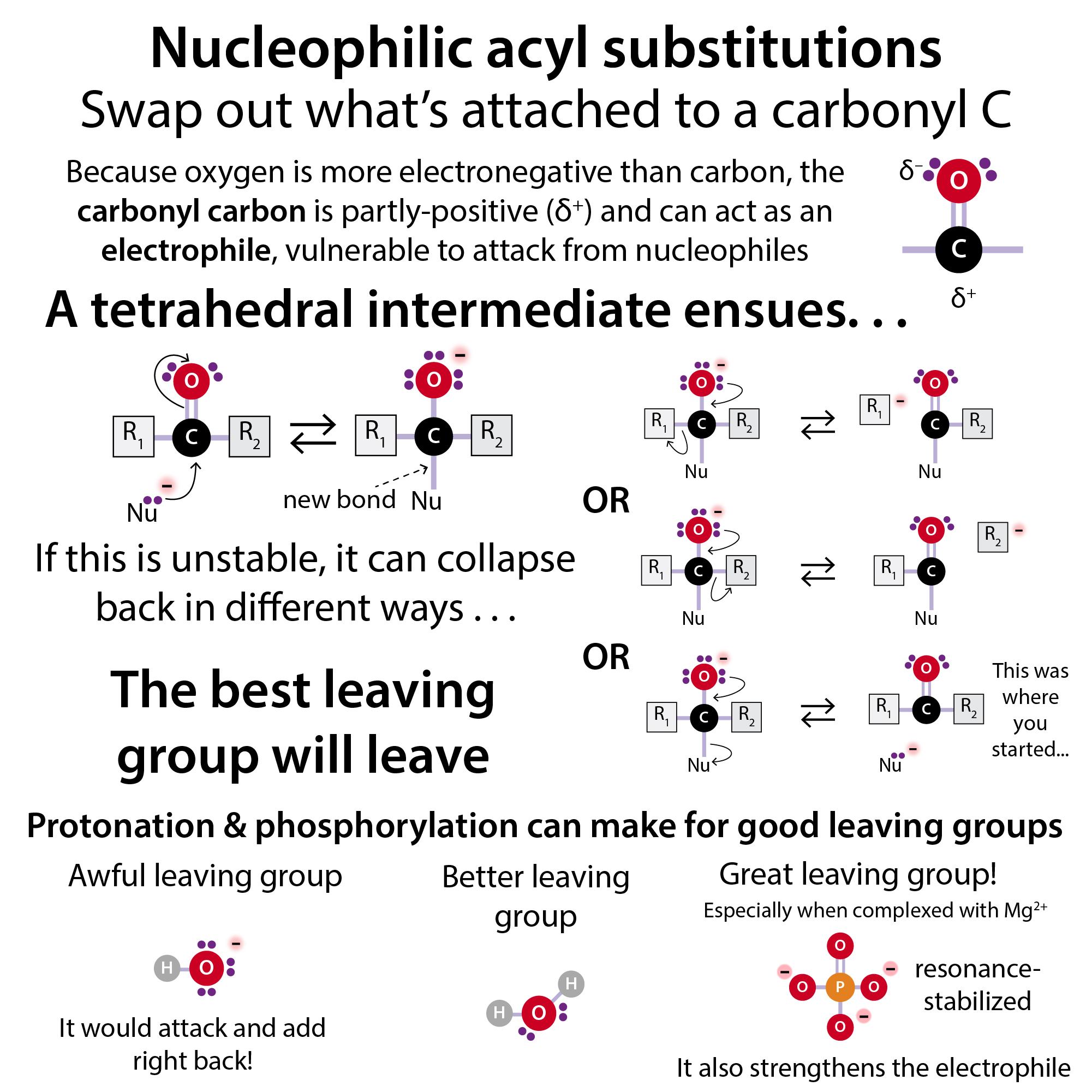
In nucleophilic acyl substitutions you swap out what’s attached to a carbonyl carbon. More here: https://bit.ly/acyl_swaps
Recommended reading below – I love this open-access o-chem text and am almost through reading it cover to cover for pleasure
Organic Chemistry A Tenth Edition by John McMurry, Chapter 22: Carbonyl Alpha-Substitution Reactions and Chapter 23: Carbonyl Condensation Reactions, OpenStax https://openstax.org/details/books/organic-chemistry
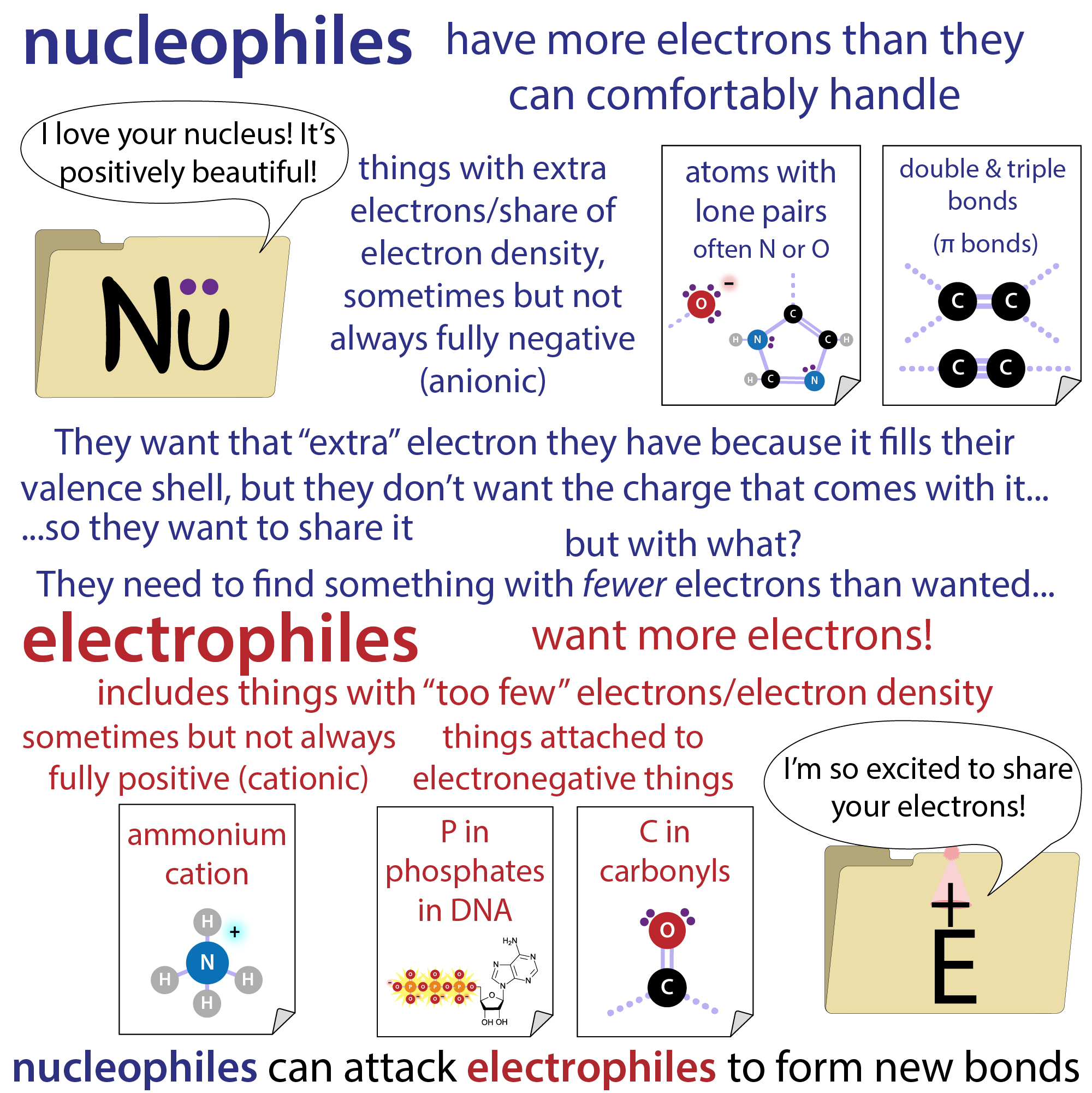
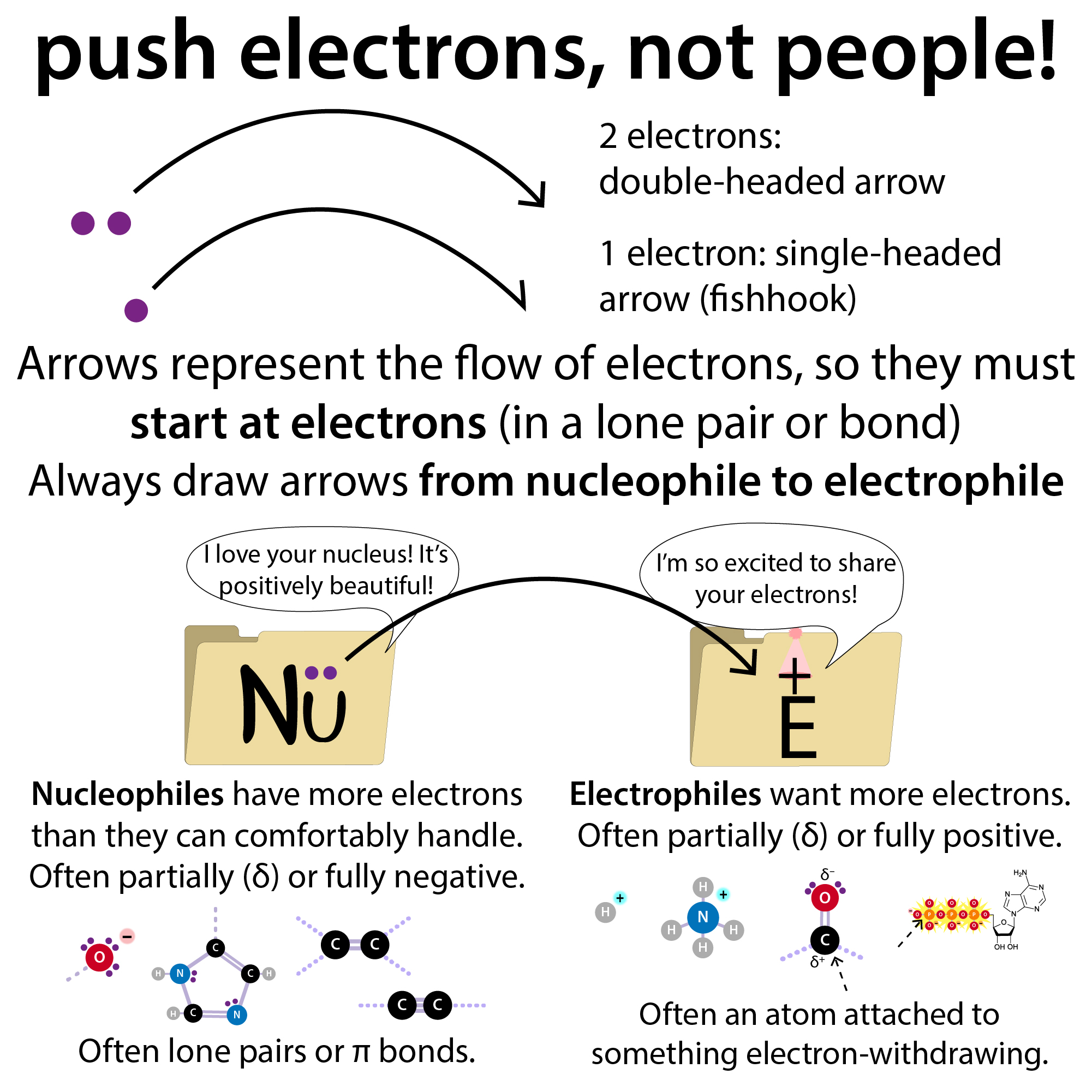
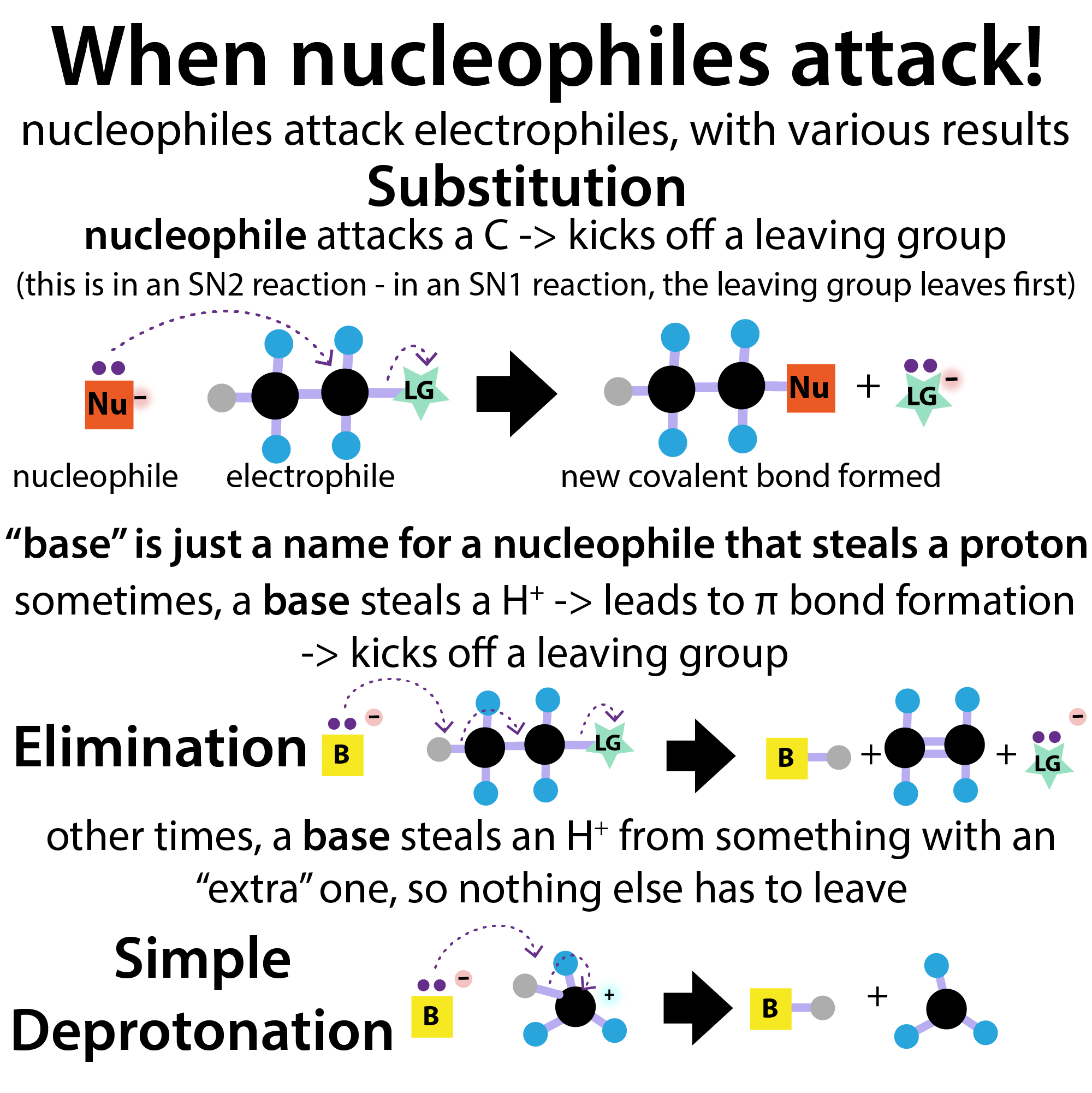
More on nucleophiles and electrophiles: http://bit.ly/nucleophilefiles
Much more on all sorts of metabolic stuff: https://bit.ly/bbmetabolism & https://www.youtube.com/playlist?list=PLUWsCDtjESrHXBgulruKEOrNXQ21_0gyc