In nucleophilic acyl substitutions you swap out what’s attached to a carbonyl carbon
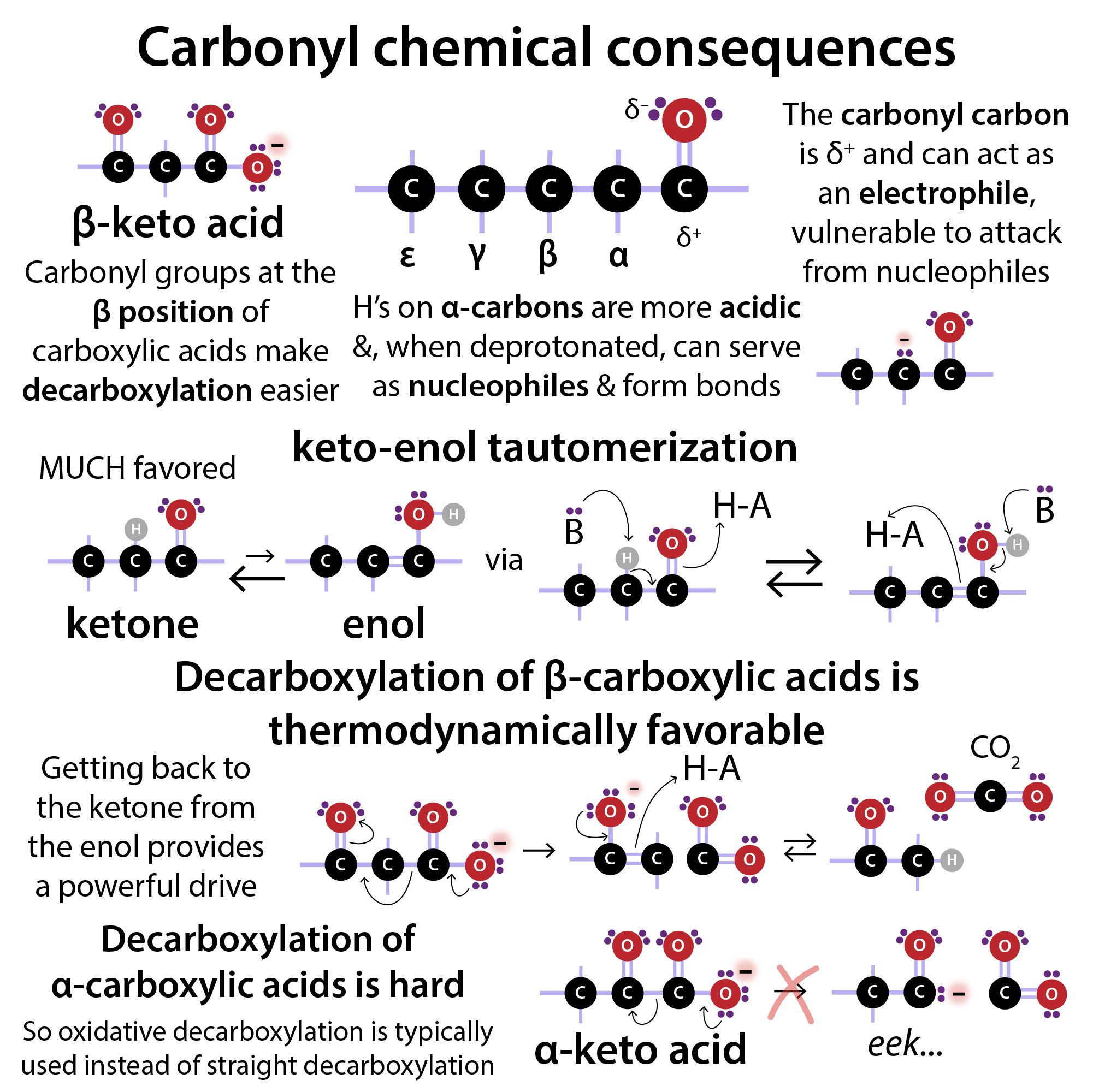
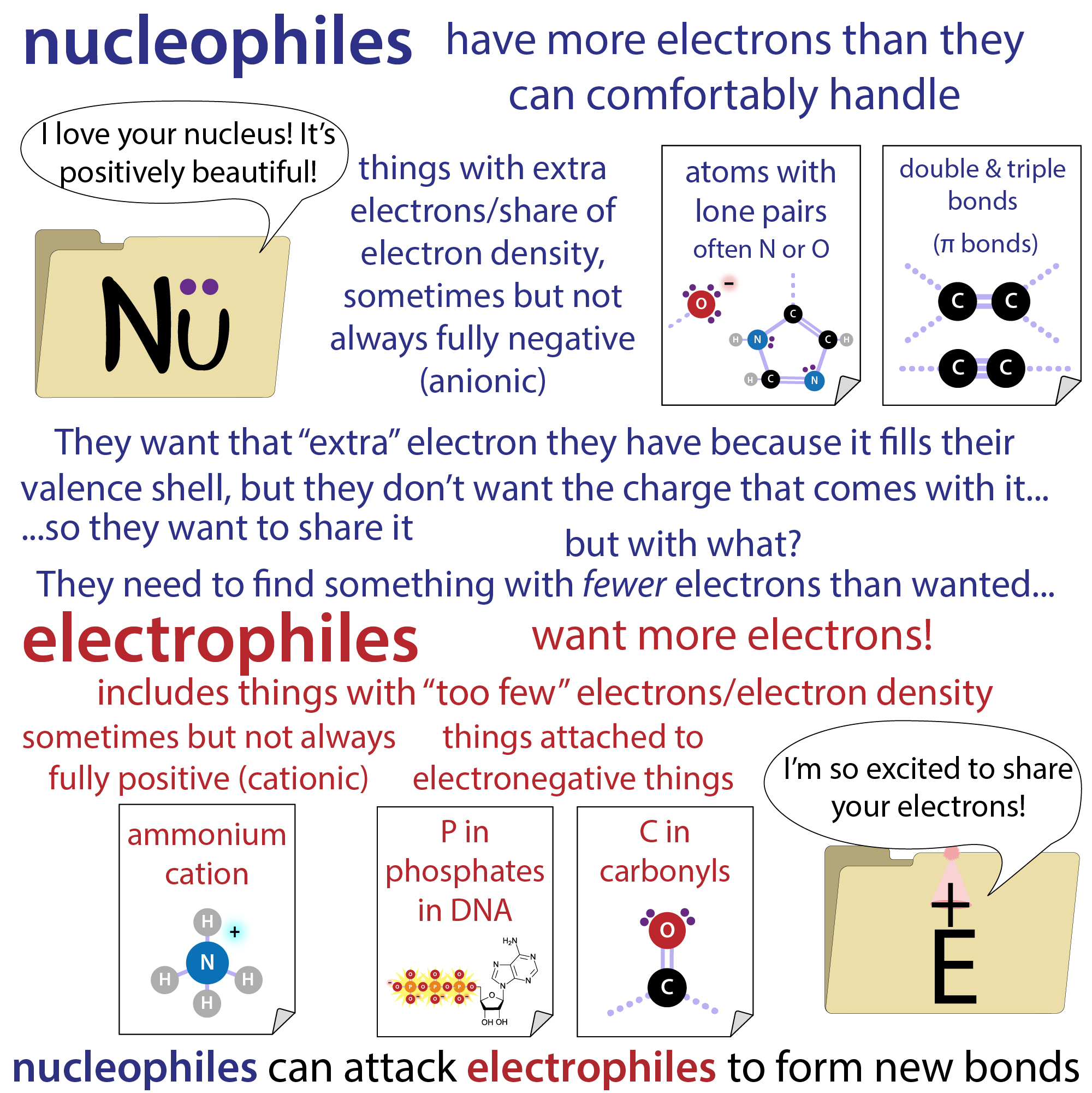
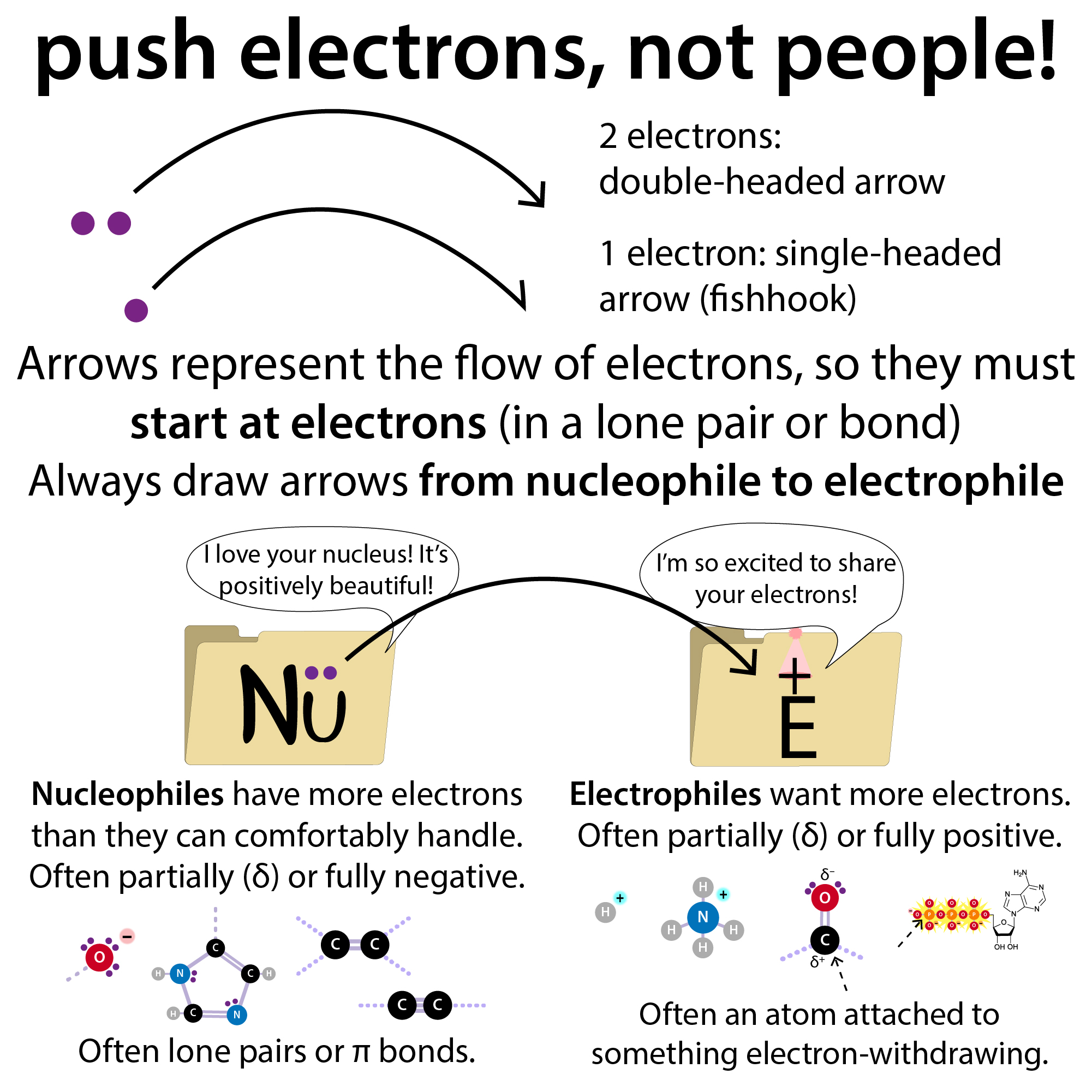
Because oxygen is more electronegative (electron-hogging) than carbon, the carbonyl carbon is partly-positive (δ+) and can act as an electrophile, vulnerable to attack from nucleophiles.
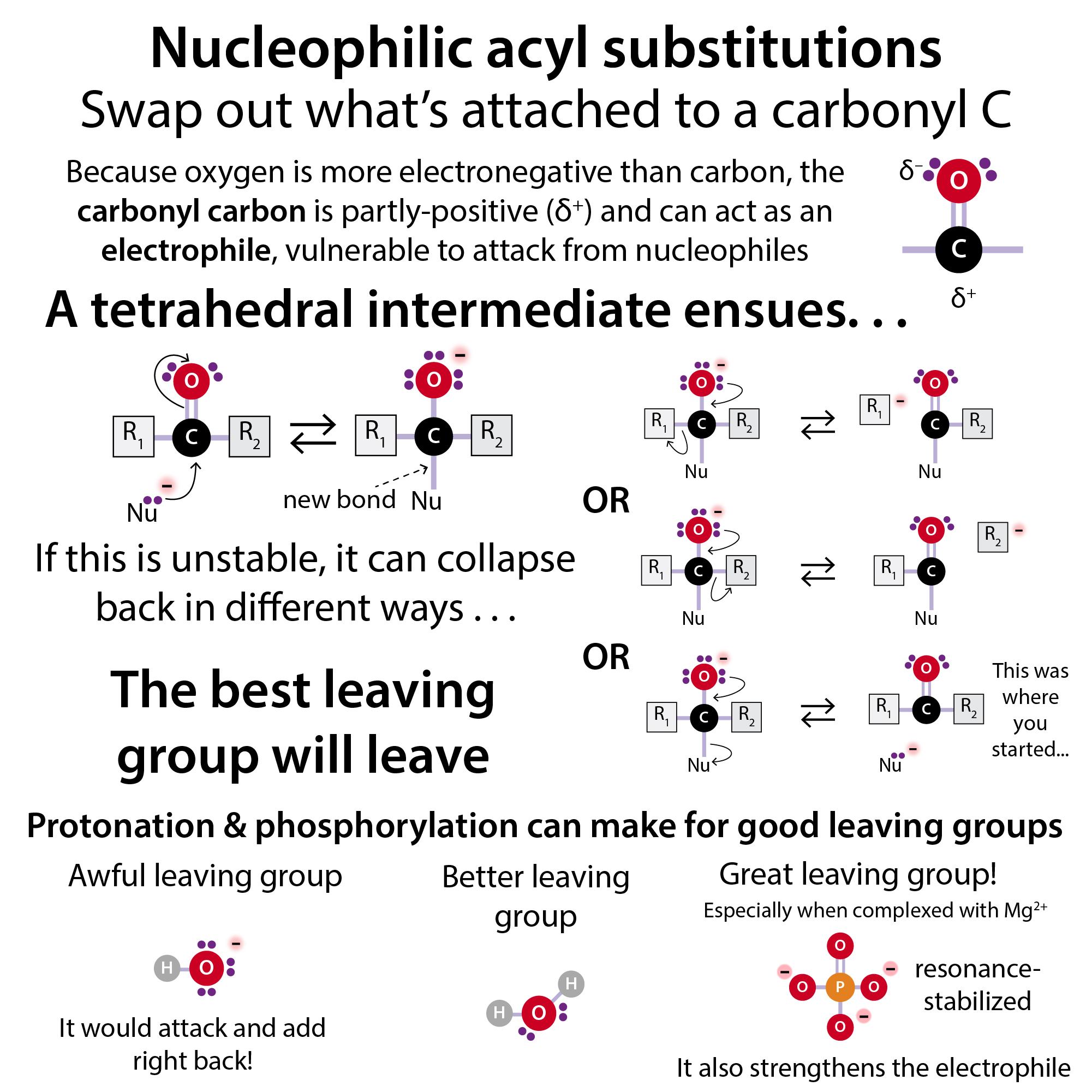
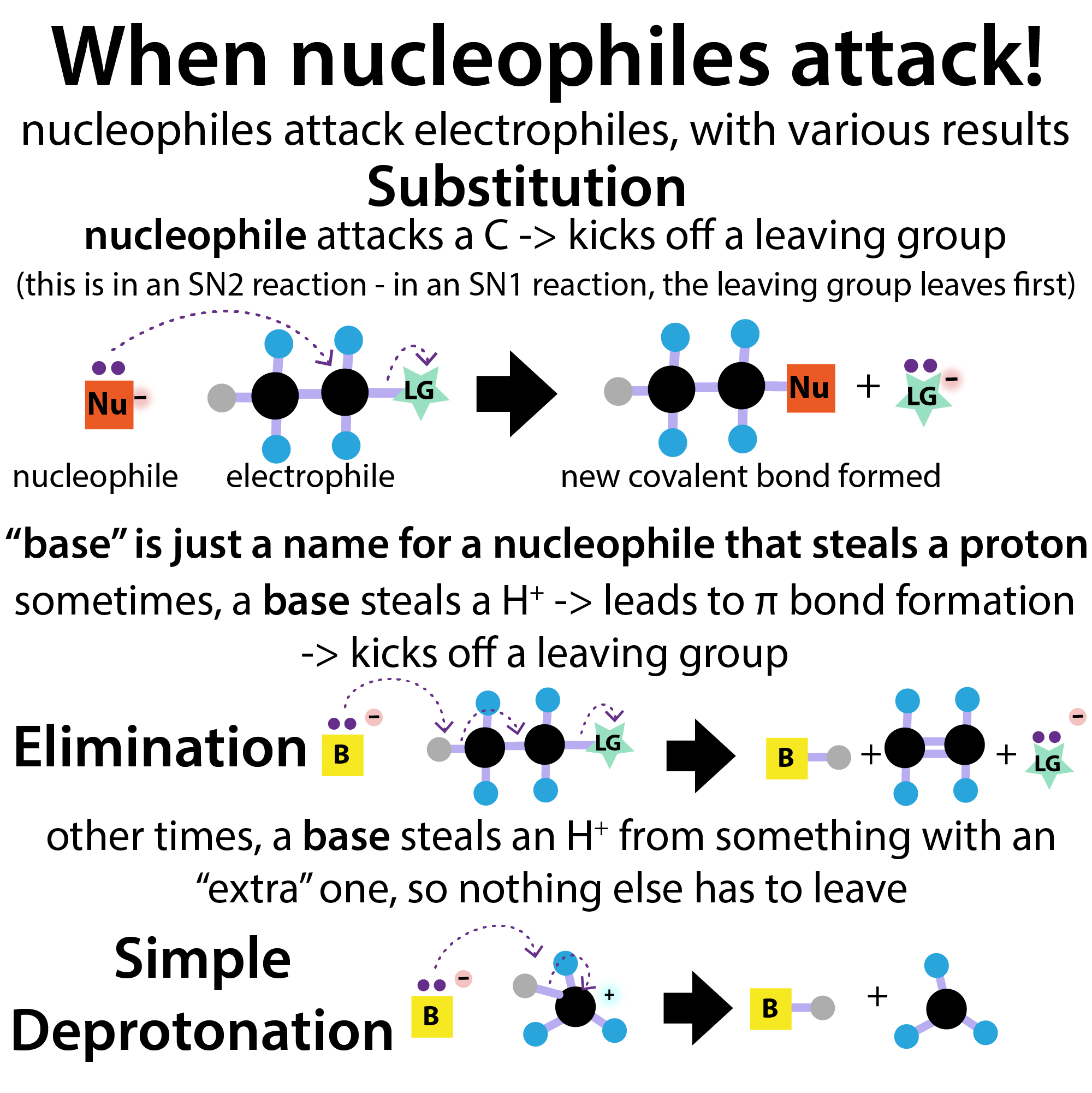
When a nucleophile attacks, electrons from the double bond flow up to the oxygen, giving you a tetrahedral intermediate that can collapse back to kick something out. It will kick out the best leaving group. What makes a leaving group good? You want something that won’t just attack right back! So you want something that’s not very nucleophilic. And how do you make something less nucleophilic? Neutralize or stabilize the negative charge that would come from getting kicked off!
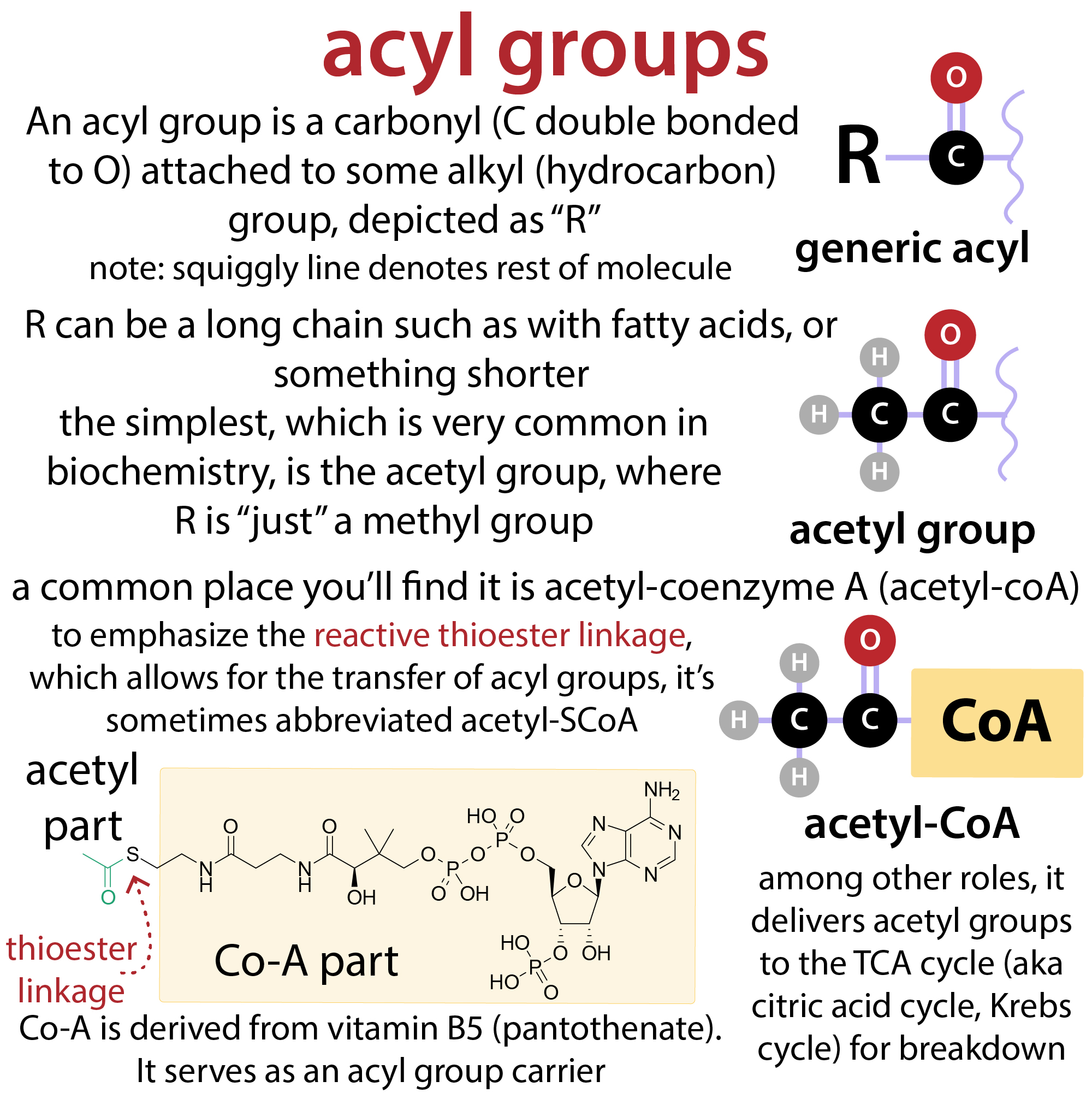
For example, a hydroxide ion (OH-) would be what you’d kick off from a carboxylic acid. That would be an awful leaving group. But, if you protonate that first, you get water which is neutral and much less nucleophilic. Even better, if you swap the H on that OH of the carboxylic acid out for a phosphate, you get an acyl phosphate, which will happily come off to give you a resonance-stabilized phosphate ion in which the charge is spread out. This is how the hydrolysis of ATP can be used to activate normally un-swappable carbonyls, such as is seen the charging of tRNA with amino acids.
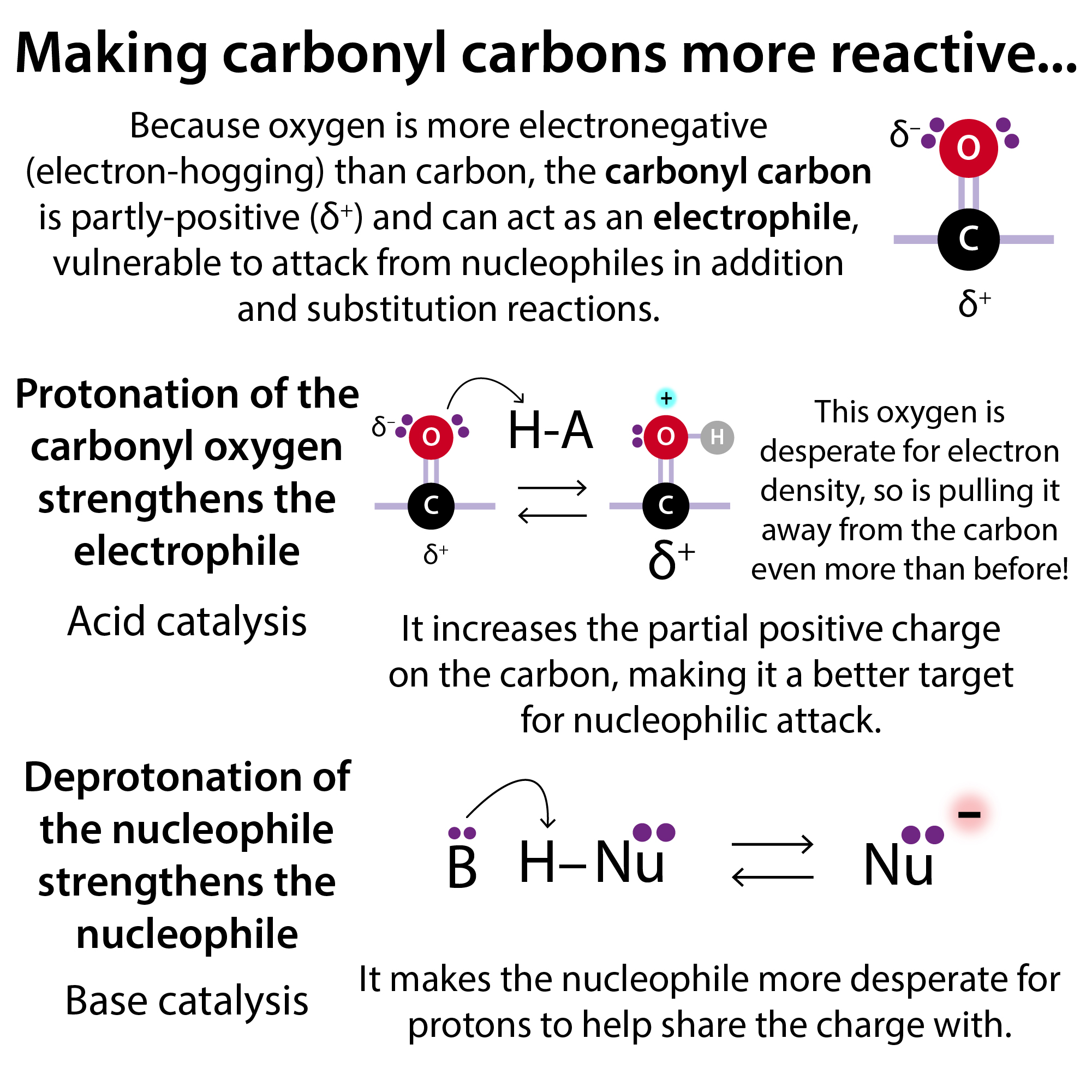
If you want to help get a carbonyl swap (or an addition) to happen, you have 2 options: 1) strengthen the electrophile so it’s more attackable and/or 2) strengthen the nucleophile so it’s more attacky.
You can achieve 1) (electrophile strengthening) through acid catalysis, in which you protonate the carbonyl oxygen. This makes the oxygen desperate for electron density, so it pulls the shared electrons away from the carbonyl carbon, leaving that carbon with less negativity and therefore more positive charge. This makes it more electrophilic.
Alternatively and/or additionally, you can achieve 2) (nucleophile strengthening) by deprrotonating the nucleophile in base catalysis. The negative charge makes the nucleophile more desperate to find a proton to help share the charge with.
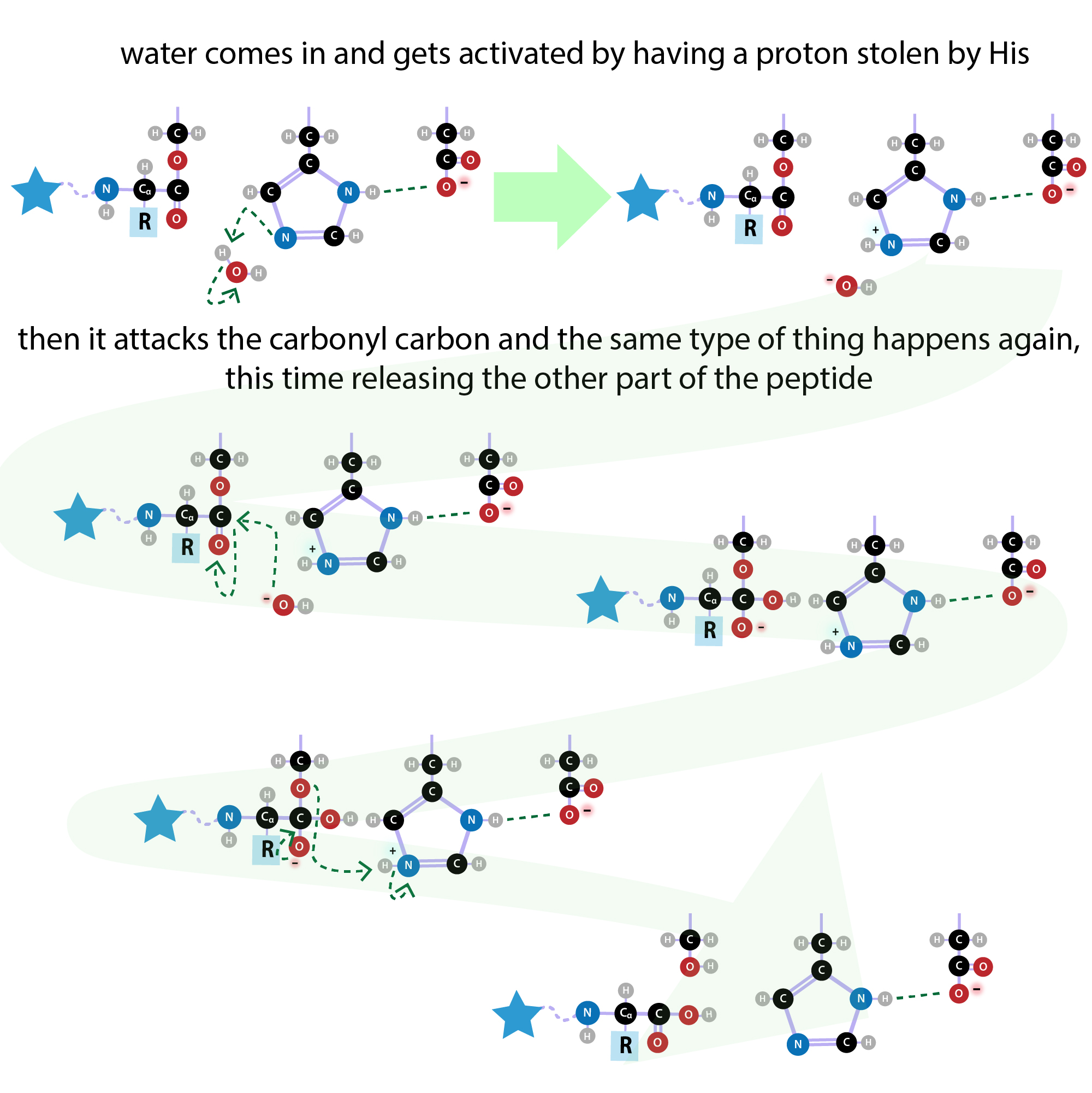
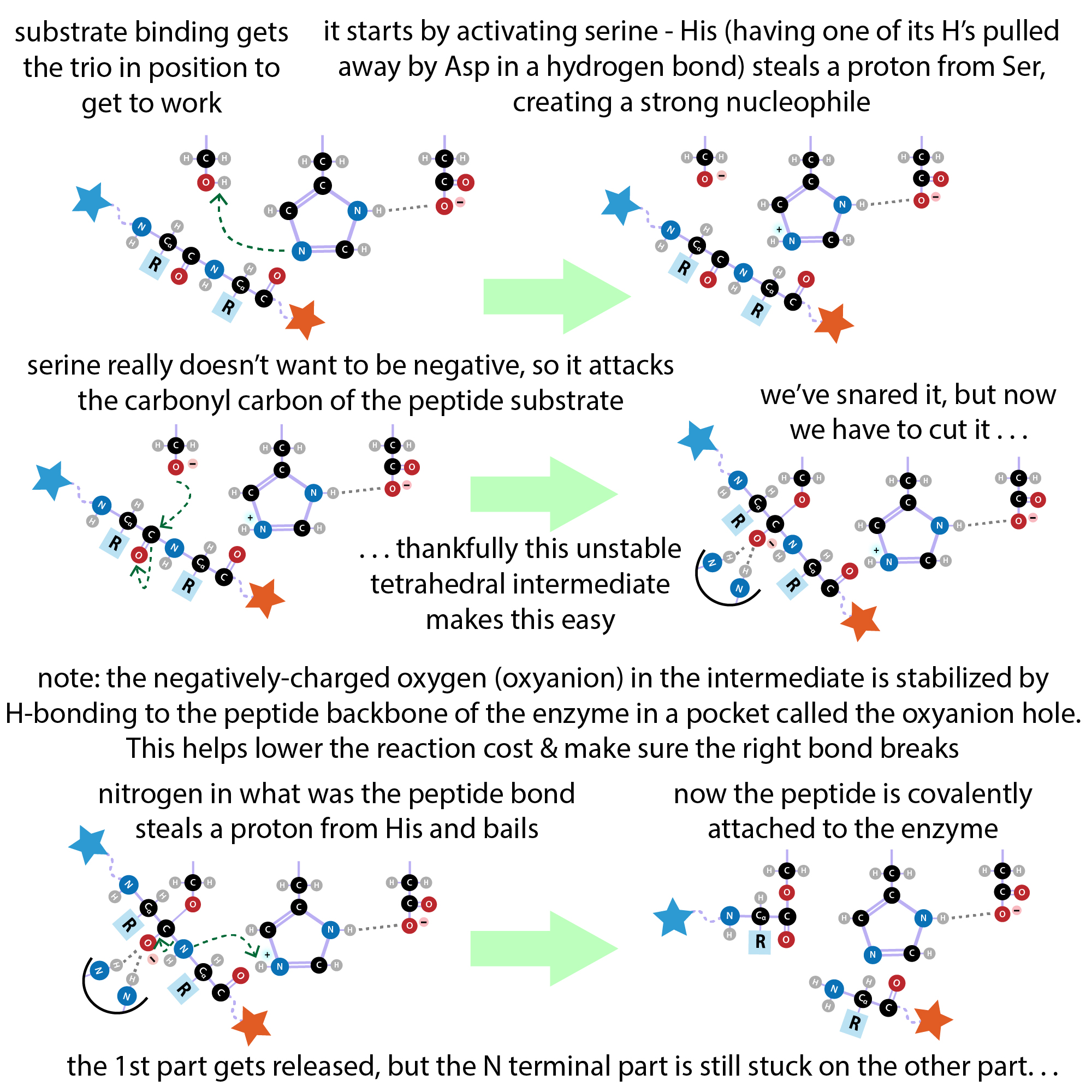
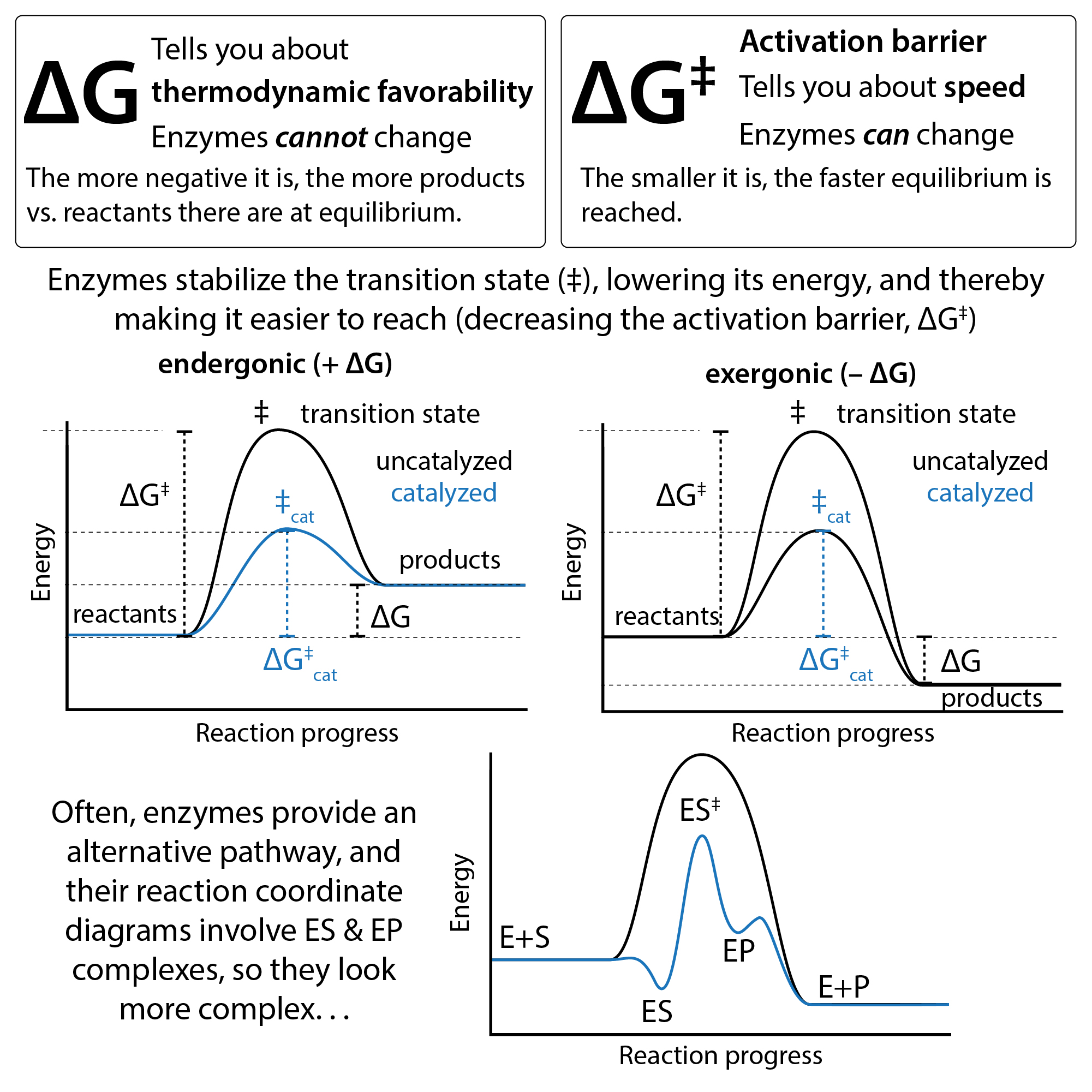
In biochemistry, such acid and base catalysis mechanisms are typically carried out by general acid/base catalysis by enzymes. “General” as opposed to “specific” refers to the fact that the acid/base is not specifically water, but rather something else, which in the case of enzymes, are typically amino acid side chains (any of them with a protonatable/deprotonatable side chain, really commonly histidine and serine). They often act as acids in one step and bases in another step which is awesome and “resets” the enzyme to do it all again (as a catalyst must be able to do!)
So, don’t be fooled by “general acid” and “general base” terminology. It does NOT refer to classification of amino acids as acidic or basic. Those classifications just tell you whether the amino acid is acidic or basic in its neutral form. Any amino acid that is “acidic” (aspartate or glutamate) can act as both a general acid and general base and any amino acid that is “basic” (histidine, lysine, or arginine) can act as both a general base and a general acid. As can all of the amino acids why hydroxyl or thiol groups (serine, threonine, tyrosine, cysteine).
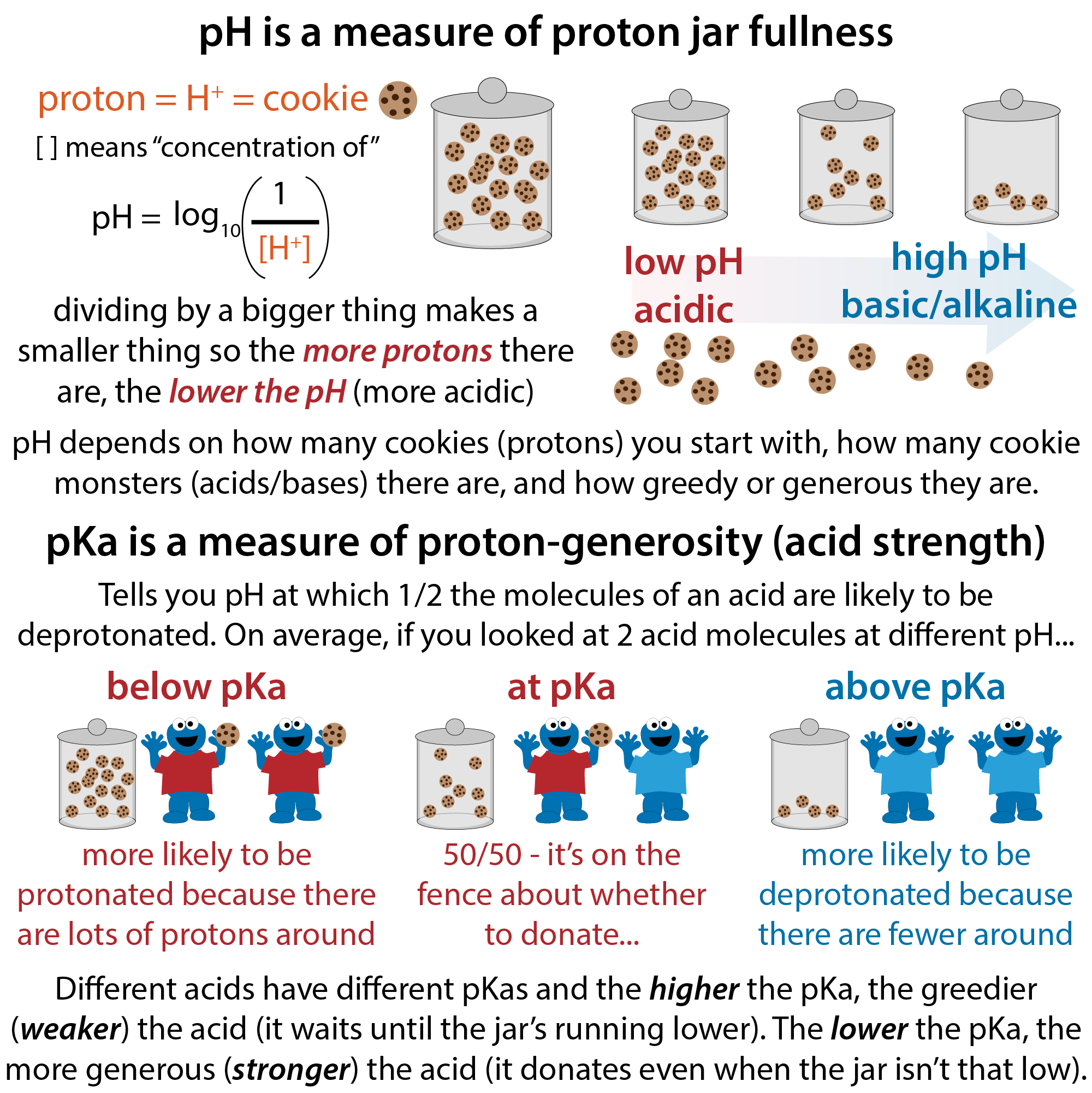
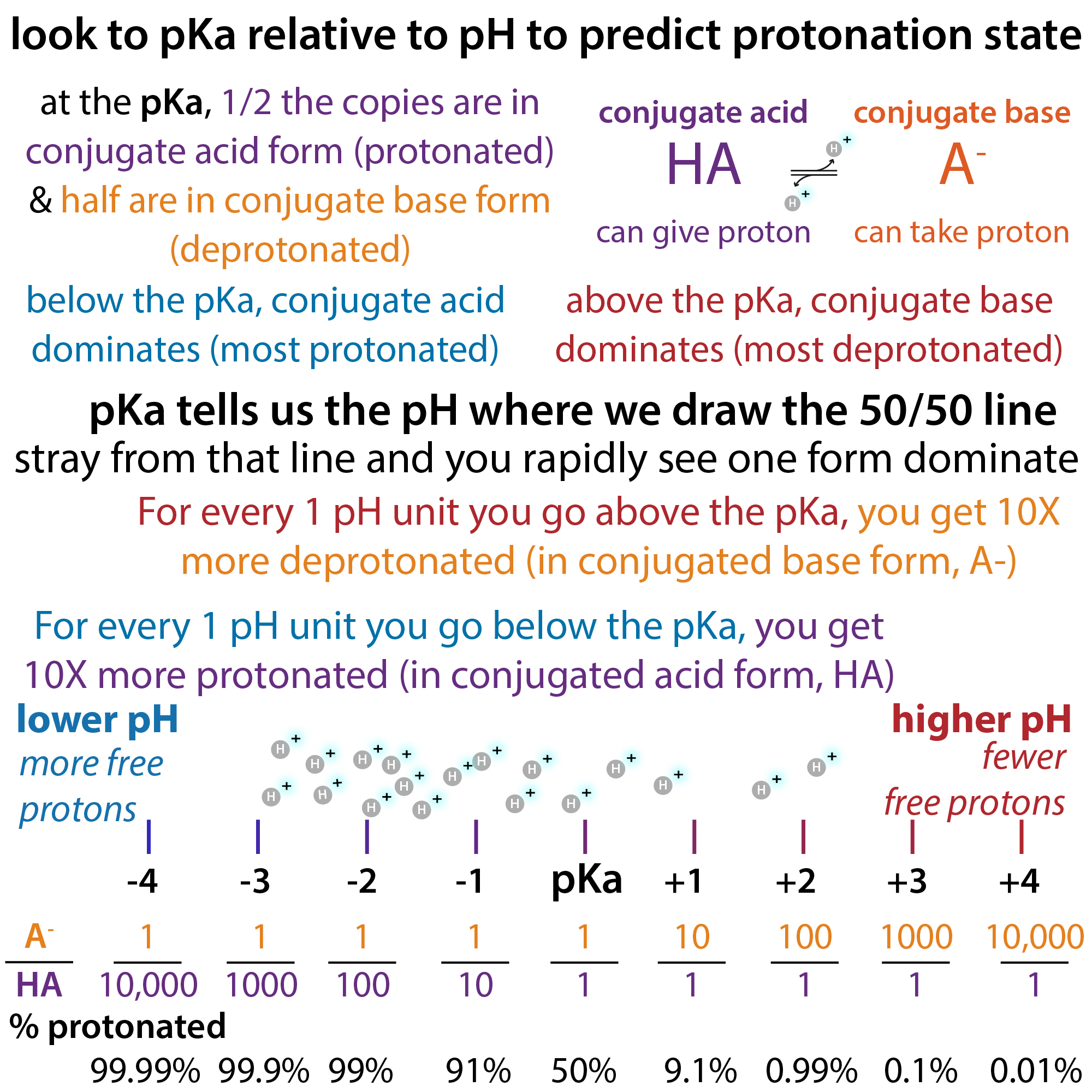
The only one that would really seem like it could go back and forth like that based on its pKa (pH at which half is protonated and half is deprotonated) is histidine, with a pKa or ~6. The others are either way too high or way too low if just floating freely. But, the key thing is that, in the context of the active site, the pKa can be greatly altered thanks to effects from surrounding residues and/or metal ions, as is seen in serine and cysteine proteases.
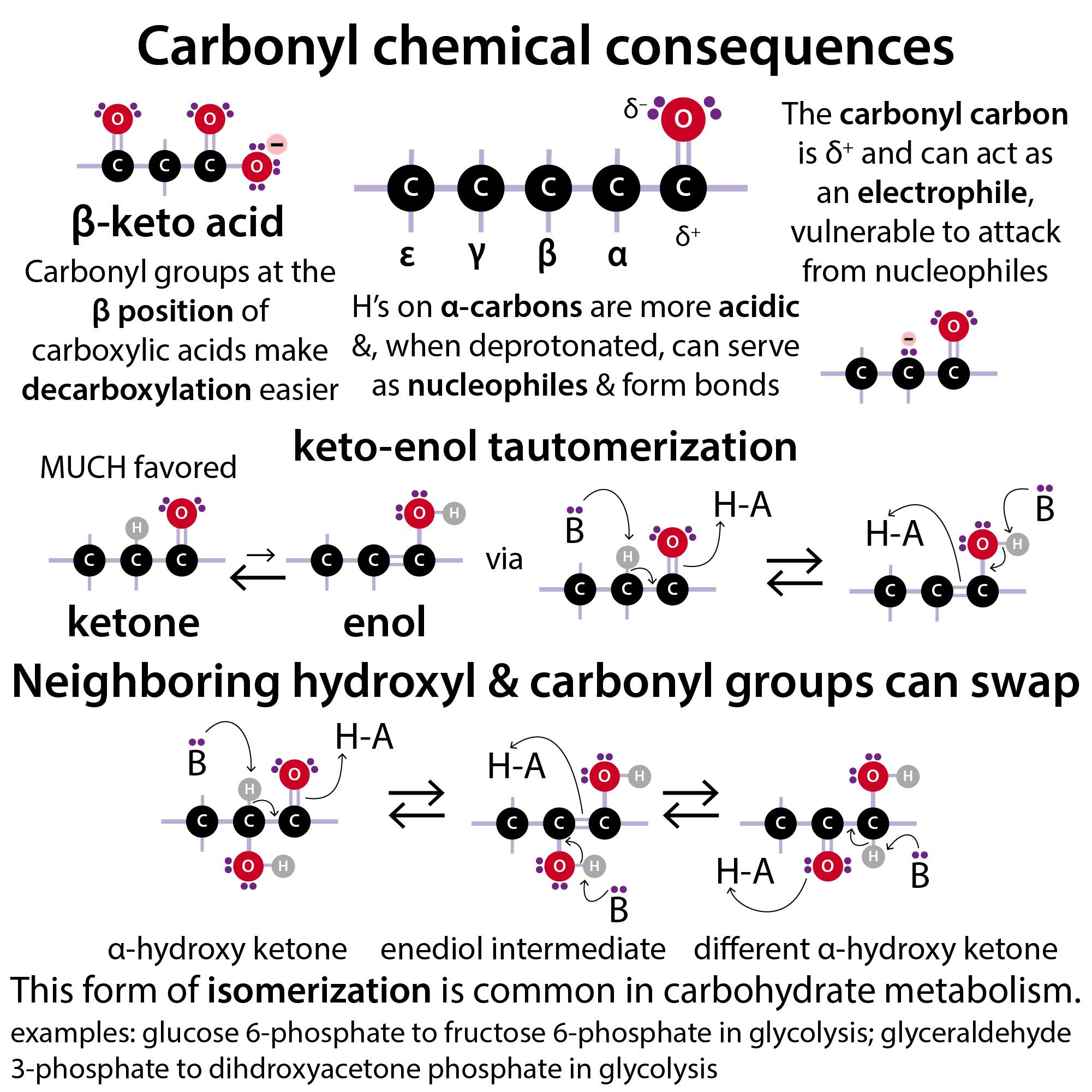
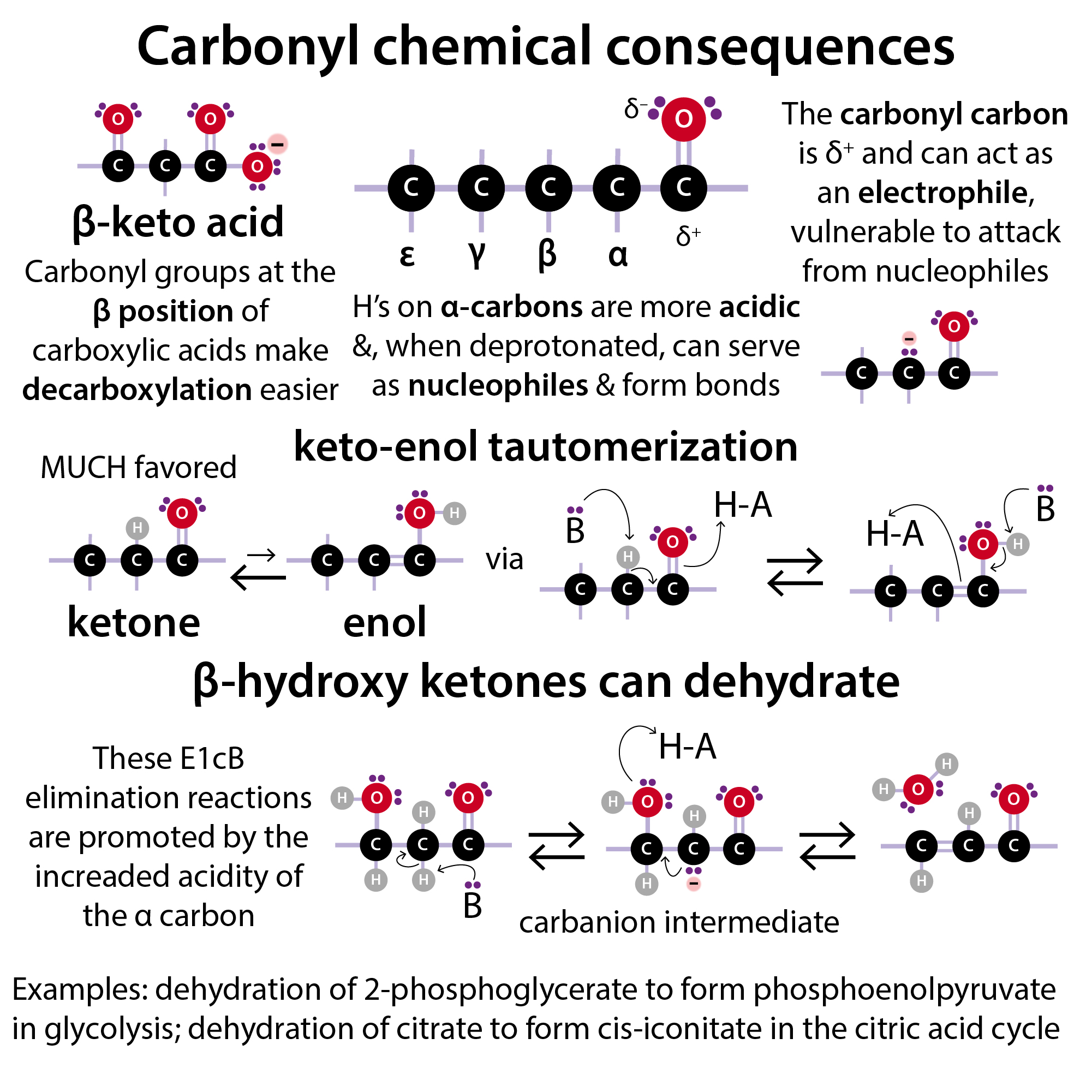
Nucleophilic acyl substitutions happen when you have a good leaving group. But if you just have carbons on either side of the carbonyl (i.e. a ketone) you can get addition, where you actually generate a new tetrahedral center that’s fine as is, with an alcohol where you used to have a ketone. An example of this is the aldol reaction. More here: https://bit.ly/coolcarbonylchem
More on enzyme catalysis: http://bit.ly/enzymecatalysis; YouTube: https://youtu.be/HDxztJ3y6Iw
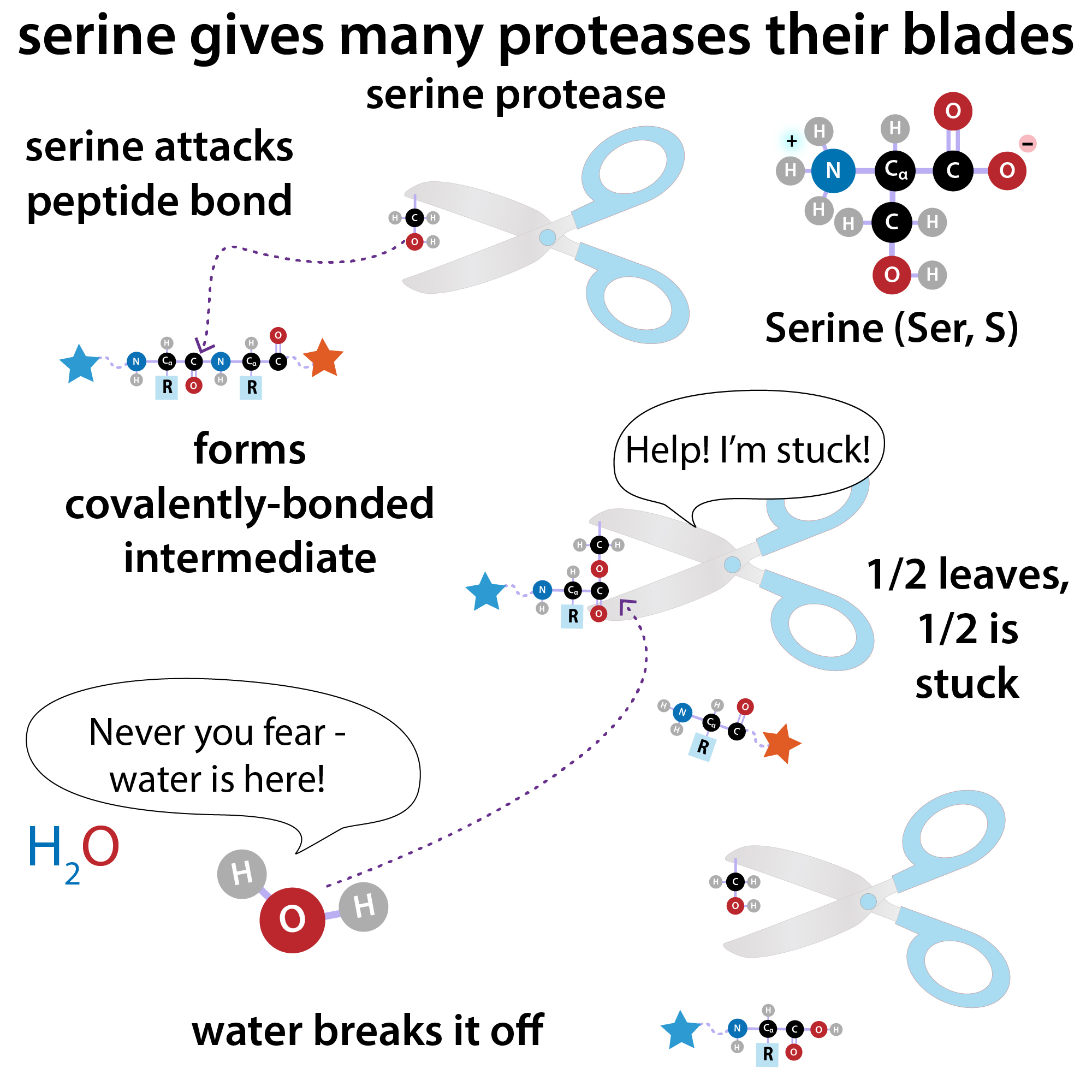
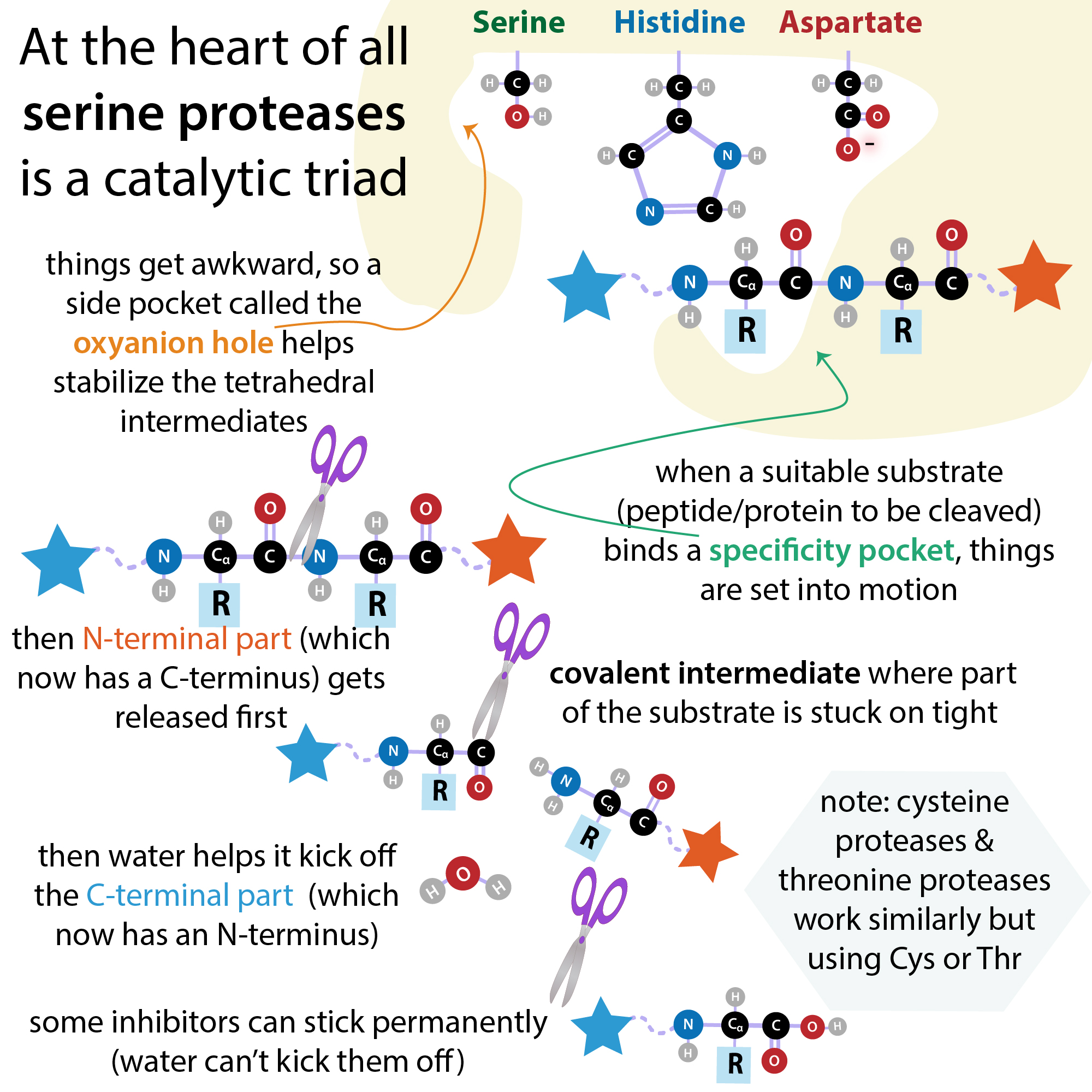
More on proteases: http://bit.ly/serineserineproteases ; YouTube: https://youtu.be/u6b2V3ozeWo
More on pKa: http://bit.ly/phacidbase
More on nucleophiles and electrophiles: http://bit.ly/nucleophilefiles
posts on proteins and amino acids: https://thebumblingbiochemist.com/lets-talk-science/amino-acids/
YouTube channel on amino acids: https://youtube.com/playlist?list=PLUWsCDtjESrFQoCEsEmZX6NxnwlHzjHZ6
Recommended reading:
Organic Chemistry with a Biological Emphasis by Tim Soderberg, LibreText Chemistry Chapter 11: Nucleophilic Acyl Substitution Reactions: https://chem.libretexts.org/Bookshelves/Organic_Chemistry/Book%3A_Organic_Chemistry_with_a_Biological_Emphasis_v2.0_(Soderberg)/11%3A_Nucleophilic_Acyl_Substitution_Reactions
Organic Chemistry A Tenth Edition by John McMurry, Chapter 22: Carbonyl Alpha-Substitution Reactions and Chapter 23: Carbonyl Condensation Reactions, OpenStax https://openstax.org/details/books/organic-chemistry