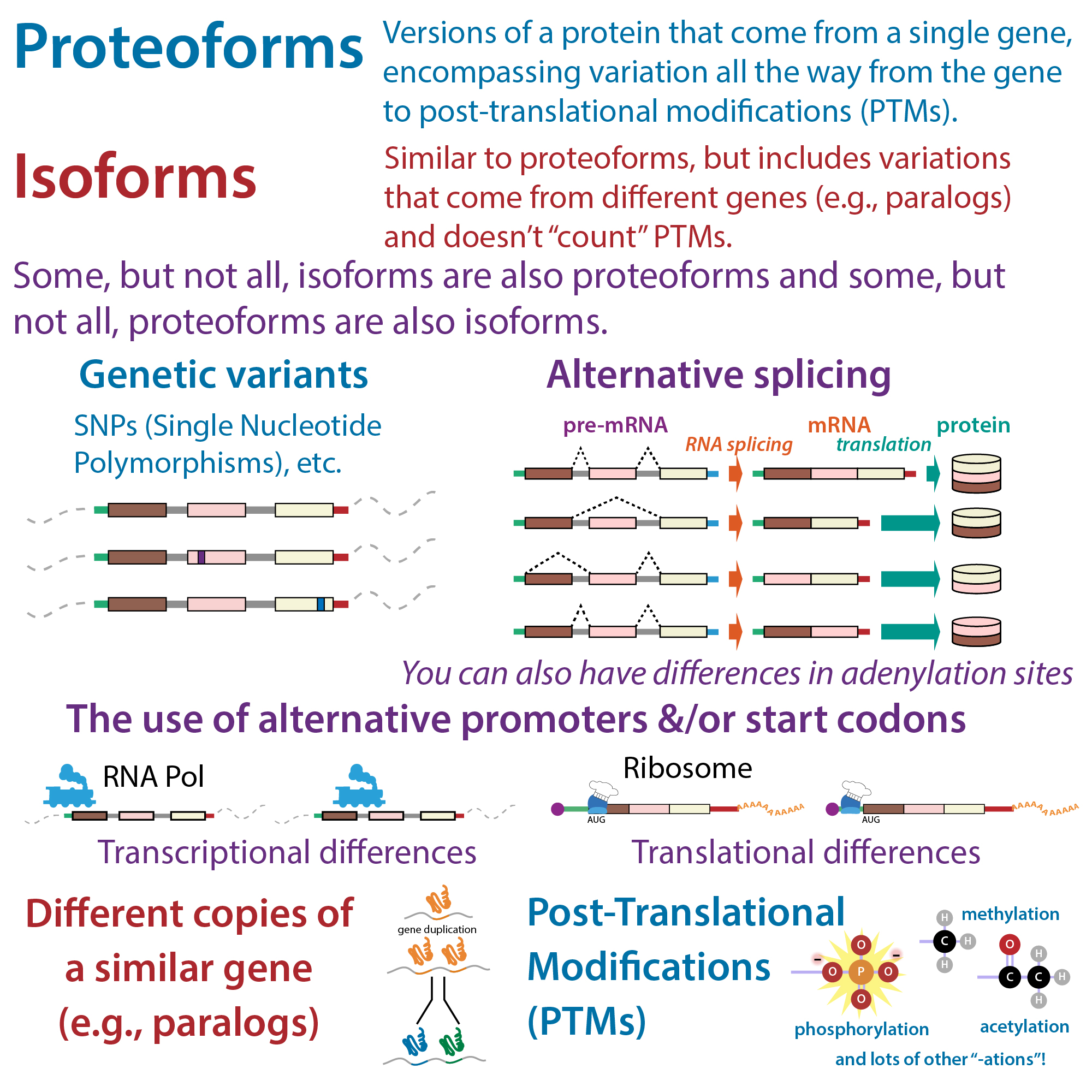
A protein “isoform” is just a version or variant of a protein. Different isoforms of a protein might be expressed (i.e., made) in different intracellular compartments (e.g., mitochondria vs. cytoplasm) and/or in different cell types and/or tissues (e.g. liver vs. heart vs. muscle vs. brain) and/or at different times in a cell’s life. Having such different forms allows for separate regulation and unique properties best suited for their needed roles.
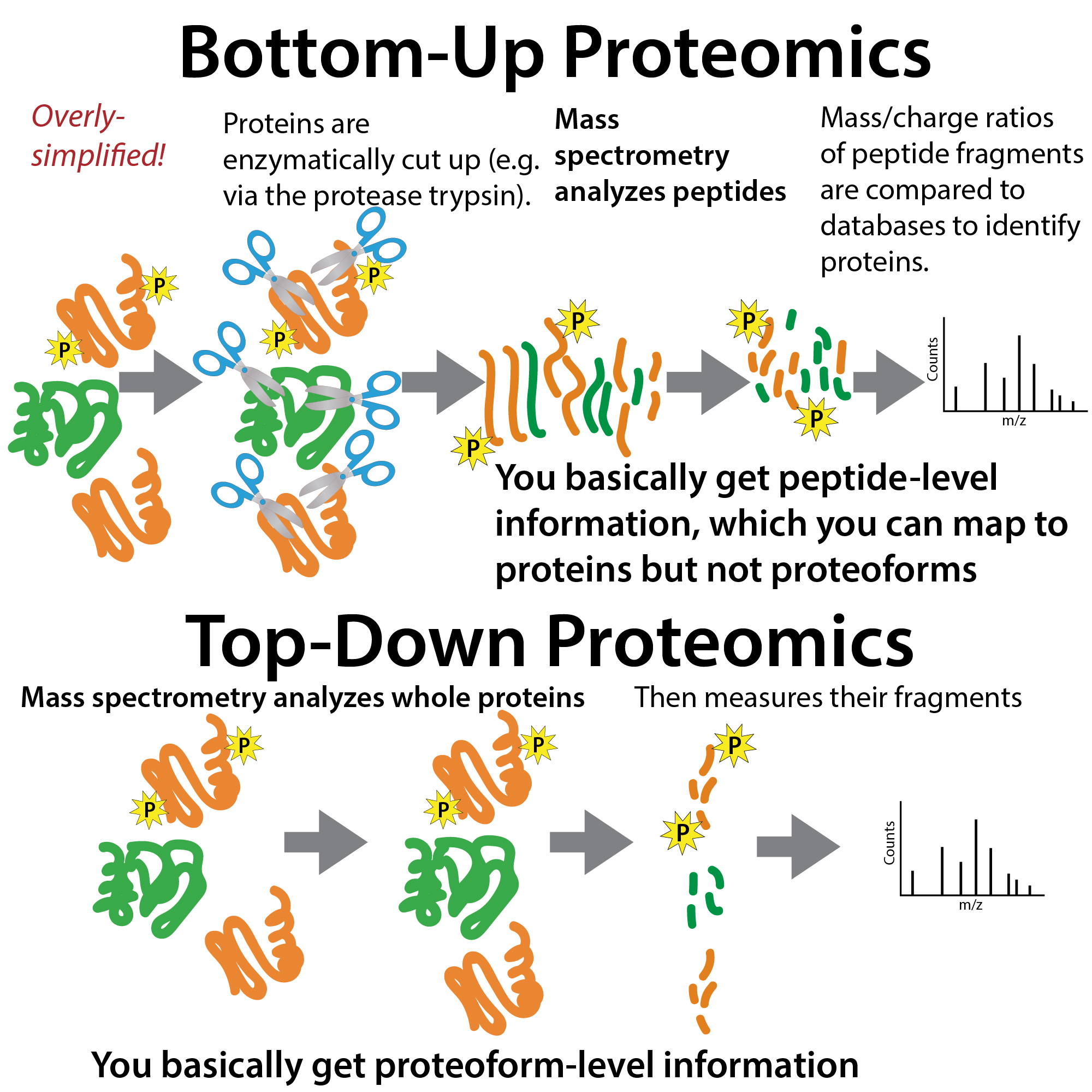
Protein isoforms sometimes come from separate genes (often derived from a common ancestor) and sometimes come from different processing and/or usage of the same gene (through processes like alternative splicing and the use of alternative promoters and/or start codons).
In the cases where the isoforms come from different genes that arose from the same ancestral gene, we can also call them “homologs.” If we’re talking about different isoforms of a protein within a single species, we can further classify them as “paralogs” and they typically arise from a duplication event leading there to be multiple copies of a gene that then evolve separately.
In cases where the isoforms are of enzymes, we can refer to them as “isozymes” or “isoenzymes”
Note that, although protein variants produced via post-transcriptional differences are called isoforms, we typically don’t count post-translational changes (phosphorylation, etc.).
A few sources of same-gene isoforms:
- Alternative splicing: The direct product of gene transcription is a pre-messenger mRNA (pre-mRNA). It contains amino acid placement (protein-coding) information in “chunks” called exons interspersed with regulatory chunks called introns. After a pre-mRNA is made, regulatory regions called introns need to be removed, in a process called splicing. It’s a bit like removing pages separating steps in a cookbook and, depending on how you do it, you might remove some steps, leading to a different final product. Voila! Alternative splicing!
- Alternative promoter start sites: The promoter tells RNA polymerase where to start copying a DNA gene to make pre-mRNA. Sometimes there are options for the RNA polymerase to choose from, leading to different pre-mRNAs, leading to different mRNAs, leading to different protein isoforms.
- Alternative start codon usage: The start codon signals where the ribosome should start reading the mRNA and piecing together amino acids in the order specified by that mRNA to make a protein. Sometimes there are multiple potential start sites, thus multiple possible open reading frames (ORFs) and the final product might be longer or shorter depending on which is chosen.
A couple of examples of isoforms in action:
- Liver vs. muscle isoforms of pyruvate kinase (PK): pyruvate kinase is a key enzyme in glycolysis (it catalyzes the last step). Different forms are made in the liver and the muscle and the form made in the liver has a phosphorylation site for PKA, which enables it to be inactivated when blood glucose is low (signaled through glucagon). This prevents the liver from hogging glucose and instead lets it get shipped out to tissues in need.
There are actually 4 isoforms of pyruvate kinase in humans, encoded for by 2 separate genes, each of which has 2 alternative products:
- PKLR: liver (PKL) and red blood cell (erythrocyte)(PKR) isoforms, produced by alternative promoter use
- PKR: full length, expressed in erythrocytes
- PKL: short variant (exon 1 skipped), expressed in liver, pancreas, kidney, erythrocytes
- PKM: muscles and more! 2 alternative splice products, PKM1 & PKM2
- PKM1: includes exon 9, not 10; expressed in skeletal muscle, heart, brain
- exists as high-activity tetramer
- PKM2: includes exon 10, not 9; expressed in a variety of tissues, embryonic, & proliferating cells
- exists as tetramer, or lower-activity dimers – modifications and/or binding to regulatory molecules regulate the transition – cancer cells can reprogram metabolism and shift flux towards anabolism (growth/making things)
- PKM1: includes exon 9, not 10; expressed in skeletal muscle, heart, brain
- Different isoforms of hexokinase: hexokinase catalyzes the phosphorylation of glucose at the 6th carbon, effectively trapping glucose inside of cells. Most tissues have an isoform of hexokinase with a high affinity for glucose, but that are feedback-inhibited by its product, G6P. This allows them to take all the glucose they need, but prevents them from taking more than they need. The version in the liver and pancreas, however, called “glucokinase” has a lower affinity and isn’t feedback-inhibited. This makes it so 1) it doesn’t hog all the glucose 2) can even let glucose out and 3) can “sense” glucose levels (its kinetic curve is in the liner region under physiological conditions, meaning that relevant changes in glucose concentrations will lead to changes in glucokinase activity). This sensing is important since the liver and pancreas play crucial roles in blood sugar regulation. Additionally, the lack of inhibition allows glucokinase to take in excess glucose when other tissues are sated, preventing glucose from building up in the bloodstream.
More on PK isoforms: PDB-101: Molecule of the Month: Pyruvate Kinase M2; June 2022, Faiza Ahmed, Jonathan Ash, Thirth Patel, Auriel Sanders, David Goodsell, Shuchismita Dutta http://doi.org/10.2210/rcsb_pdb/mom_2022_6
Zhang, Z.; Deng, X.; Liu, Y.; Liu, Y.; Sun, L.; Chen, F. PKM2, Function and Expression and Regulation. Cell Biosci 2019, 9 (1), 52. https://doi.org/10.1186/s13578-019-0317-8.
Rihan, M.; Sharma, S. S. Role of Pyruvate Kinase M2 (PKM2) in Cardiovascular Diseases. J. of Cardiovasc. Trans. Res. 2023, 16 (2), 382–402. https://doi.org/10.1007/s12265-022-10321-1.
more on all sorts of metabolic stuff: https://metabolicnotes.com/ & https://www.youtube.com/playlist?list=PLUWsCDtjESrHXBgulruKEOrNXQ21_0gyc
Proteoforms
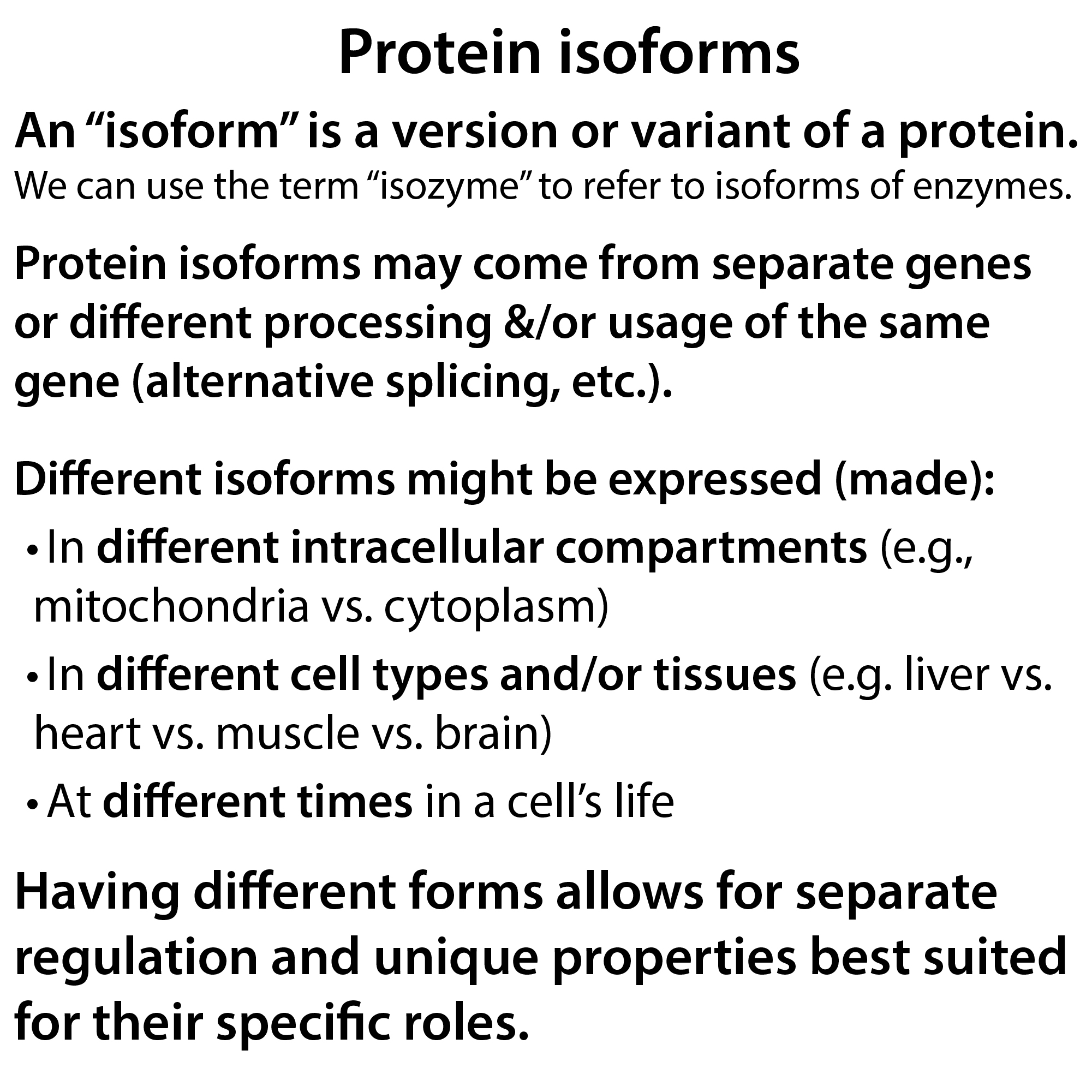
A proteoform is a version or variant of a protein from a single gene, which may come from different variants of a gene (due to SNPs (single nucleotide polymorphisms), mutations, etc.), or from different processing and/or usage of that gene (e.g., alternative promoter usage, alternative adenylation site usage, alternative splicing, alternative translational start sites), or from different post-translational modifications.
A protein isoform is a version or variant of a protein, which may come from different copies of a gene (e.g. homologs, typically paralogs) or from different processing and/or usage of a single gene (e.g., alternative promoter usage, alternative adenylation site usage, alternative splicing, alternative translational start sites).
Basically, isoforms are similar to proteoforms, but includes variations that come from different genes (e.g., paralogs) and doesn’t “count” PTMs.
Some, but not all, isoforms are also proteoforms and some, but not all, proteoforms are also isoforms.
Different isoforms and/or proteoforms of a protein might be expressed (i.e., made) in different intracellular compartments (e.g., mitochondria vs. cytoplasm) and/or in different cell types and/or tissues (e.g. liver vs. heart vs. muscle vs. brain) and/or at different times in a cell’s life. Having such different forms allows for separate regulation and unique properties best suited for their needed roles.
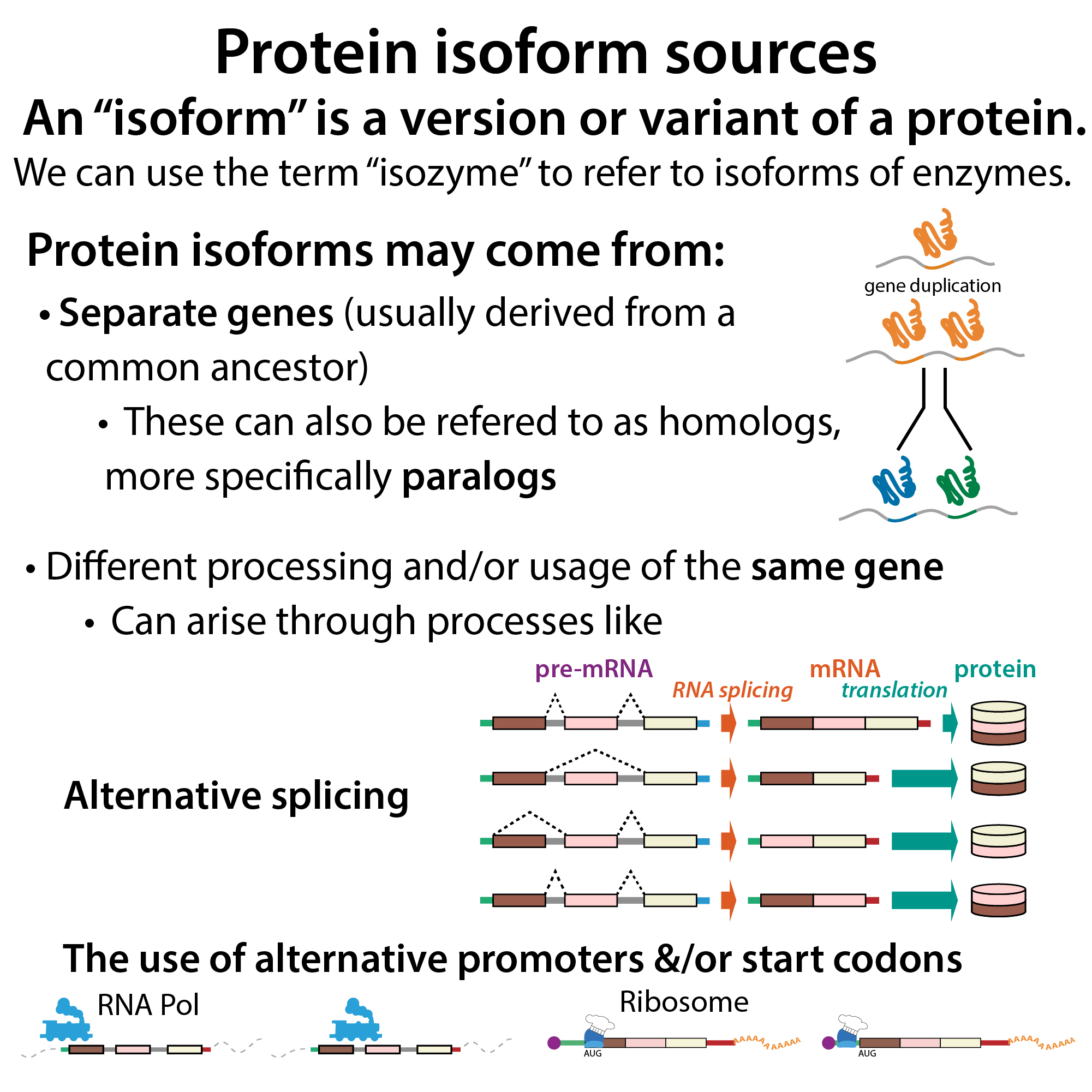
It’s VERY hard to measure proteoforms, but that doesn’t stop scientists from trying, and even cataloguing them! Check out the Human Proteome Atlas, http://human-proteoform-atlas.org/, as well as the below articles for more
Smith, L. M.; Kelleher, N. L. Proteoform: A Single Term Describing Protein Complexity. Nat Methods 2013, 10 (3), 186–187. https://doi.org/10.1038/nmeth.2369.
Korchak, J. A.; Stephen Yi, S.; Kelleher, N. L.; Sahni, N.; Sheynkman, G. M. Proteoform Medicine: Characterizing and Targeting Protein Forms in Human Disease. Nat Rev Genet 2026. https://doi.org/10.1038/s41576-025-00915-1.
More on homologs: https://bit.ly/homologyandmore
More on alternative splicing: https://bit.ly/altsplicing
More on mass spectrometry: https://thebumblingbiochemist.com/365-days-of-science/tandemmassspec/