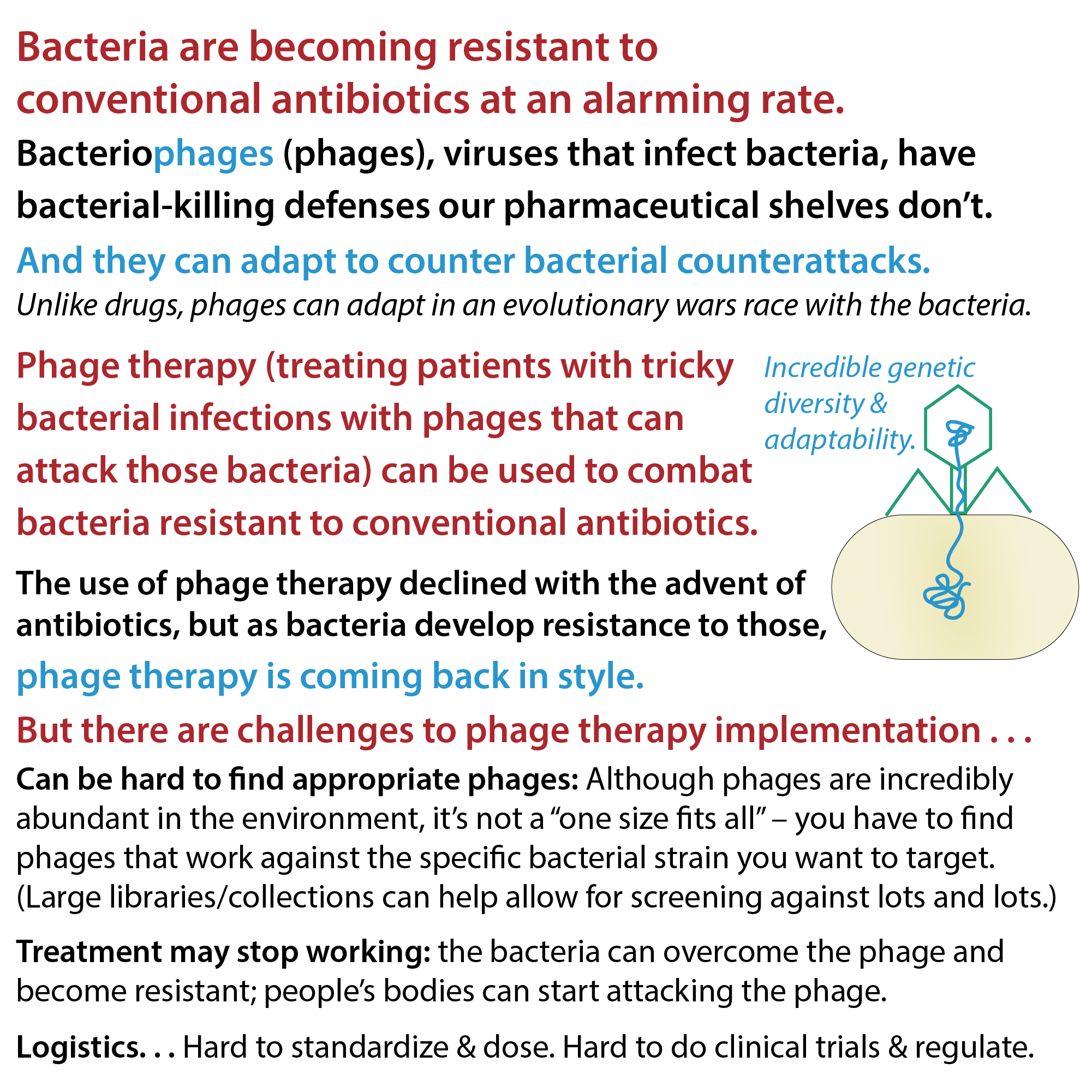
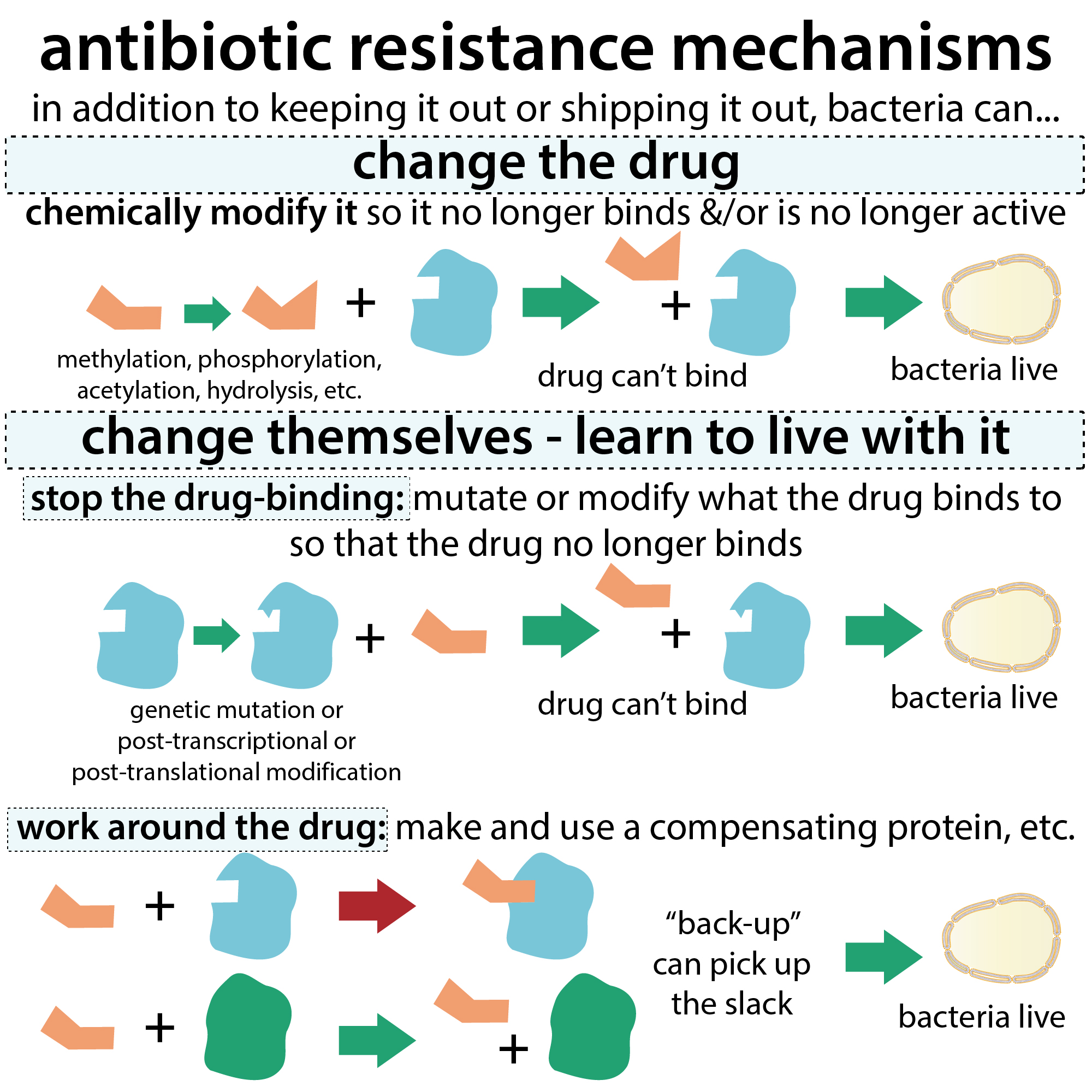
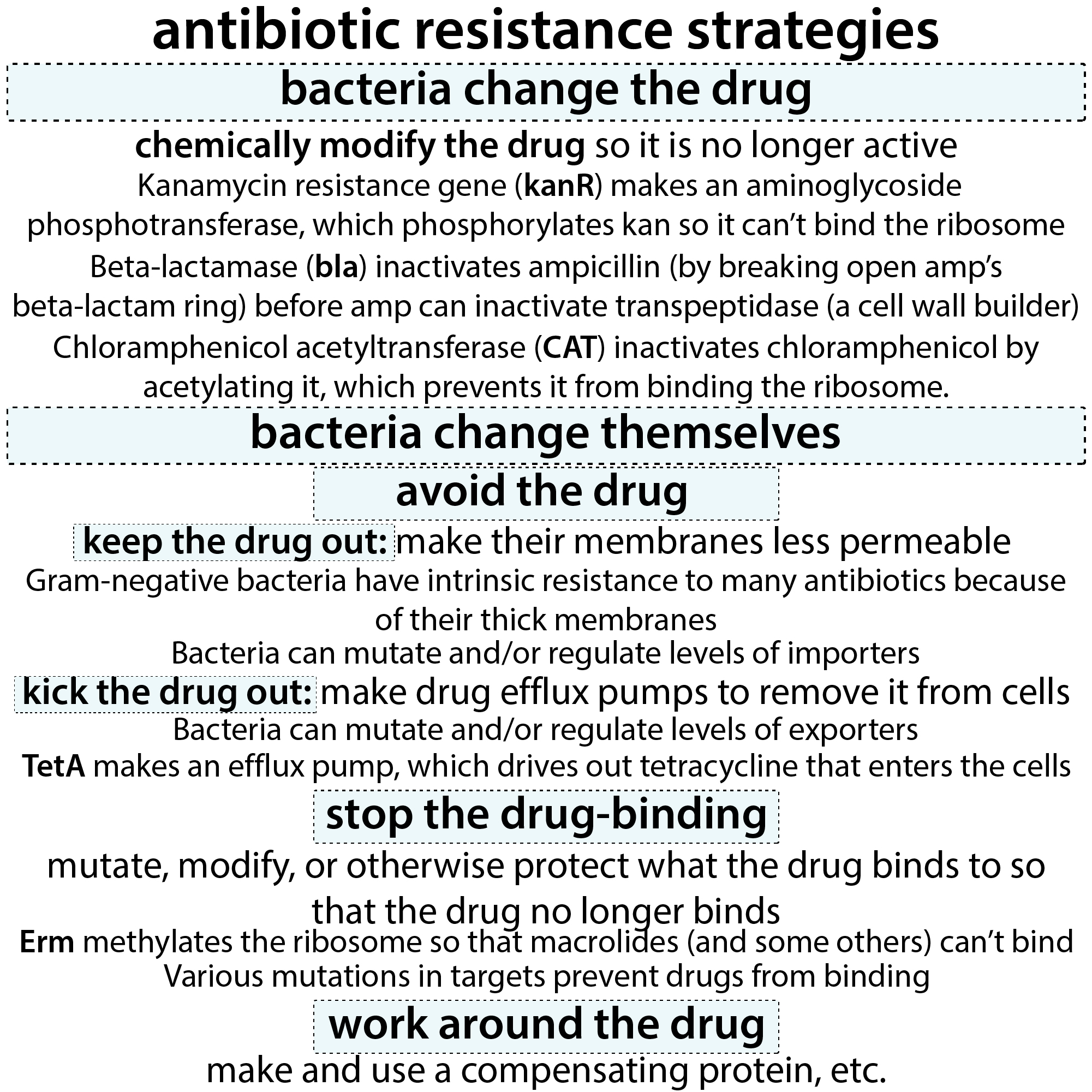
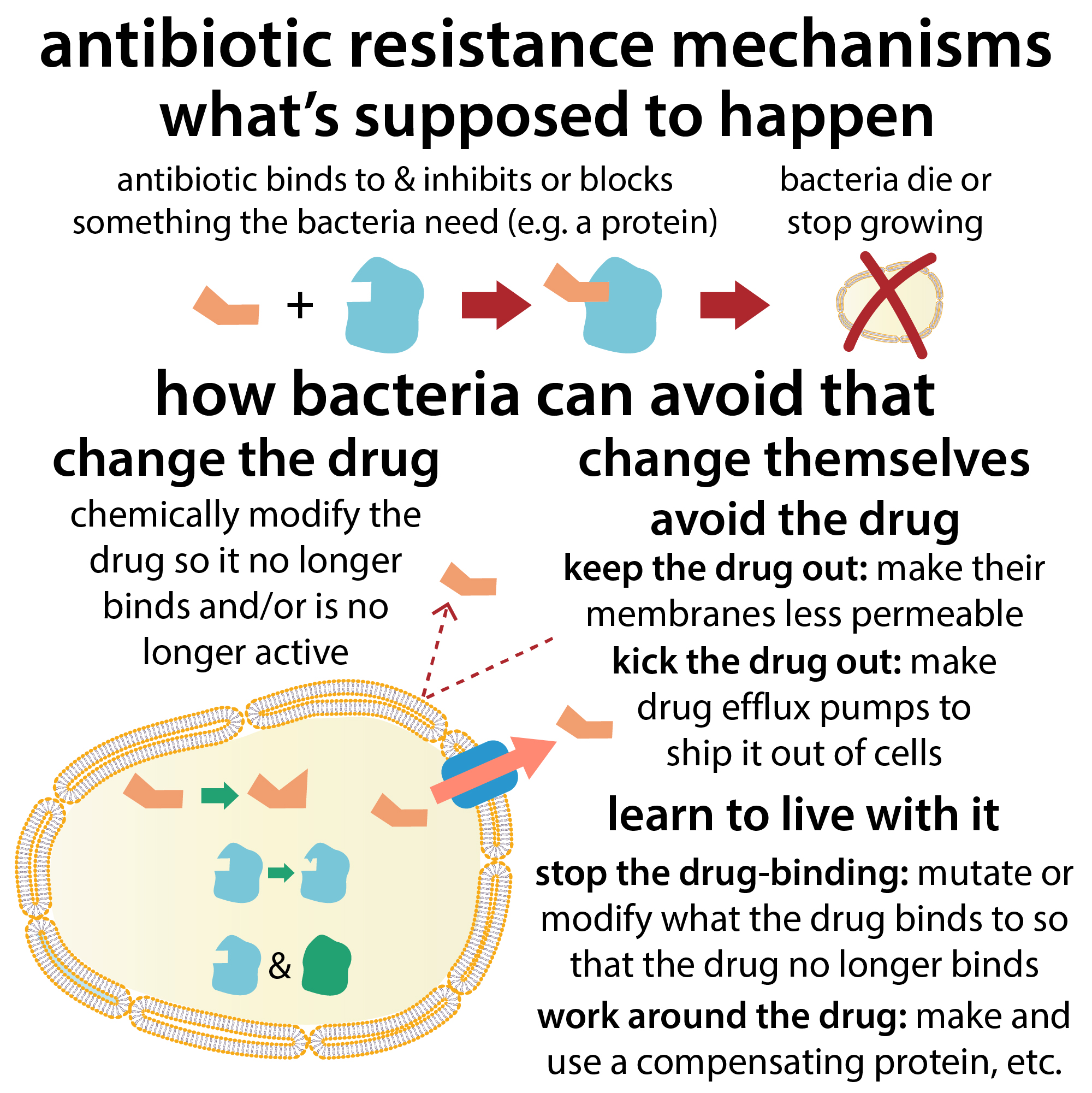
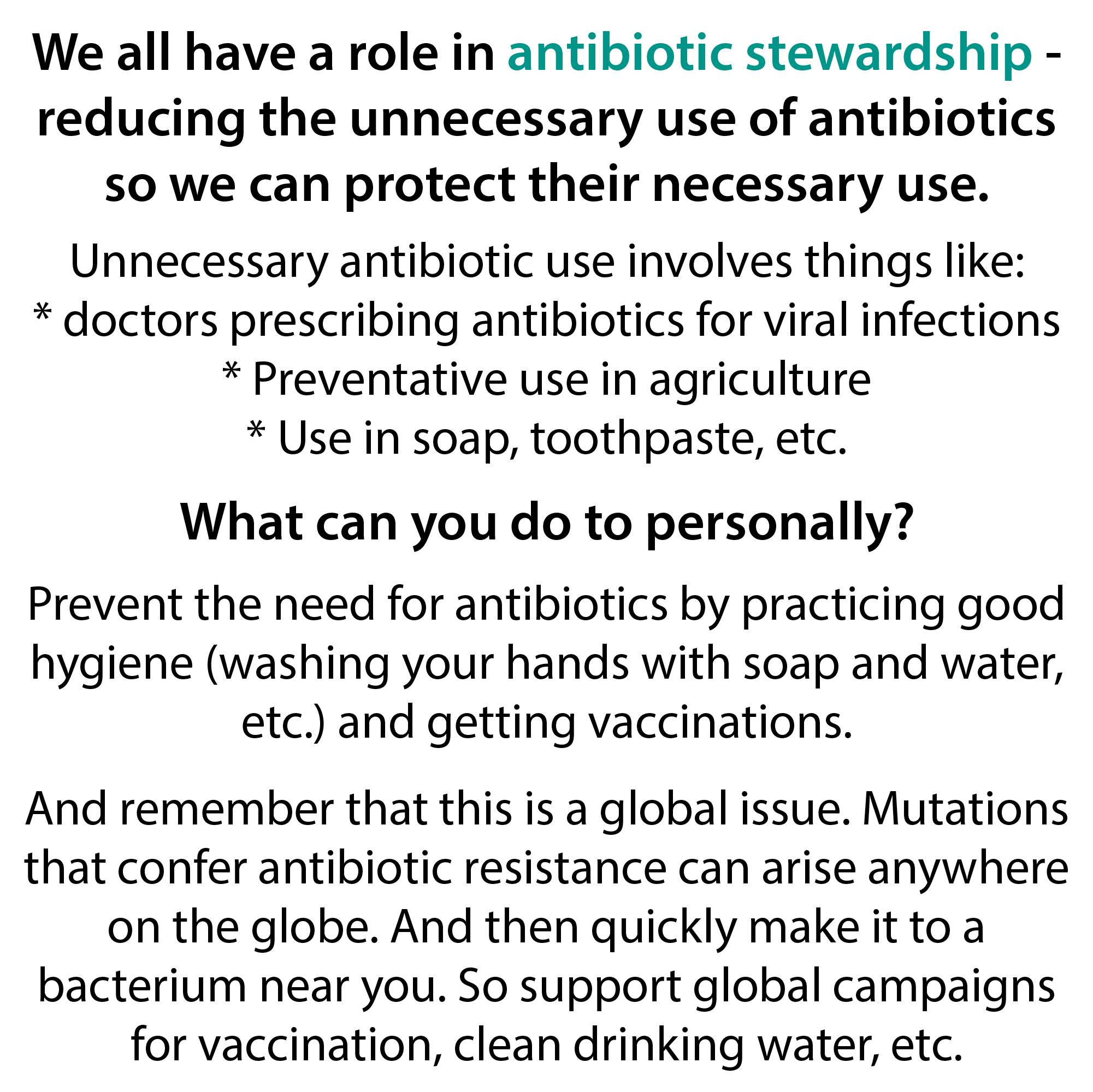
Bacteria are becoming resistant to conventional antibiotics at an alarming rate. Bacteriophages (phages), viruses that infect bacteria, have bacterial-killing defenses our pharmaceutical shelves don’t. And they can adapt to counter bacterial counterattacks. Because phages have their own genomes, unlike drugs, phages can adapt in an evolutionary wars race with the bacteria (endless genetic diversity and adaptivity!!!!). Phage therapy (treating patients with tricky bacterial infections with phages that can attack those bacteria) can be used to combat bacteria resistant to conventional antibiotics. The use of phage therapy declined with the advent of antibiotics, but as bacteria develop resistance to those, phage therapy is coming back in style. (And it’s been continuously used in some countries)
But there are challenges to phage therapy implementation . . .
- Can be hard to find appropriate phages:
- Although phages are incredibly abundant in the environment, it’s not a “one size fits all” – you have to find phages that work against the specific bacterial strain you want to target.
- (Large libraries/collections can help allow for screening against lots and lots.)
- Treatment may stop working:
- The bacteria can overcome the phage and become resistant again.
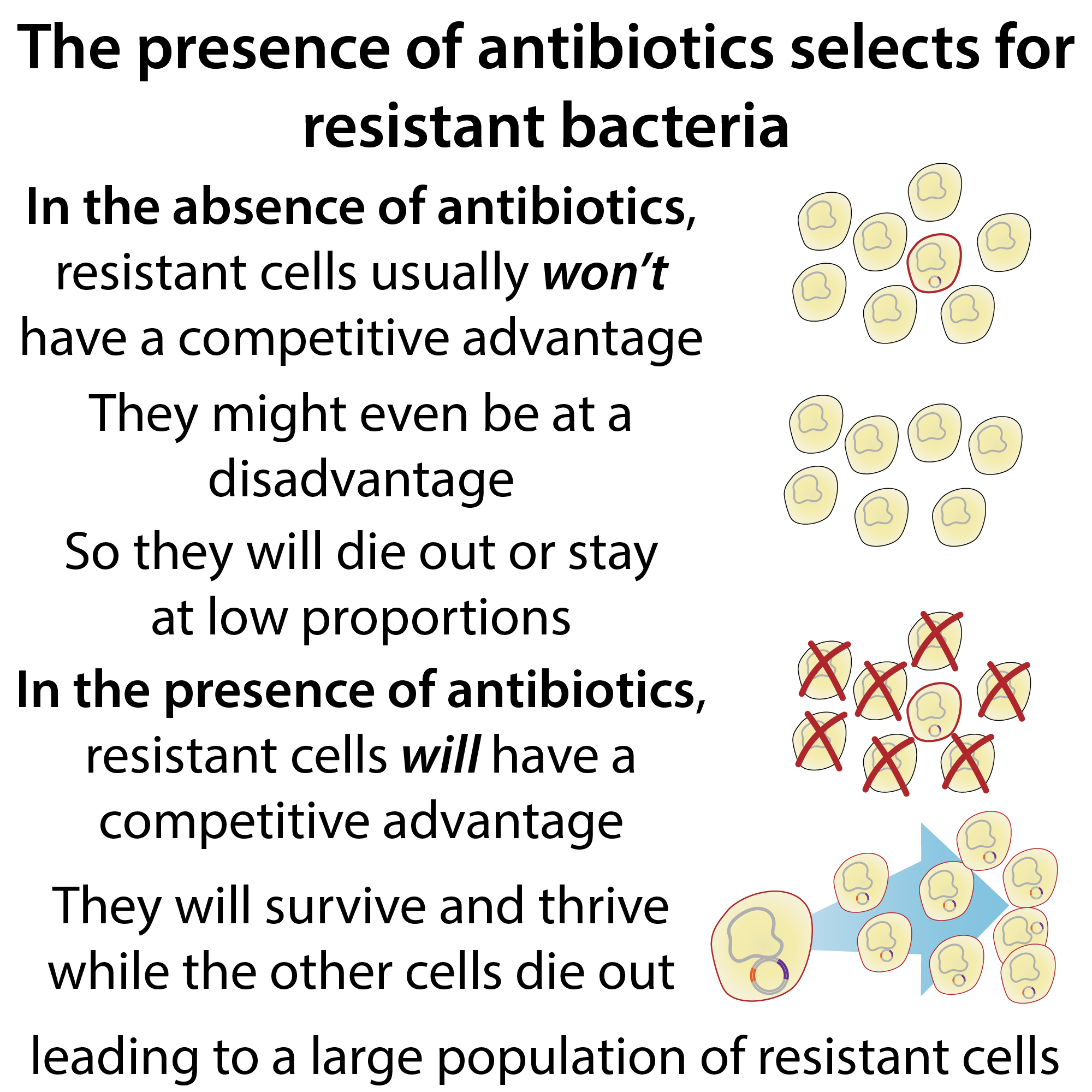
- Hopefully, at this point it’s after a lot of evolutionary warsmanship between the bacteria and phage as they develop attacks and counterattacks. Those often cause fitness defects and may make the bacteria vulnerable to conventional antibiotics they were once resistant to.
- People’s bodies can start attacking the phage.
- The bacteria can overcome the phage and become resistant again.
- Logistics…
- Hard to standardize & dose.
- Hard to do clinical trials & regulate.
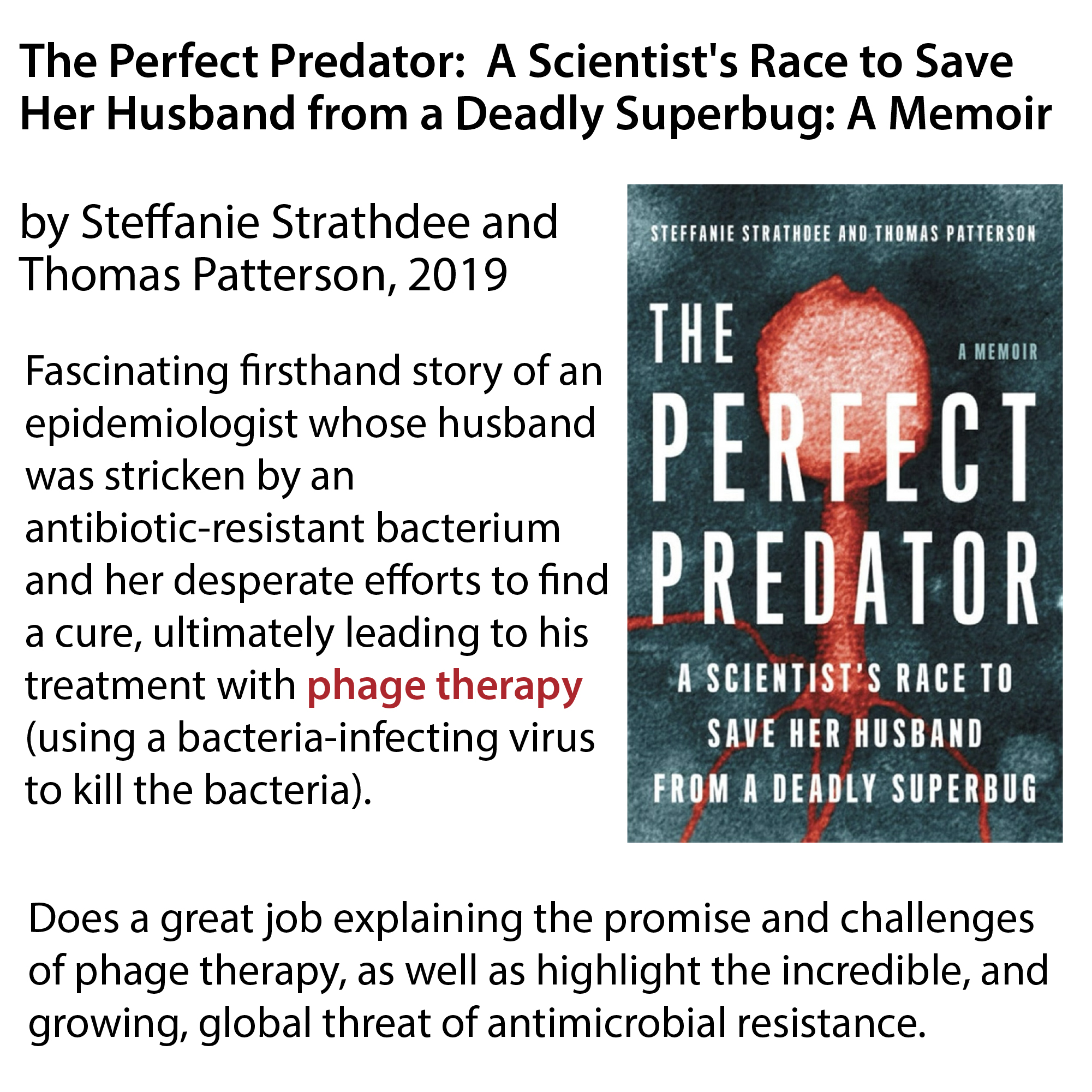
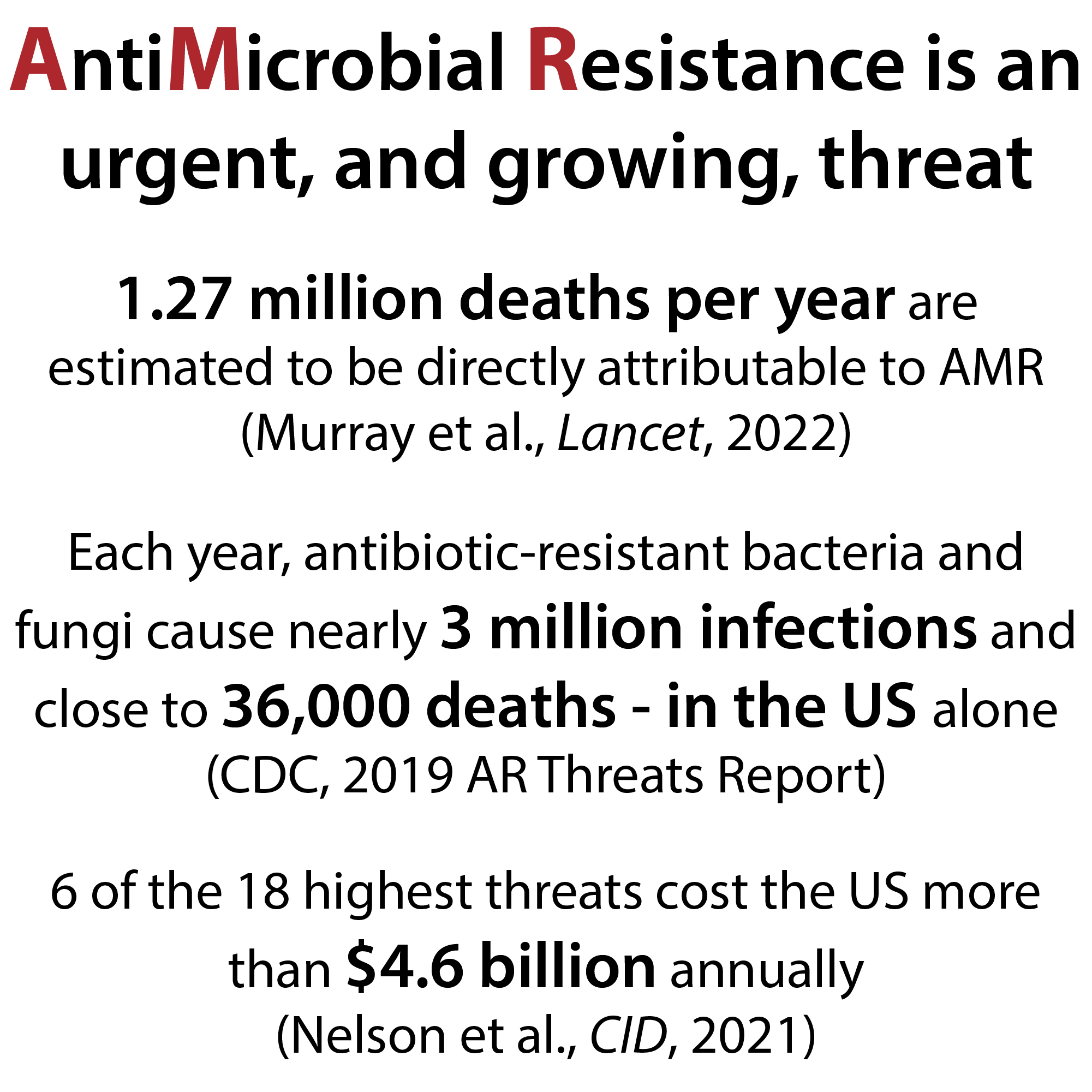
I highly recommend the book “The Perfect Predator: A Scientist’s Race to Save Her Husband from a Deadly Superbug: A Memoir” by Steffanie Strathdee and Thomas Patterson (2019). It’s a fascinating firsthand story of an epidemiologist whose husband was stricken by an antibiotic-resistant bacterium and her desperate efforts to find a cure, ultimately leading to his treatment with phage therapy. It does a great job explaining the promise and challenges of phage therapy, as well as highlight the incredible, and growing, global threat of antimicrobial resistance (AMR).
And if you want to learn more about phage therapy here are some nice articles:
“General audience”:
- WHO (World Health Organization) Bacteriophages and their use in combating antimicrobial resistance, 17 February 2025 https://www.who.int/europe/news-room/fact-sheets/item/bacteriophages-and-their-use-in-combating-antimicrobial-resistance
- STAT: Phage therapy: Researchers sharpen another arrow in the quiver against antibiotic resistance, By Deborah Balthazar Feb. 20, 2024 https://www.statnews.com/2024/02/20/phage-therapy-research-antibiotic-resistance/
And scientific review article:
- Subramanian, A. Emerging Roles of Bacteriophage-Based Therapeutics in Combating Antibiotic Resistance. Front. Microbiol. 2024, 15. https://doi.org/10.3389/fmicb.2024.1384164.
More about antimicrobial resistance from these past posts from 2022:
- AntiMicrobial Resistance (AMR)
- Biochemistry of AntiMicrobial Resistance (AMR) & antibiotic resistance mechanisms