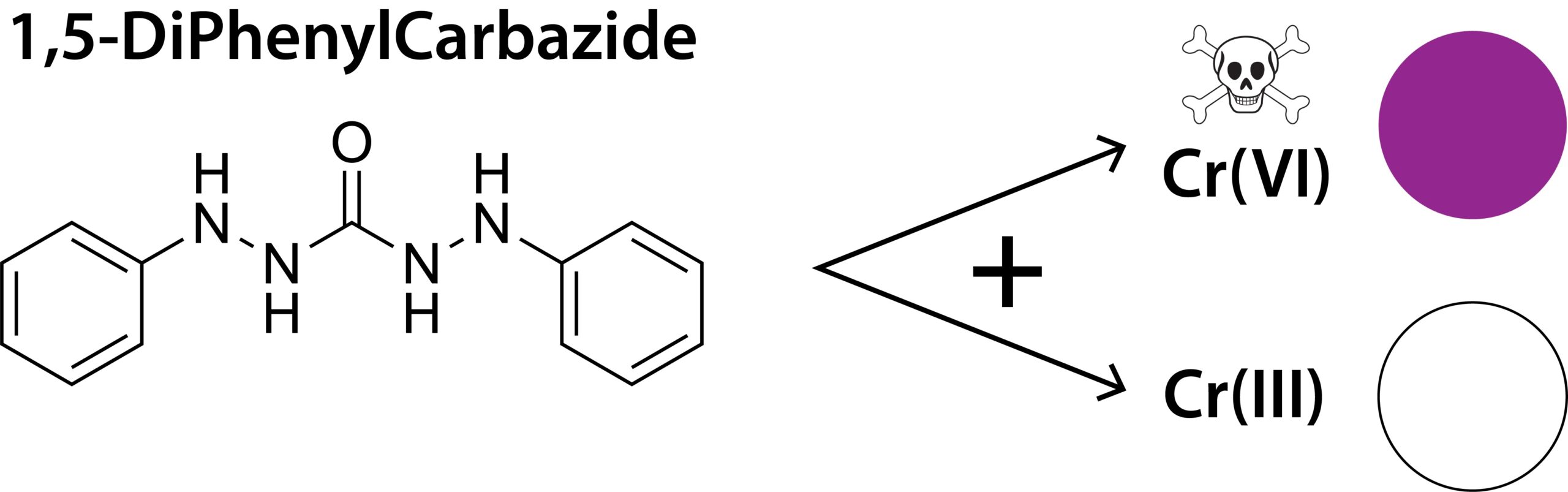
The main reason the heavy metal chromium is so toxic is that it’s an oxidant. The hexavalent form of Cr, Cr(VI) can attack and oxidize things, which is bad in our bodies, but allows us to detect its presence using a DPC (1,5-diphenylcarbazide) assay. “Assay” is just a fancy word for an experiment where you’re measuring something. And in this case, we were measuring Cr(VI) (that’s the bad stuff, remember). DPC reacts with Cr(VI) (but not Cr(III)) to form a purple complex.
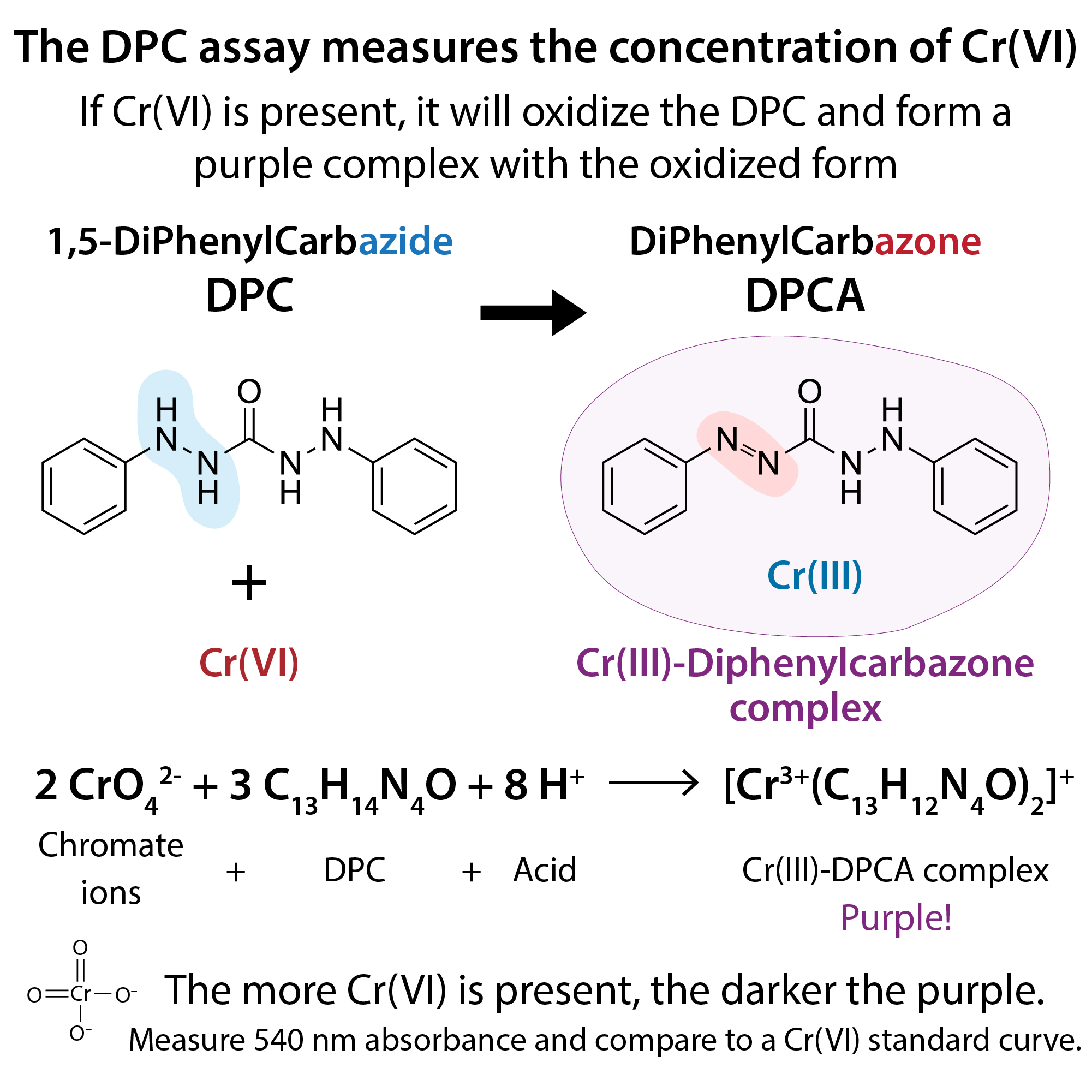
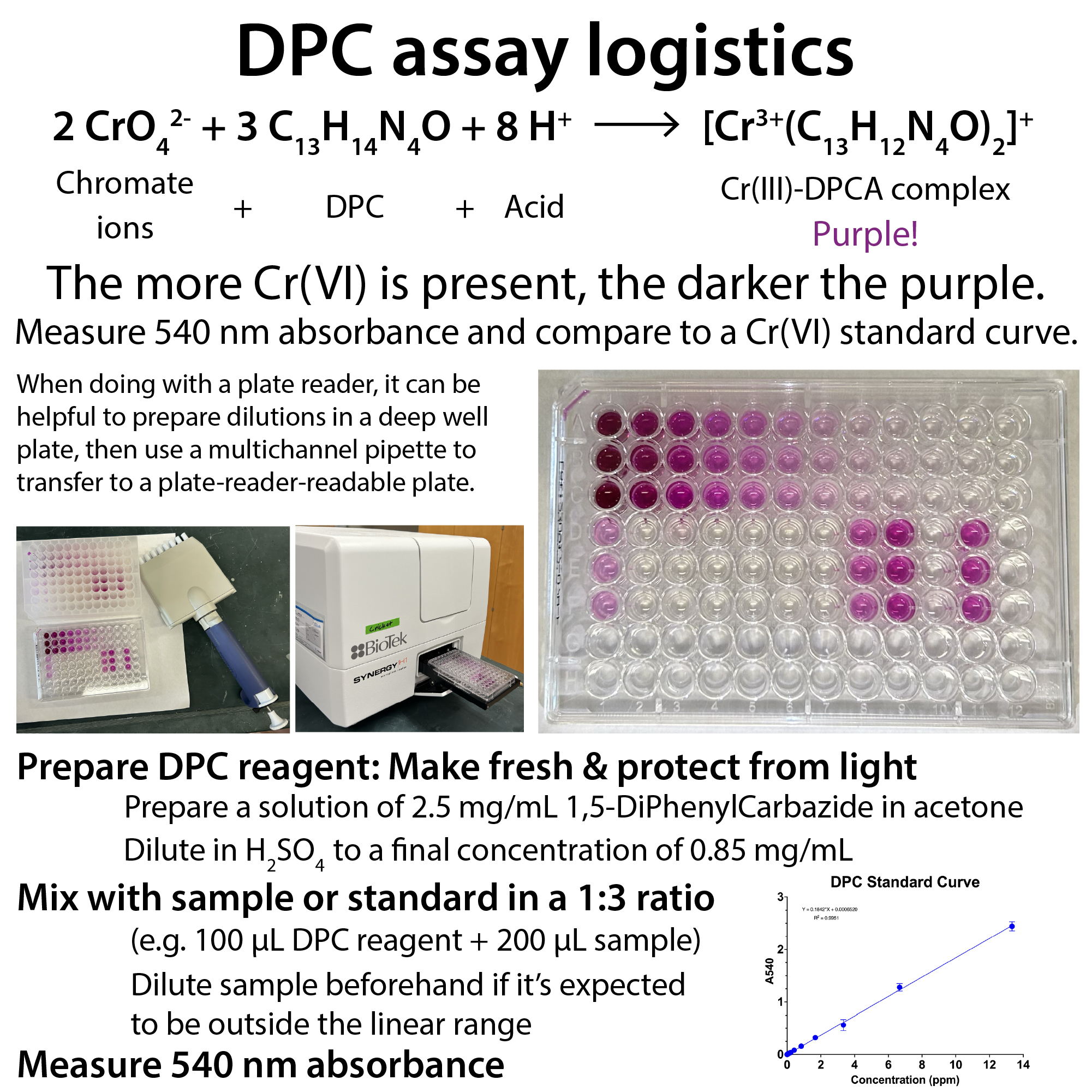
How it works is that the DPC gets oxidized by Cr(VI) to form diphenylcabazone (DPCA), reducing Cr(VI) to Cr(III) in the process. The Cr(III) and the DPCA then form a purple compound. The purpleness (which you can measure by measuring absorbance of 540 nm light) corresponds directly to the amount of Cr(VI) present. So you can measure absorbance at 540 nm and compare to a standard curve of Cr(VI) of known concentrations to determine the amount of Cr(VI) present.
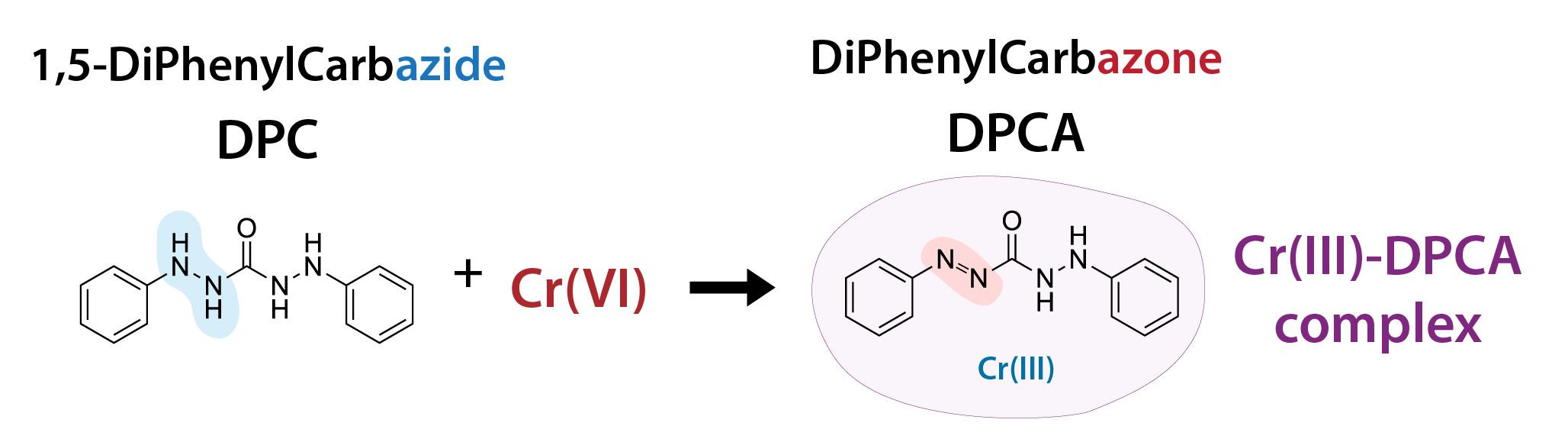
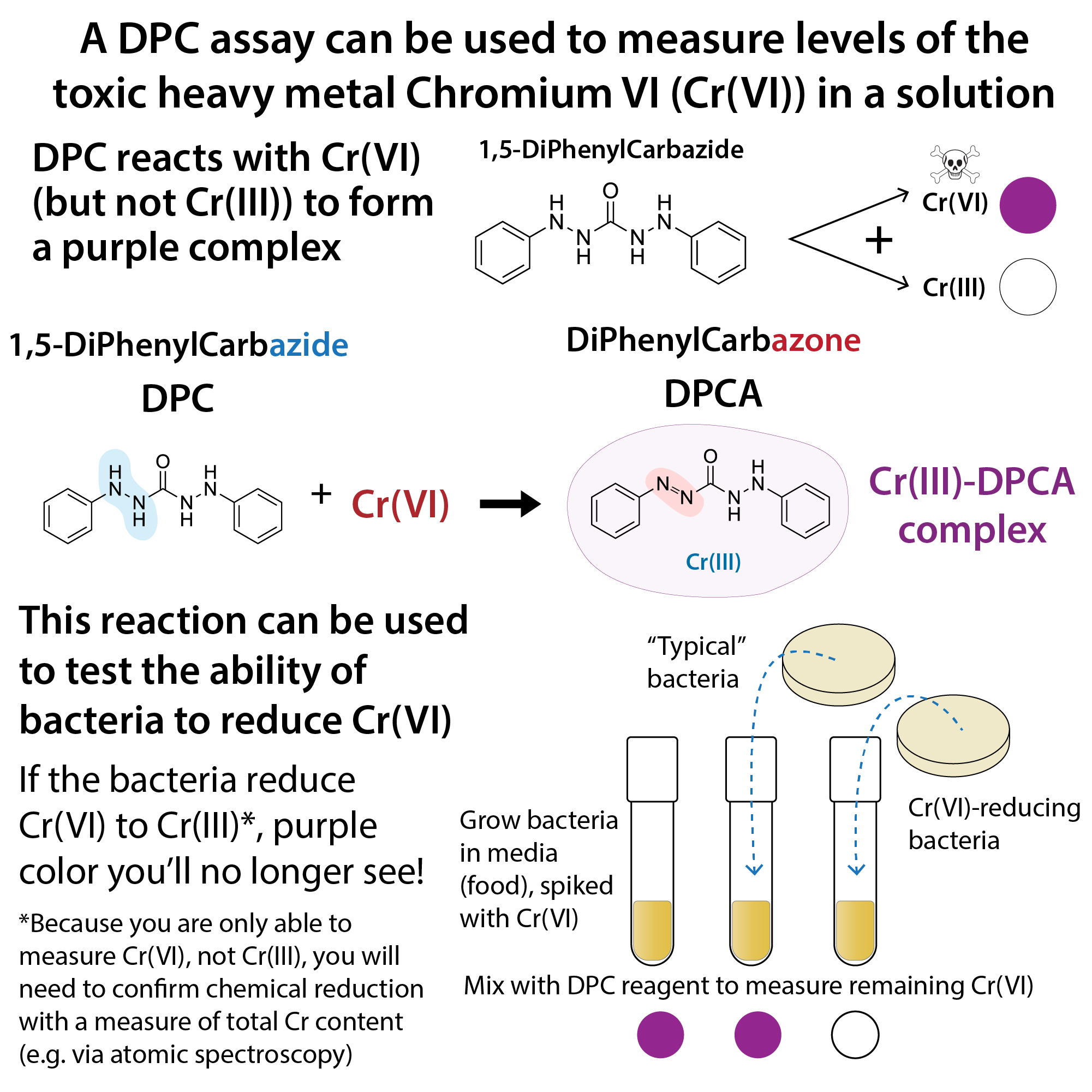
We use this to determine if our bacteria are able to reduce Cr(VI) levels in their environment. If we add Cr(VI) to the media (broth) the bacteria is growing in, and test the broth with the DPC assay, we will see a purple color unless the bacteria were able to reduce the Cr(VI). In such a case, the purple color would “disappear.” And this is what we found happen with many of the strains.
Note that technically, because the DPC assay only measures Cr(VI) and not Cr(III), in order to definitively say that the bacteria were chemically reducing Cr(VI) to Cr(III), we needed to supplement our DPC assay with atomic emission spectroscopy, which measures total Cr levels. When we did this previously, we were able to confirm that total Cr levels remained unchanged although Cr(VI) levels disappeared, indicating that Cr(VI) was reduced to Cr(III).
Here’s our protocol in case it’s helpful to anyone:
Preparation:
Prepare DPC reagent:
- 3M H2SO4 (sulfuric acid)
- 0.25% (w/v) DPC (1,5-diphenylcarbazide, dissolved in acetone)
- For 50 mL: Dissolve 125 mg DPC in acetone
- Store @4°C protected from light (wrapped in foil)
Step-by-step:
- Dissolve 0.125 g of DPC solid in 50 ml of acetone in 50 ml conical (to 2.5 mg/mL)
- In a separate conical tube, add 17 mL 3M H2SO4 and 33 mL DPC solution to make the DPC reagent
Prepare samples:
- Prepare a serial dilution of potassium dichromate
- If needed, pre-dilute samples to be in linear range (in our case ~15 ppm (mg/L))
Reaction:
- Mix sample with DPC reagent in a 1:3 ratio (e.g. 100 µL sample + 200 µL DPC reagent)
Measurement:
- Transfer 100 μL of each prepared well (standard curve & samples) into a microplate (use multichannel to assist) and measure Absorbance at 540 nm
Data analysis
- Calculate concentrations in each well:
- Plot [Cr(VI)] against OD540
- Determine linear range
- Perform a linear regression of linear range – you should get an equation in the form of OD540 = [Cr(VI)]*slope + y-intercept
- Rearrange linear equation to solve for [Cr(VI)]:
- OD540 = [Cr(VI)]*slope + y-intercept
- [Cr(VI)] = (OD540 – y-intercept)/slope
- Apply above equation to calculate unknown Cr(VI) in (potentially diluted) samples
- Account for dilutions if needed by multiplying by the dilution factor to find the initial concentrations