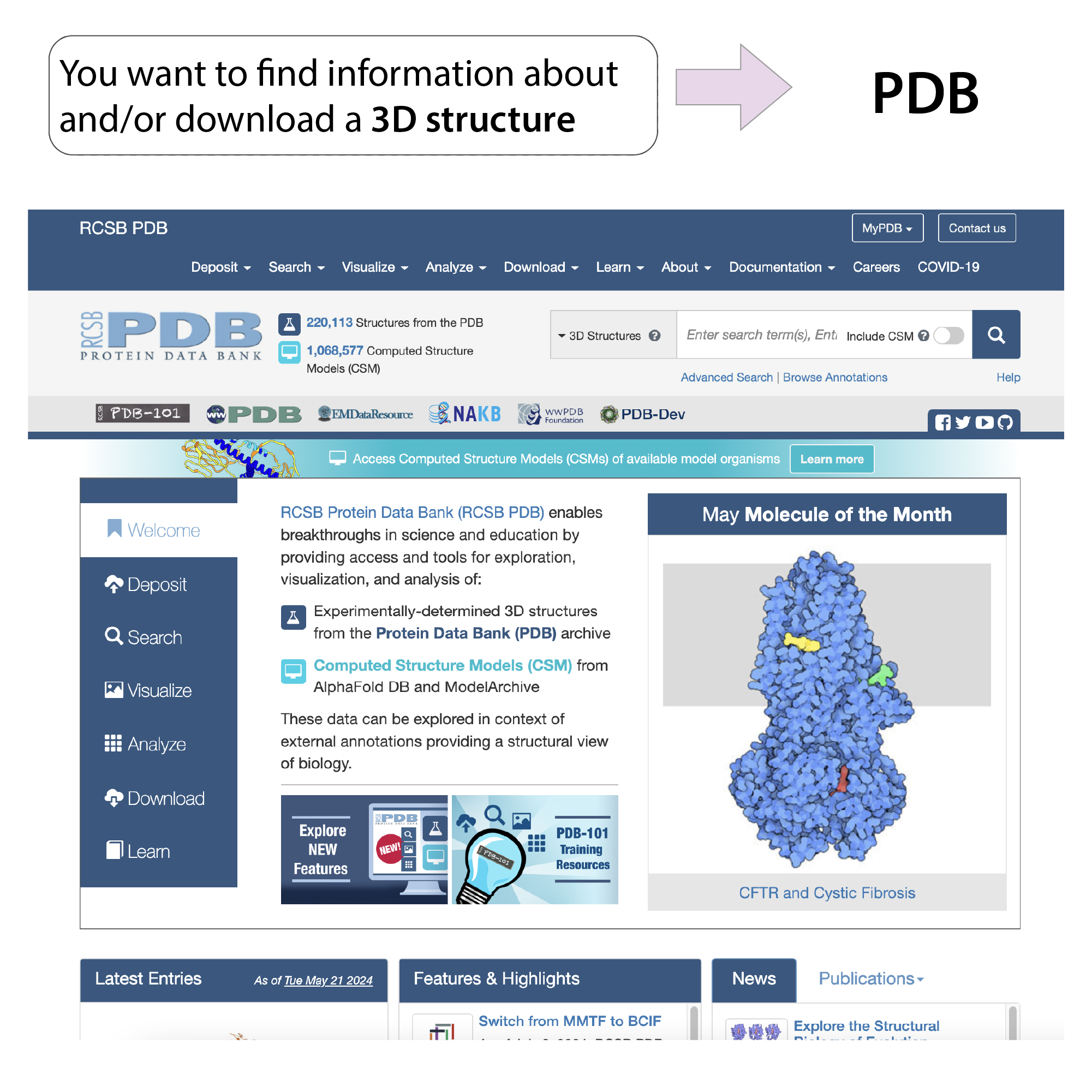
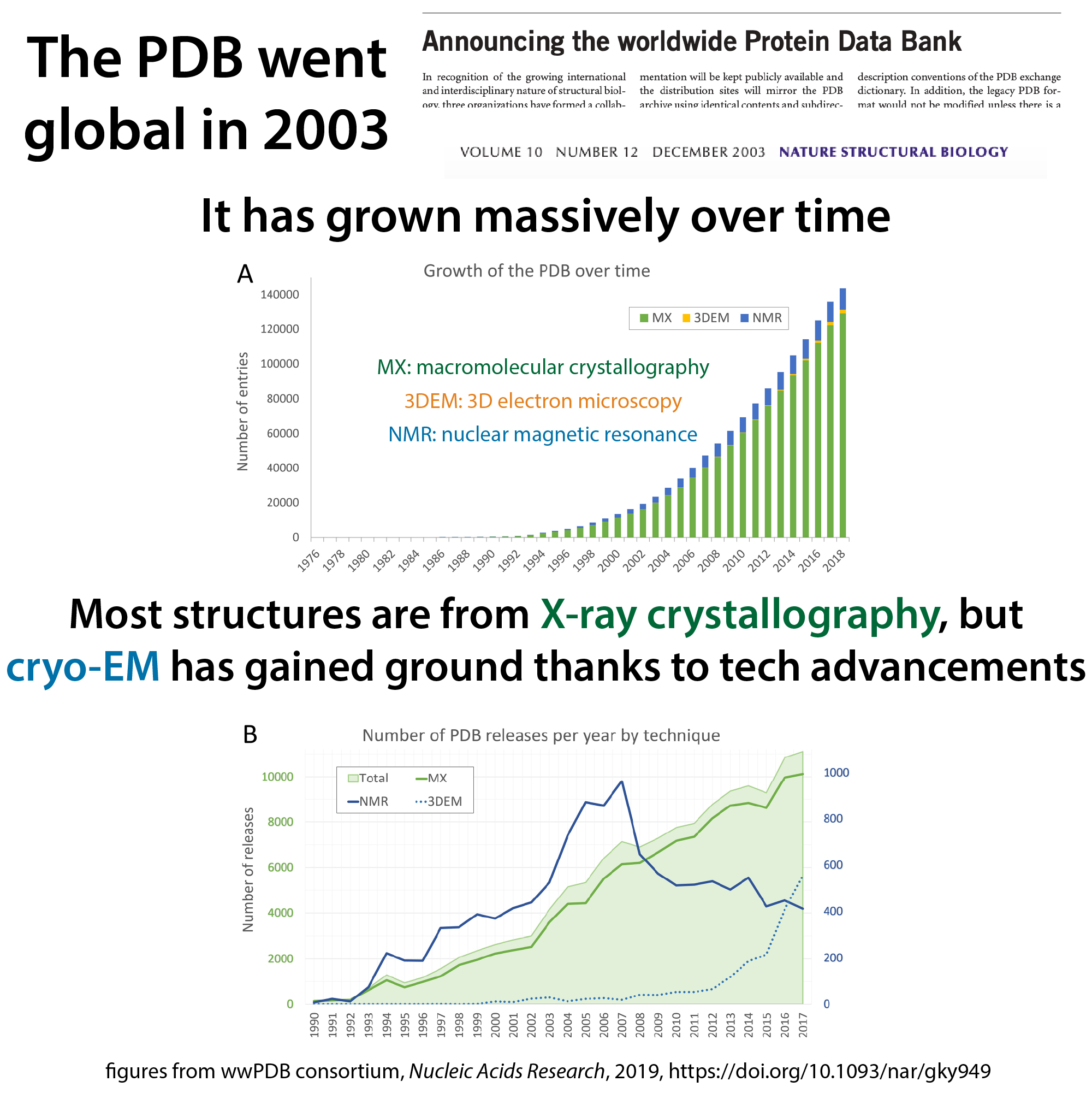
As the PDB (Protein Data Bank) grows, it is running out of 4-character PDB IDs (accession codes you use to access macromolecular structural data). So, PDB IDs are growing too! Rather than 4 characters, they’re transitioning to 12, starting “pdb_”. And they want you to start making the transition now. To the longer codes and to the PDBx/mmCIF data format.
You can adapt old codes by adding “pdb_0000” to the beginning of them.
For example, 9cn3 becomes pdb_00009nc3
They expect they’ll run out of the 4-character ones by 2029, and then only issue the long ones, but the long ones work already for the ones that were originally issued 4-character ones. So you can use them with your molecular visualization software, etc.
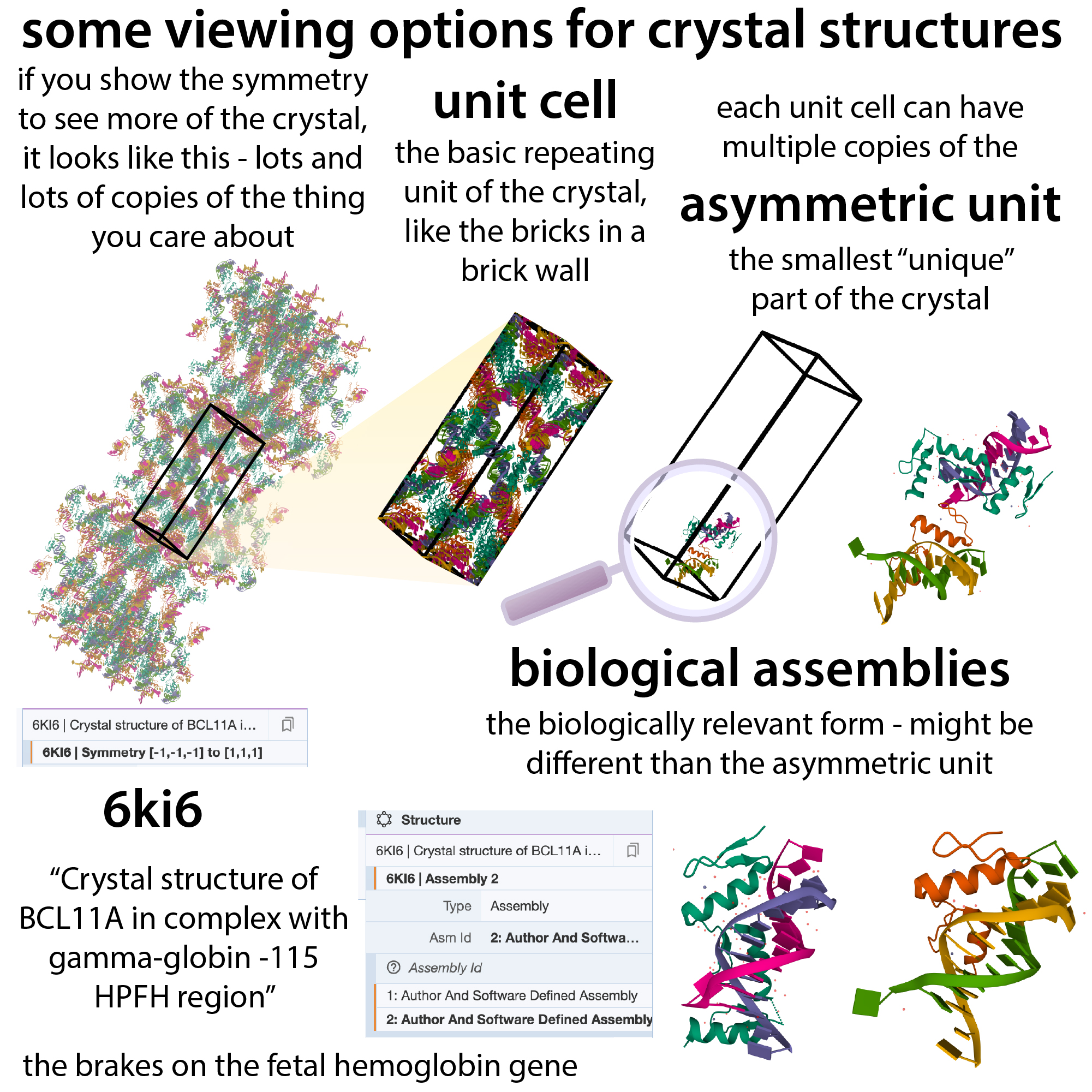
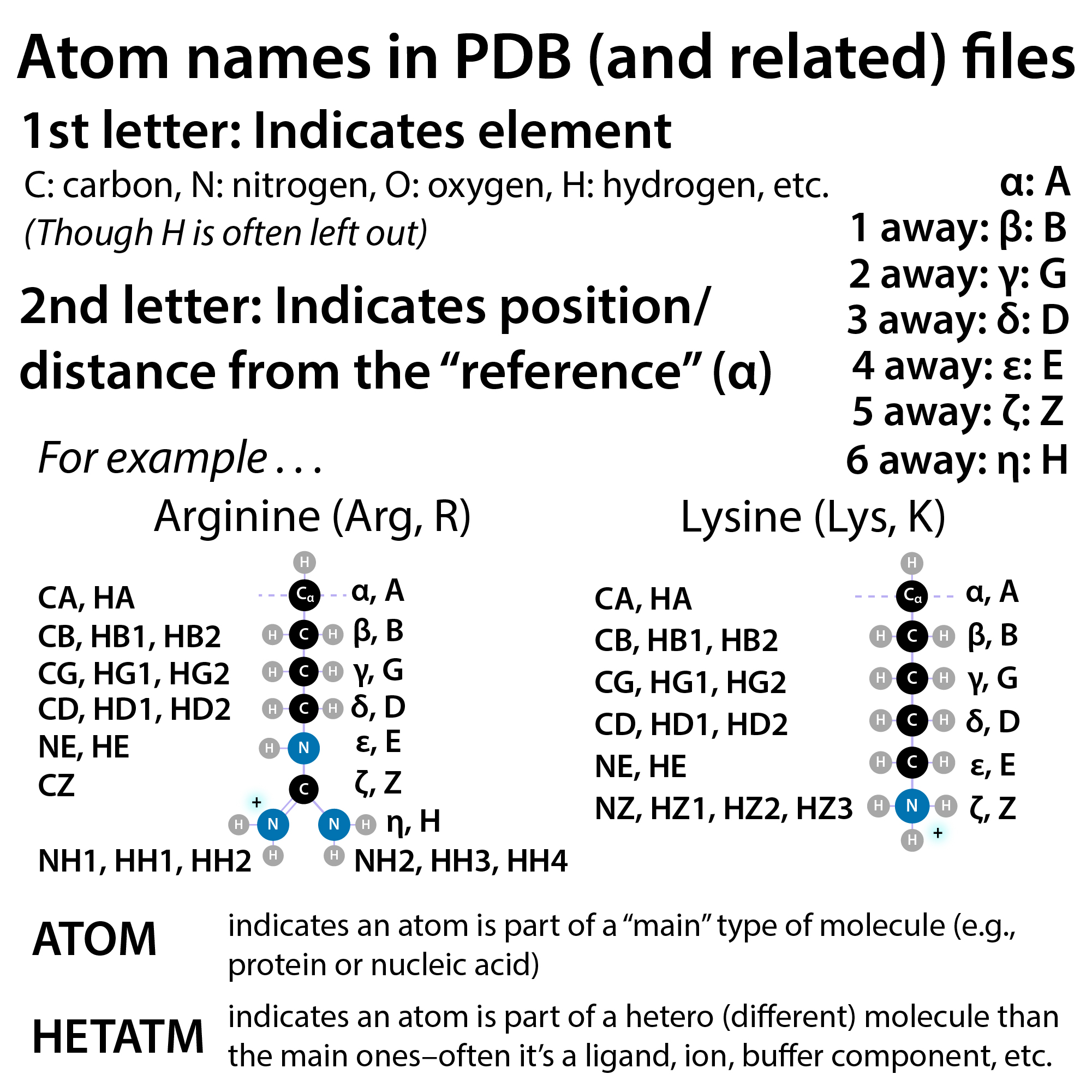
But, the legacy PDB file format (.pdb) is incompatible with the longer codes. So, instead, you need to use the improved, PDBx/mmCIF (.cif) format. This format (Protein Data Bank Exchange macromolecular Crystallographic Information Frame) is already broadly-integrated and adopted as the wwPDB (worldwide PDB) standard. Its structure is much more flexible than the “legacy PDB” format allows the files to hold more information (bigger, more complex structures, and maps not just models).
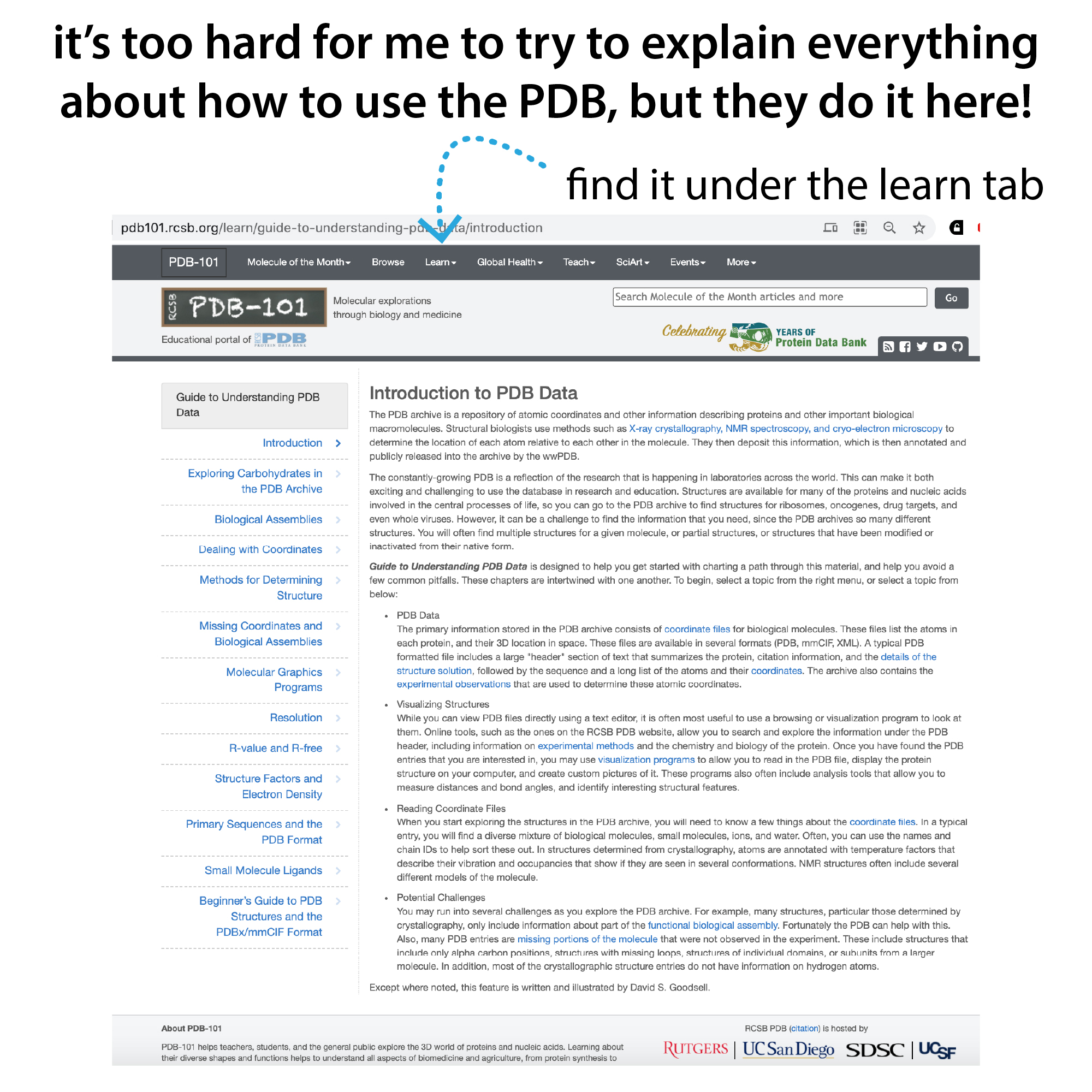
You can learn much more about all this from official PDB sources.
- Webinar: Supporting Extended PDB IDs by the RCSB PDB, March 13, 2025 : https://www.youtube.com/watch?v=qXTCJ21cr9o
- PDB File formats: https://www.wwpdb.org/documentation/file-formats-and-the-pdb
- Extended PDB ID With 12 Characters https://www.wwpdb.org/documentation/new-format-for-pdb-ids
- mmCIF user guide https://mmcif.wwpdb.org/docs/user-guide/guide.html
And if you want to learn more about the PDB, they’ve got a lot of info, as do I: https://bit.ly/pdbstructures
As well as much more structural biology content: https://bit.ly/structural_biology & https://youtube.com/playlist?list=PLUWsCDtjESrGhwVxsRbTJdL-BEsN60RCs
As always – hope this helps. And happy transitioning!