
I’m not a fan of rote memorization, but there are some things I do recommend (and for my class(es) will require) memorizing. This will enable a deeper, less interrupted, understanding of concepts and allow you to draw connections between concepts that you might not otherwise see. As these topics come up in your learning of biochemistry, here are some key things to try to nail down (and the word parts ASAP).
link to downloadable sheet: https://bit.ly/biochemistrytomemorize
Chemical names and structures
Amino acids
Names
3 & 1 letter abbreviations
Structures
At a minimum – be able to recognize and name the structures if you see them
Ideally – be able to draw the structures from memory
Not strict memorization, but you should also know their properties & reactivity (which you can figure out if you know their structure!)

Nucleic acids
Names of the nucleobases & nucleosides:
- Adenine -> adenosine/deoxyadenosine
- Guanine -> guanosine/deoxyguanosine
- Cytosine -> cytidine/deoxycytidineThymine -> deoxythymidine
- Uracil -> uridine
Structures
Ideally – be able to recognize and name the structures if you see them
At a minimum – be able to recognize is something is a purine (2 rings – A, G) or a pyrimidine (1 ring – C, T, U)) – remember Pure As Gold
Know which pairs with which (A:T/U & G::C) & be able to draw the corresponding base pairs

Functional groups
Be able to recognize (both structure and shorthand) and draw the following functional groups:
- Carbonyl
- Hydroxyl (alcohol)/hydroxylate
- Thiol (sulfhydryl)/thiolate
- Amine
- Amide
- Carboxylic acid/carboxylate (-COOH/COO–)
- Aldehyde (CHO)
- Ketone
- Ester
- Ether
- Thioester
- Thioether
- Methyl (Me)
- Acyl
- Acetyl (Ac)
- Phenyl (Ph)
- Phosphoryl (Ⓟ)
Not strict memorization, but you should also know their properties & reactivity (which you can figure out if you know their structure!)


Metabolism
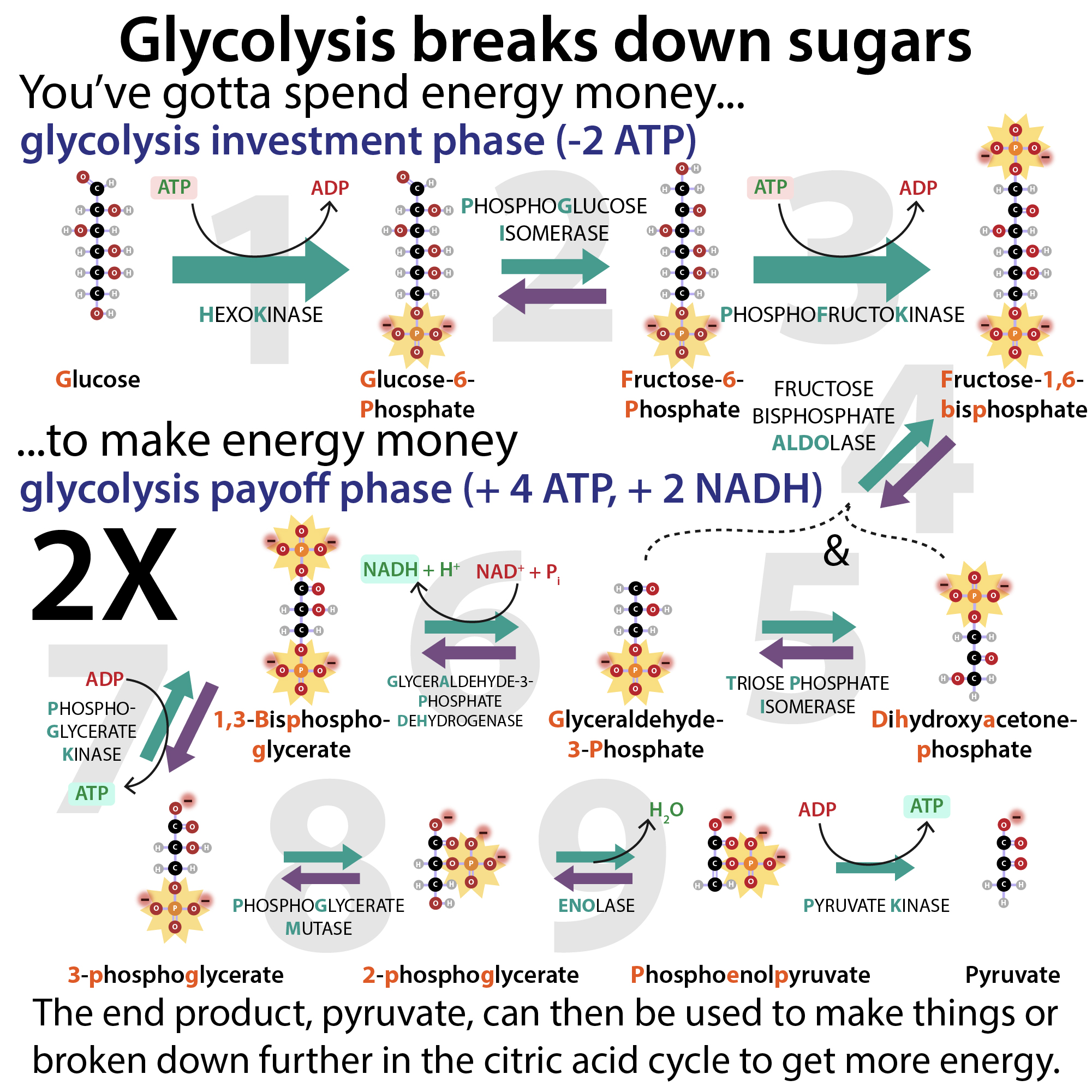
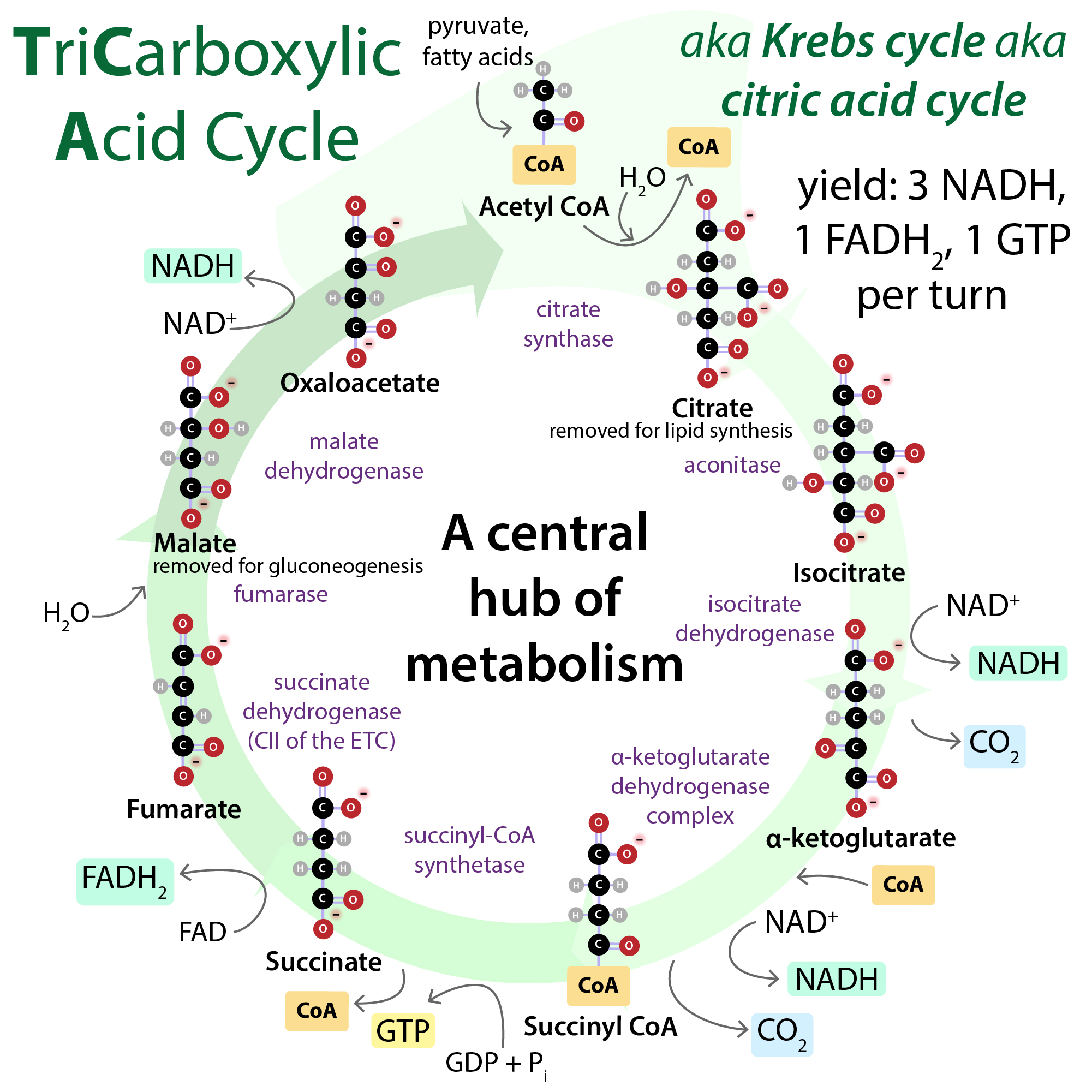
I don’t expect you to memorize the metabolic pathways, but, I do want you to be able to recognize whether a given molecule is a constituent of glycolysis or the citric acid cycle (aka tricarboxylic acid cycle (TCA) or Kreb’s cycle).
For example, if you see the name “oxaloacetate,” you should be able to tell me that it’s a component of the TCA. And if you see the name “Glyceraldehyde-3-Phosphate” (G3P), you should be able to tell me that it’s a component of glycolysis.
Why? This will better allow you to do things like:
- predict which pathways might be directly affected by changes in these metabolites
- recognize whether production of that metabolite requires aerobic respiration
- see where the building blocks for things like amino acids come from
- see where breakdown products of other pathways can join in
Additionally, know the start and end points of glycolysis (glucose to 2x pyruvate) and the TCA (acetyl CoA & oxaloacetate (which is both a starting and ending material since it’s a cycle))
And know the net energy yields for glycolysis & TCA:
- Glycolysis: 2 ATP, 2 NADH
- TCA: 3 NADH, 1 FADH2, 1 GTP (or ATP)
Values to know
rough pKas to remember:
- carboxylic acid: 4-5
- protonated amine: 9-10
1Å = 0.1 nm
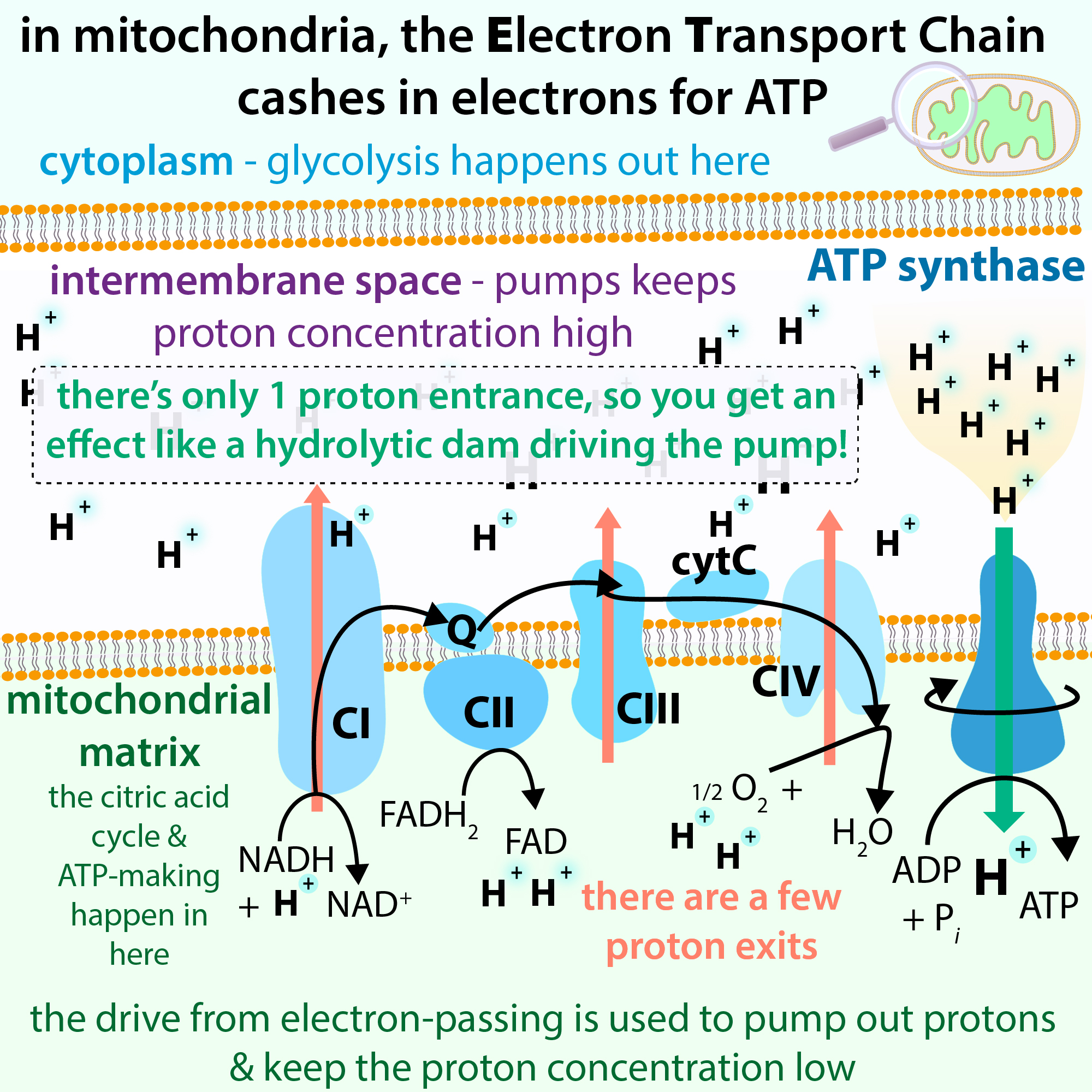
Energy yields from oxphos per reduced coenzyme molecule (and be able to explain why this is (their different entry points to the electron transport chain):
- NADH: ~2.5 ATP
- FADH2: ~1.5 ATP
Know small-ifying metric prefixes down to nano & be able to convert between them
For more on this, see: https://bit.ly/metric_calcs


Word parts
For a more extensive guide, see: https://docs.google.com/document/d/1s9UEmVvRrfK1C8woiauO-_SnnkxlE4J6/edit?usp=sharing&ouid=110501489579733284162&rtpof=true&sd=true
But these are the ones I expect my students to know because it will greatly help with being able to predict what terms mean
First things first – prefixes!
In addition to metric prefixes, you should know these prefixes…
- mono-: single, one
- e.g. monomer (a single unit, a molecule acting by itself)
- oligo-: few, little
- e.g. oligonucleotide (a short nucleic acid chain, such as a PCR primer); oligopeptide (a short chain of amino acids)
- poly-: many
- e.g. polymer (a long chain of linked-together monomers), such as a polypeptide (a long chain of amino acids – a protein)
- hypo-: under/below (remember hypo, below)
- e.g. hypoactive (less active than normal), hypotonic (having lower tonicity)
- hyper-: over/above (remember hyper, over)
- e.g. hyperactive (more active than normal), hypertonic (having higher tonicity)
- iso-: equal, similar
- e.g. isotonic (having equal tonicity); isomers (molecules that are similar but differ in some way, such as having different shapes)
- allo-: other
- e.g. allosteric (binding at another site (not the “normal” binding site) and/or something happening at one site that has effects at another site)
- endo- & ento-: inside (remember enside)
- e.g. endogenous (something that is made by an organism rather than taken in from outside, such as hormones the body produces)
- exo– & ecto-: outside (remember exo, external)
- e.g. exogenous (something that is added “artificially” or from the outside, such as pharmaceutical drugs someone takes)
- auto-: self
- ex. autotroph (an organism able to make its own food)
- inter-: between
- e.g. intermolecular interactions (interactions between different molecules)
- intra-: within
- e.g. intramolecular interactions (interactions between different parts of the same molecule)
- hetero-: different, other
- e.g. heterogenous (made up of multiple things and/or not consistently distributed); heteromer (a complex with different components)
- homo-: same
- e.g. homogenous (made up of a single thing and/or consistently distributed); homomer (a complex with multiple copies of a single component)
- amphi-/ampho-/ambi-: both
- e.g. amphoteric (able to act as both an acid and a base); amphiphilic (having both hydrophilic and hydrophobic parts)
- semi-: partly
- e.g. semipermeable (allowing some things through but not others)
- holo-: whole
- apo-: without, lacking
- e.g. apoenzyme (an enzyme without its cofactors)
- neo-: new
- e.g. gluconeogenesis (the making of new glucose from non-sugar parts)
Getting to the roots of terms (some of these can also be prefixes or suffixes, so not sure where to list them)
- gen/genesis: birth, creation, making
- e.g. glycogenesis (the making of glycogen, a storage form of sugar)
- hydro: involving water or hydrogen
- e.g. hydrolysis (the breakdown of a molecule by addition of water)
- oxy/oxi: involving oxygen
- e.g. oxidative stress (a type of cell stress that occurs due to the presence of high levels of reactive oxygen species (high energy oxygen molecules that like to attack things))
- sulfa/thio/mercapto: involving sulfur
- e.g. dithiothreitol (DTT) and beta-mercaptoethanol (BME) (a couple commonly-used reducing agents)
Last, but not least – suffixes
- -philic/-phile: loving/lover
- e.g. hydrophilic (water-loving/water-loved), lipophilic (lipid-loving/lipid loved), halophile (an organism that grow in high salt conditions)
- -phobic/-phobe: “fearing”/”fearer”
- e.g. hydrophobic (water-fearing/water-feared – but note that it’s actually more like water-avoided than feared!)
- -lysis: breaking, breakdown
- e.g. catalysis (the breaking down of biochemicals for energy and/or building blocks); hemolysis (the breakdown of blood cells)
- -ase: ending denoting an enzyme