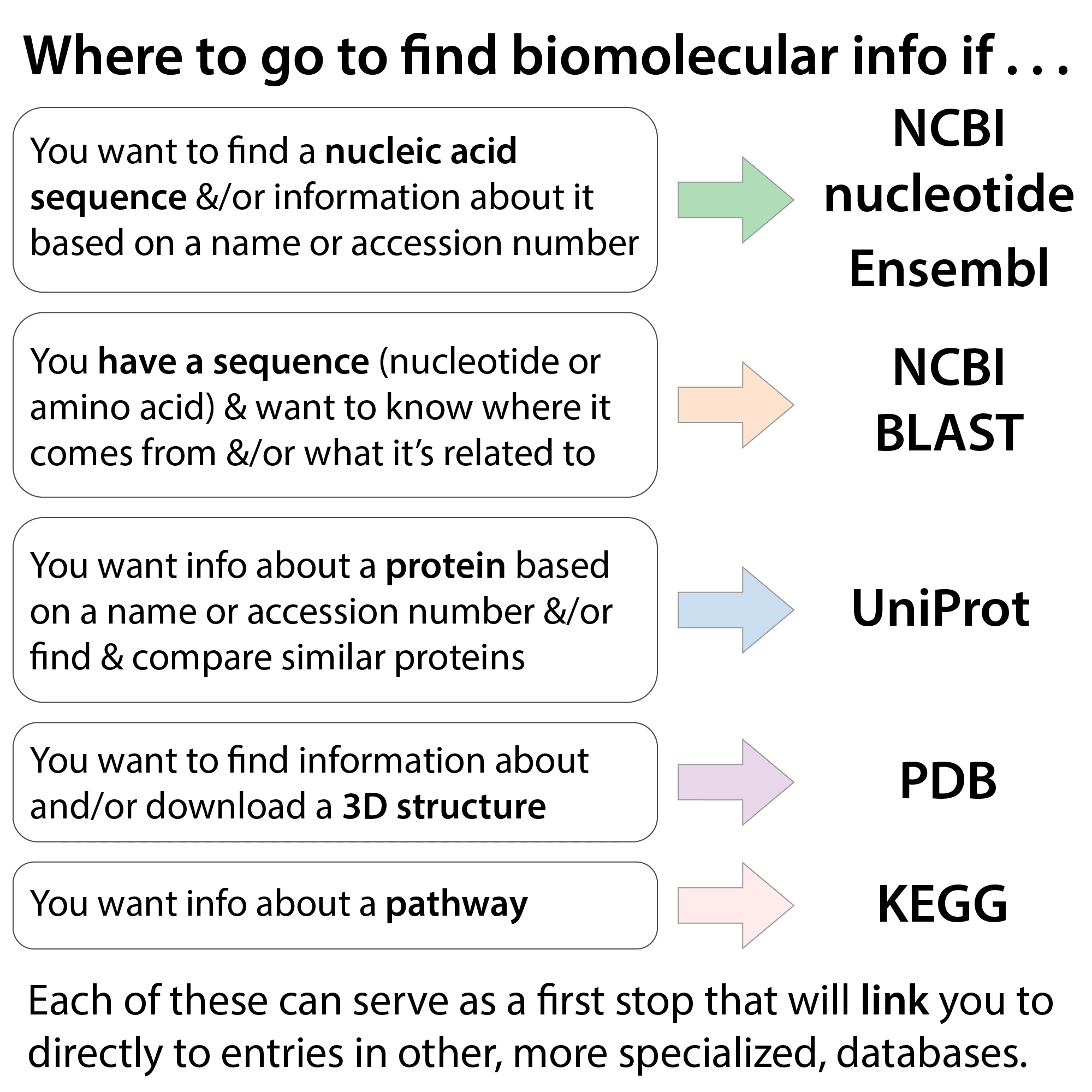
(a non-exhaustive list of some of the main sources of data)
Main go-tos which can serve as launch pads, providing links to take you to other more specialized sites:
- Protein stuff: UniProt https://www.uniprot.org/
- Nucleic acids: GenBank https://www.ncbi.nlm.nih.gov/genbank/ , BLAST https://blast.ncbi.nlm.nih.gov/Blast.cgi
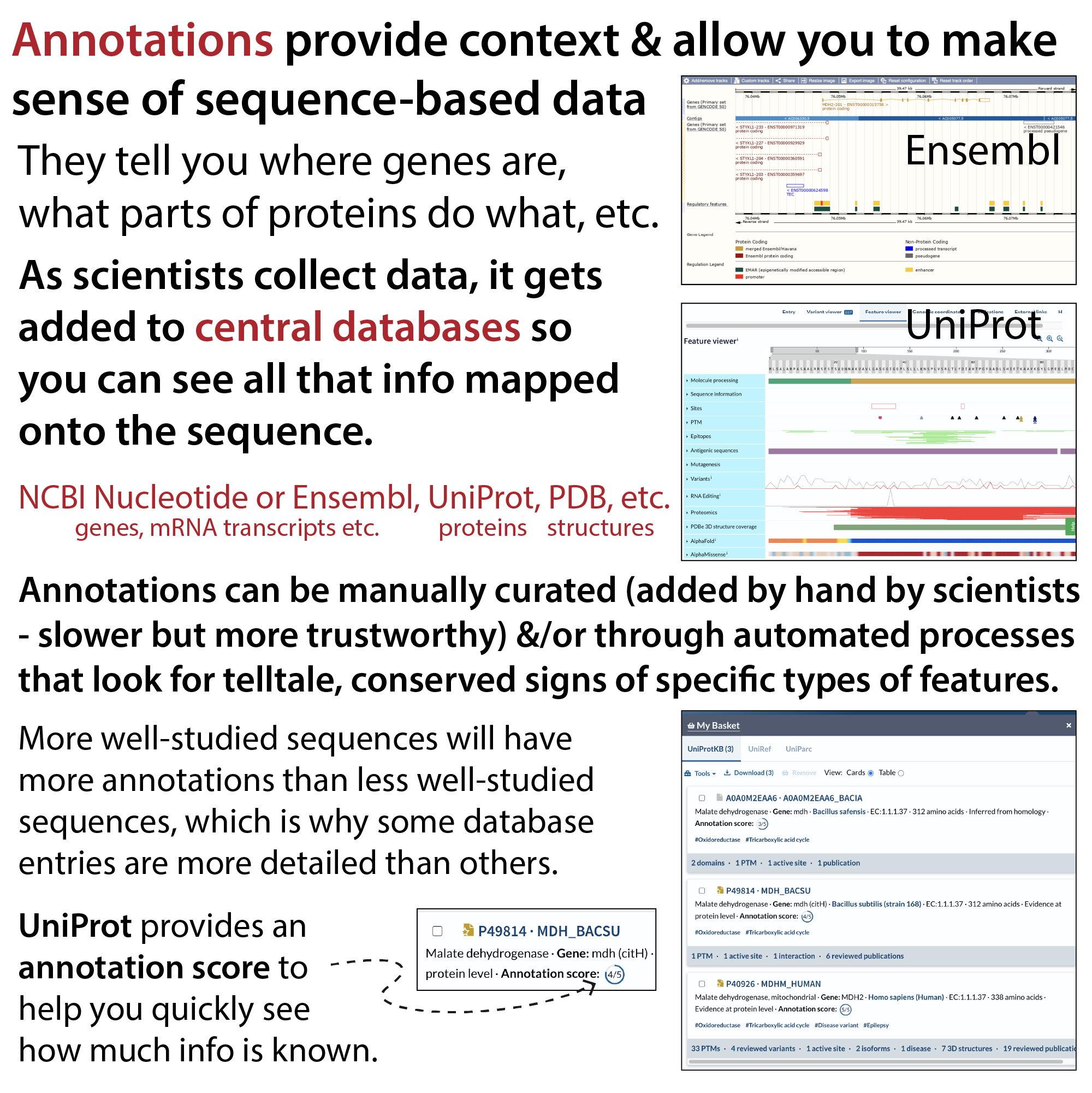
- Genome-level stuff: Ensembl https://uswest.ensembl.org/index.html
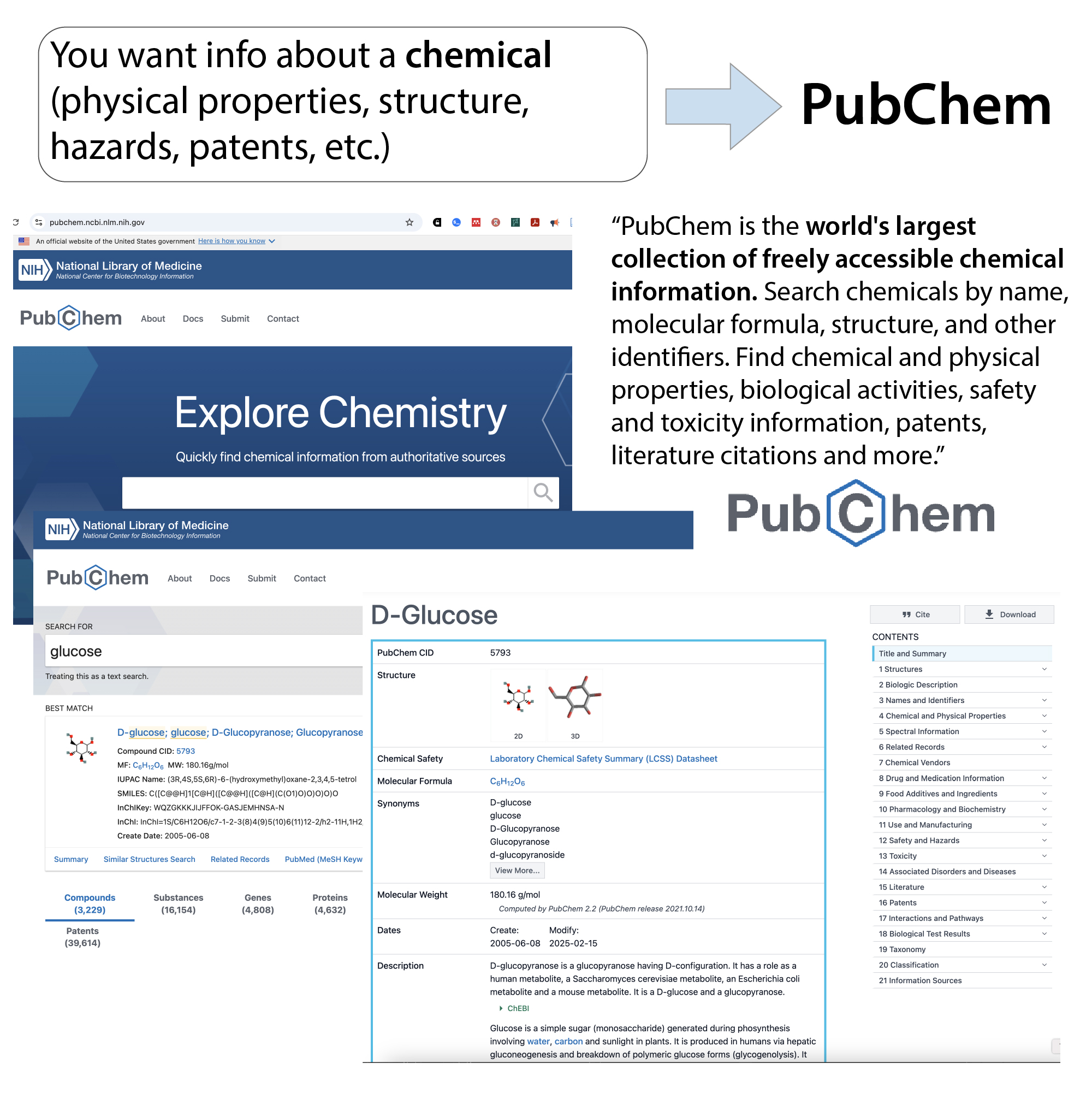
- Chemicals: PubChem https://pubchem.ncbi.nlm.nih.gov/ , ChemSpider http://www.chemspider.com/
- Random stats: BioNumbers: The Database of Useful Biological Numbers – it looks for published data on your query https://bionumbers.hms.harvard.edu/search.aspx
- They have a cheat sheet with key numbers: https://bionumbers.hms.harvard.edu/keynumbers.aspx
Other things
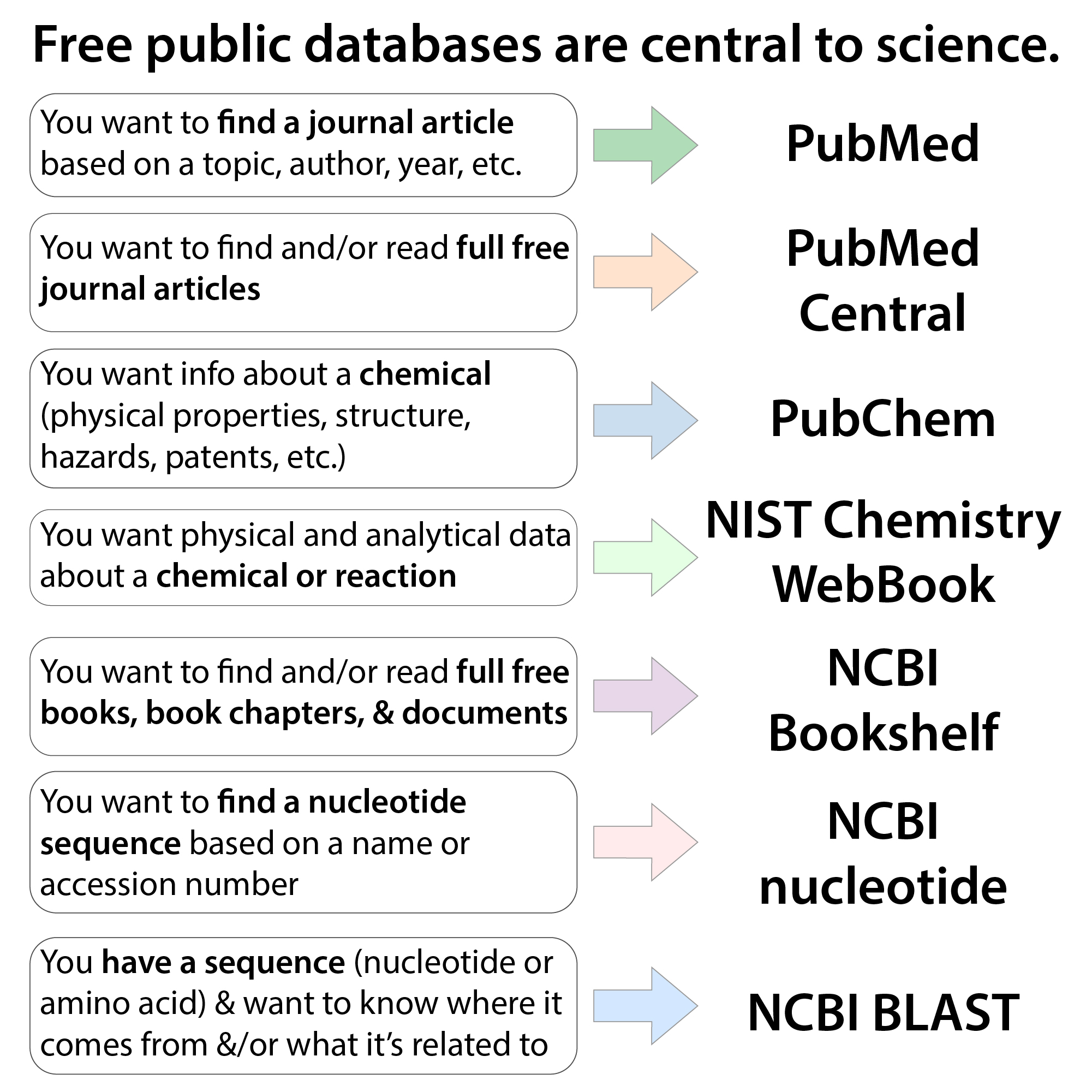
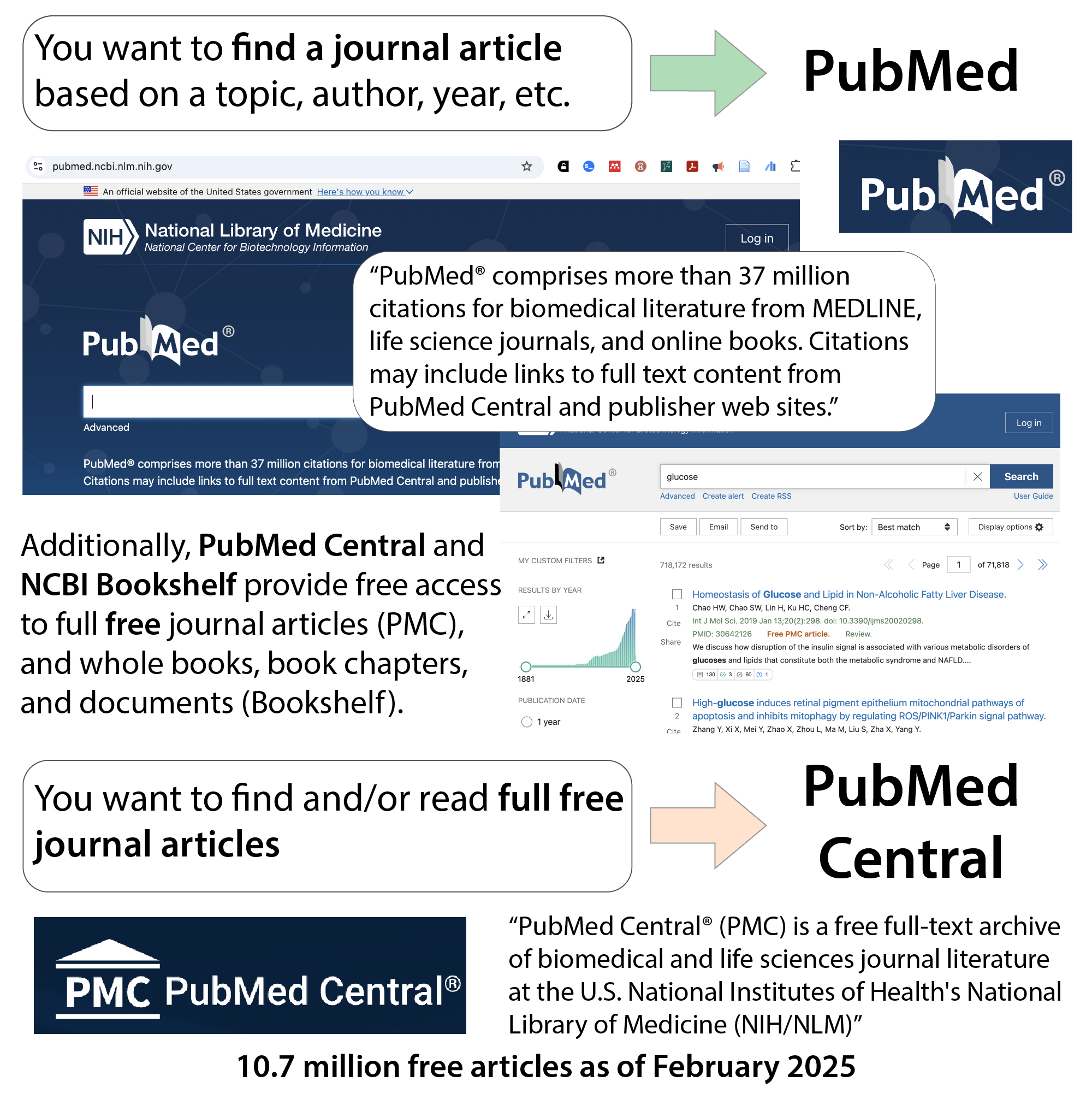
- Papers: PubMed https://pubmed.ncbi.nlm.nih.gov/ and PubMed Central (PMC) (free to read articles): https://pmc.ncbi.nlm.nih.gov/, Google Scholar https://scholar.google.com/ , bioRxiv (preprints) https://www.biorxiv.org/
- Free books, book chapters, and other documents: NCBI Bookshelf https://www.ncbi.nlm.nih.gov/books
- Free code: bio.code (curated database with information about and links to lots of different software programs), GitHub https://github.com/ , Bioconductor (R scripts) https://www.bioconductor.org/ , Galaxy (web-based server with programs for genomics, etc.) https://usegalaxy.org/ , CRAN (R packages) https://cran.r-project.org/, Python Package Index (PyPI) https://pypi.org/ & Anaconda Package Repository (Python packages) https://anaconda.org/anaconda/repo
Some more specialized ones…
Proteins
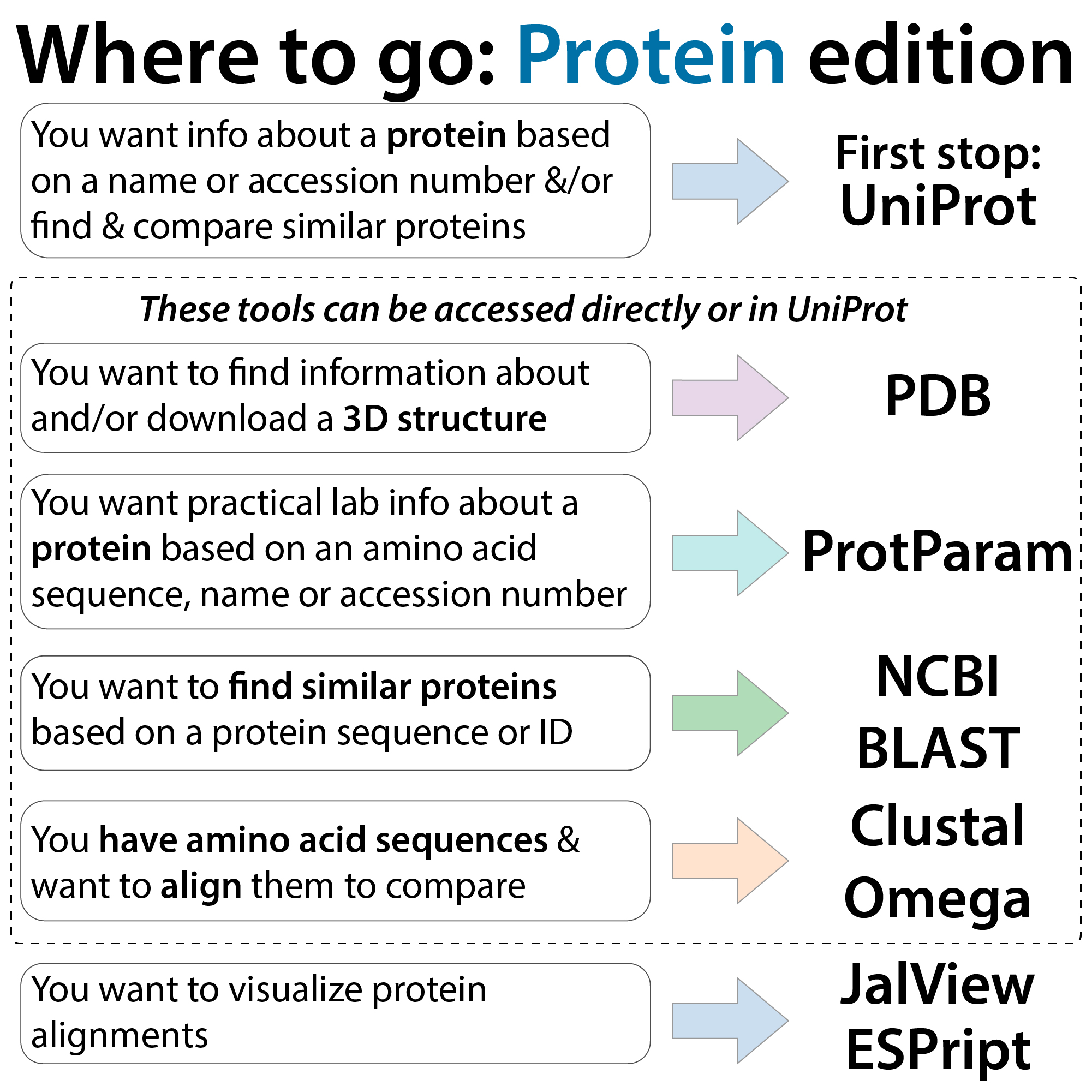
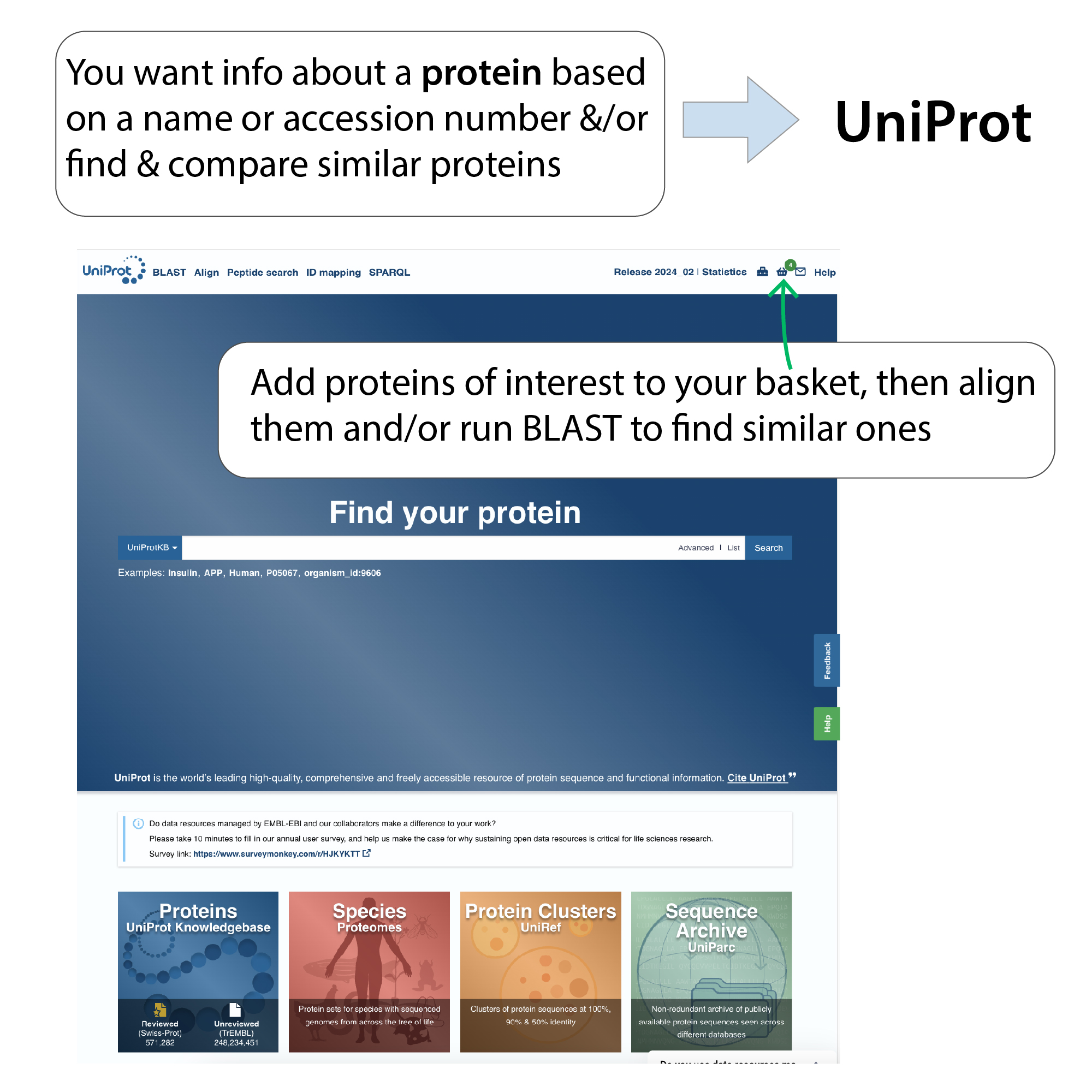
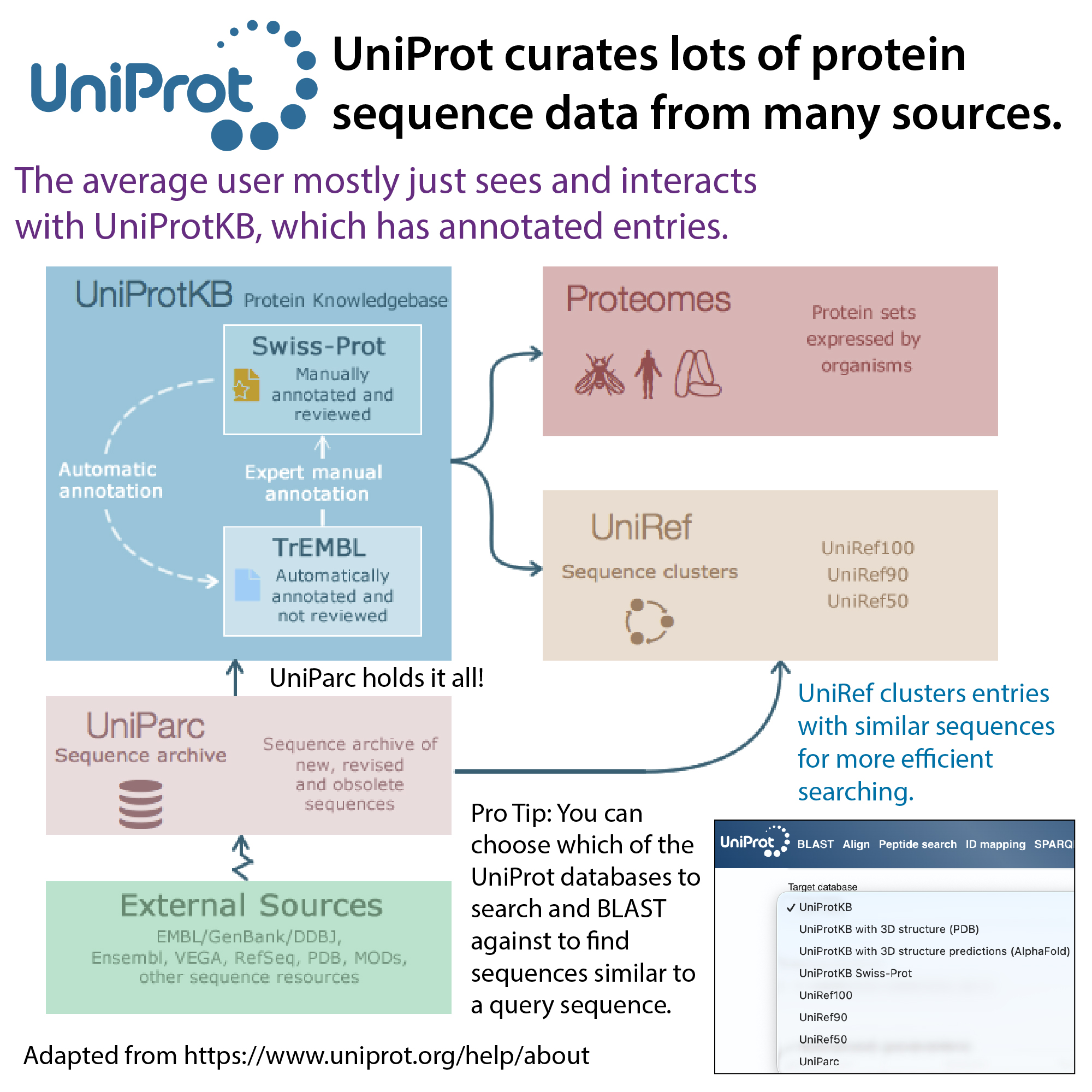
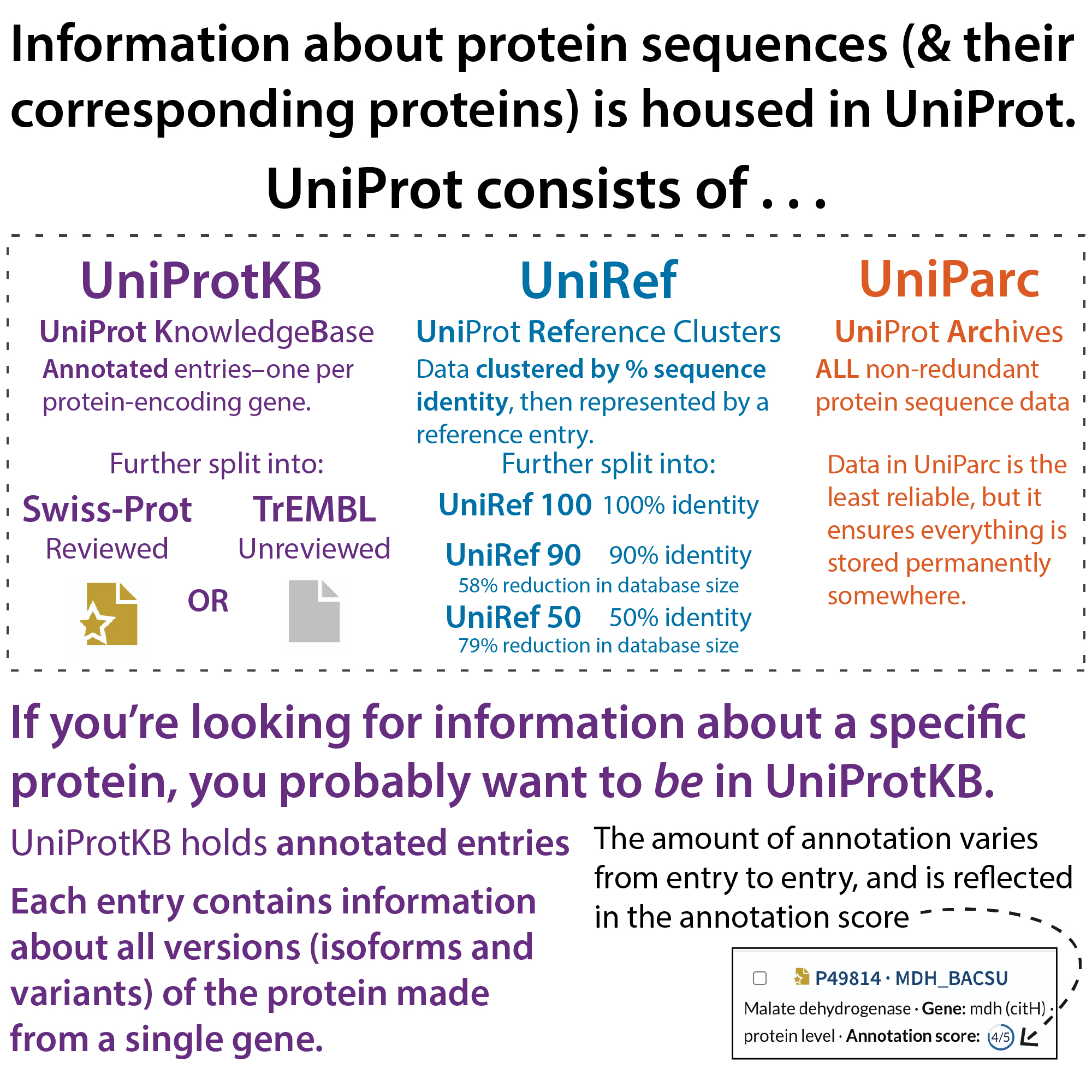
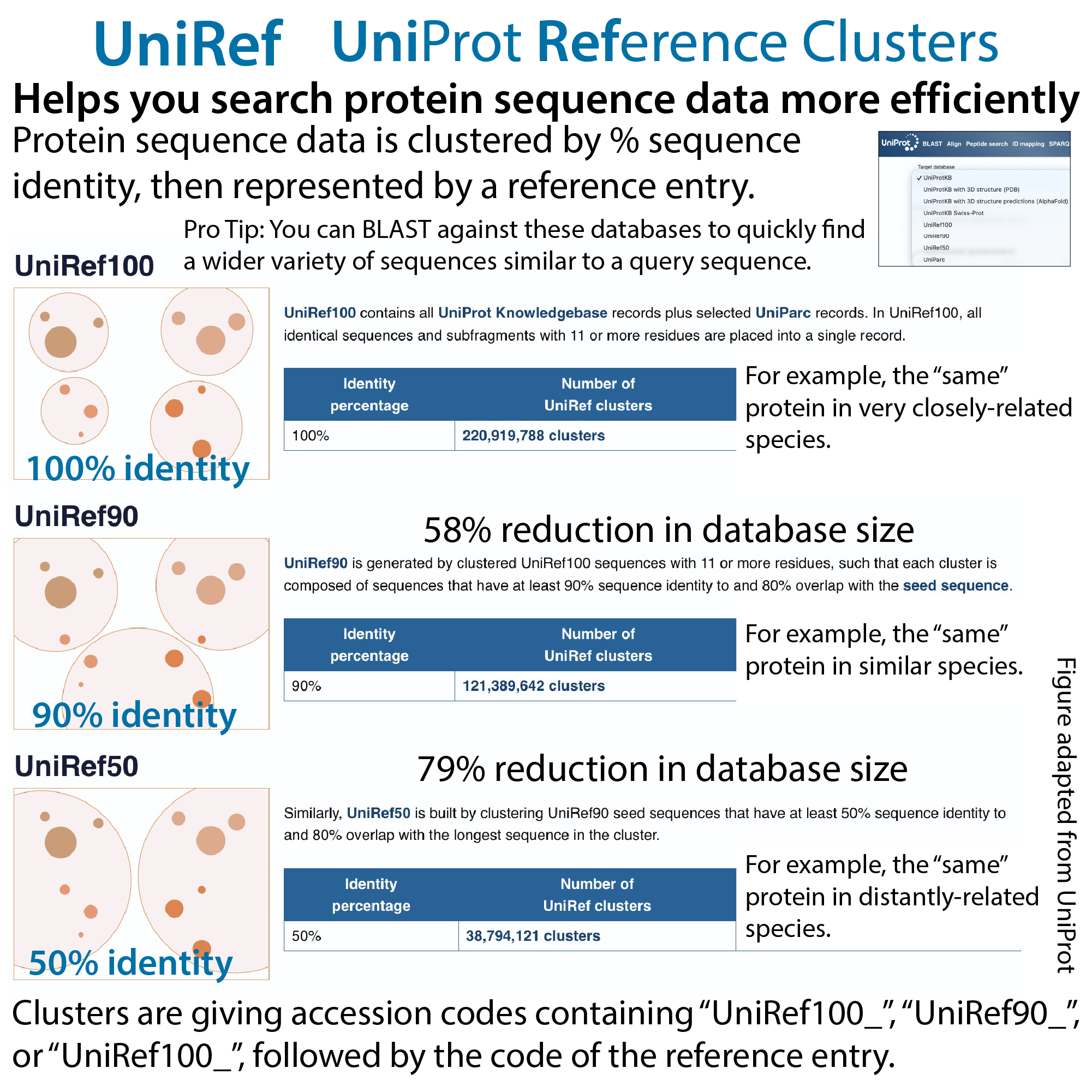
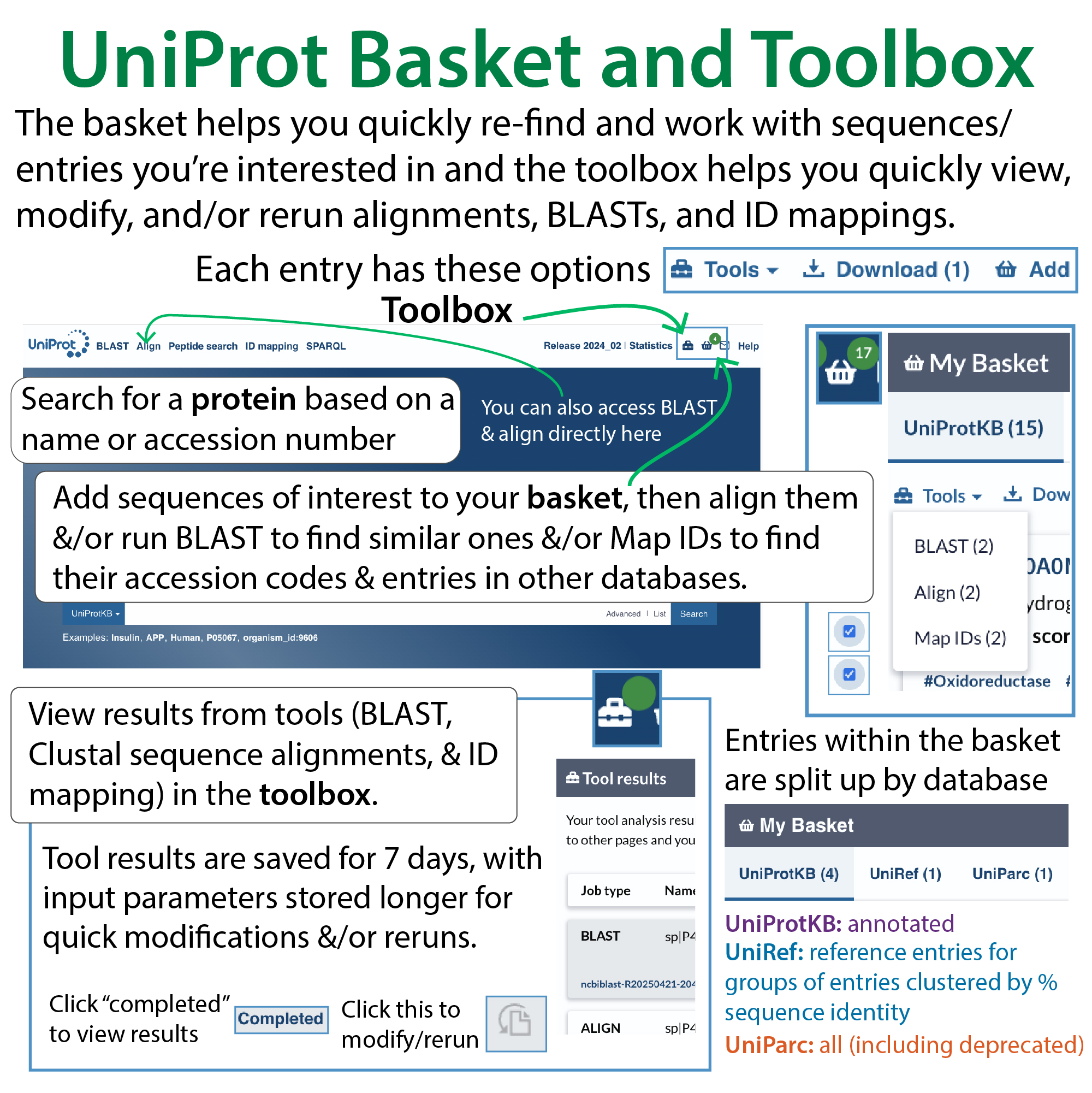
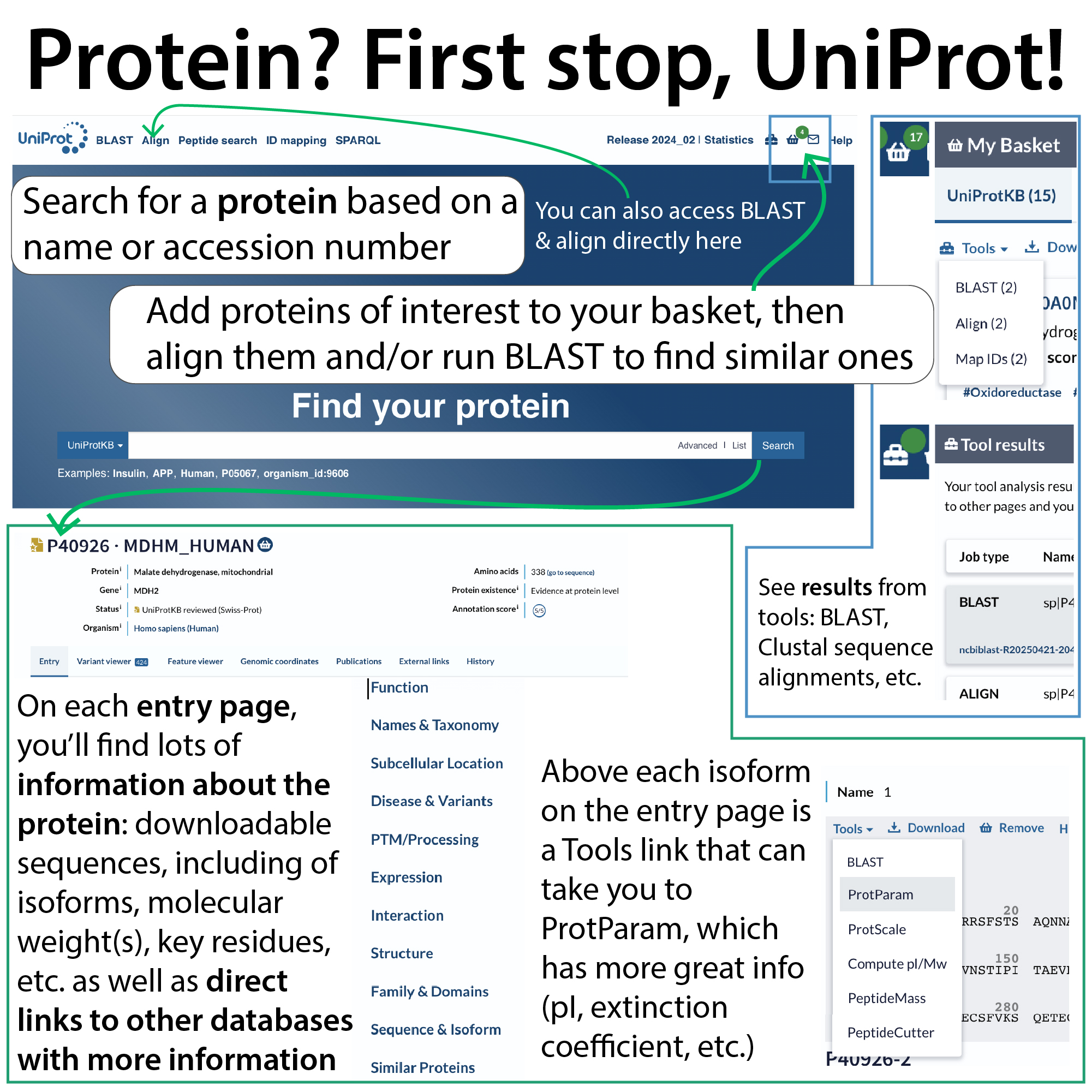
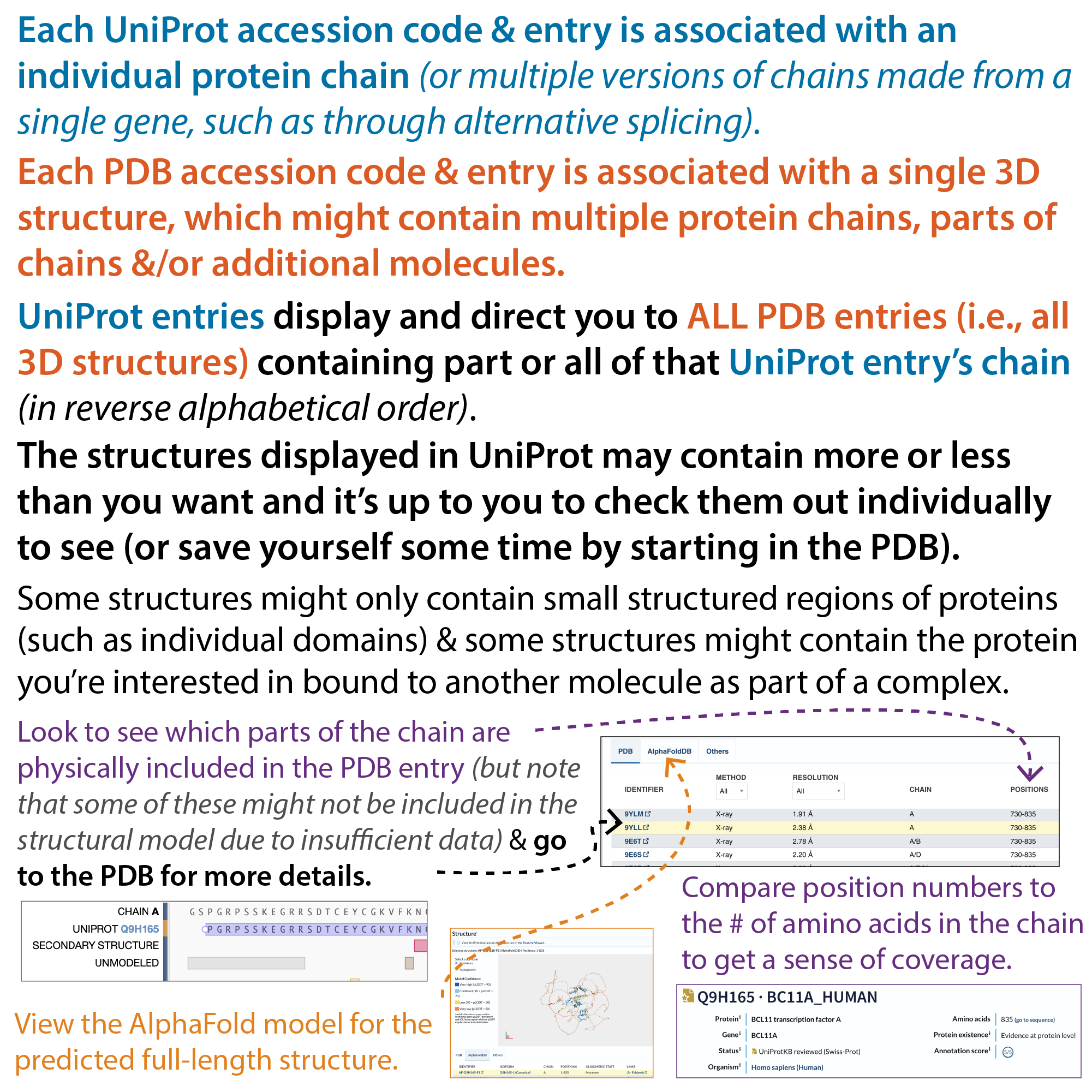
- UniProt – basics (functions, length, sequence(s), isoforms, structures, interactions, etc. – lots of links to more detailed databases for each) https://www.uniprot.org/
- more about it on my blog: https://bit.ly/uniprotprotparam & YouTube: https://youtu.be/6oBsTykEeGI
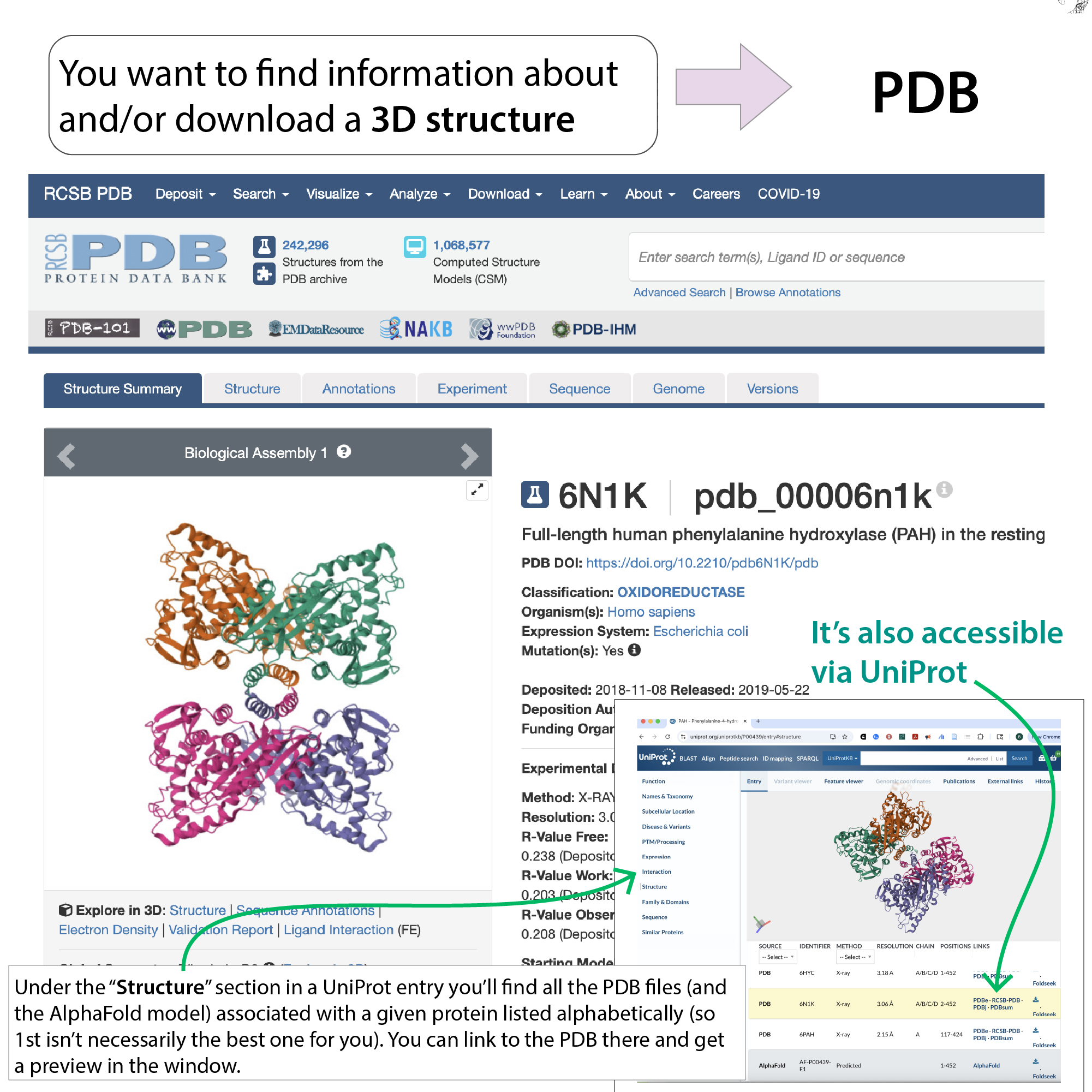
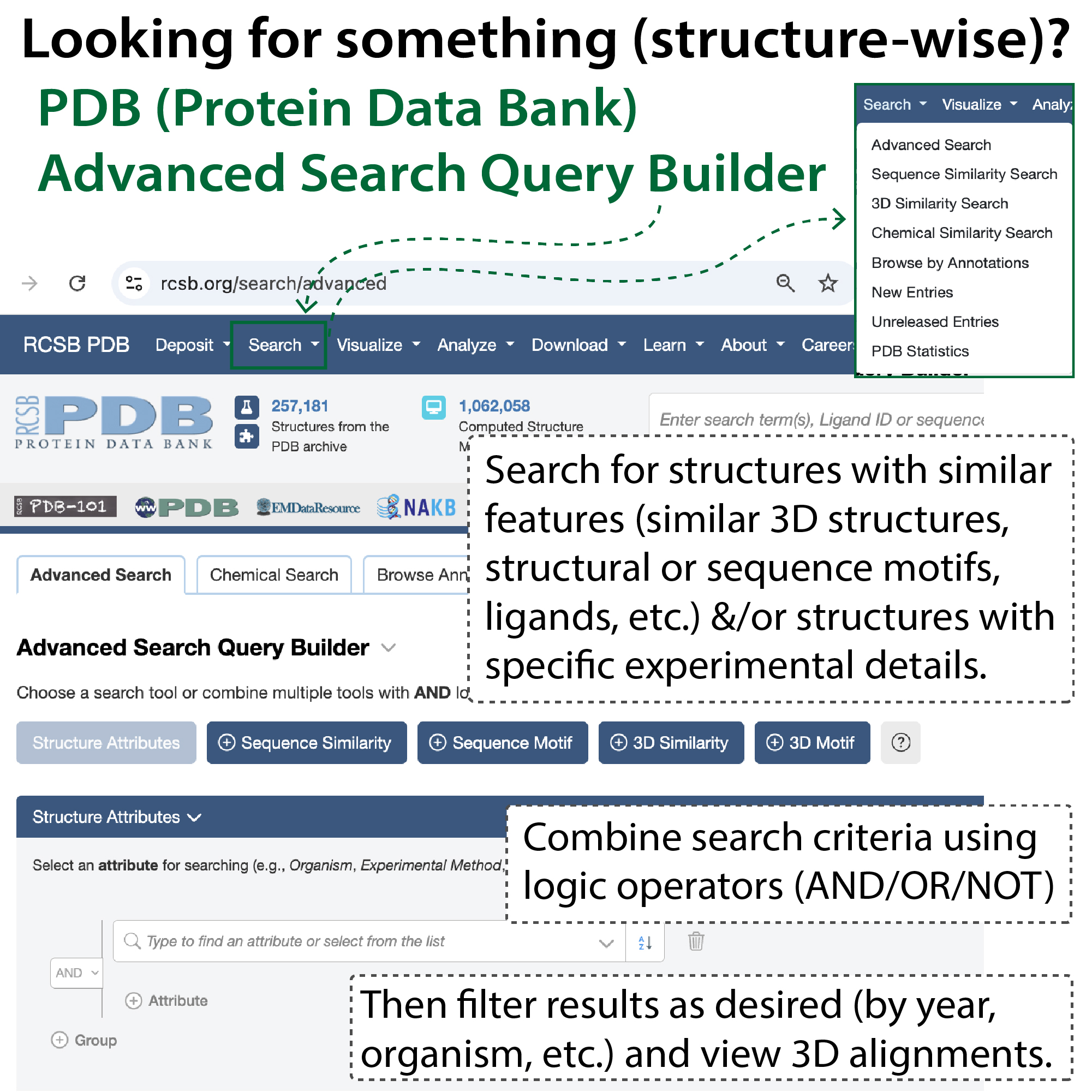
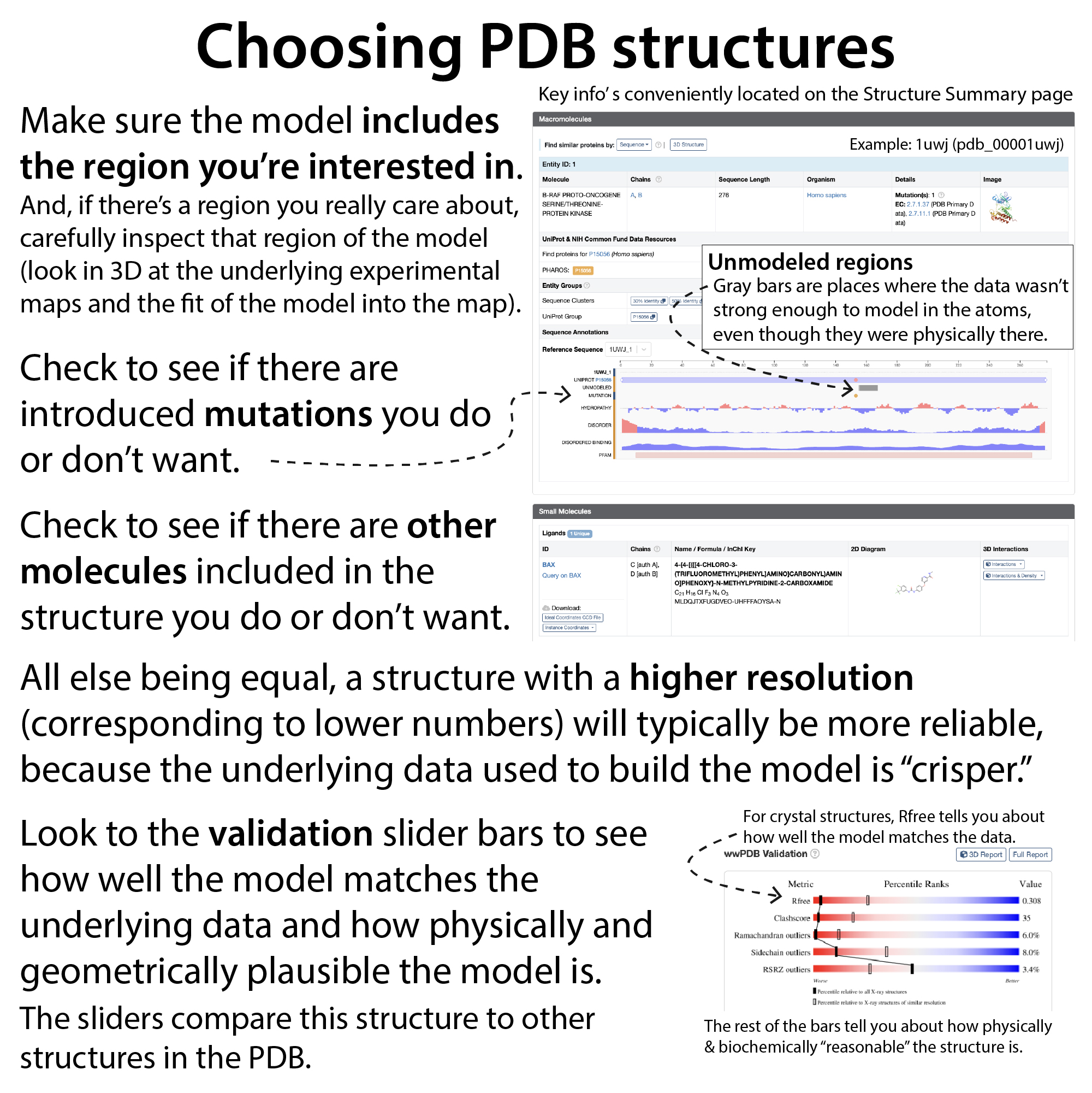
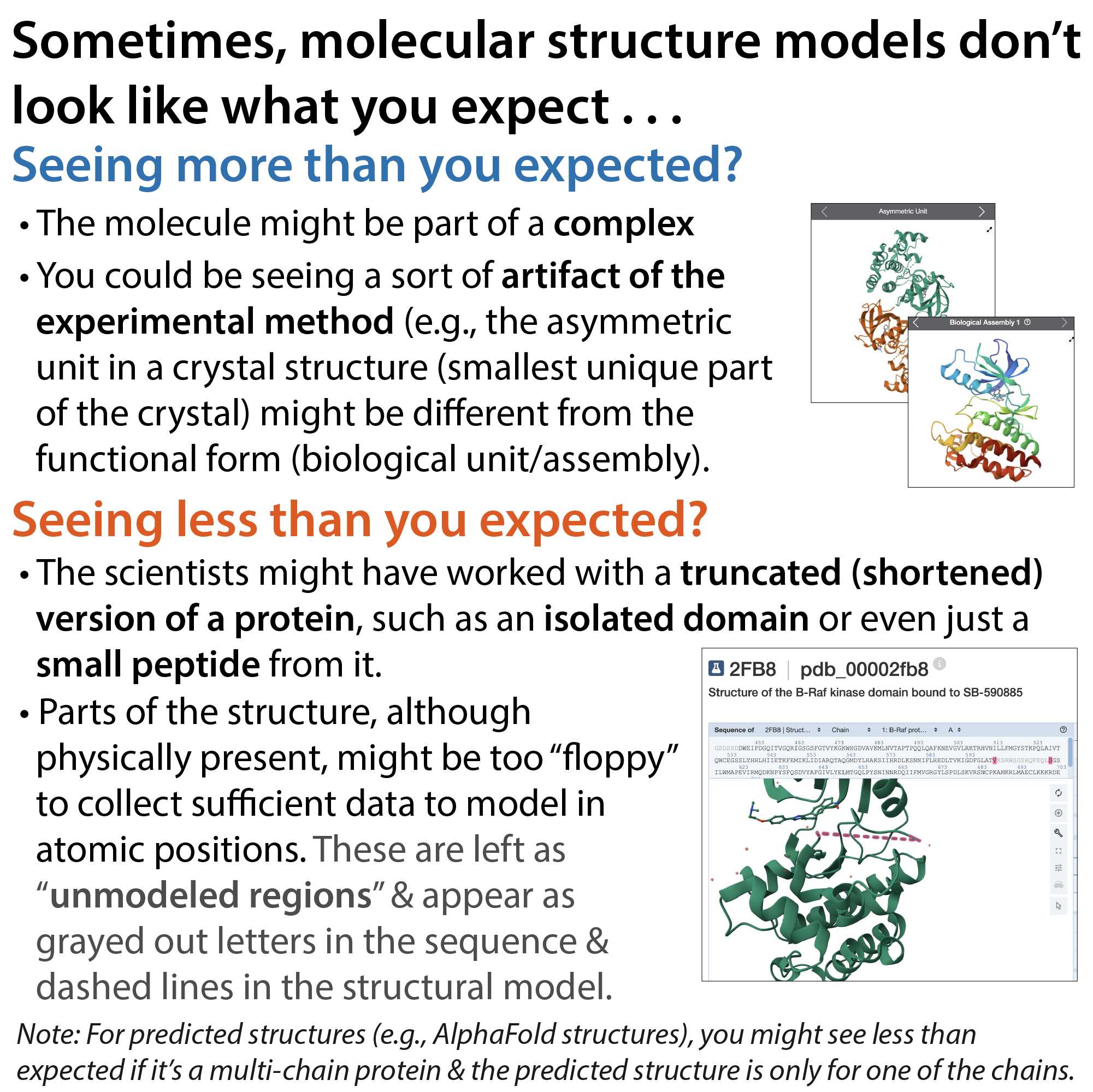
- PDB (Protein DataBank) – protein structures https://www.rcsb.org/ (US-maintained site), https://www.ebi.ac.uk/pdbe/ (European-mantained site)
- more about it on my blog: https://bit.ly/pdbstructures & YouTube: https://youtu.be/Re2gwi-_OEw & https://youtu.be/IZtHsUFbyes
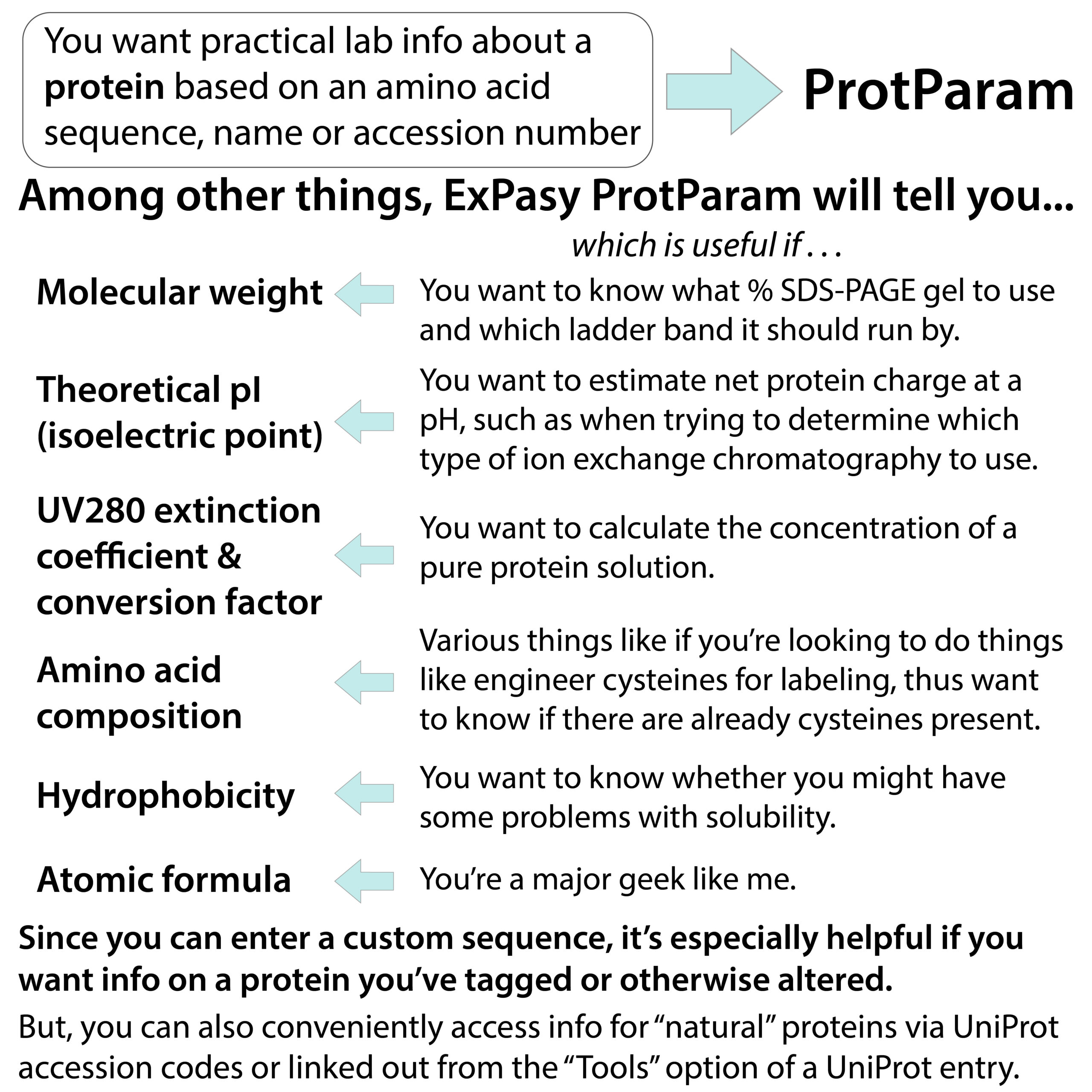
- Expasy ProtParam – protein stats (amino acid composition (e.g. # of each amino acid, isoelectric point (pI) (for predicting overall charge at different pHs), extinction coefficient (for getting concentration from UV), etc.) can also use for custom sequences you copy and paste – great for recombinant expression constructs https://web.expasy.org/protparam/
- more about it on my blog: https://bit.ly/uniprotprotparam & YouTube: https://youtu.be/6oBsTykEeGI
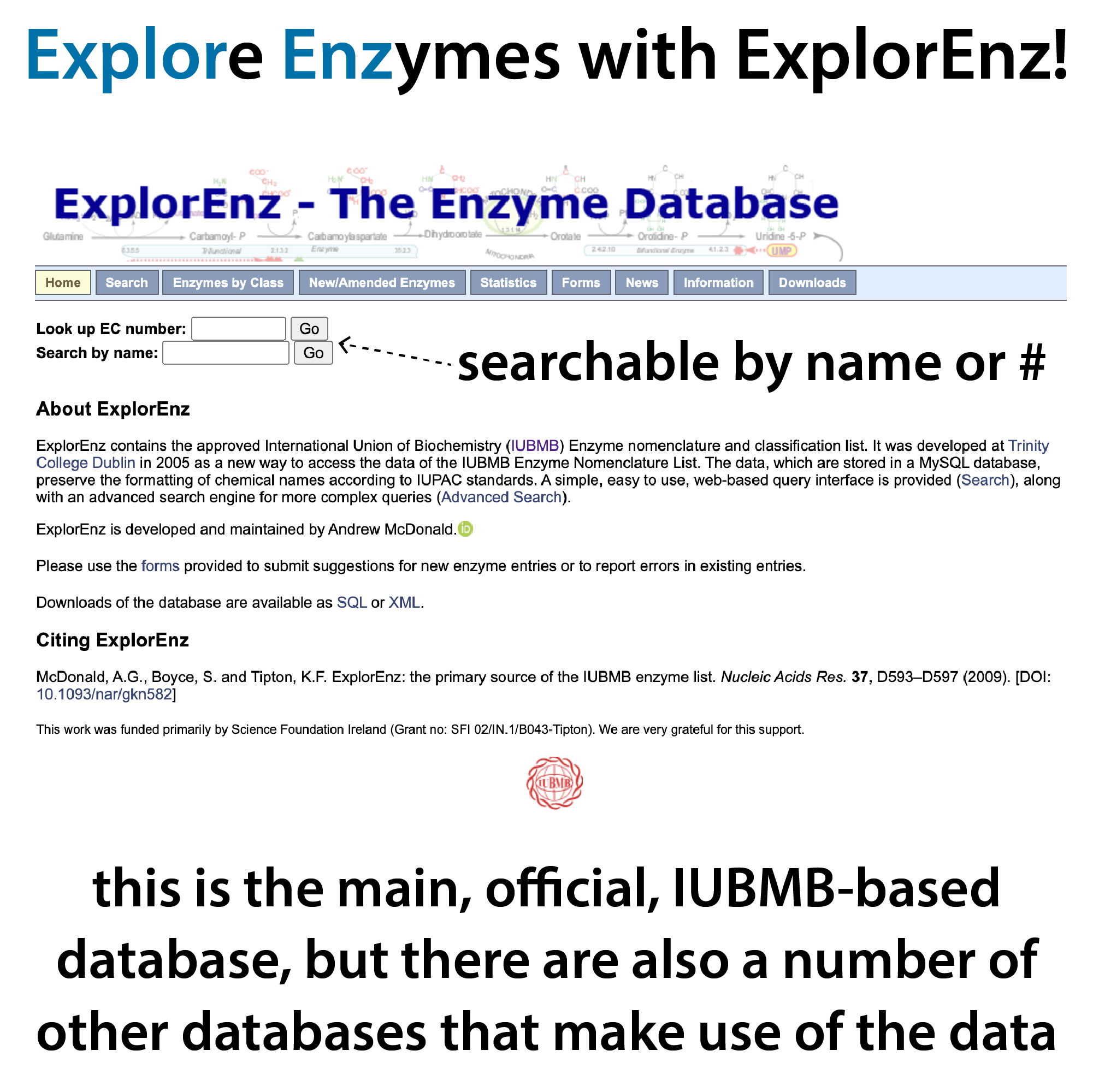
- ExplorEnz – official IUBMB info about enzymes and their classification https://www.enzyme-database.org/
- More about it on my blog: https://bit.ly/ec_numbers & YouTube: https://youtu.be/8yO1XEzoVIE
- BRENDA – additional information about enzymes w/links to other sites https://www.brenda-enzymes.org/
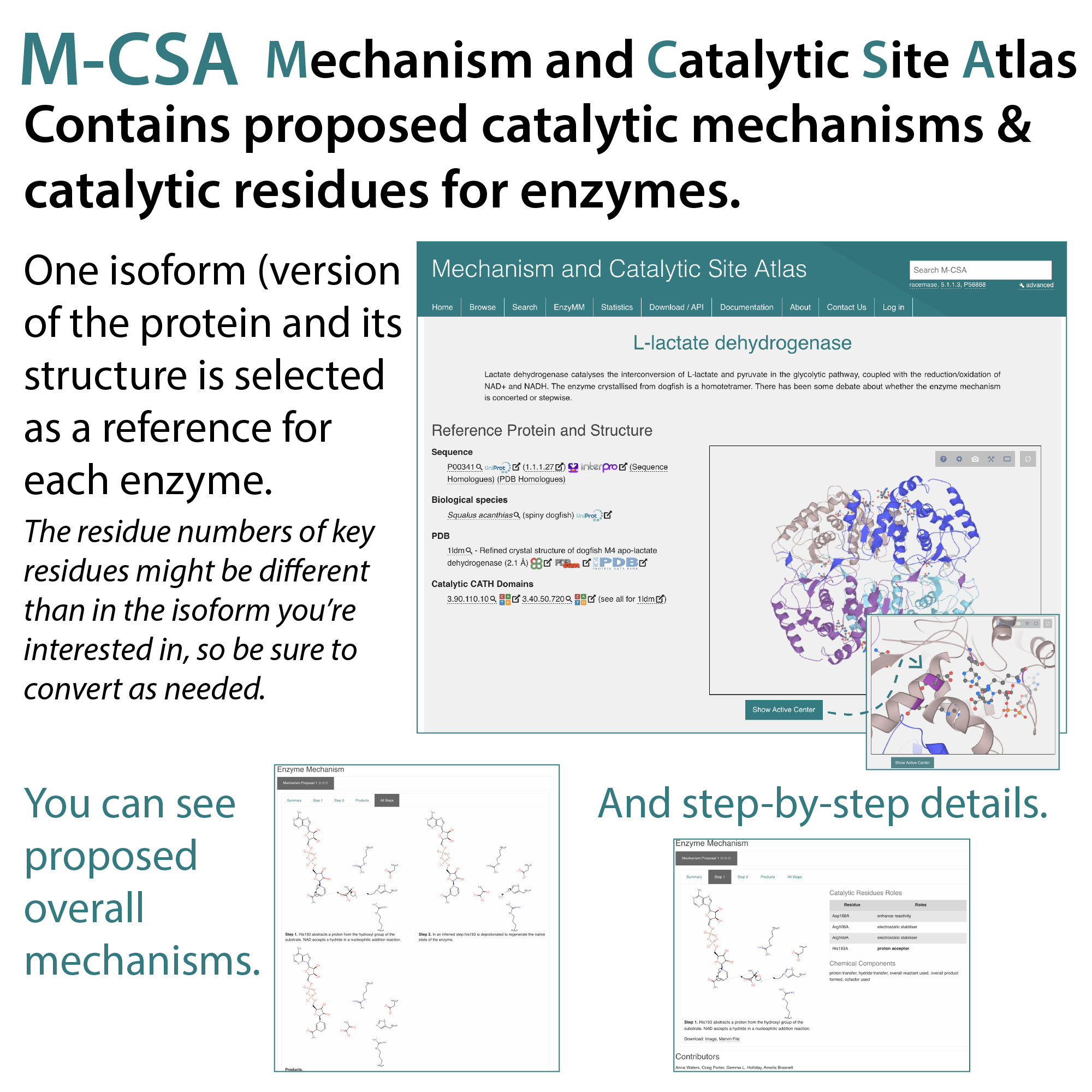
- M-CSA (Mechanism and Catalytic Site Atlas) – info about enzyme mechanisms https://www.ebi.ac.uk/thornton-srv/m-csa/
Nucleic acids
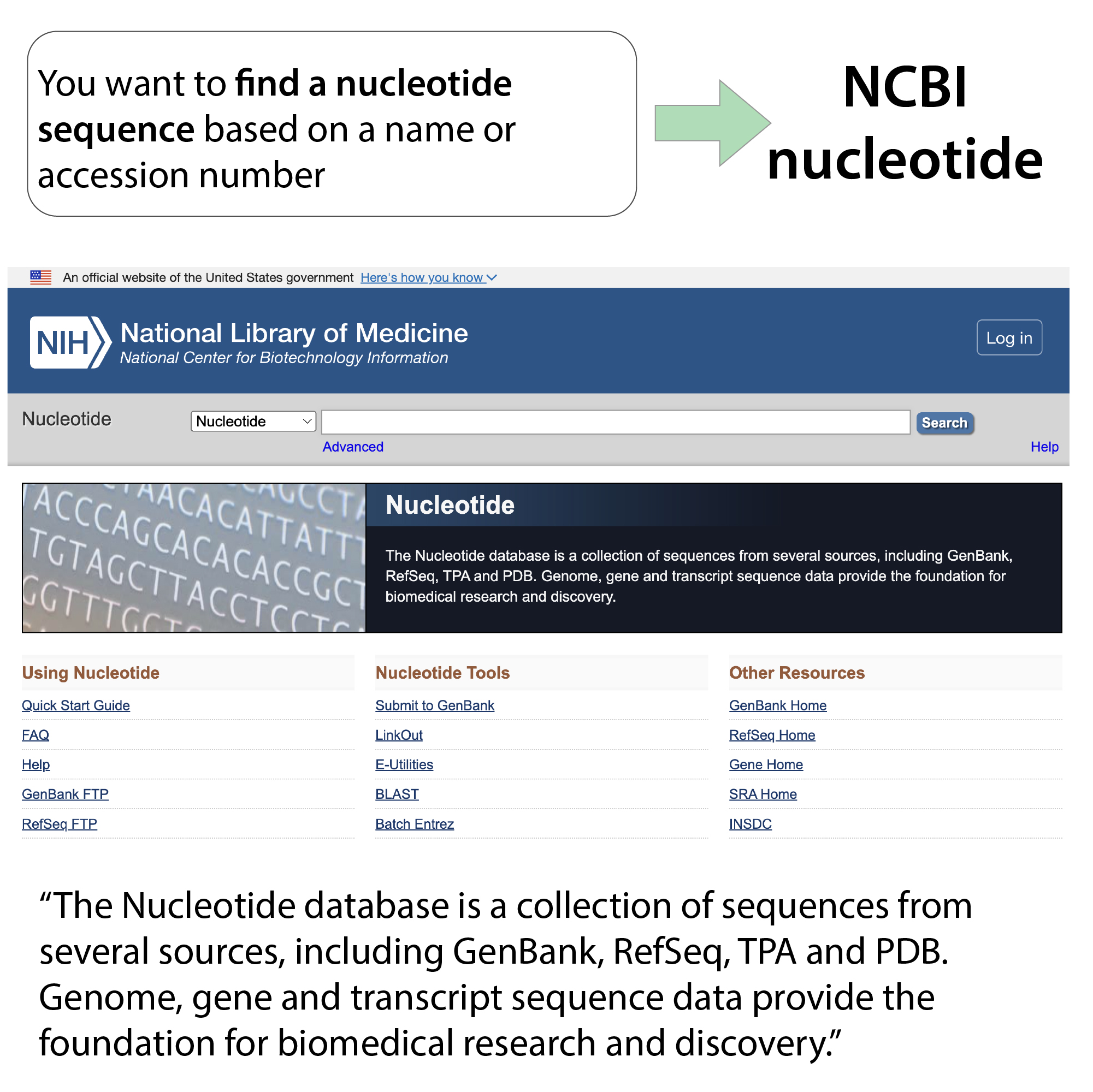
- NCBI nucleotide (which contains GenBank, RefSeq, etc.) https://www.ncbi.nlm.nih.gov/nucleotide/
- GenBank: “all” public sequencing data (lots of duplicates) https://www.ncbi.nlm.nih.gov/genbank/
- RefSeq: more polished data w/no duplicates https://www.ncbi.nlm.nih.gov/refseq/
- Ensembl (from EMBL-EBI): all sorts of genomics stuff: sequences, evolution, etc. https://uswest.ensembl.org/Homo_sapiens/Info/Index
- miRBase: the microRNA database: the place to go if you want to search for a microRNA (miRNA). It gives you info about the sequence as well as how confident you can be that it’s legit and not a false positive (misannotation) (look to # of reads for a good indication). Note that human miRNAs will start with “hsa-“ and then miR-… https://www.mirbase.org/
- BLAST: for sequence alignment and finding where sequences come from, also tools for making primers, etc. https://blast.ncbi.nlm.nih.gov/Blast.cgi
- The NCBI has a BLAST Program Selection Guide you can look at if you want all the details https://www.ncbi.nlm.nih.gov/blast/BLAST_guide.pdf But here’s the gist
- nucleotide blast (aka blastn): this is for searching for/comparing nucleotide (DNA or RNA) sequences.
- blastx: this is for if you want to put in “translated nucleotides” and figure out what protein they correspond to – remember “x” for “exons” or “expressed.”
- tblastn: this is the opposite of blastx. Here you’re taking a protein sequence and trying to find genes that code for it (or similar proteins).
- tblastx: this searches translated nucleotides against translated nucleotides
- protein blast (blastp): this searches protein databases for protein sequences
- Primer-BLAST: for designing primers that avoid off-target binding (and/or incorporate other desired features) https://www.ncbi.nlm.nih.gov/tools/primer-blast/
- The NCBI has a BLAST Program Selection Guide you can look at if you want all the details https://www.ncbi.nlm.nih.gov/blast/BLAST_guide.pdf But here’s the gist
- More about it here: http://bit.ly/sequencetermstools
Gene Expression
- Human Protein Atlas: mass spec, antibody evidence, mRNA-seq, etc. showing where different proteins are expressed in humans, and even within cells https://www.proteinatlas.org/
- EMBL-EBI Expression Atlas: protein expression in multiple species https://www.ebi.ac.uk/gxa/home
- Gene Expression Omnibus (GEO): datasets from high-throughput assays including microarrays, RNA-seq, etc.; people deposit their data which can be accessed through their “GEO accession numbers”: look for them at the end of papers https://www.ncbi.nlm.nih.gov/geo/
- SRA (Sequence Read Archive): similar to GEO, but with just high throughput sequencing data https://www.ncbi.nlm.nih.gov/sra
Chemicals
- PubChem: database from NIH https://pubchem.ncbi.nlm.nih.gov/
- ChemSpider: database from RSC (Royal Society for Chemistry http://www.chemspider.com/
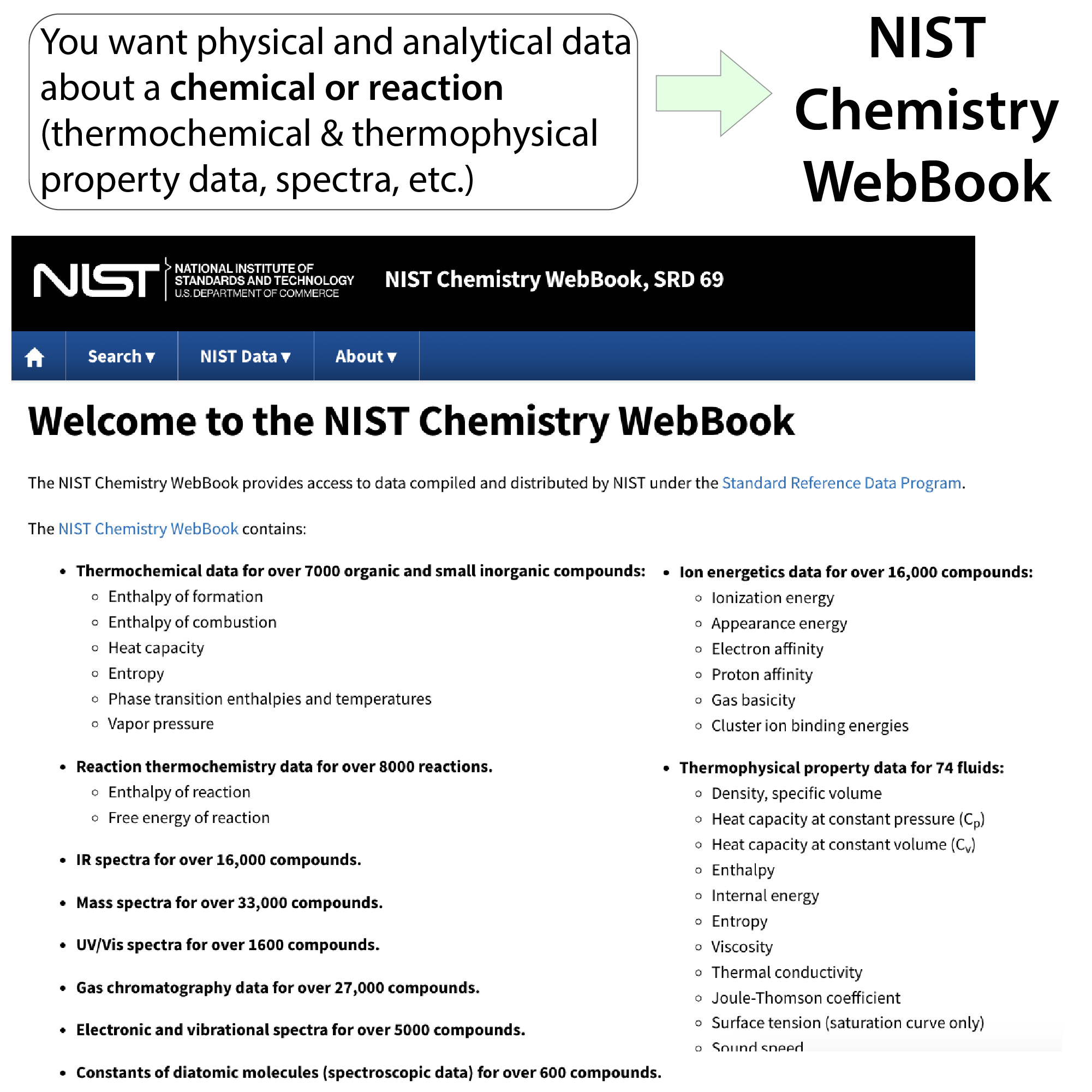
- NIST Webbook: thermodynamic and spectroscopic data of chemicals (great for o-chem class!) https://webbook.nist.gov/
- DrugBank: comprehensive information on drug molecules https://go.drugbank.com/
- ChEMBL: literature-extracted biological activity information (has info about how molecules interact with different proteins, etc.: can search by molecule or target) https://www.ebi.ac.uk/chembl/
- Cambridge Crystallographic Data Centre (CCDC): crystal structures of small molecules https://www.ccdc.cam.ac.uk/structures/
- MassBank: mass spectrometry data https://massbank.eu/MassBank/
- MassIve: mass spectrometry data https://massive.ucsd.edu/ProteoSAFe/static/massive.jsp?redirect=auth
Other
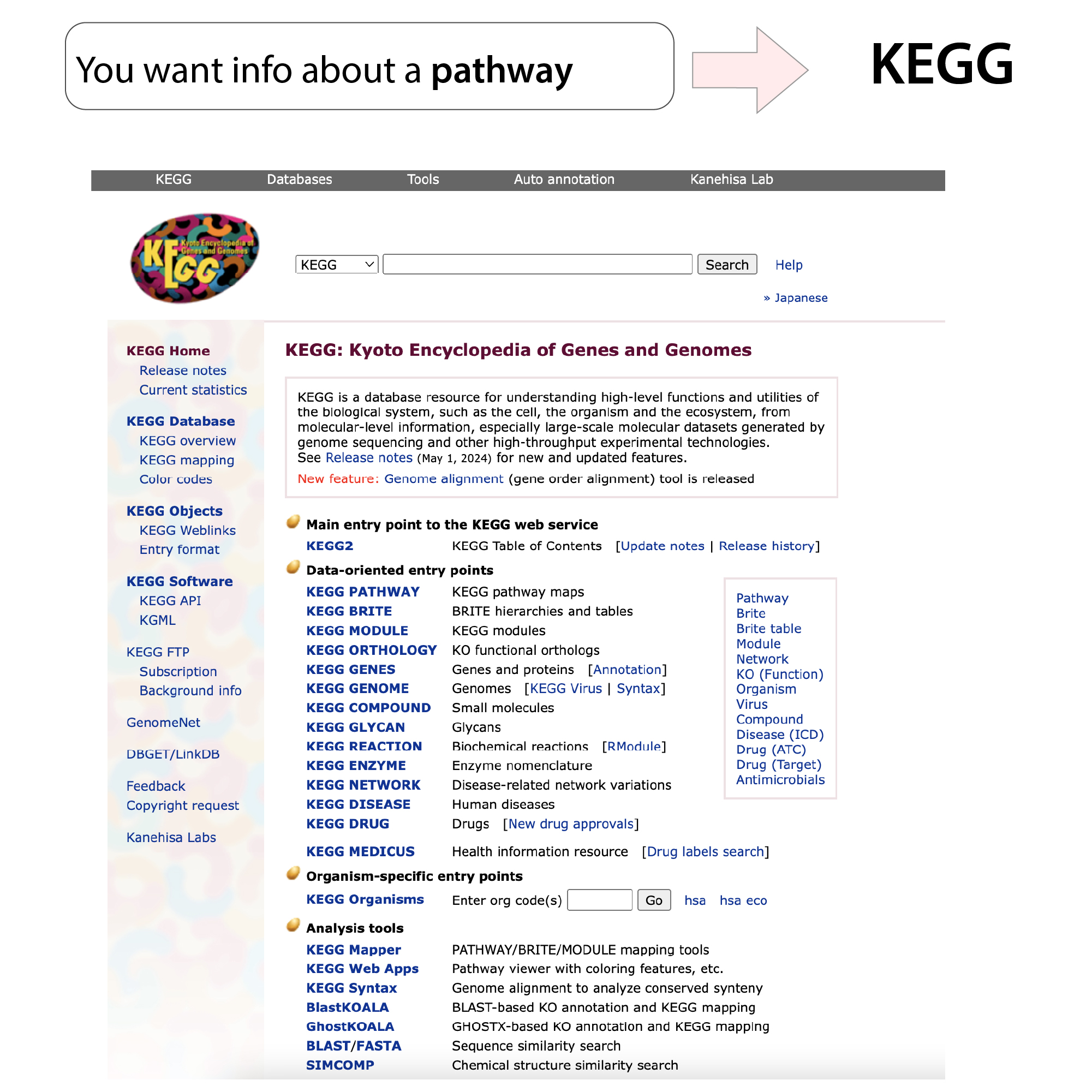
- Metabolic pathways
- KEGG Pathway Database https://www.genome.jp/kegg/pathway.html
- Lots of things
- Expasy Swiss Bioinformatics Resource Portal https://www.expasy.org/
- Page on my blog with resources I’ve found helpful: https://bit.ly/bumblingbiochemisttoolbox ; YouTube: https://youtu.be/hIiYqbBQCvA
Additional pages and guides:
And here’s a core list: