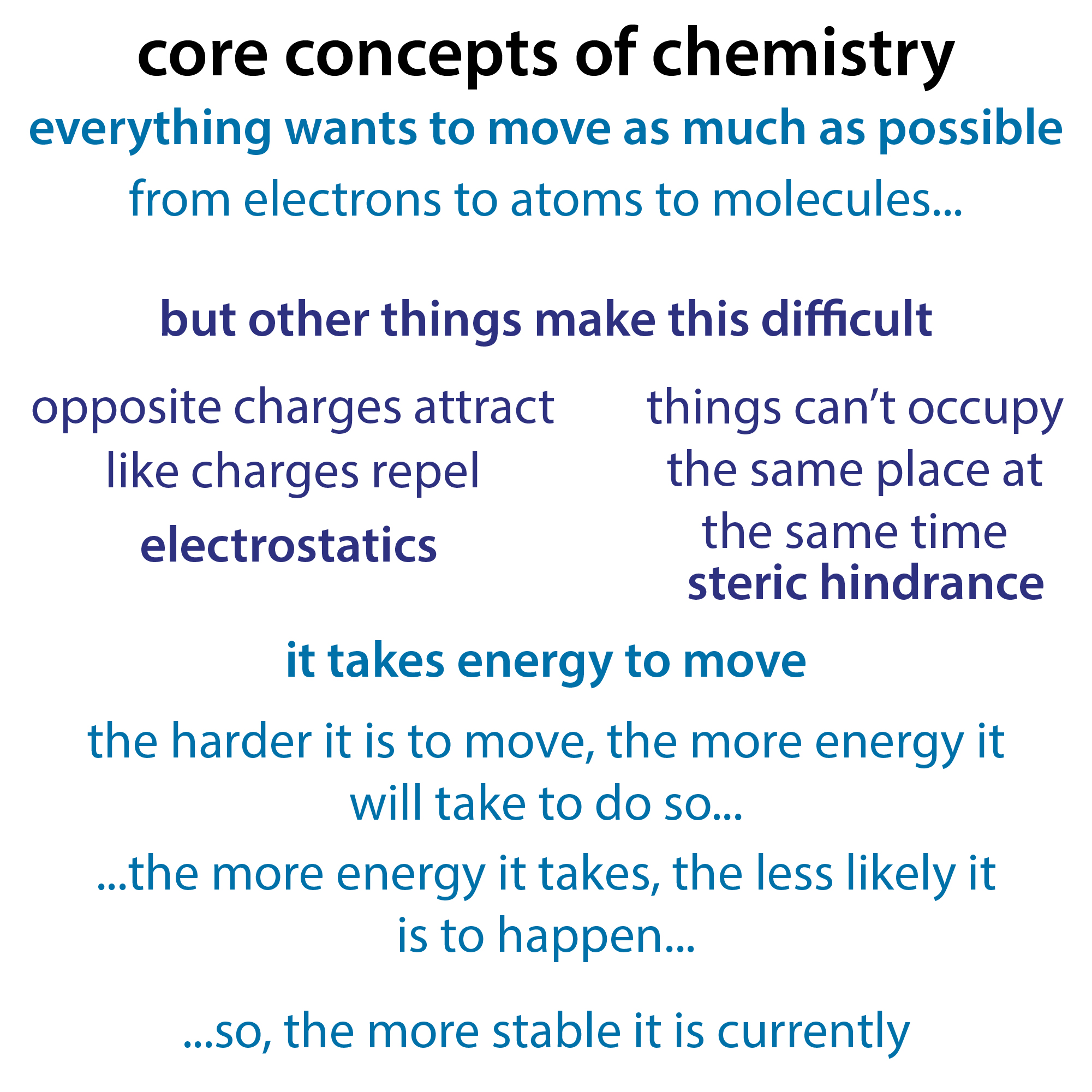
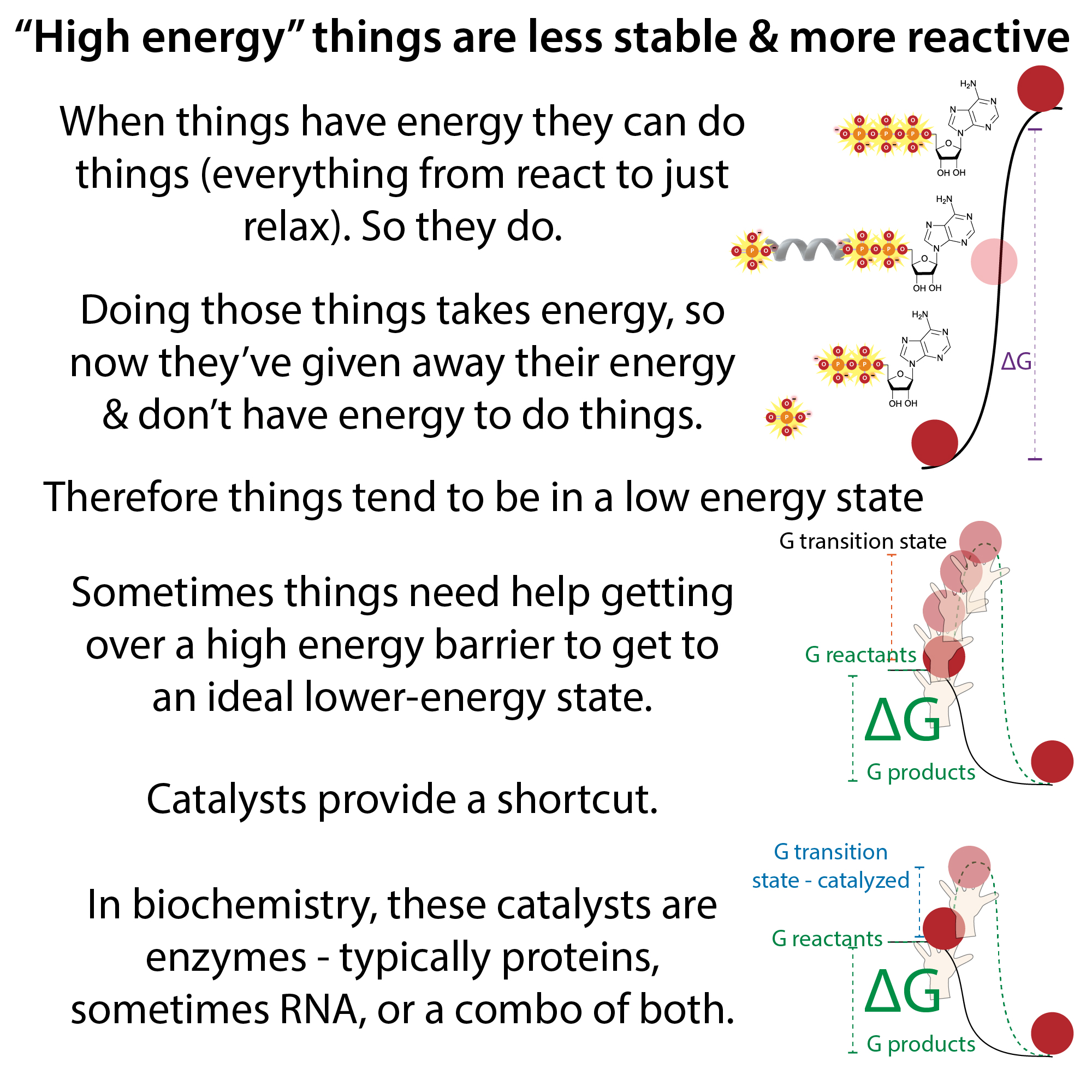
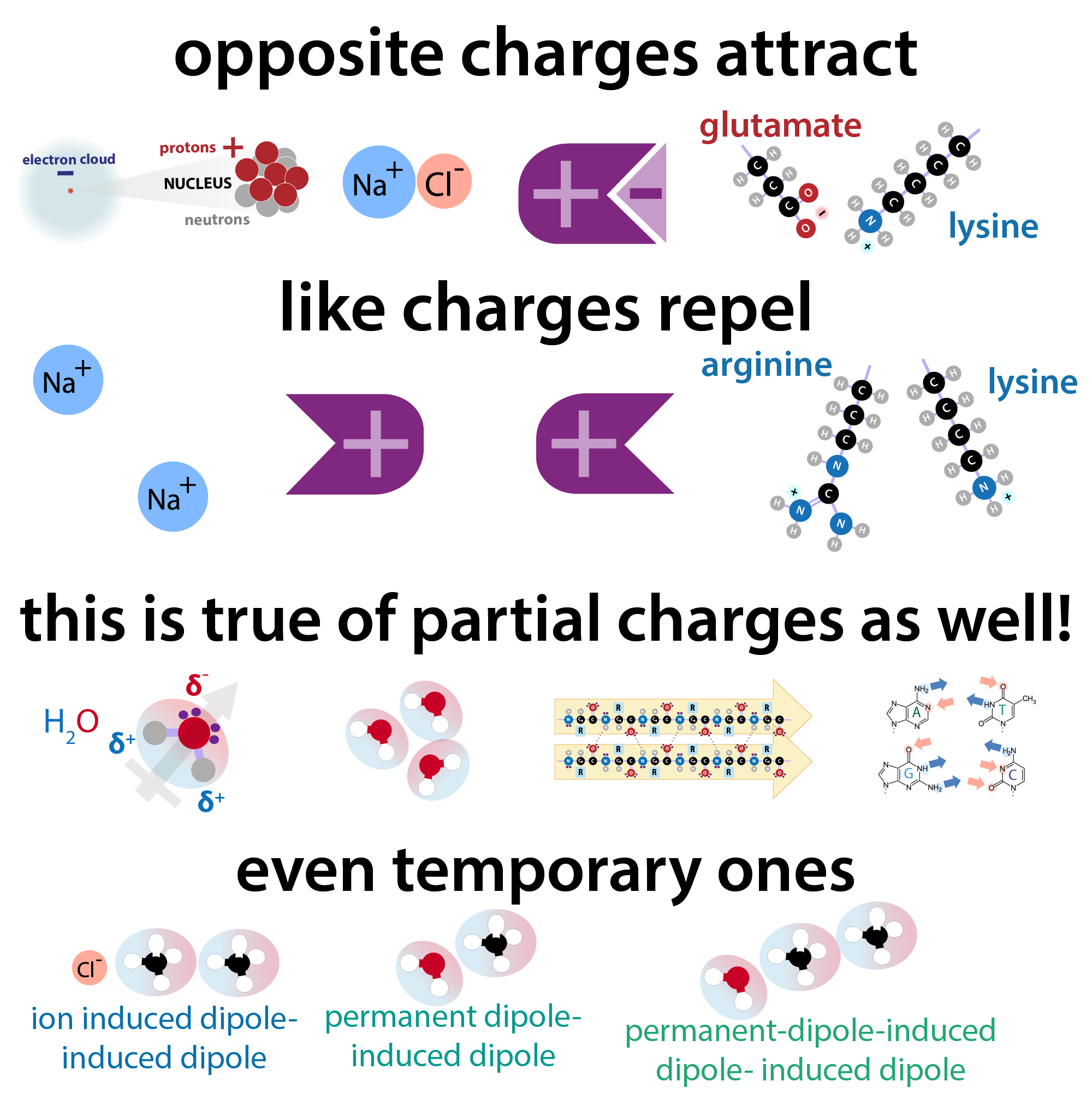
As I hope this post will help you see, chemistry really is at the heart of biochemistry – and it really needn’t be scary! Today’s post is just a rambly talk about some core chemistry concepts that come up again and again in biochemistry and what I’ve found helpful in developing a really intuitive thinking about molecules. Also some examples of how chemistry is constantly coming up in my own research – including the nucleic acid-protein binding experiments I ran this morning!
I kinda whizz through a lot of examples so don’t worry if they don’t make sense – I just wanted to give you a sense! (of where you’ll see some key concepts come up).
Also, here are those (much better) free resources for people wanting to learn more about chemistry:
Amanda L. Jonsson, Mark A.J. Roberts, J.L. Kiappes, Kathryn A. Scott; Essential chemistry for biochemists. Essays Biochem 31 October 2017; 61 (4): 401–427. doi: https://doi.org/10.1042/EBC20160094
Chemguide: https://www.chemguide.co.uk/
Khan academy: https://www.khanacademy.org/
Half the battle of learning (or at least truly appreciating) metabolic biochemistry can just be realizing that it’s o-chem applied to a chaotic environment with enzymes as the chemists. (One of the reasons o-chem was a sort of “gateway drug” that helped me fall in love with biochemistry!)
So, I highly recommend people review their o-chem before diving into biochemistry; just be sure to keep some core differences in mind to help direct your study. . .
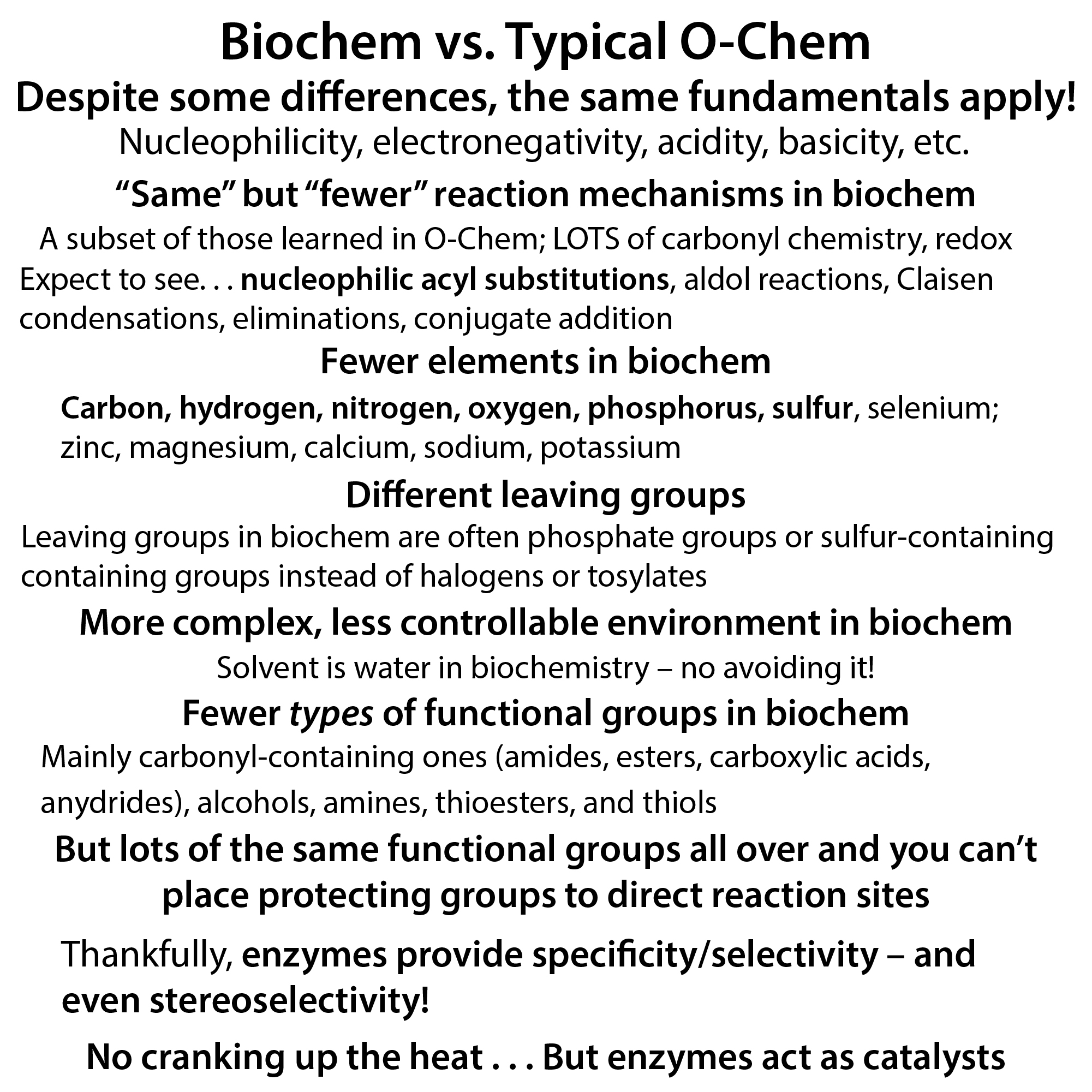
Biochem vs. Typical O-Chem
Despite some differences, the same fundamentals apply! nucleophilicity, electronegativity, acidity, basicity, etc.
“Same” but “fewer” reaction mechanisms in biochem
A subset of those learned in O-Chem; LOTS of carbonyl chemistry, redox Expect to see… nucleophilic acyl substitutions, aldol reactions, Claisen condensations, eliminations, conjugate addition
Fewer elements in biochem
Carbon, hydrogen, nitrogen, oxygen, phosphorus, sulfur, selenium; zinc, magnesium, calcium, sodium, potassium
Different leaving groups
Leaving groups in biochem are often phosphate groups or sulfur-containing containing groups instead of halogens or tosylates
More complex, less controllable environment in biochem
Solvent is water in biochemistry – no avoiding it!
Fewer types of functional groups in biochem
Mainly carbonyl-containing ones (amides, esters, carboxylic acids, anydrides), alcohols, amines, thioesters, and thiols
But lots of the same functional groups all over and you can’t place protecting groups to direct reaction sites
Thankfully, enzymes provide specificity/selectivity – and even stereoselectivity!
No cranking up the heat… But enzymes act as catalysts
Recommended open-access texts:
Organic Chemistry with a Biological Emphasis by Tim Soderberg, LibreText Chemistry especially Chapter 11: Nucleophilic Acyl Substitution Reactions: https://chem.libretexts.org/Bookshelves/Organic_Chemistry/Book%3A_Organic_Chemistry_with_a_Biological_Emphasis_v2.0_(Soderberg)/11%3A_Nucleophilic_Acyl_Substitution_Reactions
Organic Chemistry A Tenth Edition by John McMurry, including Chapter 22: Carbonyl Alpha-Substitution Reactions and Chapter 23: Carbonyl Condensation Reactions, OpenStax https://openstax.org/details/books/organic-chemistry
O-chem meets biochem scavenger hunt: https://bit.ly/ochembiochemscavengerhunt