
The personal statement should not read like a CV or a resumé. Instead, the personal statement should tell them about you, not just your work.
Where you do talk about your research work (which you should!), talk about it in terms of why you did what, what you learned, etc.
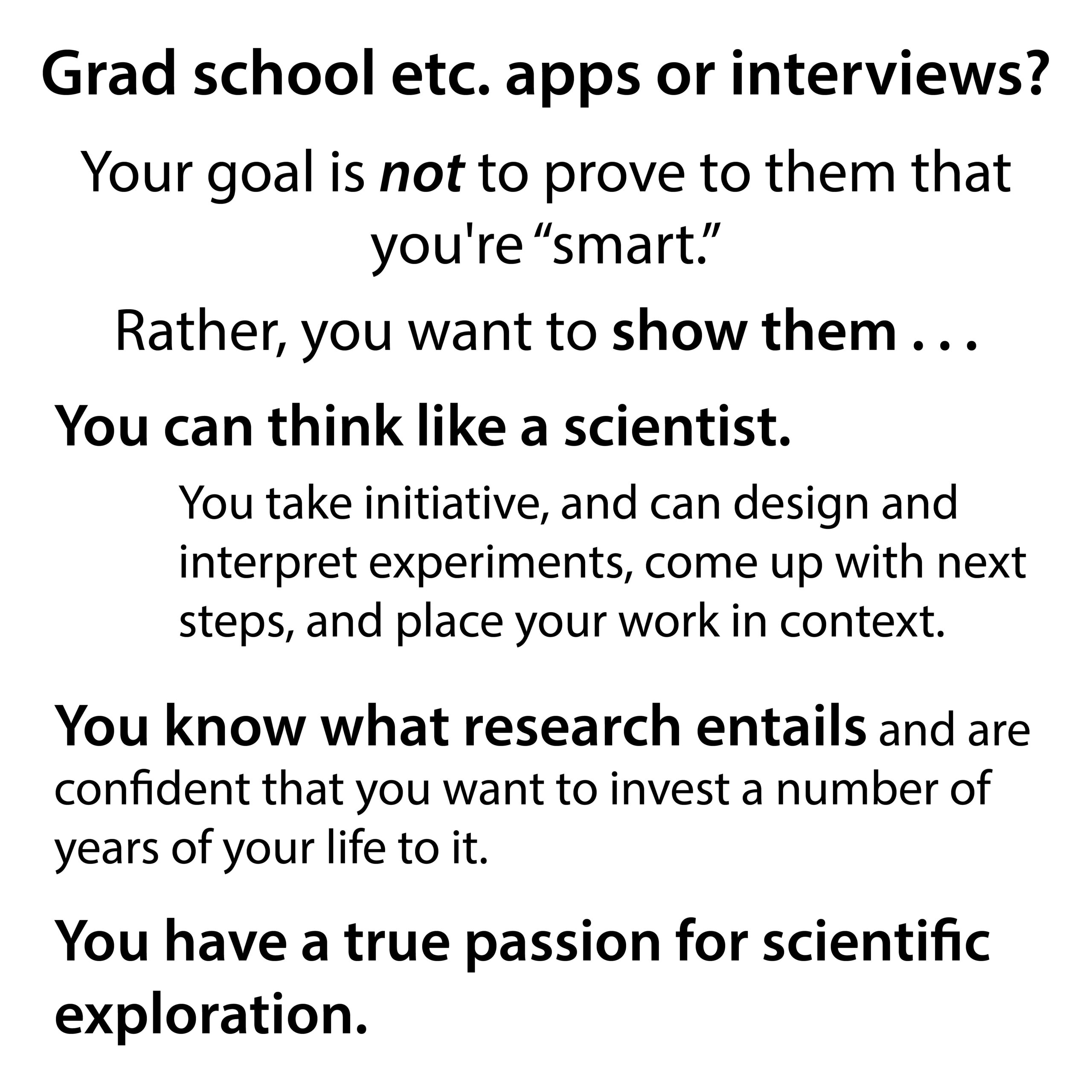
Show them you can think like a scientist and truly want to be a scientist!
One of the most crucial things is that you should show them you can think like a scientist, not just that you know a lot of techniques.
Explain:
- what the goal of the project was (why were you doing what you did)
- how you approached it (what did you do)
- what you found (results, no matter how small)
- what that means (interpret those results)
- what the implications are (no matter how minor)
- what would be the next steps or future directions?
Even if your experiment didn’t work or inevitably is still mid-progress when writing the app, talk about it. Don’t be embarrassed at difficulties – instead explain how you’ve been able to troubleshoot and (hopefully) figure out why things weren’t working. They will like to see that you know that science involves failure and that you have the necessary perseverance and drive to work past it!
Remember, they will also see your CV or however you upload things, so don’t feel that you need to cram it all into the personal statement – instead work your major accomplishments into your narrative.
Break things up into a couple paragraphs – one about you and one about why you want to go to that school and that program in particular. Make sure you customize this for each program (and send the right one to the right program!)
Mention a few professors whose work interests you but don’t just list off a bunch of names. Mention why they interest you. But also don’t seem too attached to a specific lab (assuming the program does lab rotations).
Don’t feel like you need to know exactly what you want to research – at the grad school stage, you will be restricted based on what the labs want to work on.Later you’ll get to branch off.
It’s also important to show you have an open mind because interests can (and often do, sometimes dramatically) change.
Ask friends and colleagues to look it over
- fresh eyes can catch typos
- an outsider perspective can see where needed context or background info is missing
- they might have other helpful suggestions
Use their constructive criticism to learn and improve – try not to take it personally (which can be hard!)
Show them you are truly passionate for science! (and only apply if you really are!)
lots more grad-school related content here: https://bit.ly/gradschoolposts
downloadable version: