Thesis committee meeting coming up? Here’s some advice on what to expect and how to prepare for these progress-reports so you can knock the committee’s socks off!
First off, whose socks are you knocking off and why? Let’s start by discussing what these meetings actually are. With the caveat that how exactly it all works will depend on your program.
YouTube: https://youtu.be/fvcYX_0qBPs
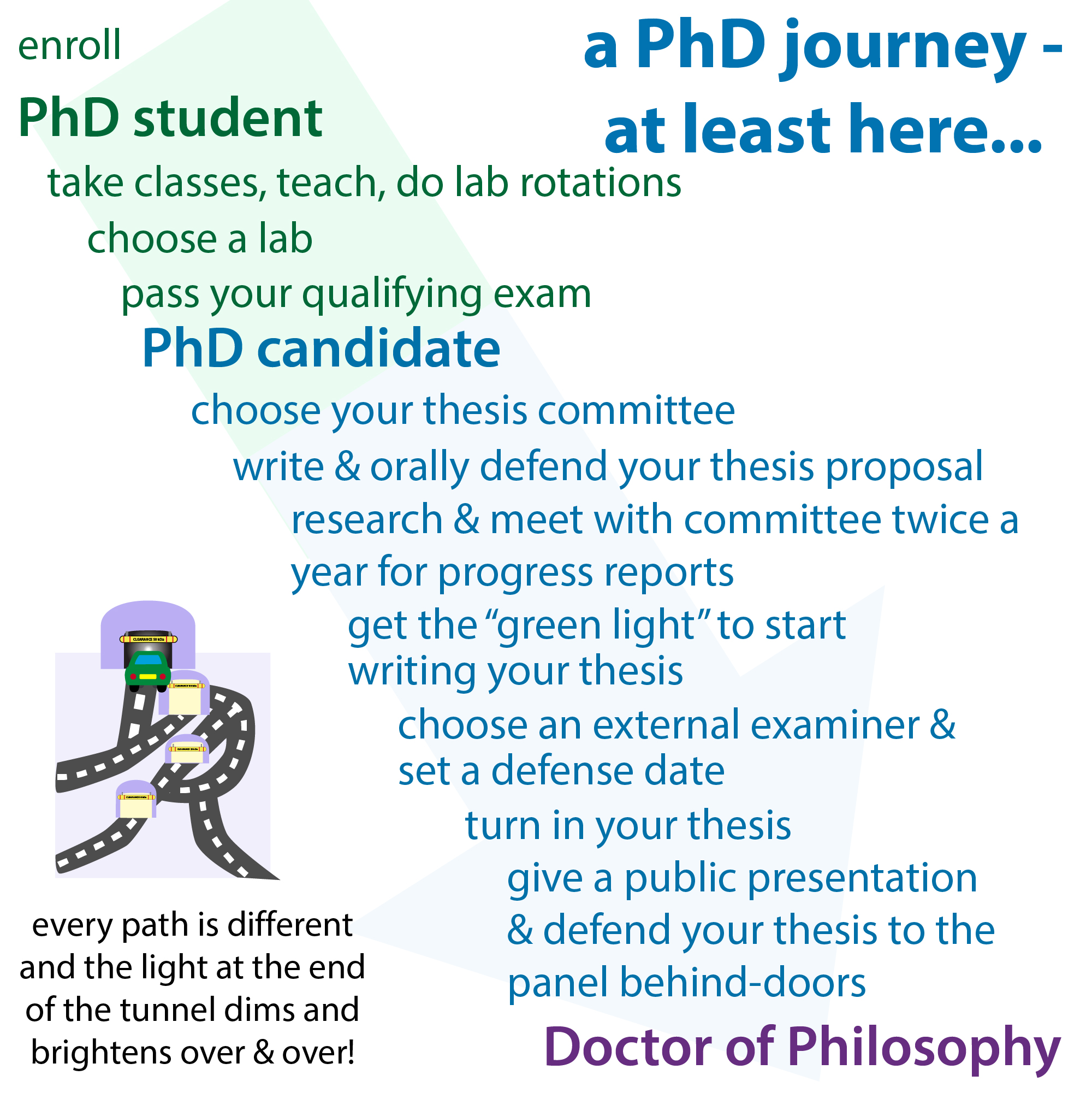
Basically, these are progress-reporting meetings held once or twice a year. They take place after you’ve passed your qualifying exam and defended your proposed thesis research project. You meet with a committee of 4-5 people including your PI (the head of your lab)* and several other professors you (with your PI’s guidance) have chosen based on their expertise related to some aspect of your project.
*your PI typically isn’t present in your quals and/or proposal defense but then they are present at the rest of your committee meetings
At the stage where you’re at these post-quals committee meetings, the committee has already given you the go-ahead to start working on your project – they believe in you! And now they want to help you see it all through!
Therefore, rather than tough grillings (which you might get at your quals and/or defense and can feel adversarial as the committee tries to test your knowledge to the max), these thesis committee meeting are more collegial and discussion-based. Although there’s a clear power differential, it can (if you come well-prepared) be more like a discussion amongst fellow scientists to get suggestions. These meetings can be really helpful! So let’s take some of the scary out of them.
I’ve only been on one side of the meetings, so I asked a veteran committee member for her perspective and advice. What follows is a combination of quotes and paraphrases from Dr. Alexandra Newton, UC San Diego Professor and President of the IUBMB (International Union of Biochemistry and Molecular Biology), as well as some of my personal thoughts, opinions, suggestions, etc.
Me: What’s the purpose of these meetings?
Newton: The purpose is two fold:
- To make sure the student is on track for a timely completion of their PhD
- To provide ideas and advice on the project to help the student have an awesome thesis
Me: What do you look for as a committee member?
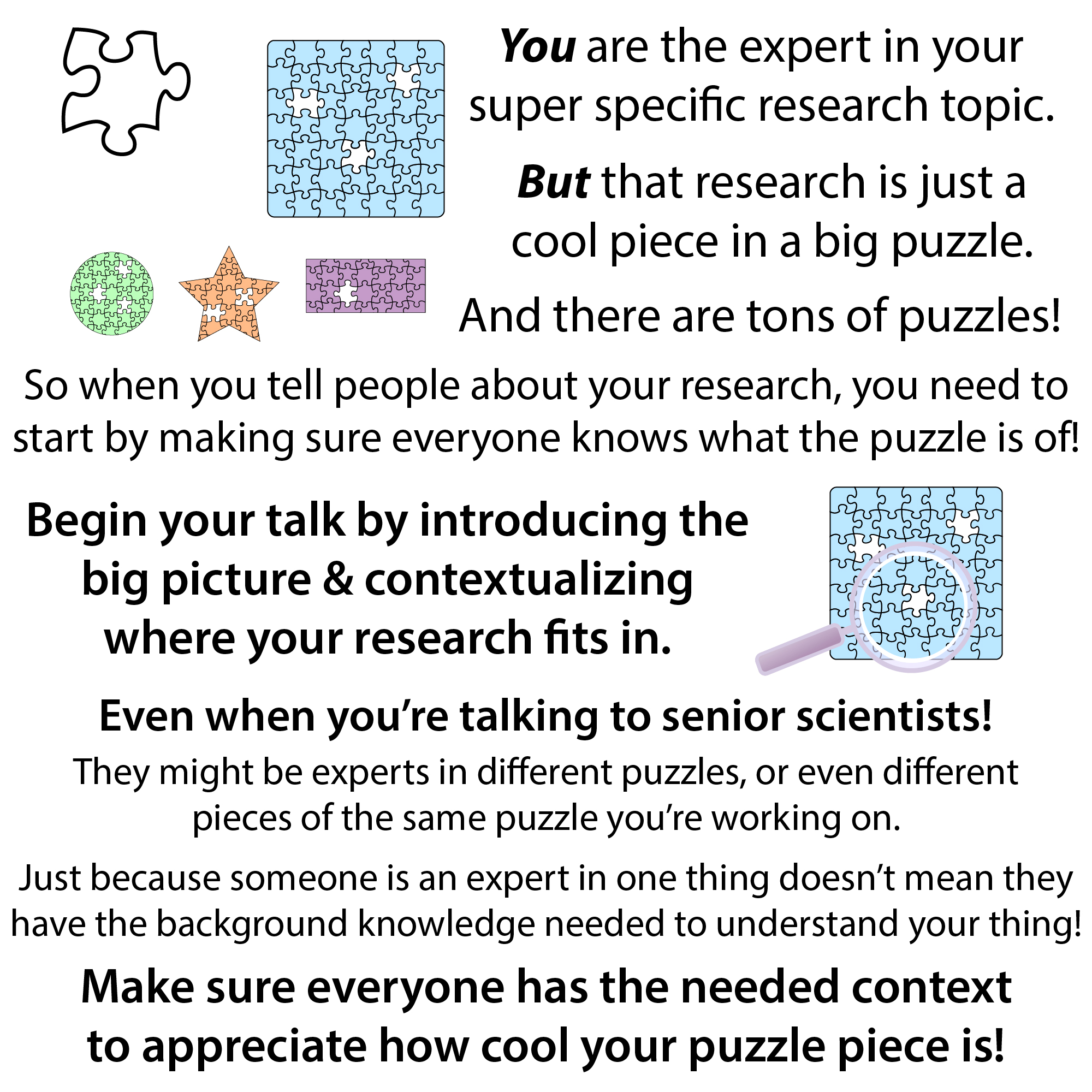
Newton: Do you understand your project from the big picture perspective to the details of how you are tackling the problem? Do you understand not only the field, but the gaps in the field. Can you explain why what you are doing is important? Can you explain all aspects of your experiments and techniques used? Can you think of alternate approaches or other ways to address the same problem? And don’t forget to know your amino acids if you are working with proteins…
As to what actually goes into those meetings, here’s what Newton suggests:
- What have you accomplished since you began in the lab (or since last committee meeting)?
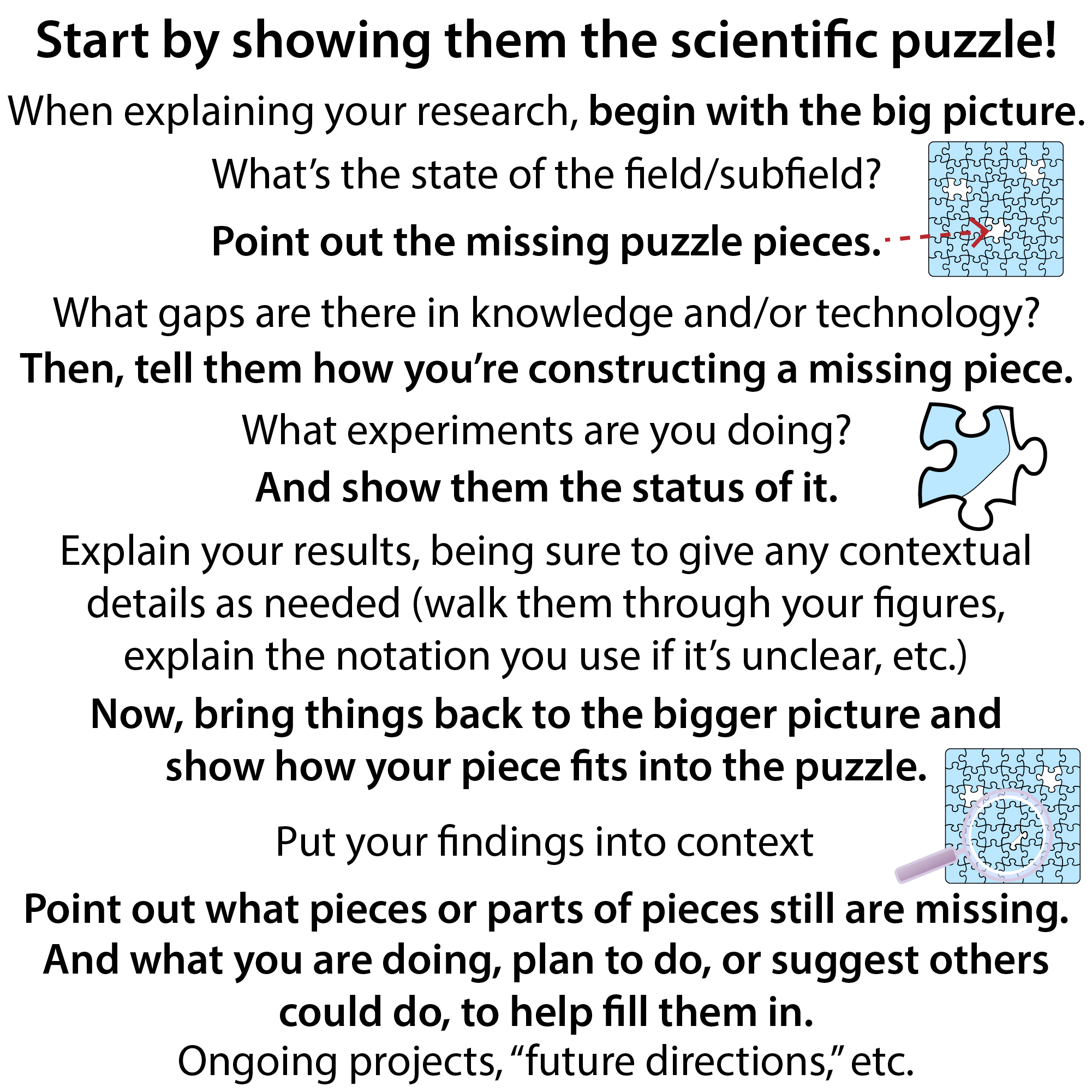
- Start with background. What is the topic you are studying? What gap in knowledge are you addressing? Why is it important to fill this gap? How will you address this gap?
- Then get into details – what have you done so far? What can you conclude? What will you do next?
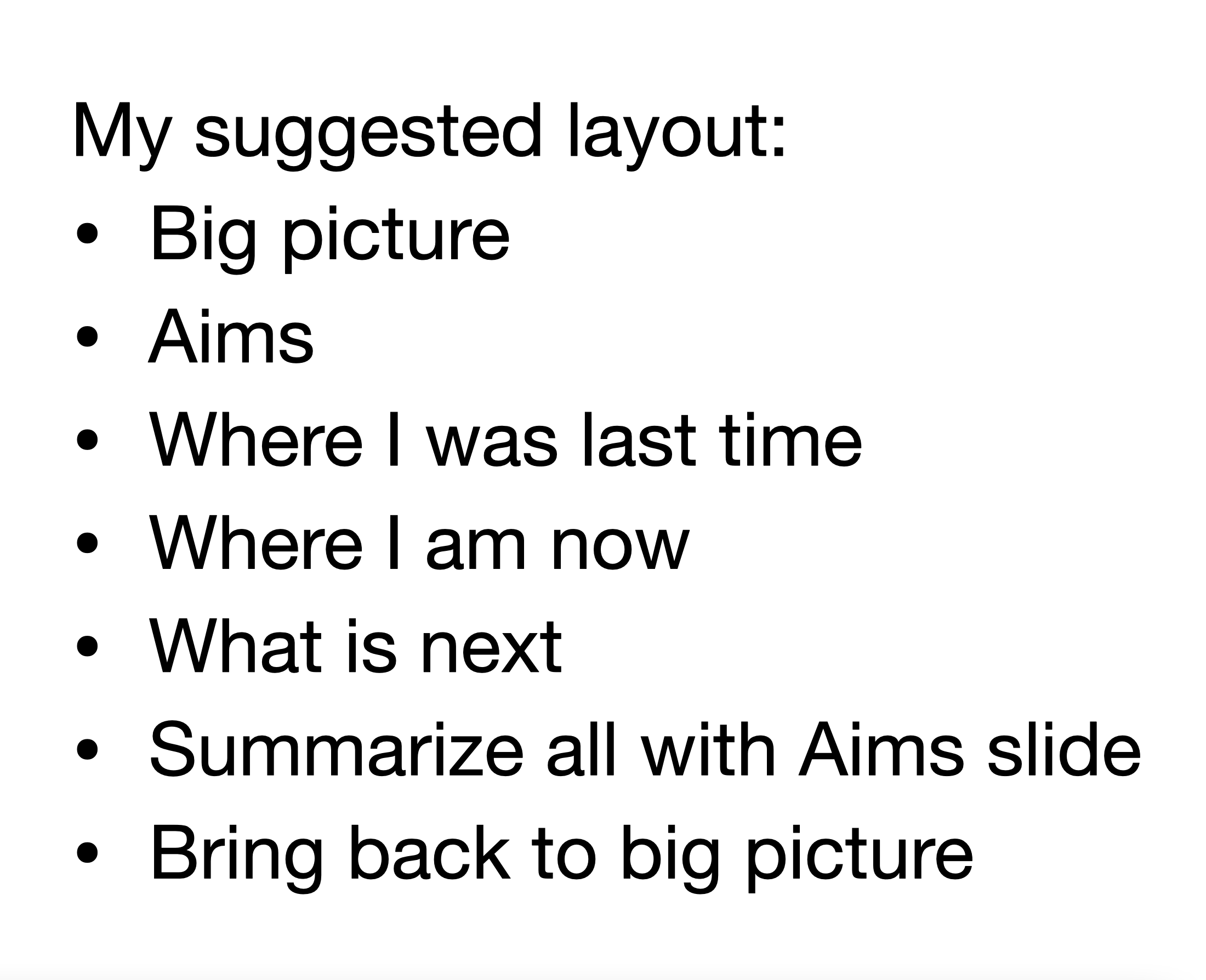
My suggested layout (Bri speaking here) is:
- Big picture
- Aims
- Where I was last time
- Where I am now
- What is next
- Summarize all with aim slide
- Bring back to big picture
As for how you actually lay that out…
Newton: Having a polished PowerPoint presentation shows that you care and this is important. Pay attention to detail in your presentation – no typos, clearly labeled data, only show data you are talking about (so whatever is on your slide is a talking point). Have nice graphics to illustrate your experimental set up.
Bri note: I use Adobe Illustrator to make figures (and I have posts and videos with tips on this)- a free alternative is Inkscape. A lot of people also use BioRendr which has built in science graphics you can use (note: there are limits and some watermarks with the free version)
Figures & graphics are great (and definitely beat text on a slide – make good use of white space to help them focus & steer their attention!) – but don’t use them as a crutch. Instead, make sure you can explain things without them in a clutch!
Newton recommends practicing ahead of time (and I agree!): “Practice your talk in front of your lab. Pace yourself. If you have a 50 minute presentation, know at what slide you should be at the 30 min mark – speed up or slow down accordingly. If your committee asks you a lot of questions, don’t worry about the time. They have slowed you down and worse case scenario they will ask you to skip to the end.”
note: I (Bri) added the emphasis to the line about your committee kinda throwing you off-pace because it definitely happens frequently! Just go with it – while also trying to maintain some control over the meeting and steering it in the direction you want.
Although practicing is really important, try not to just memorize a script. You want to sound more natural, and less rehearsed when you’re actually giving your talk, so focus on making sure you get key things across rather than remembering every word of how you plan to explain something. And remember that you want to use shorter sentences than you would when writing (this is something I struggle with in talks).
Sometimes, the most beneficial part of practicing is actually not practicing the talk but instead the Q & A! You should expect to get a LOT of questions – especially about your experimental section. Prepare as much as you can ahead of time to be able to answer as many as possible. Try to predict what questions they’re likely to ask (what would you ask if you were in their position?) – the practice talk can be great for getting potential question previews as well. Come prepared with backup slides with extra data you can whip out to help you answer (but also be able to explain whatever you’re talking about without figures or with just a whiteboard)
When you answer the questions, Newton says: “Provide thoughtful answers. If you do not know the answer, it is perfectly fine to say so. You could say “that’s an interesting question. I don’t know the answer, but I will look it up and can get back to you’. Or “that’s an interesting idea. I will think about it and get back to you”. So let your committee member know that you don’t have an answer but you will do your best to find an answer.”
Definitely don’t expect to have all the answers. And they don’t expect you to either. So if you don’t know something, that’s okay! (As long as you know most things, of course – especially the most crucial things). Sometimes, they’ll ask you things even they don’t know the answer to – and then you get confused whether they’re testing you or honestly curious for the answer…
I also want to add that it’s okay to take a minute to think before answering. It’s not like Jeopardy where first to the buzzer wins. Instead, a well-thought-out answer will “score you more points.”
At least in my experience, you’re likely to get a lot of differing advice from the different committee members – which could be good (variety! lots of ideas!) and/or confusing/overwhelming. Try to take it all in stride but know that you aren’t actually expected to do all of it. But do give everything they say serious thought and consideration. Try not to be too stubborn and/or firm-set on anything.
Be polite and tactful in all your responses. If you disagree with something, that’s okay. Jus be able to defend your position. Be able to explain why you chose the experimental approach you did and what benefits it has over other approaches. Also know each experiment’s limitations.
I recommend using the Aims (what you set out to do in your proposal) to help you orient your project and your presentation. In the beginning, remind them of your proposed Aims, then add bullet points for what you’ve already done. Then add points for what you’re going to show them at this meeting. And then at the end, add points for what you’re planning to do next. Don’t worry if you haven’t made even progress on all your Aims. Those Aims should serve as guide poles, not burdens.
At the end of the meeting, don’t be surprised if they kick you out of the room! At least in my program, the committee met before and after without the student to discuss amongst themselves. When they let you back in at the end, they give a little feedback and then later a written paragraph or so that goes in your records.
And then it’s back to the bench!
Not only can these meetings be great sources of ideas, but they also kinda force you to organize your thoughts, think critically about your experiment and how it fits into the bigger picture, and get some slides and writing prepared that will come in handy later.
On the bad side, though, they might come at inconvenient times, such as when you’re at a super productive phase of your experiments. So be sure to keep really good notes of where you are in your lab work so you can hop back in with minimal disruption after the break you have to take to prepare.
Hope that helps you to prepare – and hope I helped remove some of the scare!
If you do your best to prepare, you can go in with confidence – remember they all agree you belong there!
Huge thanks to Dr. Alexandra Newton for the great advice!
P.S. This post was inspired by a grad student who inspires me who recently rocked her first committee meeting. If you’re reading this, just wanted to let you know again I’m so proud of you!
more on explaining your research and remembering that big picture: blog: https://bit.ly/explainingyourscience ; YouTube: https://youtu.be/ZDBCivC7K04
more on preparing & presenting research talks: https://bit.ly/researchtalktips & https://youtu.be/VQlCHmvMypY
for lots more grad school- and postdoc-related content, I have a whole blog page full of posts on it: https://bit.ly/gradpostdocetc & YouTube playlists: https://youtube.com/playlist?list=PLUWsCDtjESrE5by6kK_GsGNPQtmdaVynz
more on making figures with Adobe Illustrator: https://bit.ly/adobe_illustrator_fundamentals ; YouTube: https://youtu.be/3bHYtCK7QXQ ; download: https://bit.ly/bumbling_uploads