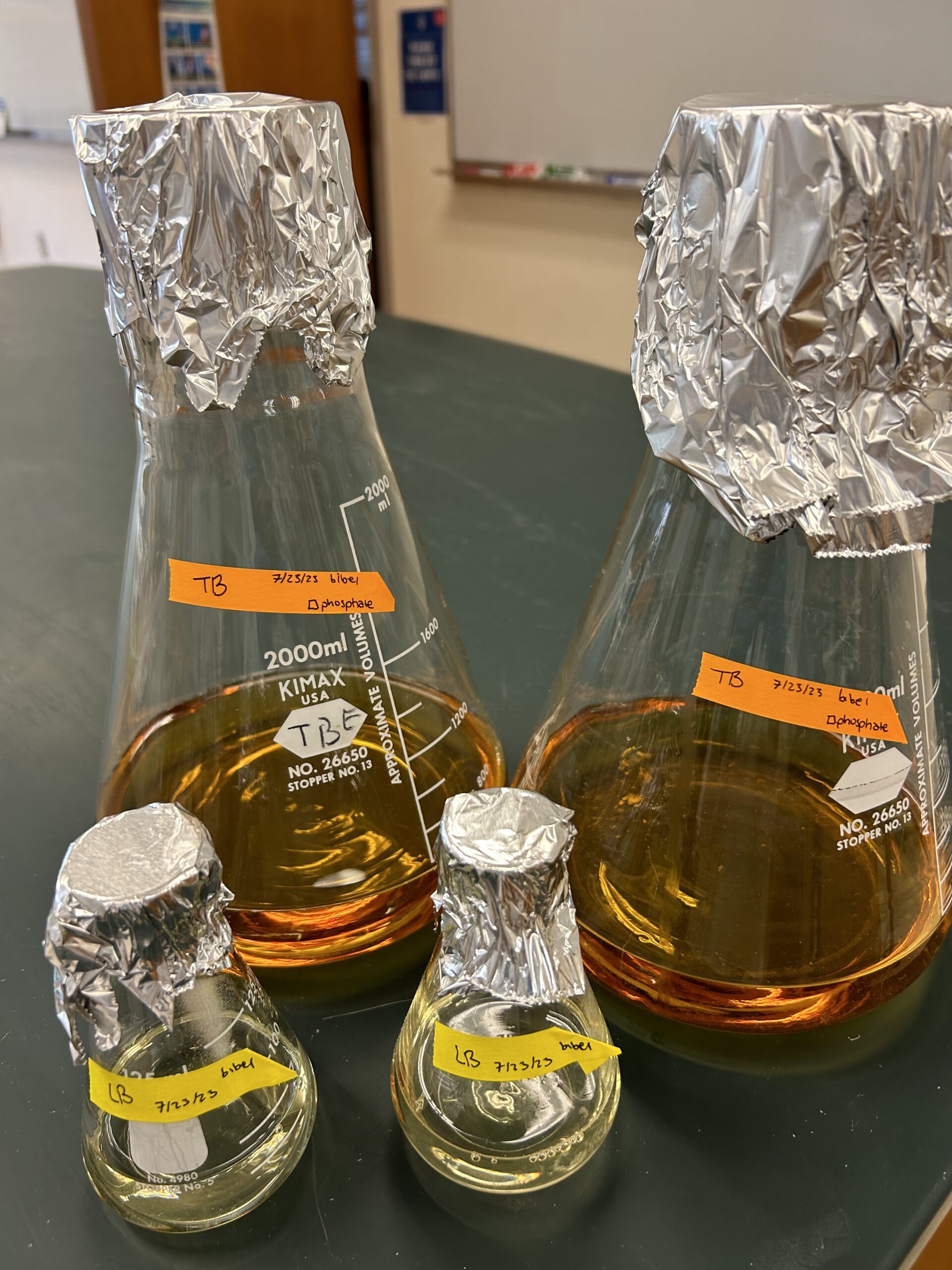
If you want more protein made, but don’t have a lot of space to scale up, try expressing in TB (Terrific Broth) instead of LB (Lysogeny Broth). TB is a richer media (more nutrients) and it has a pH buffer so it allows bacteria to grow to higher densities and live longer, healthier lives, which can lead to more of your recombinant protein being made.
much more background on bacterial media (growth food) here: blog: https://bit.ly/bacterialgrowthmedia & https://youtu.be/taN-h3AvgDQ
But today I want to focus on what’s so terrific about Terrific Broth…
To understand what makes it special, let’s first look at the typical go-to media, Lysogeny Broth (yes, LB stands for Lysogeny Broth, not Luria Broth…). Its recipe was first published (by Giuseppe Bertani) in 1951. He was using it when studying lysogeny (a process where a bacteria-infecting virus called a bacteriophage (“phage”) inserts its own DNA into a bacteria’s DNA & bides its time until conditions are right for entering the lytic phage where it cuts itself out, makes lots of copies and bursts open the cell) http://bit.ly/2HLuB1S https://www.teknova.com/resource/lb-media/
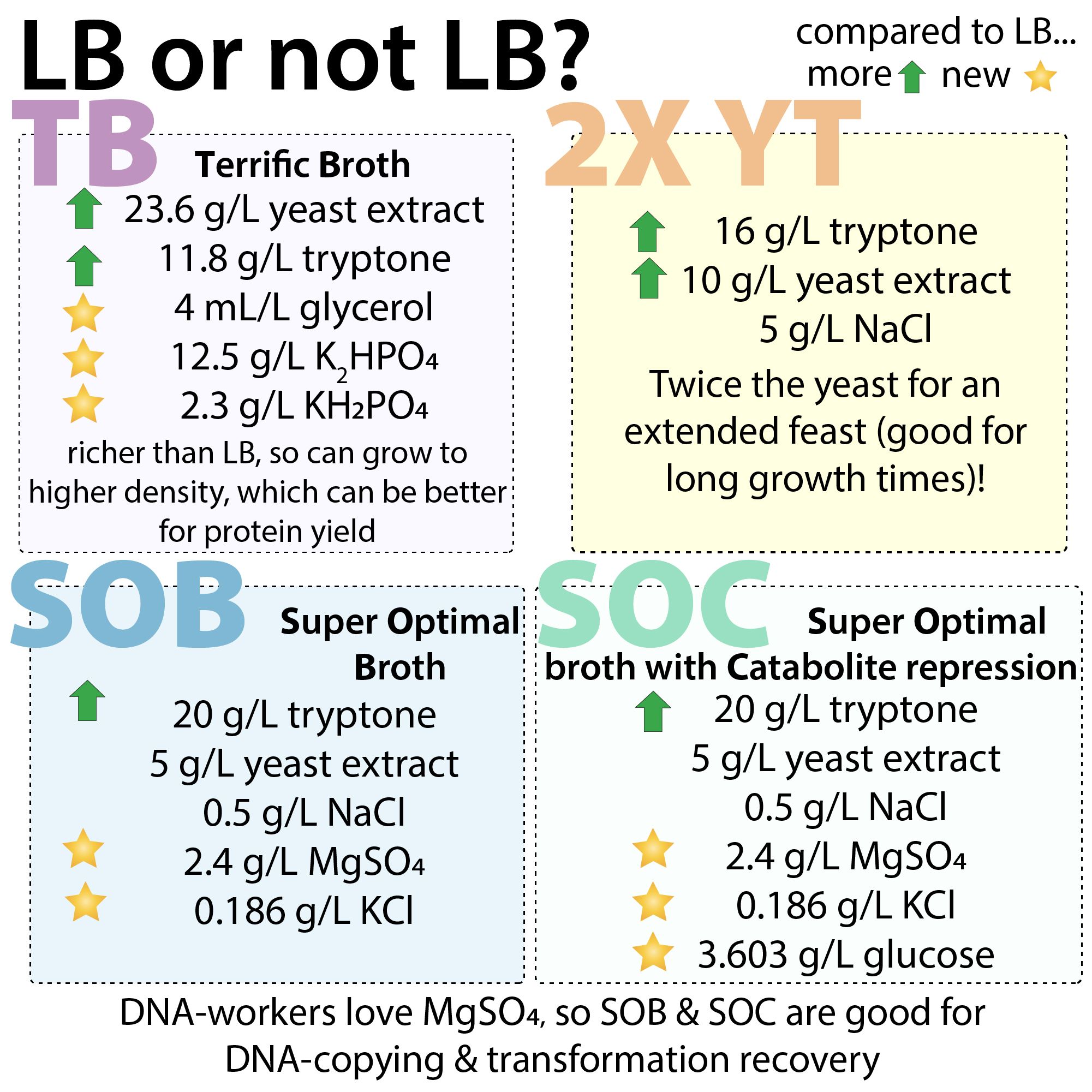
Its recipe is really simple and sufficient for lots of bacteria. There are 3 main components (though 2 of those components themselves have a lot of components.
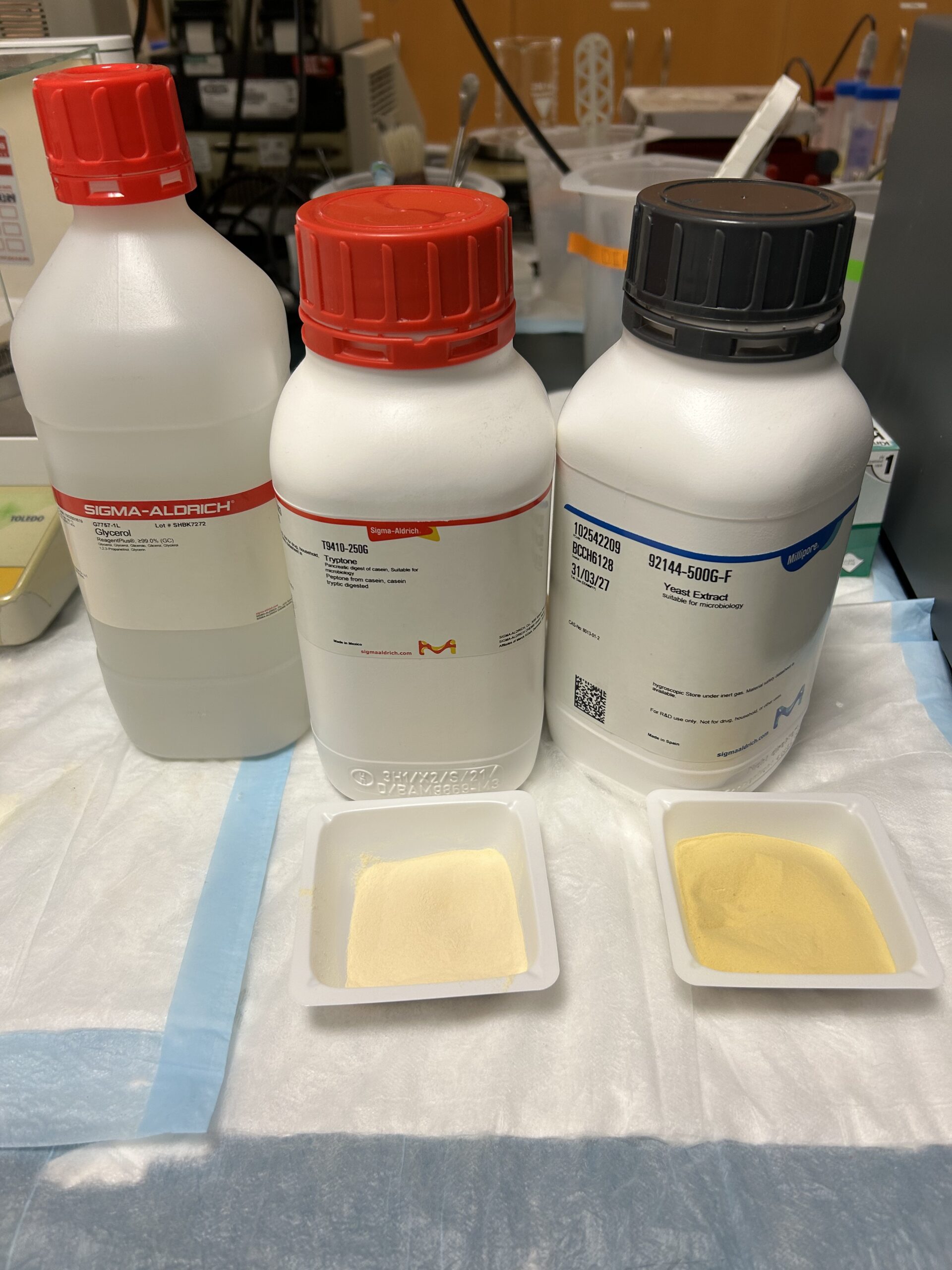
- TRYPTONE → this is a mix of peptides formed by the digesting a protein called casein with pancreatic enzyme → this provides amino acids the bacteria can use to make new proteins
- YEAST EXTRACT → this “autolysate” of yeast is basically just whatever happened to be in yeast (organic compounds including vitamins, trace elements, etc.) – and if it was good enough for the yeast…
- SODIUM CHLORIDE (NaCl)(table salt) → allows for osmotic balance, transport, etc.
A few of the major LB formulations are the “Miller,” “Lennox,” & “Luria” versions & they differ in the amount of salt they have. Miller & Bertani drown the bacteria in NaCl (10g/L) whereas Lennox just uses 5g/L and Luria just 0.5g/L → such low salt recipes are good if you’re using a salt-sensitive antibiotic
In the original paper, Bertani also added glucose, but most later recipes leave it out. Sometimes though, you want to give the cells glucose so they’ll use that for energy instead of the peptides, which you want them to use to make proteins. This will also help prevent alkalization due to the buildup of nitrogenous waste products. BUT, without a pH buffer present, the metabolism of glucose can lead to acidification of the media (through production of acetate, etc.) and production of growth-halting metabolites.
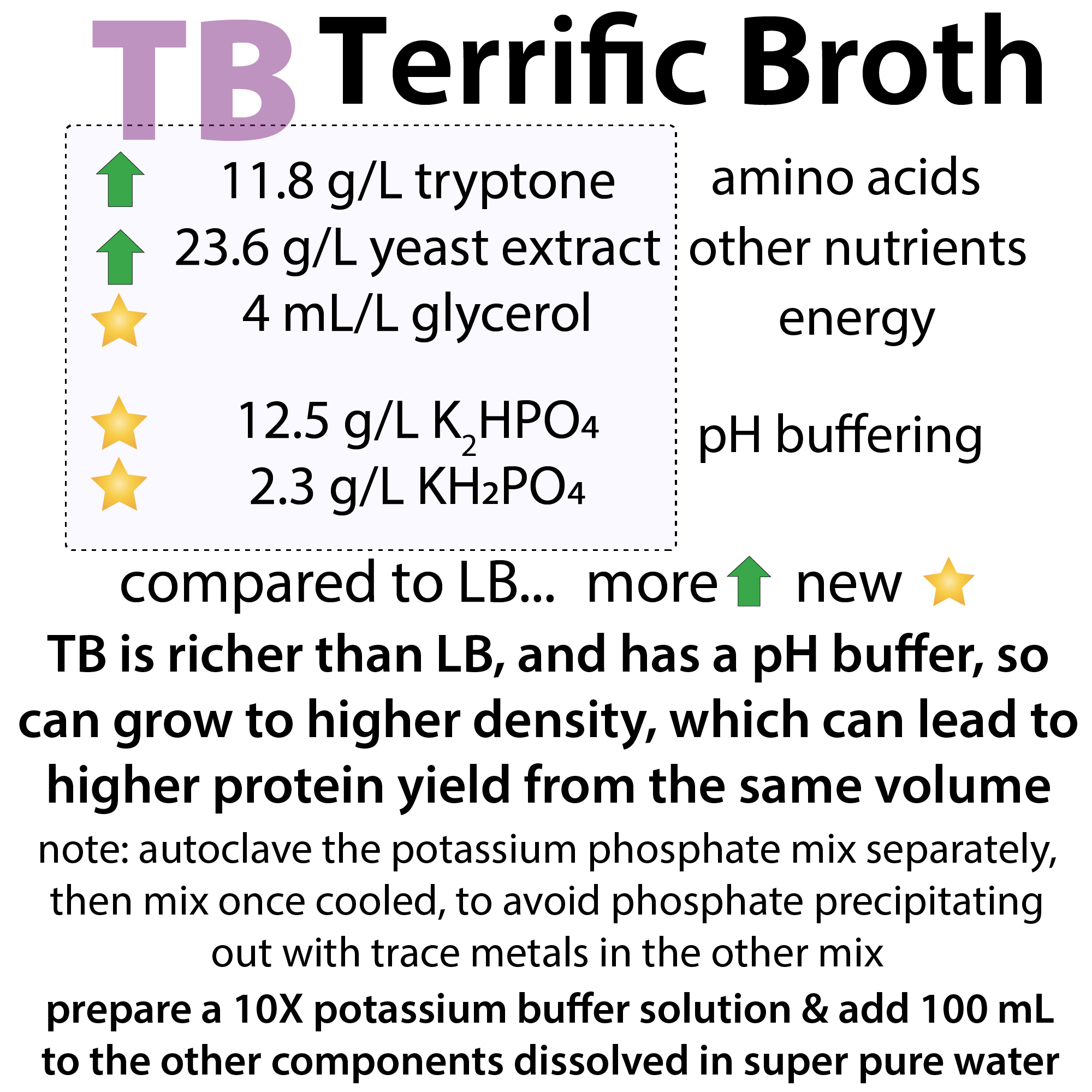
TB gets around those problems, while still providing extra energy, by including glycerol (which produces less growth-altering byproducts than glucose), and a pH buffer (in the form of a potassium phosphate solution).
TB also includes extra yeast extract & peptones, but leaves out the NaCl.
Here’s the actual formula/recipe:
Terrific Broth (TB)
Per L:
- 12 g tryptone
- 24 g yeast extract
- 4 mL glycerol (or 8mL of 50% glycerol, which is much easier to pipet or pour)
- 100 mL 0.17M KH2PO4 and 0.72M K2HPO4, sterile, to be prepared separately from the tryptone, yeast extract, and glycerol solution
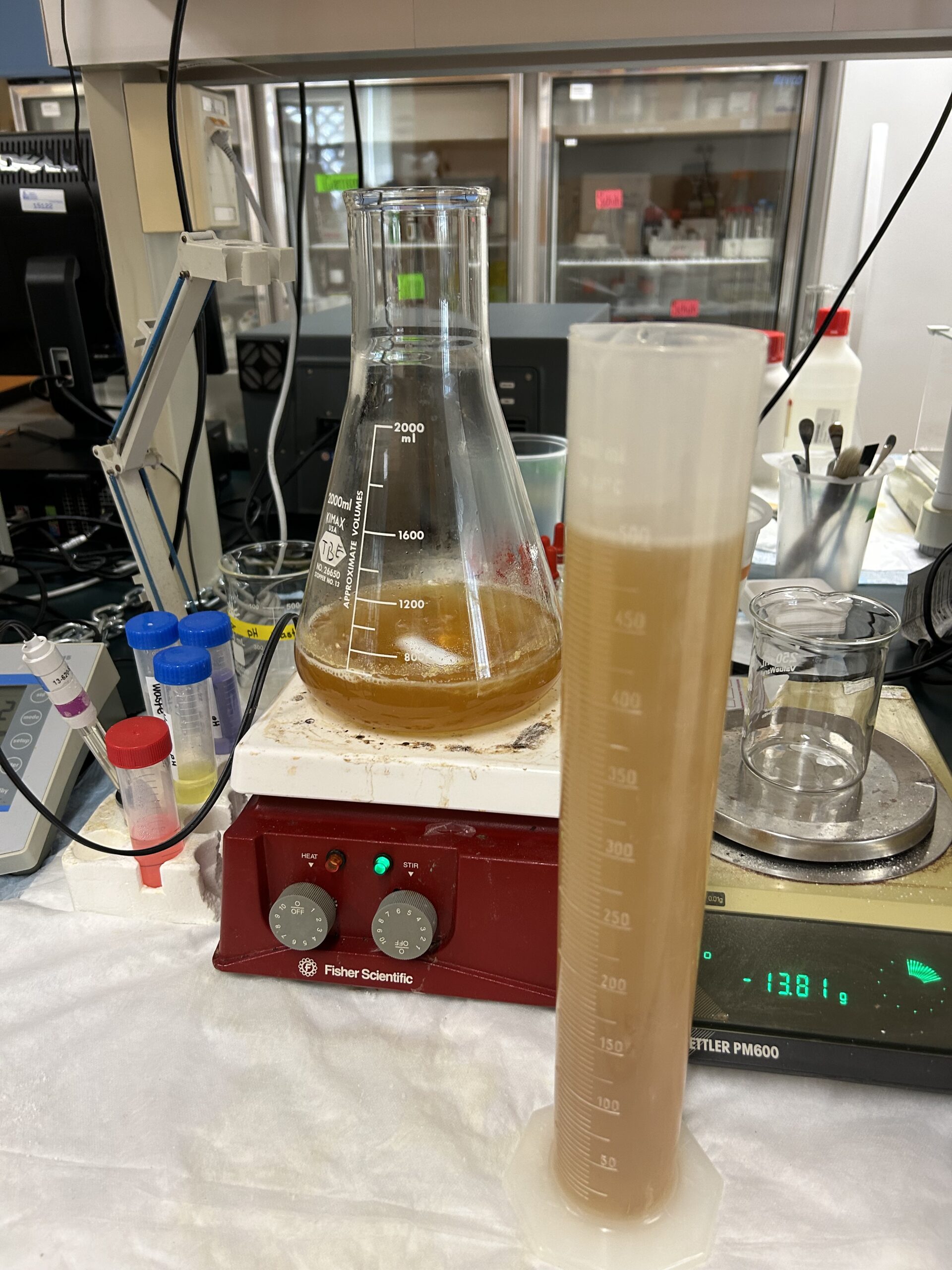
Dissolve tryptone, yeast extract, in ddH2O (~850 mL), add glycerol, and fill to final volume of 900 mL
Allow to cool to <60°C
Add 100 mL potassium phosphate solution
10X Potassium phosphate solution (for TB)
For 1 L:
- KH2PO4 (monobasic potassium phosphate): 23.14 g
- K2HPO4 (dibasic potassium phosphate): 125.41 g
autoclave
note: some recipes might call for “Bacto” tryptone &/or yeast extract. The bottles you use don’t have to say “Bacto” – that’s just a classically-used brand. Just make sure you’re using something that’s labeled “microbiology grade” or something like that.
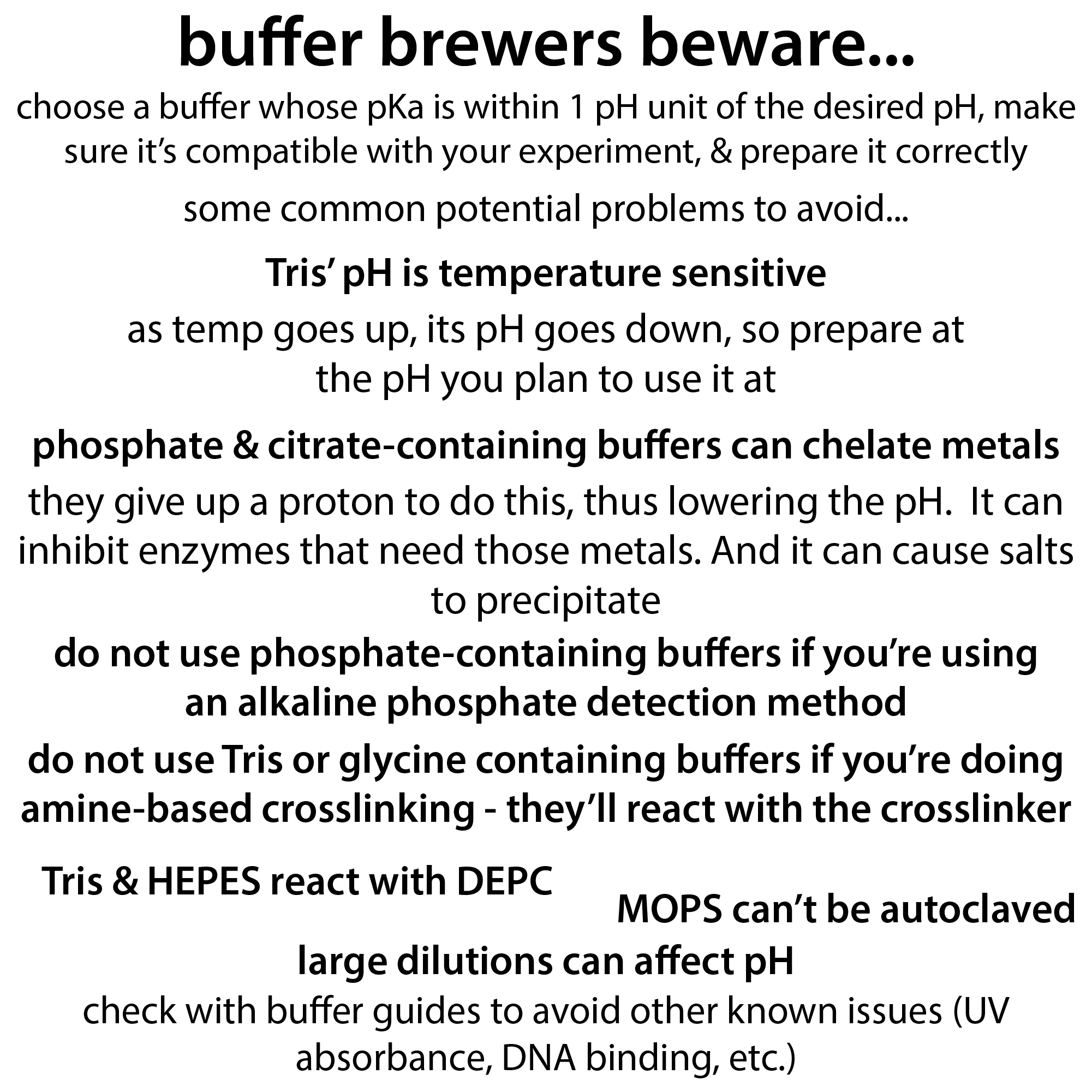
You’ll see that the potassium phosphate buffer solution is prepared separately, and might be wondering why… A great thing about phosphate is it can provide good buffering capacity around a pH of 7 or so. But a not-so-great thing about phosphate is that it can bind to metals, sometimes producing insoluble salts. And, unlike a lot of salts, which are more soluble at higher temps, many of these salts actually are less soluble at higher temps, because their dissolution is exothermic (it releases energy, so energy is basically a product of the reaction so at higher temps you have more of this product to begin with so, in accordance with LeChatlier’s principle, your equilibrium will shift towards the reactants (undissolved salt)). So, at the high temps of the autoclave, these salts will precipitate out.
You might be thinking, “so what? I don’t see any metals listed in the recipe” Although you don’t see metals explicitly listed, there are trace metals in the yeast extract and tryptone that the phosphate can find, bind, and pull out. And this can even alter the pH, especially if the acid or base form of phosphate preferentially is precipitating. This will make it difficult for the salts to redissolve even once the solution cools down.
So what’s the solution? Cool the solutions! Instead of autoclaving the phosphates with the other stuff, autoclave them separately. Then, let them cool to at least <60° before mixing them together. This avoids them coming together under conditions in which precipitation will be favored. P.S. remember to maintain sterile conditions when mixing them – you can use a sterile serological pipet or an autoclaved graduated cylinder to measure out your phosphate mix.
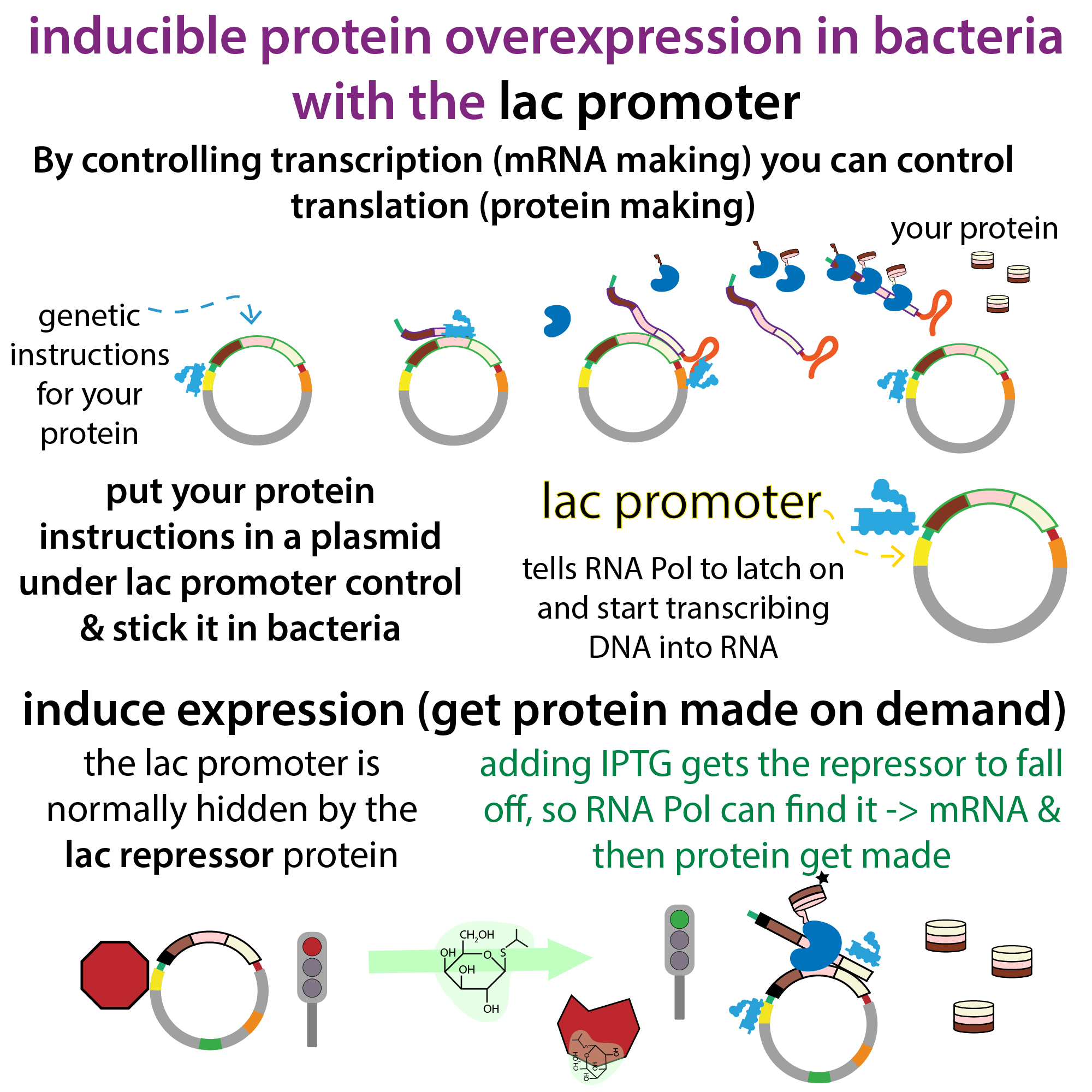
One other note about TB is that, since it has more nutrients and more capacity to mitigate waste accumulation, it can grow to higher densities before starting to die (or even just plateau). So we can let it grow to higher densities before inducing protein expression (e.g. adding IPTG to get the bacteria to make protein from a gene under the control of a lac promoter).
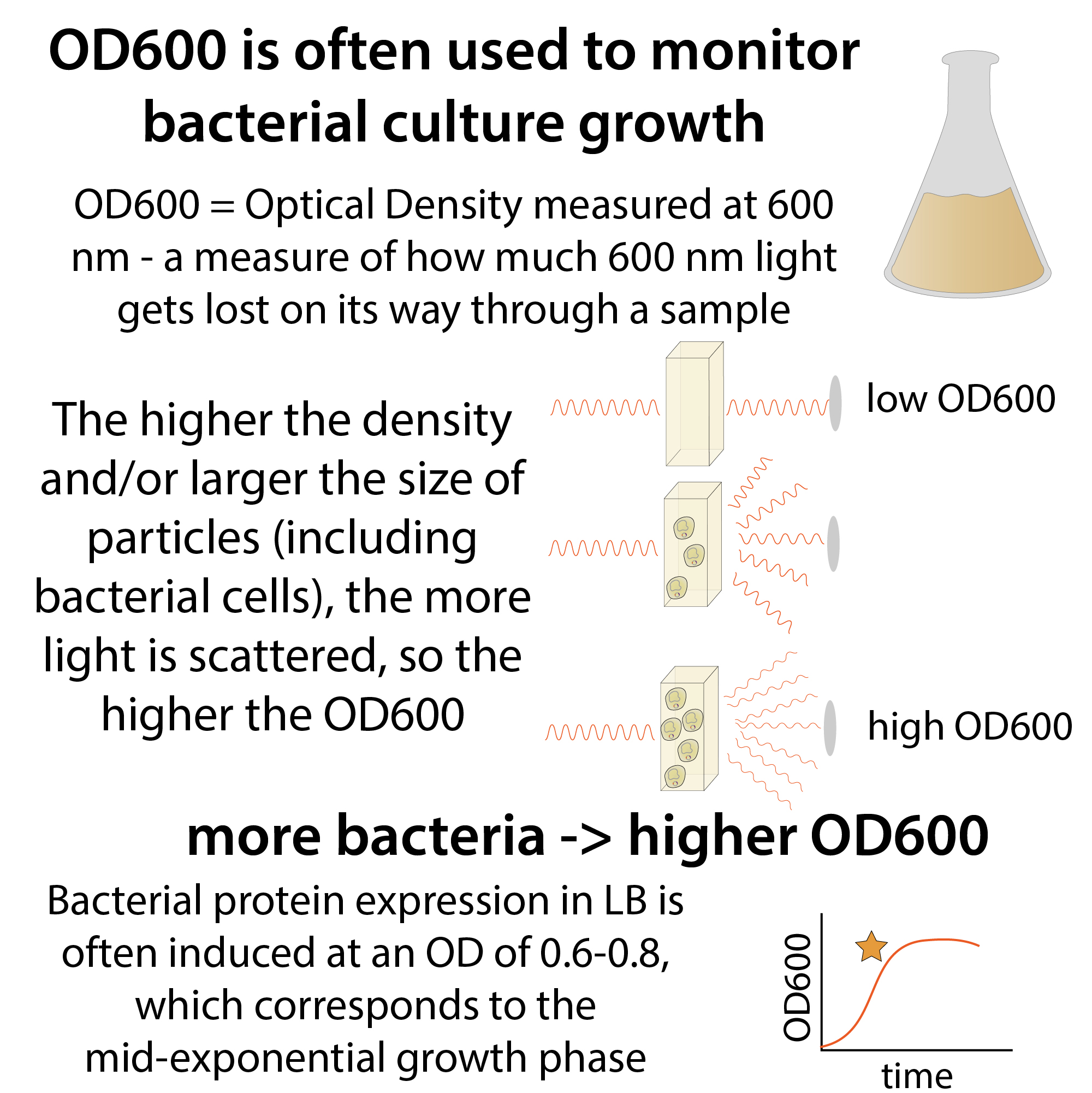
We can measure bacterial density by measuring a quantity called the OD600. Much more on it here: blog: https://bit.ly/odbiochemistry ; YouTube: https://youtu.be/7QkDyeyK7QQ
But basically, you shine light through a bacterial culture and the more bacteria there are, the more light will be scattered, and therefore the higher the OD600.
I typically let bacteria in TB grow to an OD600 of ~1.4-1.8 before inducing. Compare this to the ~0.6-0.8 I let bacteria in LB grow to.
Because you start with more bacteria, you have more protein-making factories, and they’re able to stay healthy longer, so hopefully you’ll get more protein made than with LB.
TB isn’t a silver bullet however and there are times when LB might work better for you. So go ahead and test both out and see what works best for your protein of interest. Hope you get terrific results!
Resources
More on the effect of glycerol & LB vs. TB on cell growth, pH, & more:
Kram, K. E., & Finkel, S. E. (2015). Rich Medium Composition Affects Escherichia coli Survival, Glycation, and Mutation Frequency during Long-Term Batch Culture. Applied and environmental microbiology, 81(13), 4442–4450. https://doi.org/10.1128/AEM.00722-15
More on LB vs TB & protein production:
Fazaeli, A., Golestani, A., Lakzaei, M., Varaei, S. S. R., Aminian, M. (2019). Expression Optimization, Purification, and Functional Characterization Of Cholesterol Oxidase From Chromobacterium Sp. Ds1. PLoS ONE, 2(14), e0212217. https://doi.org/10.1371/journal.pone.0212217
More on autoclaving phosphate buffer separately:
BiteSizeBio, Doesn’t Play Well with Others- The Chemistry of the Autoclave, Published February 23, 2012, by Jode Plank https://bitesizebio.com/6128/doesnt-play-well-with-others-the-chemistry-of-the-autoclave/