https://youtu.be/2RP8USixbDs
Dihydrogen phosphate (H₂PO₄⁻) is monobasic
and
Monohydrogen phosphate (HPO₄²⁻) is dibasic
You can remember this by reasoning through it…
Starting by recognizing that a phosphate ion in its fully deprotonated form (PO₄³⁻) has 3 oxygen atoms “up for grabs” by protons (we don’t worry about that 4th one that’s drawn double bonded because it’s super duper duper unlikely to protonate).
If something takes a proton we say it acts as a base. So this is tribasic.
If one of the O’s takes a proton, you get monohydrogen phosphate, which we can call monoprotic. Now you just have 2 open O’s up for grabbing, so it’s dibasic.
If one of those takes a proton, we get something that’s triprotic. And this is basically its fully acidic form, so we just call it phosphoric acid. Sometimes it’s called orthophosphoric acid, with “ortho” meaning “true” – and, similarly, a phosphate ion, PO₄³⁻, is sometimes called orthophosphate.
So we have the 4 possible forms, but we really only have to worry about the “middle two’ (dihydrogen phosphate (H₂PO₄⁻) and monohydrogen phosphate (HPO₄²⁻)) in our bodies and biochemical buffers because the extremes are too extreme to be found at physiological (bodily) pH. How do I know? By looking at the pKas (2.14 for phosphoric acid, 6.86 for dihydrogen phosphate, and 12.4 for monohydrogen phosphate). Much more on pKa here: http://bit.ly/phacidbase
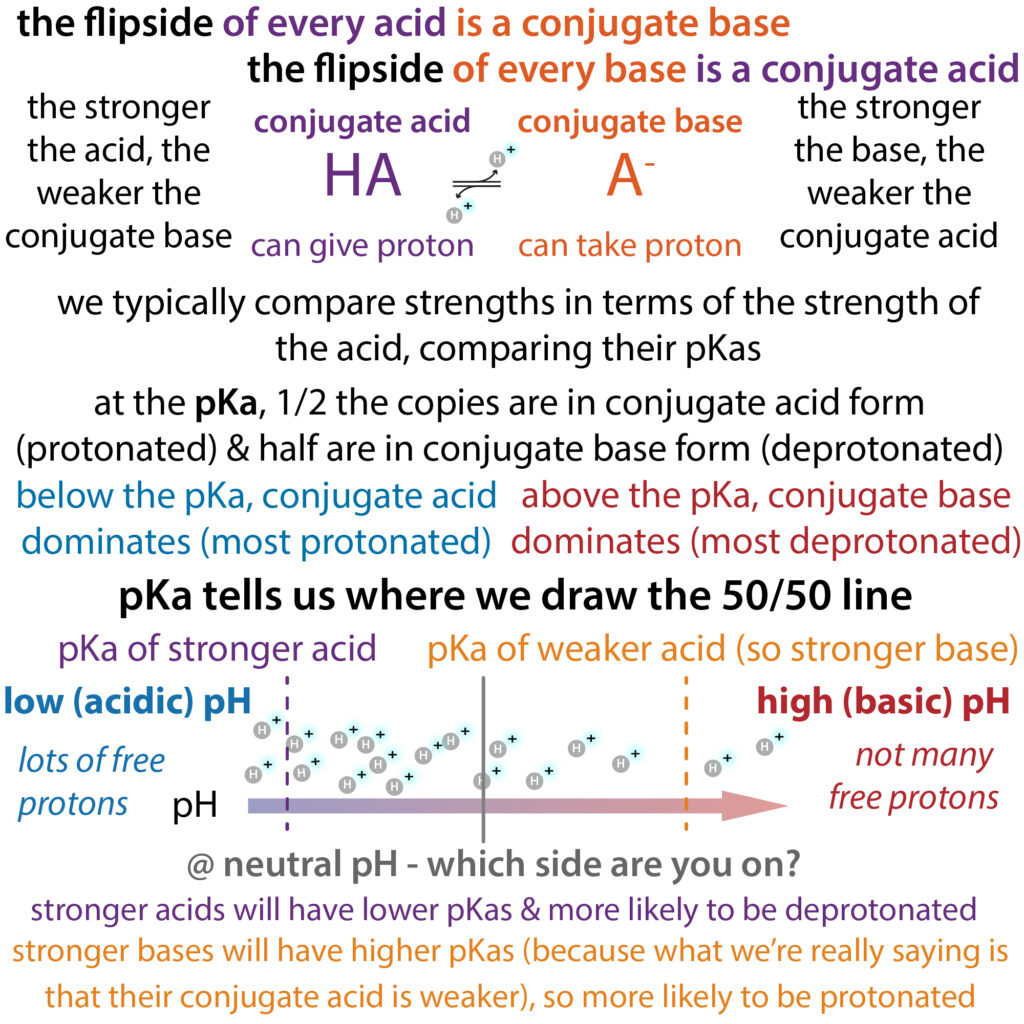
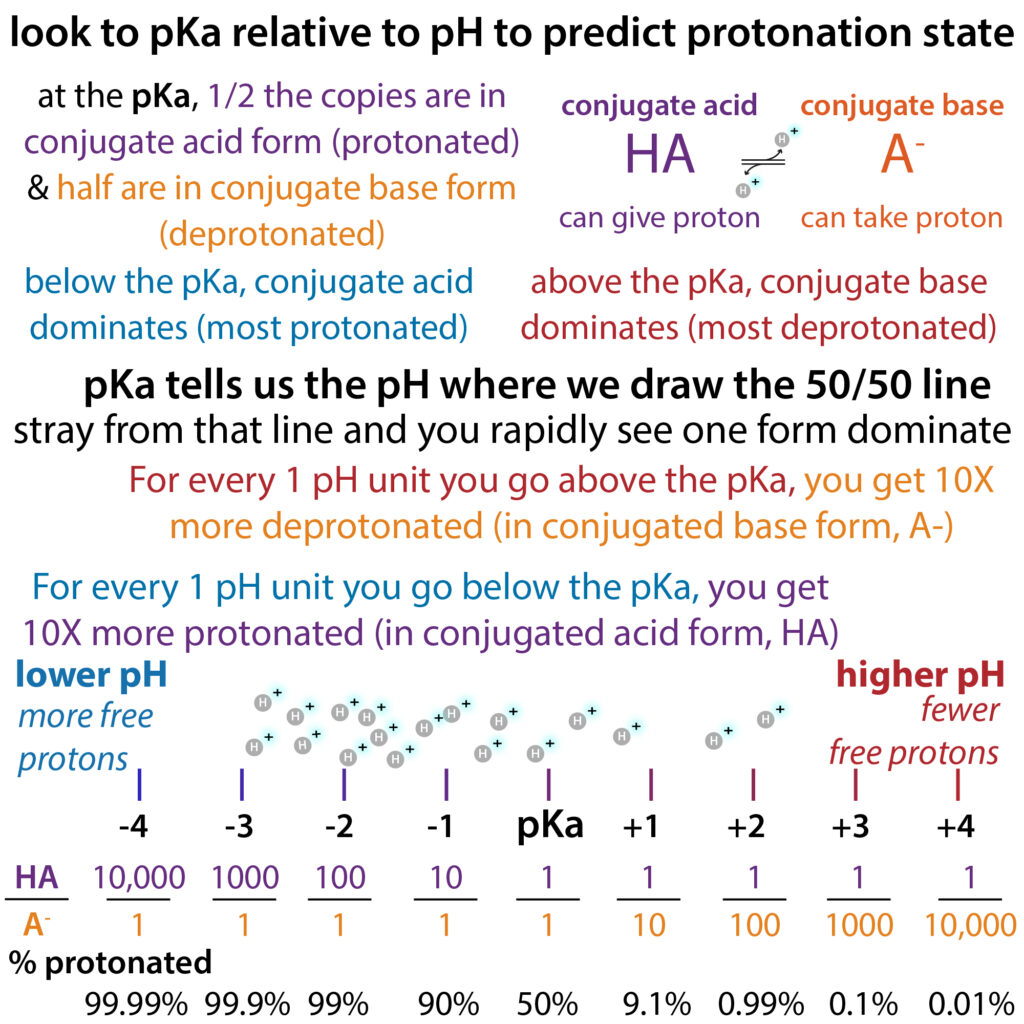
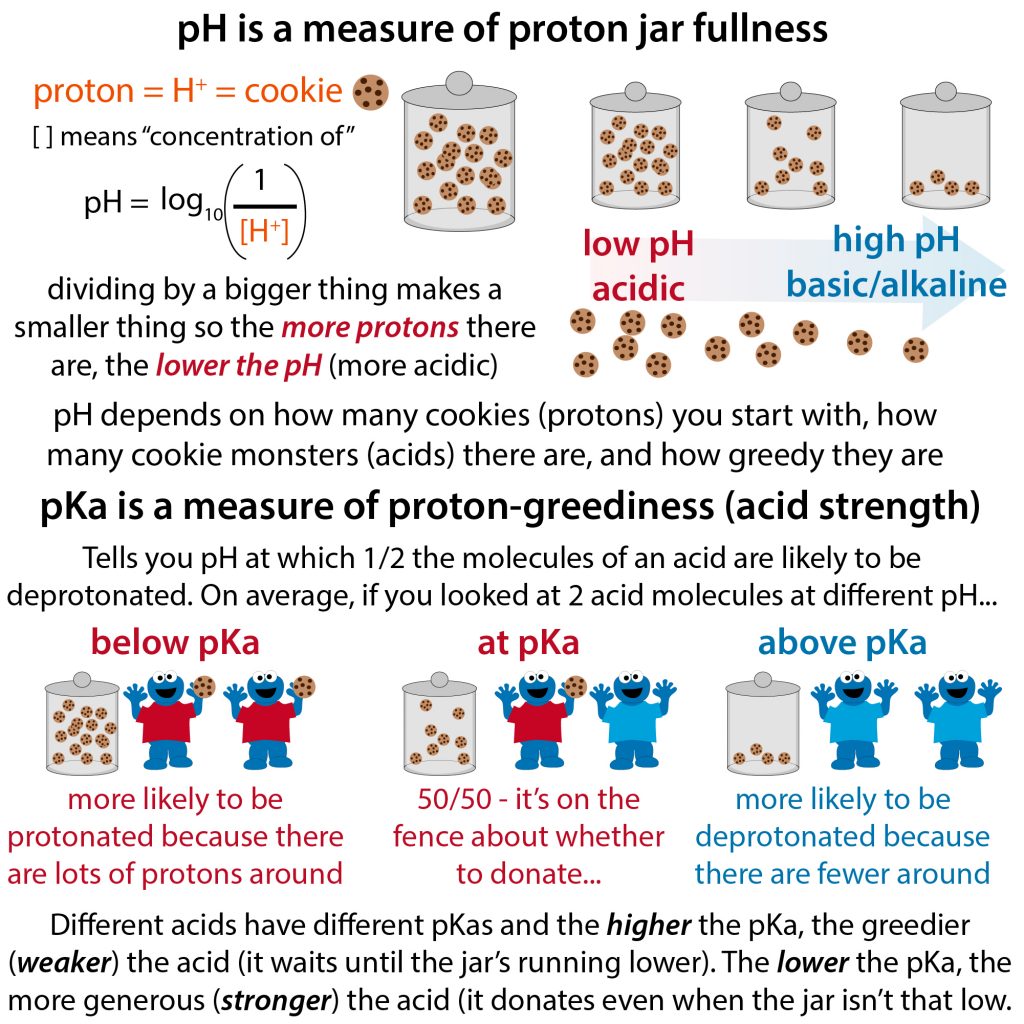
but the gist it’s the pH at which half of an acid will be protonated, half deprotonated. Each pH unit above the pKa you are (where there are fewer protons around), you get 10-fold less protonated, and each unit below (where there are more protons available to take) gives you 10-fold more protonated. We’re typically way above phosphoric acid’s pKa, so it will almost all be deprotonated. And we’re way below orthophosphate ion’s, so it will almost all be protonated. This leaves dihydrogen phosphate and monohydrogen phosphate, which are both present at appreciable levels at physiological pH. So much so that you have enough of each to sop up added acid or base, keeping pH stable – good buffer for our cells and cell-mimicking mixtures in the lab.
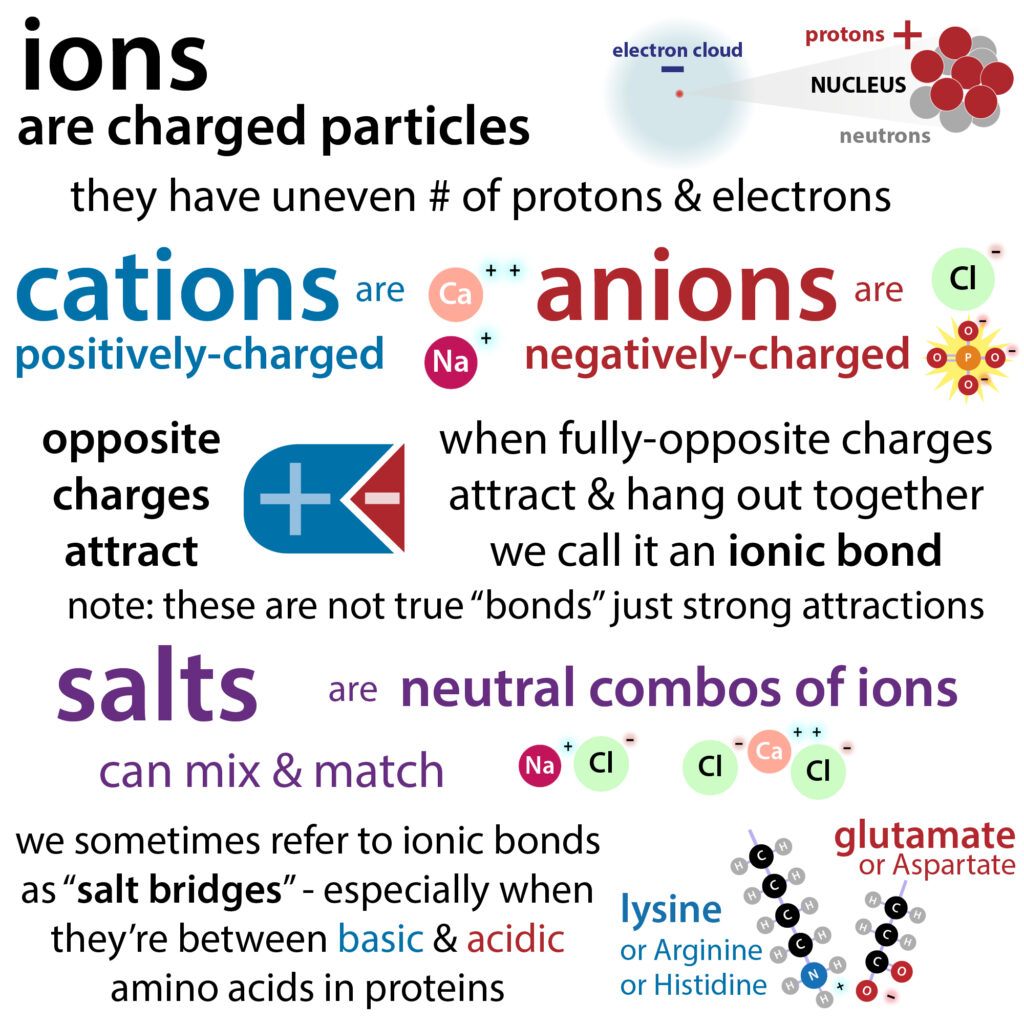
When we deal with these in the lab, we’re typically dealing with them in salt form, where these negatively-charged ions (anions) are neutralized by hanging with a positively-charged ion (cation). In the lab, these are most commonly sodium or potassium. Each of those has a +1 charge (i.e. Na⁺ or K⁺), and thus can serve as a sort of placeholder for a proton. So the number of these you have is going to be equal to the number of basic sites – so you get:
- monobasic salts: KH₂PO₄ & NaH₂PO₄
- dibasic salts: K₂HPO₄ & Na₂HPO₄
But beware that the one-to-one thing only applies if you have monovalent (singly-charged) cations. If you have a cation with a higher charge, this won’t hold true because you’ll need fewer to neutralize it (eg 1 Mg²⁺ with dibasic to give you MgPO₄²⁻).
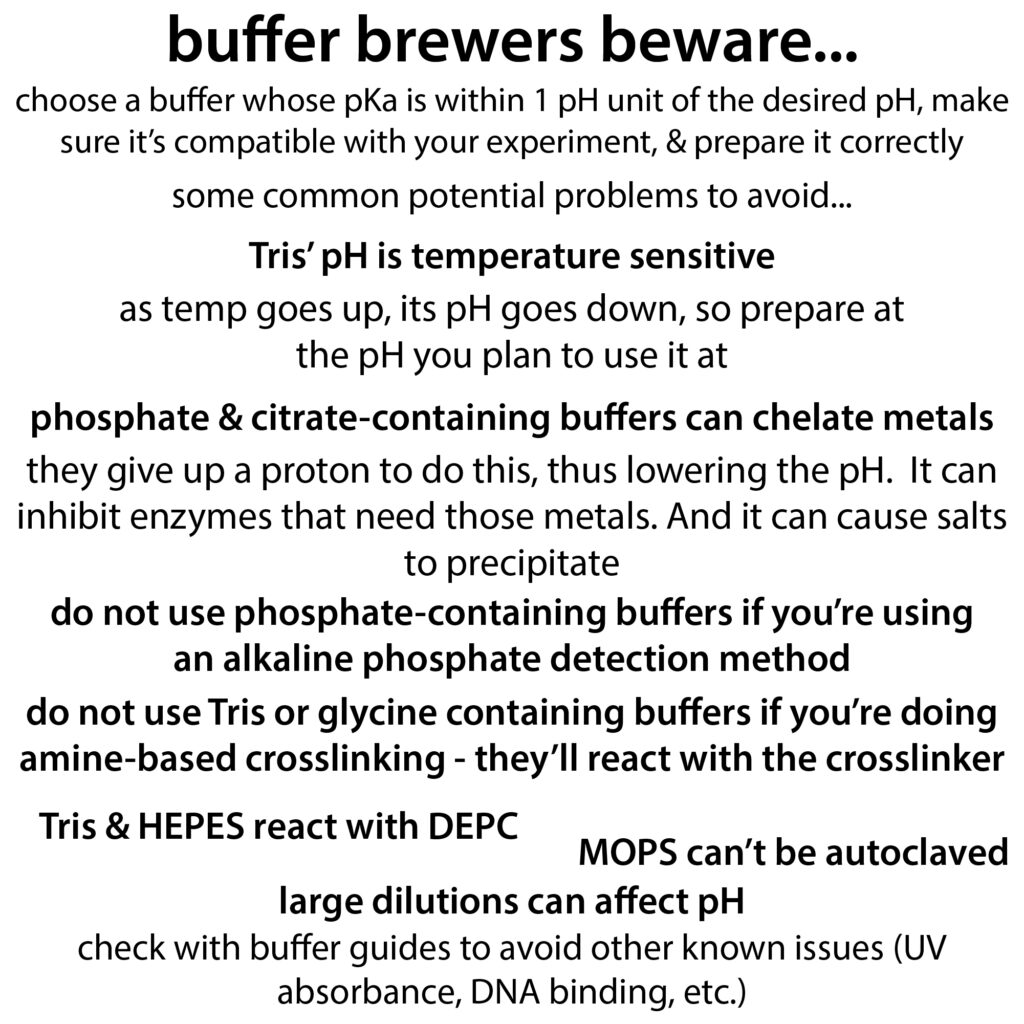
Note: A word of caution about phosphate is that it can form salts when we don’t want it to – it can chelate some metals in solutions.
You can use the Henderson-Hasselbalch equation (pH = pKa + log[A⁻]/[HA]) to figure out how much of each to mix to get a buffer of the desired pH. And you can use the same formula to figure out what proportion of each form you’ll have in a solution of a given pH. Here’s much more on it: http://bit.ly/phbuffers
And in today’s video, I show some examples.
As always, hope this all helps!
P.S. just got an Apple Pencil and am still trying to figure out the best way to use it in my videos (and practicing writing neatly on an iPad…