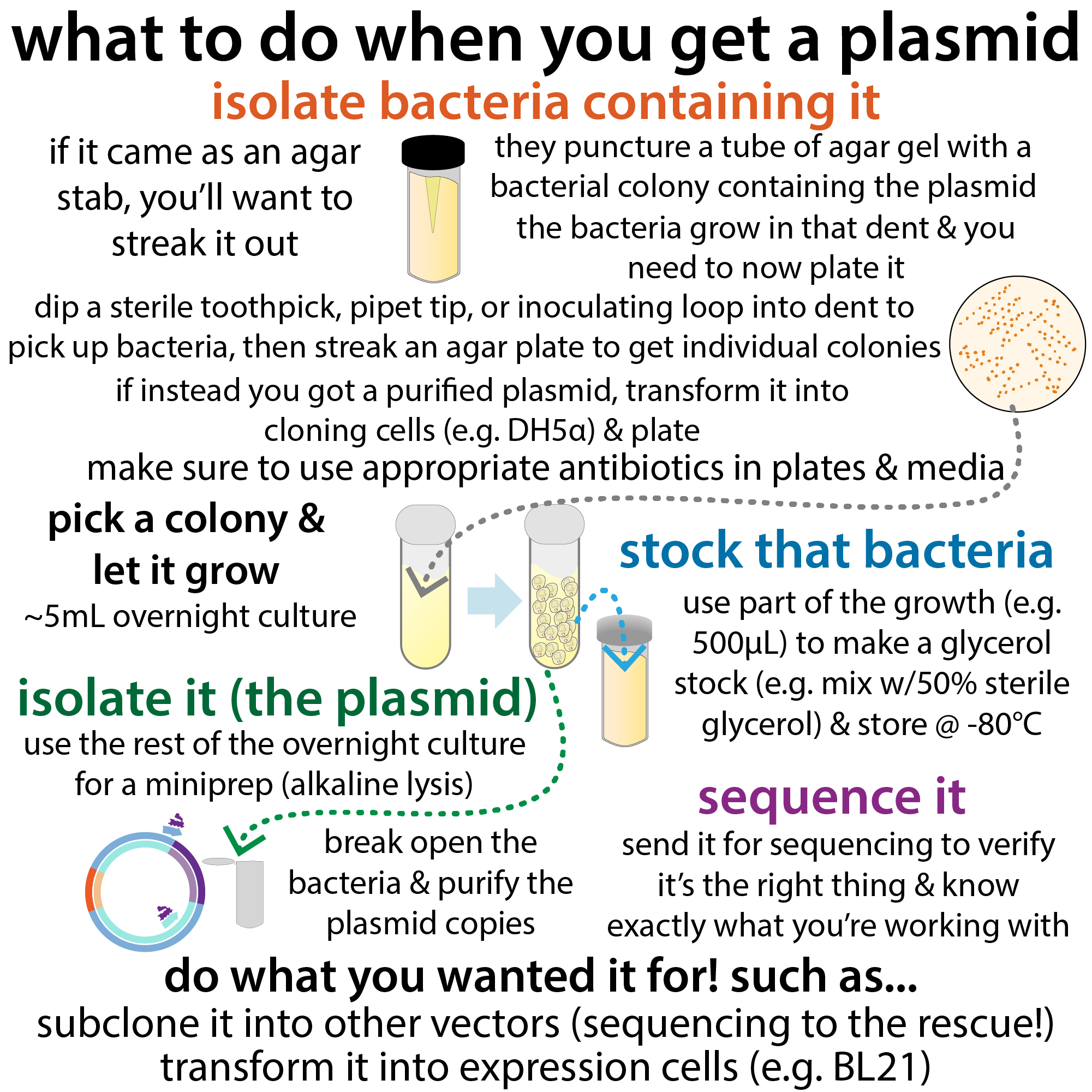
It’s really important to keep your cloning and plasmids organized – take it from someone who’s literally juggled nearing 2 hundred (literally for the hundreds part, not so for the physically juggling but that would be more impressive!). So I thought I would share my personal strategy in case it can help someone develop theirs. Here are some key points and then I will provide you lots of links to more info on the things I talk about in the video. YouTube link in case the embed isn’t working: https://youtu.be/qacWJ3H2WGA
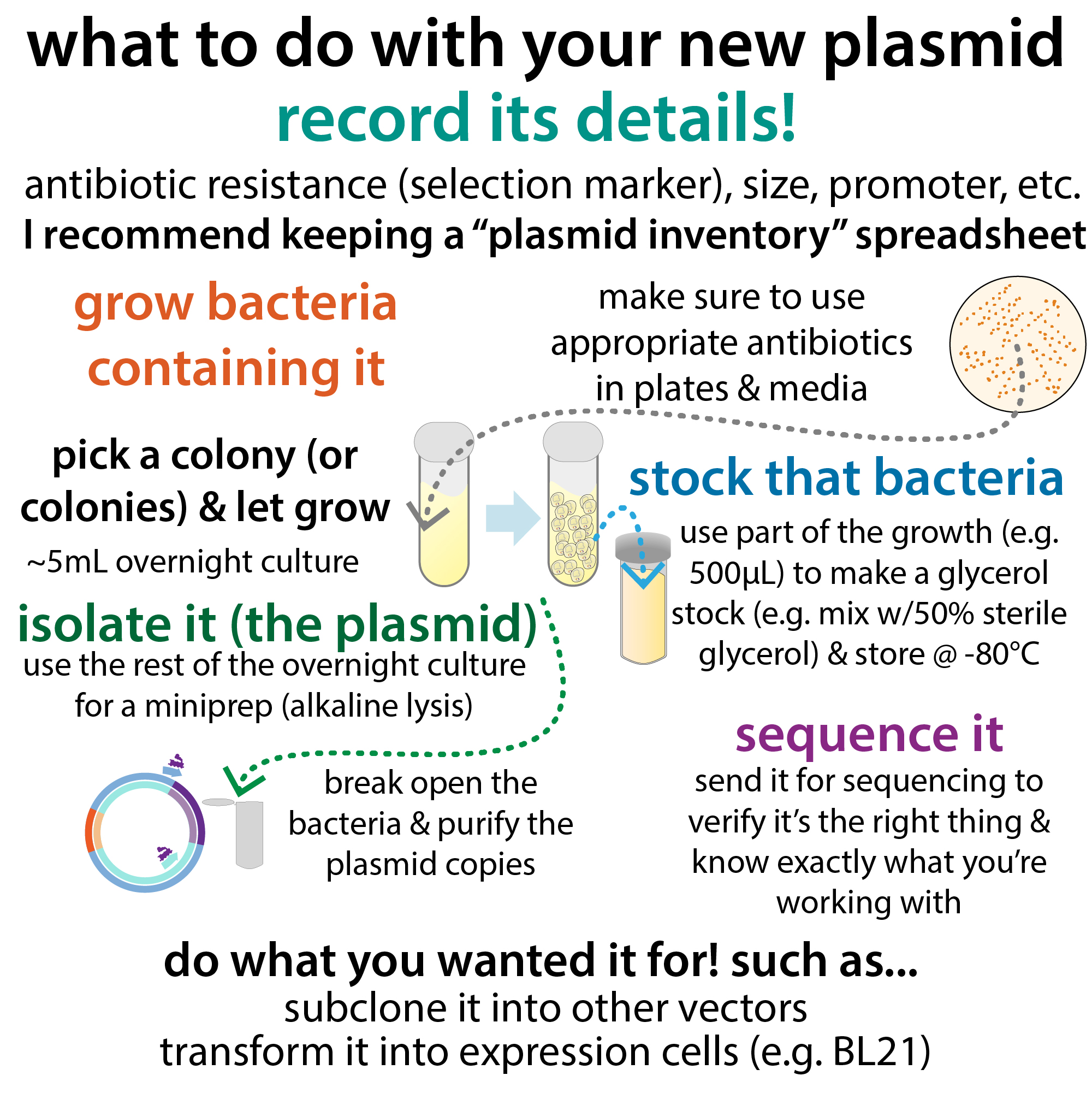
- Keep a “plasmid inventory” spreadsheet with information on each plasmid’s:
- selection marker (e.g. which antibiotic does it confer resistance to?)
- size (kb for both whole plasmid & insert where applicable)
- parent vector (e.g. pET28c)
- promoter
- for protein expression plasmids, also note info about the protein:
- tag?
- protein size
- protein pI
- protein extinction coefficient
- source (especially if you purchased it or got it from a paper author – include the reference)
- any other relevant info
- Number your plasmids so you don’t have to try to squeeze tons of tiny writing onto each tube
- especially once you get into mutagenesis, the full names can get wieldy!
- Include the date (and concentrations where applicable) on everything for easy cross-reference
- Sequence everything! Plasmids you make & those you buy – you never know…
- these days I’ve been using whole plasmid sequencing so you don’t even need to specify primers – it’s pretty cool!
- Keep cloning intermediates and non-sequence-verified clones physically separated from your known-to-be-good clones until the sequencing results come in
- once the sequencing results come in, quickly discard any bad ones before you accidentally use them, then move the good ones (nicely labeled if they weren’t already) into your box of keepers
- If you know you’ll need a lot of the plasmid and/or will need it in the future, transform it into a high-copy number cell line again (like DH5α), plate*, grow an overnight culture, use some to make a glycerol stock of the plasmid-containing bacteria and some to miniprep for more pure plasmid
- *clearly mark on your cloning plates that they’re cloning plates, colonies on them are not sequence-verified (don’t want to accidentally use one thinking it’s one of these checked thing!)
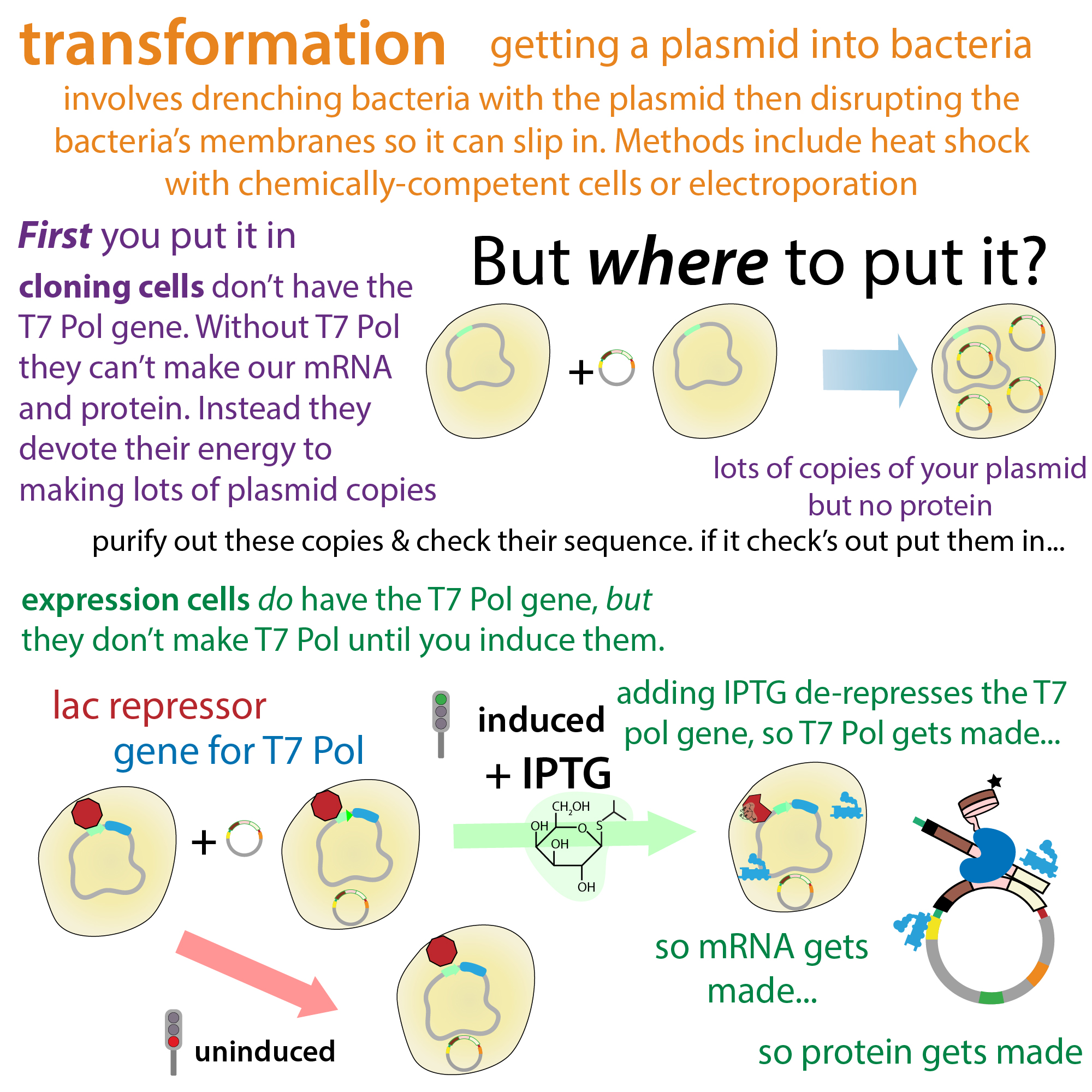
- Note what strains of plasmid the bacteria are in on plates and glycerol stocks (and be sure to transform your plasmid into appropriate strains – e.g. cloning strains vs. expression strains)
Hope that helps and happy cloning! Now, as promised, some links…
- more on plasmid inventorying: https://bit.ly/plasmid_inventory ; YouTube: https://youtu.be/Zknk4zNLAQ8
- You can download my template here: https://docs.google.com/spreadsheets/d/1eMbZUuWlqO-CEYcR445ZaIHUnZYg2uwq/edit?usp=sharing&ouid=110501489579733284162&rtpof=true&sd=true
- more on staying organized: YouTube: https://youtu.be/l6WqL0RKBXg ; blog: https://bit.ly/stay_organized_science
- more on saving the date: https://youtu.be/vFg3tO5C4dQ
- more on molecular cloning: http://bit.ly/molecularcloningguide ; YouTube: https://youtu.be/U0O2T7NBUgg ⠀
- more on SLIC: blog: https://bit.ly/SLICworkflow ; YouTube: https://youtu.be/Wy_kCoyBdZc
- more about subcloning and various plasmids: blog form: https://bit.ly/vector_plasmids ; YouTube: https://youtu.be/2vLTz0lPlFI
- more on transformation: http://bit.ly/transformheatshock ; YouTube: https://youtu.be/3C6X2a7xWVw
- more on site-directed mutagenesis: https://bit.ly/mutagenesisconstructs & http://bit.ly/sitedirectedmutagenesis2
- more on mini preps: http://bit.ly/minipreps ; YouTube: https://youtu.be/fKf-g5oNvLY
- more about verifying clones: http://bit.ly/cloningcheck
- more on colony PCR: https://bit.ly/colony_PCR & https://youtu.be/DUWYnXaZyAo
- more on analytical restriction digest: https://bit.ly/analytical_digest & https://youtu.be/1fukzAdTvrk
- more on sequencing clones: http://bit.ly/sequenceclones & https://youtu.be/HxZcjX5WByc
- more about what to do when a plasmid you order arrives: blog form: https://bit.ly/plasmid_prepping ; YouTube: https://youtu.be/Wa7vTmSZPwc
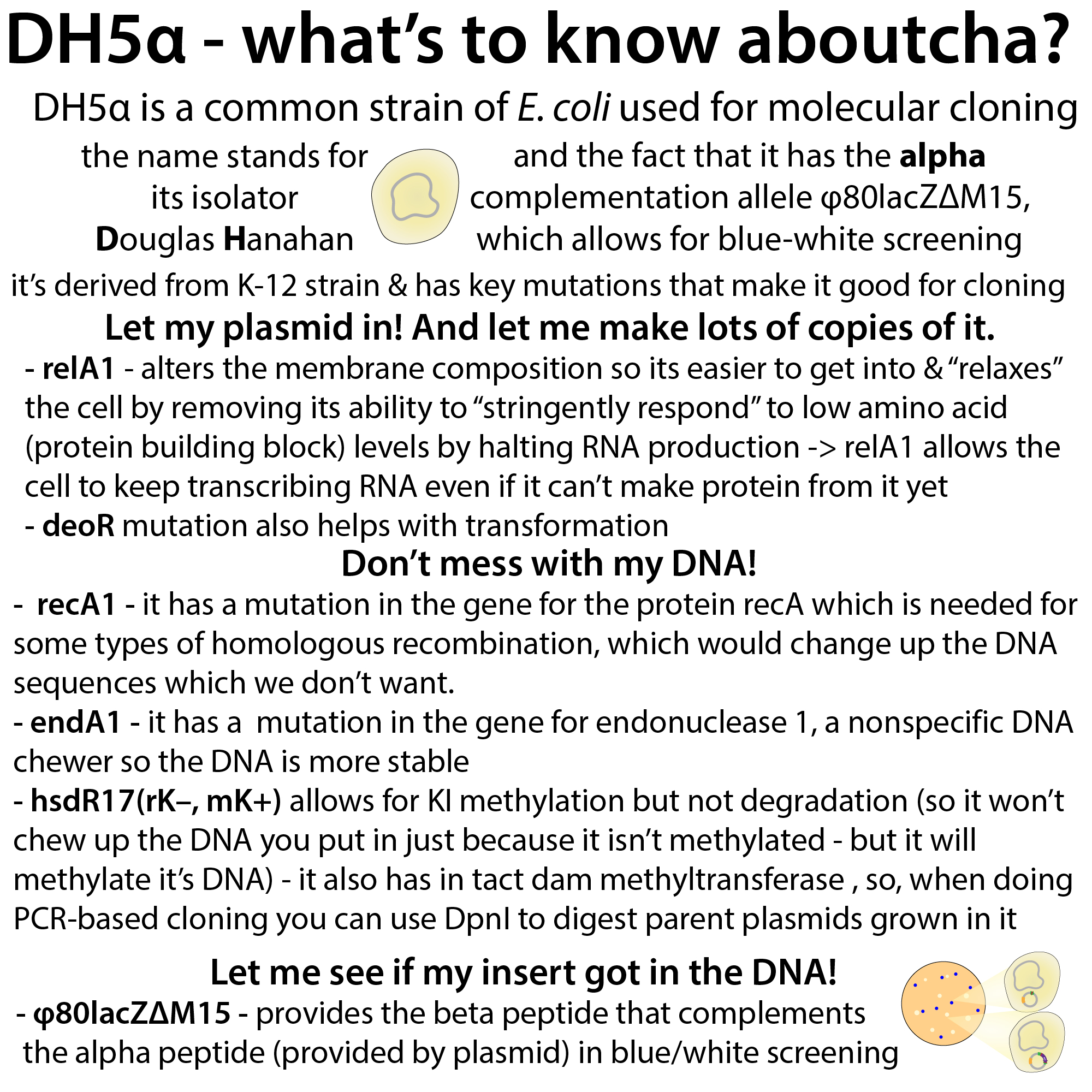
- more on cloning cells: blog form: https://bit.ly/dh5alpha ; YouTube: https://youtu.be/MwMTFQira4A
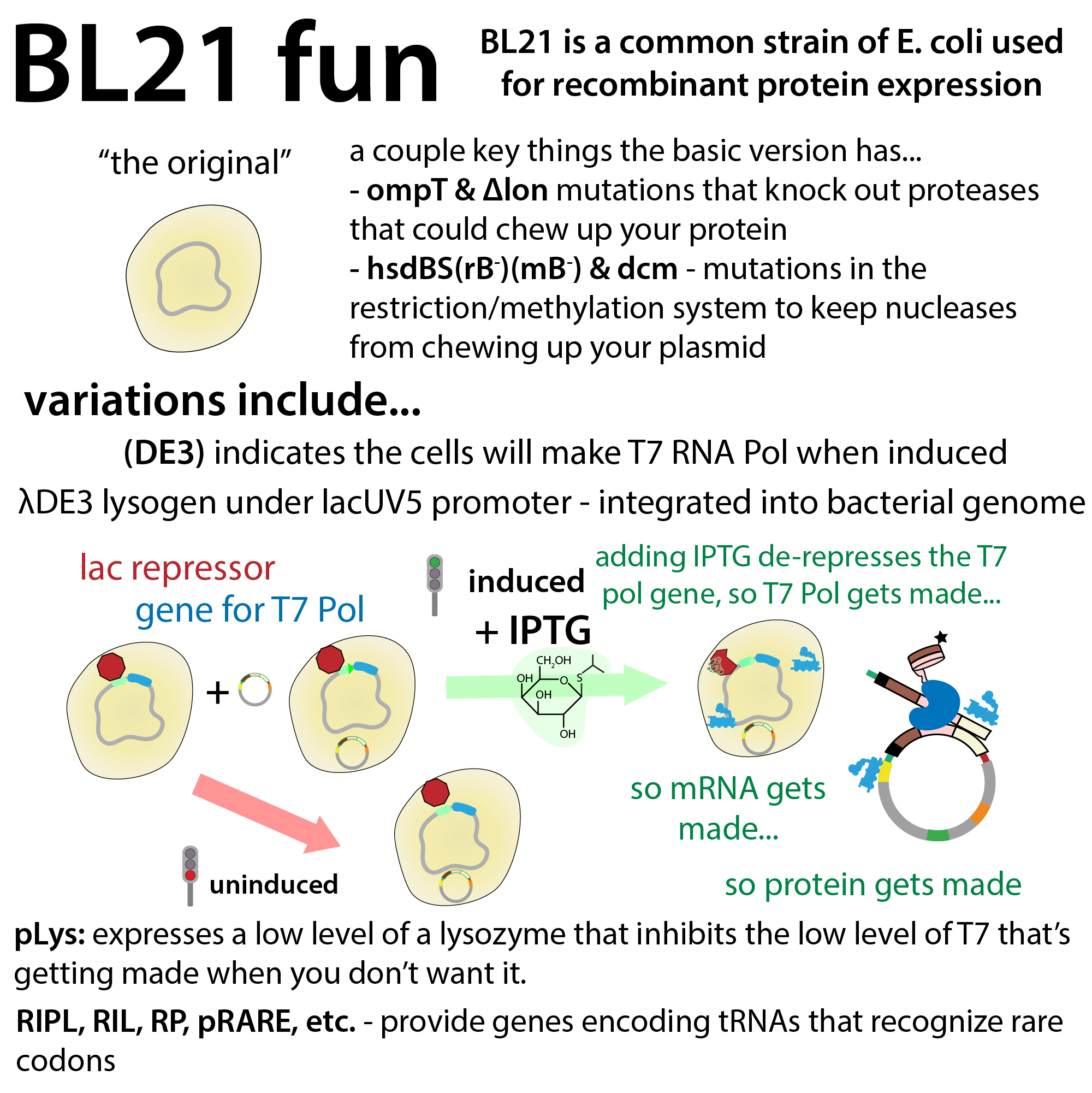
- more on expression cells: https://bit.ly/bl21_rare_codons ; YouTube: https://youtu.be/XB3h3Qfe2OE
- more on T7 RNAP: http://bit.ly/t7rnap
- random practical lab tips & tricks: https://bit.ly/lab_tricks_page
more about all sorts of things: #365DaysOfScience All (with topics listed) 👉 http://bit.ly/2OllAB0 or search blog: https://thebumblingbiochemist.com