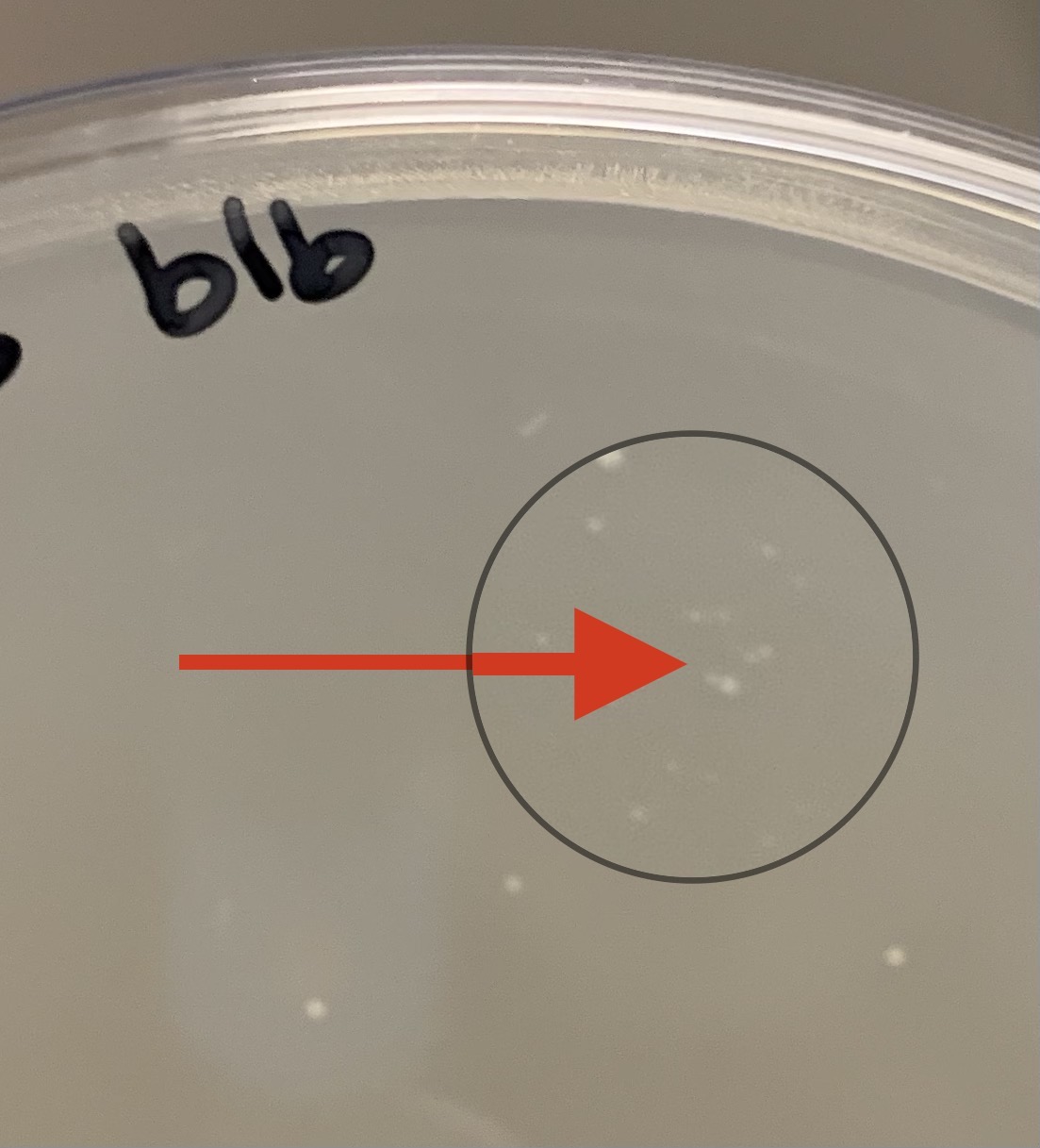
Satellite colonies are bacterial free loaders – they’re tagging along for the antibiotic selection ride even though they don’t have our plasmid inside!
YouTube: https://youtu.be/v71nHvoeg-4
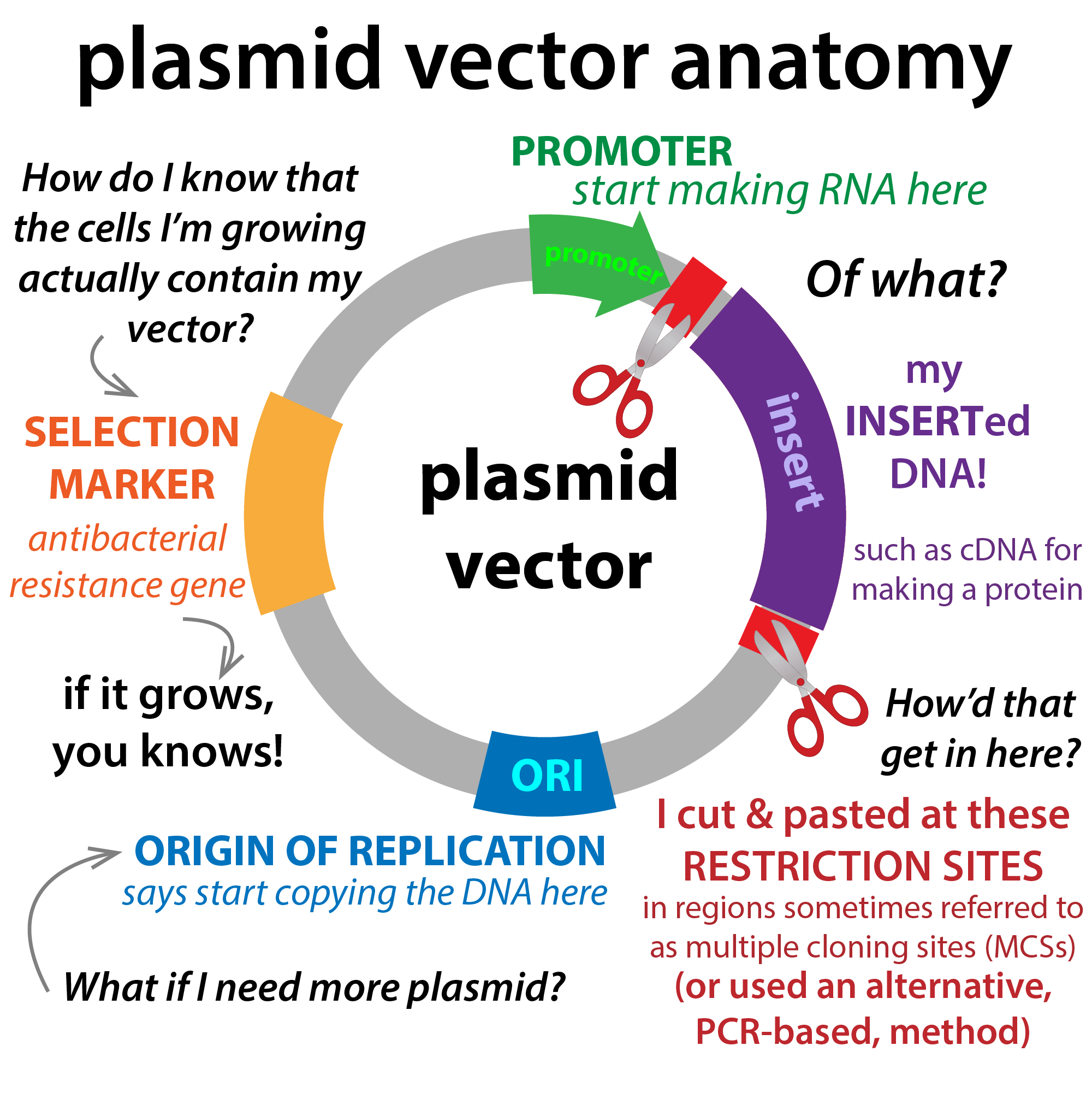
In molecular cloning we stick a gene we’re interested in into a circular piece of DNA called a plasmid then stick that into host cells to make more copies of that gene &/or the protein it codes for. Often those host cells are (harmless) bacteria. They’re single-celled, grow fast, are cheap to feed, & easy to maintain. But sometimes they’re TOO easy to maintain. We *only* want to take care of the bacteria that are actually doing work for us – they give us DNA & protein & we give them food to pay them back for burdening them & keeping them from making their own stuff.
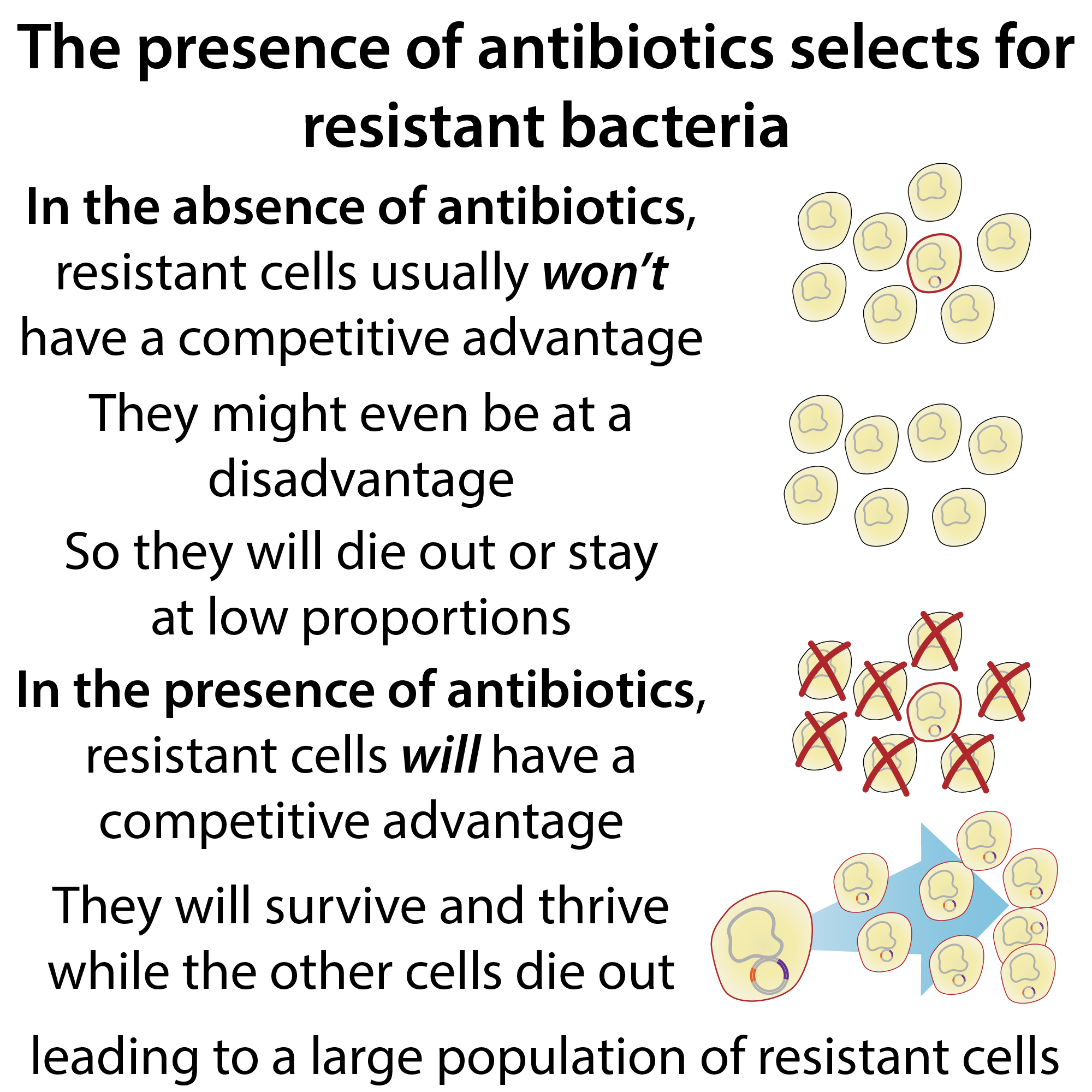
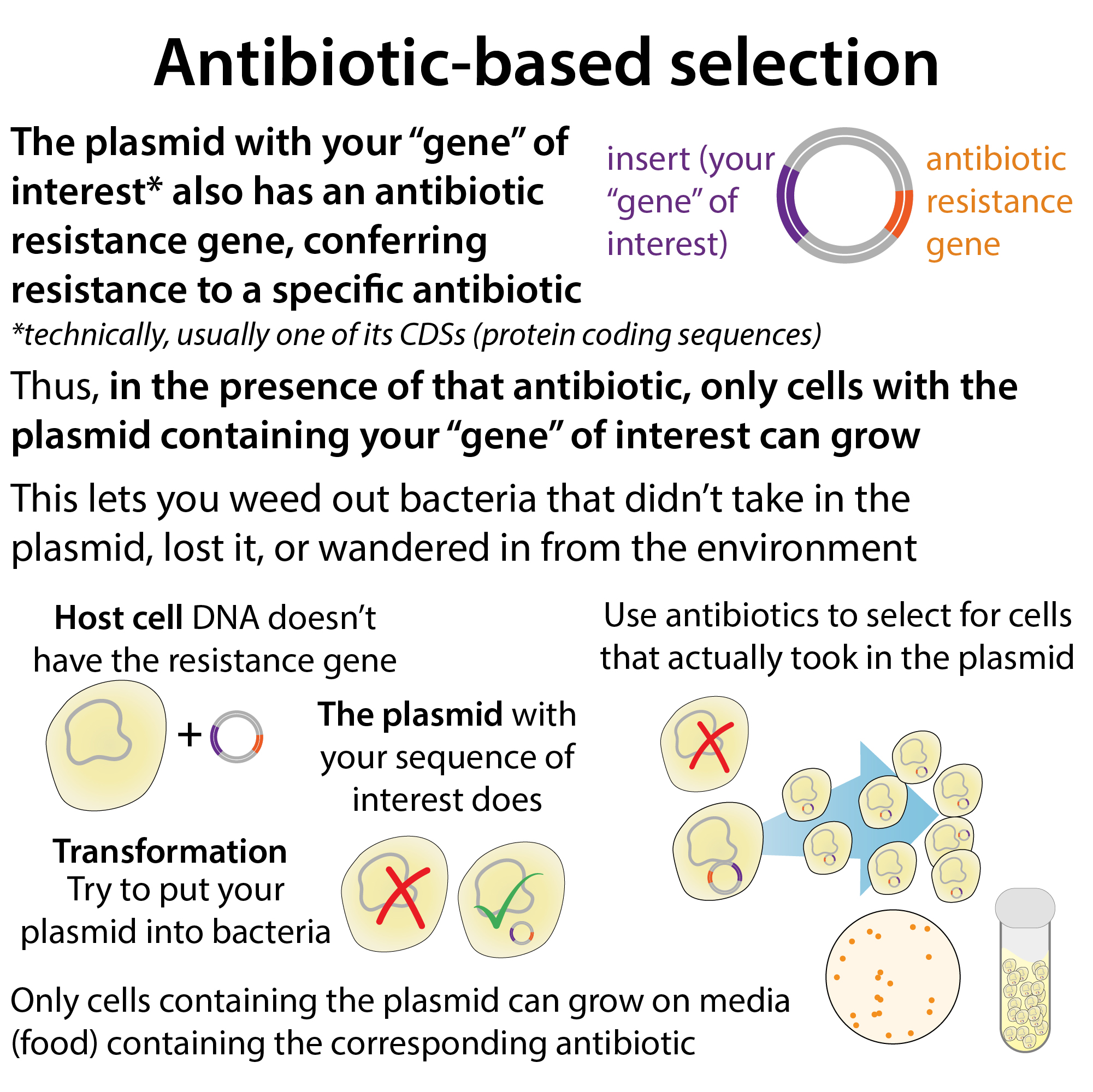
We want to “weed out” any bacteria that *aren’t* doing our work so we can use antibiotics to select for just ones w/our plasmid. To do this, we put an antibiotic resistance gene into our plasmid alongside our gene, then spike the bacteria food w/the corresponding antibiotic. One commonly-used antibiotic/antibiotic resistance gene used for this is ampicillin (Amp) & beta-lactamase (bla). BUT it’s potentially problematic…
Before bacteria divide, they replicate their DNA so they can pass down a copy to each daughter cell. Plasmids can replicate a lot and have lots of copies but still, when bacteria divide you can end up w/daughter cells that don’t get a copy. It might seem like no big deal because this doesn’t happen often and, if it does they get killed by the antibiotic you put in to weed out bacteria like them that don’t have the plasmid. BUT those plasmid-less cells don’t have to spend time, energy, & resources making what *we* want them to make. So, if you take away the antibiotic they have a big growth advantage.
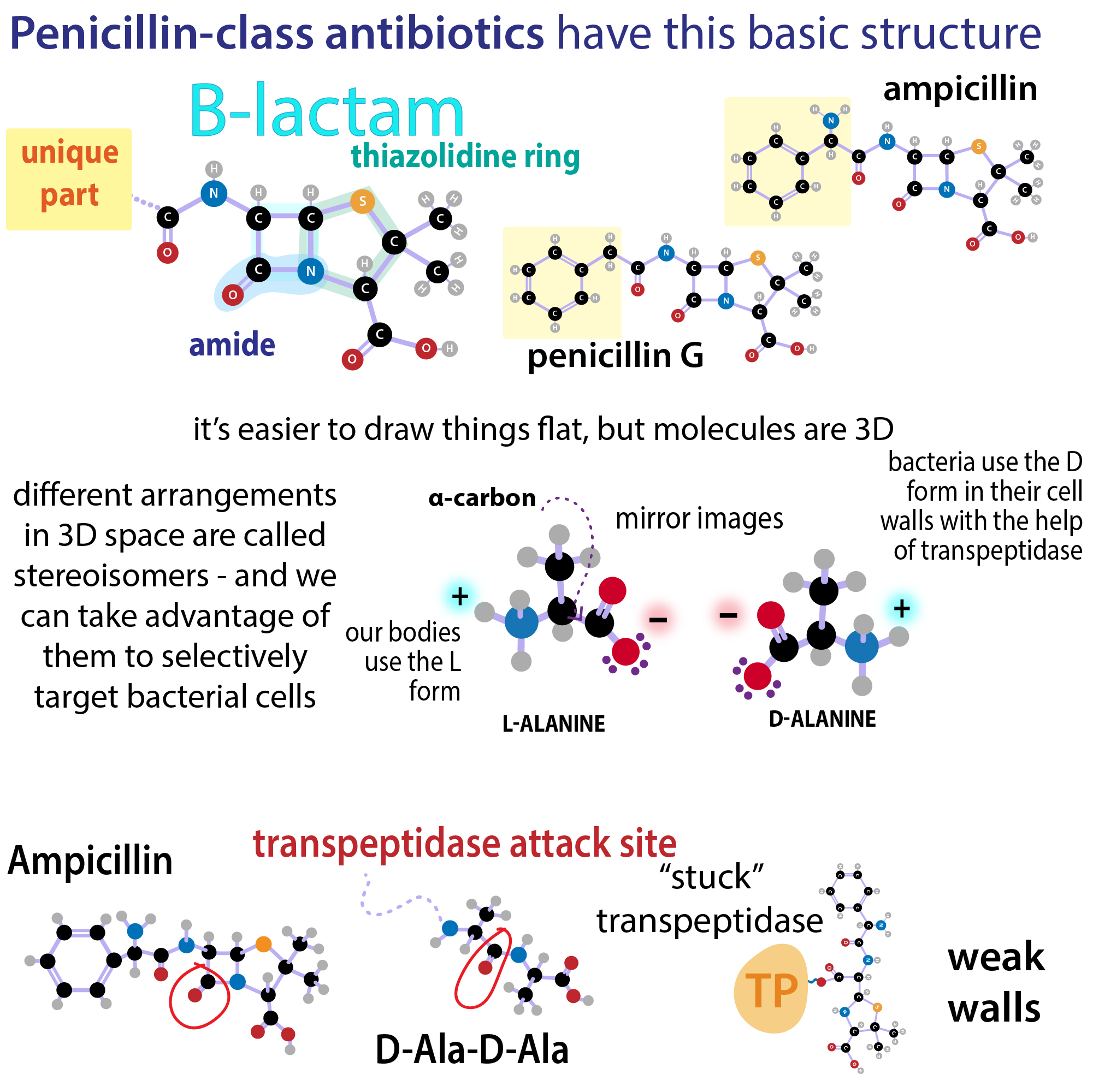
Amp works by weakening bacterial cell walls so that they “pop” & Bla “pops” Amp before Amp can harm it.
Much more on how it does this here: http://bit.ly/penamp
“Problem” is that the beta-lactamase gets secreted – the cells ship some out. This is helpful to them because it can kill the antibiotic in the food surrounding them before it even reaches them. BUT this also detoxifies ALL the food around it – so “anything” can eat it. Including those rare plasmid-less daughter cells.
When it’s growing on agar (a gel food bed), it’s not *as big* of an issue because you can see that it’s happening – they show up as clusters of new colonies around the original one. We call these satellite colonies and avoid picking those ones.
BUT if you’re growing them in liquid you can’t see this happening. The liquid can get overtaken by plasmid-less cells so expect to have lots of protein because you have lots of cells, but those cells can’t make your protein because they don’t have the gene for your protein so you end up with barely any protein and end up sad. So if you’re selecting using ampicillin, make sure to limit the growth times!
Thankfully, with liquid growth, you have a larger volume so the betalactamase gets diluted out more. You don’t get that local high concentration build-up like you do in the plates. So it’s not as big of an issue. But it is something to be aware of.
The longer you grow for, the more betalactamase can build up in the media. And, at the same time, the longer you grow, the more degradation of the antibiotic can occur “on its own” (just from being at elevated temperatures, etc. – it’s not that stable). This creates a perfect storm for satellites to form!
But, since we know why they form, we can prevent them from forming. How?
- limit growth times
- Use fresh antibiotic stocks and add them fresh to liquid media right before using
- Store concentrated (e.g. 1000X) amp aliquots in the freezer and avoid freeze-thaws
- Don’t add antibiotics to hot media
- Don’t use Amp plates that are more than a few weeks old (or at least use with caution!)
- Use a higher Amp concentration and/or add more Amp midway through long growths
- before inoculating a large culture you can spin down cells, remove media, and add fresh media
- If using a high copy number plasmid, use higher amp concentration (e.g. 100 μg/μL instead of 50 – though I generally just use 100 μg/mL all the time)
- Consider using a more stable beta-lactam antibiotic like carbenicillin, which is less susceptible to that generic degradation, but more expensive
And, if they do form – don’t use them! Which is another reason to not let your plates grow too long – you don’t want the good colonies and the satellite colonies kinda merging together and/or the satellite colonies growing bigger so they look like the good colonies and you don’t know which is which
As to where those satellite cells come from, they were likely there all along! A big area of recent research is studying so-called “persister cells” which kind of “hibernate” while the bla-containing cells do all the work. Then they “wake up” when things have cleared up.
more on this here: Medaney, F., Dimitriu, T., Ellis, R. J., & Raymond, B. (2016). Live to cheat another day: bacterial dormancy facilitates the social exploitation of β-lactamases. The ISME journal, 10(3), 778–787. https://doi.org/10.1038/ismej.2015.154
It ties in to some of what I’ve talked about in the past regarding the growing problem of antimicrobial resistance (AMR): https://bit.ly/antibiotic_resistance_mech ; YouTube: https://youtu.be/ueP_9Vj-Q0k
for more on how we take advantage of antibiotic resistance mechanisms in the lab to select for bacteria containing plasmids of interest: https://bit.ly/antibioticselections & https://youtu.be/YXg56OH3N3A
and here’s more about ampicillin instability (and how it’s worse that way than other antibiotics): Ryan, K. J., Needham, G. M., Dunsmoor, C. L., & Sherris, J. C. (1970). Stability of antibiotics and chemotherapeutics in agar plates. Applied microbiology, 20(3), 447–451. https://doi.org/10.1128/am.20.3.447-451.1970
more about all sorts of things: #365DaysOfScience All (with topics listed) 👉 http://bit.ly/2OllAB0 or search blog: https://thebumblingbiochemist.com