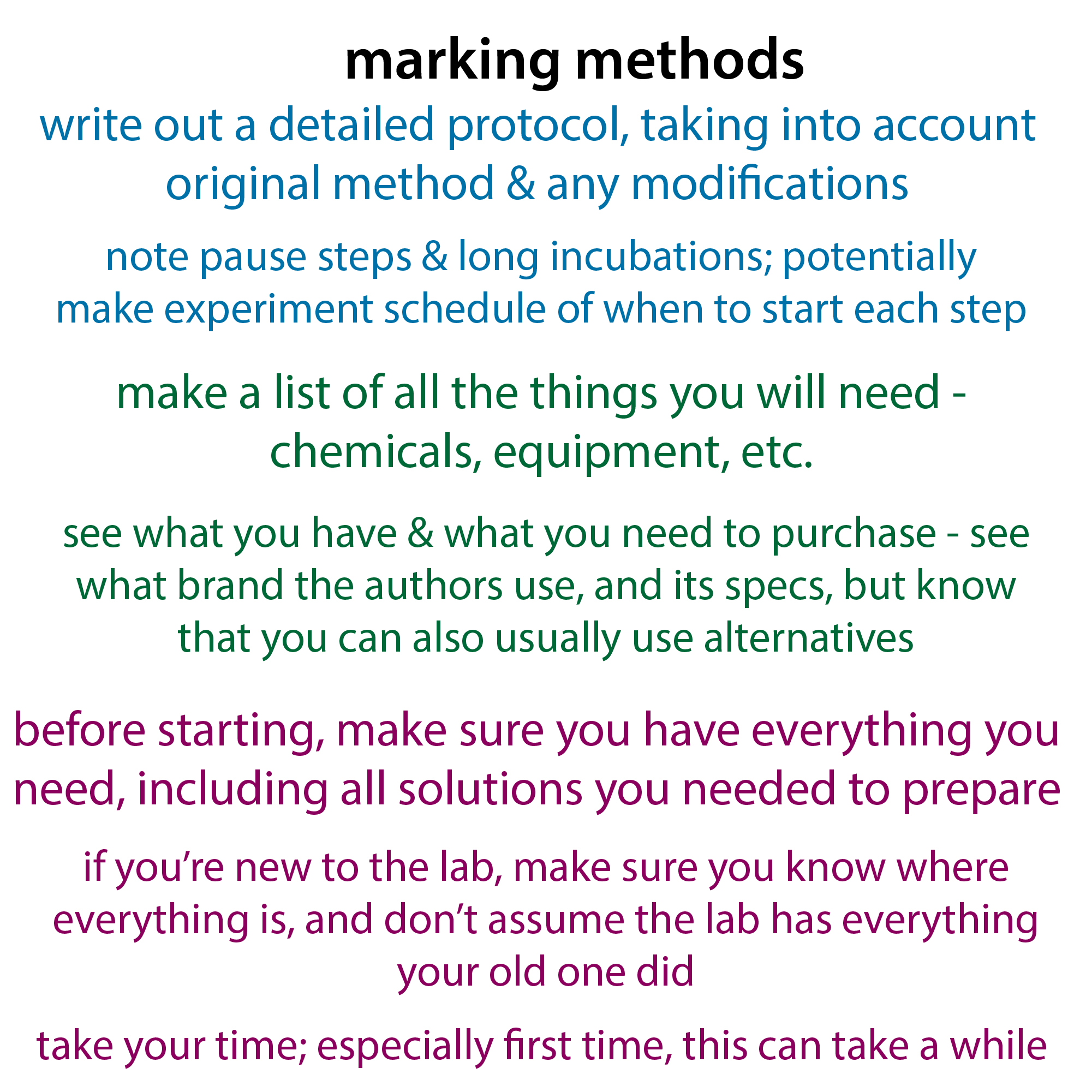
Unfortunately, the methods sections of papers typically don’t give the level of detail you actually need to easily carry out the experiments so you have to figure out volumes, etc. Thus, you usually have to do a fair bit of Googling, critical thinking, detailed planning, and troubleshooting/optimizing.
Do your best to get the most possible information out of their methods section. These days, almost all the detail is in the supplemental, so read it thoroughly. And, while you’re doing so, keep a watchful eye out for typos since the supplemental typically doesn’t get enough attention during proofreading and editing stages. Also, if the paper has a preprint (not the case for your paper but for future reference) there may be additional info in the preprint that didn’t make the final cut, so do some sleuthing.
Try to figure out what each step in the protocol is there for and what each reagent is there for. This might seem daunting at first, but the longer you train in science, the easier this becomes and you start to get a better sense of which details matter, which don’t etc. This is great because there are often multiple ways to do the same thing (for example, using a spin column purification kit to purify RNA or going with the tried and true old-school phenol:chloroform extraction) and reagents and equipment that can be substituted if you don’t have the thing they used (e.g using a NanoDrop instead of a Qubit to measure RNA concentrations or using a different centrifuge rotor). You can often substitute various steps with methods you’re more comfortable and experienced with, and use alternative equipment to which you have access
I would start by seeing if the paper authors have used this protocol (or a version of it) in later papers. If so, they’ll probably have even less detail (saying something like “performed as in “original paper citation”) but that’s often followed by an “except that…” or similar where they then describe changes they made to the original protocol – it could be that they continued optimizing after the original protocol was published (but it also could be that they were testing something different so had to make changes that were only needed for the current experiment and you don’t need to worry about them).
Along similar lines, try seeing what papers have cited this protocol and whether they have more detail and/or have made changes or updates to the protocol (since the protocol was published years ago and tech might have advanced, others might have found ways that work better, etc.). There’s a browser add on called scite that’s really helpful for finding where a paper has been cited.
Also, try looking up papers that have done similar experiments to see how they did things. Maybe there are better and/or easier methods you can try if you aren’t dead set on using that original one as is. Especially keep an eye out for methods papers (e.g. in Nature Protocols) as well as detailed protocols published in places like Jove and bioprotocols. Here’s a list of sites where you might find protocols https://www.goldbio.com/articles/article/10-incredibly-useful-protocol-resources-for-life-scientists
Labs might also have protocols posted on their lab website and teachers might have lab course protocols published that are readily accessible through good ole Google.
Even if they used slightly different methods, parts might be the same and they can be helpful for when you’re trying to figure out the nitty-gritty details regarding typical volumes, incubation times, etc. They also might include key information like critical warnings not to do various things you might be thinking of trying or cautions to keep things at ice at all times, etc.
Speaking of critical, remember to keep your critical thinking cap on while reading methods. Just because the authors do things one way doesn’t mean it’s the best way – or even the correct way in some cases… there are also sometimes “lab lore” types of things where people do things based on a single anecdote from years ago without any evidence. Other times, the lab just used various reagents because they’re what they had on hand, etc. You typically don’t want to go shaking things up too much until you get their protocol up and running as is to make sure it’s working*, but then feel free to optimize!
* When you decide to give it a go, be sure to include controls – as a positive control, where feasible, you can try to recreate the paper’s results.
When it comes to buffers, they’ll typically tell you final concentrations but you need to figure out how much final volume you need and then you can calculate how much of the various components you need using the formula weights – also consider making stock solutions of the components. Volumes, etc. will probably depend on your sample sizes, etc. Even if you have a super detailed protocol, you may need to scale up or down depending on your needs.
It really helps if you can find someone who has done the protocol – or at least similar protocols – before, as they likely have more detailed protocols and notes they might be able to share. Note: along those lines, keep detailed notes and write up a detailed protocol you can share with your lab mates to save them this hassle.
more on preprints: http://bit.ly/openaccesspreprints
more on designing experiments: http://bit.ly/experiment-ing
more on methods sections: https://bit.ly/methodsmatter
more on reading scientific articles: https://bit.ly/organizing_papers & https://bit.ly/readingsciencearticlesadvice