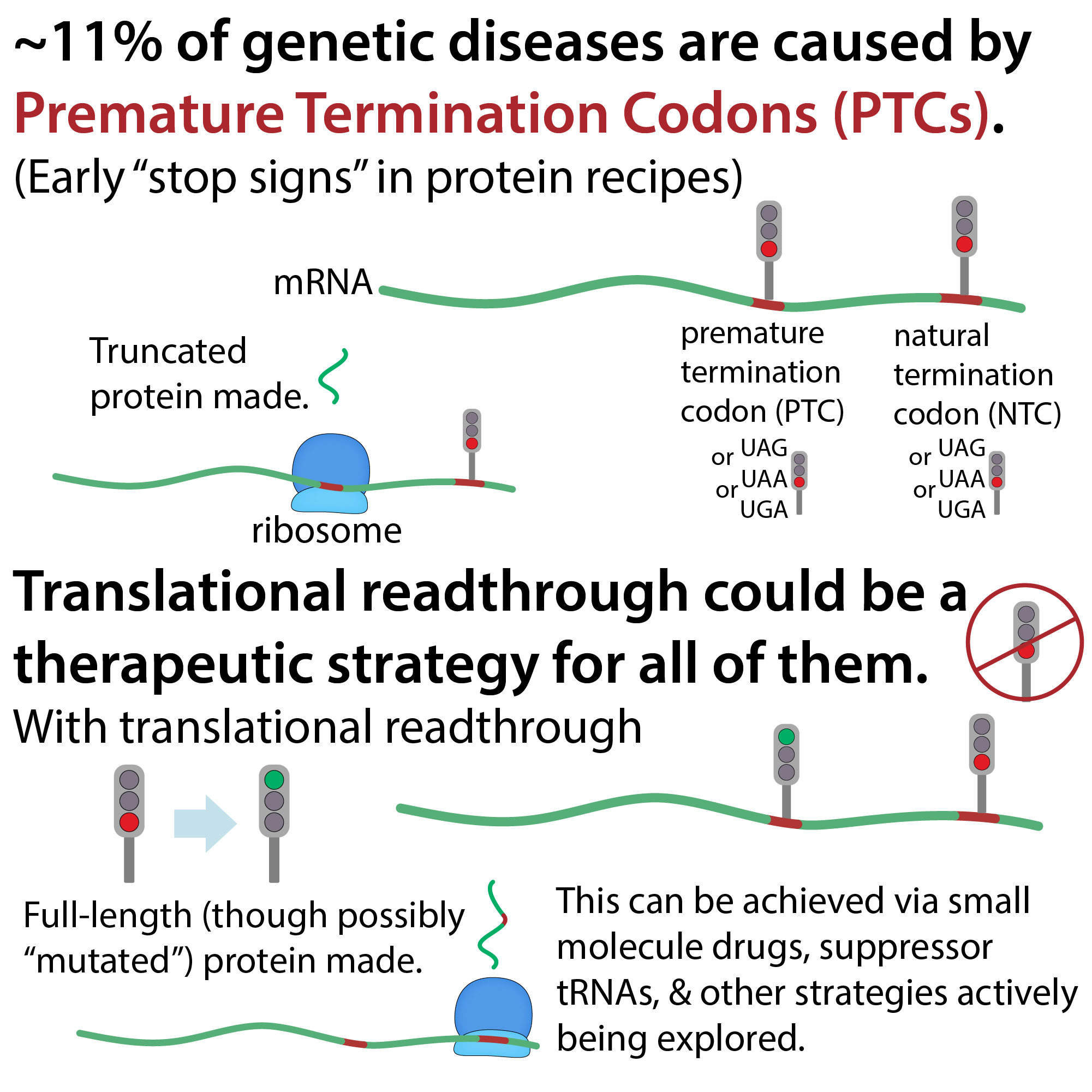
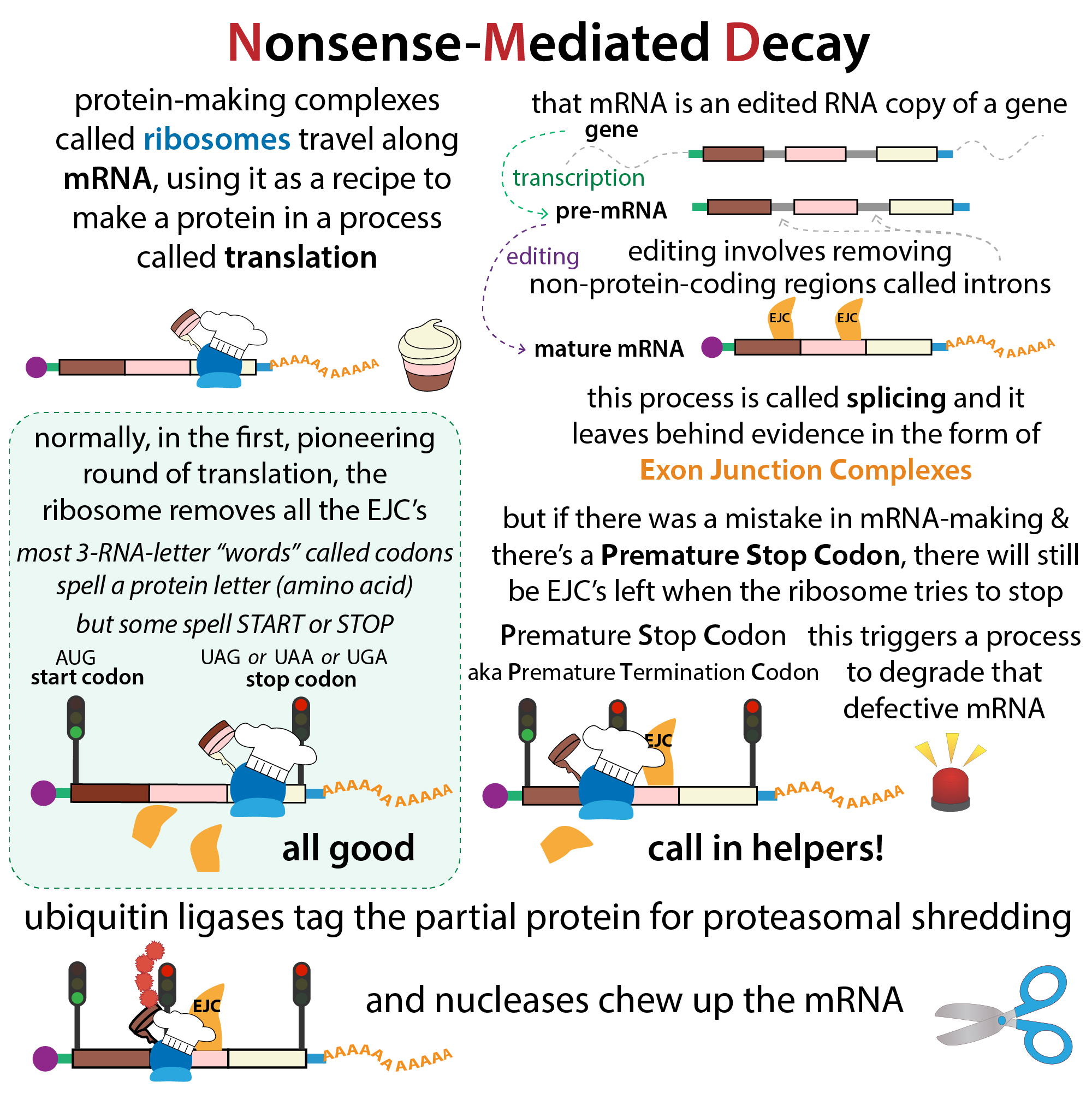
More than 1/10 of genetic diseases are caused by Premature Termination Codons (PTCs)(Early “stop signs” in protein recipes). Translational readthrough could be a therapeutic strategy for all of them. This can be achieved via small molecule drugs, suppressor tRNAs, & other strategies actively being explored.
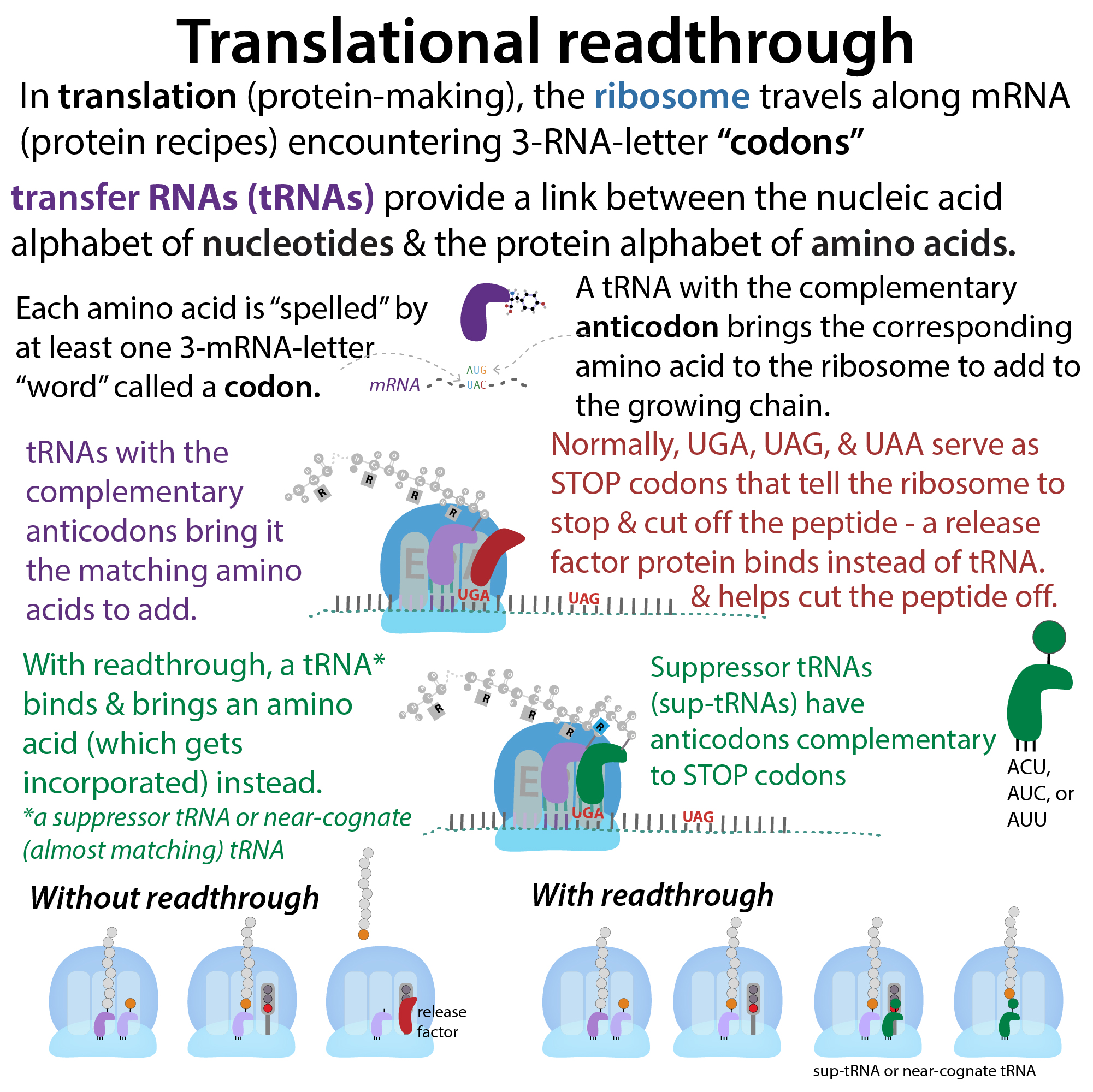
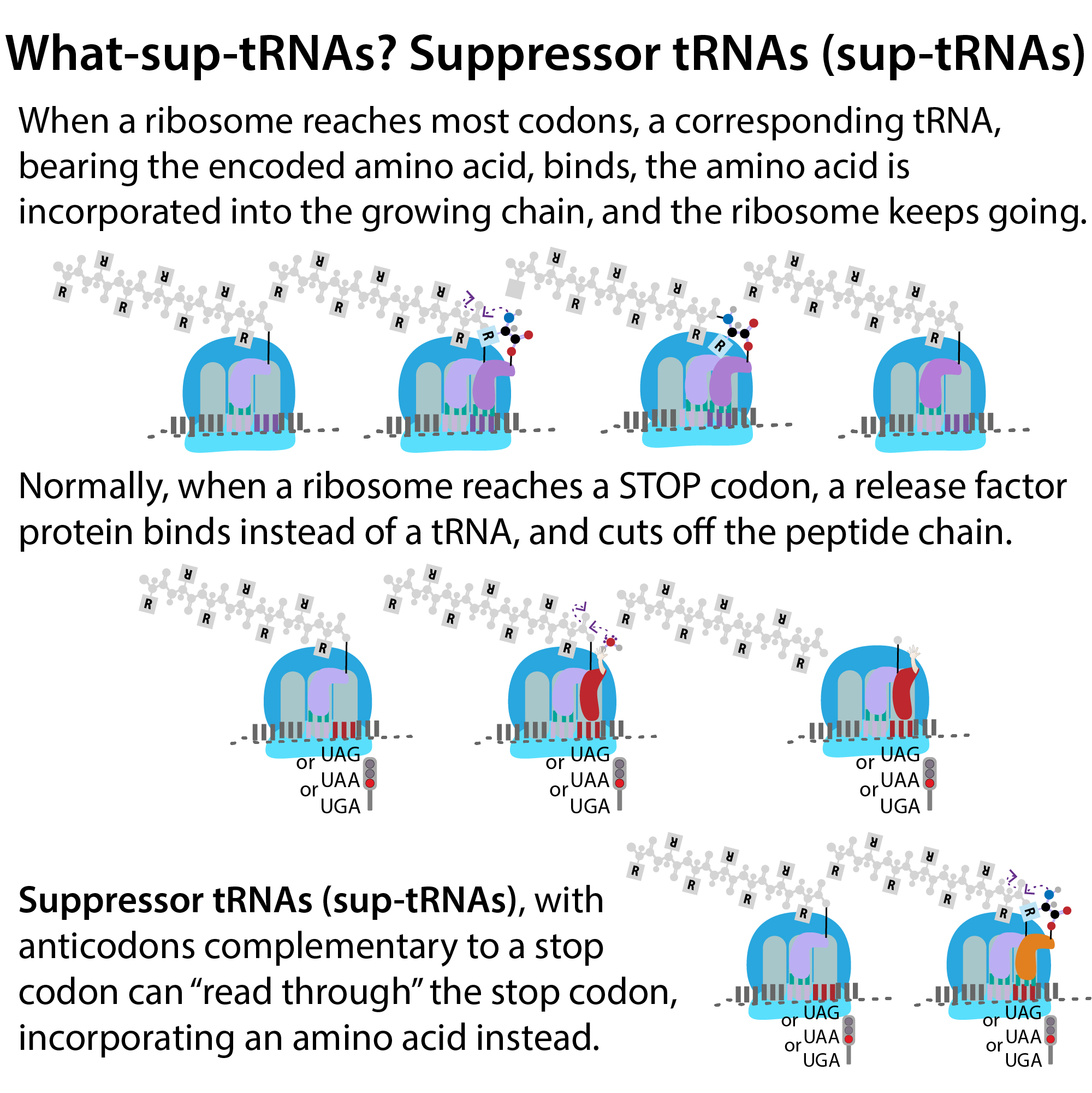
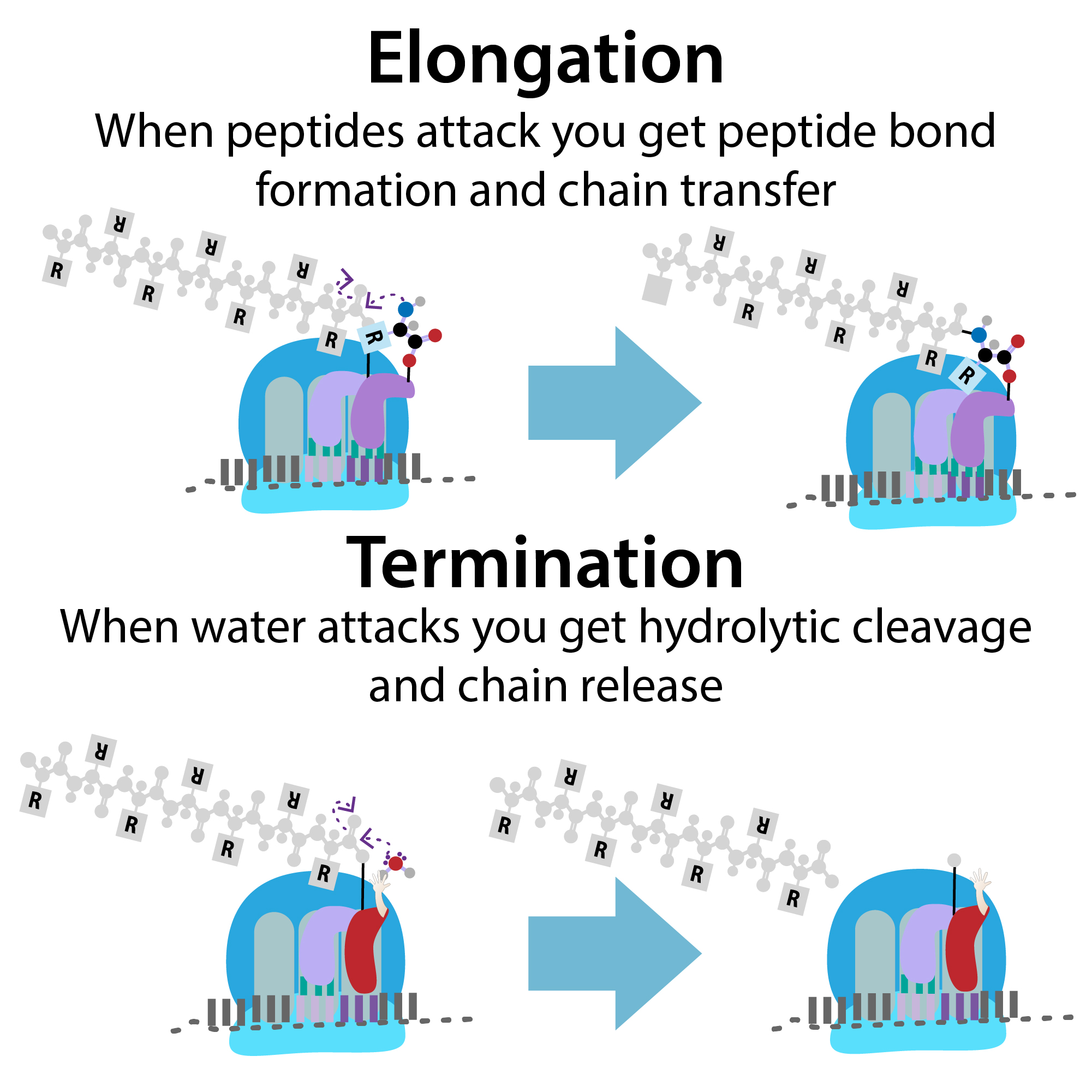
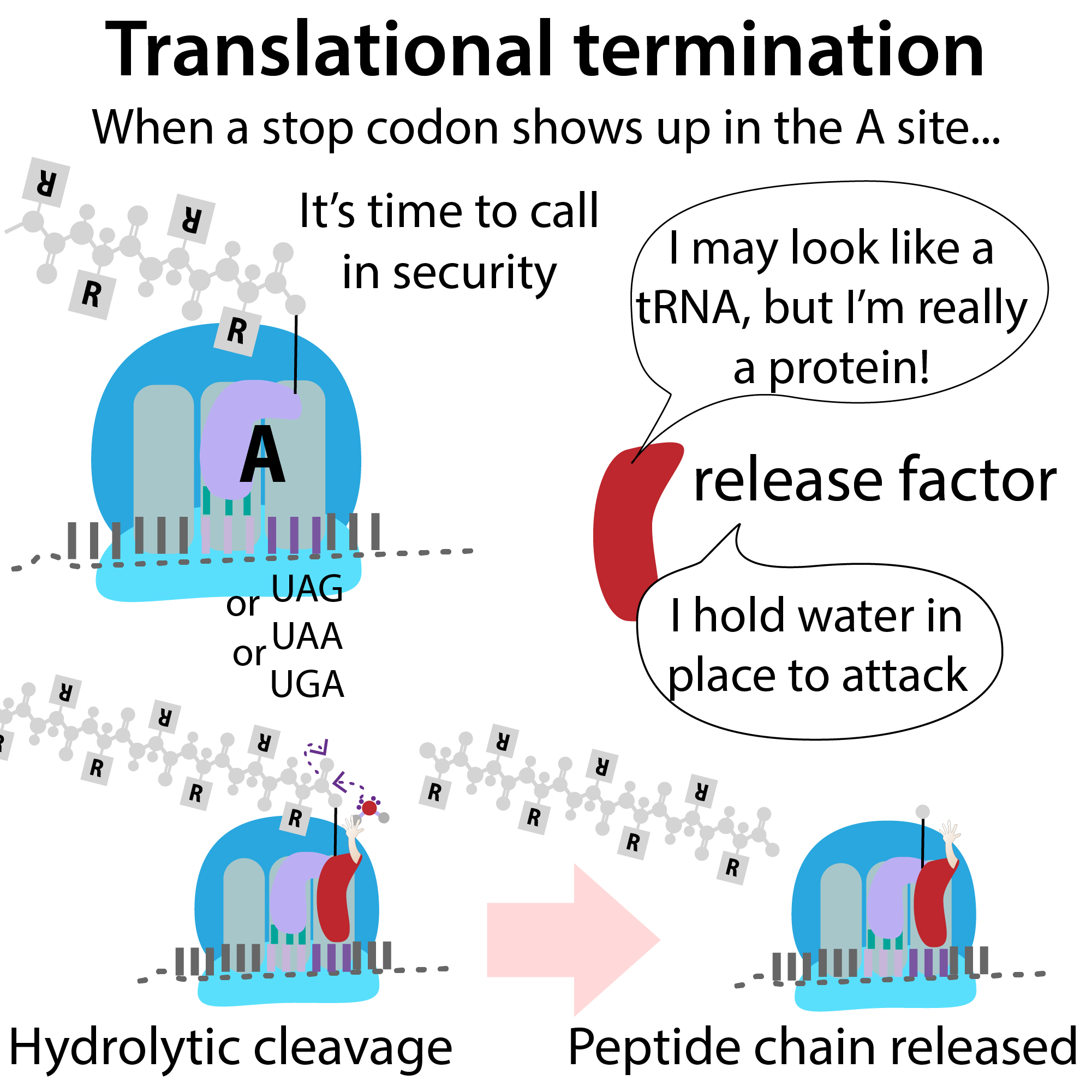
What-sup-tRNAs? Suppressor tRNAs (sup-tRNAs). When a ribosome reaches most codons, a corresponding tRNA, bearing the encoded amino acid, binds, the amino acid is incorporated into the growing chain, and the ribosome keeps going. Normally, when a ribosome reaches a STOP codon, a release factor protein binds instead of a tRNA, and cuts off the peptide chain. Suppressor tRNAs (sup-tRNAs), with anticodons complementary to a stop codon can “read through” the stop codon, incorporating an amino acid instead.
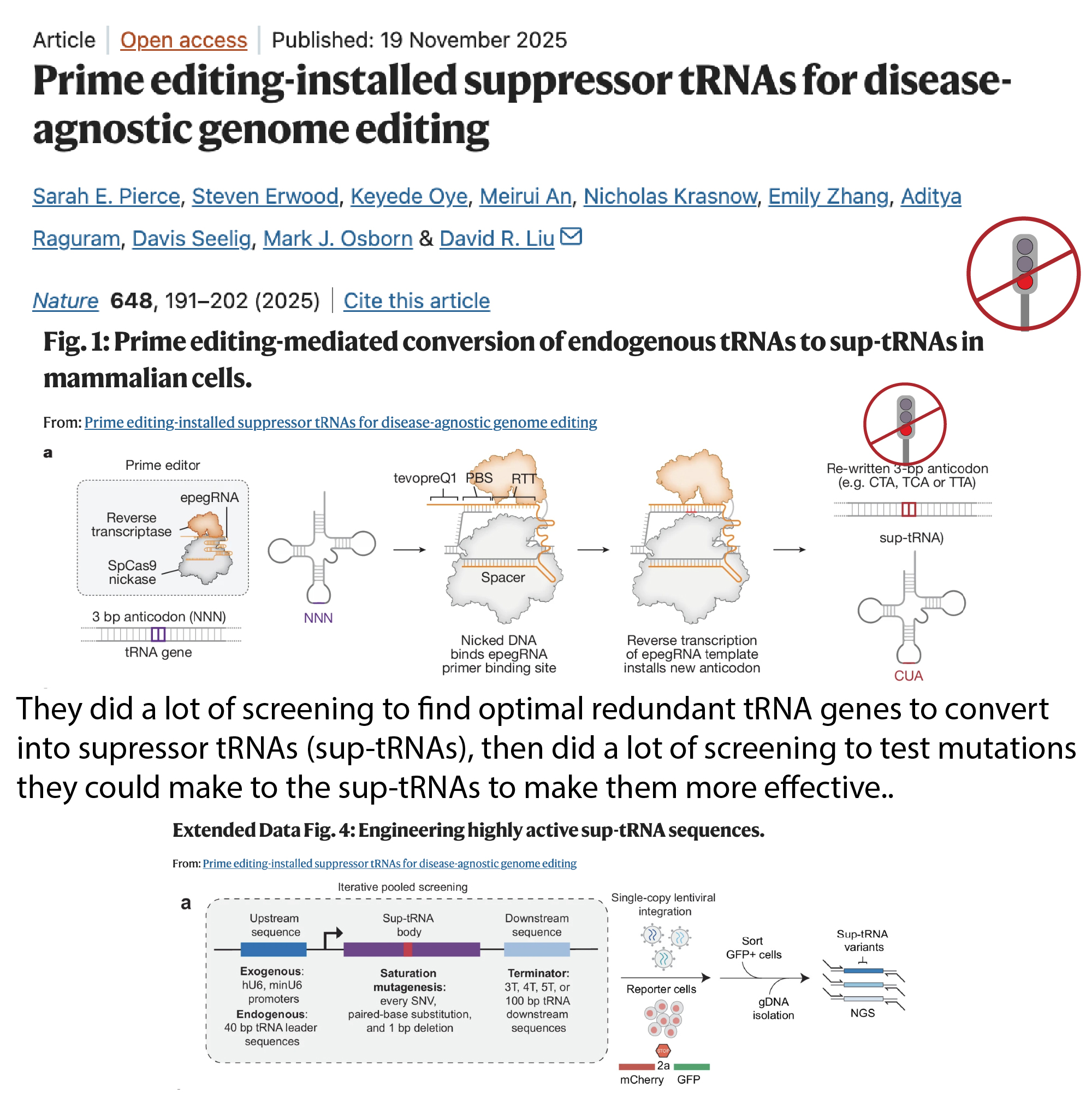
Pierce et al. used a form of CRISPR-Cas gene editing called PRIME editing to turn a redundant tRNA gene into a sup-tRNA (a strategy they call PERT (prime editing-mediated readthrough of premature termination codons), potentially allowing for disease-agnostic one-time gene editing to treat lots of diseases in lots of patients (assuming patients can access it…)
more on NMD (nonsense-mediated decay): https://bit.ly/translation_coupled_mRNA_decay ; YouTube: https://youtu.be/Z6_ny9DE9Yw
More on CRISPR/Cas: https://bit.ly/crisprcasscience & YouTube: https://youtu.be/sH6525d-A4s
more on that baby treated with custom CRISPR: YouTube: https://youtu.be/1pSInDZ3rN4 , blog: https://thebumblingbiochemist.com/365-days-of-science/cps1crispr/
Musunuru, K. . . . Ahrens-Nicklas, R. C. et al. Patient-Specific In Vivo Gene Editing to Treat a Rare Genetic Disease. N Engl J Med 2025. https://doi.org/10.1056/nejmoa2504747.
Recommended reading:
Primary (research) article for PERT: Pierce, S. E.; Erwood, S.; Oye, K.; An, M.; Krasnow, N.; Zhang, E.; Raguram, A.; Seelig, D.; Osborn, M. J.; Liu, D. R. Prime Editing-Installed Suppressor tRNAs for Disease-Agnostic Genome Editing. Nature 2025, 648 (8092), 191–202. https://doi.org/10.1038/s41586-025-09732-2.
Highlighted in:
DeFrancesco, L. Genome Editing’s Third Act. Nature Biotechnology 2026, 44 (3), 331–333. https://doi.org/10.1038/s41587-026-03058-8.
Stop the nonsense: genome editing creates potentially therapeutic transfer RNAs. https://www.nature.com/articles/d41586-025-03587-3
Ledford, H. How to Fix Genetic ‘Nonsense’: Versatile Gene-Editing Tool Could Tackle a Host of Diseases. Nature 2025. https://doi.org/10.1038/d41586-025-03770-6.
Delivery of sup-tRNAs:
Ward, C.; Beharry, A.; Tennakoon, R.; Rozik, P.; Wilhelm, S. D. P.; Heinemann, I. U.; O’Donoghue, P. Mechanisms and Delivery of tRNA Therapeutics. Chem. Rev. 2024, 124 (12), 7976–8008. https://doi.org/10.1021/acs.chemrev.4c00142.
Readthrough compounds:
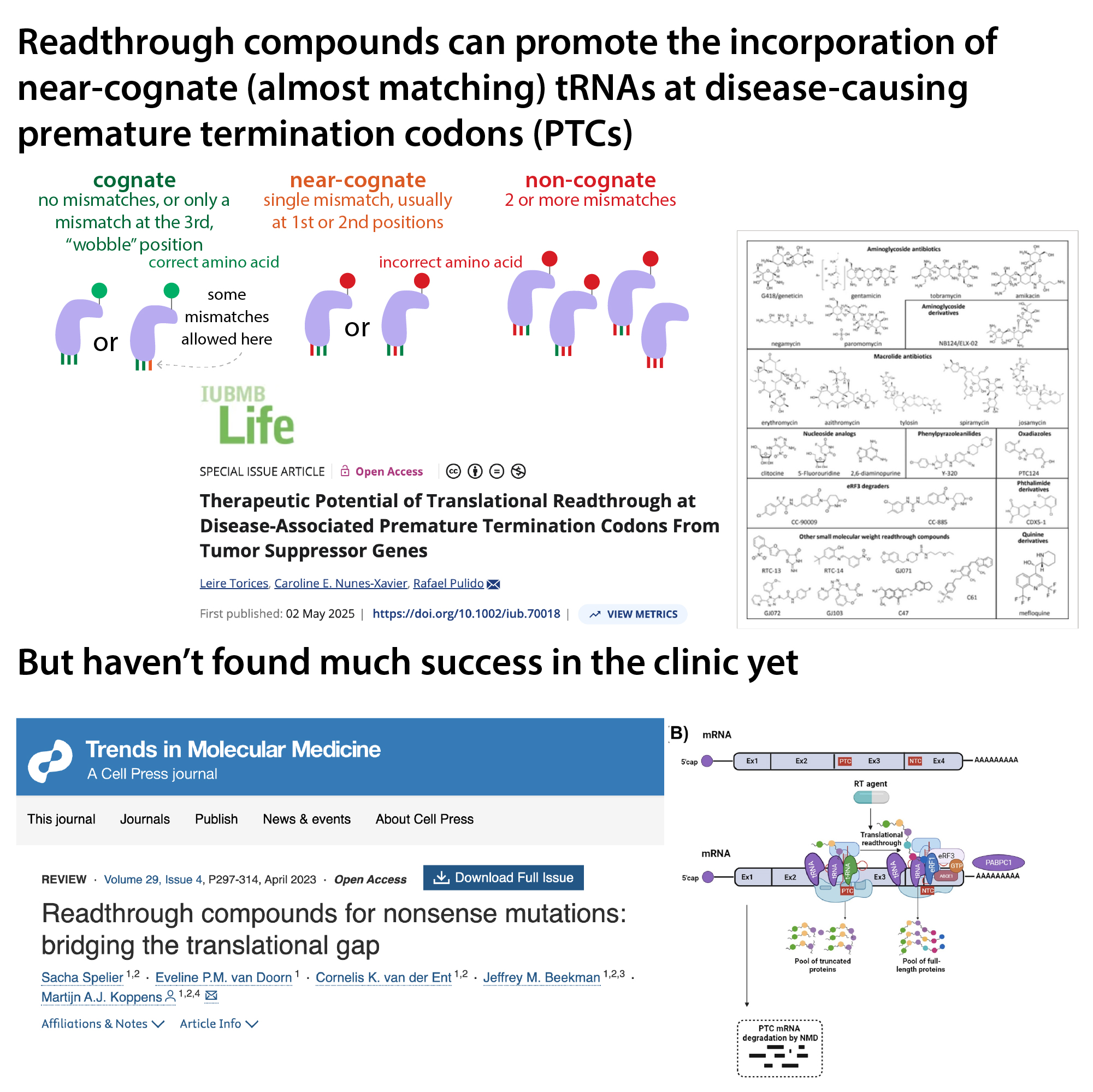
Torices, L.; Nunes-Xavier, C. E.; Pulido, R. Therapeutic Potential of Translational Readthrough at Disease‐Associated Premature Termination Codons From Tumor Suppressor Genes. https://doi.org/10.1002/iub.70018.
Spelier, S.; Doorn, E. P. M. van; Ent, C. K. van der; Beekman, J. M.; Koppens, M. A. J. Readthrough Compounds for Nonsense Mutations: Bridging the Translational Gap. Trends in Molecular Medicine 2023, 29 (4), 297–314. https://doi.org/10.1016/j.molmed.2023.01.004.
Benslimane, N.; Loret, C.; Chazelas, P.; Favreau, F.; Faye, P.-A.; Lejeune, F.; Lia, A.-S. Readthrough Activators and Nonsense-Mediated mRNA Decay Inhibitor Molecules: Real Potential in Many Genetic Diseases Harboring Premature Termination Codons. Pharmaceuticals 2024, 17 (3). https://doi.org/10.3390/ph17030314.
Background, etc.
Mort, M.; Ivanov, D.; Cooper, D. N.; Chuzhanova, N. A. A Meta‐analysis of Nonsense Mutations Causing Human Genetic Disease. https://doi.org/10.1002/humu.20763.
Wangen, J. R.; Green, R. Stop Codon Context Influences Genome-Wide Stimulation of Termination Codon Readthrough by Aminoglycosides. eLife 2020, 9, e52611. https://doi.org/10.7554/eLife.52611.
Highlighted in: Keeling, K. M.; Bedwell, D. M. Finding Sense in the Context. eLife 2020, 9, e55960. https://doi.org/10.7554/eLife.55960.