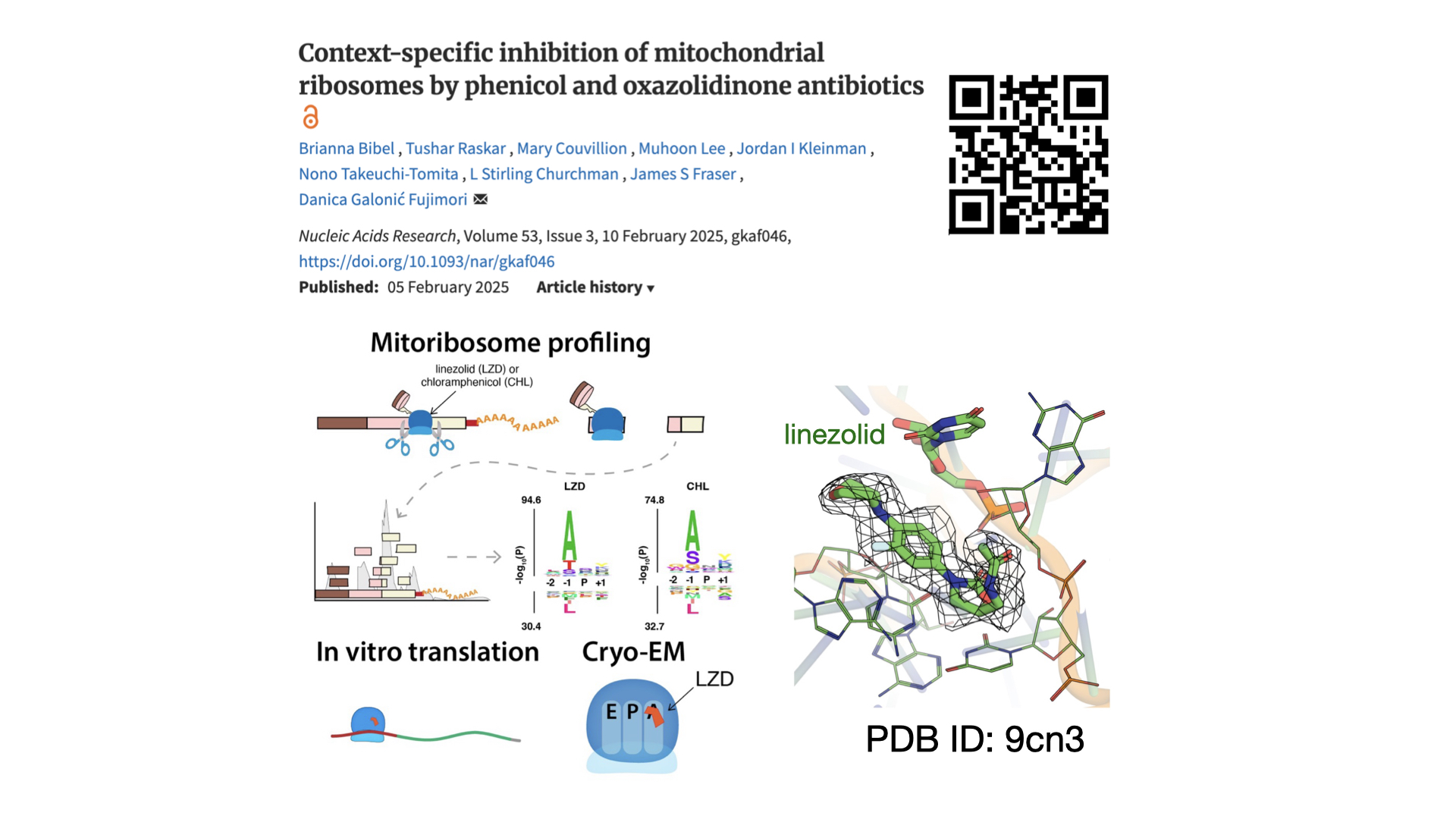
My postdoc work – It’s here!!!!!
PS – we originally posted it as a pre-print (paper that hasn’t yet been reviewed by outside scientists, but that is now public) – see http://bit.ly/openaccesspreprints
NOW PUBLISHED! (2/5/25)
Brianna Bibel, Tushar Raskar, Mary Couvillion, Muhoon Lee, Jordan Kleinman, Nono Takeuchi-Tomita, L Stirling Churchman, James S Fraser, Danica Galonić Fujimori, Context-specific inhibition of mitochondrial ribosomes by phenicol and oxazolidinone antibiotics, Nucleic Acids Research, Volume 53, Issue 3, 10 February 2025, gkaf046, https://doi.org/10.1093/nar/gkaf046
BIG PICTURE BASIC IDEA: (way oversimplified of course, so don’t get mad at me…) We used fancy techniques to help figure out how a couple of side-effect causing antibiotics cause their problems and hope our findings can help scientists make less problem-causing ones!
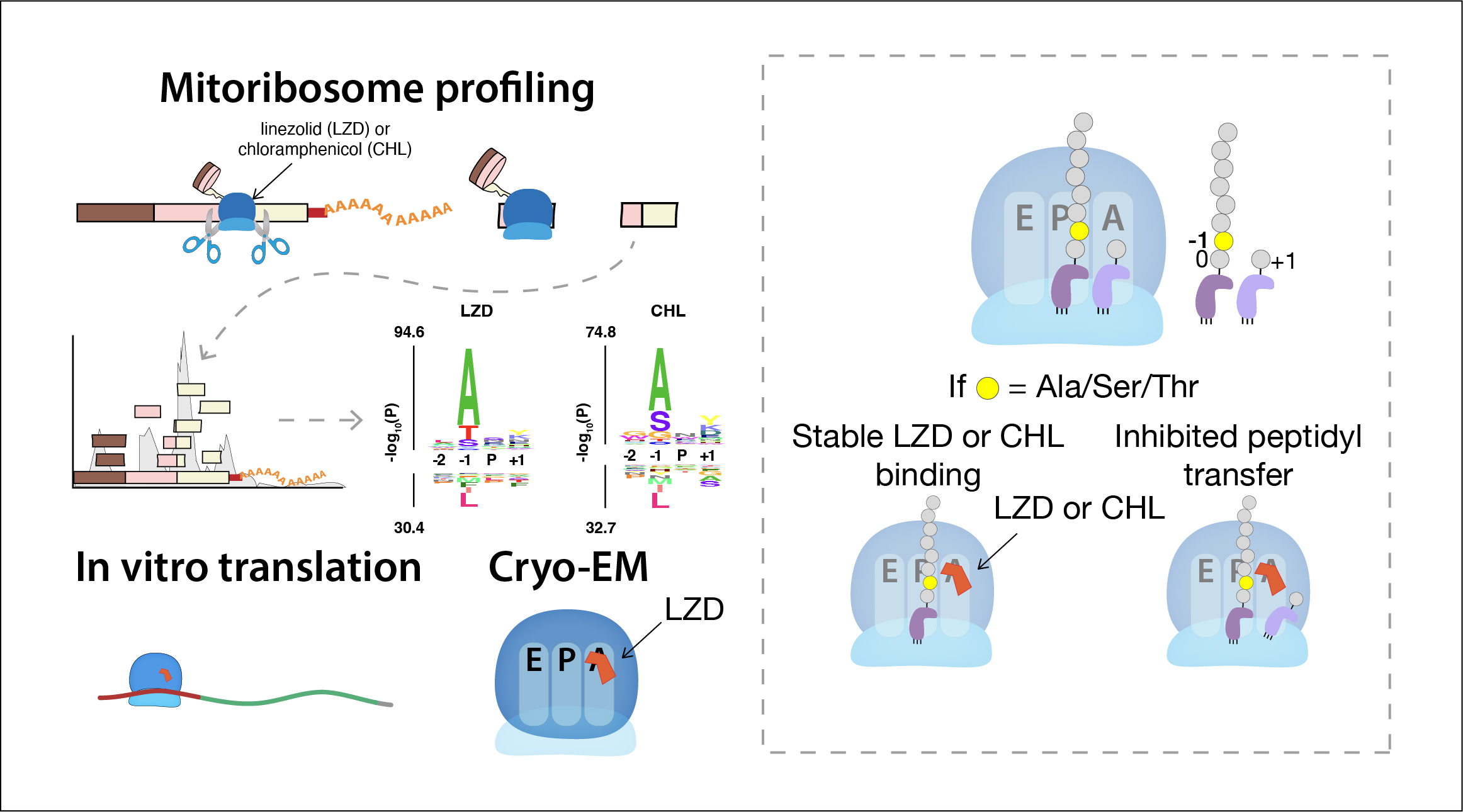
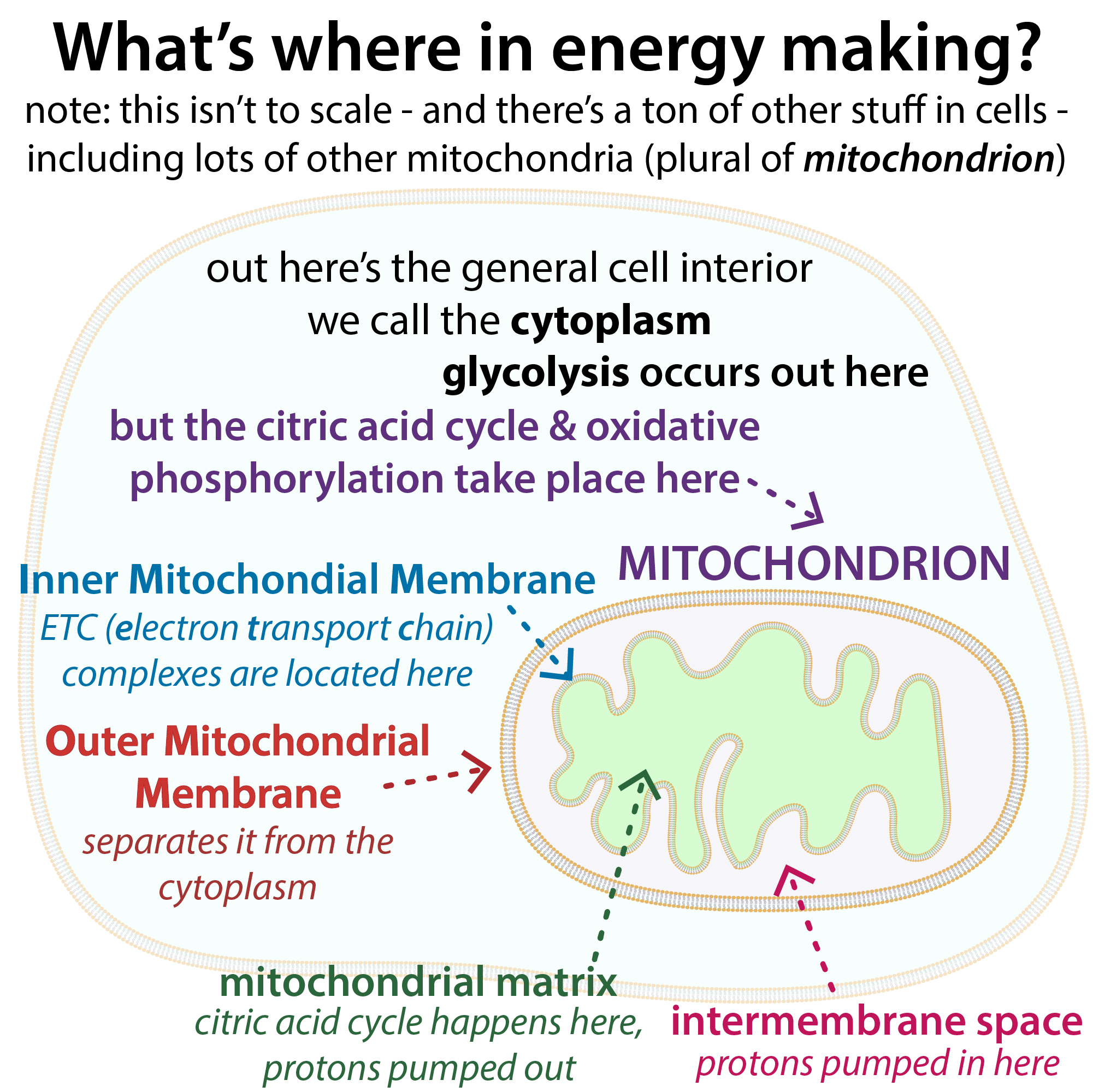
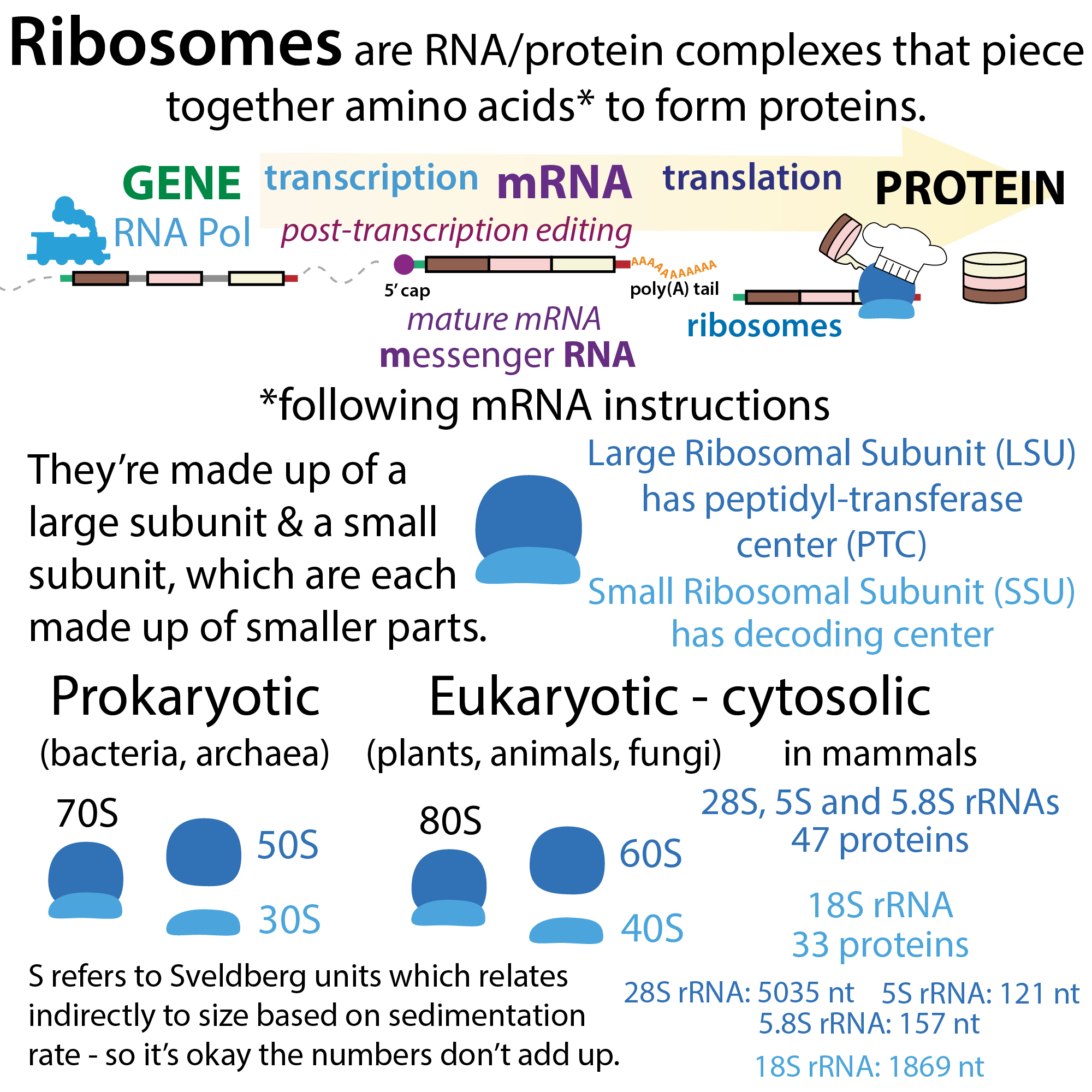
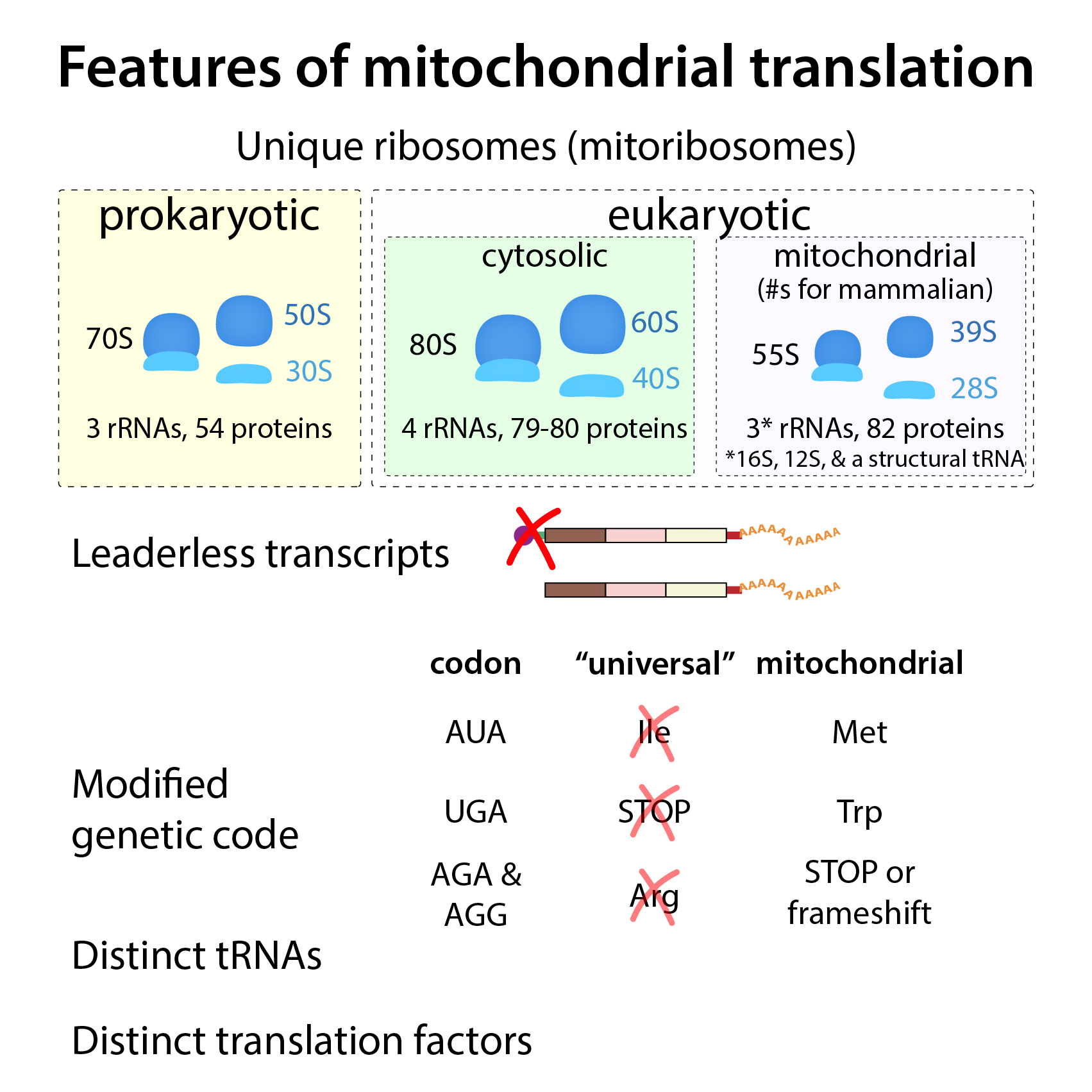
P.S. Don’t let the weird words in the title scare you off. The basic idea is that our mitochondria – those “powerhouses of the cell” – need a bunch of proteins to do all that powerhousing. And they make some of these proteins themselves, using their own ribosomes (mitoribosomes). Some antibiotics affect these mitoribosomes (because they “look like” bacterial ribosomes) and we figured out* some of the details about how they do so. We hope that this can help scientists develop “better” antibiotics that don’t get “confused” so easily, and thus avoid the nasty side effects that come from their confusion!
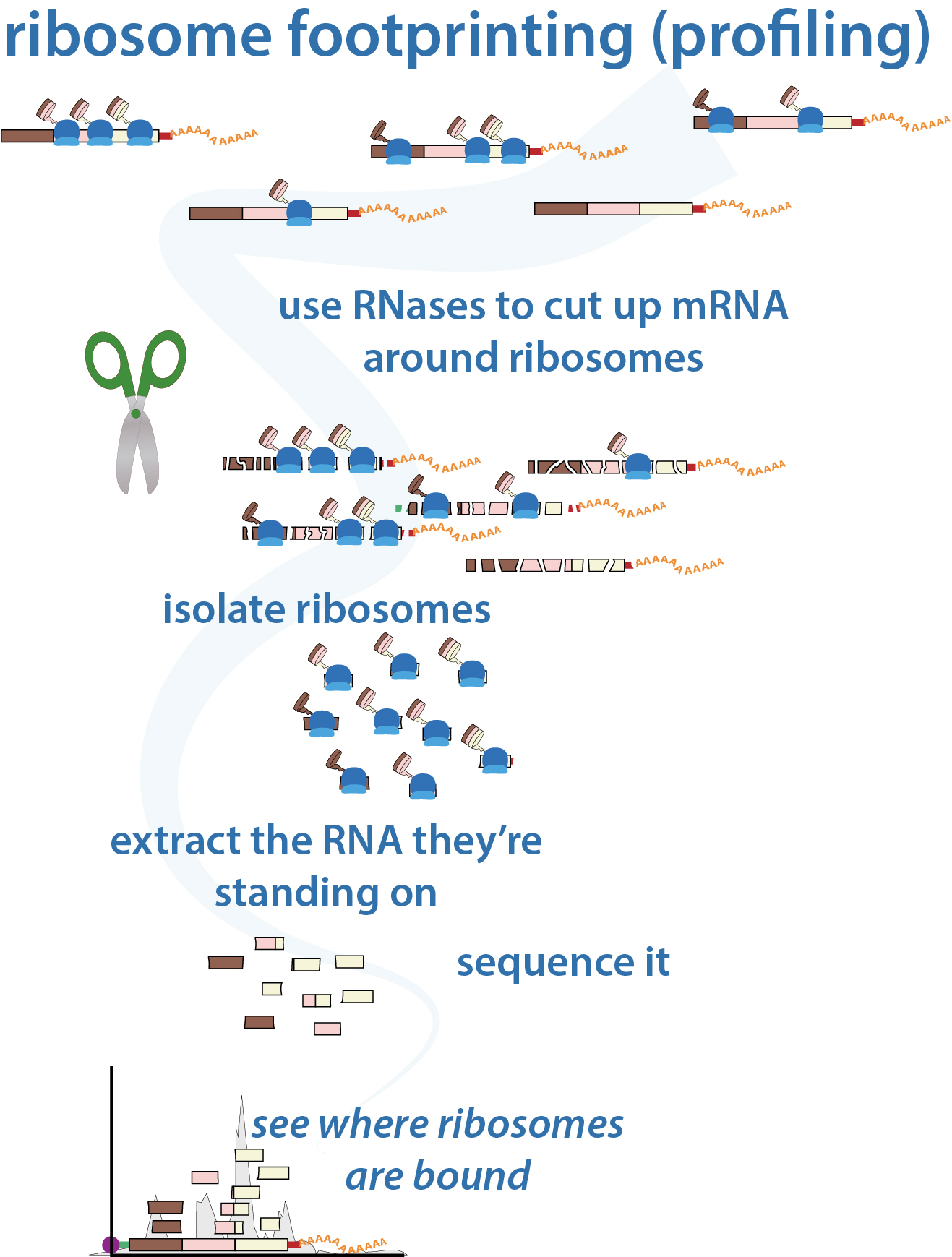
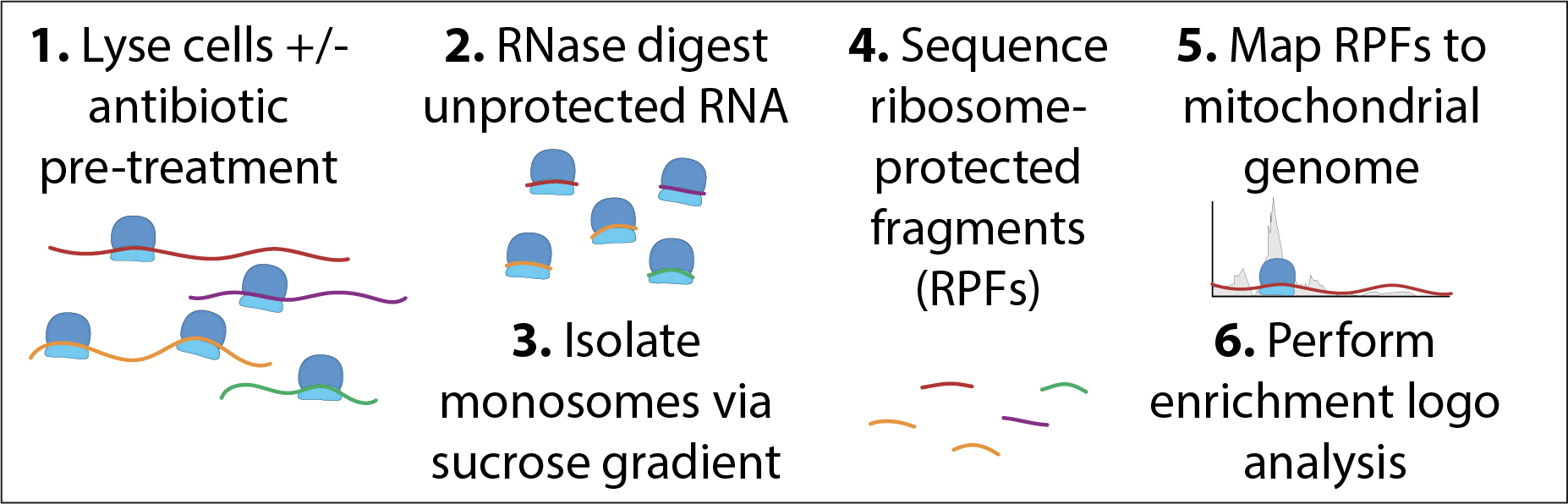
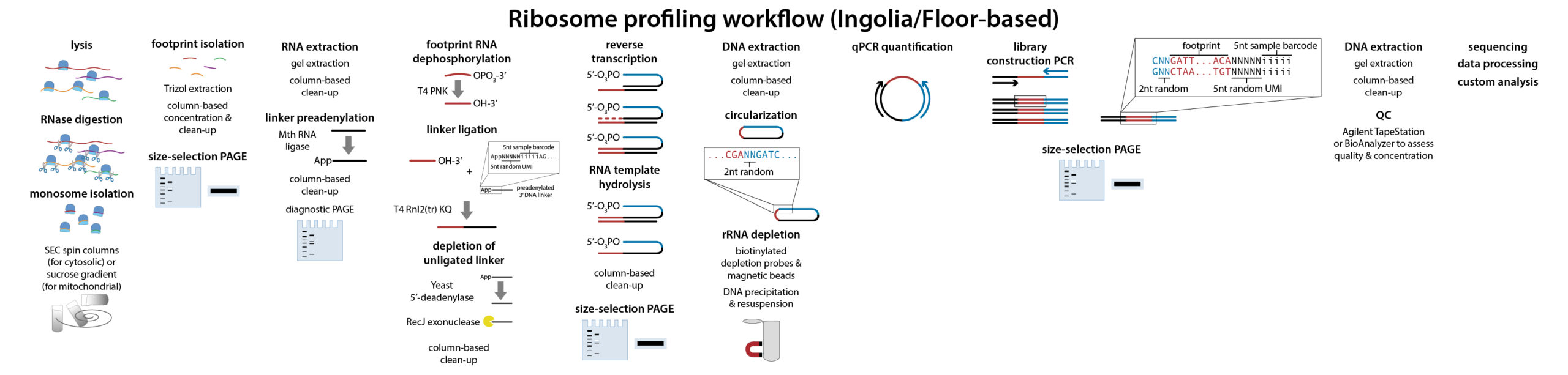
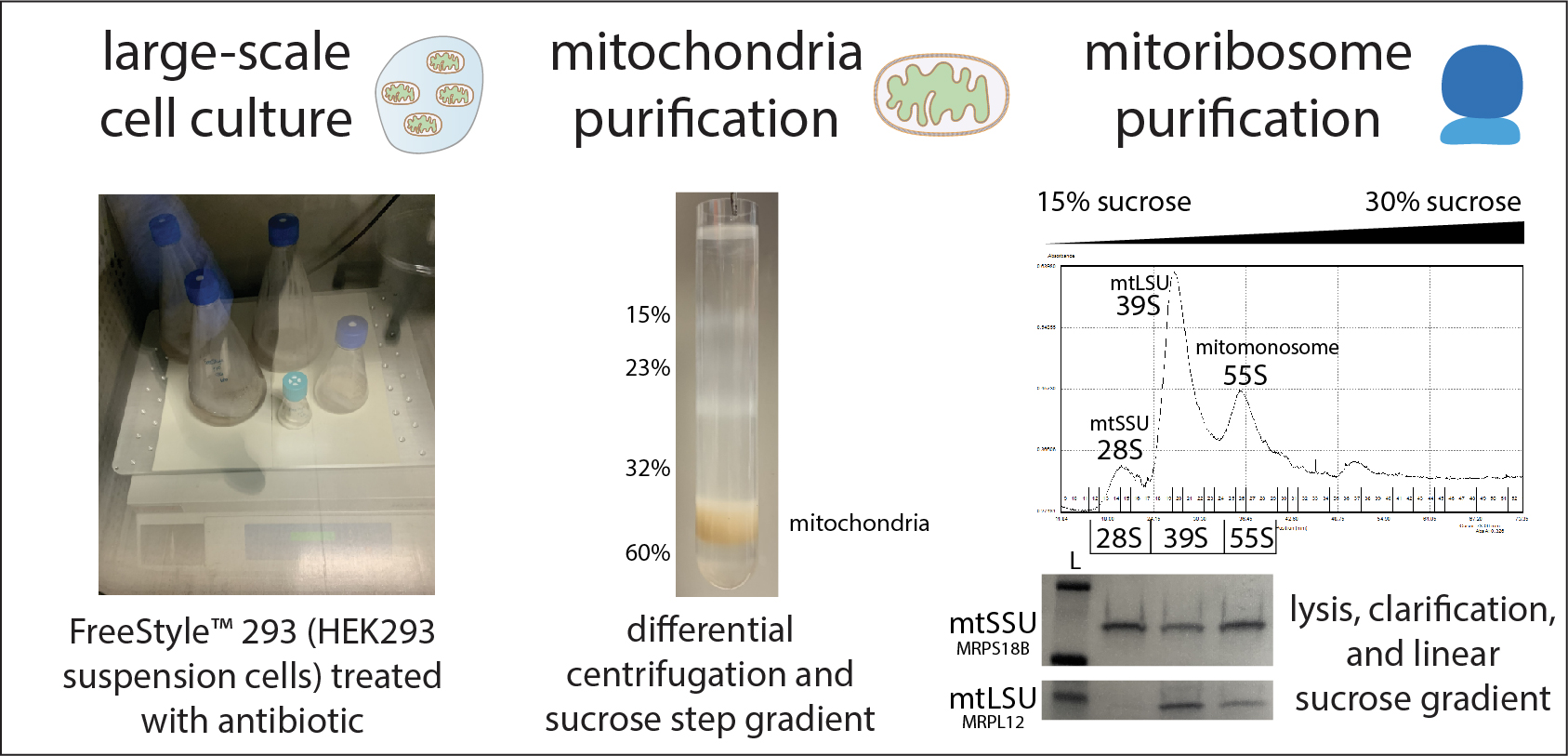
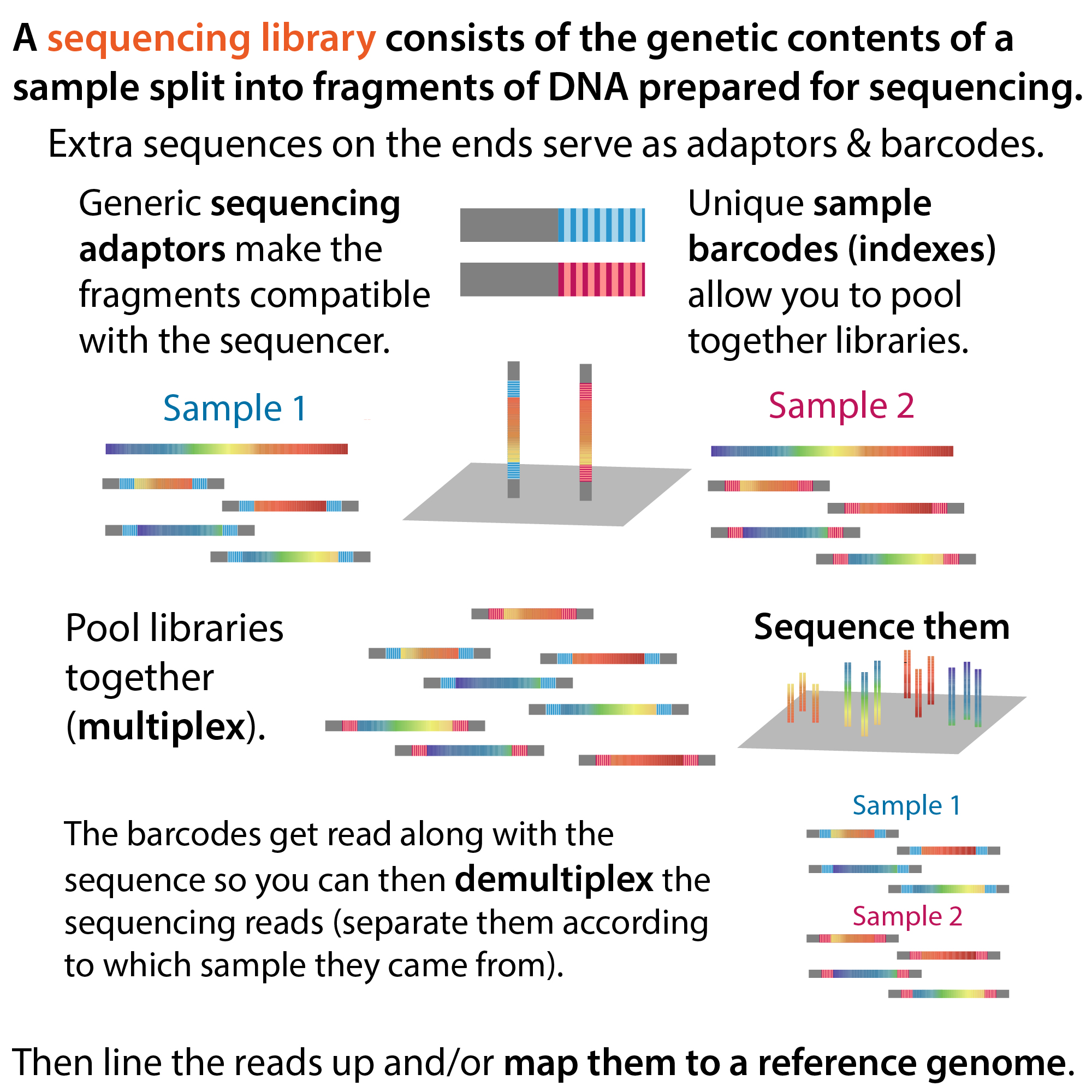
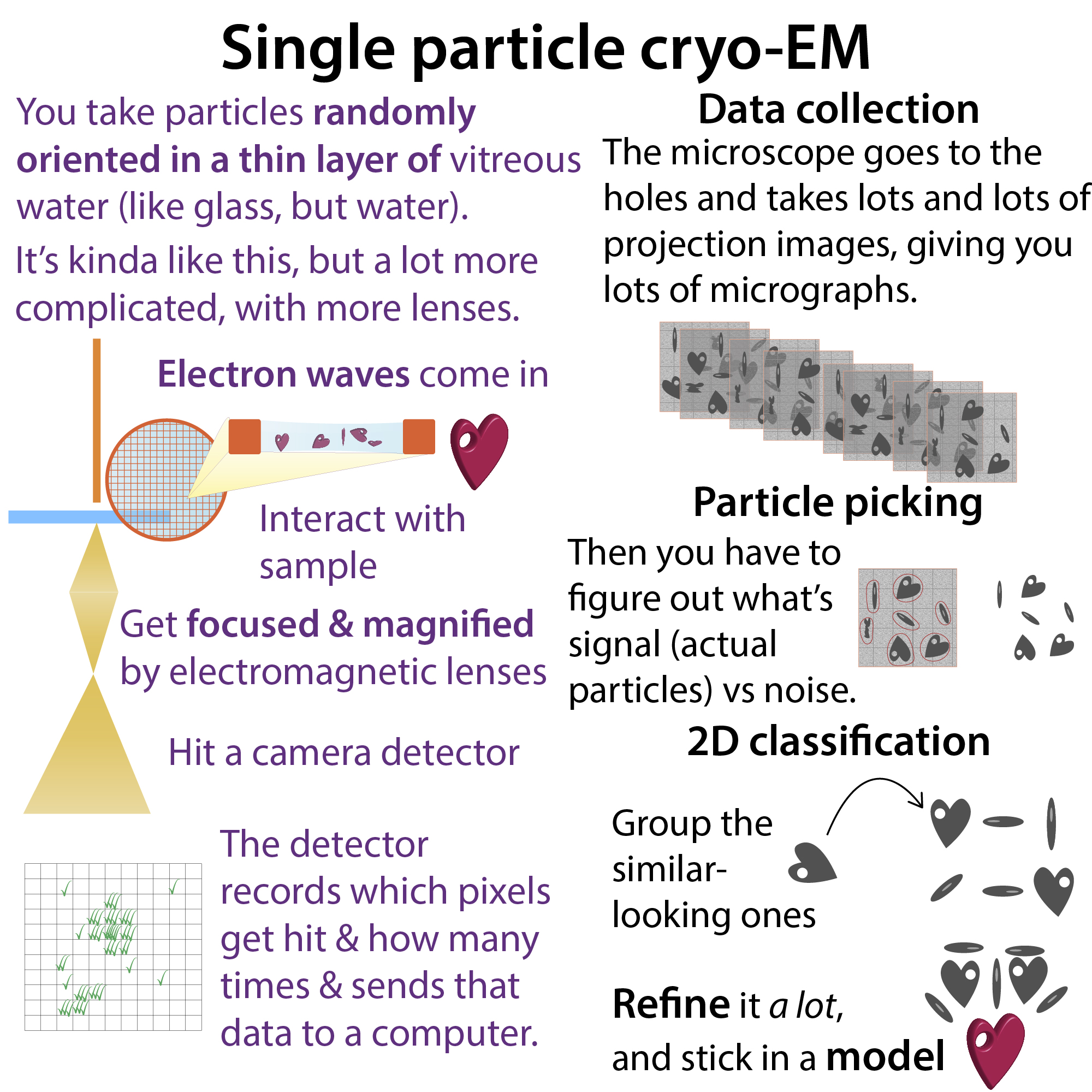
*techniques include mitoribosome profiling (hence learning a lot of Python, etc. as well as collaboration with Harvard’s Churchling lab); cryo-EM (in collaboration with UCSF’s Fraser lab and preceded by a lot of purification troubleshooting on my part); and in vitro translation (by The University of Tokyo’s Takeuchi-Tomtia lab, using that HiBiT reporter assay I designed and used in my class labs for different purposes last year)
Putting it all together… Here are the key takeaways
- Mitoribosome profiling shows that chloramphenicol and linezolid inhibit human mitoribosomes in a context-dependent manner (these antibiotics cause the mitoribosomes to get stuck at specific sequences)
- In vitro translation confirms the critical importance of the penultimate (P-1) position for determining stalling (we validated the antibiotic-induced stalling preferences we saw in the cells)
- Cryo-EM provides a structural basis – confirms binding of LZD to the mitoribosomal PTC in a similar orientation to in bacteria, but with differences in tail conformation and solvation that could aid in the design of next-gen oxazolidinone antibiotics
Huge thank you to all who made this work possible!!!!! Including all those behind the scenes and all those who have trained me and those who have supported me – looking at you family and friends!
If you want a more detailed play-by-play, I have it below with accompanying pics at the link https://threadreaderapp.com/thread/1826727692861051304.html…
Antimicrobial resistance is a growing threat and there is a great need for the development of new antibiotics. Bacterial ribosomes are a key target for many antibiotics, including phenicols such as chloramphenicol, and oxazolidinones, such as linezolid. Unfortunately, these potentially life-saving drugs can also cause potentially life-threatening side effects due to off-target action on mitochondrial ribosomes (mitoribosomes).
In this work, we use a combination of mitoribosome profiling, in vitro translation assays, and cryo-EM to help elucidate this mechanism of action and provide a high-resolution structure of a human mitoribosome bound to linezolid, which can aid in the design of next-generation oxazolidinones. If you stick around with me, I will walk you through the highlights.
Chloramphenicol (CHL) and linezolid (LZD) – and related antibiotics – bind to the peptidyl transfer center (PTC) of bacterial ribosomes, and were originally thought to act as general translation inhibitors by blocking the accommodation of all incoming tRNA.

However, it was later shown that, instead, they block translation in a context-dependent manner by which the amino acid sequence being synthesized (and especially the amino acid in the penultimate (P-1) amino acid) determines whether or not the ribosome stalls.
Our labs and others then showed that this was due to stabilizing interactions of the P-1 amino acid with the antibiotics when the P-1 amino acid was an alanine (or to a lesser extent threonine or serine).
But that was all in bacteria. What about mitochondrial ribosomes? Although side effects of these antibiotics have been attributed to mitotoxicity caused by inhibition of mitochondrial translation, it was unknown if the inhibition had any context-dependency.
Spoiler alert – it does!!! Using mitoribosome profiling, we found a pronounced bias in the stall locations of LZD- and CHL-treated human cells. Similarly to the situation with bacterial ribosomes, the P-1 position was the largest determinant of stalling by far, with A/S/T being key. There were some slight differences though, including an increase in T, that we’ll get back to…
First, we wanted to make sure the P-1 aspect was direct. This is where in vitro translation came in. We took one of the stall sites identified through our profiling and used it in a reporter assay in a fully reconstituted mitochondrial translation system.
We found robust antibiotic-induced inhibition that was drastically reduced by changing the P-1 site from an A to a Y.
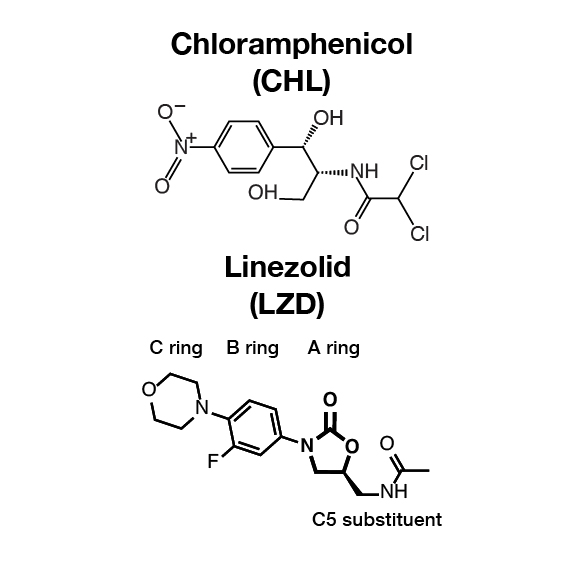
Now, let’s start to address the why! If you remember, I mentioned that the context-dependent inhibition of bacterial ribosomes by LZD is caused by interactions between the LZD, bound in the PTC, and the P-1 amino acid. All the functional data are consistent with a similar mechanism in mitochondria, but we could really use a structure… So we got one!
We solved the structure of the human mitochondrial large subunit bound to LZD, confirming binding to the PTC in a highly similar orientation to its binding to bacterial ribosomes. Although we don’t have a nascent chain in our structure, the similar binding and functional data are consistent with interactions between the P-1 amino acid and the oxazolidinone ring helping determine whether the ribosome stalls.
Speaking of stalls, going back to that elevated proportion of T in the P-1 position compared to stalling preferences in bacteria… (See Marks et al., PNAS, 2016). Although the binding orientations of LZD to the mitoribosome and bacterial ribosomes were incredibly similar, we did see a difference in the LZD tail configuration. This provides additional space with which to accommodate T in the mitoribosome, giving us structural hints that help explain the functional data.
The conformational difference can in part be attributed to increased solvation in the PTC that we observed in our LZD-mitoribosome complex. This indicates that solvation should be taken into account when trying to design next-generation oxazolidionones, as it could serve as a selectivity handle.
Putting it all together… Here are the key takeaways
- Mitoribosome profiling shows that CHL and LZD inhibit human mitoribosomes in a context-dependent manner
- In vitro translation confirms the critical importance of the penultimate (P-1) position for determining stalling.
- Cryo-EM provides a structural basis – confirms binding of LZD to the mitoribosomal PTC in a similar orientation to in bacteria, but with differences in tail conformation and solvation that could aid in the design of next-gen oxazolidinone antibiotics
Huge thank you to all who made this work possible!!!!!
(And thank you for sticking around through my “story time”!)