Ligands are binding partners. There are lots of possible types of binding partners and “ligand” encompasses them all – it’s a generic, umbrella term.
Substrates are the binding partners of enzymes (reaction mediator/speeder-uppers) that the enzymes act upon and change in some way. Remember your S’s: Substrates are Starting materials for enzymes. Substrates bind to, and get modified in, the active sites of enzymes (the places where the catalytic (reaction speeding up) action happens), leading to the formation of product(s).
Much more on enzymes here: http://bit.ly/enzymecatalysis; YouTube: https://youtu.be/HDxztJ3y6Iw
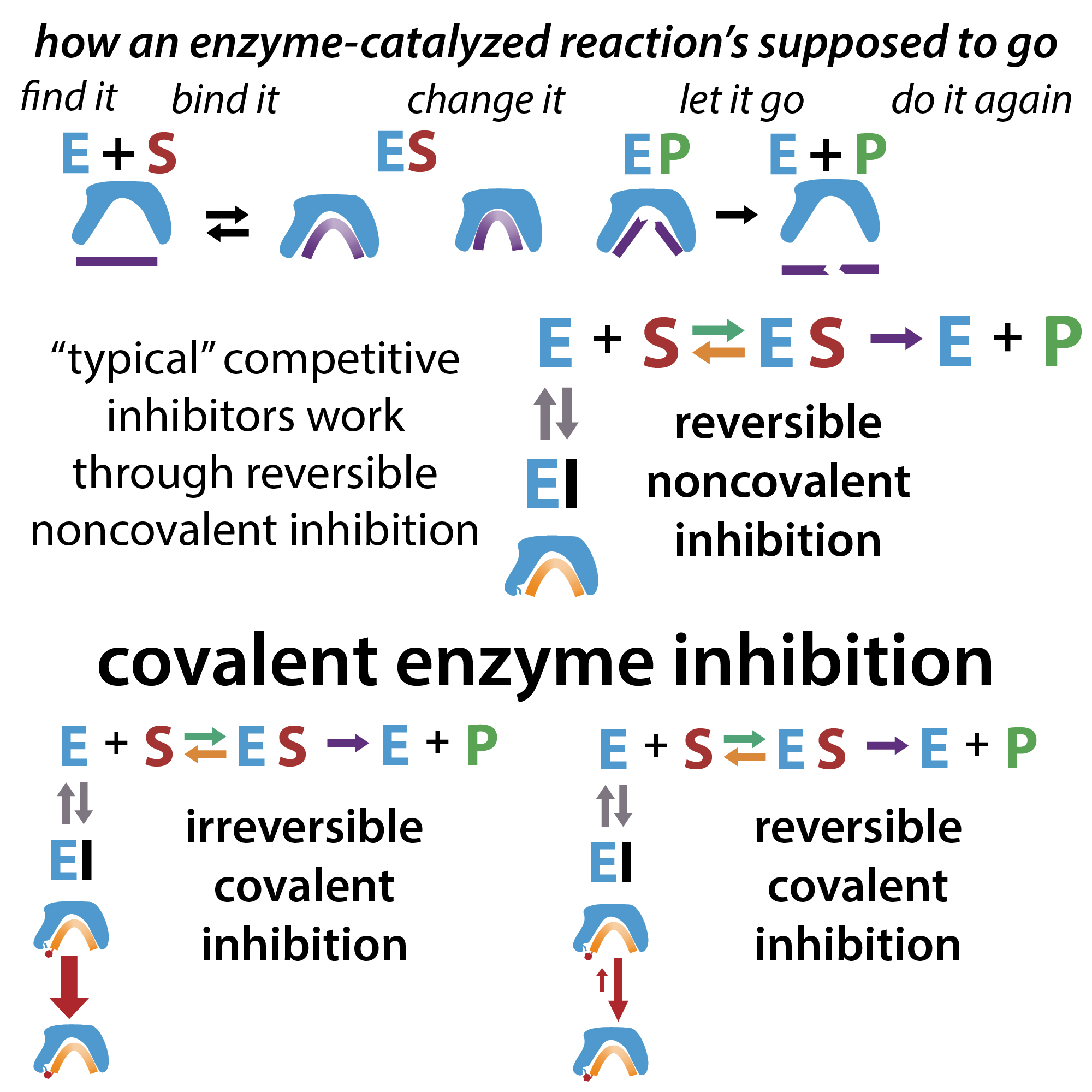
Active sites are also targets for many enzyme inhibitors. Inhibitors that bind the active site are called orthosteric inhibitors and those that bind elsewhere are called allosteric inhibitors. Orthosteric inhibitors compete with the substrate for the same spot whereas allosteric inhibitors might cause that spot to be less attractive (such as by inducing a conformational change (shape-shift)), trap the enzyme in a nonproductive state, or otherwise inhibit the enzyme’s activity. There are a bunch of further ways we can classify enzyme inhibitors based on how they act, whether they bind permanently or reversible etc. Much more in this other post: http://bit.ly/enzymeinhibition ; YouTube: https://youtu.be/ilCvy3mPzrI
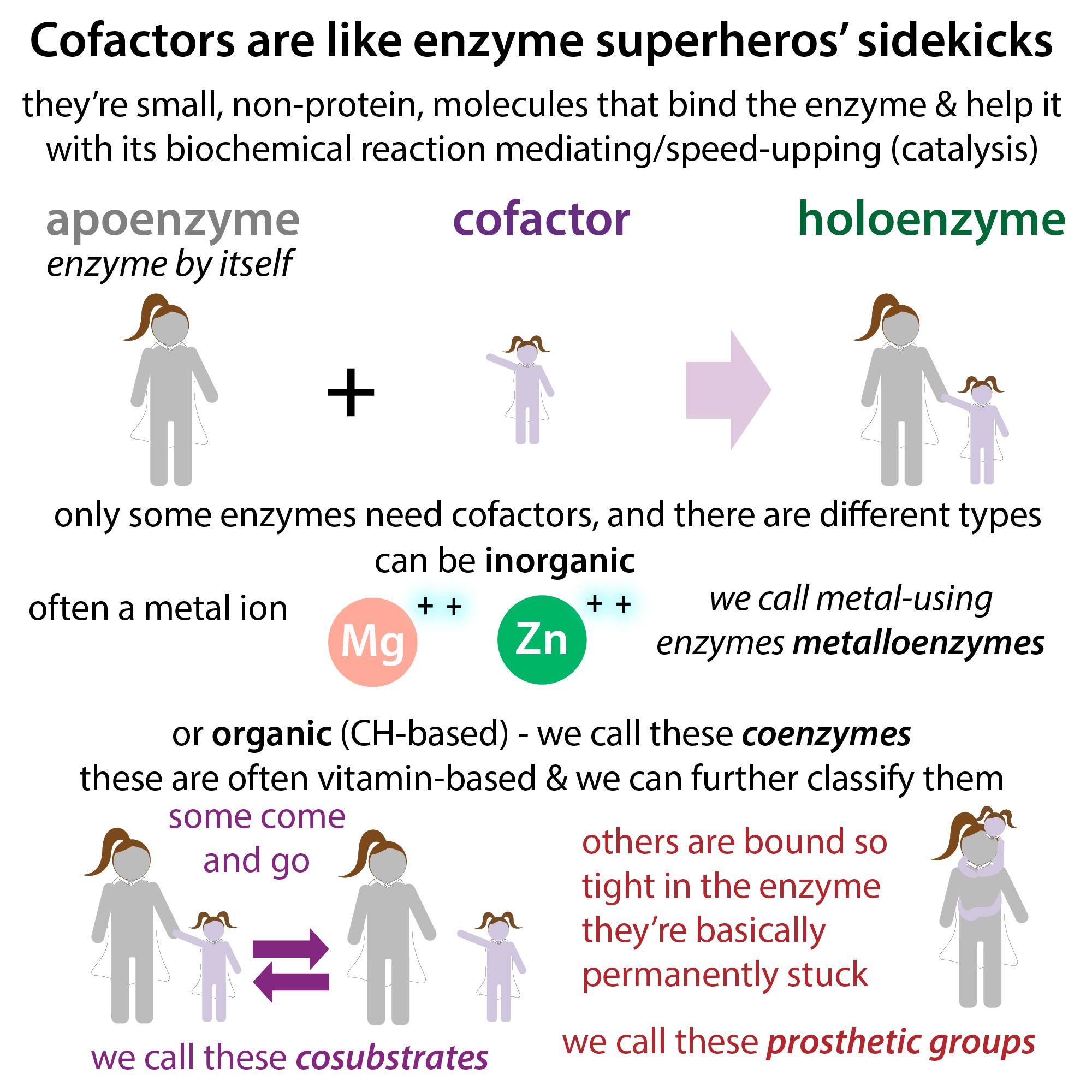
In addition to substrate(s), enzymes can also bind other molecules, like helper molecules called co-factors, but “substrate” refers specifically to the thing the enzyme acts on (simply binding doesn’t earn a molecule that title!).
We can further classify co-factors based on what they’re made of and how long they stick around. We call enzymes with metal helpers metalloenzymes. Other helpers include bigger organic (carbon-containing) groups we call coenzymes like NAD⁺. If those helper molecules are covalently bound (those strong bonds that include electron sharing) we call the helper a prosthetic group. When an enzyme has a helper, we call the enzyme/helper combo a holoenzyme and the enzyme alone (no helper) the apoenzyme.
We have additional words we use to describe the binding parters (ligands) of receptors. And these terms come up a lot in pharmacology because drugs (both pharmaceutical drugs and recreational ones) often serve as these types of ligands. Why? Because receptors allow cells to communicate and they’re also “visible” to those drugs.
note: I ended up doing a whole posts on receptor ligands, so if you want more, check out: https://bit.ly/receptorligands
Receptors are usually on the surface of cells (typically proteins embedded in the cell’s plasma membrane). They can bind to chemical messengers (hormones, drugs, etc.) & relay the signal to the inside of the cells. Cells are coated with different types of receptors that bind different types of ligands. Depending on the receptor and the ligand and the cellular context, this can lead to various outcomes. So, for example, when adenosine binds to certain adenosine receptors in brain cells a bunch of stuff happens that causes you to be sleepy. We’ll get back to this guy in a minute. First we need to see how the initial signal is passed on.
Often this signal is conveyed through one of those conformational changes (shape-shifts) I mentioned above. Receptors typically go all the way through (transverse) the membrane, leaving them with one part outside the cell (the extracellular domain) and one part inside the cell (the intracellular domain). Binding of a ligand to the extracellular domain often causes a conformational change that ripples through to the inside of cells and triggers a signaling cascade, with the message often relayed by kinases, which add negatively-charged phosphate groups onto molecules, altering their activity.
But it all starts with those ligands. And receptor ligands can (at least traditionally) be broadly classified as agonists & antagonists – later I’ll bring in the idea of inverse agonists which complicate the picture. Agonists bind to receptors & activate them, whereas antagonists binds to receptors and prevent their activation (they typically mimic the agonist and steal their spot on the receptor, thereby blocking agonist binding).
So:
- an agonist is a ligand (binding partner) that binds to a receptor and activates it
- an antagonist is a ligand that binds to a receptor and prevents it from being activated
My favorite antagonist, for example, is caffeine. Long story short: Caffeine is a purine that acts as an adenosine receptor antagonist. Basically, it pretends to be adenosine and binds to adenosine receptors but doesn’t activate them. And blocks adenosine from binding. When adenosine binds, you get sleepy so…
note: this is major oversimplification. Much more in this past post: blog: https://bit.ly/caffeinebiochemistry ; YouTube: https://youtu.be/5Y5jLMzmbHk
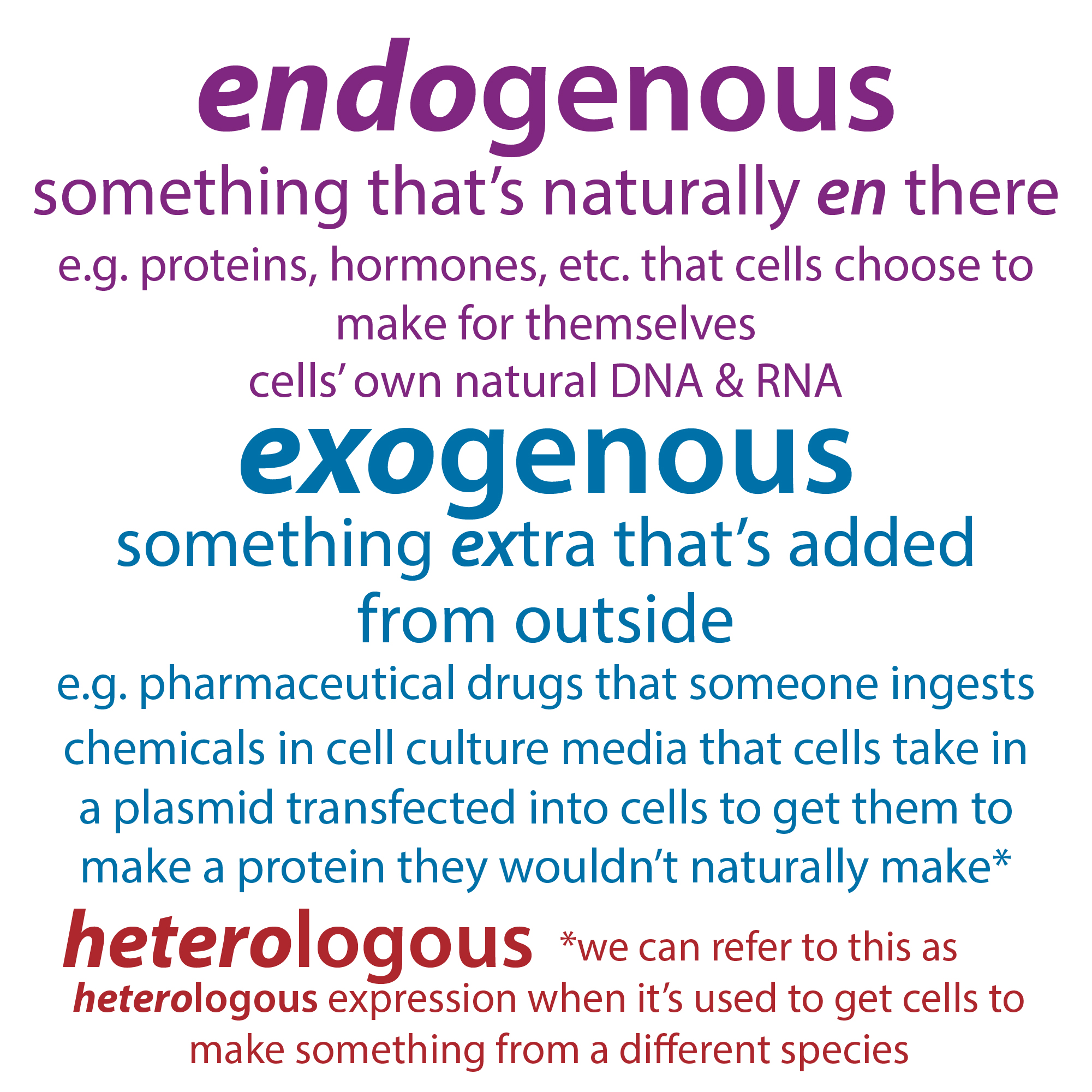
That example also brings up another point – ligands can be natural or artificial and can be made by a person’s own body (in which case we call it endogenous) or be introduced from outside the body (in which case we call it exogenous). The same ligand can be both endogenous and exogenous – it just depends on the source. For example, adenosine is naturally made in our bodies all the time – when this adenosine binds to receptors, it’s endogenous. But “extra” adenosine can can be given as a drug to patients whose heart rate is too high. In this case, the adenosine is exogenous. Since our bodies can’t produce caffeine, all the caffeine binding to our receptors is exogenous though! much more about endogenous vs exogenous here: https://youtu.be/0fE0rtBaNW0
Now for the complicating factors, because I’m all about being biochemically real with you all!…
Some receptors are quiet until an agonist wakes them up. So, if there’s no agonist around, there’s no activity. Whether or not an antagonist is present doesn’t matter.
But other receptors are noisier – they have a certain level of baseline, constitutive activity even if there is no agonist around. An agonist might make them louder (increase activity) but there is still activity without them.
Traditional antagonists don’t reduce any of this baseline, constituitive, activity. But inverse agonists do. An inverse agonist binds to a receptor and reduces its baseline activity (as well as typically blocking the agonist from binding). So you get less activity than you get normally in the absence of agonist.
Things can quickly get much more complicated because some agonists and antagonists are only “partial agonists” or “partial antagonists” – they don’t fully activate or prevent activation. In these cases their overall effects will depend on what the activity was like to start with. If you had a lot of agonist, adding a partial agonist will dampen the activity. But if you didn’t have much agonist, a partial one would increase the activity.
Another complicating factor is that context matters. The same ligand/receptor combo can have different effects depending on what type of cells the receptor is on and how the signal gets relayed. If you want to learn more about this, look up “biased agonism.” I’ll even do you a solid and provide a great reference that describes this all!
Berg, K. A., & Clarke, W. P. (2018). Making Sense of Pharmacology: Inverse Agonism and Functional Selectivity. The international journal of neuropsychopharmacology, 21(10), 962–977. https://doi.org/10.1093/ijnp/pyy071
So we’ve talked about enzymes and receptors. But there are a lot more biochemical things binding other things!
And some of them get fancy names as well – take, for example, antibodies. Much more on antibodies in other posts, including this one: full text: http://bit.ly/antibodytypesanduses ; YouTube: https://youtu.be/L9vDonM-lPc
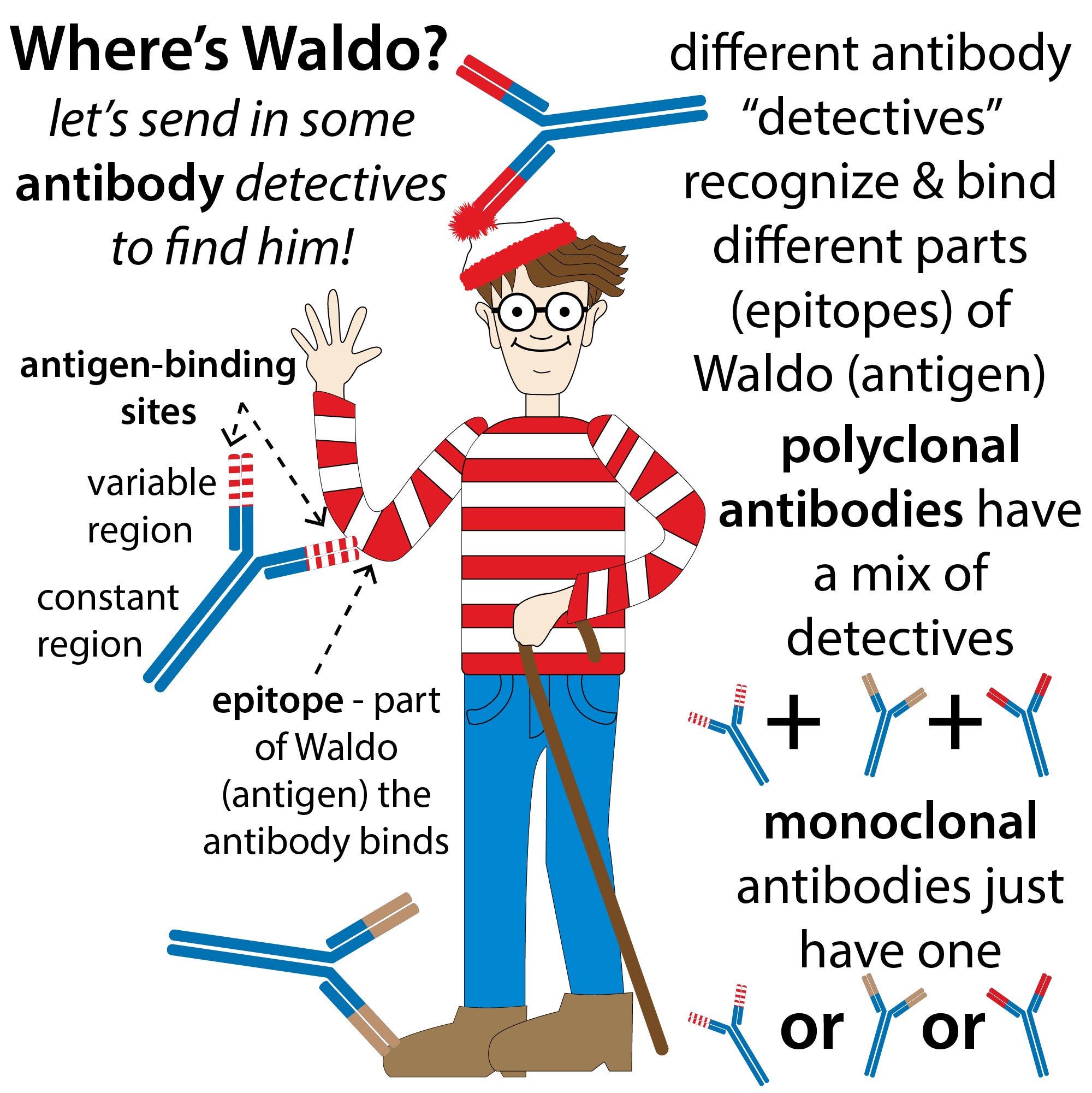
But bottom line is they’re little proteins that bind to “foreign” things so your immune system knows to attack them. Different antibodies bind to (“recognize”) different things (such as different viral proteins) and we call all these different things antigens. More specifically, antibodies bind specific parts of antigens, and we call these specific parts epitopes. So antibodies bind epitopes on antigens. And you can have multiple different antibodies that recognize the same antigen but bind different epitopes. This is one reason why some of our antibodies hold up against changes in the coronavirus spike protein but others don’t.
At the end of the day, all of these different names for binding partners are just words we impose on the biochemistry. The biochemistry of all these interactions follows the same core principles and is based on the same fundamental biophysical forces. So we can characterize how tightly they bind (binding affinity) and things like that using the same terms and equations.
And if you want to know more about that check out this post: http://bit.ly/bindingaffinityavidity ; YouTube: https://youtu.be/401wjHR4Sfs
For now, I think that’s enough terms for today! Speaking of which, I’m working on putting together a page on my blog with mini-posts on tricky terminology. And there’s already a glossary you can check out: https://thebumblingbiochemist.com/glossary/
As always, hope this helps!