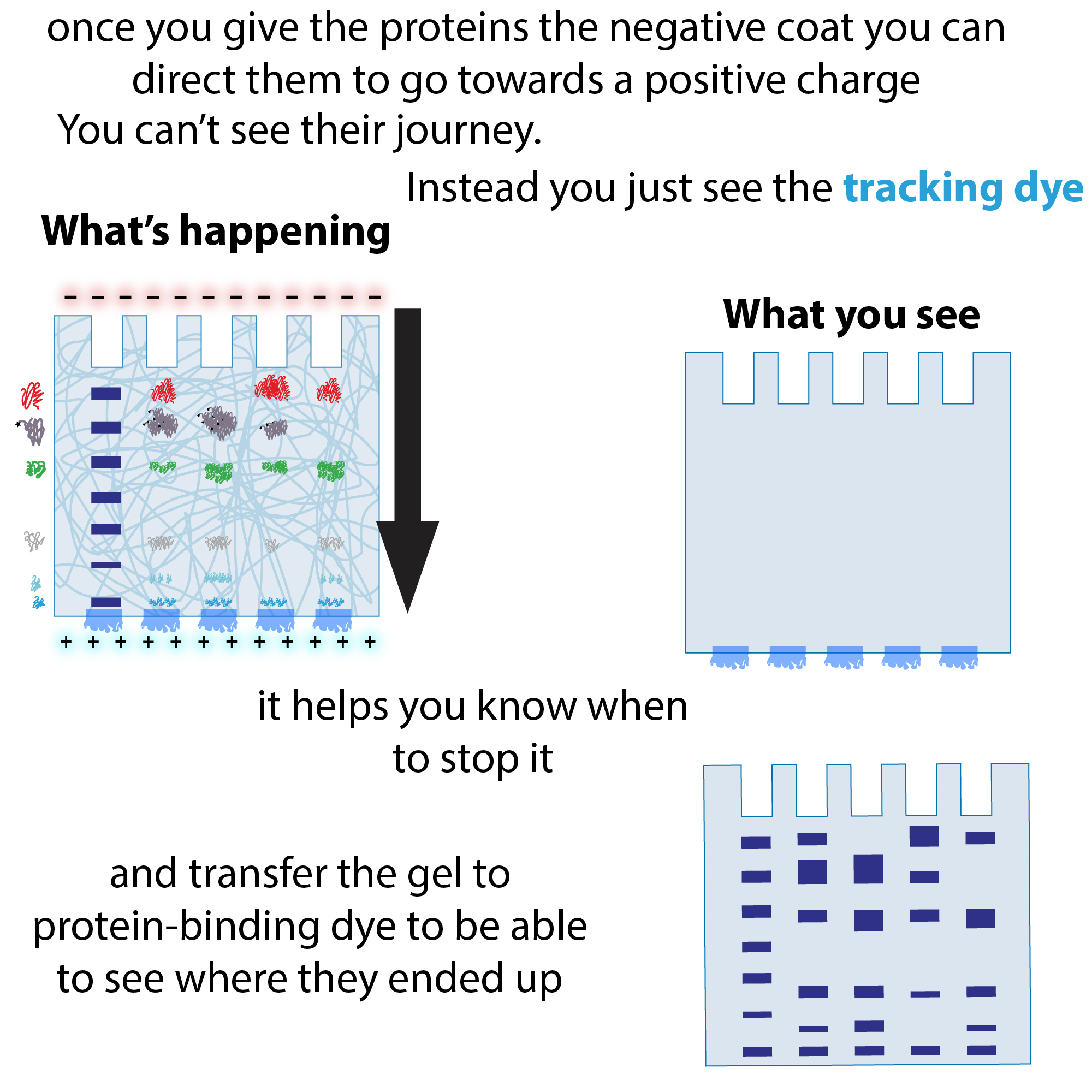
The basic idea of any form of gel electrophoresis is the same (separate molecules by size by using electricity to send them traveling through a gel mesh that will slow down bigger things more), but the details vary depending on what you’re trying to separate (DNA, RNA, proteins), how big those things are, and “why” you want to separate them (to compare sizes, detect interactions, etc.). The key decisions you have to make include:
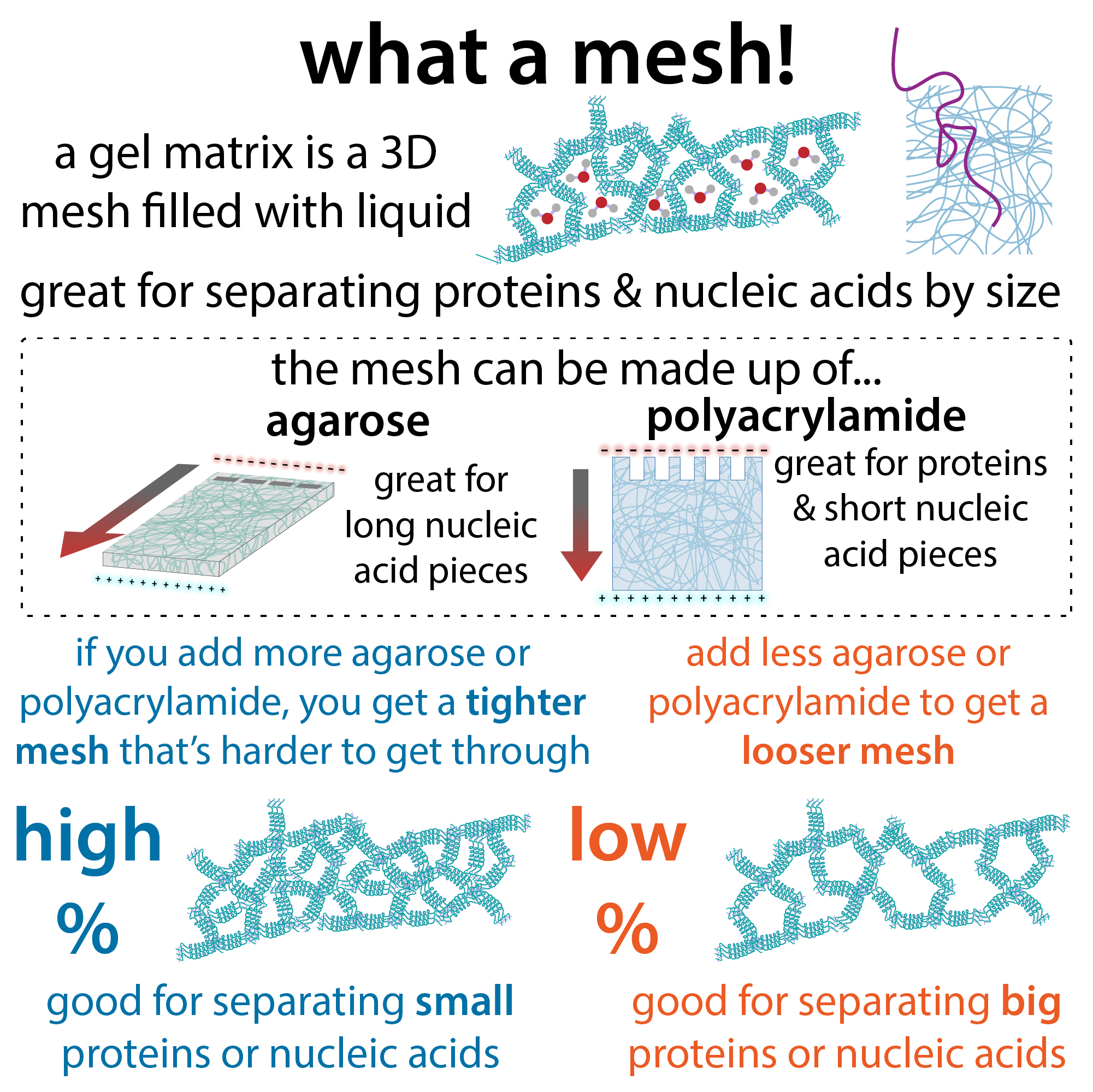
- Gel matrix type: agarose or polyacrylamide?
- Agarose is good for big nucleic acid fragments (typically in kilobases range)
- Polyacrylamide (PAGE) is good for smaller nucleic acid fragments as well as proteins
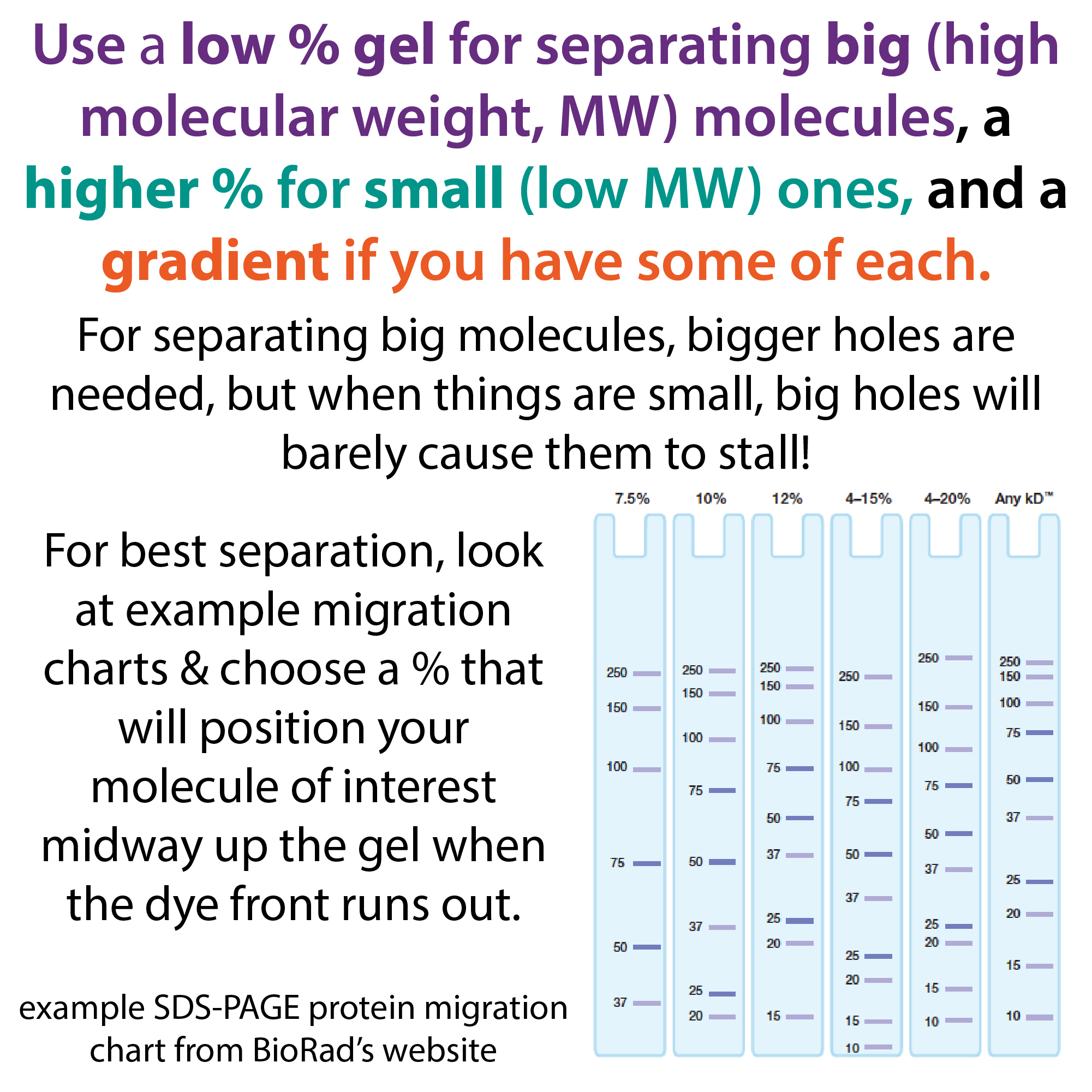
- Gel percentage
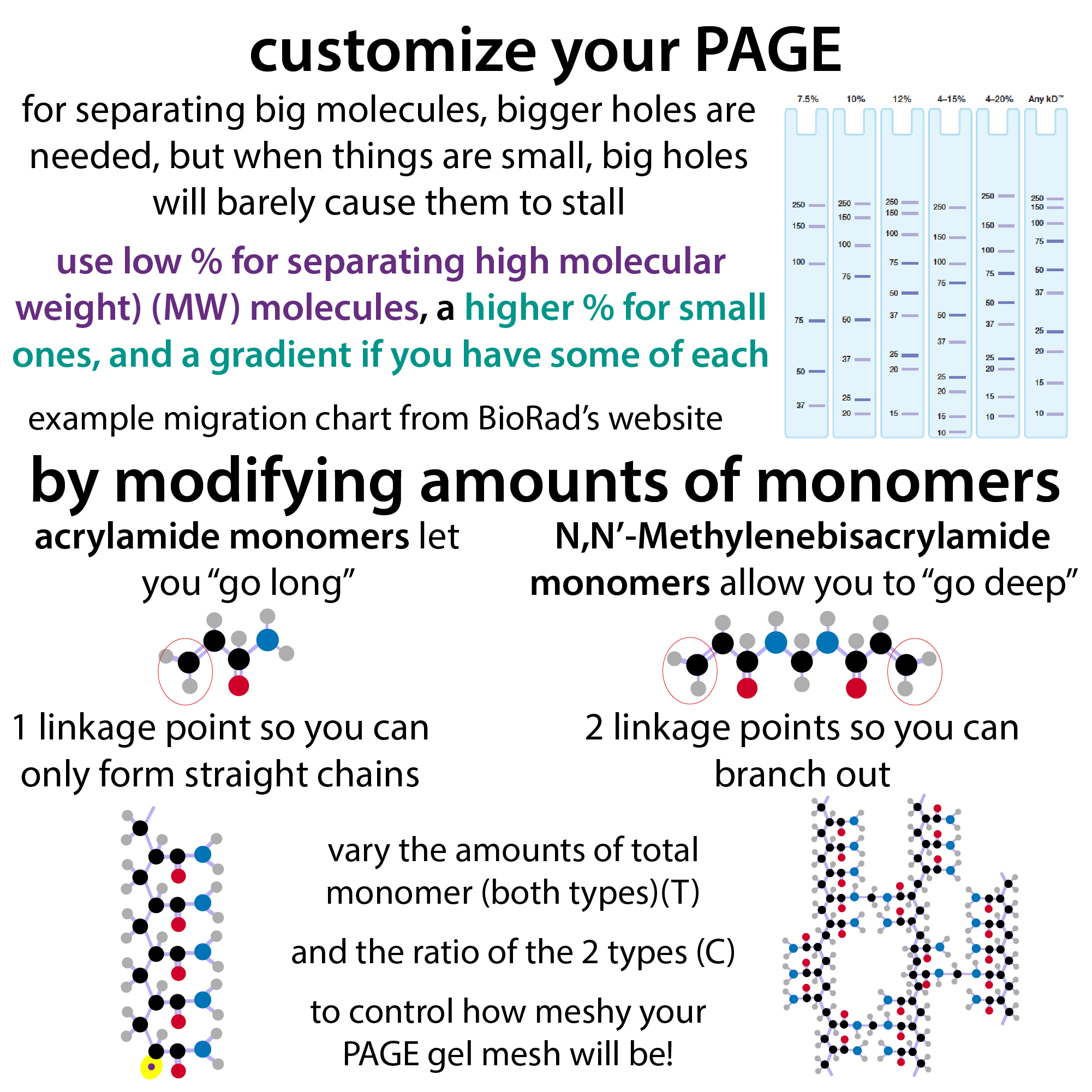
- Use a higher percentage to get finer gel pores and hence better separation (resolution) of smaller molecules
- Use a lower percentage to get a looser gel mesh and hence better resolution of bigger molecules
- Use a gradient gel to separate molecules with a broad range of sizes
- Look to guides like this to help you choose: ThermoFisher Gel Electrophoresis Tables: https://www.thermofisher.com/us/en/home/references/ambion-tech-support/rna-electrophoresis-markers/general-articles/gel-electrophoresis-tables.html
- Buffer system
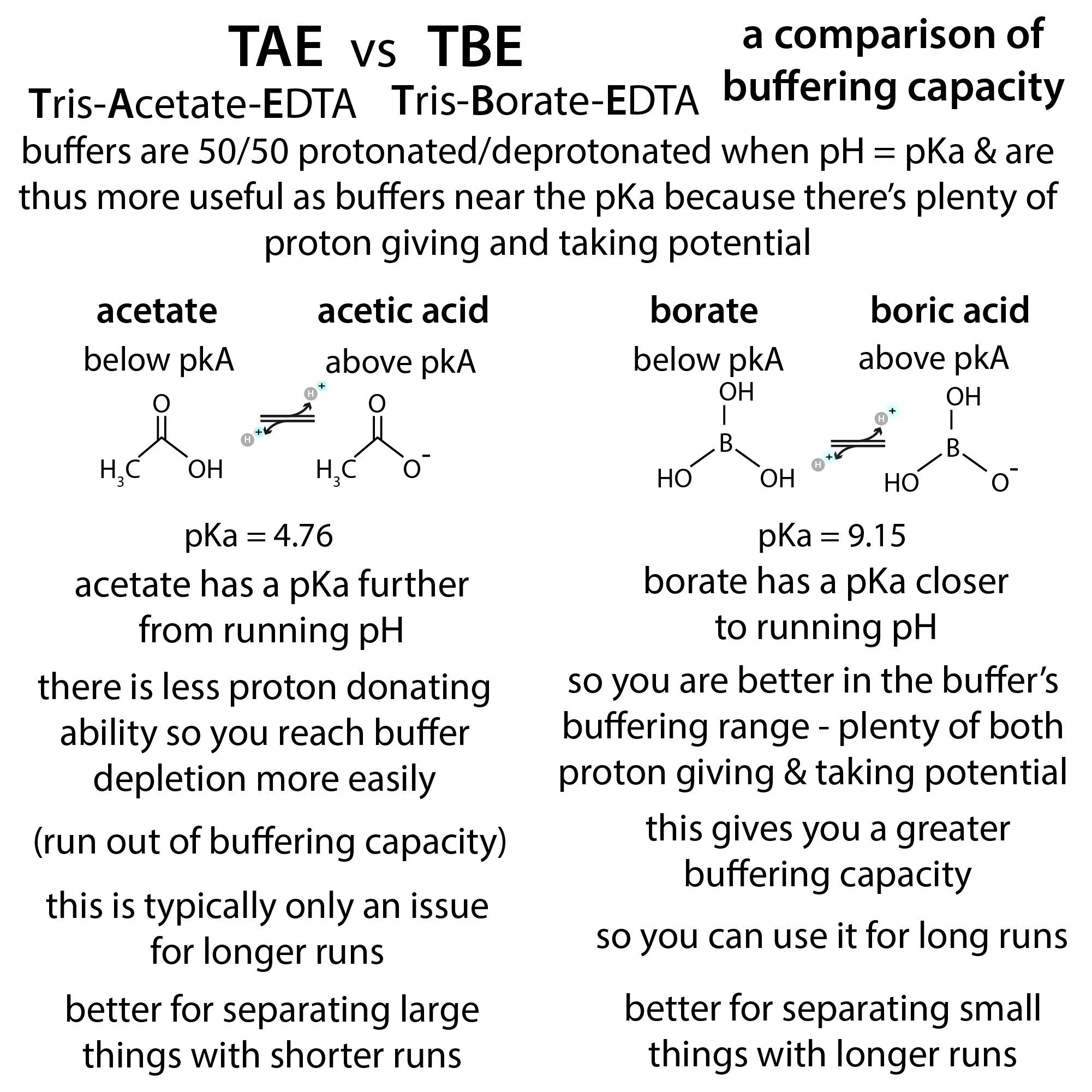
- For nucleic acid gels, you typically use TAE (Tris Acetate EDTA) or TBE (Tris Borate EDTA)
- TAE is better for bigger molecules, shorter run times – we often use it with agarose gels
- TBE is better for smaller molecules and longer run times – we often use it with PAGE gels
- For protein gels, options include:
- Tris-Glycine (the classical Laemmli system: also good for a range of sizes and might give you crisper bands, but its harshish conditions (high pH etc.) can lead to protein modifications (deamination, alkylation, degradation, etc.) and the shelf life is shorter than others
- Bis-Tris: good for a range of sizes, but the bands are often fuzzier than with other types, but the conditions are milder so better maintain protein integrity which might be important for you for things like mass spec
- Tris-Acetate: good for big proteins
- Tris-Tricine (the classical Laemmli system: good for small proteins & peptides (2-20 kDa)
- More here: ThermoFisher Comparison of different gel chemistry systems: https://www.thermofisher.com/us/en/home/life-science/protein-biology/protein-biology-learning-center/protein-biology-resource-library/pierce-protein-methods/overview-electrophoresis.html#comparison
- For nucleic acid gels, you typically use TAE (Tris Acetate EDTA) or TBE (Tris Borate EDTA)
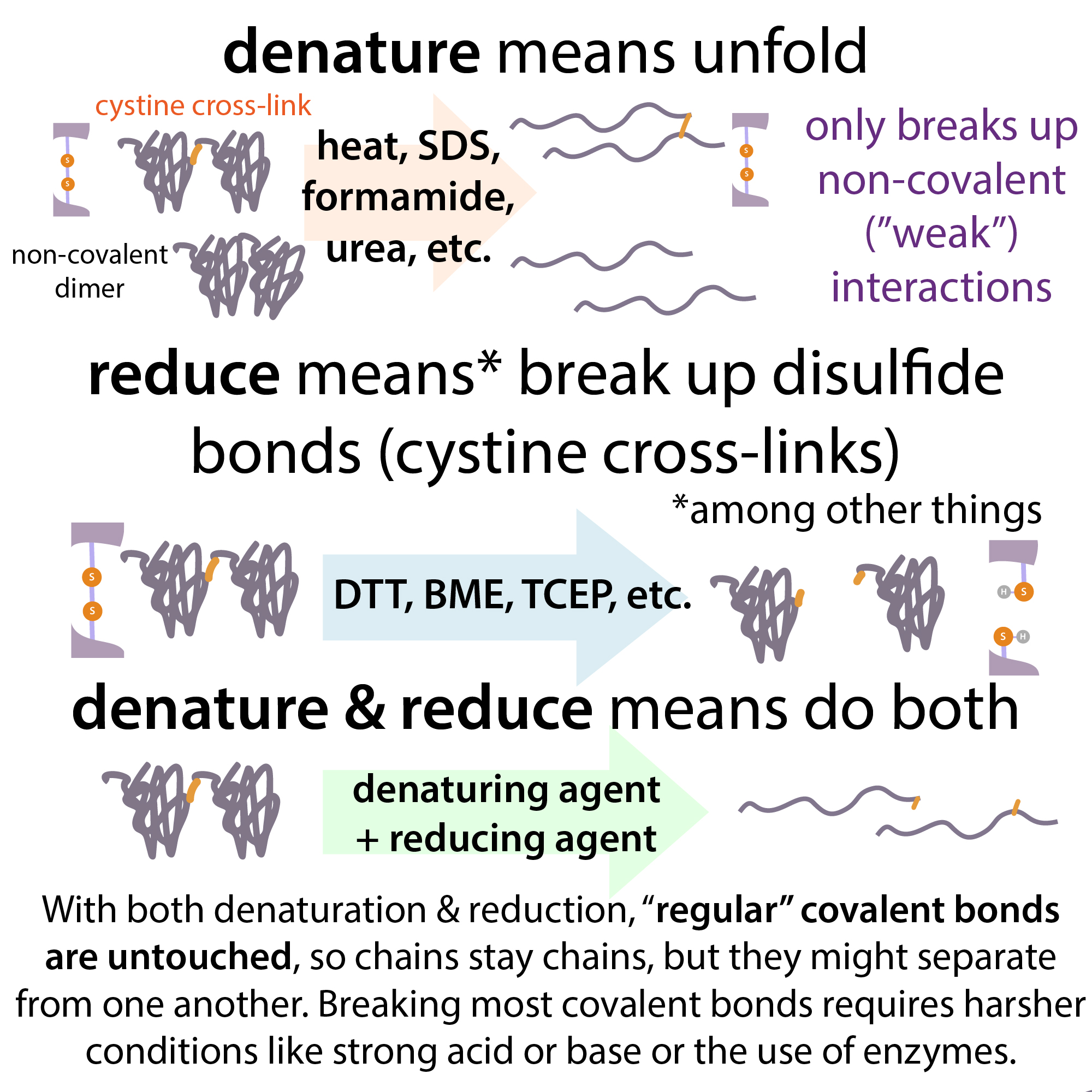
- Denaturing or non-denaturing (native) – do you want to unfold (denature) and separate the molecules so they all separate proportionally to their chain length? Or do you want to leave them be so you can see what’s interacting with what, etc.?
- Denaturing:
- SDS-PAGE for proteins
- Urea-PAGE (with formamide loading buffer) for nucleic acids
- Non-denaturing
- Native PAGE or variations like blue native PAGE for proteins
- TBE PAGE gels (without urea) for nucleic acids (without formamide in loading buffer)
- typical agarose gels
- Denaturing:
- Reducing? For protein gels you have to choose whether or not to include a reducing agent to break up disulfide crosslinks that could be preventing full denaturation and/or keeping protein chains stuck together in dimers, etc. SDS-PAGE is usually done under reducing conditions, which you get by adding a reducing agent like DTT or BME (beta-mercaptoethanol)
I’ve done much more in-depth posts on all these things, which I will link to below. Today I just thought I’d do a quick sort of summary so hope you found it helpful?!
YouTube link to today’s video:
- more about agarose gel electrophoresis: http://bit.ly/agarosegelelectrophoresis & https://bit.ly/agarosegelcompare & https://youtu.be/vbuxf3rcMxg
- more on SDS-PAGE: http://bit.ly/sdspageruler & https://youtu.be/FgXlPAKVSGY
- more on nucleic acid PAGE: http://bit.ly/ureapage & https://youtu.be/MHJqnur6yqk
- more on native protein-PAGE: https://bit.ly/nativepageoverview & https://youtu.be/0w-Y33FmuWs & blue native PAGE: https://youtu.be/ID4rCtcR8TE
- more on denaturing vs. reducing https://bit.ly/denaturing_vs_reducing ; YouTube: https://youtu.be/YoMH7CmYHwA
- more on sample loading buffers: https://bit.ly/sampleloadingbuffers ; YouTube: https://youtu.be/Q52IqEuhXKU
- more on gel percentages: https://youtu.be/ecFPG1oJcF0
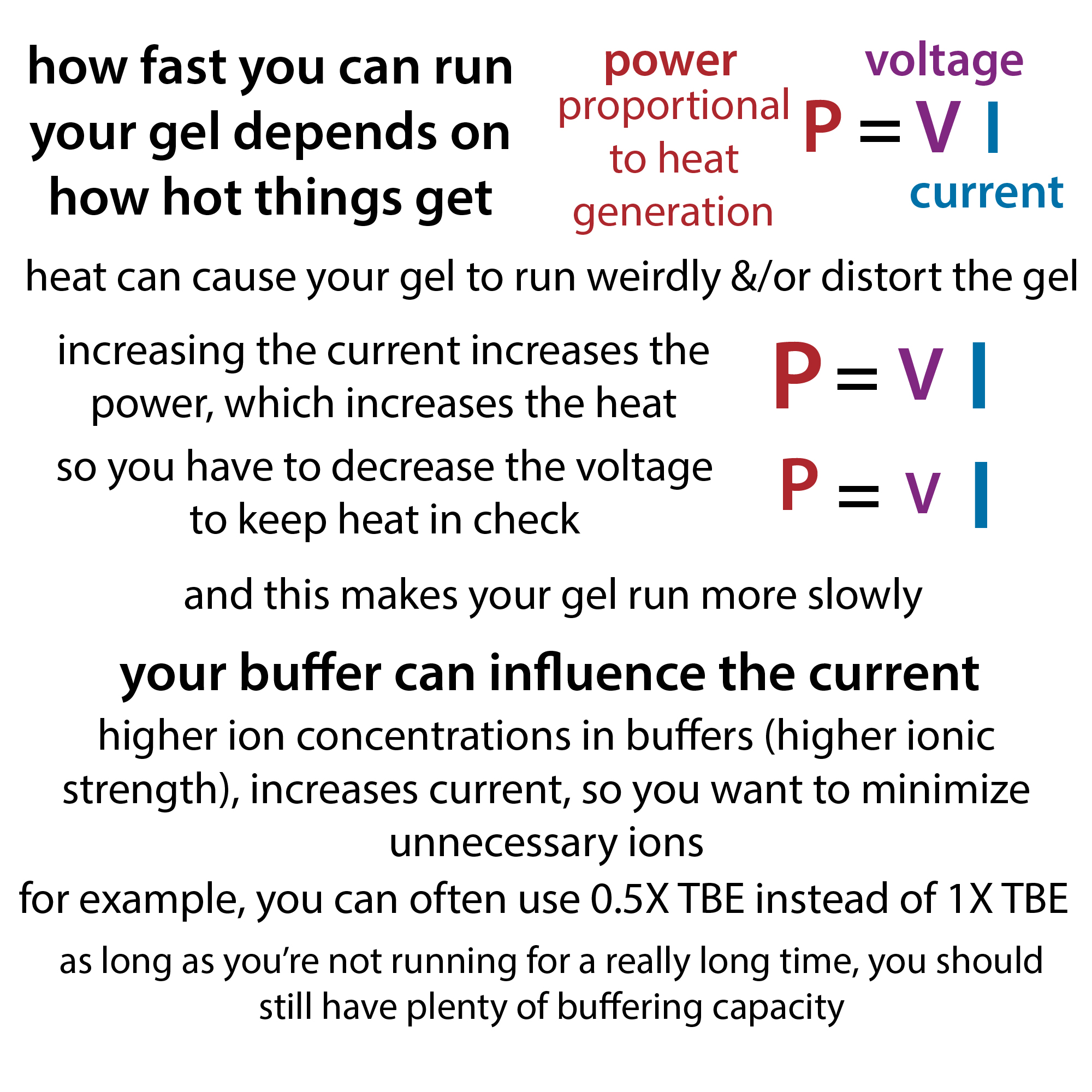
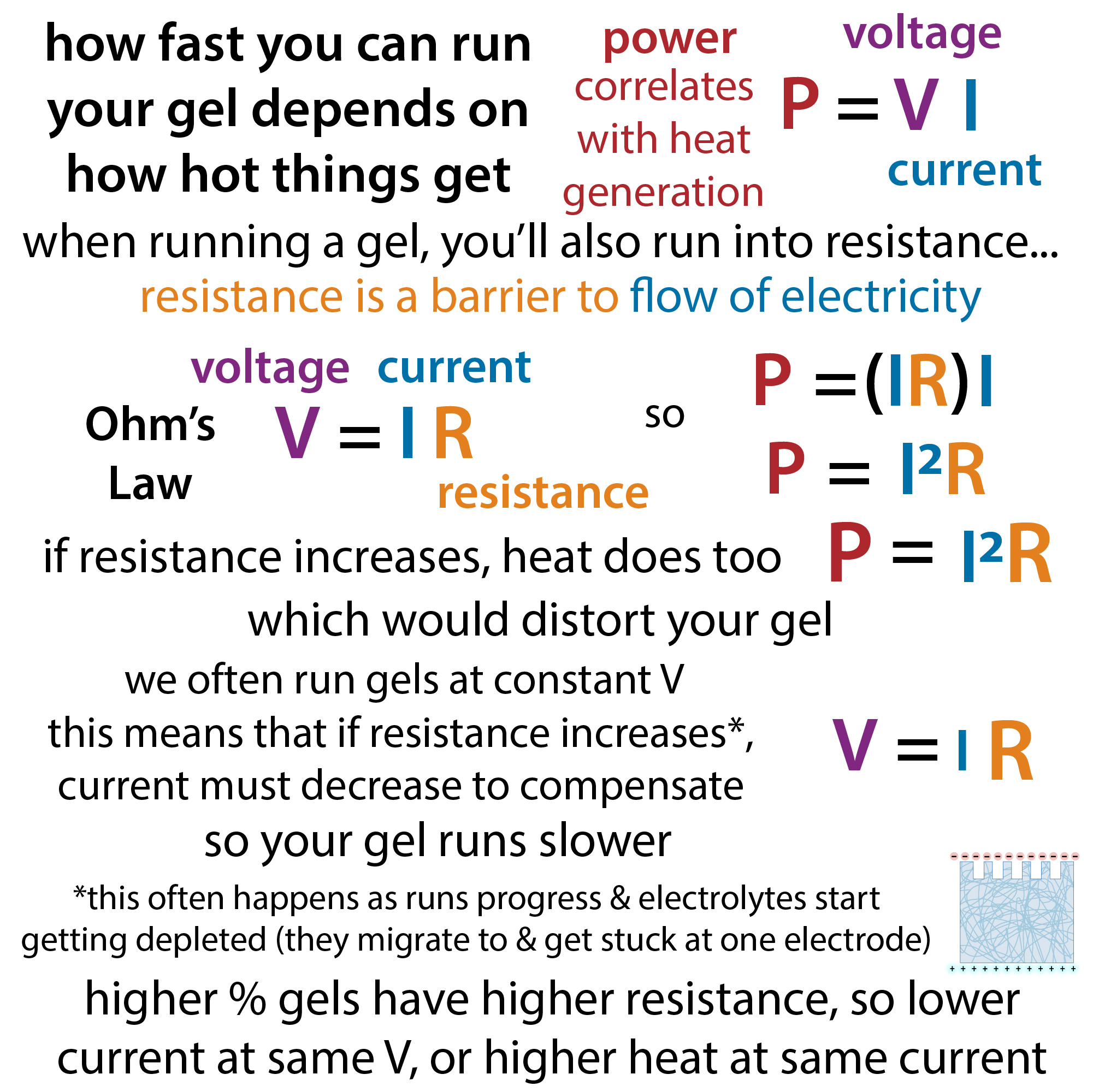
- more on TAE vs TBE, voltage, heat, other buffers etc.: https://bit.ly/gel_smile & https://youtu.be/a8geIlRuwrc
- more gel electrophoresis videos: https://www.youtube.com/playlist?list=PLUWsCDtjESrEzmik3IyuOAYrPkisVbewS
- more about all sorts of things: #365DaysOfScience All (with topics listed) 👉 http://bit.ly/2OllAB0 or search blog: https://thebumblingbiochemist.com