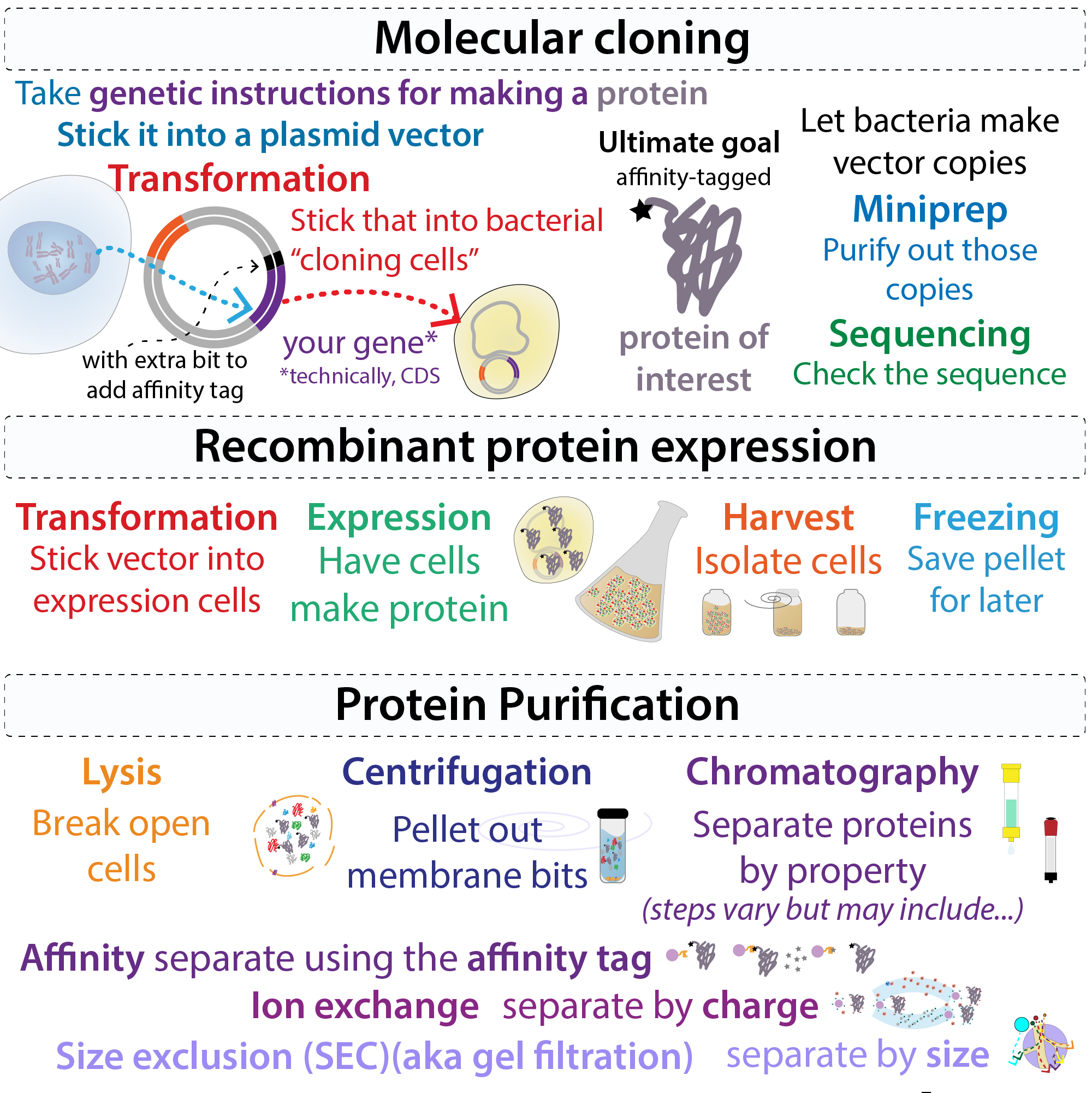
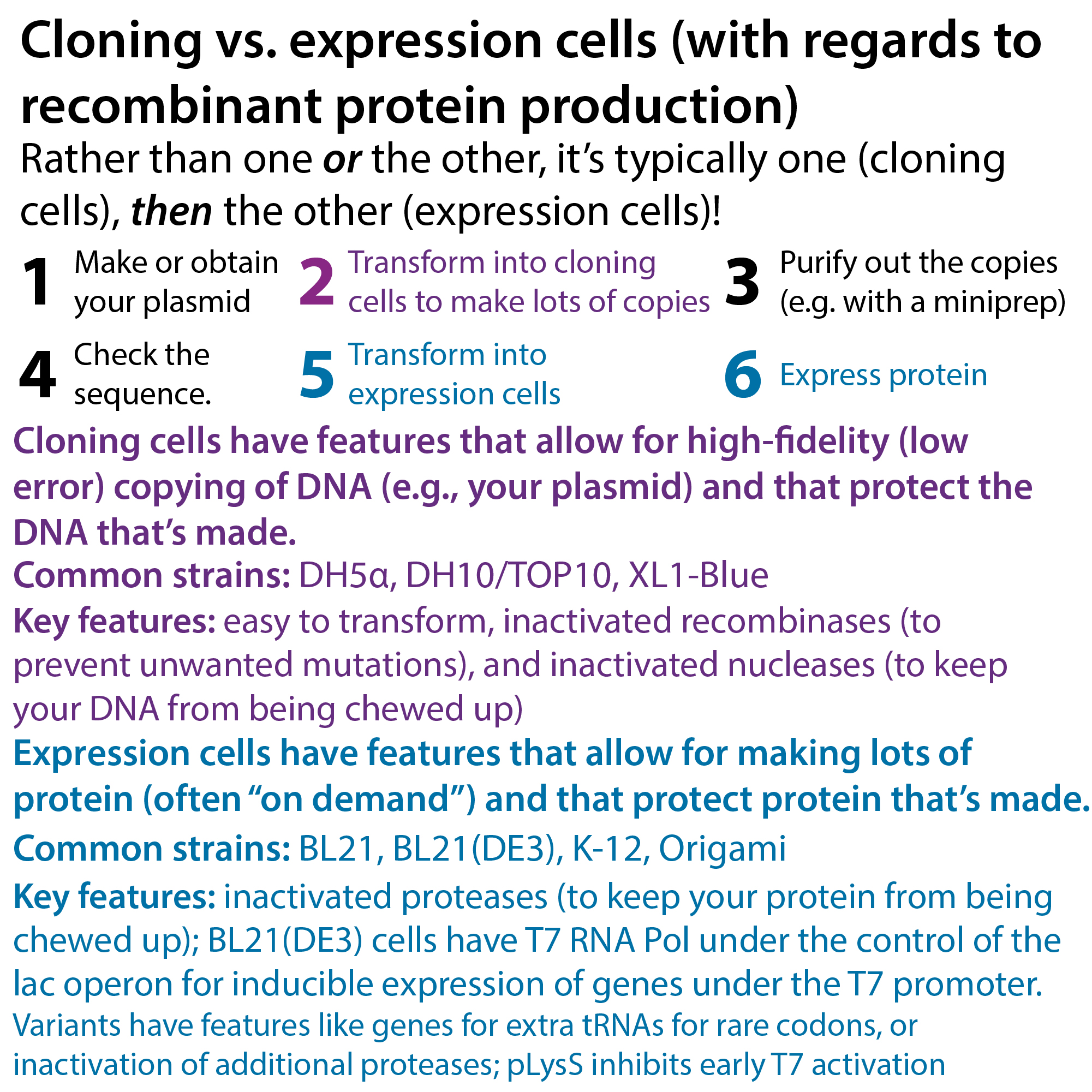
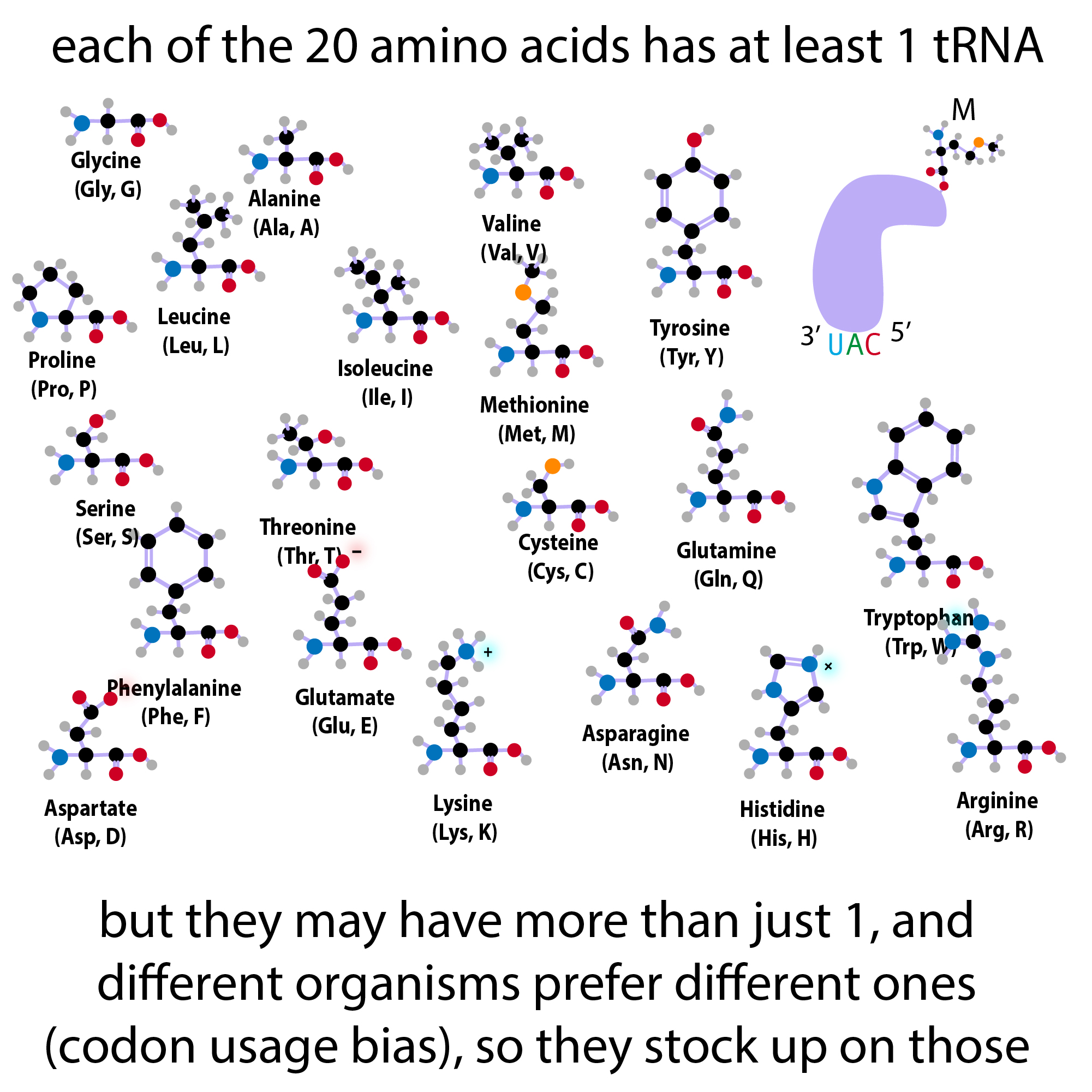
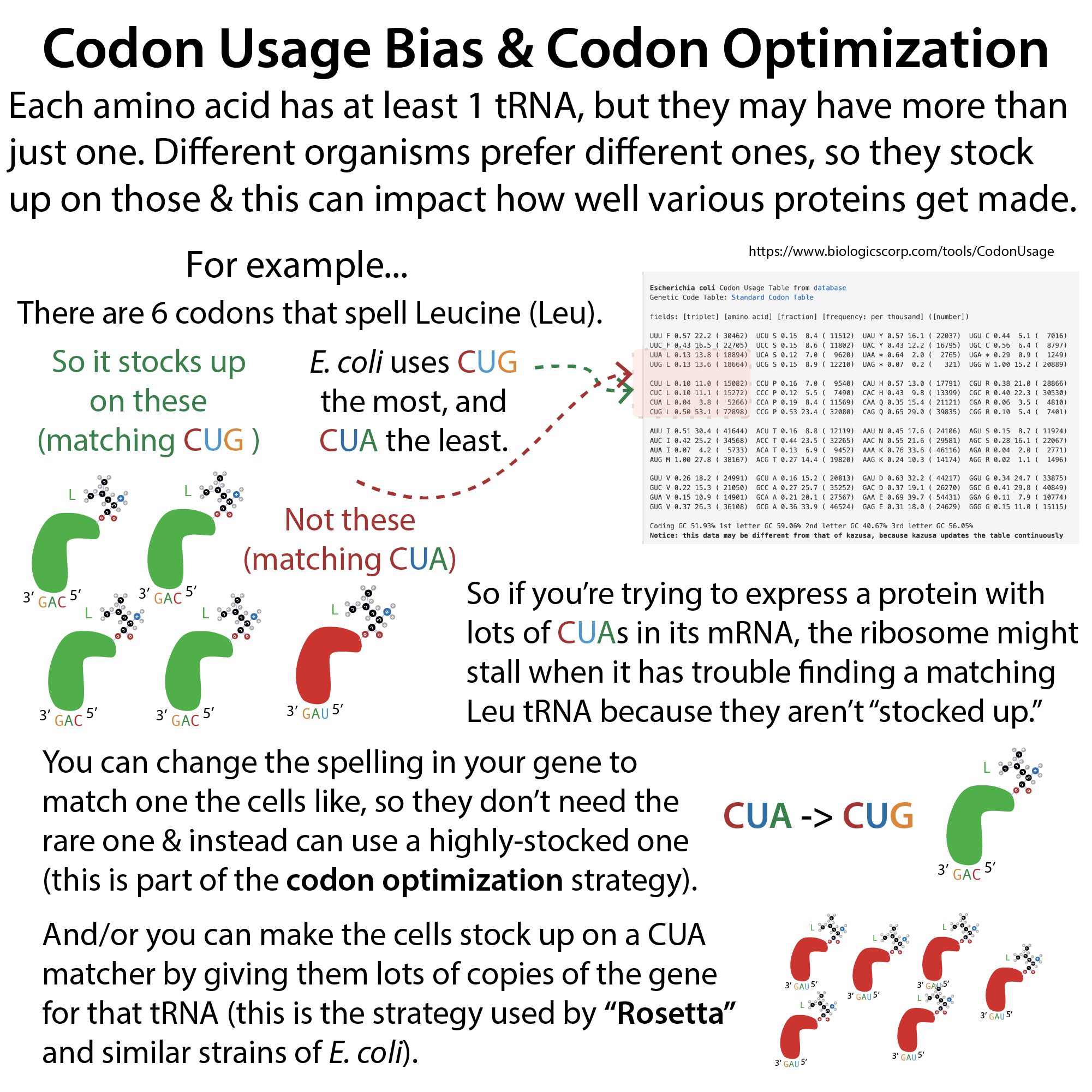
BL21 is the workhorse E. coli strain for recombinant protein expression. Extra things can be added and/or the bacterial genome can be modified to help optimize the cells for making various proteins. For example, you can add in extra copies of the genes for making tRNAs that recognize “rare codons” to prevent the ribosome from stalling when making proteins that have a bunch of rare codons in their mRNA.
technical post, sorry – see past posts (especially http://bit.ly/codonbias ) for more background & links for more details
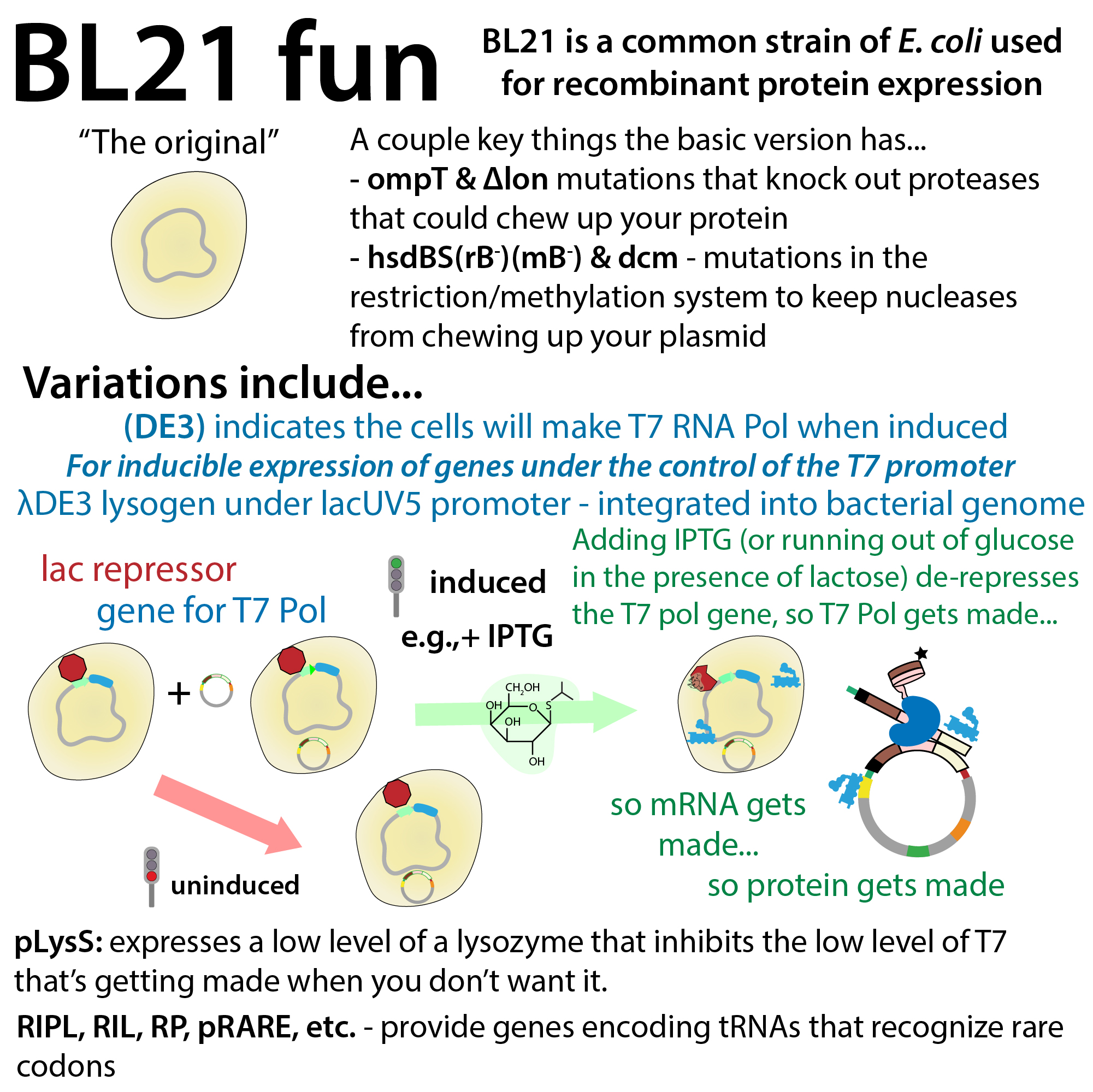
Let’s start with the OG strain… the basic BL21 genotype includes these notations:
- F-: these cells don’t have the F plasmid (Fertility Factor or Sex Factor)
- ompT: this mutation prevents the cells from making “outer membrane protease VII” so it keeps the cells from chewing up the proteins you’re having it make after you lyse the cells (this guy destroys extracellular proteins)
- lon: lon or Δlon means that the cells don’t have another one of those protein chewers (in this case, a serine protease called lon protease, which is normally tasked with degrading foreign or defective proteins)
- hsdBS(rB-)(mB-): disruption in the strain’s native restriction/methylation system – can help prevent the cells from recognizing your plasmid as foreign and cutting it up
- dcm: another methylating enzyme out of commission (this one methylates the second C in CCWGG (where W is A or T)) – this can un-hide some restriction enzyme cut sites (such as for ApaI, BsaI, and Mcs)
- gal: can’t use galactose
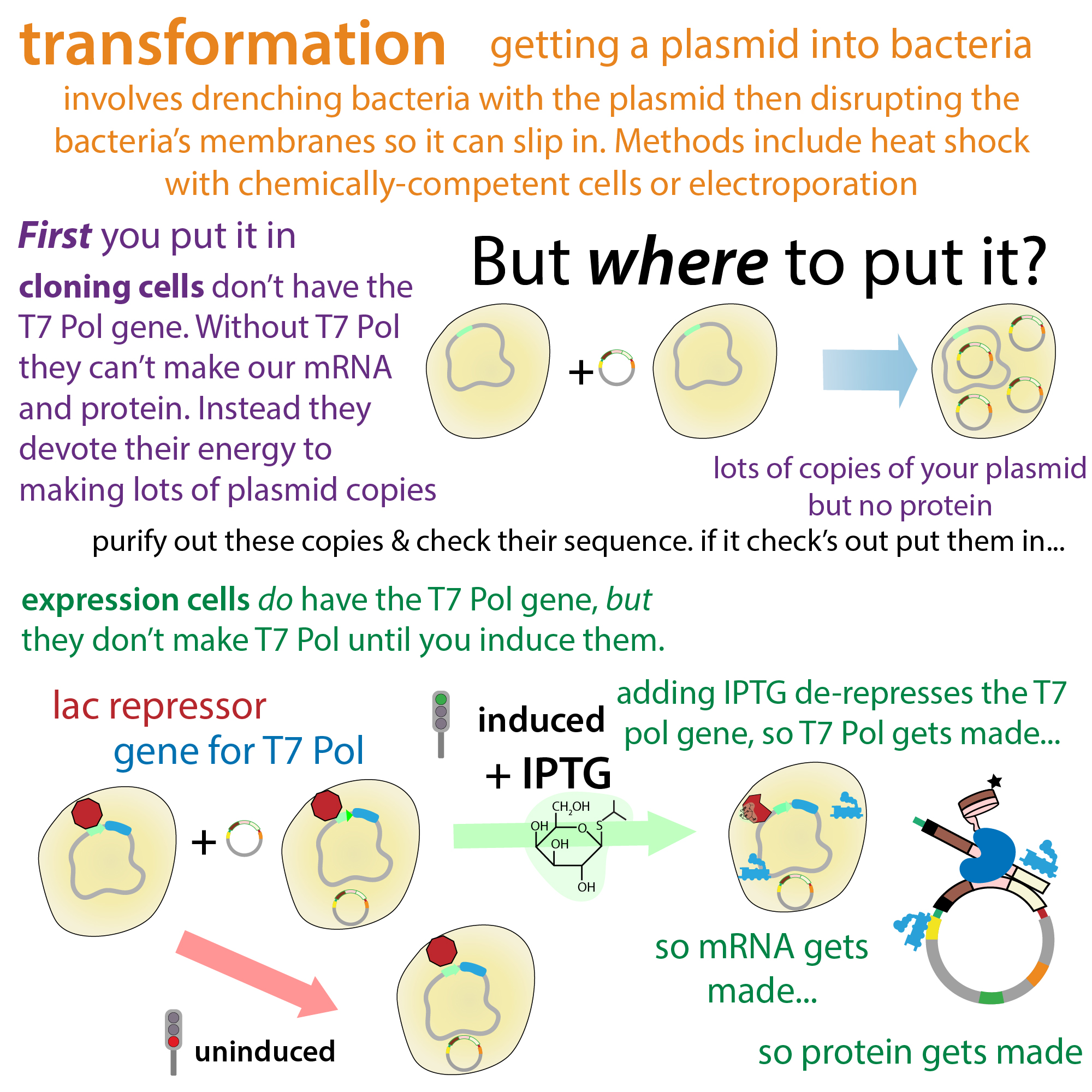
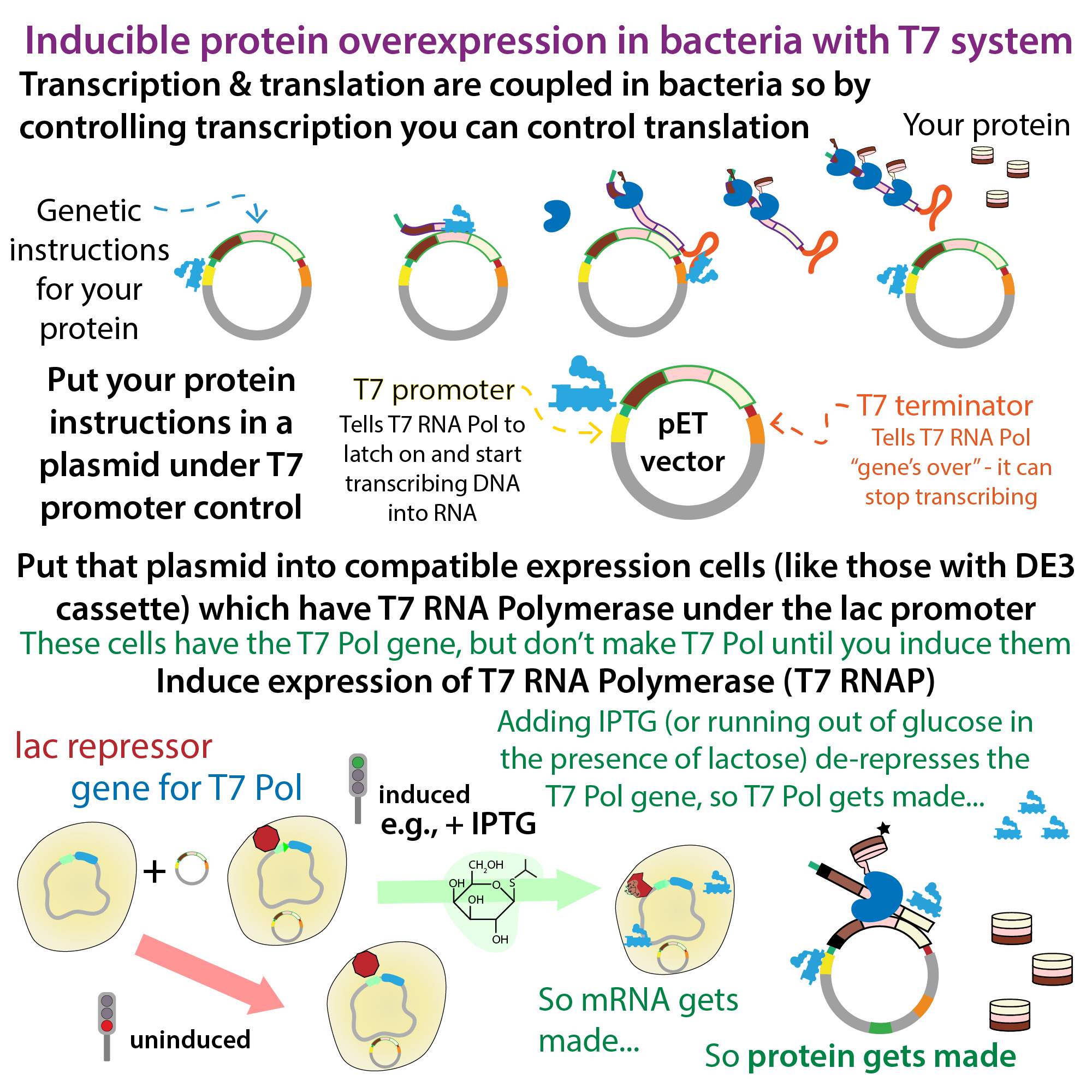
BL21(DE3) is used if you want to do inducible T7 expression
- (DE3): lets you induce expression of T7 RNA Polymerase (e.g. w/IPTG) from lac promoter -> this allows you to induce expression (indirectly) of genes under the T7 promoter
pLys: express a low level of a lysozyme that inhibits the low level of T7 that’s getting made when you don’t want it. This can be useful if your protein is toxic to the cells or something
other common alterations:
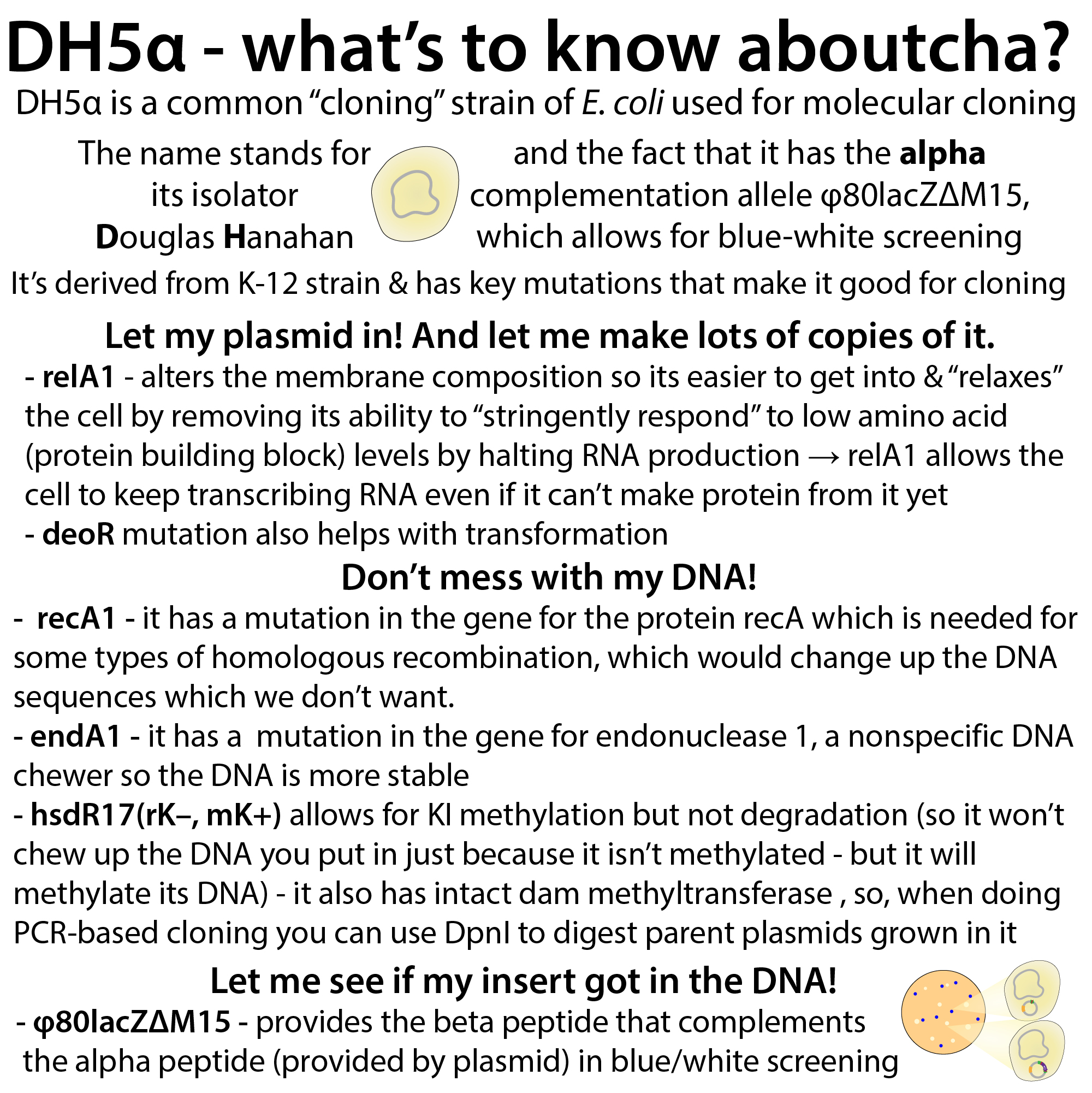
- recA- cells are deficient in an E. coli repair system – this system carries out homologous recombination, which can shuffle things around, which you might not want
- endA mutation makes cells endonuclease I deficient – they don’t make a nonspecific endonuclease (nucleic acid cutter) that’s E. coli normally keep in their periplasmic space – this mutation can keep your plasmid from getting degraded
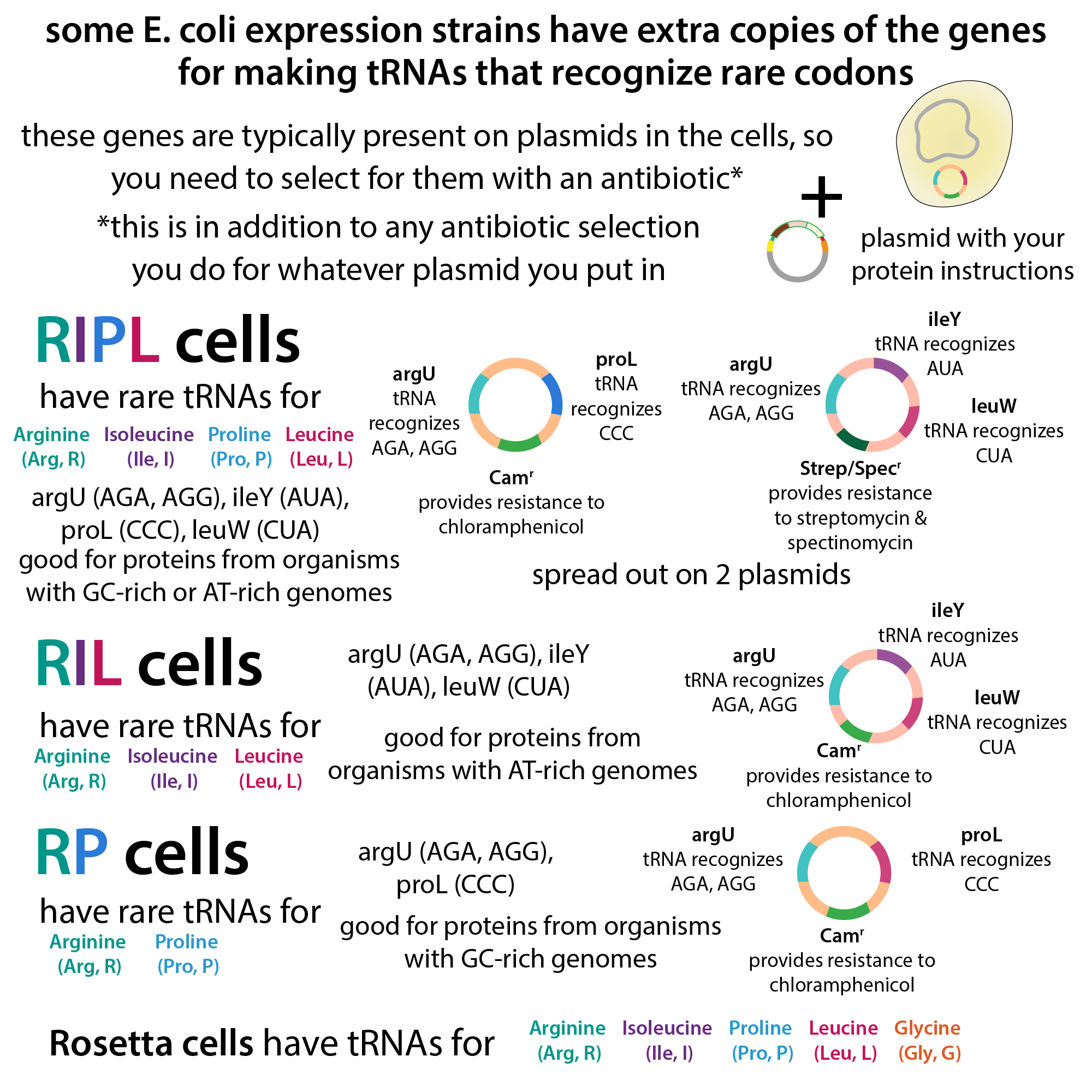
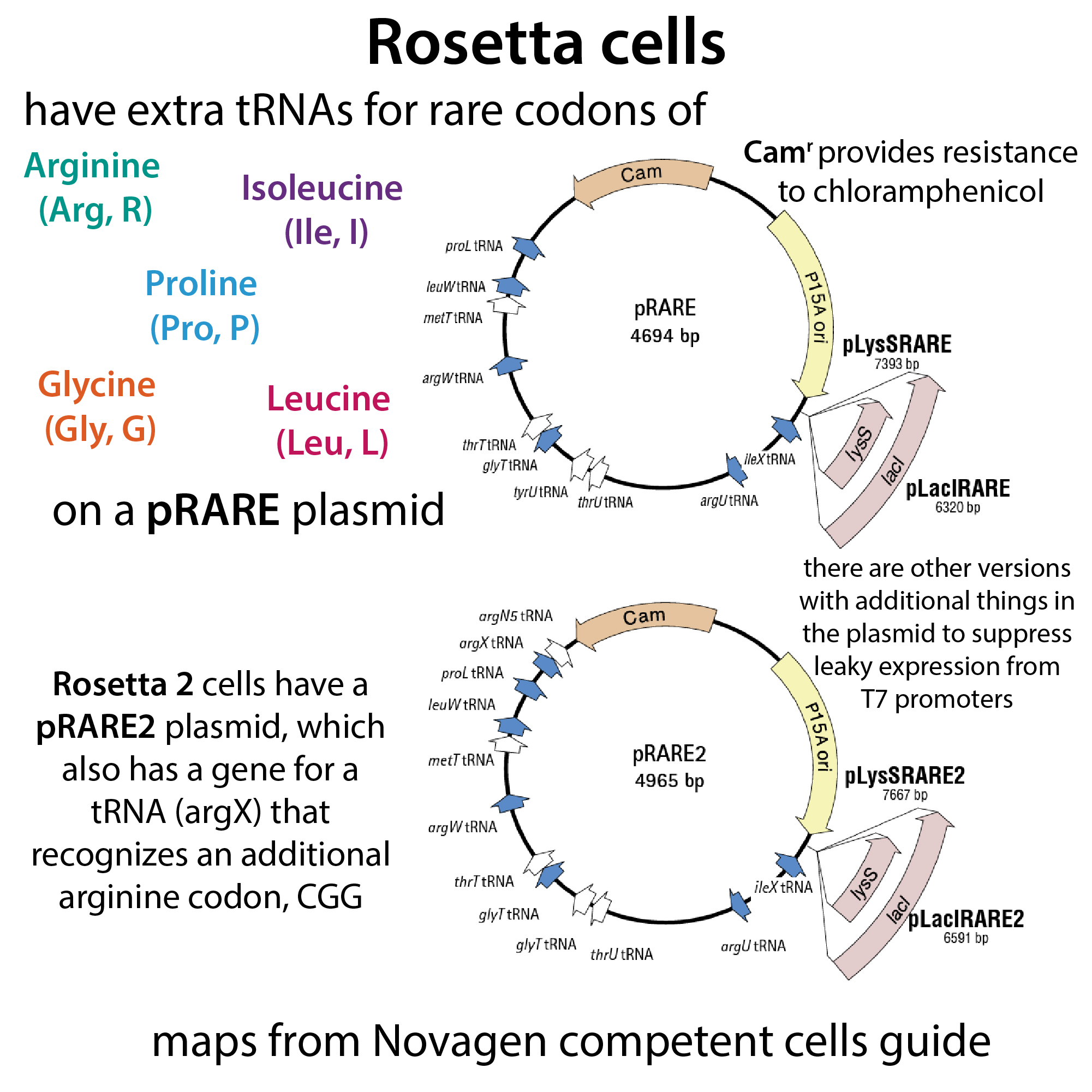
and then there are things you can add in. Including plasmids containing tRNAs for rare codons. This is a much cheaper/easier alternative to optimizing the codon sequence
RIPL: argU (AGA, AGG), ileY (AUA) , proL (CCC), leuW (CUA) – good for getting cells to make proteins from GC-rich or AU-rich genomes
RIL: argU (AGA, AGG), ileY (AUA), leuW (CUA) – good for getting cells to make proteins from AU-rich genomes
RP: argU (AGA, AGG), proL (CCC)- good for getting cells to make proteins from GC-rich genomes
more in Agilent’s BL21 – CodonPlus Competent Cells instruction manual: https://www.agilent.com/cs/library/usermanuals/public/230240.pdf
Rosetta – has pRARE plasmid: argU (AGA, AGG), ileY (AUA), proL (CCC), leuW (CUA), glyT (GGA)
Rosetta2 – has pRARE2 plasmid: argU (AGA, AGG), ileY (AUA), proL (CCC), leuW (CUA), glyT (GGA), argX (CGG)
there are also Origami strains which has mutations in thioredoxin reductase (trxB) and glutathione reductase (gor) genes – this is good if your protein has important disulfide bonds, because those proteins would reduce them (basically break them). These strains are K-12 derived and not BL21
more in Novagen’s competent cells guide: http://josephgroup.ucsd.edu/Protocols/Competent%20cells.pdf & https://t.co/65b8eN3iFY
some have a copy of the lac repressor (lacI) encoded on one of the rare tRNA-encoding plasmids
here’s a good guide to various expression strains: Plasmids 101: E. coli Strains for Protein Expression By Julian Taylor-Parker, 2015 https://blog.addgene.org/plasmids-101-e-coli-strains-for-protein-expression
OpenWetWare wiki on E. coli genotypes: https://openwetware.org/wiki/E._coli_genotypes#BL21
some more really good info: Rosano, G. L., & Ceccarelli, E. A. (2014). Recombinant protein expression in Escherichia coli: advances and challenges. Frontiers in microbiology, 5, 172. https://doi.org/10.3389/fmicb.2014.00172
A potential word of caution about using some of the rare codon plasmids: Søgaard, K. M., & Nørholm, M. H. (2016). Side effects of extra tRNA supplied in a typical bacterial protein production scenario. Protein science : a publication of the Protein Society, 25(11), 2102–2108. https://doi.org/10.1002/pro.3011