If you like simple answers, biochemistry probably isn’t for you – there’s not even a simple answer to what biochemistry is! But, if you like getting creative to solve molecular mysteries, this field is for you! So here’s a bit about what biochemists do! (Spoiler alert: lots of things!)
link to video in case embed isn’t working: https://youtu.be/FA-aaI5u_vg
Biochemistry encompasses a lot of different experimental areas & techniques including, but not limited to…
- molecular biology: cloning, gene expression analysis, etc.
- protein biochemistry: recombinant expression, purification, characterization
- biophysics: binding assays (experiments where you measure stuff), etc. (with SPR, ITC, etc.) to measure how molecules behave & interact
- enzymology: activity assays, enzyme kinetics, thermodynamics
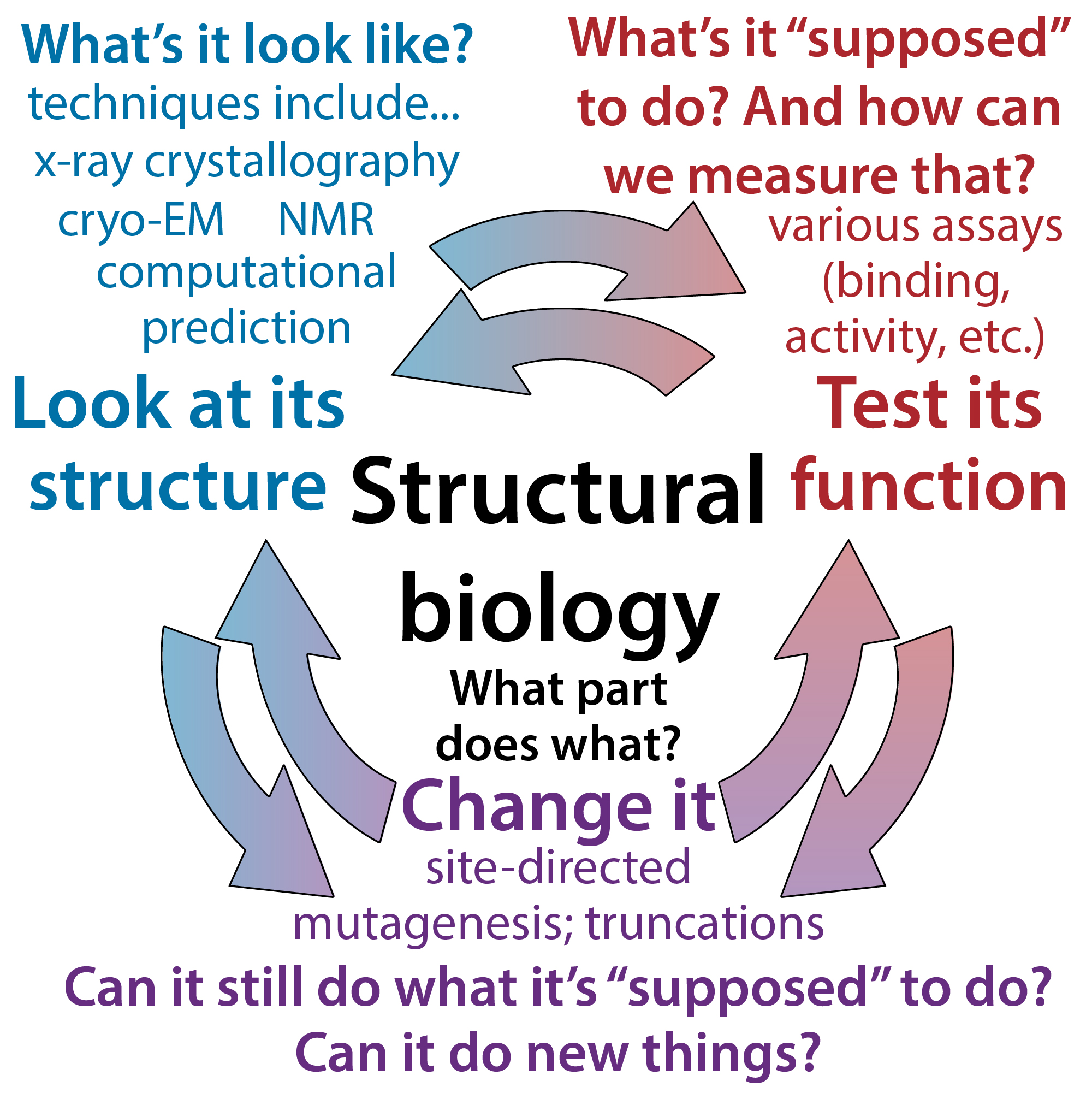
- structural biology: x-ray crystallography, cryo-EM, NMR, etc. to “look” at molecules
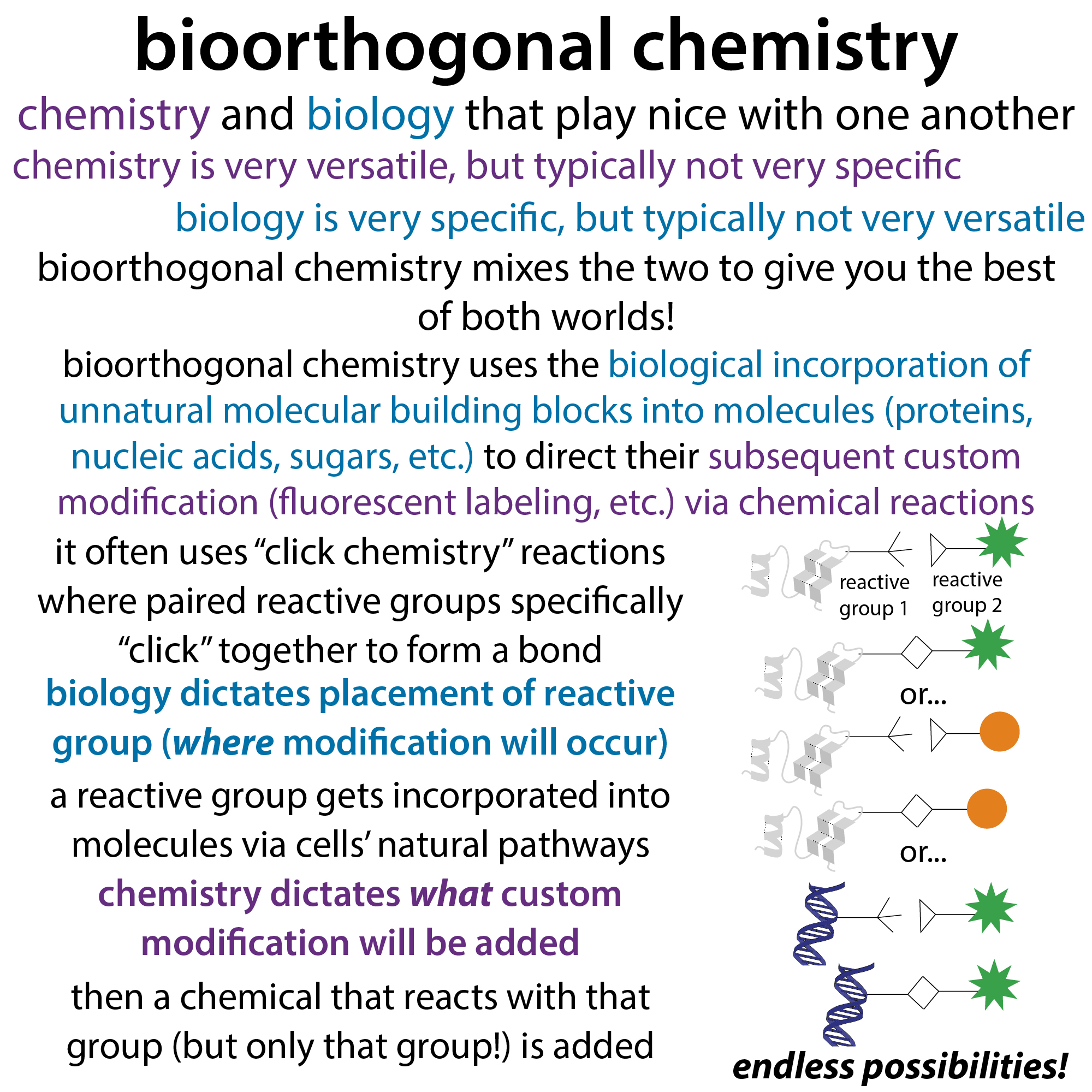
- chemical biology: using chemistry to better understand and/or manipulate biology; studying how chemicals winteract with biological molecules
- proteomics: mass spectrometry to measure what proteins are present and/or interacting, modifications, etc.
- cell biology: tissue culture, microscopy, immunochemistry, etc.
Because it’s so broad, no one person or even lab can do it all – so biochemistry is strengthened by collaboration!
We’re united by a desire to figure out why biological molecules are so awesome and biological systems so powerful!
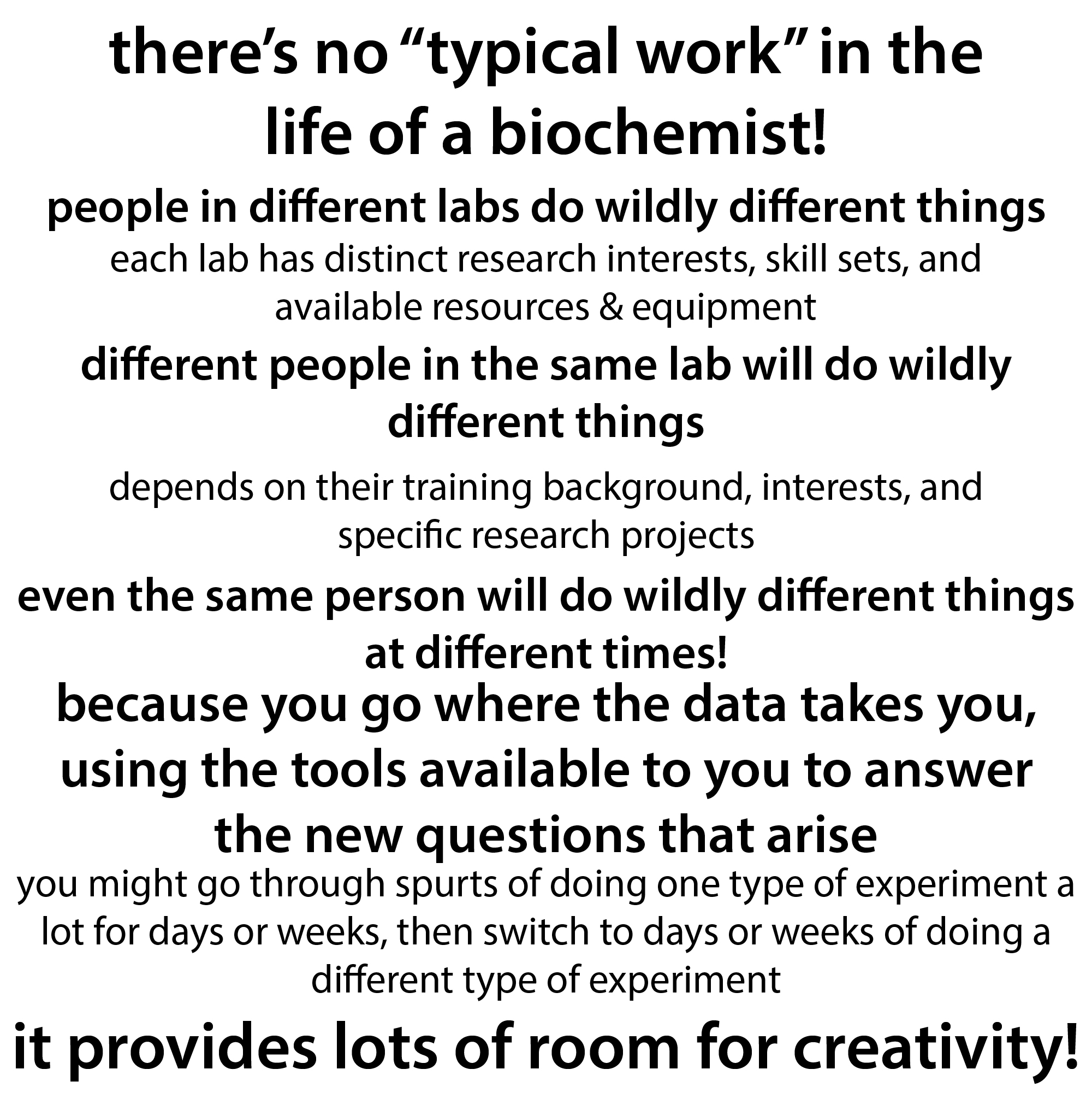
There’s no “typical work” in the life of a biochemist! People in different labs do wildly different things each lab has distinct research interests, skill sets, and available resources & equipment. Different people in the same lab will do wildly different things, depending on their training background, interests, and specific research projects.
Even the same person will do wildly different things at different times! Because you go where the data takes you, using the tools available to you to answer the new questions that arise. You might go through spurts of doing one type of experiment a lot for days or weeks, then switch to days or weeks of doing a different type of experiment
Far from formulaic, biochemistry provides lots and lots of room for creativity!
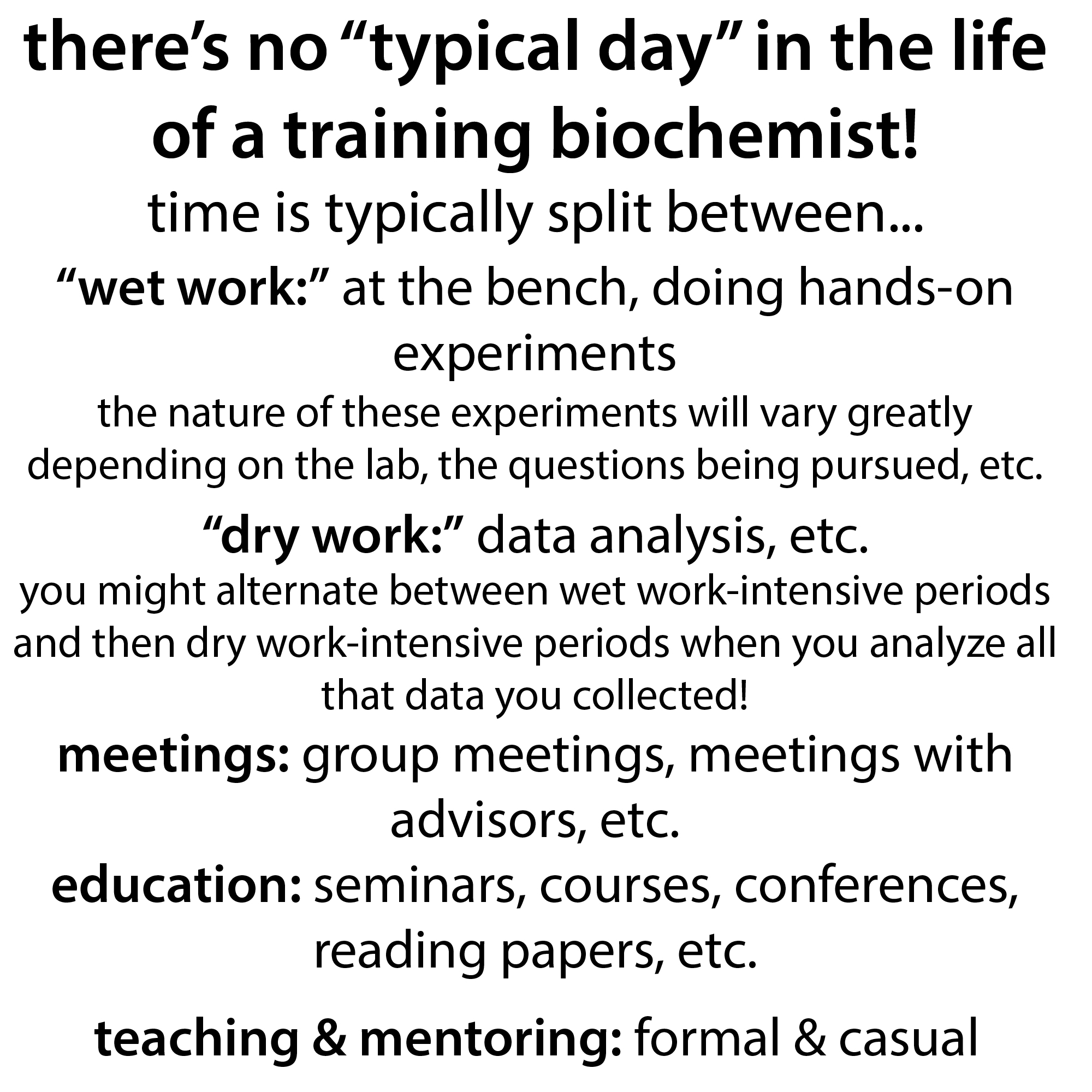
There’s also no “typical day” in the life of a training biochemist! Your time is typically split between…
- “wet work:” at the bench, doing hands-on experiments
- the nature of these experiments will vary greatly depending on the lab, the questions being pursued, etc.
- “dry work:” data analysis, etc.
- you might alternate between wet work-intensive periods and then dry work-intensive periods when you analyze all that data you collected!
- meetings: group meetings, meetings with advisors, etc.
- education: seminars, courses, conferences, reading papers, etc.
- teaching & mentoring: both formal (being assigned to mentor rotation students, TA a course, etc.) & casual (helping teach your labmates a technique or help them think through a problem they’re having with an experiment)
Basically, biochemistry is lots of things – but ultimately it’s just… AWESOME!