apo: a poor molecule going solo!
The “apo” form of a molecule (typically a protein) is that molecule by itself, not bound
to anything else.
if it binds something else, things get complex
A “complex” is 2 or more molecules bound together.
holo: a molecule made whole!
The “holo” form of something is the whole
functional thing (e.g. an apoenzyme bound to its cofactor (helper) is a holoenzyme)
video: https://youtu.be/aVIyW4aMrH0
More formally, the prefix apo- means “without or lacking” and holo- means whole.
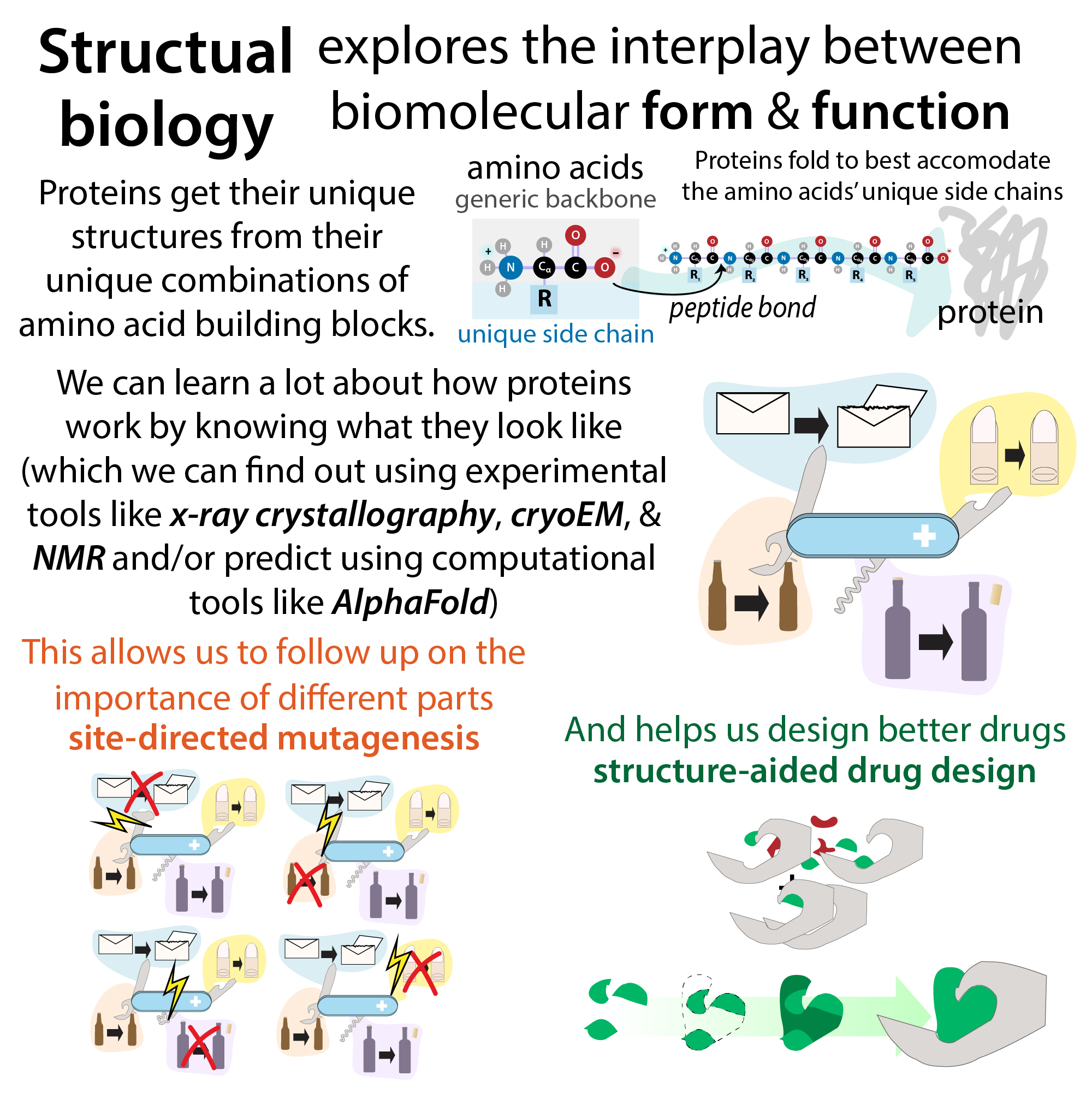
The most common place “apo” comes up (at least in my experience) is in structural biology, which is where people use techniques like x-ray crystallography, cryo-EM, and NMR to figure out the 3D shapes of molecules at the atomic level. more posts on structural biology here: https://bit.ly/structural_biology
Often people want to look at how molecules interact, in which case they want to “solve the structure” of a complex.
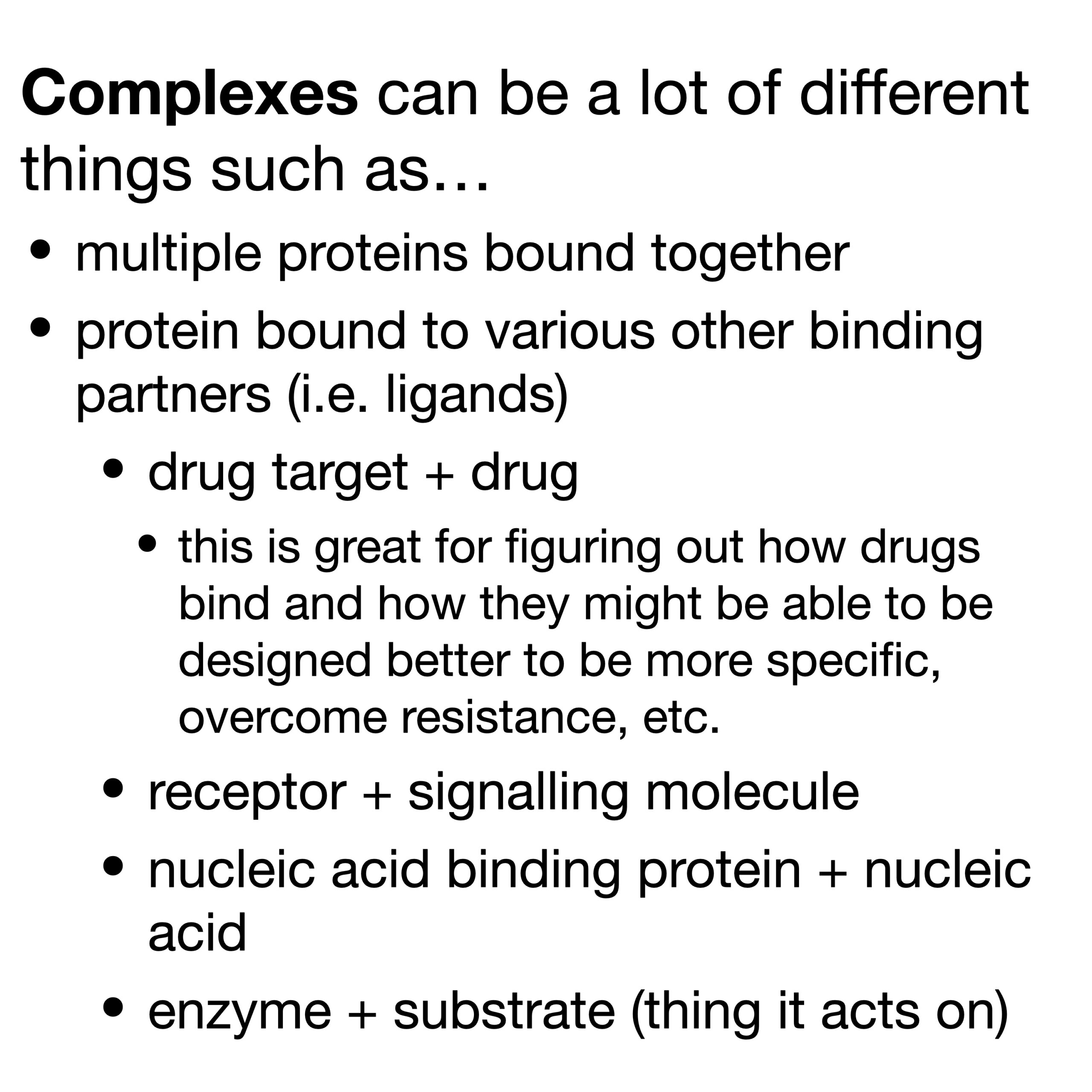
Complexes can be a lot of different things such as…
- multiple proteins bound together
- protein bound to various other binding partners (i.e. ligands)
more about ligands: blog form: https://bit.ly/bindingpartners YouTube: https://youtu.be/sVcfAGH65y4
There are lots of potential complexes associated with a single molecule and each can tell you different things. Scientists have multiple strategies they can use to get complexes to form, depending on the type of molecules involved and the techniques used.
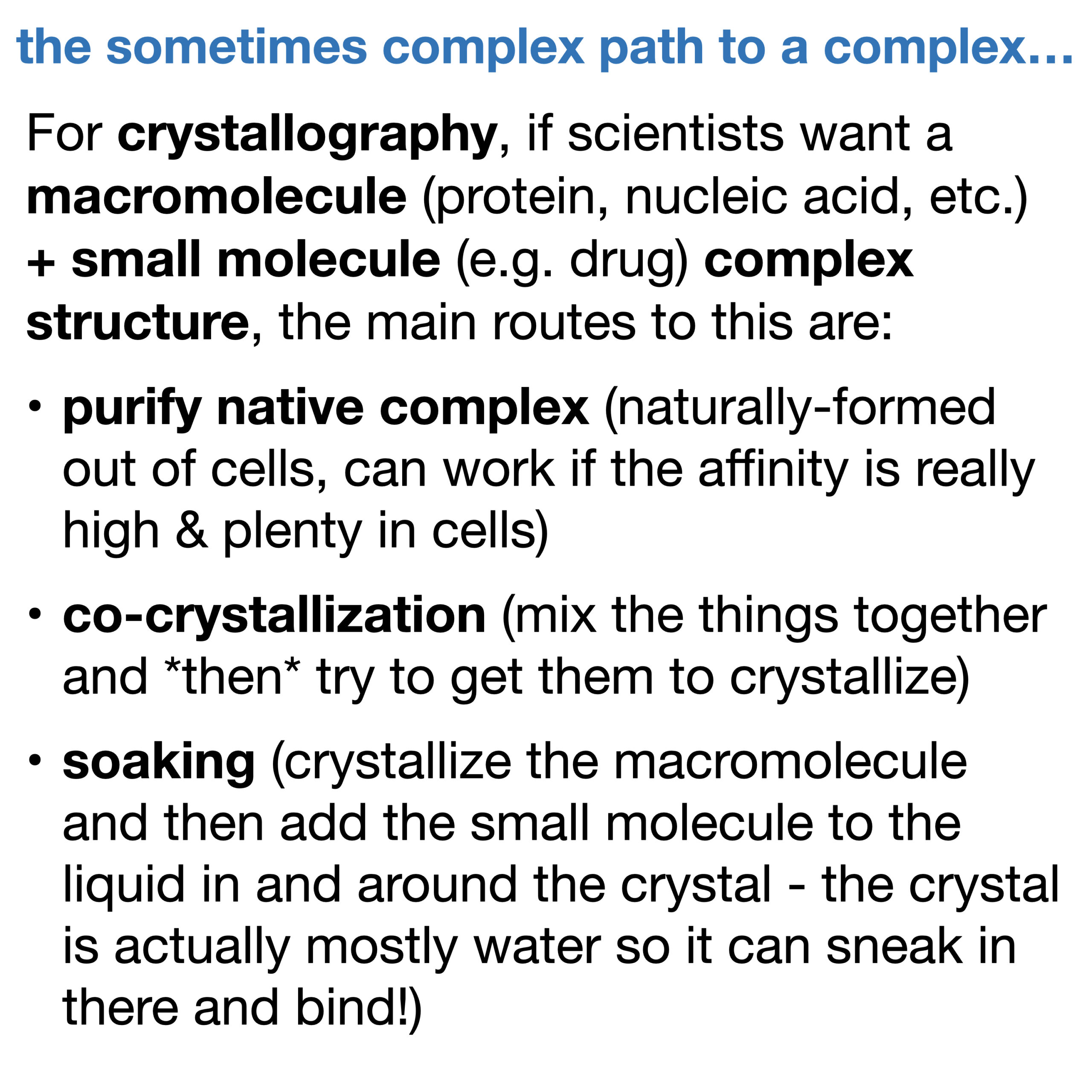
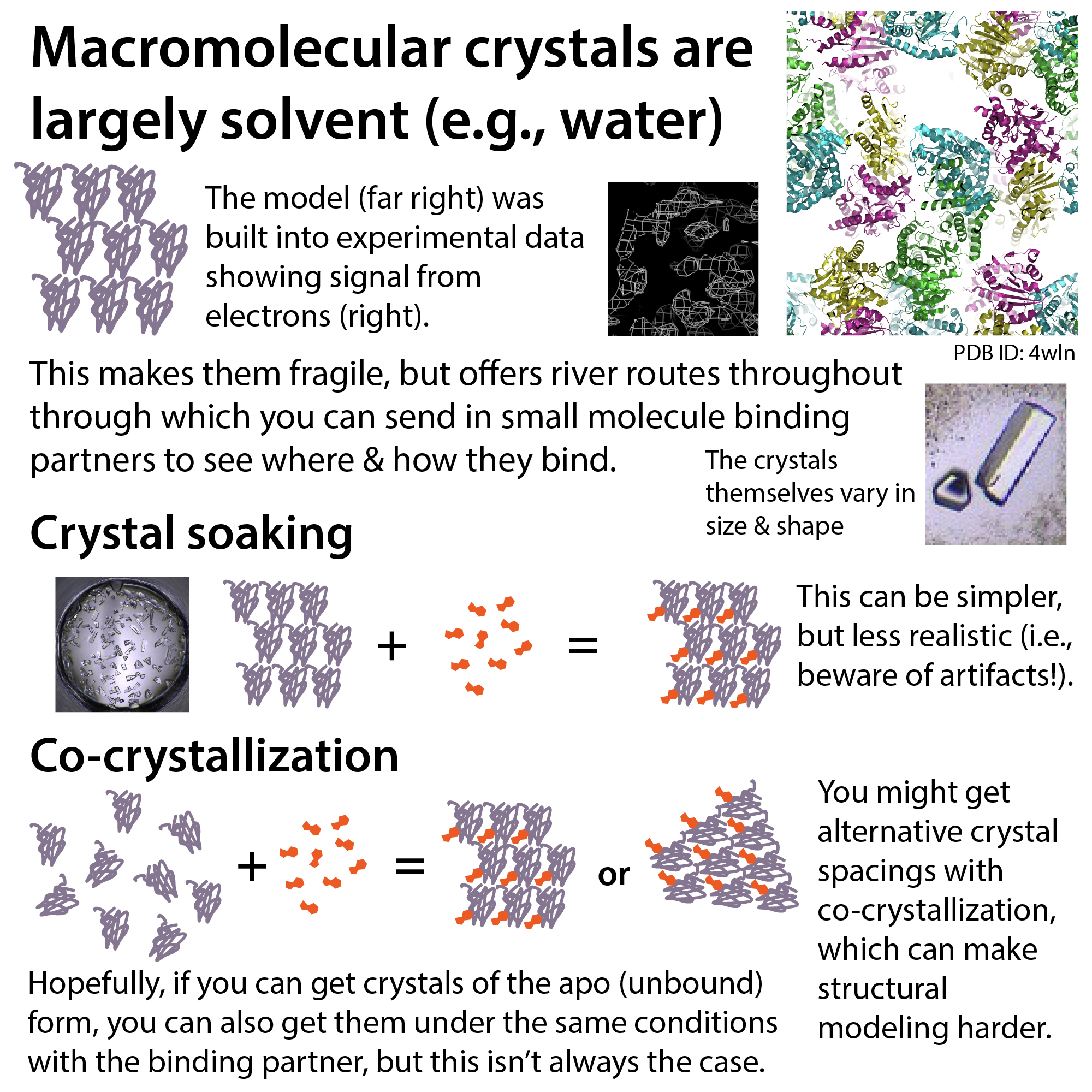
For crystallography, if scientists want a macromolecule (protein, nucleic acid, etc.) + small molecule (e.g. drug) complex structure the main routes to this are:
- purify native complex (naturally-formed out of cells, can work if the affinity is really high & plenty in cells)
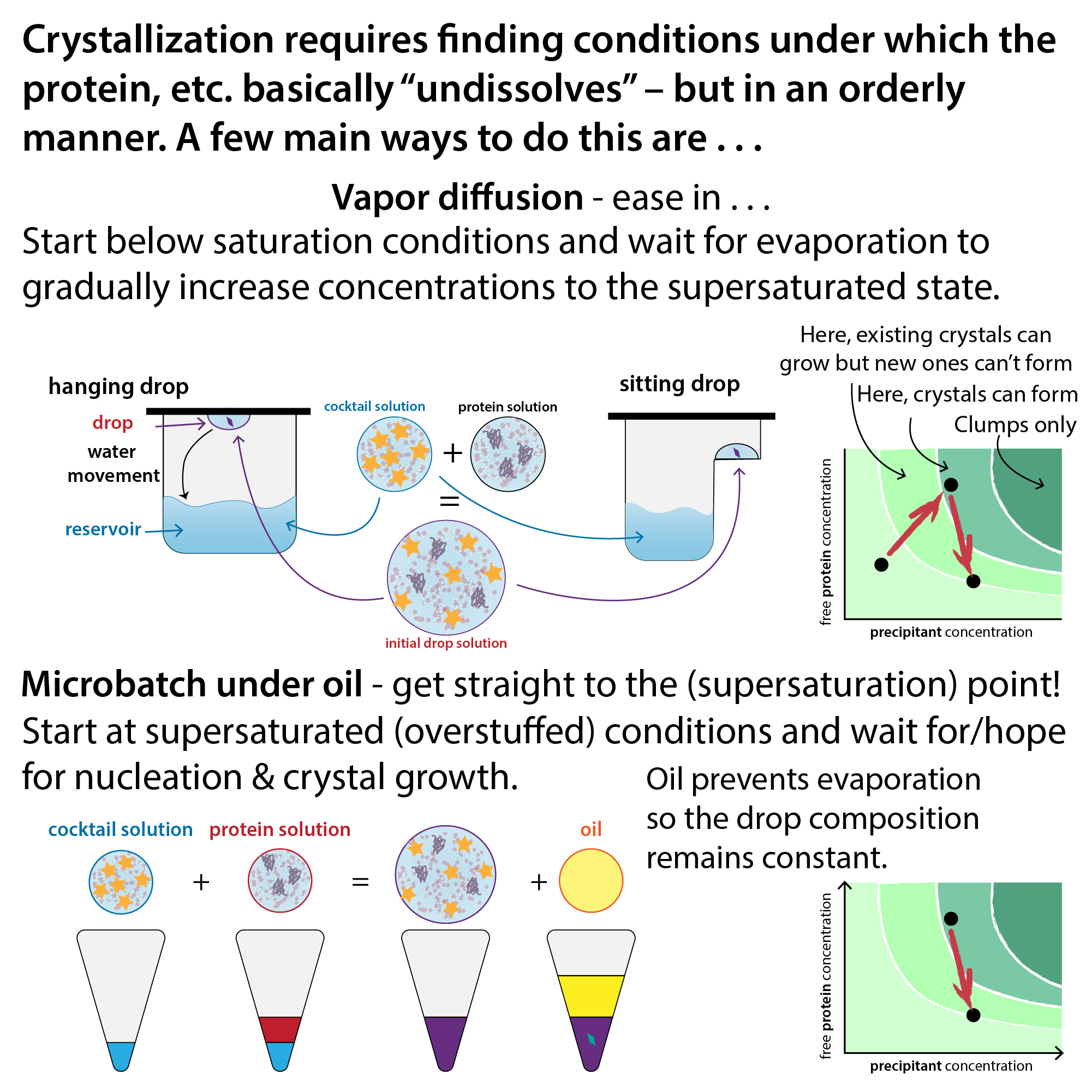
- co-crystallization (mix the things together and then try to get them to crystallize)
- soaking (crystallize the macromolecule and then add the small molecule to the liquid in and around the crystal – the crystal is actually mostly water so it can sneak in there and bind!)
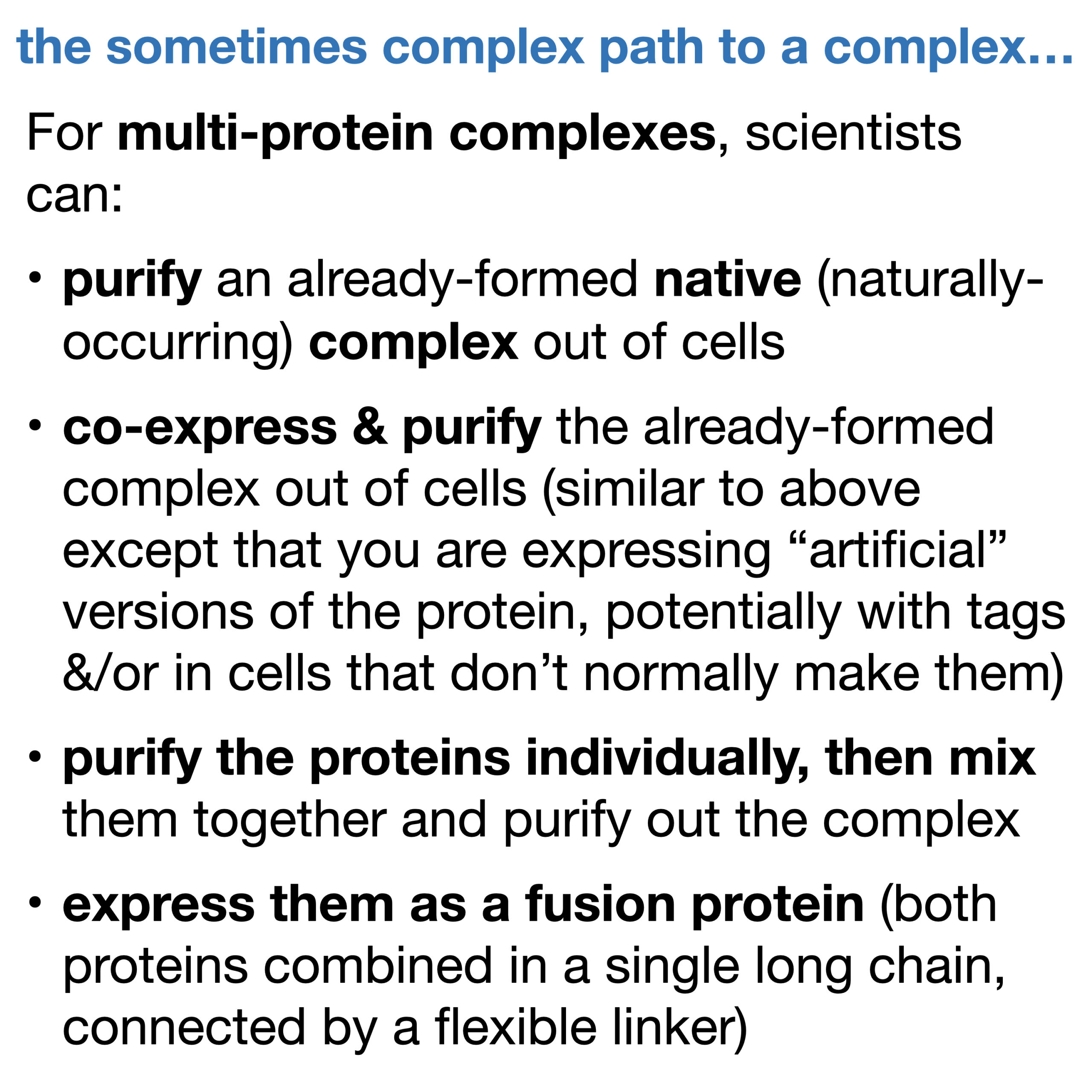
For multi-protein complexes, scientists can:
- purify an already-formed native (naturally-occurring) complex out of cells
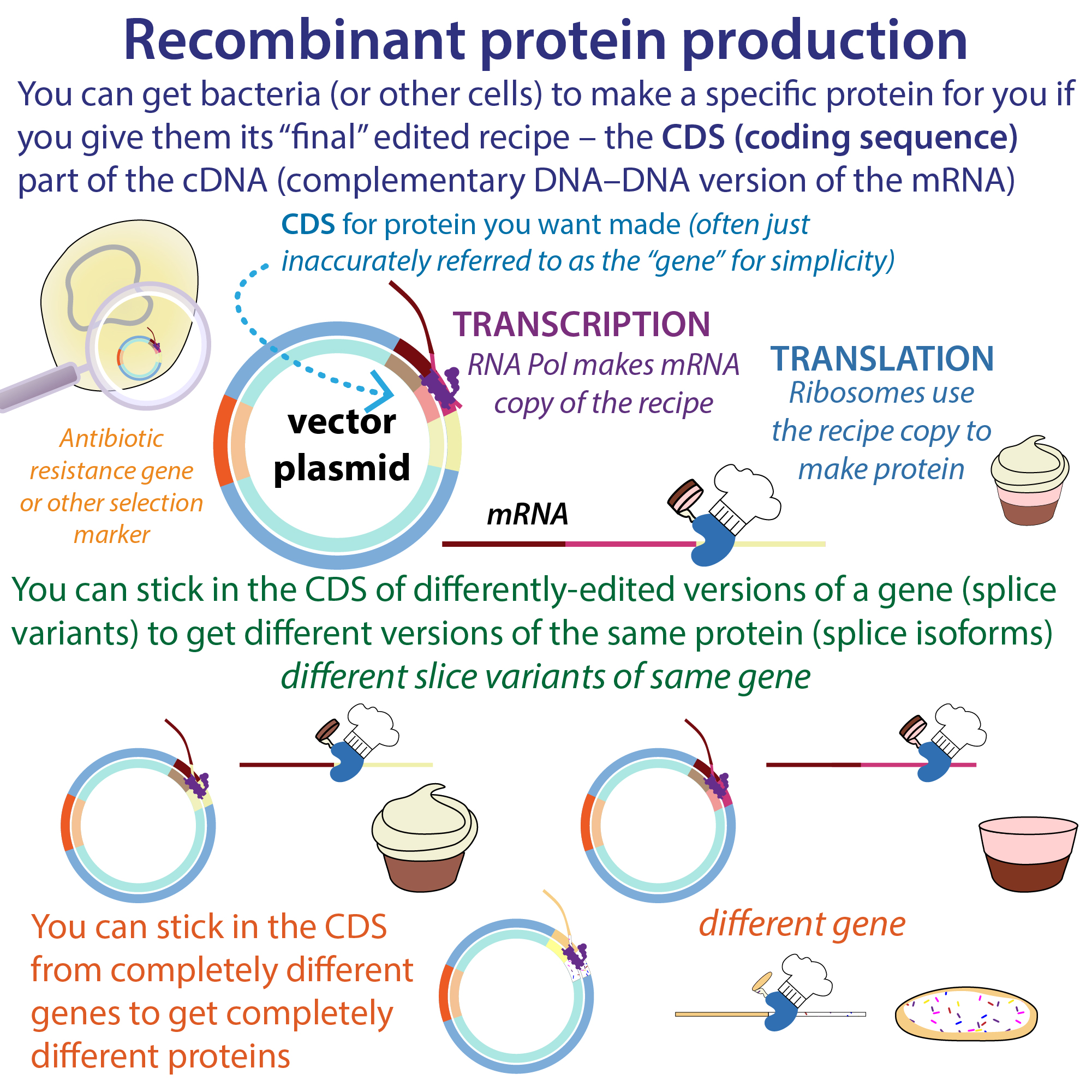
- co-express & purify the already-formed complex out of cells (similar to above except that you are expressing exogenous versions of the protein, potentially with tags for easier purification, and potentially in cells that don’t normally express (make) that protein, such as if you express human proteins in bacteria)
- purify the proteins individually, then mix them together and purify out the complex (such as by size exclusion chromatography)
- express them as a fusion protein (both proteins combined in a single long chain, connected by a flexible linker)
The term “apo” also comes up when discussing enzymes. An “apoenzyme” is an enzyme without any needed cofactors (helper molecules). The complex formed with an apoenzyme binds its cofactor, becoming “whole” is a “holoenzyme.” The word “complex” is more frequently used to refer to enzyme + substrate (the molecule it acts on) rather than the enzyme + its cofactor. more on this here: http://bit.ly/coenzymes & http://bit.ly/enzymecatalysis; YouTube: https://youtu.be/HDxztJ3y6Iw
Biochemistry Word Parts: a non-exhaustive list of some key prefixes, suffixes, roots, etc. you may see (some lots!)
View and download here: https://bit.ly/biochemistry_word_parts
blog form: https://bit.ly/biochemwordparts ; YouTube: https://youtu.be/XpKGEfoRX68
glossary: https://thebumblingbiochemist.com/glossary/