
I want to start by saying that I am tremendously lucky to have had the privilege to hide away from “the coronavirus” in lockdown, not required to perform duties as an “essential worker.” I am even more lucky that none of my close friends or family members died. I therefore feel a bit unqualified or out-of-place to write this, but I have thoughts and memories I want to get down on paper before the events of the last few years are forgotten (or never experienced by some). I also have a somewhat unique story (experiencing the pandemic as “the bumbling biochemist”) and therefore thought it might be one worth telling.
My sincere condolences go out to all who lost loved ones and/or were personally debilitated by COVID-19 (which I will be simply referring to as “COVID”) caused by the SARS-CoV-2 virus (which I will be simply referring to as “the coronavirus”). Note: I include these technical details not out of an elitist stance, but rather to acknowledge that when it comes to technical discussion, terminology can really matter (e.g. there are multiple coronaviruses (e.g. cold-causing ones) and a virus may infect someone without causing disease).
I still remember it as if it were yesterday. It seemed to come out of nowhere. There were a few odd flashes about some strange pneumonia in China popping up in my Google News feed. But that was China, I thought, not here. Plus, I reasoned, the press loves to sensualize things, and didn’t it always seem like every other day there was some new mysterious virus or strain of bird flu that may be out to get us (but to find out, subscribe to our journal!)? I also have suffered with anxiety since childhood, having a tendency to catastrophize little things. I therefore tried to ignore those alerts until they were no longer ignorable.
My NPR feed increasingly filled with stories coming out of China, then Italy, handfuls of cases popping up in the United States. But initially, they were all travel-related or could be easily traced. At our campus gym, we would watch news reports and try to feel out each other’s thoughts. Were we overreacting? Were we underreacting? Should we go out and buy toilet paper? And then, it came closer. Cases were popping up only a few miles away. It turned out that, as a grad student at Cold Spring Harbor Laboratory on Long Island, NY, I was near one of the US’ first covid hot spots.
It was only a matter of time before the order came from the lab to go home – indefinitely. Thus began our (first) lockdown. At the time, I was sharing a house with several other grad students. Anxiety and cabin fever (but thankfully not covid fever) built up and coalesced, and I began walking up and down the stairs listening to NPR and daily news briefs from the NY governor. For a brief period, once the lab had begun formulating strategies they could assist the pandemic response efforts, I was invited back to the lab as an essential worker, working in alternating shifts to express and purify proteins for test and/or vaccine development. But soon it was determined that only senior researchers would be working on the project to reduce risks. So I was once again sent home.
As I heard the news become increasingly dismal, as ambulance noises were a constant companion in a typically quiet suburban area, I began to feel increasingly helpless. I wanted to help. Desperately. But, at the time, I was told the best way I could help was by staying out of the way. Stay home, not just for yourself, but for those essential workers who didn’t have that option. Countless of them would unfortunately need the masks. The ventilators. The hospital beds.
Training as a biochemist there surely must be something I could do to help though . . . I began devouring all the information about the science of the virus, potential vaccines, treatments, etc. I began binge-listening to the This Week in Science (TWiV) podcast, and eagerly awaiting the new episode drops (3 a week at times)–huge thank you! I scoured bioRxiv (the “preprint” server where unreviewed science articles were posted ASAP).
Not only was I privileged enough to stay home during the pandemic’s height, but I was also privileged enough to have the education to (not always without difficulty) comprehend what I was reading and hearing. My friends and family, whom I frequently called and Zoomed with, didn’t have that second type of privilege. So I quickly found myself in the role of scientific translator of a sort, helping explain what I was learning in terms they could understand.
But, just explaining to my close contacts wasn’t enough. Over the past several years, I had begun building up an international platform as “the bumbling biochemist,” centered around a blog, with arms in social media channels and a fledgling YouTube channel as well. The goal of my (not-monetized) work through the bumbling biochemist was (and still is) to make biochemistry fun and accessible to all. This is often through the use of custom infographics and the use of everyday words (alongside their scientific counterparts) that explain complex topics in much more detail than can be found in “general audience” geared content but in a form that didn’t require a PhD, a journal subscription, and (even then) hours of looking things up to comprehend.
As I spent those hours on my end reading and listening up, I also worked on “translating” the concepts. With the support of my grad school advisor, Dr. Leemor Joshua-Tor, I began making a series of covid-related infographics and posts, starting with ones on how PCR tests for the coronavirus worked. They can be found here if anyone’s interested: https://bit.ly/covid19bbresources
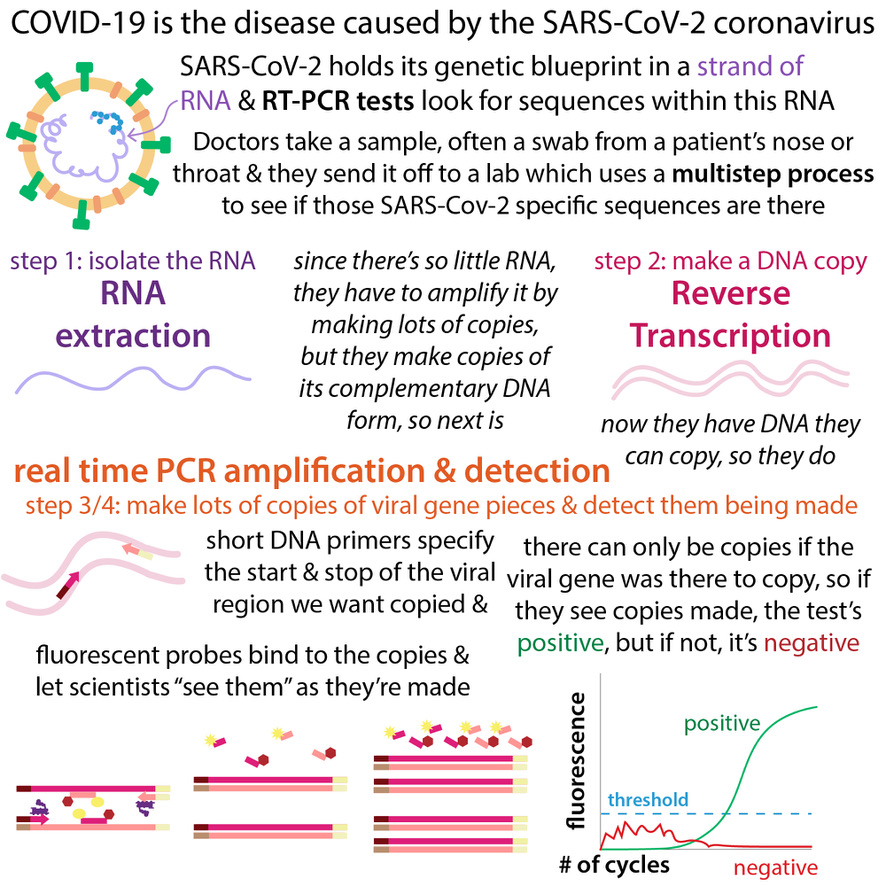
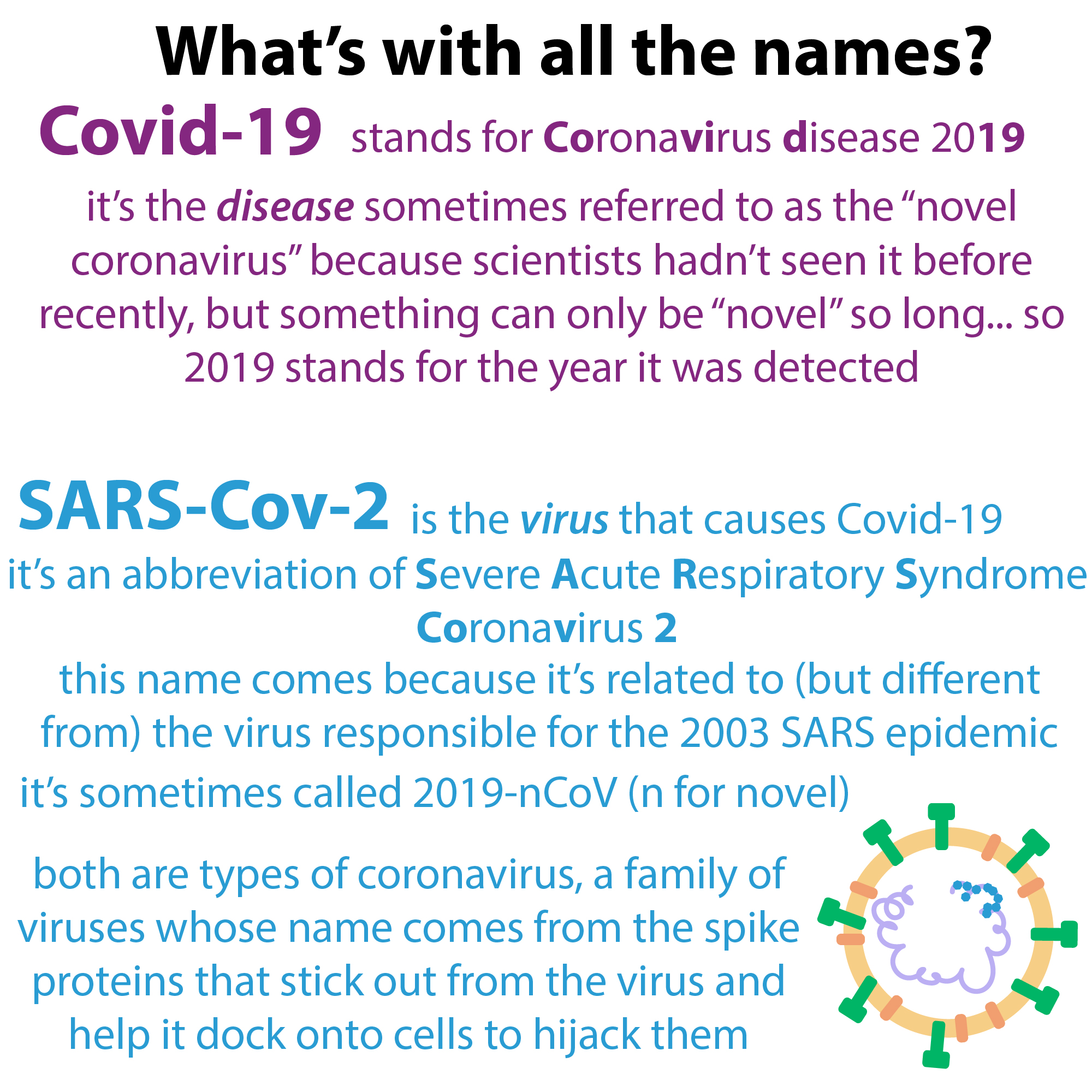
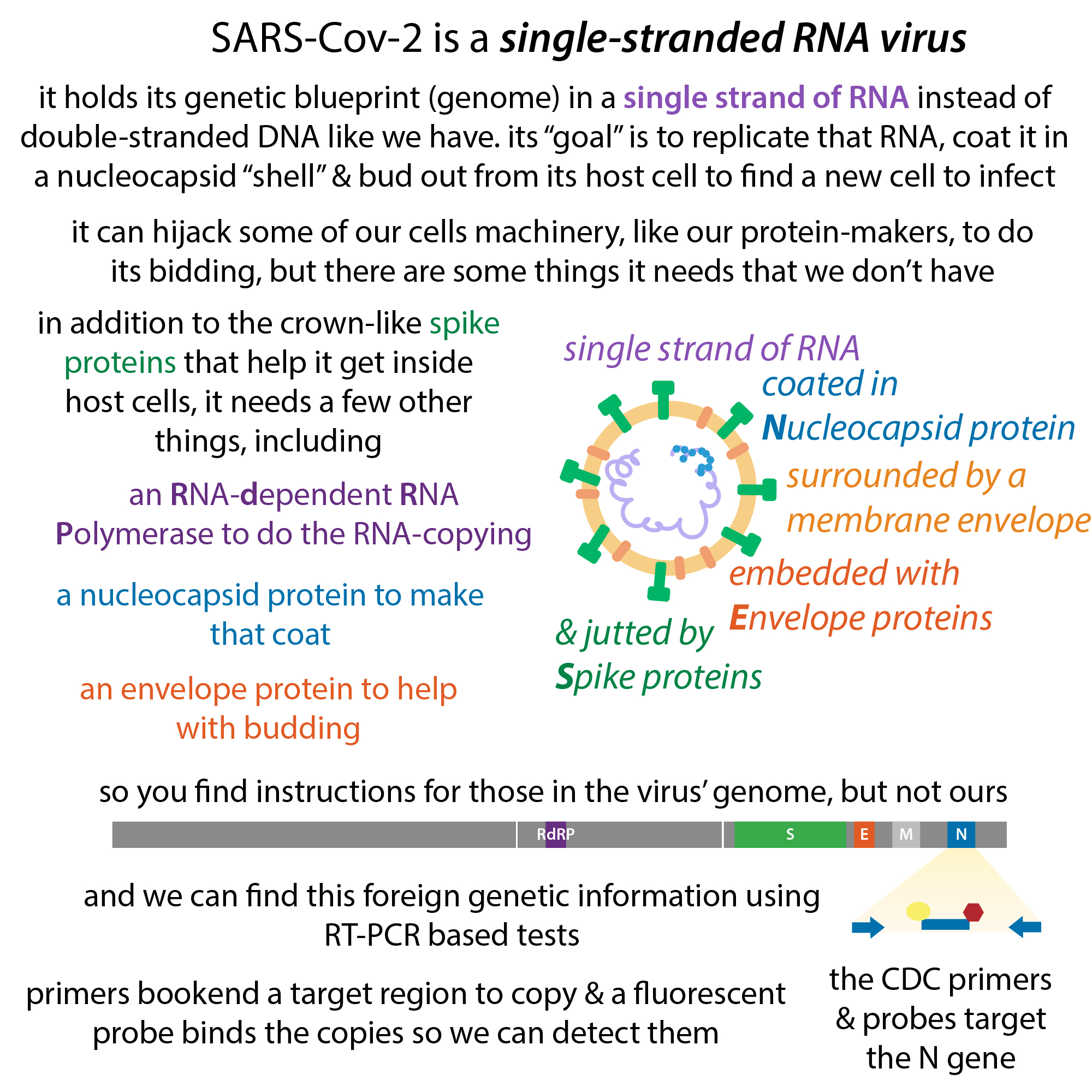


It wasn’t long before I received offers from generous volunteers to do another type of translation all together – they wanted to translate my infographics into other languages. Would that be okay with me? YES!
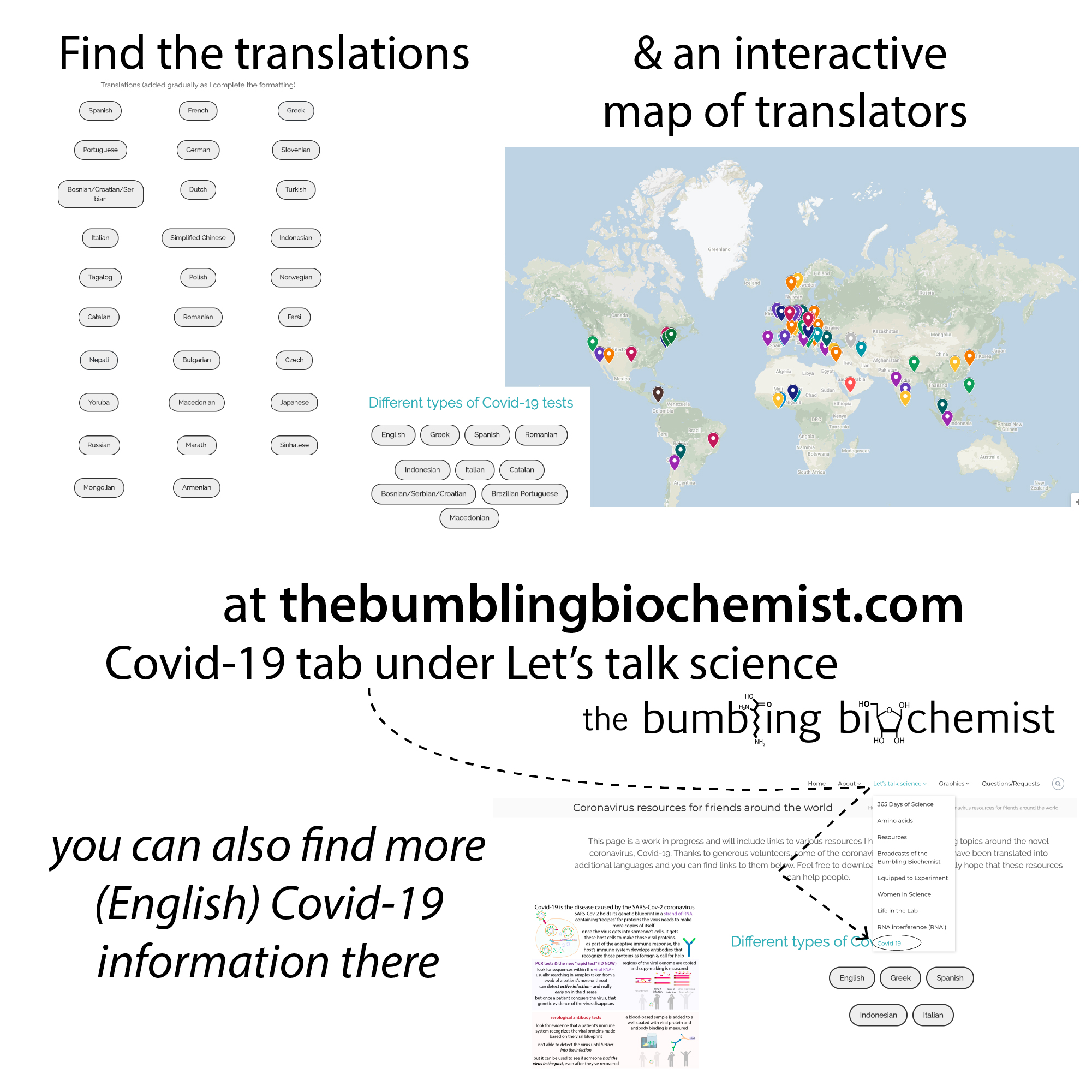
To help accelerate the translation efforts and give the content a larger reach, I used my position as Student Ambassador for the International Union of Biochemistry and Molecular Biology (IUBMB) to help put out the call for more translators (huge thanks to Past President Dr. Alexandra Newton for her help and support). And they came pouring in. Altogether, we ended up with my original set of infographics in 30 languages. And one of the best parts? Most of them were done by training scientists (grad students, etc.) just like me! THANK YOU! (Especially Nefeli Boni-Kazantzidou who translated multiple posts into Greek and served as a great source of cross-continent support.)
More about that here: https://network.febs.org/posts/64100-covid-19-knows-no-borders-neither-does-understanding-the-basis-of-covid-19-tests
Soon, it was clear that I would need to extend my graphics to beyond tests. We were entering into the exciting age of vaccines! And it seemed like everyone was excited. Granted, my circle of friends and family definitely skews pro-science and I had a biased perspective, but it still seemed that everyone was eager. “Everyone” was desperate for a path out of the pandemic. And it was coming. Quicker than anyone thought.
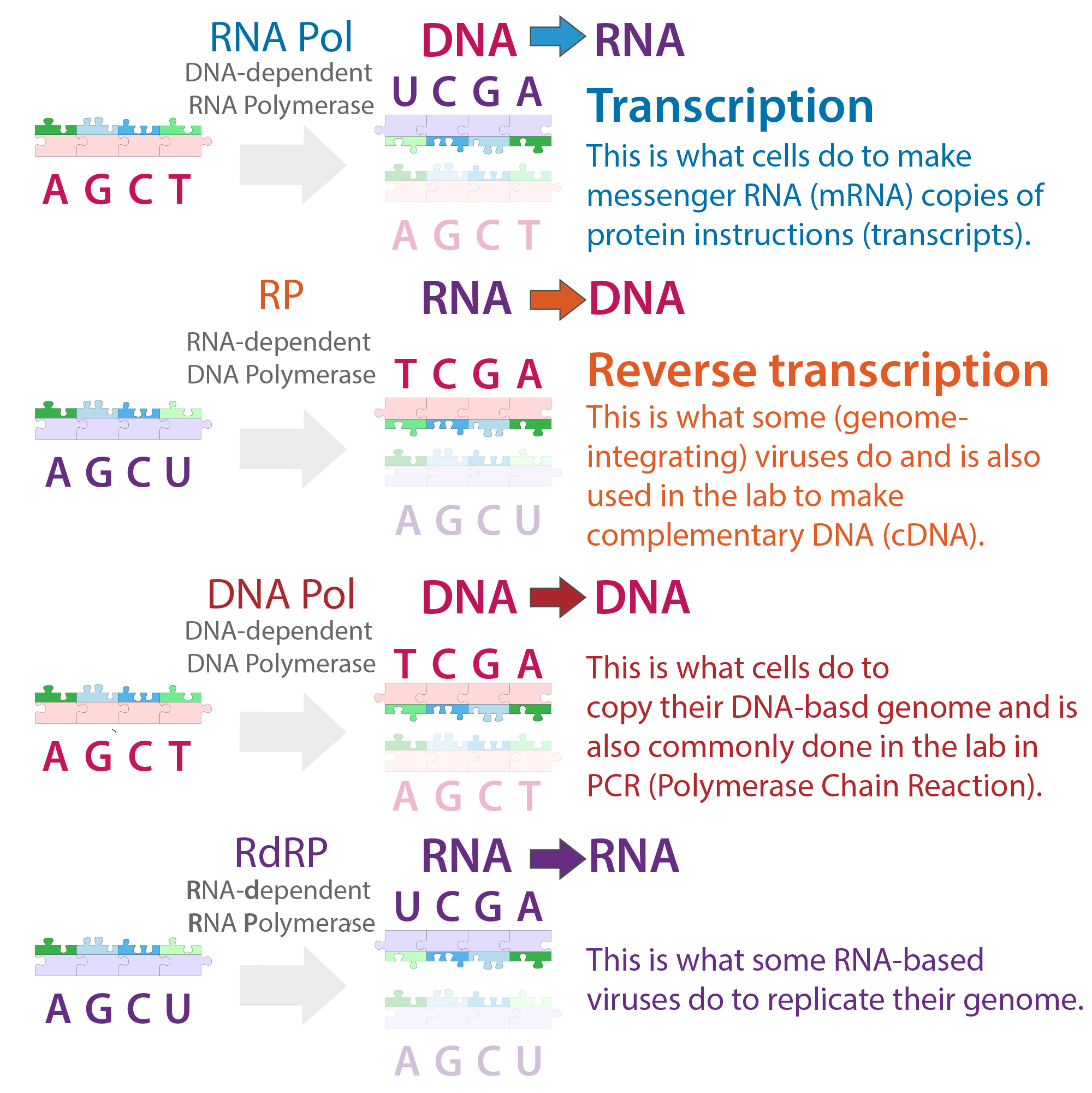
I once again found myself in an education-privileged position. This one even greater. Virology was fairly foreign to me. But RNA biochemistry? That was a major component of my PhD studies! (Studying a microRNA-binding protein called Argonaute that regulates mRNA usage). I knew that mRNA wasn’t some weird foreign thing our bodies were unfamiliar with. Rather, it’s something our bodies make tons of all the time–a crucial intermediary whenever our cells want to make a protein.
The strategy with the mRNA-based vaccines therefore was instantly clear to me – our cells can make protein from mRNA instructions. Our genes provide the DNA instructions for making copies of those mRNA instructions. But only for our own proteins. If we provide instructions for making other proteins, our cells will make them. But, if those proteins aren’t something the immune system is used to seeing, it’ll “attack” them. By providing instructions for the coronavirus Spike protein, a prominent feature of the virus’ outer coat, we could therefore get cells to make that protein and learn to attack it.

The mRNA from the vaccine wouldn’t last long in the body, instead being broken down as all mRNA eventually is (but lasting a bit longer thanks to helpful modifications). So, the protein would only be made for a brief period. But it would be long enough for the immune system to learn what it looks like and develop a memory of it. If the body were to see the Spike protein in the future jutting out from the coronavirus’ surface, it would send the immune system to attack and shut down the virus. It was beautiful in its “simplicity” (to the eyes of a trained scientist). So, I set out to make it simple to understand to others through additional posts and infographics.
Even more beautiful than the theory behind the vaccines were the results. They were simply stunning. Initial reports showed ~90% efficacy. First from Pfizer, then Moderna. Although the mRNA vaccine platform had never been used for a licensed vaccine before, and thus throwing support behind its development may have appeared risky, it was actually years in the making, building on the basic research (research aiming to understand processes, etc.) of scientists like Katalin Karikó. More on her and her work here: http://bit.ly/katalinkariko
People all around the country (and world) were eager to get our hands on one! But that would still take time. And, we were still in a time when we couldn’t even easily get tests! One day, I awoke with a sore throat and congestion. My only testing option ended up being standing in a long line outside on a cold winter for hours and then waiting days for results…
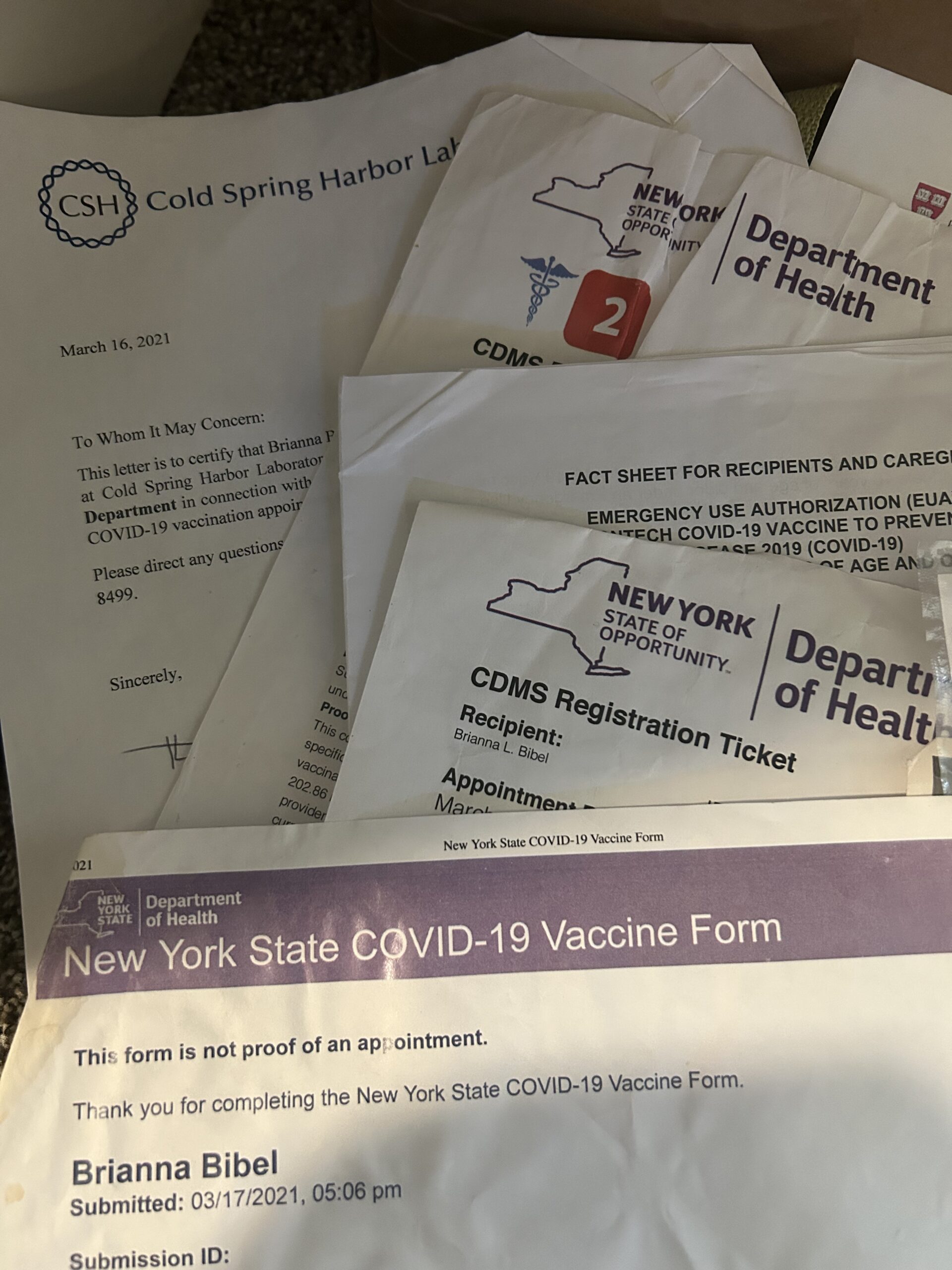
Finally, news came out that the vaccines were starting to roll out. If you could get your hands on one… If you’re like me, you might remember hours of sitting at a computer screen, refreshing over and over until an appointment time opened up that you could hopefully click before it was gone. On March 17, 2021, it happened. I got an appointment. I was ecstatic.
March 20, 2021, the big day came. I drove to a large arena converted into a vaccination center. After a false start entering through the wrong entrance, I made it. I walked through the cordons, 6 feet away from those in front of and behind me. I filled out the forms; watched the vaccine flow into my arm, thanking the essential workers and volunteers helping facilitate the process; sat in the waiting area until it was clear I didn’t have an initial reaction; and beamed beneath my mask. I could see a future. And it was looking much brighter.
I will never forget that day. I will never forget the work of the scientists, frontline workers, sanitation workers, grocery clerks, and all those countless other people who made that day possible. As I unearthed the documents from the day while packing for a move, however, the happiness of that day was tinged by sadness. Sadness not only for those lost in the pandemic, but also for the current hostility of some towards these vaccines. And, what’s more, sadness for the defunding of basic and applied research into a vast array of biomedical topics.
I don’t think this post will change anyone’s minds on anything, and I’m not writing this with that intention. Rather, I just wanted to put these thoughts down as a reminder of how far we came when we worked together and how tenuous it all can be. Also, as documentation of one biochemist’s experiences of the SARS-CoV-2 pandemic. Thank you for anyone who read through this.
The bumbling biochemist,
July 11, 2025
