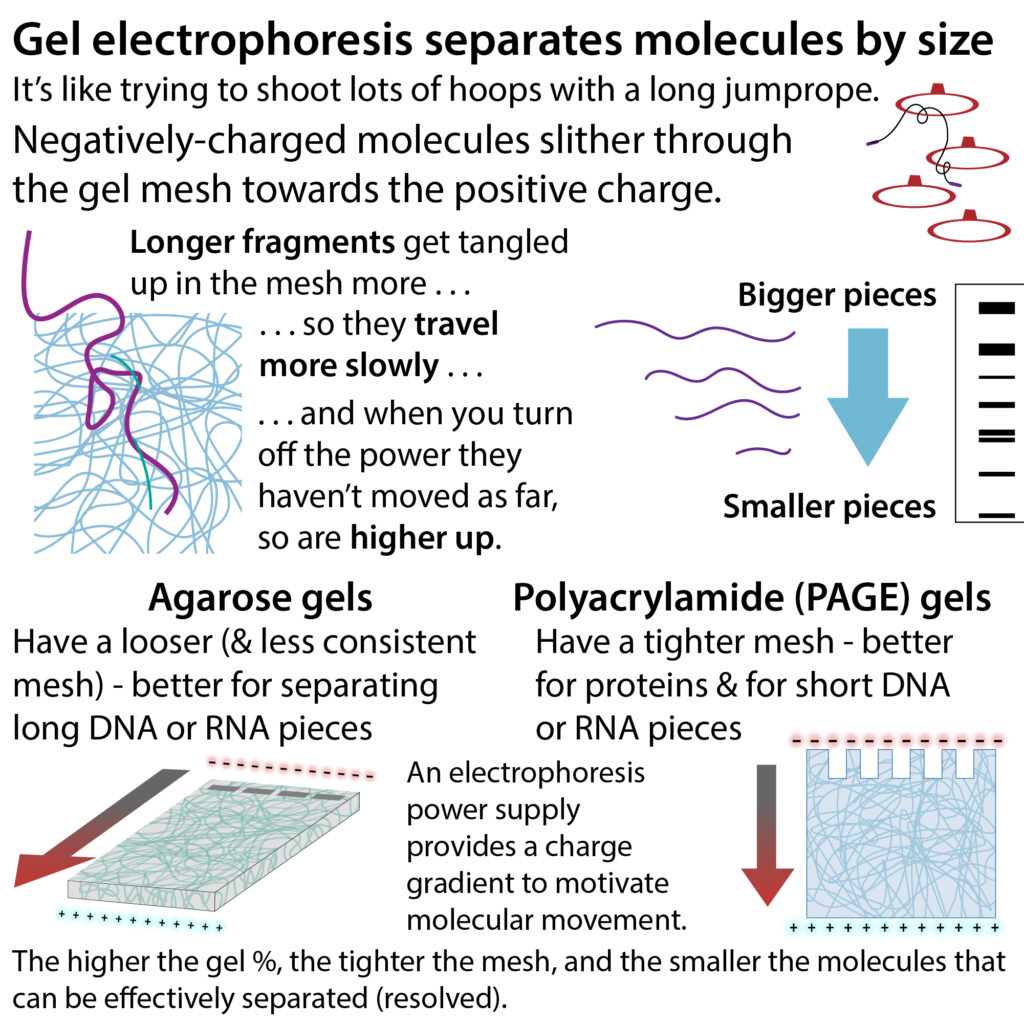
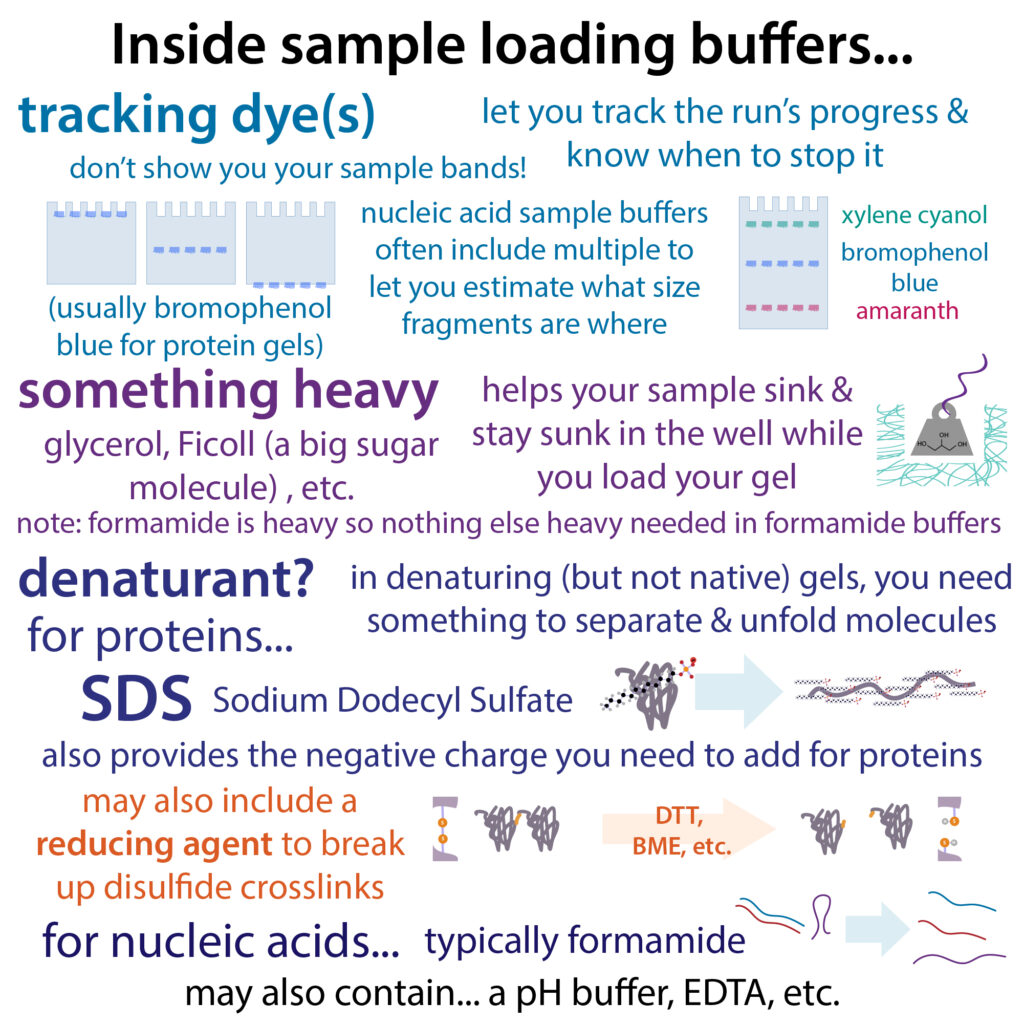
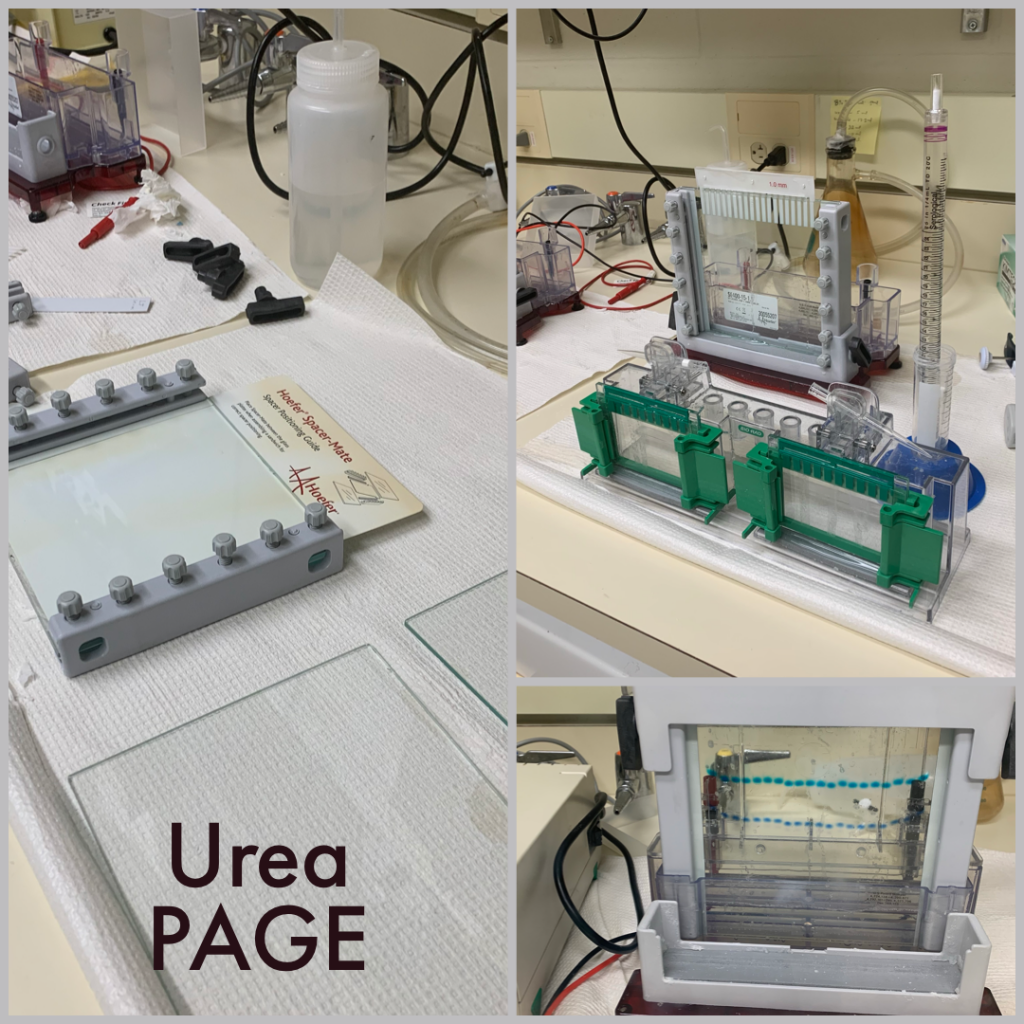
When we denature nucleic acids to run a urea-PAGE gel, we use formamide and urea as denaturants – but they can’t do it alone. Instead they need heat to help get things unstuck in the first place! So, when we prepare our samples, we mix our RNA or DNA with formamide-containing loading buffer, then we heat that (protocols vary but I usually do 90s at 80°C) – and then we stick it on ice?! Yep – we want to cool things back down quickly because if we do it slowly the molecules can renature before we even have a chance to load them in the gel! Let me explain…
YouTube: https://youtu.be/4Y5cs80BzEM
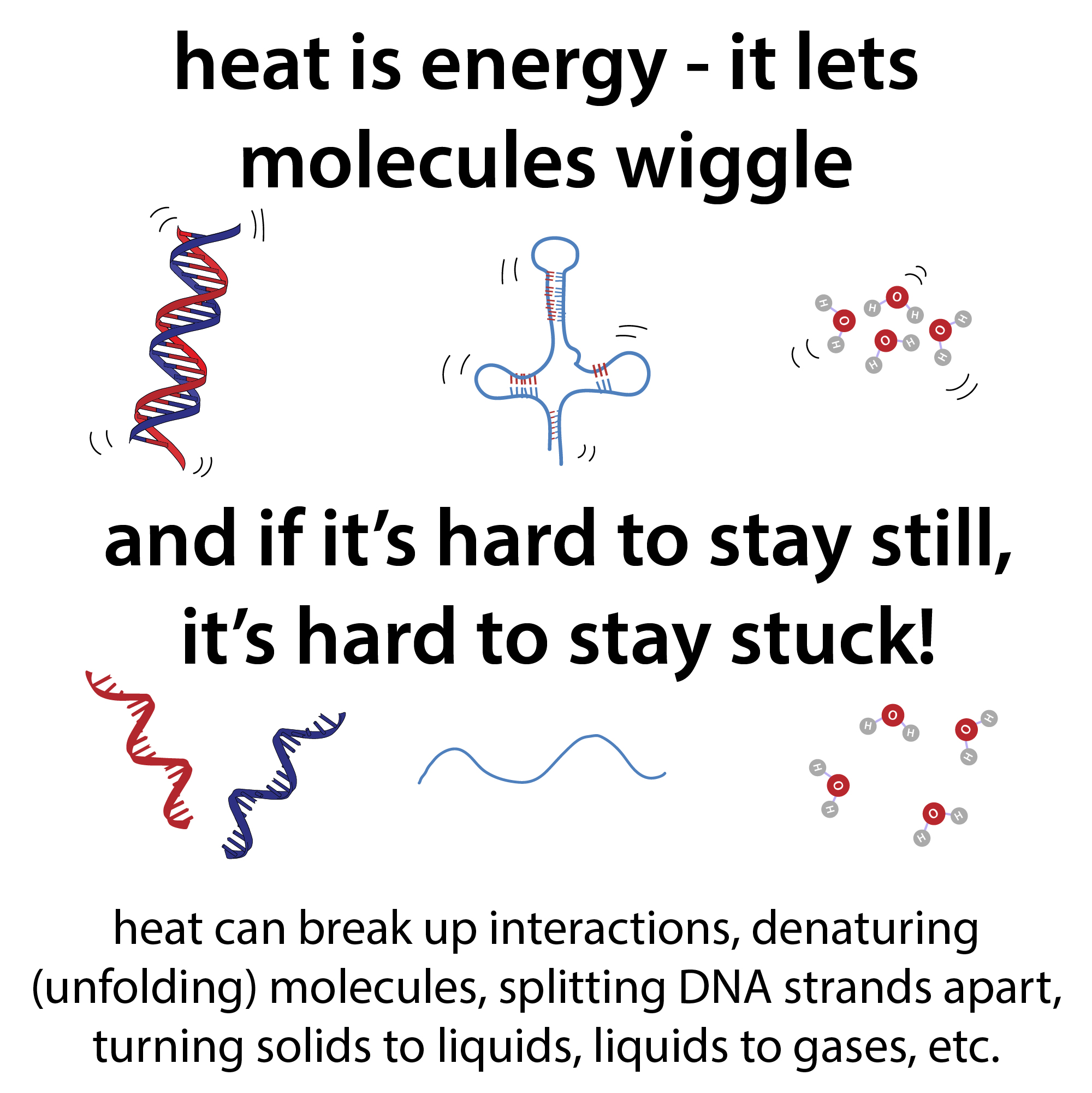
Heat is energy, and when molecules have energy, they can wiggle and move around. That movement will be limited by the attractions they have to other molecules (which act kinda like handcuffs). If you give them enough energy, though (add enough heat), they can break free from those. So heat is going to let us break up the hydrogen bonds and other attractions between the nucleotide bases that are holding the hairpins and other shapes of the RNA all shape-y, and that are holding the strands of double-stranded DNA together.
When we heat the molecules initially, those attractions are overcome by the wiggling. But if you take the wiggling-fueling energy away (remove the heat), those attractions can reform. Or, *different* attractions can form – to different molecules. Say, attractions to denaturants like formamide!
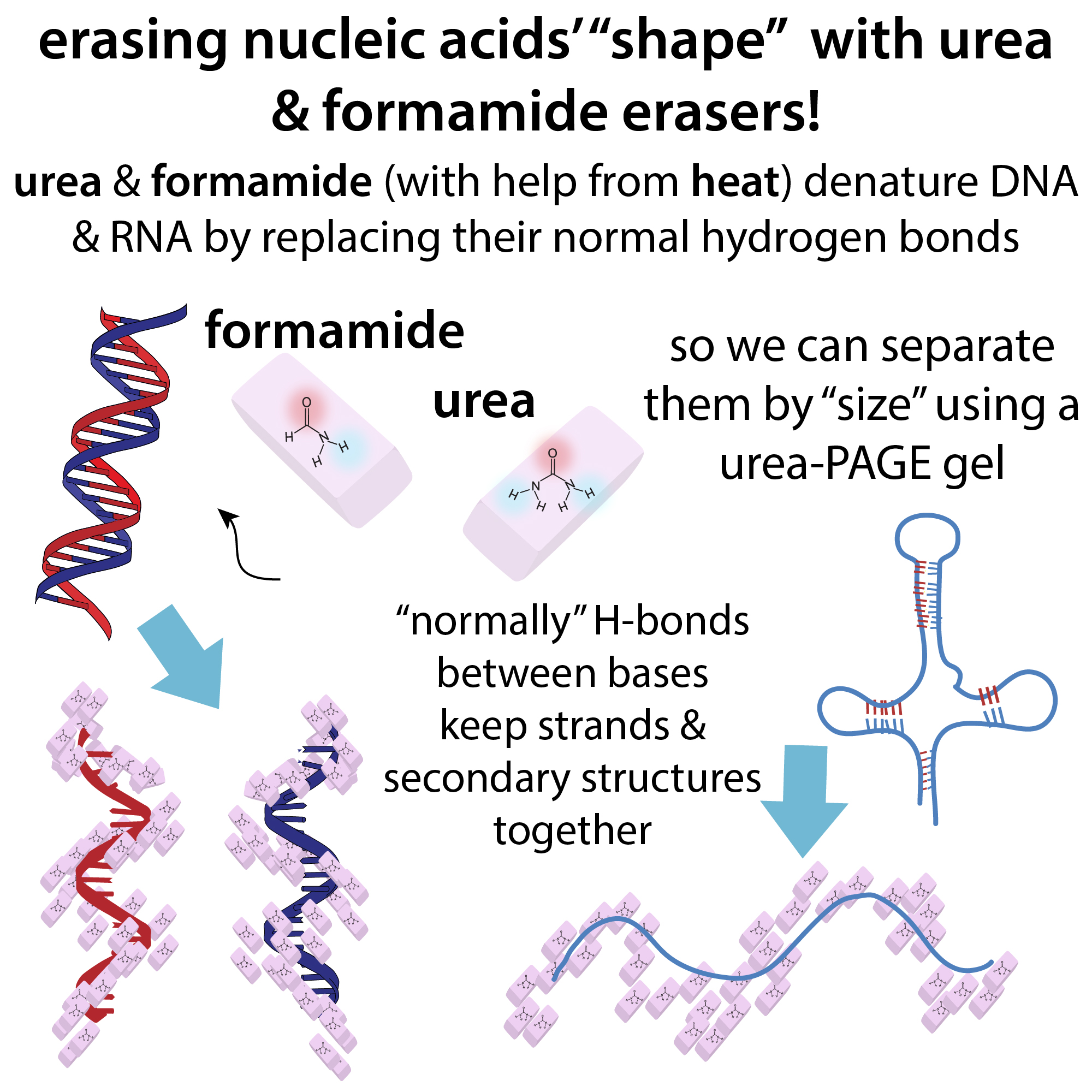
Formamide & urea can provide alternative H-bonding opportunities, but they wouldn’t have the opportunity to do so without the heat helping free those sites up. We use a high concentration of formamide in the buffer so that we swamp things out. We need this high concentration because each of the formamide molecules is acting alone whereas in the case of the nucleotides, they have the benefit of avidity, the extra strength you get from binding sites being stuck together (if one comes off, it can’t go far – like having a zipper versus a bunch of free-floating zipper teeth).
Even with the high concentration of the denaturants making it harder to do so, if the nucleic acids had to bind something (like if they don’t have the energy to move around freely), they’d “rather” (thermodynamically-speaking) bind to their original binding partners (the ones maintaining the strandedness & folding). So, if we slowly remove the heat (like if we just take the tubes off the heat and stick them at room temp), they will initially still have enough energy break off from those weaker denaturant interactions and wander around until they get stuck in those stronger ones. Leaving us back where we started! But, if we quickly remove the heat, by placing them on ice, the molecules lose the energy to break off from even those weaker denaturant interactions before they have a chance to find their preferred partners!
And then, once they’re in the gel, they will get heated again, and encounter urea in the gel that can take formamide’s place. So the samples stay denatured throughout the run and the strands of RNA or DNA run proportionally to their linear length and not their folded-up shape.
MUCH more on urea-PAGE here: blog form: http://bit.ly/ureapage ; YouTube: https://youtu.be/MHJqnur6yqk
and loading buffers here: blog: https://bit.ly/sampleloadingbuffers ; YouTube: https://youtu.be/Q52IqEuhXKU