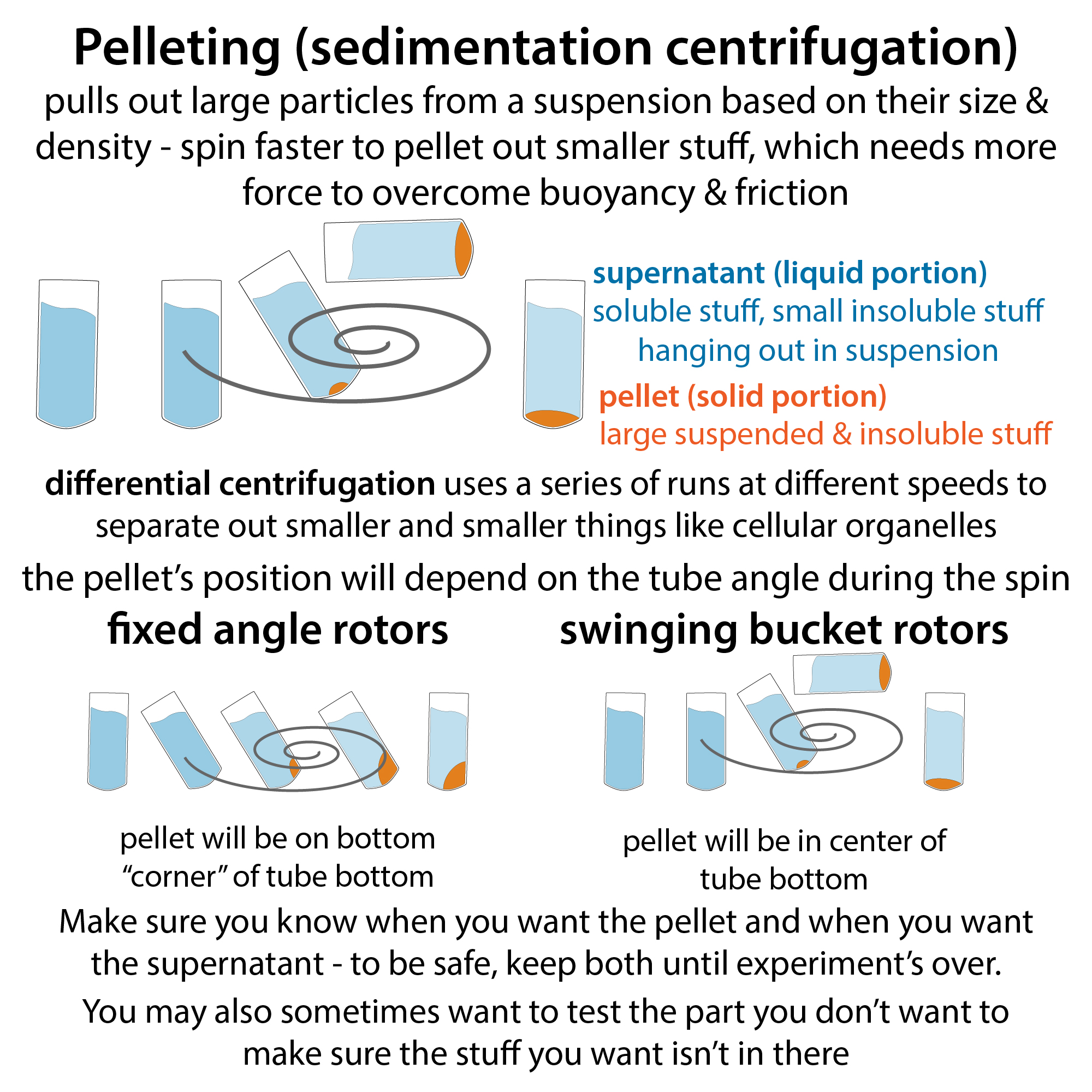
Clarification steps clear up liquids by clearing out the solids. They’re often done via centrifugation to pellet out precipitates (not-dissolved stuff). The liquid (supernatant) containing the soluble stuff can then be carefully removed.
link to video in case embed isn’t working: https://youtu.be/5zTt9iZIHa0
We often do this to clarify cell lysates (the stuff you get when you break cells open, such as to purify a protein from inside them) before we turn to fancier purification techniques (like chromatography). Might as well get rid of the easy stuff the easy way before it gets in your way!
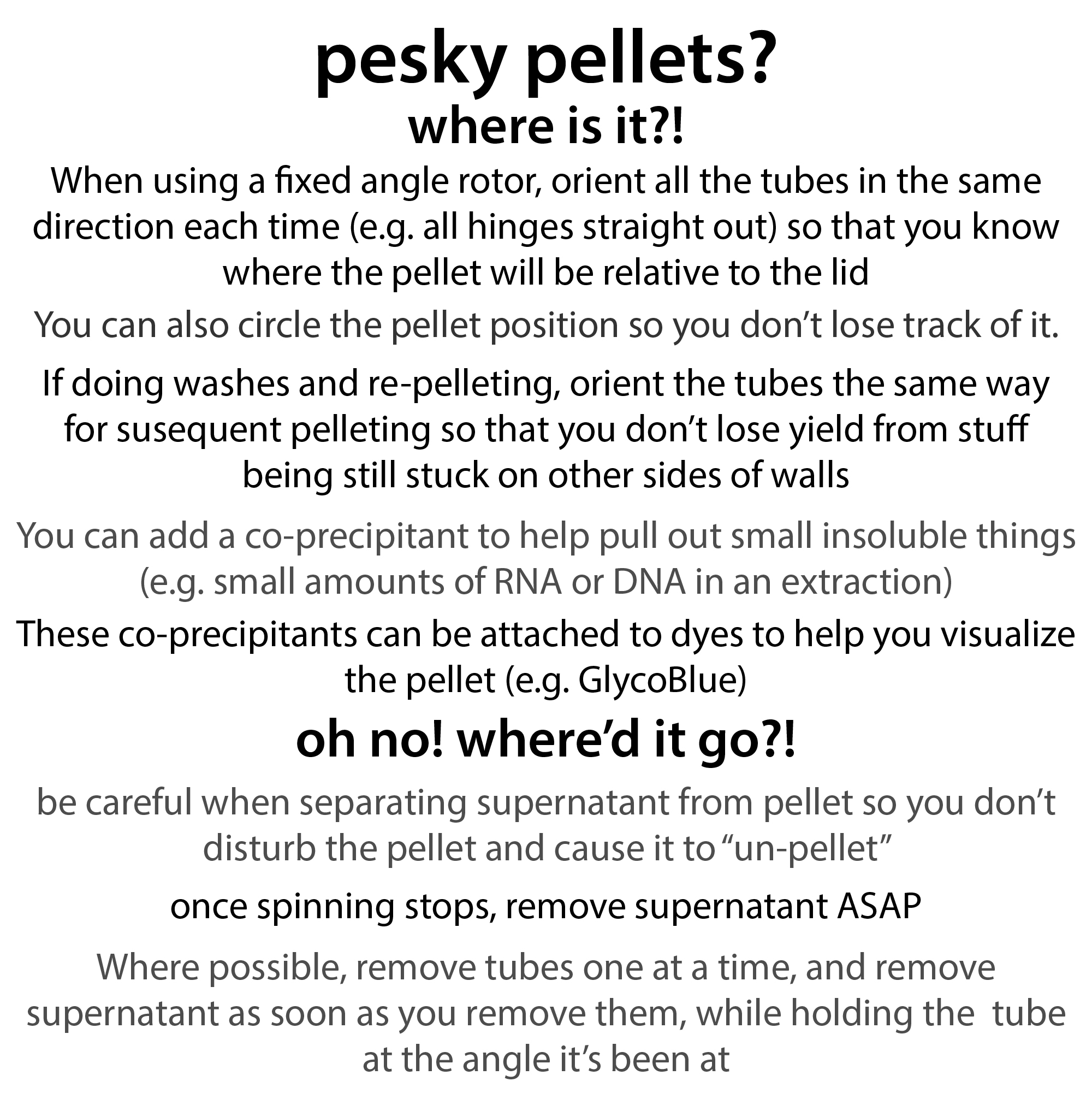
P.S. Make sure you remove the liquid right away so the precipitate doesn’t resuspend & ruin your day! (thankfully you can spin again if needed)
more on carefully collecting pellets: blog form: https://bit.ly/pelleting_practical ; YouTube: https://youtu.be/OpQAEl_J2dQ
More on centrifugation: blog: https://bit.ly/lab_centrifuges; YouTube: https://youtu.be/xCu7xDfyBBw
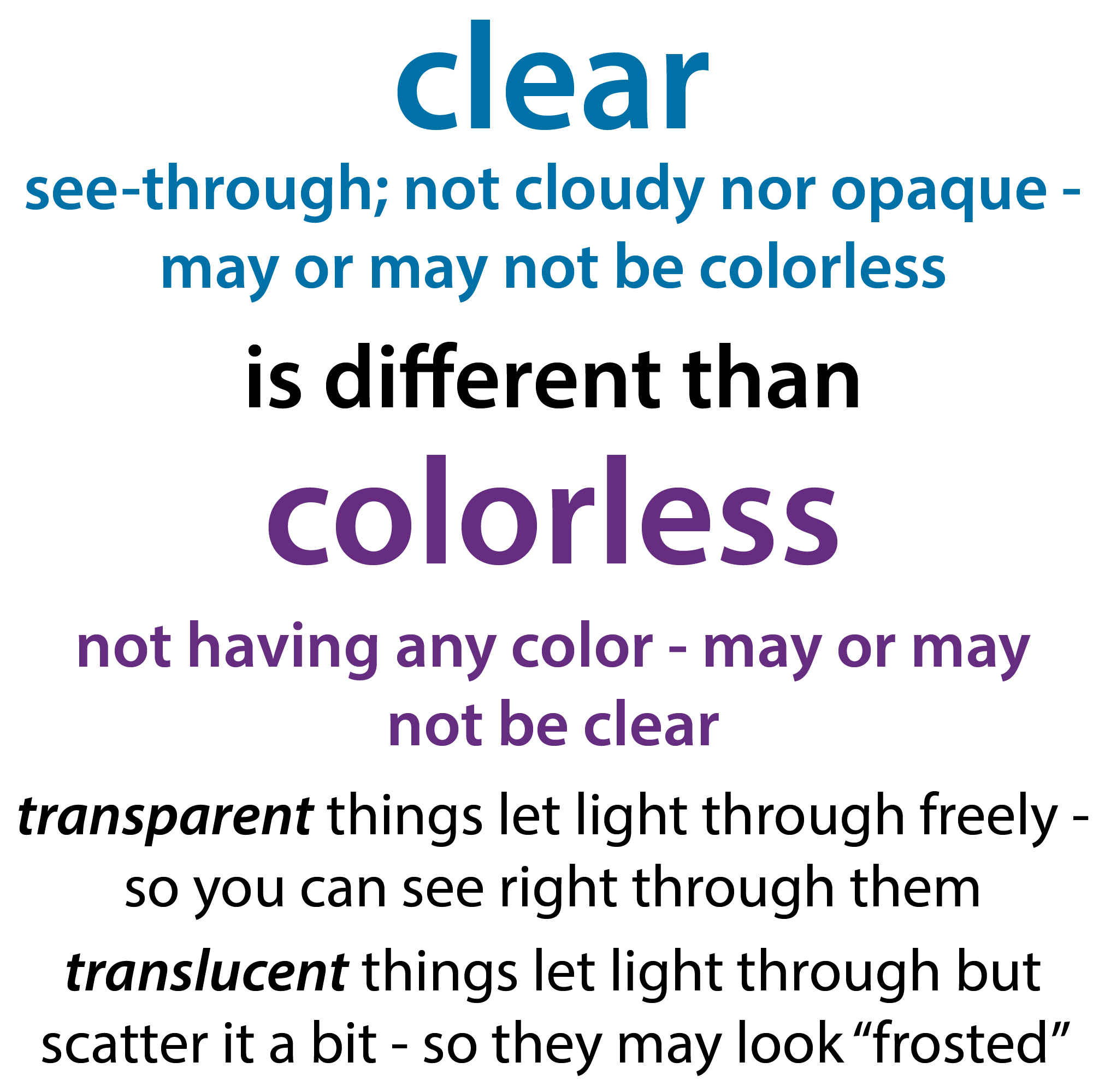
Speaking of clarifying things, let’s clarify the term “clear” – it’s *not* the same as colorless. Clear means see-through, not cloudy nor opaque. Something that’s clear may or not be colorless. Colorless means not having any color. It may or may not be clear.
A couple other related & also commonly confused terms are transparent and translucent. Transparent things let light through freely – so you can see right through them. Translucent things let light through but scatter it a bit, so they may look “frosted.”
Hope that helped clarify some terms for you!
more practical lab tips and tricks here: https://bit.ly/lab_tricks_page