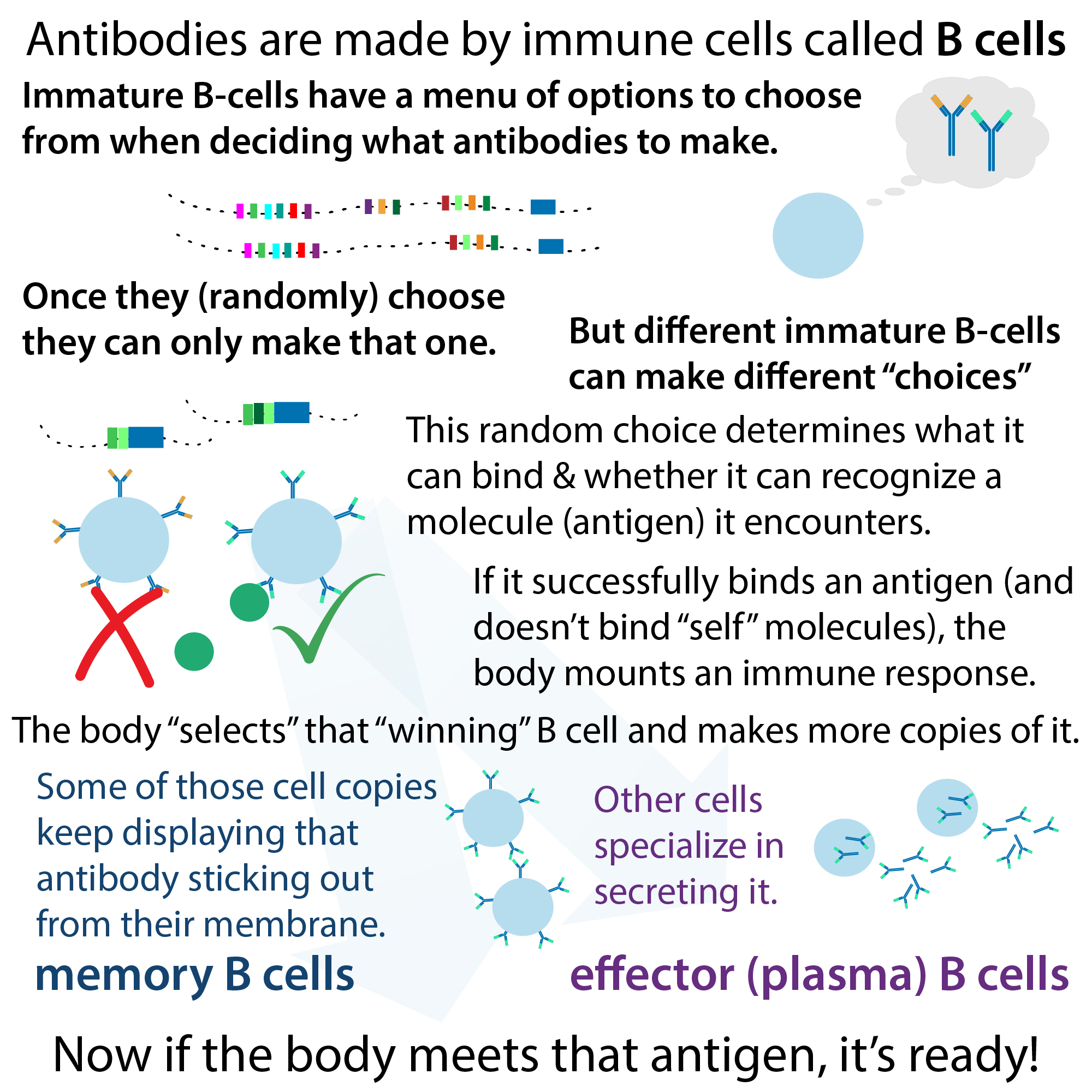
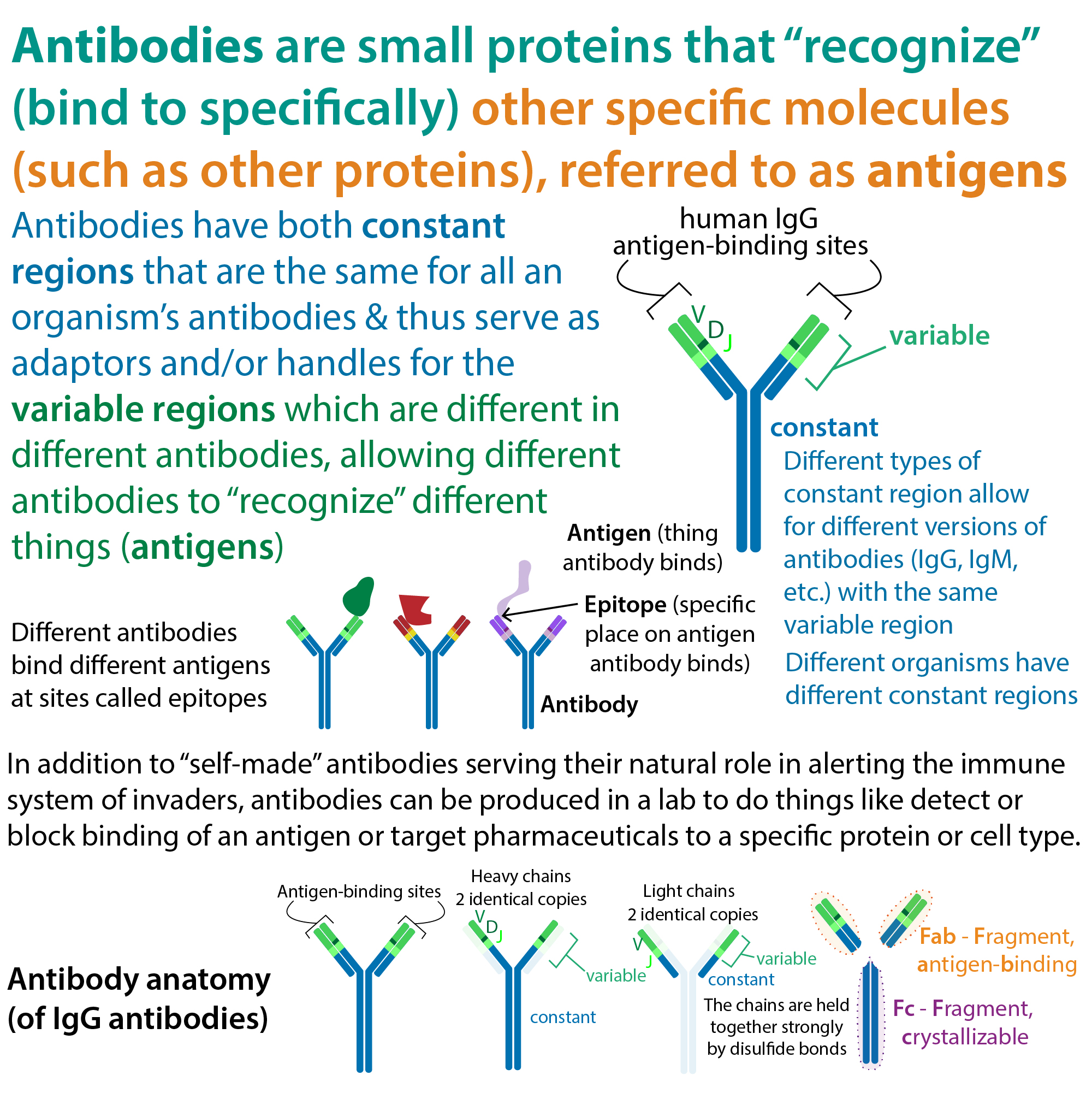
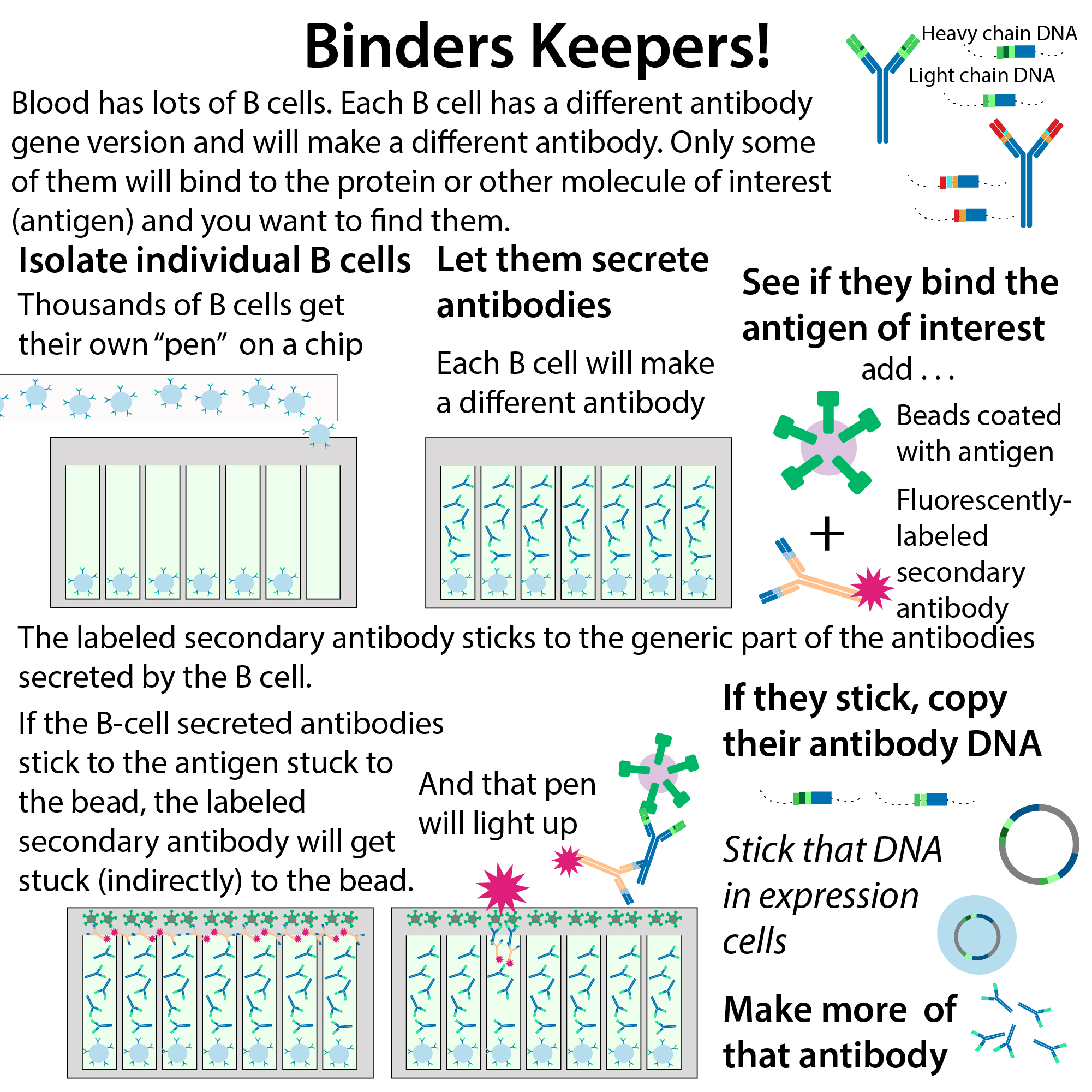
A fusion of a B-cell (antibody-producing cell) and a myeloma (type of cancer) cell classically used to produce monoclonal antibodies. The basic idea is that scientists take B cells from the spleen of an immunized animal (good at making antibody but bad at growing in a dish) + myeloma cells (can’t make antibody but good at growing in a dish) = hybridoma cells (good at making antibody AND growing). Now they have an “endless” source of a specific antibody. The antibody can be produced in cell culture, or the hybridoma cells can be injected into the peritoneal cavity (abdomen outside of the organs) of a mouse or rat, where they’ll grow and secrete into the abdomen fluid (ascites) that can then be harvested & usually gives scientists more antibody than in a dish. This is how monoclonal antibodies have been made historically. Nowadays, scientists can take the DNA for making the antibody and sticking them into expression cells to churn out large amounts.
- Associated posts