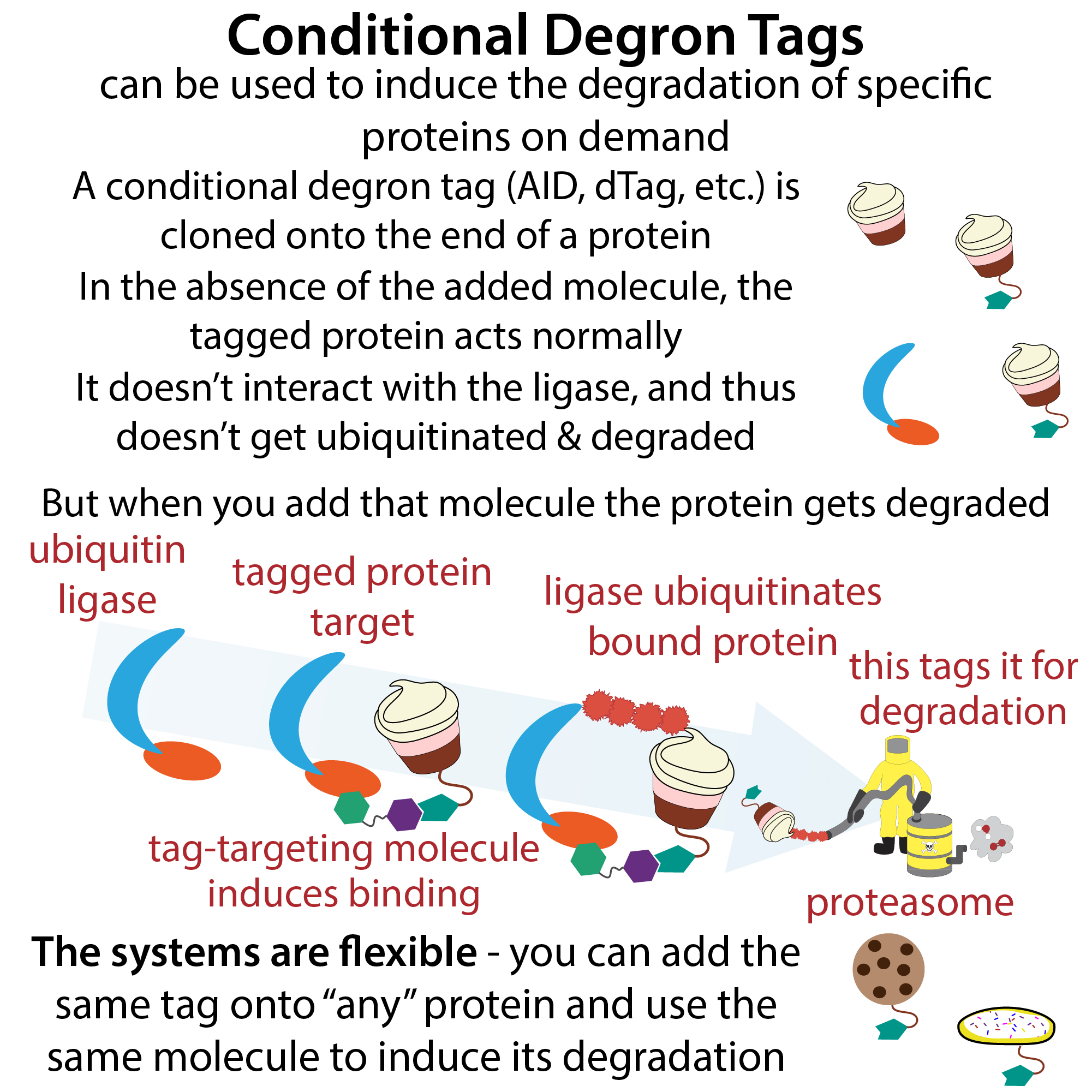
Conditional degron tag systems such as AID tags, dTags, and HaloPROTACs allow us to degrade proteins on demand – but only if we add a genetically-encoded tag onto the protein. Then, we can add a molecule that binds to the tag and takes the protein to equipment of the cells’ own degradation machinery, typically the ubiquitin-proteaseome system. It’s an example of targeted protein degradation, but unlike the TPD I discussed yesterday, which targets endogenous, “unmodified” proteins, and can therefore potentially be used as therapeutics, conditional degron tags, because they require the genetic modification, can’t touch those. But they are super helpful in the lab! And they’re a lot easier to make than PROTACs and molecular glues that target specific proteins – these just have to target the tags! So people in labs all around the world can stick the same tag on all sorts of proteins and add the same chemical and get all those different proteins degraded all around the world, helping the researchers to figure out what the proteins do. (At least if it works – there’s still a lot of testing out different systems to find what works best for specific proteins, etc.)
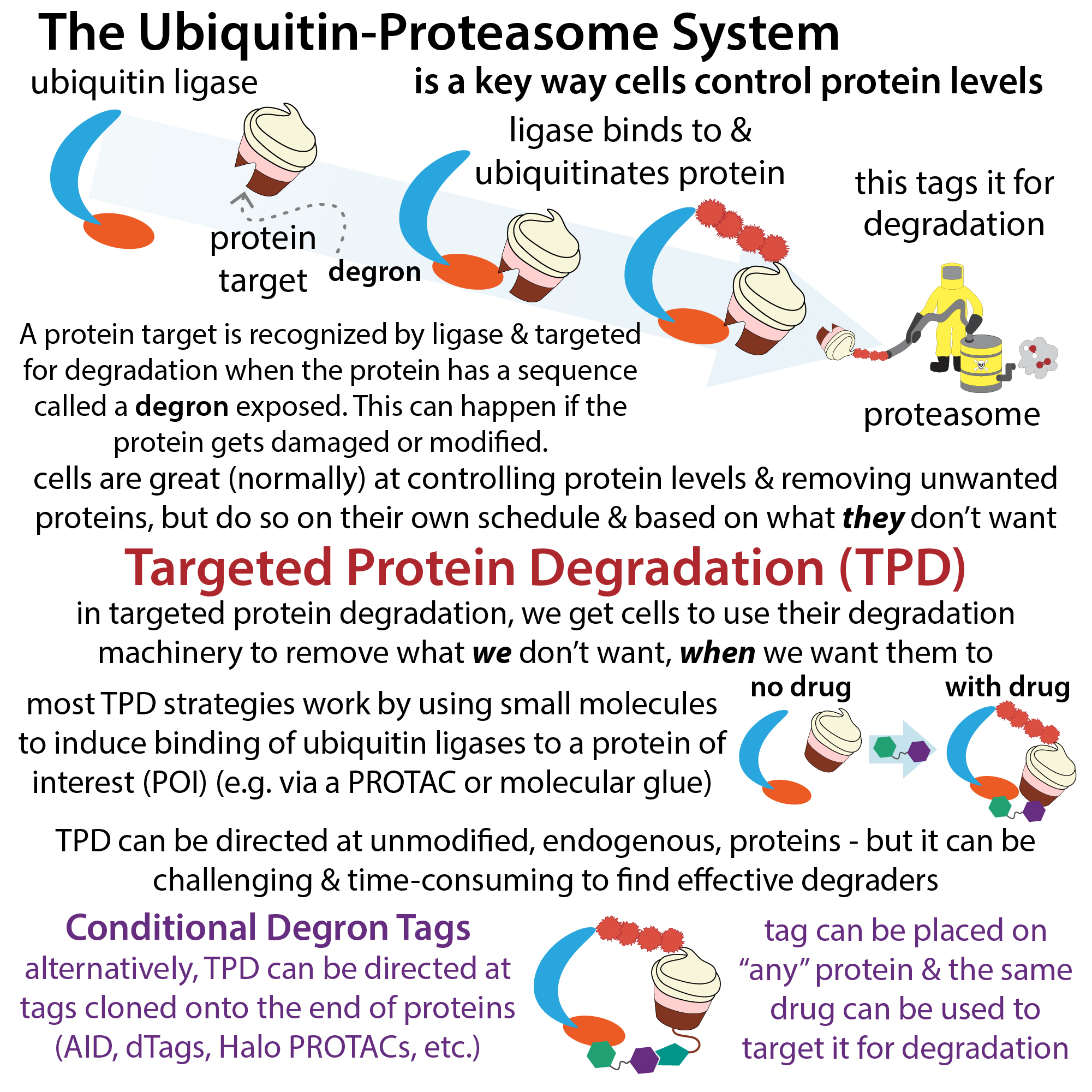
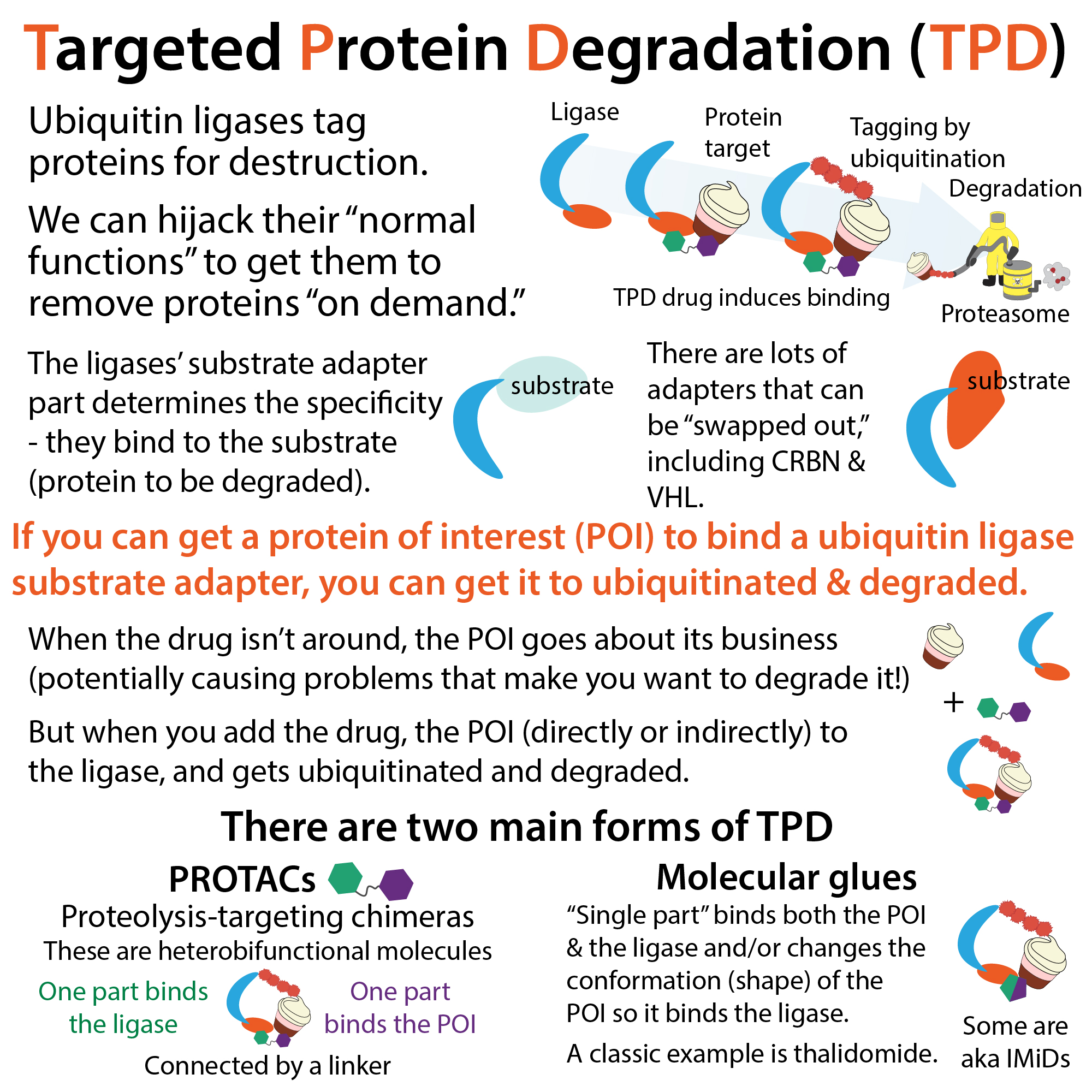
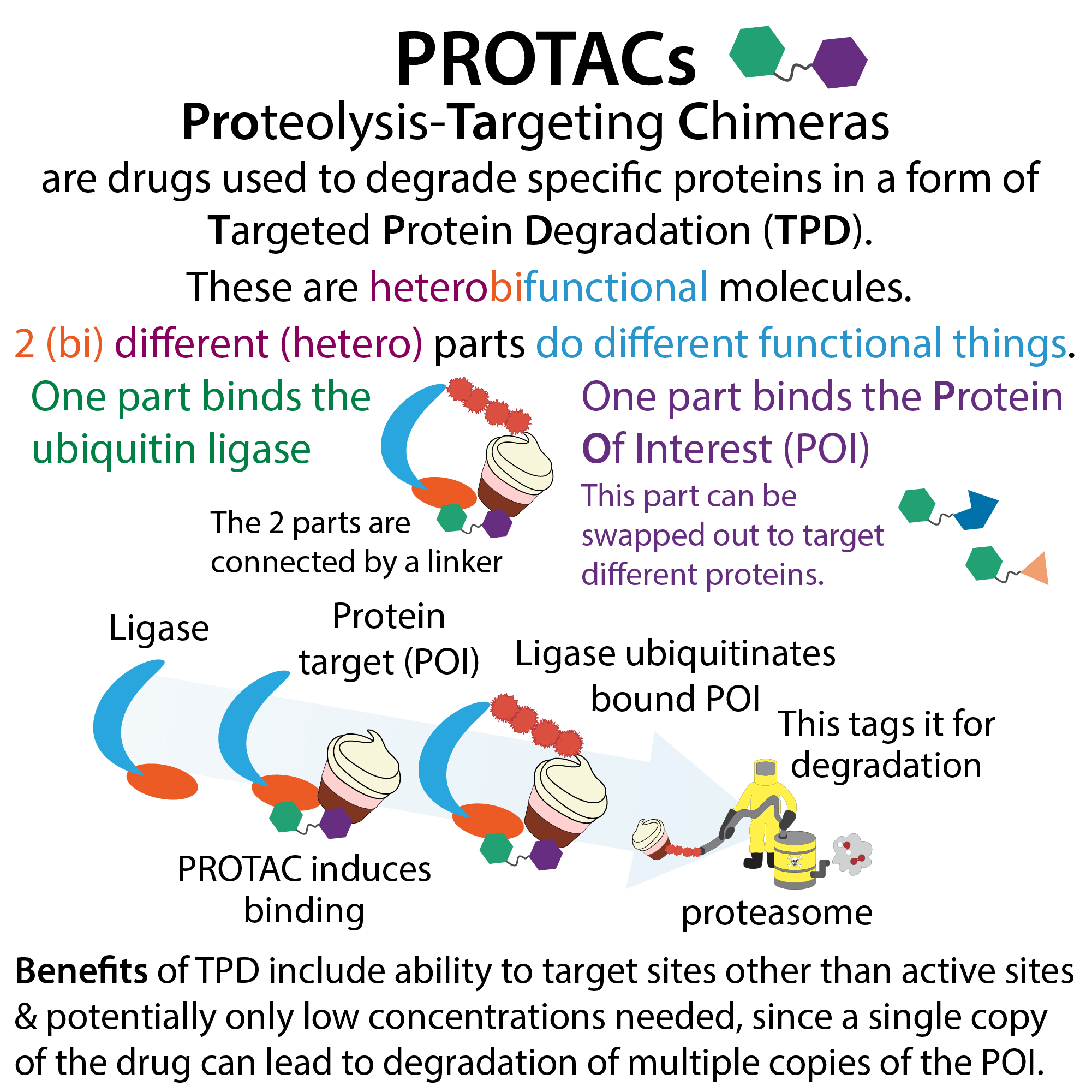
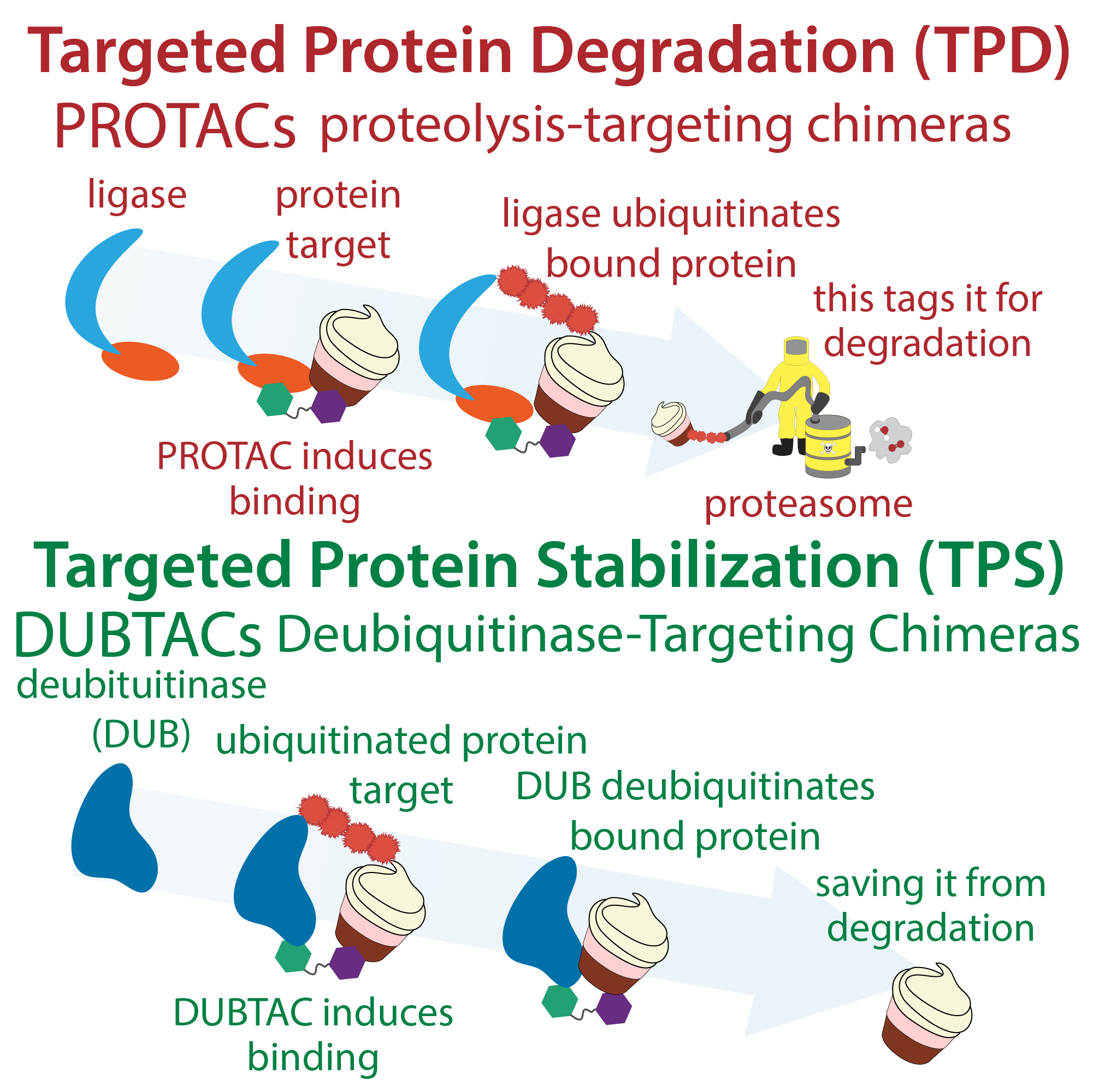
here’s yesterday’s post with the background on targeted protein degradation: https://bit.ly/tpd_protac_etc
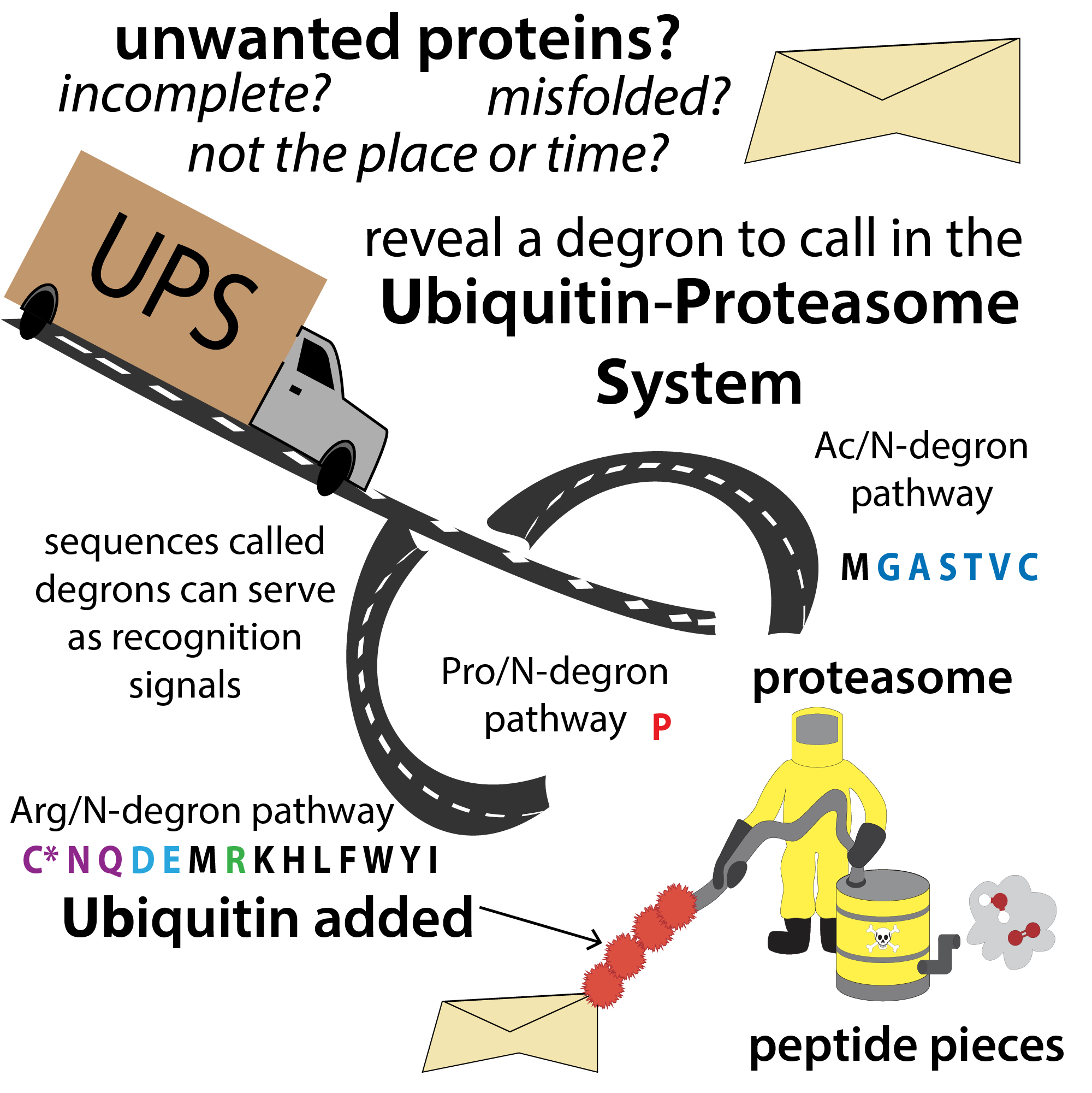
And If you need to get even more caught up first, no problem – here’s a past post on the ubiquitin-proteasome system: https://bit.ly/ubiquitinylation & https://youtu.be/Ivqse57f9OE
I don’t have text for this new stuff, but I do have links to some really good text from others! Reviews and primary lit.
Some resources:
Reviews:
- Wu, T., Yoon, H., Xiong, Y., Dixon-Clarke, S. E., Nowak, R. P., & Fischer, E. S. (2020). Targeted protein degradation as a powerful research tool in basic biology and drug target discovery. Nature structural & molecular biology, 27(7), 605–614. https://doi.org/10.1038/s41594-020-0438-0
- Bondeson, D. P., Mullin-Bernstein, Z., Oliver, S., Skipper, T. A., Atack, T. C., Bick, N., Ching, M., Guirguis, A. A., Kwon, J., Langan, C., Millson, D., Paolella, B. R., Tran, K., Wie, S. J., Vazquez, F., Tothova, Z., Golub, T. R., Sellers, W. R., & Ianari, A. (2022). Systematic profiling of conditional degron tag technologies for target validation studies. Nature communications, 13(1), 5495. https://doi.org/10.1038/s41467-022-33246-4
Potential future tags?
Proteome-scale induced proximity screens reveal highly potent protein degraders and stabilizers. Juline Poirson, Akashdeep Dhillon, Hanna Cho, Mandy Hiu Yi Lam, Nader Alerasool, Jessica Lacoste, Lamisa Mizan, Mikko Taipale. bioRxiv 2022.08.15.503206; doi: https://doi.org 10.1101/2022.08.15.503206
AID:
Nishimura, K., Fukagawa, T., Takisawa, H., Kakimoto, T., & Kanemaki, M. (2009). An auxin-based degron system for the rapid depletion of proteins in nonplant cells. Nature methods, 6(12), 917–922. https://doi.org/10.1038/nmeth.1401
AID2:
Yesbolatova, A., Saito, Y., Kitamoto, N., Makino-Itou, H., Ajima, R., Nakano, R., Nakaoka, H., Fukui, K., Gamo, K., Tominari, Y., Takeuchi, H., Saga, Y., Hayashi, K. I., & Kanemaki, M. T. (2020). The auxin-inducible degron 2 technology provides sharp degradation control in yeast, mammalian cells, and mice. Nature communications, 11(1), 5701. https://doi.org/10.1038/s41467-020-19532-z
dTag:
Nabet, B., Roberts, J. M., Buckley, D. L., Paulk, J., Dastjerdi, S., Yang, A., Leggett, A. L., Erb, M. A., Lawlor, M. A., Souza, A., Scott, T. G., Vittori, S., Perry, J. A., Qi, J., Winter, G. E., Wong, K. K., Gray, N. S., & Bradner, J. E. (2018). The dTAG system for immediate and target-specific protein degradation. Nature chemical biology, 14(5), 431–441. https://doi.org/10.1038/s41589-018-0021-8
HaloTag:
Los, G. V., Encell, L. P., McDougall, M. G., Hartzell, D. D., Karassina, N., Zimprich, C., Wood, M. G., Learish, R., Ohana, R. F., Urh, M., Simpson, D., Mendez, J., Zimmerman, K., Otto, P., Vidugiris, G., Zhu, J., Darzins, A., Klaubert, D. H., Bulleit, R. F., & Wood, K. V. (2008). HaloTag: a novel protein labeling technology for cell imaging and protein analysis. ACS chemical biology, 3(6), 373–382. https://doi.org/10.1021/cb800025k
HaloPROTACs:
Buckley, D. L., Raina, K., Darricarrere, N., Hines, J., Gustafson, J. L., Smith, I. E., Miah, A. H., Harling, J. D., & Crews, C. M. (2015). HaloPROTACS: Use of Small Molecule PROTACs to Induce Degradation of HaloTag Fusion Proteins. ACS chemical biology, 10(8), 1831–1837. https://doi.org/10.1021/acschembio.5b00442
SMASh:
Chung, H. K., Jacobs, C. L., Huo, Y., Yang, J., Krumm, S. A., Plemper, R. K., Tsien, R. Y., & Lin, M. Z. (2015). Tunable and reversible drug control of protein production via a self-excising degron. Nature chemical biology, 11(9), 713–720. https://doi.org/10.1038/nchembio.1869
IKZF3d:
Koduri, V., McBrayer, S. K., Liberzon, E., Wang, A. C., Briggs, K. J., Cho, H., & Kaelin, W. G., Jr (2019). Peptidic degron for IMiD-induced degradation of heterologous proteins. Proceedings of the National Academy of Sciences of the United States of America, 116(7), 2539–2544. https://doi.org/10.1073/pnas.1818109116
Webinar: Degron Tagging Workshop – Alessandra Ianari, Daniel Bondeson, Behnam Nabet; Dana-Farber TPD; https://youtu.be/Kg-Zd9ydzSk