Reading scientific literature deeply and critically is an important skill, but so is strategic skimming. In fact, one of the most important, underappreciated, skills when it comes to reading scientific papers is choosing what to read and how, so you can maximize the value you get out of reading (and not just get scared off by the sheer volume of literature). You can’t read it all and, especially when you’re in deep with your own research, you can’t dive deep into all that’s out there. Instead, your reading should become more focused on papers and parts of papers that are really relevant to your work (but still make time for that less-directly-relevant stuff because you never know where inspiration can come from!). There’s no one “right way” to read a paper – it varies from person to person and from paper to paper! I read different papers very differently depending on what I’m hoping to get out of them.
link to video in case embed isn’t working: https://youtu.be/3we4u8NkyFk
There’s a common misconception among trainees that you either have to deep read papers or not read them at all. I know that I used to feel like a “bad scientist” when I skimmed papers. But then I came to realize that sometimes that’s a good thing. And I would also feel like a “bad scientist” when I spent hours revisiting an important paper for the umpteenth time. But I was getting more and more out of it each time. And so it was a great use of my time! Reading papers is super important for a lot of reasons, so don’t let the vast amount of literature paralyze you from diving in. Instead, dive in with purpose! Here’s some advice I hope can help…
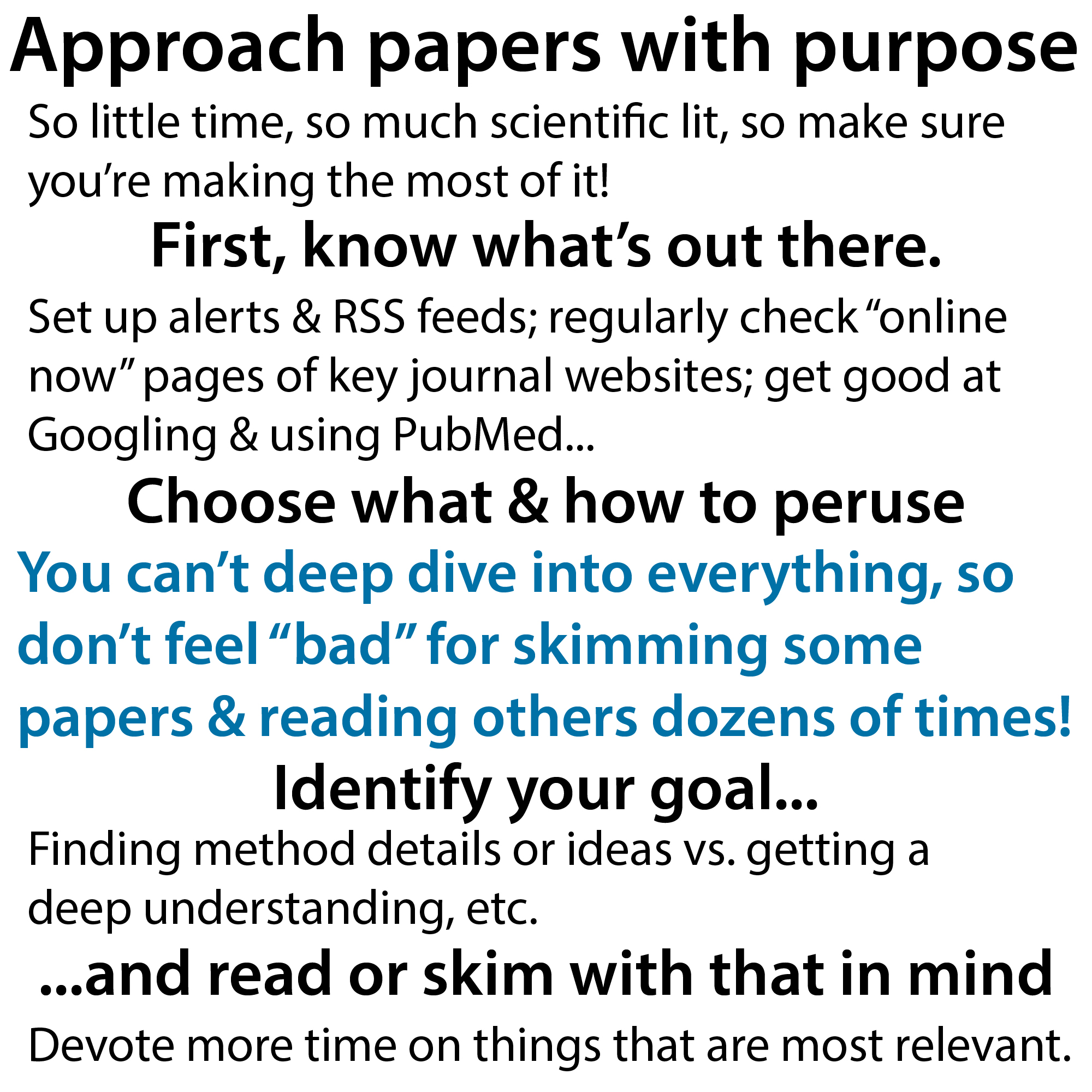
Approach papers with purpose! So little time, so much scientific lit, so make sure you’re making the most of it!
First, know what’s out there: set up alerts & RSS feeds; regularly check “online now pages of key journal websites; get good at Googling & using PubMed…
choose what & how to peruse: You can’t deep dive into everything, so don’t feel “bad” for skimming some papers & reading others dozens of times!
- identify your goal (finding method details or ideas vs. getting a deep understanding, etc.)
- This could be before you’ve found the paper (maybe it’s how you found it) or after you’ve skimmed through (scroll or flip through figures to get a sense of the paper)
- and read or skim with that in mind – devote more time on things that are most relevant
For example…
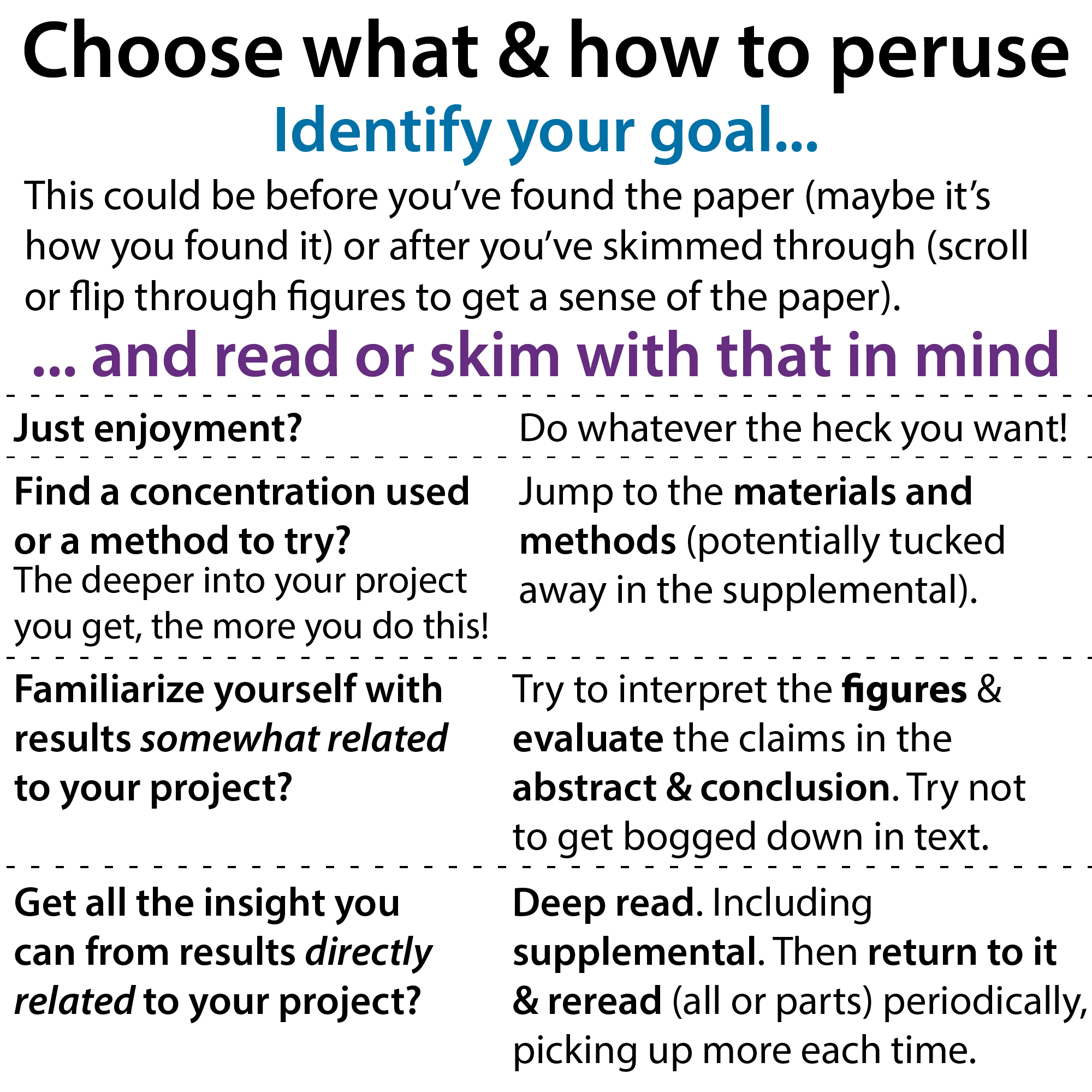
Goal: Just enjoyment?
Strategy: Do whatever the heck you want!
Goal: Find a concentration used or a method to try
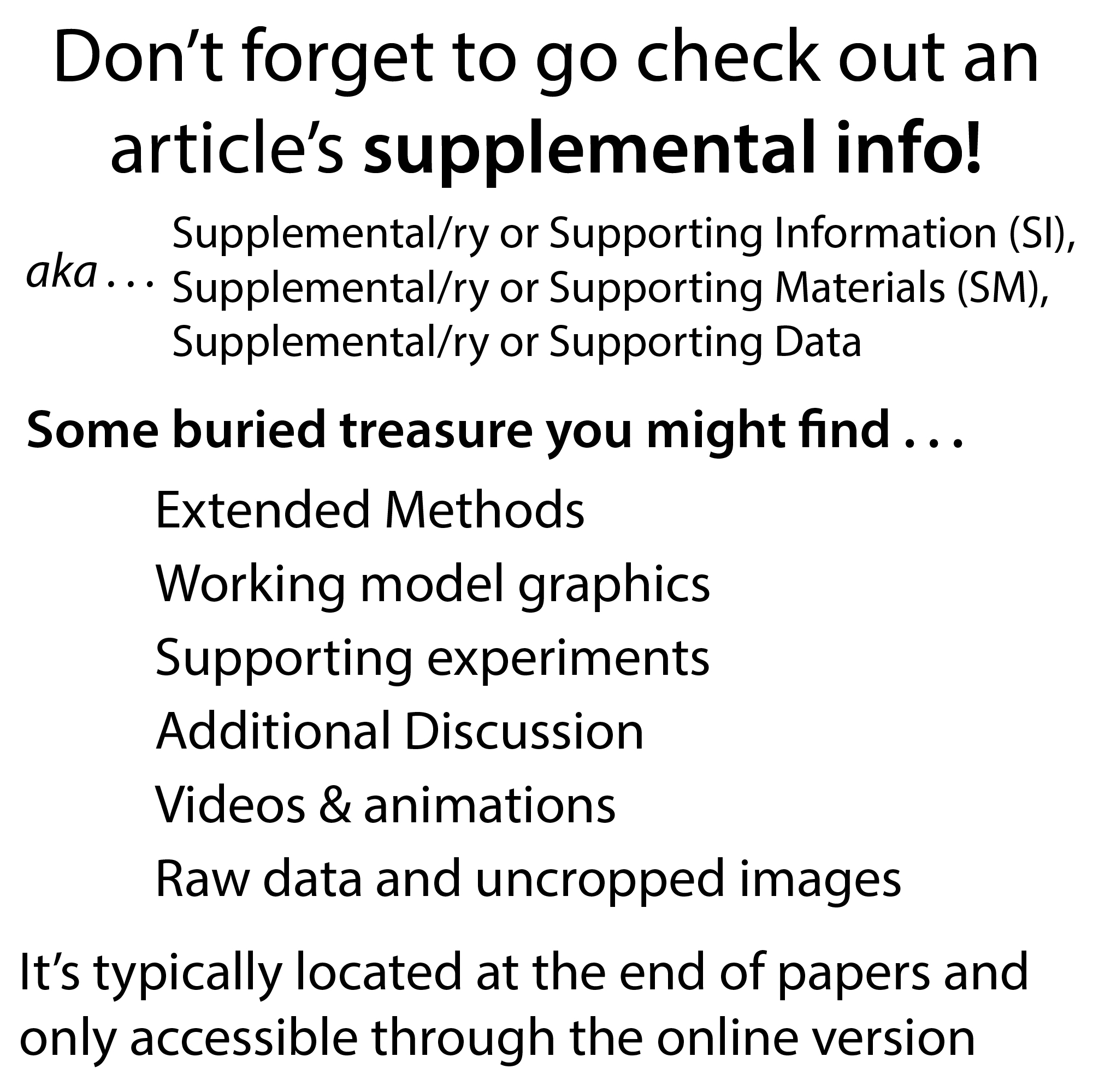
Strategy: Jump to the materials and methods (potentially tucked away in the supplemental).
The deeper into your project you get, the more you’re doing this!
Goal: Familiarize yourself with results somewhat related to your project
Strategy: Try to interpret the figures & evaluate the claims in the abstract & conclusion. Try not to get bogged down in text.
Goal: Get all the insight you can from results directly related to your project
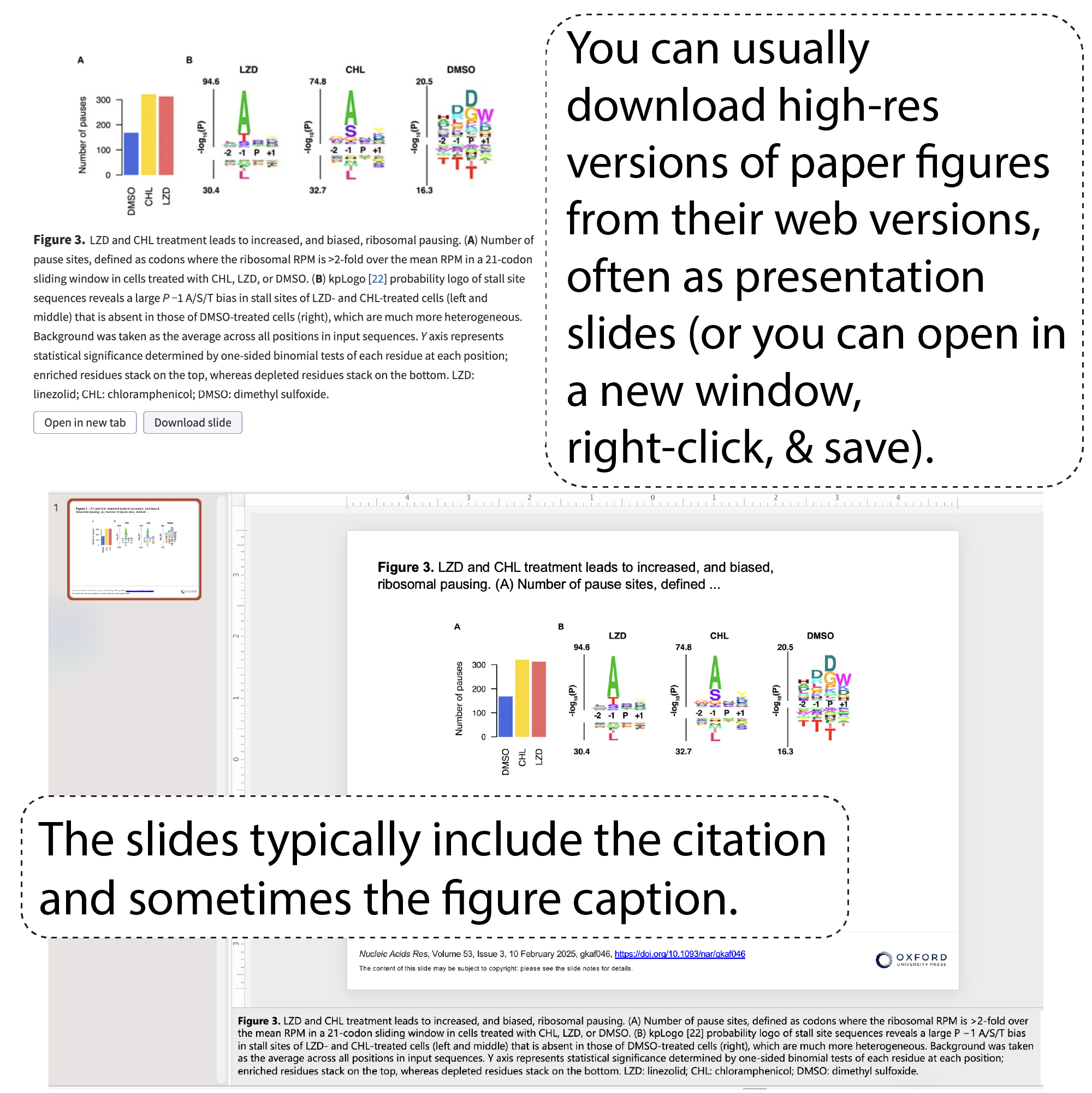
Strategy: Deep read. Including supplemental. Then return to it & reread (all or parts) periodically, picking up more each time.
I hope this helps you see the value of reading strategically!
more on reading scientific papers: https://bit.ly/readingsciencearticlesadvice & https://youtu.be/FaheM4hBG4E
more on reference management: https://bit.ly/referencesreference & https://youtu.be/VIds4W2nut8